I find it difficult to believe in Father Christmas (A.A. Milne)

“A Doubtful Character”

by

A.A. Milne


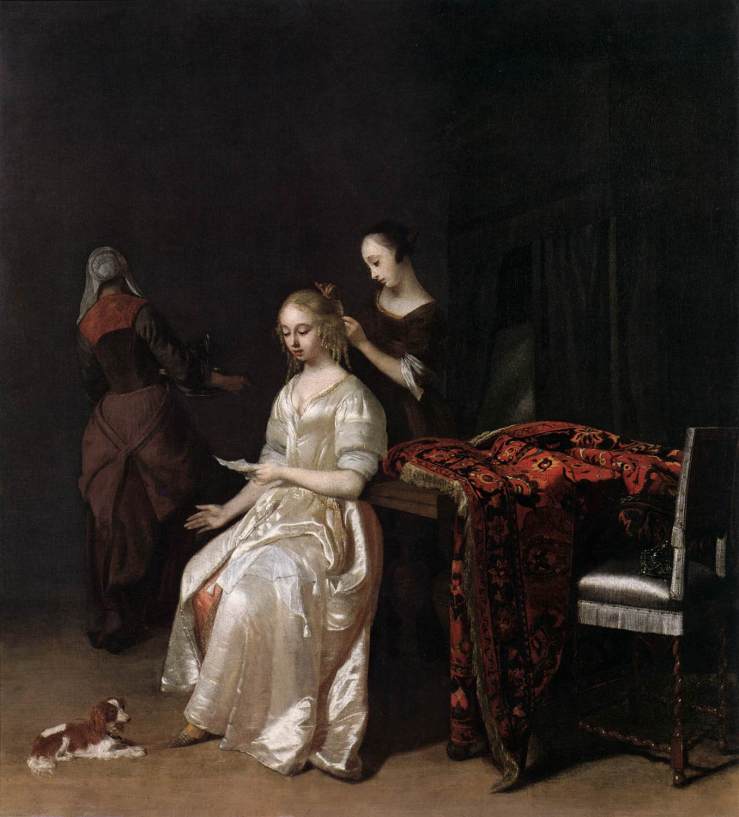
I find it difficult to believe in Father Christmas. If he is the jolly old gentleman he is always said to be, why doesn’t he behave as such? How is it that the presents go so often to the wrong people?

This is no personal complaint; I speak for the world. The rich people get the rich presents, and the poor people get the poor ones. That may not be the fault of Father Christmas; he may be under contract for a billion years to deliver all presents just as they are addressed; but how can he go on smiling? He must long to alter all that. There is Miss Priscilla A—— who gets five guineas worth of the best every year from Mr. Cyril B—— who hopes to be her heir. Mustn’t that make Father Christmas mad? Yet he goes down the chimney with it just the same. When his contract is over, and he has a free hand, he’ll arrange something about THAT, I’m sure. If he is the jolly old gentleman of the pictures his sense of humour must trouble him. He must be itching to have jokes with the parcels. “Only just this once,” he would plead. “Let me give Mrs. Brown the safety-razor, and Mr. Brown the night-dress case; I swear I won’t touch any of the others.” Of course that wouldn’t be a very subtle joke; but jolly old gentlemen with white beards aren’t very subtle in their humour. They lean to the broader effects—the practical joke and the pun. I can imagine Father Christmas making his annual pun on the word “reindeer,” and the eldest reindeer making a feeble attempt to smile. The younger ones wouldn’t so much as try. Yet he would make it so gaily that you would love him even if you couldn’t laugh. Continue reading “I find it difficult to believe in Father Christmas (A.A. Milne)”

On Christmas Eve the little pig is secretly killed (Frazer’s The Golden Bough)

 On Christmas Eve in some parts of the Esthonian island of Oesel they bake a long cake with the two ends turned up. It is called the Christmas Boar, and stands on the table till the morning of New Year’s Day, when it is distributed among the cattle. In other parts of the island the Christmas Boar is not a cake but a little pig born in March, which the housewife fattens secretly, often without the knowledge of the other members of the family. On Christmas Eve the little pig is secretly killed, then roasted in the oven, and set on the table standing on all fours, where it remains in this posture for several days. In other parts of the island, again, though the Christmas cake has neither the name nor the shape of a boar, it is kept till the New Year, when half of it is divided among all the members and all the quadrupeds of the family. The other half of the cake is kept till sowing-time comes round, when it is similarly distributed in the morning among human beings and beasts. In other parts of Esthonia, again, the Christmas Boar, as it is called, is baked of the first rye cut at harvest; it has a conical shape and a cross is impressed on it with a pig’s bone or a key, or three dints are made in it with a buckle or a piece of charcoal. It stands with a light beside it on the table all through the festal season. On New Year’s Day and Epiphany, before sunrise, a little of the cake is crumbled with salt and given to the cattle. The rest is kept till the day when the cattle are driven out to pasture for the first time in spring. It is then put in the herdsman’s bag, and at evening is divided among the cattle to guard them from magic and harm. In some places the Christmas Boar is partaken of by farm-servants and cattle at the time of the barley sowing, for the purpose of thereby producing a heavier crop.

From Sir James George Frazer’s The Golden Bough.

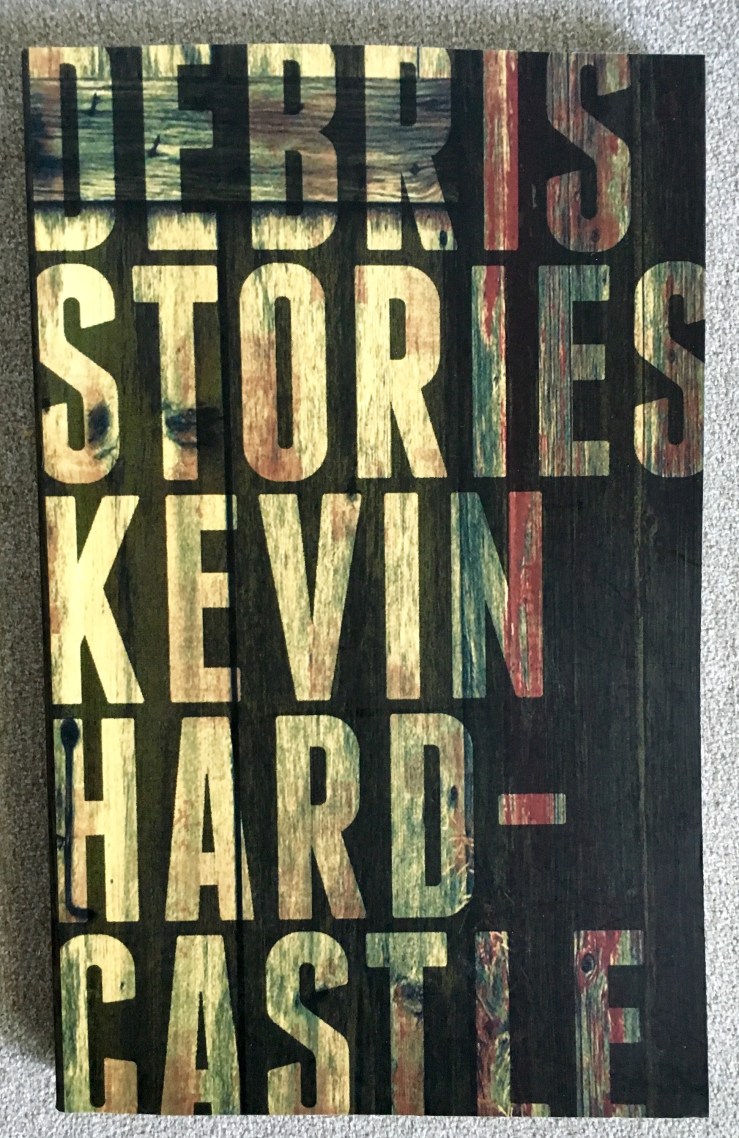
Debris Stories (Book acquired, 12.09.2015)

IMG_1014

Kevin Hardcastle’s collection Debris Stories is new this month from Biblioasis. Their blurb:

The eleven remarkable stories in Kevin Hardcastle’s debut Debris introduce an authentic new voice. Written in a lean and muscular style and brimming with both violence and compassion, these stories unflinchingly explore the lives of those—MMA fighters, the institutionalized, small-town criminals—who exist on the fringes of society, unveiling the blood and guts and beauty of life in our flyover regions

The tyrant ties tongues in knots (William H. Gass)

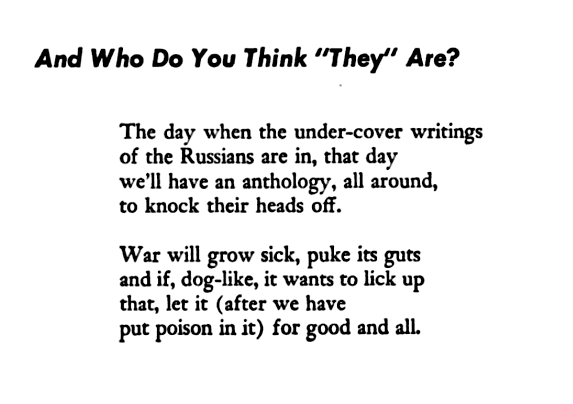
The tyrant ties tongues in knots. Speech is so easy it takes more than snow to slow its course. The tyrant must frighten people from their freedom; beat the soles of their feet till they mince their step in time to his goose-wide stride. Stagger after me; the best is yet to be. The tyrant can make men line up as though they were made of tin or lead to tip over for this week’s war, because pain is a great big persuader, and their lead-headed patriotism is petty and made of hatred; because, after all, though a war may topple their obedient rows, the tyrant can, in any case, melt them down, these tin-lead men, mold them anew, and paint their britches pretty. He can encourage kids to tattle on their folks; he can set friend against friend, family against family; for the fear of punishment and the promise of reward do for men what they do for the donkey. Be fruitful, multiply, the tyrant says benignly. I must have a larger army.

From William H. Gass’s essay “What Freedom of Expression Means, Especially in Times Like These.” Collected in Life Sentences.

Three Books

IMG_1041

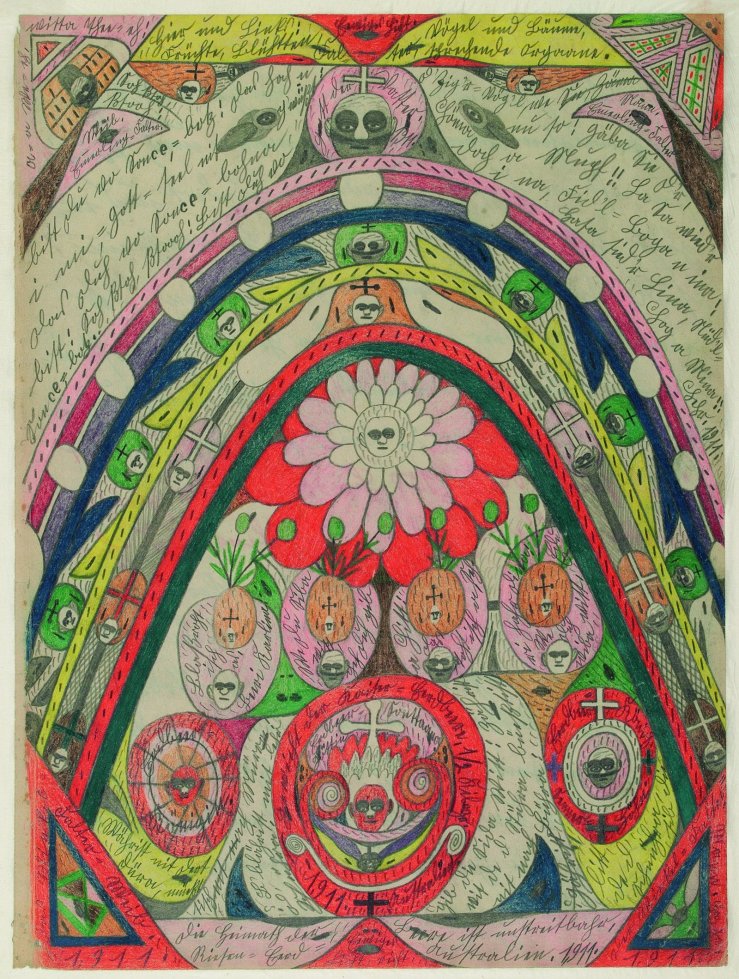
Masquerade and Other Stories by Robert Walser. English translation by Susan Bernofsky. 1990 trade paperback published by The Johns Hopkins UP. Cover design and lettering by Ann Walston. The illustration is a detail from Adolf Wölfli’s 1917 Arnica Flower. This was the first Walser I read.IMG_1042 IMG_1043

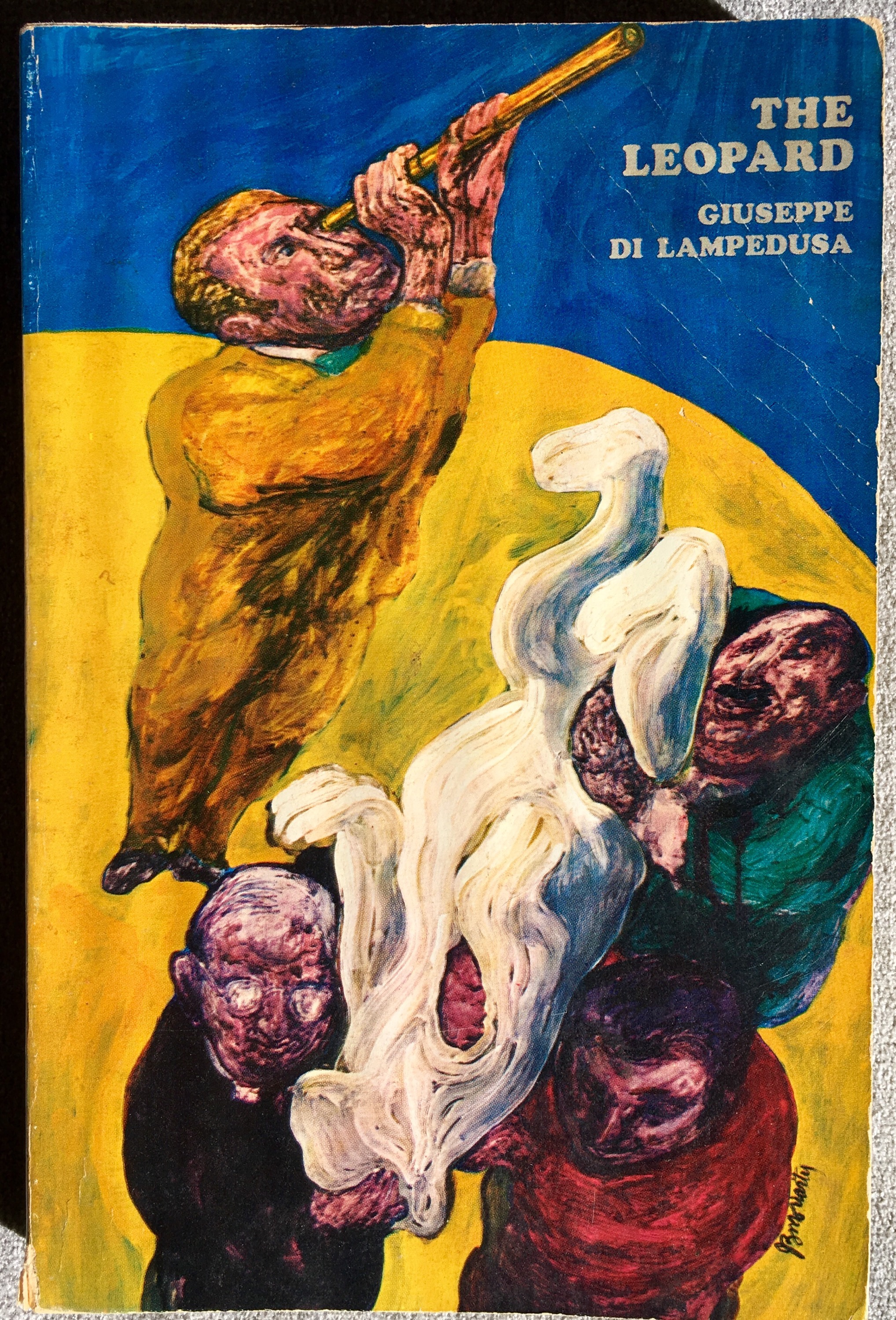
The Leopard by Giuseppe di Lampedusa. English translation by Archibald Colqhoun. A 1966 trade paperback from Time Life Books. Cover design by Jerome Moriarty. I’m not sure why, but I just love the design of this book—I love that there’s no blurb on the back too.IMG_1017

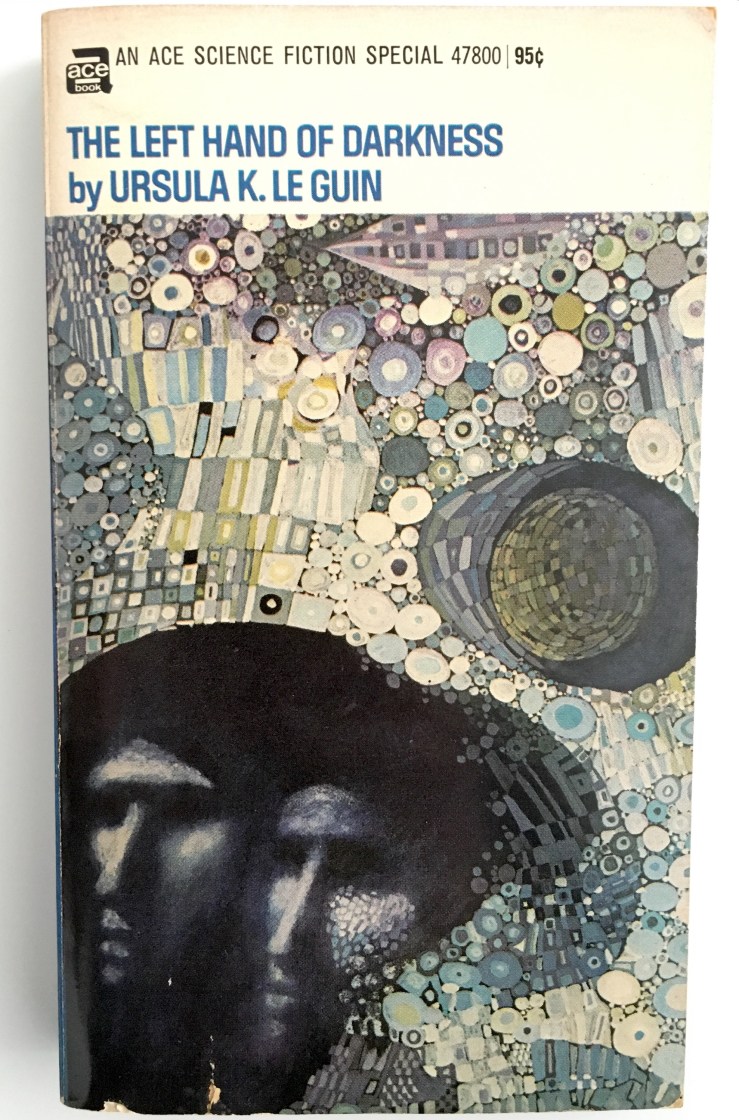
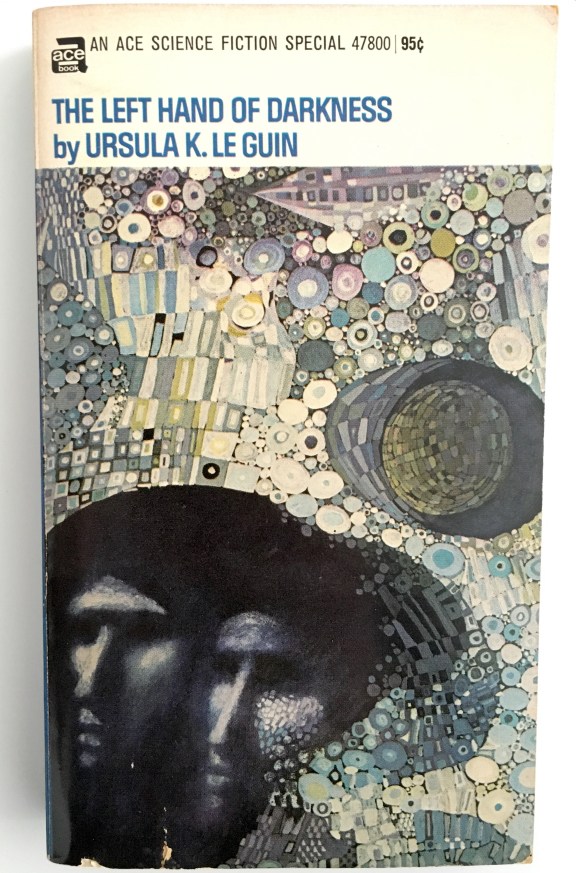
The Left Hand of Darkness by Ursula K. Le Guin. First printing of an Ace Books mass market paperback. No designer is credited, but the cover art, reminiscent of Gustav Klimt, is by Leo and Diane Dillon.

Entries under “G” from Captain Grose’s Dictionary of the Vulgar Tongue (1811)

The following definitions are from the “G” section of Captain Grose’s Dictionary of the Vulgar Tongue (1811).

GAB, or GOB. The mouth. Gift of the gab; a facility of speech, nimble tongued eloquence. To blow the gab; to confess, or peach.

GAB, or GOB, STRING. A bridle.

GABBY. A foolish fellow.

GAD-SO. An exclamation said to be derived from the
Italian word cazzo.

GAFF. A fair. The drop coves maced the joskins at the
gaff; the ring-droppers cheated the countryman at the fair.

TO GAFF. To game by tossing up halfpence.

GAG. An instrument used chiefly by housebreakers and thieves, for propping open the mouth of a person robbed, thereby to prevent his calling out for assistance.

GAGE. A quart pot, or a pint; also a pipe. CANT.

GAGE, or FOGUS. A pipe of tobacco.

GAGGERS. High and Low. Cheats, who by sham pretences, and wonderful stories of their sufferings, impose on the credulity of well meaning people. See RUM GAGGER.

GALIMAUFREY. A hodgepodge made up of the remnants
and scraps of the larder.

GALL. His gall is not yet broken; a saying used in prisons
of a man just brought in, who appears dejected.

GALLEY. Building the galley; a game formerly used at sea, in order to put a trick upon a landsman, or fresh-water sailor. It being agreed to play at that game, one sailor personates the builder, and another the merchant or contractor: the builder first begins by laying the keel, which consists of a number of men laid all along on their backs, one after another, that is, head to foot; he next puts in the ribs or knees, by making a number of men sit feet to feet, at right angles to, and on each side of, the keel: he now fixing on the person intended to be the object of the joke, observes he is a fierce-looking fellow, and fit for the lion; he accordingly places him at the head, his arms being held or locked in by the two persons next to him, representing the ribs. After several other dispositions, the builder delivers over the galley to the contractor as complete: but he, among other faults and objections, observes the lion is not gilt, on which the builder or one of his assistants, runs to the head, and dipping a mop in the excrement, thrusts it into the face of the lion.

GALLEY FOIST. A city barge, used formerly on the lord
mayor’s day, when he was sworn in at Westminster.

GALLIED. Hurried, vexed, over-fatigued, perhaps like a
galley slave.

GALLIGASKINS. Breeches. Continue reading “Entries under “G” from Captain Grose’s Dictionary of the Vulgar Tongue (1811)”

Lucia Berlin/Ursula K. Le Guin (Books acquired, 12.11.2015)

IMG_1016

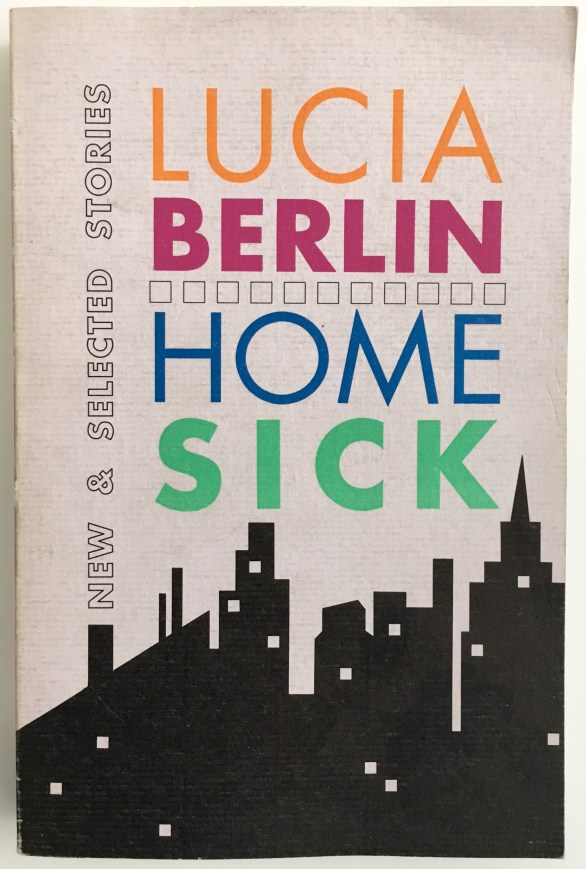
Went to the bookstore this afternoon to pick up the much-acclaimed collection of stories by Lucia Berlin, A Manual for Cleaning Women (typing out the title, I suddenly hear its ambiguities). My trusty local used bookshop didn’t have a copy, but they did have Homesick, and I love Black Sparrow editions, so hey, cool.

IMG_1017

I’ve been tearing through Ursula K. Le Guin’s Hainish novels lately after picking up Rocannon’s World at sorta-random. I’m in the middle of City of Illusion right now, having finished (a third read of) The Dispossessed (fantastic), The Word for World Is Forest (a bit too on-the-nose critique of the Vietnam War; also, James Cameron should send Le Guin some Avatar bucks), and Planet of Exile, which was great. (And oh: George R.R. Martin should send Le Guin some Game of Thrones bucks for that one: Planet of Exile has barbarian invaders from the north, seasons that last for decades, a constant fear that “winter is coming,” and its own white walkers (snow ghouls)).

So well and anyway: I already have a copy of The Left Hand of Darkness, which is the next title in the sequence in which I’m reading the Hainish books. My pilfered copy isfrom years back, and I’ve read it a few times—but I just couldn’t pass up this first edition copy with its lovely Klimtesque cover art by Leo and Diane Dillon.

“A Psychological Shipwreck,” a story by Ambrose Bierce

“A Psychological Shipwreck”

by Ambrose Bierce


In the summer of 1874 I was in Liverpool, whither I had gone on business for the mercantile house of Bronson & Jarrett, New York.  I am William Jarrett; my partner was Zenas Bronson.  The firm failed last year, and unable to endure the fall from affluence to poverty he died.

Having finished my business, and feeling the lassitude and exhaustion incident to its dispatch, I felt that a protracted sea voyage would be both agreeable and beneficial, so instead of embarking for my return on one of the many fine passenger steamers I booked for New York on the sailing vessel Morrow, upon which I had shipped a large and valuable invoice of the goods I had bought.  The Morrow was an English ship with, of course, but little accommodation for passengers, of whom there were only myself, a young woman and her servant, who was a middle-aged negress.  I thought it singular that a traveling English girl should be so attended, but she afterward explained to me that the woman had been left with her family by a man and his wife from South Carolina, both of whom had died on the same day at the house of the young lady’s father in Devonshire – a circumstance in itself sufficiently uncommon to remain rather distinctly in my memory, even had it not afterward transpired in conversation with the young lady that the name of the man was William Jarrett, the same as my own.  I knew that a branch of my family had settled in South Carolina, but of them and their history I was ignorant.
Continue reading ““A Psychological Shipwreck,” a story by Ambrose Bierce”

A review of Paul Kirchner’s surreal sequel, The Bus 2

couv-1

Paul Kirchner’s cult classic comic strip The Bus originally ran in Heavy Metal from 1979-1985. The (anti-)story of “a hapless commuter and a demonic bus” (as Kichner put it himself in a recent memoir at The Boston Globe), The Bus, at its finest moments, transcends our expectations for what a comic strip can and should do. Sure, Kirchner delivers the set-ups, gags, japes, and jests we expect from a cartoon—but more often than not The Bus surpasses the confines of its form and medium. Its protagonist The Commuter is an allegorical everyman, a passenger tripping through an absurd world. Kirchner’s strip often shows us ways to see that absurd world—which is of course our own absurd world—with fresh eyes.

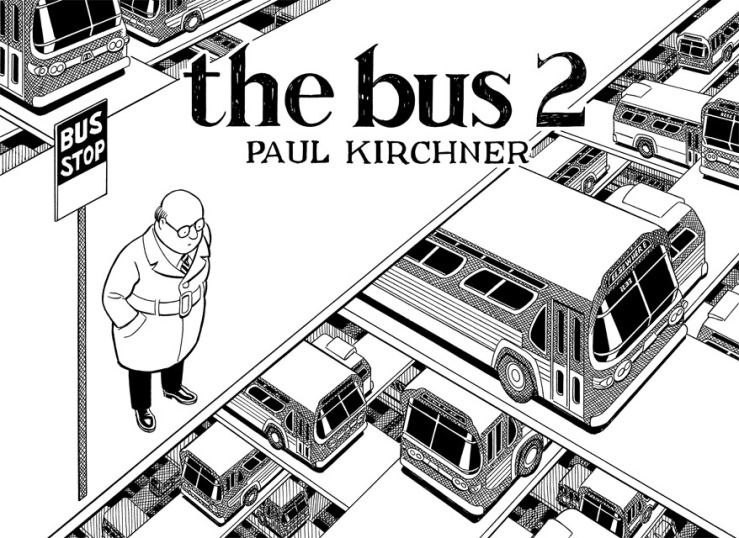
Thanks in part to the internet (and, in particular, an album of scans posted at Imgur), Kirchner’s comic has found a new audience. Over the past few years, Kirchner’s produced more than 40 new strips, which are now collected in one handsome volume as The Bus 2 (or the bus 2 if you like) from French publisher Tanibis EditionsTanibis also has collected the original run of The Bus in an edition that’s more complete (and polished) than the Imgur album. These books are fantastic stuff.

The Bus 2 picks up in full satirical mode with an intro that informs us that “the studio that produced ‘The Bus’ was forced to shut down” in 1985; “Its closing left over 70 talented employees jobless.” The intro unwinds over a few pages—we’re told the bus itself and the “commuter’s iconic overcoat” are now in museums, and that the role of the commuter in this sequel will be played by the son of the actor who played the original commuter. From the outset, Kirchner uses irony to draw our attention to the artificiality of his strip, highlighting The Bus as a performance, an entertainment focused on the utterly mundane topic of a daily commute. And even though the intro unfolds over four pages, Kirchner keeps it true to form—literally: Six equal black and white panels.

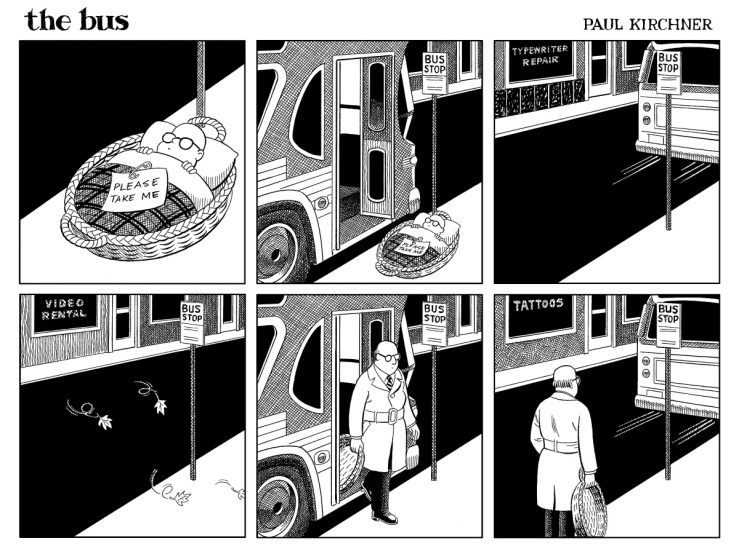
The first strip in the new collection positions The Commuter as an ironic hero, a foundling in a basket like Moses or Superman (note the signs that Kirchner employs to show the passage of time):

01 Continue reading “A review of Paul Kirchner’s surreal sequel, The Bus 2”

Hegel on Pooping from “The Philosophy of Nature”


The animal, because it behaves as actively different, in so doing becomes different within itself. In other words, because the animal is involved in a struggle with the outer world, its relation to the latter is untrue, since this outer world has already been transformed in principle (an sich) by the power of the animal lymph; the animal therefore in turning against this food, fails to recognize its own self. But the immediate result of this is simply that when the animal comes to itself and recognizes itself as this power, it is angry with itself for getting involved with external powers and it now turns against itself and its false opinion; but in doing so it throws off its outward-turned activity and returns into itself.