Pleasure and Sorrow in Álvaro Mutis’s Novella The Tramp Steamer’s Last Port of Call

The Tramp Steamer — Edward Hopper

1. Biblioklept has already published a review of Álvaro Mutis’s collection of novellas, The Adventures and Misadventures of MaqrollI didn’t write that review—my friend Dave Cianci did—but the review prompted me to read the book—or rather, to read Maqroll: Three Novellas, which I found used, wrote about here, and passed on to a friend before getting the NYRB edition with all seven novellas.

2. So I read The Tramp Steamer’s Last Port of Call last week. At 66 pages (in a tiny font), it’s the shortest novella in the book. It’s also the first story where we don’t really get an adventure or misadventure of Maqroll, who more or less sits this one out. Instead, an unnamed narrator—a writer of mundane tracts but also poems—tells the story. And of course, because this is Mutis, there is a second storyteller embedded in this tale, a Basque sailor, captain of the titular steamer. The shifting, labyrinthine connections between the steamer, the narrator, the Basque sailor, and a Lebanese woman named Warda frame the plot of The Tramp Steamer’s Last Port of Call.

3. Even though Maqroll the Gaviero is on the margins of this tale, the text resonates with his weary, picaresque spirit. And even though his name doesn’t even appear until the novella’s second half, we nevertheless get one of the more lucid descriptions of our anti-hero thus far in the collection:

The other man, whose name he never understood clearly but who was also called Gaviero, was treated by Bashur with unreserved familiarity and listened to with the greatest attention in matters relating to commercial shipping and the operation of freighters in the most remote corners of the world. The Basque could not determine if Gaviero was a nickname, a surname, or simply a designation left over from the time he was a lookout in his youth. A man of few words, with a rather odd, corrosive sense of humor, he was extremely attentive and sensitive in his friendships, knowledgeable about the most unexpected professions, and, while not a womanize, very conscious of, one might say dependent on, a feminine presence.

4. As fate—and fate is the major theme of The Tramp Steamer’s Last Port of Call (and maybe all of Maqroll, and maybe all of Latin American literature, and maybe all of literature, but specifically the major theme of The Tramp Steamer’s Last Port of Call, which organizes itself around the interconnections between its narrator and the Basque captain)—as fate would have it, the narrator knows the Gaviero,

an old friend whose confidences and tales I have been collecting for many years, considering them of some interest to those who enjoy hearing about the unusual, contrary lives of people who do not follow the common path of gray routine in an age of mindless conformity.

(The above citation is, of course, a wonderful metatextual review of Mutis’s big book).

The narrator doesn’t reveal that he knows the Gaviero though; he doesn’t wish to pollute the Basque captain’s story.

5. Back to fate and chance for a moment: “Chance is always suspect, and much that is fraudulent imitates it.” This might be the thesis statement of The Tramp Steamer’s Last Port of Call. Maybe.

6. The Tramp Steamer’s Last Port of Call, much like the novellas that precede it, is very much a study of heterogeneity, depicting of a world of shifting identities and ever-changing motivations and outcomes. Words like labyrinthmaze, and intertwine repeat in the text, whether Mutis is describing rivers or cultures or individuals. The text is larded with blends and syntheses, but I’ll grab one simple example, one of the rare times this particular novella returns to the Gaviero. Talking to the narrator, the Basque captain says:

I realized that my own provincial and national prejudices had kept me from seeing the enormous wealth of experience and the solid, warm humanity of this man, whose nationality I never learned, as I never learned the correct pronunciation of his name, which sounded vaguely Scottish but could also have been Turkish or Iranian. I found out later that he carried a Cypriot passport. But that doesn’t mean anything, because he himself hinted I should not put too much faith in its authenticity.

7. What is most authentic in the ever-shifting world Mutis depicts? I think it’s food. I can’t think of another writer who depicts scenes of gustation with such sybaritic pleasure. Mutis never neglects to describe a meal, even on a humble tugboat:

Each tug had two cabins for passengers, who shared with the captain the food prepared by two Jamaican women whose culinary talents we never tired of celebrating. The pork in plum sauce, the rice with coconut and fried plantains, the succulent stews made of river fish, and, and indispensable and always welcome complement to the meals, the miraculously refreshing pear juice with vodka that left us splendidly disposed to enjoy the constantly changing panorama of the river and its banks; thanks to the magic of that imponderable drink, everything took place in a velvety, contented distance that we never attempted to decipher.

8. Okay, authentic might not be right word. Everything in Mutis’s novella is authentic, true even when it’s not true. I suppose I mean stable. But: Our narrator warns us that if we try to replicate the pear and vodka drink we’ll fail, like all the others who try.

9. Let me try again: What is most authentic—I realize I’ve already employed the superlative; mea culpa—what is most authentic in the world that Mutis depicts is the strange intersections of pleasure and sorrow, the way these modes intertwine the labyrinths of our lives.

The Tramp Steamer’s Last Port of Call is a beautiful, dark, sad love story.

10. I realize that I’ve failed to summarize the plot. Do you want that—a plot summary? I don’t have it in me, and someone did it way better. I’ll close with a long excerpt from John Updike’s thorough, excellent review of The Adventures and Misadventures of Maqroll (in a 2003 issue of The New Yorker):

Possibly alert to the dangers of doting on his hero, Mutis next provides a tale in which Maqroll hardly appears, except as a cherished acquaintance of the principals. In “The Tramp Steamer’s Last Port of Call,” the shortest of the lot and one of the best, the narrator relates an experience he himself has had, in a voice close to what we know of Mutis’s own life: “I had to go to Helsinki to attend a meeting of directors of internal publications for various oil companies.” In Helsinki, he asks to be driven to the point from which he can see across the Gulf of Finland to St. Petersburg, a shimmering sight passingly eclipsed by the transit of a decrepit tramp steamer:

The captain’s bridge, and the row of cabins on the deck for crew members and occasional passengers, had been painted white a long time before. Now a coat of grime, oil, and urine gave them an indefinite color, the color of misery, of irreparable decadence, of desperate, incessant use. The chimerical freighter slipped through the water to the agonized gasp of its machinery and the irregular rhythm of driving rods that threatened at any moment to fall silent forever.

He sees the wretched, plucky ship, which fragmentary letters on its bow identify as the Halcyon, three more times—in Costa Rica, in Jamaica, and in the delta of the Orinoco River. Its apparition invades his dreams. While on another errand for the oil company, travelling downriver to a strike-threatened seaport refinery, he occupies one of the two cabins in a small tugboat; the other is occupied by a Basque sea captain called Jon Iturri, who, it turns out, was the captain of the ghostly tramp steamer, which broke up and sank in the Orinoco. Its owner, Iturri relates, was a Lebanese woman, a younger sister of Abdul Bashur, named Warda. At their first meeting, he says, he was stunned by her “almost Hellenic” beauty:

“Her blue-black hair was as dense as honey and fell to shoulders as straight as those of the kouros in the Athens Museum. Her narrow hips, curving gently into long, somewhat full legs, recalled statues of Venus in the Vatican Museum and gave her erect body a definitive femininity that immediately dispelled a certain boyish air. Large, firm breasts completed the effect of her hips.”

As he got to know her better, his admiration intensified: “Warda, when she was naked, acquired a kind of aura that emanated from the perfection of her body, the texture of her moist, elastic skin, and that face: seen from above, when we were in bed, it took on even more of the qualities of a Delphic vision.” But the lovestruck captain was fifty, and a non-Muslim, and Warda was twenty-four and, the longer she lived in Europe, ever more approving of the conservative ways of her native Lebanon. The tramp steamer, which she inherited from an uncle, was financing her European sojourn with its hard-won profits; she flew to Iturri’s ports of call and spent rapturous days in hotels with him, but their romance could last only as long as the fragile tramp steamer did. Warda’s perfect, elastic, symmetrical beauty was one with the listing, disintegrating body of the ship as it conveyed her aging lover from port to port. The story, Mutis tells us at the outset, “has something of the eternal legends that have bewitched us over the centuries”; he ends by assuring us that “there has been only one love story since the beginning of time.” Not a happy one.
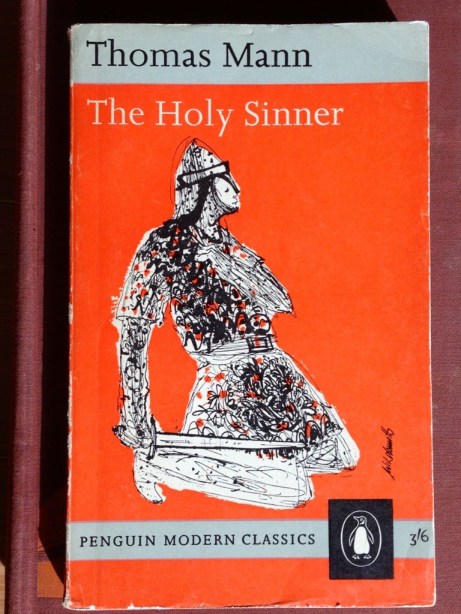
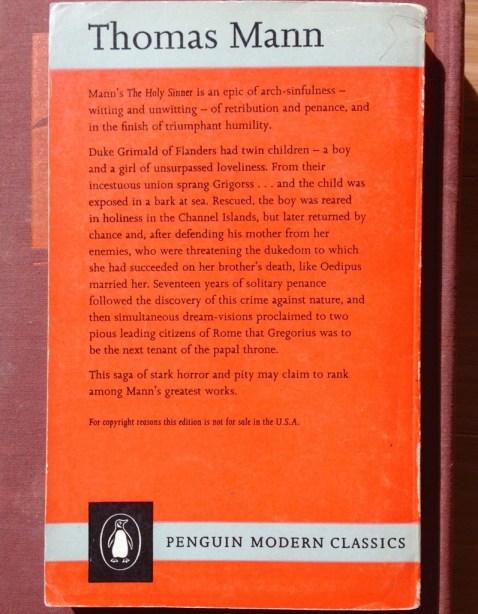
Zora Neale Hurston/Thomas Mann (Books Acquired, 6.21.2013)

20130623-175908.jpg

I’m a sucker for these Penguin editions. Blurb:

20130623-175913.jpg

I used to have a paperback copy of Zora Neale Hurston’s Moses, Man of The Mountain, but I loaned it to a student who never returned it.

I won’t loan out this first edition I found though:

20130623-175918.jpg

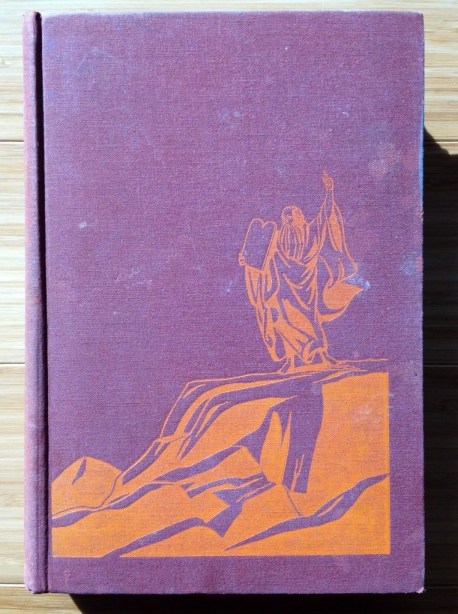
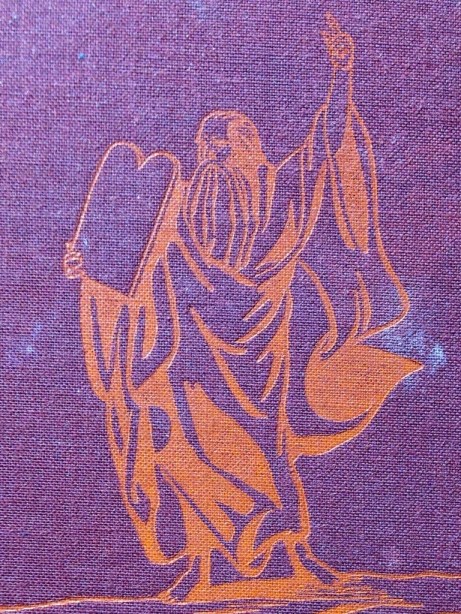
Love the detail on the clothbound cover:

20130623-175933.jpg

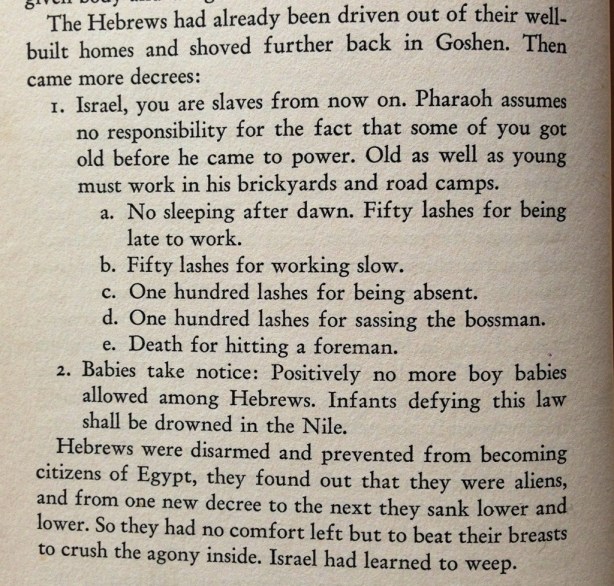
And a taste of Ms. Hurston’s wit:

20130623-175938.jpg


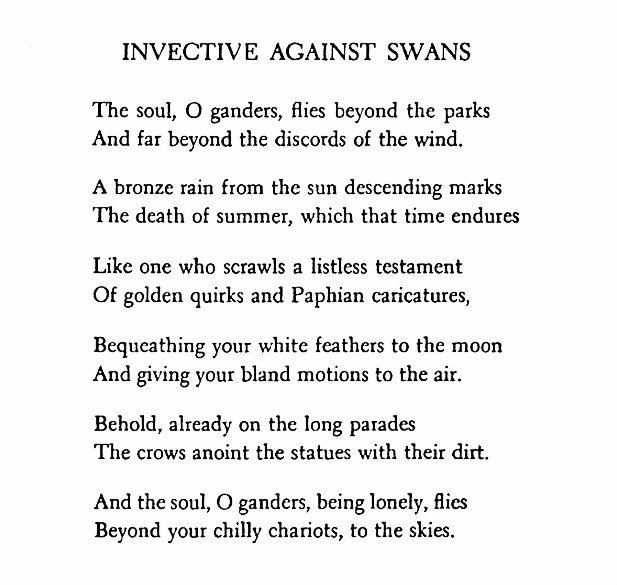
“Invective Against Swans” — Wallace Stevens

Capture

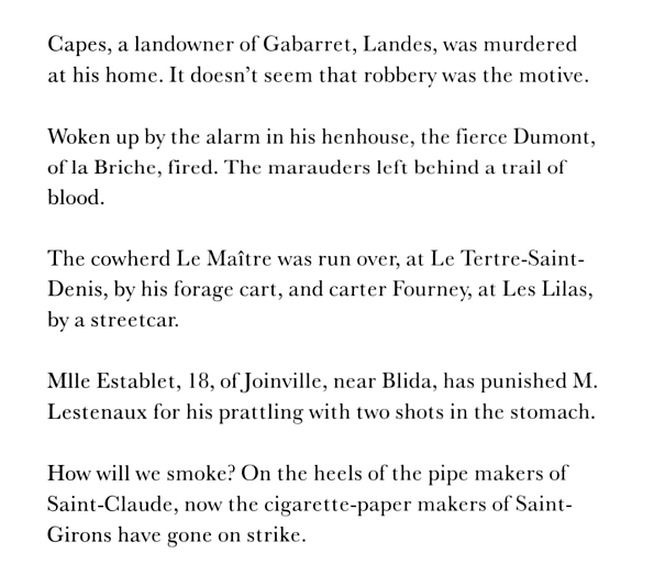
Five from Félix Fénéon

Capture

“The Girl Who Owned a Bear” — L. Frank Baum

“The Girl Who Owned a Bear” by L. Frank Baum

Mamma had gone down-town to shop. She had asked Nora to look after Jane Gladys, and Nora promised she would. But it was her afternoon for polishing the silver, so she stayed in the pantry and left Jane Gladys to amuse herself alone in the big sitting-room upstairs.

The little girl did not mind being alone, for she was working on her first piece of embroidery—a sofa pillow for papa’s birthday present. So she crept into the big bay window and curled herself up on the broad sill while she bent her brown head over her work.

Soon the door opened and closed again, quietly. Jane Gladys thought it was Nora, so she didn’t look up until she had taken a couple more stitches on a forget-me-not. Then she raised her eyes and was astonished to find a strange man in the middle of the room, who regarded her earnestly.

He was short and fat, and seemed to be breathing heavily from his climb up the stairs. He held a work silk hat in one hand and underneath his other elbow was tucked a good-sized book. He was dressed in a black suit that looked old and rather shabby, and his head was bald upon the top.

“Excuse me,” he said, while the child gazed at him in solemn surprise. “Are you Jane Gladys Brown?”

“Yes, sir,” she answered.

“Very good; very good, indeed!” he remarked, with a queer sort of smile. “I’ve had quite a hunt to find you, but I’ve succeeded at last.”

“How did you get in?” inquired Jane Gladys, with a growing distrust of her visitor.

“That is a secret,” he said, mysteriously.

This was enough to put the girl on her guard. She looked at the man and the man looked at her, and both looks were grave and somewhat anxious.

“What do you want?” she asked, straightening herself up with a dignified air.

“Ah!—now we are coming to business,” said the man, briskly. “I’m going to be quite frank with you. To begin with, your father has abused me in a most ungentlemanly manner.”

Jane Gladys got off the window sill and pointed her small finger at the door.

“Leave this room ‘meejitly!” she cried, her voice trembling with indignation. “My papa is the best man in the world. He never ‘bused anybody!” Continue reading ““The Girl Who Owned a Bear” — L. Frank Baum”

“Poem Written in a Copy of Beowulf” — Jorge Luis Borges

jlb

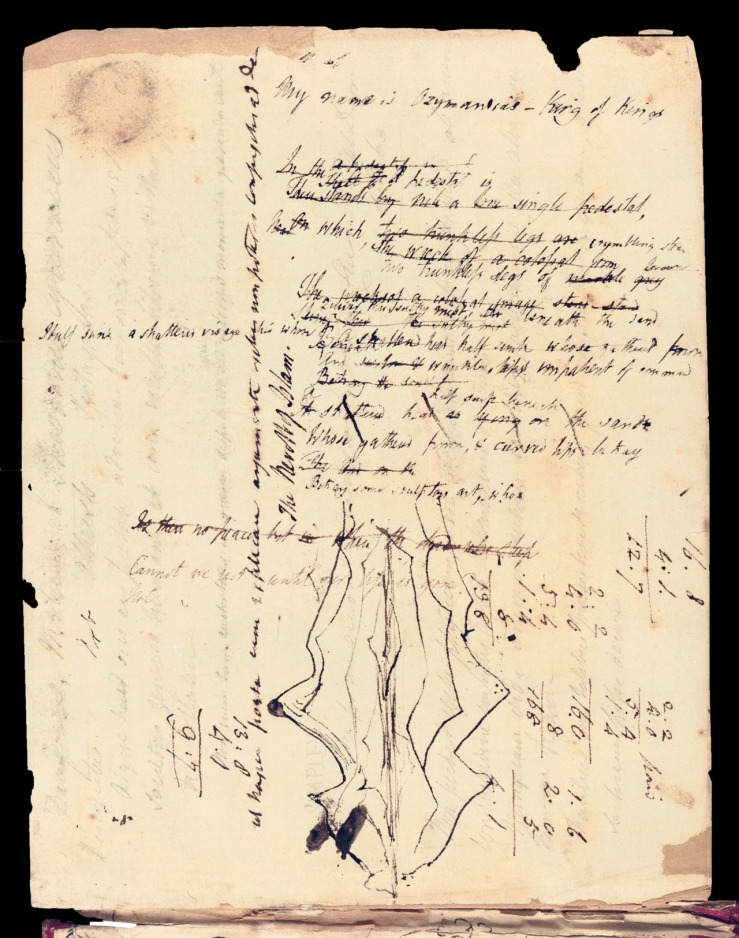
Percy Bysshe Shelley’s Manuscript for “Ozymiandias”

shelley manuscript

“Ozymandias” by Percy Shelley—

I met a traveller from an antique land,
Who said — “two vast and trunkless legs of stone
Stand in the desert … near them, on the sand,
Half sunk a shattered visage lies, whose frown,
And wrinkled lips, and sneer of cold command,
Tell that its sculptor well those passions read
Which yet survive, stamped on these lifeless things,
The hand that mocked them, and the heart that fed;
And on the pedestal these words appear:
My name is Ozymandias, King of Kings,
Look on my Works ye Mighty, and despair!
Nothing beside remains. Round the decay
Of that colossal Wreck, boundless and bare
The lone and level sands stretch far away.” —

(Via).


Truman Capote (1954) — Andy Warhol

A Midsummer Night’s Dream (1935)

“Insect Life of Florida” — Lynda Hull

“Insect Life of Florida” by Lynda Hull

In those days I thought their endless thrum
   was the great wheel that turned the days, the nights.
      In the throats of hibiscus and oleander


I’d see them clustered yellow, blue, their shells
   enameled hard as the sky before the rain.
      All that summer, my second, from city


to city my young father drove the black coupe
   through humid mornings I’d wake to like fever
      parceled between luggage and sample goods.


Afternoons, showers drummed the roof,
   my parents silent for hours. Even then I knew
      something of love was cruel, was distant.


Mother leaned over the seat to me, the orchid
   Father’d pinned in her hair shriveled
      to a purple fist. A necklace of shells


coiled her throat, moving a little as she
   murmured of alligators that float the rivers
      able to swallow a child whole, of mosquitoes


whose bite would make you sleep a thousand years.
   And always the trance of blacktop shimmering
      through swamps with names like incantations—


Okeefenokee, where Father held my hand
   and pointed to an egret’s flight unfolding
      white above swamp reeds that sang with insects


until I was lost, until I was part
   of the singing, their thousand wings gauze
      on my body, tattooing my skin.


Father rocked me later by the water,
   the motel balcony, singing calypso
      with the Jamaican radio. The lyrics


a net over the sea, its lesson
   of desire and repetition. Lizards flashed
      over his shoes, over the rail


where the citronella burned merging our
   shadows—Father’s face floating over mine
      in the black changing sound


of night, the enormous Florida night,
   metallic with cicadas, musical
      and dangerous as the human heart.

“The Snow Child” — Angela Carter

“The Snow Child” by Angela Carter

Midwinter — invincible, immaculate. The Count and his wife go riding, he on a grey mare and she on a black one, she wrapped in the glittering pelts of black foxes; and she wore high, black, shining boots with scarlet heels, and spurs. Fresh snow fell on snow already fallen; when it ceased, the whole world was white. “I wish I had a girl as white as snow,” says the Count. They ride on. They come to a hole in the snow; this hole is filled with blood. He says: “I wish I had a girl as red as blood.” So they ride on again; here is a raven, perched on a bare bough. “I wish I had a girl as black as that bird’s feathers.”

As soon as he completed her description, there she stood, beside the road, white skin, red mouth, black hair and stark naked; she was the child of his desire and the Countess hated her. The Count lifted her up and sat her in front of him on his saddle but the Countess had only one thought:how shall I be rid of her?

The Countess dropped her glove in the snow and told the girl to get down to look for it; she meant to gallop off and leave her there but the Count said: “I’ll buy you new gloves.” At that, the furs sprang off the Countess’s shoulders and twined round the naked girl. Then the Countess threw her diamond brooch through the ice of a frozen pond: “Dive in and fetch it for me,” she said; she thought the girl would drown. But the Count said: “Is she a fish to swim in such cold weather?” Then her boots leapt off the Countess’s feet and on to the girl’s legs. Now the Countess was bare as a bone and the girl furred and booted; the Count felt sorry for his wife. They came to a bush of roses, all in flower. “Pick me one,” said the Countess to the girl. “I can’t deny you that,” said the Count.

So the girl picks a rose; pricks her finger on the thorn; bleeds; screams; falls.

Weeping, the Count got off his horse, unfastened his breeches and thrust his virile member into the dead girl. The Countess reined in her stamping mare and watched him narrowly; he was soon finished.

Then the girl began to melt. Soon there was nothing left of her but a feather a bird might have dropped; a blood stain, like the trace of a fox’s kill on the snow; and the rose she had pulled off the bush. Now the Countess had all her clothes on again. With her long hand, she stroked her furs. The Count picked up the rose, bowed and handed it to his wife; when she touched it, she dropped it. “It bites!” she said.

Admiral Fudge Comes Back to Earth Again (Harry Grant Dart)

explorigator-2

(Via; On The Explorigator’s connection to Thomas Pynchon’s Against the Day).

“Snow White and the Seven Dwarfs” — Anne Sexton

“Snow White and the Seven Dwarfs” by Anne Sexton

No matter what life you lead
the virgin is a lovely number:
cheeks as fragile as cigarette paper,
arms and legs made of Limoges,
lips like Vin Du Rhône,
rolling her china-blue doll eyes
open and shut.
Open to say,
Good Day Mama,
and shut for the thrust
of the unicorn.
She is unsoiled.
She is as white as a bonefish.

Once there was a lovely virgin
called Snow White.
Say she was thirteen.
Her stepmother,
a beauty in her own right,
though eaten, of course, by age,
would hear of no beauty surpassing her own.
Beauty is a simple passion,
but, oh my friends, in the end
you will dance the fire dance in iron shoes.
The stepmother had a mirror to which she referred-
something like the weather forecast-
a mirror that proclaimed
the one beauty of the land.
She would ask,
Looking glass upon the wall,
who is fairest of us all?
And the mirror would reply,
You are the fairest of us all.
Pride pumped in her like poison. Continue reading ““Snow White and the Seven Dwarfs” — Anne Sexton”

The Orson Welles Story (BBC Documentary)

RIP Kim Thompson

clowes


RIP Kim Thompson, 1956-2013.

I probably first got to know Kim Thompson’s name through the editorial and letters pages of Dave Sim’s long-running black and white comic Cerebus. Sim had this marvelous agon with Thompson and partner Gary Groth, who were, like, the voice of comix (as opposed to, y’know, comics). Their outlet for that voice was The Comics Journal, the often ornery (and often-sued) magazine that maintained the critical and artistic traditions of cartooning against the venal backdrop of superhero comics.  Thompson was also instrumental in the vision and quality of Fantagraphics Books, where he edited books by Chris Ware, Peter Bagge, and Joe Sacco, among, many many others. I still have all my issues of his anthology comic Zero Zero, which was instrumental in warping my young mind. I think I’ll dig them out now.


“…he enjoyed a sort of dual existence” (Another Riff on Thomas Pynchon’s Against the Day)

03.17.13.14_525
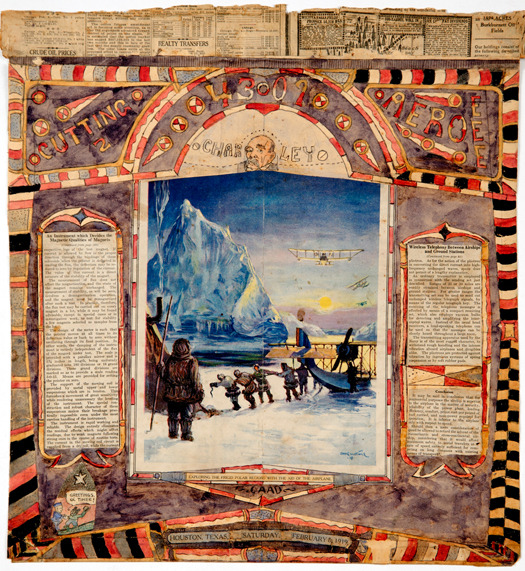
Art by Charles Dellschau (1830 Prussia – 1923)

He had brought with him a dime novel, one of the Chums of Chance series, The Chums of Chance at the Ends of the Earth, and for a while each night he sat in the firelight and read to himself but soon found he was reading out loud to his father’s corpse, like a bedtime story, something to ease Webb’s passage into the dreamland of his death.

Reef had had the book for years. He’d come across it, already dog-eared, scribbled in, torn and stained from a number of sources, including blood, while languishing in the county lockup at Socorro, New Mexico, on a charge of running a game of chance without a license. The cover showed an athletic young man (it seemed to be the fearless Lindsay Noseworth) hanging off a ballast line of an ascending airship of futuristic design, trading shots with a bestially rendered gang of Eskimos below. Reef began to read, and soon, whatever “soon” meant, became aware that he was reading in the dark, lights-out having occurred sometime, near as he could tell, between the North Cape and Franz Josef Land. As soon as he noticed the absence of light, of course, he could no longer see to read and, reluctantly, having marked his place, turned in for the night without considering any of this too odd. For the next couple of days he enjoyed a sort of dual existence, both in Socorro and at the Pole. Cellmates came and went, the Sheriff looked in from time to time, perplexed.

At odd moments, now, he found himself looking at the sky, as if trying to locate somewhere in it the great airship. As if those boys might be agents of a kind of extrahuman justice, who could shepherd Webb through whatever waited for him, even pass on to Reef wise advice, though he might not always be able to make sense of it. And sometimes in the sky, when the light was funny enough, he thought he saw something familiar. Never lasting more than a couple of watch ticks, but persistent. “It’s them, Pa,” he nodded back over his shoulder. “They’re watching us, all right. And tonight I’ll read you some more of that story. You’ll see.”

Riding out of Cortez in the morning, he checked the high end of the Sleeping Ute and saw cloud on the peak. “Be rainin later in the day, Pa.”

“Is that Reef? Where am I? Reef, I don’t know where the hell I am—”

“Steady, Pa. We’re outside of Cortez, headin up to Telluride, be there pretty soon—”

“No. That’s not where this is. Everthin is unhitched. Nothin stays the same. Somethin has happened to my eyes. . . .”

“It’s O.K.”

“Hell it is.”

—From Thomas Pynchon’s novel Against the Day (215).

1. There’s so much I like about this passage.

2. First, Pynchon explicitly ties together two groups of his characters here. Pynchon connects the Traverses of Colorado with those champions of the ether, The Chums of Chance.

And he does it through a novel, which I’ll get to in a minute.

3. I’ve already remarked on the adventurous, even light-hearted tone of the Chums of Chance episodes, which often buoy the narrative out of its byzantine winding.

4. The Chums passages contrast strongly with the Colorado episodes featuring the Traverses.

While Pynchon is not really known for his pathos or the depth of his characters, the Traverse story line is genuinely moving. We see the family disintegrate against the greed of the Colorado mining rush. Patriarch Webb cannot hold his family together, and he gives over to a deep bitterness; his union becomes his raison d’etre, and he undertakes dangerous secret missions to fight the forces of capitalism. It’s worth giving Webb’s opinion at length:

“Here. The most precious thing I own.” He took his union card from his wallet and showed them, one by one. “These words right here”—pointing to the slogan on the back of the card— “is what it all comes down to, you won’t hear it in school, maybe the Gettysburg Address, Declaration of Independence and so forth, but if you learn nothing else, learn this by heart, what it says here—‘Labor produces all wealth. Wealth belongs to the producer thereof.’ Straight talk. No doubletalking you like the plutes do, ’cause with them what you always have to be listening for is the opposite of what they say. ‘Freedom,’ then’s the time to watch your back in particular—start telling you how free you are, somethin’s up, next thing you know the gates have slammed shut and there’s the Captain givin you them looks. ‘Reform’? More new snouts at the trough. ‘Compassion’ means the population of starving, homeless, and dead is about to take another jump. So forth. Why, you could write a whole foreign phrase book just on what Republicans have to say.”

5. It’s also worth pointing out that Webb is likley the Kieselguhr Kid: He has a secret identity and secret powers, like many of the characters who inhabit Against the Day.

6. The Traverse passages recall the social realism of Steinbeck at times, with a dose of the moralizing we might find in Upton Sinclair. There’s also a heavy dash of Ambrose Bierce’s cynicism, and something of Bret Harte’s milieu here.

A kind of ballast for Pynchon’s flightier whims? Not sure.

7. Returning to our initial citation:

As prodigal son Reef Traverse moves his father’s corpse across Colorado, he reads from The Chums of Chance at the Ends of the Earth. We learn that he’s had the dime novel for years and we learn of its physical condition — “dogeared, scribbled in, torn and stained from a number of sources, including blood.” The book is a kind of abject survivor, a physical totem with powers of endurance, which, in turn, grants metaphysical powers on its user-reader.

8. (Parenthetical (i.e. unexplored) aside: The cover of The Chums of Chance at the Ends of the Earth features handsome, uptight Lindsay Noseworth facing off against a “bestially rendered gang of Eskimos.” Here is our Manifest Destiny; here is our White Man’s Burden).

9. The Chums of Chance at the Ends of the Earth allows Reef brief transcendence of time (“whatever ‘soon’ meant”) and space (it provides him escape from his jail cell).

10. Also: The Chums of Chance at the Ends of the Earth grants its reader the power to read in the dark. There is something of a huge in-joke here that all late-night readers will appreciate.

Also: the major motif of At the End of the Day is darkness and light. The Chums of Chance at the Ends of the Earth works as a kind of self-illuminating object outside the confines of the physical world, but only when the user is not conscious of this power (“As soon as he noticed the absence of light, of course, he could no longer see to read”).

11. The Chums of Chance at the Ends of the Earth bestows upon Reef, its operator,  “a sort of dual existence, both in Socorro and at the Pole.” This relationship, again, won’t be unfamiliar to voracious readers. Hell, many of us chase that transcendent space the rest of our lives. The older we get, the harder it is to get back to Dickensian London or Rivendell or Crusoe’s island or Narnia or Thornfield Hall or wherever it was that we got to live out part of our dual existence.

Here Reef, a grown-ass man, gets to be one of the Chums and traverse an alien frontier.

12. And the biggie: Somehow this dime novel wakes the dead.

Now, it’s easy to say that Webb doesn’t really talk to Reef, just as we can easily say that Reef doesn’t really head to the pole with the Chums, doesn’t really transcend time and space, etc. We could look for simple answers in psychology—Reef has internalized his father’s voice; Reef is going mad.

But I think Pynchon’s presentation of the scene suggests something more—but something I don’t know how to name or describe, only a fifth of the way into this book. Something to look for in any case.

And so thus end with Webb’s line: “Somethin has happened to my eyes.”

Sorrows Succeed (Robert Herrick)

Capture