A review of Leonora Carrington’s surreal novel The Hearing Trumpet

Leonora Carrington’s novel The Hearing Trumpet begins with its nonagenarian narrator forced into a retirement home and ends in an ecstatic post-apocalyptic utopia “peopled with cats, werewolves, bees and goats.” In between all sorts of wild stuff happens. There’s a scheming New Age cult, a failed assassination attempt, a hunger strike, bee glade rituals, a witches sabbath, an angelic birth, a quest for the Holy Grail, and more, more, more.

Composed in the 1950s and first published in 1974, The Hearing Trumpet is new in print again for the first time in nearly two decades from NYRB. NYRB also published Carrington’s hallucinatory memoir Down Below a few years back, around the same time as Dorothy issued The Complete Stories of Leonora Carrington. Most people first come to know Carrington through her stunning, surreal paintings, which have been much more accessible (because of the internet) than her literature. However, Dorothy’s Complete Stories brought new attention to Carrington’s writing, a revival continued in this new edition of The Hearing Trumpet.

Readers familiar with Carrington’s surreal short stories might be surprised at the straightforward realism in the opening pages of The Hearing Trumpet. Ninety-two-year-old narrator Marian Leatherby lives a quiet life with her son and daughter-in-law and her tee-vee-loving grandson. They are English expatriates living in an unnamed Spanish-speaking country, and although the weather is pleasant, Marian dreams of the cold, “of going to Lapland to be drawn in a vehicle by dogs, woolly dogs.” She’s quite hard of hearing, but her sight is fine, and she sports “a short grey beard which conventional people would find repulsive.” Conventional people will soon be pushed to the margins in The Hearing Trumpet.

Marian’s life changes when her friend Carmella presents her with a hearing trumpet, a device “encrusted with silver and mother o’pearl motives and grandly curved like a buffalo’s horn.” At Carmella’s prompting, Marian uses the trumpet to spy on her son and daughter-in-law. To her horror, she learns they plan to send her to an old folks home. It’s not so much that she’ll miss her family—she directs the same nonchalance to them that she affords to even the most surreal events of the novel—it’s more the idea that she’ll have to conform to someone else’s rules (and, even worse, she may have to take part in organized sports!).

The old folks home is actually much, much stranger than Marian could have anticipated:

First impressions are never very clear, I can only say there seemed to be several courtyards , cloisters , stagnant fountains, trees, shrubs, lawns. The main building was in fact a castle, surrounded by various pavilions with incongruous shapes. Pixielike dwellings shaped like toadstools, Swiss chalets , railway carriages , one or two ordinary bungalows, something shaped like a boot, another like what I took to be an outsize Egyptian mummy. It was all so very strange that I for once doubted the accuracy of my observation.

The home’s rituals and procedures are even stranger. It is not a home for the aged; rather, it is “The Institute,” a cult-like operation founded on the principles of Dr. and Mrs. Gambit, two ridiculous and cruel villains who would not be out of place in a Roald Dahl novel. Dr. Gambit (possibly a parodic pastiche of George Gurdjieff and John Harvey Kellogg) represents all the avarice and hypocrisy of the twentieth century. His speech is a satire of the self-important and inflated language of commerce posing as philosophy, full of capitalized ideals: “Our Teaching,” “Inner Christianity,” “Self Remembering” and so on. Ultimately, it’s Gambit’s constricting and limited patriarchal view of psyche and spirit that the events in The Hearing Trumpet lambastes.

Marian soon finds herself entangled in the minor politics and scheming of the Institute, even as she remains something of an outsider on account of her deafness. She’s mostly concerned with getting an extra morsel of cauliflower at mealtimes—the Gambits keep the women undernourished. She eats her food quickly during the communal dinner, and obsesses over the portrait of a winking nun opposite her seat at the table:

Really it was strange how often the leering abbess occupied my thoughts. I even gave her a name, keeping it strictly to myself. I called her Doña Rosalinda Alvarez della Cueva, a nice long name, Spanish style. She was abbess, I imagined, of a huge Baroque convent on a lonely and barren mountain in Castile. The convent was called El Convento de Santa Barbara de Tartarus, the bearded patroness of Limbo said to play with unbaptised children in this nether region.

Marian’s creative invention of a “Doña Rosalinda Alvarez della Cueva” soon somehow passes into historical reality. First, she receives a letter from her trickster-aid Carmella, who has dreamed about a nun in a tower. “The winking nun could be no other than Doña Rosalinda Alvarez della Cueva,” remarks Marian. “How very mysterious that Carmella should have seen her telepathically.” Later, Christabel, another member/prisoner of the Institute helps usher Marian’s fantasy into reality. She confirms that Marian’s name for the nun is indeed true (kinda sorta): “‘That was her name during the eighteenth century,’ said Christabel. ‘But she has many many other names. She also enjoys different nationalities.'”

Christabel gives Marian a book entitled A True and Faithful Rendering of the Life of Rosalinda Alvarez and the next thirty-or-so pages gives way to this narrative. This text-within-a-text smuggles in other texts, including a lengthy letter from a bishop, as well as several ancient scrolls. There are conspiracies afoot, schemes to keep the Holy Grail out of the hands of the feminine power the Abbess embodies. There are magic potions and an immortal bard. There is cross-dressing and a strange monstrous pregnancy. There are the Knights Templar.

Carrington’s prose style in these texts-within-texts diverges considerably from the even, wry calm of Marian’s narration. In particular, there’s a sly control to the bishop’s letter, which reveals a bit-too-keen interest in teenage boys. These matryoshka sections showcase Carrington’s rhetorical range while also advancing the confounding plot. They recall The Courier’s Tragedy, the play nested in Thomas Pynchon’s 1965 novel The Crying of Lot 49. Both texts refer back to their metatexts, simultaneously explicating and confusing their audiences while advancing byzantine plot points and arcane themes.

Indeed, the tangled and surreal plot details of The Hearing Trumpet recall Pynchon’s oeuvre in general, but like Pynchon’s work, Carrington’s basic idea can be simplified to something like—Resistance to Them. Who is the Them? The patriarchy, the fascists, the killers. The liars, the cheaters, the ones who make war in the name of order. (One resister, the immortal traveling bard Taliesin, shows up in both the nested texts and later the metatext proper, where he arrives as a postman, recalling the Trystero of The Crying of Lot 49.)

The most overt voice of resistance is Marian’s best friend Carmella. Carmella initiates the novel by giving Marian the titular hearing trumpet, and she acts as a philosophical foil for her friend. Her constant warning that people under seventy and over seven should not be trusted becomes a refrain in the novel. Before Marian is shipped off to the Institution, Carmella already plans her escape, a scheme involving machine guns, rope, and other implements of adventure. Although she loves animals, Carmella is even willing to kill any police dogs that might guard the Institution and hamper their escape:

Police dogs are not properly speaking animals. Police dogs are perverted animals with no animal mentality. Policemen are not human beings so how can police dogs be animals?

Late in the novel, Carmella delivers perhaps the most straightforward thesis of The Hearing Trumpet:

It is impossible to understand how millions and millions of people all obey a sickly collection of gentlemen that call themselves ‘Government!’ The word, I expect, frightens people. It is a form of  planetary hypnosis, and very unhealthy. Men are very difficult to understand… Let’s hope they all freeze to death. I am sure it would be very pleasant and healthy for human beings to have no authority whatever. They would have to think for themselves, instead of always being told what to do and think by advertisements, cinemas, policemen and parliaments.

Carmella’s dream of an anarchic utopia comes to pass.

How?

Well, there’s a lot to it, and I’d hate to spoil the surrealist fun. Let’s just say that Marian’s Grail quest scores a big apocalyptic win for the Goddess, thanks to “an army of bees, wolves, seven old women, a postman, a Chinaman, a poet, an atom-driven Ark, and a werewoman.” No conventional normies who might find Marian’s beard repulsive here.

With its conspiracy theories within conspiracy theories and Templar tales, The Hearing Trumpet will likely remind many readers of Umberto Eco’s 1988 novel Foucault’s Pendulum (or one of its ripoffs). The Healing Trumpet’s surreal energy also recalls Angela Carter’s 1972 novel The Infernal Desire Machines of Doctor Hoffman. And of course, the highly-imagistic, ever-morphing language will recall Carrington’s own paintings, as well as those of her close friend Remedios Varo (who may have been the basis for Carmella), and their surrealist contemporaries (like Max Ernst) and forebears (like Hieronymus Bosch).

This new edition of The Hearing Trumpet includes an essay by the novelist Olga Tokarczuk (translated by Antonia Lloyd-Jones) which focuses on the novel as a feminist text. (Tokarczuk also mentions that she first read the novel without knowing who Carrington was). The new edition also includes black and white illustrations by Carrington’s son, Pablos Weisz Carrington (I’ve included a few in this review). As far as I can tell, these illustrations seem to be slightly different from the illustrations included in the 2004 edition of The Hearing Trumpet published by Exact Change. That 2004 edition has been out of print for ages and is somewhat hard (or really, expensive) to come by (I found a battered copy few years ago for forty bucks). NYRB’s new edition should reach the wider audience Carrington deserves.

Some readers will find the pacing of The Hearing Trumpet overwhelming, too frenetic. It moves like a snowball, gathering images, symbols, motifs into itself in an ever-growing, ever-speeding mass. Other readers may have difficulty with its ever-shifting plot. Nothing is stable in The Hearing Trumpet; everything is liable to mutate, morph, and transform. Those are my favorite kinds of novels though, and I loved The Hearing Trumpet—in particular, I loved its tone set against its imagery and plot. Marian’s narration is straightforward, occasionally wry, but hardly ever astonished or perplexed by the magical and wondrous events she takes part in. There’s a lot I likely missed in The Hearing Trouble—Carrington lards the novel with arcana, Jungian psychology, magical totems, and more more more—but I’m sure I’ll find more the next time I read it. Very highly recommended.
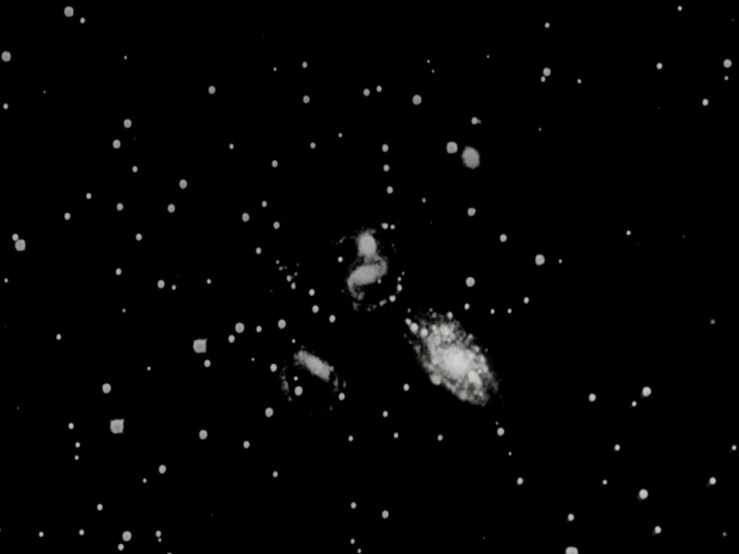
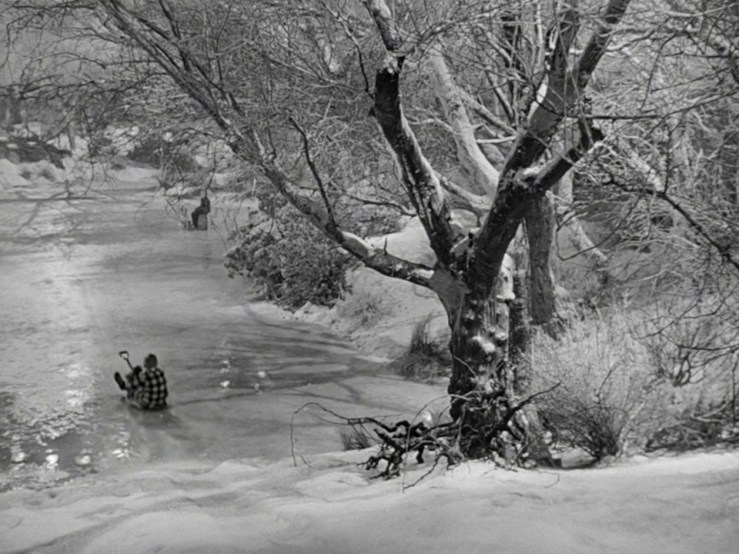
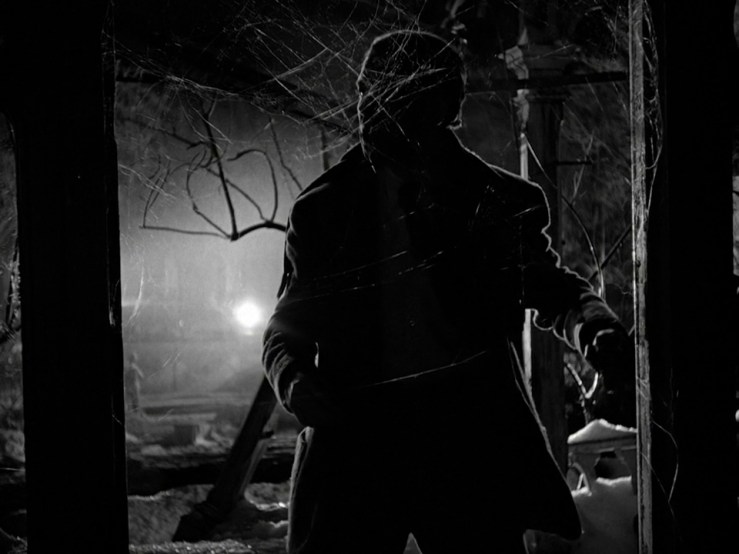
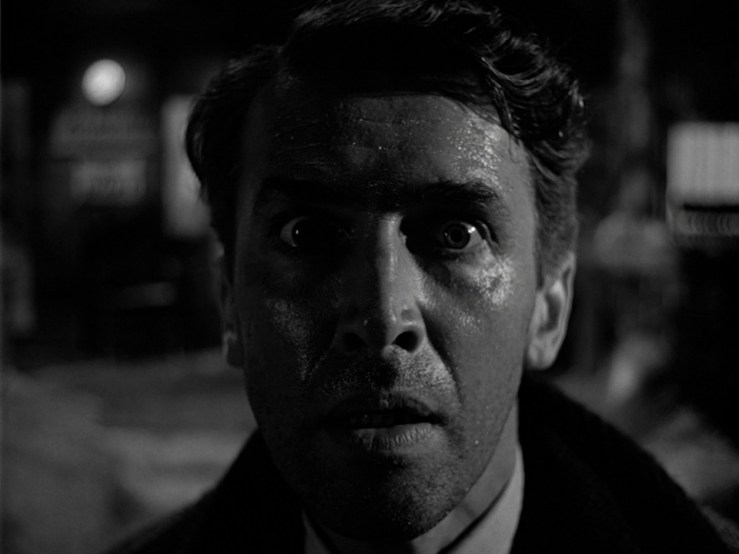
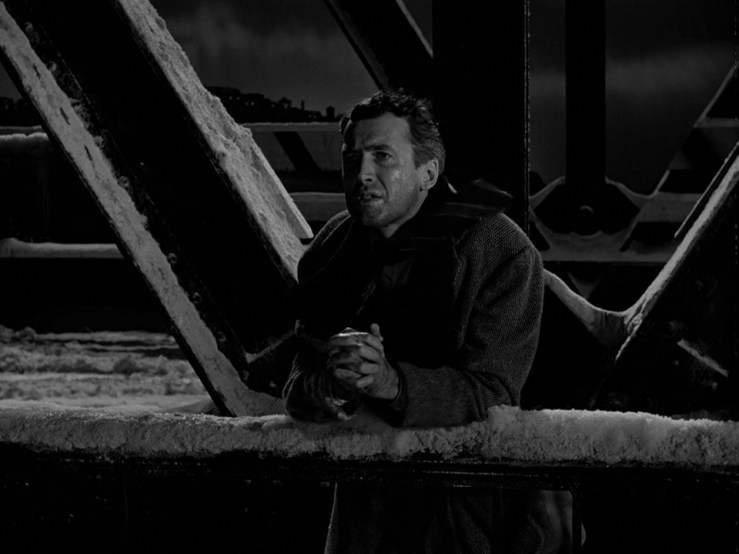
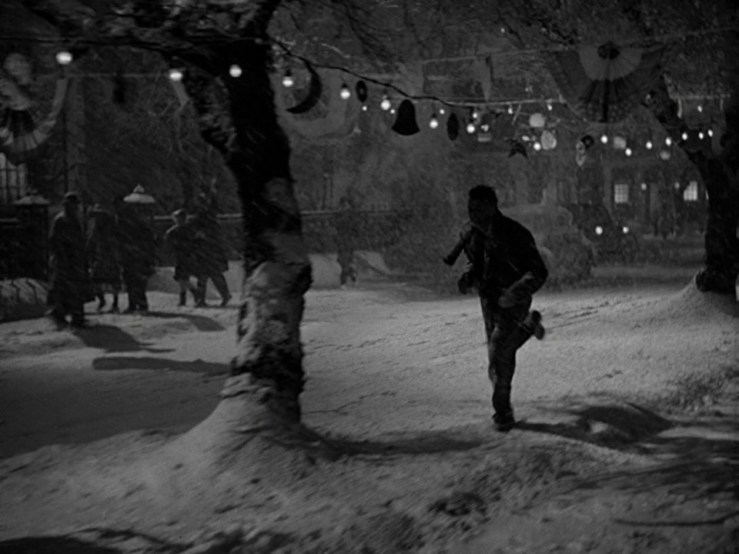
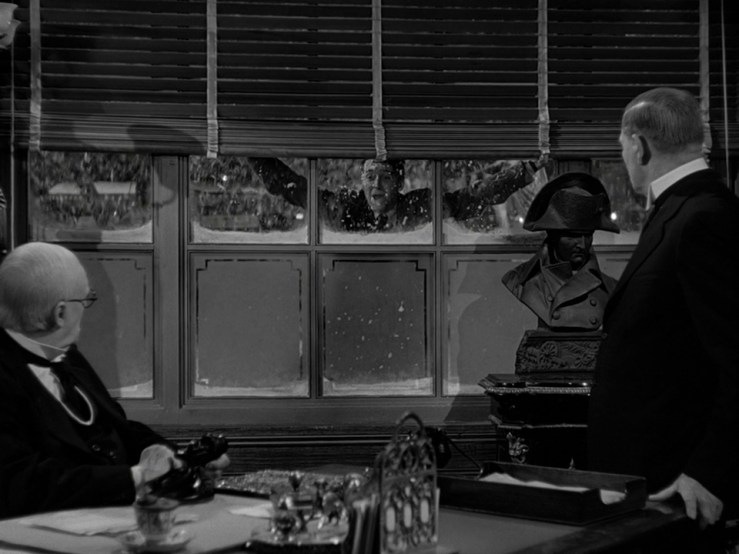
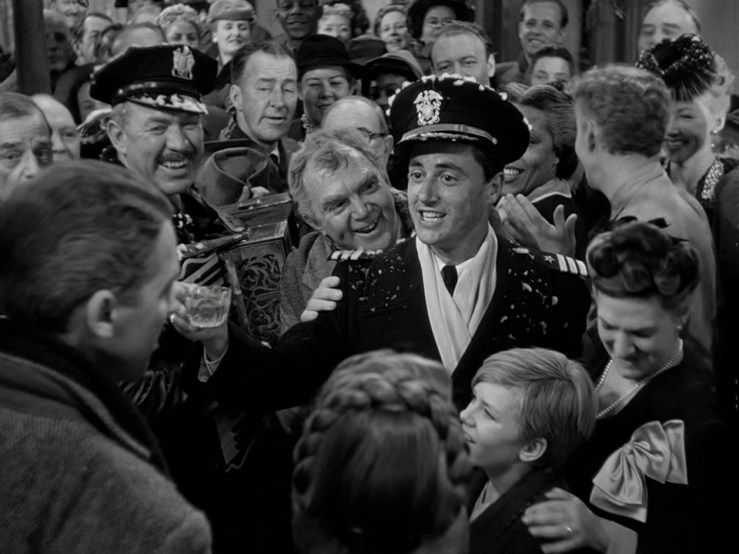
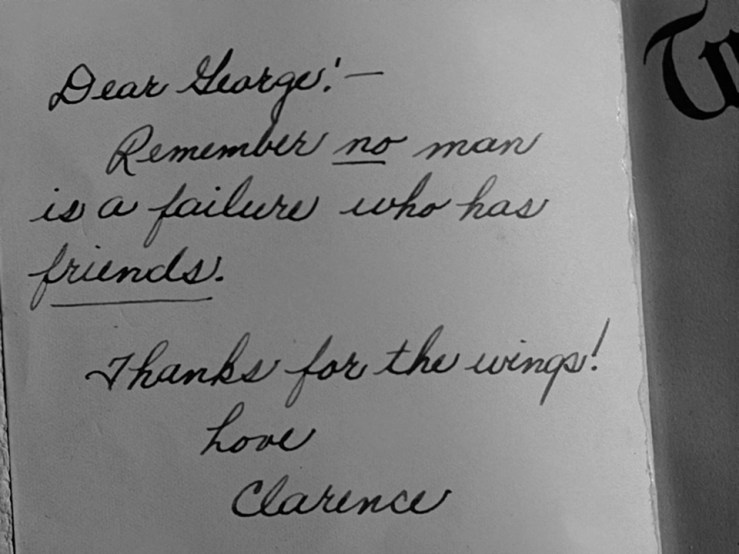
35 still frames from Frank Capra’s It’s a Wonderful Life

From It’s a Wonderful Life, 1946. Directed by Frank Capra; cinematography by Joseph Walker and Joseph Biroc. Via FilmGrab.

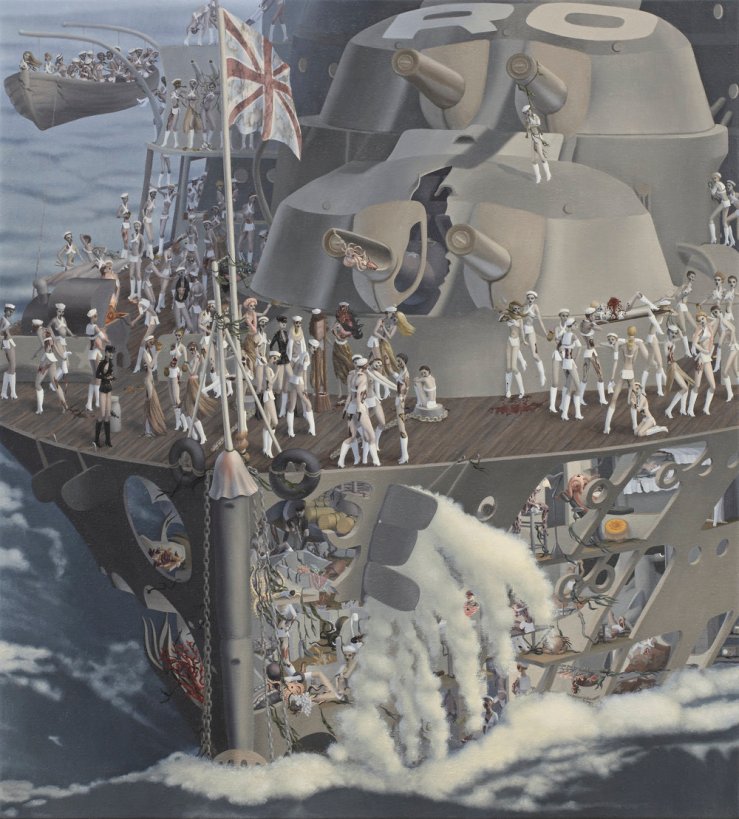
Crossing the Equator — Hilary Harkness 

Crossing the Equator, 2003 by Hilary Harkness (b. 1971)

The Venus of Akron | Donald Barthelme

From Donald Barthelme’s 1970 short story “A Nation of Wheels.” Collected in 1974’s Guilty Pleasures.

Allegory of Winter — Remedios Varo

Allegory of Winter, 1948 by Remedios Varo (1908-1963)

“The Ghost Ships: A Christmas Story” by Angela Carter

“The Ghost Ships: A Christmas Story”

by

Angela Carter


Therefore that whosoever shall be found observing any such day as Christmas or the like, either by forebearing of labor, feasting, or any other way upon any such account aforesaid, every person so offending shall pay for every offense five shillings as a fine to the county.

Statute enacted by the General Court of
Massachusetts, May 1659, repealed 1681

‘Twas the night before Christmas. Silent night, holy night. The snow lay deep and crisp and even. Etc. etc. etc.; let these familiar words conjure up the traditional anticipatory magic of Christmas Eve, and then — forget it.

Forget it. Even if the white moon above Boston Bay ensures that all is calm, all is bright, there will be no Christmas as such in the village on the shore that now lies locked in a precarious winter dream.

(Dream, that uncensorable state. They would forbid it if they could.)

At that time, for we are talking about a long time ago, about three and a  quarter hundred years ago, the newcomers had no more than scribbled their signatures on the blank page of the continent that was, as it lay under the snow, no whiter nor more pure than their intentions.

They plan to write more largely; they plan to inscribe thereon the name of God.

And that was why, because of their awesome piety, tomorrow, on Christmas Day, they will wake, pray and go about their business as if it were any other day.

For them, all days are holy but none are holidays.

New England is the new leaf they have just turned over; Old England is the dirty linen their brethren at home have just — did they not recently win the English Civil War? — washed in public.

Back home, for the sake of spiritual integrity, their brothers and sisters have broken the graven images in the churches, banned the playhouses where men dress up as women, chopped down the village Maypoles because they welcome in the spring in altogether too orgiastic a fashion.

Nothing particularly radical about that, given the Puritans’ basic premises. Anyone can see at a glance that a Maypole, proudly erect upon the village green as the sap is rising, is a godless instrument. The very thought of Cotton Mather, with blossom in his hair, dancing round the Maypole makes the imagination reel. No. The greatest genius of the Puritans lay in their ability to sniff out a pagan survival in, say, the custom of decorating a house with holly for the festive season; they were the stuff of which social anthropologists would be made!

And their distaste for the icon of the lovely lady with her bonny babe — Mariolatry, graven images! — is less subtle than their disgust at the very idea of the festive season itself. It was the festivity of it that irked them.

Nevertheless, it assuredly is a gross and heathenish practice, to welcome the birth of Our
Saviour with feasting, drunkenness, and lewd displays of mumming and masquerading.

We want none of that filth in this new place.

No, thank you.


As midnight approached, the cattle in the byres lumbered down upon their knees in homage, according to the well-established custom of over sixteen hundred English winters when they had mimicked the kneeling cattle in the Bethlehem stable; then, remembering where they were in the nick of time, they hastily refrained from idolatry and hauled themselves upright.

Boston Bay, calm as milk, black as ink, smooth as silk. And suddenly, at just the hour when the night spins on its spindle and starts to unravel its own darkness, at what one could call, elsewhere, the witching hour —

I saw three ships come sailing in,
Christmas Day, Christmas Day,
I saw three ships come sailing in
On Christmas Day in the morning.

Three ships, silent as ghost ships; ghost ships of Christmas past.

And what was in those ships all three? Continue reading ““The Ghost Ships: A Christmas Story” by Angela Carter”

A list of twenty novels I loved in 2020, presented without comment and in no particular order

Flight to Canada, Ishmael Reed We Have Always Lived in the Castle, Shirley Jackson Gormenghast, Mervyn Peake Anasazi, Mike McCubbins and Matt Bryan Gringos, Charles Portis The Wig, Charles Wright Bleeding Edge, Thomas Pynchon Animalia, Jean-Baptiste Del Amo; translation by Frank Wynne The Prime of Miss Jean Brodie, Muriel Spark The Girls of Slender Means, Muriel Spark Loitering with Intent, Muriel Spark Zeroville, Steve Erickson Citizen, Claudine Rankine Oreo, Fran Ross A Rage in Harlem, Chester Himes Satantango, László Krasznahorkai; translation by George Szirtes Lancelot, Walker Percy Dunfords Travels Everywheres, William Melvin Kelley Motorman, David Ohle Fat City, Leonard Gardner

The Finch Collectors — Adam Miller

The Finch Collectors, 2015 by Adam Miller (b. 1979)

Barry Hannah interviewed on Bookmark in 2008

I discover myself on the verge of a usual mistake | Walt Whitman

Enough! enough! enough!
Somehow I have been stunn’d. Stand back!
Give me a little time beyond my cuff’d head, slumbers, dreams, gaping,
I discover myself on the verge of a usual mistake.
That I could forget the mockers and insults!
That I could forget the trickling tears and the blows of the bludgeons and hammers!
That I could look with a separate look on my own crucifixion and bloody crowning.
I remember now,
I resume the overstaid fraction,
The grave of rock multiplies what has been confided to it, or to any graves,
Corpses rise, gashes heal, fastenings roll from me.
I troop forth replenish’d with supreme power, one of an average unending procession,
Inland and sea-coast we go, and pass all boundary lines,
Our swift ordinances on their way over the whole earth,
The blossoms we wear in our hats the growth of thousands of years.
Eleves, I salute you! come forward!
Continue your annotations, continue your questionings.

Rasch, Rasch, Rasch, meine Puppen Warten — Leonor Fini

Rasch, Rasch, Rasch, meine Puppen Warten (Quick, Quick, Quick, My Dolls Are Waiting), 1975 by Leonor Fini (1908–1996)

Kron Flower — Leonora Carrington

Kron Flower, 1987 by Leonora Carrington (1917–2011)

“The Sect of the Thirty” — Jorge Luis Borges

“The Sect of the Thirty”

by

Jorge Luis Borges

Translated by Andrew Hurley


The original manuscript may be consulted in the library at the University of Leyden; it is in
Latin, but its occasional Hellenism justifies the conjecture that it may be a translation from the Greek. According to Leisegang, it dates from the fourth century of the Christian era; Gibbon mentions it, in passing, in one of his notes to the fifteenth chapter of The Decline and Fall.

These are the words of its anonymous author:

…The Sect was never large, but now its followers are few indeed. Their number decimated by sword and fire, they sleep by the side of the road or in the ruins spared them by war, as they are forbidden to build dwellings. They often go about naked. The events my pen describes are known to all men; my purpose here is to leave a record of that which has been given me to discover about their doctrine and  their habits. I have engaged in long counsel with their masters, but I have not been able to convert them to Faith in Our Lord.

The first thing which drew my attention was the diversity of their opinion with respect to the dead. The most unschooled among them believe that they shall be buried by the spirits of those who have left this life; others, who do not cleave so tight to the letter, say that Jesus’ admonition Let the dead bury the dead condemns the showy vanity of our funerary rites.

The counsel to sell all that one owns and give it to the poor is strictly observed by all; the first recipients give what they receive to others, and these to yet others. This is sufficient explanation for their poverty and their nakedness, which likewise brings them closer to the paradisal state. Fervently they cite the words Consider the ravens: for they neither sow nor reap: which neither have storehouse nor barn: and God feedeth them: how much more are ye better than the fowls? The text forbids saving, for If God so clothe the grass, which is today in the field, and tomorrow is cast into the oven: how much more will he clothe you, O ye of little faith? And seek not what ye shall eat, or what ye shall drink, neither be ye of doubtful mind.

The prescription Whosoever looketh on a woman to lust after her hath committed adultery with her already in his heart is an unmistakable exhortation to purity. Still, many are the members of the Sect who teach that because there is no man under heaven who has not looked upon a woman to desire her, then we have all committed adultery. And since the desire is no less sinful than the act, the just may deliver themselves up without risk of hellfire to the exercise of the most unbridled lustfulness.

The Sect shuns churches; its teachers preach in the open, from a mountaintop or the top of a wall, or sometimes from a boat upturned upon the shore.

There has been persistent speculation as to the origins of the Sect’s name. One such conjecture would have it that the name gives us the number to which the body of the faithful has been reduced; this is ludicrous but prophetic, as the perverse doctrine of the Sect does indeed predestine it to extinction.

Another conjecture derives the name from the height of the Ark, which was thirty cubits; another, misrepresenting astronomy, claims that the name is taken from the number of nights within the lunar month; yet another, from the baptism of the Savior; another, from the age of Adam when he rose from the red dust. All are equally false. No less untruthful is the catalog of thirty divinities or thrones, of which, one is Abraxas, pictured with the head of a cock, the arms and torso of a man, and the coiled tail of a serpent. I know the Truth but I cannot plead the Truth. To me the priceless gift of giving word to it has not been granted. Let others, happier men than I, save the members of the Sect by the word. By word or by fire.

It is better to be killed than to kill oneself. I shall, therefore, limit myself to an account of the abominable heresy. The Word was made flesh so that He might be a man among men, so that men might bind  Him to the Cross, and be redeemed by Him. He was born from the womb of a woman of the chosen people not simply that He might teach the gospel of Love but also that He might undergo that martyrdom.

It was needful that all be unforgettable. The death of a man by sword or hemlock was not sufficient to leave a wound on the imagination of mankind until the end of days. The Lord disposed that the events should inspire pathos. That is the explanation for the Last Supper, for Jesus’ words foretelling His deliverance up to the Romans, for the repeated sign to one of His disciples, for the blessing of the bread and wine, for Peter’s oaths, for the solitary vigil on Gethsemane, for the twelve men’s sleep, for the Son’s human plea, for the sweat that was like blood, for the swords, the betraying kiss, the Pilate who washed his hands of it, the flagellation, the jeers and derision, the thorns, the purple and the staff of cane, the vinegar with honey, the Tree upon the summit of the Hill, the promise to the good thief, the earth that shook, and the darkness that fell upon the  land.

Divine mercy, to which I myself owe so many blessings, has allowed me to discover the true and secret reason for the Sect’s name. In Kerioth, where it is plausibly reputed to have arisen, there has survived a conventicle known as the Thirty Pieces of Silver. That was the Sect’s original name, and it provides us with the key. In the tragedy of the Cross (and I write this with all the reverence which is its due) there were those who acted knowingly and those who acted unknowingly; all were essential, all inevitable. Unknowing were the priests who delivered the pieces of silver; unknowing, too, was the mob that chose Barabbas; unknowing the Judean judge, the Romans who erected the Cross on which He was martyred and who drove the nails and cast the lots. Of knowing actors, there were but two: Judas and the Redeemer. Judas cast away the thirty coins that were the price of our souls’ salvation and immediately hanged himself. At that moment he was thirty-three years old, the age of the Son of Man. The Sect venerates the two equally, and absolves the others.

There is not one lone guilty man; there is no man that does not carry out, wittingly or not, the plan traced by the All-Wise. All mankind now shares in Glory.

My hand fails when I will it to write a further abomination. The initiates of the Sect, upon reaching a certain age, are mocked and crucified on the peak of a mountain, to follow the example of their masters.

This criminal violation of the Fifth Commandment should be met with the severity that human and divine laws have ever demanded. May the curses of the Firmament, may the hatred of angels …

The end of the manuscript has not been discovered.

André Gide’s Marshlands (Book acquired, 9 Dec. 2020)

André Gide’s 1895 novel Marshland is out in a few weeks from NYRB in a new translation by Damion Searls.

NYRB’s blurb:

André Gide is the inventor of modern metafiction and of autofiction, and his short novel Marshlands shows him handling both forms with a deft and delightful touch. The protagonist of Marshlands is a writer who is writing a book called Marshlands, which is about a reclusive character who lives all alone in a stone tower. The narrator, by contrast, is anything but a recluse: He is an indefatigable social butterfly, flitting about the Paris literary world and always talking about, what else, the wonderful book he is writing, Marshlands. He tells his friends about the book, and they tell him what they think, which is not exactly flattering, and of course those responses become part of the book in the reader’s hand. Marshlands is both a poised satire of literary pretension and a superb literary invention, and Damion Searls’s new translation of this early masterwork by one of the key figures of twentieth-century literature brings out all the sparkle of the original.

Gide’s blurb:

I don’t understand a single thing in Marshlands. Did I write the book?

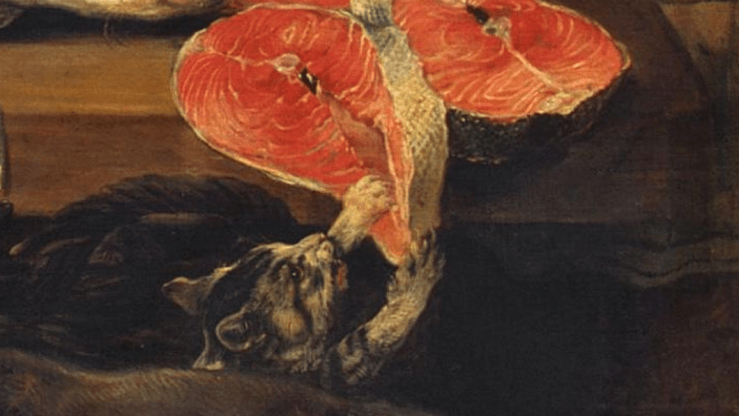
Fish Stall (Detail) — Frans Snyders

Fish Stall (Detail), c. 1620  by Frans Snyders (1579–1657)

Girl Eating — Michaël Borremans

Girl Eating, 2014 by Michaël Borremans (b. 1963)

Ladies Suit — Remedios Varo

Ladies Suit, 1957 by Remedios Varo (1908-1963)