“The Death of Santa Claus” — Charles Harper Webb

“The Death of Santa Claus”

by

Charles Harper Webb


He’s had the chest pains for weeks,
but doctors don’t make house
calls to the North Pole,

he’s let his Blue Cross lapse,
blood tests make him faint,
hospital gown always flap

open, waiting rooms upset
his stomach, and it’s only
indigestion anyway, he thinks,

until, feeding the reindeer,
he feels as if a monster fist
has grabbed his heart and won’t

stop squeezing. He can’t
breathe, and the beautiful white
world he loves goes black,

and he drops on his jelly belly
in the snow and Mrs. Claus
tears out of the toy factory

wailing, and the elves wring
their little hands, and Rudolph’s
nose blinks like a sad ambulance

light, and in a tract house
in Houston, Texas, I’m 8,
telling my mom that stupid

kids at school say Santa’s a big
fake, and she sits with me
on our purple-flowered couch,

and takes my hand, tears
in her throat, the terrible
news rising in her eyes

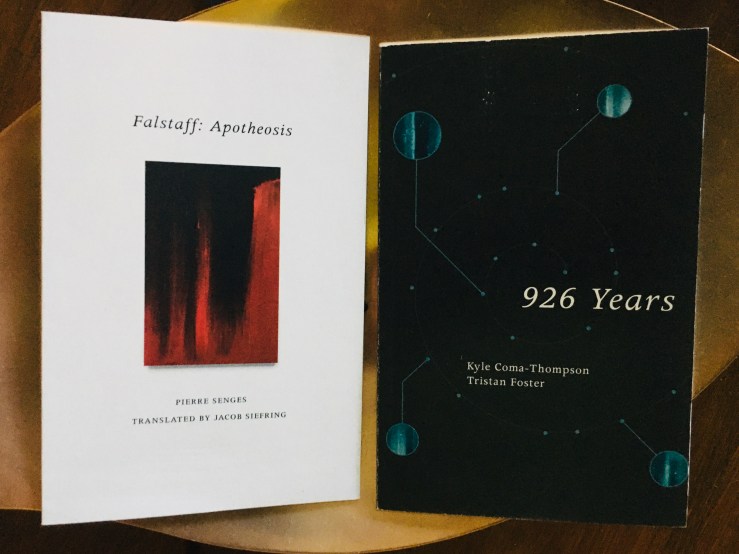
Two Sublunary Editions (Books acquired, 16 Dec. 2019)

img_4545

I was pysched to get to Sublunary Editions titles the other week.

I read the chapbook Falstaff: Apotheosis on 19 Dec. 2019. The story, a wonderful riff on Henry IV Part I, V.iv—the part where Falstaff flops on the battlefield, faking his death in an act of cowardly heroism—is by the French author Pierre Senges. It is the third translation of Senges’ work by Jacob Siefring that I’ve read, and I enjoyed it very much, reading it surreptitiously on the back of the dais, cloaked by my colleagues during our fall commencement. (I had to tune out the ramblings of the commencement speaker, a local judge afflicted with a conservative streak.) Here’s novelist S.D. Chrostowska’s blurb:

Like Falstaff’s coffin in Orson Welles’s Chimes at Midnight, Pierre Senges’s erudite fragments are broader than most, their depth befitting Shakespeare’s original. Here’s Falstaff the master thespian, never wiser or more human than when he plays dead to save his skin and takes a nap. Well-served by this limpid translation, Senges resurrects him as a hero for our time. Bravo!

I also got 926 Years, and intriguing title by Tristan Foster and Kyle Coma-Thompson. Here’s Sublunary’s blurb:

Through twenty-two linked stories, Tristan Foster and Kyle Coma-Thompson explore the creative potential of people’s native estrangement from themselves and each other. Two writers who have never met, who live on opposite sides of the globe—one in Australia, the other in the United States—tracking the pattern of probable lives and fates that co-exist between them, from Korea to England, Senegal to Argentina. Their conclusion/suspicion: imagination is stronger, and subtler, than God, and offers more than mere consolation for the difficulties of living.

And here’s what novelist Gary Lutz has to say:

The intimate, globe-spanning microportraits of human crisis in 926 Years are at once sobering and uplifting, clarifying and mystifying. Tristan Foster and Kyle Coma-Thompson’s collaboration is a nonpareil of short-form virtuosity.

More thoughts forthcoming!


A review of Ishmael Reed’s Christmas satire, The Terrible Twos

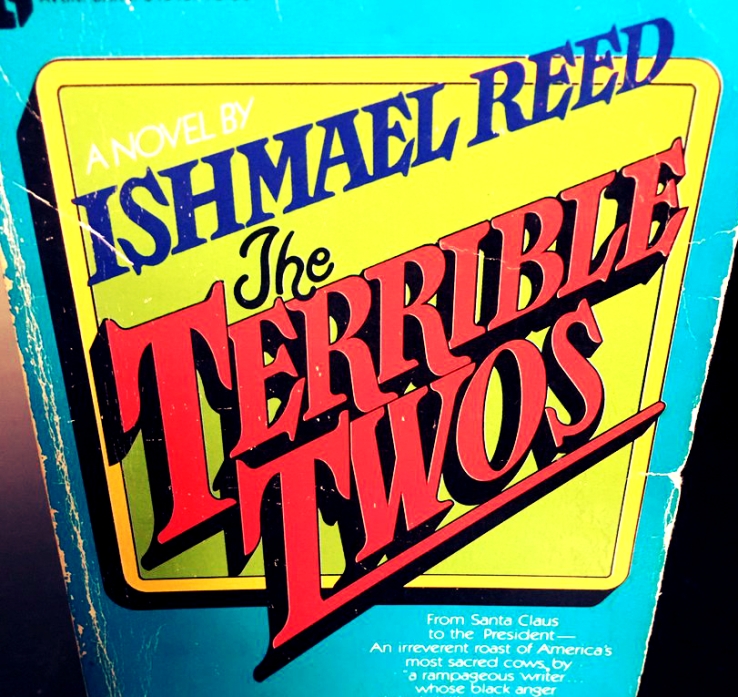
Christmas is here, so let me recommend a Christmas novel for you: Ishmael Reed’s The Terrible Twos (1982). I read it back in unChristmasy August and dipped into it a bit again today, looking for a passage or two to share. Maybe the bit where Santa Claus starts an anti-capitalist riot in Times Square?, or where the First Lady is electrocuted while lighting the White House Christmas tree?, or where the idiot U.S. President meets Harry Truman in A Christmas Carol tour of hell? I scrounged for a big fat citation that works on its own, but I kept wanting to build a frame, set a stage, and ended up with this instead, a “review,” a recommendation. A stage setting.  Of course, Ishmael Reed’s novels create their own stages, their own contexts and rhythms, and each paragraph, each sentence, each note fits into that context, blaring or humming or blasting the reader. Reed’s satire is simultaneously bitter and salty and sweet and sharp sharp sharp, the sort of strange rich dish you gobble up too fast and then, Hell!, it gives you weird dreams. For months.

But nice fat slices of Reed’s prose can be served on their own, as John Leonard’s 1982 NYT  review of The Terrible Twos shows. Leonard’s review is ten paragraphs long and he quotes Reed in full for two of those paragraphs, including this one, the longest paragraph in the piece:

Two-year-olds are what the id would look like if the id could ride a tricycle. That’s the innocent side of 2, but the terrible side as well. A terrible world the world of 2-year-olds. The world of the witch’s door you knock on when your mother told you not to go near the forest in the first place. Pigs building houses of straw. Vain and egotistic gingerbread men who end up riding on the nose of a fox. Nightmares in the closet. Someone is constantly trying to eat them up. The gods of winter crave them – the gods of winter who, some say, are represented by the white horse that St. Nicholas, or St. Nick, rides as he enters Amsterdam, his blackamoor servant, Peter, following with his bag of switches and candy. Two-year-olds are constantly looking over their shoulders for the man in the shadows carrying the bag. Black Peter used to carry them across the border into Spain.

Leonard (who describes the paragraph as “a kind of jive transcendence”— I’ll settle for “transcendence”) offers up this nugget as a condensation of Reed’s themes and mythologies. The paragraph neatly conveys the central idea of Reed’s novel, that American capitalism refuses to allow its subjects to Grow Up. It’s a tidyish paragraph. Tidyish. Reed always sprawls into some new mumbo jumbo. The anarchic energy of his prose digs up old mythologies, boots skeletons out closets, and makes all the old ghosts of Western history sing and dance.

So there’s a lot going in The Terrible Twos’ not-quite 200 pages. Should I take a stab at unjumbling the plot? Okay, so: Reagan is elected president. Things are bad. Rough for, like, the people. Fast forward a few terms, to the early/mid-nineties (Reed’s future…this is a sci-fi fantasy). Former fashion model Dean Clift ascends to the Presidency. Only he’s just a puppet for his cabinet, a cabal of war-profiteering zealots secretly planning a genocidal operation that would not only destroy a nuclear-armed African nation, but also “rid America of surplus people.” Surplus = poor. After Clift’s wife dies in a freak (not-really-freak) Christmas-tree-lighting accident, his life changes, and Saint Nicholas (like, the real Santa) comes to visit him. Santa takes the President on a Dantean-cum-Dickensian trip through the hell of American past. The poor dumb idiot President transforms his soul. Hearing Truman lament the bombing of Hiroshima might do that (not that that’s the only horror that haunts this novel—but a nuclear winter is not a winter wonderland, and Reed’s characters, despite their verve, are all suffering from Cold War Blues). Clift goes on TV and advocates a Christmas Change—but too late. The conspiracy cabinet hits him with the 25th Amendment to the United States Constitution. Reed gives a history lesson to the highest office of the land, changes the man’s life, and then imprisons him in a sanatorium. Satire at its cruelest.

But hell, what am I doing here, foregrounding President Clift? Or even Santa? There’s so much more going on in The Terrible Twos: the secret sect of Nicolites who worship Saint Nick; devotees of Black Peter (a version of the Dutch tradition of “Zwarte Piet”); the North Pole syndicate; secret agents, thugs, and sundry assassins; punk rioters; a rasta dwarf (um, Black Peter). And somehow I’ve left out the novel’s semi-hapless hero, Nance Saturday…

Look, the plot—the picaresque, mumbo-jumbo, always-mutating plot of The Terrible Twos is, yes, fun—but it’s the prose, the energy, the commentary, and, yes, the prescience of the novel that makes it so engrossing and fun and terrifying. This is a book that begins: “By Christmas, 1980, the earth had had enough and was beginning to send out hints,” a book that has the American President meeting with the American Nazi Party in the Oval Office, a book that has one character comment to another, on the election of Reagan, that “It feels good to be a white man again with him in office.” The satire’s prescience is painful, but Reed’s wisdom—the ballast of this ever-shifting picaresque—anchors the commentary in a deeper condemnation: It has always been this way. Ishmael Reed seems so prescient because we keep failing the past. Same as it ever was. Thus The Terrible Twos plays out in a series of plots and schemes, retaliations and riots—but also wry comments and righteous resistance. And so if Reed’s analysis of American history is unbearably heavy, it also points towards a negation of that heavy history, towards a vision of something better.

I shall give the last words to Reed’s Santa:

Two years old, that’s what we are, emotionally—America, always wanting someone to hand us some ice cream, always complaining, Santa didn’t bring me this and why didn’t Santa bring me that…Nobody can reason with us. Nobody can tell us anything. Millions of people are staggering about and passing out in the snow and we say that’s tough. We say too bad to the children who don’t have milk….I say it’s time to pull these naughty people off their high chairs and get them to clean up their own shit. Let’s hit them where it hurts, ladies and gentlemen. In their pockets. Let’s stop buying their war toys, their teddy bears, their dolls, tractors, wagons, their video games, their trees. Trees belong in the forest.

A riot ensues.

Very highly recommended.

[Editorial note: Biblioklept ran a version of this review in December, 2017].

“December 24, 1971” — Joseph Brodsky

“December 24, 1971”

by

Joseph Brodsky


For V.S.

When it’s Christmas we’re all of us magi.
At the grocers’ all slipping and pushing.
Where a tin of halvah, coffee-flavored,
is the cause of a human assault-wave
by a crowd heavy-laden with parcels:
each one his own king, his own camel.

Nylon bags, carrier bags, paper cones,
caps and neckties all twisted up sideways.
Reek of vodka and resin and cod,
orange mandarins, cinnamon, apples.
Floods of faces, no sign of a pathway
toward Bethlehem, shut off by blizzard.

And the bearers of moderate gifts
leap on buses and jam all the doorways,
disappear into courtyards that gape,
though they know that there’s nothing inside there:
not a beast, not a crib, nor yet her,
round whose head gleams a nimbus of gold.

Emptiness. But the mere thought of that
brings forth lights as if out of nowhere.
Herod reigns but the stronger he is,
the more sure, the more certain the wonder.
In the constancy of this relation
is the basic mechanics of Christmas.

That’s what they celebrate everywhere,
for its coming push tables together.
No demand for a star for a while,
but a sort of good will touched with grace
can be seen in all men from afar,
and the shepherds have kindled their fires.

Snow is falling: not smoking but sounding
chimney pots on the roof, every face like a stain.
Herod drinks. Every wife hides her child.
He who comes is a mystery: features
are not known beforehand, men’s hearts may
not be quick to distinguish the stranger.

But when drafts through the doorway disperse
the thick mist of the hours of darkness
and a shape in a shawl stands revealed,
both a newborn and Spirit that’s Holy
in your self you discover; you stare
skyward, and it’s right there:
a star.

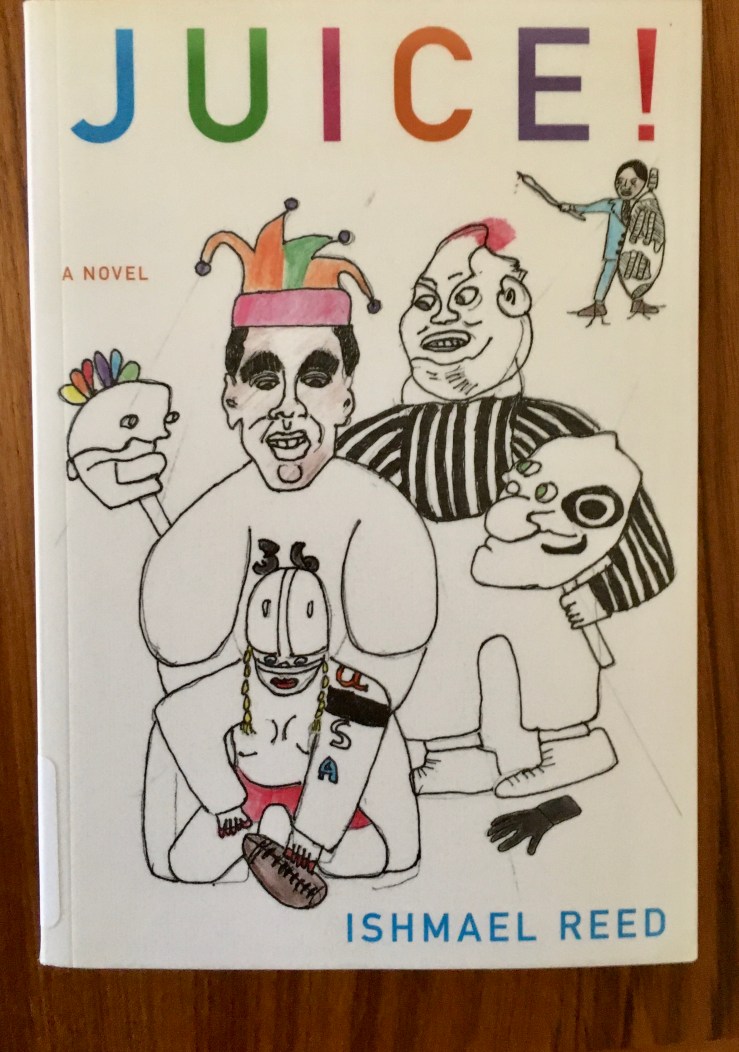
Blog about Ishmael Reed’s novel Juice! (Book acquired, 10 Dec. 2019)

img_4550

I was having a hard time getting into any of the books piled up around my house after I finished Paul Beatty’s fantastic and scathing satire The Sellout a few weeks ago, so I picked up Ishmael Reed’s 2011 novel Juice! It did the trick.

Here’s Reed describing the novel in a short Paris Review interview he did to promote the novel:

I began this one as soon as I heard about the murders. I was vacationing in Hawaii, and the murders ruined my vacation. The media went berserk over the murder of Nicole Simpson, the kind of ideal white woman—a Rhine maiden—one finds in Nazi art and propaganda, murdered allegedly by a black beast. It was a story that reached into the viscera of the American unconscious, recalling the old Confederate art of the black boogeyman as an incubus squatting on top of a sleeping, half-clad white woman. It was also an example of collective blame. All black men became O. J. The murders ignited a kind of hysteria.

Juice! is told in first-person by an aging cartoonist who goes by “Bear” whose obsession with the O.J. Simpson case(s) begins to cost him his friends, family, and career. Reed’s narrator bears more than a passing similarity to Reed himself, and the style of Juice! is decidedly different from Reed’s earlier, zanier novels like Yellow Back Radio Broke-Down and The Terrible Twos. However, the novel, like every novel I’ve read by Reed, diagnoses and dissects the American zeitgeist with howling humor and wild anger. There’s something of a reactionary flavor to Juice! though—its aging narrator has an ugly misogynistic/homophobic/transphobic streak, which the other characters, as well as the narrative construction, continually critique. Juice! creates a strange space of self-satire and self-critique that’s really…ugly—but also reflective and even elegiac in a way. Our narrator “Bear” paces through the realizations of someone whose ideological complaints remain unanswered, outpaced. His story is a howl against a system that, by design, cannot amend itself with its own tools.

While “Bear” is certainly a version of Reed, he is not Reed (an “Ishmael Reed” actually shows up late in the novel, in fact). “Bear” may in fact be a cartoonized Reed, Reed’s self-caricature. Supposedly-well-meaning white women are a favorite target in Juice! In his short Paris Review interview, Reed addressed accusations against him of sexism:

In the 1960s, when black nationalism was in vogue, all black characters had to be portrayed in a positive way, and when the feminist movement was born out of black nationalism, so did all black women. Since the mid-1970s, white feminists have had great influence over which black fiction gets marketed. I’ve gotten a lot of heat from some women in parts of academia, publishing, and book reviewing. On some occasions, they’ve censored my work. The late Joe Wood asked me to write a piece about Oakland politics for The Village Voice. He said that a feminist editor at the time wouldn’t even read it on the grounds that I was a “notorious sexist.”

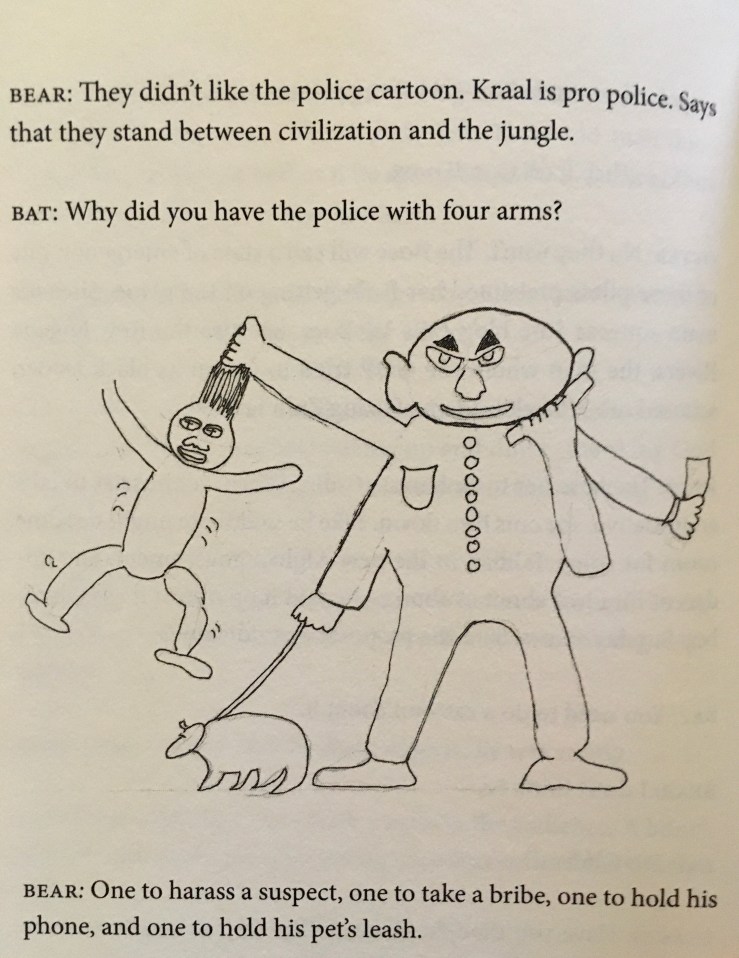
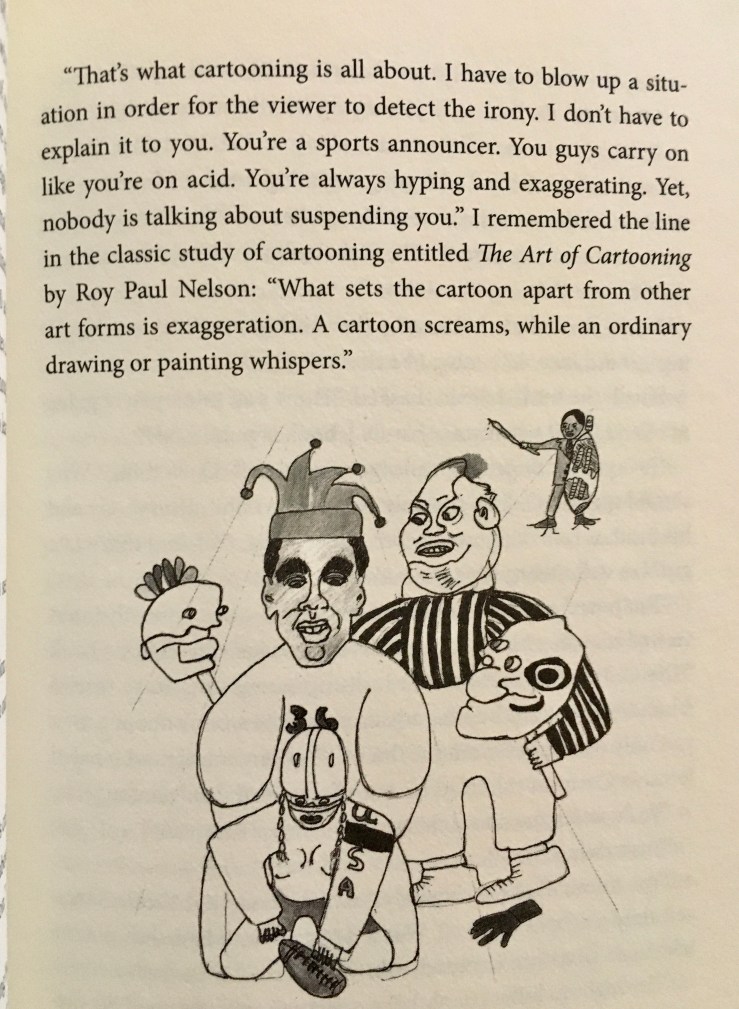
In that same interview, Reed discussed the cartoons he did (as “Bear”) for Juice!–

A publisher wanted to publish Juice! but decided that the cartoons weren’t up to par. So, at the age of seventy, I studied at the Cartoon Art Museum of San Francisco…

img_4553

Reed’s cartoons are sharp and grotesque, and several of them are major plot points in the novel. One of the cartoons (also the novel’s cover illustration), featuring O.J. Simpson taking a direct snap from the US of A (a blonde, natch) is misunderstood—or perhaps understood too well—and Bear nearly loses his job.

img_4554

I haven’t finished Juice! yet—I’m about 50 or so pages from the end—but it’s fascinating both in its structure (discursive, achronological reportorial collage) and its tone (a kind of push-pull of an aging obsessive in crisis). Juice! isn’t my favorite Reed novel, but I’m thankful for this late work’s diagnosis of the Clinton years and beyond.

Father Christmas — J.R.R. Tolkien

father-christmas

Father Christmas drawing of “Me” and “My House,” 1920 by J.R.R. Tolkien (1892–1973).

From The Morgan Library & Museum’s exhibition “Tolkien: Maker of Middle-earth.”

New Accursed Art Club — Nigel Cooke

New Accursed Art Club 2007 by Nigel Cooke born 1973

New Accursed Art Club, 2007 by Nigel Cooke (b. 1973)

Three Books (that were my favorite books I read in 2019 that were published in 2019)

I read very few contemporary books, especially contemporary novels. This reluctance to read contemporary literature isn’t a rule as much as it is a necessity born from the human limitations of my time and the fact that I am a slow reader. (I’ll also admit to a certain wariness towards trends coupled with an antipathy toward publishing hype. (I’m sure many readers detest the trendy/hype couple, as do I. (I’m sure some readers think I use this blog to hype/trend. Forgive me; it’s not my intention. I’m enthusiastic at times.)))

I have no idea what the best books of 2019 are. Maybe I’ll know in 2039 or 2049 or 2079 (when I’ll be a magical one hundred years old).

I’ve been doing these Three Books posts on and off for a few years. They give me something to do on a Sunday, except when I have something to do on a Sunday, in which case, I don’t do them. There are two more Sundays in 2019 and I figured I’d do a Three Books post about the books published this year that I enjoyed most this year. A few jumped readily to mind, including books that were translated or republished in new editions this year, like João Gilberto Noll’s short novel Lord, or Sylvia Townsend Warner’s The Corner That Held Them, or Ann Quin’s 1964 novel BergBut new editions or new/first translations isn’t exactly “2019” is it? Or is it? I mean, these were published in 2019?

Just add them to the list anyway.

And add Anna Burns’ maybe-horror/maybe-comedy novel Milkman to the list, even though it was published in 2018.

And add Anna Kavan’s definitely-horror/definitely-sci-fi novel Ice to the list, even though it was re–published in 2018, a fiftieth anniversary edition. (It’s not a new book, right? New to me though.)

Ann Quin, Anna Burns, Anna Kavan…how about Anne Boyer? For me, 2019 was a variation on Annas, I guess.

2019-12-22_155858_1

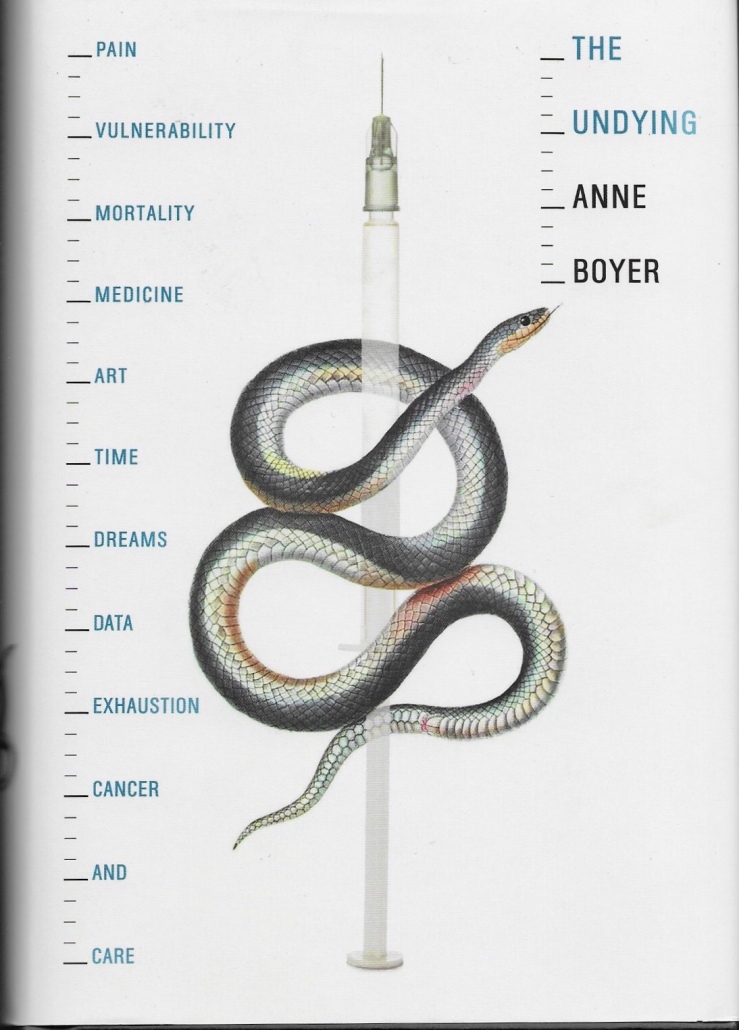
The Undying by Anne Boyer. 2019 first edition hardback from FS&G. Jacket design by Srick&Williams; jacket art by Mykola Davydenko.

This is a wonderfully angry, discursive, recursive book: literary biography, literary criticism, art history, art criticism, Foucault, John Donne, Susan Sontag, Lucretius, Virginia Woolf; a howl at the hoaxers, frauds, self-helperists and their pinkwashed platitudes. And lots of pain, expressed with sentiment that bears no trace of sentimentality.

Boyer’s aphoristic style is engrossing. Her paragraphs and one-liners bear a ludic stamp seemingly at odds with her subject matter. The work of the writing, the heavy burden of smithing those sentences is all but elided—instead we get the clarity of a focused mind drawing together seemingly-disparate threads into a cohesive and compelling memoir that transcends the personal without necessarily meaning to.

Showing is a betrayal of the real, which you can never quite know with your eyes in the first place, and if you are trying to survive for the purpose of literature, showing and not telling is reason enough to endure the disabling processes required for staying alive.

Thank you again to BLCKDGRD for sending me this strange angry beautiful book.

2019-12-22_155858

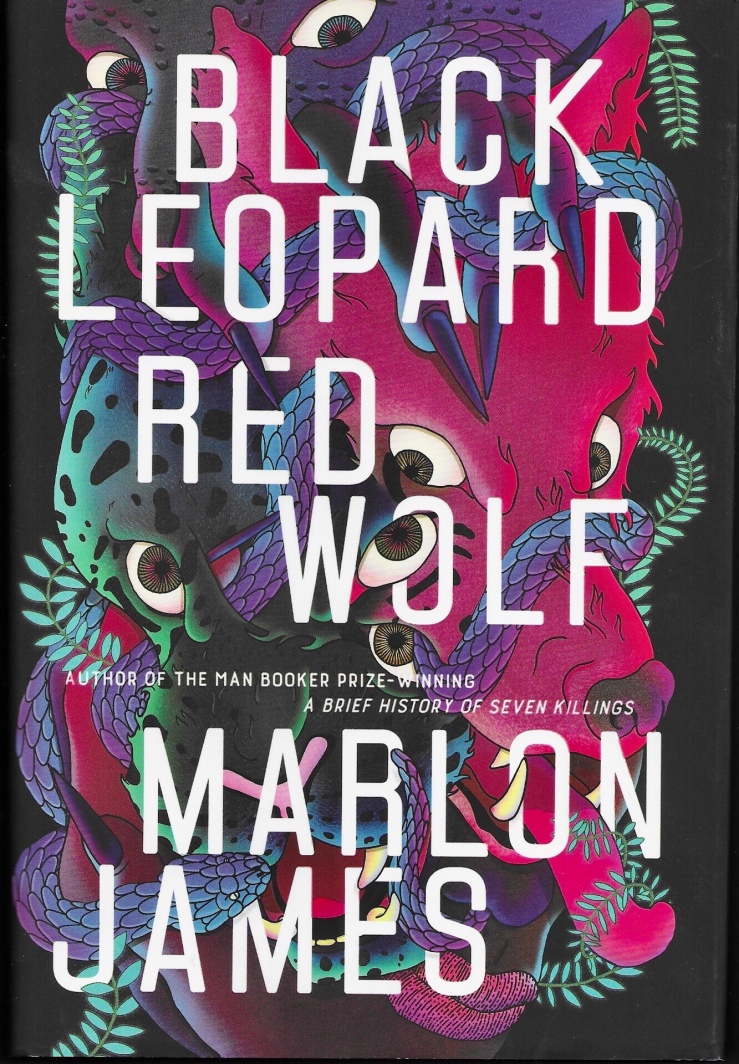
Black Leopard, Red Wolf by Marlon James. 2019 first edition hardback from Random House. Jacket design by Helen Yentus; jack illustration by Pablo Gerardo Camacho.

I wrote a review of Black Leopard, Red Wolf that I titled “Marlon James’s Black Leopard, Red Wolf is a postmodern fantasy novel that challenges the conventions of storytelling itself.”

Black Leopard, Red Wolf makes me think of that trend/hype problem I mentioned above—novels that get hyped, novels that seem trendy (“It’s Game of Thrones in a medieval mythical Africa!”) and then maybe not read. I think a lot of people read BL/RW though, and many found it Not to Their Taste, which, fine. I loved. it. From my review:

Black Leopard, Red Wolf is clearly Not for Everybody. It’s violent and strange, and the sex in it will likely upset conservative readers. It’s also shaggy and unwieldy. It probably has a future as a cult novel. You just sort of have to go with its fluid (in every sense of that word) program and enjoy the ride. I enjoyed it very much and am looking forward to the sequel.

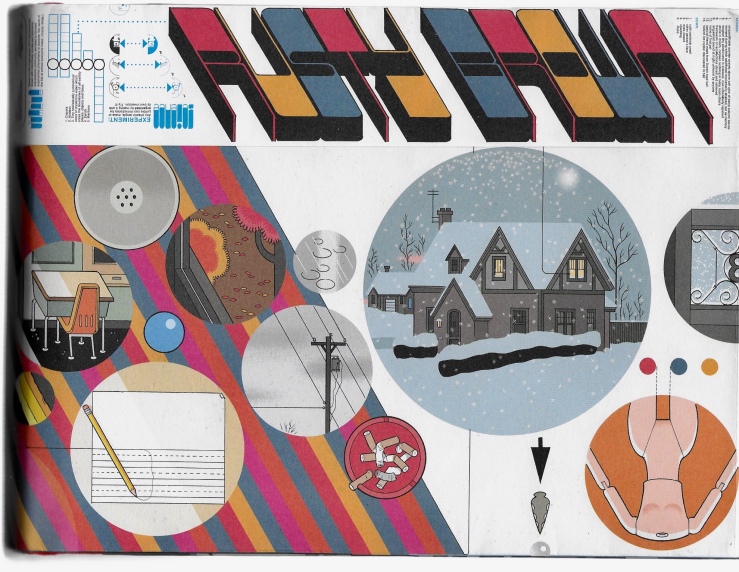
Rusty Brown by Chris Ware. 2019 first edition hardback from Pantheon. No cover designer or artist credited, but the work is unquestionably Ware’s.

A masterpiece. I reviewed it for The Comics Journal, stating that,

Rusty Brown is a sprawling story about memory and perception, about minor triumphs and chronic failures, about how our inner monologues might not match up to the reality around us. In Ware’s world, life can be blurry, spotty, fragmented. His characters are so bound up in their own consciousnesses that they cannot see the bigger picture that frames them.

Rusty Brown is only the first part of (what I understand to be) a two-part novel. It took Ware eighteen years to finish. Maybe we’ll know in 2037 if it was in fact a really great important best favorite novel of 2019. Or maybe not.

But I love it now, and I loved these books this year.

Leader of Legions of Literary Lunatics — Mike Davis

mike-davis-final_low-copy-1050x1126-540x579-1

Leader of Legions of Literary Lunatics by Mike Davis

“Radio” — Tom Clark

“Radio”

by

Tom Clark


Don’t hurt the radio for
Against all
Solid testimony machines
Have feelings
Too

Brush past it lightly
With a fine regard
For allowing its molecules
To remain 100% intact

Machines can think like Wittgenstein
And the radio’s a machine
Thinking softly to itself
Of the Midnight Flower
As her tawny parts unfold

In slow motion the boat
Rocks on the ocean
As her tawny parts unfold

The radio does something mental
To itself singingly
As her tawny parts unfold
Inside its wires
And steal away its heart

Two minutes after eleven
The color dream communicates itself
The ink falls on the paper as if magically
The scalp falls away
A pain is felt
Deep in the radio

I take out my larynx and put it on the blue chair
And do my dance for the radio
It’s my dance in which I kneel in front of the radio
And while remaining motionless elsewise
Force my eyeballs to come as close together as possible
While uttering a horrible and foreign word
Which I cannot repeat to you without now removing my larynx
And placing it on the blue chair

The blue chair isn’t here
So I can’t do that trick at the present time

The radio is thinking a few licks of its own
Pianistic thoughts attuned to tomorrow’s grammar
Beautiful spas of seltzery coition
Plucked notes like sandpaper attacked by Woody Woodpecker

The radio says Edwardian farmers from Minnesota march on the Mafia
Armed with millions of radioactive poker chips

The radio fears foul play
It turns impersonal
A piggy bank was smashed
A victim was found naked
Radio how can you tell me this
In such a chipper tone
Your structure of voices is a friend
The best kind
The kind one can turn on or off
Whenever one wants to
But that is wrong I know
For you will intensely to continue
And in a deeper way
You do

Hours go by
And I watch you
As you diligently apply
A series of audible frequencies
To tiny receptors
Located inside my cranium
Resulting in much pleasure for someone
Who looks like me
Although he is seated about two inches to my left
And the both of us
Are listening to your every word
With a weird misapprehension
It’s the last of the tenth
And Harmon Killebrew is up
With a man aboard

He blasts a game-winning home run
The 559th of his career
But no one cares
Because the broadcast is studio-monitored for taping
To be replayed in 212 years

Heaven must be like this, radio
To not care about anything
Because it’s all being taped for replay much later

Heaven must be like this
For as her tawny parts unfold
The small lights swim roseate
As if of sepals were the tarp made
As it is invisibly unrolled
And sundown gasps its old Ray Charles 45 of Georgia
Only through your voice

Last Look Mirror — Eric Fischl

2017.043pp

Last Look Mirror, 2017 by Eric Fischl (b. 1948)

Drawing by Father Christmas of the Aurora Borealis — J.R.R. Tolkien

aurora-borealis

Drawing by Father Christmas of the Aurora Borealis, 1926 by J.R.R. Tolkien (1892–1973).

From The Morgan Library & Museum’s exhibition “Tolkien: Maker of Middle-earth.”

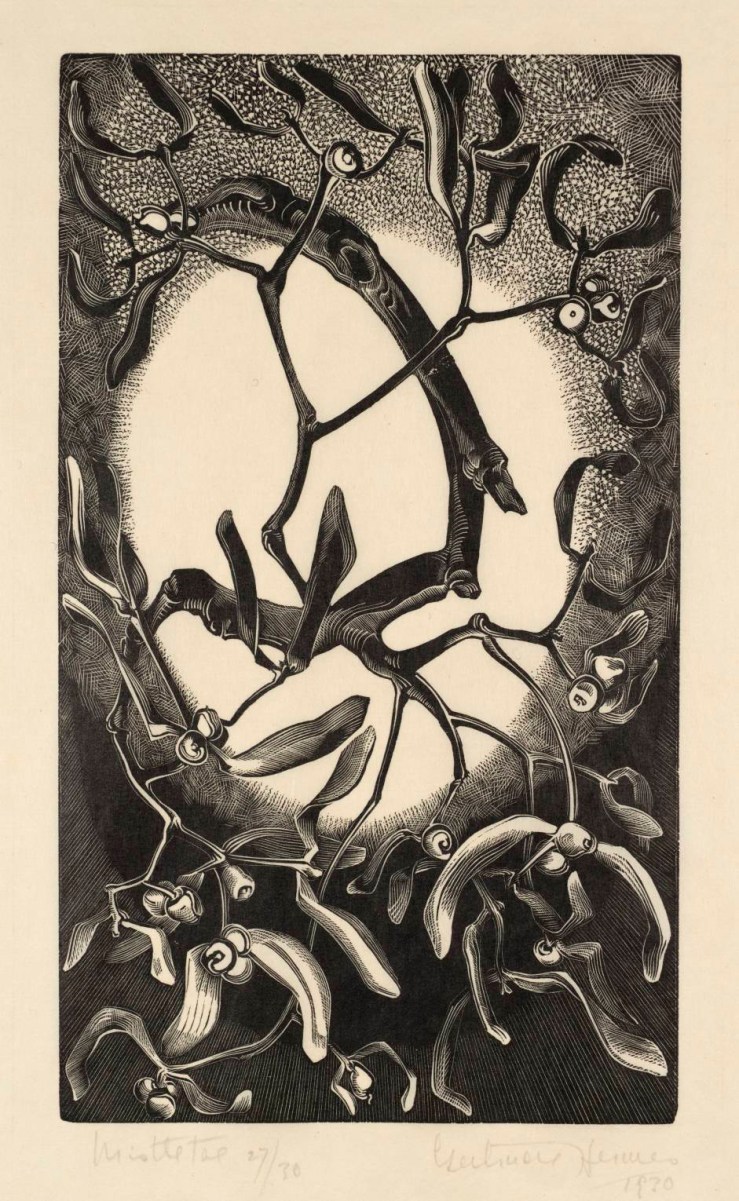
Mistletoe — Gertrude Hermes

thegorgeousdaily.com-gertrude-hermes-12

Mistletoe, 1930 by Gertrude Hermes (1901–1983)

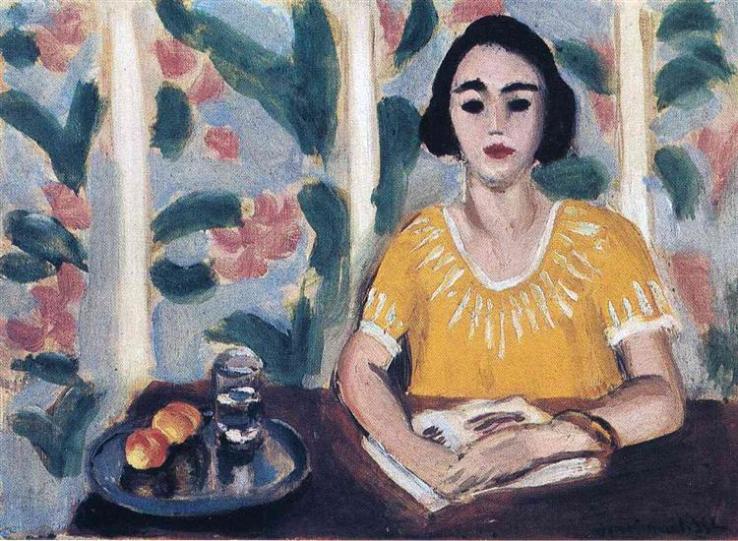
Woman Reading with Peaches — Henri Matisse

woman-reading-with-peaches-1923.jpglarge

Woman Reading with Peaches, 1923 by– Henri Matisse (1869–1954)

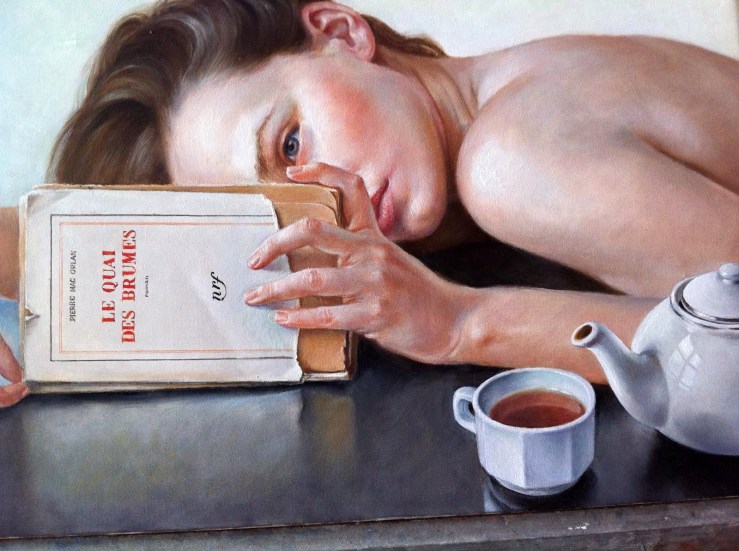
Untitled (Le Quai des brumes) — Francine van Hove

1475134729-007

Untitled by Francine van Hove (b. 1942)

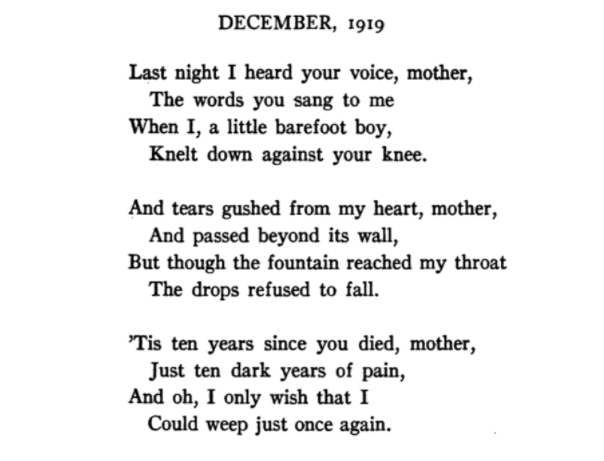
December, 1919 — Claude McKay

Screenshot 2019-12-17 at 5.42.38 PM

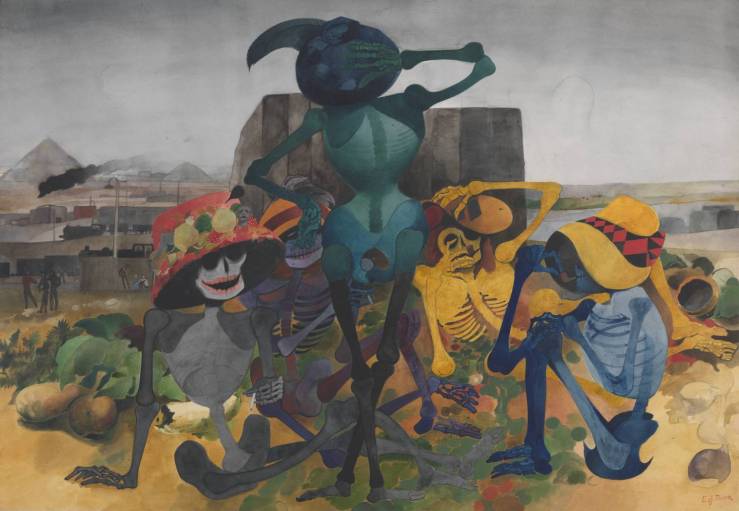
Skeleton Party — Edward Burra

Skeleton Party circa 1952-4 by Edward Burra 1905-1976

Skeleton Party, 1954 by Edward Burra (1905–1976)