Christ’s Entry into Jerusalem – Stanley Spencer

A Conversation about Evan Dara’s Novel Flee (Part 2)

IMG_5657

[Context/editorial note: I’d been meaning to read Evan Dara’s latest novel Flee for a while, and when Biblioklept contributor Ryan Chang told me he’d be reading it as part of a contemporary literature class I decided to join him. This is the second part of a two-part discussion which took place over a few weeks of emails. We discuss the book’s conclusion, including what some people might think of as “spoilers.”

Read part one of our discussion of  Flee.

The tl;dr version of all of this: Both Ryan and I loved Flee, a 2013 novel about the citizens of a New England town who, uh, flee, for reasons never made entirely clear I claim that “Flee is maybe the best novel (so far, anyway) to aesthetically and philosophically address the economic collapse of ’08.” Ryan called it a book “for people who like books to fuck with them and then be their friend.” And I agree with him. — ET]

Ryan Chang: Right–Flee doesn’t prescribe a future, or at least an alternative future. “841” testifies to this. The A-burgian upstakers are no different from the new settlers, rejoicing in the bargains to be had in the town. Carol and Marcus quietly disappear (Spoiler alert). Flee is overall hesitant to prescribe, I think. In my previous e-mail, I was thinking out loud a bit, trying to see if something in the book was pointing to these spaces of the “nonidentical” as Adorno calls it; that Flee as an aesthetic object figures, in exactly what isn’t said, the suffocating presence that squeezes the life out of A-burg, could figure a moment of possibility in absence. Some kind of fracture that, even if it is a failure (as A-burg is, I think), is a temporary moment of reprieve from the administered life.

I’m not sure what the forms of Kimball’s “radical forgiveness” and “hospitality” would be, if he points to them — especially of the former. And is it only that the literary artists get to have all the fun of democracy? Exactly where does democratic critique happen off the page? I’m wondering because it seems that the form of popular critique — save from public protest and other distortions of space — are infected with exploitative capital, with ideology, unwittingly going along with the system that saves the banks before humanity. Additionally: to whom–or what–is forgiveness granted? Hospitality seems more tangible to me, but the phrases Yes? Who’s There? imply exclusion rather than inclusion to me. As if at the door of democracy, the speaker hesitates. Should not a radical affirmation continually say yes rather than no at the door? The questioning yes is skeptical. I wonder if a self-consciousness and -becoming out of administration is required. The molectular make-up of the present absence that suffocates A-Burg and, implicitly, whatever other small town, would have to be transposed, if you like, into another key. To mention Lerner again (briefly) — do you remember that scene in the book, with the first hurricane, the (eventually fictional) threat of Irene destroying the infrastructure as a moment when disparate communities — who would otherwise keep to themselves, much like the voices in Flee — begin convening? That was just a way of getting to the epigraph of the book: “Everything will be as it is now, just a little different.” Continue reading “A Conversation about Evan Dara’s Novel Flee (Part 2)”

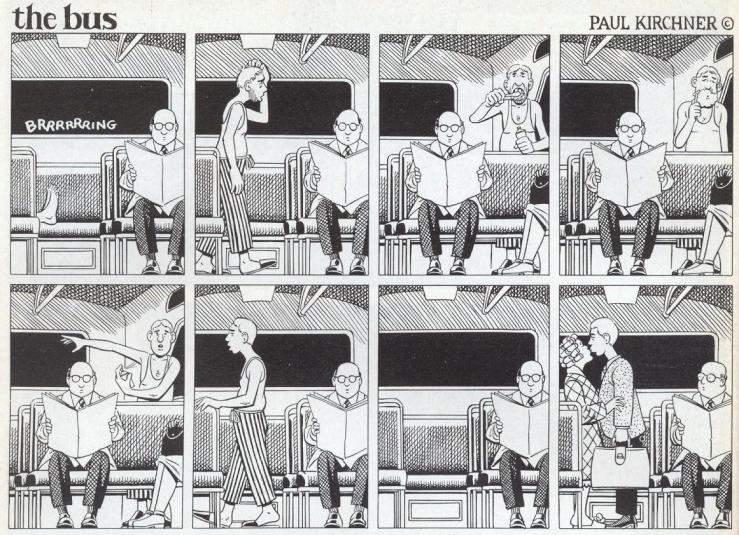
The Bus — Paul Kirchner

jMsHjMt - Imgur

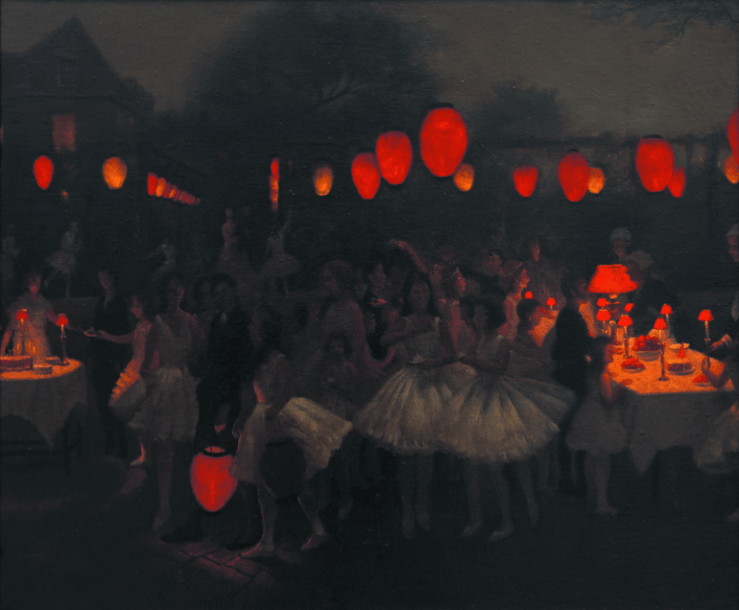
Study for The Birthday Party — Thomas Cooper Gotch

tumblr_nljtacnDMv1u4v8alo1_1280

“All art constantly aspires towards the condition of music”

Saint Jerome Reading a Letter – Georges de la Tour

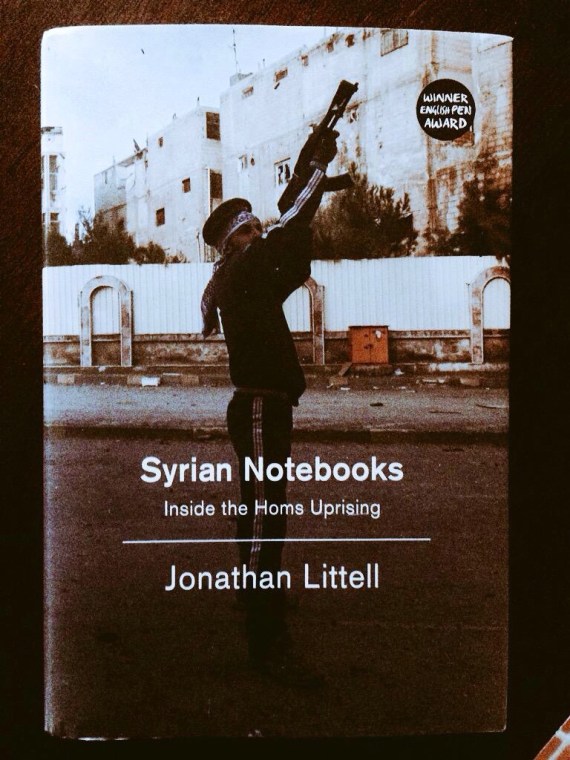
Jonathan Littell’s Syrian Notebooks (Book acquired, 3.23.2015)

Jonathan Littell’s Syrian Notebooks is new in English translation (by Charlotte Mandell) from indie Verso. This one seems like a big departure from The Kindly Ones (which, uh, it should be), which I loved hating that I loved. Verso’s blurb:

A blistering firsthand account of the conflict in Homs by the internationally acclaimed author of The Kindly Ones
“We fight for our religion, for our women, for our land, and lastly to save our skin. As for them, they’re only fighting to save their skin.”

In 2012, Jonathan Littell traveled to the heart of the Syrian uprising, smuggled in by the Free Syrian Army to the historic city of Homs. For three weeks, he watched as neighborhoods were bombed and innocent civilians murdered. His notes on what he saw on the ground speak directly of horrors that continue today in the ongoing civil war.

Amid the chaos, Littell bears witness to the lives and the hopes of freedom fighters, of families caught within the conflict, as well as of the doctors who attempt to save both innocents and combatants who come under fire. As government forces encircle the city, Littell charts the first stirrings of the fundamentalist movement that would soon hijack the revolution.

Littell’s notebooks were originally the raw material for the articles he wrote upon his return for the French daily Le Monde. Published nearly immediately afterward in France, Syrian Notebooks has come to form an incomparable close-up account of a war that still grips the Middle East—a classic of war reportage.


Read “The Dreadful Mucamas” by Lydia Davis

“The Dreadful Mucamas”

by

Lydia Davis

They are very rigid, stubborn women from Bolivia. They resist and sabotage whenever possible.

They came with the apartment. They were bargains because of Adela’s low IQ. She is a scatterbrain.

In the beginning, I said to them: I’m very happy that you can stay, and I am sure that we will get along very well.

This is an example of the problems we are having. It is a typical incident that has just taken place. I needed to cut a piece of thread and could not find my six-inch scissors. I accosted Adela and told her I could not find my scissors. She protested that she had not seen them. I went with her to the kitchen and asked Luisa if she would cut my thread. She asked me why I did not simply bite it off. I said I could not thread my needle if I bit it off. I asked her please to get some scissors and cut it off – now. She told Adela to look for the scissors of la Señora Brodie, and I followed her to the study to see where they were kept. She removed them from a box. At the same time I saw a long, untidy piece of twine attached to the box and asked her why she did not trim off the frayed end while she had the scissors. She shouted that it was impossible. The twine might be needed to tie up the box some time. I admit that I laughed. Then I took the scissors from her and cut it off myself. Adela shrieked. Her mother appeared behind her. I laughed again and now they both shrieked. Then they were quiet. Continue reading “Read “The Dreadful Mucamas” by Lydia Davis”

The Deer Milker — Toyohara Chikanobu

Anti-paranoia (Gravity’s Rainbow)

Rain drips, soaking into the floor, and Slothrop perceives that he is losing his mind. If there is something comforting—religious, if you want—about paranoia, there is still also anti-paranoia, where nothing is connected to anything, a condition not many of us can bear for long. Well right now Slothrop feels himself sliding onto the anti-paranoid part of his cycle, feels the whole city around him going back roofless, vulnerable, uncentered as he is, and only pasteboard images now of the Listening Enemy left between him and the wet sky.

Either They have put him here for a reason, or he’s just here. He isn’t sure that he wouldn’t, actually, rather have that reason…

From Thomas Pynchon’s novel Gravity’s Rainbow. The “pasteboard images” line recalls a favorite passage of Moby-Dick.

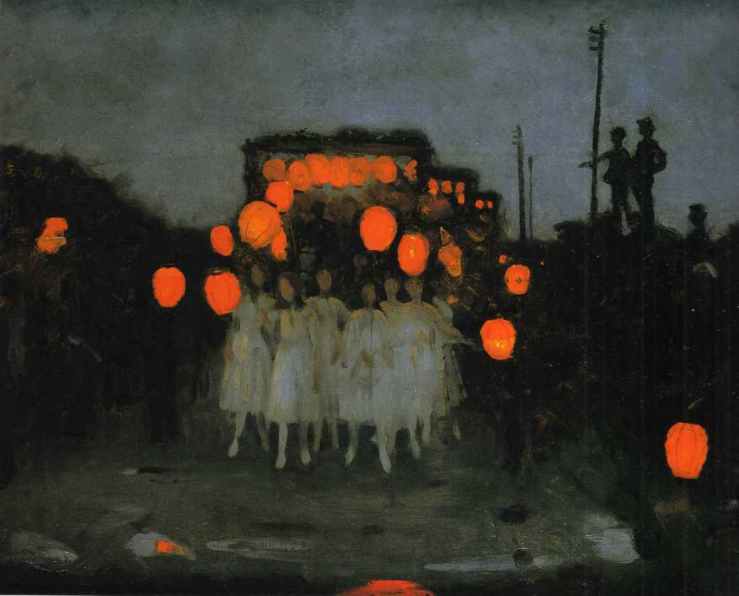
The Lantern Parade — Thomas Cooper Gotch

thomascoopergotchthelanternparade1

1000 Years of Popular Music — Richard Thompson (Film)

Read an excerpt of Alejandro Jodorowsky’s psychomagical memoir at BOMB Magazine

BOMB has published an excerpt from filmmaker Alejandro Jodorowsky’s new memoir Where the Bird Sings Best. An excerpt of the excerpt:

In those good old days, Salvador Arcavi, the first of a long series of Salvadors—traditionally all his descendants had the same name—though respectful of the Holy Book, decided he was not to going to be a prisoner to its letters. Following the prophecy Jacob made to his son (“Your hand will be on the neck of your enemy. Your father’s sons will bow down to you. Judah is a young lion.”), he became a lion tamer. His way to draw nearer to God was to study those beasts and to live an itinerant life, giving performances in which his union with his animals surpassed the limits of reality and reached the miraculous. The lions jumped through flaming hoops, balanced on the tight rope, danced on their hind legs, climbed up on one another to form a pyramid, spelled out the name of a spectator by choosing wooden letters, and, the greatest test, accepted within their jaws without hurting it the head of the tamer, then dragged him through the sawdust to draw a six-pointed star.

My ancestor had a simple method for making the beasts love him: he never forced them to do anything, and he made their training into a game. Whenever they wanted to eat, he fed them, and if they decided not to eat, he did not insist. If they wanted to sleep, he let them, and if they were rutting, he let them fornicate without distraction. He adopted the rhythm of the animals with care and tenderness. He let his hair grow into a mane, he ate raw meat, and he slept naked in the cage embracing his lions.

The Green Stocking — Egon Schiele

Even more beautiful emotions (Kafka’s diary entry, 27 March 1912)

27. March. Monday, on the street. The boy who with several others, threw a large ball at a servant girl walking defencelessly in front of them; just as the ball was flying at the girls’ behind I grabbed him by the throat, choked him in a fury, thrust him aside, and swore. Then walked on and didn’t even look at the girl. One quite forgets one’s earthly existence because one is so entirely full of fury is permitted to believe that, given the opportunity, one would in the same way fill oneself with even more beautiful emotions.

Franz Kafka’s diary entry, 27 March 1912. Translation by Joseph Kresh.

The Abduction of Ganymede — Rembrandt

“Rain” — Roberto Bolaño