
“Court Rules: Lion Is a Wild Animal” — Charles Portis

November 24, 1960

Court Rules: Lion Is a Wild Animal

A young Brooklyn longshoreman fought a spirited but losing battle in a Brooklyn courtroom yesterday for the right to keep a pet lion at his home.

After the drawn-out, somewhat tongue-in-cheek proceedings at Flatbush Magistrate’s Court, Magistrate Matthew P. Fagan resolved the issue with a concise decision: “I take judicial notice that the lion is a wild animal. I find the defendant guilty.”

The sentence was a $25 fine or ten days in jail. Anthony Ortolano, twenty-six, of 581 Carroll St., Brooklyn, the defendant, asked for ten days in which to raise the $25 and the magistrate granted the request, noting that Mr. Ortolano’s care of the lion had been exemplary.

The specific charge was Section 197 of the city’s Penal Law which makes harboring a wild animal capable of inflicting bodily harm a misdemeanor.

Mr. Ortolano’s troubles with the law began Friday night when Patrolman Thomas Higgins and another officer stopped a car at Union St. and Seventh Ave. to check on the automobile registration. In the car were Mr. Ortolano, three other men and Cleo, a four-month-old male lion, three and a half feet tall and weighing 125 pounds. Mr. Ortolano has since corrected the name to Leo in light of the discovery made over the weekend.

Leo and Mr. Ortolano were hustled off to the Bergan St. police station, where they cooled their heels while a summons was issued. Leo was taken to the Brooklyn shelter of the American Society For the Prevention of Cruelty to Animals.

The trial began yesterday with Mr. Ortolano’s attorney, William Kunstler of Manhattan, asking the judge if the lion could be brought in the courtroom as evidence that he was friendly and tame.

“Oh hell no,” said Magistrate Fagan. “All these people in here would start running. And I wouldn’t blame them.” About 150 persons were in the room.

Then he turned to some officers and asked if they had the
ir guns ready. “Don’t bring him in under any circumstances,” said the judge, “I will conduct this case outside.”

The judge, attorneys, witnesses, defendant and newsmen repaired to an alley outside the court where Leo had been brought in an ASPCA panel truck. The flap was let down to expose the lion, which was beating his head against the wire netting.

The judge opened court in the alley and read the complaint. Mr. Ortolano allowed Leo to lick his fingers through the cage. Then a noisy group of students from nearby Erasmus Hall High School joined the spectators and Magistrate Fagan decided to take the trial back inside. “I’ll take judicial note that I’ve seen the lion,” he said.

The testimony of witnesses followed.

Patrolman Higgins told of the Friday night arrest. He said that Ortolano had told the police that he had bought the lion two weeks ago for $350 from an animal dealer.

Mr. Ortolano said he had a leash on the lion at the time of the arrest and that the windows of the car were up. He said he had a steel cage for Leo in the backyard at his home.

To prove that the animal was tame, said Mr. Kunstler, he would call as witnesses two animal experts.

The first was Mrs. Helen Martini, of 1026 Old Kingsbridge Road, the Bronx, who said she had been an animal trainer for twenty years. Leo was not ferocious, but “very nervous,” she said. But when she was cross-examined by Irving Singer, Assistant District Attorney, she conceded that the animal belonged in a zoo.

Next came Bob Dietc, a zoo-keeper at Fairlawn, N.J., who said that he had trained Leo himself and that he was safe. “He’s only a baby, you could put him in your vest pocket,” he said.

Asked if it wasn’t true that the animal was unpredictable, Mr. Dietc said, “It’s my opinion that all animals are unpredictable, from chickens to birds.”

After the holidays the ASPCA will turn Leo over to Mr. Dietc who will keep him until he can sell him for Mr. Ortolano. Mr. Ortolano, who has been paying $3.15 a day for horsemeat for Leo, is busy getting together $25.


An article by Charles Portis in The New York Tribune. Portis worked for the Tribune for four years in the 1960s before turning to a career as a novelist. The story above is collected in a miscellany of his non-novels, Escape Velocity.

“Under the Young” — Tom Clark

IMG_3223

Girl on a Red Carpet — Felice Casorati

Girl on a Red Carpet, c. 1912 by Felice Casorati (1883-1963)

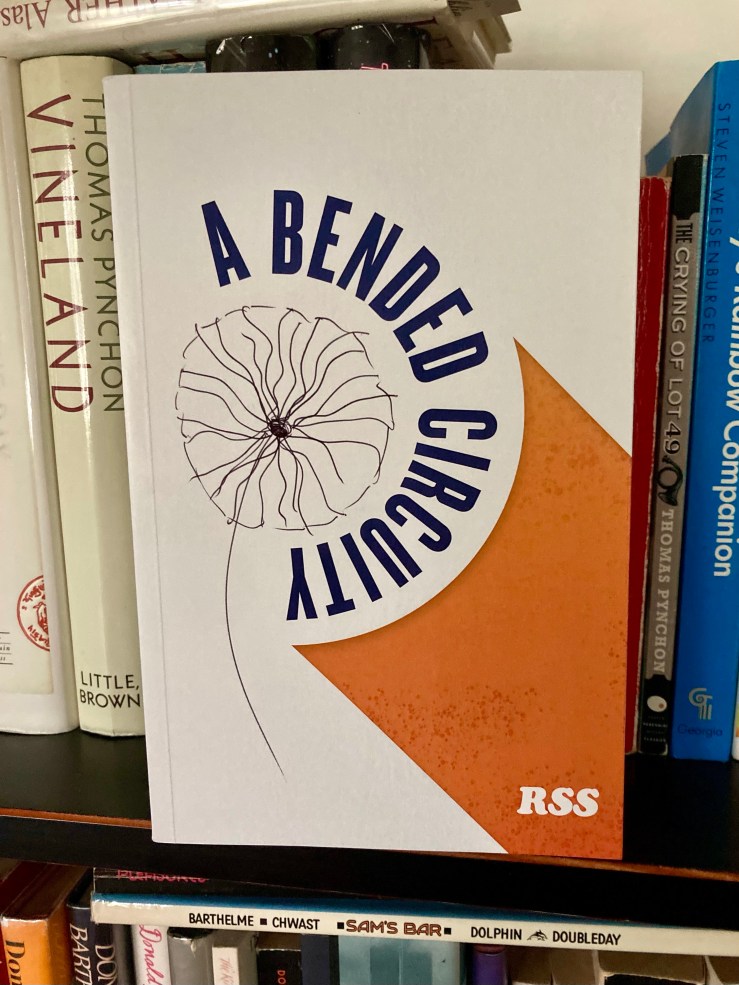
Gerald Murnane’s Inland (Beautiful book acquired some time last week, like maybe 11 Oct. 2023)

I love the new And Other Stories covers that just start, and I’m psyched on their edition of Gerald Murnane’s 1988 novel Inland. Their blurb:

Inland is a work which gathers in emotional power as it moves across the grasslands of its narrator’s imagination – from Szolnok County on the great plains of Hungary where a man writes in the library of his manor house, to the Institute of Prairie Studies in Tripp County, South Dakota, where the editor of the journal Hinterland receives his writing, to the narrator’s own native district in Melbourne County, between Moonee Ponds and the Merri, where he recalls the constant displacements of his childhood. ‘No thing in the world is one thing,’ he declares; ‘some places are many more than one place.’ These overlapping worlds are bound by recurring motifs – fish pond, fig-tree, child-woman, the colours white, red and green – and by deep feelings of intimacy and betrayal, which are brought to full expression as the book moves to its close.

My review closer to publication; in the meantime, read an excerpt.

Read one-time Biblioklept contributor Ryan Chang on Inland back in 2013.

Untitled (Kaba) — Katsuhiro Otomo

Untitled (Kaba (Hippo)), c. 1989 by Katsuhiro Otomo (b. 1954)

Memory of Places — Sliman Mansour

Memory of Places, 2009 by Sliman Mansour (b. 1947)

A moth goes into a podiatrist’s office | Norm Macdonald

A moth joke from Norm Macdonald’s memoir Based on a True Story


A moth goes into a podiatrist’s office. The podiatrist says, “What’s the problem?”

The moth says, “Where do I begin with my problems? Every day I go to work for Gregory Vassilievich, and all day long I toil. But what is my work? I am a bureaucrat, and so every day I joylessly move papers from one place to another and then back again. I no longer know what it is that I actually do, and I don’t even know if Gregory Vassilievich knows. He only knows that he has power over me, and this seems to bring him much happiness. And where is my happiness? It is when I awake in the morning and I do not know who I am. In that single moment I am happy. In that single moment, before the memory of who I am strikes me like a cane. And I take to the streets and walk, in a malaise, here and then there and then here again. And then it is time for work. Others stopped asking me what I do for a living long ago, for they know I will have no answer and will fix my empty eyes upon them, and they fear my melancholia might prove so deep as to be contagious. Sometimes, Doc, in the deepest dark of night, I awake in my bed and I turn to my right, and with horror I see some old lady lying on my arm. An old lady that I once loved, Doc, in whose flesh I once found splendor and now see only decay, an old lady who insults me by her very existence.

“Once, Doc, when I was young, I flew into a spiderweb and was trapped. In my panic, I smashed my wings till the dust flew from them, but it did not free me and only alerted the spider. The spider moved toward me and I became still, and the spider stopped. I had heard many stories from my elders about spiders, about how they would sink their fangs into your cephalothorax and you would be paralyzed but aware as the spider slowly devoured you. So I remained as still as possible, but when the spider again began moving toward me, I smashed my wing again into my cage of silk, and this time it worked. I cut into the web and freed myself and flew skyward. I was free and filled with joy, but this joy soon turned to horror: I looked down and saw that in my escape I had taken with me a single strand of silk, and at the end of the strand was the spider, who was scrambling upward toward me. Was I to die high in the sky, where no spider should be? I flew this way, then that, and finally I freed myself from the strand and watched as it floated earthward with the spider. But days later a strange feeling descended upon my soul, Doc. I began to feel that my life was that single strand of silk, with a deadly spider racing up it and toward me. And I felt that I had already been bitten by his venomous fangs and that I was living in a state of paralysis, as life devoured me whole.

“My daughter, Alexandria, fell to the cold of last winter. The cold took her, as it did many of us. And so my family mourned. And I placed on my countenance the look of grief, Doc, but it was a masquerade. I felt no grief for my dead daughter but only envy. And so I have one child now, a boy, whose name is Stephan Mikhailovitch Smokovnikov, and I tell you now, Doc, with great and deep shame, the terrible truth. I no longer love him. When I look into his eyes, all I see is the same cowardice that I see when I catch a glimpse of my own eyes in a mirror. It is this cowardice that keeps me living, Doc, that keeps me moving from place to place, saying hello and goodbye, eating though hunger has long left me, walking without destination, and, at night, lying beside the strange old lady in this burlesque of a life I endure. If only the cowardice would abate for the time needed to reach over and pick up the cocked and loaded pistol that lies on my bedside table, then I might finally end this façade once and for all. But, alas, the cowardice takes no breaks; it is what defines me, it is what frames my life, it is what I am. And yet I cannot resign myself to my own life. Instead, despair is my constant companion as I walk here and then there, without dreams, without hope, and without love.”

“Moth,” says the podiatrist, “your tale has moved me and it is clear you need help, but it is help I cannot provide. You must see a psychiatrist and tell him of your troubles. Why on earth did you come to my office?”

The moth says, “Because the light was on.”

Sementi — Agostino Arrivabene

Sementi (Seeds), 2023 by Agostino Arrivabene (b. 1967)

Books acquired, 13 Oct. 2023

I couldn’t pass on a used copy of the second edition of Steven Weisenburger’s A Gravity’s Rainbow Companion even though it ate up most of my trade credit. I used the first edition of the Companion when I reread Gravity’s Rainbow about eight years ago and then gave it to a friend I had been encouraging to read GR. He still hasn’t read it.

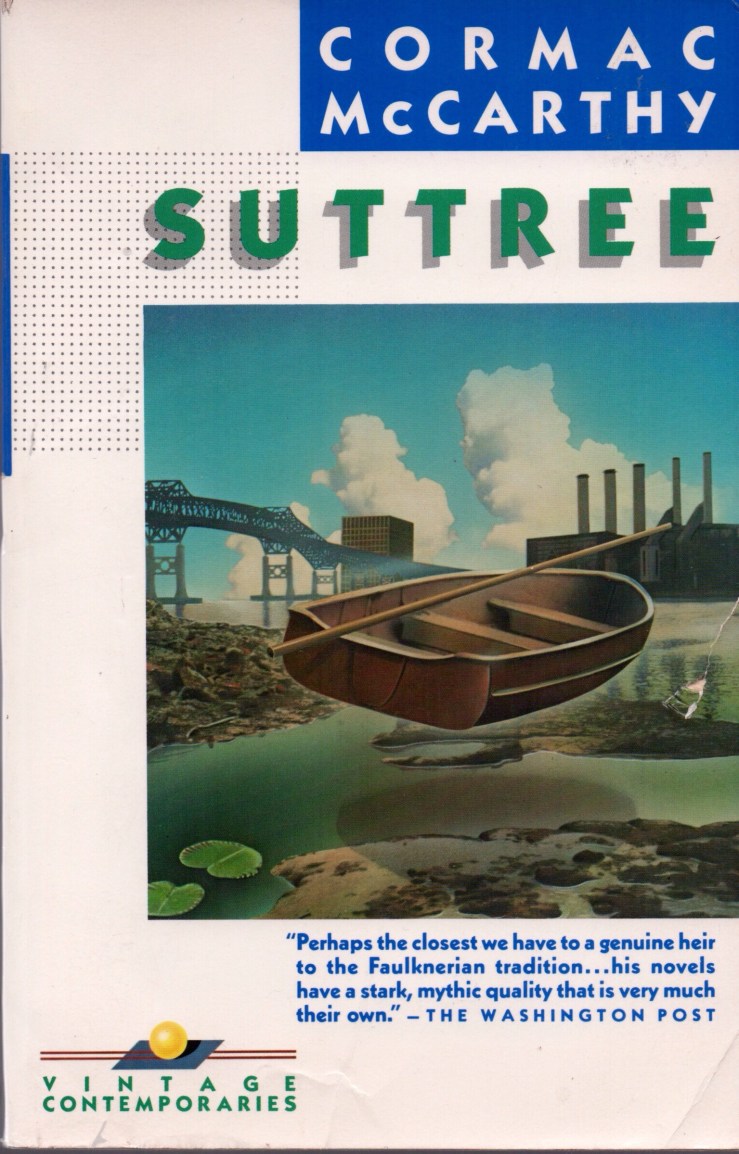
I also picked up a hardcover first edition of Cormac McCarthy’s The Road and a pristine 1946 hardback edition of Joyce’s Ulysses. I’ll probably trade in the Gabler edition of Ulysses I have, but I think I’m too sentimental to let go of the copy of The Road I read in the hospital over a few days when my daughter was born.

I’m a big fan of Vintage Contemporaries, but I’d never seen Terry McDonell’s California Bloodstock. I pulled it out because of its spine, and found the cover intriguing–it reminded me of these weird paintings that hang in a decrepit hotel in St. Augustine Beach that we stay at for a few nights every year. The blurb from H.S. Thompson didn’t hurt either.


I opened it to find that the novel is inscribed:

Anyone know Lou Schultz? Or what SMART might be?

(This is not a review of) The Dragon Waiting, John M. Ford’s lost classic of fantastical history

So what’s this book you liked so much?

It’s called The Dragon Waiting. It’s a 1983 novel by a guy named John M. Ford. It’s this erudite historical fantasy, or maybe fantastical history, that—

Wait, it’s called The Dragon Waiting? It’s like about dragons and shit? Dungeons and dragons?

There are dungeons, or really towers—the whole medieval motif of hostage-taking is part of the novel—but no, no dragons. Or, there is a dragon at the very end of the novel, but it’s essentially a shared illusion manifested by the dreams of an approaching army. The dragon manifests as this illusory spectacle, a spectacle based on lack and imagination—it’s kinda Lacanian, really, because—

Okay, so, is it a fantasy novel or not? I mean are there wizards and monsters and shit?

There are wizards. But really, they operate more like, I dunno, spies or chemists or thieves. One of the four main protagonists is a Welsh wizard named Hywel Peredur, and he isn’t like, doing sorcery so much as he’s trying to shape events by aligning personalities, throwing out political and personal gambits, heroic scheming, and—

Like Gandalf.

Yeah, like Gandalf I guess. Or Merlyn. But really, the stuff in The Dragon Waiting is like, reality-based, by which I mean history-based, or at least historical-fantasy-based.

So there aren’t any orcs or trolls or elves or whatever and the dragon is just a shared illusion? 

There are monstrous people. Oh, there are also vampires, but they’re not all bad.

So it’s a vampire novel? A horror novel?

No, not a horror novel, although it has some gothic tinges, and definitely not a “vampire novel,” whatever that is—although one of the four protagonists is afflicted with vampirism. He’s a German engineer named Gregory von Bayern who specializes in artillery.

So he’s a vampire who makes guns and bombs?

Kind of, but that makes it sound silly.

And so he kills people?

Yeah, but not to feed on them, and not like, in general. He’s one of the heroes of the story, enlisted by Hywel to—

Hywel is the Gandalf?

Not a great analog but sure, Hywel is your Gandalf. And he kinda puts together this squad whose long-term goals are never really stated clearly, but they are essentially forming a Western resistance to the Byzantine Empire.

The Byzantine Empire?

Yeah. So, in the alternate reality of The Dragon Waiting, the Byzantine Empire is the great unified force in the East. And because of this, Christianity never emerges as a major religion, so instead there’s this plurality of all kinds of Gods worshipped—Egyptian, Greek, Roman, and son on. And the sort of background action of the novel is Byzantium encroaching into Europe, threatening Italy, which is a bunch of disunified city states, so even if the Medici are powerful, they still have their own internal opponents, that’s one of the major themes of the novel—political infighting. We see the political scheming thing most strongly in the novel’s dominant plot, which is Hywel’s gang’s attempt to get Richard the Duke of Gloucester on the English throne.

Richard the Duke of Gloucester—that was a real guy, right?

Lots of the characters in The Dragon Waiting are real guys from history, yes.

So what do I know Richard the Duke of Gloucester from?

He was Richard the III of England.

The hunchback guy? The winter of our discontent guy? The guy who killed his nephews?

That’s how Shakespeare depicted him in the play, yes. But Ford’s novel takes a different approach. He’s very human, and he has flaws, but he’s not a Machiavellian child-killing prick.

Okay, so all of this is taking place in like Byzantium and Italy and England and like, when? When is Richard III? 1600 something?

No, not Byzantium—that Empire is trying to spread west. No, the action takes place in Western Europe—Wales, Italy, France, Switzerland, England, and so on. And the dates would cover a few decades, but a lot of the prime action is happening at the end of the fifteenth century. Richard III was coronated in the summer of 1483, if that helps. But because Christianity never really takes off, the whole AD thing never happens, so those numbers don’t really show up in the book.

This sounds really complicated. Do I need to know a lot of European history, world history to understand what’s happening?

Oh, I think even if you knew a lot of the historical background very well you’d have a hard time understanding what’s happening.

Great. So why are you into this dragon book?

I love how it’s written; I love its themes, its layering, its construction. It’s a dense book that feels light; it’s serious and erudite but also psychologically drawn. Ford eschews exposition. In fact, at times he even sets the reader up to look the wrong way. And this fits with a lot of the themes and motifs and bits of the novels—illusionists, forgers, secret agents, disguises, spies, thieves, and so on. So it’s not just happening in the plot; it’s also happening at the rhetorical level. Like, for example, okay, so we get this kind of overture in the first three chapters, which establish three of our four protagonists: Hywel the Welsh wizard, Dimitrios Ducas, an exiled Greek mercenary, and Cynthia Ricci, an Italian doctor initially in the service of the Medici. And Ford’s camera sits close to their perspective, we get into their heads, get to know them a bit. And then all of a sudden we get to the book’s second section, and all of the characters are in disguise in this remote mountain inn, way up in the snow, using false names. And Ford never shows his hand, we just have to figure out what happens, who the characters really are, and how they relate to each other. And he sort of wedges this neat little murder mystery in there (in the snow in a hotel no less—reminded me of Crane’s “The Blue Hotel” or Tarantino’s The Hateful Eight). And Ford does this again and again, but in new ways—misdirection, disguise, illusion. I ended up having to read each chapter twice.

I bet the vampire did the murder!

Okay.

But so like there are vampires in this book, but that’s not, like, a thing?

The novel treats vampirism as a disease, not as a supernatural thing, and like many diseases, there is folklore and superstition that develops around the disease, some in common with our own concept of “vampirism.” The vampires in The Dragon Waiting are sensitive to light and they do have to consume blood, but they aren’t necessarily immortal, and to a large extent, they are shunned and feared. Although some of them become powerful.

And the vampire Gregory is good?

I guess. The motivations for the four main characters aren’t necessarily good or evil, per se, although the four of them are generally sympathetic to decency, humanity, and compassion over violence and raw power. But ultimately, they seem mostly motivated by the strange friendships they forge with each other.

That sounds corny.

It’s not.

Ok. So you like the writing, but what about the subject matter? I mean, I didn’t really think you were into historical fantasy fiction? Does a body have to know a lot of European history to get into this? I tried to ask you earlier and you deflected.

I think I answered just fine: No, not really. There’s a lot of English history in there, and a lot of it will be familiar (but strangely so) if you know Shakespeare’s plays on the Plantagenet kings—a cycle that ends with Richard III, obviously.

Obviously.

I think Ford knows his history really, really well, but part of his rhetorical technique is withholding certain clues, baiting and switching, reshuffling the deck, moving the cups quickly in a shell game…the story is really about shifting identities, shifting names, shifting allegiances, and so on. I suppose it might be easy to compare it to George R.R. Martin’s A Song of Ice and Fire books, but, like better written, smarter, and trimmed of all the fat.

Rude.

That’s not what I meant. It’s sort of like Gene Wolfe’s New Sun novels. Although I’d really compare The Dragon Waiting to something like Thomas Pynchon’s Against the Day or V.—those are historical fantasies too—or fantastical histories?—encyclopedic ones that frequently defer meaning and stun or bewitch the reader. There’s like a specter there in the prose, pushing out an illusion that the reader has to chase—

The reader has to chase the dragon?

Shush.

So you’re saying this dragon book is Pynchonian?

No, no. But many things I like in Pynchon—the paranoia, the showing of the parts while withholding the revelation of the whole, the dazzling encyclopediaism—I find that in The Dragon Waiting too. Ford’s style also reminds me a bit of Cormac McCarthy, who’s so good at simply showing actions while refusing to tell the reader what they mean—either to the characters or to the narrator or whomever. Things just happen and the reader has to sort it out.

But won’t I get confused?

I was confused but not frustrated. I was confused, but then I’d reread the chapter and realize I had been looking in the wrong direction or following the wrong thread. Again, rhetorical misdirection doubles the novel’s themes of political/magical misdirection.

But the history might get me all confused.

Okay, so, the names can cause confusion. Pretty much every character has multiple names or titles, and they all use aliases as well. And lots of the historical background characters, particularly the English ones, have the same names. Lots of Richards and Elizabeths and Edwards and Henrys in here. Ford provides a little overture of historical personages, and Wikipedia is always there. Oh, and there’s this really cool site called Draco Concordans which is a series of annotations on the novel.

Wait, I have to read annotations on a website to follow this book? Is this fucking Finnegans Wake or something?

No, and I only found the site after I finished the book. I might have liked to have used it when I reread each chapter though. But I would definitely recommend reading it the first time cold. I think the pleasure in the book is looking back to realize where you lost the thread, where you were misdirected. I’m sure I’ll consult the Concordans when I read The Dragon Waiting again.

So you’ll read it again?

Oh yeah, definitely. Loved it.

That sounds like a recommendation then.

It is. I highly recommend it.

Apocalypse — Oskar Kokoschka

Apocalypse, 1950 by Oskar Kokoschka (1886-1980)

Walter Kempowski’s An Ordinary Youth (Book acquired, 2 Oct. 2023)

Walter Kempowski’s An Ordinary Youth gets its first published English translation thanks to Michael Lipkin. The book is new in print from NYRB. Their blurb—

An Ordinary Youth is a novel drawn directly from the author’s boyhood in Nazi Germany. Nine-year-old Walter’s family is moving house when the novel opens, but Walter’s main concerns are his tin soldiers and his older brother’s jazz records, his father’s fluctuating moods, and his mother’s ministrations and anxieties. While Walter is absorbed by his private life, the extraordinary accumulation of contemporary idioms that accompany his point of view—dialogue, song, literary quotations, commercials, and political slogans—tell a different story.  Through this echo chamber of voices, Kempowski shows a hugely turbulent and murderously intolerant nation racing toward disaster. An immediate bestseller when it was first published in Germany in 1971 (as Tadellöser & Wolff) and the best known of Kempowski’s novels in Germany, An Ordinary Youth is now available in English for the first time.

“Motel #1” — Charles Portis

Untitled (Motel Room with Fluorescents), from The Los Alamos-Portfolio,1965-68 by William Eggleston (b. 1939)

“Motel #1”

by

Charles Portis

From his essay “Motel Life, Lower Reaches,” first published in Oxford American in 2003 and later collected in Escape Velocity.


Back when Roger Miller was King of the Road, in the 1960s, he sang of rooms to let (“no phone, no pool, no pets”) for four bits, or fifty cents. I can’t beat that price, but I did once in those days come across a cabin that went for three dollars. It was in the long, slender highway town of Truth or Consequences, New Mexico.

That cute and unwieldy name, by the way, was taken in 1950 from the name of a quiz/comedy radio show, and has stuck, against long odds. The show was okay, as I recall, a cut or two above the general run of broadcast ephemera, with some funny 1949 moments. But why re-name your town for it? And by now, a half-century later, you would think the townsfolk must surely have repented their whim and gone back to the old name, solid and descriptive, of Hot Springs. But no, and worse, the current New Mexico highway maps no longer offer both names, with the old one in parentheses, as an option, for the comfort of those travelers who wince and hesitate over saying, “Truth or Consequences.” Everyone must now say the whole awkward business.

I was driving across the state at the time, very fast. There were signs along the approaches to town advertising cheaper and cheaper motel rooms. The tone was shrill, desperate, that of an off-season price war. It was a buyer’s market. I began to note the rates and the little extras I could expect for my money. Always in a hurry then, once committed to a road, I stopped only for fuel, snake exhibits, and automobile museums, but I had to pause here, track down the cheapest of these cheap motels, and see it. I would confront the owner and call his bluff.

There were boasts of being AIR COOLED (not quite the same as being air-conditioned) and of  PHONE IN EVERY ROOM,  KITCHENETTES, LOW WEEKLY RATES, CHILDREN FREE, PETS OK, VIBRO BEDS, PLENTY OF HOT WATER, MINIATURE GOLF, KIDDIE POOL, FREE COFFEE, FREE TV, FREE SOUVNIERS. (Along Arkansas roads there are five or six ways of spelling souvenirs, and every single one of them is wrong. The sign painters in New Mexico do a little better with that tricky word, but not much better.) The signs said  SALESMEN WELCOME and  SNOWBIRDS WELCOME and TRUCKS WELCOME/BOBTAILS ONLY—meaning just the tractors themselves; their long semi-trailers would not be welcome. And there were the usual claims, often exaggerated, of having CLEAN ROOMS or NEW ROOMS or CLEAN NEW ROOMS or ALL NEW CLEAN MODERN ROOMS.

I decided not to consider the frills. How could you reckon in cash the delight value of a miniature golf course with its little plaster windmills, tiny waterfalls, and bearded elves perched impudently on plaster toadstools? I would go for price alone, the very lowest advertised price, which turned out to be three dollars. It was a come-on, I knew, a low-ball offer. Sorry, I would be told, but the last of those special rooms had just been taken; the only ones left would be the much nicer $6.50 suites. I would let the owner know what I thought of his sharp practice, but not really expecting him to writhe in shame.

The three-dollar place was an old “tourist court,” a horseshoe arrangement of ramshackle cabins, all joined together by narrow carports. The ports were designed to harbor, snugly, small Ford sedans of 1930s Clyde Barrow vintage, each one with a canvas water bag (“SATURATE BEFORE USING”) hanging from the front bumper, for the crossing of the Great American Desert.

But there were no cars here at all, and no one in the office. I gave the desk bell my customary one ding, not a loutish three or four. An old lady, clearly the owner, perhaps a widow, came up through parted curtains from her cluttered female nest in the rear. She was happy to see me. l asked about a three-dollar room, for one person, one night. She said yes, certainly, all her cabins went for three dollars, and there were vacancies. This, without bothering to crane her neck about and peer over my shoulder, by way of giving my car out there the once-over. Desk clerks do that when I ask for a single, to see if I am trying to conceal a family. These clerks are trained in their motel academies to watch for furtive movement in the back seats of cars, for the hairy domes of human heads, those of wives, tykes, and grannies left crouching low in idling Plymouths.

This old lady had come up in a gentler school. She was honest and her signs were honest and her lodgers were presumed to be more or less honest. She had caught me up short and rattled me. Who was bluffing now? I couldn’t just leave, nor, worse, give her three dollars and then  leave, compounding the insult to her and her yellowish cabins. I paid up and stayed the night, her only guest.

My cabin had a swamp cooler, an evaporative cooling machine that is usually quite effective in that arid country. A true air conditioner (brutal compressor) uses much more electricity than a swamp cooler (small water pump, small fan). But then the cooler does consume water, and the economy of nature is such—no free lunch—that the thing works well only in a region where the humidity is low—under forty percent, say. Where water is scarce, that is, and thus expensive.

It was dry enough here, but my cooler was defective and did nothing more than stir the hot air a bit.

I looked the room over for redeeming touches. It wasn’t so bad, beaten down with use and everything gone brown with age, but honorably so, not disgusting, shabby but clean, a dry decay.

The bedding may have been original stock. That central crater in the mattress hadn’t been wallowed out overnight, but rather by a long series of jumbo salesmen, snorting and thrashing about in troubled sleep. A feeble guest would have trouble getting out of the mattress. He would cry out, feebly, for a helping hand, and nobody in earshot. The small lamp on the bedside table was good, much better for reading than the lighting systems in expensive motels, with their diffused gloom. Motel decorators, who obviously don’t read in bed, are all too fond of giant lampshades, a prevailing murk, and lamp switches that are hard to find and reach. The bath towels were clean but threadbare, and much too short to use as wraparound sarongs while shaving. The few visible insects were dead or torpid. There were no bathroom accretions of soft green or black matter. The lavatory mirror was freckled and had taken on a soft sepia tint. Mineral deposits clogged the shower head, making for a lopsided spraying pattern, but the H and C knobs had not been playfully reversed, nor did they turn the wrong way. There were sash windows you could actually raise, after giving them a few sharp blows with the heels of your hands, to break loose the ancient paint. Here again the feeble guest, seeking a breath of air, would struggle and whimper.

I had paid more and seen worse—murkier and more oppressive rooms, certainly, with that dense black motel murk hanging about in all the corners, impossible to dispel and conducive to so many suicides along our highways, I had seen worse rooms, if not thinner and shorter towels. There was plenty of hot water. I had the privacy of a cabin, and indeed not a single neighbor. What I had was a cottage, and a steal at three dollars.

Early the next morning the lady came tapping at my door. She had a pot of coffee for me on a tray with some buttered toast and a little china jug of honey. It was that unprecedented gesture, I think, and the grace note of the honey—no sealed packet of “Mixed Fruit” generic jelly—that made the place stick in my head so, and not the price at all. I like to think the old cabins lasted out the good old lady’s widowhood. It must have been a close-run finish. And it comes to me now, late, a faint voice, saying the price was really two dollars.

A review of Escape from the Great American Novel, Drew Lerman’s zany satire on art, nature, and capitalism

Drew Lerman’s comic strip Snake Creek takes us into the world of best pals Roy and Dav, weirdos among weirdos in Weirdest Florida. Their adventures and misadventures are both absurdly comic and zanily tragic, calling to mind George Herriman’s Krazy Kat strips and Samuel Beckett’s pessimism, Walt Kelly’s primeval Pogo and Robert Coover’s jivetalk, all rendered in kinetic black ink four-panel doses. I’ve been a big fan of the strip for a few years now, and Lerman’s latest collection Escape from the Great American Novel is his best work to date, a fun, messy, spirited send-up of the relationship between art, nature, and commerce.

Escape from the Great American Novel is a novel in just over 150 strips, spanning the end of August, 2019 through the beginning of August, 2021. If you reflect on those dates for a minute, you might recall that we squeezed in a lot of history there. Many of the (so-called) real-life tensions of that tumultuous time bubble up (and occasionally erupt) in the zany, myth-elastic world of Snake Creek.

Things begin simply enough, with Dav seeking to reclaim his “status as a reader of books.” Our protagonist simply wants to dig in to fine literature, but news of approaching Hurricane Dorian blocks his book time. Lerman is a Miamian (a Floridian like myself), and although the world of Snake Creek reverberates with massive streaks of irreality, it is nevertheless also beholden to real-life forces of nature. Ever the slackers, Dav and Roy are ill-prepared for an impending Cat 5. Lerman lays out a comedic scene that might be familiar to anyone who’s tried to buy batteries and water and plywood at the last minute:

The early Dorian episodes of Escape usher in a critique of capitalism-as-religion, or capitalism-as-philosophy (as opposed to, say, the naked reality of exploitation both of people, animals, and natural resources). Short on capital or material, Dav and Roy concoct a plan to forge receipts, totems of capital that might ward off the angry Nature God Dorian. Lerman sneaks in a reference to the erstwhile hero of William Gaddis’s 1955 novel The Recognitions, the forger Wyatt Gwyon:

The storm passes, post-hurricane sobriety settles in, and Dav finds himself reflective: Just what is he doing with his life? And, maybe more to the point, what can he do to extend that life into immortality? His solution, immediately ridiculed by friend Roy, is to commit himself to writing The Great American Novel:

Dav’s quest takes a solipsistic turn. He plays the tortured artist, his ambition a block to his actual progress in writing The Great American Novel. Lerman satirizes the over-inflated but self-defeating ego of the artist who aspires to surpass all the great works came before him. While the pratfalls of a would-be tortured artist is not a particularly fresh subject matter, Lerman brings vitality to his depiction of Dav’s struggle against the anxiety of influence. If we enjoy mocking Dav, it’s because we understand and empathize with him. Who doesn’t want to contend with the greats?

Dav’s quest also takes a turn away from his shenanigans with Roy. The pair’s riffing has always been the heart of Snake Creek, but Lerman keeps his partners apart for much of Escape. Dav’s dive into writing (or preparing to write, or preparing to prepare to write) distract him from Roy time. Initially, Dav chugs out reams of pages in the thrill of early enterprise. His ego swells, inflated by the grandeur of his illusions:

Only a few strips later, we find Dav’s illusions deflated. “S’all trash!” he declares over the mess of his nascent manuscript. Roy tries to help Dav. Snake Creek folk are all riled up over the plans of some “ollie garx” and the people are protesting. Roy rightfully recognizes potential inspiration here. He can bring his pal back to earth. “Sum sorter politicka thing” is happening, and that might be the inspirational grist Dav needs, right? But Dav rejects him: “I do not wish to know about anything that happened on this earth.” It might be hard to change the course of earthly life with that attitude. Instead of heeding Roy’s advice, Dav falls deeper into navel-gazing, imagining his future success, and generally doing anything except writing.

Dav’s dithering with the typewriter leaves Roy loose and “roving.” An amiable fellow, Roy soon takes up with two Russian oligarchs, Lev and Igor. This nefarious pair wishes to drill for oil in Snake Creek, destroying the weird paradise for profit. They plan to use charismatic, naïve Roy as their mouthpiece, a trusted liaison to the Creek community who can convince the locals on board to “drill baby drill.”

Lerman’s satire of these “ollie garx” and their relations with Roy is riddled with great gags. The oligarchs give Roy bald eagle eggs, which he proceeds to fry up to Dav’s dismay. They take him golfing and try to get him into Ayn Rand. They explain their anti-nature views—Mother Earth isn’t a caring mother but a devouring father who must, in oh-so Freudian terms, be eliminated. (Lerman, who always sneaks literary allusions into his strips, can’t resist referencing Faulkner’s As I Lay Dying during this exchange.) In one of my favorite exchanges in Escape, the oligarchs try to explain to Roy why his main talking point to convince the Snake Creek denizens to drill should be the promise of jobs:

“But people hate jobs” — yes. And it is ideology, but you’re not stupid, reader, although the oligarchs might think you are. Their attempted seduction of sweet Roy plays out against Dav’s egotistical self-seduction into a fantasy of literary greatness in the twin threads of Escape from the Great American Novel. There are meditations on art, immortality, capitalism, and the role of our native environs. There are throwaway jokes on Harold Bloom and arguments over the better English translation of Camus’ L’Etranger. There are drones and fecal preoccupations and a nice ACAB reference; there are anarchist swamp folk and bombs! And there are puns. I hope you like puns.

The strips collected in Escape from the Great American Novel span two years that often felt in “real time” like an eternity. Many of us were separated from friends and family over these months. Lerman’s gambit, intentional or otherwise, is to keep his central characters separated, which adds real tension to a comic novel that otherwise might be a loose collection of funny riffs. As I stated before, Roy and Dav are the heart of Snake Creek, so when Lerman finally reunites them the moment is not just cathartic, it’s literarily metaphysical. For all its sardonic jags, ribald japes, and erudite allusions, Escape from the Great American Novel is in the end a sweet, even heartwarming read (Dav and Roy would find a way to mock this sentiment, I’m sure). I loved it. Highly recommended.

Escape from the Great American Novel is available in print from Radiator Comics.


Don was there, as well as William Gass, Stanley Elkin, William Gaddis, and half a dozen others of the postmodernist bent.


The New Yorker: Last week, there was a three-day festival in your honor at Brown University, in Providence—titled, in part, “Celebrating the Unspeakable Practices of Robert Coover”—featuring appearances by many of your colleagues and admirers, including T. C. Boyle, Don DeLillo, Alexandra Kleeman, Marlon James, Edwidge Danticat, Paul Auster, and many others. What was the stimulus for the festival?

Robert Coover: “Unspeakable Practices” was the title of a farewell party I organized for the then retiring professor and great metafictionist John Hawkes, in 1988—a title taken from Donald Barthelme’s book of stories “Unspeakable Practices, Unnatural Acts.” Don was there, as well as William Gass, Stanley Elkin, William Gaddis, and half a dozen others of the postmodernist bent. After that, over the years, we continued with a sequence of vanguard literary ingatherings, calling them all “Unspeakables.” In effect, this was the last one and perhaps the most brilliant of the lot, peopled by old friends and many former students, now celebrated writers in their own right. The readings on the final day by Edwidge Danticat, Rick Powers, Siri Hustvedt, Don DeLillo, and Paul Auster were sensational, some of the best public performances I’ve ever heard. Its whole title was meant to include my creation of the International Writers Project and its freedom-to-write predecessors at Brown, as well as my pioneer digital language workshops in hyperfiction and “cave writing” (writing in immersive 3-D), both programs launched at Brown in 1989. It was a great party, a party that began with the performance of a short sequence from my son Roderick’s radio play based on “Gerald’s Party,” and ending with a reiteration of an old festival favorite, the “Unspeakable Circus.”

From a brief 2018 exchange between the great American novelist Robert Coover and Deborah Treisman (published in The New Yorker). More on Coover’s “Unspeakable Practices” event here.

Pool Party — John Valadez

Pool Party, 1987 by John Valadez (b. 1951)

Gravity’s Rainbow is a picaresque, apocalyptic, absurdist novel that creates a complex mythology to describe our present predicament

L.E. Sissman’s contemporary review of Gravity’s Rainbow offers one of the better summaries I’ve ever read of Thomas Pynchon’s enormous novel:

Gravity’s Rainbow is a picaresque, apocalyptic, absurdist novel that creates a complex mythology to describe our present predicament. It is supposedly about a brief period in the decline of the West—fall, 1944, through fall, 1945. It is actually about our entire century, from the roots of the First World War through the final calamity, which keeps on threatening right up to press time. Beyond that, it is about the whole modern tendency of man to subordinate himself to the whims of the products of his intelligence, to the self-aggrandizing dictates of machines. It is also about the paranoia this subordination instills in men—a paranoia of which they are absolved as their persecution dreams come true and, ironically, destroy them.

Later in the review, Sissman, a poet, discusses Pynchon’s prose:

Pynchon’s talent is far greater than mere mimicry, though he is master of that. He is almost a mathematician of prose, who calculates the least and the greatest stress each word and line, each pun and ambiguity, can bear, and applies his knowledge accordingly and virtually without lapses, though he takes many scary, bracing linguistic risks. Thus his remarkably supple diction can first treat of a painful and delicate love scene and then roar, without pause, into the sounds and echoes of a drugged and drunken orgy.

Sissman’s review was published in a May 1973 issue of The New Yorker. I think the review would work as a strong introduction for anyone daunted by but interested in reading Gravity’s Rainbow.