“I penetrated beneath the Curtain through a disused S-Bahn tunnel which led to the center of the earth” (William Vollmann)

As soon as I’d rested, I penetrated beneath the Curtain through a disused S-Bahn tunnel which led to the center of the earth, which I can now assure you is a hemispherical room whose pattern of blue and white tiles have been chessboarded, staired and umbrella’d for centuries. Here I discovered rows of listening devices like pictures in a gallery, each machine affixed to reality by its two wires, each one labeled: ZOYA, VLASOV, GEHLEN . . . They went on and on, infinitely. Where was SHOSTAKOVICH? But after all, I had to see him; I had to face him! In a crypt in Berlin I’ve spied the effigy of an infant whose hand reaches innocently out at the world which he has been denied, while a stone eagle guards him. I was the child within the tomb! I had nothing, not even an eagle, because he hated me.

But I found resurrection in the delicious moonlight of Berlin-East. And like a champagne cork I popped up into the air, speeding into Europe Central! It was quite gusty; I would have enjoyed carrying my Variometer, to check variations in barometric pressure. But my Variometer was another item I’ve lost over the years. Prague’s hills crowded with trees and towers were all dark; Riga was buried under autumn leaves; and in an empty snowy park in Moscow I found Shostakovich walking round and round.

Smeared with iron-colored grime I interrupted his circles; I blocked his way; I snivelled and insisted: Herr Schostakowitsch, I’m sorry—

Indignantly he interrupted: I must tell you this, my dear German friend: I feel it’s the worst cynicism to, to, to besmirch yourself with ugly behavior and then speak beautiful words. I, do you know, I think it’s preferable to say ugly words and not commit illegal acts . . . But nothing could take me away from him now! He was everything to me. He—and Elena, of course. (Where was Elena?)

Oh, how cold it was! I had to get down and grovel in the snow. But it paid off; I fulfilled my objective. People rarely choose to accept my apologies. But in the end, Shostakovich did. He’s a very nice man.

What I dreamed of by then was inventing a method to bring about a reconciliation between him and Elena (who was codenamed LINA); was I supposed to shoot him before or after that? How about not at all? You see, I’d come to adore the man, and I valued his happiness more than my own. Many’s the time I’ve peeped in on him as he’s composing. When he closed his eyes, I saw how happy he truly was; with my Zeiss lenses I was able to obtain a magnified view of the veins in his eyelids, which pulsed in time with what must have been his Fifth Symphony, described by R. Taruskin as a series of components, gestures or events that are immediately recognizable as signs or symbols whose referents are not specified by any universally recognized and stable code. Now he was smiling! His fingers spread out on the table and he seemed to be playing a complex chord on the piano, or perhaps milking Elena’s left breast—how I loved him for his happiness!

On one of those assassination visits, which now numbered more than the total number of Allied bombing raids on Berlin, he’d confided to me that there was a certain other world he sometimes lived in, a world beneath the piano keys; not caring to hurt his feelings by revealing that I already knew that, I calculated the sum instead: Let me keep this all straight; first there’s Berlin itself, divided into East and West just as Europe is; second of all, there are the four sectors of Germany; meanwhile, within the Soviet zone, there’s this other zone, this place where everything is beautiful and pure (this is why I loved him; this is in fact an extremely Germanic conception); but who can go there? Only Shostakovich himself? Can Elena go there, too? She left him because she didn’t want to go there; but what if she’d actually left him because he believed her capable of entering that world and she knew that she couldn’t? Whenever I listen to Opus 40 I believe that she can, but if that’s the case, where did the operation break down? He’d told me that toward the end she was really trying; she framed the first page of the score to Opus 40, a composition which was truly her as he knew her; and she hung it up on the wall of her little flat on Kirovsky Prospekt in Leningrad, to show him that she, that she, you know (these last six words come verbatim from Shostakovich). All right, but could he ever bring her there? Please God, why not?

He’d also told me of a nightmare which had attacked him for years: He tries to make love with Elena but every time he takes her into his arms the telephone rings.

I begged him for the password. I wanted admission to that world east of East, the world beneath the piano keys. If I only had that, I’d be free; I wouldn’t need to worry about which list the Gehlen Organization kept me on.

He said: But that’s sad, because you’re not my, how should I say, I mean, your name’s not Lyalka! What’s the basis of our relationship? I mean, frankly, you really haven’t been very, you know. Moreover, it’s not your world.

Where is my world then, Herr Schostakowitsch? Build one, my dear friend . . .

From William T. Vollmann’s novel Europe Central.

The passage comes from the section “Airlift Idylls,” near the end of the novel. “Airlift Idylls” is told by an unnamed narrator who claims

The section reads like Kafka, or Philip K. Dick, or Sigizmund Krzhizhanovsky, a Cold War tale of assassination as an endless loop, where our narrator dreams himself into another existence.

Umberto Eco — Rudcef

umberto

Oscar Wilde’s Cigarette Case

This silver cigarette case was presented by Bosie Douglas to his disgraced lover, Oscar Wilde. To launch Gilbert and Sullivan’s latest operetta Patience in America – a satire on Aestheticism – the impresario Richard D’Oyly Carte paid Wilde to undertake an extensive lecture tour of the United States in 1882. To everyone’s surprise (including his own), the flamboyant author and professional aesthete won over America – and the West – to such an extent that his lecture tour had to be extended into the following year.

Via.

Hasta su Abuelo — Mircea Suciu

“Flavia and Her Artists” — Willa Cather

“Flavia and Her Artists”

by

Willa Cather    

As the train neared Tarrytown, Imogen Willard began to wonder why she had consented to be one of Flavia’s house party at all. She had not felt enthusiastic about it since leaving the city, and was experiencing a prolonged ebb of purpose, a current of chilling indecision, under which she vainly sought for the motive which had induced her to accept Flavia’s invitation. Continue reading ““Flavia and Her Artists” — Willa Cather”

Letter from the Old Country — David Bekker

“All art constantly aspires towards the condition of music”

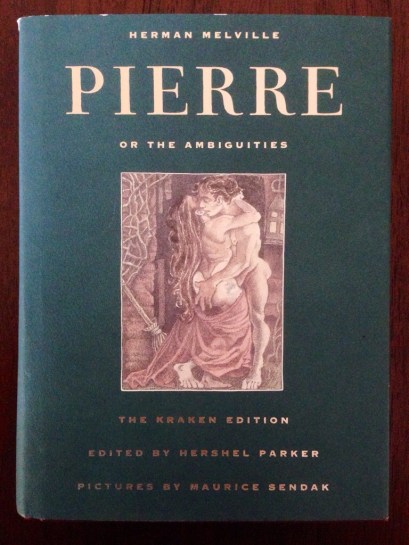
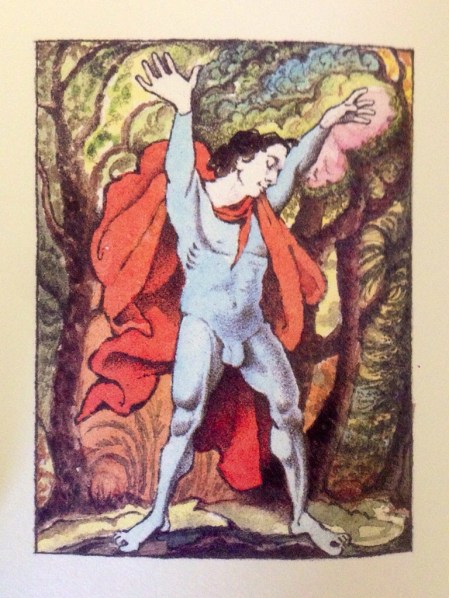
Maurice Sendak’s Erotic Illustrations for Herman Melville’s Pierre (Book Acquired, 5.09.2014)

20140520-162625-59185259.jpg

Pierre, Herman Melville’s follow up to Moby-Dick, was, without a doubt, the most challenging, perplexing, befuddling book I read in school. I still don’t get it.

Still, I love Melville, and I love Maurice Sendak, so when I saw this unused copy of the Kraken addition for half-cover price at my favorite local used bookshop, I couldn’t resist.

Sendak’s bawdy illustrations recall William Blake to me—great stuff—although I’ll probably read Moby-Dick or The Confidence Man again before I make time for Pierre.

Read more about this edition of Pierre here.

20140520-162627-59187043.jpg

20140520-162630-59190560.jpg Continue reading “Maurice Sendak’s Erotic Illustrations for Herman Melville’s Pierre (Book Acquired, 5.09.2014)”

Bittersweet Reminiscences of The Life Aquatic

Aeneas and the Sibyl in the Underworld — Jan Brueghel the Elder

“Retaliation” — The Marquis de Sade

“Retaliation”

by

The Marquis de Sade

A worthy citizen of Picardy, the descendant perhaps of one of those illustrious troubadours from the banks of the Oise or the Somme whose sluggish existence has only been rescued from the shadows some ten or twelve years ago by a great writer of our time, a brave and honest citizen, I repeat, lived in the town of Saint-Quentin so famous for the great men it has given to literature. He lived there in honorable estate, himself, his wife and a cousin thrice removed, a nun of a convent in the town. The cousin thrice removed was a little brunette, bright-eyed, with a mischievous little face, a turned-up nose and a slender figure; she suffered under the weight of twenty-two years, and had been a nun for four of them. Sister Petronilla, for such was her name, had in addition a pretty voice and a much greater disposition for love than for religion. As for M. d’Esclaponville, as our citizen was called, he was a fine jovial fellow of about twenty-eight, who loved his cousin supremely and Mme d’Esclaponville nothing like so well, since he had been sleeping with her for ten years already, and a habit of ten years’ standing is quite fatal to the fires of hymen. Mme d’Esclaponville — for it is necessary to depict her, a writer would be despised if he did not portray people in an age where only pictures are required, and where even a tragedy would not be received unless the canvas-mongers found at least half a dozen subjects in it — Mme d’Esclaponville, as I was saying, was a somewhat insipid blonde, slightly washed-out, but very white-skinned, with pretty eyes, well-fleshed, and with those great chubby checks that are commonly described by the world as “a good squeeze.” Continue reading ““Retaliation” — The Marquis de Sade”

The Library — Jacob Lawrence

The Encounter on 2 bis rue Perre — Victor Brauner

“Trapped by a Thing Called Love” | Dance Scene, Only Lovers Left Alive

The horrible secret of adulthood (Life in Hell)

horrible

Curation and Creation in Only Lovers Left Alive, Jim Jarmusch’s Vampire Film

20140520-082414-30254444.jpg

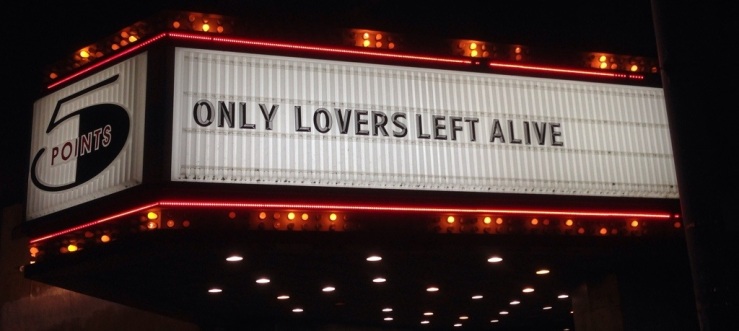
Jim Jarmusch’s latest film Only Lovers Left Alive is excellent. 

Moody, sometimes funny, always gorgeous, and largely plotless, the film centers on two vampires—Adam and Eve, played by Tom Hiddleston and Tilda Swinton—who fill their long lives with music, literature, and love. At its core, the film is an elegiac love song to aesthetic originary creation in the age of the curator.

As Mike D’Angelo points out in his smart review

What really interests Jarmusch is immortality, or at least longevity. How would we behave if we lived for centuries, and were free to do pretty much anything we wanted? What sort of aesthetes and collectors might we become? … In this world, the vampire’s primary function is to appreciate the things we humans take for granted; they’re much more like curators than monsters.


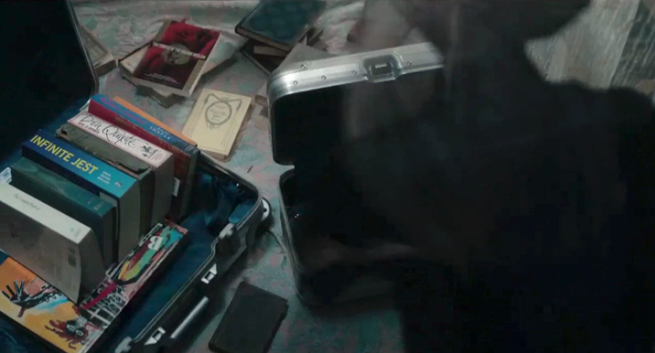
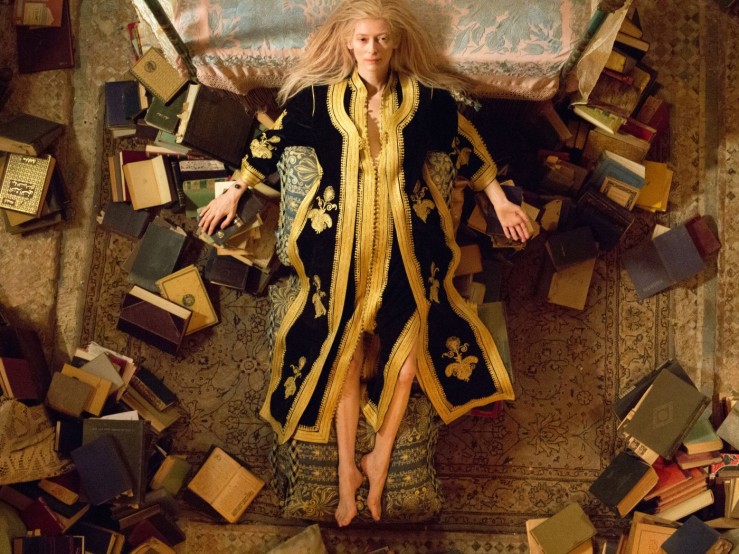
Eve’s curatorial powers are enviable—she merely has to touch an object to know its age (and quality). She touches Adam’s beloved Gibson guitar, declaring “1905.” As she packs her suitcase full of books (Don QuixoteInfinite Jest, and Kafka all make the cut), she scrolls her fingers through pages briskly but lovingly, seeming to absorb each one instantly.

book5

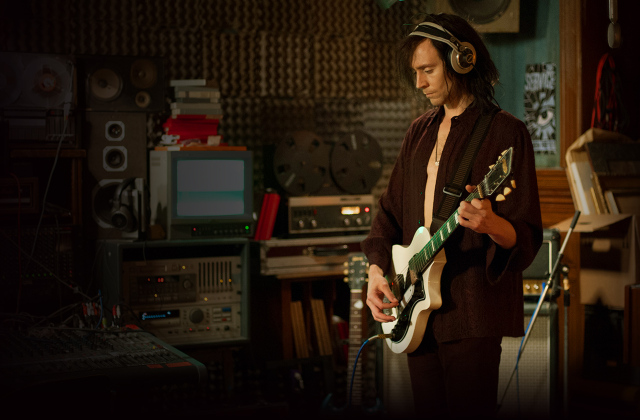
Adam’s curatorial impulses manifest in his collection of antique musical and electronic equipment, his claustrophobic crumbling mansion a mad scientist’s lab of sight and sound. Adam creates plodding dirges, death songs, elegies for the end of romance. Reclusive cult hero, he hides in the outskirts of Detroit from his growing fanbase who demand to know who made this music. Like Wyatt, the masterful forger of William Gaddis’s novel The Recognitions, Adam wonders what people want from the person that they couldn’t get from the work of art. Still, as he mournfully complains to Eve, Adam wants a reflection, something to echo back to him. His fans—the “zombies”—are not enough.

adam

Eve’s library and Adam’s studio allow Jarmusch to perform his own curatorial impulses. On one wall in a room of Adam’s mansion hang the portraits of dozens of writers and musicians, including Blake, Poe, Twain, and Christopher Marlowe. Marlowe it turns out is a vampire—and the real author of Shakespeare to boot. 

It might be tempting to accuse Jarmusch of merely providing fan service for hipsters, but there’s more going on here than simple name-checking. Adam’s wall isn’t simply a shrine for hero-worship. Instead, it feels like a gallery of family portraits. 

Some viewers may find Adam and Eve’s aesthetic obsessions insufferable. As if in anticipation of this criticism—and as a sort of counter argument—Jarmusch plants an internal critique of his lovers in the film in the form of Eve’s kid sis Ava, an impulsive, strangely immature, and ultimately tacky vampire. In her acrimonious parting with Adam and Eve, Ava curses the pair as “condescending snobs.” She is, of course, absolutely correct.only-lovers-left-alive02

Adam and Eve are snobs, but perhaps living through eons will do that to a body, so what should we expect? Adam, black-haired, always dressed in black, veers along a desperate, suicidal spectrum, writing dirges for the end of the world. Eve, golden-haired, clothed in white, must constantly remind Adam of eternal recurrence, a motif figured in Jarmusch’s repeated shots of spinning 45rpm records. Adam mourns the death of Detroit, but Eve tells him that it will bloom again when the “cities of the South are burning.”

Only Lovers Left Alive is peppered with these notes of apocalypse, but Eve tempers them with a kind of weary optimism: She and her lover will survive, and they will preserve what is worth preserving, worth loving. Not only will they curate, they will also create. As the film rushes to its ending in Tangier (my biggest criticism is that we could use another half hour)—oh, and that word “ending”: yeah, look out, fair warning, some spoilers ahead—as the film rushes to its ending, Adam and Eve experience intense blood withdrawal.  Continue reading “Curation and Creation in Only Lovers Left Alive, Jim Jarmusch’s Vampire Film”