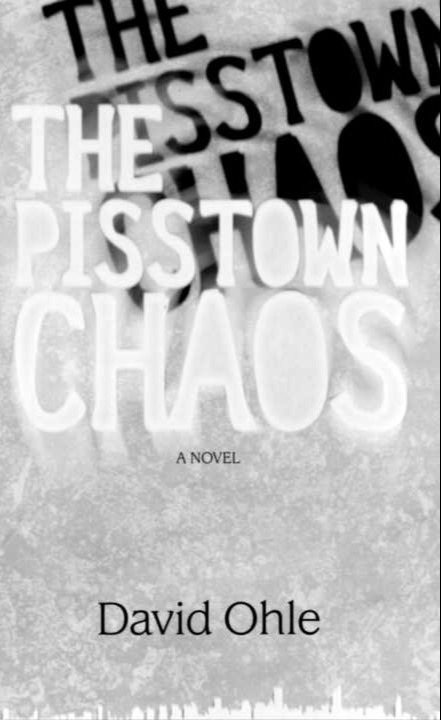
The Pisstown Chaos, David Ohle’s post-convenience novel of abject gags and grotesque japes

Let’s get the obvious out of the way first: The Pisstown Chaos is an improbably perfect and beautiful name for a novel. If you don’t like the title, The Pisstown Chaos isn’t for you. It is a foul, abject, hilarious, zany vaudeville act, a satire of post-apocalyptic literature, an extended riff on American hucksterism. It’s very funny and will make most readers queasy.

The author of The Pisstown Chaos is David Ohle. The novel was published in 2008; it is the second of three “sequels” to Ohle’s 1972 cult classic Motorman. You do not have to have read Motorman or The Age of Sinatra (2004) to “understand” The Pisstown Chaos. (But you’ll probably want to dig into those if you dig The Pisstown Chaos’s uh pungent urinous ammonia bouquet)

Moldenke, hero of Motorman, is a bit player in The Pisstown Chaos, a walk on, a song-and-dance man with no songs or dances. A storyteller. He’s a zombie, too — a “stinker” in the novel’s parlance — adorned in “black rags and a wide-brimmed white hat,” sporting “an inch-long tube of flesh protruding from just below his ear [which] had the general appearance and shape of an infant’s finger, but lacked a nail. In the end of the tube, a small hole leaked a clear, gelatinous fluid.”

Moldenke, we are to infer, is one of the “Victims of the Pisstown parasite…thought of as dead, but not enough to bury. Gray haggard, poorly dressed, they lay in gutters, sat rigidly on public benches, floated along canals and drank from rain-filled gutters.” He may or may not be centuries old.
It’s not clear how far into the future we are in the Ohleverse (it doesn’t really matter). After “the Great Forgetting,” and multiple and ongoing Chaoses, the world has regressed, or progressed, or really mutated, into a dusty, wet, gross, nasty post-infrastructure reality. You might read The Pisstown Chaos as a slapstick zombie Western.

The Reverend Hooker presides over this wonderfully abject world. Hooker’s loose theocratic federation revolves elliptically around a “shifting” scheme. Nothing is permanent, everything is moving, plates spinning on poles. Folks receive their shifting papers and must relocate from, say, a cozy cottage to a prison camp. Or they might end up paired with a new concubine or some such.

That’s the fate of Mildred Balls, née Mildred Vink, who meets Jacob Balls on the road to Witchy Toe. The pair meet cute and get on famously. (And who wouldn’t; after all, suave Jacob Balls was the inventor of  the “finely-grained, yellow-tinged powder” known as “Jake” — a kind of post-apocalyptic Bud Light.) Optimistic Jacob is optimistically optimistic of all the shifting, attesting his belief that “in any culture, when boredom and apathy take hold, the currency is debased and the decline is irreversible…What could be more of a tonic than a random redistribution of the populace?” Mildred is less convinced: “The whole scheme is idiotic.”

The Pisstown Chaos focuses on the Balls clan — primarily an older Mildred and her young adult grandkids, Roe and Ophelia. There are stinkers and imps, shifting folk consuming urpflanz, willy, and Jake on their way via Q-ped to Indian Apple or Bum Bay. Reverend Hooker is always lurking in the margins, too, before taking over the narrative’s final pages in a mock apotheosis that brought a stupid smile to my face.

Ohle’s narrative isn’t exactly a picaresque, but it runs on the same energy. Each chapter opens with a series of frank excerpts from the Pisstown rag, the City Moon. Here’s one update of news you need:

A fondness for pickled lips has led to the arrest of a Kootie Fiyo, a stinker known to be a trader in tooth gold and a vicious biter. Fiyo was just leaving the impeteria in South Pisstown when two Guards entered. The proprietor said, “That stink can eat more imp lips than I can heap in front of him. “

The City Moon is not just a source for the goods on a stinker’s glimpse of pickled imps’ lips, but also a gloss on the undead (or un-undead’s) physiology:

What then is a final-stage stinker’s life like? It has been described by scientists as showing a poverty of sensation and a low body temperature. In their nostrils is the persistent odor of urpmilk. The membrane which lines their mouth is extremely tough and is covered with thick scales. They like to touch fur and drink their own urine. Because they have been known to go without food for as long as eighteen years, we can assume that their sense of time passing is also very different from our own.

The Stinker Problem is likely the signature event of whatever century we are in. There’s probably an icky metaphor or allegory somewhere in there, but I find myself disinterested in that end of the novel. But still: Consider Mildred–who wants to find a “cure” for stinkerism–in charge of a crew of stinkers who, after their daily labors, commit “to walking in circles and searching the ground.” But these are not geologists peering into the navel of the world: “‘No, Miss,’ Spanish Johnny said, ‘We like to get dizzy and faint. It’s the way we have fun.'” We’ve all been there.

Mildred’s granddaughter Ophelia commands much of the narrative, shifting about her stations in life. Her domestic comedy with servants Red and Peters is a class-conscious comic delight. Our Miss Madame goes through a series of abject slapstick routines with the Help (including an enema gag that uh, gag me yeah). Here’s a foul episode in the life of Ophelia Balls:

She walked carefully from slippery stone to slippery stone until she got to the potting shed, then blew out the candle. She tried the door and found it locked. Wiping the dirty door-glass, she looked in at Peters, lying on the peat pile with his pants pulled down, fanning his rear with a handful of straw. Red, sitting beside him in Mildred Balls’s underwear, combed Peters’s coarse hair with a tortoise-shell comb. Peters’s cheeks were flushed, his eyes half-closed. When Ophelia entered, the scene seemed all the more lurid for the dim lantern and its flicker.

“I hope you don’t take any offense,” Red said, “but I’ve just mated with Peters here.”

Peters sat up. “I was quietly potting geraniums when that idiot stepped out of a dark corner and made advances, clumsy, lewd advances, with his big willy sticking out. I tried, but I couldn’t resist him.”

“Is that true, Red, that he put up resistance?”

“He lies like a rug. He clearly indicated he wanted me to sex him good and sex him hard.”

Ophelia saw the pointlessness of going any further with the inquiry. “All is forgiven. Let’s move past this.”

“I’ll serve the swan,” Red said.

If I’ll serve the swan isn’t your kinda punchline, The Pisstown Chaos ain’t your cup of Jake. It’s a rich, smelly, gross novel, fun, funny, fueled with 19th-century inventions viewed through piss-colored glasses, aimed at the apocalyptic future. It’s smoked imp-meat served with urpsmoke, a vaudeville buzz against the zombies in the gutter. When I was a kid we held our breath when we passed cemeteries. There are other ceremonies, other totems, but warding off the dead remains a concern.

I have neglected the Balls scion, young Roe, who eventually finds himself attending the Reverend Hooker. Late in the novel, Roe Balls prepares an enema for the theocrat; Hooker then delivers a sermon:

“I’ll warm up the bathroom right away, sir, and get the enema bag ready.”

Once Roe had firmly inserted the hose, the Reverend sat on the pot and closed his eyes. “There, that’s it, Roe. It’s in well enough.”

“Shall I leave you alone now, sir?”

“No. Don’t leave. Let me sermonize a little. I’ll tell you a story, a story with a lesson. In the days when all men were good, they had miraculous power. Lions, mountains, whales, jellyfish, hagfish, birds, rocks, clouds, seas, moved quietly from place to place, just as men ordered them at their whim and fancy. But the human race at last lost its miraculous powers through the laziness of a single man. He was a woodman in the Fertile Crescent. One morning he went into the forest to cut firewood for his master’s hearth. He sawed and split all day, until he had a considerable stack of hickory and oak. Then he stood before the pile and said, ‘Now, march off home!’ The great bundle of wood at once got up and began to walk, and the woodman tramped on behind it. But he was a very lazy man. Now, why shouldn’t I ride instead of galloping along this dusty road, he said to himself, and jumped up on the bundle of wood as it was walking in front of him and sat down on top of it. As soon as he did, the wood refused to go. The woodman got angry and began to strike it fiercely with his axe, all in vain. Still the wood refused to go. And from that time the human race had lost its power.”

“That certainly explains everything I’ve ever wondered about, sir.”

“You may clean me now.”

“Yes, sir.”

The punchlines accumulate after the Rev. Hooker’s fable — young Roe’s deadpan line “That certainly explains everything I’ve ever wondered about, sir” made me laugh aloud when I read it, and the following asswipe line is too much — but I think we have here in the fable a key to the novel. Not the key, but a key.

In the Rev’s woodman’s fable, humans once wielded Promethean power over the world. But that power’s contingent; it exists only when humans move with the world, attentive to its rhythms and limits. When the woodman attempts to ride the wood and make it a convenience instead of walking alongside it, cooperation collapses. S’all she wrote.

Ohle’s chaotic, grotesque world echoes his some-time collaborator William Burroughs’ alien abjection. It will also be comfortingly/nauseatingly familiar (familiar?!) with anyone who digs David Cronenberg’s corporeal horrors. The Pisstown Chronicles will also appeal to weirdos who dig the abject fictions of Vladmir Sorokin, José Donoso, and Antoine Volodine.

The Pisstown Chaos is not a novel for everyone, but there’s a certain type of reader who will love wading through its abject humor, grotesque imagery, and absurdist chaos. Ohle’s post-convenience world grunts and howls; it’s dark, vivid, gross, and hilarious. That scent will linger. Highly recommended.

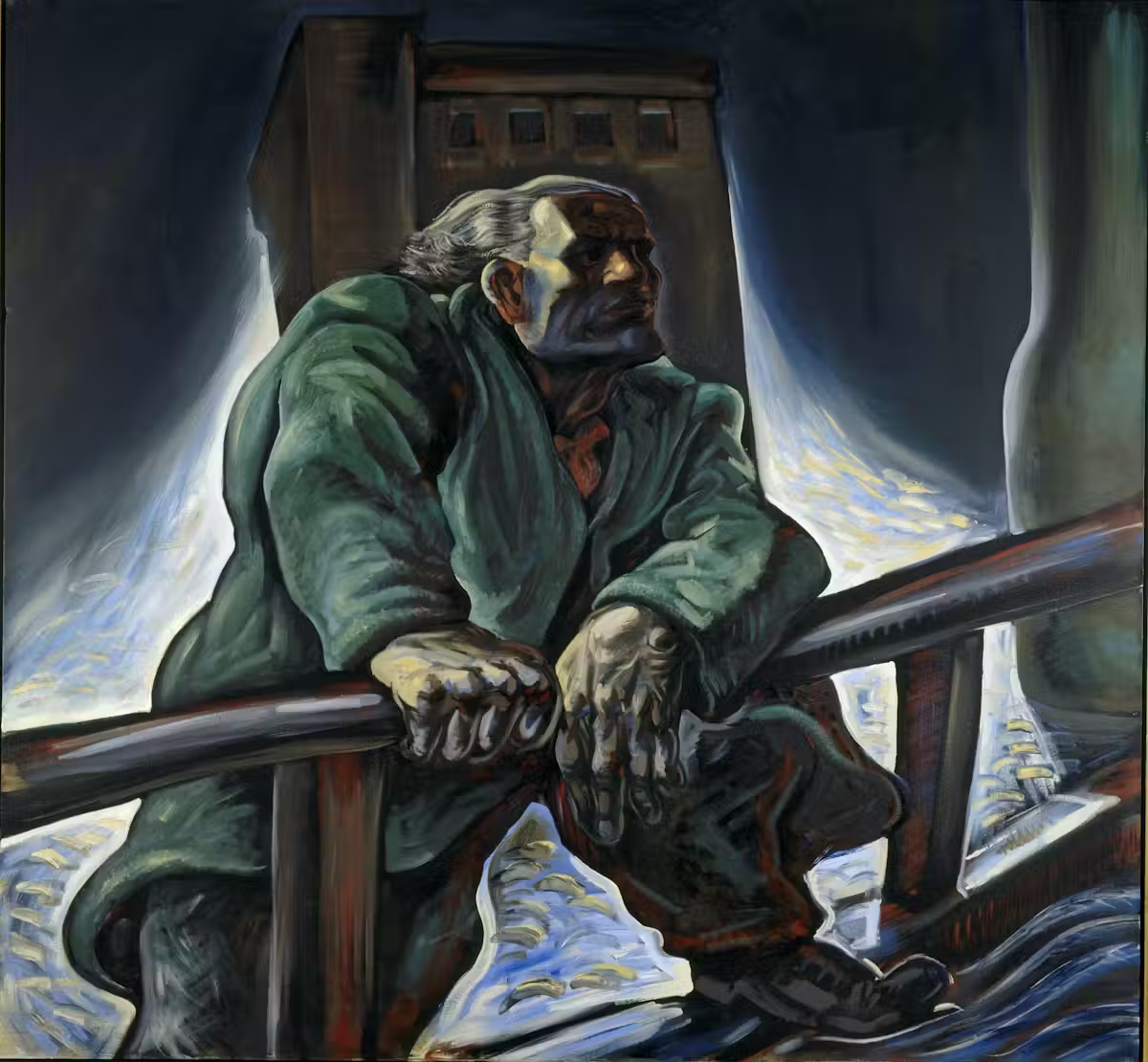
The Heroic Dosser– Peter Howson

The Heroic Dosser, 1987 by Peter Howson (b. 1958)

Gerhard Rühm’s The Folded Clock (Book acquired, drifted through, last week or the week before, end of 2025)

I dug/was perplexed by Gerhard Rühm’s Cake and Prostheses a few years ago, so when I got my soft pink hands on The Folded Clock, (translated like C & P by Alexander Booth), I was intrigued. Publisher Twisted Spoon describes The Folded Clock as a collection of “number poems, comprising typewriter ideograms, typed concrete poetry, collages of everyday paper ephemera and scraps, and a wide variety of literary forms where the visual pattern created on the page underpins the thematic meaning.”

Rühm seems to identify Kurt Schwitters as his artistic precursor, or an artistic precursor. Like Cake and Prosthesesthe pieces in The Folded Clock defy easy categorization — Is it a script or a poem or art? is probably the wrong question.

Passing eyes over the text is probably not the way to go; Rühm’s asking you to engage. As Joseph Schreiber puts it in his review at Rough Ghosts, you might follow Rühm’s directions and “allow yourself to read aloud and, there are you are, from the very beginning, not simply reading but actively engaging with the poem.”

I don’t really like numbers that much, at least not in a mob, a gang, a swarm. I tried and didn’t work out. Not just with this book but in general. I can’t count sheep, I guess.

I had a better time with Rühm’s forays into music and letters and collages; I enjoyed whatever psychotic version of minesweeper or Sudoku this piece is:

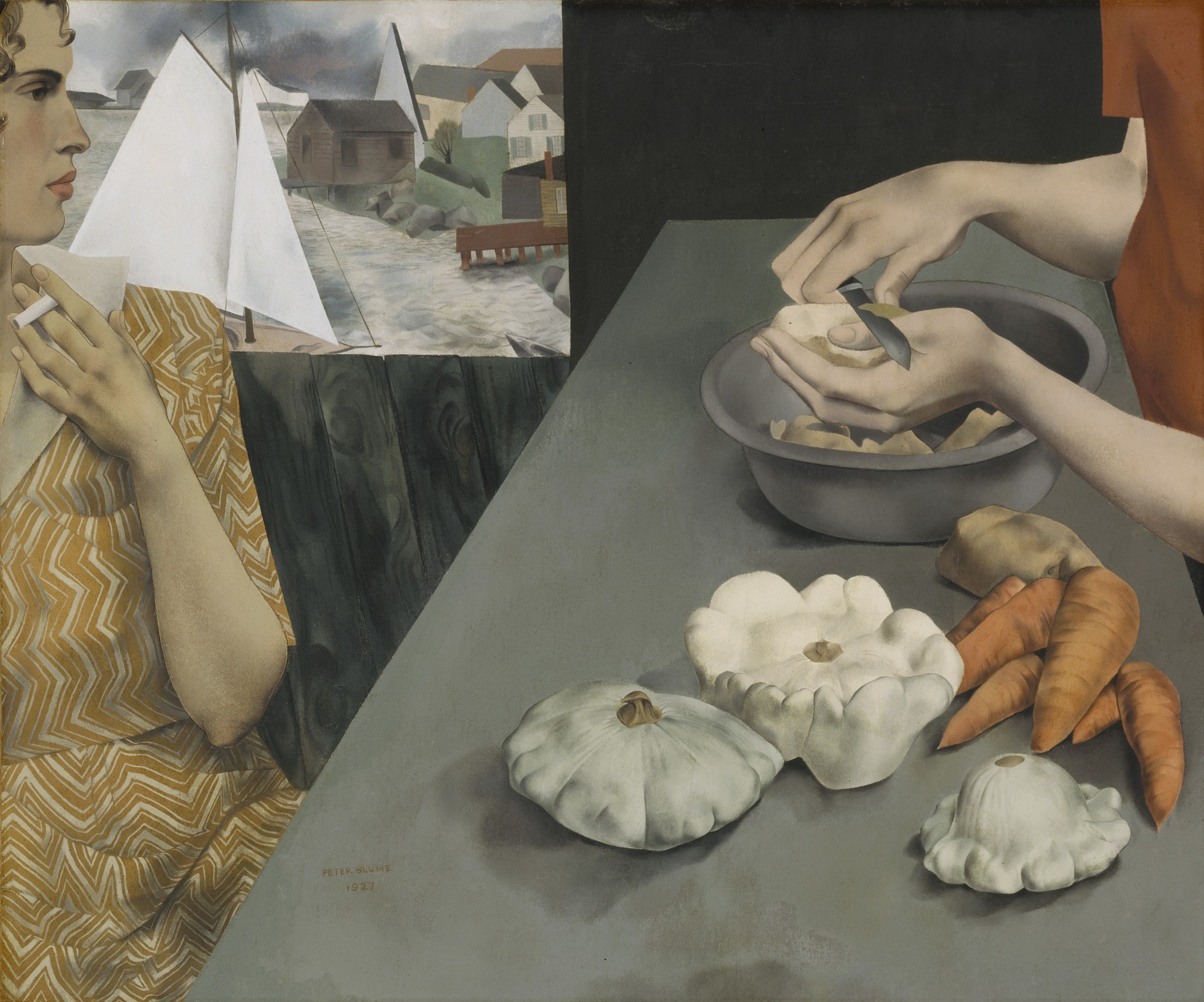
Vegetable Dinner — Peter Blume

Vegetable Dinner, 1927 by Peter Blume (1906–1992)

Inge in Bed — Alasdair Gray

Inge in Bed, 1965 by Alasdair Gray (1935-2019)

“The Sausage Cellar,” a very short fiction by Henri Michaux

“The Sausage Cellar”

by

Henri Michaux

translated by David Ball

from Life in the Folds


I love to knead.

I get hold of a field marshal and grind him up so fine that he loses half his senses, he loses his nose that he thought really had flair and even his hand that he can’t raise to his cap any more even if a whole army saluted him.

Yes, through a series of grindings, I reduce him, I reduce him—a sausage unable to do anything from now on.

And I don’t limit myself to field marshals. In my cellar I have lots of sausages that were once important people supposedly out of my reach.

But my infallible instinct for jubilation triumphed over these obstacles.

If they act up after that, it’s really no fault of mine. They could not have been mixed and ground any more than they were. I’ve been told that some of them are still moving about. It’s printed in the papers. Is this real? How could it be? They’re rolled up. The rest is the tail end of a phenomenon, the kind that one might encounter in nature, a sort of mystery comparable to reflections and exhalations whose importance should not be exaggerated. No, absolutely not.

In my cellar they lie, in deep silence.

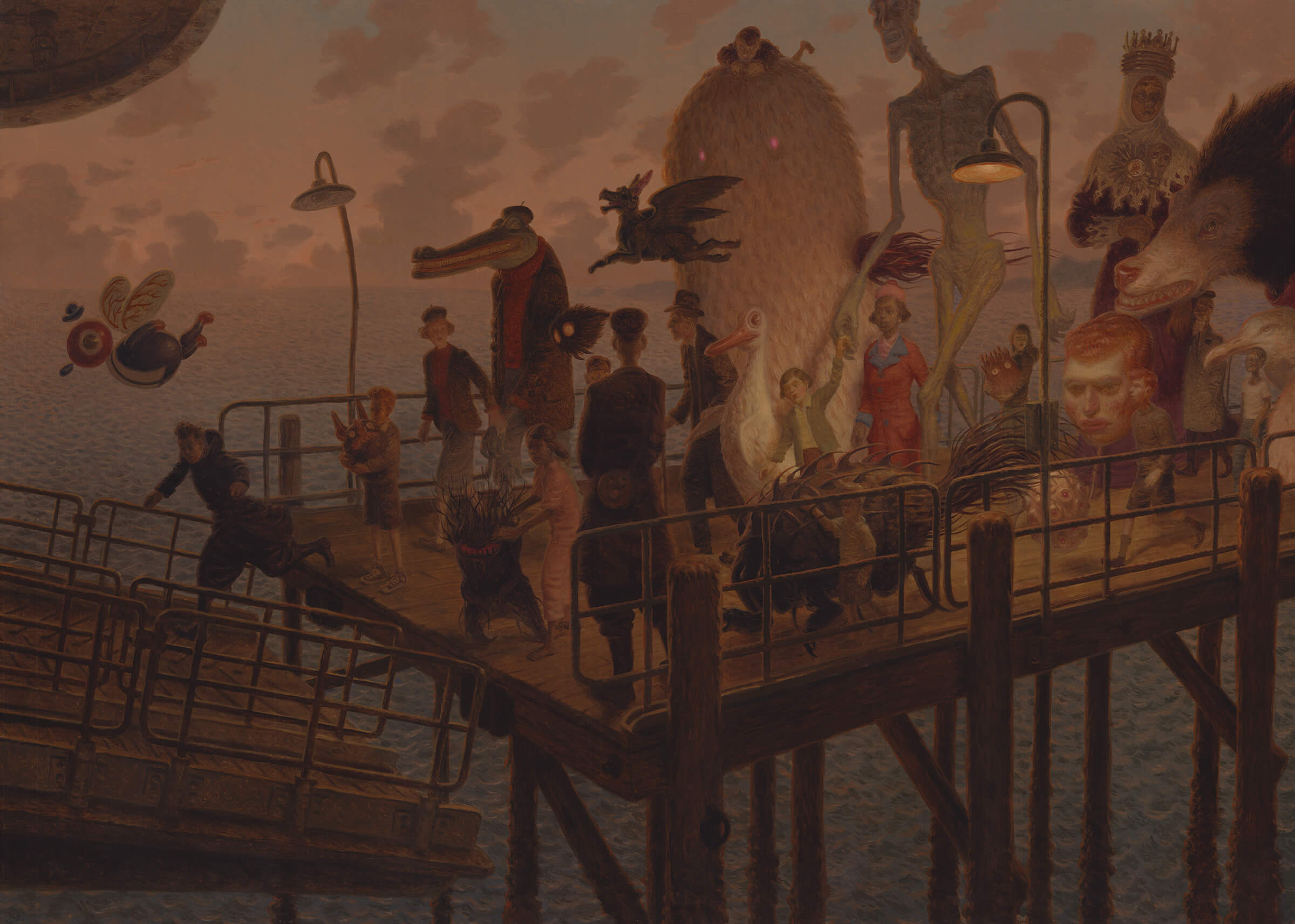
You Bring Your Tulpas When You Go — Peter Ferguson

You Bring Your Tulpas When You Go (The Tenement Fire), 2021 by Peter Ferguson (b. 1968)

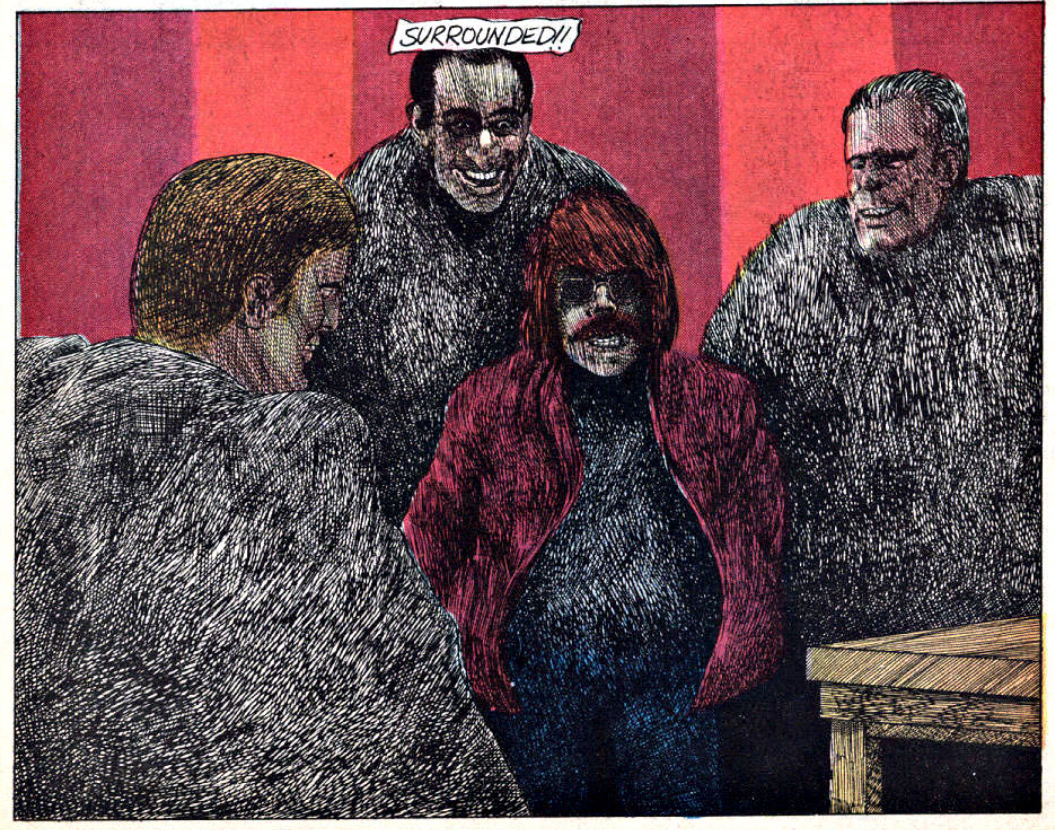
Sunday Comix

From “Armed Love” by Jay Kinney and Ned Sonntag. Published in Young Lust #2, 1971, The Print Mint.

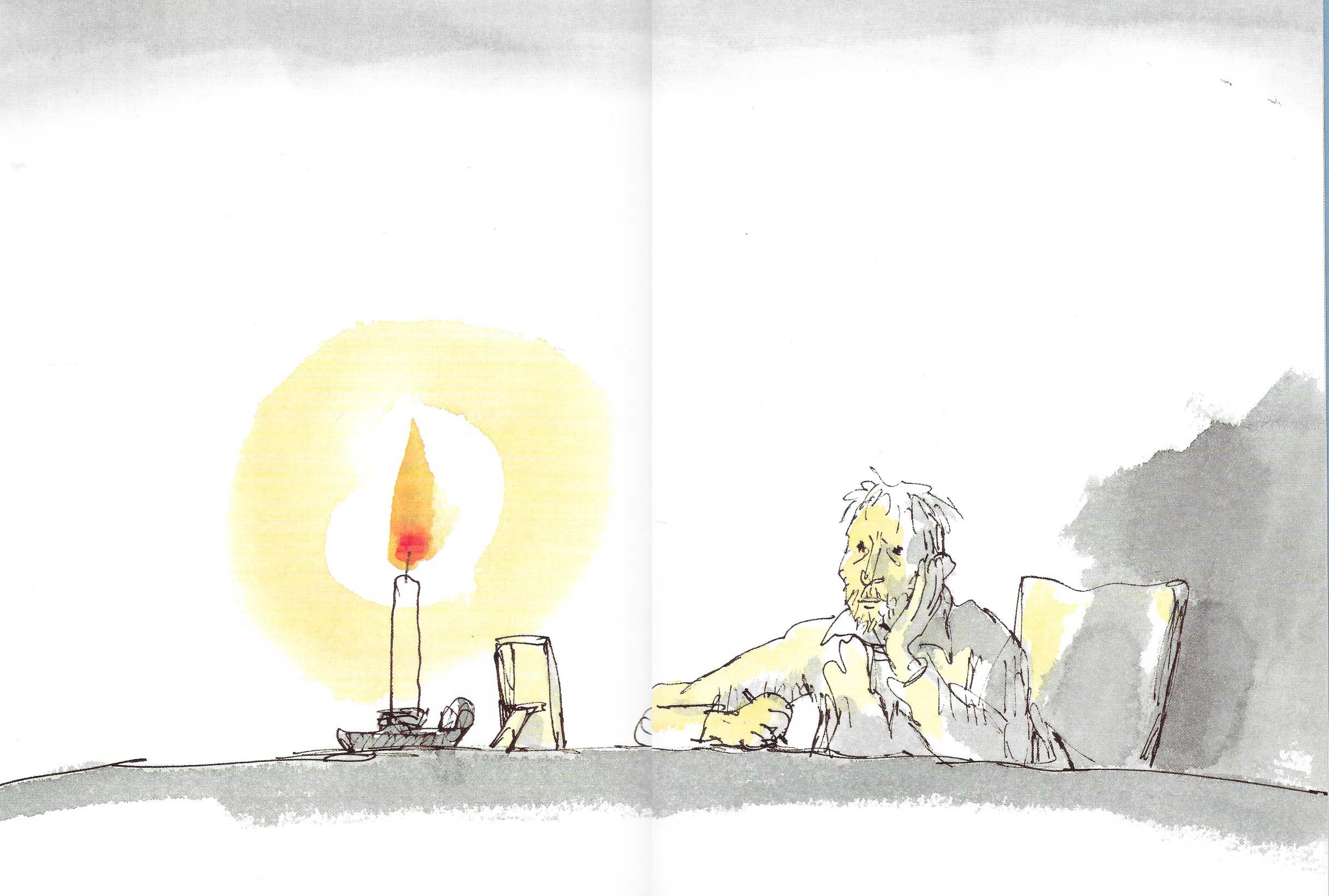
Illustration for Sad Book — Quentin Blake

Illustration to Michael Rosen’s Sad Book, 2004 by Quentin Blake (b. 1932)

Read “The Marker,” a very short story by Robert Coover

“The Marker”

by

Robert Coover

One of “Seven Exemplary Fictions” from Pricksongs and Descants 


Of the seven people (Jason, his wife, the police officer, and the officer’s four assistants), only Jason and his wife are in the room. Jason is sitting in an armchair with a book in his hand, a book he has doubtless been reading, although now he is watching his wife get ready for bed. About Jason: he is tall and masculine, about 35, with strong calloused hands and a sensitive nose; he is deeply in love with his wife. And she: she is beautiful, affectionate, and has a direct and charming manner of speaking, if we were to hear her speak. She seems always at ease.

Nude now, she moves lightly about the room, folding a sweater into a drawer, hanging up Jason’s jacket which he had tossed on the bed, picking up a comb from the floor where it had fallen from the chest of drawers. She moves neither pretentiously nor shyly. Whatever meaning there might be in her motion exists within the motion itself and not in her deliberations.

At last, she folds back the blankets of the bed (which is across the room from Jason), fluffs her short blonde hair, crawls onto the fresh sheets on her hands and knees, pokes gently at the pillows, then rolls down on her back, hands under her head, gazing across the room at Jason. She watches him, with the same apparent delight in least motions, as he again picks up his book, finds his place in it, and inserts a marker. He stands, returns her gaze for almost a minute without smiling, and then does smile, at the same time placing his book on the table. He removes his clothes, hooking his trousers over the back of the armchair and tossing the other things on the seat cushion. Before extinguishing the light behind his chair, he glances across the room at his wife once more, her tanned body gay and relaxed, a rhythm of soft lines on the large white canvas of the bed. She smiles, in subtle recognition perhaps of the pleasure he finds in her. He snaps out the light.

In the darkness, Jason pauses a moment in front of the armchair. The image of his wife, as he has just seen her, fades slowly (as when, lying on a beach, one looks at the reflection of the sun on the curving back of the sea, then shuts tight his eyes, letting the image of the reflected sun lose its brilliance, turn green, then evaporate slowly into the limbo of uncertain associations), gradually becoming transformed from that of her nude body crackling the freshness of the laundered sheets to that of Beauty, indistinct and untextured, as though still emerging from some profound ochre mist, but though without definition, an abstract Beauty that contains somehow his wife’s ravaging smile and musical eyes. Jason, still facing the bed, walks steadily toward it, his right hand in front of him to feel for it in the dark. When he has reached the spot where he expects the bed, he is startled not to find it. He retraces his steps, and stumbles into… what? the chest of drawers! Reoriented now by the chest of drawers, he sets out again and, after some distance, touches a wall. He starts to call out to his wife, but hears her laugh suddenly: she is up to some kind of joke, he says to himself with a half-smile. He walks boldly toward the laugh, only to-find himself—quite by surprise—back at the armchair! He fumbles for the lamp and snaps the switch, but the light does not turn on. He snaps the switch several times, but the lamp definitely does not work. She has pulled the plug, he says to himself, but without really believing it, since he could not imagine any reason she would have for doing so. Once again, he positions himself in front of the armchair and crosses the room toward the bed. This time, however, he does not walk confidently, and although almost expecting something of the sort, is no less alarmed when he arrives at, not the bed, but a door. He gropes along the wall, past a radiator and a wastebasket, until he reaches a corner. He starts out along the second wall, working methodically now, but does not take more than five steps when he hears his wife’s gentle laugh right in his ear. He turns around and finds the bed… just behind him!

Although in the strange search he has lost his appetite for the love act, he quickly regains it at the sound of her happy laugh and the feel, in the dark, of her cool thighs. In fact, the experience, the anxiety of it and its riddles, seems to have created a new urgency, an almost brutal wish to swallow, for a moment, reason and its inadequacies, and to let passion, noble or not, have its hungry way. He is surprised to find her dry, but the entry itself is relaxed and gives way to his determined penetration. In a moment of alarm, he wonders if this is really his wife, but since there is no alternate possibility, he rejects his misgivings as absurd. He leans down over her to kiss her, and as he does so, notices a strange and disagreeable odor.

At this moment, the lights come on and the police officer and his four assistants burst into the room. “Really!” cries the police officer, pulling up short. “This is quite disgusting!”

Jason looks down and finds that it is indeed his wife beneath him, but that she is rotting. Her eyes are open, but glazed over, staring up at him, without meaning, but bulging as though in terror of him. The flesh on her face is yellowish and drawn back toward her ears. Her mouth is open in a strangely cruel smile and Jason can see that her gums have dried and pulled back from her teeth. Her lips are black and her blonde hair, now long and tangled, is splayed out over the pillow like a urinal mop spread out to dry. There is a fuzzy stuff like mold around the nipples of her shrunken breasts. Jason tries desperately to get free from her body, but finds to his deepest horror that he is stuck! “This woman has been dead for three weeks,” says the officer in genuine revulsion.

Jason strikes wildly against the thighs in his effort to free himself, jolts one leg off the bed so that it dangles there, disjointed and swinging, the long yellow toenails scratching on the wooden floor. The four assistants seize Jason and wrench him forcibly away from the corpse of his dead wife. The body follows him punishingly in movement for a moment, as a sheet of paper will follow a comb after the comb has been run through hair; then, freed by its own weight, it falls back in a pile on the badly soiled sheets. The four men carry Jason to the table where his book still lies with its marker in it. They hold him up against the table and the police officer, without ceremony, pulls Jason’s genitals out flat on the tabletop and pounds them to a pulp with the butt of his gun.

He leaves Jason writhing on the floor and turns to march out, along with his four assistants. At the door he hesitates, then turns back to Jason. A flicker of compassion crosses his face.

“You understand, of course,” he says, “that I am not, in the strictest sense, a traditionalist. I mean to say that I do not recognize tradition qua tradition as sanctified in its own sake. On the other hand, I do not join hands with those who find inherent in tradition some malignant evil, and who therefore deem it of terrible necessity that all custom be rooted out at all costs. I am personally convinced, if you will permit me, that there is a middle road, whereon we recognize that innovations find their best soil in traditions, which are justified in their own turn by the innovations which created them. I believe, then, that law and custom are essential, but that it is one’s constant task to review and revise them. In spite of that, however, some things still make me puke!” He turns, flushed, to his four assistants. “Now get rid of that fucking corpse!” he screams.

After wiping his pink brow with a handkerchief, he puts it to his nose and turns his back on the bed as the men drag away, by the feet, the unhinged body of Jason’s wife. The officer notices the book on the table, the book Jason has been reading, and walks over to pick it up. There is a slight spattering of blood on it. He flips through it hastily with one hand, the other still holding the hand kerchief to his nose, and although his face wears an expression of mild curiosity, it is difficult to know if it is sincere. The marker falls to the floor beside Jason. The officer replaces the book on the table and walks out of the room.

“The marker!” Jason gasps desperately, but the police officer does not hear him, nor does he want to.

They’re a bunch of bloodsucking bastards | Check out this longassed profile of Alan Moore

“Why’d you fall out with DC comics?”

“Because they’re a bunch of bloodsucking bastards, quite frankly,” is the kinda thing he tends to say. He’ll clarify that the comic book medium is “perfect,” it is “sublime,” whereas the comics industry is “a dysfunctional hellhole” that “hasn’t had any new ideas in 20 or 30 years,” that it’s run by “sub-human” thieves who employ the same “gangster ethics” by which DC “bought” the rights for Superman off its teen creators, Jerry Siegel and Joe Schuster, for $130.

“I pretty much detest the comics industry” is the gist, most recently for what they’ve done to popular culture and democracy with the Marvel Cinematic Universe and . . . whatever it is that DC’s up to. Moore’s been saying for years that he sees a harbinger of fascism in how young adults flock to see these “franchised übermenschen” zipping across the screen, and yes, he’s also mindful of the fact that he’s basically the cause of all this.

There were a lot of quotes I could’ve pulled from Alexander Sorondo’s new profile of Alan Moore at The Metropolitan Review — getting expelled for selling acid, falling in love with David Foster Wallace, accidentally conjuring the Persian math demon Asmodeus, etc. — but this is the one I chose. Check it out.

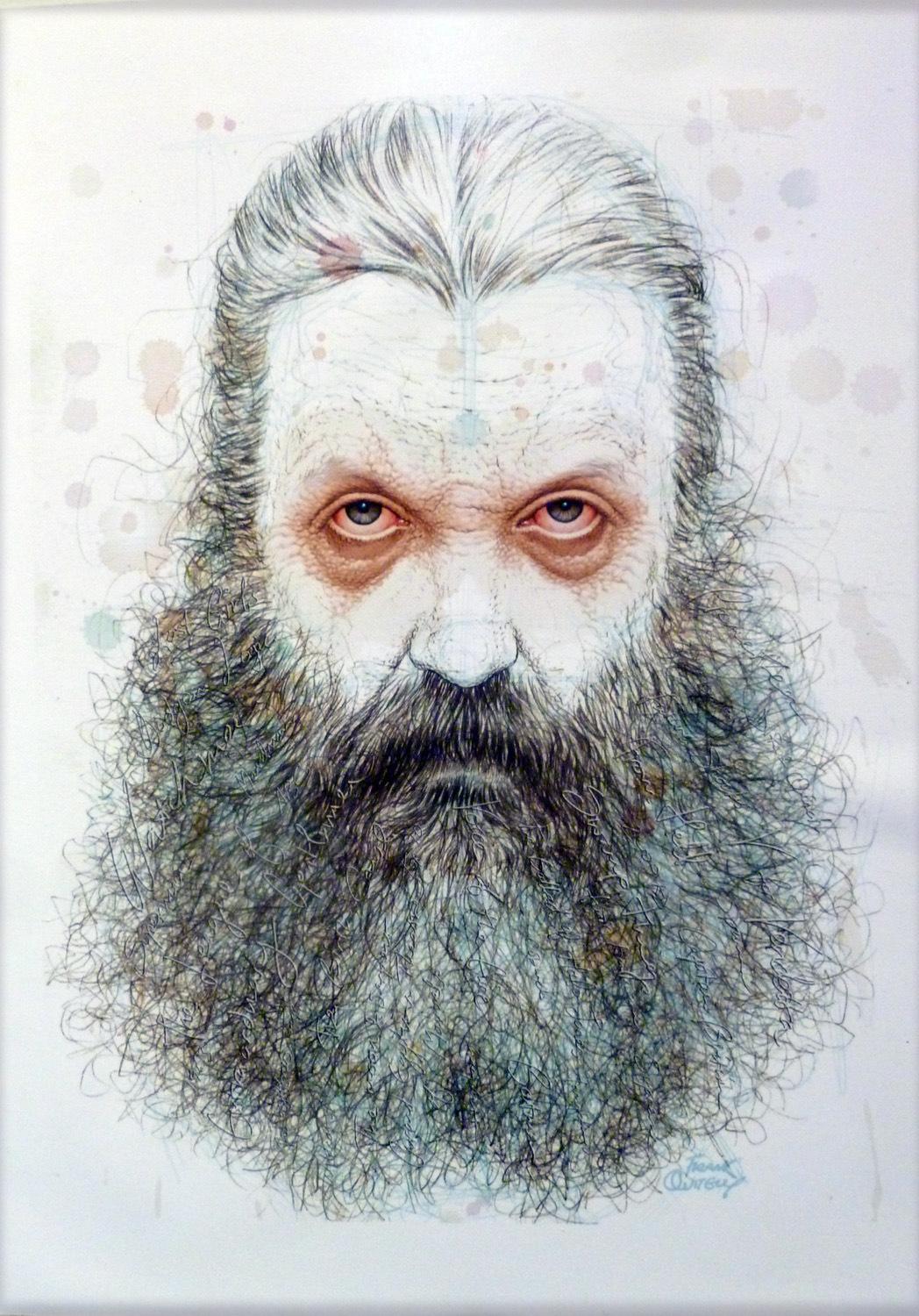
Portrait of Alan Moore, 2011, by Frank Quitely (b. 1968)

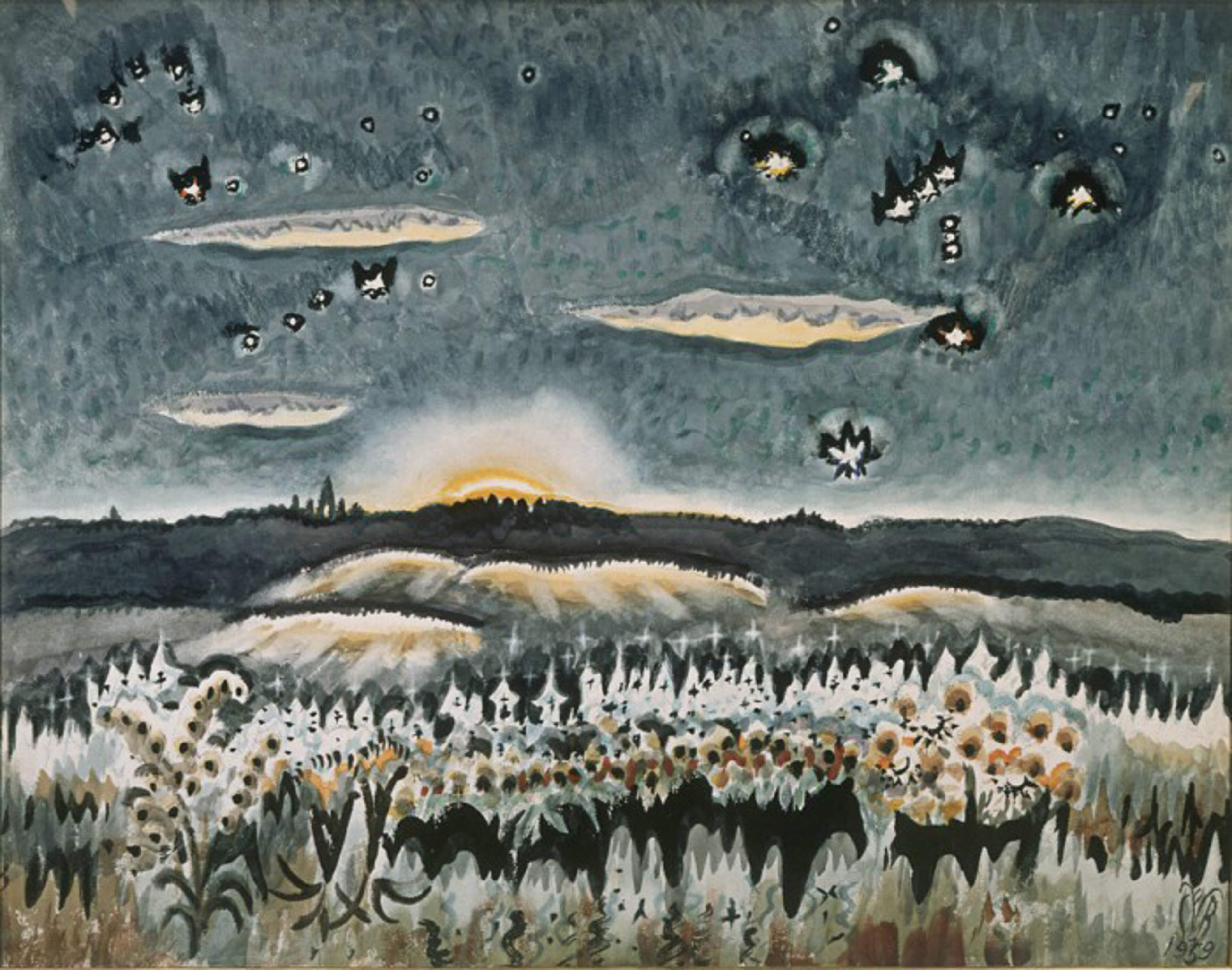
December Moonrise — Charles Burchfield

December Moonrise, 1959 by Charles Burchfield (1893-1967)

What did Nathaniel Hawthorne see near the lake on the first day of December, 1850?

December 1st.–I saw a dandelion in bloom near the lake.

Nathaniel Hawthorne’s journal entry for December 1st, 1850. From Passages from the American Note-Books.

Notes on Thomas Pynchon’s novel Shadow Ticket


I posted these notes on Thomas Pynchon’s 2025 novel Shadow Ticket on Biblioklept in October and November of 2025. They appear here in basically the same form.


Let’s start with the epigraph:

“Supernatural, perhaps. Baloney…perhaps not.”

Bela Lugosi,
in The Black Cat (1934) Continue reading “Notes on Thomas Pynchon’s novel Shadow Ticket”

Sunday Comix

From “I Was a Captive of the Insect Fiends!” by Tim “Grisly” Boxell. Published in Fantagor #4, 1972, Last Gasp.

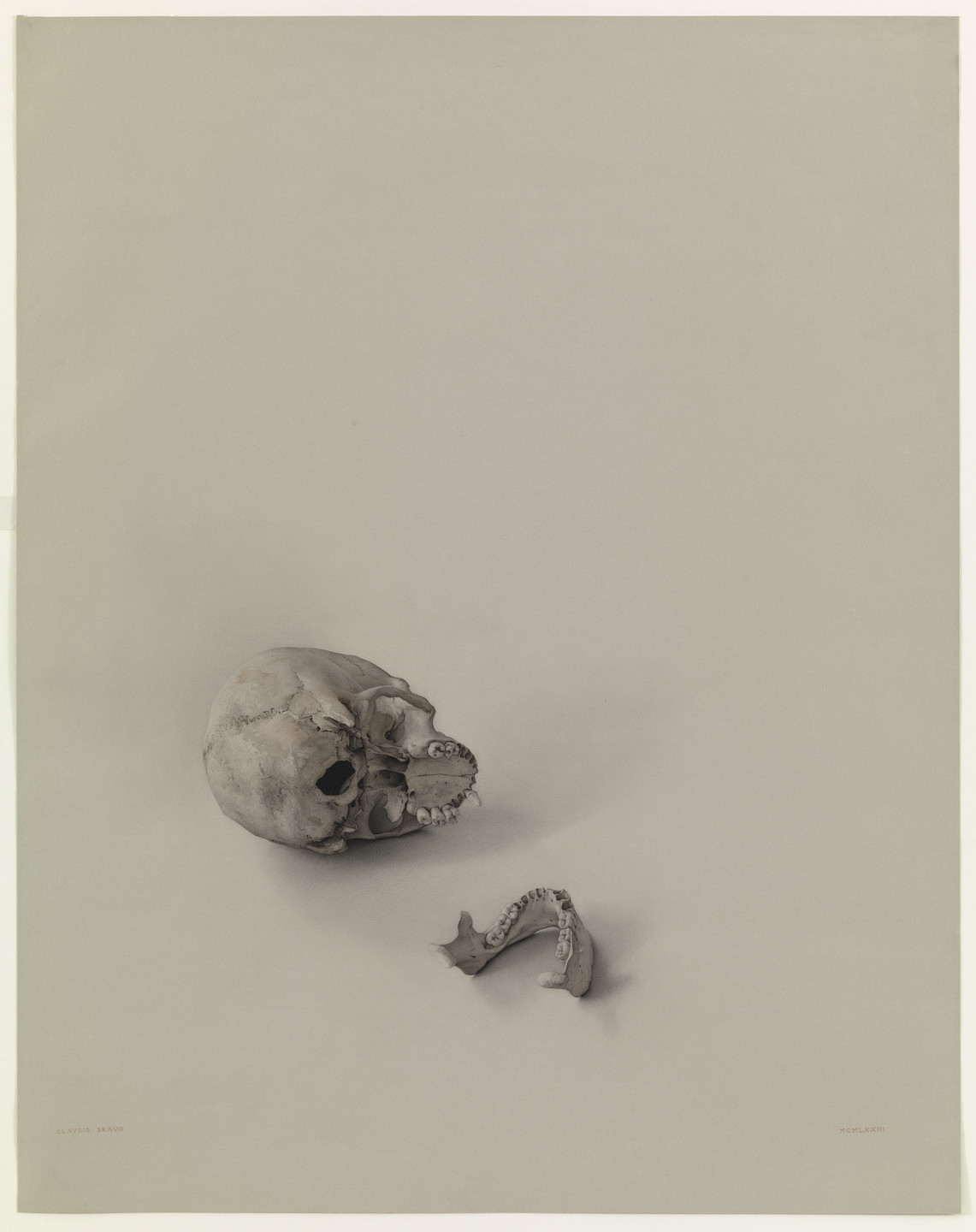
The Skull — Claudio Bravo

The Skull, 1973 by Claudio Bravo (1936-2011)


“Turkey Remains and How to Inter Them with Numerous Scarce Recipes” — F. Scott Fitzgerald

From F. Scott Fitzgerald’s Notebooks

TURKEY REMAINS AND HOW TO INTER THEM WITH NUMEROUS SCARCE RECIPES
At this post holiday season the refrigerators of the nation are overstuffed with large masses of turkey, the sight of which is calculated to give an adult an attack of dizziness. It seems, therefore, an appropriate time to give the owners the benefit of my experience as an old gourmet, in using this surplus material. Some of the recipes have been in my family for generations. (This usually occurs when rigor mortis sets in.) They were collected over years, from old cook books, yellowed diaries of the Pilgrim Fathers, mail order catalogues, golfbags and trash cans. Not one but has been tried and proven—there are headstones all over America to testify to the fact.
Very well then: Here goes:

1. Turkey Cocktail
To one large turkey add one gallon of vermouth and a demijohn of angostura bitters. Shake.

2. Turkey at la Francais.
Take a large ripe turkey, prepare as for basting and stuff with old watches and chains and monkey meat. Proceed as with cottage-pudding.

3. Turkey and Water
Take one turkey and one pan of water. Heat the latter to the boiling point and then put in the refrigerator When it has jelled drown the turkey in it. Eat. In preparing this recipe it is best to have a few ham sandwiches around in case things go wrong.

4. Turkey Mongole
Take three butts of salami and a large turkey skeleton from which the feathers and natural stuffing have been removed. Lay them out on the table and call up some Mongole in the neighborhood to tell you how to proceed from there.

5. Turkey Mousee
Seed a large prone turkey, being careful to remove the bones, flesh, fins, gravy, etc. Blow up with a bicycle pump. Mount in becoming style and hang in the front hall.

6. Stolen Turkey
Walk quickly from the market and if accosted remark with a laugh that it had just flown into your arms and you hadn’t noticed it. Then drop the turkey with the white of one egg-well, anyhow, beat it.

7. Turkey a la Creme.
Prepare the creme a day in advance, or even a year in advance. Deluge the turkey with it and cook for six days over a blast furnace. Wrap in fly paper and serve.

8. Turkey Hash
This is the delight of all connoisseurs of the holiday beast, but few understand how really to prepare it. Like a lobster it must be plunged alive into boiling water, until it becomes bright red or purple or something, and then before the color fades, placed quickly in a washing machine and allowed to stew in its own gore as it is whirled around.
Only then is it ready for hash. To hash, take a large sharp tool like a nail-file or if none is handy, a bayonet will serve the purpose—and then get at it! Hash it well! Bind the remains with dental floss and serve.
And now we come to the true aristocrat of turkey dishes:

9. Feathered Turkey.
To prepare this a turkey is necessary and a one pounder cannon to compell anyone to eat it. Broil the feathers and stuff with sage brush, old clothes, almost anything you can dig up. Then sit down and simmer. The feathers are to be eaten like artichokes (and this is not to be confused with the old Roman custom of tickling the throat).

10. Turkey at la Maryland
Take a plump turkey to a barber’s and have him shaved, or if a female bird, given a facial and a water wave. Then before killing him stuff with with old newspapers and put him to roost. He can then be served hot or raw, usually with a thick gravy of mineral oil and rubbing alcohol. (Note: This recipe was given me by an old black mammy.)

11. Turkey Remnant
This is one of the most useful recipes for, though not, “chic”, it tells what to do with the turkey after the holiday, and extract the most value from it.
Take the remants, or if they have been consumed, take the various plates on which the turkey or its parts have rested and stew them for two hours in milk of magnesia. Stuff with moth-balls.

12. Turkey with Whiskey Sauce.
This recipe is for a party of four. Obtain a gallon of whiskey, and allow it to age for several hours. Then serve, allowing one quart for each guest.
The next day the turkey should be added, little by little, constantly stirring and basting.

13. For Weddings or Funerals. Obtain a gross of small white boxes such as are used for bride’s cake. Cut the turkey into small squares, roast, stuff, kill, boil, bake and allow to skewer. Now we are ready to begin. Fill each box with a quantity of soup stock and pile in a handy place. As the liquid elapses, the prepared turkey is added until the guests arrive. The boxes delicately tied with white ribbons are then placed in the handbags of the ladies, or in the men’s side pockets.

There I guess that’s enough turkey to talk. I hope I’ll never see or hear of another until—well, until next year.