We — that is, my family of four — split a nice spring break between heatwaved Los Angeles and more temperate Santa Barbara last week. I managed to squeeze in a visit to The Last Bookstore, which I hadn’t visited since 2017.
I keep a little list of books and authors to search for; one of these is the long-out-of-print 1987 cult novel Xman by Michael Brodsky. I found it about two minutes in, under “B” (duh) in gen fic for the steep steep price of five U.S. dollars. I also picked up another James Crumely novel, part of the Vintage Contemporaries series.
We — that is my son and I — also visited Skylight Books (after an unexpected pilgrimage to the Figure 8 wall on Sunset — the mural from the cover of that Elliott Smith record — we were just walking by it and my son who is a Fan lost his shit). Skylight Books is very very cool, with a great selection of comix, art books, zines, &c., but I failed to pick anything up, mostly because I was hungry and cranky.
We also visited LACMA, where I was disappointed that the many of the paintings I had seen on my previous visit were not currently on display (including Georges de la Tour’s Magdalen with Smoking Flame which knocked my socks off when I saw it up close all those years ago).
FIRST LINE: “A SCREAMING COMES ACROSS THE SKY.” NICE FIRST LINE.
LONG — 760 PAGES IN HARD-COVER.
BUZZWORDS: PIGS, PARANOIA, B MOVIES, SEX, NAZIS.
PUBLISHED 1973; EVERYONE WENT CRAZY.
NATIONAL BOOK AWARD, OF COURSE. PULITZER JUDGES LOVED IT, PULITZER TRUSTEES THOUGHT OBSCENE. ALSO INCOMPREHENSIBLE. NO PULITZER PRIZE. SOMETHING LIKE ULYSSES THAT WAY. A FREQUENT COMPARISON.
INSIDERS CALL IT RAINBOW. INSIDERS ARE INSIDERS BECAUSE THEY LOVE THE IDEA THAT
SOME RECLUSE (A CORNELL GRAD?) WROTE A 760-PAGE BOOK ABOUT PIGS AND PARANOIA. ALSO BECAUSE THEY KNOW SOME VERY EXTRAORDINARY WORDS FROM RAINBOW, LIKE THE ONES IN THE GLOSSARY BELOW (FROM THE HARD-COVER EDITION).
BOOK 1
Beyond the Zero
NARODNIK [p. 11]
From Russian narod, “people.” Intellectual trying to metamorphose peasant into revolutionaries. The Narodniki flourished in the late 1860s. In the late 1960s Student Nonviolent Coordinating Committee activists were referred to as narodoniks. By show-offs.
PRETERITION, PRETERITE
[p. 15 and throughout]
A passing over. Preterition is the Fluke Cosmic, the doctrine that God in John Calvin’s breast (cf. the Jampere-phrenia in Alien) decreed that you and you and you are heavenbound no questions asked but We’re going to have to think about the rest of you — don’t get your hopes up.
MAFFICK [p. 17]
The founder of the Boy Scouts defended the garrison at Mafeking against the Boers for two hundred seventeen days. When the siege was raised, on May 17, 1900, London went crazy, and the jubilant celebratory maffick — it’s a verb! — was born. Here, part of Lieutenant Oliver “Tantivy” Mucker-Maffick’s moniker.
TANTIVY [p. 17]
Mucker-Maffick’s nickname. Means to gallop along, or a blast on a horn, or that headlong gallop itself.
LOVE-IN-IDLENESS [p. 22]
The perfect word for violet. Pynchon’s choice is dazzling. First, on a map of London there’s a star for each of Slothrop’s women, Slothrop “having evidently the time, in his travels among places of death, to devote to girl-chasing.” Second, the many stars are of many colors. Third, Slothrop gets the idea that the stars look like flowers. Now Viola tricolor, the flower in question, turns out to be a violet with yellow, white, and purple petals and several country names. The name our author finally selects enables him to pull off a genuine rampage-prose triple play: “and all over the place, purple and yellow as hickeys, a prevalence of love-in-idleness.” Continue reading “A partial glossary for Thomas Pynchon’s Gravity’s Rainbow”→
The last chapter of Shadow Ticket has three movements: one for Bruno, the novel’s erstwhile villain; one for Hicks, its anti-hero finding his way to becoming a hero; and one for Hicks’s young protege Skeet, who’s been sidelined Stateside and not present in the novel’s second, European half.
We begin the finale on the phantom submarine the Vampire Squid,“Somewhere out beyond the western edge of the Old World.” Shadow Ticket will end with the promise of a new edge of the New World.
Bruno Airmont, one-time dairy gangster, believes he’s headed home. The sub encounters a bizarre behemoth, “a statue hundreds of meters high, of a masked woman draped in military gear less ceremonial than suited to action in the field [wearing] an openwork visor of some darkly corroded metal protecting, some say hiding, her identity.” The full description of this statue is beautiful and strange, and culminates with the melancholic note that her visage recalls “somebody we knew once a long time ago.”
“Statue of Liberty,” guesses Bruno, which, okay. I mean, that’s a reasonable guess I guess.
The image Pynchon conjures of a surreal, armed Lady Liberty recalls the opening of Franz Kafka’s unfinished first novel Amerika, which begins with its hero entering the New York Harbor and encountering “the Statue of Liberty, which he had been observing for some time, as if in a sudden burst of sunlight. The arm with the sword now reached aloft, and about her figure blew the free winds” (trans. Mark Harman).
In the Pynchonverse, “It’s the U.S. but not exactly the one you left. There’s exile and there’s exile” for Bruno: “There is no Statue of Liberty, Bruno, no such thing, not where you’re going.”
Bruno’s episode–and the Vampire Squid’s—ends with a Dickinson dash: “Whatever counter-domain of exile this is they have wandered into, they will be headed not back into any sunrise but west, toward a frontier as yet only suspected, as the days sweep over them—”
The Vampire Squid is another bilocated ghost ship, like the Stupendica on which Hicks voyaged to Europe. In Against the Day, the Stupendica splits into two ships — its shadow double the Emperor Maximilian is off to war. Recall that the Vampire Squid is a reformed U-boat, set out on a “new career of nonbelligerence.” Shadow Ticket might be cynical about redemption, but it also posits second chances — even if those chances take the quester into unknown counter-domains of exile.
Ch. 39’s second movement is a scant few lines. Hicks, exiled to Europe, panics a bit and realizes “that what he thought mattered to him is now foreclosed.” Terike pulls up on her bike, teaches him the Hungarian phrase csókolj meg, and our boy is on another adventure, another romance. It’s a nice conclusion for Hicks — who, it’s worth noting, has not committed a single act of violence in the novel.
The real conclusion of Shadow Ticket is epistolary, a letter to “Hicksie” from his old pal Skeet Wheeler. Skeet’s “On the hop,” staying clear of “Paddy wagons, dogcatcher nets, arrest warrants, the works,” lamenting that there are “Not so many places to hide as there were.” Here again is a theme of Shadow Ticket: there’s only freedom on foot, on the run, on the hop. To escape the net, Skeet plans to head West with Zinnia, the gal who gave him a glow-in-the-dark watch back in Chapter 1: “There’s supposed to be plenty of work out on the Coast.” That would be the West Coast of course.
Skeet offers a wrap-up of the Wisconsin cast of Shadow Ticket, including Against the Day’s hero Lew Basnight, who agrees to give Skeet and “Zin the fare out to California.” Basnight advises the young couple in a mode that’s not so much benediction as it is ominous prophecy, warning of “forks in the road, close shaves, mistakes he wished he didn’t make.”
Basnight warns Skeet of California’s American promises: “Eternal youth, big Hollywood playpen, whatsoever—but someday they’ll lose that innocence. They’ll find out.”
“Maybe they’ll keep finding new ways to be innocent,” rejoins Skeet, to which Basnight replies: “Better if somebody tells you now—innocent and not guilty ain’t always the same.”
Skeet concedes he’s not sure what that riddle means, but figures he’ll solve it in time; for now, he writes to Hicks, it’s “Time to put them street kiddie days behind me.” Time to grow up, or at least to make a motion towards it.
The novel ends with Skeet en route to California via the Santa Fe Chief: “Right now, we’ve got a couple of sunsets to chase.” Like the crew of the Vampire Squid, Skeet and Zin are headed “not back into any sunrise but west, toward a frontier as yet only suspected.”
And while Pynchon’s conclusion follows a signal trope of US American literature — namely the promise of a new start Out West — I think there’s more here than the urge that Huck expresses at the end of Adventures of Huckleberry Finn, when he promises to “light out for the Territory ahead of the rest” to avoid the “sivilizin'” domesticity represented by Aunt Sally. Skeet’s Westward movement isn’t pure escapism or the fantasy of Manifest Destiny. It isn’t a rejection of domestic responsibility in lieu of a new frontier but rather a utopian dream of “finding new ways to be innocent,” even as he puts those “kiddie days behind.”
Lew Basnight, veteran of Against the Day‘s fantasia/nightmare of nineteenth-century history, provides a tempering wisdom to cool Skeet’s American Dream: “innocent and not guilty ain’t always the same.” Perhaps, like the narrator back in Ch. 35 documenting Hicks and Daphne’s last encounter, Basnight understands that the characters in Shadow Ticket are floating “in the last minutes of a break that will seem so wonderful and peaceable and carefree” before the horrors of WWII. Again, Shadow Ticket is a dance number, a chronological breeze floating between Pynchon’s titans Against the Day and Gravity’s Rainbow.
For me, the ending is sweet and then bittersweet and then bitter and then sweet again. We know Hicks will likely never see Skeet again — but he might. We know that this is probably Pynchon’s last novel — but maybe it isn’t.
And we know that Zoyd Wheeler is the hero of Pynchon’s California novel Vineland, and we know that Skeet’s last name is Wheeler. My presumption is that Skeet and Zinnia are Zoyd’s parents, and I presume it because I like to think that the Pynchonverse, although large and containing multitudes (and bilocations of every stripe) is somehow cozily discrete.
I should probably distill my thoughts on Shadow Ticket into a compact, “proper” review, but I’ve sat with the novel now for two months, reading it twice, and really, really enjoying it. I never expected to get another Pynchon novel; it’s a gift. I loved its goofy Gothicism; I loved its noir-as-red-herring-genre-swap conceit; I loved even its worst puns (even “sofa so good”). I loved that Pynchon loves these characters, even the ones he might not have had the time or energy to fully flesh out — this is a book that, breezy as it reads, feels like a denser, thicker affair. And even if he gives us doom on the horizon in the impending horrors of genocide and atomic death, Pynchon ends with the hopeful image of two kids chasing sunsets. Great stuff.
Chapter 30 opens in “The Vienna branch of MI3b, daytime, a modest-size office decorated with a movie poster of Lilian Harvey waltzing with Willy Fritsch in Der Kongreß tanzt and an ancient map of the Hapsburg Dual Monarchy.”
Der Kongreß tanzt (The Congress Dances) is a 1931 UFA production set in Vienna, 1815 — if you want to go down the rabbit hole, maybe start with this contemporary New York Times review of the film. The Congress Dances was Weimar UFA’s tentpole shot at competing with Hollywood; later the production company would be subsumed by the Nazis. A current throughout Pynchon’s works has been something like, resist the military-industrial-entertainment complex. It’s worth noting the emphasis on dancing here, a motif in Shadow Ticket. Is dancing a form of transcendent resistance? Or is it a narcotizing agent?
The Habsburg Dual Monarchy, formed in 1867 after the Austro-Prussian War, joined two distinct nations under one emperor — a kind of bilocation — leaving ethnic and nationalist tensions unresolved. These divisions weakened the empire, contributing to the instability that helped spark World War I and, after its collapse, left a fragmented Central Europe whose resentments helped set the stage for World War II.
We are in that stage-setting right now, in that fragmented, fragmenting Central Europe, in the office of British Military Intelligence Section 3 where secret agent couple Alf and Pip Quarrender have been called before “Station chief Arvo Thorp.” Thorp informs the Quarrenders that their asset Vassily Midoff is “seeking to join a motorcycle rally in progress at the moment” — the Trans-Trianon 2000 Tour of Hungary Unredeemed that everyone’s set out on — and “that someone must be sent round” to cut off that loose end posthaste. The Quarrenders are upset — “But he was ours, Thorp…Our bloke” — but orders are orders. They do question the rationale of the orders though, wondering if it was simply “too much effort to keep all [Vassily’s] allegiances straight.” Here we have a neat little summary of how some readers may feel sussing motives and plot points from Shadow Ticket.
Codebreaker Alf gets something proximal to an “answer” when he intercepts an encrypted message floating around various intelligence agencies: Vassily “has apparently been promoted to deputy operations officer of an unacknowledged narkomat, a Blavatskian brotherhood of psychical masters and adepts located someplace out in the wild Far East.” Pynchon further underlines Shadow Ticket’s haunted themes, bringing up Stalin’s “chief crypto genius Gleb Bokii [who] is also running a secret lab specializing in the paranormal.”
But Alf can’t fully crack the code (natch), receiving “only glimpses behind a cloak of dark intention at something on a scale far beyond trivialities of known politics or history, which one fears if ever correctly deciphered will yield a secret so grave, so countersacramental, that more than one government will go to any lengths to obtain and with luck to suppress it.” In a chilly series of sentences, Alf, pushed by “some invisible power,” continues chipping at the encryption against his better judgment. But the encryption is, well, cryptic, even as it portends a future yet to come (including the ominous not that Stalin, “threatened by supernatural forces [would]probably go after Jews first.”
Alf concludes that Vassily “may have gone mad, he may in fact have crossed a line forbidden or invisible to the likes of us, thrown by some occult switchwork over onto an alternate branch line of history.” The “alternative branch line” again evokes the novel’s themes of bilocation (which I’ve tried to enumerate in previous riffs).
(The bigger Pynchonian bilocation is frequently visible/invisible, in the spiritualist-materialist sense — which perhaps finds a moral corollary in convenient/inconvenient.)
So well and anyway–the Quarrenders track down the Russian Trans-Trianon caravan and locate Vassily, but he manages to escape on a Rio-bound zeppelin painted like a watermelon, to their relief.
Graf Zeppelin over Guanabara Bay, in Rio de Janeiro, Brazil, 25 May 1930
“Hicks, Slide, and Zdeněk come rolling into a parts depot deep in the Transylvanian forest,” at the beginning of Chapter 31. (Slide is an American journalist; Zdeněk is a non-gigantic golem, if you need help keeping track.) They are on the Trans-Trianon 2000 motorcycle route, presumably tracking Hop Wingdale. Or Daphne Airmont. Or Bruno Airmont. Or…?
Here in “actual Transylvania, the vampire motherland itself,” the trio drives through “hairpin turns frequented by vengeful spirits, passages cursed by some local shaman, marsh life you wouldn’t want swarming around you after dark…And the bats of course.” According to Zdeněk these vampire bats “are the Unbreathing, who go about their business in a silence not even broken by pulsebeats.”
Slide’s brought along his Leica camera to “cover the supernatural angle,” but the pictures all end up blank: “a vampire’s allergy to silver, an ambivalence as to light itself…” I’ve foregrounded Shadow Ticket’s Gothic motifs and impulses throughout my notes. I don’t really know what I could add to, like, golems and vampires in Transylvania.
A diagram of the internal mechanisms of a Leica I camera
Noting that the Trans-Trianon 2000 motorcycle route allows for “impulses disallowed in normal society” to be acted upon, the narration then gives over to one of my favorite little bits in Shadow Ticket, a self-contained episode of “spontaneous pig rescue.” The pig in question is “a Mangalica, a popular breed in Hungary at the moment, curly-coated as a sheep, black upper half, blonde lower. And that face! One of the more lovable pig faces, surrounded by ringlets and curls.”
Mangalica piggy looking cute
Pynchon’s porcophilia is well-documented, with pigs showing favorably throughout his work–particularly in Mason & Dixon and in Gravity’s Rainbow, where Tyrone Slothrop takes on the role (and costume) of Plechazunga, the Pig-Hero, and then later wanders through the Zone with a sweet pig as his companion-guide, while the narrator sings:
“A pig is a jolly companion, Boar, sow, barrow, or gilt– A pig is a pal, who’ll boost your morale, Though mountains may topple and tilt.”
Back to Hicks: “wandering the compound one day hears a piano in the distance, recognizes the tune as ‘Star of the County Down,’ a longtime favorite of Irish drinkers he’s known.” It turns out that none other than Pip Quarrender is singing and playing the song — which she identifies as “Dives and Lazarus,”a traditional English folk song that that adapts a riff from the Gospel of Luke. Pips notes that it’s “technically it’s a Christmas carol, though uncomfortable for the average churchgoer given its rather keen element of class hostility.” We have here another bilocation, a song with two separate but real co-existing lives. (Throw in a little class warfare, too.)
Hicks then runs into Terike, who’s concerned that Ace Lomax is missing, on the run from she-knows-not-what (it’s Bruno). The chapter ends with “Zdeněk the golem [locating] Hop Wingdale en route to a Croatian guerrilla training camp near the Hungarian border.” He decides to go check it out.
We’re back to Hop Wingdale and his band in Chapter 32 begins with their tricked-out road-Pullman ominously “moving deeper into Vladboys terrain.” We learn that the “band find themselves growing less enthusiastic about the Trans-Trianon 2000 Tour of Hungary Unredeemed [as] Loose cocaine isn’t always practical on these beat-up roadbeds.” The musicians settle on enormous pills of “cocaine and morphine, known as a speedball.”
The band pulls in to a “towering wooden cylinder set in a clearing, filled with the snarling of low-displacement bike engines.” Their gig is at a Wall of Death motor cycle stunt show.
Motorcyclist Clara Lee riding the ‘Wall of Death’, Sydney Easter Show, 1938
It turns out that Ace Lomax has been stunt riding on the Wall of Death for tips. Prompted by the band, he sings a Western tune: “Things were so jake, at the O.K. Corral— / Till those Earps and Clantons came along—.” The fantasy here is of an unspoiled West which eventually succumbs to the violence of competing agencies.
Ace recognizes Hop and congratulates his being “still vertical.” He proceeds to tell the musician that Bruno Airmont had tried to get Ace to assassinate Hop, but he decided that wasn’t his gig and hit the road: “By nightfall he’s in Bratislava and slipping unnoticed in among a convoy of Trans-Trianon machinery.” In their discussion about the Wall of Death, Hop brings up motordrome physics: “Somebody said it’s safe long as you keep moving fast enough, something about centrifugal force.” We get here a repetition of one of Shadow Ticket’s major themes, neatly summed up by Stuffy Keegan back in Ch. 20: “as long as you can stay on the run, that’s the only time you’re really free.”
Ace then hits the road. He fails to check in back at the Trans-Trianon base camp, causing Terike’s cryptic road-adventuress face…to drift into disarray. She decides to light out looking for him.
The chapter ends with the narrator telling us that it turns “out that in some walled-in maze of a mountain town Ace has missed a turn…and ends up running on fumes.” He’s pursued by not only wolves but also the fascist Vladboys, “who also run this terrain in packs.” The fascist gang are on what I take to be dirt bikes, faster than Ace’s Harley. The last line, “Ace finds himself in the hands of the Vladboys,” sets up a nice opportunity for a big dramatic climactic rescue scene.
Last time we checked on hero Hicks McTaggart, our P.I. was in NYC, unwillingly sent there by his intelligence agency, U-Ops. A “a needle full of something in the chloral hydrate family” sends Hicks out on the Atlantic, on the “ocean liner Stupendica.“ The Stupendica is presumably the same ship, or a version of the ship, from Pynchon’s opus Against the Day. In the “Bilocations” section, the Stupendica bifurcates (or doubles?), engendering a second ship, the Emperor Maximilian, which departs on its own timeline to other bellicose adventures.
Aboard this particularStupendica, Shanghaied Hicks revives to a “seagoing-type tomato” named “Glow Tripforth del Vasto…here on assignment for Hep Debutante magazine, sending in a series of articles on how to be a Jazz Age adventuress on a Depression budget.”
Glow’s name immediately recalls Shadow Ticket’s motif of “glow in the dark” images and monster movie irradiation. The name “Glow Tripforth” (she married into the del Vasto name) also echoes “Geli Tripping,” the beautiful young witch who takes up with Tyrone Slothrop in Gravity’s Rainbow.
Indeed, much in seafaring Chapter 19 seems to echo some of Gravity’s Rainbow’s nautical (and casino) episodes. The Stupendica isn’t the Anubis of GR, but, with its “grinning stewards, uniformed juveniles years corrupted, American sorority girls, [and] exiled royalty” it offers another version of Pynchon’s ship of foolish fun.
And just as Pynchon delighted in Gravity’s Rainbow giving his totem Slothrop costume changes, so too does Hicks get a new suit, a garish “‘Midnight aubergine and electric kumquat…not perhaps as understated a look as one might wish.’ Though in fact, as the Gumshoe’s Manual points out, quite useful if you want eyewitnesses to be focused more on the suit than the mug happens to be in it.” Glamour, as in magic, is a recurring theme in Shadow Ticket, and this theme only intensifies as Hicks heads east to Ole Europe, where we meet more characters who disguise themselves via peacocking distractions.
Pynchon renders the Stupendica as a drunken anarchic playground where “different classes of passenger all … shuffle together” fueled by “Champagne Cocktails, Sidecars, French 75s, Jack Roses, and Ward Eights [that] flow without interruption.” Lotta spirits on this ship!
In this carnivalesque atmosphere, Hicks is approached by Alf and Philippa Quarrender; he claims to be a retired Lt. Commander in the British Royal Navy, but Hicks, brighter than these spies (yeah, spoiler) realize, detects “an air of international monkey business, maybe even some kind of espionageracket, hard at work” in the story they’re selling. The Quarrenders test Hicks a bit on his susceptibility to fascist/Nazi tendencies, and in one of the novel’s least subtle gags, Alf feigns shock to learn from Hicks that U.S. political operatives have ties to the mob in America: “But Al Capone, I say— Republicans and gangsters? How can such things be?” (Pynchon’s stand-in “Hicks blinks once, maybe twice” at this reaction.)
The chapter ends with some more monkey business with people who may not be what they seem, sweet Glow and her “ex- or possibly current husband, Porfirio del Vasto,” an autogyro dealer who may or may not have a murderous streak and who may or may not be a jewel thief. But he does share with Hicks that the word on the street is that folks believe Hicks is “an American gangster, being deported to somewhere in Eastern Europe. Traveling in the custody of Lieutenant-Commander and Mrs. Quarrender, of the British Intelligence, currently under contract to forces unnamed.”
Chapter 20:
So Hicks confronts the Quarrenders: “Seems Alf and Pips have been out on a worldwide scouting expedition to find recruits for the Secret Intelligence” and have likely picked up a “number of code breakers [who]have recently found themselves at loose ends after the Black Chamber was shut down, on Halloween of 1929, just after the stock market crashed.”
There’s a lot I could riff on here — the reference to cryptoanalytics; the will to mill meaning from chaos, finding the visible in the invisible; the rise of national intelligence agencies — but it’s really Pynchon’s reference to Halloween I most want to foreground here. Shadow Ticket is a stealth Gothic novel. Or not really a Gothic novel, per se, but maybe a novel about Gothicism in relation to technology, or, more specifically, communication technology — ways of knowing, ways of sending, ways of communicating. Pynchon chooses to highlight a Gothic aesthetic in the lines above, pinning them to the economic-political historicity of the U.S. at the end of the 1920s. This Gothicism intensifies over the next few chapters, as our hero P.I. heads East into Old Europe. Is Hicks a U.S. Modern? A hayseed hick? Something else?
Either way, the sophisticated, aristocratic Quarrenders do condescend to Hicks’s midwestern naivete. Our P.I. hopes aloud that things will get back to “normal” soon, to which Pips replies: “Things will never go back to the way they were, it’ll all just keep getting more, what the Chinese call, ‘interesting.’” Alf is even more frank: “Take up shooting.” Later in the chapter, Alf delivers one of several theses dispersed in Shadow Ticket:
“It’s a strange time we’re in just now…one of those queer little passageways behind the scenery, where popes make arrangements with Fascists and the needs of cold capitalist reality and those of adjoining ghost worlds come into rude contact…many have been quick to blame it on the War, on the insupportable weight of so many dead, so many wrongs still unresolved.'”
The next war is coming.
Again, I want to situate Shadow Ticket as a bridge novel between two of Pynchon’s masterpieces. Read it after Against the Day and before Gravity’s Rainbow. (Or read it however you like.)
Alf’s concern with “so many wrongs still unresolved” finds psychical manifestation on the decadent Stupendica, where “Passageways long after hours clamor with what sounds like an immense unsleeping crowd, not to be explained away by corridor acoustics or the unceasing friction of the sea.” It’s a ghost ship, baby: “‘Not too many of them exactly visible,’ Alf speculates, ‘yet still wandering the ship at will, in and out of spaces both authorized and forbidden.'” Alf suggests these spirits haunt from “a hope no longer quite sure and certain that injustices would be addressed and all come right in the end.”
The seagoing chapters of Shadow Ticket continue to echo Gravity’s Rainbow; prompted by Alf’s ghost talk, Hicks remembers “séances and so forth going on all the time” at a “spiritualist camp” he visited in summers at his “mother’s side of the family…Hicks and his friends used to hang around…hoping to see ghosts or other supernatural visitors.” The immediate recall here is to the séance scene early in Gravity’s Rainbow, but the bigger pull is to Pynchon’s overall concern with how we know what we know and how we don’t know what we don’t know — a concern that can fit neatly into a term like “paranoia,” but also manifests in attention to the paranormal or supernatural or the metaphysical.
Or, in terms Pynchon repeats in his novels, the visible and the invisible—what glows in the dark? Consider the epigraph to Shadow Ticket (from Bela Lugosi’s character in The Black Cat): “Supernatural, perhaps. Baloney…perhaps not.” Now compare it to the epigraph Pynchon gives for Against the Day (attributed to Thelonious Monk: “It’s always night, or we wouldn’t need light.” And then, far messier in its layered levels of irony, Pynchon’s epigraph to Gravity’s Rainbow, from Nazi-to-NASA rocketmensch Wernher von Braun: “Nature does not know extinction; all it knows is transformation. Everything science has taught me, and continues to teach me, strengthens my belief in the continuity of our spiritual existence after death.” But how can you know?
Pip is skeptical of all of Alf’s intuitions — “a sighting of uncertain luminosity, or a wordless voice that might be more than wind strumming the guy wires of the radio masts,” for example. The skepticism is doubled in the crew and passengers of the Stupendica, some of whom give over to “paranoid suspicions the liner is being tracked by a mysterious submarine.” Like Alf’s ghosts, “Some see it, some don’t.”
Hicks doesn’t ever see the submarine — presumably the same U-13 he didn’t see back in Chapter 8, when it picked up Stuffy Keegan. Hicks does, however, communicate with Stuffy, or someone claiming to be Stuffy (“Don’t sound like you”) over the radio. Throughout the novel, different characters warn Hicks about a variety of wonderful dangers: bombs and guns and dames and gangsters and an impending world war — but Stuffy gives the gumshoe a warning that he feels in his flat feet:
“‘…back in Milwaukee, freedom, nobody thought much about it, we just figured hey, a free country ain’t it and left it at that. But—’ this being about the point Hicks begins to feel warning signs from his feet—’the real thing, what if that’s only when they’re comin after you for somethin? But they haven’t caught you yet. So for a while, as long as you can stay on the run, that’s the only time you’re really free?'”
Page 628 from Zak Smith’s Pictures Showing What Happens on Each Page of Thomas Pynchon’s Novel Gravity’s Rainbow (2006)
A week before she1 left, she came out to “The White Visitation”2 for the last time. Except for the negligible rump of PISCES, the place was a loony bin again. The barrage-balloon cables3 lay rusting across the sodden meadows, going to flakes, to ions and earth4—tendons that sang in the violent nights, among the sirens wailing in thirds smooth as distant wind, among the drumbeats of bombs, now lying slack, old, in hard twists of metal ash. Forget-me-nots boil everywhere underfoot, and ants crowd, bustling with a sense of kingdom. Commas, brimstones, painted ladies coast on the thermoclines along the cliffs.5 Jessica has cut fringes since Roger saw her last, and is going through the usual anxiety—“It looks utterly horrible, you don’t have to say it. . . .”
“It’s utterly swoony,” sez Roger, “I love it.”
“You’re making fun.”
“Jess, why are we talking about haircuts for God’s sake?”6
While somewhere, out beyond the Channel, a barrier difficult as the wall of Death7 to a novice medium, Leftenant Slothrop, corrupted, given up on, creeps over the face of the Zone. Roger doesn’t want to give him up: Roger wants to do what’s right. “I just can’t leave the poor twit out there, can I? They’re trying to destroy him—”8
But, “Roger,” she’d smile, “it’s spring. We’re at peace.”9
No, we’re not. It’s another bit of propaganda. Something the P.W.E. planted10. Now gentlemen as you’ve seen from the studies our optimum time is 8 May11, just before the traditional Whitsun exodus, schools letting out, weather projections for an excellent growing season, coal requirements beginning their seasonal decline, giving us a few months’ grace to get our Ruhr interests back on their feet—no, he sees only the same flows of power, the same impoverishments he’s been thrashing around in since ’3912. His girl is about to be taken away to Germany, when she ought to be demobbed like everyone else. No channel upward that will show either of them any hope of escape13. There’s something still on, don’t call it a “war” if it makes you nervous, maybe the death rate’s gone down a point or two, beer in cans is back at last and there were a lot of people in Trafalgar Square one night not so long ago . . . but Their enterprise goes on.
The sad fact, lacerating his heart, laying open his emptiness, is that Jessica believes Them14. “The War” was the condition she needed for being with Roger. “Peace” allows her to leave him. His resources, next to Theirs, are too meager.
1 The she here, for those wishing to tune in, is Jessica Swanlake, who has decided post-War to return to her normie roots: she will choose a petite bourgeoisie life with Beaver/Jeremy, and reject Roger Mexico (and, implicitly, refuse the Counterforce and the mission to save Tyrone Slothrop).
2 Normally wouldn’t give a gloss for this, as its so late in the novel, but it’s been like eight years since I’ve done one of these, so: Pynchon Wiki gives the following description for the White Visitation:
former mental hospital located in the fictional town of Ick Regis on the coast of southern England; now part of SOE [Special Operations Executive; aka the “Firm”]; location of PISCES; D-Wing still has “loonies”; “devoted to psychological warfare”
3 I’ve read Gravity’s Rainbow like half a dozen times and rusting barrage-balloon cables is the kind of image I just keep going past, just kinda sorta like, letting my imagination fill in the details. But doing these posts makes me stop and look around a bit. A description from Keith Thomson’s website:
Barrage balloons are large balloons tethered to the ground or the deck of a ship with metal cables. They are deployed as a defense against low-level air attack, damaging aircraft on collision with the cables or, at the least, making flying in the vicinity treacherous.
1940s Barrage Balloon At The Kew Bridge Steam Museum, London. Jim Linwood.
4 Everything in the Zone is disintegrating–including Our Hero Tyrone Slothrop.
5 “Commas, brimstones, painted ladies coast on the thermoclines along the cliffs” — an absolutely gorgeous sentence, and also one we might pass over at this fragmented, surreal section of the novel as a bit of surrealist poetry.
But it’s not—these are butterflies. From Pynchon Wiki:
627.28-29 Commas, brimstones, painted ladies
Three taxa of butterflies. The Comma (Polygonia c-album) is one of the anglewings; sulfur-yellow brimstones are in the genus Gonepteryx in the family Pieridae; painted ladies are in the genus Vanessa. The Comma is named for a so-shaped white mark on the underside of its hindwing; a similarly-marked North American congener is called the Question Mark (P. interrogationis).
Cigarette card depicting a fanciful “brimstone butterfly”
6 “Can’t say it often enough–change your hair, change your life,” Inherent Vice.
7 “Wall of Death,” Richard and Linda Thompson, 1982:
Let me ride on the Wall of Death one more time / You can waste your time on the other rides / This is the nearest to being alive / Oh let me take my chances on the Wall of Death / You can go with the crazy people in the Crooked House / You can fly away on the Rocket or spin in the Mouse / The Tunnel of Love might amuse you / Noah’s Ark might confuse you / But let me take my chances on the Wall of Death
8 Every time I go through Gravity’s Rainbow, I find Slothrop’s fate more distressing and dispiriting—but also more inspiring. I think what’s important to remember here is that Roger Mexico is a numbers guy, a statistics guy—in 2024 terms, he might be a spreadsheet guy, a potential money guy. But he finds himself dedicated to Something Bigger Even If It Destroys Him, which means dedicating hope to the ever-fragmenting figure of Tyrone Slothrop, who, through his dispersal, might sow new seeds.
9 A devastating reversal of “They are in love. Fuck the war,” the lines we get from our first meeting of the failed lovers.
10 Political Warfare Executive (an iteration of Them). From Pynchon Wiki:
In 1940, MIR and Section D were combined with the War Office to form the Special Operations Executive (SOE). A “black” (sub rosa) propaganda section of SOE, created by the Foreign Office and named “Electra House,” was attached to the SOE in 1940 to become the Political Warfare Executive (PWE), charged with political and psychological warfare.
11 Thomas Ruggles Pynchon was born on 8 May 1937. Today is his 87th birthday.
If you’re the kinda weirdo who likes to celebrate Pynchon’s work and legacy, indulge in Pynchon in Public Day.
Steven Weisenburger’s 2nd’ edition of the Companion gives the following gloss on the date:
8 May, just before the traditional Whitsun exodus. Recall that part 2 ends with Pointsman and crew spending “Whitsun by the sea” (V269.26n). This traditional British holiday weekend fell on May 20 in 1945.
12 Roger Mexico “sees only the same flows of power, the same impoverishments” that he’s seen throughout the war. Unlike Jessica, he’s hep now to the knowledge that “the real business of the War is buying and selling.”
13 Pynchon here reiterates one of GR’s central themes, of the preterite vs the elect, of a “channel upward” or crashing down. The theme permeates the book, right from its opening lines. Consider the novel’s fourth sentence “The Evacuation still proceeds, but it’s all theatre.” The opening “evacuation” scene is surreal and apocalyptic, with each potential evacuee hearing an inner voice that cruelly coos, “You didn’t really believe you’d be saved. Come, we all know who we are by now. No one was ever going to take the trouble to save you, old fellow. . . .” The narrator’s very early note that “it’s all theatre” is one of Pynchon’s central diagnoses of power in GR, and one that not every character comes to fully understand. As if to underline that it’s all kayfabe, Pynchon ends GR by introducing a new character, Richard M. Zhlubb, a parody of Nixon. Zhlubb is the night manager of the Orpheus Theatre.
14 I think what finally most breaks Roger’s heart isn’t the loss of Jessica, but that “Jessica believes Them.” She’s subscribed to the theater of “war” and “peace,” an illusion that can no longer comfort Roger.
Illustration for Coleridge’s The Rime of the Ancient Mariner, Gustave Doré, 1876
Well1, if the Counterforce2 knew better what those categories3 concealed, they might be in a better position to disarm, de-penis and dismantle the Man4. But they don’t. Actually they do, but they don’t admit it. Sad but true. They are as schizoid, as double-minded in the massive presence of money, as any of the rest of us, and that’s the hard fact5. The Man has a branch office in each of our brains, his corporate emblem is a white albatross, each local rep has a cover known as the Ego, and their mission in this world is Bad Shit6. We do know what’s going on, and we let it go on7. As long as we can see them, stare at them, those massively moneyed, once in a while. As long as they allow us a glimpse, however rarely. We need that. And how they know it–how often, under what conditions. . . .8 We ought to be seeing much popular-magazine coverage on the order of The Night Rog and Beaver Fought Over Jessica While She Cried in Krupp’s Arms, and drool over every blurry photo–9
Roger must have been dreaming10 for a minute here of the sweaty evenings of Thermidor11: the failed Counterforce, the glamorous ex-rebels, half-suspected but still enjoying official immunity and sly love, camera-worthy wherever they carry on . . . doomed pet freaks.
They will use us. We will help legitimize Them12, though They don’t need it really, it’s another dividend for Them, nice but not critical. . . .
Oh yes, isn’t that exactly what They’ll do.
1 Well, hell, the last time I composed one of these silly annotations posts was way back in the unfortunate Fall of 2016, when I lost my goddamn mind for a while. I never made any notes on the novel’s final quadrant, “The Counterforce,” and never mustered any more notes when I reread GR in 2020. Over the past two weeks, I listened to George Guidall’s excellent narration in a long, long audiobook that kept me good company through some serious Spring cleaning projects. As has been the case in each of my treks through GR, I found it intensely prescient, a wonderful, terrifying diagnosis of the grand ugly 20th c. that we will never recover from.
2 I’ve read Gravity’s Rainbow all the way through six or seven times now, and each time I always find myself buoyed by the Counterforce—Pynchon’s heroic band of preterite rebels who resist the forces of Control. And every time I reread it I seem to forget that the Counterforce fails—the Counterforce (I dare not use the appropriate pronoun they, for They is the enemy of the Counterforce’s We) simply can’t stop the coming new world order of the military-industrial-entertainment complex. The short passage I’ve selected here, with Counterforce hero and one-time lover Roger Mexico as its medium, showcases one of the many reasons the Counterforce will fail.
3 Those categories refers to Pynchon’s previous paragraph, an academic spoof highlighting various “albatross nosologies”; nosology refers to the classification of diseases; the albatross is a metaphorical curse, of course.
Illustration for Coleridge’s The Rime of the Ancient Mariner, Gustave Doré, 1876
4 The Man: authority, control, They, the force, the fuzz, the cops, the heat, the money guys, the enemies of art, love, and the human soul…
5 A depressing notion, of course, and one Pynchon would return to in his 1990 follow-up to GR, Vineland, a novel that parodied the so-called counterculture of the 1960’s massive ideological failure, to, like, follow through with any true revolutionary project.
6 The economic metaphors here are appropriate. Again, fuck the money guys whose mission in this world is Bad Shit.
7 An even more depressing notion—that the double-mindedness of Counterforce consciousness includes knowing that we let the Bad Shit go on; maybe our resistant spirit curdles into a brittle apathy; maybe we overindulge in mindless pleasures; maybe we explode.
An early trial cover for GR, featuring one of its working titles, Mindless Pleasures
8 The date of publication for this post coincides with the May 6, 2024 annual Met Gala, a capitalist spectacle of wealth and fame costumed in the trappings of art. This year’s ticket is $75,000, more than the average U.S. salary. And yet it might be fair to consider that those “massively moneyed” costumed revelers at the Met Gala aren’t even really the true massively moneyed, but rather their avatars, projected on innumerable screens, avatars of mindless pleasures to distract us from all the Bad Shit the massively moneyed are up to.
9 Pynchon here plays on lurid tabloid headlines that aren’t too different from the ones we see today, reconfiguring the one-time lovers Jessica and Roger as the elect, figures of celebration. It’s all fantasy though—literally; as the next lines seem to suggest, we’ve been in Roger’s addled mind. Pynchon’s headline reminds me of Donald Barthelme’s 1964 short story “Me and Miss Mandible,” which includes a list of trashy titles about Elizabeth Taylor, Debbie Reynolds, and Eddie Fisher like “The Private Life of Eddie and Liz,” “Debbie Gets Her Man Back?” and “Eddie’s Taylor-Made Love Nest.”
I found the wartime love affair between Jessica and Roger more depressing this time than in previous reads of Gravity’s Rainbow. When we first meet them, we get one of the best lines in the novel: “They are in love. Fuck the war.” But it is the war that licenses their love; in its absence (or, really dormancy), a bureaucratizing control subsumes their ardor. They fail.
The Lovers card from the Rider–Waite tarot deck
10 The gerund dreaming here helps to foreground Roger’s current tabloid-headline-revenge-against-the-powers-that-be-fantasy as fantasy while also analeptically connecting the post-WW2 Counterforce’s nebulous mission to the fallout of the French Revolution. Dreaming also suggests that Roger is the “narrator” of this section; it also reminds me of Roger’s mentor Pirate Prentice, whose dream (of failed escape, “all theater”) initiates Gravity’s Rainbow. Pirate’s psychic power is to inhabit the fantasies of others; this is also Thomas Pynchon’s power.
11 In the second edition of his A Companion to Gravity’s Rainbow, Steven Weisenburger gives the following gloss:
If Roger Mexico is dreaming of these evenings, then his dreams contain a warning. Thermidor was the eleventh month of the French revolutionary calendar, corresponding to the period from July 19 to August 17. Moreover, it was on the eighth of Thermidor, in the French Revolution’s second year (in other words, July 27, 1794), that Robespierre, Saint-Just, and other leaders of massive redistribution of wealth and upheaval of the aristocratic order, known as the Reign of Terror, were arrested and, the next day, executed.
Weisenburger’s annotation here is a significant update from the Companion’s first edition, which essentially gives a brief definition of what Thermidor was without any greater political or historical context.
I have no idea what “one of his newspaper articles” is being referenced here. What immediately came to mind was likely “Is It Okay to Be a Luddite?” or “Nearer, My Couch, to Thee,” both of which appeared in The New York Times, and neither of which, as far as I can tell, use the phrase “Thermidorian reaction” or “Nixon.” (In “Luddite,” Pynchon does refer to the French Revolution—and also gives us a nice little summary of Roger’s complaint against Power in our little passage here: “there is now a permanent power establishment of admirals, generals and corporate CEO’s, up against whom us average poor bastards are completely outclassed”). The closest phrasing I can find to the Pynchon Wiki’s framing comes from a 2016 essay by James Liner that primarily deals with Inherent Vice. Liner writes: “Even in the Thermidor of Nixon’s 1970s, on the eve of the Reagan/Thatcher ’80s, Doc holds fast to utopian hope and the possibility of antisystemic praxis.”
Execution de Robespierre et de ses complices conspirateurs contre la liberté et l’egalité : vive la Convention nationale qui par son energie et Surveillance a delivré la Republique de ses Tyrans
12 Doomed pet freaks. The money guys will put the counterculture on the market as a Fuck You to freaks and rubes alike, icing on their cake.
Don’t legitimize their grasping at capital as culture.
We might be freaks, but We are not doomed and We are not Their pets.
I couldn’t pass on a used copy of the second edition of Steven Weisenburger’s A Gravity’s Rainbow Companion even though it ate up most of my trade credit. I used the first edition of the Companion when I reread Gravity’s Rainbow about eight years ago and then gave it to a friend I had been encouraging to read GR. He still hasn’t read it.
I also picked up a hardcover first edition of Cormac McCarthy’s The Road and a pristine 1946 hardback edition of Joyce’s Ulysses. I’ll probably trade in the Gabler edition of Ulysses I have, but I think I’m too sentimental to let go of the copy of The Road I read in the hospital over a few days when my daughter was born.
I’m a big fan of Vintage Contemporaries, but I’d never seen Terry McDonell’s California Bloodstock. I pulled it out because of its spine, and found the cover intriguing–it reminded me of these weird paintings that hang in a decrepit hotel in St. Augustine Beach that we stay at for a few nights every year. The blurb from H.S. Thompson didn’t hurt either.
Page 364: Knights and fools, dendrites and axons, etc.
Pages 412-13: Ouroboros, organic chemistry, tarot, etc.
Page 419: Innocence, experience, Wm Blake, Wagner’s Ring cycle, etc.
Page 539: Critical Mass, Weismann’s tarot reading, Rilke, hymns, etc.
[Ed. note–I published these links to my notes, riffs, and images connected to a re-reading of Gravity’s Rainbow back in November of 2016. Today marks the 50th anniversary of the publication of Pynchon’s great novel.]
A conversation with a colleague in January of 2022 led to my blogging about the possible “Best Books of 1972.” The post was fun to research, so here’s a sequel of sorts: What were the best books from fifty years ago?
(I don’t have to do any research for a quick answer: Gravity’s Rainbow was the best novel of 1973.)
Just as in last year’s post, I’m mostly interested in novels here, or books of a novelistic/artistic scope.
Still, with that said, I’ll begin with commerce: What were the bestsellers of 1973? The New York Times bestsellers list for 1973 picks up where their ’72 list left off, with Richard Bach’s Jonathan Livingstone Seagull leading sales for the first 11 weeks (Bach’s novel was the bestseller of 1972 for half a year). Genre fiction from Frederick Forsyth, Jacqueline Susann, and Mary Stewart accounts for more than half the year. More notable bestsellers include Kurt Vonnegut’s Breakfast of Champions, Gore Vidal’s Burr, and Graham Greene’s The Honorary Consul. (Gravity’s Rainbow was not a chart topper.)
…one of the longest, darkest, most difficult and most ambitious novels in years. Its technical and verbal resources bring to mind Melville, Faulkner and Nabokov and establish Pynchon’s imaginative continuity with the great modernist movement of the early years of this century. Gravity’s Rainbow is bone‐crushingly dense, compulsively elaborate, silly, obscene, funny, tragic, poetic, dull, inspired, horrific, cold and blasted.
Leonard also recommends Doris Lessing’s The Summer Before the Dark (“her most artful exploration of her major themes: the relation of self and society, intelligence and feeling, madness and health, and, above all, the role of modern woman”) and John Leonard Clive’s Macaulay, the Shaping of the Historian.
Some notable titles that the editors of the NYT Book Review append to Leonard’s feature include Philip Roth’s The Great American Novel, Thomas McGuane’s Ninety‐Two in the Shade, and John Cheever’s The World of Apples. The editors also call out “disappointing efforts by Don DeLillo (Great Jones Street) and Marge Piercy (Small Changes).”
In addition to the essayistic feature, the Times also offered up an extensive list of notable titles. There are around 200 books on this list, which I’ve used to help generate my own list at the end of this post. (The most interesting entry I’d never heard of is The Exile of James Joyce by Helene Cixous
Eudora Welty’s short novel The Optimist’s Daughter is not on the list because it was not published in 1973. It was published in 1972. But it won the Pulitzer for fiction in 1973.
Infamously, there was no Pulitzer Prize awarded for fiction in 1974, even though the jurists were unanimous in their recommendation that Thomas Pynchon win it for Gravity’s Rainbow. (Gravity’s Rainbow did win the 1974 National Book Award.)
The New York Times list also fails to include Patrick White’s novel The Eye of the Storm. White won the Nobel Prize in Literature in 1973.
Neither does the NYT list include Alan Gardner’s Red Shift, J.G. Ballard’s Crash, Leon Forrest’s There Is a Tree More Ancient Than Eden, William Goldman’s The Princess Bride, B. S. Johnson’s Christie Malry’s Own Double-Entry, Anna Kavan’s Who Are You?, Clarice Lispector’s Água Viva, Jerzy Kosiński’s The Devil Tree, Cormac McCarthy’s Child of God, Toni Morrison’s Sula, Erica Jong’s Fear of Flying, Charles Bukowski’s South of No North, Harold Bloom’s The Anxiety of Influence, Madeleine L’Engle’s A Wind in the Door, Italo Calvino’s The Castle of Crossed Destinies, Susan Sontag’s On Photography, Peter Shaffer’s Equus, Kobo Abe’s The Box Man, Ursula K. Le Guin’s The Ones Who Walk Away from Omelas, Adrienne Rich’s Diving into the Wreck, E.M. Cioran’s The Trouble with Being Born or Thomas Rockwell’s juvenile classic How to Eat Fried Worms.
Here is my (almost certainly incomplete) list of the best books of 1973:
Água Viva, Clarice Lispector
The Anxiety of Influence, Harold Bloom
Breakfast of Champions, Kurt Vonnegut
Child of God, Cormac McCarthy
Christie Malry’s Own Double-Entry, B. S. Johnson
Crash, J.G. Ballard
Fear and Loathing on the Campaign Trail, Hunter S. Thompson
Fear of Flying, Erica Jong
Gravity’s Rainbow, Thomas Pynchon
The Princess Bride, William Goldman
Red Shift, Alan Gardner
State of Grace, Joy Williams
Sula, Toni Morrison
There Is a Tree More Ancient Than Eden, Leon Forrest
The Thalidomide Kid found her in a roominghouse on Clark Street. Near North Side. He knocked on the door. Unusual for him. Of course she knew who it was. She’d been expecting him. And anyway it wasn’t really a knock. Just a sort of slapping sound.
–The Passenger, Cormac McCarthy
Maybe you did fool the Philadelphia, rag the Rochester, josh the Joliet. But you never did the Kenosha kid.
–Gravity’s Rainbow, Thomas Pynchon.
Surely you must know who it is who cuts the ludicrous figure here.
Do I? Who you gonna ask? And don’t call me Shirley.
—The Passenger, Cormac McCarthy
Either They have put him here for a reason, or he’s just here.
–Gravity’s Rainbow, Thomas Pynchon.
What do they want? What does who want?
—The Passenger, Cormac McCarthy [italics mine]
The wankers had a word for it.
We saw it in a book Crosseyed Ruby showed us. Phocomelia. Ruby said that’s Greek and means seal limb. Fukkin seal limb!
—Skin, Peter Milligan, Brendan McCarthy, and Carol Swain
I’m a bit over halfway through Cormac McCarthy’s new novel The Passenger and enjoying it very much. I haven’t read any reviews, but I’ve seen some tweets and some other internet buzz that seems to indicate that Reviews Are Mixed. I went into the novel with minimal expectations, as I admitted in my first little riff on it.
But so far The Passenger has done what I hoped it might do: show McCarthy venturing into new territory, but territory still anchored in his roots. It also is, at least up through its first 200 pages, McCarthy’s most accessible novel.
As I write the words “McCarthy’s most accessible novel,” I realize that it’s entirely possible that previous McCarthy novels have taught me to read The Passenger—but I don’t think that’s so. The Passenger offers a somewhat-straightforward frame of alternating strands. Numbered chapters (composed in italics) hover in the mind of the schizophrenic genius Alicia Western, whose suicide (no spoiler) initiates the novel. These short chapters then give way to the main narrative thrust of The Passenger in unnumbered chapters that focus on Alicia’s brother Bobby Western, a near-genius with an eidetic memory and a hole in his soul.
Bobby Western is a salvage diver based out of New Orleans. In his initial chapter, he searches the wreck of a small plane in the Gulf of Mexico, and quickly realizes that–gasp!–a passenger from the manifest is missing (along with a control panel) from the wreck. Bobby’s subsequent investigations into the whereabouts of the missing passenger lead to his being tailed and surveilled by a nebulous They. Paranoia!
The prose mechanics of the Bobby chapters are reminiscent of No Country for Old Men (lots of men-doing-stuff in detail), as well as the genre fictions of George V. Higgins, Chester Himes, or James Ellroy. The Bobby chapters also lend a bagginess to the novel. They often sprawl out into long conversations with his friends that amount to pleasant asides from the plot proper—a Vietnam vet, a transwoman, a college buddy turned petty thief. We also start to cobble together the Western family history. Alicia and Bobby’s father was a physicist who worked with Oppenheimer to develop the atomic bomb.
With the specter of a They and the haunted past of the Bomb, The Passenger drifts into Pynchon territory. The Alicia chapters go a step beyond superficial connections, unexpectedly approaching Pynchonian prose, particularly in the figure of Alicia’s interlocutor, the Thalidomide Kid (usually simply called The Kid, an echo perhaps of Blood Meridian).
(Parenthetically–The Thalidomide Kid, who shows up almost immediately in The Passenger, is only the second so-called “thalidomide baby” that I’ve seen appear in a work of fiction. The first was Martin Atchet in the graphic novel Skin, written by Peter Milligan, with art by Brendan McCarthy, and colors by Carol Swain. Track it down if you dare.)
The Thalidomide Kid presides over the “horts,” the cohort of intelligences and personalities that vie for space in Alicia’s troubled mind. The Kid is part carny, part philosopher, slipping on malapropisms and dealing in corny jokes and bad puns. He could have walked right out of a Pynchon novel. He dons costumes, performs parlor tricks, and runs vaudeville routines. In one bit, wearing “frockcoat and frightwig,” he mocks modern psychiatry, playing false Freud to Alicia’s patient (she’s recently returned from analysis, soon on her way to electroshock therapy). Elsewhere, they discuss the philosophy of math. Or maybe the math of philosophy–these bits might be beyond my ken (and beyond McCarthy’s ken). The Thalidomide Kid episodes are simultaneously hallucinatory and lucid, zany and sinister, comic and tragic. The mode, again, strikes me as more Pynchonian than what we might think of as classic McCarthy (Blood Meridian and The Border Trilogy).
I’ve overemphasized (and foregrounded, both in the title of this post and the quotes I’ve pulled) a connection between The Passenger and Pynchon’s fiction, but to be clear, there is no sense that McCarthy is aping Pynchon. Indeed, I’d be surprised if McCarthy has ever read Pynchon. What I see in common between the fiction of these two old masters (just five years apart in age) is a kind of filtering of the twentieth century, a distillation of not just themes, but also style. Pynchon has always made his ventriloquist act clear to his audience, (even as he ironizes it). In The Passenger, McCarthy finally seems a bit looser, more relaxed, more willing to let the genres and voices bend and refract. It might not be as cutting and heavy as Blood Meridian or Suttree, but it’s every bit as vibrant and inventive. More thoughts to come.
Today, 8 May 2022, is Thomas Ruggles Pynchon’s 85th birthday. Some of us nerds celebrate the work of one of the world’s greatest living authors with something called Pynchon in Public Day. In the past I’ve rounded up links to Pynchon stuff on Biblioklept and elsewhere. To celebrate, here are short riffs on Pynchon’s eight novels:
I reread Pynchon’s first novel for the first time last year and found it far more achieved than I had remembered. For years I’ve always recalled it as a dress rehearsal for the superior and more complex Gravity’s Rainbow. And while V. certainly points in GR’s direction, even sharing some characters, it’s nevertheless its own entity. I first read V. as a very young man, and as I recall, thought it scattershot, zany, often very funny, but also an assemblage of set pieces that fail to cohere. Rereading it two decades later I can see that there’s far more architecture to its plot, a twinned, yoyoing plot diagrammed in the novel’s title. The twin strands allow Pynchon to critique modernism on two fronts, split by the world wars that mark the first half of the twentieth century. It’s a perfect starting point for anyone new to Pynchon, and its midpoint chapter, “Mondaugen’s Story,” is as good as anything else he’s written.
The Crying of Lot 49 (1966)
Pynchon’s shortest novel is not necessarily his most accessible: Crying is a dense labyrinth to get lost in. At times Pynchon’s second novel feels like a parody of L.A. detective noir (a well he’d return to in Inherent Vice), but there’s plenty of pastiche going on here as well. For example, at one point we are treated to a Jacobean revenge play, The Courier’s Tragedy, which serves as a kind of metatextual comment on the novel’s plot about a secret war between secret armies of…letter carriers. The whole mailman thing might seem ridiculous, but Pynchon’s zaniness is always doubled in sinister paranoia: The Crying of Lot 49 is a story about how information is disseminated, controlled, and manipulated. Its end might frustrate many readers. We never get to hear the actual crying of lot 49 (just as we never discover the “true” identity of V in V.): fixing a stable, centered truth is an impossibility in the Pynchonverse.
Unbelievably rich, light, dark, cruel, loving, exasperating, challenging, and rewarding, Pynchon’s third novel is one of a handful of books that end up on “difficult novel” lists that is actually difficult. The difficulty though has everything to do with how we expect a novel to “happen” as we read—Gravity’s Rainbow is an entirely new thing, a literature that responds to the rise of mass media as modernist painters had to respond to the advent of photography and moving pictures. The key to appreciating and enjoying Gravity’s Rainbow, in my estimation, is to concede to the language, to the plasticity of it all, with an agreement with yourself to immediately reread it all.
Vineland (1990)
It took Pynchon a decade and a half to follow up Gravity’s Rainbow. I was a boy when Vineland came out—it was obviously nowhere on my radar (I think my favorite books around this time would probably have been The Once and Future King, The Lord of the Rings trilogy, and likely a ton of Dragonlance novels). I do know that Vineland was a disappointment to many fans and critics, and I can see why. At the time, novelist David Foster Wallace neatly summed it up in a letter to novelist Jonathan Franzen: “I get the strong sense he’s spent 20 years smoking pot and watching TV.” Vineland is angry about the Reagan years, but somehow not angry enough. The novel’s villain Brock Vond seems to prefigure the authoritarian police detective Bigfoot Bjornsen of Inherent Vice, but Pynchon’s condemnation of Vond never quite reconciles with his condemnation of the political failures of the 1960s. Vineland is ultimately depressing and easily my least-favorite Pynchon novel, but it does have some exquisite prose moments.
If Mason & Dixon isn’t Pynchon’s best book, it has to be 1A to Gravity’s Rainbow’s 1. The novel is another sprawling epic, a loose, baggy adventure story chronicling Charles Mason and Jeremiah Dixon’s Enlightenment effort to survey their bit of the Western World. Mason & Dixon presents an initial formal challenge to its reader: the story is told in a kind of (faux) 18th-century vernacular. Diction, syntax, and even punctuation jostle the contemporary ear. However, once you tune your ear to the (perhaps-not-quite-so-trustworthy) tone of Rev. Wicks Cherrycoke (who tells this tall tall tale), Mason & Dixon somehow becomes breezy, jaunty, even picaresque. It’s jammed with all sorts of adventures: the talking Learned English Dog, smoking weed with George Washington, Gnostic revelations, Asiatic Pygmies who colonize the missing eleven days lost when the British moved from the Julian to the Gregorian calendar…Wonderful stuff. But it’s really the evocation of a strange, hedged, incomplete but loving friendship that comes through in Mason & Dixon.
Oof. She’s a big boy. At over a thousand pages, Against the Dayis Pynchon’s longest novel. Despite its size, I think Against the Day is the best starting point for Pynchon. It offers a surprisingly succinct and clear summation of his major themes, which might be condensed to something like: resist the military-industrial-entertainment-complex, while also showing off his rhetorical power. It’s late period Pynchon, but the prose is some of his strongest stuff. The songs are tight, the pastiche is tighter, and the novel’s epic sweep comes together in the end, resolving its parodic ironies with an earnest love that I believe is the core of Pynchon’s worldview. I forgot to say what it’s about: It’s about the end of the nineteenth century, or, more accurately, the beginning of the twentieth century.
Inherent Vice is a leaner work than its two predecessors, but could stand to be leaner still. The book pushes towards 400 pages but would probably be stronger at 200—or 800. I don’t know. In any case, Inherent Vice is a goofy but sinister stoner detective jaunt that frags out as much as its protagonist, PI Doc Sportello. Paul Thomas Anderson’s film adaptation finds its way through those fragments to an end a bit different from Pynchon’s original (which is closer to an echo of the end of The Crying of Lot 49)—PTA’s film finds its emotional resolution in the restoration of couple—not the main couple, but adjacent characters—an ending that Pynchon pulled in his first novel V.
While Bleeding Edge was generally well received by critics, it’s not as esteemed as his major works. I think that the novel is much, much better than its reputation though (even its reputation among Pynchon fans). Pynchon retreads some familiar plot territory—this is another detective novel, like Crying and Inherent Vice—but in many ways he’s doing something wholly new here: Bleeding Edge is his Dot Com Novel, his 9/11 Novel, and his New York Novel. It’s also probably his domestic novel, and possibly (dare I?) his most autobiographical, or at least autobiographical in the sense of evoking life with teenagers in New York City, perhaps drawing on material from his own life with wife and son in the city. It’s good stuff, but I really hope we get one more.
[Ed. note–Biblioklept ran a version of this post on 8 May 2021.]
Otto is earnestly explaining his views on the Mother Conspiracy. It’s not often a sympathetic girl will listen. The Mothers get together once a year, in secret, at these giant conventions, and exchange information. Recipes, games, key phrases to use on their children. “What did yours use to say when she wanted to make you feel guilty?”
“‘I’ve worked my fingers to the bone!’” sez the girl.
“Right! And she used to cook those horrible casseroles, w-with the potatoes, and onions—”
“And ham! Little pieces of ham—”
“You see, you see? That can’t be accidental! They have a contest, for Mother of the Year, breast-feeding, diaper-changing, they time them, casserole competitions, ja—then, toward the end, they actually begin to use the children. The State Prosecutor comes out on stage. ‘In a moment, Albrecht, we are going to bring your mother on. Here is a Luger, fully loaded. The State will guarantee you absolute immunity from prosecution. Do whatever you wish to do—anything at all. Good luck, my boy.’ The pistols are loaded with blanks, natürlich, but the unfortunate child does not know this. Only the mothers who get shot at qualify for the finals.
Here they bring in psychiatrists, and judges sit with stopwatches to see how quickly the children will crack. ‘Now then, Olga, wasn’t it nice of Mutti to break up your affair with that long-haired poet?’ ‘We understand your mother and you are, ah, quite close, Hermann. Remember the time she caught you masturbating into her glove? Eh?’ Hospital attendants stand by to drag the children off, drooling, screaming, having clonic convulsions. Finally there is only one Mother left on stage. They put the traditional flowered hat on her head, and hand her the orb and scepter, which in this case are a gilded pot roast and a whip, and the orchestra plays Tristan und Isolde.
Last week I finally got into a collection of Fernando Pessoa’s writing called Writings on Art and Poetical Theory. The books contains pieces that Pessoa composed in English, and is out next year from Contra Mundum Press. Their blurb:
Writings on Art and Poetical Theory contains a selection of Fernando Pessoa’s writings (or those of his heteronyms) on art and poetical theory, originally written in English. In Pessoa’s oeuvre one finds not only literary and fictional works but also a multiplicity of theoretical texts on the most diverse subjects concerning artistic movements, literature, and writers.
In this book, we witness Pessoa explore, through various heteronyms, general theories on poetics, the poetries of other heteronyms, the uses and abuses of criticism, and more. Also included are essays on sensationism (an aesthetic movement Pessoa dubs a new species of Weltanschauung), translation, and a brief history of English literature, which is comprised of fragments on Shakespeare, Milton, the British Romantics, Dickens, Wilde, and others, as well as additional material, such as Pessoa’s own poem Antinous.
This edition, prepared by Nuno Ribeiro and Cláudia Souza, allows us to have an overview of Pessoa’s writings on art and poetic theory — most of which are presented here for the first time to English readers —, thus opening the way for future studies on one of the most significant authors of Portuguese modernism.
Dabbling about in Writings reminded me that I’ve never made a stab at Pessoa’s monumental work, The Book of Disquiet. I picked up New Directions’ recent Complete Edition in translation by Margaret Jull Costa. I ended up reading a big chunk of it that night and have dipped into it all week and I’m notsure if I love it or hate it. It’s like the anti-Leaves of Grass, if that makes sense. It also seems like the kind of book to just pick up and read and random, which I’ve been doing since my initial fifty-page jog into it. In a short doses the fragments are lovely, poetic, aphoristic, but in longer dives the language becomes oppressive, the spirit draining and even venomous.
While I was at the bookstore I also spied a copy of Zak Smith’s Gravity’s Rainbow Illustrated. I’d found a used copy at this same story maybe ten years ago and thought twenty bucks was too much for it, and have regretted that decision for years now. Here’s the first page:
Today, 8 May 2021, is Thomas Ruggles Pynchon’s 84th birthday. Some of us nerds celebrate the work of one of the world’s greatest living authors with something called Pynchon in Public Day. In the past I’ve rounded up links to Pynchon stuff on Biblioklept and elsewhere. Last year, that weird pandemic year, I finally finished all of Pynchon’s novels. I’d been “saving” Bleeding Edge for a while, but broke down and read it that spring. Having read all eight Pynchon novels (a few more than once), I’ll offer some quick scattershot thoughts.
I reread Pynchon’s first novel for the first time last month and found it far more achieved than I had remembered. For years I’ve always recalled it as a dress rehearsal for the superior and more complex Gravity’s Rainbow. And while V. certainly points in GR’s direction, even sharing some characters, it’s nevertheless its own entity. I first read V. as a very young man, and as I recall, thought it scattershot, zany, often very funny, but also an assemblage of set pieces that fail to cohere. Rereading it two decades later I can see that there’s far more architecture to its plot, a twinned, yoyoing plot diagrammed in the novel’s title. The twin strands allow Pynchon to critique modernism on two fronts, split by the world wars mark the first half of the twentieth century. It’s a perfect starting point for anyone new to Pynchon, and its midpoint chapter, “Mondaugen’s Story,” is as good as anything else he’s written.
The Crying of Lot 49 (1966)
Pynchon’s shortest novel is not necessarily his most accessible: Crying is a dense labyrinth to get lost in. At times Pynchon’s second novel feels like a parody of L.A. detective noir (a well he’d return to in Inherent Vice), but there’s plenty of pastiche going on here as well. For example, at one point we are treated to a Jacobean revenge play, The Courier’s Tragedy, which serves as a kind of metatextual comment on the novel’s plot about a secret war between secret armies of…letter carriers. The whole mailman thing might seem ridiculous, but Pynchon’s zaniness is always doubled in sinister paranoia: The Crying of Lot 49 is a story about how information is disseminated, controlled, and manipulated. Its end might frustrate many readers. We never get to hear the actual crying of lot 49 (just as we never discover the “true” identity of V in V.): fixing a stable, centered truth is an impossibility in the Pynchonverse.
Unbelievably rich, light, dark, cruel, loving, exasperating, challenging, and rewarding, Pynchon’s third novel is one of a handful of books that end up on “difficult novel” lists that is actually difficult. The difficulty though has everything to do with how we expect a novel to “happen” as we read—Gravity’s Rainbow is an entirely new thing, a literature that responds to the rise of mass media as modernist painters had to respond to the advent of photography and moving pictures. The key to appreciating and enjoying Gravity’s Rainbow, in my estimation, is to concede to the language, to the plasticity of it all, with an agreement with yourself to immediately reread it all.
Vineland (1990)
It took Pynchon a decade and a half to follow up Gravity’s Rainbow. I was a boy when Vineland came out—it was obviously nowhere on my radar (I think my favorite books around this time would probably have been The Once and Future King, The Lord of the Rings trilogy, and likely a ton of Dragonlance novels). I do know that Vineland was a disappointment to many fans and critics, and I can see why. At the time, novelist David Foster Wallace neatly summed it up in a letter to novelist Jonathan Franzen: “I get the strong sense he’s spent 20 years smoking pot and watching TV.” Vineland is angry about the Reagan years, but somehow not angry enough. The novel’s villain Brock Vond seems to prefigure the authoritarian police detective Bigfoot Bjornsen of Inherent Vice, but Pynchon’s condemnation of Vond never quite reconciles with his condemnation of the political failures of the 1960s. Vineland is ultimately depressing and easily my least-favorite Pynchon novel, but it does have some exquisite prose moments.
If Mason & Dixon isn’t Pynchon’s best book, it has to be 1A to Gravity’s Rainbow’s 1. The novel is another sprawling epic, a loose, baggy adventure story chronicling Charles Mason and Jeremiah Dixon’s Enlightenment effort to survey their bit of the Western World. Mason & Dixon presents an initial formal challenge to its reader: the story is told in a kind of (faux) 18th-century vernacular. Diction, syntax, and even punctuation jostle the contemporary ear. However, once you tune your ear to the (perhaps-not-quite-so-trustworthy) tone of Rev. Wicks Cherrycoke (who tells this tall tall tale), Mason & Dixon somehow becomes breezy, jaunty, even picaresque. It’s jammed with all sorts of adventures: the talking Learned English Dog, smoking weed with George Washington, Gnostic revelations, Asiatic Pygmies who colonize the missing eleven days lost when the British moved from the Julian to the Gregorian calendar…Wonderful stuff. But it’s really the evocation of a strange, hedged, incomplete but loving friendship that comes through in Mason & Dixon.
Oof. She’s a big boy. At over a thousand pages, Against the Dayis Pynchon’s longest novel. Despite its size, I think Against the Day is the best starting point for Pynchon. It offers a surprisingly succinct and clear summation of his major themes, which might be condensed to something like: resist the military-industrial-entertainment-complex, while also showing off his rhetorical power. It’s late period Pynchon, but the prose is some of his strongest stuff. The songs are tight, the pastiche is tighter, and the novel’s epic sweep comes together in the end, resolving its parodic ironies with an earnest love that I believe is the core of Pynchon’s worldview. I forgot to say what it’s about: It’s about the end of the nineteenth century, or, more accurately, the beginning of the twentieth century.
Inherent Vice is a leaner work than its two predecessors, but could stand to be leaner still. The book pushes towards 400 pages but would probably be stronger at 200—or 800. I don’t know. In any case, Inherent Vice is a goofy but sinister stoner detective jaunt that frags out as much as its protagonist, PI Doc Sportello. Paul Thomas Anderson’s film adaptation finds its way through those fragments to an end a bit different from Pynchon’s original (which is closer to an echo of the end of The Crying of Lot 49)—PTA’s film finds its emotional resolution in the restoration of couple—not the main couple, but adjacent characters—an ending that Pynchon pulled in his first novel V.
While Bleeding Edge was generally well received by critics, it’s not as esteemed as his major works. I think that the novel is much, much better than its reputation though (even its reputation among Pynchon fans. Pynchon retreads some familiar plot territory—this is another detective novel, like Crying and Inherent Vice—but in many ways he’s doing something wholly new here: Bleeding Edge is his Dot Com Novel, his 9/11 Novel, and his New York Novel. It’s also probably his domestic novel, and possibly (dare I?) his most autobiographical, or at least autobiographical in the sense of evoking life with teenagers in New York City, perhaps drawing on material from his own life with wife and son in the city. It’s good stuff, but I really hope we get one more.
This trial cover for Thomas Pynchon’s novel Gravity’s Rainbow is included in Luc Herman and Steven Weisenburger’s book Gravity’s Rainbow, Domination, and Freedom (University of Georgia Press, 2013).
Herman and Weisenburger note the existence of an even earlier version with Pynchon’s working title Mindless Pleasures. I found it quickly at Pynchon Wiki, which notes:
how the image is based on the Tarot card The Tower, which – as we learn in Weissmann’s Tarot (p. 746-47) – represents “any System which cannot tolerate heresy: a system which, by its nature, must sooner or later fall. We know by now that it is also the Rocket.”
Here are Herman and Weisenburger on that first title, Mindless Pleasures:
…Pynchon’s, or perhaps the Viking editors’, extraction of that phrase [“mindless pleasures”] for the book title, although scotched, surely indexed some shared sense of thematic relevance. An early trial cover put the title “Mindless Pleasures” over a cleverly stylized version of the Tower, a key card in Weissmann/Blicero’s tarot reading. A second trial cover, also scotched, put “Gravity’s Rainbow” over the same image. The Tower gathers several interpretations, most notably (says our narrator) that of “a Gnostic or Cathar symbol for the Church of Rome, and this is generalized to mean any system which cannot tolerate heresy: a system which, by its nature, must sooner or later fall. We know by now that it is also the Rocket.” The notion of tolerance and intolerance is catchy and may also link to Marcuse on repression…. One reading of this cover would be that mindless pleasures bring down the system, are anathema to it. The common gloss of “mindless” is that it refers to the contrary of normativity, or not a mentality conditioned or “defined within rigid societal parameters”…. This contrariness presumes a hierarchy, an established order elevated above a variety of upstart alternatives, many of them popular, carnivalesque, of the body. And the arts are among them…
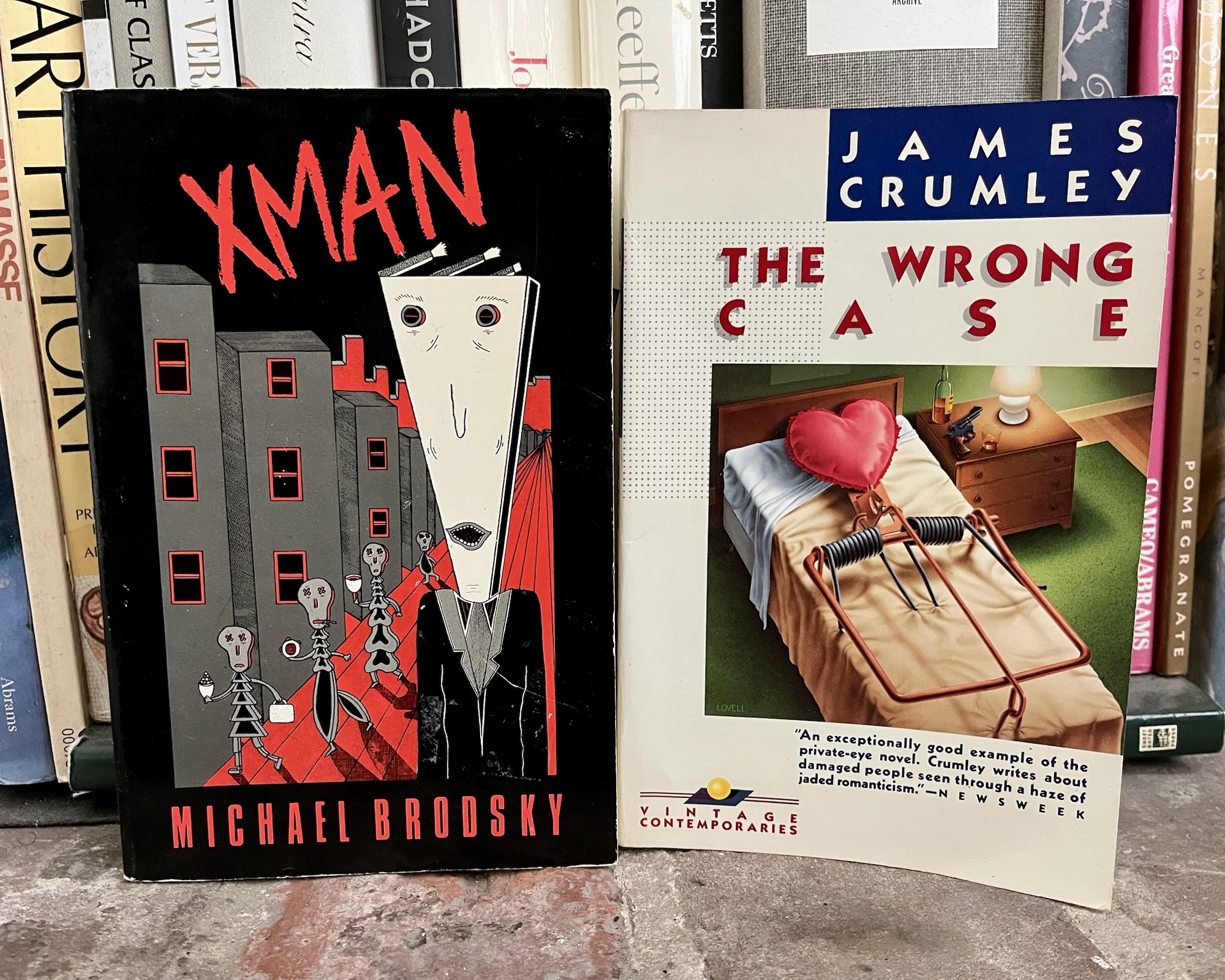



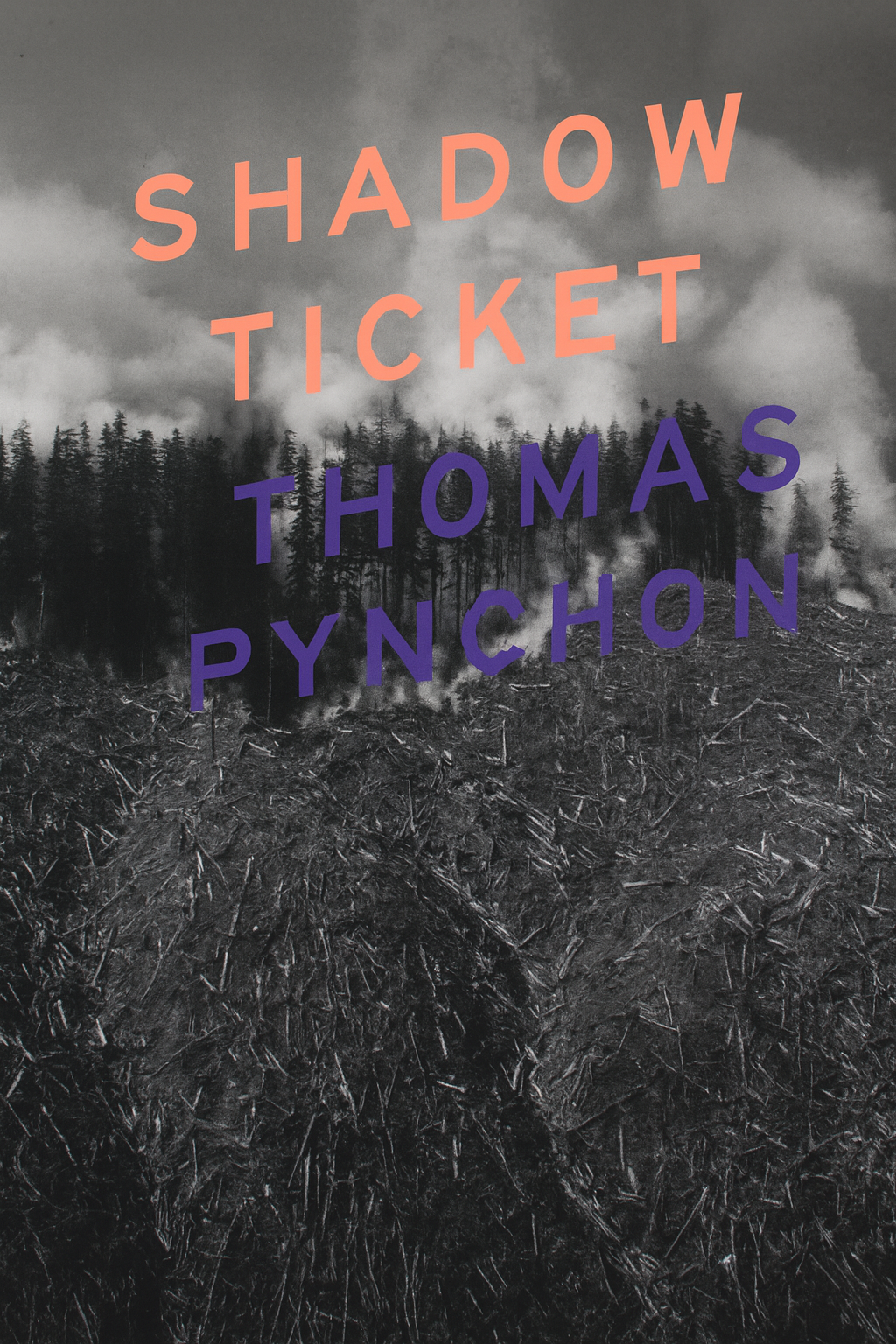

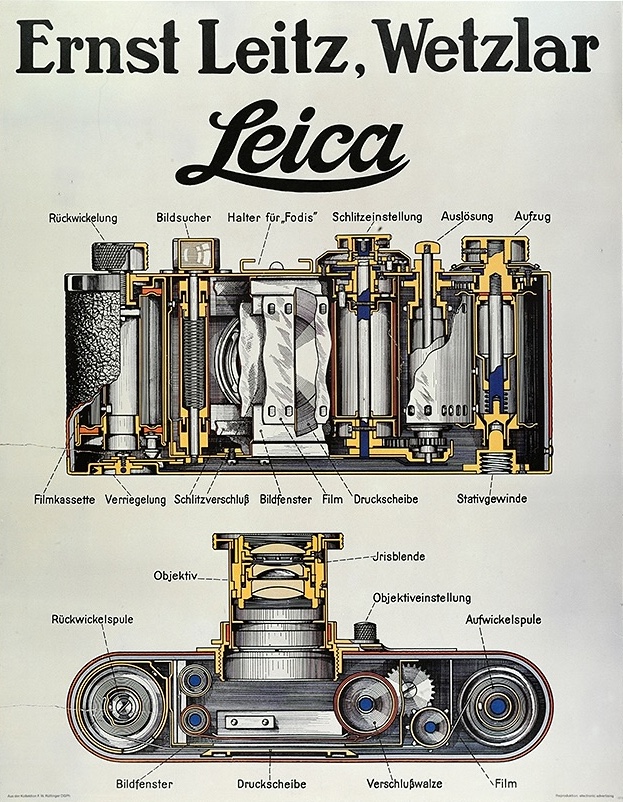

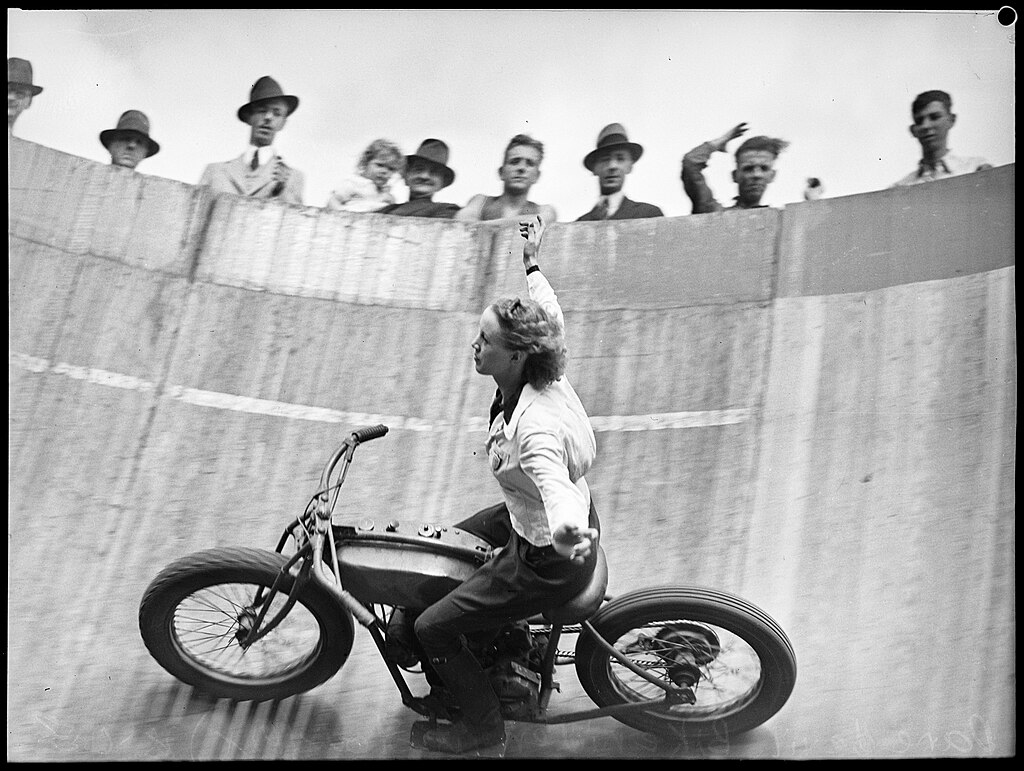
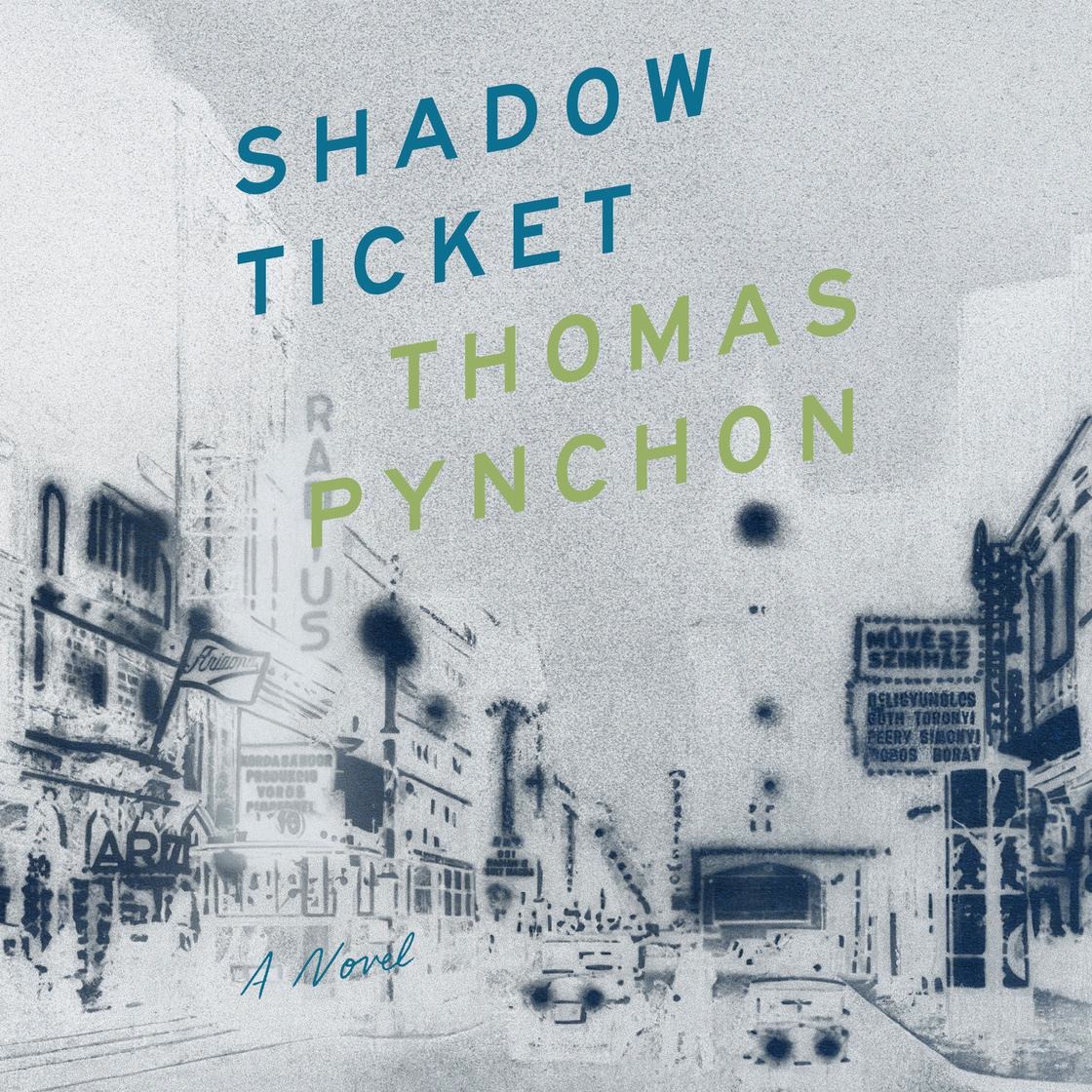

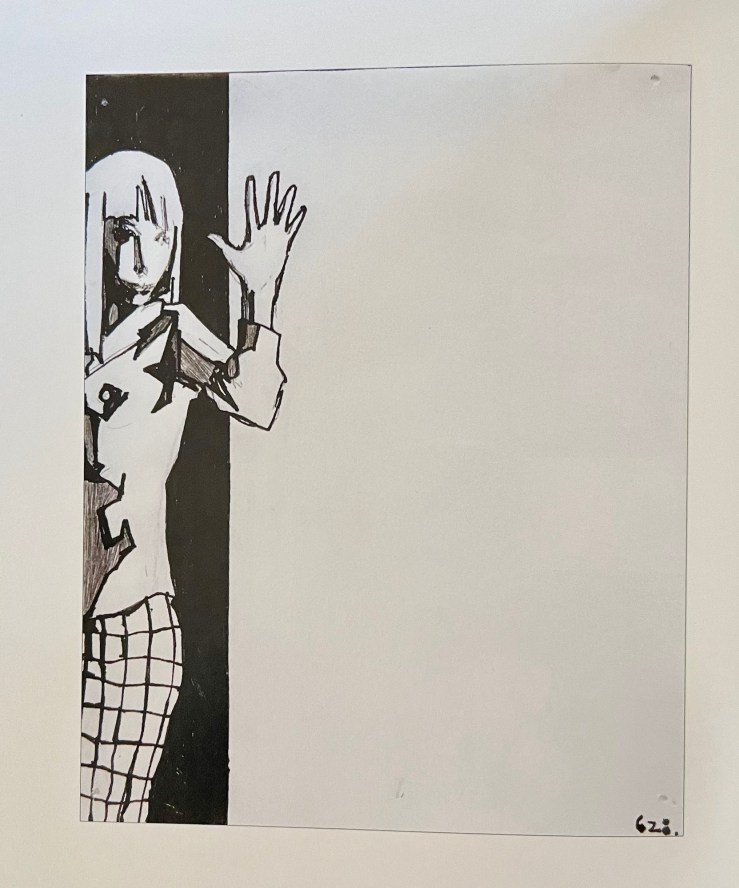

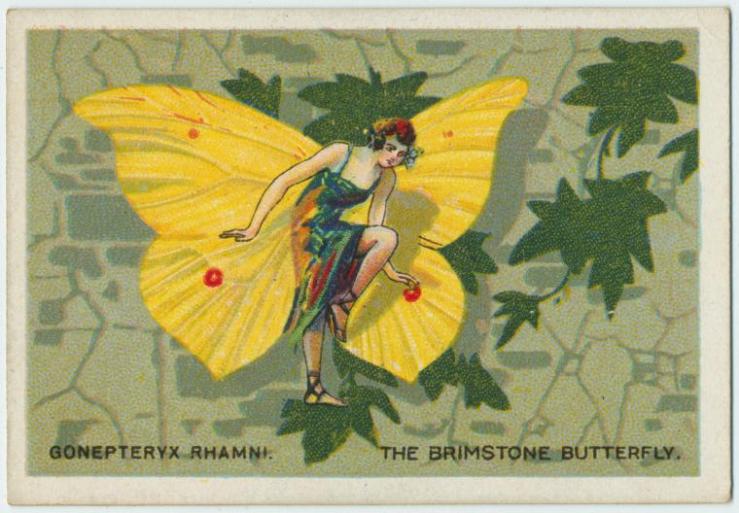
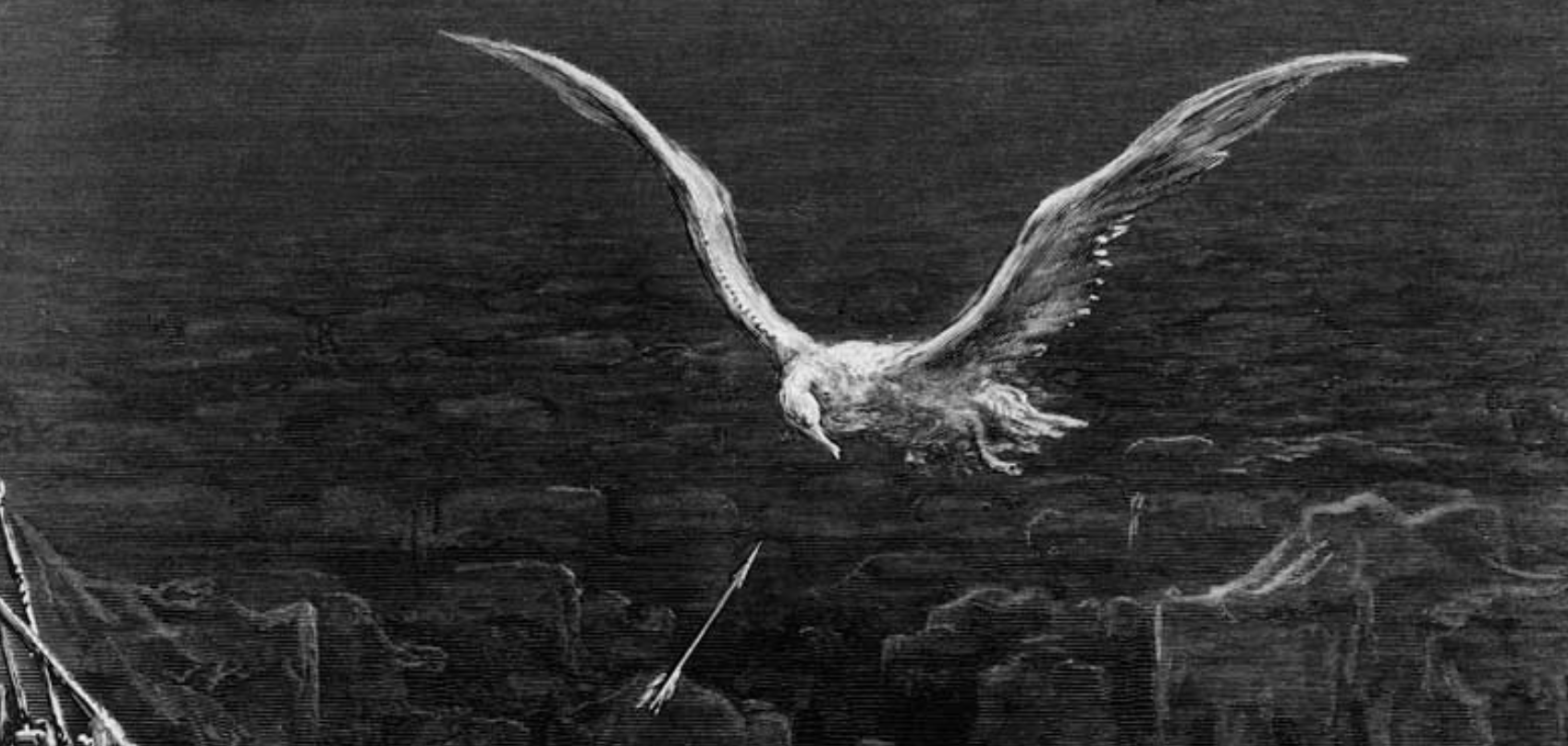
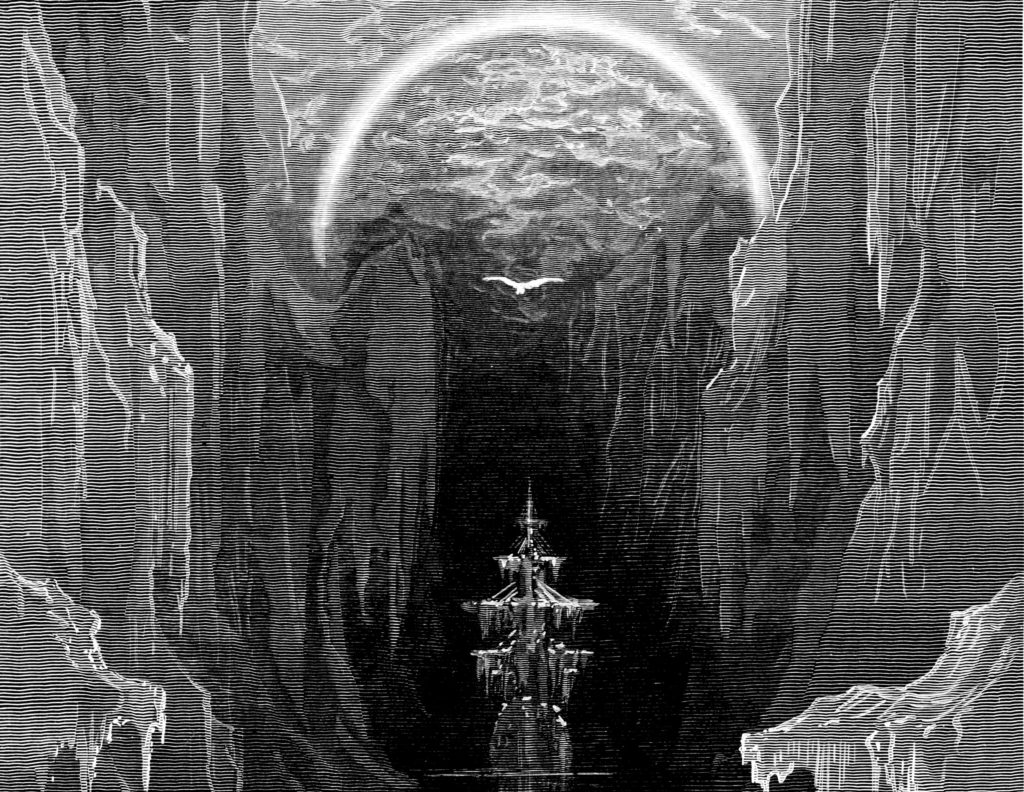

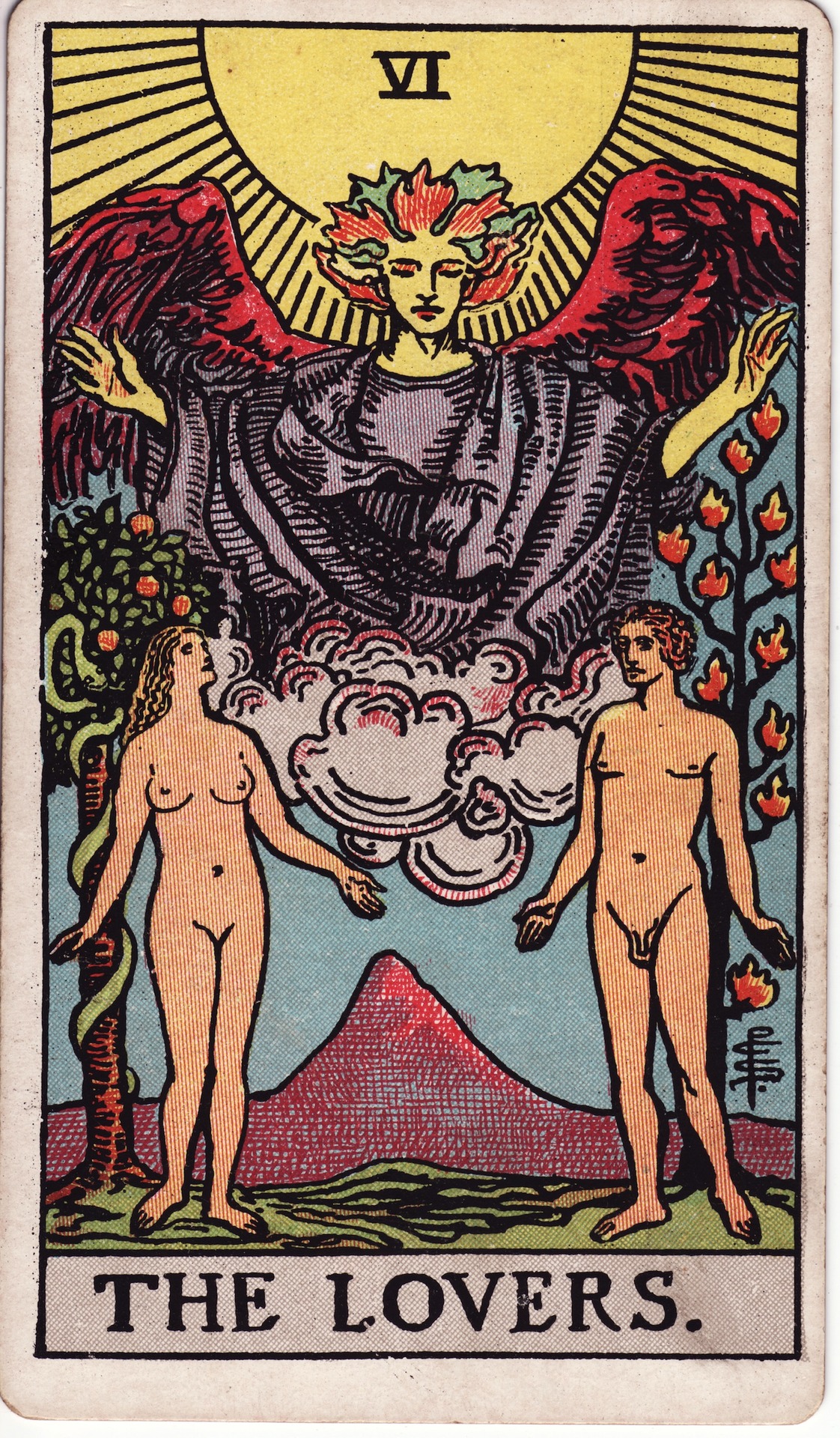
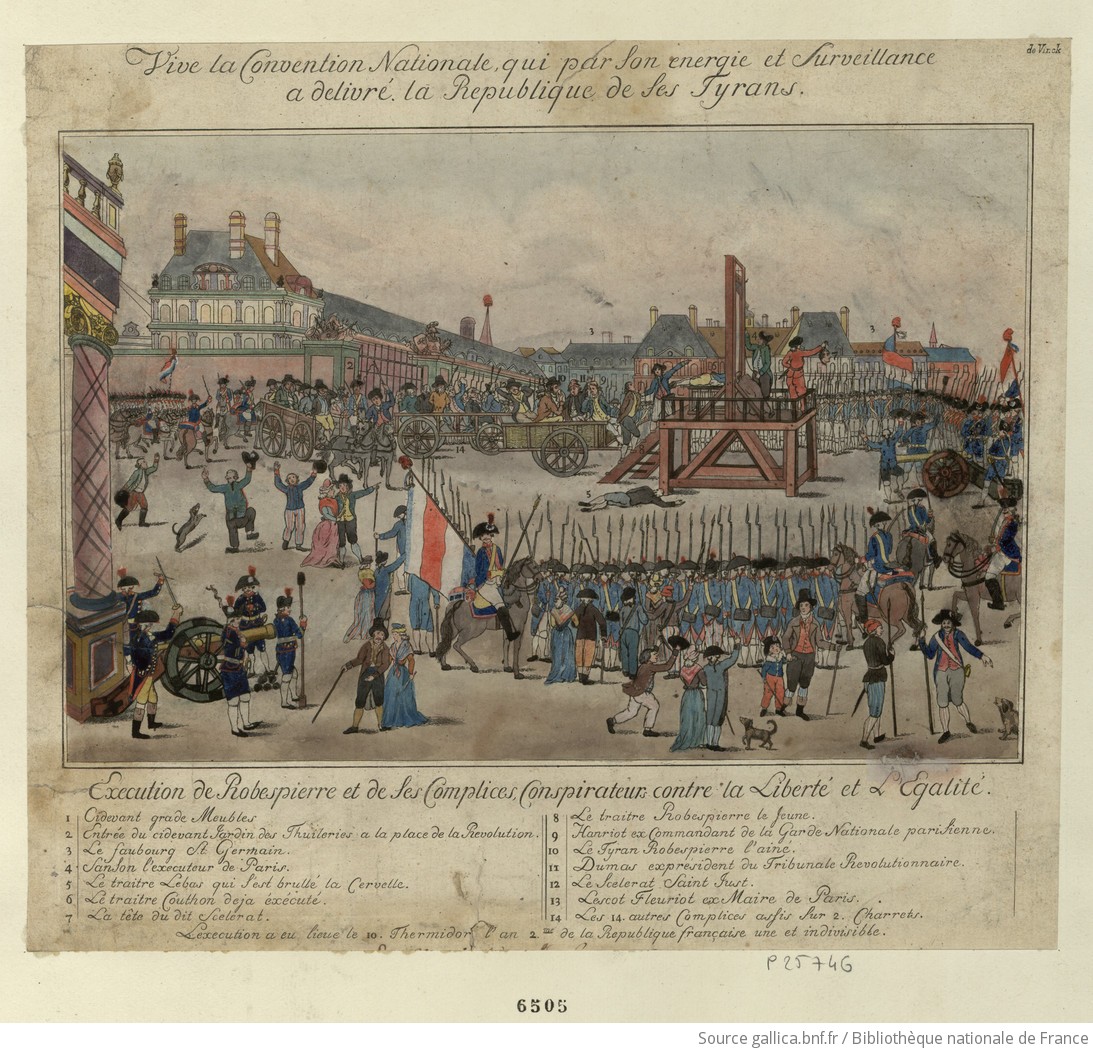
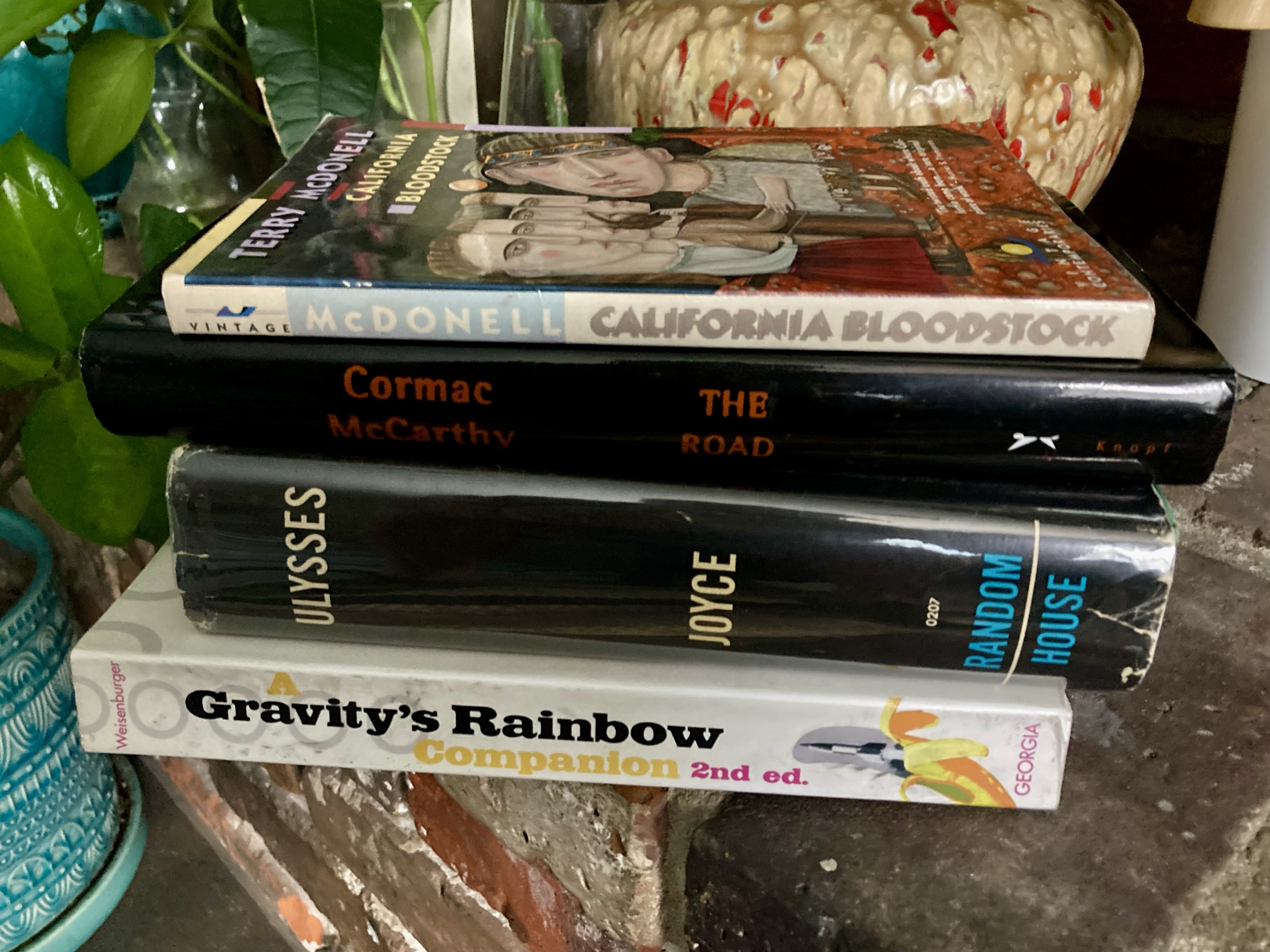
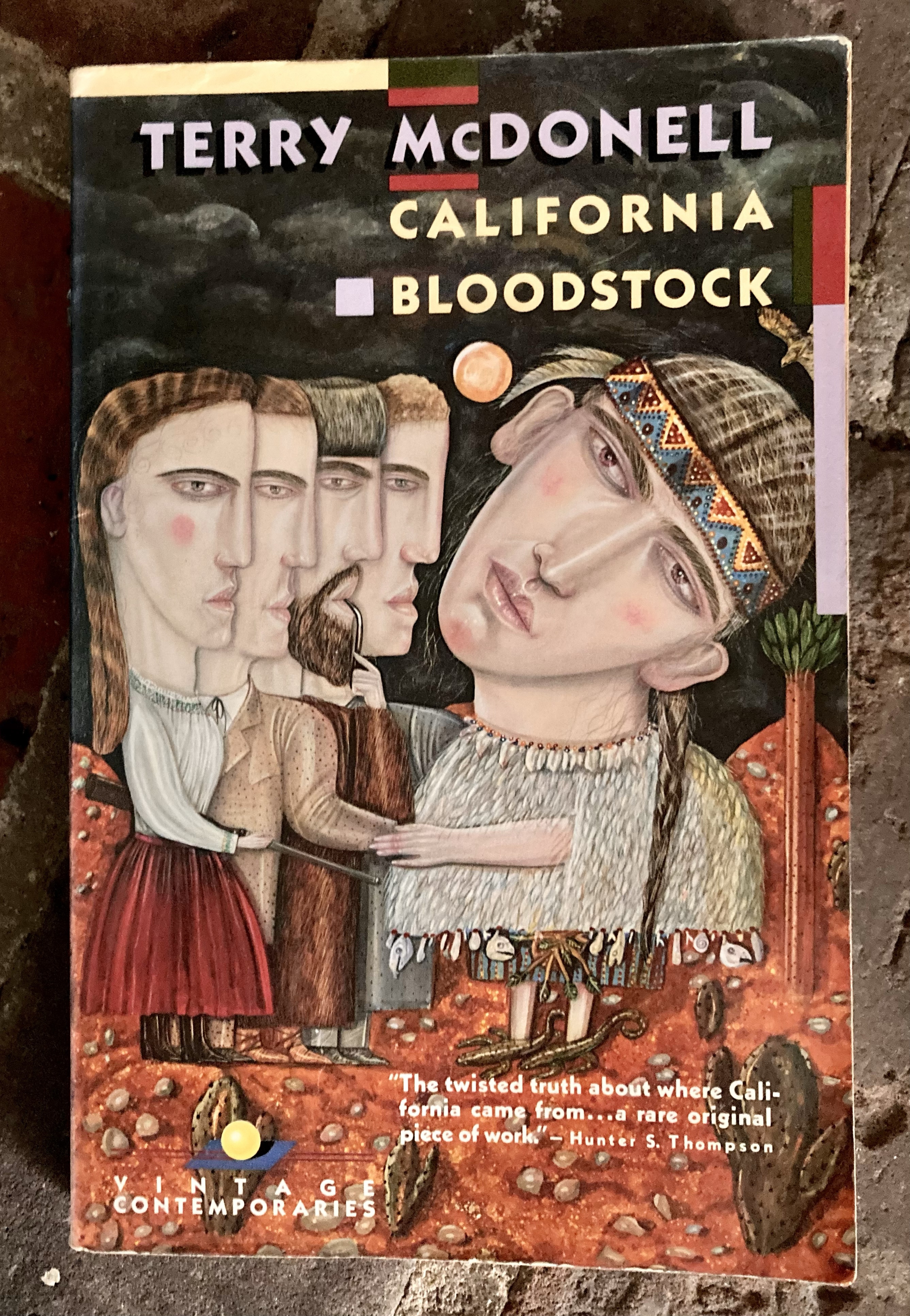
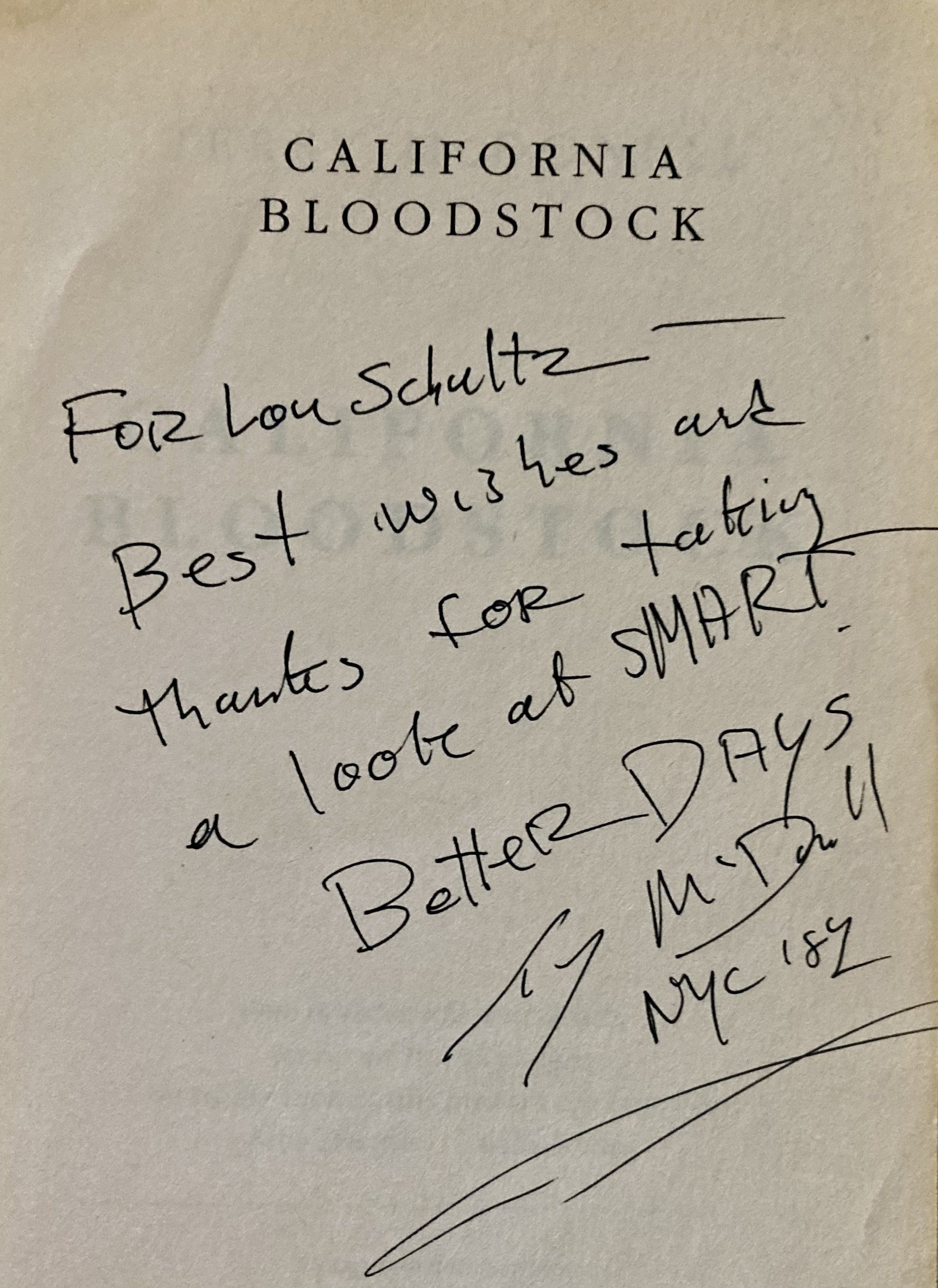


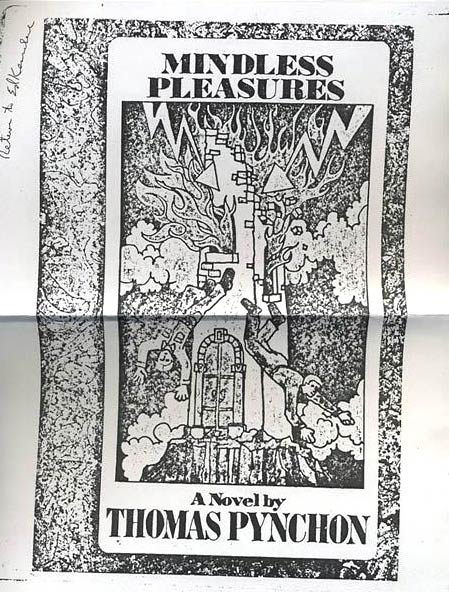
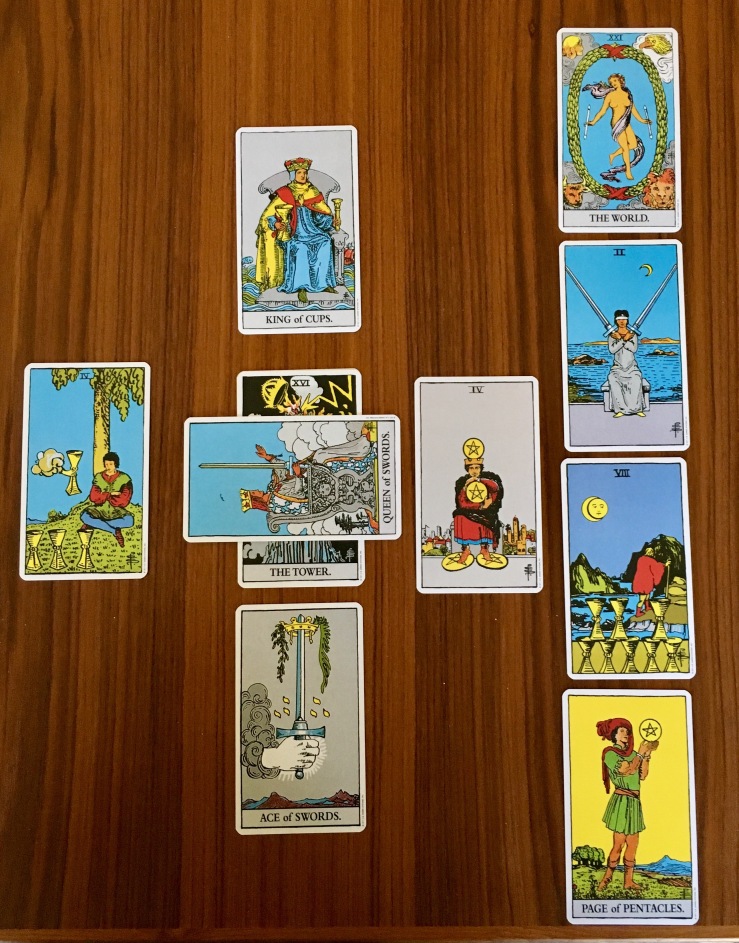
 Biblioklept