James Joyce’s Ulysses might seem like a prohibitively difficult book, but it’s not as hard to read as its reputation suggests. There are any number of strategies for tackling the great tome (although enjoying or experiencing are more fitting verbs here), but one that many readers might overlook is listening to an audio recording.
I’ve tried a few audio versions of Ulysses, and none can hold a candle to RTÉ’s 1982 full cast production. I reviewed it a few years ago, and wrote:
I listened to, absorbed, choked up at, guffawed about, cackled around, and generally loved RTÉ’s 1982 dramatized, soundtracked, sound-effected, lovingly detailed recording of Ulysses, a work crammed with voices to match (if perhaps not equal) Joyce’s big fat work. This recording is not as widely available as LibriVox’s (free) full cast production or Jim Norton’s Naxos reading, but, after sampling both, I’d argue that it’s better. The Irish players bring sensitivity and humor to their roles, but beyond that pathos, the energy of RTÉ’s troupe is what really makes the book sing. Leopold Bloom gets his own voice, as does Stephen Dedalus and Molly (and all the characters). This innovation propels the narrative forward with dramatic power, and clarifies the oh-so indirectness of Joyce’s free indirect style, making the plot’s pitfalls and pratfalls more distinct and defined. There are songs (and dances) and music (and musing) and humming (and hemming and hawing and reverb). There is chanting and chawing and brouhaha. There is chaos and calamity and confusion. There is brilliance and peace and transcendence. It’s all very good, great, wonderful.
Makes breakfast for his wife. Goes to the butcher. Goes to the post office. Goes to church. Goes to a chemist. Goes to a public bath. Goes to a funeral. Goes to a newspaper press. Goes to a locksmith to canvass an ad. Feeds some seagulls. Goes to a bar. Helps a blind man cross the street. Goes to the museum. Goes to to the library. Visits a bookseller. Window-shops. Goes to a restaurant. Listens to some live music. Writes a love letter. Goes to another bar. Nearly gets in a fight. Masturbates to a beautiful eighteen-year-old exhibitionist giving him a private show. Takes an alfresco nap. Takes up a collection for a widow. Goes to a hospital to visit a pregnant woman. Flits with a nurse. Feeds a stray dog. Goes to a whorehouse. Helps avert a row with the police. Goes to a cabman’s shelter and listens to a sailor tell stories. Breaks into his own house. Urinates under the stars with another man. Watches the sunrise. Kisses his wife on her arse.
It would have been the single busiest, most adventurous day of my life.
Despite the War, despite the paper shortage, and despite those old-established publishers whose god is their belly and whose god-father was the late F.T. Palgrave, there is a new edition of James Joyce’s “A Portrait of the Artist as a Young Man.”
It is extremely gratifying that this book should have “reached its fourth thousand,” and the fact is significant in just so far as it marks the beginning of a new phase of English publishing, a phase comparable to that started in France some years ago by the Mercure.
The old houses, even those, or even more those, which once had a literary tradition, or at least literary pretensions, having ceased to care a damn about literature, the lovers of good writing have “struck”; have sufficiently banded themselves together to get a few good books into print, and even into circulation. The actual output is small in bulk, a few brochures of translations, Eliot’s “Prufrock,” Joyce’s “A Portrait,” and Wyndham Lewis’ “Tarr,” but I have it on good authority that at least one other periodical will start publishing its authors after the War, so there are new rods in pickle for the old fat-stomached contingent and for the cardboard generation.
Joyce’s “A Portrait” is literature; it has become almost the prose bible of a few people, and I think I have encountered at least three hundred admirers of the book, certainly that number of people who, whether they “like” it or not, are wholly convinced of its merits. Continue reading ““Joyce” — Ezra Pound”→
Lily, the caretaker’s daughter, was literally run off her feet. Hardly had she brought one gentleman into the little pantry behind the office on the ground floor and helped him off with his overcoat than the wheezy hall-door bell clanged again and she had to scamper along the bare hallway to let in another guest. It was well for her she had not to attend to the ladies also. But Miss Kate and Miss Julia had thought of that and had converted the bathroom upstairs into a ladies’ dressing-room. Miss Kate and Miss Julia were there, gossiping and laughing and fussing, walking after each other to the head of the stairs, peering down over the banisters and calling down to Lily to ask her who had come.
It was always a great affair, the Misses Morkan’s annual dance. Everybody who knew them came to it, members of the family, old friends of the family, the members of Julia’s choir, any of Kate’s pupils that were grown up enough and even some of Mary Jane’s pupils too. Never once had it fallen flat. For years and years it had gone off in splendid style as long as anyone could remember; ever since Kate and Julia, after the death of their brother Pat, had left the house in Stoney Batter and taken Mary Jane, their only niece, to live with them in the dark gaunt house on Usher’s Island, the upper part of which they had rented from Mr Fulham, the corn- factor on the ground floor. That was a good thirty years ago if it was a day. Mary Jane, who was then a little girl in short clothes, was now the main prop of the household for she had the organ in Haddington Road. She had been through the Academy and gave a pupils’ concert every year in the upper room of the Antient Concert Rooms. Many of her pupils belonged to better-class families on the Kingstown and Dalkey line. Old as they were, her aunts also did their share. Julia, though she was quite grey, was still the leading soprano in Adam and Eve’s, and Kate, being too feeble to go about much, gave music lessons to beginners on the old square piano in the back room. Lily, the caretaker’s daughter, did housemaid’s work for them. Though their life was modest they believed in eating well; the best of everything: diamond-bone sirloins, three-shilling tea and the best bottled stout. But Lily seldom made a mistake in the orders so that she got on well with her three mistresses. They were fussy, that was all. But the only thing they would not stand was back answers.
Of course they had good reason to be fussy on such a night. And then it was long after ten o’clock and yet there was no sign of Gabriel and his wife. Besides they were dreadfully afraid that Freddy Malins might turn up screwed. They would not wish for worlds that any of Mary Jane’s pupils should see him under the influence; and when he was like that it was sometimes very hard to manage him. Freddy Malins always came late but they wondered what could be keeping Gabriel: and that was what brought them every two minutes to the banisters to ask Lily had Gabriel or Freddy come. Continue reading ““The Dead” — James Joyce”→
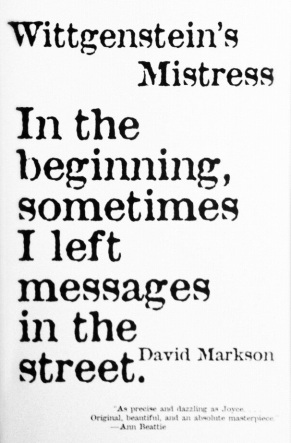
I had read the reviews & after being unable for a few years to buy it secondhand, I bit the bullet & bought it new.
The beginning is intriguing.
The concept of the book is dead simple.
The idea is this: Kate is a painter; she is the last person on earth, maybe; she is alone in a house on the Long Island beach
Markson picks up Kate’s dialogue in media res and trusts the reader enough to piece together what the heck is going on: she is the last person left on earth and is making her way through it as best she can, telling us her story as she goes.
Short declarative sentences loop feverishly around her brain, repeating themselves, correcting themselves, contradicting themselves, and filling in missing information many pages later.
The narrator’s voice rings true.
It is frustrating, repetitive, and does not offer much in the way of style and language.
No chapter breaks, no real paragraphs even.
Read at random.
This book received 54 rejections before finding a publisher. This I can believe.
Her little apercus are all about observation and remembrance, the real and the false, blah, blah.
(Joyce, Baldwin, Pynchon, Cortazar).
The book was meandering, rambling & jumped all over the place.
Not that oddness is bad.
It never centers on anything.
It’s the type of book best discussed in groups, since it does bring up some interesting themes—the fragility of memory and sanity, the ineffectiveness of language, the impact of philosophy and literature.
There’s nothing for the reader to latch onto and follow, other than the voice.
What about the subtext?
Like Wittgenstein said, “Whereof we cannot speak, thereof we must be silent.”
I am mad. I am crazy. Yesterday I died but returned in time to write this.
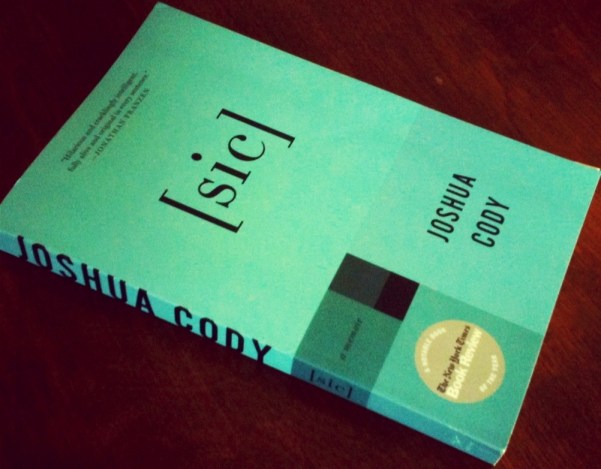
Joshua Cody’s memoir [sic] showed up at Biblioklept World Headquarters a few weeks ago and despite my prejudices, I coasted through it over a few afternoons.
Those prejudices:
1) It’s a memoir.
2) There’s a Jonathan Franzen blurb on the cover.
3) The title [sic] is an unbearably too-clever pun (and this from a guy who loves puns).
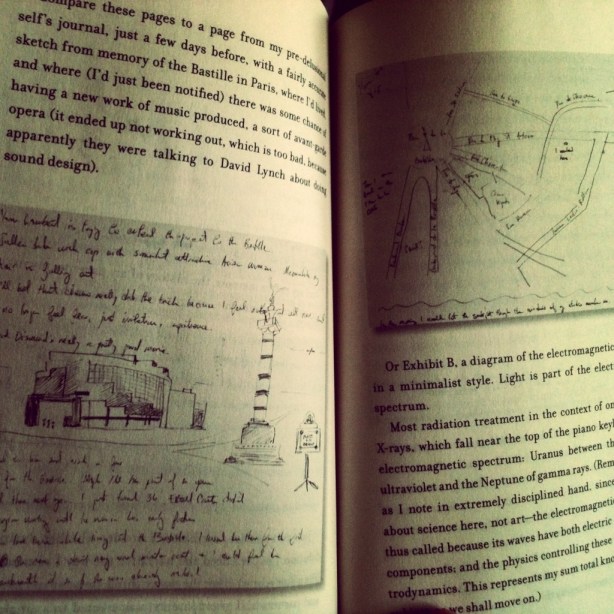
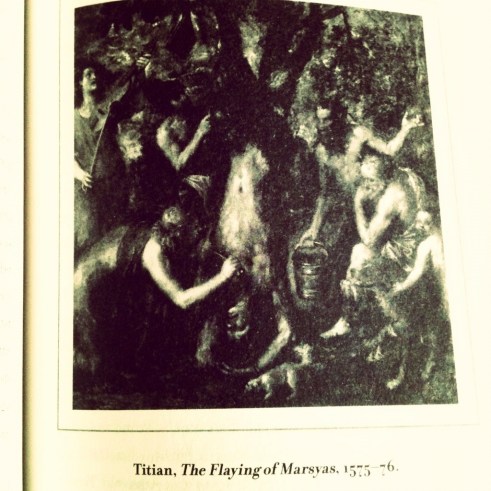
The first thing I noticed about [sic] were the pictures : paintings, maps, charts, sketches, lists, collages, other texts, and so on interspersed throughout the text. I like pictures in books.
The way that Cody uses these illustrations at first reminded me of W.G. Sebald, who employed pictures in novels like Austerlitz and The Rings of Saturn in an oblique, documentary approach.
Cody is less oblique than Sebald, and perhaps flippant too. He doesn’t namecheck Sebald, at any rate, unlike David Byrne, who openly admitted to following Sebald’s path in his 2008 memoir Bicycle Diaries. (Cody does namecheck David Byrne though).
Then I edged my way into the plot, such as it is. I’ll lazily let publisher W.W. Norton summarize:
Joshua Cody, a brilliant young composer, was about to receive his PhD when he was diagnosed with an aggressive form of cancer. Facing a bone marrow transplant and full radiation, he charts his struggle: the fury, the tendency to self-destruction, and the ruthless grasping for life and sensation; the encounter with beautiful Ariel, who gives him cocaine and a blow job in a Manhattan restaurant following his first treatment; the detailed morphine fantasy complete with a bride called Valentina while, in reality, hospital staff are pinning him to his bed.
Moving effortlessly between references to Don Giovanni and the Rolling Stones, Ezra Pound and Buffalo Bill, and studded with pages from his own diaries and hospital notebooks, [sic] is a mesmerizing, hallucinatory glimpse into a young man’s battle against disease and a celebration of art, language, music, and life.
As Norton’s summary suggests, Cody’s memoir is highly discursive and playful, loaded with references to art, music, and literature. Digressions on figures like David Foster Wallace, Orson Welles, or Alexander Theroux lard the book—indeed, they often seem to edge out the story Cody intends to tell, his cancer memoir. He seems reticent to fully engage his own feelings, instead layering reference upon reference. These references become insufferable at times—are we supposed to care that Cody met David Lynch and would like to be his friend, or that Cody briefly studied ancient Greek? Cody is so busy trying to impress the reader that he forgets to expressmeaning.
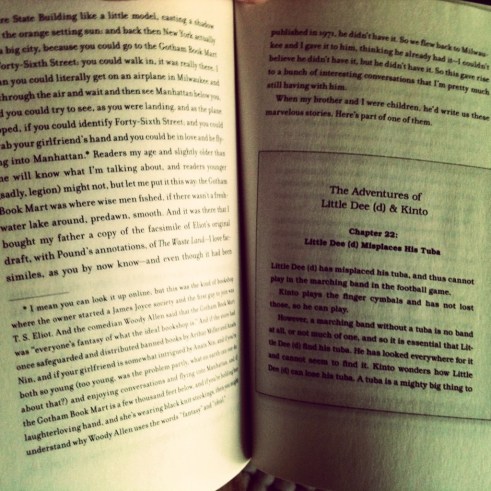
We see this reticence, this turning away from, here over two pages: Cody moves from a story about buying a facsimile copy of Pound’s notes on the original draft of The Wasteland to a lengthy footnote that manages to name drop James Joyce, T.S. Eliot, Woody Allen, Anaïs Nin, and Henry Miller (in just two sentences!) and then into a facsimile reproduction of one of the stories his brother would write for him as a child:
The big problem with Cody’s memoir is that it never feels particularly real. I enjoy discursive referential postmodernism as much as the next fella, but [sic] often fails to cohere around a central idea, let alone an emotion. When Cody describes dating a stripper/dominatrix, it feels like a party trick, an inflated anecdote—there’s no emotional core, no contemplative connection to his illness. Other sexual episodes read like a parody of Henry Miller.
As its title suggests, [sic] is a dodge, a bait-and-switch, an evasion. Cody is clearly very clever—but a dazzling display of cleverness can’t sustain a narrative.
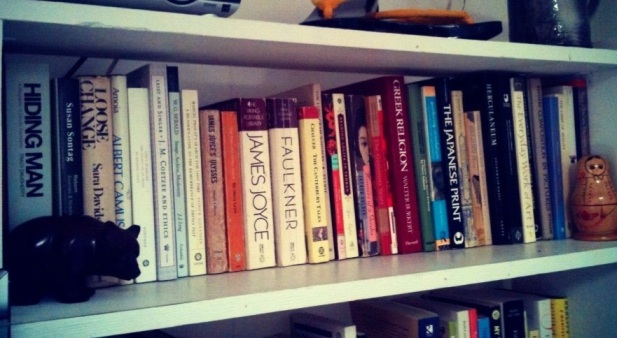
Book shelves series #43, forty-third Sunday of 2012
Kind of a hodgepodge shelf—some literary biography, a few now-redundant collections, some literary criticism, art books, etc.
Tracy Daugherty’s Donald Barthelme biography Hiding Man is on the far left; I reviewed it a few years ago, taking note of my favorite part, the so-called postmodernists’ dinner.
I picked up Penguin’s The Essential James Joyce in Jimbocho, an area in Tokyo known for used bookstores.
I recall paying maybe ¥100 for it. It comprises a few selections from Ulysses and Finnegans Wake, some of Joyce’s (totally unessential) poetry, and the entirety of Dubliners, Exiles, and Portrait. I’ve kept it because of sentiment (and I like the cover).
A few weeks ago, for some reason beyond my ken, I stumbled into Finnegans Wake, read on the gentle glow of my Kindle Fire. I’ve been poking into the book for years now, but that particular night I read it with an ease—not an ease of understanding, but an ease of spirit, or of mind. Or ear, really. I had fun with it. I went back each night since then, sometimes only going through a page or two before slipping into slumbers.
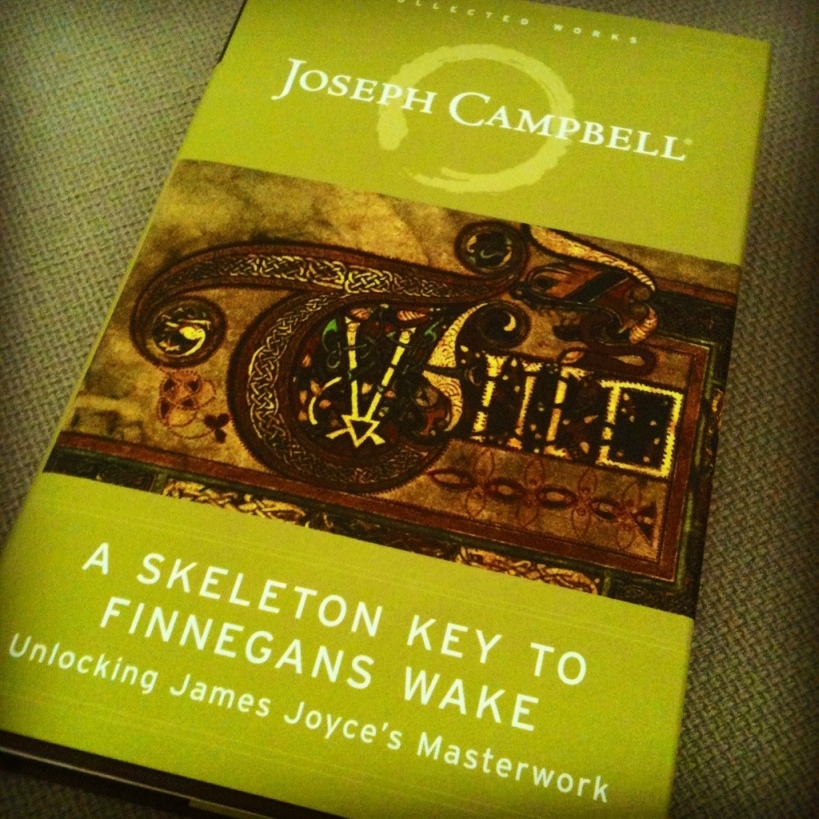
Anyway, I’ve been searched for a used copy of Joseph Campbell’s Skeleton Key to the Wake for years, but I finally just broke down and ordered a new copy through my bookstore. My plan is to read Finnegans Wake next year. It’s not a plan, so much as something I’ve just typed.
I hate to be anti-book—any book, really, even awful ones—but Fifty Shades of Grey barely qualifies as a book, and it’s utterly dreadful to think that a Twilight knockoff that started as Twilight fanfiction(!) is now sold in bulk across the world when there are so many good books out there—salacious, sexy, erotic books at that. But, like I said, I hate to knock on something when it’s more productive to offer an alternative. So: a list.
This list is subjective, occasionally weird, and hardly complete (feel free to point out what I’ve left off). I’ve only included works that I’ve read in part or in whole. I’m clearly aware that certain stuff like D.H. Lawrence, much of Updike, and infamous classics like Walter’s My Secret Life are not on here—if it’s not on here, I haven’t read any of it. I vouch for everything else.
Song of Songs (Old Testament)
Juliette, Marquis de Sade
Justine, Marquis de Sade
The 120 Days of Sodom, Marquis de Sade
The Pearl, William Lazenby (ed.)
The Story of O, Pauline Réage
Delta of Venus, Anaïs Nin
Little Birds, Anaïs Nin
Lost Girls, Alan Moore and Melinda Gebbie
The Soft Machine, William Burroughs
Story of the Eye, Georges Bataille
The Garden of Eden, Ernest Hemingway
Ada, or Ador, Vladimir Nabokov
Fanny Hill, John Cleland
Poems of Sappho
Crash, J.G. Ballard
Their Eyes Were Watching God, Zora Neale Hurston
House of Holes, Nicolson Baker
Blood and Guts in High School, Kathy Acker
Satyricon, Petronius Arbiter
“Penelope”/Molly’s monologue from Ulysses, James Joyce
“Nausicaa” from Ulysses, James Joyce
“Circe” from Ulysses, James Joyce
Boccaccio’s Decameron
Tropic of Cancer, Henry Miller
Tropic of Capricorn, Henry Miller
Women, Charles Bukowski
Poems of Catullus
A Midsummer Night’s Dream, William Shakespeare
Kama Sutra
Naked Lunch, William Burroughs
The Ways, Caracci and Aretino
Vox, Nicholson Baker
Ars Amatoria, Ovid
A Feast of Snakes, Harry Crews
Casanova’s letters and memoirs
Chaucer’s The Canterbury Tales
Snow White, Donald Barthelme
Brave New World, Aldous Huxley
Briar Rose, Robert Coover
Frisk, Dennis Cooper
Song of Myself, Walt Whitman
Hotel Iris, Yoko Ogawa
“Wild nights! Wild nights!”, Emily Dickinson
Various selections of Robert Crumb
Dream Story, Arthur Schnitzler
A few choice passages from Roberto Bolaño’s The Savage Detectives
Venus in Furs, Leopold von Sacher-Masoch
The Bloody Chamber, Angela Carter
“I started Early – Took my Dog -“, Emily Dickinson
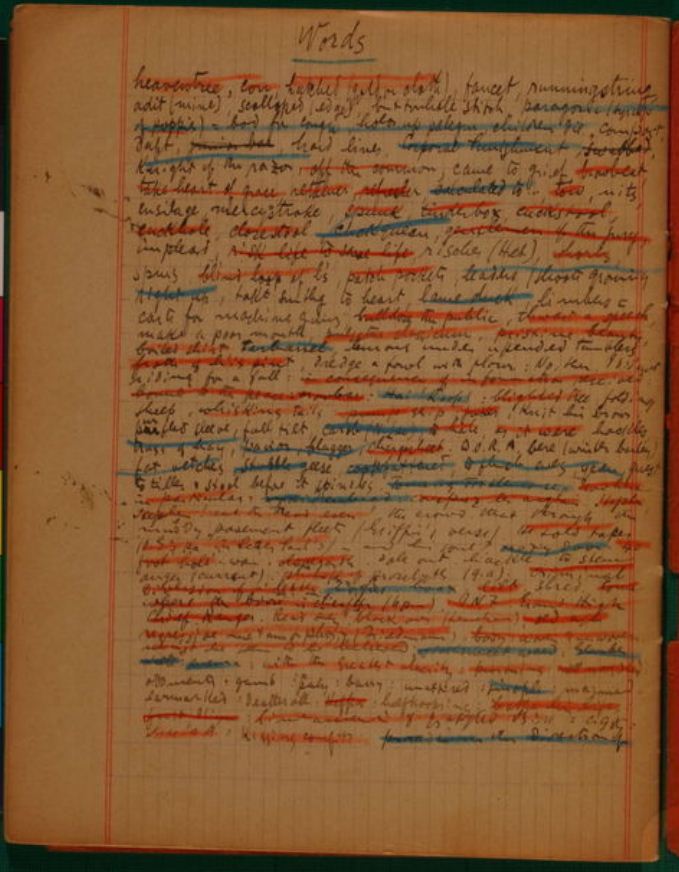
This page is from the same notebook where Joyce headed a page he titled “Rhetoric”; the notes in the books seem to suggest the notebook is part of the preparatory material for Ulysses. From the National Library of Ireland, which probably doesn’t want me posting their material like this.
Happy Mother’s Day! Sure, it’s a marketing scam, but we all love moms, right?
Fascinating moms populate literary fiction, and there’s no shortage of great baddies, evil stepmothers, and distant headcases in our favorite literature—but we thought we’d focus instead on some of the moms that seem to be, you know, really great moms.
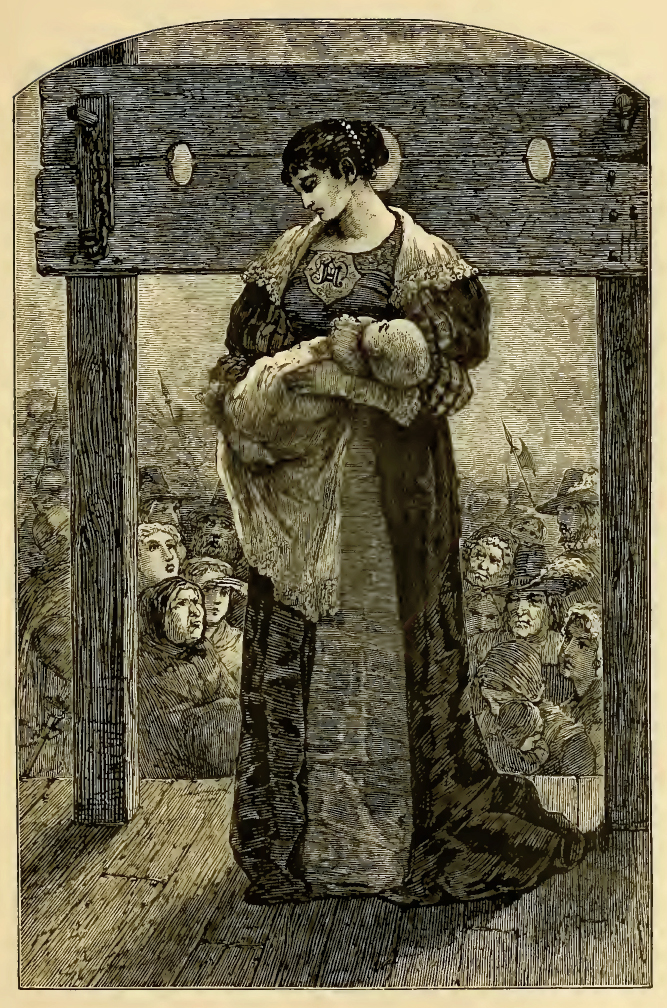
“Hester Prynne & Pearl before the stocks”, an illustration by Mary Hallock Foote from an 1878 edition of The Scarlet Letter
1. Hester Prynne, The Scarlet Letter (Nathaniel Hawthorne)
Hester Prynne is a bundle of contradictions—sin and salvation, radical freedom and reactionary repression, hope and despair—all bound to a deeply patriarchal society that had to control women’s bodies at all turns. Fortunately, there’s no analog for the Puritans’ judgmental, shame-based behavior in our own society (har har). Hester and her daughter Pearl, living in a cottage outside of Boston, are outside the dominant social order. It’s a form of punishment that paradoxically frees the pair, allowing Pearl to grow into a kind of nature spirit—impish and willful, to be sure, but also artistic and able to express herself. Although Pearl is the human doubling of Hester’s titular letter, she’s ultimately no badge of shame, but rather a treasure in her mother’s eyes.
2. Penelope, The Odyssey (Homer et al.)
Patient Penelope weaving and unweaving her husband’s shroud—is she the faithful wife, waiting for Odysseus who’s having adventures asea? Or is she cunningly keeping her son safely alive from the predatory suitors who would certainly want to get him out of the way ASAP. Penelope is an extraordinary and ambiguous figure, but one thing is clear: she loves her son Telemachus.
3. Molly Bloom, Ulysses (James Joyce)
Speaking of Penelope . . . Molly might not be the most faithful wife, but damn if she isn’t a hot mama.
4. Ma Joad, The Grapes of Wrath (John Steinbeck)
Ma Joad never gets a first name in Grapes—she’s an elemental matriarchal force that keeps the family together against every kind of pain. The final scene of this novel is utterly amazing. When Rose of Sharon’s daughter dies in childbirth, Ma Joad directs the mother to nurse a man dying from hunger. All the while, a flood of epic proportions looms. Ma Joad’s determination to live transcends Darwinian impulses here; against the backdrop of infanticide, economic and social genocide, and natural disaster, she still directs her family to a loving, Emersonian course of action.
5. Grendel’s mother, Grendel (John Gardner)
In John Gardner’s fabulous retelling of the Beowulf saga from Grendel’s POV, we find a deeply alienated young man who, try as he might, cannot communicate with the plants and animals around him. Grendel should be a thing of nature, but he is a thinking thing, a thing with a conscience, a soul. He can understand men but they cannot understand him. In one of the book’s saddest conceits, Grendel cannot communicate through speech with his mother, who in many senses seems a creature apart from him. Gardner here dramatizes the radical alienation that all children must feel at some point for their mothers, an alterity grounded in the paradox that, hey, your mom gave birth to you—you came out of her, metaphorically, sure, but also, like, really. Even though Mama Grendel can’t speak to her son, she protects and lovingly cares for him, splitting a few skulls here and there in the process. Motherhood is tough.

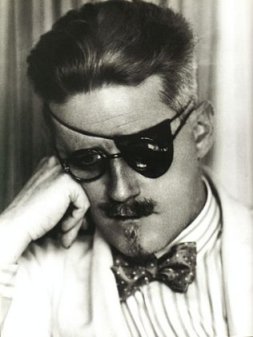 James Joyce’s Ulysses might seem like a prohibitively difficult book, but it’s not as hard to read as its reputation suggests. There are any number of strategies for tackling the great tome (although enjoying or experiencing are more fitting verbs here), but one that many readers might overlook is listening to an audio recording.












 Biblioklept