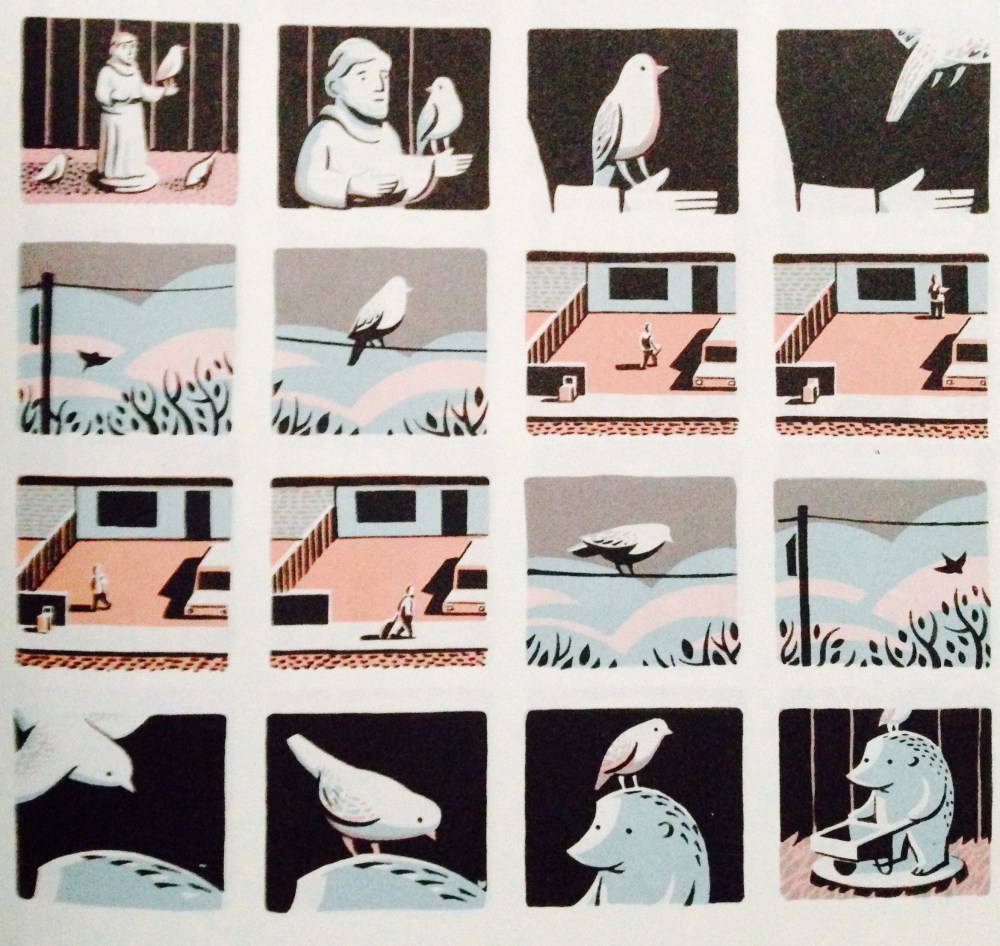
Blog about some recent reading

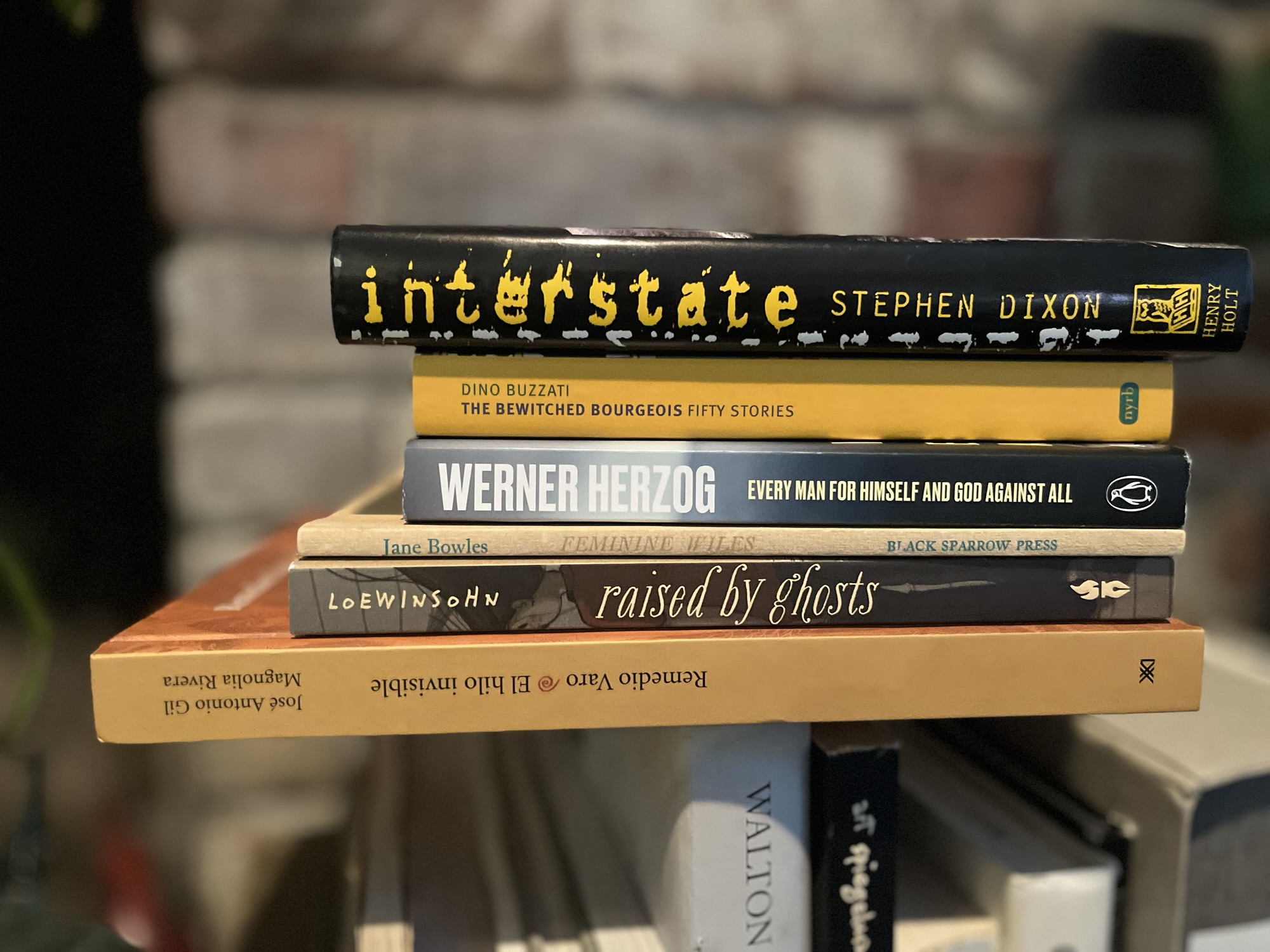
What an interesting few weeks it’s been! Here’s (some of) what I’ve been reading so far this year:

I’m in the middle of Stephen Dixon’s novel Interstate. It is a devastating, ugly, addictive, beautiful novel; I have no idea if it is “good” or not but I love it. I can’t really think of a single person I know (in real life) I could recommend it to. We played cards with some friends and one of them asked about what I was reading, and I said a novel called Interstate by this guy Stephen Dixon, and she asked of course What’s it about? and I said something, Well, this guy’s driving on the interstate with his daughters and two guys in a van pull up along side him and start shooting at them, killing his younger daughter–this happens in like, the first few paragraphs–and then we see how this event destroys his life–but then Dixon repeats the initial scenario like seven more times with different (but all really tragic so far) outcomes–and it’s written in this addictive vocal style that might be really off-putting to many readers, and it also makes really fascinating use of the coordinating conjunction for, which may just be a verbal tic –and it’s also really funny at times? I am not trying to sell this novel to anyone but I love it.

My reading experience of Briana Loewinsohn’s graphic novel Raised by Ghosts was kinda sorta the opposite of Dixon’s Interstate in that after I finished it I immediately pressed it on my wife and then my kids and then texted some of my oldest friends about it (oldest in the previous clause should be understood to modify the friendship, not the actual friend’s years–although we’re all getting older). We’re all getting older, all the time, and Raised by Ghosts provoked an aged nostalgia in me. I’m about half a year older than Loewinsohn and so much of her semi-autobiographical novel resonated with me. She gets everything right about what it was like to be a little bit of a weirdo at school in the nineties. There’s this wonderful passage on how important it was to get a handwritten note from a friend; there’s a page that’s nothing but a notebook page filled with band names; there’s a marvelous scene where our hero loses her shit watching You’re a Good Man, Charlie Brown. I should have a proper review this week or next, but great stuff. (The whole family loved it, by the way.)

I’ve been reading a collection of Dino Buzzati short stories translated by Lawrence Venuti; my technique is to read one of the shorter stories when I feel a bit of dread or anxiety from, like, reading something else. (The collection is called The Bewitched Bourgeois by the way.) I’ve enjoyed reading them, and have especially enjoyed allowing myself to read them at random instead of following the collection’s chronological trajectory. Very Kafka, very Borges, but also very original.

Not in the picture above, but I’ve also been working my way through a digital copy of Vladimir Sorokin’s short story collection Dispatches from the District Committee, in translation by Max Lawton (and illustrated by Gregory Klassen). Great gross stuff.

I picked up a collection of Jane Bowles’ sketches, letters, and other ephemera a few weeks ago–I love her stuff, but really it was that these were contained in the somewhat-rare Black Sparrow Press edition Feminine Wiles. I’m pretty sure all of the stuff here is collected in My Sister’s Hand in Mine, but I’ve enjoyed dipping into this one more. It’s slim, not bulky, but that bulky boy’s around her (My Sister’s) if I need him.

My uncle sent me a copy of Werner Herzog’s 2022 memoir Every Man for Himself and God Against All for Christmas (in translation by Michael Hofmann). I devoured the first few chapters and then a colleague hipped me to the fact that there’s an audiobook of Herzog reading his memoir (available on Spotify and other platforms) — so on my commute I’ve been listening to him read his own memoir, which is just amazing. Like fucking amazing. Hearing him say phrases like “the escapades of Christopher Robin, Winnie-the-Pooh, Piglet, and Eeyore” or that “chipmunks…have something consoling about them” is surreal. There are like fifty insane things that happen in every chapter, and if Dwight Garner of the failing New York Times attested that he didn’t “believe a word” of the memoir, I take the opposite tack. Everything is true, everything is permitted.

Finally, I can’t really say I’ve been “reading” Remedios Varo: El hilo invisible by Jose Antonio Gil and Magnolia Rivera. My grasp of Spanish cannot graspingly grasp too much of the Spanish (although my iPhone’s picture-text-translate thing works fine when I’m really curious), but the book is a lovely visual catalog of not just one of my favorite artist’s works (including many pieces I haven’t seen before), but also documents her visual influences. I picked it up at the Museo de Arte Moderno in Mexico City back in January, still floating on the high of seeing many of Varo’s lovely paintings there that afternoon.
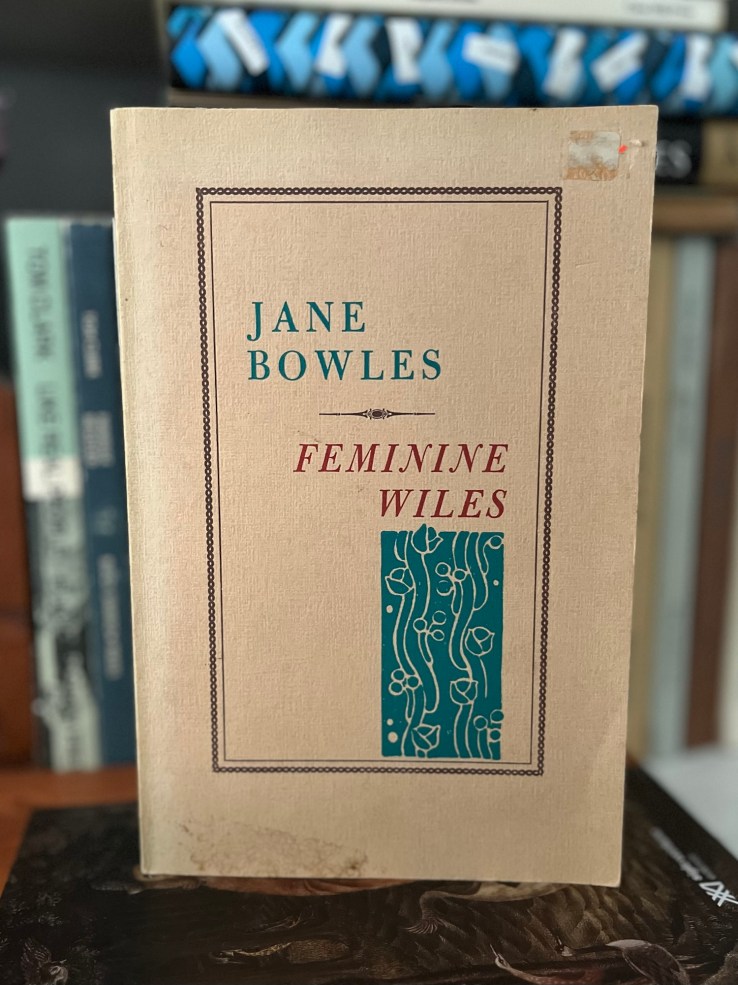
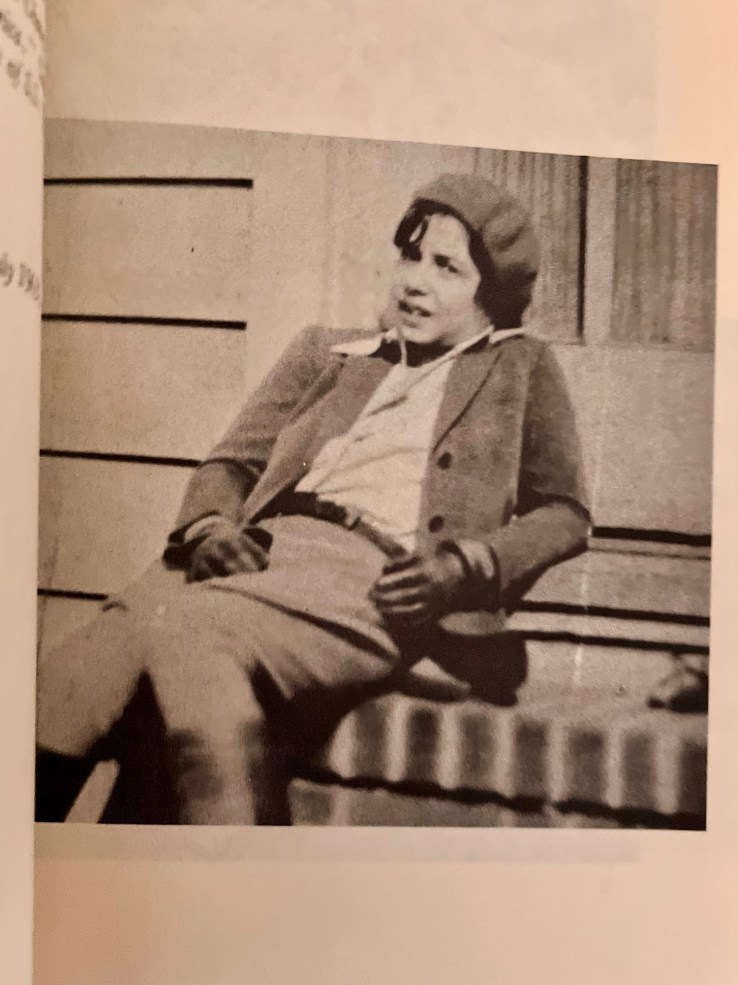
Jane Bowles’ Feminine Wiles (Book acquired, 17 Jan. 2025)

I couldn’t pass up this slim 1976 Black Sparrow Press edition of Jane Bowles’ sketches, letters, and photos — even if a lot of it is reproduced in the later collection My Sister’s Hand in Mine.

I reviewed Bowles’ sole novel, Two Serious Ladies, a decade ago:

Here’s a short review of Jane Bowles’s only novel, Two Serious Ladies: The book is amazing, a confounding, energetic picaresque suffused with sinister humor and dark delight. I read it knowing nothing about the plot on the recommendation of Ben Marcus, who described it as “so insane, so beautiful, and in some sense, unknowable to me. On the surface, it’s not really about much, but the arrangement of words does something chemical to me.” My recommendation is to dispense with the rest of my review and read Bowles’s novel.

Jane Bowles’ novel Two Serious Ladies confounds with sinister humor and dark delight

Two Women, Gwen John

Here’s a short review of Jane Bowles’ only novel, Two Serious Ladies: The book is amazing, a confounding, energetic picaresque suffused with sinister humor and dark delight. I read it knowing nothing about the plot on the recommendation of Ben Marcus, who described it as “so insane, so beautiful, and in some sense, unknowable to me. On the surface, it’s not really about much, but the arrangement of words does something chemical to me.” My recommendation is to dispense with the rest of my review and read Bowles’ novel.

“Unknowable” is a fair description, and Two Serious Ladies was met with bewilderment when it was first published in 1943, as Negar Azimi points out in the comprehensive essay “The Madness of Queen Jane”:

Edith Walton, writing in the Times Book Review, called the book senseless and silly: “To attempt to unravel the plot of ‘Two Serious Ladies’ would be to risk, I am sure, one’s own sanity.” Another reviewer said, simply, “The book is about nothing.” Jane’s family, in the meantime, found it unseemly in its stark depiction of lesbianism. Its characters, who have goals and motivations that are hard to grasp, were difficult to relate to. Yet another critic wrote, “The only shocking thing about this novel is that it ever managed to find its way to print.” Jane was only twenty-four.

The notion that “The book is about nothing,” is corrected by Marcus’s qualifier about its “surface”: Two Serious Ladies moves through the phenomenological world that its characters experience, but it does not mediate the concrete contours of that world in a way that its characters can name for the reader. When the characters, those two serious ladies, do stumble into language that might name, pin down, or otherwise fix their experience, fix their consciousness into a stable relation with the world, Bowles spins the wheel again, flings her characters into new scenarios. Moments of epiphany are transitory and hard-purchased. A (perhaps) illustrating passage, offered without context:

Mrs. Copperfield started to tremble after the girl had closed the door behind her. She trembled so violently that she shook the bed. She was suffering as much as she had ever suffered because she was going to do what she wanted to do. But it would not make her happy. She did not have the courage to stop from doing what she wanted to do. She knew that it would not make her happy, because only the dreams of crazy people come true. She thought that she was only interested in duplicating a dream, but in doing so she necessarily became the complete victim of a nightmare.

The free indirect style here still hides so much from the reader, who must suss the characters’ unnamed desires from bewildering details alone. The passage above shows us fear and trembling, dream, nightmare—and crazy people. What does Copperfield want to do? One subtext here is a lesbian desire seemingly comprehended by everyone but Mrs. Copperfield herself. (In some of the book’s strangest moments, Mr. Copperfield leaves his near-mad wife in a dangerous part of a foreign city to encounter hookers of every stripe). Two Serious Ladies is about women searching for something, but something they can’t name, can’t conceive in language—but can perhaps imagine.

A third-act epiphany—again transitory and hard-purchased—parallels Mrs. Copperfield’s fear and trembling. Miss Goering—

—okay, wait, it occurs to me now that I’ve completely neglected to offer any kind of plot description that might anchor this ostensible “review,” to set up who exactly Miss Goering is, etc., so  here goes (and I encourage you to just go ahead and skip the next long paragraph)—

A bad summary: Two Serious Ladies comprises three long chapters, each of which might stand on its own as a long short story. Part the first: Miss Goering is rich but strange. Her childhood is bizarre; alienated from others “she wore the look of certain fanatics who think of themselves as leaders without once having gained the respect of a human being.” Her attempt to baptize another child luckily doesn’t end in a drowning. She grows up out of step with her peers, dresses odd, speaks odd. One day out of nowhere appears a Miss Gamelon, who becomes her (often disagreeable) companion. At a party she runs into the other serious lady, Mrs. Copperfield, whose adventures in Panama comprise the second section of the book. At the same party she meets Arnold, a would-be artist, goes home with him, meets his folks, his father. She elects to move (with Arnold and Miss Gamelon) to a run-down cottage on a drab island, forsaking her wealth, sort of. Part the second: We shift to section two, the Copperfields’ adventures in Panama. Mr. Copperfield checks the couple into a seedy hotel in the wrong part of town and promptly drops his wife off where the brothels are. She moves into a run-down hotel with a prostitute named Pacifica while her husband does God-knows-what. There’s a lot of drinking and near-madness, run-ins with bad boyfriends and snooty hoteliers. Mr. Copperfield leaves without his wife. Part the third: We return to Miss Goering and gang in the dilapidated cottage. Arnold’s father soon moves in with them. Miss Goering starts going out at night alone. She gets picked up at bar and moves in with a man named Andy. She eventually leaves him for a gangster who mistakes her for a prostitute. On a dinner date—okay, not really a dinner date but—on a dinner date with the gangster (who, like the dinner date, is never actually named as a “gangster”), Miss Goering runs into Mrs. Copperfield. Both are much changed.

—okay, so this time with (or without) some context—

A third-act epiphany—again transitory and hard-purchased—parallels Mrs. Copperfield’s fear and trembling. Miss Goering and her gangster:

This man, they had noticed, drove up to the saloon in a very beautiful big automobile that resembled more a hearse than a private car. Miss Goering had examined it one day when the man was drinking in the saloon. It appeared to be almost brand new. She and Andy had looked in through the window and had been a little surprised to see a lot of dirty clothes on the floor. Miss Goering was completely preoccupied now with what course to take should the newcomer be willing to make her his mistress for a little while. She was almost sure that he would, because several times she had caught him looking at her in a certain way which she had learned to recognize. Her only hope was that he would disappear before she had the chance to approach him. If he did, she would be exempt and thus able to fritter away some more time with Andy, who now seemed so devoid of anything sinister that she was beginning to scrap with him about small things the way one does with a younger brother.

And of course she gives in to her terrible desire. The plot of Two Serious Ladies might be described as a search for “anything sinister.”  Miss Goering and Mrs. Copperfield seek the brink of all those things one can be brinked upon: disasters, abysses, madness. Love?

The novel most reminded me of what I love best in the films of David Lynch and the fiction of Roberto Bolaño—that sense of perverse night-time dread, the sordid intimation of just how easily the veneer might crack, of how simple it might be for civilization to give way to the madness under the surface.

David Lynch and Roberto Bolaño suffuse their work with an absurd howling humor that percolates along with the dread, and Two Serious Ladies operates along the same horror/humor axis. The book is hilarious, but my several attempts to capture that here in a few excerpts of dialogue fail to translate into this digest form. Will you take my word? Will you take my word that the book was much funnier the second time I read it?

The reading experience cannot be easily distilled. (Strike that adverb). Two Serious Ladies resists unfolding in the way we expect our narratives to unfold—to be about something—Bowles withholds exposition, clarification, and motivation—well, okay, not withholds, but rather hides, or obscures, or enshadows. (I don’t have the verbs for this book). I think of Harold Bloom’s rubric for canonical literature here. In The Western Canon, he  argues that strong literature exemplifies a “strangeness, a mode of originality that either cannot be assimilated, or that so assimilates us that we cease to see it as strange.” Nearly three-quarters of a century after its publication, Two Serious Ladies is still strange, still strong, still ahead of its time. Its vignettes flow (or jerk or shift or pitch wildly or dip or soar or sneak) into each other with a wonderfully dark comic force that simultaneously alienates and invites the reader, who, bewildered by its transpositions, is compelled to follow into strange new territory. Very highly recommended.

[Ed. note: Biblioklept first published this review of Two Serious Ladies in February of 2015].

Tell me, would you please, about Jane Bowles

INTERVIEWER

Tell me, would you please, about Jane Bowles.

BOWLES

That’s an all-inclusive command! What can I possibly tell you about her that isn’t implicit in her writing?

INTERVIEWER

She obviously had an extraordinary imagination. She was always coherent, but one had the feeling that she could go off the edge at any time. Almost every page of Two Serious Ladies, for example, evoked a sense of madness although it all flowed together very naturally.

BOWLES

I feel that it flows naturally, yes. But I don’t find any sense of madness. Unlikely turns of thought, lack of predictability in the characters’ behavior, but no suggestion of “madness.” I love Two Serious Ladies. The action is often like the unfolding of a dream, and the background, with its realistic details, somehow emphasizes the sensation of dreaming.

INTERVIEWER

Does this dreamlike quality reflect her personality?

BOWLES

I don’t think anyone ever thought of Jane as a “dreamy” person; she was far too lively and articulate for that. She did have a way of making herself absent suddenly, when one could see that she was a thousand miles away. If you addressed her sharply, she returned with a start. And if you asked her about it, she would simply say: “I don’t know. I was somewhere else.”

INTERVIEWER

Can you read her books and see Jane Bowles in them?

BOWLES

Not at all; not the Jane Bowles that I knew. Her work contained no reports on her outside life. Two Serious Ladies was wholly nonautobiographical. The same goes for her stories.

INTERVIEWER

She wasn’t by any means a prolific writer, was she?

BOWLES

No, very unprolific. She wrote very slowly. It cost her blood to write. Everything had to be transmuted into fiction before she could accept it. Sometimes it took her a week to write a page. This exaggerated slowness seemed to me a terrible waste of time, but any mention of it to her was likely to make her stop writing entirely for several days or even weeks. She would say: “All right. It’s easy for you, but it’s hell for me, and you know it. I’m not you. I know you wish I were, but I’m not. So stop it.”

INTERVIEWER

The relationships between her women characters are fascinating. They read like psychological portraits, reminiscent of Djuna Barnes.

BOWLES

In fact, though, she refused to read Djuna Barnes. She never read Nightwood. She felt great hostility toward American women writers. Usually she refused even to look at their books.

INTERVIEWER

Why was that?

BOWLES

When Two Serious Ladies was first reviewed in 1943, Jane was depressed by the lack of understanding shown in the unfavorable reviews. She paid no attention to the enthusiastic notices. But from then on, she became very much aware of the existence of other women writers whom she’d met and who were receiving laudatory reviews for works which she thought didn’t deserve such high praise: Jean Stafford, Mary McCarthy, Carson McCullers, Anaïs Nin. There were others I can’t remember now. She didn’t want to see them personally or see their books.

INTERVIEWER

In the introduction that Truman Capote wrote for the collected works, he emphasized how young she’d been when she wrote Two Serious Ladies.

BOWLES

That’s true. She began it when she was twenty-one. We were married the day before her twenty-first birthday.

INTERVIEWER

Was there something symbolic about the date?

BOWLES

No, nothing “symbolic.” Her mother wanted to remarry and she had got it into her head that Jane should marry first, so we chose the day before Jane’s birthday.

INTERVIEWER

Did your careers ever conflict, yours and your wife’s?

BOWLES

No, there was no conflict of any kind. We never thought of ourselves as having careers. The only career I ever had was as a composer, and I destroyed that when I left the States. It’s hard to build up a career again. Work is something else, but a career is a living thing and when you break it, that’s it.

INTERVIEWER

Did you and Jane Bowles ever collaborate?

BOWLES

On a few songs. Words and music. Any other sort of collaboration would have been unthinkable. Collaborative works of fiction are rare, and they’re generally parlor tricks, like Karezza of George Sand and who was it: Alfred de Musset?

INTERVIEWER

How did she feel about herself as an artist—about her work?

BOWLES

She liked it. She enjoyed it. She used to read it and laugh shamefacedly. But she’d never change a word in order to make it more easily understood. She was very, very stubborn about phrasing things the way she wanted them phrased. Sometimes understanding would really be difficult and I’d suggest a change to make it simpler. She’d say, “No. It can’t be done that way.” She wouldn’t budge an inch from saying something the way she felt the character would say it.

INTERVIEWER

What was her objective in writing?

BOWLES

Well, she was always trying to get at people’s hidden motivations. She was interested in people, not in the writing. I don’t think she was at all conscious of trying to create any particular style. She was only interested in the things she was writing about: the complicated juxtapositions of motivations in neurotic people’s heads. That was what fascinated her.

INTERVIEWER

Was she “neurotic”?

BOWLES

Oh, probably. If one’s interested in neuroses, generally one has some sympathetic vibration.

INTERVIEWER

Was she self-destructive?

BOWLES

I don’t think she meant to be, no. I think she overestimated her physical strength. She was always saying, “I’m as strong as an ox,” or “I’m made of iron.” That sort of thing.

INTERVIEWER

Considering how independently the two of you lived your lives, your marriage couldn’t really be described as being “conventional.” Was this lack of “conventionalism” the result of planning, or did it just work out that way?

BOWLES

We never thought in those terms. We played everything by ear. Each one did what he pleased—went out, came back—although I must say that I tried to get her in early. She liked going out much more than I did, and I never stopped her. She had a perfect right to go to any party she wanted. Sometimes we had recriminations when she drank too much, but the idea of sitting down and discussing what constitutes a conventional or an unconventional marriage would have been unthinkable.

INTERVIEWER

She has been quoted as saying, “From the first day, Morocco seemed more dreamlike than real. I felt cut off from what I knew. In the twenty years I’ve lived here, I’ve written two short stories and nothing else. It’s good for Paul, but not for me.” All things considered, do you think that’s an accurate representation of her feelings?

BOWLES

But you speak of feelings as though they were monolithic, as though they never shifted and altered through the years. I know Jane expressed the idea frequently toward the end of her life, when she was bedridden and regretted not being within reach of her friends. Most of them lived in New York, of course. But for the first decade she loved Morocco as much as I did.

INTERVIEWER

Did you live with her here in this apartment?

BOWLES

No. Her initial stroke was in 1957, while I was in Kenya. When I got back to Morocco about two months later, I heard about it in Casablanca. I came here and found her quite well. We took two apartments in this building. From then on, she was very ill, and we spent our time rushing from one hospital to another, in London and New York. During the early sixties she was somewhat better, but then she began to suffer from nervous depression. She spent most of the last seven years of her life in hospitals. But she was an invalid for sixteen years.

INTERVIEWER

That’s a long time to be an invalid.

BOWLES

Yes. It was terrible.

From Paul Bowles’s 1981 Paris Review interview.

Three Books

img_2612

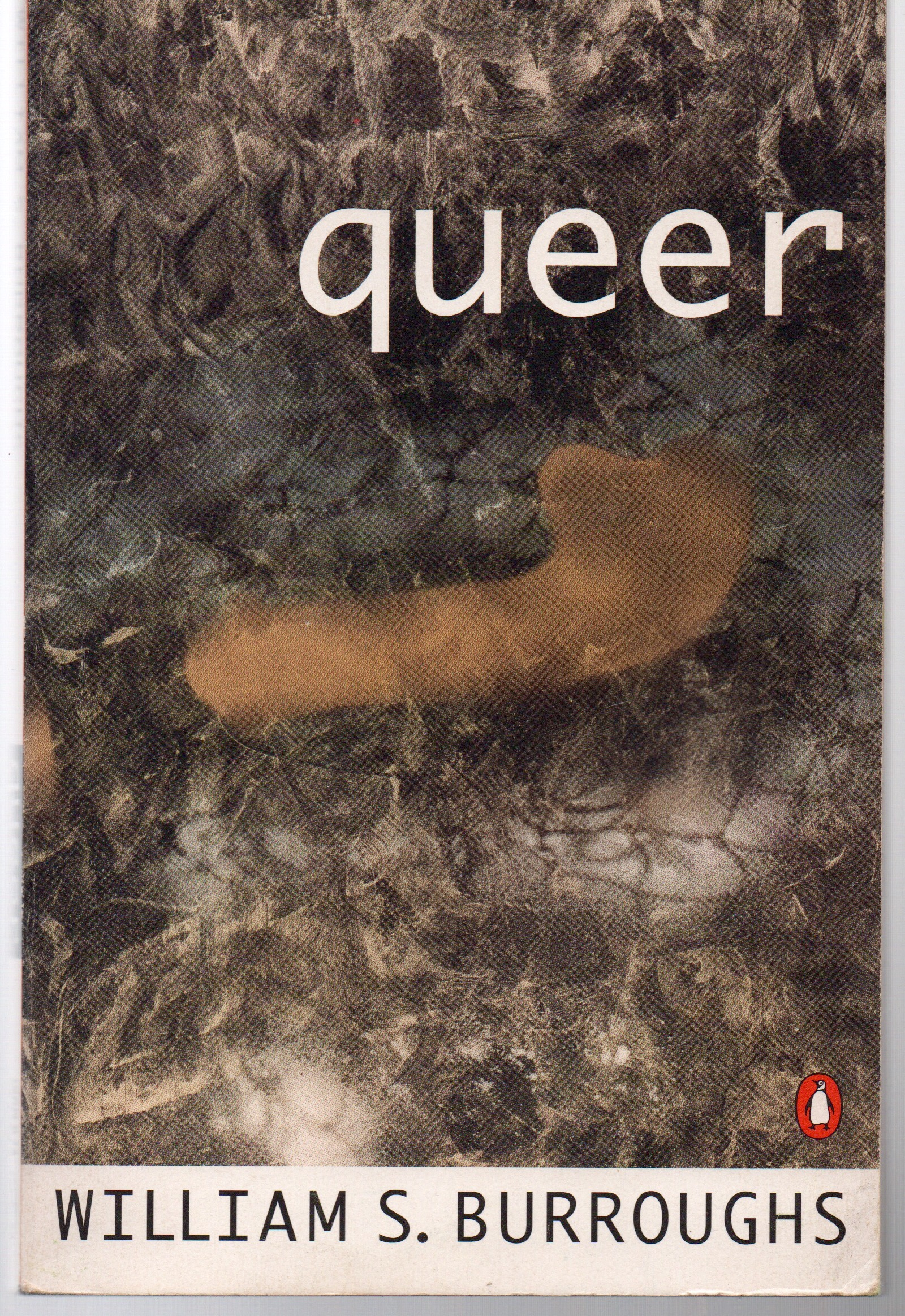
Queer by William S. Burroughs. Trade paperback by Penguin; copyrighted 1987 but no year of the actual printing, which I’m sure is sometime in the mid-nineties. Cover design by Daniel Rembert from a painting by Burroughs.

I bought Queer and Junkie at the Barnes & Noble where I spent too many Friday nights of my high school years. I was sophomore in high school, I think. My parents were concerned about the books, I recall, but in a vague, troubled way—a wrinkling of the temples, a look that I now know means, What does this mean? What are we supposed to do here? They asked me what the books were about and then told me not to do heroin.

img_2613

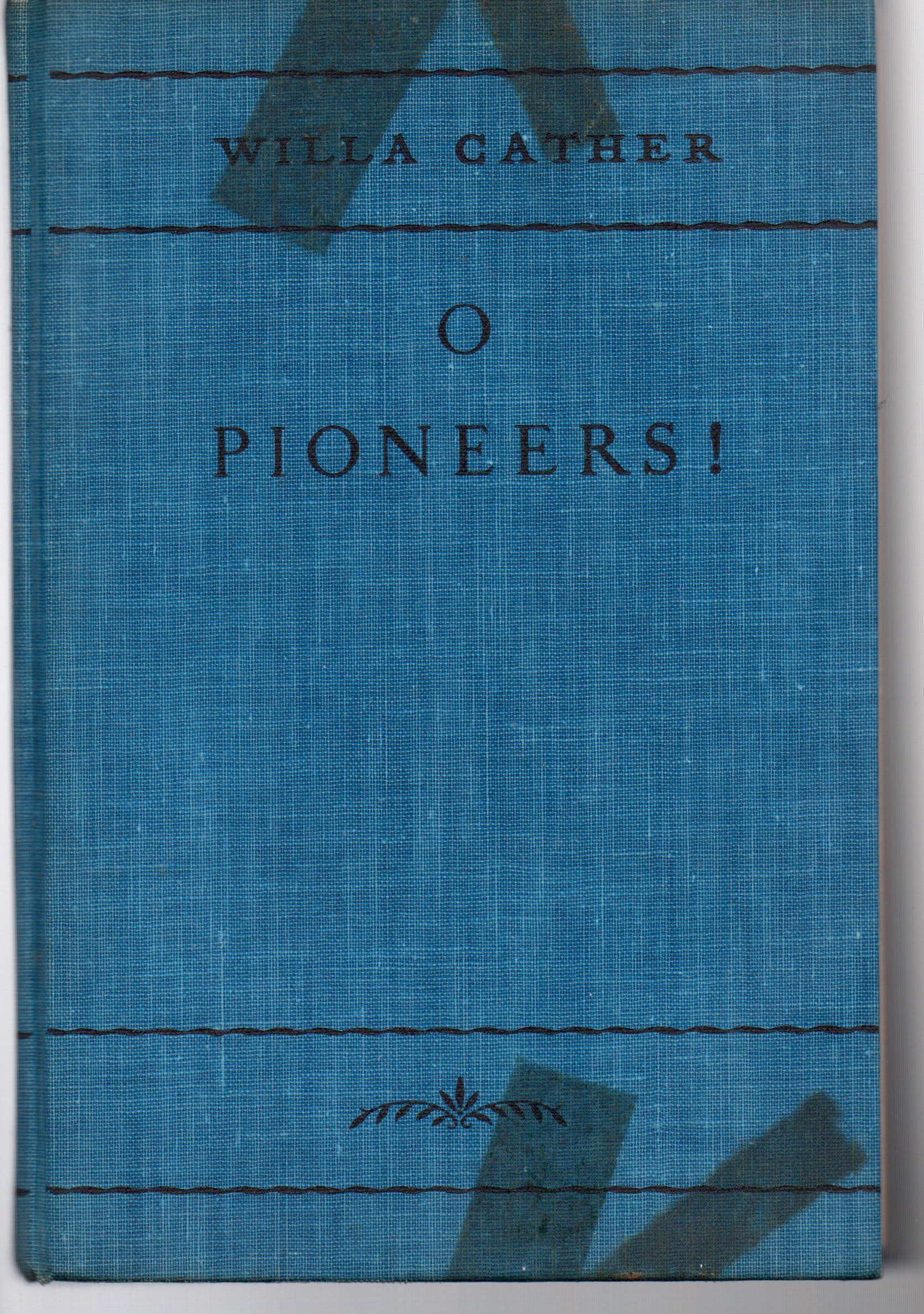
O Pioneers! by Willa Cather. Hardback and cloth by Houghtin Mifflin, 31st printing, 1961. No designer is credited; the book may have had a dust jacket at one point.

The dark marks are from a librarian’s tape job. She gave me this book, and dozens others, which were being remaindered. I reread the novel a few years ago, noting some of its themes, “including the divide between the New World and the Old, alienation, and the ways in which conformity and routine are antithetical to the pioneer spirit that Americans like to trick themselves into believing they are heir to.”

img_2615

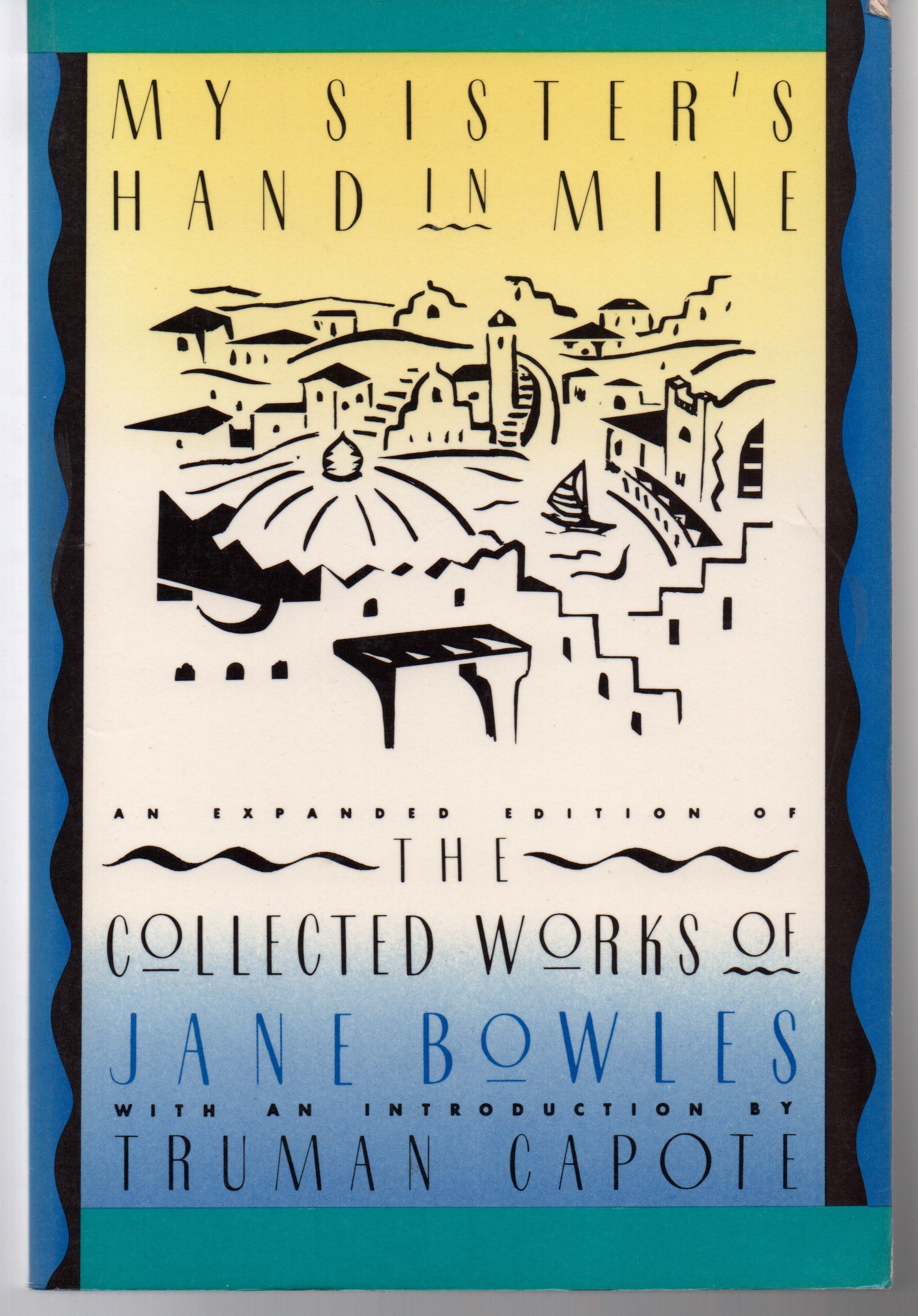
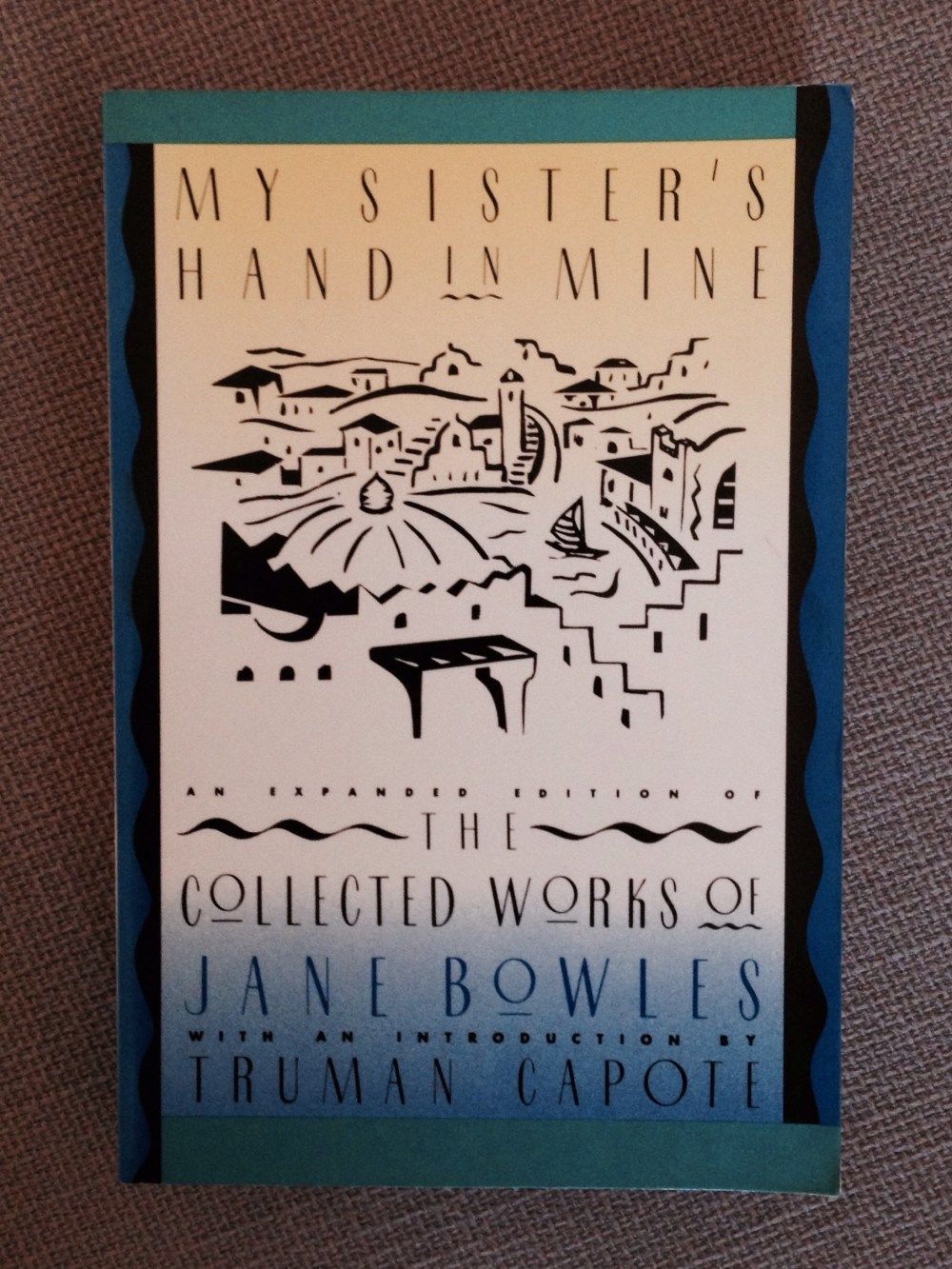
My Sister’s Hand in Mine by Jane Bowles. Trade paperback by the Ecco Press, 7th printing, 1988. Cover design by Anna Demchick.

This collection includes the novel Two Serious Ladies, one of the best and strangest books I’ve read in years. I wrote about it last year on this blog, concluding:

The reading experience cannot be easily distilled. (Strike that adverb). Two Serious Ladies resists unfolding in the way we expect our narratives to unfold—to be about something—Bowles withholds exposition, clarification, and motivation—well, okay, not withholds, but rather hides, or obscures, or enshadows. (I don’t have the verbs for this book). I think of Harold Bloom’s rubric for canonical literature here. In The Western Canon, he  argues that strong literature exemplifies a “strangeness, a mode of originality that either cannot be assimilated, or that so assimilates us that we cease to see it as strange.” Nearly three-quarters of a century after its publication, Two Serious Ladies is still strange, still strong, still ahead of its time. Its vignettes flow (or jerk or shift or pitch wildly or dip or soar or sneak) into each other with a wonderfully dark comic force that simultaneously alienates and invites the reader, who, bewildered by its transpositions, is compelled to follow into strange new territory. Very highly recommended.

Jane Bowles’s novel Two Serious Ladies confounds with sinister humor and dark delight

Two Women, Gwen John

Here’s a short review of Jane Bowles’s only novel, Two Serious Ladies: The book is amazing, a confounding, energetic picaresque suffused with sinister humor and dark delight. I read it knowing nothing about the plot on the recommendation of Ben Marcus, who described it as “so insane, so beautiful, and in some sense, unknowable to me. On the surface, it’s not really about much, but the arrangement of words does something chemical to me.” My recommendation is to dispense with the rest of my review and read Bowles’s novel.

“Unknowable” is a fair description, and Two Serious Ladies was met with bewilderment when it was first published in 1943, as Negar Azimi points out in the comprehensive essay “The Madness of Queen Jane”:

Edith Walton, writing in the Times Book Review, called the book senseless and silly: “To attempt to unravel the plot of ‘Two Serious Ladies’ would be to risk, I am sure, one’s own sanity.” Another reviewer said, simply, “The book is about nothing.” Jane’s family, in the meantime, found it unseemly in its stark depiction of lesbianism. Its characters, who have goals and motivations that are hard to grasp, were difficult to relate to. Yet another critic wrote, “The only shocking thing about this novel is that it ever managed to find its way to print.” Jane was only twenty-four.

The notion that “The book is about nothing,” is corrected by Marcus’s qualifier about its “surface”: Two Serious Ladies moves through the phenomenological world that its characters experience, but it does not mediate the concrete contours of that world in a way that its characters can name for the reader. When the characters, those two serious ladies, do stumble into language that might name, pin down, or otherwise fix their experience, fix their consciousness into a stable relation with the world, Bowles spins the wheel again, flings her characters into new scenarios. Moments of epiphany are transitory and hard-purchased. A (perhaps) illustrating passage, offered without context:

Mrs. Copperfield started to tremble after the girl had closed the door behind her. She trembled so violently that she shook the bed. She was suffering as much as she had ever suffered because she was going to do what she wanted to do. But it would not make her happy. She did not have the courage to stop from doing what she wanted to do. She knew that it would not make her happy, because only the dreams of crazy people come true. She thought that she was only interested in duplicating a dream, but in doing so she necessarily became the complete victim of a nightmare.

The free indirect style here still hides so much from the reader, who must suss the characters’ unnamed desires from bewildering details alone. The passage above shows us fear and trembling, dream, nightmare—and crazy people. What does Copperfield want to do? One subtext here is a lesbian desire seemingly comprehended by everyone but Mrs. Copperfield herself. (In some of the book’s strangest moments, Mr. Copperfield leaves his near-mad wife in a dangerous part of a foreign city to encounter hookers of every stripe). Two Serious Ladies is about women searching for something, but something they can’t name, can’t conceive in language—but can perhaps imagine. Continue reading “Jane Bowles’s novel Two Serious Ladies confounds with sinister humor and dark delight”

Reading/Have Read/Should Write About

2015/01/img_4843.jpg

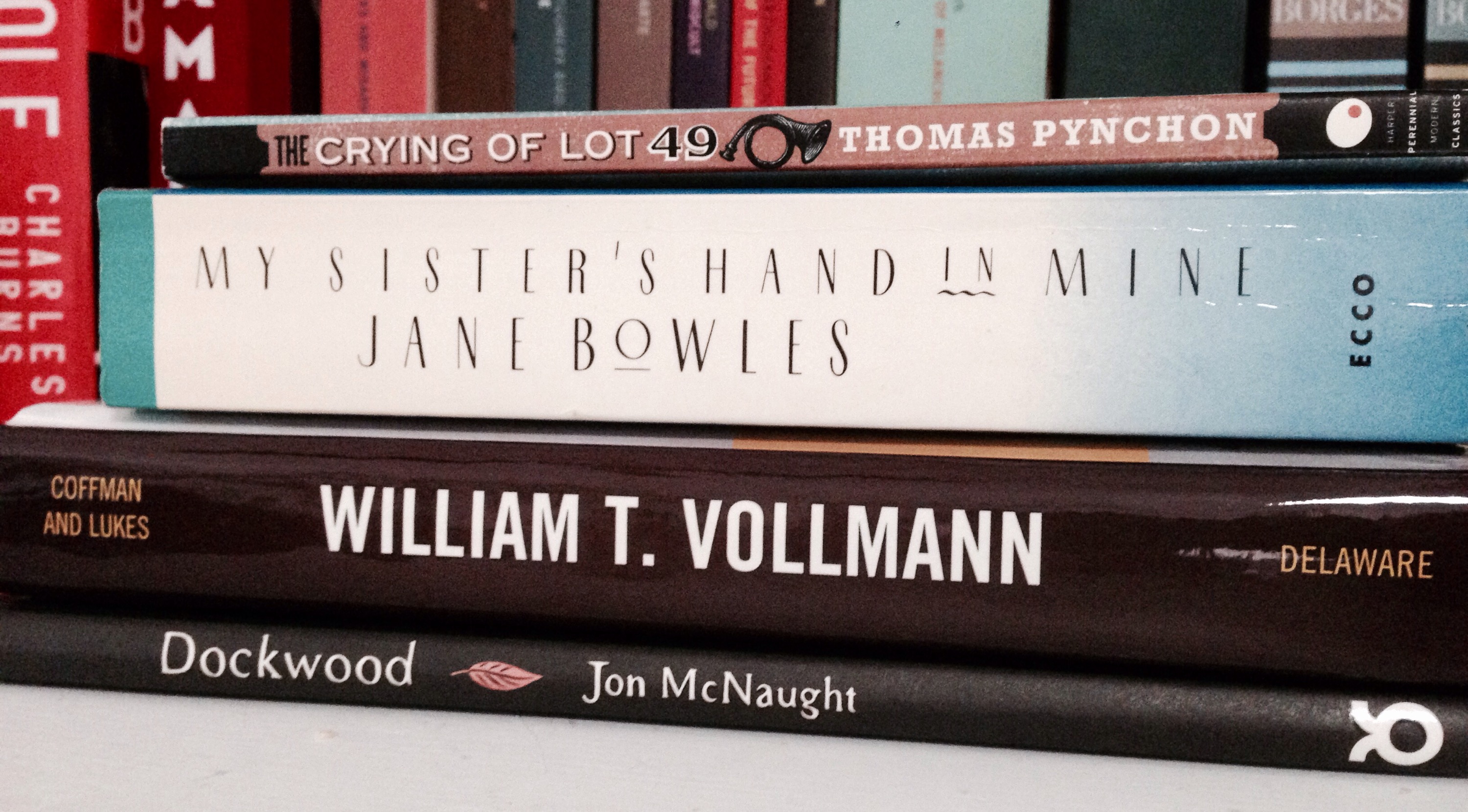
The Crying of Lot 49 by Thomas Pynchon

After a few false starts over the last decade, I finally submerged myself in Thomas Pynchon’s Mason & Dixon in those bourbon-soaked weeks between Thanksgiving and New Year. I read the book as a sort of sequel to the book Pynchon wrote after it, Against the Daysimply because I read Against the Day in 2013, before M&D. Both books are excellent, and seem to me more achieved in their vision than Inherent Vice or V or Vineland. The obvious comparison point for the pair though is Pynchon’s other big book (and, by reputation, his Big Book) Gravity’s Rainbow which I haven’t read since my freshman year of college—which is almost the same as not having read it at all. I intend to read it later this year (or maybe earlier?), but I also haven’t read The Crying of Lot 49 since my undergrad days either (which is to say, like, coming up on twenty years jesus). I’m about half way through and not zapped by it really—there are some funny jokes, but it’s just not as rich as Mason & Dixon or Against the Day (which is not meant to be a complaint, just an observation. And while I’m observing stuff parenthetically: What most bothers my attention most as I read are the reminders of David Foster Wallace’s The Broom of the System, which I have reread more recently than TCoL49).

Two Serious Ladies by Jane Bowles (collected in My Sister’s Hand in Mine)

What to say about Jane Bowles’s only novel? It goes: Propelled on its own sinister energy it goes, its vignettes flowing (or jerking or shifting or pitching wildly or dipping or soaring or sneaking) into each other with wonderfully dark comic force. I’ve sketched a full review I hope to be able to write, but for now let me excerpt a paragraph from Negar Azimi’s essay “The Madness of Queen Jane” from last summer in The New Yorker:

When it was first published, in 1943, “Two Serious Ladies” received lukewarm, even baffled, reviews. Edith Walton, writing in the Times Book Review, called the book senseless and silly: “To attempt to unravel the plot of ‘Two Serious Ladies’ would be to risk, I am sure, one’s own sanity.” Another reviewer said, simply, “The book is about nothing.” Jane’s family, in the meantime, found it unseemly in its stark depiction of lesbianism. Its characters, who have goals and motivations that are hard to grasp, were difficult to relate to. Yet another critic wrote, “The only shocking thing about this novel is that it ever managed to find its way to print.” Jane was only twenty-four.

Wharton’s line should intrigue, not repel readers. And: “The book is about nothing” — well, okay, that’s completely untrue—the book is about women searching for something, but something they can’t name, can’t conceive in language but can perhaps imagine. These women are on the brink of all those things one can be brinked upon: abysses, madness, abysses of madness, etc. But: “The book is about nothing” — well, okay, Two Serious Ladies resists unfolding in the way in which we expect narratives to be about something—Bowles withholds exposition, clarification, and motivation—well, okay, not withholds, but rather hides, or obscures, or enshadows.

I don’t have the verbs for this book.

But I loved reading it, feeling estranged from it while simultaneously invited into its darkness, bewildered by its transpositions, as Jane Bowles moves her verbal camera from one character to another—Wait, what? Okay, I guess we’re going over here now?!—its picaresque energy a strange dark joy. More to come.

William T. Vollmann: A Critical Companion, a collection of essays edited by Christopher K. Coffman and Daniel Lukes

I’ve been dipping into this kind of at random, but it’s very rewarding, and I think it would make a surprisingly good introduction to Vollmann. To be clear, academic criticism is never a substitute for, y’know, reading the author’s actual texts, the range here covers voluminous Vollmann. And look, I’ll be honest, I’ll probably never read Argall, so I very much appreciated Buell Wisner situating it for me in his essay. One of the treats of this book is how an academic essay like Wisner’s—a well-researched close reading with 64 reference notes—is followed by a reflective and informal piece by Carla Bolte on designing Vollmann’s books (“Bill’s books are not for everyone. We all know that,” she offers at one point). Good stuff, more to come.

Dockwood by Jon McNaught

I owe this marvelous book a proper review. Dockwood is a kind of visual prose-poem, tranquil, meditative, autumnal. The book is its own total aesthetic; McNaught uses color and form to evoke feeling here, with minimal, unobtrusive dialogue that functions more as ambiance than exposition. Lovely.

IMG_4849

The Collected Works of Jane Bowles (Book Acquired, 12.19.2014)

IMG_4412

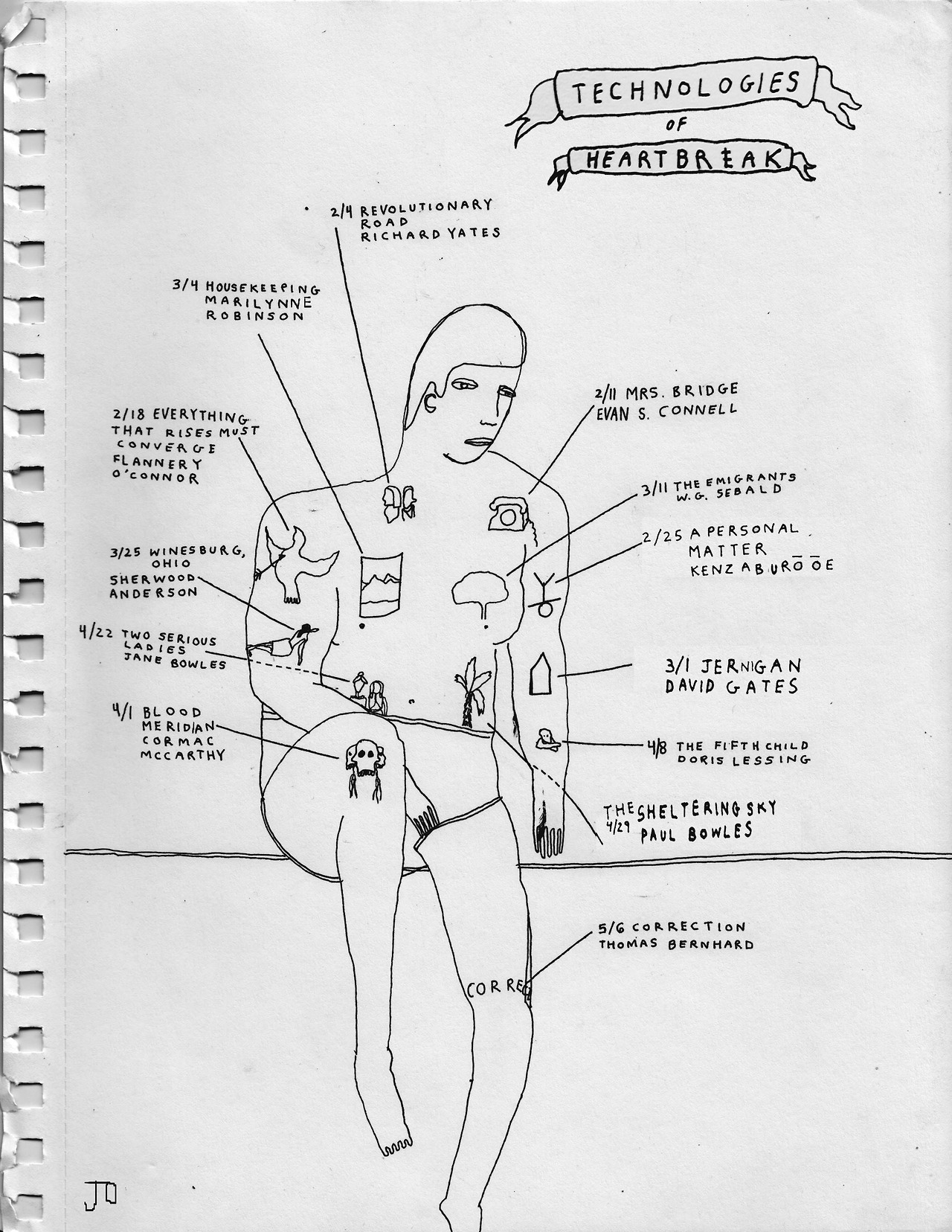
I picked up My Sister’s Hand in Mine: The Collected Works of Jane Bowles mostly because I couldn’t find a stand-alone version of the novel Two Serious Ladies. I guess it doesn’t hurt to have, y’know, all of her stuff (or really most of her stuff), but I’m not really a fan of omnibus editions. My interest in Two Serious Ladies was piqued by Ben Marcus, whom I interviewed by phone earlier this month (still transcribing that one; hope to run it in January). He spoke highly of the book and includes it on his writing syllabus.

“Technologies of Heartbreak” — Josephine Demme

tumblr_n7osgziyJc1qzh8wko1_1280

Illustration for a syllabus by Ben Marcus. (via)

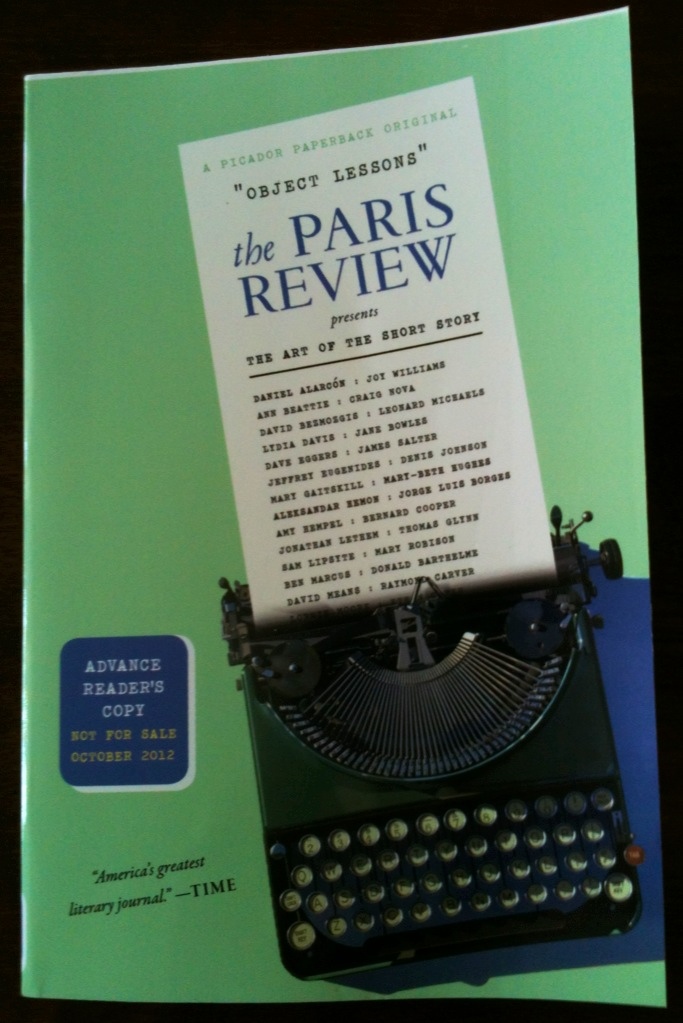
Object Lessons from The Paris Review, Where Writers Present Some of Their Favorite Short Stories from Other Writers (Book Acquired, 6.11.2012)

20120611-150824.jpg

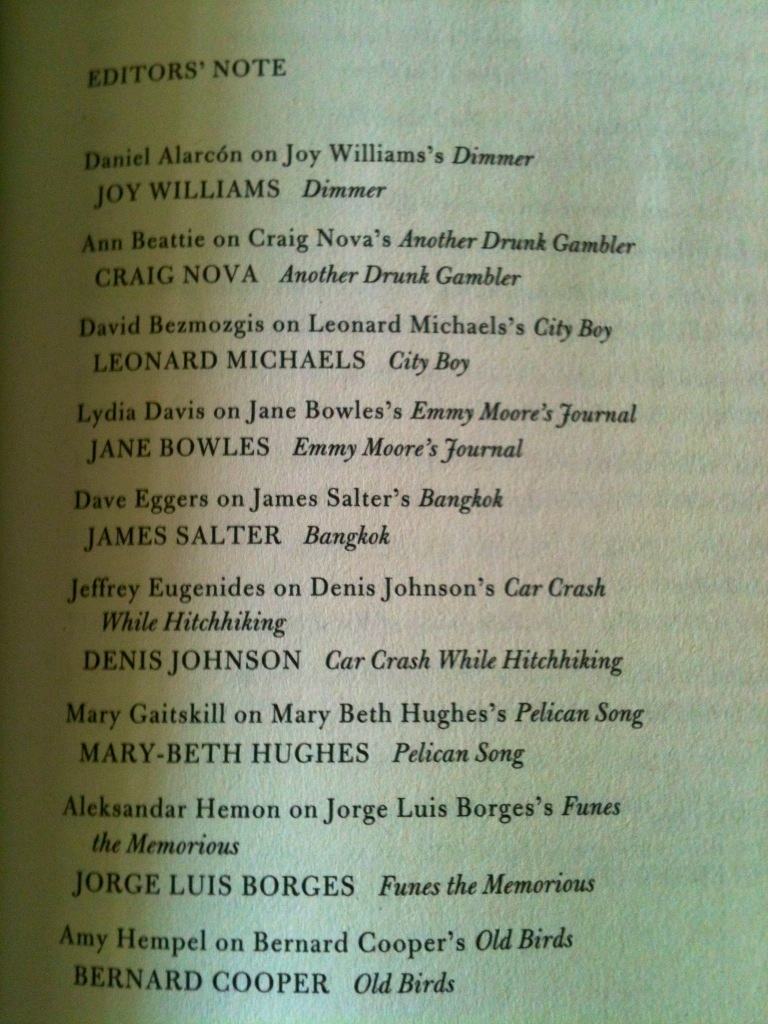
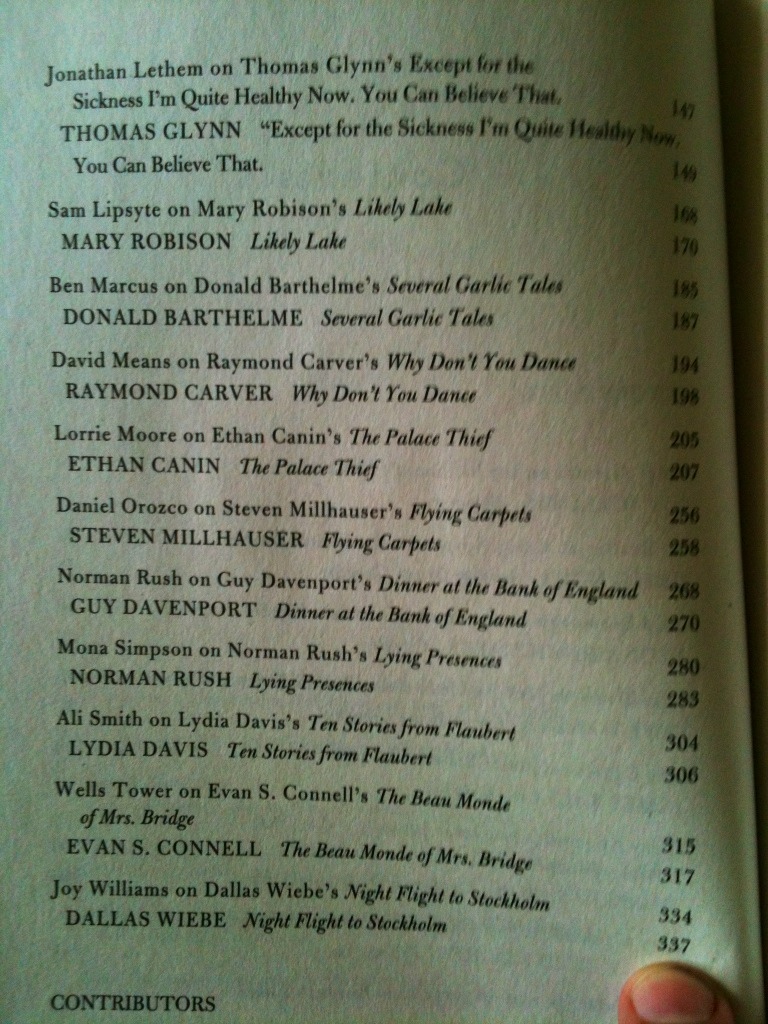
Okay: This one is really cool: Object Lessons features a bunch of short stories, some you may have read, each with a short lead-in (two-five pages) by another writer. So, we get Jeffrey Eugenides on Denis Johnson, or Ben Marcus on Donald Barthelme, or Lydia Davis on Jane Bowles, or Ali Smith on Lydia Davis. You know what, let me just share the table of contents (review down the line):

20120611-150831.jpg

20120611-150837.jpg