
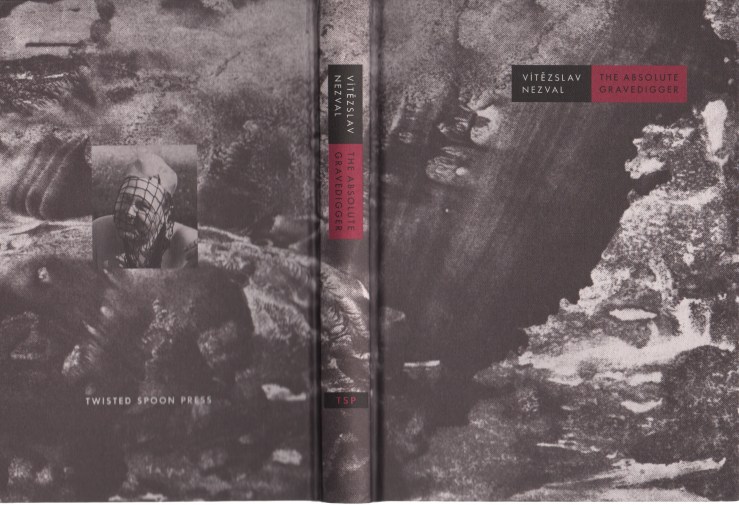
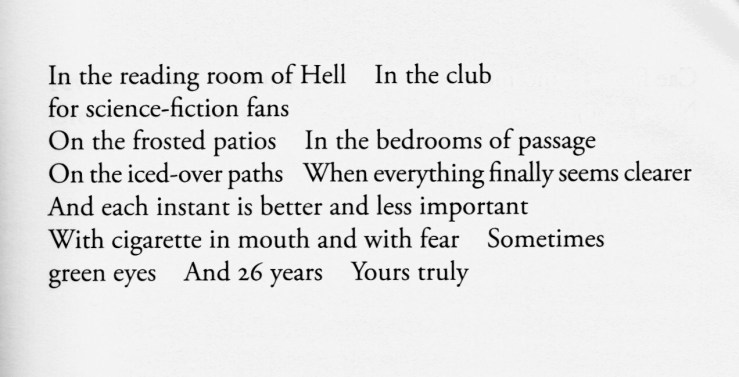
Vítězslav Nezval’s 1937 poetry collection The Absolute Gravedigger is new in English translation by Stephan Delbos and Tereza Novická, thanks to Twisted Spoon Press. As usual, Twisted Spoon’s edition is a beauty, including some of Nezval’s original illustrations.
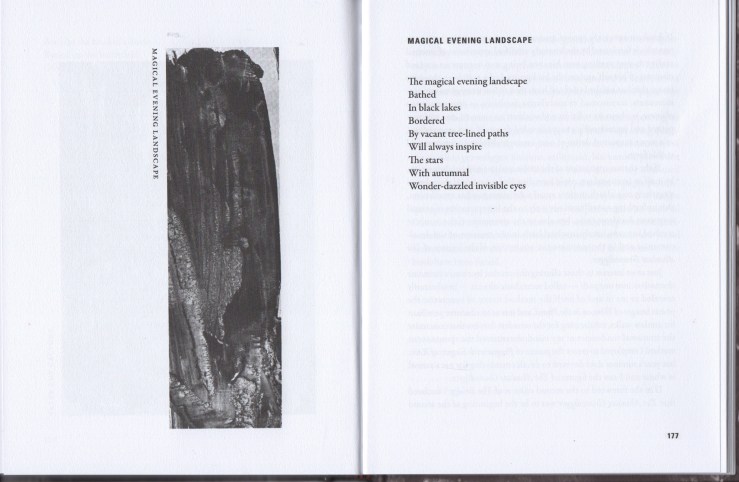
The Absolute Gravedigger seems comprised of seven “books,” and I ended up barreling through one of them, Bizarre Town, in one sitting. Nezval’s surrealist poems are seemingly spare, but the parts jar against each other in unsettling ways; Bizarre Town evokes Bosch, or Goya’s etchings.

You might know Nezval as the author of Valerie and Her Week of Wonders, which was adapted into a marvelously disturbing 1970 film by Jaromil Jireš.
More to come as I read more, but for now, here’s Twisted Press’s blurb:
The Absolute Gravedigger, published in 1937, is in many ways the culmination of Vítězslav Nezval’s work as an avant-garde poet, combining the Poetism of his earlier work and his turn to Surrealism in the 1930s with his political concerns in the years leading up to World War II. It is above all a collection of startling verbal and visual inventiveness. And while a number of salient political issues emerge from the surrealistic ommatidia, Nezval’s imagination here is completely free-wheeling and untethered to any specific locale, as he displays mastery of a variety of forms, from long-limbed imaginative free verse narratives to short, formally rhymed meditations in quatrains, to prose and even visual art (the volume includes six of his decalcomania images).
Together with Nezval’s prior two collections, The Absolute Gravedigger forms one of the most important corpora of interwar Surrealist poetry. Yet here his wild albeit restrained mix of absolute freedom and formal perfection has shifted its focus to explore the darker imagery of putrefaction and entropy, the line breaks in the shorter lyric poems slicing the language into fragments that float in the mind with open-ended meaning and a multiplicity of readings. Inspired by Salvador Dalí’s paranoiac-critical method, the poems go in directions that are at first unimaginable but continue to evolve unexpectedly until they resolve or dissolve – like electron clouds, they have a form within which a seemingly chaotic energy reigns. Nezval’s language, however, is under absolute control, allowing him to reach into the polychromatic clouds of Surrealist uncertainty to form shapes we recognize, though never expected to see, to meld images and concepts into a constantly developing and dazzling kaleidoscope.

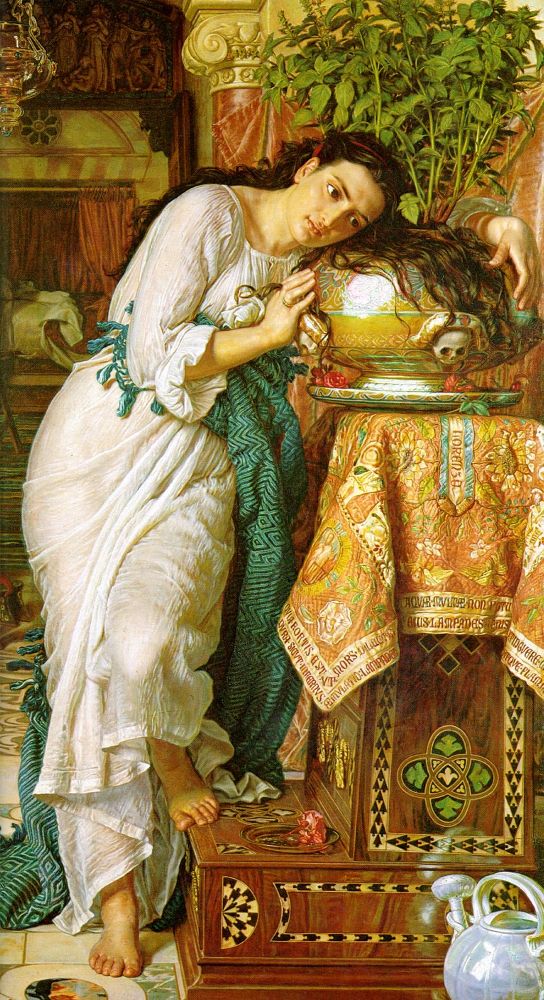
And she forgot the stars, the moon, and sun,
And she forgot the blue above the trees,
And she forgot the dells where waters run,
And she forgot the chilly autumn breeze;
She had no knowledge when the day was done,
And the new morn she saw not: but in peace
Hung over her sweet Basil evermore,
And moisten’d it with tears unto the core.
–John Keats, Isabella, or The Pot of Basil


“Herman Melville”
by
Jorge Luis Borges
He was always surrounded by the sea of his elders,
The Saxons, who named the ocean
The Whale-Road, thereby uniting
The two immense things, the whale
And the seas it endlessly ploughs.
The sea was always his. By the time his eyes
First took in the great waters of the high seas
He had already longed for and possessed it
On that other ocean, which is Writing,
And in the outline of the archetypes.
A man, he gave himself to the earth’s oceans
And to the exhausting days at sea
And he came to know the harpoon reddened
By Leviathan and he rippled sand
And the smells of nights and mornings
And chance on the horizon waiting in ambush
And the happiness of being brave
And the pleasure, at last, of spying Ithaca.
The ocean’s conqueror, he strode the solid
Earth out of which mountains grow
And on which he charts an imprecise course
As with a sleeping compass, motionless in time.
In the inherited shadows of the gardens
Melville moves through New England evenings,
But the sea possesses him. It is the shame
Of the Pequod’s mutilated captain,
The unreadable ocean with its furious squalls
And the abomination of the whiteness.
It is the great book. It is blue Proteus.
(English translation by Stephen Kessler)
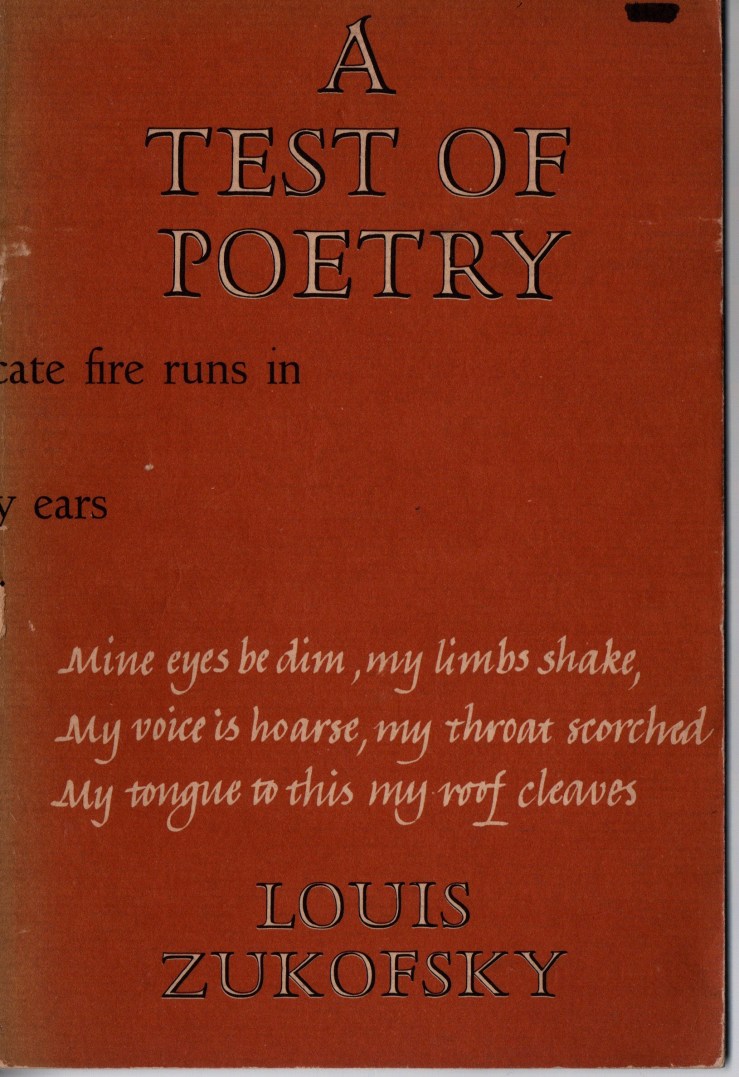
A Test of Poetry by Louis Zukofsky. Trade paperback (cardstock cover) by Jargon/Corinth, 1964. A Test of Poetry is a fun companion piece to Ezra Pound’s ABC of Reading.
I don’t usually post the back covers when I do these Three Books posts, but:

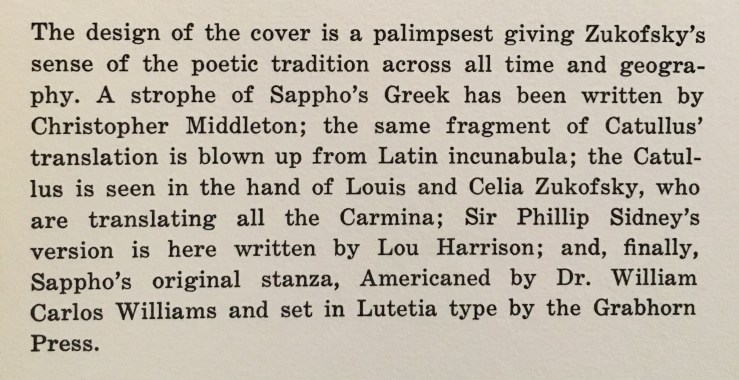
The cover design is by Jargon Society poet/publisher Jonathan Williams. The book includes this note:
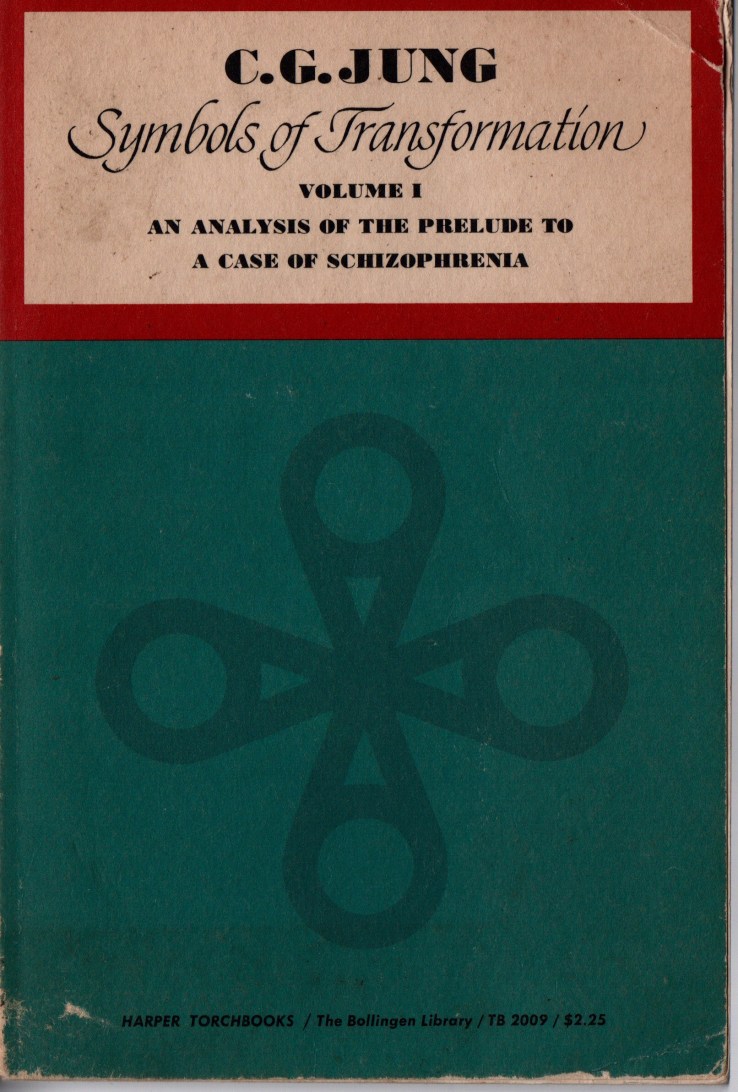
Symbols of Transformation: Volume 1–An Analysis of the Prelude to a Case of Schizophrenia by C.G. Jung. English translation by Beatrice M. Hinkle. Harper Torchbook, cardstock, 1962. Cover design by Anita Walker. I read this book in 2004 or 2005. It is not really a book about psychoanalysis; it’s about interpretive mythology, I suppose. Or better yet, a poem with pictures.
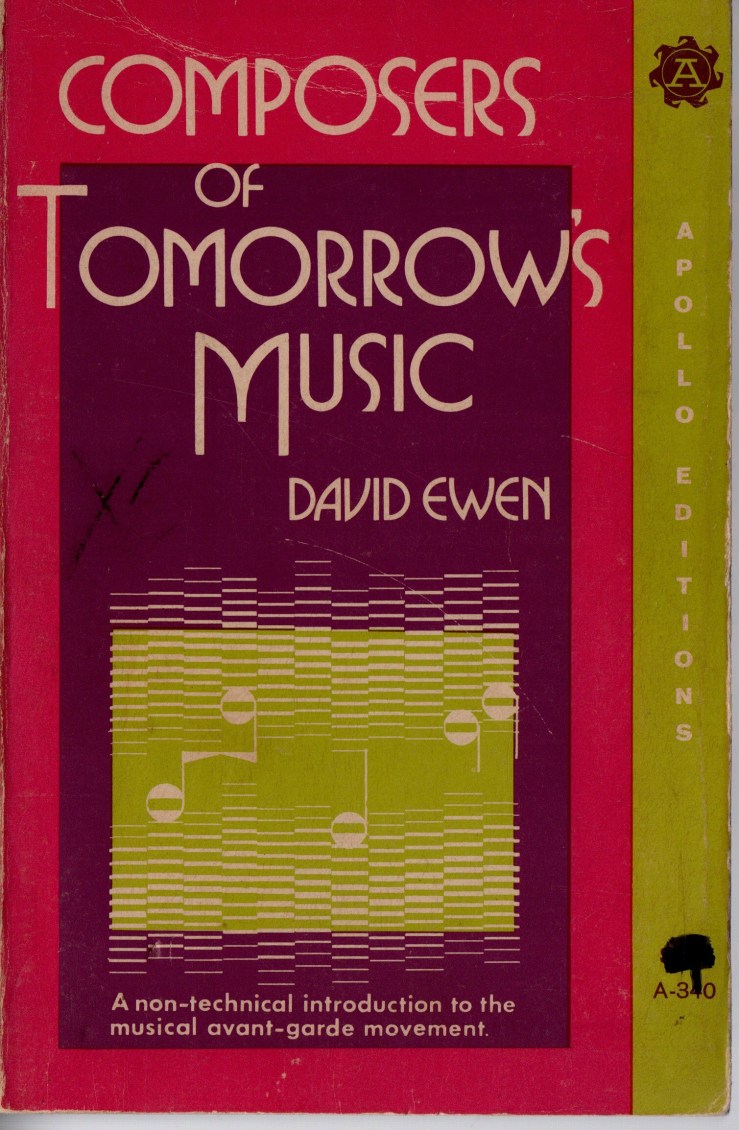
Composers of Tomorrow’s Music by David Ewen. Dodd, Mead & Company/Apollo Editions, 1971. No designer/illustrator credited. I bought this maybe 15 years ago from a guy selling books off a card table somewhere in the Garden District in New Orleans. Chapters on the usual suspects—Cage, Xenakis, Boulez, etc. Charles Ives.


 Biblioklept