Lee Sandlin Talks about His New Book, Wicked River

Read our review of Wicked River.

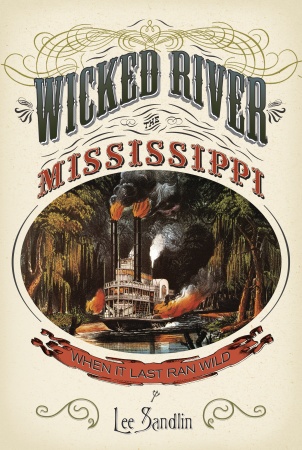
Wicked River: The Mississippi When It Last Ran Wild — Lee Sandlin

The mighty Mississippi River remains perhaps the signal geographical symbol of the United States of America. It divides our country neatly into East and West, flowing down from the industrial North to the agricultural South, and in this sense, the Mississippi is the major artery of America’s heart. We find in the Mississippi a rich mythos, one that both informs and reflects our national character. And while plenty of writers have striven to capture and express the river’s culture and character, it is Mark Twain who more or less invented our idea of the Mississippi. In his fascinating new history Wicked River, Lee Sandlin observes that, “There is a pretty much universal idea that Twain has a proprietary relationship to the Mississippi. It belongs to him, the way Victorian London belongs to Dickens or Dublin belongs to Joyce.” Sandlin’s goal in Wicked River is not to wrest the Mississippi from Twain; rather, he aims to show us the gritty turbulence swelling under Twain’s romantic myth–a myth that many Americans have come to hold as a received truth. Sandlin points out that Twain’s “Mississippi books are works of memory, even of archaeology”;  they point to a vibrant river culture in a prelapsarian past, one “with its own culture and its own language and its own unspoken rules.” Sandlin’s own book plumbs that culture, revealing strange, wild tales of river pirates and con-men, fiddlers and gamblers, road agents and robbers, politicians and drunkards, and Indians and would-be “civilizers.” Sandlin’s canny observations come from a myriad of first-hand accounts–always the sign of a legitimate history–but Wicked River is never dry or dusty, but rather brims with vigor and intensity, whether we’re learning about the earthquakes that shook up New Madrid, the tornado that smashed Natchez, the sinking of the Sultana, or the ice floe that destroyed the St. Louis Harbor. Sandlin’s writing is concise, lively, and often wry and earthy–although always grounded in fact. (One colorful passage begins, “There was one simple explanation for the wildness of river culture: everybody was drunk”). Wicked River does a marvelous job conveying the tumultuous and eclectic history of an American frontier in the nineteenth century. Recommended.

Wicked River is new in hardback this month from Pantheon.

Tom McCarthy on KCRW’s Bookworm

Listen to Tom McCarthy on KCRW’s Bookworm program.

Read our review of Tom McCarthy’s new novel C.

Read our rant against Michiko Kakutani’s lousy review of C.

Tao Lin Makes a Salad

Read our review of Tao Lin’s new novel Richard Yates.

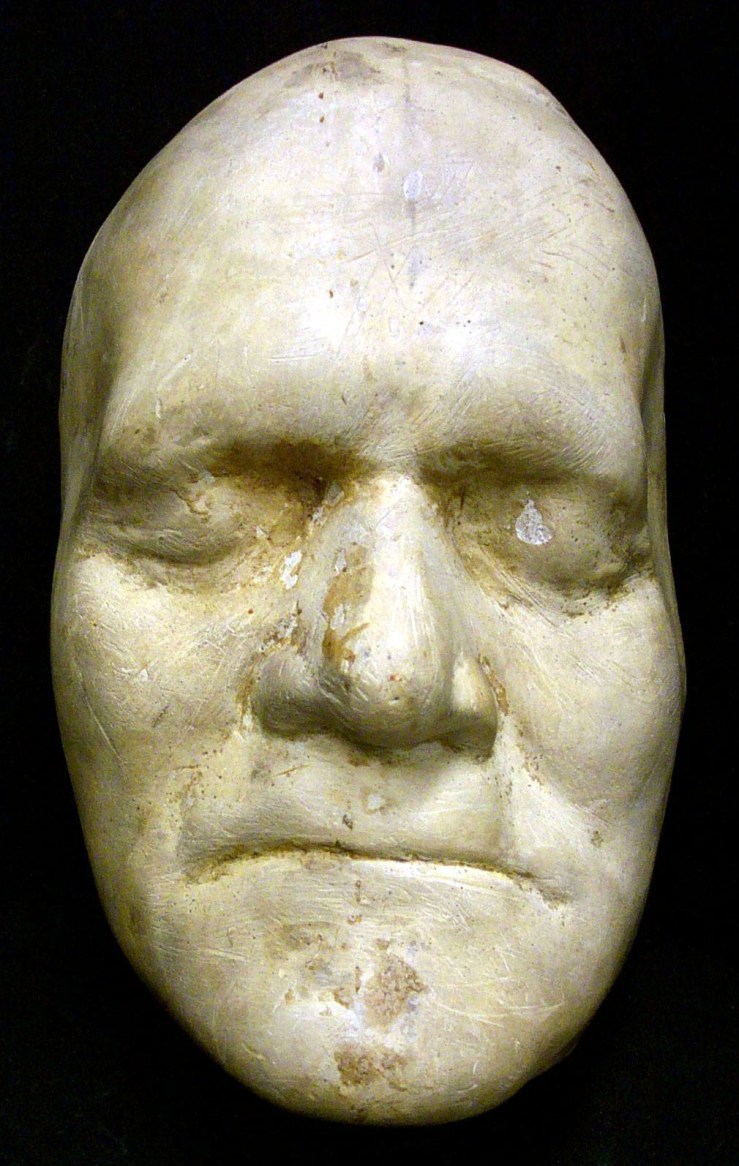
Benjamin Franklin’s Death Mask

“Towers Open Fire” — William Burroughs

Vodpod videos no longer available.

(Via).

An Obligatory Review of Jonathan Franzen’s Freedom

Do you know about the Oedipal complex? That Freudian thing? Of course you do. But if for some reason you don’t, or need a refresher, here’s a quick summary from one of my all time favorite lyricists, David Byrne: “Mom and Pop / They will fuck you up / For sure.”  That joyful nugget is from one of the last songs Talking Heads recorded, “Sax and Violins,” a great little piece on modern life that is far more entertaining (and much shorter) than Jonathan Franzen’s over-hyped new novel Freedom.

Freedom works hard to prove that Mom and Pop will fuck you up. Your family will fuck you up. Then you will fuck up your own kids. Franzen’s (boring, oh my god are they boring) characters seem bound to play out repeated variations of the Oedipal complex. Furthermore, according to Freedom, our extra-familial relationships are merely substitutions or recapitulations of our own Oedipal family dramas. Even worse, Franzen seems to suggest in Freedom that all our ideologies, our passions, our beliefs are really just formed by our “morbidly competitive” impulses, impulses born in our fucked-up, Oedipal families. (“Morbidly competitive,” by the way, is Franzen’s term).

The novel centers on one family, the Berglunds, a perfectly normal (in the upper-middle-class-white-educated sense of “perfectly normal”) fucked up family of four. I’m dispassionate about this novel, so I’ll just lazily crib a short summary from a well-written piece I’m largely simpatico with, Ruth Franklin’s review at TNR

Freedom takes place over a period of about thirty years, but its primary focus is on the George W. Bush era. When it begins, Patty and Walter Berglund, college sweethearts, are among the first wave of urban pioneers putting the gentry back into gentrification, fixing up a house in a blighted area of St. Paul that they will soon populate with their two children. The short preamble offers an overview of their lives from the perspective of their neighbors, from the time they move in as a young couple to their departure around the time the children leave for college. Patty, a former college basketball star who once made “second-team all-American,” is a mother and housewife in the newly popular liberal model: “tall, ponytailed, absurdly young, pushing a stroller past stripped cars and broken beer bottles and barfed-upon old snow. . . . Ahead of her, an afternoon of public radio, the Silver Palate Cookbook, cloth diapers, drywall compound, and latex paint; and then Goodnight Moon, then zinfandel.” She bakes cookies for the neighbors on their birthdays and opens her house to their children. But Patty’s baking and mothering cannot keep her home together: her son Joey, while still in high school, moves out to live down the street with his girlfriend Connie and her family, which happens to include the only Republican on the block. The strain that their child’s defection places on the Berglunds’ marriage is obvious to all. When they leave in the early 2000s for Washington, where Walter has a new job doing something vaguely ominous involving the coal industry, one of the neighbors remarks, “I don’t think they’ve figured out yet how to live.”

This overture sets the stage for the rest of the book, which begins and more or less ends with a ridiculously well-written journal by Patty. Patty (who is somehow a  more-than-competent novelist despite having no training) allows the audience to witness her marriage crumbling from her perspective; we are also supposed to sympathize with her because her own childhood was fucked up by her family. Also, she was date-raped, a manipulative detail that adds little to the narrative (I’d call it Nice Writing at its worst). Patty’s seemingly interminable journal eventually gives way to shorter chapters focusing on Joey and Walter. There’s also Patty and Walter’s lifelong friend, ex-punk/would-be indie rock star Richard Katz. Much of the novel revolves around Patty’s desire for Richard and Walter’s desire for Richard (no homo) and Richard’s desire for what he thinks Walter and Patty have and Walter’s desire to be desired by Patty the way that Patty desires Richard and blah blah blah. It’s one big boring circle of “morbidly competitive” Oedipal tension. Franzen spends most of his time expounding on how each character feels about how another character feels about him or her in an endless solipsistic chain that fails to enlighten or even amuse. Too much telling, not enough showing.

Freedom threatens to become interesting when it picks up the Walter narrative. Walter, a die-hard environmentalist oozing oodles of liberal guilt, is hard at work with a bevy of über-Republicans and defense contractors and Texas oil men to save the planet. Via the novel’s ever-present free indirect style, Walter goes to great, finicky pains to explain how working with these creeps will actually, like, save the ecosystem. Hey, doesn’t “eco” come from the Greek “oikos,” meaning “house”? Why yes it does! Must be some kind of parallel there–save the planet, save your house, save your fucked up family . . . Only none of that pans out; instead the section gets bogged down in a cluster of details that mingle with Walter’s increasing attraction (no, deep love and lust) for his twenty-something assistant. Meanwhile, his son Joey is growing up all wrong and fucked up, falling in with neocons who hide their war profiteering in a cloak of patriotic ideology. The democratic freedom we think we cherish is a lie; the personal freedoms we struggle to obtain–by escaping our fucked-up families–is ultimately a damning, soul-devouring curse. The American Dream is just morbid competitiveness.

If Franzen intended to write a zeitgeist novel, a How We Live Now novel, I wonder if this is this really what he thinks the spirit of our age boils down to? He gets many of the details of the last decade right, but the prose is bloodless and the characters are dull, unlikable, and unsympathetic. Of course, real people can be dull, unlikable, and unsympathetic, but that usually means that we don’t want to hang out with them, let alone read about their fears and desires for almost 600 pages. If our own families are dull, at least they are usually likable and sympathetic–at least to us, anyway (I love and like my family, in any case). Freedom feels like a novel with nothing at stake, or, perhaps, a novel where everything has already been lost, where outcomes are drawn null and void from the outset. And really, I wouldn’t mind all of that if it wasn’t so tedious. It practically buckles under its own sense of weighted importance in trying to reveal how Oedipal tension underwrites ideology. Oedipus might have been fated from the get-go, but at least there was some action and excitement in his story–some level of heroism, anyway.  And because I’ve brought up Oedipus again, I’ll indulge myself and cite Talking Heads one more time.

In “Once in a Lifetime,” probably the group’s most famous song, Byrne sings, “You may ask yourself / Well, how did I get here?” The song’s narrator wonders if he can escape time, wonders if his suburban confine is a trap or a paradise; there’s a sense of sublime ridiculousness  to it all, as if he might transcend time and space and contemporary life and take off “Into the blue again /Into silent water.” He’s trying to navigate the weird gap between suburbia and ecology, between duty and freedom. It is a song that at once recognizes the existential despair of a modern, suburban life, comments on its absurdity, and then surpasses it heroically. The song is undeniably about a figure in crisis, but that figure decides that “Time isn’t holding us / Time isn’t after us.” That figure is freer than the characters in Freedom, and freer still in his weird warp of ambiguity (a warp concretely codified in Byrne’s bizarre dance in the video). The hero of “Once in a Lifetime” transmutes existential absurdity into sound and vision; Oedipus saves his country (and provides the audience with catharsis) via his ironic, tragic self-mutilation; Patty and Walter kiss and make up. It’s a dreadfully facile ending, the worst kind of wish-fulfillment that seems wholly unsupported by the narrative preceding it.

But perhaps this is an unfair way to review a book that is apparently so important–to compare it to Oedipus Rex and a few Talking Heads songs. And I’ll admit that if Freedom had not been so wildly over-praised in the past few months, I’d probably try to find something positive to say about it. So I’ll try: Franzen is deeply intelligent, even wise, and his analysis of the past decade is perhaps brilliant. It’s also incredibly easy to read, but this is mostly because it requires so little thought from the reader. Franzen has done all the thinking for you. The book has a clear vision, a mission even, but it lacks urgency and immediacy; it is flaccid, flabby, overlong. It moans where it should howl. Nevertheless, the book is not a failure, at least not on its own terms. I believe that Franzen has written the book that he intended to write, that he has documented the zeitgeist the way that he perceives it–I just happen to find his analysis dull and his characters irredeemably uninteresting. Do not feel obligated to read Freedom.
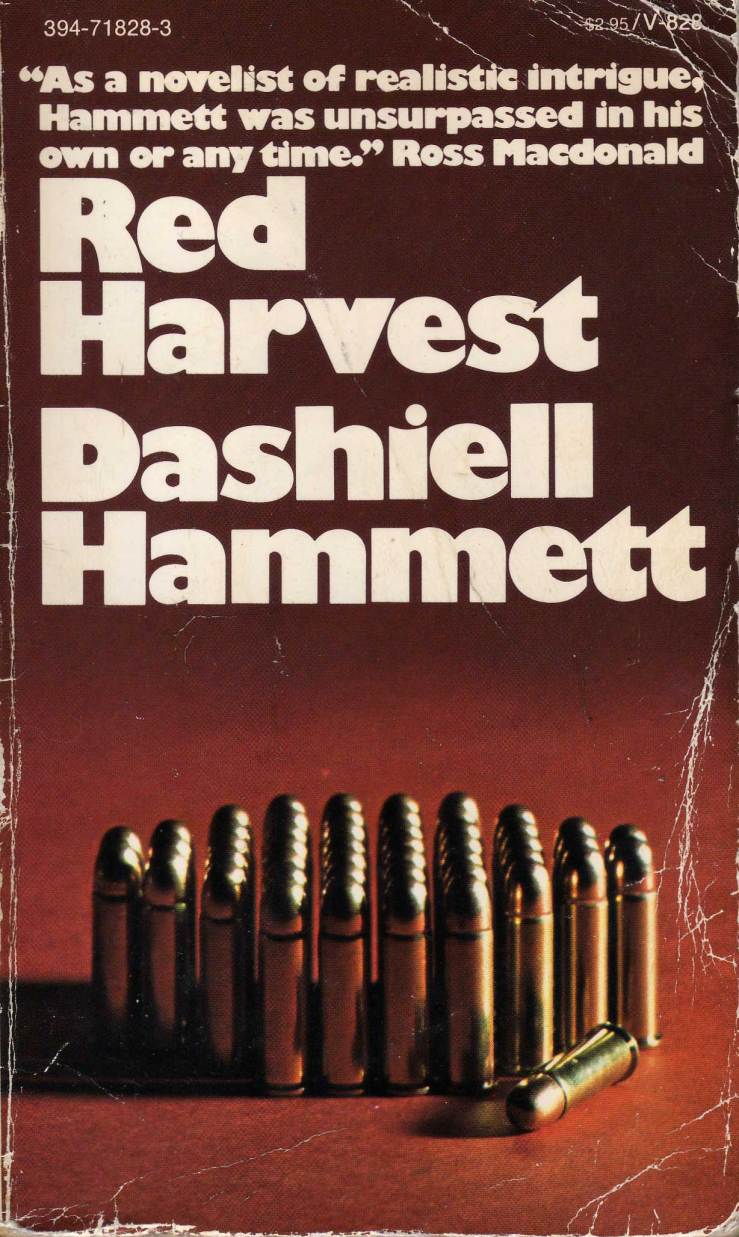
Red Harvest — Dashiell Hammett

Dashiell Hammett’s first published novel, Red Harvest, stars an unnamed dick, but the book isn’t so much a detective novel as it is an exploration of the destruction and renewal of a vice-ridden mining town named Personville.  The city boss, who serves “Poisonville” as both mayor and company president, can no longer control the strikebreakers he imported to bust up a prolonged work stoppage.  Initially retained by the editor of the daily paper to conduct background research for a developing story, the Continental Op is reluctantly hired by the mayor  to return the town to respectability.

Red Harvest is no murder mystery in the Scooby Doo sense because, unlike the Spillane novels reviewed last week, there is no particular villain to unmask.  Here, the action unfolds as the Continental Agency operative learns the personal histories of the town’s power players, assesses their motivations, and determines how best to play one set of guns against another.  The simple brilliance of this novel is Hammett’s ability to create believable characters in a handful of sentences, and then send them out to wreak mayhem against others.  Poisonville is as much a living character as Conan Doyle’s London or Bolaño’s Santa Teresa because it is so central to its citizens’ hopes, frustrations, and fears.  The detective apprehends, as bodies multiply, that the town is somehow getting the better of him.

The Continental Op might just be a stand-in for Hammet’s ideal reader.  Even though he’s privy to the same information we are, the detective is uniquely able to separate the relevant from the misleading and move the narrative forward.  He ingratiates himself with each of the opposing camps in town, analyzes their situations, and dispenses advice to their leaders based upon their own best interests.  Although the shakedowns, shootings, and betrayals were probably inevitable, the Op is the catalyst, the omnipotent narrator annihilating and rebuilding alliances.  Our detective’s actions lead to more than a dozen deaths, a prison break, riots in the street, blackmail, and his own frame-up for murder.

Rarely do writers trust their lead characters to create, and not merely experience, their own story.  I imagine that most characters, and most living human beings, aren’t capable or don’t want to always be in charge, preferring often just to passively accept whatever is foisted upon them.  Hammett’s writing in Red Harvest is so precise and inviting that those who pick it up might convince themselves, as they flip backwards twenty pages or so, that they could have played puppet-master just as easily.

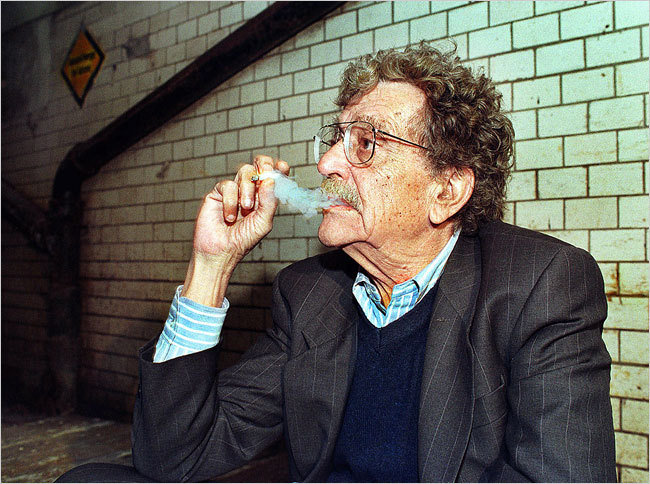
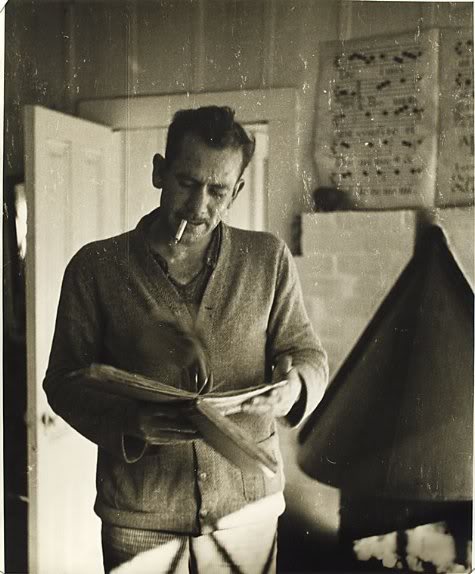
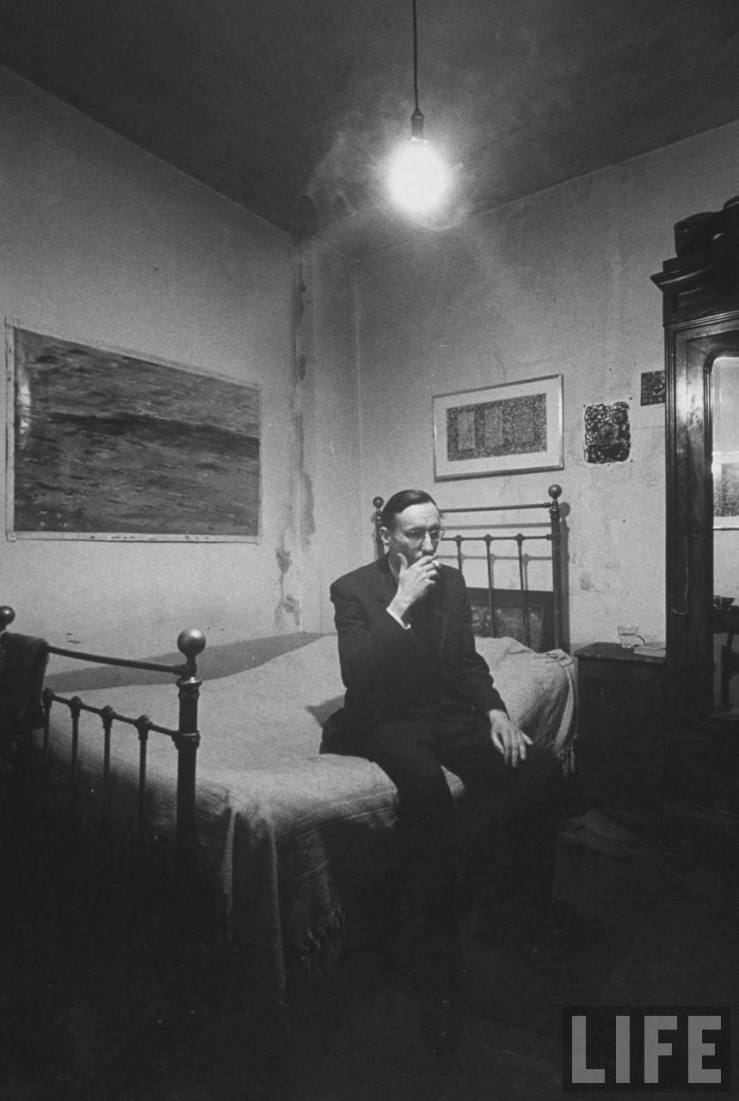
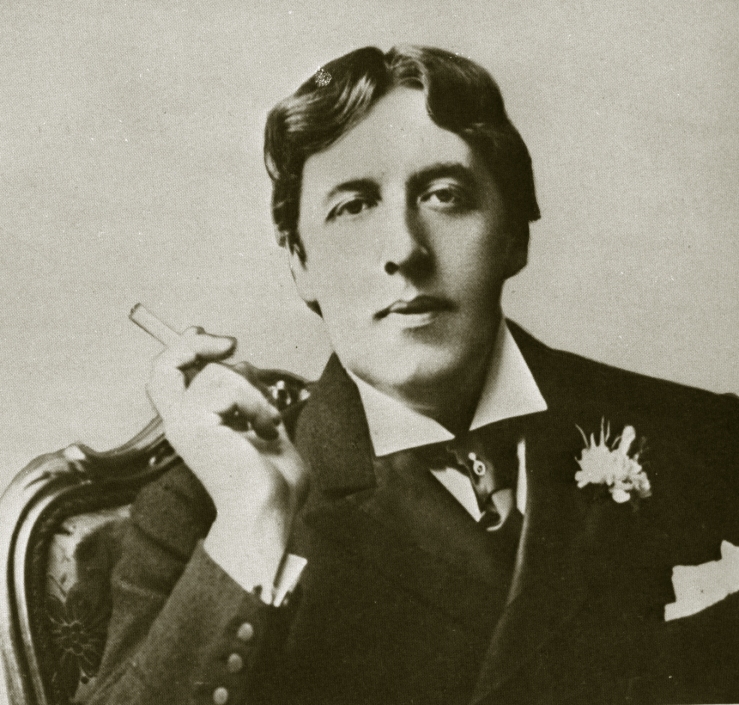
Smoking Makes You Look Cool

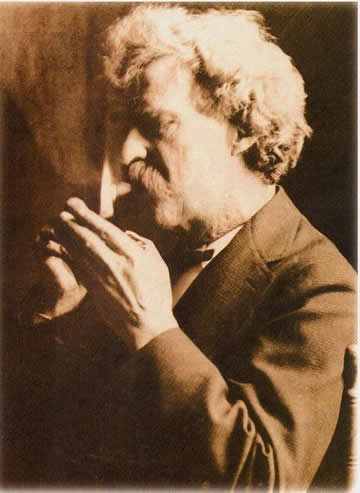
Mark Twain
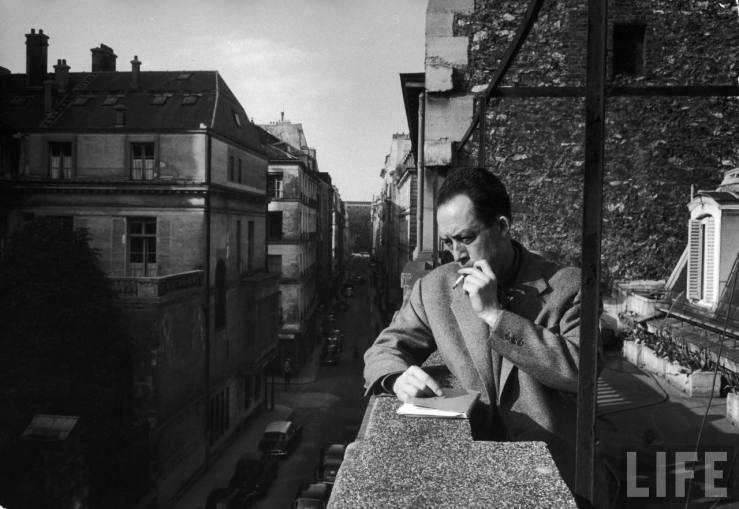
Albert Camus
Kurt Vonnegut
Roland Barthes
John Steinbeck
Charles Bukowski
William Faulkner
Roberto Bolaño
Samuel Beckett
William Burroughs
JRR Tolkien
Oscar Wilde
Henry Miller
H.S.T.
Barry O'Bama

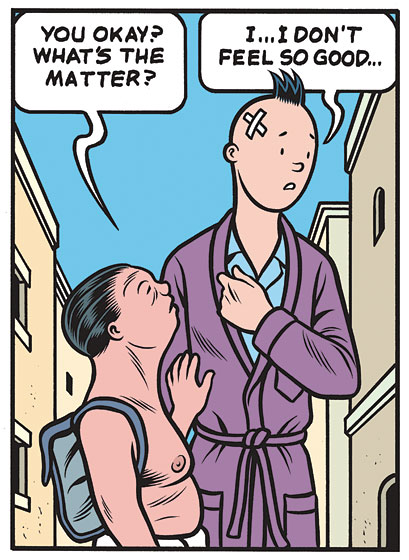
Charles Burns Annotates a Page from X’ed Out

At New York Magazine, Charles Burns annotates a page from his excellent new graphic novel X’ed Out. See the slideshow here. A sample–

“I don’t know exactly where he came from,” Burns says with a laugh about the mysterious guide in Nitnit’s world. “He’s got diapers, a backpack that’s got punk buttons on it. You can’t tell whether he’s young or old, but he’s kind of a street urchin. I haven’t figured out what to call him.”

Read (and Listen to) Another Unpublished Fragment from David Foster Wallace

Yesterday, we linked to an unpublished fragment by David Foster Wallace, and included the original audio from which it was transcribed. The Chief Howling Fantod himself, Nick Maniatis , was kind enough to point out that the fragments have been available for a few years now thanks to the transcription efforts of Matt Hale. You can get the pdf here, but we’ve gone ahead and reproduced our favorite section of the fragments (the audio is great too).

2nd FRAGMENT (Different boy mentioned in this; utterly different boy)

It is this boy who dons the bright-orange bandolier and shepherds the really small ones through the crosswalk outside school. This is after finishing the meals-on-wheels breakfast tour of the hospice downtown, whose administrator lunges to bolt her office door when she hears his cart’s wheels in the hall. He has paid out-of-pocket for the steel whistle and the white gloves held palm-out at cars while children who did not dress themselves cross behind him, some trying to run despite WALK DON’T RUN, the happy faced sandwich board he also made himself. The autos whose drivers he knows he waves at and gives an extra-big smile and tosses some words of good cheer as the crosswalk clears and the cars peel out and move through, some joshing around a little by swerving to miss him only by inches as he laughs and dances aside and makes faces of pretended terror at the flank and rear bumper. The one time that station wagon didn’t miss him really was an accident and he sent the lady several notes to make absolutely sure she knew he understood that and asked a whole lot of people he hadn’t yet gotten the opportunity to make friends with to sign his cast and decorated the crutches very carefully with bits of colored ribbon and tinsel and adhesive sparkles and even before the six weeks the doctor sternly prescribed, he’d given them away to the children’s wing to brighten up some other less lucky and happy kid’s convalescence and by the end of the whole thing he’d been inspired to write a very long theme to enter into the annual Social Studies theme competition about how a positive attitude can make even an accidental injury into an occasion for new friends and bright new opportunities for reaching out to others and while the theme didn’t even get honorable mention he honestly didn’t care because he felt like writing the theme had been its own reward and he’d gotten a lot out of the whole nine-draft process and was honestly happy for the kids whose themes did win awards and told them he was 100-plus percent sure they deserved it and that if they wanted to preserve their prize themes and maybe even make displayed items out of them for their parents, he’d be happy to type them up and laminate them and even fix any spelling errors he found if they’d like him to and at home his father puts his hand on Leonard’s shoulder and says he’s really proud that his son’s such a good sport and offers to take him to Dairy Queen as a kind of reward and Leonard tells his father he’s grateful and that the gesture means a lot to him but that in all honesty he’d like it even more if they took the money his father would have spent on the ice-cream and instead donated it either to Easter Seals or, better yet, to UNICEF to go toward the needs of famine-ravaged Biafran kids who he knew for a fact had probably never even heard of ice cream and says that he bets it’ll end up giving both of them a better feeling even then the DQ would and as the father slips the coins in the coin-slot at the special bright-orange UNICEF volunteer cardboard pumpkin bank, Leonard takes a moment to express concern about the father’s facial tick again and to gently rib him about his reluctance to go in and have the family’s MD look at it, noting again that according to the chart on the back of his bedroom door the father is four months overdue for his annual physical and that it’s almost eight months past the date of his recommended tetanus and T.B. boosters. He serves as hall monitor for period’s one and two but gives far more official warnings than actual citations. He’s there to serve he feels, not run people down. Usually with the official warnings he dispenses a smile and tells them you’re young exactly once so enjoy it and to go get-out here and make this day count why don’t they. Heroes UNICEF and Easter Seals and starts a recycling program in three straight grades. He is healthy and scrubbed and always groomed just well enough to project basic courtesy and respect for the community of which he is a part and he politely raises his hand in class for every question, but only if he’s sure he knows not only the correct answer but the formulation of that answer that the teacher’s looking for that will help advance the discussion of the overall topic they’re covering that day, often staying after class to double-check with the teacher that his take on her general objectives is sound and to ask whether there was any way that his answers could have been better or more helpful. The boy’s mom has a terrible accident while cleaning the oven and is rushed to the hospital and even though he’s beside himself with concern and says constant prayers former safety, he volunteers to stay home and field calls and relay information to an alphabetized list of concerned family friends and relatives and to make sure the mail and newspaper are brought in and to keep the home’s lights turned on and off in a random sequence at night as officer Chuck of the Michigan State police’s Crime Stoppers public school outreach program sensibly advises when grown-ups are suddenly called away from home and also to call the gas company’s emergency number, which he has memorized, to come check on what may well be a defective valve or circuit in the oven before anyone else in the family is exposed to risk of accidental harm and also, in secret, to work on massive display of bunting and penance and Welcome Homeland World’s Greatest Mom signs which he plans to use the garage’s extendible aluminum ladder—with a responsible neighborhood adult holding it and supervising—to very carefully affix to the front of the home with water-soluble glue so they’ll be there to greet the mom when she’s released from the I.C.U. with a totally clean bill of health which Leonard calls his father repeatedly at the I.C.U. payphone to assure the father that he has absolutely no doubt of (the totally clean bill of health), calling hourly, right on the dot, until there is some kind of mechanical problem with the payphone and when he dials it he just gets a high tone which he duly reports to the telephone company’s new automated 1618 Trouble Line. He can do several kinds of calligraphy and has been to origami camp twice and can do extraordinary free-hand sketches of local flora with either hand and can whistle all six of Telemann’s Nouveaux Equators and can imitate any birdcall Autobahn could even ever have thought of, don’t even mention spelling bees. He can make over twenty different kinds of admiral, cowboy, clerical and multi-ethnic hats out of ordinary newspaper and he volunteers to visit the school’s K-through-2nd classrooms teaching the little kids how, a proposal the Carl P. Robinson Elementary principal says he appreciates and has considered very carefully before turning down. The principle loathes the mere sight of the boy but does not quite know why. He sees the boy in his sleep, at nightmares’ ragged edges; the pressed checked shirt and hair’s hard little part, the freckles and ready, generous smile; anything he can do. The principle fantasizes about sinking a meat hook into Leonard Steel’s bright-eyed little face and dragging the boy face down behind his Volkswagen Beetle over the rough new streets of suburban Grand Rapids. The fantasies come out of nowhere and horrify the principal, who is a devout Mennonite. Everyone hates the boy. It is a complex hatred that makes the hater feel guilty and awful and to hate themselves for feeling this way and so makes they involuntarily hate the boy even more for arousing such self-hatred. The whole thing is totally confusing and upsetting. People take a lot of Aspirin when he’s around. The boy’s only real friends among kids are the damaged, the handicapped, the slow, the clinically fat, the last-picked, the non-grata. He seeks them out. All 316 invitations to his eleventh birthday Blow-Out Bash—322 invitations if you count the ones made on audiotape for the blind—are off, sent printed on quality velum with matching high-rag envelopes addressed in ornate Philippian calligraphy he spent three weekends on and each invitation details in Roman Numerated outline-form the itinerary’s half-day at Six Flags, private Ph.D.-guided tour of the Blanford Nature Center and reserved banquette-area-with-free-play at Shakey’s Pizza & Indoor Arcade on Remembrance Drive, the whole day gratis and paid-for out of the paper and aluminum drives the boy got up at 4 a.m. all summer to organize and spearhead, the balance of the drive’s receipts going to the Red Cross and the parents of a Kentwood, MI third-grader with terminal spina bifida who dreams above all-else of seeing Landry and Greer and ‘Night Train’ Lane live from his motorized wheelchair and the invitations explicitly call the party this: A Blow-Out Bash in balloon-shaped font as the caption to an illustrated explosion of good cheer and good will and no-holds-barred, let-out-all-the-stops fun with the bold-faced proviso: Please, no presents required in each of each card’s four corners and the 316 invitations—sent via first-class mail to every student, instructor, substitute, aid, administrator, custodian and physical plant employee at C. P. Robinson Elementary—yield a total attendance of nine celebrants, not counting parents and L.P.N.s of the incapacitated, and yet an undauntedly fine time was had by all was the consensus on the Honest Appraisal and Suggestion cards circulated at party’s end. The massive remainders of chocolate cake, Neapolitan ice cream, pizza, chips, caramel corn, Hershey’s kisses, United Way and Officer Chuck pamphlets on organ tissue donation and the correct procedures to follow if approached by a stranger respectively, kosher pizza for the Orthodox, biodegradable napkins and dietetic soda in souvenir Survived Leonard Steel’s Eleventh Birthday Blow-Out Bash, 1964 plastic glasses with built-in crazy-straws the guests were to keep as mementos all donated to the Kent County Children’s Home via procedures and transport that the birthday-boy had initiated even while the big Twister free-for-all was underway, out of concerns about melted ice cream and staleness and flatness and the waste of a chance to help the less blessed and his father, driving the wood-paneled station wagon and steadying his cheek with one hand, avowed again that the boy beside him had a large, good heart and that he was proud and that if the boy’s mother ever regained consciousness as they so very much hoped, he knew she’d be just awful proud as well.


Read (and Listen to) an Unpublished David Foster Wallace Fragment

Read an unpublished fragment of a story (or novel?) by David Foster Wallace at  454 W 23rd St New York, NY 10011-2157 (uh, that’s a blog, not, like, an actual physical address (although I guess it could be an actual physical address to. But, you don’t have to go there to read the story. Just click on the link. You know how the internet works, don’t you?)). Not sure who actually transcribed the piece (maybe the folks at 454?), but die-hard DFW fans will likely have heard the author read it himself. If you want to hear it, download it here (it also includes a hilarious reading (also unpublished) about a perfect boy who everyone hates). Here’s the first paragraph of the audio transcription–

Every whole person has ambitions, projects, objectives. This particular boy’s objective was to press his lips to every square inch of his own body. His arms to the shoulders and most of the legs beneath the knee were child’s play but after these areas of his body, the difficulty increased with the abruptness of a coastal shelf. The boy came to understand that unimaginable challenges lay ahead of him. He was six.

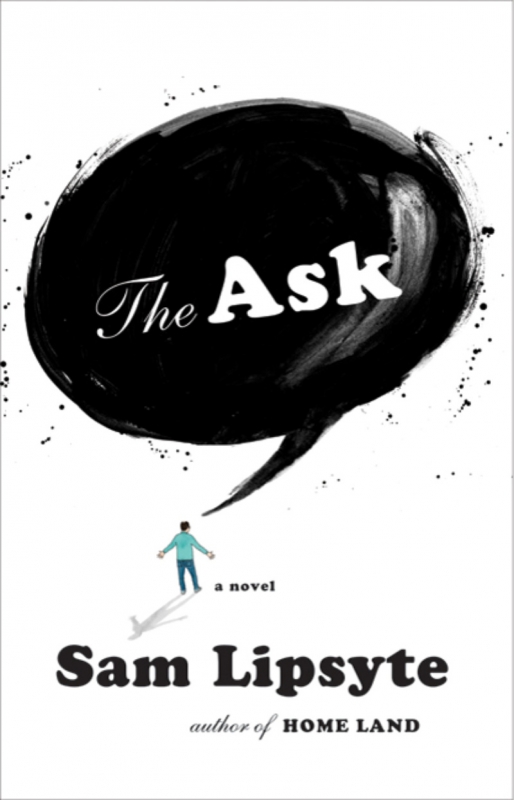
The Ask — Sam Lipsyte

I listened to the audiobook version of Sam Lipsyte’s hilarious, wistful, mean, and devastating novel The Ask last week. I invented chores and took any scenic route available when driving to get more of the book faster, frequently laughing out loud, or grimacing, or even feeling weird and shameful pangs of remorseful identification with the book’s protagonist and narrator, Milo Burke. I’m going to do my best to unpack the book’s themes–particularly the way it simultaneously eulogizes, valorizes, and mocks the American Dream–but first I need to get something out-of-the-way, a mea culpa of sorts.

As I mentioned, I listened to the book, but I don’t have a copy, so, shamefully, I can’t really quote any of Lipyste’s marvelous sentences. He is a master stylist, capable of zapping our dead modern idioms with the kind of alarming twists that highlight just how vacant language has become. Lipsyte also has a gift for rhythm, tone, and cadence, and he’s a master of the deadpan punchline. While the sentences in his last novel Home Land sometimes felt overly fussed over, straining under their own polish, The Ask showcases an effortless style that both seduces and repels. Lipsyte reads The Ask audiobook himself, yet lets the tone and cadence of his words dictate the tone and timbre of his voice. It’s all very good. And you’ll have to just take my word for all that as I have nothing to quote now (I’m sure I’ll re-review the book when I pick it up in paperback, though).

The plot is rather thin: Milo Burke, who once aspired to being a celebrated painter, now works for the grants department of a mediocre liberal arts college. His job, essentially, is to beg wealthy parents and alumni to donate massive gifts of cash to the school — this is “the ask.” Or rather, that was his job before he got fired for losing his cool with the spoiled brat daughter of a major patron. This leaves Milo moping around Queens, drinking too much, and pissing off the wife he is slowly becoming estranged from. Which is a shame, because he’s trying to be a good husband and father to his young son; despite his own shitty childhood–boozing, philandering father, emotionally absent mother–Milo is doing his best to give his family the American Dream. He’s more or less abandoned his own dreams of being a painter, and along with it, the weird faith he located in the various theorists–Marxists, feminists, deconstructionists, etc.–who informed his art school years. Much of the novel finds Milo pondering not just on the value (or lack thereof) in his liberal arts education, but also on the friends and anti-friends who he slummed with in those days. Just as the narrator of Home Land dwells on his high school days, Milo Burke can’t quit thinking about his college years in The Ask.

That past returns in the form of Purdy, a rich kid who slummed with Milo and his druggy art kid friends back in their college days. Purdy is incredibly wealthy even after the stock market crashes of the late 2000s, and has Milo specifically reinstated by the university to officiate an intended “give” (the answer to “the ask”). Purdy’s real intention though is to turn Milo into a kind of bag man, a go-between to deliver large sums of cash to Purdy’s caustically embittered illegitimate son Don, an Iraq War vet who’s lost both his legs to an IED. This arrangement thrusts Milo into Purdy’s surreal world of privilege and power, but also puts him into contact with a deranged, maimed, and deeply, deeply hurt young man who will, essentially, change the way that he examines the world and his role in it.

I’m now going to gloss over much of the book: there are many, many very funny situations, strange characters, and wonderful little insights. And now that theme I mentioned: the death of the American Dream.

Late in the novel, Milo calls America “Dead America.” Earlier in the novel, he complains that America never got to be Rome; that America is a dying, crumbling empire that never even got to revel in its hedonist excesses. Milo is keenly aware that his own white, white-collar, privileged, urban existence as a liberal-arts-educated American puts him in a position of greater material comfort than 99.9% of the rest of the people in the world, yet this fact does nothing to assuage his despair–in fact, it exacerbates it. Milo is ashamed of his despair, too-cognizant of its implications. His shame becomes a meta-, self-referential shame, and it leads to Milo essentially surrendering any power or agency he might have claimed in the universe. His liberal arts education and his own sensitivities render him feckless and bitter, always grumbling over the cosmic injustice of modern, Dead America. He is a walking, rambling critique of power, yet–as his wife likes to point out–he never does anything about the injustice he perceives. It’s only after interacting with Don that Milo begins to see an inroad to agency.

Don is, it must be said, a miserable, caustic human being, a racist blackmailer, and perennially cruel to anyone who extends a hand. He’s also performed the most real “give” in the novel–he’s lost his legs for Dead America, sacrificing his own mobility and freedom (those constituents of the dream) for the freedom of others, or at least for the illusion of other people’s freedom. Don’s toxic behavior makes him utterly repellent and thoroughly anti-heroic, but in Milo’s identification with the young man–and in Milo’s willingness to lose financial security and familial stability by essential siding with Don over Purdy– there is a glimmer (just a glimmer) of redemption and agency for Milo. Don embodies everything about America that Milo (and presumably Lipsyte) hates, yet he has also answered “the ask,” both literally and symbolically. The novel invokes then not just scathing ironic attack on the American Dream, but also a pity that reveals an intrinsic (and perhaps childish) wish to believe, a wish to make Dead America live again. The novel ends with Milo reclaiming (or maybe just claiming) some degree of agency, beginning with getting back an old war knife his father had given him, a clear symbol of paternal, phallic power (the kind that his liberal arts education told him was bad, bad, bad). And yet there’s no resolution, no pat answers–how could there be? Instead, the novel ends in another crisis–not Milo’s this time, but Don’s. But I won’t spoil that, because, hey, you’re going to read this now, aren’t you? Very highly recommended.

Goethe’s Death Mask

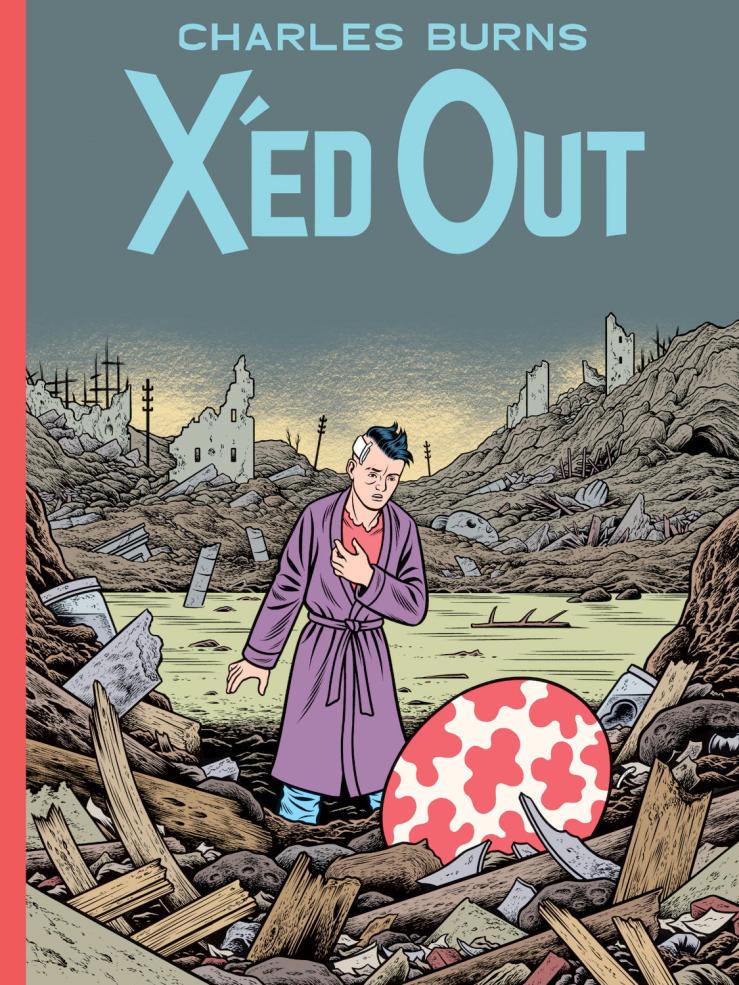
X’ed Out — Charles Burns

If you like Charles Burns, go ahead and pick up X’ed Out, the first (and very promising) entry in a new trilogy. Skip this review. You’ll probably be happier (and more unsettled) just experiencing all that vivid, glorious weirdness for yourself without any potential spoilers. If you need convincing, read on.

X’ed Out begins in a strange fever-dreamland that doesn’t immediately announce itself as such. Instead, we tentatively enter this weird world with Doug, the book’s protagonist, who, like Alice following the white rabbit, chases his (long dead) childhood cat through a crack in the wall. Doug traverses a cavernous, ruinous place, littered with murky detritus and swamped in a strange flood, to finally arrive in a bizarre desert town that approximates William Burroughs’s Interzone. Populated by mean lizards who dress like Mormon slackers and other grubby grotesques, the terrain readily recalls both Tatooine and Asian bazaars. Hapless Doug, still in pajamas, house coat, and slippers — and marked by an as-yet-unexplained head wound — soon finds himself under the guidance of a strange little diapered dwarf, who may or may not have his best interest in mind. The dreamworld unravels as Doug glances an old man — an “oldie,” as the dwarf says — who we will learn later is Doug’s father. An all of a sudden we’re back in the real world, back in waking life.

But no. That’s not right. Not “back” — we were never in the waking world to begin with. Significantly, X’ed Out begins in the Burroughsian dreamworld and then moves to a conscious, concrete reality. Burns’s dreamworld sequences explicitly reference Belgian cartoonist Hergé’s seminal Tintin comics (you can see how X’ed Out’s cover riffs on the Tintin adventure The Shooting Star here). Doug’s dream face is an expressive, stark mask, a naïve, cartoonish contrast to the bizarre nightmare to which it reacts.


from X'ed Out by Charles Burns


Doug — the waking world Doug, the “real” Doug, that is — pulls a similar mask over his more realistically drawn face later in the story when he does his “Burroughs thing” at a slummy art punk party. Alienated from the scenesters who don’t get his cut-up poetry performance, Doug takes up with Sarah, a girl from his photography class with a thing for razor blades and pig hearts. The same night they meet, he loses his girlfriend, and her crazy boyfriend goes to jail for assaulting a cop. They initiate their romance in Patti Smith records, lines of cocaine, and sick Polaroids. Ah, young love.

But all of that is in another kind of dreamworld, the past, a retreat for the “real,” contemporary Doug, who spends his few waking hours cringing in his bathrobe, poring over old photos, and eating the occasional Pop Tart. At night he eats pain pills and goes to Interzone-land, a place that seems as real and solid and valid as his past with Sarah, a past he has apparently lost. Doug bears a huge patch over half his head (significantly x-shaped in his Interzone version), and both this wound as well as the psychic trauma he’s obviously endured (and is enduring) remain unexplained throughout X’ed Out. However, Burns’s often-grisly images hint repeatedly at a past event filled with violence and loss. X’ed Out leaves us in the Interzone, with the dwarf making long-term plans for Tintinized Doug. There’s even talk of establishing residency and employment–it feels like Doug is here to stay (at least in his non-waking hours). X’ed Out ends maddeningly with a girl who visually recalls Sarah being borne by lizard men to a giant hive. The dwarf explains that she is their new queen–and like some insect queen, she is a breeder. Yuck. The ending is the biggest problem with X’ed Out, simply because it leaves one stranded, wanting more weirdness.

In Black Hole, Burns established himself as a master illustrator and a gifted storyteller, using severe black and white contrast to evoke that tale’s terrible pain and pathos. X’ed Out appropriately brings rich, complex color to Burns’s method, and the book’s oversized dimensions showcase the art beautifully. This is a gorgeous book, both attractive and repulsive (much like Freud’s concept of “the uncanny,” which is very much at work in Burns’s plot). Like I said at the top, fans of Burns’s comix likely already know they want to read X’ed Out; weirdos who love Burroughs and Ballard and other great ghastly fiction will also wish to take note. Highly recommended.

X’ed Out is available in hardback from Pantheon on October 19th, 2010.

Blood Meridian Contest Winner Announced

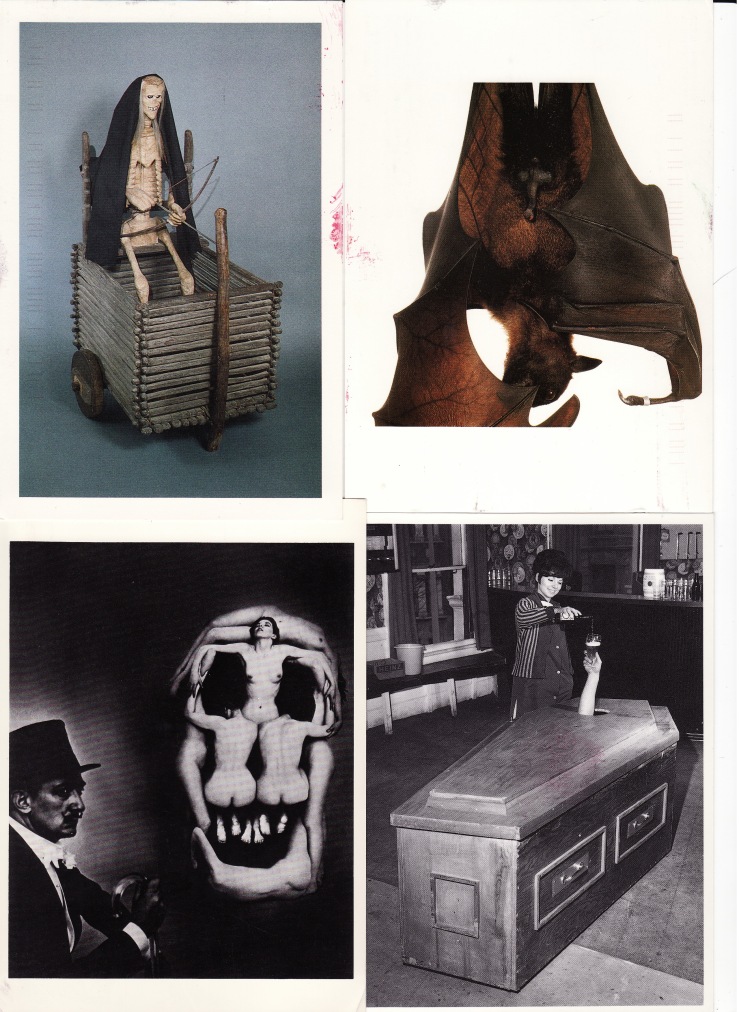
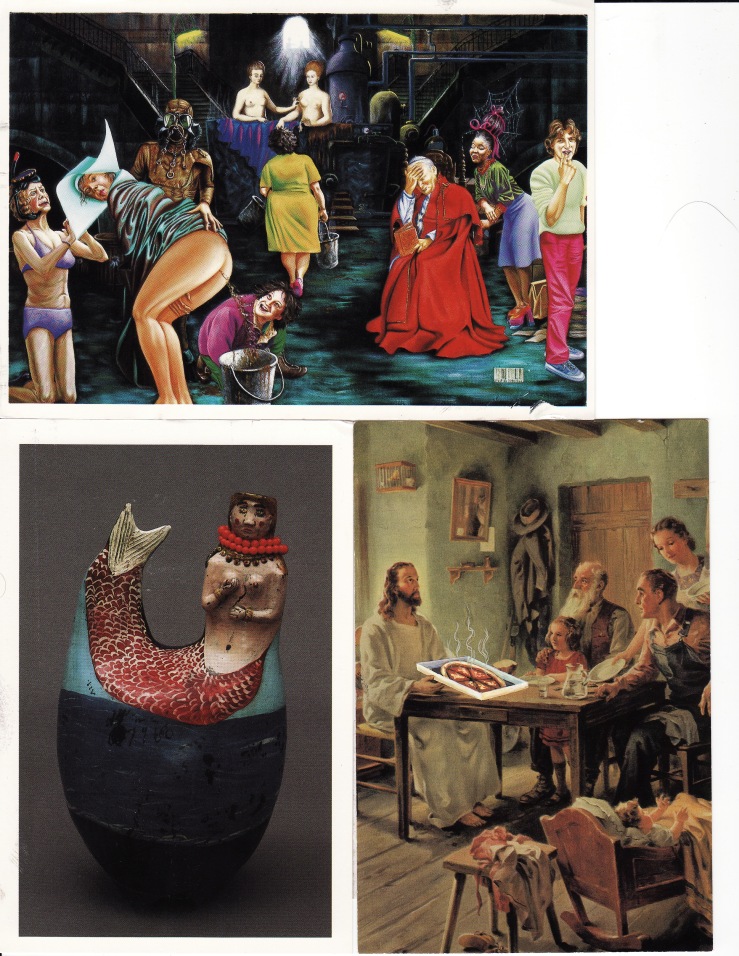
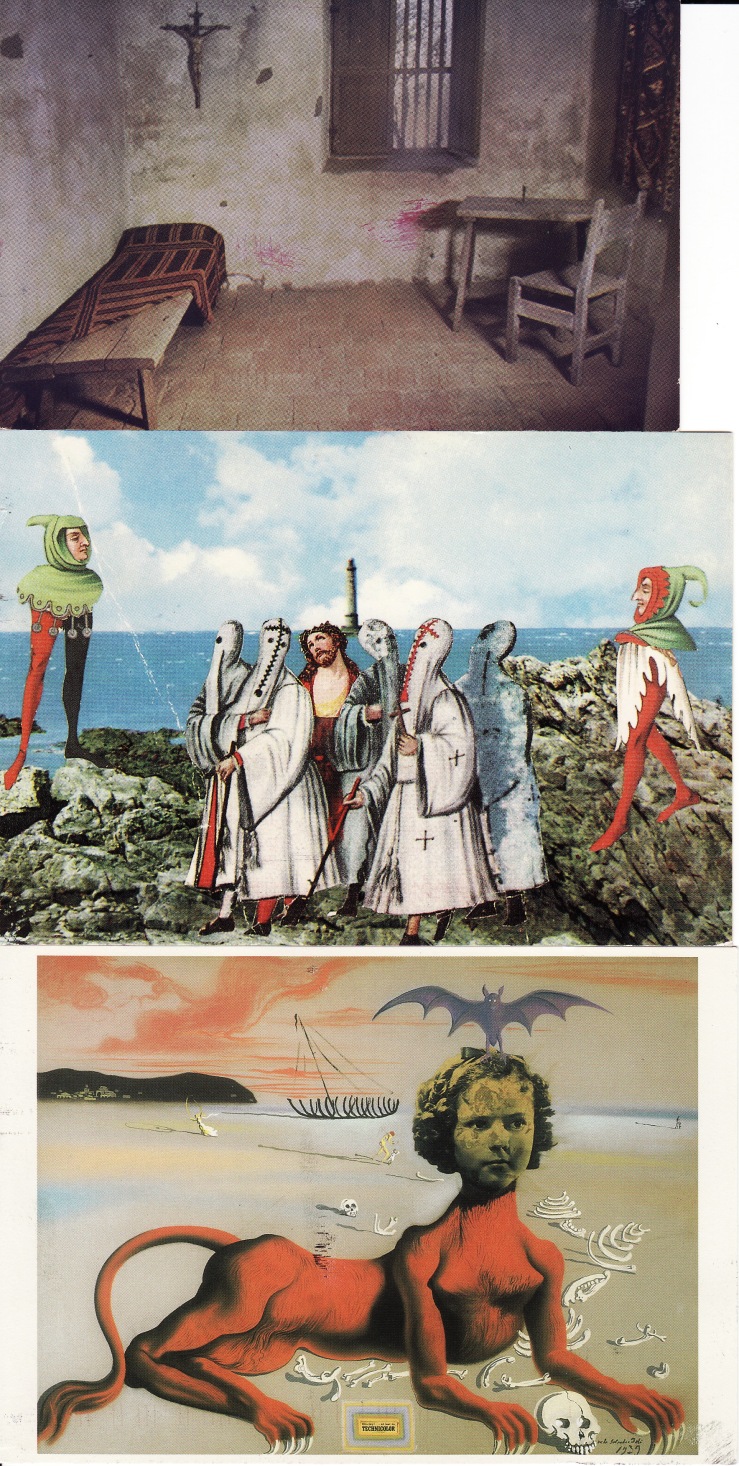
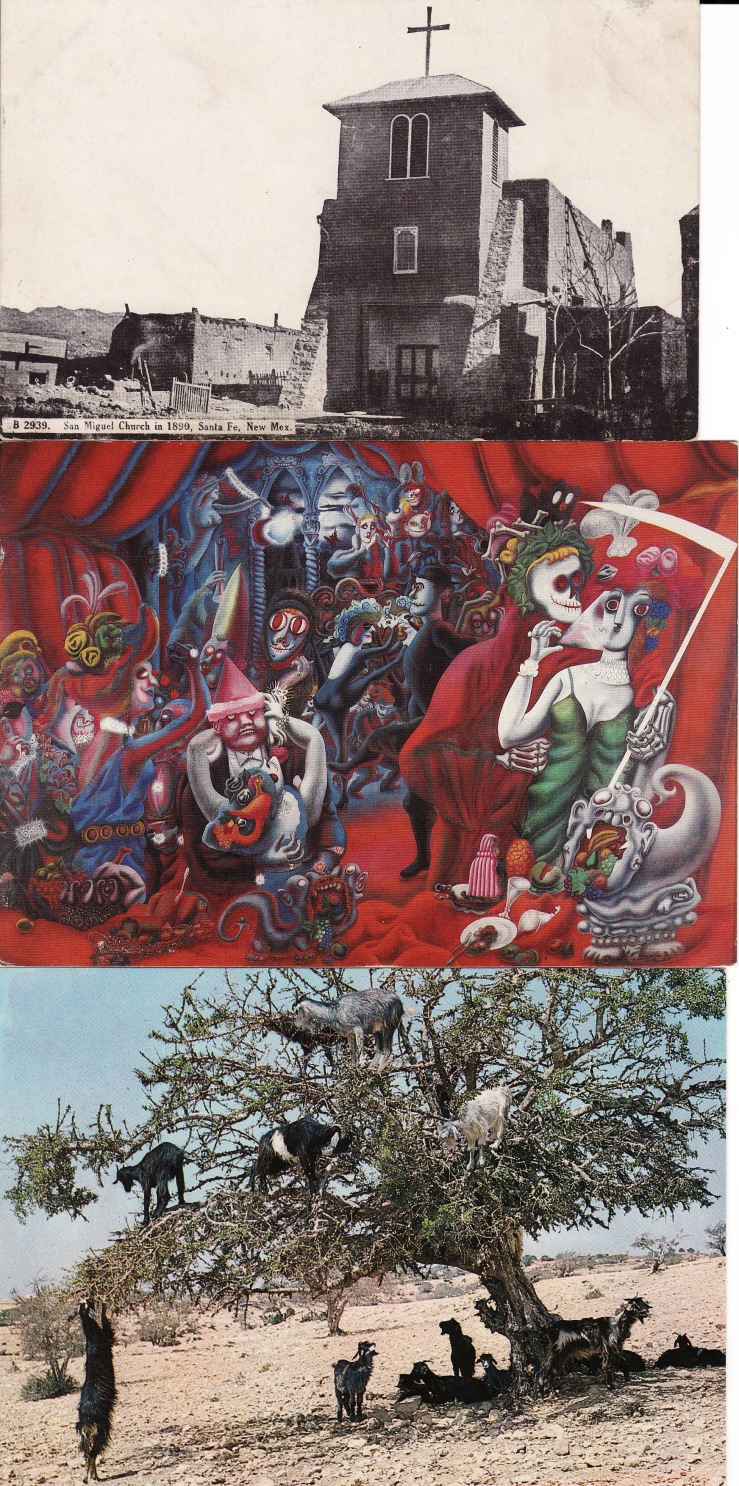
Big congratulations to Michael Cooke, a librarian from Flower Mound, Texas who is the winner of our Blood Meridian contest. Michael will receive a copy of the 25th anniversary hardback edition of Cormac McCarthy’s seminal anti-Western/awesome Western courtesy Biblioklept and Modern Library. Michael had the unfair advantage of being from Texas, and he totally cheated by sending in a baker’s dozen postcards, which was totally awesome. Cheating and being evil is the core of Blood Meridian. Each of Michael’s stark, garish, gritty, surreal, or just plain wicked postcards came with a wonderful corollary quote from the novel. The postcards come from Michael’s personal collection; he’s had some of them for years, and they’re from all over the place, several came from New Mexico, Cormac McCarthy’s chosen home. Here comes the weird–

James Franco and Michael Cunningham on Writing and MFA Programs