“to sex brawl and dare” — A Poem from Surrealist Ghérasim Luca

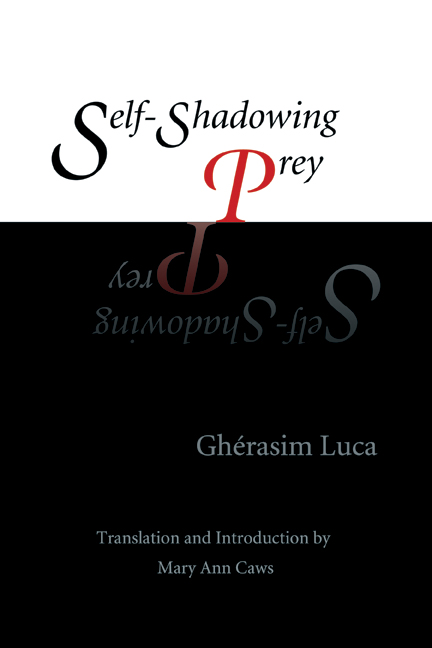
The good people at Contra Mundum Press are putting out the first English language translation of Romanian surrealist Ghérasim Luca’s Self-Shadowing Prey. Mary Ann Caws translates. Here’s the first poem in the book:

at the edge of a forest

whose trees are slender ideas

and each leaf a thought at bay

the vegetal reveals to us

the damned depths of an animal sect

or more precisely

an old insect anguish

waking up as man

the only way

the only basic weapon

to animate a mental state

that I hurry to write mantil

like a mantis

if only to mark

with a dry warning laugh

the devouring word

Entity and antithesis of the bush

a sort of wild and organic brush

grows in the head of that man

ravaged

by the heresy of parks and greenhouses

like the orgasm of a key

a lovely door

So the legendary passivity

the famous and ample passivity of plants

changes here to idle hate

to mad rage

to sex brawl and dare

luring by sap blood lava . . .

as rapid as the passage of woman

to beast

she empties us of a foul ancestral

wound

which in a spurt relieves us

of these fixed plaints

and these false death rattles plumbing us

our calm gestures of the interred

Now only terror

is still able to insert

in the tropism of body and of guilty

spirit

this prism as doubled echo

where brains and senses capture

the violent innocence

of a flora and a fauna

whose marriage is a long seizure

and a rape as slow as gold

in the implacable lead

And it’s around the mental equator

in the space delimited by the tropics

of a head

at the angle of the eye and what surrounds it

that the myth of a kind of utopian

jungle surges into the world

As virgin as the unknowable

or the other “face” of the moon

and never in the reach of a gun

or an axe

its prey is the snow

sand ball hip if not the trap

that the diffuse breath of a dream

lights up

For tangled

soldered to massive corkscrew keys

the vines

the branches stoves and rituals

fuse

around the forms placed

as if by miracle

at the crossroads of dryads

of druids and of man

So many points to aim at

all these yes and nos that

outside outside of time

of space and weight

select a sort of coupled oasis

and hamlet

to descend in these gods

from before the ages

the gods-place-beast-island-ash-fire

come forth as from the coupling of bird

and branch

and those exiled from the center

and from the shade of a golden foliage

will adore one day

between the walls of their somber cities

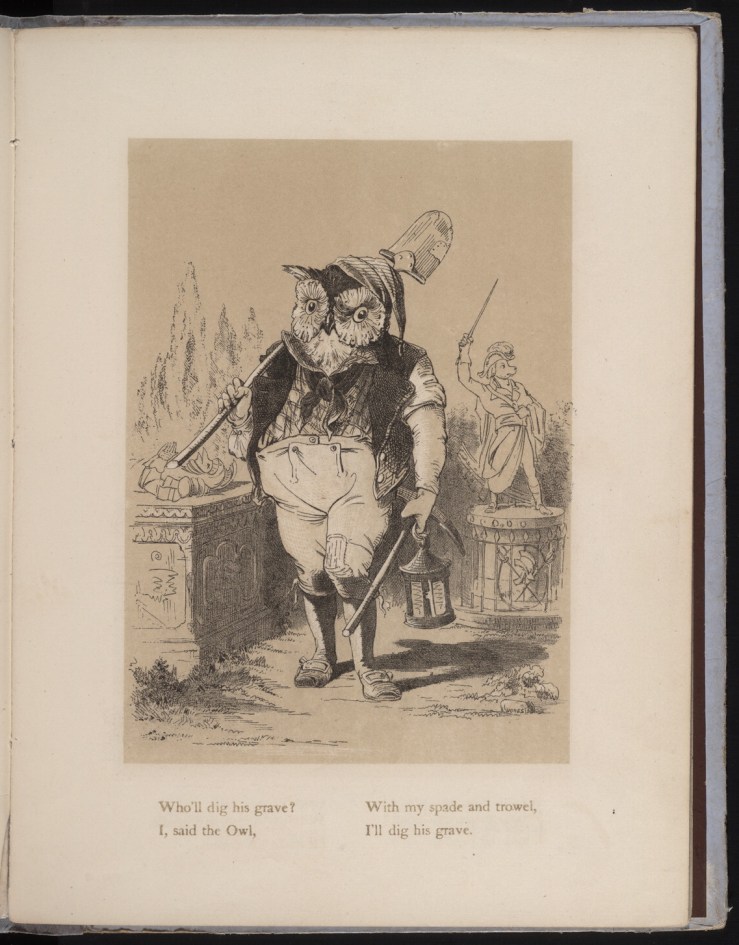
“Who’ll Dig His Grave? / I, Said the Owl”

From Death and Burial of Poor Cock Robin by H.L. Stephens, 1865.

Walton Ford at Work

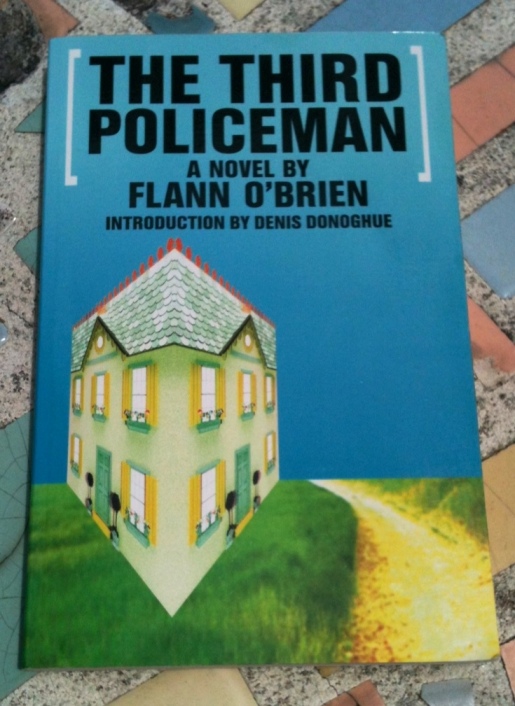
Flann O’Brien’s Novel The Third Policeman Is a Surreal Comic Masterpiece

20120504-141353.jpg

Here’s the short review: Flann O’Brien’s The Third Policeman is a dark, comic masterpiece—witty, bizarre, and buzzing with surreal transformations that push the limits of language. I am ashamed that I came so late to its cult (how the novel escaped my formative teens and twenties escapes me), but also thankful that I trusted the readers of this blog who kindly suggested I read it.

I’m also thankful that I knew pretty much nothing about the book going in; I’m thankful that I skipped over Denis Donoghue’s introduction (which has the gall to spoil the novel’s end); I’m thankful that I resisted looking up information on de Selby, a philosopher I had never heard the name of before The Third Policeman. I read the novel in an ideal state, a kind of Platonic purity of appropriate bewilderment, at turns gaping and guffawing at O’Brien’s sublime impositions on plot, imagery, thought, language.

To be plain, I think that you should read the book too, gentlest reader, and if you are fortunate enough to possess innocence of its strange virtues, all the better. The less you know about The Third Policeman, the more enjoyable your first time will be. But if such conditions are too much to ask, here are a few fragments of plot:

We have an unnamed narrator, a one-legged orphan and would-be de Selby scholar (don’t ask) who enters into a nefarious plot with a man named Divney. Okay, they plan and execute a murder for treasure. Shades of Crime and Punishment creep into the novel by way of Poe’s nervous narrators; the plot even anticipates in some ways The Stranger, though not as moody and far funnier and honestly just way better. (I’m riffing on books here because, again, it seems to me a disservice to the interested reader to overshare the plot of The Third Policeman).

Let’s just say there’s a two-dimensional house. Let’s just say there’s an absurd picaresque quest to recover a missing black box. Let’s just say there are two policemen (okay, there are three), alternately terrifying, edifying, assuaging, bewildering. Let’s just say there’s an army of one-legged men. Let’s just say there’s a soul. Let’s call him “Joe.”

Let’s just say there are bicycles. Lots and lots of bicycles.

And the wisdom (?!) of de Selby, of course, “the savant,” who, via our unnamed narrator’s erudite footnotes (including the notes of de Selby’s esteemed commentators, of course) offers up opinions and maxims on matters of natural science and philosophy alike. Here’s a taste of de Selby, from the epigraph:

Human existence being an hallucination containing in itself the secondary hallucinations of day and night (the latter an insanitary condition of the atmosphere due to accretions of black air) it ill becomes any man of sense to be concerned at the illusory approach of the supreme hallucination known as death.

It’s also a good taste of the bizarre thrust of The Third Policeman; the first five words might work as a dandy summary, or at least summary enough.

But maybe I should share some of O’Brien’s language (and not just some philosopher that if you’re being honest you’ll admit you’ve never heard of before, although it seems like maybe you ought to have heard of him, hmmm?).

Just the first paragraph, gentle soul. It was enough to hook this fish:

Not everybody knows how I killed old Phillip Mathers, smashing his jaw in with my spade; but first it is better to speak of my friendship with John Divney because it was he who first knocked old Mathers down by giving him a great blow in the neck with a special bicycle-pump which he manufactured himself out of a hollow iron bar. Divney was a strong civil man but he was lazy and idle-minded. He was personally responsible for the whole idea in the first place. It was he who told me to bring my spade. He was the one who gave the orders on the occasion and also the explanations when they were called for.

And: two more excerpts that you can read, funny-stuff, context-free.

Okay. Hopefully I’ve convinced you a) to read The Third Policeman and b) to quit reading this review (let’s be honest, this isn’t so much a review as it is a riff, a recommendation, and it’s going to get even ramblier in a moment). You can get The Third Policeman from The Dalkey Archive, so you know it’s good, but oh-my-God-guess-what-can-you-believe-it? The Dalkey Archive is actually named after one of O’Brien’s novels, The Dalkey Archive.

So, yes, very highly recommended, read it, etc.

The rest of this riff I devote to puzzling out (without resolution) some of the marvels and conundrums of The Third Policeman; if you haven’t read the book, I suggest skipping all that follows.

I imagine that there’s a ton of criticism out there that might try to explain or elucidate the meaning of The Third Policeman, and while I’d love to hear or read some opinions on the book, I think it ultimately defies heavily symbolic readings. I suppose we might argue that the bicycle motif points toward the slow mechanization of humanity in the post-industrial landscape (or some such nonsense), or we might try to find some codex for the plot of the novel in the work of the fictional philosopher de Selby (and his critics), or we might try to plumb the novel’s mystical and religious underpinnings. It seems to me though that the absurd, nightmarish fever-joy of The Third Policeman lies in its precise indeterminacy. Here’s an example, at some length, of our narrator’s marvelous powers to describe what cannot be described:

This cabinet had an opening resembling a chute and another large opening resembling a black hole about a yard below the chute. He pressed two red articles like typewriter keys and turned a large knob away from him. At once there was a rumbling noise as if thousands of full biscuit-boxes were falling down a stairs. I felt that these falling things would come out of the chute at any moment. And so they did, appearing for a few seconds in the air and then disappearing down the black hole below. But what can I say about them? In colour they were not white or black and certainly bore no intermediate colour; they were far from dark and anything but bright. But strange to say it was not their unprecedented hue that took most of my attention. They had another quality that made me watch them wild-eyed, dry-throated and with no breathing. I can make no attempt to describe this quality. It took me hours of thought long afterwards to realize why these articles were astonishing. They lacked an essential property of all known objects. I cannot call it shape or configuration since shapelessness is not what I refer to at all. I can only say that these objects, not one of which resembled the other, were of no known dimensions. They were not square or rectangular or circular or simply irregularly shaped nor could it be said that their endless variety was due to dimensional dissimilarities. Simply their appearance, if even that word is not inadmissible, was not understood by the eye and was in any event indescribable. That is enough to say.

O’Brien’s unnamed narrator repeatedly runs up against the problem of the ineffable, of the inability of language to center meaning.

The policemen—Sergeant Pluck and Policeman MacCruiskeen—are handier at navigating the absurd pratfalls of language. When the Sergeant asks the narrator if he’d like “a velvet-coloured colour,” we see the tautological, self-referential scope to description, and hence the underlying trouble of approaching pure communication. Much of the humor of The Third Policeman comes from such language. The Sergeant tells of an angry mob that “held a private meeting that was attended by every member of the general public except the man in question,” and we see the mutability of oppositions like “private/public” played to absurd comic effect.

When the policemen describe machines that break sensation into opposing and contradictory parts, we get here an anticipation of deconstruction, of the idea that difference and instability governs sensation and meaning. There is no purity:

‘We have a machine down there,’ the Sergeant continued, ‘that splits up any smell into its sub – and inter-smells the way you can split up a beam of light with a glass instrument. It is very interesting and edifying, you would not believe the dirty smells that are inside the perfume of a lovely lily-of-the mountain.’

‘And there is a machine for tastes,’ MacCruiskeen put in, ‘the taste of a fried chop, although you might not think it, is forty per cent the taste of…’ He grimaced and spat and looked delicately reticent.

The policemen’s analytic machinery correlates strongly with the narrator’s interest in philosophy and science. Through de Selby and his various critics, O’Brien simultaneously mocks and reveres the atomizing pursuits of knowledge. Delivered mostly in footnotes that would give David Foster Wallace a run for his money, the absurd philosophy of de Selby underpins the physical and metaphysical conundrums of The Third Policeman (this is, after all, the story of a man traversing a world where the laws of physics do not adhere). Here’s an early footnote:

. . . de Selby . . . suggests (Garcia, p. 12) that night, far from being caused by the commonly accepted theory of planetary movements, was due to accumulations of ‘black air’ produced by certain volcanic activities of which he does not treat in detail. See also p. 79 and 945, Country Album. Le Fournier’s comment (in Homme ou Dieu) is interesting. ‘On ne saura jamais jusqu’à quel point de Selby fut cause de la Grande Guerre, mais, sans aucun doute, ses théories excentriques – spécialement celle que nuit n’est pas un phénomène de nature, mais dans l’atmosphère un état malsain amené par un industrialisme cupide et sans pitié – auraient l’effet de produire un trouble profond dans les masses.’

This is wonderful mockery of academicese, a ridiculous idea presented with some commentary in French. At this point in the novel, I started to doubt the existence of de Selby; as the narrator’s notations of de Selby’s ideas grew increasingly bizarre, I soon realized the joke O’Brien had played on me.

And yet these jokes do not deflate the essential metaphysical seriousness of The Third Policeman: This is a novel about punishment, about crime, about damnation; this is a novel about not knowing but trying to know and describe what can’t be known or described.

This not knowing extends strongly to the reader of The Third Policeman. I was never sure if the narrator was dreaming or hallucinating or wandering through a strange afterlife—and in a way, it didn’t matter. There’s no allegorical match-up or metaphysical scorecard from which to parse The Third Policeman’s final meaning because there is no final meaning. Here’s O’Brien—or really Brian O’Nolan, I suppose; O’Brien was a pseudonym—summarizing the novel in a 1940 letter to William Saroyan:

I’ve just finished another book. The only thing good about it is the plot and I’ve been wondering whether I could make a crazy…play out of it. When you get to the end of this book you realize that my hero or main character (he’s a heel and a killer) has been dead throughout the book and that all the queer ghastly things which have been happening to him are happening in a sort of hell which he earned for the killing. Towards the end of the book (before you know he’s dead) he manages to get back to his own house where he used to live with another man who helped in the original murder. Although he’s been away three days, this other fellow is twenty years older and dies of fright when he sees the other lad standing in the door.

Then the two of them walk back along the road to the hell place and start thro’ all the same terrible adventures again, the first fellow being surprised and frightened at everything just as he was the first time and as if he’d never been through it before. It is made clear that this sort of thing goes on for ever – and there you are. It is supposed to be very funny but I don’t know about that either…I think the idea of a man being dead all the time is pretty new. When you are writing about the world of the dead – and the damned – where none of the rules and laws (not even the law of gravity) holds good, there is any amount of scope for back-chat and funny cracks.

Happily, as I mentioned earlier, I skipped the introduction and thus missed this letter, which I think deflates the novel in some ways, including the authorial spoiler. Also, O’Brien’s just plain wrong when he contends that the “only good thing about it is the plot” — there’s also the language, the ideas, the rhythm, the structure . . .

But 1940 was not ready for such a strange novel, and The Third Policeman wasn’t published until 1967, a year after its author’s death. By 1967 Thomas Pynchon had published V. and The Crying of Lot 49, John Barth has published The Sot-Weed Factor and Giles Goat-Boy, Don DeLillo had quit advertising to start writing novels, Donald Barthelme had published Snow-White, Kurt Vonnegut had gained a large audience—in short, the world of letters had caught up to O’Brien (or O’Nolan, if you prefer). Here was a post-modern novel delivered while Modernism was still in full swing.

But literary labels are no fun. You know what’s fun? The Third Policeman is fun. And unnerving. And energetic. And surreal. And really, really great. Very highly recommended.

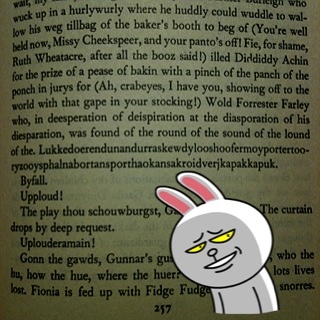
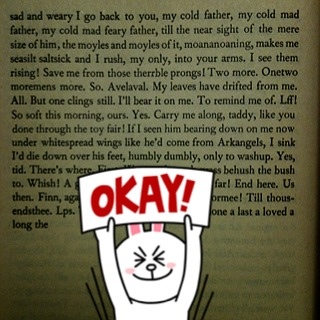
Finnegans Wake (With Bunny)

20120502-201713.jpg

20120502-201724.jpg

20120502-201732.jpg

20120502-201741.jpg

20120502-201752.jpg

20120502-201807.jpg

20120502-201817.jpg

20120502-201836.jpg

20120502-201846.jpg

20120502-201854.jpg

Radio Transmission (Cocteau’s Orphée)

Book Shelves #19, 5.06.2012

20120502-173818.jpg

Book shelves series #19, nineteenth Sunday of 2012.

When I started this project, this shelf was all Tolkien and Joyce; now it’s mostly Gaddis and Joyce.

I have dupes of most of the Joyce books here; there’s also Joyce criticism/guides on the shelf.

Another angle. Glare is horrible. iPhone is not a good camera; lots of glare; shelf is much taller than me, etc.:

20120502-173845.jpg

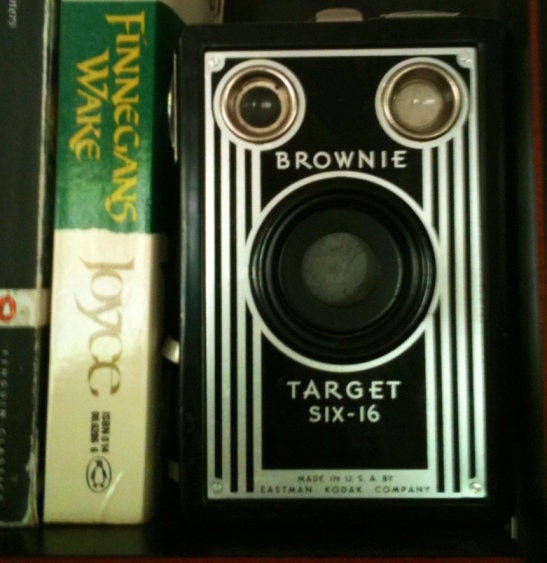
Here’s a tight shot of the Brownie Six-16 that serves as bookend:

20120502-173907.jpg

Something from Finnegans Wake :

20120502-174223.jpg

“Alexander Stole an Ear from a Morgue” (Tom McCarthy on the Haunted Telephone)

If technology in general is at once a form both of self-extension and of amputation, then the branch of it that concerns itself with information and its relay—communication technology—is a true field-hospital operating -theater floor of hacked-off limbs, of bereaved bodies. A quick glance at the history of almost any comm.tech device will illustrate this perfectly.

Take the telephone: Alexander Bell, its inventor, grew up in the shadow of his father who ran a school for deaf-mutes and was continually inventing machines to substitute their powers of hearing and speaking. As a student, Alexander stole an ear from a morgue so that he could try to reproduce its inner workings mechanically; a few years later he brought home another defunct ear and, attached to it, the woman he’d marry, deaf like his mother. After his first brother died when his lungs gave out on him, he made a pact with the remaining one that if a second of them should die, the survivor would invent a device capable of receiving messages from the afterlife, should such a thing turn out to exist. The second brother did die, and Bell invented the telephone. He would probably have invented it anyway, and in fact remained a sceptic vis-a-vis the question of existence after death—but only because his brother never called. The desire for the call was there, wired into the very apparatus, haunting it.

From Tom McCarthy’s forthcoming essay “Transmission and the Individual Remix.”

The Misanthrope — Pieter Bruegel the Elder

RIP Adam Yauch

RIP MCA. 47 is way too young.

“Quite an Original” — Herman Melville on Hamlet, Don Quixote, and Satan

This is Chapter XLIV of Herman Melville’s The Confidence Man:

“Quite an original:” A phrase, we fancy, rather oftener used by the young, or the unlearned, or the untraveled, than by the old, or the well-read, or the man who has made the grand tour. Certainly, the sense of originality exists at its highest in an infant, and probably at its lowest in him who has completed the circle of the sciences.

As for original characters in fiction, a grateful reader will, on meeting with one, keep the anniversary of that day. True, we sometimes hear of an author who, at one creation, produces some two or three score such characters; it may be possible. But they can hardly be original in the sense that Hamlet is, or Don Quixote, or Milton’s Satan. That is to say, they are not, in a thorough sense, original at all. They are novel, or singular, or striking, or captivating, or all four at once.
More likely, they are what are called odd characters; but for that, are no more original, than what is called an odd genius, in his way, is. But, if original, whence came they? Or where did the novelist pick them up?

Where does any novelist pick up any character? For the most part, in town, to be sure. Every great town is a kind of man-show, where the novelist goes for his stock, just as the agriculturist goes to the cattle-show for his. But in the one fair, new species of quadrupeds are hardly more rare, than in the other are new species of characters—that is, original ones. Their rarity may still the more appear from this, that, while characters, merely singular, imply but singular forms so to speak, original ones, truly so, imply original instincts.

In short, a due conception of what is to be held for this sort of personage in fiction would make him almost as much of a prodigy there, as in real history is a new law-giver, a revolutionizing philosopher, or the founder of a new religion.

In nearly all the original characters, loosely accounted such in works of invention, there is discernible something prevailingly local, or of the age; which circumstance, of itself, would seem to invalidate the claim, judged by the principles here suggested.

Furthermore, if we consider, what is popularly held to entitle characters in fiction to being deemed original, is but something personal—confined to itself. The character sheds not its characteristic on its surroundings, whereas, the original character, essentially such, is like a revolving Drummond light, raying away from itself all round it—everything is lit by it, everything starts up to it (mark how it is with Hamlet), so that, in certain minds, there follows upon the adequate conception of such a character, an effect, in its way, akin to that which in Genesis attends upon the beginning of things.

For much the same reason that there is but one planet to one orbit, so can there be but one such original character to one work of invention. Two would conflict to chaos. In this view, to say that there are more than one to a book, is good presumption there is none at all. But for new, singular, striking, odd, eccentric, and all sorts of entertaining and instructive characters, a good fiction may be full of them. To produce such characters, an author, beside other things, must have seen much, and seen through much: to produce but one original character, he must have had much luck.

There would seem but one point in common between this sort of phenomenon in fiction and all other sorts: it cannot be born in the author’s imagination—it being as true in literature as in zoology, that all life is from the egg.

In the endeavor to show, if possible, the impropriety of the phrase, Quite an Original, as applied by the barber’s friends, we have, at unawares, been led into a dissertation bordering upon the prosy, perhaps upon the smoky. If so, the best use the smoke can be turned to, will be, by retiring under cover of it, in good trim as may be, to the story.

Books Acquired, 4.23.2012 — Or, Here’s What’s New from Picador This Month

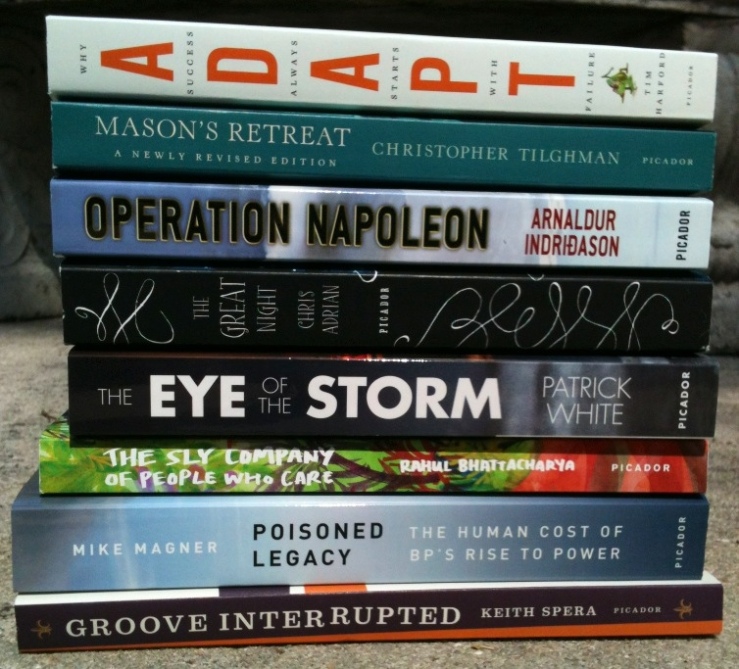
20120502-162855.jpgNice little stack from the good people at Picador—novels, reissues, first-time-in-trade-paperbacks, nonfiction . . . a nice little spread.
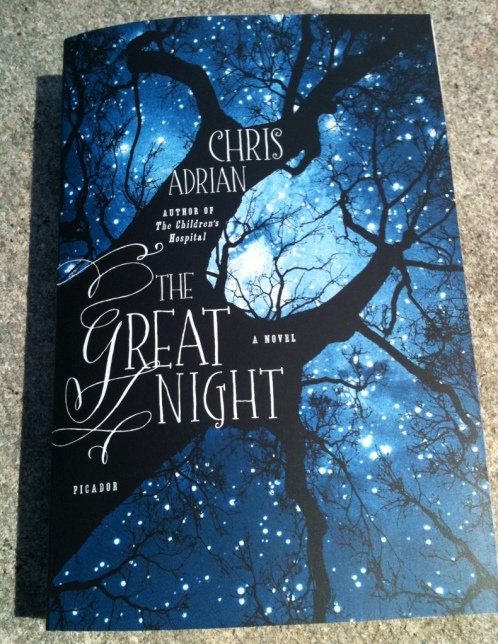
First up is Chris Adrian’s latest novel The Great Night, which, improbably, I’ve yet to read—I’m a huge fan of Chris Adrian’s other books, especially The Children’s Hospital (although I’ve reviewed his other books here too, for those inclined to hit the archives), and I love A Midsummer Night’s Dream, which I know The Great Night basically riffs on. Anyway, my wife snapped this one up right away (I had to go through her nightstand to fetch it up for yon photograph), so my reading will be delayed (although I will likely con her into reviewing it here).

20120502-162916.jpg

From Patrick Ness’s review at The Guardian

The Great Night is set in Buena Vista Park in San Francisco. Titania and Oberon – the very ones from Shakespeare’s play – live under the park’s main hill with their full court. Puck is there too, a malevolent but chained force, chafing for revenge against his masters. He may get his chance, for Titania is collapsing under grief. Boy, a changeling brought in by Oberon to amuse her and for whom she felt the first maternal feelings of her immortal life, has died of a very human disease, leukaemia.

Consumed by the pain of her loss, Titania makes a terrible mistake and tells Oberon she never loved him. Furious, he abandons her and shows no signs of returning. But perhaps if Titania releases Puck, who the other faeries refer to as the Beast, then Oberon will have to return to enslave him again. Won’t he? She breaks Puck’s bonds on the Great Night – Midsummer’s Eve, naturally – for which he says, “Milady, I am in your debt, and so I shall eat you last.” . . .

. . . Adrian does nearly everything right here. The Shakespearean references are worn lightly, and the plotting is so skilful you barely notice it falling into place. The characterisations are rich, too. There’s a spellbinding chapter on Molly’s childhood in a performing Christian family band that is both deeply weird and blisteringly sad. Plus there’s an eye-wateringly matter-of-fact approach to sex (and lots of it), which here is essentially indistinguishable from magic, and from love as well, in all its “intimations from the world that there was more to be had, something different and something better”.

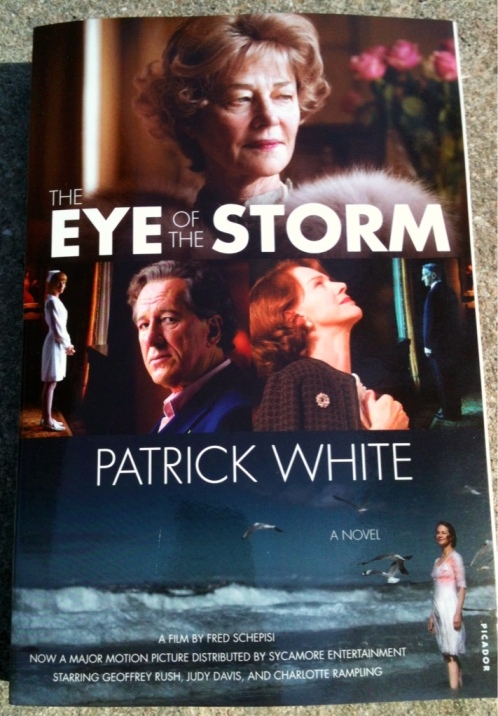
I like the cover of the Adrian, which I only mention here to transition into The Eye of the Storm, the novel that won Patrick White the Nobel in 1973. The book has been adapted into a film, so of course there’s a reissue with a film tie-in cover. (Buzzfeed’s addressed this phenomena recently; I did it a few years ago myself).

20120502-162937.jpg

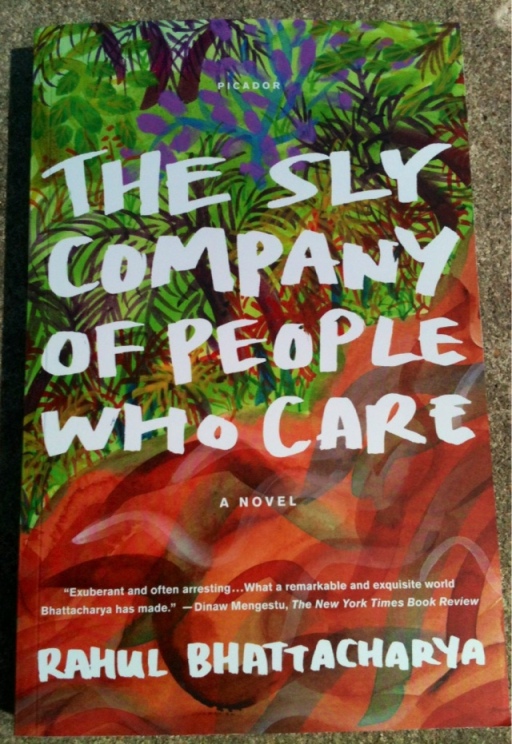
Speaking of covers: Love love love this one for The Sly Company of People Who Care by  Rahul Bhattacharya:

20120502-162952.jpg

Here’s novelist Dinaw Mengestu, from his review in The New York Times:

In the opening paragraph of Rahul Bhattacharya’s first novel, “The Sly Company of People Who Care,” the unnamed narrator, a former cricket journalist from India, declares his intentions for his life, and thus his story — to be a wanderer, or in his words, “a slow ramblin’ stranger.” That rambling, through the forests of Guyana; the ruined streets of its capital, Georgetown; and out to the borders of Brazil and Venezuela, constitutes the novel’s central action. But its heart lies in the exuberant and often arresting observations of a man plunging himself into a world full of beauty, violence and cultural strife.

20120502-163001.jpg

The Kirkus review of Mike Magner’s Poisoned Legacy:

This angry investigative report begins well before the 2010 Deepwater Horizon catastrophe.

In the first chapter, National Journal editor Magner describes a possible cancer epidemic in a Kansas town where refinery wastes have poisoned a wide area and where a courageous retired schoolteacher is fighting an uphill battle to force BP to clean up. Apparently, he had been researching this problem when the Gulf blowout forced him to change the book’s focus, but both stories alternate throughout the narrative. Readers with a taste for heated fist-shaking will have plenty of opportunities as Magner delivers detailed accounts of BP’s mishaps, emphasizing the massive 2005 Texas refinery explosion, leaks and malfunctions along the Alaska pipeline and the Deepwater disaster. Each follows an identical pattern: BP officials cut costs, safety budgets drop, employees grumble and warn of disaster, disaster occurs, individuals who suffered terribly tell their stories and government regulators and the media suddenly show interest, resulting in an outpouring of outrage, investigations, damning reports, fines and apologies from BP executives and the inevitable avalanche of lawsuits. Magner makes a strong case for BP’s negligence and the American government’s feeble oversight, but his case that BP operates less competently than other oil companies is not as convincing. Perhaps wisely, the author makes no argument that Americans are willing to make the painful sacrifices necessary to ensure that these catastrophes never recur. We want oil, and we don’t want it to cost too much.

A relentlessly critical denunciation of the latest environmental disaster that leaves the impression that more will follow.

20120502-163011.jpg

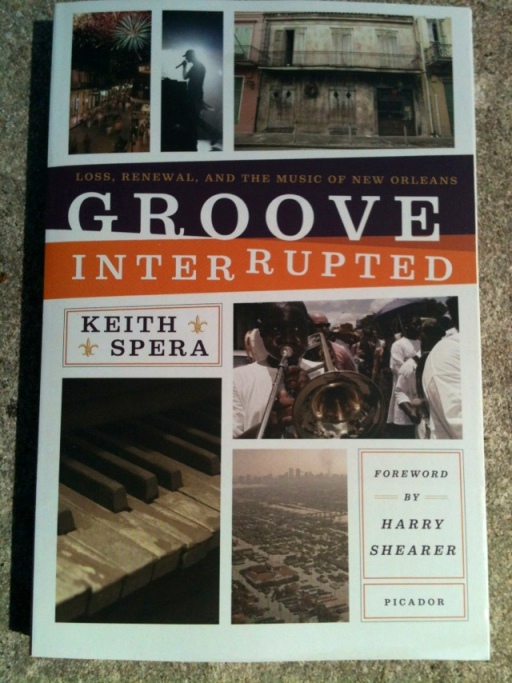
Groove Interrupted immediately piqued my interest and quickly found its way into my stack. Excerpt from Jazz Time’s review:

New Orleans native Spera, a longstanding music writer for The Times-Picayune who was also part of the newspaper’s Pulitzer Prize-winning Hurricane Katrina coverage team, focuses on tales of musicians confronting the challenges of trying to continue to make music in a post-Katrina environment. He covers those displaced New Orleanians forced to seek refuge in Houston, Austin, Nashville and other points around the country in the wake of Hurricane Katrina (known around New Orleans as “the Federal flood”). His profile of the cantankerous, Slidell-based blues guitarist-singer-fiddler Gatemouth Brown, who succumbed to lung cancer shortly after Katrina hit, is particularly moving, as is his eloquent recounting of Aaron Neville’s escape from his beloved hometown in the face of Katrina, his subsequent mourning over the loss of his wife to lung cancer in 2006 and triumphant return to New Orleans in 2008.

Road House Bar Brawls

(Fight Week continues at Biblioklept. Road House (read my essay!) is one of my favorite films of all time).

Books Acquired, Some Time Last Week (Plus Some Garden Shots)

20120502-155420.jpg

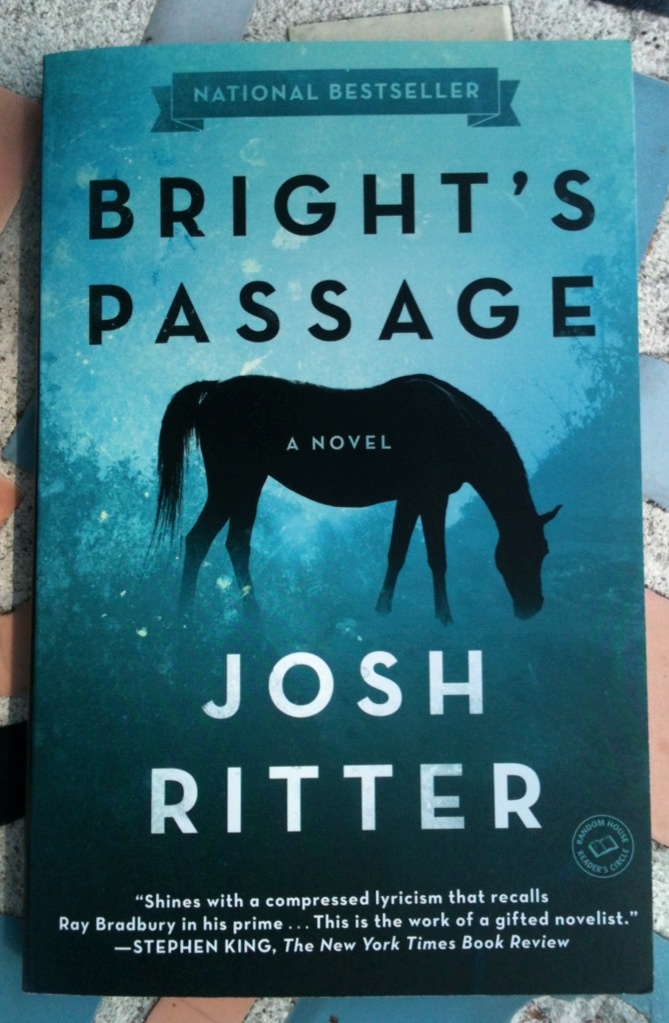
Josh Ritter’s Bright’s Passage is out in trade paperback, featuring a Q&A at the end with Ritter and some guy named Neil Gaiman who used to write comic books or something. Here’s my write up from last year, wherein I quote some guy named Stephen King:

Bright’s Passage is the début novel from songwriter/musician Josh Ritter. This slim novel tells the story Henry Bright, a man who returns to the hills of West Virginia after the trauma of World War I only to have his wife (who is also his first cousin) die in childbirth. Bright buries her body and sets fire to their cabin, which sparks a massive forest fire. Bright then takes his infant son and flees, both from the fire and his unstable father-in-law, “The Colonel,” a vet of America’s adventures in the Philippines who still wears his uniform. The Colonel and his crazy sons pursue Bright, who is guided on the lam by the angel who talks to him—yeah, an angel directs Bright; in fact it was the angel’s idea that Bright marry his cousin, burn down his cabin, and run . . . also, the angel swears that Bright’s son is going to be, like, the new Messiah. Also, Bright’s horse talks. Ritter moves the action between Bright’s flight, his ordeal in WWI, and his youth in simple, concrete, declarative prose. There are echoes here of Chris Adrian’s angel stories (The Children’s Hospital and A Better Angel), and perhaps something of a Cormac McCarthy-lite vibe. Here’s an excerpt from obscure author Stephen King’s review in the Times

At its best, “Bright’s Passage” shines with a compressed lyricism that recalls Ray Bradbury in his prime. When Henry, his talking horse — a kind of holy Mr. Ed — and the Future King of Heaven leave the woods and enter a small town, Ritter writes: “It seemed a tidy place of dappled white houses and American flags. . . . Even the trees here seemed to have a kind of deep green and prepossessing prosperity that the trees of the forest could have no share in.” Recalling his mother’s death, Henry remembers “a windstorm that made the trees bow to one another like ballroom dancers.” More striking still are Henry’s memories of life in the trenches, some of which compare favorably to the prose in Mark Helprin’s “Soldier of the Great War”: “Artillery passed high above their heads in singsong trajectories that merged and lifted with one another into strange musical chords, like cats crossing pump organs.”

And here’s a tomato from my spring garden:

20120502-155432.jpg

20120502-155445.jpg

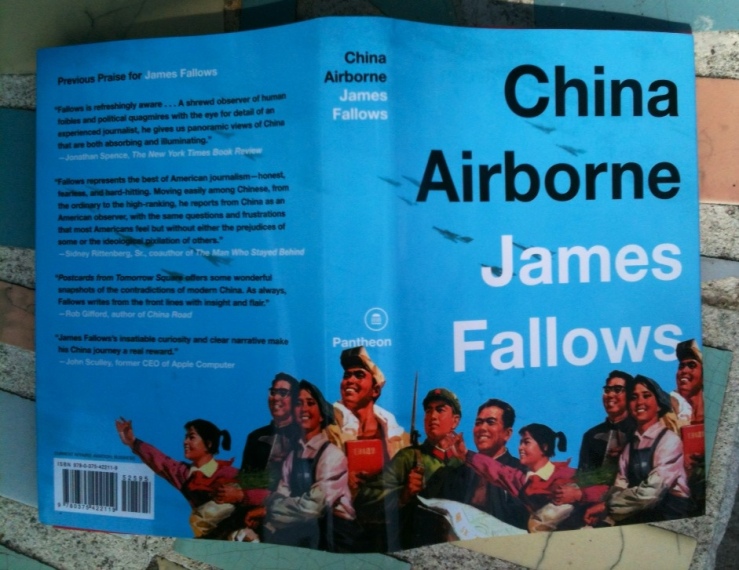
Nice cover on China Airborne, a book about the rise of Chinese industry by James Fallows. Pantheon’s write up:

More than two-thirds of the new airports under construction today are being built in China. Chinese airlines expect to triple their fleet size over the next decade and will account for the fastest-growing market for Boeing and Airbus. But the Chinese are determined to be more than customers. In 2011, China announced its Twelfth Five-Year Plan, which included the commitment to spend a quarter of a trillion dollars to jump-start its aerospace industry. Its goal is to produce the Boeings and Airbuses of the future. Toward that end, it acquired two American companies: Cirrus Aviation, maker of the world’s most popular small propeller plane, and Teledyne Continental, which produces the engines for Cirrus and other small aircraft.

In China Airborne, James Fallows documents, for the first time, the extraordinary scale of this project and explains why it is a crucial test case for China’s hopes for modernization and innovation in other industries. He makes clear how it stands to catalyze the nation’s hyper-growth and hyper- urbanization, revolutionizing China in ways analogous to the building of America’s transcontinental railroad in the nineteenth century. Fallows chronicles life in the city of Xi’an, home to more than 250,000 aerospace engineers and assembly workers, and introduces us to some of the hucksters, visionaries, entrepreneurs, and dreamers who seek to benefit from China’s pursuit of aerospace supremacy. He concludes by examining what this latest demonstration of Chinese ambition means for the United States and the rest of the world—and the right ways to understand it.

Some not-quite-ripe blackberries from my garden:

20120502-155455.jpg

20120502-155504.jpg

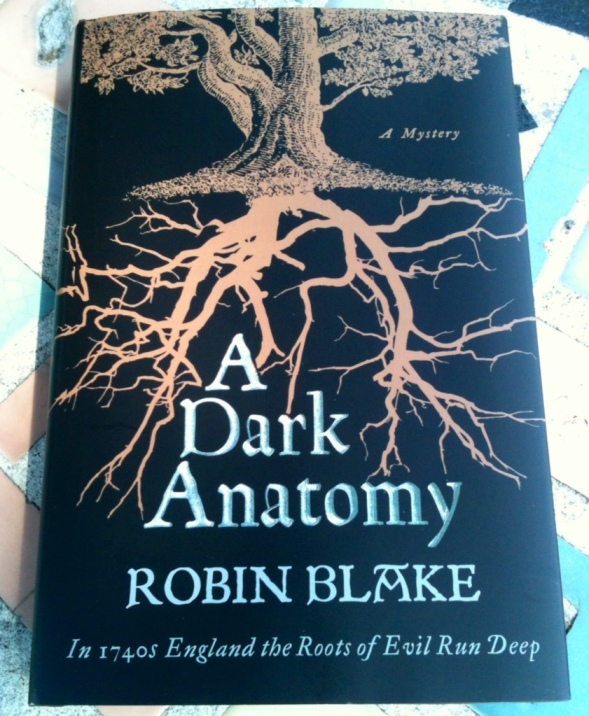
 I like the cover on this one too, a historical mystery by Robin Blake called A Dark Anatomy (and I know someone who might like this book for a present). From Blake’s site:

Mid-Georgian Preston was one of England’s ancient self-governing charter towns, pleasantly and strategically located in the heart of Lancashire, with a thriving agricultural market, and a significant concentration of craft workers amongst its stable population of below 5,000. In the 1600s the town gradually became Lancashire’s prime social and legal centre, and remained so until industrialization transformed and disfigured the town at the end of the century, turning it into the grimy and overcrowded manufactory that Charles Dickens called Coketown, the setting for Hard Times.  Today hardly anything pre-Victorian remains except the medieval street-plan around the central area: the three principle streets of Church Gate (now Church Street), Friar Gate and Fisher Gate,  leading away from the focal point of the flagged market and the site of the old timber-framed Moot Hall, where a 1960s office block of remarkable ugliness now stands.

Politically, like most other borough towns, Georgian Preston was an oligarchy. The council’s 24 members (or burgesses) appointed each other and parceled out the senior offices, including the Mayor and two Bailiffs, annually between themselves. Charter towns like this were virtual city-states where (in Tom Paine’s scathing words) a man’s “rights are circumscribed to the town and, in some cases, to the parish of his birth; and all other parts, though in his native land, are to him as a foreign country”.  These communities reserved the right to run their own affairs, and keep outsiders away at all costs.

I take a few liberties with details of local administration, not least in the Coroner’s office. In historical Preston the unusual custom was for the annually appointed  Mayor to sit as Coroner ex officio. But I wanted my investigator to stand apart from local politics, so I have imposed the more usual model whereby the Coroner was a Crown appointment with life-tenure, and independent of the Corporation. My other inventions in A Dark Anatomy include Garlick Hall, the nearby village of Yolland, and most of the cast of characters.

And here’s a white eggplant from my garden:

20120502-155540.jpg

David Foster Simpson

(About/via).

Map of St. Augustine, 1589

Hand-colored engraved map of St. Augustine by Baptista Boazio, 1589.