Milton’s Mysterious Dream — William Blake

Reviews and riffs of May 2015 (and an unrelated owl)

Reviews and riffs, May 2015

In which I read Playboy for the Pynchon article.

This is not a review of Lydia Davis’s Can’t and Won’t.

What the hell is Pynchon in Public Day?

A review of Jim O’Rourke’s new record Simple Songs.

Han Kang’s The Vegetarian reviewed.

A somewhat contrarian take on Mad Max: Fury Road.

Mad Men’s cynical finale.

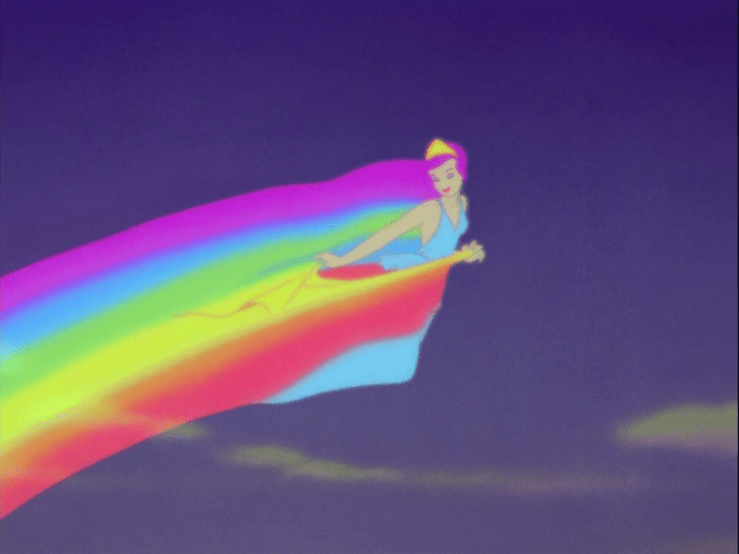
Gravity’s Rainbow and Disney’s Fantasia.

Unrelated owl by Durer:


They Live — Jason Edmiston

They-Live-final

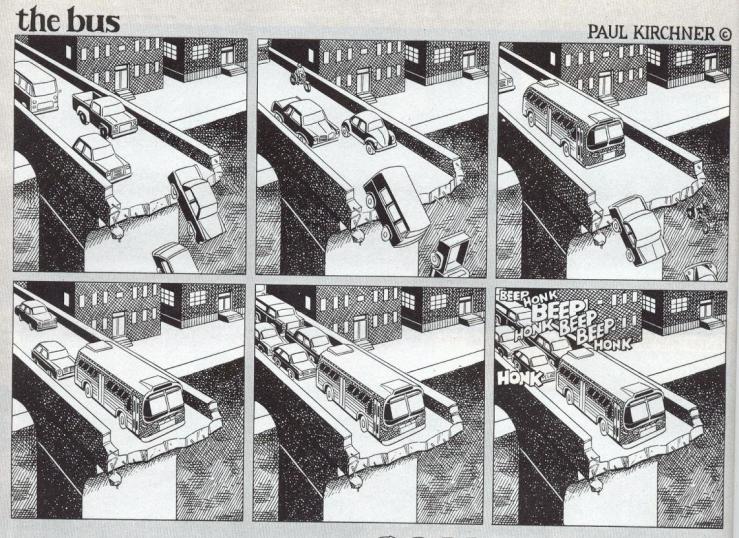
The Bus — Paul Kirchner

Bv6p36r - Imgur

Ghosts along the Mississippi — Clarence John Laughlin

ccf10082010_00001

A last riff (for now) on Gravity’s Rainbow (and Disney’s Fantasia)

Screenshot 2015-04-24 at 9.27.30 PM

Disney’s Fantasia is one of the better film adaptations of Thomas Pynchon’s novel Gravity’s Rainbow. 

At least this thought zipped into my head a few weeks back, as I watched the film with my wife and kids. I was in the middle of a second reading of the novel, an immediate rereading prompted by the first reading. It looped me back in. Everything seemed connected to the novel in some way. Or rather, the novel seemed to connect itself to everything, through its reader—me—performing a strange dialectic of paranoia/anti-paranoia.

So anyway, Fantasia seemed to me an adaptation of Gravity’s Rainbow, bearing so many of the novel’s features: technical prowess, an episodic and discontinuous form, hallucinatory dazzle, shifts between “high” and “low” culture, parodic and satirical gestures that ultimately invoke sincerity, heightened musicality, themes of magic and science, themes of automation and autonomy, depictions of splintering identity, apocalypse and genesis, cartoon elasticity, mixed modes, terror, love, the sublime, etc.

(There’s even a coded orgy in Fantasia).

But Fantasia was first released in 1940 right, when Pynchon was, what, three or four? And Gravity’s Rainbow was published in 1973, and most of the events in that novel happen at the end of World War II, in like, 1944, 1945, right? So the claim that “Fantasia is one of the better film adaptations of Gravity’s Rainbow” is ridiculous, right?

(Unless, perhaps, we employ those literary terms that Steven Weisenburger uses repeatedly in his Companion to Gravity’s Rainbow: analepsis and prolepsis—so, okay, so perhaps we consider Fantasia an analepsis, a flashback, of Gravity’s Rainbow, or we consider Gravity’s Rainbow a prolepsis, a flashforward, of Fantasia…no? Why not?).

Also ridiculous in the claim that “Fantasia is one of the better film adaptations of Gravity’s Rainbow” is that modifier “better,” for what other film adaptations of Gravity’s Rainbow exist?

(The list is long and mostly features unintentional titles, but let me lump in much of Robert Altman, The Conversation, Richard Kelly’s Southland Tales, Paul Thomas Anderson’s The Master, that Scientology documentary Going Clear, a good bit of stuff by the Wachowksis, The Fisher King (hell, all of Terry Gilliam, why not?), the Blackadder series, which engenders all sorts of wonderful problems of analepsis and prolepsis…).

Gravity’s Rainbow is of course larded with film references, from King Kong and monster movies to German expressionism (Fritz Lang in particular), and features filmmakers and actors as characters. The novel also formulates itself as its own film adaptation, perhaps. The book’s fourth sentence tells us “…it’s all theatre.” (That phrase appears again near the novel’s conclusion, in what I take to be a key passage). And the book ends, proleptically, in “the Orpheus Theatre on Melrose,” a theater managed by Richard M. Nixon, excuse me, Zhlubb—with the rocket analeptically erupting from the past into “The screen…a dim page spread before us, white and silent.” Indeed, as so many of the book’s commentator’s have noted, Pynchon marks separations in the book’s sequences with squares reminiscent of film sprockets —  □ □ □ □ □ □ □. Continue reading “A last riff (for now) on Gravity’s Rainbow (and Disney’s Fantasia)”

Orpheus and Eurydice — George Frederick Watts

“Gorse Is Not People,” a short story by Janet Frame

“Gorse Is Not People”

by

Janet Frame


Do you remember your twenty-first birthday? The party, the cake, and cutting a slice of it to put under your pillow that night, to make you dream of your future beloved; the giant key; the singing:

I’m twenty-one today!

Twenty-one today!

I’ve got the key of the door!

Never been twenty-one before!

Trivial, obvious words. Yet when the party was over and you lay in bed remembering the glinting key and the shamrock taste of the small glass of wine, and perhaps the taste of a sneaked last kiss in the dark, then the song seemed not trivial or obvious but a poetic statement of a temporal wonder. You had, as they say, attained your majority. You could vote in the elections; you could leave home against your parents’ wishes; you could marry in defiance of all opposition. You had crossed a legal border into a free country, and you now walked equipped with a giant tinsel key, a cardboard key covered with threepenny spangles.

Or perhaps your twenty-first birthday did not happen that way. Perhaps there was no party, no cake, no wine, and no kiss? I would like to tell you about Naida’s twenty-first birthday.

Naida was a dwarf, which is not really a rare thing. I suppose in our lifetime we see many dwarves—first, perhaps, at the circus, where they are advertised as the tiniest people in the world and we pay to watch them moving about in their almost walnut-shell or matchbox beds. Sometimes we pass them in the street and stare hard for a moment, then pretend we haven’t seen them, until they have passed us and we look back, saying, “It must be strange, how strange it must be, such tiny folk, and us out of reach, like tall trees!” Continue reading ““Gorse Is Not People,” a short story by Janet Frame”

Solitaire — Felix Vallotton

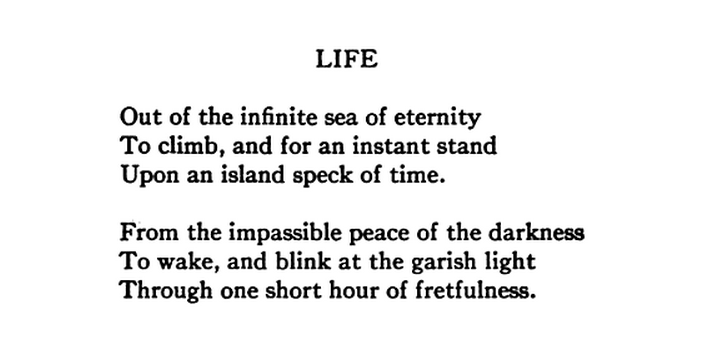
“Life” — James Weldon Johnson

Screenshot 2015-05-29 at 5.48.43 PM

Portrait of a Gentleman in His Study — Lorenzo Lotto

“A Geometric” — Sam Prekop

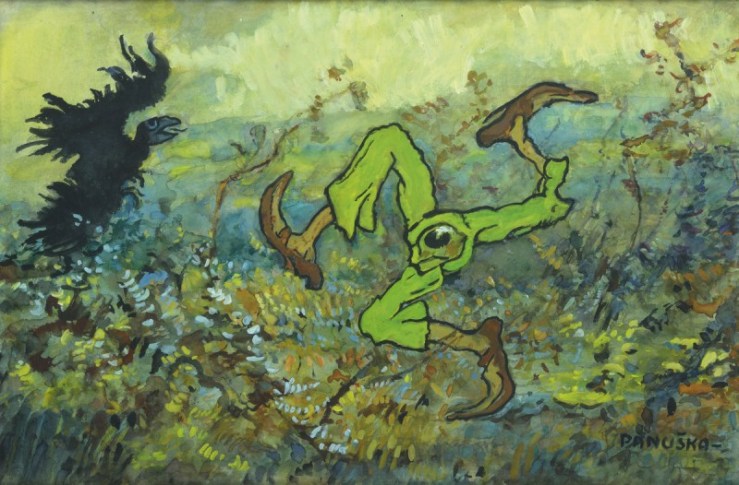
Triskelion — Jaroslav Panuška

jaroslav-panuska-triskelion-1908-1910-2014-04-15-800x526

“The devil suffered from ennui” | Read Maxim Gorky’s short tale “The Devil”

“The Devil”

by

Maxim Gorky

English translation by Leo Wiener


Life is a burden in the Fall,—the sad season of decay and death!

The grey days, the weeping, sunless sky, the dark nights, the growling, whining wind, the heavy, black autumn shadows—all that drives clouds of gloomy thoughts over the human soul, and fills it with a mysterious fear of life where nothing is permanent, all is in an eternal flux; things are born, decay, die … why? … for what purpose?…

Sometimes the strength fails us to battle against the tenebrous thoughts that enfold the soul late in the autumn, therefore those who want to assuage their bitterness ought to meet them half way. This is the only way by which they will escape from the chaos of despair and doubt, and will enter on the terra firma of self-confidence.

But it is a laborious path, it leads through thorny brambles that lacerate the living heart, and on that path the devil always lies in ambush. It is that best of all the devils, with whom the great Goethe has made us acquainted….

My story is about that devil.


The devil suffered from ennui.

He is too wise to ridicule everything.

He knows that there are phenomena of life which the devil himself is not able to rail at; for example, he has never applied the sharp scalpel of his irony to the majestic fact of his existence. To tell the truth, our favourite devil is more bold than clever, and if we were to look more closely at him, we might discover that, like ourselves, he wastes most of his time on trifles. But we had better leave that alone; we are not children that break their best toys in order to discover what is in them. Continue reading ““The devil suffered from ennui” | Read Maxim Gorky’s short tale “The Devil””

Heaven and Earth Magic