Three Books

IMG_0620

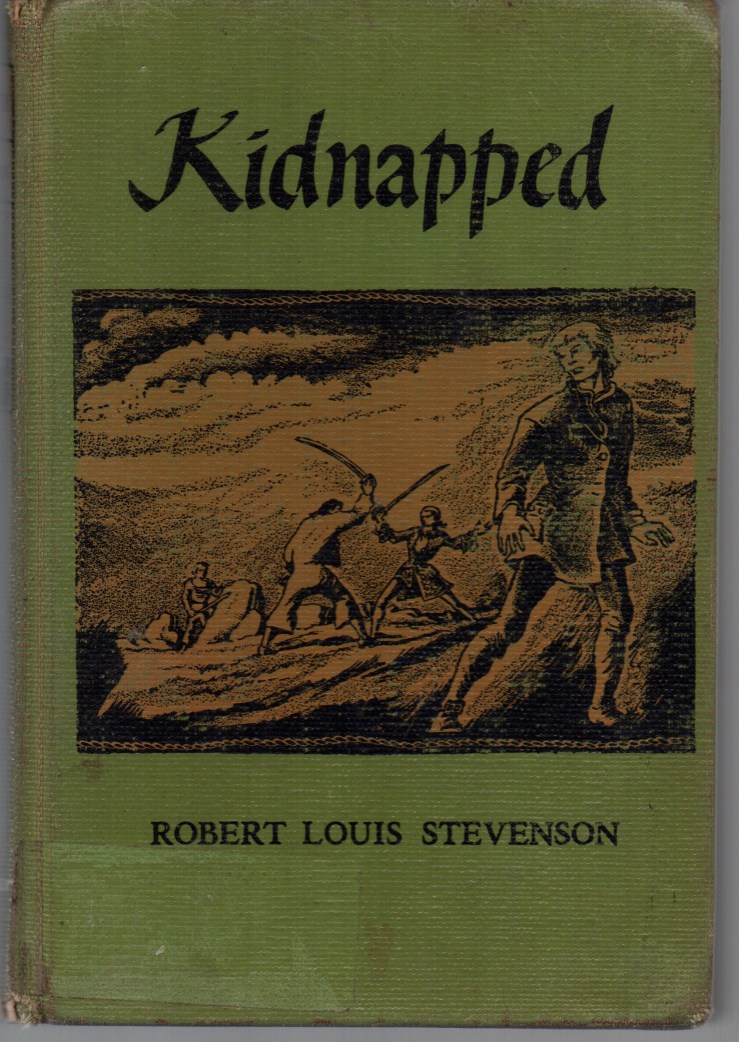
Kidnapped by Robert Louis Stevenson. 1948 Grosset & Dunlop hardback. The designer credit goes to Oscar Ogg, but the dark and often violent images (many in full color) are by Lynd Ward.
IMG_0621

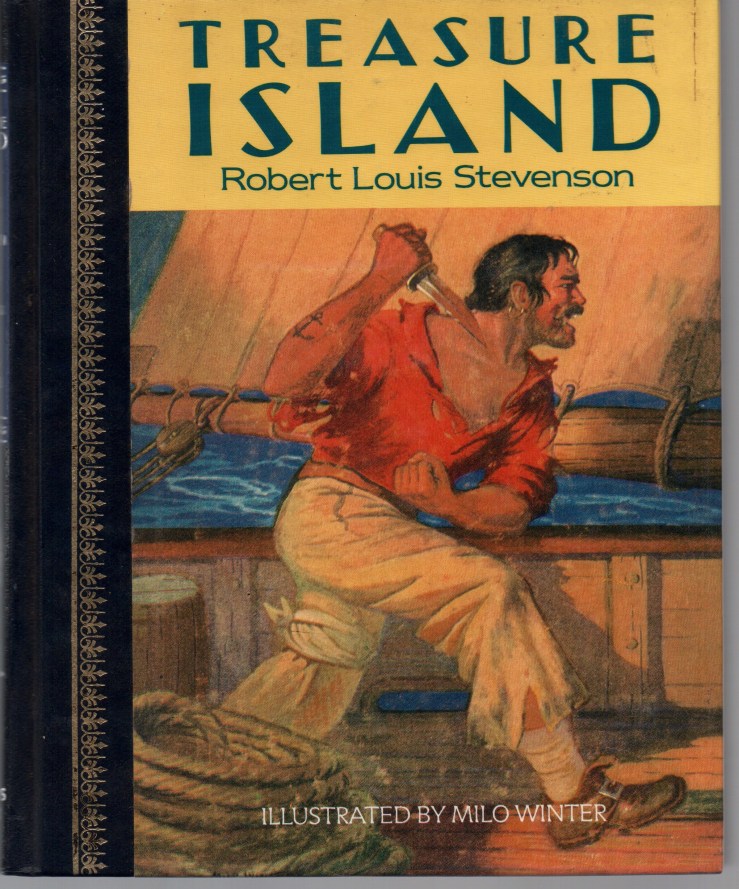
Treasure Island by Robert Louis Stevenson. A 1986 oversized hardback edition from dilithium Press. No designer credited, but he illustrations are by Milo Winter (from a 1915 edition, actually).IMG_0623

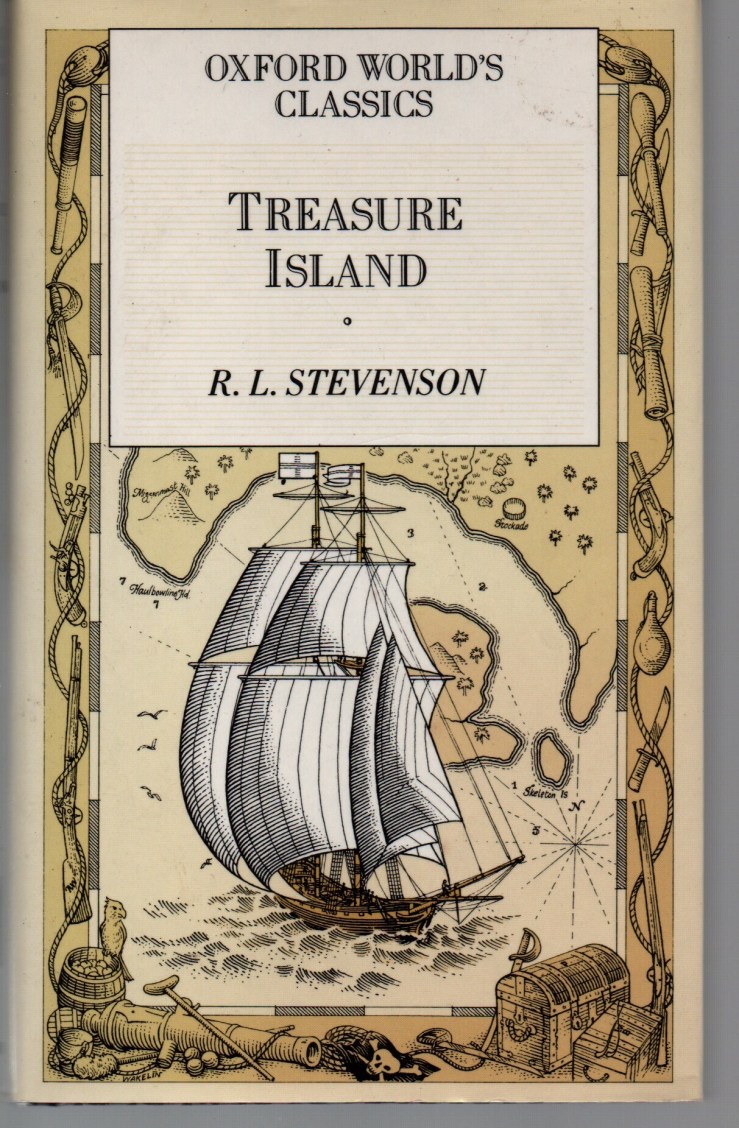
Treasure Island by Robert Louis Stevenson. A tiny little pocket hardback edition by Hamlyn Publishing/ Chancellor Press (1987). No designer credited, but the cover illustration is by Arthur Wakelin. There’s an inscription on the first page from my grandparents, who gave me the book in 1989.

Two graphic novels about Paris reviewed: 750 Years in Paris and The Spectators

IMG_0534

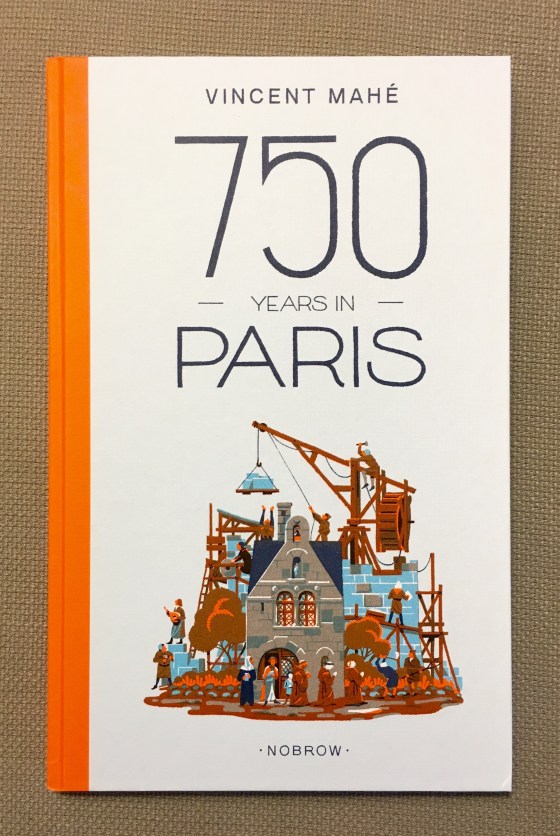
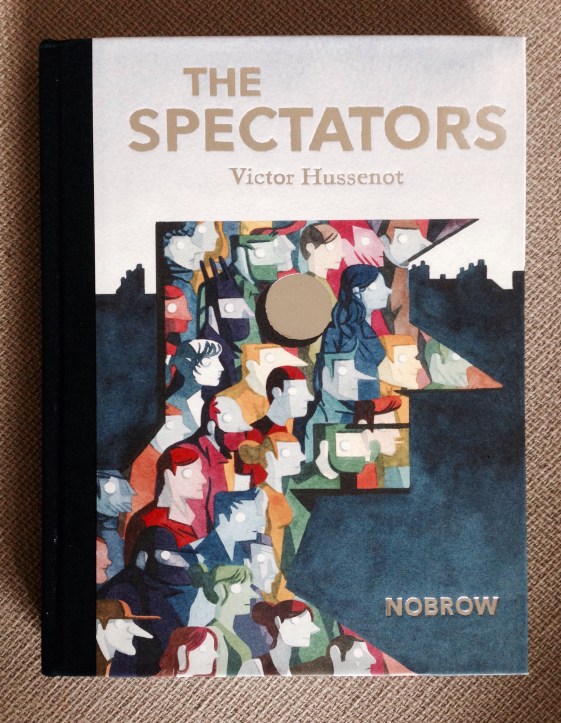
Two new(ish) graphic novels from Nobrow, Vincent Mahé’s 750 Years in Paris and Victor Hussenot’s The Spectators, showcase Paris as an enduring site of progression, turbulence, and renewal, both in culture and consciousness. Mahé’s 750 Years in Paris is a time-machine, putting its viewer in a stationary position to observe the dramatic changes in one building—and French society and culture—over the course of nearly a millennium. Hussenot’s The Spectators is a dream-machine, shuttling its characters through different skins, faces, and eyes. The titular spectators transcend not only time and space, but mind. Both books attest to the power of transformation while subtly noting the various forces that shape identity.

IMG_0614

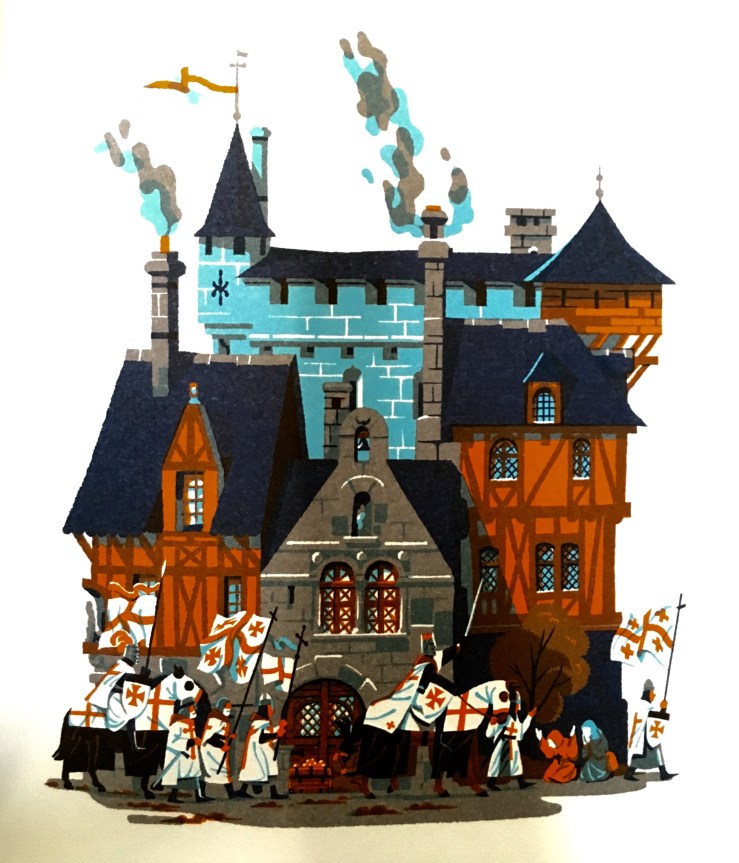
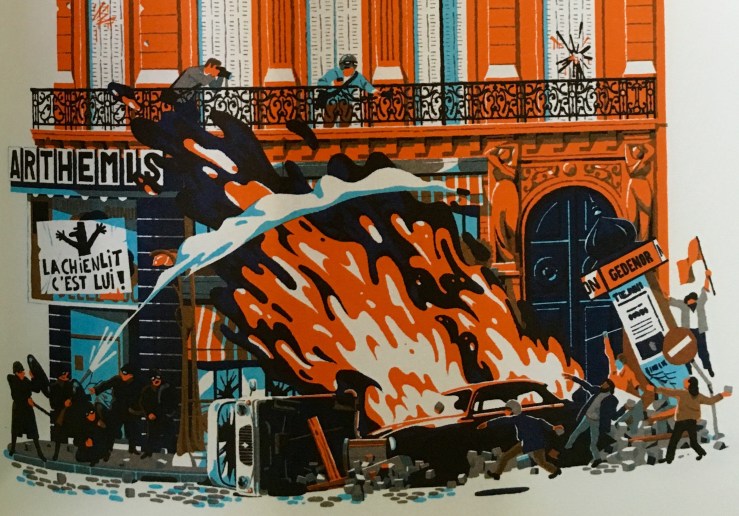
Vincent Mahé’s 750 Years in Paris begins in 1265 and moves its viewer through time to 2015. The book takes us through the Black Death Plague and the 100 Years War, the reigns of Louis XIV and IV, the storming of the Bastille and the Reign of Terror, Napoleon and Hausmann, a grand Metro and a terrible Flood. The second shot in this chronology shows us a Knights Templar procession in 1270. The crusaders remind us that Western history is inextricably bound in violence, religion, and territorial expansion—but also in the exchange of ideas, information, and knowledge. We get to May 1968 with a strong visual context for France’s history of intellectual turbulence.

IMG_0613The book ends in 2015; I’ll let Mahé’s image speak for itself:
IMG_0612

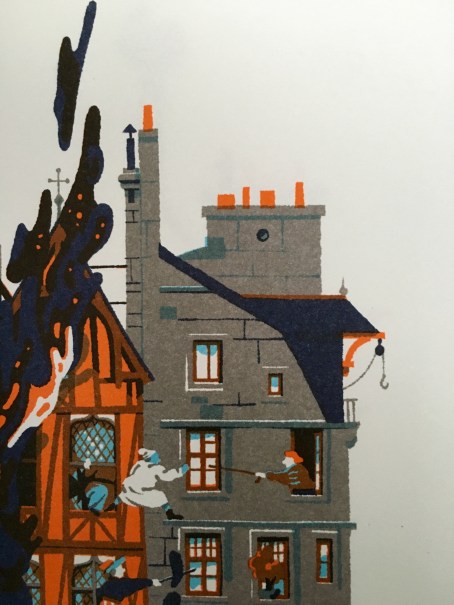
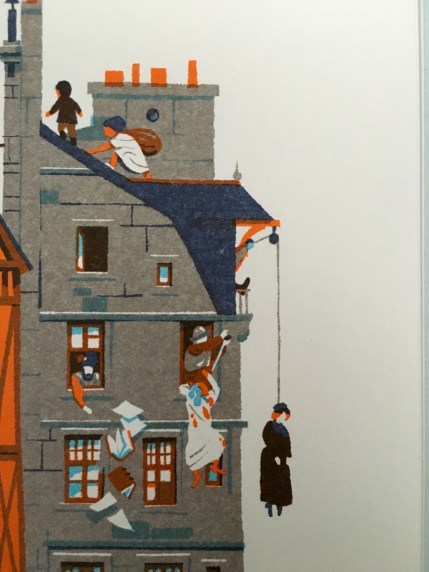
750 Years in Paris shows us that Paris not only survives drastic change, but progresses in the face of violence. When we see, for example, that a winch has been used to hang a Protestant during the St. Bartholomew’s Day Massacre of 1572—

IMG_0615

—it’s worth noting that on the next page, neighbors help each other during a terrible fire. The winch remains in the picture, a visual motif of progress, of building up.IMG_0617

image

Like every Nobrow title I’ve read, Victor Hussenot’s The Spectators is better experienced than described. Its aesthetic is its narrative and its narrative is its aesthetic, flowing from a lovely dream-logic of identity shifts. Who shall I be today?, the book asks.

IMG_0608

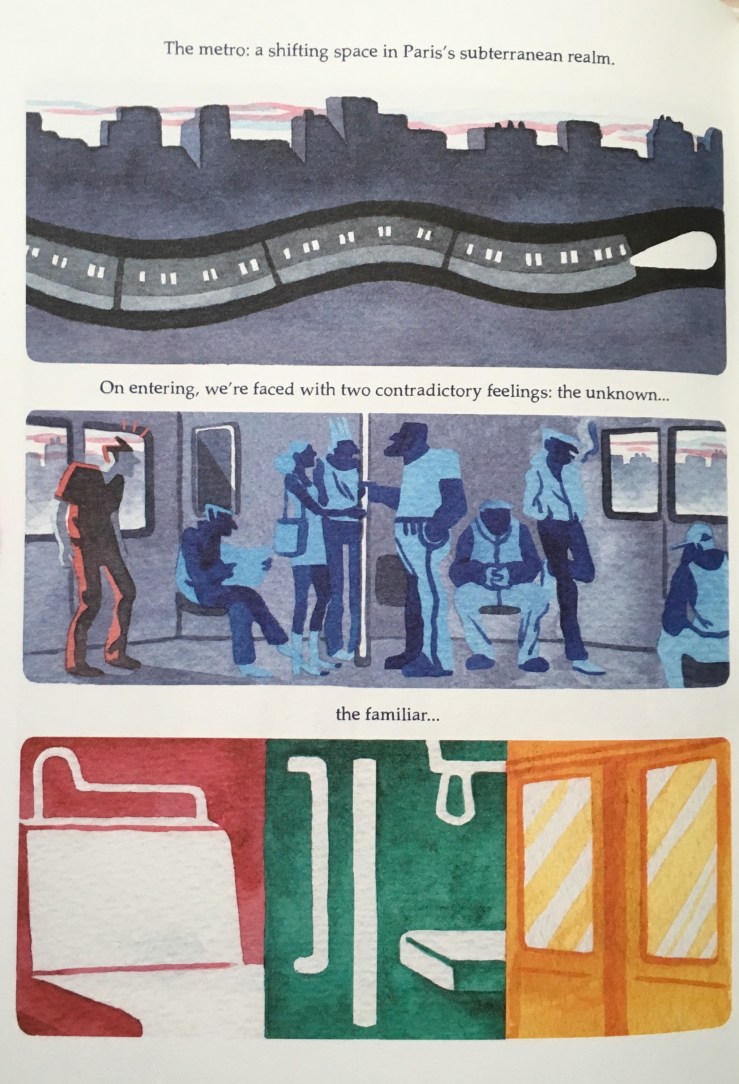
The titular spectators try on different skins, wear different hats, look through different eyes. Paris’s metro becomes a labyrinth dream-lab, where the spectators create the world anew by synthesizing known with unknown:IMG_0609

This vision of synthesis carries the narrative through a poetic examination of individuality and society. How much of me is me? Hussenot frames his characters in the geometry of picture puzzles, only to blur the borders that would constrain them.

It’s possible to imagine the spectators of Hussenot’s book gazing on Mahé’s ever-changing Paris building. Or, conversely, we can take Mahé’s building as one of Hussenot’s spectators—another shapeshifter in a city of shapeshifters.

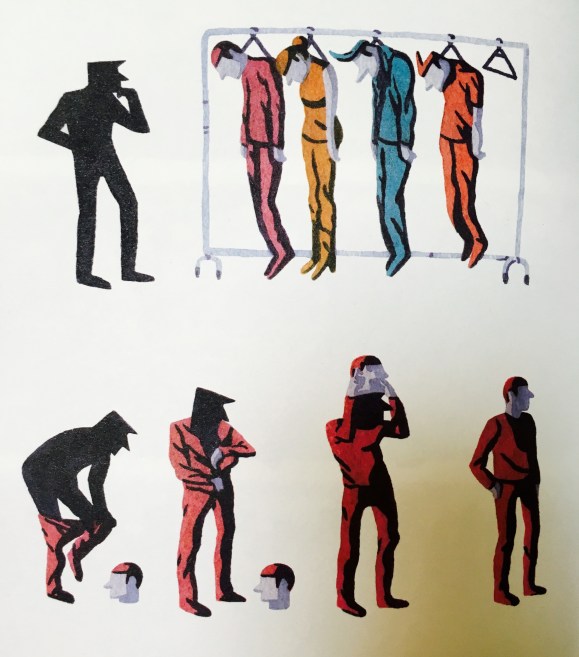
I’ll close with an image from The Spectators that points towards a dream of synthesis, of infinite perspective, of unity. We have here not just a dream, but a vision of progress:

IMG_0610

Paris at Night — Boris Kustodiev

Champs Elysées, Paris — Andre Kertesz

View of Paris from Vincent’s Room in the Rue Lepic — Vincent van Gogh

Le Guin, Stapledon, and the Brothers Strugatski (Books acquired, 11.13.2015)

IMG_0592

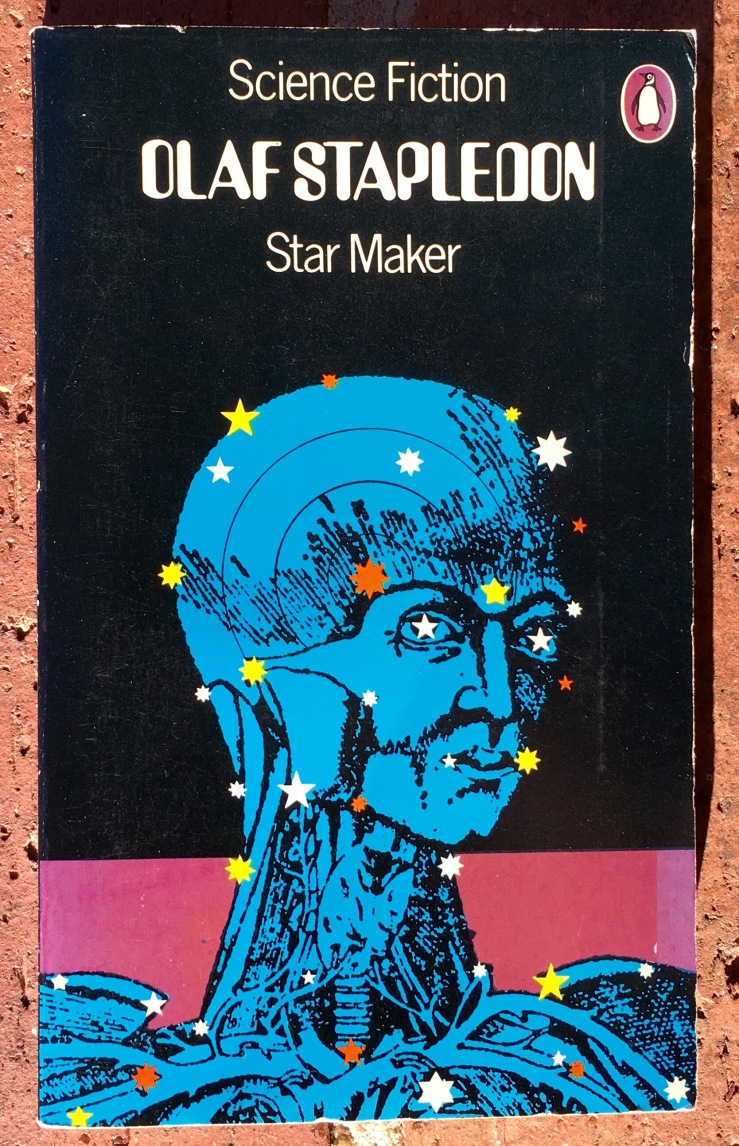
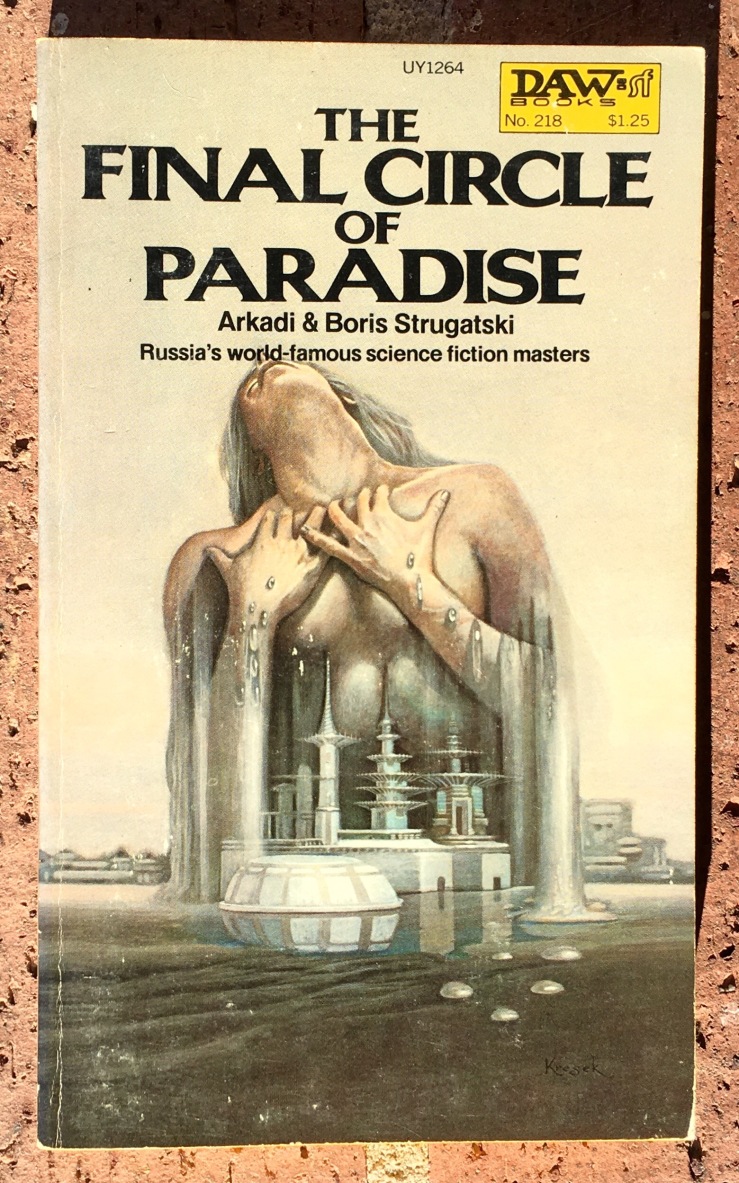
I like to think I know my way around the labyrinthine used bookstore I frequently frequent, but I somehow missed the “Ls” of the Sci-Fi/Fantasy section and wound up in Misc S. I was headed to the “Ls” to pick up another Ursula K. Le Guin novel, after having finished Rocannon’s Worlthis afternoon. (I was looking not-so-specifically for The Word for World Is Forest, which my bookshop somehow didn’t have). Anyway, my eye was drawn to the Penguin edition of Olaf Stapledon’s Star Maker (above), which was one of those yeah, I know, I need to read it books. I also saw another one by the Strugatski bros, which I picked up, even though I still haven’t read Hard to Be a God.
IMG_0593

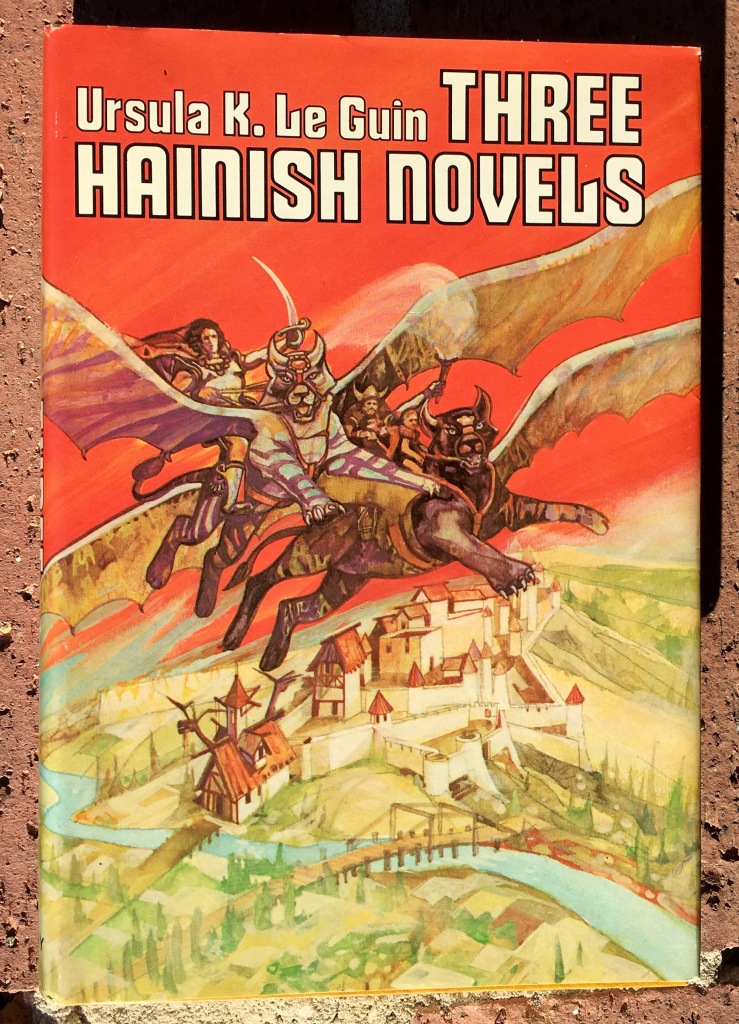
I couldn’t resist this hardback edition of Three Hainish Novels, an Ursula K. Le Guin omnibus, which collects Rocannon’s World with Planet of Exile and City of Illusion. I haven’t read the other two, but I’ll get to them after a rereading of The Dispossessed. IMG_0595

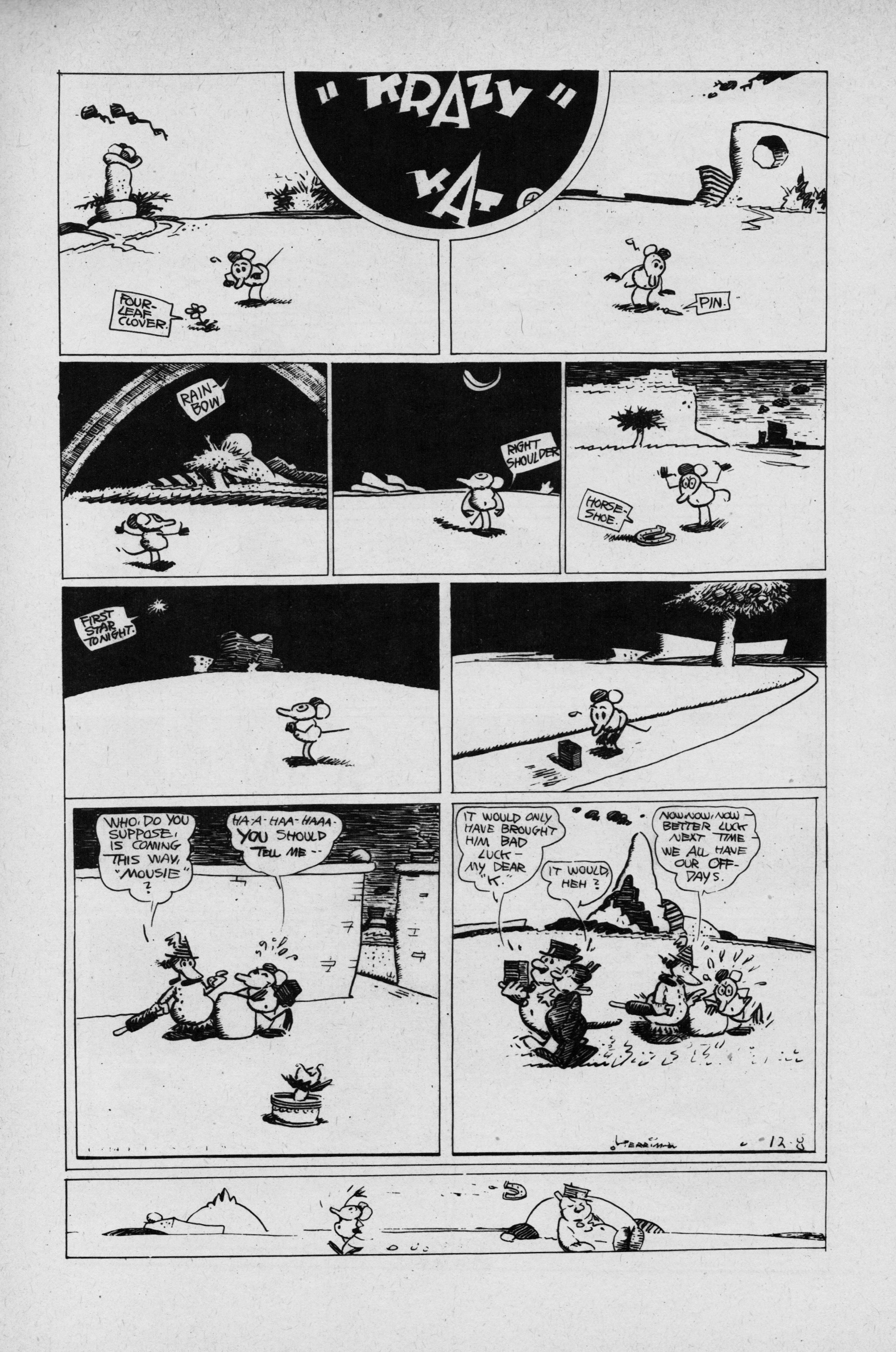
Bad Luck (George Herriman’s Krazy Kat)

IMG_0591

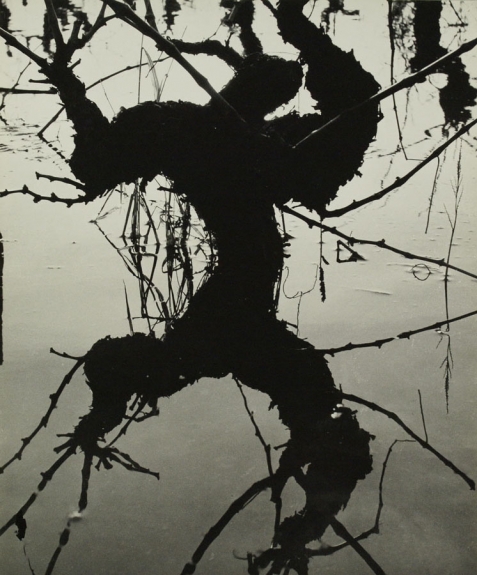
Camargue / Vignes inondees, Fourques — Lucien Clergue

clergue_vignes-vines_575

Robert Louis Stevenson on the Ten Commandments

From Lay Morals (1879) by Robert Louis Stevenson


But, I may be told, we teach the ten commandments, where a world of morals lies condensed, the very pith and epitome of all ethics and religion; and a young man with these precepts engraved upon his mind must follow after profit with some conscience and Christianity of method.  A man cannot go very far astray who neither dishonours his parents, nor kills, nor commits adultery, nor steals, nor bears false witness; for these things, rightly thought out, cover a vast field of duty.

Alas! what is a precept?  It is at best an illustration; it is case law at the best which can be learned by precept.  The letter is not only dead, but killing; the spirit which underlies, and cannot be uttered, alone is true and helpful.  This is trite to sickness; but familiarity has a cunning disenchantment; in a day or two she can steal all beauty from the mountain tops; and the most startling words begin to fall dead upon the ear after several repetitions.  If you see a thing too often, you no longer see it; if you hear a thing too often, you no longer hear it.  Our attention requires to be surprised; and to carry a fort by assault, or to gain a thoughtful hearing from the ruck of mankind, are feats of about an equal difficulty and must be tried by not dissimilar means.  The whole Bible has thus lost its message for the common run of hearers; it has become mere words of course; and the parson may bawl himself scarlet and beat the pulpit like a thing possessed, but his hearers will continue to nod; they are strangely at peace, they know all he has to say; ring the old bell as you choose, it is still the old bell and it cannot startle their composure.  And so with this byword about the letter and the spirit.  It is quite true, no doubt; but it has no meaning in the world to any man of us.  Alas! it has just this meaning, and neither more nor less: that while the spirit is true, the letter is eternally false.

The shadow of a great oak lies abroad upon the ground at noon, perfect, clear, and stable like the earth.  But let a man set himself to mark out the boundary with cords and pegs, and were he never so nimble and never so exact, what with the multiplicity of the leaves and the progression of the shadow as it flees before the travelling sun, long ere he has made the circuit the whole figure will have changed.  Life may be compared, not to a single tree, but to a great and complicated forest; circumstance is more swiftly changing than a shadow, language much more inexact than the tools of a surveyor; from day to day the trees fall and are renewed; the very essences are fleeting as we look; and the whole world of leaves is swinging tempest-tossed among the winds of time.  Look now for your shadows.  O man of formulæ, is this a place for you?  Have you fitted the spirit to a single case?  Alas, in the cycle of the ages when shall such another be proposed for the judgment of man?  Now when the sun shines and the winds blow, the wood is filled with an innumerable multitude of shadows, tumultuously tossed and changing; and at every gust the whole carpet leaps and becomes new.  Can you or your heart say more?

Look back now, for a moment, on your own brief experience of life; and although you lived it feelingly in your own person, and had every step of conduct burned in by pains and joys upon your memory, tell me what definite lesson does experience hand on from youth to manhood, or from both to age?  The settled tenor which first strikes the eye is but the shadow of a delusion.  This is gone; that never truly was; and you yourself are altered beyond recognition.  Times and men and circumstances change about your changing character, with a speed of which no earthly hurricane affords an image.  What was the best yesterday, is it still the best in this changed theatre of a to-morrow?  Will your own Past truly guide you in your own violent and unexpected Future?  And if this be questionable, with what humble, with what hopeless eyes, should we not watch other men driving beside us on their unknown careers, seeing with unlike eyes, impelled by different gales, doing and suffering in another sphere of things?

And as the authentic clue to such a labyrinth and change of scene, do you offer me these two score words? these five bald prohibitions?  For the moral precepts are no more than five; the first four deal rather with matters of observance than of conduct; the tenth, Thou shalt not covet, stands upon another basis, and shall be spoken of ere long.  The Jews, to whom they were first given, in the course of years began to find these precepts insufficient; and made an addition of no less than six hundred and fifty others!  They hoped to make a pocket-book of reference on morals, which should stand to life in some such relation, say, as Hoyle stands in to the scientific game of whist.  The comparison is just, and condemns the design; for those who play by rule will never be more than tolerable players; and you and I would like to play our game in life to the noblest and the most divine advantage.  Yet if the Jews took a petty and huckstering view of conduct, what view do we take ourselves, who callously leave youth to go forth into the enchanted forest, full of spells and dire chimeras, with no guidance more complete than is afforded by these five precepts?

Honour thy father and thy mother.  Yes, but does that mean to obey? and if so, how long and how far?  Thou shall not kill.  Yet the very intention and purport of the prohibition may be best fulfilled by killing.  Thou shall not commit adultery.  But some of the ugliest adulteries are committed in the bed of marriage and under the sanction of religion and law.  Thou shalt not bear false witness.  How? by speech or by silence also? or even by a smile?  Thou shalt not steal.  Ah, that indeed!  But what is to steal? Continue reading “Robert Louis Stevenson on the Ten Commandments”

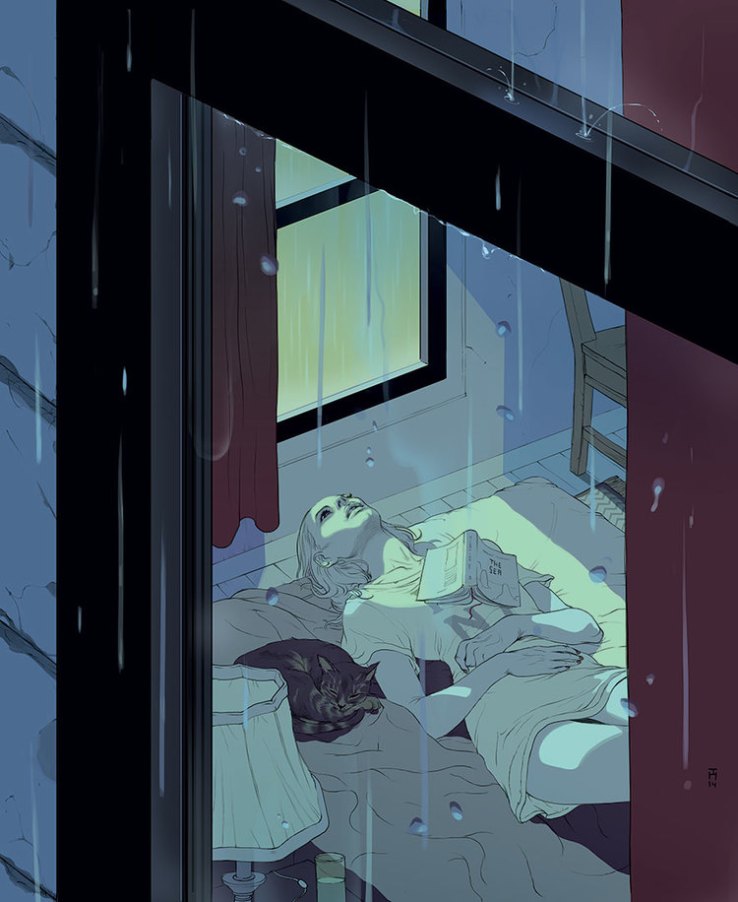
The Sea — Tomer Hanuka

the_sea_bleed_72

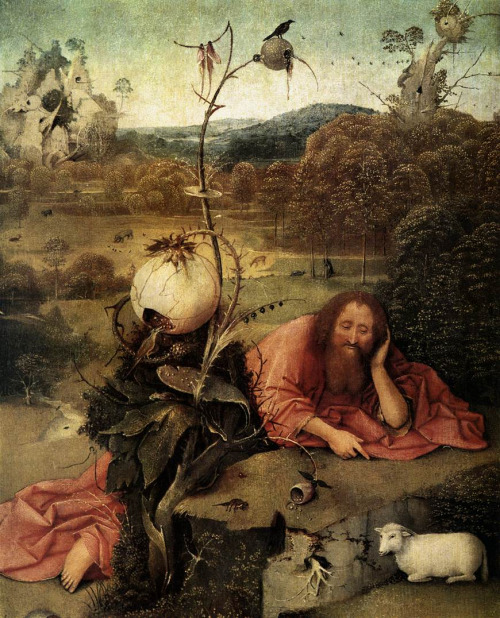
St John the Baptist in the Wilderness — Hieronymus Bosch

tumblr_lu7g0qJnFW1qzix81o1_500

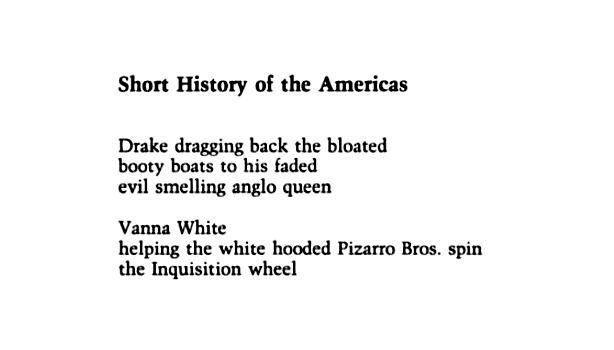
“Short History of the Americas” — Tom Clark

tc

Lovers with Cat — Oskar Kokoschka

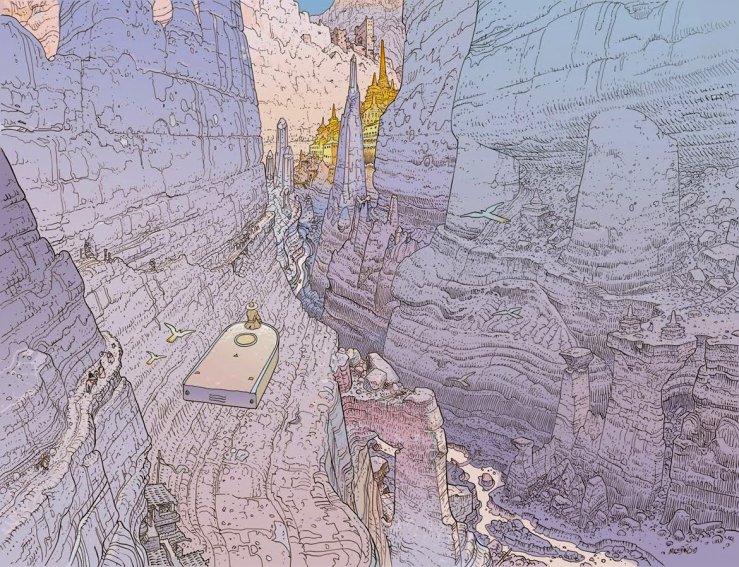
Voyage d’Hermès — Moebius

Moebius-VoyageHermes-1

“The Star” — H.G. Wells

The Graphic 25/12/1897, Christmas Issue p.18
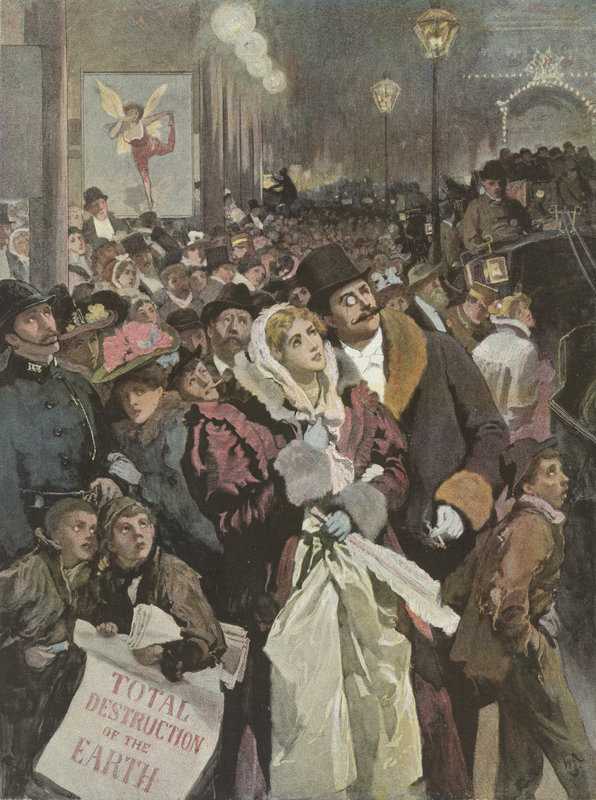
Illustration to Wells’s “The Star” by Ludek Marold

“The Star”

by

H.G. Wells


It was on the first day of the New Year that the announcement was made, almost simultaneously from three observatories, that the motion of the planet Neptune, the outermost of all the planets that wheel about the sun, had become very erratic. Ogilvy had already called attention to a suspected retardation in its velocity in December. Such a piece of news was scarcely calculated to interest a world the greater portion of whose inhabitants were unaware of the existence of the planet Neptune, nor outside the astronomical profession did the subsequent discovery of a faint remote speck of light in the region of the perturbed planet cause any very great excitement. Scientific people, however, found the intelligence remarkable enough, even before it became known that the new body was rapidly growing larger and brighter, that its motion was quite different from the orderly progress of the planets, and that the deflection of Neptune and its satellite was becoming now of an unprecedented kind.

Few people without a training in science can realise the huge isolation of the solar system. The sun with its specks of planets, its dust of planetoids, and its impalpable comets, swims in a vacant immensity that almost defeats the imagination. Beyond the orbit of Neptune there is space, vacant so far as human observation has penetrated, without warmth or light or sound, blank emptiness, for twenty million times a million miles. That is the smallest estimate of the distance to be traversed before the very nearest of the stars is attained. And, saving a few comets more unsubstantial than the thinnest flame, no matter had ever to human knowledge crossed this gulf of space, until early in the twentieth century this strange wanderer appeared. A vast mass of matter it was, bulky, heavy, rushing without warning out of the black mystery of the sky into the radiance of the sun. By the second day it was clearly visible to any decent instrument, as a speck with a barely sensible diameter, in the constellation Leo near Regulus. In a little while an opera glass could attain it.

On the third day of the new year the newspaper readers of two hemispheres were made aware for the first time of the real importance of this unusual apparition in the heavens. “A Planetary Collision,” one London paper headed the news, and proclaimed Duchaine’s opinion that this strange new planet would probably collide with Neptune. The leader writers enlarged upon the topic; so that in most of the capitals of the world, on January 3rd, there was an expectation, however vague of some imminent phenomenon in the sky; and as the night followed the sunset round the globe, thousands of men turned their eyes skyward to see–the old familiar stars just as they had always been. Continue reading ““The Star” — H.G. Wells”