João Gilberto Noll’s Atlantic Hotel (Book acquired, 14 August 2017)

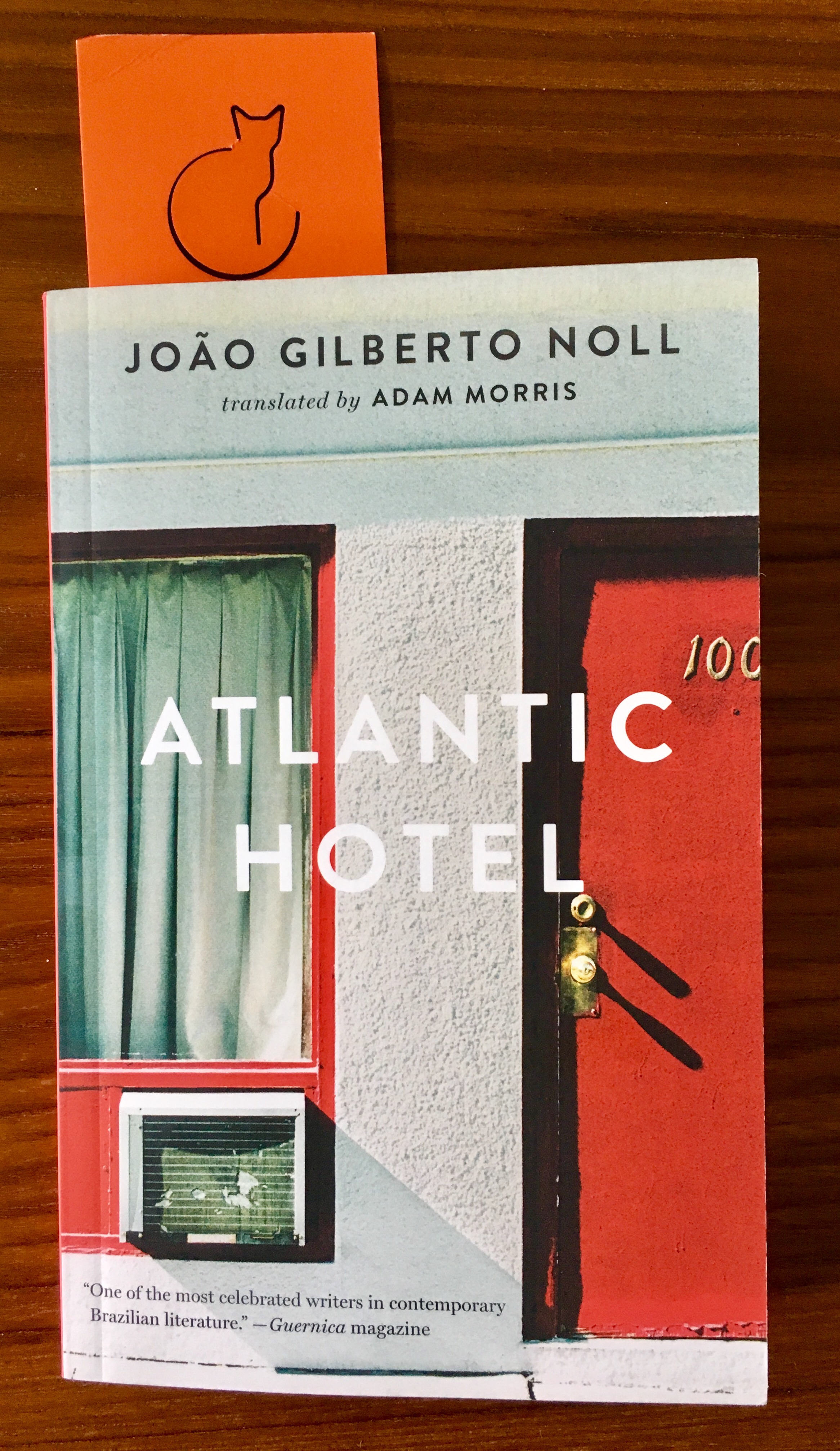
João Gilberto Noll’s novella Atlantic Hotel is new English translation by Adam Morris from Two Lines Press. I loved loved loved the last one I read by Noll, Quiet Creature on the Corner. Full review to come; for now, here’s Two Lines’ blurb:

Compared by critics to filmmaker David Lynch—and deeply influenced by Clarice Lispector—João Gilberto Noll is esteemed as one of Brazil’s living legends. Following the breakthrough success of last year’s Quiet Creature on the Corner, Two Lines Press now presents Noll’s career-defining work, Atlantic Hotel.

Just who narrates the dark and mysterious Atlantic Hotel? First he books a room where a murder has occurred, claiming he’s just arrived from the airport. But then he suddenly leaves, telling a cabbie he’s an alcoholic headed for detox. After that he hops on an all-night bus across Brazil, where he begins to seduce a beautiful American woman. Next he’s recognized as a soap opera actor. Then he impersonates a priest.

At length he knocks on a very wrong door in a small town: when it opens he’s looking down the barrel of a gun. He falls down unconscious, and when he awakes something terrible is happening to him…

All these beefy Caucasians with guns! (From Neal Stephenson’s novel Snow Crash)


All these beefy Caucasians with guns!  Get enough of them together, looking for the America they always believed they’d grow up in, and they glom together like overcooked rice, form integral, starchy little units.  With their power tools, portable generators, weapons, four-wheel-drive vehicles, and personal computers, they are like beavers hyped up on crystal meth, manic engineers without a blueprint, chewing through the wilderness, building things and abandoning them, altering the flow of mighty rivers and then moving on because the place ain’t what it used to be.

The byproduct of the lifestyle is polluted rivers, greenhouse effect, spouse abuse, televangelists, and serial killers.  But as long as you have that four-wheel-drive vehicle and can keep driving north, you can sustain it, keep moving just quickly enough to stay one step ahead of your own waste stream.  In twenty years, ten million white people will converge on the north pole and park their bagos there.  The low-grade waste heat of their thermodynamically intense lifestyle will turn the crystalline icescape pliable and treacherous.  It will melt a hole through the polar icecap, and all that metal will sink to the bottom, sucking the biomass down with it.

From Neal Stephenson’s prescient 1992 cyberthriller Snow Crash.

“The Modest Achievement” — William Carlos Williams

Screenshot 2017-07-30 at 7.56.33 PM

Dalvaux — Leonora Carrington

leonora_carrington_tributes_art_2

Dalvaux, 1952 by Leonora Carrington (1917-2011)

Notes on Vulture’s “100 Great Works of Dystopian Fiction” list

Did you see Vulture’s “100 Great Works of Dystopian Fiction” list? I saw it this morning, and on the whole it ain’t half bad, despite including way too many novels from the past 10 years. Lists are stupid and maybe we already live in a dystopia, but our dystopia could be way way worse and lists are stupid fun…so—my stupid thoughts on this stupid fun list. (They organized it chronologically, by the bye)—-

Gulliver’s Travels, Jonathan Swift, 1726: Good starting place, although I’m sure you could reach farther back if you wanted—Revelations, Blake, Milton, etc.

The Last Man, Mary Shelley, 1826: Never read it. The listmakers seem to have skipped Voltaire’s Candide (1759).

Erewhon, Samuel Butler, 1872: Hey, did you know that Erewhon is actually Nowhere backwards? Ooooh…far out. I really don’t remember it but I read it in school. I’m sure I would’ve thrown it on the list.

The Time Machine, H.G. Wells, 1895: Great track. Some of the best required reading ever.

“The Machine Stops,” E.M. Forster, 1909: Never read it/never heard of it.

We, Yvegny Zamyatin, 1924: The list reminded me I need to reread this one—I read it twice—in my teens and in my twenties. Good stuff. (Also reminds me that I would’ve added something by Sigizmund Krzhizhanovsky to the list—like his collection Memories of the Future).

Brave New World, Aldous Huxley, 1932: This is the guy. I mean, I think Huxley got it right here, y’know? Not that a dystopian novel needs to predict, but…anyway. I actually had a student come by during office hours just to visit, and she asked for a novel recommendation, and I gave her BNW after she told me 1984 was the last great book she’d read. If I recall correctly, the Vulture list only has one duplicate author (Margaret Atwood), but I’d also add Huxley’s often-overlooked novel Ape and Essence.

It Can’t Happen Happen Here, Sinclair Lewis, 1935: I think this is one of those ones where I know the basic plot, themes, etc., but I’m pretty sure I didn’t read it.

Swastika Night, Katharine Burdekin, 1937: An entry that I’ll admit I’ve never heard of, the sort of thing that shows the value in stupid silly fun lists. I’ll search it out.

1984, George Orwell, 1949: I guess this one is the big dawg, but I never want to reread it (unlike Huxley’s stuff). Maybe I’m missing the humor in it. Maybe the most important novel of the 20th century, whatever that means. Continue reading “Notes on Vulture’s “100 Great Works of Dystopian Fiction” list”

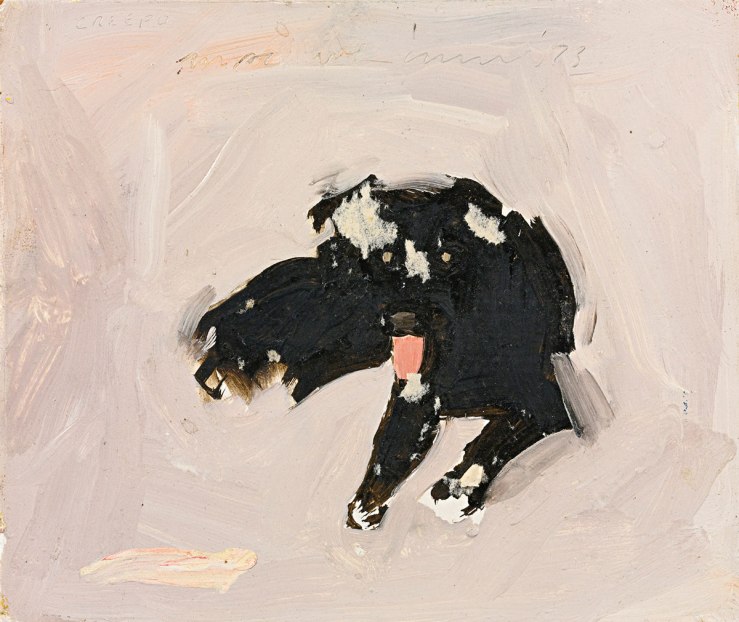
Creepo (The Dog) — Fairfield Porter

fairfield-porter-05-creepo-the-dog

Creepo (The Dog), 1973 by  Fairfield Porter (1907-1975)

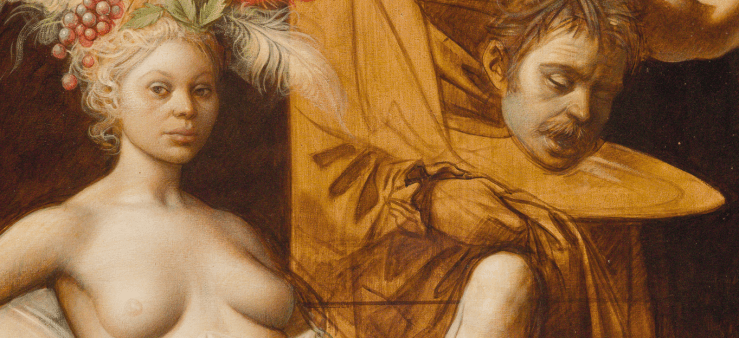
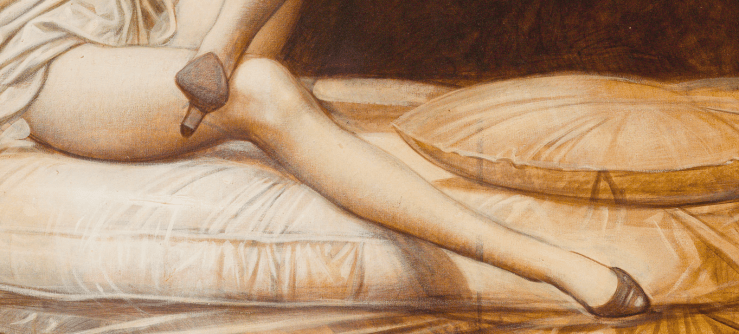
Salomè — Riccardo Tommasi Ferroni

5-tommasi-ferroni-salomeScreenshot 2017-08-21 at 8.04.56 PMScreenshot 2017-08-21 at 8.04.36 PMScreenshot 2017-08-21 at 8.04.19 PMScreenshot 2017-08-21 at 8.05.23 PM

Salomè, 1976 by Riccardo Tommasi Ferroni (1934-2000)

Piss on Star Wars (Barry Hannah)

Last night at one of his homes, the big fifties-ranch-style one, he had watched on his large flat screen Phillips television the film clips and recitation of a minister. A curious breed of faith, perhaps not even Christian.

“Why do people look for science, science fiction and signs of the End? Why do they seek the Revelation of the Apocalypse here and there and chant the old chants of the coming Antichrist, the Four Horsemen? Science fiction has already been had, fools. It was the Battle of Kursk, German tanks against Russian tanks, fifty-seven years ago. It was Leningrad, Stalingrad, Moscow, Berlin, idiots! What does it take, a sock in the jaw for you to get it that the Forces of Darkness fought then? The Antichrist on both sides. Piss on Star Wars. Nothing touches WW Two for science fiction and wasteland.

From Barry Hannah’s 2001 novel Yonder Stands Your Orphan.

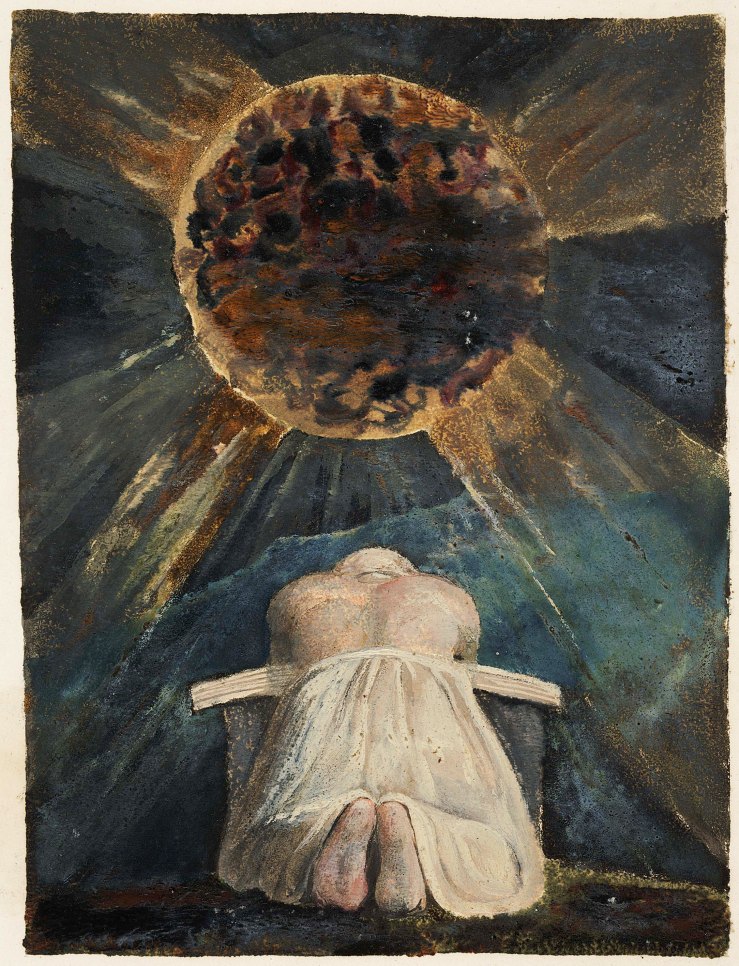
Frontispiece for The Song of Los — William Blake

s-los.e.p1.300

The Song of Los (frontispiece), 1794 by  William Blake (1757–1827)

Blue Eclipse — Albert Bloch

blue-eclipse-1955.jpg

Blue Eclipse, 1955 by Albert Bloch (1882-1961)

Everybody’s been futurized (Barry Hannah)

Ulrich had been quiet, painting on deck varnish. Now he spoke. “We don’t love each other as much as we used to. You can see the uncertain looks, the calculations, the dismissals. People are not even in the present moment. Everybody’s been futurized. You look in those eyes and see they’re not home, they’re some hours ahead at least. I hate to go into Vicksburg anymore. Anywhere, really. It’s all like meeting people who have just departed. Old men and women don’t look wise anymore. They are just aged children. And who gets the highest pay? Actors. Paid to mimic life because there is no life. You look at everybody and maybe they’re a little sad, some of ’em. They’re all homesick for when they were real.” Ulrich began painting again as the others tried to guess what could have prompted this.

From Barry Hannah’s 2001 novel Yonder Stands Your Orphan.

Deimos — Dragan Bibin

Dragan+Bibin+-+Deimos

Deimos, 2015 by Dragan Bibin (b. 1984)

Strange fellow in the bar-room |Nathaniel Hawthorne’s journal entry for August 19th, 1838

In the evening there was a strange fellow in the bar-room,–a sort of mock Methodist,–a cattle-drover, who had stopped here for the night with two cows and a Durham bull. All his talk turned upon religion, and he would ever and anon burst out in some strain of scriptural-styled eloquence, chanted through his nose, like an exhortation at a camp-meeting. A group of Universalists and no-religionists sat around him, making him their butt, and holding wild argument with him; and he strangely mingled humor, with his enthusiasm, and enthusiasm with his humor so that it was almost impossible to tell whether he were in jest or earnest. Probably it was neither, but an eccentricity, an almost monomania, that has grown upon him,–perhaps the result of strong religious excitement. And, having been a backslider, he is cursed with a half-frenzied humor. In the morning he talked in the same strain at breakfast, while quaffing fourteen cups of tea,–Eliza, all the while, as she supplied him, entreating him not to drink any more. After breakfast (it being the Sabbath) he drove his two cows and bull past the stoop, raising his staff, and running after them with strange, uncouth gestures; and the last word I heard from him was an exhortation: “Gentlemen, now all of you take your Bibles, and meditate on divine things,”–this being uttered with raised hands, and a Methodistical tone, intermingled, as was his expression, with something humorous; so that, to the last, the puzzle was still kept up, whether he was an enthusiast or a jester. He wore a suit of coarse brown cloth, cut in rather a Quaker fashion; and he had a large nose, and his face expressed enthusiasm and humor,–a sort of smile and twinkle of the eye, with wildness. He is excellent at a bargain; and if, in the midst of his ghostly exhortation, the talk were turned on cattle, he eagerly seized the topic and expatiated on it.

While this fellow was enumerating the Universalists in neighboring towns who had turned from their errors on their death-beds, some one exclaimed, “John Hodges! why, he isn’t dead,–he’s alive and well.” Whereat there was a roar of laughter. While holding an argument at table, I heard him mutter to himself at something that his adversary said; and though I could not distinguish what it was, the tone did more to convince me of some degree of earnestness than aught beside. This character might be wrought into a strange portrait of something sad, terrific, and laughable. 

The Sabbath wore away lazily, and therefore wickedly. The heavy caravan-man inquired for some book of light reading, and, having obtained an old volume of a literary paper, betook himself to the seat of his wagon, to read. At other times he smoked, and talked sensibly enough with anybody that offered. He is a man of sense, though not quick, and seems to be a fair man.

When he walks, he puts the thumb of each hand into the armhole of his waistcoat, and moves along stiffly, with a knock-kneed gait. His talk was chiefly of hotels, and such matters as a man, always travelling, without any purpose of observation for mental improvement, would be interested in. He spoke of his life as a hard one.

There was a Methodist quarterly meeting here, and a love-feast.

There is a fellow hereabout who refuses to pay six dollars for the coffin in which his wife was buried. She died about six months since, and I believe he is already engaged to another. He is young and rather comely, but has not a straightforward look.

One man plods along, looking always on the ground, without ever lifting his eyes to the mountain scenery, and forest, and clouds, above and around him. Another walks the street with a quick, prying eye, and sharp face,–the most expressive possible of one on the look-out for gain,–of the most disagreeable class of Yankees. There is also a sour-looking, unwholesome boy, the son of this man, whose voice is querulous and ill-natured, precisely suited to his aspect. So is his character.

We have another with Indian blood in him, and the straight, black hair,–something of the tawny skin and the quick, shining eye of the Indian. He seems reserved, but is not ill-natured when spoken to. There is so much of the white in him, that he gives the impression of belonging to a civilized race, which causes the more strange sensation on discovering that he has a wild lineage.

From Nathaniel Hawthorne’s journal entry for August 19th, 1838. Collected in Passages from the American Note-Books.

On the Sofa — Berthe Morisot

on-the-sofa

On the Sofa, 1871 by Berthe Morisot (1841-1895)

Two or three Barry Hannahs, depending on how you look at it (Books acquired, 14 and 18 Aug. 2017)

img_7707-1

Earlier this summer I visited Alias East Books East in Los Angeles, where the clerk kindly let me handle a signed first edition of Barry Hannah’s novel RayIt was like sixty bucks, so I didn’t handle it too fondly. But somehow the image of the signature rattled around in my silly skull all summer—probably because I spent a big chunk of July slurping up Long, Last, Happy. I wanted to find out some info about Hannah’s last quartet of stories—the last four stories in L, L, H—and doing a search of his name in Twitter led me to a link for a signed first-edition hardback copy of his slim 1985 collection Captain Maximus. (The title is a joke on his then-editor, Gordon “Captain Fiction” Lish, who apparently Hannah referred to as “Captain Minimus” in some of their letters). I might have had a scotch or two, but I bid on the book (eighteen bucks). No one else bid on it, so it’s mine now.

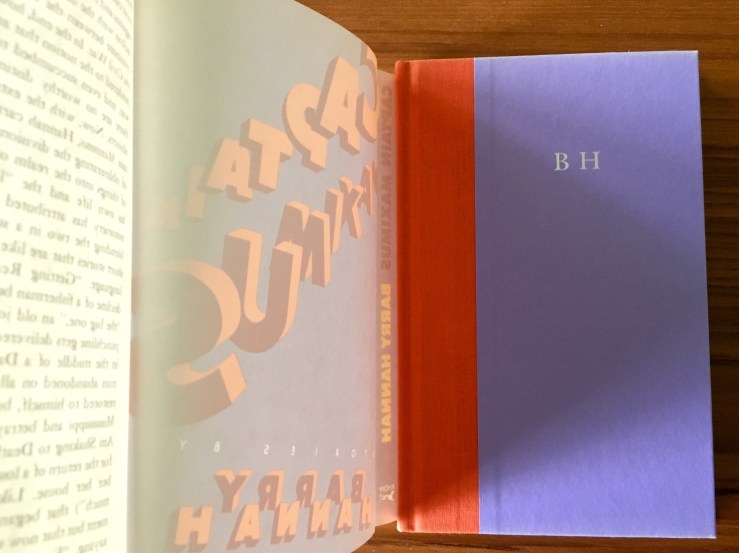
The cover is lovely, purple and orange, designed by Fred Marcellino, and under the bright shiny jacket is this:

img_7709

I love the reserved arrogance of those initials!

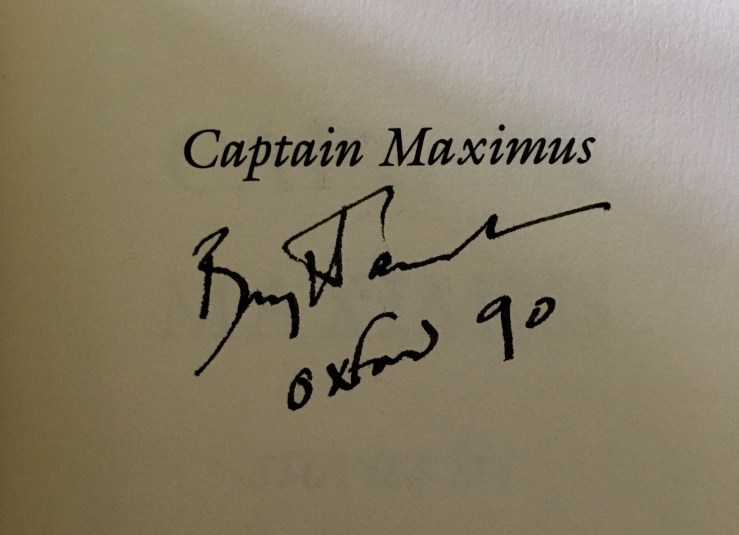
And of course the signature, dated five years after the book’s publication and geographically anchored to the town my grandfather and namesake attended college in—

img_7710

I didn’t actually own a copy of Captain Maximus beforehand, and I think the only stories from it included in Long, Last, Happy (which, by the way is a great starting place for Hannah) are “Fans,” “Ride, Fly, Penetrate, Loiter” and “Even Greenland” (you can read “Even Greenland” at Ben Marcus’s website). This particular copy has clearly never been read.  Which leads me to this afternoon. I went to my favorite used bookstore to pick up a copy of Ishmael Reed’s The Terrible Threes—I just finished The Terrible Twos, a novel that is too prescient and too funny and too cruel and you should read it read it read it—and well anyway, I went to see if maybe they had a copy of Yonder Stands Your Orphan, which they didn’t the last time I was there, but they did today. Under it was a well-thumbed 1986 Penguin paperback edition of Captain Maximus. I need to read Yonder (which hell by the way my god what a bad cover c’mon people) before I can write the Thing I want to write on the final stories in Long, Last, Happy (or at least I think I need to read it, or anyway, I want to). And the second copy of Captain Maximus, at three dollars in store credit, is something I don’t have to worry about cramming into a pocket or dropping into a bathtub or eventually giving away to a friend.

Kronos and Kairos — Carmen Chami

carmen_chami-_khronos_y_kair__s-___leo_sobre_tela-_150_x_105cm

Kronos and Kairos by Carmen Chami (b. 1974)

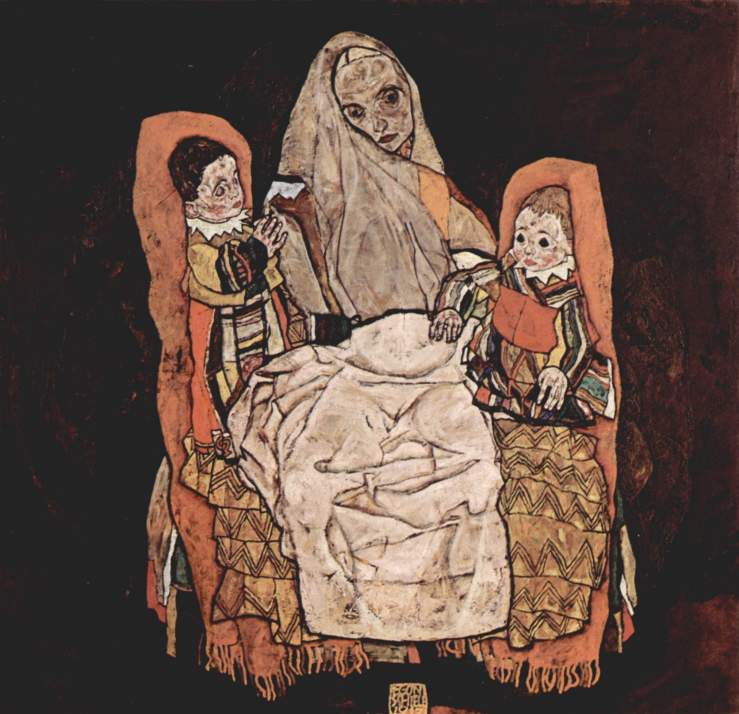
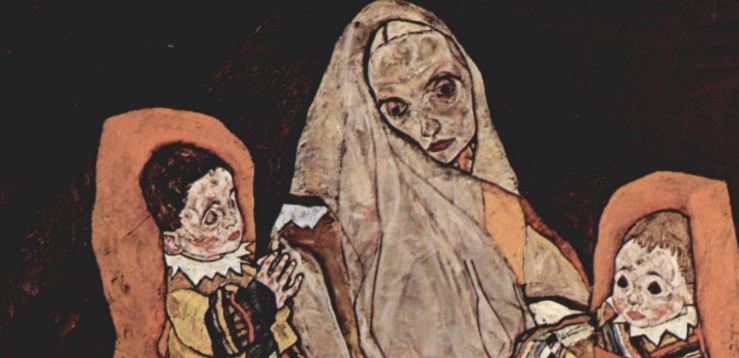
Mother with Two Children — Egon Schiele

mother-with-two-children-1917es

Mother with Two Children, 1917 by Egon Schiele (1890-1918)