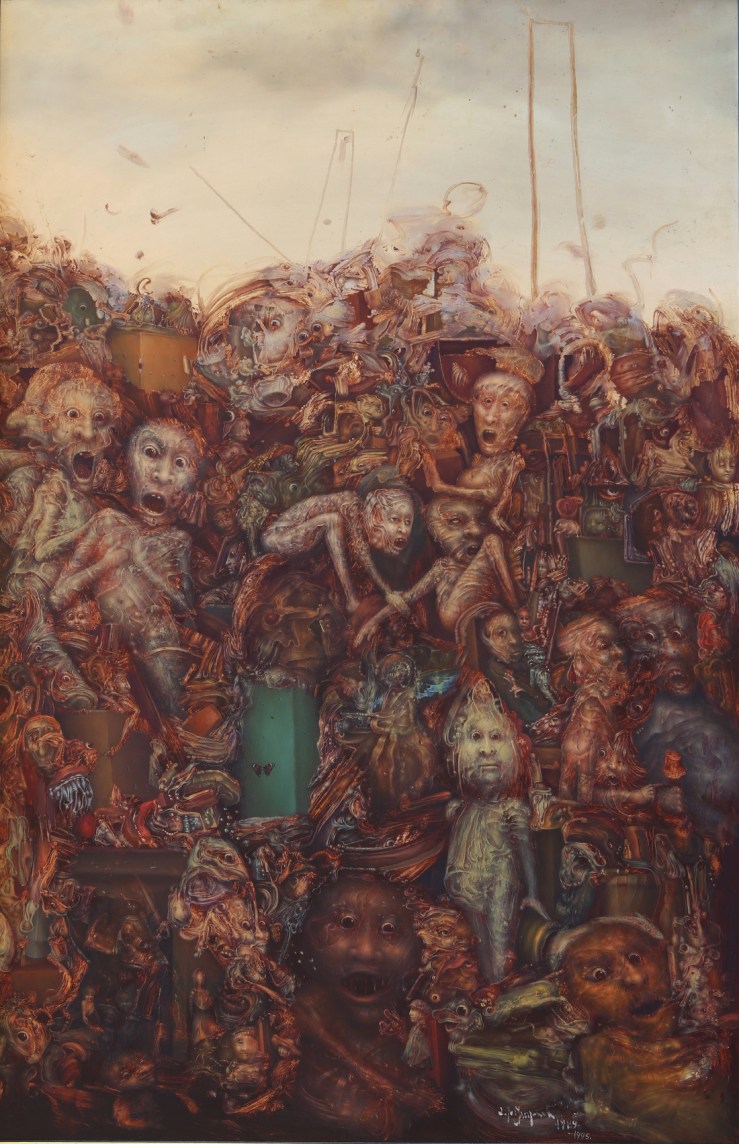
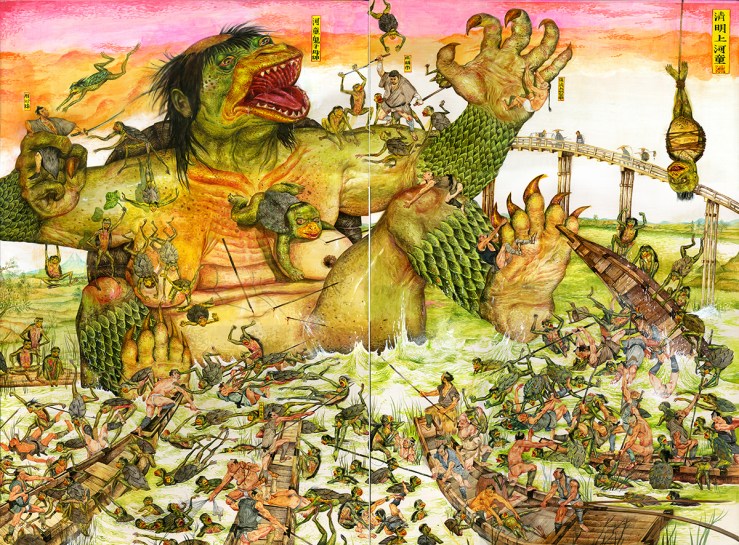
Kappas along the River — Mu Pan

Kappa.jpgScreenshot 2017-03-25 at 6.49.10 PMScreenshot 2017-03-25 at 6.48.31 PMScreenshot 2017-03-25 at 6.48.58 PMScreenshot 2017-03-25 at 6.47.54 PM

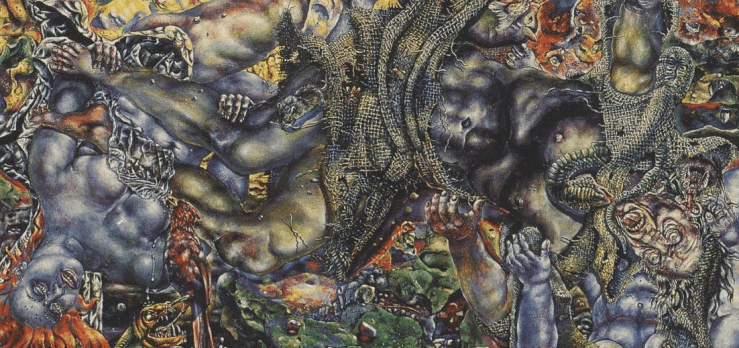
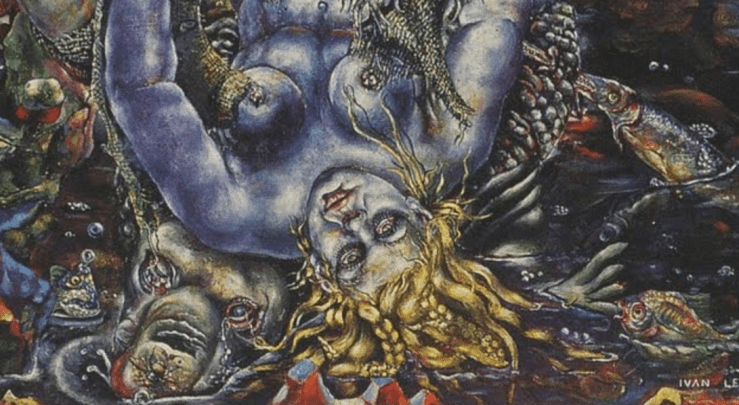
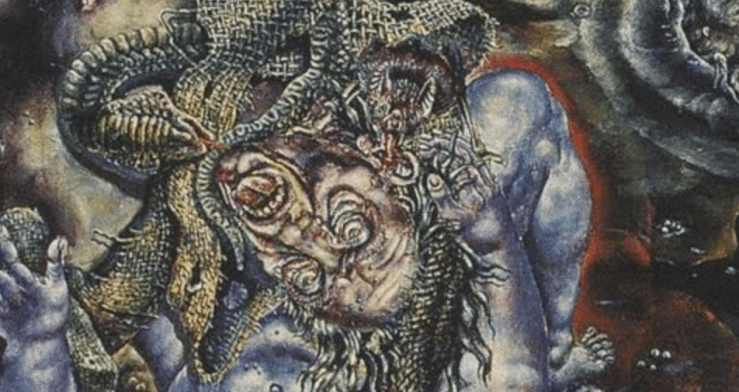
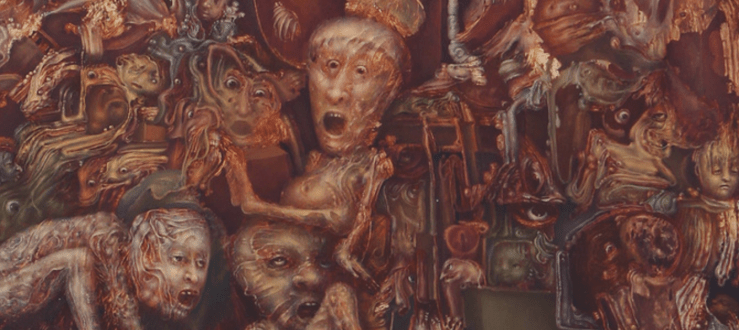
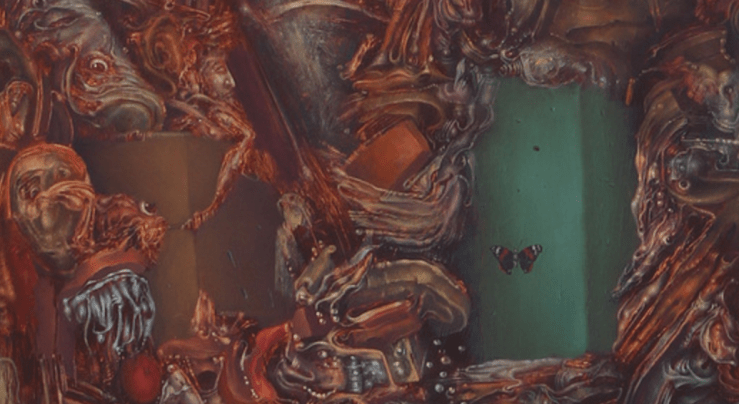
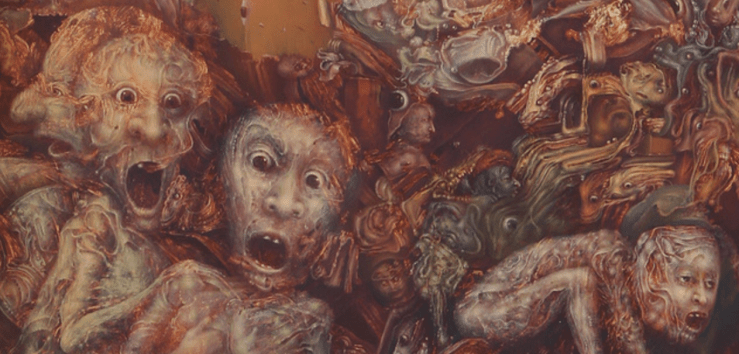
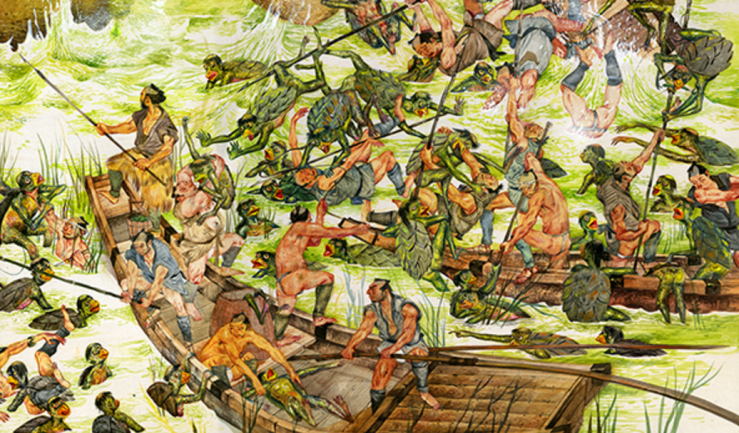
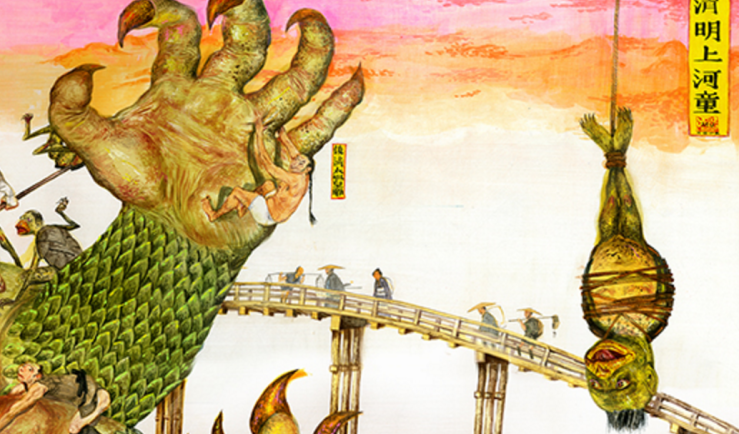
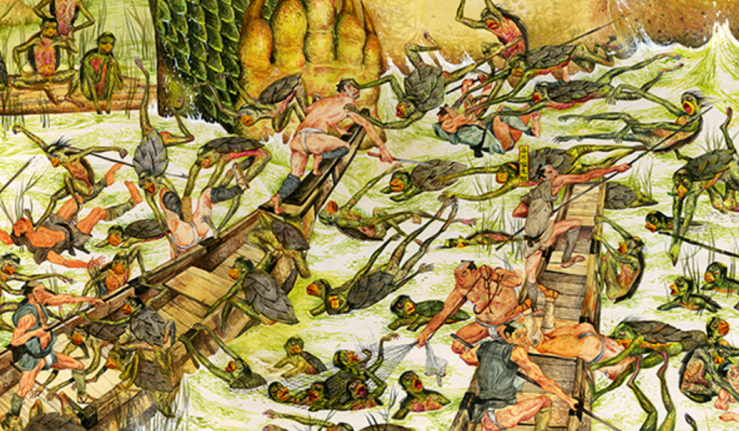
Kappas Along the River, 2013 by Mu Pan (b. 1976).

“The Man of Adamant,” an apologue by Nathaniel Hawthorne

“The Man of Adamant”

An Apologue

by Nathaniel Hawthorne


IN the old times of religious gloom and intolerance lived Richard Digby, the gloomiest and most intolerant of a stern brotherhood. His plan of salvation was so narrow, that, like a plank in a tempestuous sea, it could avail no sinner but himself, who bestrode it triumphantly, and hurled anathemas against the wretches whom he saw struggling with the billows of eternal death. In his view of the matter, it was a most abominable crime–as, indeed, it is a great folly–for men to trust to their own strength, or even to grapple to any other fragment of the wreck, save this narrow plank, which, moreover, he took special care to keep out of their reach. In other words, as his creed was like no man’s else, and being well pleased that Providence had entrusted him, alone of mortals with the treasure of a true faith, Richard Digby determined to seclude himself to the sole and constant enjoyment of his happy fortune.

“And verily,” thought he, “I deem it a chief condition of Heaven’s mercy to myself, that I hold no communion with those abominable myriads which it hath cast off to perish. Peradventure, were I to tarry longer in the tents of Kedar, the gracious boon would be revoked, and I also be swallowed up in the deluge of wrath, or consumed in the storm of fire and brimstone, or involved in whatever new kind of ruin is ordained for the horrible perversity of this generation.”

So Richard Digby took an axe, to hew space enough for a tabernacle in the wilderness, and some few other necessaries, especially a sword and gun, to smite and slay any intruder upon his hallowed seclusion; and plunged into the dreariest depths of the forest. On its verge, however, he paused a moment, to shake off the dust of his feet against the village where he had dwelt, and to invoke a curse on the meetinghouse, which he regarded as a temple of heathen idolatry. He felt a curiosity, also, to see whether the fire and brimstone would not rush down from Heaven at once, now that the one righteous man had provided for his own safety. But, as the sunshine continued to fall peacefully on the cottages and fields, and the husbandmen labored and children played, and as there were many tokens of present happiness, and nothing ominous of a speedy judgment, he turned away, somewhat disappointed. The further he went, however, and the lonelier he felt himself, and the thicker the trees stood along his path, and the darker the shadow overhead, so much the more did Richard Digby exult. He talked to himself, as he strode onward; he read his Bible to himself, as he sat beneath the trees; and, as the gloom of the forest hid the blessed sky, I had almost added, that, at morning, noon, and eventide, he prayed to himself. So congenial was this mode of life to his disposition, that he often laughed to himself, but was displeased when an echo tossed him back the long, loud roar. Continue reading ““The Man of Adamant,” an apologue by Nathaniel Hawthorne”

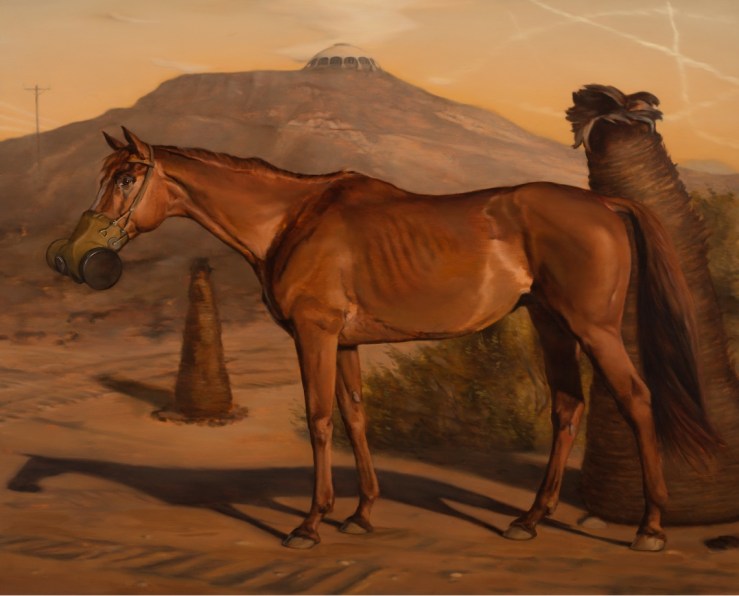
Palm Springs Sporting Horse — Abigail Schmidt

14_abigailschmidt

Palm Springs Sporting Horse, 2016 by Abigail Schmidt

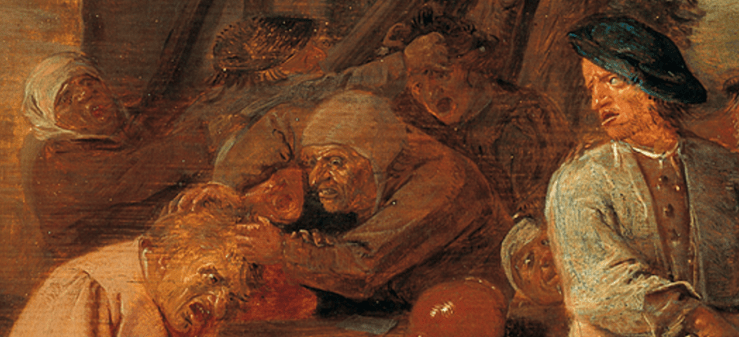
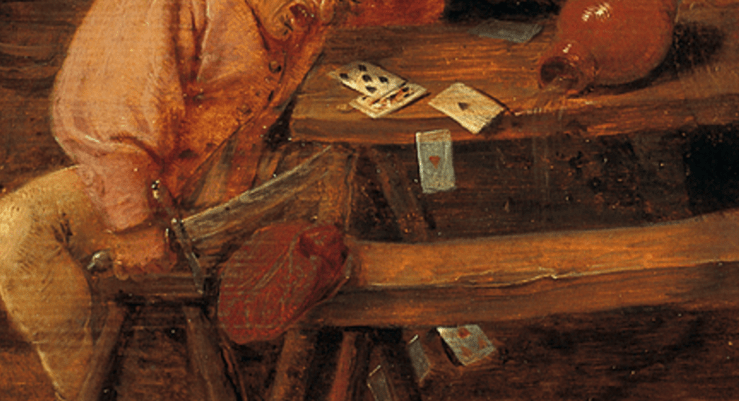
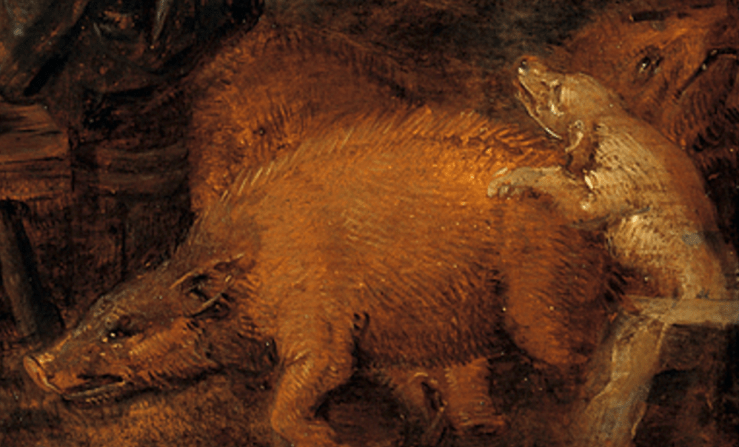
Peasant Brawl — Adriaen Brouwer

farmers-fight-partyScreenshot 2017-03-23 at 9.56.52 AMScreenshot 2017-03-23 at 9.57.12 AMScreenshot 2017-03-23 at 9.57.27 AMScreenshot 2017-03-23 at 10.01.22 AM

Boerenvechtpartij (Peasant Brawl), 1620-1630 by Adriaen Brouwer (c.1605-1638)

Posted in Art

The doom laid upon me, of murdering so many of the brightest hours of the day | Nathaniel Hawthorne’s journal entry for March 23rd, 1840

March 23d.–I do think that it is the doom laid upon me, of murdering so many of the brightest hours of the day at the Custom House, that makes such havoc with my wits, for here I am again trying to write worthily, . . . yet with a sense as if all the noblest part of man had been left out of my composition, or had decayed out of it since my nature was given to my own keeping. . . . Never comes any bird of Paradise into that dismal region. A salt or even a coal ship is ten million times preferable; for there the sky is above me, and the fresh breeze around me, and my thoughts, having hardly anything to do with my occupation, are as free as air.

Nevertheless, you are not to fancy that the above paragraph gives a correct idea of my mental and spiritual state. . . . It is only once in a while that the image and desire of a better and happier life makes me feel the iron of my chain; for, after all, a human spirit may find no insufficiency of food fit for it, even in the Custom House. And, with such materials as these, I do think and feel and learn things that are worth knowing, and which I should not know unless I had learned them there, so that the present portion of my life shall not be quite left out of the sum of my real existence. . . . It is good for me, on many accounts, that my life has had this passage in it. I know much more than I did a year ago. I have a stronger sense of power to act as a man among men. I have gained worldly wisdom, and wisdom also that is not altogether of this world. And, when I quit this earthly cavern where I am now buried, nothing will cling to me that ought to be left behind. Men will not perceive, I trust, by my look, or the tenor of my thoughts and feelings, that I have been a custom house officer.

Nathaniel Hawthorne’s journal entry for March 23rd, 1840. From Passages from the American Note-Books.

The Sultan and the Strange Loop — Jean-Pierre Roy

JeanPierre_Roy_The_Sultan_and_the_Strange_Loop_2016_oil_on_linen_56_x_40_cm_22_x_16_in_3000Screenshot 2017-03-22 at 1.24.29 PMScreenshot 2017-03-22 at 1.24.02 PMScreenshot 2017-03-22 at 1.24.47 PMScreenshot 2017-03-22 at 1.25.17 PM

The Sultan and the Strange Loop, 2016 by Jean-Pierre Roy (b. 1974)

Indeed the reality of a nervous sloth (Baudelaire)

“See My Jumper Hanging On the Line” — R.L. Burnside

R.L. Burnside at home in Independence, Mississippi in the summer of 1978.

From Alan Lomax’s American Patchwork Project.

Bonus track:

Self-Portrait as a Lute Player — Artemisia Gentileschi

Artemisia_Gentileschi_-_Self-Portrait_as_a_Lute_PlayerScreenshot 2017-03-22 at 9.45.52 AMScreenshot 2017-03-22 at 9.46.08 AMScreenshot 2017-03-22 at 9.45.29 AMScreenshot 2017-03-22 at 9.46.25 AM

Autoritratto come suonatrice di liuto (Self-Portrait as a Lute Player), 1615-1617 by Artemisia Gentileschi (1593-1653).

Daniel Borzutzky poems (Books acquired, 9 March 2017)

Big thanks to BLCKDGRD for sending me two books of poetry by Daniel Borzutzky. I’d never read Borzutzky before, but I dig it so far. These poems are abject—stuff about what it means to have a body, to have some horror at having a body, etc.

A bit from “The Blazing Cities of Your Rotten Carcass Mouth,” collected in The Performance of Becoming Human:

Paradise No. 16 — Fu Lei

fulei

Screenshot 2017-03-21 at 10.38.02 AMScreenshot 2017-03-21 at 10.36.40 AMScreenshot 2017-03-21 at 10.37.05 AMScreenshot 2017-03-21 at 10.38.21 AM

Paradise No. 16, 2014 by Fu Lei (b. 1958).

Gustav Klimt in His Blue Painter’s Smock — Egon Schiele

Egon_Schiele_-_Gustav_Klimt_im_blauen_Malerkittel_-_1913Screenshot 2017-03-20 at 10.32.51 PMScreenshot 2017-03-20 at 10.33.38 PM

Gustav Klimt im blauen Malerkittel (Gustav Klimt in His Blue Painters Smock), 1913 by Egon Schiele (1890-1918).

“Spring” — William Carlos Williams 

Spring — Giuseppe Arcimboldo


Spring, 1573 by Giuseppe Arcimboldo (1526 or 1527 – 1593). 

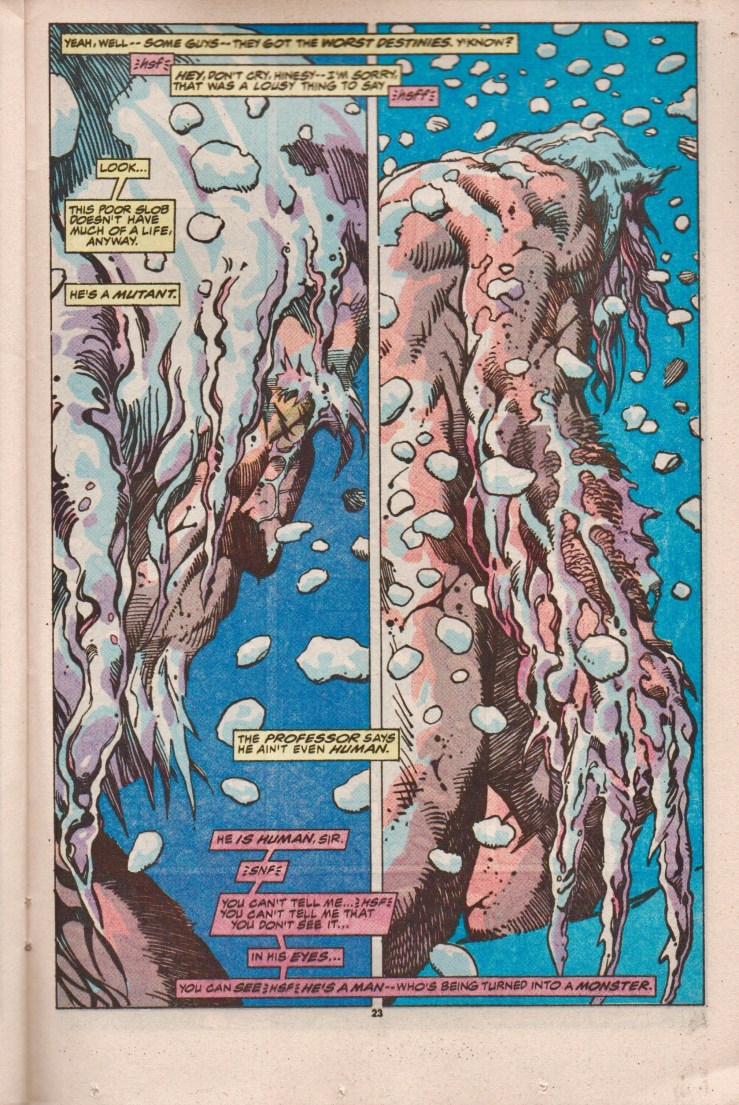
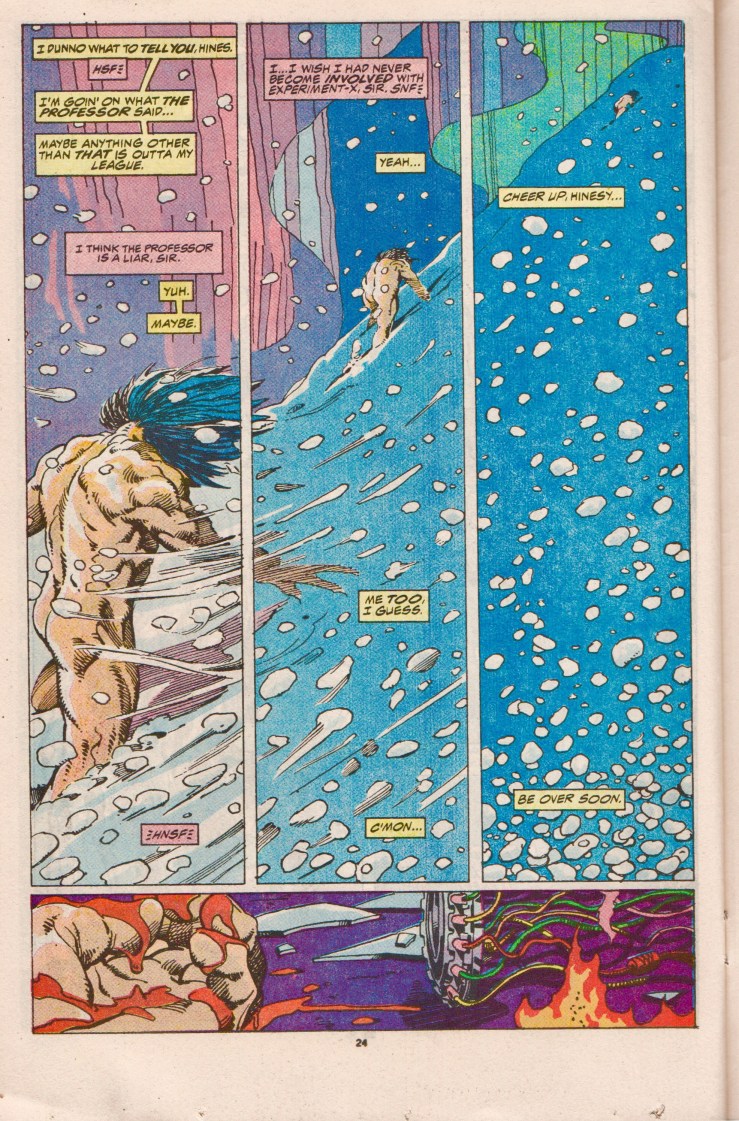
Sunday Comics 


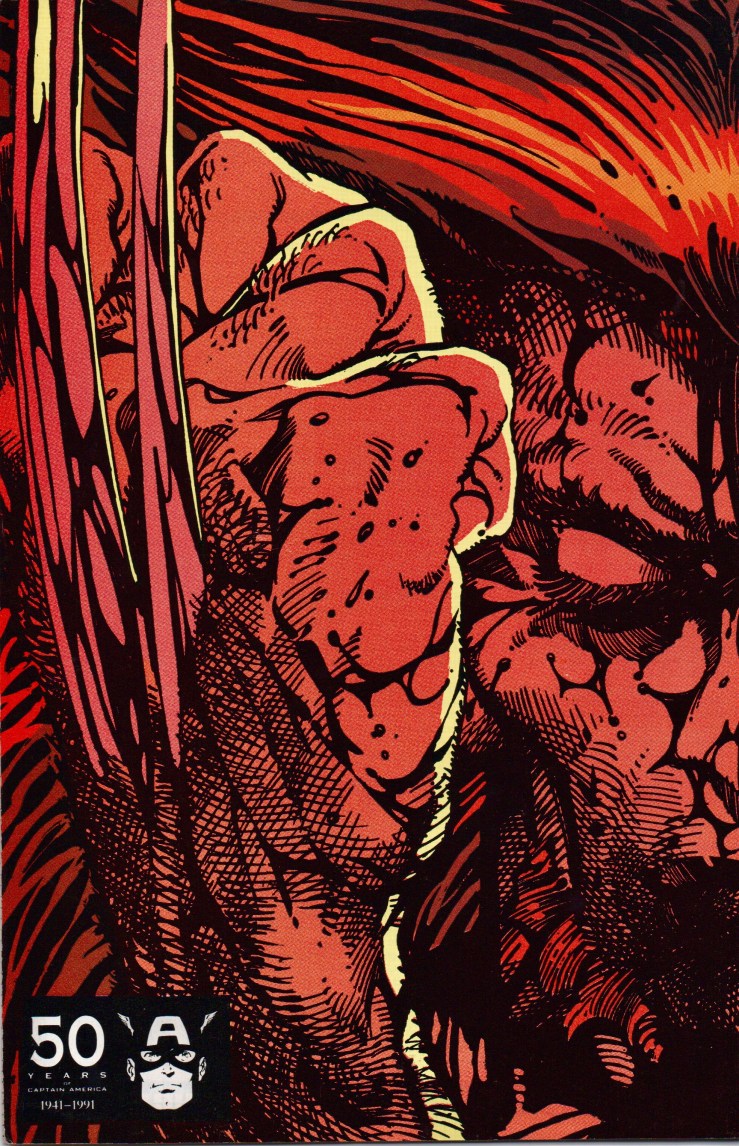
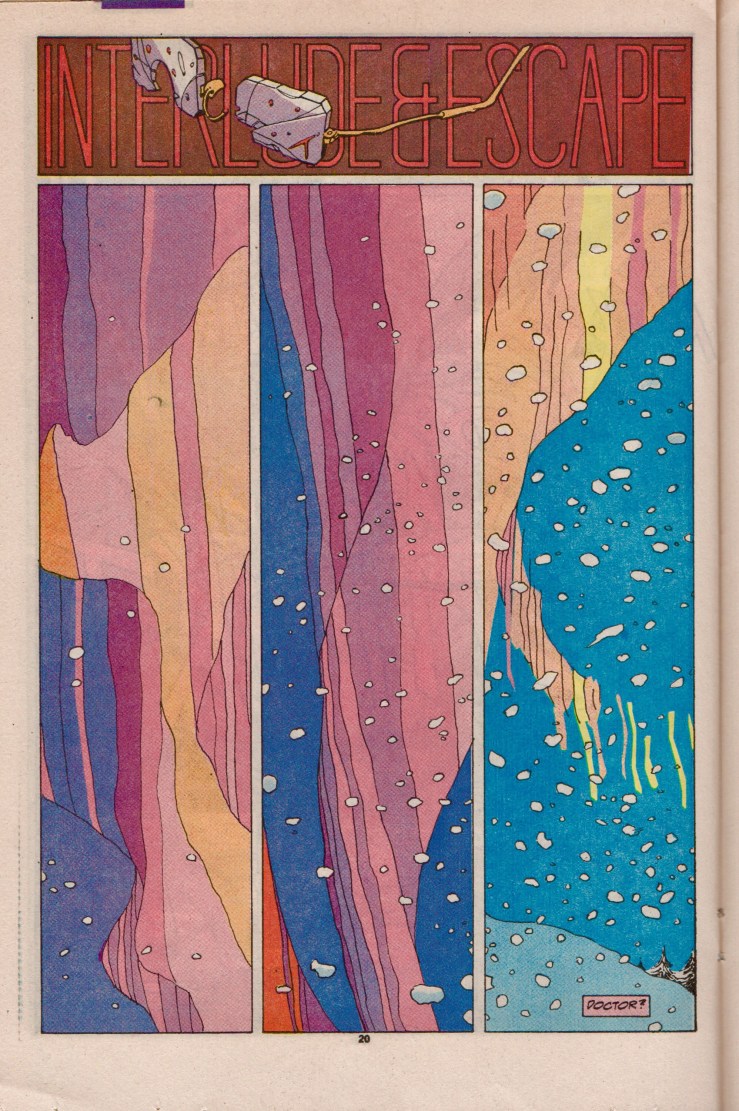
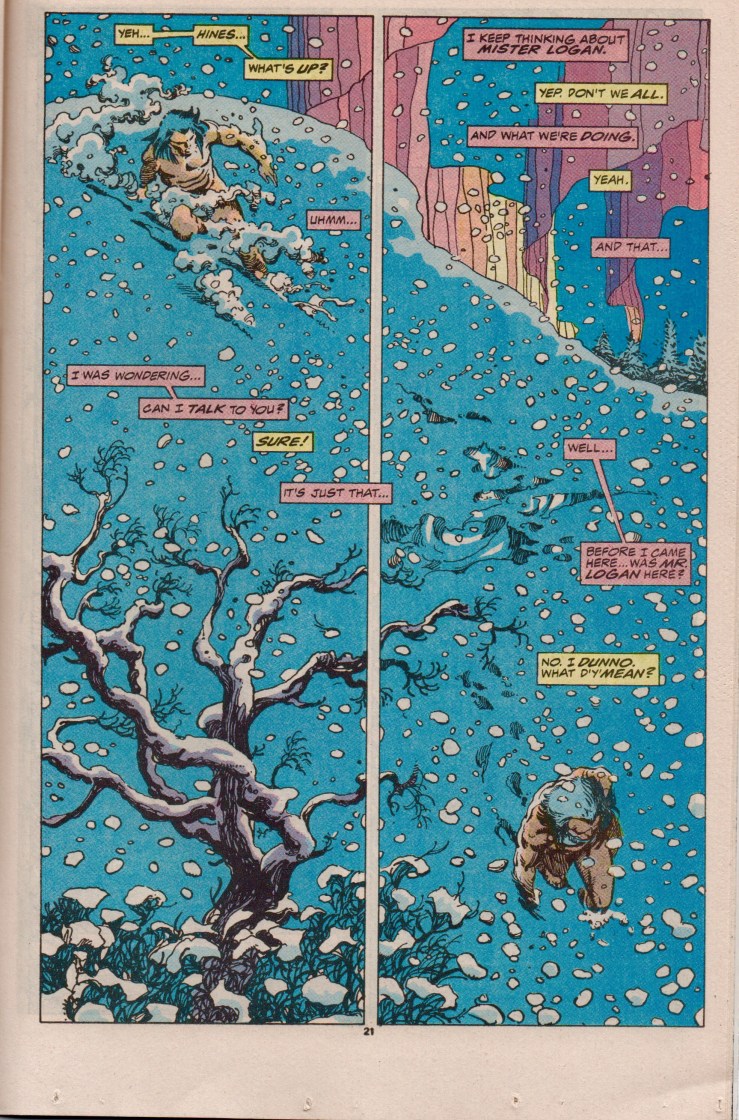
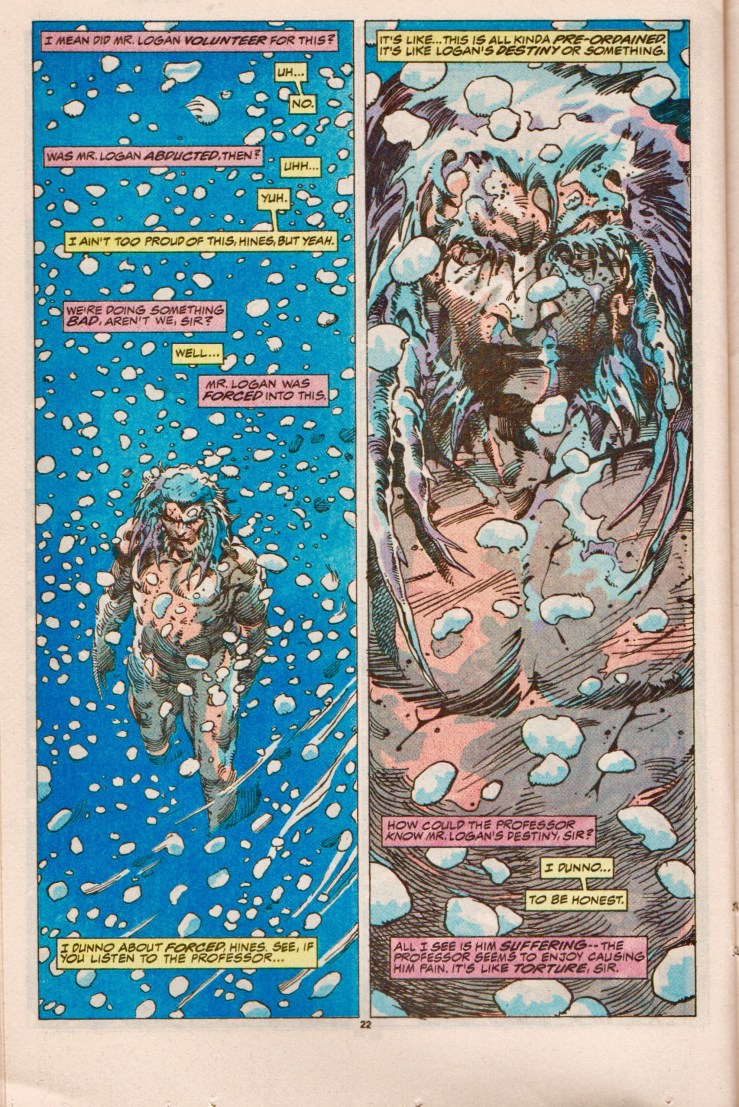
RIP Bernie Wrightson, 1948-2017

Self-Portrait (as “New Woman”) — Frances Benjamin Johnston

Frances_Benjamin_Johnston,_full-length_portrait,_seated_in_front_of_fireplace,_1896

Self-Portrait (as “New Woman”), 1896 by Frances Benjamin Johnston (1864–1952)

A list of “Irish heroes and heroines of antiquity” from James Joyce’s Ulysses

One of my favorite passages in Ulysses (it’s from the “Cyclops” chapter, episode 12)—

He wore a long unsleeved garment of recently flayed oxhide reaching to the knees in a loose kilt and this was bound about his middle by a girdle of plaited straw and rushes. Beneath this he wore trews of deerskin, roughly stitched with gut. His nether extremities were encased in high Balbriggan buskins dyed in lichen purple, the feet being shod with brogues of salted cowhide laced with the windpipe of the same beast. From his girdle hung a row of seastones which dangled at every movement of his portentous frame and on these were graven with rude yet striking art the tribal images of many Irish heroes and heroines of antiquity, Cuchulin, Conn of hundred battles, Niall of nine hostages, Brian of Kincora, the Ardri Malachi, Art MacMurragh, Shane O’Neill, Father John Murphy, Owen Roe, Patrick Sarsfield, Red Hugh O’Donnell, Red Jim MacDermott, Soggarth Eoghan O’Growney, Michael Dwyer, Francy Higgins, Henry Joy M’Cracken, Goliath, Horace Wheatley, Thomas Conneff, Peg Woffington, the Village Blacksmith, Captain Moonlight, Captain Boycott, Dante Alighieri, Christopher Columbus, S. Fursa, S. Brendan, Marshal Mac-Mahon, Charlemagne, Theobald Wolfe Tone, the Mother of the Maccabees, the Last of the Mohicans, the Rose of Castille, the Man for Galway, The Man that Broke the Bank at Monte Carlo, The Man in the Gap, The Woman Who Didn’t, Benjamin Franklin, Napoleon Bonaparte, John L. Sullivan, Cleopatra, Savourneen Deelish, Julius Caesar, Paracelsus, sir Thomas Lipton, William Tell, Michelangelo, Hayes, Muhammad, the Bride of Lammermoor, Peter the Hermit, Peter the Packer, Dark Rosaleen, Patrick W. Shakespeare, Brian Confucius, Murtagh Gutenberg, Patricio Velasquez, Captain Nemo, Tristan and Isolde, the first Prince of Wales, Thomas Cook and Son, the Bold Soldier Boy, Arrah na Pogue, Dick Turpin, Ludwig Beethoven, the Colleen Bawn, Waddler Healy, Angus the Culdee, Dolly Mount, Sidney Parade, Ben Howth, Valentine Greatrakes, Adam and Eve, Arthur Wellesley, Boss Croker, Herodotus, Jack the Giantkiller, Gautama Buddha, Lady Godiva, The Lily of Killarney, Balor of the Evil Eye, the Queen of Sheba, Acky Nagle, Joe Nagle, Alessandro Volta, Jeremiah O’Donovan Rossa, Don Philip O’Sullivan Beare. A couched spear of acuminated granite rested by him while at his feet reposed a savage animal of the canine tribe whose stertorous gasps announced that he was sunk in uneasy slumber, a supposition confirmed by hoarse growls and spasmodic movements which his master repressed from time to time by tranquillising blows of a mighty cudgel rudely fashioned out of paleolithic stone.