
Category: Books
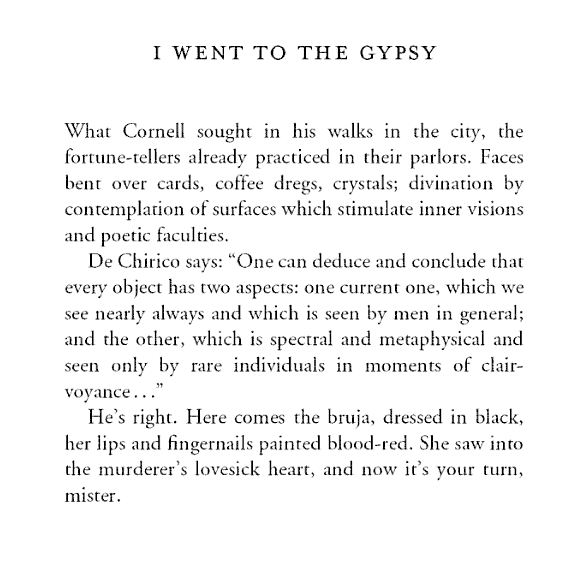
“I Went to the Gypsy” — Charles Simic
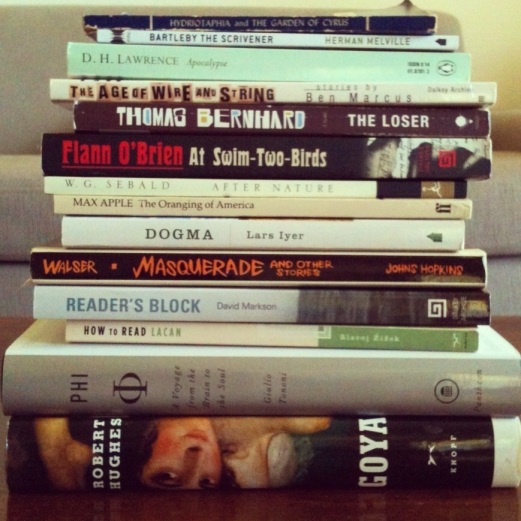
Books I’ve Read All or Most of in the Past Eight Months and Failed to Write About
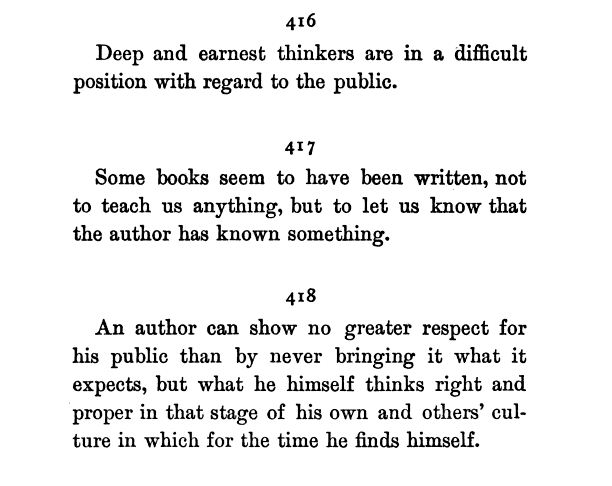
Three Aphorisms on Writing (Goethe)
Sweet Doing Nothing — Auguste Toulmouche

Reclining Nude — Edward Hopper

Jacques Derrida and Jorge Luis Borges

I Try to Riff on Both Flesh and Not, DFW’s New Essay Collection, Which I Haven’t Read, as I Drink Red Wine to Numb the Election Coverage (Book Acquired, 11.06.2012)
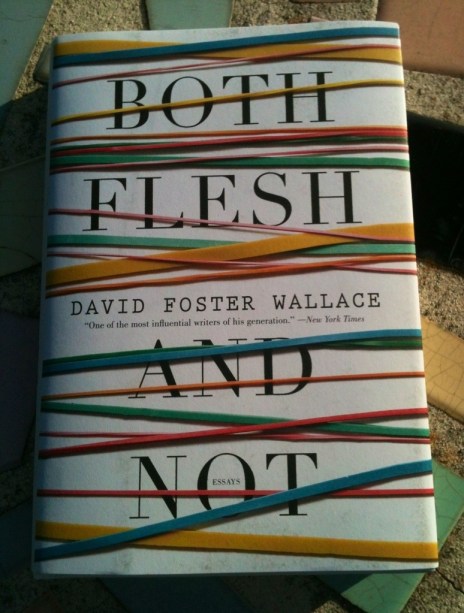
1. Today, I picked up Both Flesh and Not, a collection of David Foster Wallace essays and short pieces. I specifically ordered this book from my local bookstore (I didn’t get a review copy), and I bought it in hardback (I generally dislike hardbacks).
2. I should be reading it now—I’d like to be reading it—but I’m flicking between the five or six channels I have, usually stopping on PBS, and then scanning Twitter and other online media, because, hey, it’s Election Day in America.
3. I’ve already read several of the pieces in Both Flesh. You might have too. Here’s the table of contents:
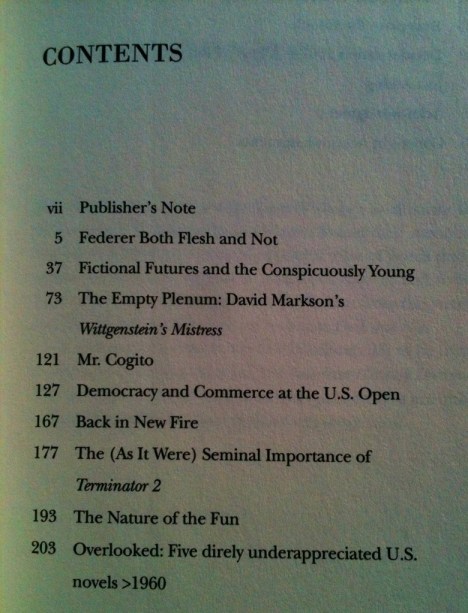
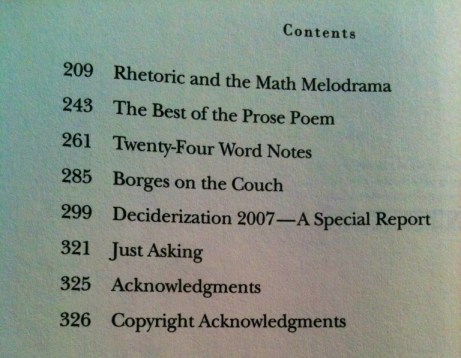
4. But a lot of it I haven’t read. I’m eager to dig into the piece on David Markson, and the piece on Brat Pack writers, “Fictional Futures,” which was later repurposed in “E Unibus Pluram.”
5. I spent most of the afternoon riffling through it, trying not to think about the election results that would be coming in the next few years. I played outside with my kids, building a strange hut out of giant elephant leaves and then a small nest out of pine straw. I photographed the planes that daily fly over our neighborhood, slow, heavy supply planes that drift in lazy routine arcs from the nearby naval base, not loud as jets, but bulky. Elephant mothers, pregnant.

6. I remembered that Wallace killed himself in an election year, in September. I remember how I felt.
7. (Please don’t think this riff is really about anything. I’m distracted. I’ve imbibed some wine. Some Xanax might be involved).
8. Speaking of posts in 2008—
I went back just now, and riffled through the site’s archives from November of 2008. (Back when I’d post like three, maybe four times a week. Once a day at most).
A lot of vitriol there. A lot of vitriol for Palin, and a lot of vitriol for the emerging sentiment that would galvanize in what would become the Tea Party movement.
I wrote about the Election Night too. About Jesse Jackson’s tears. I even wrote about finding some respite from cynicism in Obama’s election. (Don’t worry, I’m as cynical as ever. Moreso—
9. —but
I remember watching the inauguration in 2009. I was still teaching high school. I had third period planning and I watched the whole shebang in an empty lab on the school’s third floor with my friend Derek, a black Muslim who taught history in the classroom next to mine. It was cold up there and empty. I remember he asked me if the election poem was good and I asked him what he thought (I thought it was good). I remember we cried a little in spite of ourselves and clutched at each other. The world seemed so much more possible. I’m clutching to this memory now, which is deep and rich and I hope to keep forever. It presents through pinot and Xanax).
10. Is this a bait and switch? I apologize. Look, I love you reader. Really, I do. I do.
11. So, another detail from the Wallace collection:
The selections are intercut with definitions from his vocabulary list for The American Heritage Dictionary. Like so:

12. What was I doing here? I don’t know. Let me just wrap it up. I should be writing about DFW and the book but I can’t. Distracted. I’ll schedule the post. Let it stand. Let it roll at 11:11am tomorrow? (To clarify–it’s 9:55pm on 11/06/2012).
Okay, I’ll do that. Finish the rest in the comments? Sure. And some more, of course, about the book.
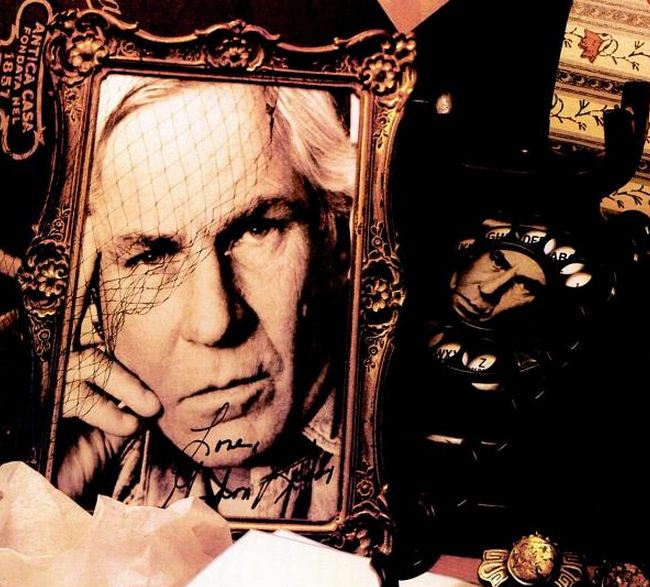
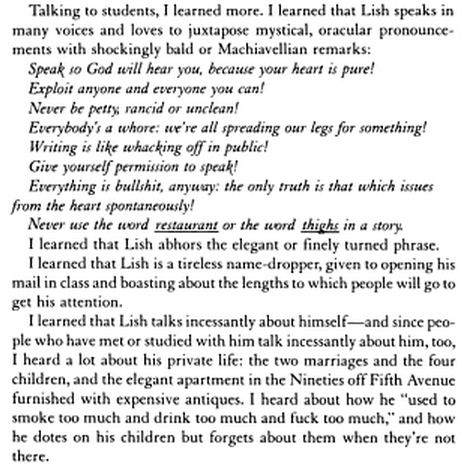
“Some Modulated Pissing and Moaning” (Gordon Lish on Poetry)
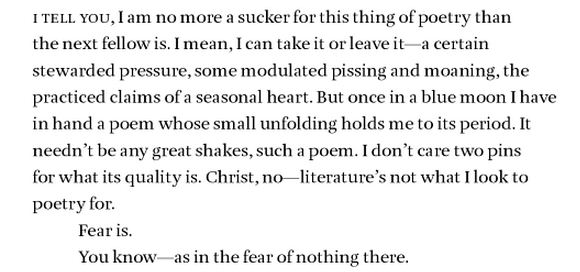
From Gordon Lish’s story “How to Write a Poem.”
Still Life with Drawing Board, Pipe, Onions and Sealing-Wax — Vincent van Gogh

George Washington’s Rules of Civility


“Of the PRESIDENT next you will hear me declare / That altho’ neither silver nor gold does he wear”

Election Day — Norman Rockwell

“Election Day” — William Carlos Williams”
“Election Day,” William Carlos Williams:
Warm sun, quiet air
an old man sitsin the doorway of
a broken house—boards for windows
plaster fallingfrom between the stones
and strokes the headof a spotted dog
The Precious Book — Gwen John

Charles Burns Enriches His Wonderfully Weird Trilogy with The Hive
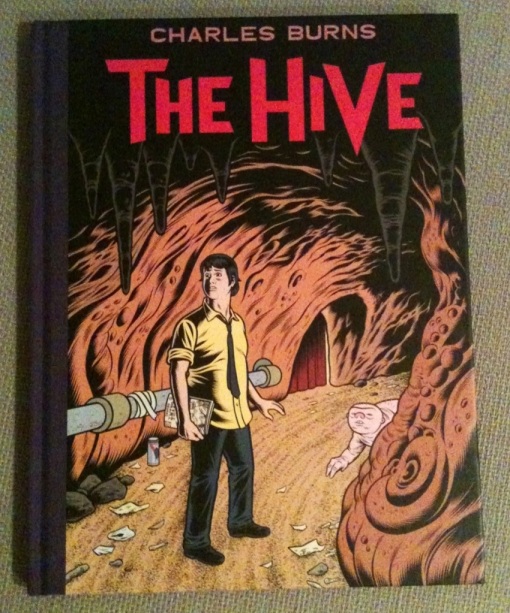
In X’ed Out, Charles Burns created a rich and strangely layered world focusing on Doug, a confused and injured young man. In his parents’ suburban basement, Doug parcels out the last of his late father’s painkillers, slipping from haunted memories of his relationship with Sarah into fevered nightmares of abject horror and then into a wholly other world, a realm that recalls William Burroughs’s Interzone. In this alien world, Doug takes on the features of Nitnit (an inversion of Tintin), the alter-ego he adopts when performing spoken word cut-ups as the opening act for local punk rock bands. What made X’ed Out so compelling (apart from Burns’s thick, precise illustration, of course), was the sense that this Interzone was a reality equal to Doug’s own “real world” — that it was somehow more real than Doug’s dreams.
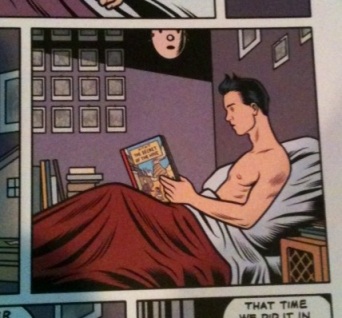
The Hive (part two of the proposed trilogy) deepens the richness and complexity of the world Burns has imagined. The title refers to a location in Interzone. Doug (or Nitnit) has found employment in The Hive as a kind of mail clerk or janitor. His primary role though is secret librarian, catering to the reading needs of the breeders of The Hive. One breeder seems to be a version of Doug’s ex-girlfriend; the other is a double of Sarah, who asks Doug/Nitnit to bring her romance comics—which he does—only he skips a few issues. These missing issues stand in for the information Doug (and Burns) withholds from the reader, the missing fragments that have been x’ed out.

Burns uses romance comics as a framing or organizing device, a motif linking the disparate worlds of his narrative. In the “real world” — which is to say the world of Doug’s memory — we learn that he buys a stack of old romance comics for Sarah on their first date.
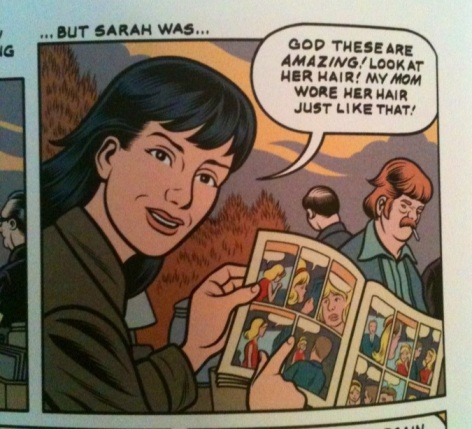
Throughout the narrative, Burns plays his characters against the extreme, often hysterical dramas of 1950s and ’60s romance comics; his strong lines and heavy inks readily recall the early works of Simon and Kirby, but more precise and careful—something closer to Roy Lichtenstein, only more sincere, more emotional.
In The Hive, we learn more about Doug’s troubled relationship with Sarah, who has problems out the proverbial yingyang (not the least of which is a violent psychopathic ex-boyfriend).
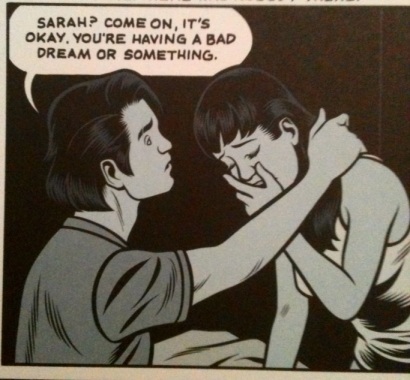
Burns weaves the story of Sarah and Doug’s relationship into the fallout of Doug’s father’s death—a death Doug was completely shuttered to, we realize. Doug’s drug-dreams dramatize the missing pieces of these narratives, and the Interzone set-pieces propel the mystery aspects of the narrative forward, as Doug’s alter-ego plumbs the detritus of his psychic fallout. Through the metatextual motif of reading-comic-books-as-detective-works, Burns explores themes of trauma, abjection, and distance. Images of pigs and cats, freaks and punks, portals and holes litter The Hive.
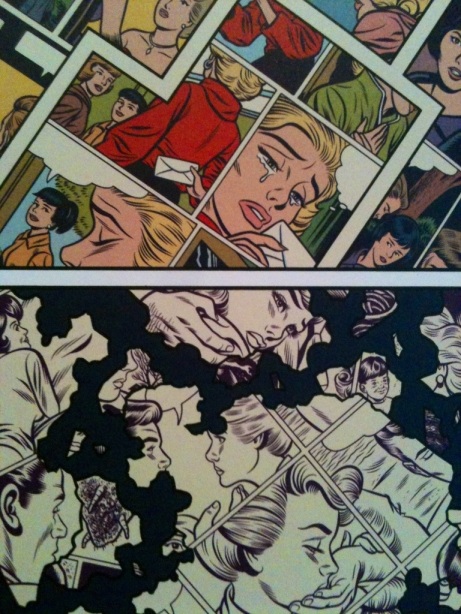
Burns has always been a perfectionist of dark lines and strange visions, and his last full graphic novel Black Hole was a triumph of atmosphere and mood. With the first two entries of his trilogy, however, Burns has showed a significant maturation in storytelling, characterization, and dialogue. I often thought parts of Black Hole seemed forced or rushed (no doubt because Burns faced daunting production troubles during the decade he worked on the novel—including his original publisher Kitchen Sink folding). With X’ed Out and now The Hive we can see a more patient artist, working out an emotionally complex and compelling story in rich, symbolic layers.
I reread X’ed Out and then read The Hive in one greedy sitting; then I went through The Hive again, more slowly, more attendant to its details and nuances. We had to wait two years between X’ed Out and The Hive—and it was worth the two year wait. So if we must wait another two years—or more—for the final entry, Sugar Skull, so be it.
 Biblioklept