He recognizes in all these dislocations, of course, his lonely quest for the impossible mating, the crazy embrace of polarities, as though the distance between the terror and the comedy of the void were somehow erotic—it’s a kind of pornography. No wonder the sailor asked that his eyes be plucked out! He overlays frenzy with freeze frames, the flight of rockets with the staking of the vampire’s heart, Death’s face with thrusting buttocks, cheesecake with chaingangs, and all just to prove to himself over and over again that nothing and everything is true. Slapstick is romance, heroism a dance number. Kisses kill. Back projections are the last adequate measure of freedom and great stars are clocks: no time like the presence. Nothing, like a nun with a switchblade, is happening faster and faster, and cause (that indefinable something) is a happy ending. Or maybe not.
From Robert Coover’s 1987 short story “The Phantom of the Movie Palace.”
Antoine Volodine’s collection of loosely-connected stories Writers (2010; English translation by Katina Rogers, Dalkey Archive, 2014) is 108 pages. I have read the first four of the seven stories here—the first 54 pages. This is the first book by Volodine that I have read. Antoine Volodine is in fact a pseudonym, I know, but I don’t know much else about the writer. I’ve been meaning to read him for a few years, after some good folks suggested I do so, but I’ve never come across any of his books in the wild until this weekend. After I finish Writers I will read more about Volodine, but for now I am enjoying (?) how and what this book teaches me about the bigger project Volodine seems to be working towards.
That bigger project evinces in the first story in the collection, “Mathias Olbane,” which centers on the titular character, a writer who tries to hypnotize himself into a suicide attempt. Poor Mathias goes to prison for twenty-six years — “He had assassinated assassins.” Like most of the figures in Writers (so far anyway—you see by the title of this post that I am reporting from half way through, yes?) — like most of the figures in Writers, Mathias is a revolutionary spirit, resisting capitalist power and conformist order through radical violence. Before prison, Mathias wrote two books. The first, An Autumn at the Boyols’ “consisted of eight short texts, inspired by fantasy or the bizarre, composed in a lusterless but impeccable style. Let’s say that it was a collection that maintained a certain kinship with post-exoticism…” The description of the book approximates a description of Writers itself; notably, Volodine identifies his own genre as post-exoticism. Autumn at the Boyols’ doesn’t sell at all, and its sequel, Splendor of the Skiff (which “recounted a police investigation, several episodes of a global revolution, and traumatizing incursions into dream worlds”) somehow fares even worse. Mathias begins a new kind of writing in prison:
…after twenty-six years in captivity, he had forged approximately a hundred thousand words, divided as follows:
sixty thousand first and last names of victims of unhappineess
twenty thousand names of imaginary plants, mushrooms, and herbs
ten thousand names of places, rivers, and localities
and ten thousand various words that do not belong to any language, but have a certain phonetic logic that makes them sound familiar
I love the mix of tones here: Mathias Olbane’s grand work is useless and strange and sad and ultimately unknowable, and Volodine conveys this with both sinister humor and dark pathos. Once released from prison, our hero immediately becomes afflicted with a rare and incurable and painful disease. Hence, the suicide urge. But let’s move on.
The second tale in Writers, “Speech to the Nomads and the Dead,” offers another iteration of post-exotic writing, both in form and content. The story plays out like a weird nightmare. Linda Woo, isolated and going mad in a prison cell, conjures up an audience of burn victims, an obese dead man, Mongolian nomads, and several crows. She delivers a “lesson” to her auditors (a “lesson,” we learn, is one of post-exoticism’s several genres). The lesson is about the post-exotic writers themselves. She names a few of these post-exotic writers (Volodine is addicted to names, especially strange names), and delivers an invective against the modern powers that the post-exotic writers write against:
Post-exoticism’s writers…have in their memory, without exception, the wars and the ethnic and social exterminations that were carried out from one end of the 20th century to the other, they forget none and pardon none, they also keep permanently in mind the savageries and the inequalities that are exacerbated among men…
The above excerpt is a small taste of Woo’s bitter rant, which goes on for long sentence after long sentence (Volodine is addicted to long sentences). Like Mathias Olbane, Linda Woo writes in the face of futility, creating the “post-exotic word,” a word that creates an “absurd magic” that allows the post-exotic writers to “speak the world.”
Linda Woo’s name appears in the next story in Writers, “Begin-ing,” if only in passing. This story belongs to an unnamed writer, yet another prisoner. Wheelchair-bound, he is interrogated and tortured by two insane inmates who have taken over their prison, having killed their captors. The pair, Greta and Bruno Khatchatourian, are thoroughly horrific, spouting abject insanities that evoke Hieronymus Boschs’s hell. They are terrifying, and I had a nightmare the night that I read “Begin-ing.” It’s never quite clear if Greta and Bruno Khatchatourian are themselves post-exotic writers gone mad or just violent lunatics on the brink of total breakdown. In any case, Volodine affords them dialogue that veers close to a kind of horror-poetry. “We can also spew out the apocalypse,” Greta defiantly sneers. They torture the poor writer. Why?
They would like it, in the end, if he came around to their side, whether by admitting that he’s been, for a thousand years, a clandestine leader of dark forces, or by tracing for them a strategy that could lead them to final victory. … They would like above all for him to help them to drive the dark forces out from the asylum, to prepare a list of spies, they want him to rid the world of the last nurses, of Martians, of colonialists, and of capitalists in general.
The poor writer these lunatics torture turns inward to his own formative memories of first writings, of begin-ing, when he created his own worlds/words in ungrammatical misspelled scrawlings, filling notebook after notebook. Volodine unspools these memories in sentences that carry on for pages, mostly centering on the writer’s strange childhood in an abject classroom where he engages in depravities that evoke Pasolini’s Salò. And yet these memories are the writer’s comfort—or at least resistance—to the lunatics’ violence. Volodine’s prose in “Begin-ing” conjures Goya’s various lunatics, witches, demons, and dogs. It’s all very upsetting stuff.
Courtyard with Lunatics, 1794 by Francisco Goya (1746-1828)
After the depravity of “Begin-ings,” the caustic comedy of the next story “Acknowledgements” is a welcome palate cleanser. In this story’s twelve pages (I wish there were more!) Volodine simultaneously ridicules and exults the “Acknowledgements” page that often appends a novel, elevating the commonplace gesture to its own mock-heroic genre. The story begins with the the hero-writer thanking “Marta and Boris Bielouguine, who plucked me from the swamp that I had unhappily fallen into along with the bag containing my manuscript.” The “swamp” here is not a metaphor, but a literal bog the writer nearly drowned in. And the manuscript? A Meeting at the Boyols’, a title that recalls poor Mathias Olbane’s first book An Autumn at the Boyols’. Each paragraph of “Acknowledgments” is its own vignette, a miniature adventure in the form of a thank-you note to certain parties. Most of the vignettes end in sex or death, or an escape from one of the two. “Grad Litrif and his companion Lioudmila” as well as “the head of the Marbachvili archives” (oh the names in this story!) are thanked for allowing the writer
…to access the notebooks of Vulcain Marbachvili, from which I was able, for my story Long Ago to Bed Early, to copy several sentences before the earthquake struck that engulfed the archives. My thanks to these three people, and apologies to the archivist, as I was sadly unable to locate either her name or her body in the rubble.
“Acknowledgments” is littered with such bodies—sometimes victims of disasters and plagues, and elsewhere the bodies of the married or boyfriended women the writer copulates with before escaping into some new strange circumstances (he often thanks the husbands and the boyfriends, and in one inspired moment, thanks a gardener “who one day had the presence of mind to detain Bernardo Balsamian in the orchard while Grigoria and I showered and got dressed again”). He thanks a couple who shows him their collection of 88 stuffed guinea pigs; he thanks “the leader of the Muslim Bang cell” who, during his “incarceration in Yogyakarta…forbid the prisoners on the floor from sodomizing” him; he thanks the “Happy Days” theater troupe who “had the courage” to perform his play Djann’s Awakening three times “before a rigorously empty room.” Most of the acknowledgments connect the writer’s thank-you to a specific book he’s written. I’m tempted to list them all (oh the names!), but just a few—Tomorrow the Otters, Eve of Pandemic, Journal of Pandemonium, Goodbye Clouds, Goodbye Romeo, Mlatelpopec in Paradise, Macbeth in Paradise, Hell in Paradise…Without exaggeration: “Acknowledgements” is one of the funniest stories I’ve ever read.
With its evocations of mad and obscure writers, Volodine’s books strongly reminds me of Roberto Bolaño’s work. And yet reading it is not like reading an attempt to copy another writer—which Volodine is in no way doing—but rather like reading a writer who has filtered much of the same material of the 20th century through himself, and has come to some of the same tonal and thematic viewpoints—Volodine’s labyrinth is dark and weird and sinister and abject, but also slightly zany and terribly funny. More to come.
To date, Thomas Ruggles Pynchon (American, b. 1937), has published eight novels and one collection of short stories. These books were published between 1963 and 2013. On this day, Thomas Ruggles Pynchon’s 81st birthday, I present my ranking of his novels. My ranking is completely subjective, essentially incomplete (in that I haven’t read two of Pynchon’s novels all the way through), and thoroughly unnecessary. My ranking should be disregarded, but I do not think it should be treated with any malice. You are most welcome to make your own ranking in the comments section of this post, or perhaps elsewhere online, or on a scrap of your own paper, or in personal remarks to a friend or loved one, etc. I have not included the short story collection Slow Learner (1984) in this ranking because it is not a novel.
Here is the list, ranked from not-greatest to greatest:
8. Bleeding Edge (2013)
I have never made it past the first thirty pages of Bleeding Edge, despite two attempts. I don’t even own it. I will probably read it in ten years and see something there that I didn’t see in 2013 or 2015 but for now, I’m not sure.
7. Vineland (1990)
Vineland is the other Pynchon novel I haven’t managed to finish. I’ve tried three times, including a semi-serious shot last year where I stalled after the fourth chapter (around 90 pages in). Vineland seems to have a strange status for Pynchon cultists—its a cult novel in an oeuvre of cult novels, I guess. Perhaps Vineland has a sturdier core to it than I can sense, but even though I dig the goofy humor, I haven’t yet found something to grab onto.
6. Inherent Vice (2009)
I love Inherent Vice. It has a bit of a reputation of being “Pynchon lite,” whatever that means, but I think it’s a much denser book than a first reading might suggest—its shaggy baggy breeziness coheres into something stronger on a second or third read. Inherent Vice is both a diagnosis of the sixties and a prognosis of a future to come.
5. V. (1963)
V. makes a good starting place for anyone new to Pynchon. Even though it’s his first novel, V. already stages Pynchon’s major themes (paranoia, technology, entropy, globalism) in an elastic and discursive narrative style and a zany (and sometimes sinister) tone. These elements continued throughout the next half century in Pynchon’s writing. V. shares a few characters with Gravity’s Rainbow, and in many ways it feels like a dress rehearsal for that bigger, grander, fuller novel—but it reverberates with its own richness. The ninth chapter, the story of of Kurt Mondaugen, is a particularly dark and decadent bit of writing.
4. The Crying of Lot 49 (1966)
The Crying of Lot 49 doesn’t so much convert paranoia into hope as it shows that the two are part and parcel of the same impulse of a consciousness that has to know that it cannot know. Pynchon’s dualities here feel new—paranoia/hope is wrapped into zaniness/horror. He sends us to escape into thelabyrinth. I wrote new in the previous sentence, but Pynchon’s ambiguities resonate with American literature’s dark romantic traditions—Melville, Hawthorne, O’Connor, et al.
3. Against the Day (2006)
Against the Day glides into its sprawl, billowing out into genre trajectories that transcend the boundaries of the plot’s dates (1893-1918). Pynchon’s longest novel to date earns its 1,085-page run, pivoting between comic fantasy, high adventure, flânerie escapade, scientific treatise, and a byzantine global mystery—all weighed down by the ballast of rising modernism. Pynchon merges these styles, both “high” and “low,” into something thoroughly Pynchonian. Despite its length, Against the Day is perhaps Pynchon’s clearest indictment of sinister power, neatly figured in the oligarch Scarsdale Vibe. Just writing about it here makes me want to revisit it again and check in on The Chums of Chance and their marvelous airship The Inconvenience.
2. Mason & Dixon (1997)
Pynchon’s zany/sinister tonal axis, comic bravado, and genre-shifting modes rarely result in what folks narrowly think of as literary realism. His characters can be elastic, cartoonish even—allegorical sometimes (and even grotesque). Mason & Dixon takes two historically real (and historically famous) characters as its subject, and, in a wonderfully hyperbolic 18th-century style, takes the duo on a fantastic journey to measure the world. How does one measure the world though? Pynchon takes on seemingly every subject under the sun in Mason & Dixon, and the novel is very much about the problems and limitations of measuring (and describing, and knowing) itself. But what comes through most strongly in all of Pynchon’s fantasia is the weight of Mason and Dixon’s friendship. It’s the most real thing in a wonderfully unreal novel.
1. Gravity’s Rainbow (1973)
Gravity’s Rainbow is probably the best American postmodern novel ever produced. In any case, I haven’t read another novel that so acutely dissects postwar America. Pynchon extends Eisenhower’s warning of the “military-industrial complex” by adding another element: entertainment. The intuition here surpasses prescience. The problem with Gravity’s Rainbow is that it cannot be read—it has to be reread. Its themes, motifs, and symbols are easy to miss on a first pass through, when you’re likely bugeyed and bewildered. Rereading Gravity’s Rainbow is like reading it for the first time. You have to let the book teach you how to read it. Let it teach you.
Captain Geoffrey “Pirate” Prentice’s bodacious banana breakfast for a bunch of hung over army officers (Gravity’s Rainbow)—
Routine: plug in American blending machine won from some Yank last summer, some poker game, table stakes, B.O.Q. somewhere in the north, never remember now….Chop several bananas into pieces. Make coffee in urn. Get can of milk from cooler. Puree ‘nanas in milk. Lovely. I would coat all the booze-corroded stomachs of England. . . . Bit of marge, still smells all right, melt in the skillet. Peel more bananas, slice lengthwise. Marge sizzling, in go long slices. Light oven whoomp blow us all up someday oh, ha, ha, yes. Peeled whole bananas to go on broiler grill soon as it heats. Find marshmallows. . . .
“You one of those right wing nut outfits?” inquired the diplomatic Metzger. Fallopian twinkled. “They accuse us of being paranoids.” “They?” inquired Metzger, twinkling also. “Us?” asked Oedipa.
“Not quite how it sorts out. Differences among the world religions are in fact rather trivial when compared to the common enemy, the ancient and abiding darkness which all hate, fear, and struggle against without cease”— he made a broad gesture to indicate the limitless taiga all around them— “Shamanism. There isn’t a primitive people anywhere on Earth that can’t be found practicing some form of it. Every state religion, including your own, considers it irrational and pernicious, and has taken steps to eradicate it.”
“What? there’s no ‘state religion’ in the U.S.A., pardner, we’ve got freedom of worship, it’s guaranteed in the Constitution—keeps church and state separate, just so’s we don’t turn into something like England and keep marching off into the brush with bagpipes and Gatling guns, looking for more infidels to wipe out. Nothing personal o’ course.”
“The Cherokee,” replied Prance, “the Apache, the massacre of the Sioux Ghost Dancers at Wounded Knee, every native Red Indian you’ve found, you people have either tried to convert to Christianity or you’ve simply killed.”
“I suggest it was about the fear of medicine men and strange practices, dancing and drug-taking, that allow humans to be in touch with the powerful gods hiding in the landscape, with no need of any official church to mediate it for them. The only drug you’ve ever been comfortable with is alcohol, so you went in and poisoned the tribes with that. Your whole history in America has been one long religious war, secret crusades, disguised under false names. You tried to exterminate African shamanism by kidnapping half the continent into slavery, giving them Christian names, and shoving your peculiar versions of the Bible down their throats, and look what happened.”
“The Civil War? That was economics. Politics.”
“That was the gods you tried to destroy, waiting their hour, taking their revenge. You people really just believe everything you’re taught, don’t you?”
“I’ll be in the bar,” said Reef. Yzles-Bains was in fact one of the few places on the continent of Europe where a sober Anarchist could find a decent Crocodile—equal amounts of rum, absinthe, and the grape spirits known as trois-six—a traditional Anarchist favorite, which Loïc the bartender, a veteran of the Paris Commune, claimed to have been present at the invention of.
1. You may never get to touch the Master, but you can tickle his creatures. 2. The innocence of the creatures is in inverse proportion to the immorality of the Master. 3. If they can get you asking the wrong questions, they don’t have to worry about answers. 4. You hide, they seek. 5. Paranoids are not paranoid because they’re paranoid, but because they keep putting themselves, fucking idiots, deliberately into paranoid situations.
“Somebody quoted Norman Mailer as saying that he wasn’t a better writer because his contemporaries weren’t better…I don’t know whether he really said that or not, but the point I want to make is that no one in Pynchon’s generation can make that statement. If we’re not as good as we should be it’s not because there isn’t a standard. And I think Pynchon, more than any other writer, has set the standard. He’s raised the stakes.”
THE NEXT DAY Reef, Cyprian, and Ratty were out on the Anarchists’ golf course, during a round of Anarchists’ Golf, a craze currently sweeping the civilized world, in which there was no fixed sequence—in fact, no fixed number—of holes, with distances flexible as well, some holes being only putter-distance apart, others uncounted hundreds of yards and requiring a map and compass to locate. Many players had been known to come there at night and dig new ones. Parties were likely to ask, “Do you mind if we don’t play through?” then just go and whack balls at any time and in any direction they liked. Folks were constantly being beaned by approach shots barreling in from unexpected quarters. “This is kind of fun,” Reef said, as an ancient brambled guttie went whizzing by, centimeters from his ear.
David Winters: Literally: the act or way of leaving a place; an emergence, opening or exit. Egress is also a biannual literary magazine devoted to showcasing the most innovative writers on both sides of the Atlantic today. Our first issue features, among others, Gordon Lish, Diane Williams, Sam Lipsyte, Kathryn Scanlan, David Hayden and Kimberly King Parsons.
Biblioklept: How long has Egress been incubating? How did the magazine come about?
DW: Incubation began in May 2017, over a lunch of okonomiyaki in Bloomsbury, London. We met through Gordon Lish. Little Island had published Lish’s White Plains, as well as books by his students Russell Perrson and Jason Schwartz. I’d also alerted Andrew to the work of David Hayden, author of Darker with the Lights On, who has two new stories in Egress #1. So, there was a sense of shared tastes. A sense, too, that UK literary magazines–despite the efforts of a few pioneers—lacked the avant-garde spirit of US publications like NOON and New York Tyrant. We both saw a space for something new. Okonomiyaki, for the benefit of your readers, are a type of savoury Japanese pancake.
Andrew Latimer: Through David and Gordon Lish, I’d discovered writers like Christine Schutt and Sam Lipsyte (both in Egress #1) and desperately wanted a vehicle for engaging this type of work here, in the UK. Egress – the name, the style, the design – all came about quite naturally from a desire to bring writing like this into one place.
Biblioklept: For readers unfamiliar, can you describe the Lishian aesthetic, at least as you see it?
DW: Well, in a sense, there’s no such thing. Journalists in the eighties harped on about ‘minimalism’—a stupid label, with little purchase on the writers in question. Sven Birkerts once claimed there was a ‘School of Gordon Lish’. But Lish’s influence can’t be reduced in that way. Over the decades, hundreds of very different writers have worked with him, learned from him, bounced off him, swerved away from him. What the best of them have in common is an acute sensitivity to the power of language, and a commitment to creating new and lasting art—art that stands apart from the marketplace. Those are also the qualities we prize at Egress. But they are hardly restricted to “Lishian” fiction.
Biblioklept: That “acute sensitivity to the power of language” is on display in the two fictions from Lish in Egress #1, “Jawbone” and “Court of the Kangaroo.” The first Lish story, “Jawbone,” is about this seemingly unimportant minuscule moment, but Lish turns the whole thing into a drama about language itself. There’s this line in “Jawbone” that I kept tripping over, rereading and rereading: “Like lucky thing for the local citizenry someone on your side was there in there on duty on the nightbeat last night in the crapper last night.” The line is simultaneously gorgeous and ugly, elegant and clunky—rapturous really.
AL: Rereading is the key here. We’re familiar with rereading whole stories that we like or ones with endings that puzzle us. But what Lish, and writers of this ilk, ask us to do is to reread sentences in the course of making our first reading. This assumes a reader, a listener even, with the patience to linger over the page, its construction. (Gary Lutz prefers a “page-hugging” to a page-turning reader.)
DW: “Gorgeous and ugly” — exactly, yes. Donald Barthelme once said, “every writer in the country can write a beautiful sentence, or a hundred. What I am interested in is the ugly sentence that is also somehow beautiful.” Lish, when he was teaching, called this “burnt tongue”: “God only listens to those whose tongues are burnt, twisted, crippled.” Writers of fiction can achieve extraordinary power by attending to everything wrong, skewed, erratic in their natural speech — and, rather than being afraid of that wrongness, amplifying it on the page. But power of this kind needn’t be purely spontaneous; it can also be elicited by editing. The sentence you mention went through multiple revisions; Lish reworks his stories obsessively, right up to the final proof stage. When I edit fiction, in my lesser way, I often look out for those off-kilter sentences, isolate them, tweak them, try to increase their tension and pressure.
Biblioklept: How much and what kind of editing did you guys do with Egress #1. I mean, were the authors submitting finished pieces, or were you working with them through the process?
DW: It varies. Some stories are, with the authors’ approval, heavily edited. Some authors come to us in such command of their material that no editing is necessary. Sometimes, editing is simply about discovery: finding the new. Sometimes it’s about reinvention: getting stuck in and making it new. Between these extremes, there’s a whole spectrum of interventions.
Biblioklept: I’ll admit that I opened Egress with the idea that I’d probably go straight to Lish and then maybe read Christine Schutt or Evan Lavender-Smith—some of the writers I’d already read before—before reading ones that were new to me. However, the first story in Egress #1, which is by Kimberly King Parsons had a title that grabbed my attention: “Mr. Corpulent Wants Polaroid Proof.” So I started there, and all the sentences made me want to keep reading, and then read into her second story. Then I read the next story, Grant Maierhofer’s “Everybody’s Darling.” (The opening line “I suppose I took to mother’s unders when the end became too sure” sort of insisted Keep going). How important is sequencing the stories (and essays) of Egress and what was that process like? How much of your editorial mission involves opening up a place for newer voices?
DW: Openings are important. Andrew and I share the view that stories should command attention from their very first sentence–what some would call the ‘attack’. Again, though, an attack doesn’t have to be nailed down straight away; it can emerge in the process of revision. However they’re made, the best openings astonish, seduce, compel us, as you say, to ‘keep going’.
And if literary art is about attention, so too is the art of the literary magazine. Drawing attention to unknown writers has long been the mission of little magazines, ever since the heyday of modernism. Incidentally, this has also been my mission as a critic. When I started writing about Christine Schutt, Evan Lavender-Smith and others, they were largely overlooked and unpublished in the UK. Both in mainstream literary journalism and in the academy, critical attention often fixates on the famous and commercially successful. This is especially true of prose fiction, which inhabits a different institutional ecosystem to, say, poetry. With the current renaissance of small presses, the pendulum is starting to swing the other way. Even so, the writers who make the Booker Prize shortlist or get reviewed in The Guardian are not, by and large, the writers who’ll be remembered decades from now. The market exerts a powerful pull on our collective attention. Good publishing, like good criticism, resists that pull. The task is to look away from what everyone else is looking at–look at what they’re not looking at–and then make them see.
AL: Absolutely – and the sequencing of the stories and essays plays a huge part in showcasing those new voices. As a reader, there is always that pull to go to the names you know and love first. (It’s part of why you pick up a magazine.) But, as an editor, you can’t just rely on the big names; you’ve got to be in the business of making new ones. You have a responsibility to disrupt the reader’s expectations, to put things in their way. Beyond names and reputations, there’s also a careful and deliberate counterpointing of the work in Egress. David and I think about how one story or essay speaks to another, how it’s placement can enrich another’s meaning, its rhythms. This kind of editorial work, the imposition of an overarching rhythm to the issue, wills the reader to ‘keep going’. Catrin Morgan’s illustrations (of various egresses – trapdoors and staircases) are a neat visual cue to the reader to push on, to explore what’s round the corner.
Illustration for Egress #1 by Catrin Morgan
Biblioklept: Some of this blog’s readers might know Catrin Morgan from her illustrated version of Ben Marcus’s The Age of Wire and String. How did you get her involved with Egress? Do you plan for each issue to have a different artist?
AL: Originally we asked her for an image for the front cover, but she ended up drawing all these bizarre stairs and exits that were so compelling I just had to use them. I’d like to continue using her illustrations throughout the text for the future, but there will be a new artist featured in the colour plates each issue. The “artist” for this issue is Hob Broun.
Biblioklept: I know David has been enthusiastic about Hob Broun’s writing for a few years. Broun is sort of a “writer’s writer’s writer,” if that makes sense. The first issue of Egress features a section titled “Remembering Hob Broun: 1950-1987”; in addition to remembrances from the novelist Sam Lipsyte and Kevin McMahon, who befriended Broun when they attended Reed College together in the late sixties, you include a full color selection from one of Broun’s journals. Can you describe some of the journal for readers, and talk a bit about how the Broun section came together? For readers unfamiliar with Broun, what’s the appeal?
DW: Broun is a ‘writer’s (writer’s) writer’ only in that he isn’t well-known–his work isn’t at all opaque or aloof. He published three books in his lifetime, the novels Odditorium (1983) and Inner Tube (1985), and the superb short story collection Cardinal Numbers (1988). While writing Inner Tube, Broun underwent emergency surgery to remove a spinal tumour. He was left paralysed from the neck down. Remarkably, he finished the novel–and wrote the stories in Cardinal Numbers–using a kind of writing-machine: an oral catheter (or ‘sip-and-puff device’) connected to a customised word processor, triggered by his breath whenever a letter flashed on the screen. This aspect of Broun’s life lends itself to mythologization: what better image of writerly dedication? At the same time, it risks obscuring what really matters: the work itself. I was delighted, then, when Kevin McMahon got in touch. Kevin’s essay only glances at Broun’s illness, giving us, instead, a vivid portrait of the man behind the myth. Best of all, Kevin sent us Broun’s personal journal. It’s an extraordinary artefact–a scrapbook of doctored magazine clippings and miniature, fragmentary narratives–unmistakably Brounian in its pulpy, screwball surreality. Broun’s journal is continuous with his fiction (Cardinal Numbers contains the manifesto-like statement, ‘modus operandi: montage, collage, bricolage’), but, unlike his fiction, it wasn’t created for public consumption. Not unlike the art of, say, Ray Johnson or Joseph Cornell, it gives us a glimpse of a private world, a game played for inscrutable reasons—what Don DeLillo calls “the pure game of making up”. Our celebration of Broun ends with a wonderful essay by Sam Lipsyte–a writer Andrew and I both revere–who captures his essence far better than either of us ever could.
Biblioklept: Which of Broun’s three books do you think is the best starting place for folks interested in his work after reading about him in Egress?
DW: Cardinal Numbers, without a doubt. Open Road recently reissued all three titles as e-books, but I’d recommend picking up the old Knopf hardbacks, which can be had for as little as a dollar. Another Broun novel–a previously unpublished manuscript–might be out in a year or two.
Biblioklept: Maybe Egress could get a hold of a few pages.
DW: We’ve been looking at some of his unpublished work, yes.
Biblioklept: Why is it necessary to publish Egress in a physical, print form?
AL: Why is Egress in print? There are so many reasons, but I’ll focus on one. The role of curation has never been more important as it is now. We are distracted: information, entertainment, stuff causes our attention to bleed from one thing to the next. Egress, like all the best journals and mags, is a highly curated affair. David and I wanted there to be a palpable sensation derived from receiving and reading each issue of the magazine. The style of writing, the artwork, the design. Much of that effect relies on all the pieces being enclosed between covers – simultaneously held together and also cut off, if only briefly, from everything else that’s going on. It’s hard, likely impossible, to get that same sense of quietude, to enforce focus, when reading on a screen as infinite worlds suggest themselves merely clicks away. As well as this, there’s an indispensable sense of occasion one gets from a print magazine: ‘when is it out?’ The magazine, as a format, craves temporality.
Biblioklept: Do you envision future issues of Egress publishing some of the authors featured in the first issue?
AL: Yes, definitely.
Biblioklept: There’s an obvious aesthetic value to a literary journal or magazine publishing the same authors frequently, but are there any risks?
DW: There are risks and rewards. Magazines like Egress serve two roles in the culture. Our primary role is to discover and promote new writers. Often unpublished, unagented, and lacking industry connections, these writers reside at the margins. But we believe in them, fervently, and we believe they deserve to be heard. This gives rise to a second role. You might even call it a moral responsibility. Newness needs to be nurtured, protected, given a space in which it can grow. One contributor to Egress #1 only began writing fiction six months ago. She’d published nothing before she came to us. But what she’s doing is truly unique. Will we publish her again? You bet. We’ll do everything in our power to support her work. The same goes for any writer we believe in. If you do that and keep doing it–if you keep bringing new writers together–you become something more than a magazine. You become a community. Look at the best literary magazines of recent decades–from The Quarterly through to elimae, NOON, Tyrant and Unsaid–and that’s what you’ll see: artistic communities. Temporary autonomous zones; bubbles in which innovation can flourish. The risk, of course–and here I could name several lesser litmags–is that such communities can solidify into coteries, stables, ‘closed shops’. We’ll champion writers as long as they need us, but we’ll never close ourselves off in that way. After all, the real thrill is when someone comes to you from out of nowhere–no publications, no social media accounts, no ‘platform’, fuck, even no cover letter–just power on the page.
Biblioklept: Have you ever stolen a book?
DW: Sure, when they’re overpriced or out of print. Worse, I’ve had others steal them for me. Years ago, a friend went to great lengths to liberate Ilya Prigogine and Isabelle Stengers’ Order Out of Chaos from a university library for me. And a contributor to Egress #2 once smuggled an exorbitantly priced theology monograph out of a bookshop on my behalf. (Sorry Julie—see you in prison!)
AL: I’m bad for stealing books from places I’m staying at — friends’, hostels, BnBs — especially if I think I’d appreciate the book more myself. My favourite steal so far has been Epitaph of a Small Winner by Machado de Assis, which I’ve read the covers off so can’t return that now (not that I would).
Illustration for Egress #1 by Catrin Morgan
The first issue of Egressis out now in the UK. It will be available in the US on 21 June 2018.
David Winters is a literary critic. He has written for the Times Literary Supplement, the Los Angeles Review of Books, Bookforum, The Brooklyn Rail and elsewhere. He currently holds a postdoctoral research fellowship at the University of Cambridge, where he is writing a book about Gordon Lish. He co-edits both Egress and 3:AM Magazine, and can be found online at www.davidwinters.uk.
I listened to an audiobook of Claire-Louise Bennett’s 2016 book Pond a few weeks ago, and then wound up getting a digital copy so that I could reread the stories in it.
Pond did something electric to me.
I audited most of it over the course of a weekend. This particular weekend was the first weekend of March. We had an unusually cold February in North Florida, and I’d more or less let my lawn and gardens go to hell. I audited most of Pond while gardening—cutting back dead branches, pulling thorny vines, clipping bushes, etc. I even dug a hole or two.
I had not read a review of Pond before auditing and then reading it; I’d just heard (probably on Twitter) that it was good and odd. I point out that I did not know anything about Pond before getting in to it because I mistakenly thought that Pond was a novel for most of the auditing experience. I realized only toward the end that it was not, properly speaking, a novel—or at least not a novel in the sense that we think of novels as “novels.” Pond is more like a series of related vignettes about a young woman’s life in a remote village in Ireland. And I’m not even sure what I mean by “young woman’s life” in that previous sentence. Let it stand that the book won me over very quickly with “Morning, Noon & Night,” an episode that begins with the aesthetics of breakfast, includes an ill-advised gardening adventure, a hostile academic conference, some sexy emails, and culminates in chopping. It’s wonderful.
Pond does so many things that I always want a book to do, by which I mean that Pond does things that I didn’t know I wanted a book to do until the book has done them.
Pond is unique (are we allowed to use that word?) and thus reminds me of other innovative prose I love: William Carlos Williams’ poetry, Lydia Davis’s stuff, the fictions Jason Schwartz and Gary Lutz, David Markson’s Wittgenstein’s Mistress.
But the title of this post is “Blog about Claire-Louise Bennett’s short story ‘Stir-fry,'” and I have produced a few hundred words thus far, none about Claire-Louise Bennett’s short story “Stir-fry.”
(I chose to blog about “Stir-fry”not because it is my favorite in the collection or because it is an especially representative sample of Bennett’s prose, but because it is short. The longer piece “Morning, Noon & Night” offers a richer sample of Bennett’s powers and you can click on that link and read it for free and see for yourself).
Okay, “Stir-fry.”
The story is a title and two sentences.
The title specifies the ostensible subject of the story, dinner.
But the story is not about dinner; the story is about throwing dinner away.
But is the story even about throwing dinner away? I suppose that’s the central action that takes place in “Stir-fry” — tossing food away — but the story is also about consciousness in the creative process.
Our narrator creates something that she knows she intends to throw away immediately after its creation.
Hence, the key line to the story is the one that begins with the coordinating conjunction so. Bennett emphasizes the line by typographically isolating it; the effect on the page approximates poetry rather than traditional prose.
“so I put in it all the things I never want to see again”: A stir-fry is usually made at least in part from leftovers or food that must be eaten soon or tossed. If we read the story literally (which we should of course), we can fill in the details with our sympathetic imaginations: A bit of rice from three days ago. That last onion. A solitary carrot going to rubber. A stub of ginger. Two small peppers, their skin now papery. The last bit of Sunday’s roast chicken. Etc.
There is something deeply satisfying for some of us in using all the food in our refrigerator.
But I think our sympathetic imagination could extend that phrase “things I never want to see again” even farther than the last few stray vegetables or half of a leftover pork loin or an egg clearly reaching its expiration: What else might have our narrator mixed into her stir-fry? The last little bits of blackberry jam that cling to a jar? Pickles she made two years ago? A questionable yogurt? Pine nuts past their prime? Those turnips? Why did we buy those turnips?
And we can push the phrase even farther if we want: If we are creating something that we know that we will immediately discard and not use for its ostensible purpose (in this case, sustenance, life force), what else might we stir in there? What are all the things we “never want to see again”? All our feeble faults and deficiencies? Our terrible creeping anxieties? Even the bad ambitions we so often trip over? Could we throw war, prejudice, avarice into our stir-fry, and then throw those away too?
Maybe I have pushed an interpretation of “Stir-fry” far too far. But I do read the vignette as a fantasy of sorts. Our narrator consciously creates something she intends to uncreate. This creative uncreation allows her to eliminate all the things she never wants to see again. The fantasy here is about opening up a new way of seeing, one unencumbered by the stale, the musty, the rancid. The desire I see is to see and taste with a fresh spirit.
Or maybe “Stir-fry” is just about throwing away dinner.
This weekend I picked up a new audiobook collection of Robert Coover short stories which has been titled Going for a Beer (presumably because “Going for a Beer” is a perfect short story). The audiobook contains 30 stories and is read by Charlie Thurston, a more than capable as an orator.
The opening story is one of Coover’s earliest published stories. “The Brother” (1962) retells the Noah narrative from the book of Genesis. I just wrote “retells,” but that’s not really the right term. Instead of retelling the story of Noah and the ark and YHWH’s flood, Coover imagines the apocalyptic affair from the perspective of Noah’s younger brother, who narrates this tale.
Noah’s unnamed brother is an earthy, sensual fellow who loves his wife and loves his wine. His wife—a sympathetic and endearing figure—is pregnant with their first child. They’re already picking out names (“Nathaniel or Anna”). Brother Noah keeps taking the narrator from his own familial duties to help build a boat though:
right there right there in the middle of the damn field he says he wants to put that thing together him and his buggy ideas and so me I says “how the hell you gonna get it down to the water?” but he just focuses me out sweepin the blue his eyes rollin like they do when he gets het on some new lunatic notion and he says not to worry none about that just would I help him for God’s sake and because he don’t know how he can get it done in time otherwise and though you’d have to be loonier than him to say yes I says I will of course I always would crazy as my brother is I’ve done little else since I was born and my wife she says “I can’t figure it out I can’t sec why you always have to be babyin that old fool he ain’t never done nothin for you God knows and you got enough to do here fields need plowin it’s a bad enough year already my God and now that red-eyed brother of yours wingin around like a damn cloud and not knowin what in the world he’s doin buildin a damn boat in the country my God what next? you’re a damn fool I tell you” but packs me some sandwiches just the same and some sandwiches for my brother
That’s kinda-sorta the opening paragraph—although no it’s not, because the whole story is just one big paragraph, a big oral fragment really, which begins with a lower-case r and keeps going in a verbal rush whose only concessions to punctuation are question marks and quotation marks. No periods or commas here folks. On the page, “The Brother” perhaps approximates the blockish brickish look of a Gutenberg Bible or even the Torah, neither of which give the reader a nice period to rest on, let alone a friendly pause between paragraphs.
“The Brother” might be typographically daunting, but the apparent thickness of verbal force on the page belies its oral charms. The story is meant to be read out loud. Hell, it’s biblical, after all—a witnessing. Read aloud, “The Brother” shows us a deeply sympathetic pair of characters, a husband and wife whose small pleasures, telegraphed in naturalistic speech, might remind the auditor of real persons living today. And yet there’s an apocalyptic backdrop here. Noah’s brother and Noah’s brother’s wife—and their unborn child, and all the unborn children—will not survive YHWH’s flood.
Coover does not paint Noah as anything but a shrugging reluctant weirdo. He’s no prophet who warns and helps his brother, but rather a defeated man:
and it ain’t no goddamn fishin boat he wants to put up neither in fact it’s the biggest damn thing I ever heard of and for weeks wee\s I’m tellin you we ain’t doin nothin but cuttin down pine trees and haulin them out to his field which is really pretty high up a hill and my God that’s work lemme tell you and my wife she sighs and says I am really crazy r-e-a-l-l-y crazy and her four months with a child and tryin to do my work and hers too and still when I come home from haulin timbers around all day she’s got enough left to rub my shoulders and the small of my back and fix a hot meal her long black hair pulled to a knot behind her head and hangin marvelously down her back her eyes gentle but very tired my God and I says to my brother I says “look I got a lotta work to do buddy you’ll have to finish this idiot thing yourself I wanna help you all I can you know that but” and he looks off and he says “it don’t matter none your work” and I says “the hell it don’t how you think me and my wife we’re gonna eat I mean where do you think this food comes from you been puttin away man? you can’t eat this goddamn boat out here ready to rot in that bastard sun” and he just sighs long and says “no it just don’t matter” and he sits him down on a rock kinda tired like and stares off and looks like he might even for God’s sake cry
Noah’s dismissing his brother’s work strikes me as utterly cruel—he makes no attempt to explain why his brother’s efforts at creating a better world are in vain. I shared the passage at length again in part because I hope you’ll read it aloud gentle reader, but also that you’ll note that maybe you didn’t note all its blasphemies—Coover’s story is larded with “my Gods” and “damns” and “goddamns,” no different than the speech of 1962, no different than the speech of 2018.
Coover gives us a narrator like us, human, earthly, driven by simple pleasures and a basic sense of love. Noah comes off like a prick. The Bible loves its heroes, but the ordinary folks don’t even get to live in the margins. There’s more morality in orality though—in conversation and communication and talk.
You don’t have to buy the audiobook though to hear “The Brother.” Here is Coover reading it himself:
In the final third of Nathaniel Hawthorne’s 1852 novel The Blithedale Romance, the narrator, having departed the titular would-be utopian farm, enjoys some city time in a hotel. He takes a voyeuristic pleasure in watching people from his window, and elects to deepen the pleasure by ordering a drink: “Just about this time a waiter entered my room. The truth was, I had rung the bell and ordered a sherry-cobbler.” The explanatory end note for my Penguin Classics copy of Blithedale gives the following recipe: “A drink made with sherry, lemon juice, sugar, and cracked ice.” I decided to make a few.
A brief internet search resulted in dozens and dozens of recipes, all more or less the same iteration: long glass, crushed ice, sherry, simple syrup, citrus (oranges cited most frequently), fresh berries if you have ’em, and a straw. The straw is the kicker here. Here is a passage from Charles Dickens’ 1844 novel Life and Adventures of Martin Chuzzlewitthat shows the titular hero’s delight with his first sherry cobbler (note Chuzzlewit’s ecstasy when he gets “the reed” to his lips):
‘I wish you would pull off my boots for me,’ said Martin, dropping into one of the chairs ‘I am quite knocked up—dead beat, Mark.’
‘You won’t say that to-morrow morning, sir,’ returned Mr Tapley; ‘nor even to-night, sir, when you’ve made a trial of this.’ With which he produced a very large tumbler, piled up to the brim with little blocks of clear transparent ice, through which one or two thin slices of lemon, and a golden liquid of delicious appearance, appealed from the still depths below, to the loving eye of the spectator.
‘What do you call this?’ said Martin.
But Mr Tapley made no answer; merely plunging a reed into the mixture—which caused a pleasant commotion among the pieces of ice—and signifying by an expressive gesture that it was to be pumped up through that agency by the enraptured drinker.
Martin took the glass with an astonished look; applied his lips to the reed; and cast up his eyes once in ecstasy. He paused no more until the goblet was drained to the last drop.
‘There, sir!’ said Mark, taking it from him with a triumphant face; ‘if ever you should happen to be dead beat again, when I ain’t in the way, all you’ve got to do is to ask the nearest man to go and fetch a cobbler.’
‘To go and fetch a cobbler?’ repeated Martin.
‘This wonderful invention, sir,’ said Mark, tenderly patting the empty glass, ‘is called a cobbler. Sherry cobbler when you name it long; cobbler, when you name it short. Now you’re equal to having your boots took off, and are, in every particular worth mentioning, another man.’
Anyway. Where was I? Oh, yeah—so I looked around for recipes. David Wondrich’s 2007 cocktail history Imbibe! gives a helpful baseline recipe by citing Jerry Thomas’s 1862 classic, How to Mix Drinks. From Thomas’s book:
Thomas doesn’t mention muddling the oranges, although pretty much every online recipe I read called for muddling.
So reader, I muddled.
Here is my variation on the sherry cobbler (or Sherry Cobbler, or sherry-cobbler). In the loose spirit of the cocktail, I made ours entirely of ingredients I already had at the house. These were for each cocktail:
–4 oz of sherry
–1/2 oz of simple syrup
–1/2 oz of maraschino syrup
–1 oz of sparkling water
–1 clementine (muddled)
–sprigs of mint
–blueberries
–crushed ice
The maraschino syrup was an afterthought after I’d mixed the cocktail and was about to pour it over ice—I wanted to get a pop of color at the bottom of the glass. The mint and blueberries were from our garden. The pic above is lousy; sorry—not sure why I didn’t move the dishcloth and maybe photograph the cocktails like, uh, not in front of my wife’s kombucha hotels.
So how was it? Pretty refreshing. My wife enjoyed it more than I did, although I’m not a huge cocktail guy. (I think it’s pretty hard, for example, to improve upon neat scotch , although I do like bourbon straight up in the hotter months).
I’ve always been fascinated by literary recipes, so I’m a bit surprised the sherry cobbler has evaded my attention until now, despite its having shown up in various novels I’ve read (including Nicholson Baker’s House of Holes, as Troy Patterson pointed out in a remarkably thorough literary history of the cocktail at Slate years ago). I’m not sure I’d go out of my way to make a sherry cobbler again (not that I went out of my way to make these ones), but the basic cobbler recipe’s spirit is very close to my approach to making cocktails at home anyway—use what you have. In fact, the major difference between the sherry cobblers I made yesterday and the kind of cocktail I’d normally cobble together for my wife on a Saturday afternoon is the sherry—I’d usually use rum or maybe vodka. Anyway, the whole thing was fun, which is like, the point of cocktails.
In the novel’s second chapter, the Hawthorne-figure (Coverdale) arrives at Blithedale on “an April day, as already hinted, and well towards the middle of the month.” He complains that though the morning could be described as “balmy,” by noon it was snowing. Hawthorne’s corresponding journal entry (composed over a decade before he published Blithedale) perhaps-mockingly refers to Brook Farm as a “polar Paradise”; some of this language finds its way into the protagonist’s description of Blithdale: “Paradise, indeed! Nobody else in the world, I am bold to affirm—nobody, at least, in our bleak little world of New England,—had dreamed of Paradise that day except as the pole suggests the tropic.”
There are twenty-four chapters to Blithedale, and Hawthorne devotes the first five to that first day (presumably April 13th, 1841). The novel’s sixth chapter, “Coverdale’s Sick Chamber,” begins the next morning with our narrator too sick to attend to his first day of farm work. However, Hawthorne’s journal makes clear that the real-life Hawthorne did not fall ill until a few weeks later, around April 28th, and that he recovered around May 4th (“My cold no longer troubles me, and all the morning I have been at work under the clear, blue sky, on a hill-side”).
(I know my audience—you come to this site to read about Nathaniel Hawthorne’s head colds, right?).
Unlike his stand-in Coverdale, Hawthorne went to work at Brook Farm almost immediately. He recounts his first morning’s work in his journal entry for April 14, which I have annotated via footnotes:
April 14th, 10 A.M.–. . . I did not milk thecows last night, 1 because Mr. Ripley 2 was afraid to trust them to my hands, or me to their horns 3, I know not which. But this morning I have done wonders. 4 Before breakfast, I went out to the barn and began to chop hay for the cattle, and with such “righteous vehemence,” as Mr. Ripley says, did I labor, that in the space of ten minutes I broke the machine. 5 Then I brought wood and replenished the fires; and finally went down to breakfast, and ate up a huge mound of buckwheat cakes. 6 After breakfast, Mr. Ripley put a four-pronged instrument into my hands, which he gave me to understand was called a pitchfork 7; and he and Mr. Farley being armed with similar weapons, we all three commenced a gallant attack upon a heap of manure. This office being concluded 8, and I having purified myself, I sit down to finish this letter. . . .
Miss Fuller’s 9 cow hooks the other cows, and has made herself ruler of the herd, and behaves in a very tyrannical manner. . . . I shall make an excellent husbandman,–I feel the original Adam 10 reviving within me.
1 Coverdale’s first night at Blithedale ends with Slias Foster (the only real farmer there) telling everyone to go to sleep early as they have “nine cows to milk, and a dozen other things to do, before breakfast.”
2 George Ripley, a Unitarian minister and charter member of the Transcendentalist Club, founded Brook Farm in 1840. Following Charles Fourier’s brand of communal socialism, Brook Farm was intended to put transcendentalist idealism into concrete action. Ripley has no clear corollary in Blithedale as far as I can tell.
3 Never fear—Hawthorne reports in his journal a few days later (April 16th): “I have milked a cow!!!” What charming enthusiasm! Not two !! but three exclamation marks!!! Hawthorne only deploys a triple exclamation one other time in the journals collected as The American-Notebooks: On May 31st, 1844, he joyously notes, “P.S. 3 o’clock.–The beef is done!!!” Dude got excited for bovines.
4 I genuinely love Hawthorne’s ironic humor, which I think is often overlooked by some readers.
5 Good job breaking the farm equipment there, city boy! The reference to “machine” here is vague; you can read more about 19th-century feed-cutters (and see some images of them) here.
6 A contemporaryish recipe for buckwheat cakes from S. S. Schoff and B. S. Caswell’s 1867 cookbook The People’s Own Book of Recipes and Information for the Million: Containing Directions for the Preservation of Health, for the Treatment of the Sick and the Conduct of the Sick-room : with a Full Discussion of the More Prominent Diseases that Afflict the Human Family, with Full Directions for Their Rational Treatment : Also, 1000 Practical and Useful Recipes, Embracing Every Department of Domestic Economy and Human Industry : with Copious Notes and Emendations, Explanatory and Suggestive:
7 If you haven’t caught on, Hawthorne (and the rest of these fops too) is going to be a terrible farmer.
8 Hawthorne’s phrase “a gallant attack upon a heap of manure” is a wonderfully poetic turn, but his referring to finishing his shit-shoveling as “this office being concluded” straight up kills me.
9 Margaret Fuller was the author of Woman in the Nineteenth Century, one of American feminism’s earliest works. She was also the first editor of The Dial, (first a transcendentalist journal, and later a vehicle for modernist literature). Fuller spent time at Brook Farm, although she was never a full member. Many critics and historians suggest that Fuller is in part the inspiration for Zenobia, the soul of Hawthorne’s Blithedale.
10 The biblical Adam was of course the first gardener. Hawthorne’s romantic turn of phrase points to the idealism of Brook Farm’s utopian experiment—but also underscores the eventual fall.
Brook Farm, Oak Hill, April 13th, 1841.–. . . Here I am in a polar Paradise! I know not how to interpret this aspect of nature,–whether it be of good or evil omen to our enterprise. But I reflect that the Plymouth pilgrims arrived in the midst ofstorm, and stepped ashore upon mountain snow-drifts; and, nevertheless, they prospered, and became a great people,–and doubtless it will be the same with us. I laud my stars, however, that you will not have your first impressions of (perhaps) our future home from such a day as this, . . . Through faith, I persist in believing that Spring and Summer will come in their due season; but the unregenerated man shivers within me, and suggests a doubt whether I may not have wandered within the precincts of the Arctic Circle, and chosen my heritage among everlasting snows, . . . Provide yourself with a good stock of furs, and, if you can obtain the skin of a polar bear, you will find it a very suitable summer dress for this region. . . .
I have not yet taken my first lesson in agriculture, except that I went to see our cows foddered, yesterday afternoon. We have eight of our own; and the number is now increased by a transcendental heifer belonging to Miss Margaret Fuller. She is very fractious, I believe, and apt to kick over the milk-pail. . . . I intend to convert myself into a milkmaid this evening, but I pray Heaven that Mr. Ripley may be moved to assign me the kindliest cow in the herd, otherwise I shall perform my duty with fear and trembling.
I like my brethren in affliction very well; and, could you see us sitting round our table at meal-times, before the great kitchen fire, you would call it a cheerful sight. Mrs. B—- is a most comfortable woman to behold. She looks as if her ample person were stuffed full of tenderness,–indeed, as if she were all one great, kind heart.
The entry is the first of Hawthorne’s journals to mention Brook Farm, a utopian enterprise that forms the basis of Hawthorne’s 1852 novel The Blithedale Romance (which I am currently re-reading).
I’m not sure exactly how many nested layers there are to Lydia Davis’s short story “Happiest Moment.” Sometimes I count as many as nine frames to the tale, sometimes only four or five. Sometimes the story seems its own discrete entity. A matryoshka doll could look like one thing or lots of things, I guess, and this matryoskha doll points back at herself: When you open the final doll, the minutest level of narrative, you find that you’ve found the source of the story. The biggest doll is there nesting in the belly of the smallest doll.
But I’m getting ahead, maybe. Break it down:
“Happiest Moment”
The title is the first frame, the big doll that declares: This is a story.
If you
The second-person pronoun here is general, sure, but also points directly at you, you reader you. We have here another frame, one outside of the story (because you are the reader) but also bounded inside of it (as the character you).
ask her what is a favorite story she has written,
We’re not into the next frame yet, but we’ve got a new character, a her—a story writer! Like Lydia Davis! The author of this particular story!
she will hesitate for a long time
Still no new frame, but rather the space between layers, the hesitation, the drawing together of thought, judgment, analysis, reflection—Davis doesn’t make the reader feel any of that rhetorically, instead snappily snapping to the point of this whole deal.
and then say
Okay here’s the next frame. I’m not counting though.
it may be this story that she read in a book once:
Good lord, where to start here. Okay, so, we have another frame, but even more significantly, we have this verbal shift: Our her, our she, our hero-author, who has been asked (hypothetically by interlocutor you) about a favorite story she’s written avers that the favorite story she’s written is a story that she read in a book once.
(To save me the trouble of coming back later: Of course our hero-author is writing the story she read in a book once now; “Happiest Moment” is this performance, kinda, sorta, kindasorta).
an English language teacher in China
There’s a frame.
asked his Chinese student
Another frame (and a second ask).
to say what was the happiest moment in his life.
The student, like the hero-author-has to say his answer (not write it).
The student hesitated for a long time.
(Like the hero-author—note the precise repetition of verbs in this tale).
At last he smiled with embarrassment
(God I love this guy).
and said that his wife had once gone to Beijing and eaten duck there,
(We’re getting to our climax folks).
and she often told him about it,
Another frame, another telling.
and he would have to say
Our verb, our answer—
that the happiest moment of his life was her trip and the eating of the duck.
What a sweet, sweet ending.
The Chinese English language student’s wife’s enjoyment of duck in Beijing is his favorite memory, despite it not being a memory at all, but rather the story of a memory, not his own, but his beloved’s. He relays this memory of someone else’s to his English teacher and the memory somehow ends up in a book, which the hero-author of “Happiest Moment” somehow reads, and then attests to be the most favorite story she has written, despite the fact that she makes it clear that this is a story she read and didn’t write—although of course, she wrote it, because it is the story “Happiest Moment.”
William Carlos Williams’ final and posthumous book Pictures from Brueghel and Other Poems (1962) opens with a cycle of ten ekphrastic poems that describe (and subtly interpret) ten paintings by the sixteenth-century Flemish painter Pieter Brueghel the Elder.
These poems are, in my estimation, some of Williams’ finest. Possibly the most famous of these poems is “Landscape with the Fall of Icarus,” a devastating observation of how inclined we are to look away from miracles.
Another of Williams’ Brueghel poems, “The Dance,” which takes The Peasant Dance as its subject, is also widely-anthologized; however Williams’ poem “The Dance” was published in The Wedge (1944). Williams’ “The Dance,” which begins “In Breughel’s great picture, The Kermess, / the dancers go round,” is frequently and incorrectly cited to have been published in Pictures from Brueghel (a cursory internet search shows this misinformation appears in Harper’s, as well as the last resort of lazy high school students, Shmoop). Williams did publish a poem called “The Dance” in Pictures from Brueghel and Other Poems, but this “Dance” is very much one of those other poems (this “Dance” begins “When the snow falls the flakes / spin upon the long axis,” for the record). That The Peasant Wedding is another subject of Pictures of Brueghel may also account for the spread of this misinformation (which can be resolved simply by opening the second volume of The Collected Poems of William Carlos Williams, which includes both The Wedge and Brueghel). But I find myself going on a bit too much about this simple mistake.
Let’s get to the poem:
“The Wedding Dance in the Open Air”
by
William Carlos Williams
Disciplined by the artist
to go round
& round
in holiday gear
a riotously gay rabble of
peasants and their
ample-bottomed doxies
fills
the market square
featured by the women in
their starched
white headgear
they prance or go openly
toward the wood’s
edges
round and around in
rough shoes and
farm breeches
mouths agape
Oya !
kicking up their heels
“The Wedding Dance in the Open Air” echoes the sensual depth of Williams’ earlier poem “The Dance” (1944), which emphasized the hips and bellies and shanks of those dancers who are “swinging their butts” (!) to “the squeal and the blare and the / tweedle of bagpipes” as they prance about.
The word “prance” is repeated too in “Wedding Dance” — and not only do our partygoers prance, they even “go openly / toward the wood’s / edges,” the edge of civilization where civilization gets made.
At the other edge of the painting, the foreground, are some of the boldest of Williams’ “riotously gay rabble.” But should I call them “Williams’ ‘riotously gay rabble'” or Brueghel’s? I think that it is Williams’ interpretation that matters here, but Brueghel gives him the material with which to grapple.
Look at those colors, look at those codpieces! Look at the hands, twisting, gripping, artfully fingering!
Williams captures the painting’s sexual energy not just in lines that highlight the “ample-bottomed doxies” who fill this market square, but also in the vivacious images of “mouths agape” and heels a’ kicking. The poem pulses with an energy proximal to the painting, an energy simultaneously alien and native, highlighting not only the difference in the two art forms—poetry and painting—but also the space between the viewer and the thing being viewed.
Enhancing the poem’s ekphrastic powers of imagery and feeling are the subtle rhymes of Williams’ “The Wedding Dance.” While one can find the odd (very odd) rhyme or three in WCW’s poetry, “The Wedding Dance” makes for one of the poet’s more direct concessions to poetry’s most common formal feature. The second stanza gives us “gear” slipping into “their,” picked up again in the fourth stanza’s “headgear,” and more subtly touched on in the final lines of stanzas six and seven, “breeches” and “heels.” Hell, “edges” in the fifth stanza basically rhymes with “breeches.” This thread of slant rhymes approximates the off-kilter, elliptical dance Brueghel depicts. Williams kneads guttural g sounds and harsh rs into his poem, roughening his poetry to match his rustic subject. And yet there’s just the right measure of sensuality that slips through the poem, just enough to get the rough words wet.
Like any successful ekphrasis, Williams’ poem transcends a mere physical description of art. He does describe The Wedding Dance in Open Air, yes, but the description does more than relay the physical contours of Brueghel’s art, or Williams’ analysis of Brueghel’s art—William gives us something of the painting’s spirit, captured in language, sound—another way of feeling something beautiful. Oya!
This afternoon I got to Ch. XIII of Nathaniel Hawthorne’s novel The Blithedale Romance. Titled “Zenobia’s Legend,” most of the chapter is given over to the titular heroine’s tale “The Silvery Veil,” a wonderfully pre-postmodern moment in Hawthorne’s novel.
Let’s look lookingly at the layers: The Blithdale Romance is Hawthorne’s ironic-but-sincere dark-romantic semi-autobiographical account of his time at Brook Farm, a failed utopian community of Transcendentalists who maybe didn’t quite, uh, transcend. Zenobia is based partially on the great American feminist Margaret Fuller (who also did time on Brook Farm). Taking center stage here in (the aptly-numbered) thirteenth chapter of Blithedale, Zenobia extemporizes a story about The Veiled Lady. This Veiled Lady is a local celebrity, a clairvoyant of some renown who (we learn in the opening chapter of the novel) has recently disappeared. Zenobia’s yarn is a leisure-time amusement, one she contends that she’ll spin to get out of an apparent rut:
“I am getting weary of this,” said she, after a moment’s thought. “Our own features, and our own figures and airs, show a little too intrusively through all the characters we assume. We have so much familiarity with one another’s realities, that we cannot remove ourselves, at pleasure, into an imaginary sphere. Let us have no more pictures to-night; but, to make you what poor amends I can, how would you like to have me trump up a wild, spectral legend, on the spur of the moment?”
Ironically however, Zenobia clearly relies on her “own features” as well as the features of Blithedale’s spectral ingenue Priscilla to inform her performance. Despite her declaration to “remove” herself and her auditors “into an imaginary sphere,” Zenobia essentially recasts poor Priscilla’s waifery into a supernatural ultraromantic mode. The story’s basic conceit is thus: There is a famous veiled lady who may be extraordinarily beautiful or who may be extraordinarily ugly. No one knows what she looks like because like the the veil obviously hides her face, preventing any viewer’s agency to interpret for himself.
Zenobia’s legend is a tale within a tale within a tale—a performance that each member of the small Blithedale community will recode into their own readings. However, Zenobia guides her audience toward a certain conclusion, all but declaring that meek Priscilla is in fact the Veiled Lady—hell, Zenobia even throws a bit of gauze she’d been vamping with over the poor dear’s head at the climax of her tale.
“The Silvery Veil,” in another pre-postmodern layer, is a thin but clear echo of Hawthorne’s famous allegory “The Minister’s Black Veil,” which was published 15 years before The Blithedale Romance, and would clearly have been known to Hawthorne’s intended audience of Transcendentalites. (There’s perhaps a more clear connection between “The Silvery Veil” and “The Minister’s Black Veil” : Hawthorne likely based the titular minister on the real-life preacher Joseph Moody, who wore a handkerchief over his face. Blithedale features a character named “Old Moodie” who we eventually learn is Pricilla’s secret father).
So Hawthorne overloads the allegory with meaning and misdirection—is Zenobia’s legend “The Silvery Veil” the secret key to Priscilla’s identity? A clue to Blithedale’s destiny? A watery paraphrase of Hawthorne’s own stronger story, “The Minister’s Black Veil”? Simply a Saturday night’s entertainment?
The trick of the tale I think rests in the undecidability of what’s under the veil, in the not knowing, which is neatly summed up in a paragraph:
Some upheld that the veil covered the most beautiful countenance in the world; others,—and certainly with more reason, considering the sex of the Veiled Lady,—that the face was the most hideous and horrible, and that this was her sole motive for hiding it. It was the face of a corpse; it was the head of a skeleton; it was a monstrous visage, with snaky locks, like Medusa’s, and one great red eye in the centre of the forehead. Again, it was affirmed that there was no single and unchangeable set of features beneath the veil; but that whosoever should be bold enough to lift it would behold the features of that person, in all the world, who was destined to be his fate; perhaps he would be greeted by the tender smile of the woman whom he loved, or, quite as probably, the deadly scowl of his bitterest enemy would throw a blight over his life.
Hawthorne’s description here immediately reminded me of Joelle van Dyne aka Madame Psychosis aka the P.G.O.A.T., a character in David Foster Wallace’s novel Infinite Jest who wears a veil either because she’s too beautiful to behold and/or because she bears a physical deformity to abject to bear. I can’t actually remember if it’s the “and” or the “or” in that previous sentence that’s correct, even though I’ve read IJ a few times (and even not that long ago). Which is like, maybe the point of this literary veiling—what I mean is that we read faces, we read expressions, and the veil covers over what we would read directly, giving us a blank space to interpret through the lens of our wild (or not so wild) imaginations. Hawthorne’s veils (and maybe Wallace’s veils) require an inward reading, asking us to interpret a signifier that does not bear a clear signified—a most puzzling sign.
Ursula K. Le Guin’s 1982 short story “Schrödinger’s Cat” is a tale about living in radical uncertainty. The story is perhaps one of the finest examples of postmodern literature I’ve ever read. Playful, funny, surreal, philosophical, and a bit terrifying, the story is initially frustrating and ultimately rewarding.
While I think “Schrödinger’s Cat” has a thesis that will present itself to anyone who reads it more than just once or twice, the genius of the story is in Le Guin’s rhetorical construction of her central idea. She gives us a story about radical uncertainty by creating radical uncertainty in her reader, who will likely find the story’s trajectory baffling on first reading. Le Guin doesn’t so much eschew as utterly disrupt the traditional form of a short story in “Schrödinger’s Cat”: setting, characters, and plot are all presented in a terribly uncertain way.
The opening line points to some sort of setting and problem. Our first-person narrator tells us: “As things appear to be coming to some sort of climax, I have withdrawn to this place.” The vagueness of “things,” “some sort,” and “this place” continues throughout the tale, but are mixed with surreal, impossible, and precise images.
The first characters the narrator introduces us to are a “married couple who were coming apart. She had pretty well gone to pieces, but he seemed, at first glance, quite hearty.” The break up here is literal, not just figurative—this couple is actually falling apart, fragmenting into pieces. (Although the story will ultimately place under great suspicion that adverb actually). Le Guin’s linguistic play points to language’s inherent uncertainty, to the undecidability of its power to fully refer. As the wife’s person falls into a heap of limbs, the husband wryly observes, “My wife had great legs.” Horror mixes with comedy here. The pile of fragmented parts seems to challenge the reader to put the pieces together in some new way. “Well, the couple I was telling you about finally broke up,” our narrator says, and then gives us a horrific image of the pair literally broken up:
The pieces of him trotted around bouncing and cheeping, like little chicks; but she was finally reduced to nothing but a mass of nerves: rather like fine chicken wire, in fact, but hopelessly tangled.
Nothing but a mass of nerves hopelessly tangled: one description of the postmodern condition.
The bundle of tangled nerves serves as something that our narrator must resist, and resistance takes the form of storytelling: “Yet the impulse to narrate remains,” we’re told. Narration creates order—a certain kind of certainty—in a radically uncertain world. The first-time reader, meanwhile, searches for a thread to untangle.
Like the first-time reader, our poor narrator is still terribly awfully apocalyptically uncertain. The narrator briefly describes the great minor uncertain grief she feels, a grief without object: “…I don’t know what I grieve for: my wife? my husband? my children, or myself? I can’t remember. My dreams are forgotten…” Is grief without object the problem of the postmodern, post-atomic world? “Schrödinger’s Cat” posits one version of uncertainty as a specific grief , a kind of sorrow for a loss that cannot be named. The story’s conclusion offers hope as an answer to this grief—another kind of uncertainty, but an uncertainty tempered in optimism.
This optimism has to thrive against a surreal apocalyptic backdrop of speed and heat—a world that moves too fast to comprehend, a world in which stove burners can’t be switched Off—we have only heat, fire, entropy. How did folks react? —
In the face of hot stove burners they acted with exemplary coolness. They studied, they observed. They were like the fellow in Michelangelo’s Last Judgment, who has clapped his hands over his face in horror as the devils drag him down to Hell—but only over one eye. The other eye is looking. It’s all he can do, but he does it. He observes. Indeed, one wonders if Hell would exist, if he did not look at it.
—Hey, like that’s Le Guin’s mythological take on Erwin Schrödinger’s thought experiment!—or at least, part of it.
(Hell exists because we keep one eye on it, folks. Look away, maybe).
I have failed to mention the titular cat thus far. Schrödinger’s cat is the Cheshire cat, the ultimate escape artist and trickster par excellence who triggers this tale (tail?!). He shows up to hang out with the narrator.
Le Guin peppers her story with little cat jokes that highlight the instability of language: “They reflect all day, and at night their eyes reflect.” As the thermodynamic heat of the universe cools around our narrator and the feline, the narrator remarks that the story’s setting is cooler— “Here as I said it is cooler; and as a matter of fact, this animal is cool. A real cool cat.” In “Schrödinger’s Cat,” Le Guin doubles her meanings and language bears its own uncertainty.
A dog enters into the mix. Le Guin’s narrator initially thinks he’s a mailman, but then “decides” he is a small dog. The narrator quickly decides that not only is the non-mailman a dog, she also decides that his name is Rover. In naming this entity, the narrator performs an act of agency in a world of entropy—she makes certain (at least momentarily) an uncertain situation.
Our boy Rover immediately calls out Schrödinger’s cat, and gives the narrator (and the reader) a fuzzy precis of the whole experiment, an experiment that will definitely give you a Yes or No answer: The cat is either alive or the cat is not alive at the end of our little quantum boxing. Poor Rover gives us a wonderful endorsement of the experiment: “So it is beautifully demonstrated that if you desire certainty, any certainty, you must create it yourself!” Rover gives us an unintentionally ironic definition of making meaning in a postmodern world. Agency falls to the role of the reader/agent, who must decide (narrate, choose, and write) in this fragmented world.
For Rover, Schrödinger’s thought experiment offers a certain kind of certitude: the cat is alive or dead, a binary, either/or. Rover wants to play out the experiment himself—force the cat into the box and get, like, a definitive answer. But the curious playful narrator pricks a hole in the experiment: “Why don’t we get included in the system?” the narrator questions the dog. It’s too much for him, a layer too weird on an already complex sitch. “I can’t stand this terrible uncertainty,” Rover replies, and then bursts into tears. (Our wordy-clever narrator remarks sympathy for “the poor son of a bitch”).
The narrator doesn’t want Rover to carry out the experiment, but the cat itself jumps into the box. Rover and narrator wait in a moment of nothingness before the somethingness of revelation might happen when they lift the lid. In the meantime, the narrator thinks of Pandora and her box:
I could not quite recall Pandora’s legend. She had let all the plagues and evils out of the box, of course, but there had been something else too. After all the devils were let loose, something quite different, quite unexpected, had been left. What had it been? Hope? A dead cat? I could not remember.
Le Guin tips her hand a bit here, like Nathaniel Hawthorne, the great dark romantic she is heir to; she hides her answer in ambiguous plain sight. Hope is the answer. But hope is its own radical uncertainty, an attitudinal answer to the postmodern problem—but ultimately a non-answer. The only certainty is non-certainty.
What of the conclusion? Well, spoiler: “The cat was, of course, not there,” when Rover and narrator open the box. But that’s not the end. The last lines of Le Guin’s story see “the roof of the house…lifted off just like the lid of a box” — so the setting of our tale this whole time, as we should have guessed, was inside the apocalyptic thought experiment of Schrödinger. Apocalyptic in all sense of the word—in the connotation of disaster, but also revelation. The revelation though is a revelation of uncertainty. In the final line, the narrator, musing that she will miss the cat, wonders “if he found what it was we lost.”
What I think Le Guin points to here as the “it” that we lost in these hot and fast times is the radical uncertainty of hope.
A new literary magazine called Egressdebuts in the UK this month and in the US next month. I have read an advance copy and it is Very Good. Egress features, for lack of a better term (although there are better terms; I’m just being lazy) experimental short fiction. It might be better just to list some of the authors featured in the inaugural issue: Diane Williams, Christine Schutt, David Hayden, Sam Lipsyte, Evan Lavender-Smith, and Gordon Lish (there are more).
There are two shorties by Lish in the collection. Both are Very Good and Very Funny. One of them, “Jawbone,” is about a narrator killing two bugs.
Have I spoiled Lish’s “Jawbone” by revealing its intricate plot (i.e., the murder (murders?) of a pair of (possibly copulating) bugs)? No, not really—for the story is really about language itself (which like so a lot of Lish’s fictions are ultimately about, yes?)
There’s a sentence in “Jawbone” that I could not leave alone. I kept reading it and rereading it, and then read it aloud almost rapturously:
Like lucky thing for the local citizenry someone on your side was there in there on duty on the nightbeat last night in the crapper last night.
The line is simultaneously gorgeous and ugly, elegant and clunky, elevated and base, smooth and harsh. The alliteration is at once sumptuous and unbearable–ells and kays fray into esses and zees; tittering alveolar touches stutter throughout the thirty-six syllables. The repetitions clip along, cleverer in the end than they at first seem: “was there in there on duty on the nightbeat” builds with a force that shuttles into not one but two “last nights,” a bit of redundant fun. Should a sentence of 27 words contain so many prepositions? I guess this one should. I would go on about the hyperbolic brilliance of the line but maybe that’s pinning it down a bit too much, which is not what one should really do with such a clean upstanding decent ugly sentence. (“Crapper”!).
Let’s close by connecting Lish’s ironic hyperbolic sentence to what I take to be the namesake of his short vengeful tale, an episode in the book of Judges. After tying together 300 fox tails and lighting them on fire, the great (and eventually-blinded) hero Samson kills a bunch of Philistines (Philistines!) with the jawbone of an ass. He then gets thirsty and God Provides Some Water from yon jawbone. Here is Judges 15:16, King James Version on this matter: “And Samson said, With the jawbone of an ass, heaps upon heaps, with the jaw of an ass have I slain a thousand men.”
Samson with the Jawbone, 1636 by Salomon de Bray (1597 – 1664)
And here—I mean, I hope I’m not being too tacky in revealing the last line but, Lish, but—
Well, fuck, bugs – I mean, what can anyone really do?
He attempted, he urging her on, the new thing. The old thing had served them well, but they were tired of it, more than tired. Had the old thing ever been new? Perhaps, but not in their experience of it. For them, it was always the old thing, sometimes the good old thing, other times just the old thing, there like air or stones, part (so to speak) of the furniture of the world into which they had moved and from which, sooner or later, they would move out. It was not at first obvious to them that this world had room for a new thing, it being the nature of old things to display themselves or to be displayed in timeless immutable patterns. Later, they would ask themselves why this was so, the question not occurring to them until she had attempted the new thing, but for now the only question that they asked (he asked it, actually), when she suggested it, was: why not? A fateful choice, though not so lightly taken as his reply may make it seem, for both had come to view the old thing as not merely old or even dead but as a kind of, alive or dead, ancestral curse, inhibitory and perverse and ripe for challenge, impossible or even unimaginable though the new thing seemed until she tried it. And then, when with such success she did, her novelty responding to his appetite for it, the new thing displaced the old thing overnight. Not literally, of course, the old thing remained, but cast now into shadow, as the furniture of the world, shifting without shifting, lost its familiar arrangements. The old thing was still the old thing, the world was still the world, its furniture its furniture, yet nothing was the same, nor would it ever be, they knew, again. It felt?though as in a dream so transformed was everything?like waking up. This was exhilarating (his word), liberating (hers), and greatly enhanced their delight? she whooped, he giggled, this was fun!? in the new thing, which they both enjoyed as much and as often as they could.
I started a reread of Nathaniel Hawthorne’s 1852 novel The Blithedale Romancethis afternoon, prompted by Iris Murdoch’s novel The Bell and its utopian commune setting. I don’t think I’ve read Blithedale in a dozen or so years; the copy I’m reading is from grad school. The margins brim with every sort of nonsense, every damn adjective circled, etc.
My son, seven, picked up the novel and remarked that he didn’t know that I read romances. I tried to explain Romance here; failed. Then my daughter read the blurb. I asked her what she thought and she said the she liked the betrayal part but wasn’t sure about the rest. I flipped it over and read the blurb, which I’m not sure I’d read before. The blurb is all about sex, which seems about right.
The Blithedale Romance is Hawthorne’s horniest novel. Here is a passage from just three chapters in, where protagonist Miles Coverdale conjures some delight in imagining his lively host Zenobia au naturale (right after damning domestic work altogether)—
“What a pity,” I remarked, “that the kitchen, and the housework generally, cannot be left out of our system altogether! It is odd enough that the kind of labor which falls to the lot of women is just that which chiefly distinguishes artificial life—the life of degenerated mortals—from the life of Paradise. Eve had no dinner-pot, and no clothes to mend, and no washing-day.”
“I am afraid,” said Zenobia, with mirth gleaming out of her eyes, “we shall find some difficulty in adopting the paradisiacal system for at least a month to come. Look at that snowdrift sweeping past the window! Are there any figs ripe, do you think? Have the pineapples been gathered to-day? Would you like a bread-fruit, or a cocoanut? Shall I run out and pluck you some roses? No, no, Mr. Coverdale; the only flower hereabouts is the one in my hair, which I got out of a greenhouse this morning. As for the garb of Eden,” added she, shivering playfully, “I shall not assume it till after May-day!”
Assuredly Zenobia could not have intended it,—the fault must have been entirely in my imagination. But these last words, together with something in her manner, irresistibly brought up a picture of that fine, perfectly developed figure, in Eve’s earliest garment. I almost fancied myself actually beholding it!
Ah Hawthorne! The “fault must have been entirely in my imagination,” Miles muses. That last line — “I almost fancied myself actually beholding it!” — doesn’t appear in the Gutenberg version of The Blithedale Romance I linked to above (and here too, I guess). The editors of my Penguin Classics edition note that the line was probably deleted from the original manuscript “due to Sophia Hawthorne’s prudishness.” But the line—and really, here, I mean that that adverb almost—tells us so much about our unreliable narrator, Miles Coverdale. To almost fancy beholding an imaginative vision is to have absolutely imaginatively beheld the vision, and then applied a second consciousness to the whole affair—a witness to the sinful vision, a witness who reports to one’s own awkward soul.
Coverdale is the Hawthorne-figure, or rather an ironized version of Hawthorne, who recalls his memories of his time on real-life Brook Farm, an experimental utopian community founded by Unitarian preacher George Ripley and his wife Sophia in the mid-1850s. Hawthorne brings his pessimistic bent to the whole business (failed business), but shows us this perspective though Coverdale’s Romantic, even nostalgic optimism—an optimism clouded by experience:
The better life! Possibly, it would hardly look so now; it is enough if it looked so then. The greatest obstacle to being heroic is the doubt whether one may not be going to prove one’s self a fool; the truest heroism is to resist the doubt; and the profoundest wisdom to know when it ought to be resisted, and when to be obeyed.
Yet, after all, let us acknowledge it wiser, if not more sagacious, to follow out one’s daydream to its natural consummation, although, if the vision have been worth the having, it is certain never to be consummated otherwise than by a failure. And what of that?
So the sex of sexy Blithedale, even in its first chapters, is to be “consummated…by a failure.” But if I recall, there’s a lot of blithely lively fun in getting to that failure, and I’m enjoying Hawthorne’s often-ironic but always deeply-felt sentences, sentences that dwell on the ways in which we imagine and then try to create (and perhaps fail to create) the better life.



 To date, Thomas Ruggles Pynchon (American, b. 1937), has published eight novels and one collection of short stories. These books were published between 1963 and 2013. On this day, Thomas Ruggles Pynchon’s 81st birthday, I present my ranking of his novels. My ranking is completely subjective, essentially incomplete (in that I haven’t read two of Pynchon’s novels all the way through), and thoroughly unnecessary. My ranking should be disregarded, but I do not think it should be treated with any malice. You are most welcome to make your own ranking in the comments section of this post, or perhaps elsewhere online, or on a scrap of your own paper, or in personal remarks to a friend or loved one, etc. I have not included the short story collection Slow Learner (1984) in this ranking because it is not a novel.

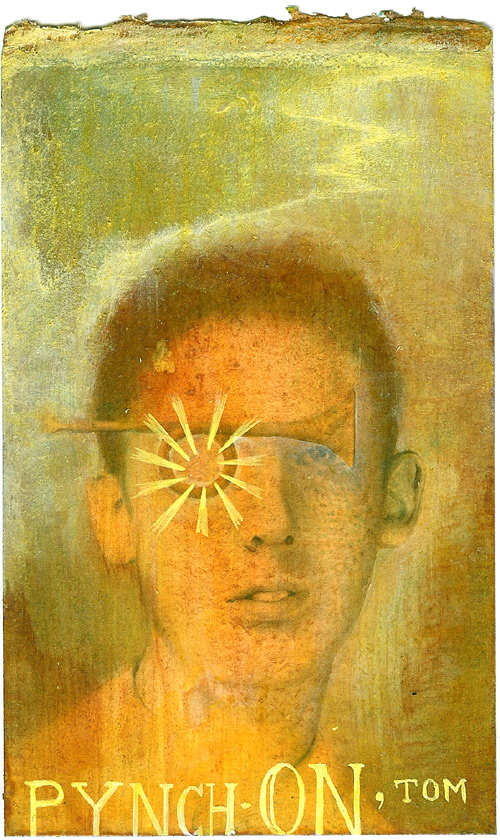


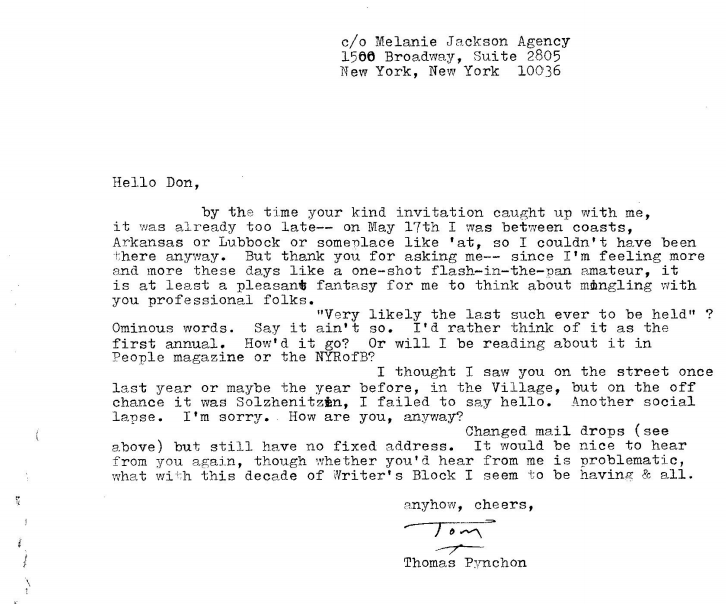


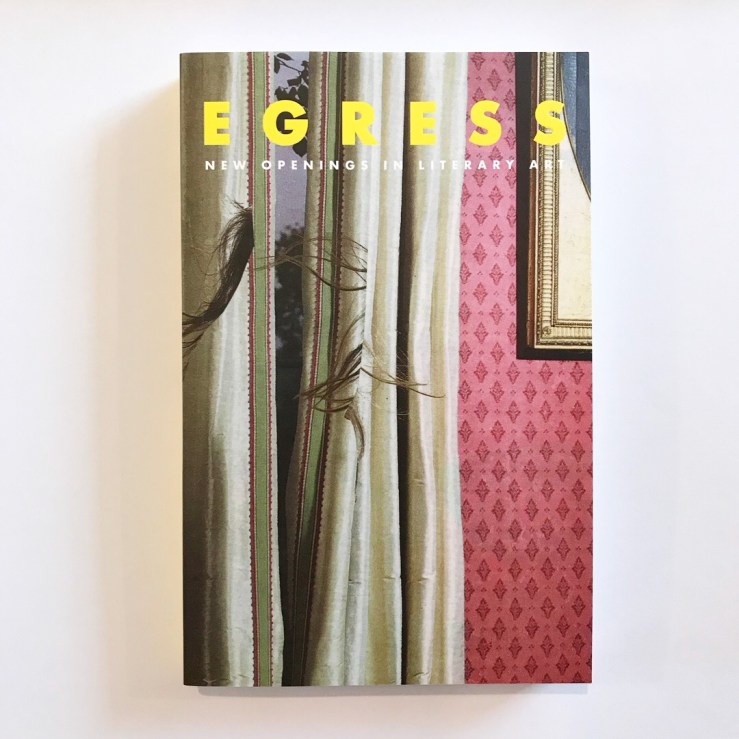

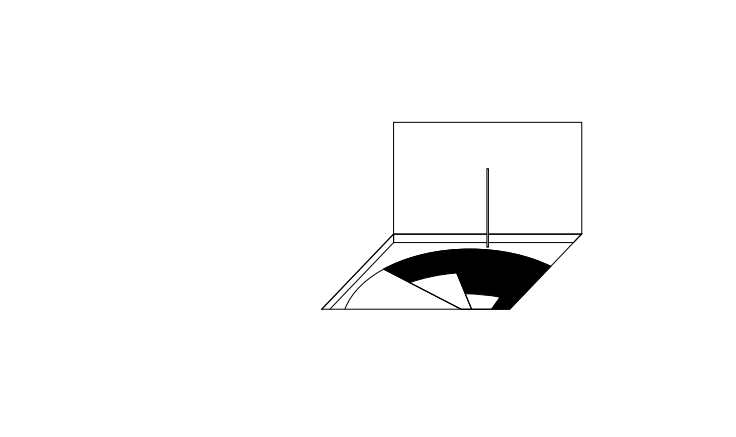

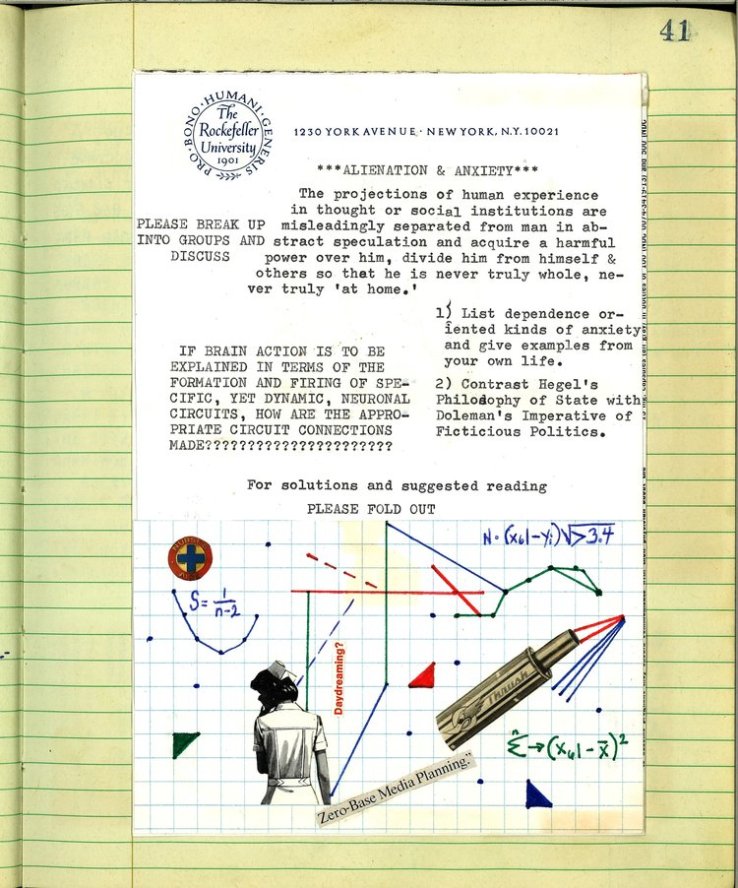
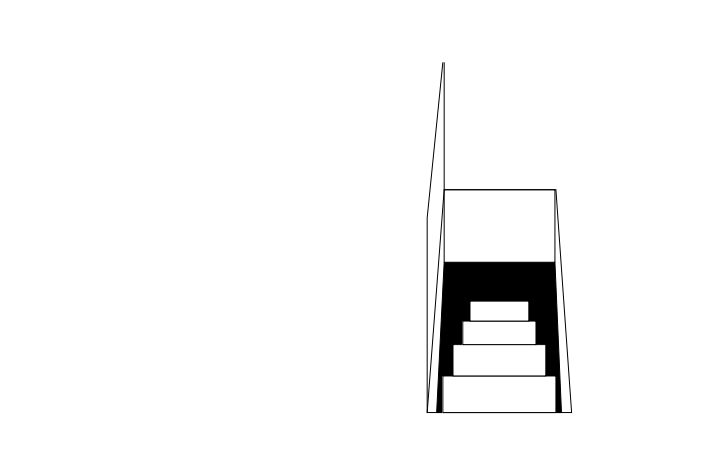
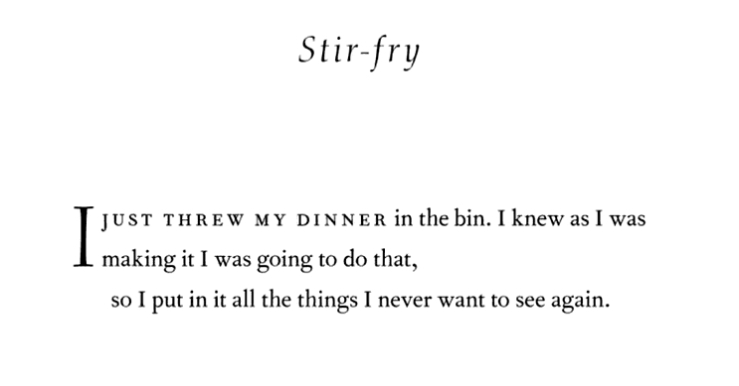



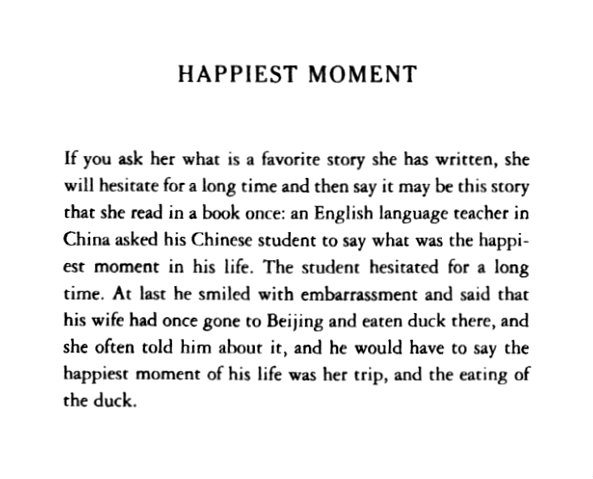
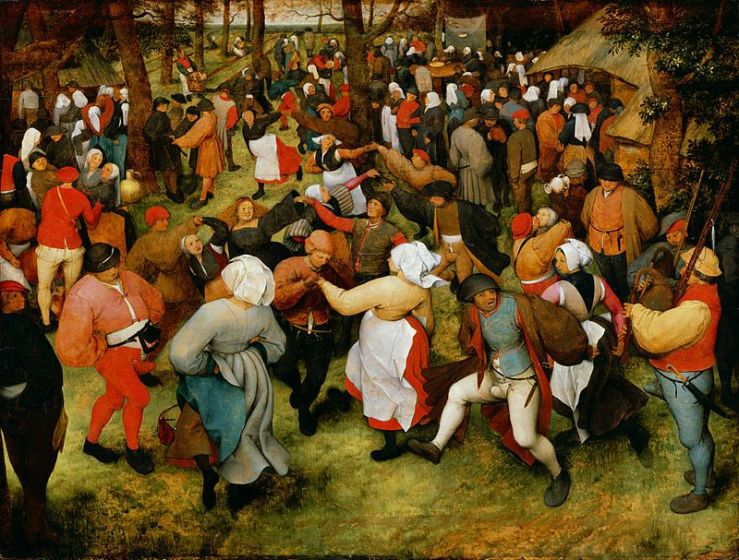
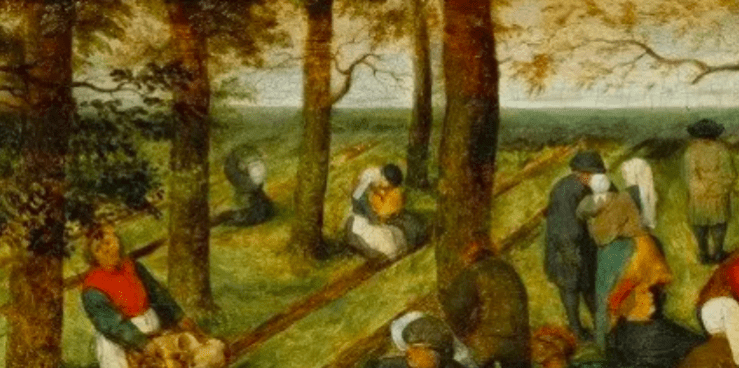
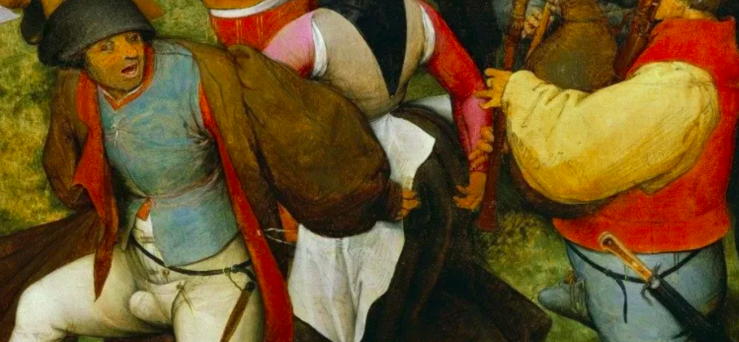


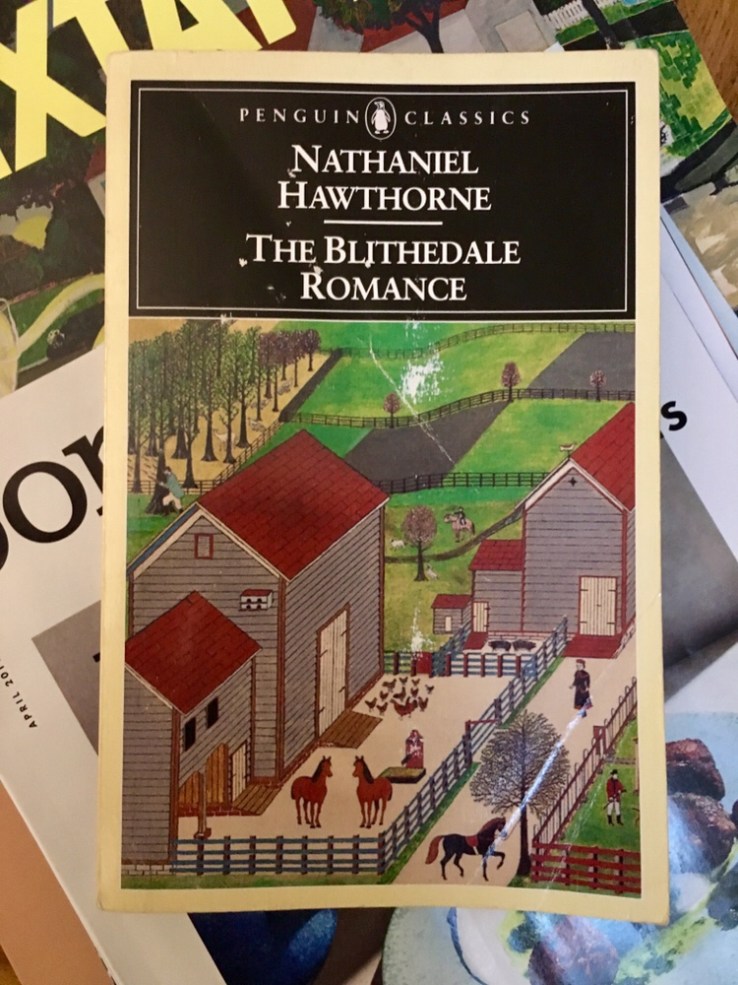
 Biblioklept