1. Francisco Goya’s Asalto de ladrones — Highwaymen Attacking a Coach in Ingles, 1786-87. Oil on canvas. 169 by 127 cm. Currently in some lucky soul’s private collection.
2. I love this painting.
3. It’s easy—and probably correct—to call Goya’s work dark. We can see that in his engraving series The Disasters of War and Caprichos, or his famous works Third of May 1808 or Saturn Devouring His Son. And the darkness, the heaviness, in these works, isn’t just in the subject but also on the canvas, in the grooves of the etchings. The blacks and browns blister; the acid goes to work.
4. It would be wholly wrong to suggest that Goya only painted the dark—but even his most joyful paintings, like Playing at Giants or The Swing contain a dark kernel. (Or, perhaps, maybe I find that kernel there, suggested by his oeuvre).
5. The blue skies of Playing at Giants and The Swing both pale in comparison to the top third of Highwaymen Attacking a Coach.
That beautiful bright blue sky is somehow the darkest aspect of this very dark painting, a terrible, terrible joke, an ironic reminder of glorious nature’s inglorious indifference to misery, suffering, murder, rape.
6. Moving down—the tree: long, twisting, phallically jutting into the blue sky. It seems to crookedly shift in the wind. Softly echoed by those happy little clouds it takes us down to the vernal forest floor, where we seem to be just-off-the-beaten-path.
7. I’ll admit to a certain fascination with the concept of highway robbery—the perils of the path, the road as a dangerous place, Barry Lyndon, Robin Hood, etc.—but what Goya gives us here is shock and horror.
8. If we continue to move our eyes down from that blue sky, we find, just off-center, a gun-wielding usurper perched on a lovely gilded carriage, its mules patiently stalled.
9. Left to right: Murder victim number one, his jacket open, torn, his ribs and breast bloodied—he’s already a corpse, but his naked skin suggests something even more sinister.
10. Just beside victim number one, a passenger fights for his life against a bandit brandishing a knife. Their twisted, violent grappling prefigures the threat of rape that lurks under the painting.
11. To the right of this strange couple, another couple—aristocratic mother-father team—plead for their lives, their palms facing up to that blue sky. The man’s cloak is earth-brown, and the woman’s cape black, but between them rests—I don’t know? Some pink bundle. The hem of the woman’s dress? Something bloodied? The suggestion of infanticide?
12. We find their guard uselessly sprawled to the right, his worthless sword neatly parallel to the gun under the grappling couple, blood trickling from under his blood-red coat. As Robert Hughes points out in his long biography of Goya, the guard’s corpse figures “the same pose that Goya would repeat several times in future drawings and paintings to indicate a dead body, so that it became part of his shorthand for death”; Hughes goes on to remind us that this sprawl is the same one we can see of “the dead man facedown to the left of the French firing squad in the Tres de Mayo, his hands scrabbling palms-down to the earth.”
13. Immediately above the guard, and to the viewer’s left of him, stands his likely assassin, his chest bared and his gun (jutting from the pelvis) now confidently trained on our hapless couple.
14. Gunman #2 is not half so menacing though as his partner who occupies the low dark center of the painting.
His hat cocked ever-so-slightly to the right, this central bandit, clothed in greenish-gold garb, raises a rope in his left hand. The rope signifies every awful kind of horror the viewer cares (“cares” is not the right verb) to imagine, but it’s the action that bandit performs with his right hand that is somehow the most menacing gesture of the painting: We can almost hear him coo, “Shhhhhhhh…”
15. And our poor victims? Their hands up, in supplication, what do they have to look to? Perhaps, like the attendant viewer, they return to the sky blue sky.
He had brought with him a dime novel, one of the Chums of Chance series, The Chums of Chance at the Ends of the Earth, and for a while each night he sat in the firelight and read to himself but soon found he was reading out loud to his father’s corpse, like a bedtime story, something to ease Webb’s passage into the dreamland of his death.
Reef had had the book for years. He’d come across it, already dog-eared, scribbled in, torn and stained from a number of sources, including blood, while languishing in the county lockup at Socorro, New Mexico, on a charge of running a game of chance without a license. The cover showed an athletic young man (it seemed to be the fearless Lindsay Noseworth) hanging off a ballast line of an ascending airship of futuristic design, trading shots with a bestially rendered gang of Eskimos below. Reef began to read, and soon, whatever “soon” meant, became aware that he was reading in the dark, lights-out having occurred sometime, near as he could tell, between the North Cape and Franz Josef Land. As soon as he noticed the absence of light, of course, he could no longer see to read and, reluctantly, having marked his place, turned in for the night without considering any of this too odd. For the next couple of days he enjoyed a sort of dual existence, both in Socorro and at the Pole. Cellmates came and went, the Sheriff looked in from time to time, perplexed.
At odd moments, now, he found himself looking at the sky, as if trying to locate somewhere in it the great airship. As if those boys might be agents of a kind of extrahuman justice, who could shepherd Webb through whatever waited for him, even pass on to Reef wise advice, though he might not always be able to make sense of it. And sometimes in the sky, when the light was funny enough, he thought he saw something familiar. Never lasting more than a couple of watch ticks, but persistent. “It’s them, Pa,” he nodded back over his shoulder. “They’re watching us, all right. And tonight I’ll read you some more of that story. You’ll see.”
Riding out of Cortez in the morning, he checked the high end of the Sleeping Ute and saw cloud on the peak. “Be rainin later in the day, Pa.”
“Is that Reef? Where am I? Reef, I don’t know where the hell I am—”
“Steady, Pa. We’re outside of Cortez, headin up to Telluride, be there pretty soon—”
“No. That’s not where this is. Everthin is unhitched. Nothin stays the same. Somethin has happened to my eyes. . . .”
“It’s O.K.”
“Hell it is.”
—From Thomas Pynchon’s novel Against the Day (215).
1. There’s so much I like about this passage.
2. First, Pynchon explicitly ties together two groups of his characters here. Pynchon connects the Traverses of Colorado with those champions of the ether, The Chums of Chance.
And he does it through a novel, which I’ll get to in a minute.
3. I’ve already remarked on the adventurous, even light-hearted tone of the Chums of Chance episodes, which often buoy the narrative out of its byzantine winding.
4. The Chums passages contrast strongly with the Colorado episodes featuring the Traverses.
While Pynchon is not really known for his pathos or the depth of his characters, the Traverse story line is genuinely moving. We see the family disintegrate against the greed of the Colorado mining rush. Patriarch Webb cannot hold his family together, and he gives over to a deep bitterness; his union becomes his raison d’etre, and he undertakes dangerous secret missions to fight the forces of capitalism. It’s worth giving Webb’s opinion at length:
“Here. The most precious thing I own.” He took his union card from his wallet and showed them, one by one. “These words right here”—pointing to the slogan on the back of the card— “is what it all comes down to, you won’t hear it in school, maybe the Gettysburg Address, Declaration of Independence and so forth, but if you learn nothing else, learn this by heart, what it says here—‘Labor produces all wealth. Wealth belongs to the producer thereof.’ Straight talk. No doubletalking you like the plutes do, ’cause with them what you always have to be listening for is the opposite of what they say. ‘Freedom,’ then’s the time to watch your back in particular—start telling you how free you are, somethin’s up, next thing you know the gates have slammed shut and there’s the Captain givin you them looks. ‘Reform’? More new snouts at the trough. ‘Compassion’ means the population of starving, homeless, and dead is about to take another jump. So forth. Why, you could write a whole foreign phrase book just on what Republicans have to say.”
5. It’s also worth pointing out that Webb is likley the Kieselguhr Kid: He has a secret identity and secret powers, like many of the characters who inhabit Against the Day.
6. The Traverse passages recall the social realism of Steinbeck at times, with a dose of the moralizing we might find in Upton Sinclair. There’s also a heavy dash of Ambrose Bierce’s cynicism, and something of Bret Harte’s milieu here.
A kind of ballast for Pynchon’s flightier whims? Not sure.
7. Returning to our initial citation:
As prodigal son Reef Traverse moves his father’s corpse across Colorado, he reads from The Chums of Chance at the Ends of the Earth. We learn that he’s had the dime novel for years and we learn of its physical condition — “dogeared, scribbled in, torn and stained from a number of sources, including blood.” The book is a kind of abject survivor, a physical totem with powers of endurance, which, in turn, grants metaphysical powers on its user-reader.
8. (Parenthetical (i.e. unexplored) aside: The cover of The Chums of Chance at the Ends of the Earth features handsome, uptight Lindsay Noseworth facing off against a “bestially rendered gang of Eskimos.” Here is our Manifest Destiny; here is our White Man’s Burden).
9. The Chums of Chance at the Ends of the Earth allows Reef brief transcendence of time (“whatever ‘soon’ meant”) and space (it provides him escape from his jail cell).
10. Also: The Chums of Chance at the Ends of the Earth grants its reader the power to read in the dark. There is something of a huge in-joke here that all late-night readers will appreciate.
Also: the major motif of At the End of the Day is darkness and light. The Chums of Chance at the Ends of the Earth works as a kind of self-illuminating object outside the confines of the physical world, but only when the user is not conscious of this power (“As soon as he noticed the absence of light, of course, he could no longer see to read”).
11. The Chums of Chance at the Ends of the Earth bestows upon Reef, its operator, “a sort of dual existence, both in Socorro and at the Pole.” This relationship, again, won’t be unfamiliar to voracious readers. Hell, many of us chase that transcendent space the rest of our lives. The older we get, the harder it is to get back to Dickensian London or Rivendell or Crusoe’s island or Narnia or Thornfield Hall or wherever it was that we got to live out part of our dual existence.
Here Reef, a grown-ass man, gets to be one of the Chums and traverse an alien frontier.
12. And the biggie: Somehow this dime novel wakes the dead.
Now, it’s easy to say that Webb doesn’t really talk to Reef, just as we can easily say that Reef doesn’t really head to the pole with the Chums, doesn’t really transcend time and space, etc. We could look for simple answers in psychology—Reef has internalized his father’s voice; Reef is going mad.
But I think Pynchon’s presentation of the scene suggests something more—but something I don’t know how to name or describe, only a fifth of the way into this book. Something to look for in any case.
And so thus end with Webb’s line: “Somethin has happened to my eyes.”
The Sleep of Reason Produces Monsters (detail), Francisco Goya
Composed in 1836, Georg Büchner’s novella-fragment Lenz still seems ahead of its time. While Lenz’s themes of madness, art, and ennui can be found throughout literature, Büchner’s strange, wonderful prose and documentary aims bypass the constraints of his era.
Let me share some of that prose. Here is the opening paragraph of Lenz:
The 20th, Lenz walked through the mountains. Snow on the peaks and upper slopes, gray rock down into the valleys, swatches of green, boulders, firs. It was sopping cold, the water trickled down the rocks and leapt across the path. The fir boughs sagged in the damp air. Gray clouds drifted across the sky, but everything so stifling, and then the fog floated up and crept heavy and damp through the bushes, so sluggish, so clumsy. He walked onward, caring little one way or another, to him the path mattered not, now up , now down. He felt no fatigue, except sometimes it annoyed him that he could not walk on his head. At first he felt a tightening in his chest when the rocks skittered away, the gray woods below him shook, and the fog now engulfed the shapes, now half-revealed their powerful limbs; things were building up inside him, he was searching for something, as if for lost dreams, but was finding nothing. Everything seemed so small, so near, so wet, he would have liked to set the earth down behind an oven, he could not grasp why it took so much time to clamber down a slope, to reach a distant point; he was convinced he could cover it all with a pair of strides.
Büchner sets us on Lenz’s shoulder, moving us through the estranging countryside without any exposition that might lend us bearings. The environment impinges protagonist and reader alike, heavy, damp, stifling. Büchner’s syntax shuffles along, comma splices tripping us into Lenz’s manic consciousness, his mind-swings doubled in the path that is “now up, now down.” We feel the “tightening” in Lenz’s chest as the “rocks skittered away,” as the “woods below him shook” — the natural world seems to envelop him, cloak him, suffocate him. It’s an animist terrain, and Büchner divines those spirits again in the text. The claustrophobia Lenz experiences then swings to another extreme, as our hero, his consciousness inflated, feels “he could cover [the earth] with a pair of strides.
And that baffling line: “He felt no fatigue, except sometimes it annoyed him that he could not walk on his head.” Well.
The end notes to the Archipelago edition I read (translated by Richard Sieburth) offer Arnold Zweig’s suggestion that “this sentence marks the beginning of modern European prose,” as well as Paul Celan’s observation that “whoever walks on his head has heaven beneath him as an abyss.”
Celan’s description is apt, and Büchner’s story repeatedly invokes the abyss to evoke its hero’s precarious psyche. Poor Lenz, somnambulist bather, screamer, dreamer, often feels “within himself something . . . stirring and swarming toward an abyss toward which he was being swept by an inexorable force.” Lenz is the story of a young artist falling into despair and madness.
The Man Made Mad by Fear, Gustave Courbet
But perhaps I should offer a more lucid summary. I’ll do that in the next paragraph, but first: Let me just recommend you skip that paragraph. Really. What I perhaps loved most about Lenz was piecing together the plot through the often elliptical or opaque experiences we get via Büchner’s haunting free indirect style. The evocation of a consciousness in turmoil is probably best maintained when we read through the same confusion that Lenz experiences. I read the novella cold based on blurbs from William H. Gass and Harold Bloom and I’m glad I did.
Here is the summary paragraph you should skip: Jakob Lenz, a writer of the Sturm and Drung movement (and friend and rival to Goethe), has recently suffered a terrible episode of schizophrenia and “an accident” (likely a suicide attempt). He’s sent to pastor-physician J.F. Oberlin, who attends to him in the Alsatian countryside in the first few weeks of 1778. During this time Lenz obsesses over a young local girl who dies (he attempts to resurrect her), takes long walks in the countryside, cries manically, offers his own aesthetic theory, prays, takes loud late-night bath in the local fountain, receives a distressing letter, and, eventually, likely—although it’s never made entirely explicit—attempts suicide again and is thusly shipped away.
Büchner bases his story on sections of Oberlin’s diary, reproduced in the Archipelago edition. In straightforward prose, these entries fill in the expository gaps that Büchner has so elegantly removed and replaced with the wonder and dread of Lenz’s imagination. The diary’s lucid entries attest to the power of Büchner’s speculative fiction, to his own art and imagination, which so bracingly take us into a clouded mind.
In Sieburth’s afterword (which also offers a concise chronology of Lenz’s troubled life), our translator points out that “Like De Quincey’s “The Last Days of Immanuel Kant” or Chateaubriand’s Life of Rancé, Büchner’s Lenz is an experiment in speculative biography, part fact, part fabrication—an early nineteenth-century example of the modern genre of docufiction.” Obviously, any number of postmodern novels have explored or used historical figures—Public Burning, Ragtime, and Mason & Dixon are all easy go-to examples. But Lenz is more personal than these postmodern fictions, more an exploration of consciousness, and although we are treated to Lenz’s ideas about literature, art, and religion, we access this very much through his own skull and soul. He’s not just a placeholder or mouthpiece for Büchner.
Lenz strikes me as something closer to the docufiction of W.G. Sebald. Perhaps it’s all the ambulating; maybe it’s the melancholy; could be the philosophical tone. And, while I’m lazily, assbackwardly comparing Büchner’s book to writers who came much later: Thomas Bernhard. Maybe it’s the flights of rant that Lenz occasionally hits, or the madness, or the depictions of nature, or hell, maybe it’s those long, long passages. The comma splices.
Chronologically closer is the work of Edgar Allan Poe, whose depictions of manic bipolar depression resonate strongly with Lenz—not to mention the abysses, the torment, the spirits, the doppelgängers. Why not share another sample here to illustrate this claim? Okay:
The incidents during the night reached a horrific pitch. Only with the greatest effort did he fall asleep, having tried at length to fill the terrible void. Then he fell into a dreadful state between sleeping and waking; he bumped into something ghastly, hideous, madness took hold of him, he sat up, screaming violently, bathed in sweat, and only gradually found himself again. He had to begin with the simplest things in order to come back to himself. In fact he was not the one doing this but rather a powerful instinct for self preservation, it was as if he were double, the one half attempting to save the other, calling out to itself; he told stories, he recited poems out loud, wracked with anxiety, until he came to his sense.
Here, Lenz suspends his neurotic horror through storytelling and art—but it’s just that, only a suspension. Büchner doesn’t blithely, naïvely suggest that art has the power to permanently comfort those in despair; rather, Lenz repeatedly suggests that art, that storytelling is a symptom of despair.
The Last Judgment (detail), Rogier van der Weyden
What drives despair? Lenz—Lenz—Büchner (?)—suggests repeatedly that it’s Langeweile—boredom. Sieburth renders the German Langeweile as boredom, a choice I like, even though he might have been tempted to reach for its existentialist chain-smoking cousin ennui. When Lenz won’t get out of bed one day, Oberlin heads to his room to rouse him:
Oberlin had to repeat his questions at length before getting an answer: Yes, Reverend, you see, boredom! Boredom! O, sheer boredom, what more can I say, I have already drawn all the figures on the wall. Oberlin said to him he should turn to God; he laughed and said: if I were as lucky as you to have discovered such an agreeable pastime, yes, one could indeed wile away one’s time that way. Tedium the root of it all. Most people pray only out of boredom; others fall in love out of boredom, still others are virtuous or depraved, but I am nothing, nothing at all, I cannot even kill myself: too boring . . .
Lenz fits in neatly into the literature of boredom, a deep root that predates Dostoevsky, Camus, and Bellow, as well as contemporary novels like Lee Rourke’s The Canal and David Foster Wallace’s The Pale King.
Ultimately, the boredom Lenz circles around is deeply painful:
The half-hearted attempts at suicide he kept on making were not entirely serious, it was less the desire to die, death for him held no promise of peace or hope, than the attempt, at moments of excruciating anxiety or dull apathy bordering on non-existence bordering on non-existence, to snap back into himself through physical pain. But his happiest moments were when his mind seemed to gallop away on some madcap idea. This at least provided some relief and the wild look in his eye was less horrible than the anxious thirsting for deliverance, the never-ending torture of unrest!
The “never-ending torture of unrest” is the burden of existence we all carry, sloppily fumble, negotiate with an awkward grip and bent back. Büchner’s analysis fascinates in its refusal to lighten this burden or ponderously dwell on its existential weight. Instead, Lenz is a character study that the reader can’t quite get out of—we’re too inside the frame to see the full contours; precariously perched on Lenz’s shoulder, we have to jostle along with him, look through his wild eyes, gallop along with him on the energy of his madcap idea. The gallop is sad and beautiful and rewarding. Very highly recommended.
At some point I acquired the notion, probably a fair one, that comparing writers to other writers is critically lazy. At the same time, writers write after other writers, through other writers, to other writers, against other writers, in other writers, out of other writers, on top of other writers, and so on. Literature is archaeological. And if I’m honest, a lot of the time it’s the comparison to another writer that prompts my interest in a writer I haven’t read.
Let me get to what I was getting at:
Sigizmund Krzhizhanovsky: Russian, 1887-1950: His collection Memories of the Future: Seven stories in spirited translation by Joanne Turnbull: Available in English from the good folks at NYRB: It’s the sort of book that deserves its own book. Etc.
In lieu of writing that book, quite beyond my power, I’ll compare Sigizmund Krzhizhanovsky to some other writers in the hope of piquing your interest in this neglected master.
***
KAFKAESQUE
You knew I would start here.
Four years senior to Krzhizhanovsky, Mr. Kafka of Prague was our Russian writer’s contemporary (if we want to use our postmodern imaginations). I was tempted to simply type “K” for Kafka, but they are both K. Kafkaesque is invoked frequently enough to potentially sap the adjective’s potency, but consider that the same nebulous yet very real forces that shaped (warped?) Kafka (which, in turn Kafka shaped (warped) in his own writing) shaped (warped?) Krzhizhanovsky. Unseen, displaced authority, alienation, and absurdity, yes, but also humor, the line of hysteria, the constraining order that induces madness. The nightmare of modernity.
From “The Branch Line”:
“Speaking in more modern terms,” the fine print went on, “our nightmares, weighing as they do on the brain, gradually form a sort of moral ceiling that is always about to come crashing down on one’s head: some of our customer’s call this ‘world history.’ But that’s not the point. The point is the durability, unwakeability, high depressiveness, and wide availability of our nightmares: mass-market products good for all eras and classes, nighttime and daytime, moonlight and sunlight, closed eyes and open.”
BULGAKOVIAN
If Kafka was Krzhizhanovsky’s psychical contemporary, Mikhail Bulgakov (Russian, b. 1891) is his geographic one. Both men were writing through (and to some extent, against) the Russian Revolution, rendering the crowded buzz of new Moscow in manic strokes. Humming under the surface of Bulgakov’s masterpiece The Master and Margarita is the threat of disappearance, the loss of personal space, but also absurd humor. These themes run through the seven stories collected in Memories of the Future, but perhaps evince most strongly in “Quadraturin” (maybe Krzhizhanovsky’s most famous story), where furtive bachelor Sutulin obtains a samizdat device that expands his tiny apartment—ad infinitum into limitless space and terror.
From “Quadraturin”:
In their sleep and in their fear, the occupants of the quadratures adjacent to citizen Sutulin’s eighty-six square feet couldn’t make head or tail of the timbre and intonation of the cry that woke them in teh middle of the night and compelled them to rush to the threshold of the Sutulin cell: for a man who is lost and dying in the wilderness to cry out is both futile and belated: but if even so—against all sense—he does cry out, then, most likely, thus.
BORGESIAN
So much of Kafkaesque applies to Borgesian, and perhaps I’ve quickly run up against one of the central problems of comparison: The originary: The source of the source: Primary (etc.). No matter. Krzhizhanovsky’s modernism is Borgesian: Tale-telling: nested tales, circular tales, winding tales, labyrinths and mirrors, trap doors and hidden texts (motives), narrators who tell us a story as if it’s just a distraction in the middle of some bigger story we won’t get to hear—yet. Could there be a more Borgesiantitle than “The Bookmark,” a tale loaded with hundreds of tales. (Okay, maybe not hundreds, but still loaded with that Scheherazade programming, that infinite looping…).
From “Someone Else’s Theme”:
And an invented person makes the greatest impression, naturally, on the seemingly not-invented, real person who, upon finding his reflection in a book, feels replaced and redoubled. This person cannot forgive his feeling of double insult: here I, a real, not-invented person, shall go to my grave and nothingness in ten or twenty years, whereas this fabricated, not-real “almost I” shall go on living and living as though it were the most natural thing in the world; more unforgivable still is the awareness that someone, some author, made you up like an arithmetic problem, what’s more he figured you out, arrived at an answer over which you struggled your entire life in vain, he divined your existence without ever having met you, he penned his way into your innermost thoughts, which you tried so hard to hide from yourself. One must refute the author and vindicate oneself. At once!
HAWTHORNESQUE
It might be easy to go to Poe for a comparison: He’s famous for his tales, and Krzhizhanovsky is a tale-master—whereas Hawthorne’s estimable short stories are often overlooked because he happened to write what may or may not be The Great American Novel. But Hawthorne’s dark romantic imagination, his weird sci-fi streak, and his wry sense of humor offer a better frame of reference for Krzhizhanovsky’s contours. Krzhizhanovsky is also fond of Hawthorne’s closing gambit, the “It-was-all-a-dream-or-hey-was-it?” maneuver. Both writers practice allegorical destabilization in their deeply darkly ironic parables. Soul detectives.
From “The Branch Line”:
He knew from experience that dreams, like the thieves in the parable, come unseen, they slip under foreheads, trying to avoid the eyes, and only there—under the cranial roof, safe and sound, sprawled the brain—do they throw off their invisibility.
DOSTOEVSKIAN
Krzhizhanovsky directly invokes several Russian writers by name, including Gogol and Turgenev, but Fyodor Dostoevsky seems to pop up the most. This makes sense. Dostoevsky is Krzhizhanovsky’s parent-writer. Or maybe Raskolnikov is. Or maybe the Underground Man is. Like Dostoevsky, Krzhizhanovsky crafts alienated loners and thrusts them into absurd moral quandaries.
From “Red Snow”:
Resignation to one’s fate takes practice. Like any art. Or so citizen Shushashin maintains. He begins every day—after putting on his shoes and washing his face, before throwing on his jacket—with an exercise. Again, the expression is his. This expression works like this: he walks over to the wall, puts his back up against it and stands there in an attitude of utter resignation. For a minute or two. And that’s all. The exercise is over. He can begin to live.
O’BRIENESQUE
Flann O’Brien’s The Third Policeman channels Crime and Punishment via the dream machines of Hawthorne, Wells, Verne et al—all elements we might find in Memories of the Future. And of course O’Brien is Kafkaesque, Borgesian, etc. The stories-within-stories, the fake philosophers, the hefty strawmen, the dreams, the nightmares…Must I draw this out?
From “The Bookmark”:
‘I remember I tossed all night, my elbows bumping against the hard theme that layers our entire life. My pen, as soon as I dipped it in ink, wrote Animal Disputans. That was the title. Next came…Perhaps this doesn’t interest you?’
‘Please go on.’
‘I took the title and the first verses of my song, if you will, from an old and long-forgotten book by the Danish humorist Holberg. This book—Nicolai Klimmi Her subterraneum, I believe it’s called—describes the fantastic adventures of a traveler who winds up, I can’t remember how, inside the Earth. The traveler is astonished to find that inside the planet, as inside a hermetically sealed vessel, lives a race with its own hermetically sealed State system, way of life, culture, everything that is customary in such cases. Over time the life of these undergroundlings—once rife with wars and conflict, cut off, hidden away beneath miles of crust—sorted itself out and settled into a harmonious routine. The problems of the hermetically sealed were all solved, everything ironed out and agreed upon. But in memory of those long-ago wars, Nicolai Klimmi tells us—no, please listen, it’s rather touching—the land’s noblest and richest magnates raised animal disputans. There isn’t anything to argue about in an isolated country where everything has been determined and predetermined in saecula saculorum but these disputants were trained for the purpose, fed a special diet that irritated the liver and sublingual nerve, then pitted against one another and forced to argue till they were hoarse and foaming at the mouth—to unanimous laughter and merry halloos from the lovers of old traditions…
PHILDICKIAN
I think we can all agree that Memories of the Future could be the title of a Philip K. Dick story, right? The story of the same title (the longest in the collection, a novella, really) strongly recalls Dick, channeling him through time travel, and Phildickian themes course throughout the book: Paranoia, identity crisis, cynicism, the realization that the waking life might conceal alternative consciousness…
From “The Branch Line”:
Haven’t we managed to unify dreams? Haven’t we hoodwinked humanity with that sweet million-brain dream of brotherhood, a united dream about unity? Flags the color of poppy petals flutter above the crowds. Reality is fighting back. But its blazing suns don’t frighten the newly ascendant underground. Sleepers’ eyes are shielded by eyelids. Yesterday’s utopia has become today’s science. We’ll break the backs of facts. We’ll rout their status quos: you’ll see those status quos turn tail and run. If an ‘I’ should rise up against our ‘we’, we’ll hurl him down a well of nightmares headfirst. We’ll hide the sun behind black blots, we’ll plunge the whole world into a deep, static slumber. We’ll even put the idea of waking to sleep, and if it resists, we’ll gouge out its eyes.
BOLAÑOESQUE
While reading Memories of the Future, I sometimes pretended that Krzhizhanovsky (and his doppelganger writer-protagonists) were versions of Boris Abramovich Ansky, the dissident Russian writer who appears (via diaries and fragments) in “The Part About Archimboldi” in Roberto Bolaño’s 2666. Sure, I brought some of that metatextual layering with me, but Krzhizhanovsky’s Borgesian stories repeatedly destabilize the notion of an authoritative narrator or storyteller, like matryoshka dolls that open into eggs that open into dreams and nightmares. Like Bolaño’s work, Krzhizhanovsky’s writing skates across an abyss of horror. The Krzhizhanovskian milieu shares psychic space with the Bolañoverse—in particular, both writers seem to love to walk their characters through graveyards.
From “The Thirteenth Category of Reason”:
That’s how it always is: first you call on your friends, and then—when the hearses have delivered them—on their graves. Now my turn too has come to exchange people for graves. The cemetery where I go more and more often lies behind high crenelated walls and looks from the outside like a fortress: only when the fighters have all fallen will the gates open. You walk in—first past a chaos of crosses, then past the inner wall—to the new crossless cemetery: gone are the monumental statics of the old human sepulchers, the massive family vaults and stone angels with their penguin-like wings grazing the earth: red metal starts on thin wire stems fidget nervously in the wind.
***
By way of conclusion, I’ll submit that Krzhizhanovsky is just as notable for his divergences from the writers I’ve listed above as he is for any similarities. There are also plenty of names that could be added to the list above, and readers of Krzhizhanovsky will likely protest that I’ve failed to underscore the political underpinnings of his writing (for the record, the seven stories in Memories of the Future clearly respond to (and in many ways protest and satirize) early Soviet politics and lifestyle, but Krzhizhanovsky’s approach is coded, oblique, and in this sense, timeless).
I’ll end with with another citation from “The Thirteenth Category of Reason,” a story that plays with Kant’s twelve categories of conception. Krzhizhanovsky’s work is always dialogic; he’s always performing voices, but occasionally one slips through that I take to be a more direct version of the author’s own. Here, Krzhizhanovsky offers a possible thesis statement for his project—his desire to write outside the confines of reason, his desire to find meaning in “all our figments and alogisms”:
For you see, all those who are off (I won’t look for another definition) or, rather, out of their heads, evicted, so to speak, from all twelve Kantian categories of reason, must naturally seek refuge in a thirteenth category, a sort of logical lean-to slouched against objective obligatory thinking. Given that the thirteenth category of reason is where we entertain, in essence, all our figments and alogisms, the old gravedigger may be useful to my projected cycle of “fantastic” stories.
That projected cycle of fantastic stories is Memories of the Future.
There’s something gently elegiac about Marshall Brooks’s Paperback Island, which collects over a dozen essays on reading. While Brooks’s essays on books, libraries, publishers, and the friendships that hold all of them together are never dour, they nevertheless evoke a world now shifting into the realm of memory alone.
It’s fitting then that the starting point for the book is beat legend Tuli Kupferberg’s funeral. Here, Brooks runs into Susanna Cuyler, who lends him her apartment in New York just so he can read her book Not Just Another Voice there: “There was no overlooking the fact that her apartment and her book are virtually one,” writes Brooks. This early detail hooked me, encapsulating so much of the themes of time, place, and friendship that Paperback Island emphasizes.
The lead essay in the collection is “Paperback Island.” Here, Brooks relates an adolescent friendship codified in books: “Besides symbolizing the excitement of what books can mean to people, especially young people who are in the process of formulating their own world, these books are all that remain to me of this once close friendship.” Brooks renders the transformative power that this bookswapping friendship had on him, set against the backdrop of the culture shift of the late sixties and early seventies:
Informationally, and in other ways as well, the early 1970s prefigured the Internet. Vast amounts of information, heretofore beyond the reach of the masses, became available. The visually compartmentalized newsprint portions of Harper’s Magazine and the encyclopedic paperbound Whole Earth Catalog come immediately to mind, as does the collectively-produced—via the Boston Women’s Health Collective—1970 paperback, Our Bodies, Ourselves. Design-wise, they all accelerated the absorption of information from off the printed page in completely innovative ways, which today’s web pages perforce echo. In conjunction with FM radio, foreign films, Super 8 film, Swinger cameras, stereo records, tape cassettes , early video, offset printing, the 1976 Freedom of Information Act, and such empowering movements as Women’s Lib, etc. , they revolutionized the lives of everyone, and youth culture in particular.
It would perhaps be easy for Brooks to have crammed his book with anecdotes illustrating the effects of these changes, but instead Paperback Island focuses on something much more personal, following the tone of its eponymous essay. There are memory-essays for Tuli Kupferberg, James T. Farrell, and Sidney Bernard, whose rogue journalism collection This Way to the Apocalypse I am now on the lookout for. In the background of all of this looms Harry Smith, the poet-publisher and founder of The Smith, where Brooks cut his teeth in the seventies. Smith’s influence on Brooks resonates in loving passages like this one:
A legendary figure in the American small press movement, Harry more than fulfilled the role of patron-protector for countless contributors to his press. He impressively looked the role, too, nowhere more so than when he grandly made the circuit at small press fair . . . The Smith published scores of unknown and neglected writers . . . The press resembled nothing else in the publishing world large or small partly for this reason. I had always assumed that a place exactly like it existed, somewhere. That it had to. (Why else write, really?) A place where poetry counted for everything. Fate, in its greatness, encouragingly provided for its existence, and Harry Smith supplied that place.
It’s that sense of place that comes through so strongly in Paperback Island, whether Brooks is describing the offices of The Smith or the hotels that James T. Farrell adored. Brooks also captures the strange ways that microlibraries evolve from place, time, and friendship (he inherited many of Farrell’s paperbacks). I think most bibliophiles will instantly understand Brooks’s impulse to collect, catalog, keep the tomes.
And of course there are the bookshops, the wanderings, the meanderings, the notes on books and how we find them. A late riff on visiting a Boston Barnes & Noble finds Brooks picking up a Nook and reading a passage from Austen’s Pride & Prejudice—his first time with an e-reader. The moment is not couched in resentment or alienation but simply experience—encountering an old book in a new way.
I should point out that Brooks has illustrated Paperback Island with photographs—of people, places, books—the things that make the book. (Books are made out of other books, some writer said). The photos are printed in rich color and add a documentary dimension to the book. Here’s a striking image of the closing of the Upper West Side branch of Shakespeare & Company—an image that perhaps captures more of the elegiac underpinnings of Paperback Island than I can do in words:
Paperback Island is shot-through with bibliophilia, a love of books that encompasses writers, readers, libraries, and publishers, yes—but also the mechanics of the book, the physical properties. It’s a love letter to books and the people who make them—and not just the writers and publishers, but the readers who make them, preserve them—and the friends who pass them on, make sure that others read them.
In a latter essay, “Physical Allure of the Book,” Brooks writes, “My friend Roger Skillings became a writer on account of picking up a Penguin edition of James Joyce’s Dubliners in a train station in Rome.” I’ll end this write-up in what I take to be the spirit of Brooks’s book, sharing a little anecdote of my own about a book I can’t part with.
In 2002 I was wandering Jimbocho, an area of Tokyo crammed with nearly 200 bookshops. I found, lying in the gutter but unsullied, a paperback Penguin Book — The Essential James Joyce, edited by Harry Levin. I glanced around, trying to see if the book was somehow connected to a nearby vendor, but it didn’t seem to be for sale. In any case, I surreptitiously slipped the book into my bag and walked on. I read “The Dead” on the train ride home. I’ve kept the book to this day, even though I have no need of a Joyce digest. I can’t help it. I love it.
“Man Underground,” a Review of Ralph Ellison’s Invisible Man, by Saul Bellow
A few years ago, in an otherwise dreary and better forgotten number of Horizon devoted to a louse-up of life in the United States, I read with great excitement an episode from Invisible Man. It described a free-for-all of blindfolded Negro boys at a stag party of the leading citizens of a small Southern town. Before being blindfolded the boys are made to stare at a naked white woman; then they are herded into the ring, and, after the battle royal, one of the fighters, his mouth full of blood, is called upon to give his high school valedictorian’s address. As he stands under the lights of the noisy room, the citizens rib him and make him repeat himself; an accidental reference to equality nearly ruins him, but everything ends well and he receives a handsome briefcase containing a scholarship to a Negro college.
This episode, I thought, might well be the high point of an excellent novel. It has turned out to be not the high point but rather one of the many peaks of a book of the very first order, a superb book. The valedictorian is himself Invisible Man. He adores the college but is thrown out before long by its president, Dr. Bledsoe, a great educator and leader of his race, for permitting a white visitor to visit the wrong places in the vicinity. Bearing what he believes to be a letter of recommendation from Dr. Bledsoe he comes to New York. The letter actually warns prospective employers against him. He is recruited by white radicals and becomes a Negro leader, and in the radical movement he learns eventually that throughout his entire life his relations with other men have been schematic; neither with Negroes nor with whites has he ever been visible, real. I think that in reading the Horizon excerpt I may have underestimated Mr. Ellison’s ambition and power for the following very good reason, that one is accustomed to expect excellent novels about boys, but a modern novel about men is exceedingly rare. For this enormously complex and difficult American experience of ours very few people are willing to make themselves morally and intellectually responsible. Consequently, maturity is hard to find. Continue reading “Saul Bellow’s Review of Ralph Ellison’s Invisible Man”→
1. I managed to avoid reading anything about Shane Carruth’s new film Upstream Color before I saw it.
I just knew that this was the guy who did Primer, this was his new film, and I wanted to see it because Primer was so strange and engaging.
2. Two immediate responses after viewing Upstream Color:
i). The desire to see Upstream Color again and
ii). The desire to read what other people thought about Upstream Color.
3. (My wife and I, reading the credits, pausing the credits, reassessing the film against the backdrop of the credits, arguing about the film, discussing the film, etc.).
4. I think it’s better that if you have any interest at all in Upstream Color that you just see it cold [update/warning: the comments section of this post is full of spoilers]. But I know that 100 minutes is an investment of time, so maybe you’d like some kind of précis or at least description. So, a loose attempt, which surely will devolve into fragments and references:
Upstream Color is a sci-film, sort of.
Or maybe its a mystery film about ethics and biology.
Maybe a nature film, sort of.
Henry David Thoreau’s Walden.
Worms—parasites.
Theft.
Pigs.
Shades of Philip K. Dick, David Cronenberg, Terence Malick, but also something utterly original.
Mind control.
Trauma.
Ambient music.
Orchids.
Sampling nature.
Memory.
Swimming.
Drowning.
Creation: knitting, paper chains, music, seeds, life, children, etc.
A film that can and should be described as poetic.
It’s a love story, too.
5. It occurs to me that there’s a trailer for the film. I haven’t seen it yet. Should we watch it?
6. Does that do it for you? I don’t know how to do this anymore. Recommend things. I don’t know, the trailer makes the film perhaps look more pretentious than it is. It isn’t pretentious. It isn’t even confusing—just perplexing, haunting, troubling.
7. (Wanted: Quinoa Valley Record Co., complete discography).
8. My take on Upstream Color, spoiler-free, supporting-detail-free:
The film is about agency, about drive, about how the characters (and, implicitly, us, we, the audience, who identify with the characters on the screen) may be driven by something beyond us, something controlling us like a parasite (internal) or from afar like a ventriloquist (external). That even when we do assert agency the effect, the fallout, the shape lays beyond us, upstream.
9. (This morning, my wife telling me about her dream, a nightmare that our young daughter had ingested hallucinogenic mushrooms, clearly a response to the film).
10. I haven’t done a good job of really saying anything about the film. So, lazily:
I think Caleb Crain provides a perceptive and persuasive reading of the film in his essay “The Thoreau Poison.” He reads the film through the American transcendentalists, particularly Thoreau, of course, but also Emerson and Hawthorne.
There’s also a piece at Slate by Forrest Wickman that perhaps over-explicates but nonetheless offers perspective, including elements of Carruth’s own take.
11. (I will avoid Carruth’s explanation of the film until I’ve seen it a second time. Maybe I’ll avoid his explanation forever).
12. A take on Upstream Color that I don’t quite buy into (the take is my own): The film perhaps invites us to find metaphysical entities in two of its secondary characters, both of whom exert influence (creative and destructive) over the primary characters. Something something godlike, something something devillike.
I like that the film offers this simple duality and then crushes it, shows something far more complicated, suggests a cycle far more strange.
13. (White orchid. Blue orchid. Yellow orchid).
14. Upstream Color features minimal dialogue and nothing approaching traditional exposition, but we still learn about its characters, come to feel for them, feel their desires and traumas. The film is cerebral and philosophical, but it’s also emotional, offering an aesthetic that sublimely overwhelms the viewer.
15. Carruth wrote, produced, directed, scored, photographed, cast and starred in Upstream Color. (I’m sure he did a lot of other stuff too). He also distributed the film himself. The entire filmmaking process was untouched by the Hollywood system. There’s so much hope for film as an art form in this knowledge.
16. Parting thoughts: See Upstream Color. Resist imposing whatever film grammar you usually bring with you to the movies. Resist the temptation to see the film as a puzzle to figure out. See Upstream Color.
I’m tempted to say that Carl Shuker’s novel Anti Lebanon is full of twists, but twists isn’t the right word—it’s more like the novel’s trajectory repeatedly escapes the reader’s expectations, driving into increasingly alien terrain.
Anti Lebanon begins as a somewhat traditional novel focused on Leon Elias, “thirty years old, East Beiruti Greek Orthodox.” Leon has dropped out of university, leaving his degree in hydrogeology unfinished. Leon has since taken a job as the security guard of an abandoned amusement park, a symbolic stand-in for Lebanon’s tourist economy. The Arab Spring has destabilized Lebanon, leaving its Christian population in a precarious position as Hezbollah dominates the government—and the streets. After dropping out of school, Leon creates an experimental short film, In the anti Lebanon, a film “about his family and his sister and their history” — a history of mixed cultures (Leon’s mother is Japanese) and pain (his sister, a soldier, was assassinated).
The early parts of Anti Lebanon seem to set the stage for a fairly conventional novel with strong political overtones, one that explores Leon’s guilt over his sister’s violent death and his conflicted place as a sensitive and artistic soul who’s the son an infamous warrior, all set against the backdrop of Christian Lebanon in the tumult of the Arab Spring. But then Shuker takes us other places. Lots of other places.
The crucible for this change comes after a night of drinking ends in violence and theft. I don’t want to spoil too much—this is a novel that constantly had me rereading entire passages, asking, Wait, what?—but let’s just say Leon, complicit in a crime, ends up moving a body by motorcycle. Let me share some of Shuker’s prose in a passage that reveals the novel’s major metaphysical gambit:
This time there was no crash and it probably was the alcohol but the pain of the thing’s biting was gristly and sharp and also distant and allied with the shock of the fall so he rode though it for it seemed several dozen feet— the most important thing was not to fall again. He came to a controlled halt, stopped the bike, and then over his shoulder punched the thing’s face several times, his knuckle hitting soft then hitting helmet, and it bit again and this time harder and it stung and went deeper, a popping sound or feeling in his neck that suddenly got desperately deep and he punched again and then he rolled violently and writhed in the grasp of the thing they had created and he fell over deliberately, twisting so as to topple over sideways upon and hurt and stop the thing, and he hit the ground landing on its arm and this dislodged the biting helmeted head and he pulled up its hands and wriggled away over the concrete like his sister palming herself away from her disappeared foot and he scrambled up, and the thing just lay there inert and still, wired to the scooter in a position absurd, all tied up and crooked and ruined and wrong. He stood and held his hot neck looking at the fallen boy and then knew that someone else was there.
Is Leon now a vampire? The novel answers this question clearly even as it refuses to explain or define what, exactly, being a vampire means. Anti Lebanon at times threatens to become an allegory of Mideast politics and history, using vampirism as its major trope, but then Shuker shifts us into new, weird territory. An appropriately Borgesian chapter titled “Labyrinth” moves Leon and the reader into a propulsive engine of dream logic; we’re never quite sure exactly what is happening as Leon gives over to dark, primal violence.
Such violence inheres from history and geography and mythology. It’s worth sharing another passage at length to see how Shuker traces these contours, plunging character and reader into history’s strange tangles. Here, vampire Leon drinks a guard’s lifeblood—the beginning of an oblique spree—and tunnels into mythos, plumbing the history of his land to arrive at his sister’s murder:
Semi-unhinged single Christian men, living alone in brutalist concrete boxes on the borderlands with their rage and a shrieking TV, a simonized gun and a cross on the wall, were approached and made use of. Aries, Andromeda, and Perseus slowly wheeled across the dead guard’s sunglasses. Christian snipers took positions around Mar Mikhael overlooking Electricité du Liban. A secret. Leon, labyrinthine, tunneled from shadow to shadow. The criminal and the victim alike return to the scene of the crime. Would the Israelis come? The taste of blood was hot: There was juniper, vetyver, and chypres too, copper drying down to a powder, wealth and breadth of deathless rivers in endless cycle, over centuries, aeons, untouched and untouchable: Nahr al Kalb, the dog river, collecting on its rock walls the signatures of dead empires: the steles of Ramses II, Nebuchadnezzar, Napoleon III and Caracalla, General Gouraud and The XXI British Army Corps with Le Détachement Français de Palestine et Syrie occupied Beirut and Tripoli: October 1918 AD; and Nahr Ibrahim, the blood river, which flows red: iron-rich soil rusting, seeding red anemones of the rebirth along its banks. The land still bearing the imprint of its creator, still running with the blood of Adonis in cascades; cataracts of rust. The march crossed the exact point on the Green Line where the Black Saturday ID checkpoints were erected once upon a time and to cross was to have your ID checked for religion and your throat cut in the passenger seat, watched over by Phalange HQ, past Makhlouf’s sandwich store— his weakness, his frailty. He told her about the last shot, what he alone saw: that the assassin didn’t even look as he ruined her; as he ruined him.
From here—well, let’s just say that Leon goes, and that the book moves into a picaresque rhythm, erupting with Bolañoesque moments of horror and strange shifts into the unreal (there’s a moment at the end of an episode in Israel that confounded everything I’d read so far in the book, the effect approaching alterity). It would spoil too much of Anti Lebanon to delineate all its movements; suffice to say its unsettling shifts are grounded in motifs of dogs, water, film, art, crashes, the peri, the vampire.
Shuker’s book isn’t for everyone. Those looking for a classic Gothic horror or a sexy vampire romp will likely be disappointed (and probably confused). Shuker also throws his reader into the metaphorical deep end of Mideast politics and history, offering little exposition that might help explain some of the complexity. There’s a trust in the reader there that I admire (even as I often headed to Wikipedia to learn about Lebanon’s civil wars, the Druze, its relationship to Syria, Palestine, Israel…). That trust is best returned to the author—a trust to follow him where he goes, because frankly you won’t be able to see ahead. Anti Lebanon is unpredictable, strange, and very rewarding.
A Creole “Bovary” is this little novel of Miss Chopin’s. Not that the heroine is a creole exactly, or that Miss Chopin is a Flaubert—save the mark!—but the theme is similar to that which occupied Flaubert. There was, indeed, no need that a second “Madame Bovary” should be written, but an author’s choice of themes is frequently as inexplicable as his choice of a wife. It is governed by some innate temperamental bias that cannot be diagrammed. This is particularly so in women who write, and I shall not attempt to say why Miss Chopin has devoted so exquisite and sensitive, well-governed a style to so trite and sordid a theme. She writes much better than it is ever given to most people to write, and hers is a genuinely literary style; of no great elegance or solidity; but light, flexible, subtle and capable of producing telling effects directly and simply. The story she has to tell in the present instance is new neither in matter nor treatment. “Edna Pontellier,” a Kentucky girl, who, like “Emma Bovary,” had been in love with innumerable dream heroes before she was out of short skirts, married “Leonce Pontellier” as a sort of reaction from a vague and visionary passion for a tragedian whose unresponsive picture she used to kiss. She acquired the habit of liking her husband in time, and even of liking her children. Though we are not justified in presuming that she ever threw articles from her dressing table at them, as the charming “Emma” had a winsome habit of doing, we are told that “she would sometimes gather them passionately to her heart, she would sometimes forget them.” At a creole watering place, which is admirably and deftly sketched by Miss Chopin, “Edna” met “Robert Lebrun,” son of the landlady, who dreamed of a fortune awaiting him in Mexico while he occupied a petty clerical position in New Orleans. “Robert” made it his business to be agreeable to his mother’s boarders, and “Edna,” not being a creole, much against his wish and will, took him seriously. “Robert” went to Mexico but found that fortunes were no easier to make there than in New Orleans. He returns and does not even call to pay his respects to her. She encounters him at the home of a friend and takes him home with her. She wheedles him into staying for dinner, and we are told she sent the maid off “in search of some delicacy she had not thought of for herself, and she recommended great care in the dripping of the coffee and having the omelet done to a turn.”
Only a few pages back we were informed that the husband, “M. Pontellier,” had cold soup and burnt fish for his dinner. Such is life. The lover of course disappointed her, was a coward and ran away from his responsibilities before they began. He was afraid to begin a chapter with so serious and limited a woman. She remembered the sea where she had first met “Robert.” Perhaps from the same motive which threw “Anna Keraninna” under the engine wheels, she threw herself into the sea, swam until she was tired and then let go.
“She looked into the distance, and for a moment the old terror flamed up, then sank again. She heard her father’s voice, and her sister Margaret’s. She heard the barking of an old dog that was chained to the sycamore tree. The spurs of the cavalry officer clanged as he walked across the porch. There was a hum of bees, and the musky odor of pinks filled the air.”
“Edna Pontellier” and “Emma Bovary” are studies in the same feminine type; one a finished and complete portrayal, the other a hasty sketch, but the theme is essentially the same. Both women belong to a class, not large, but forever clamoring in our ears, that demands more romance out of life than God put into it. Mr. G. Barnard Shaw would say that they are the victims of the over-idealization of love. They are the spoil of the poets, the Iphigenias of sentiment. The unfortunate feature of their disease is that it attacks only women of brains, at least of rudimentary brains, but whose development is one-sided; women of strong and fine intuitions, but without the faculty of observation, comparison, reasoning about things. Probably, for emotional people, the most convenient thing about being able to think is that it occasionally gives them a rest from feeling. Now with women of the “Bovary” type, this relaxation and recreation is impossible. They are not critics of life, but, in the most personal sense, partakers of life. They receive impressions through the fancy. With them everything begins with fancy, and passions rise in the brain rather than in the blood, the poor, neglected, limited one-sided brain that might do so much better things than badgering itself into frantic endeavors to love. For these are the people who pay with their blood for the fine ideals of the poets, as Marie Delclasse paid for Dumas’ great creation, “Marguerite Gauthier.” These people really expect the passion of love to fill and gratify every need of life, whereas nature only intended that it should meet one of many demands. They insist upon making it stand for all the emotional pleasures of life and art, expecting an individual and self-limited passion to yield infinite variety, pleasure and distraction, to contribute to their lives what the arts and the pleasurable exercise of the intellect gives to less limited and less intense idealists. So this passion, when set up against Shakespeare, Balzac, Wagner, Raphael, fails them. They have staked everything on one hand, and they lose. They have driven the blood until it will drive no further, they have played their nerves up to the point where any relaxation short of absolute annihilation is impossible. Every idealist abuses his nerves, and every sentimentalist brutally abuses them. And in the end, the nerves get even. Nobody ever cheats them, really. Then “the awakening” comes. Sometimes it comes in the form of arsenic, as it came to “Emma Bovary,” sometimes it is carbolic acid taken covertly in the police station, a goal to which unbalanced idealism not infrequently leads. “Edna Pontellier,” fanciful and romantic to the last, chose the sea on a summer night and went down with the sound of her first lover’s spurs in her ears, and the scent of pinks about her. And next time I hope that Miss Chopin will devote that flexible, iridescent style of hers to a better cause.
I wrote a three-part review of Hilary Mantel’sBring Up the Bodies when it came out in hardback last year, which I’ll cannibalize right after this short paragraph, which is lazy, but hey, sorry. Anyway, Bodies is new in trade paperback from Picador, freshly blazoned with the Booker Prize sticker. When Mantel won the award the second time, there was a lot of grumbling and mockery in my Twitter stream—terms like middlebrow and hack were thrown around. I think a lot of this derision comes from 1). the perception that the Wolf Hall trilogy is genre fiction and 2). dare I say it, unreflective sexism. Anway, I thought both books were great and am looking forward to the third. Here is me plagiarizing myself:
Bring Up the Bodies—now seems as good a time as any to point out that, hey, that’s just a great title—Bring Up the Bodies picks up right where Wolf Hall left off. Just as that first book throws its audience into the deep end, with one of the more bewildering openings in recent memory, so too does Bring Up the Bodies begin abruptly in media res. Please forgive me if I begin in the middle of things as well—to be clear, it’s not a good idea to jump into Bodies until you’ve read Wolf Hall. And Wolf Hall is worth your time.
It’s 1535 and our protagonist Thomas Cromwell is 50 and starting to feel his age (he laments at one point that he no longer remembers any of the snippets of Welsh he once knew; he can no longer play tennis). His prince, King Henry VIII, is also quickly aging, his body turning to the fat lump that we tend to picture him as these days. An expanding tummy is the least of Henry’s worries, however—and Henry’s worries are Cromwell’s worries. The major plot arc will likely be Henry’s plans to oust his newish bride Anne Boleyn, a repetition of sorts from Wolf Hall, where Henry and Cromwell (mostly Cromwell) worked to annul Henry’s marriage to Queen Katherine. Obviously though, we can’t accuse Mantel of a lack of imagination in crafting her plots. She’s working from history of course, and what’s most amazing about both Wolf Halland Bring Up the Bodies is how Mantel invigorates that history. Who knew the hoary Tudor saga needed a retelling?
It works here of course because Cromwell is such a fascinating character. Mantel anchors her impeccable free indirect style in Cromwell’s mind, and she channels his intense intellect with sharp grace. Here’s a remarkable passage that somehow summarizes (broadly, of course) much of WolfHall and showcases Mantel’s ability to move her prose seamlessly from exterior to interior, from how others might see Cromwell to how he might understand himself:
Thomas Cromwell is now about fifty years old. He has a labourer’s body, stocky, useful, running to fat. He has black hair, greying now, and because of his pale impermeable skin, which seems designed to resist rain as well as sun, people sneer that his father was an Irishman, though really he was a brewer and a blacksmith at Putney, a shearsman too, a man with a finger in every pie, a scrapper and brawler, a drunk and a bully, a man often hauled before the justices for punching someone, for cheating someone. How the son of such a man has achieved his present eminence is a question all Europe asks. Some say he came up with the Boleyns, the queen’s family. Some say it was wholly through the late Cardinal Wolsey, his patron; Cromwell was in his confidence and made money for him and knew his secrets. Others say he haunts the company of sorcerers. He was out of the realm from boyhood, a hired soldier, a wool trader, a banker. No one knows where he has been and who he has met, and he is in no hurry to tell them. He never spares himself in the king’s service, he knows his worth and merits and makes sure of his reward: offices, perquisites and title deeds, manor houses and farms. He has a way of getting his way, he has a method; he will charm a man or bribe him, coax him or threaten him, he will explain to a man where his true interests lie, and he will introduce that same man to aspects of himself he didn’t know existed. Every day Master Secretary deals with grandees who, if they could, would destroy him with one vindictive swipe, as if he were a fly. Knowing this, he is distinguished by his courtesy, his calmness and his indefatigable attention to England’s business. He is not in the habit of explaining himself. He is not in the habit of discussing his successes. But whenever good fortune has called on him, he has been there, planted on the threshold, ready to fling open the door to her timid scratch on the wood.
Of course, good fortune is not without its headaches, and Bring Up the Bodies quickly establishes the daily grind of being the king’s chief minister. Cromwell has to worry about the uncertain finances of the kingdom; the plots of the Catholic Church; the ever-present threat of Katherine’s nephew, Charles V, Holy Roman Emperor; Cromwell also has to worry about scheming at court and gossip in the towns. And yet he keeps a level head, even as he appeals to his memories of the late Cardinal Wolsey, who hangs like an ironic ghost over the early chapters of Bring Up the Bodies. (I’m hoping Wolsey’s ghost will continue to haunt the book). It’s when Cromwell turns his sharp mind to a critique of the cleric class (he’d turn out all the abbeys and seize their coffers), or to a flat rebuttal of the concept of confession (“God doesn’t require an intermediary”), or even when he sniffs at Machiavelli as too conservative that we see in Cromwell the advent of modernity.
Mantel’s ability to express Cromwell’s keen intelligence reanimates the Tudor saga, which I frankly could give a rat’s ass about on its own. Okay, the plot is fascinating, but much of history fascinates. What’s remarkable is the manner by which Mantel channel’s Cromwell’s mind. His brain is always at work, and Mantel shows us that brain at work. It would be a mistake to suggest that Bring Up the Bodies has no prose style, but it’s difficult to describe the style—Mantel elides authorial intrusion; her free indirect style stays close to Cromwell’s perceptions, but she knows when to move her camera out, knows when to show her audience a shot of his face or a gesture of his hand when he receives some piece of information or imparts some command. She rarely tells us what Cromwell is thinking, instead allowing us to go through the cognitive process with him.
And that cognitive process never rests. There’s a remarkable passage near the end of the book that ties together so many of the book’s themes and images. I would quote in full but I listened to the audio, so I’ll have to paraphrase (forgiveness, please). Cromwell is busy making arrangements for the executions of Boleyn and the men accused of sleeping with her, and his mind turns somehow to imagery of gristle and bone and fat—and he wonders what the ancient Greek pagans and Hebrews of the bible did with the meat from their sacrifices—Surely they didn’t waste the meat, surely they gave it to the poor, he thinks. Cromwell figures Boleyn as a sacrifice and then converts that sacrifice into a concern for the common people of the commonwealth.
Of course, it’s a mistake to see Cromwell’s motivations as absolutely pure. The revenge plot of Bring Up the Bodies unfolds so smoothly that the reader (okay, this reader) is slow to catch on, to see how delicately and expertly Cromwell snares those who brought down his beloved mentor Cardinal Wolsey. His control is so precise (Mantel’s control is so precise) that he refuses to tip his hand to himself, let alone the schemers around him, let alone the reader.
Still, Bring Up the Bodies concludes with an uneasy Cromwell, a man already looking for solace in grandchildren, in some kind of futurity, in a life (in a rare metatextual gesture on Mantel’s part) on paper, a figure marked in ink and words. He’s too perceptive—too sharp a reader—not to see the writing on the wall, even if that wall is some years out, even if that writing is still malleable and undefined. Cromwell has controlled the myriad political, familial, and personal circumstances that surround the wishes of his prince, King Henry, but he knows that it’s only a matter of time before his favor falls.
Bring Up the Bodies is a fantastic sequel to Wolf Hall, picking up the reins in media res, yet never resting on that first book’s tropes (“Choose your prince”; “Arrange your face”), but rather absorbing them and then adding to them. Mantel has given those of us not particularly interested in historical fiction a great reason to read some, although dithering about genre seems silly here. Ultimately, she gives us a powerful, character-driven story, a story that we think we already know, but understand anew in her retelling. Recommended.
1. Listening to someone’s dreams is usually pretty boring. Reading about someone’s dreams is even worse.
Except when it’s not, of course.
2. Perec, describing his dream journal La Boutique Obscure:
I thought I was recording the dreams
I was having; I have realized that it was
not long before I began having dreams
only in order to write them.
These dreams—overdreamed, overworked,
overwritten—what could I then
expect of them, if not to make them into
texts, a bundle of texts left as an o)ering
at the gates of that “royal road” I still
must travel with my eyes open?
4. The dreams in La Boutique Obscure, rendered in fairly concrete prose (Perec avoids analysis), were recorded between 1968-1972.
5. I’ve been slowly reading the essays and riffs and lists collected in Perec’s Species of Spaces and Other Pieces over the past few years. There’s something wonderful about picking the book up at random and finding some little quip or note (or entire essay) that illuminates some fascinating aspect of what we might initially take to be a dull topic.
La Boutique Obscure works the same way.
6. Sample:
7. Many of the elements that we see in Dream No. 24 / “Cats” run throughout the collection: Friends, doors, streets, houses, apartments, disasters, performances, lists, etc. etc. Note also Perec’s refusal to analyze or contextualize or otherwise attempt to make meaning out of the dream.
8. My favorite pieces in the collection are the ones that convey more plot—adventures, chases, fragments of films and plays—but there’s also pleasure in Perec’s shortest pieces, which often resemble imagist poems—like “The stone bridge”:
9. A good review, a responsible review, might try to situate Perec’s dream journal against his role as Oulipo gamesmaster, or set the entries against Perec’s biography, or maybe compare it to other dream journals. Or maybe even try to tackle it as a novel, or a novelish book.
10. But I’m more interested in the aesthetic experience of reading La Boutique Obscure. The book is fun, distracting, and divergent. Perec’s refusal to interpret his dreams leaves plenty of space for the reader to make his own connection—and if need be, interpretations—but to be clear, the same banal anxieties that inform our own dreams are what Perec traces the contours of in La Boutique Obscure. The book’s greatest strength is its imagery, its evocation of place, space, movement. To fault it for lacking depth would be to entirely miss the point.
11. Reading La Boutique Obscure provides another nagging reminder that I have yet to read Life A User’s Manual.
2. It’s actually about as faithful an adaptation as one could expect.
3. A major deviation from the novel:
The filmmakers (the Wachowskis and Tom Tykwer) of Cloud Atlas chop up and rearrange the novel’s six sections such that each section’s individual arc (e.g. exposition, climax, dénouement, etc.) runs concurrently with the other narrative arcs—like braided strands—whereas the novel nests them—like matryoskha dolls.
It’s very clear why the filmmakers would wish to use a more traditional grammar, but the effect is often more taxing than rewarding—the work’s themes of eternal recurrence are overstated (yet somehow underdeveloped), pressed repeatedly on the viewer. There’s little breathing room.
4. Another (possible) deviation from Mitchell’s novel:
The filmmakers cast their company (including Tom Hanks, Halle Berry, Jim Broadbent, and Hugo Weaving) in multiple roles, so that each actor portrays a new character in each section. Mitchell’s novel played with the idea of eternal recurrence subtly, using a comet-shaped birthmark as a linking signifier. The film adaptation overloads the theme, creating the impression of a system that simply doesn’t inhere through the plot unless the viewer chooses to impose it (granted, certain actors tend to be cast in villainous roles or heroic roles—but there isn’t a coherent system of correspondences between the actors and the characters, despite what snippets of dialog would wish the viewer to believer).
5. The biggest problem with casting actors across a variety of roles:
The effect is extremely distracting—especially when actors are playing characters across gender or across race (especially the film’s notorious use of “yellow face,” which is problematic on many levels, not the least of which is that the make-up and prosthetics just look awful—and the part of the yellow face that’s worst to me (and perhaps the least-remarked-upon) is the awful fake “Asian” accents that the white actors use, with mangled intonations, etc. Disastrous).
The gambit may have worked (only may) if the filmmakers had cast actors who could actually pull it off. Denis Lavant, Tilda Swinton, and Gary Oldman all come to mind as actors who inhabit their roles to such a degree that the character transcends them (in plainer language: Gary Oldman is excellent at not looking like Gary Oldman). Tom Hanks—well, Hanks is wonderful at balancing charm with profound gazes—but he looks just like Tom Hanks in every damn scene he’s in, whether he’s playing a contemporary British gangster (maybe the low point of the film) or a post-apocalyptic tribesman (which, let me just shoehorn this in here real quickly—I imagined the Zachry of the novel to be like, much, much younger than mid-fifties). Halle Berry looks like Halle Berry, even in white face. And Hugo Weaving doing his Nurse Ratchet impression…well, leave it alone, leave it alone.
6. One thing the film does very well:
Stylized action sequences. We might expect this—the Wachowskis gave us The Matrix trilogy—but I was surprised at how well these moments fit into the film. There must have been a temptation to wedge shootouts and battles and cool cityscape sequences into the film, but these pockets of action are used sparingly, effectively buoying the film.
7. Another thing the film does well:
Explore the themes of slavery (and slave-master dynamics) that are central to Mitchell’s text.
8. The biggest thematic short-coming of the Cloud Atlas film:
Its muddled handling of eternal recurrence. In my review of Mitchell’s novel, I suggested that the book was overtly investigating the relationship between Nietzsche’s concept of eternal recurrence and his infamous and often misunderstood übermensch. Granted, the film does posit history as a cycle of domination and submission, and also suggests that figures who wish to break or disrupt or upset this cycle will be assassinated or martyred—but the film elides the novel’s Nietzschean impulses in favor of New Age contours. There’s a broad, hippy-dippy streak of faux-spiritualism to the film that’s too syrupy to swallow. (In full disclosure, dear reader—I prefer a healthy dose of bitter with any sweets).
9. Another problem:
The music. It’s not that the score by director Tom Tykwer and two collaborators is bad—it’s fine, I suppose—it’s that the filmmakers rely too heavily on music to stitch their story strands together. The effect is at times simultaneously dulling and claustrophobic.
10. An extension of the previous point:
This is perhaps the biggest shortcoming of Cloud Atlas: Its compression. The film runs to an epic three hours, but somehow feels rushed.
There’s not enough space for characters to develop, and because the film has created a system through which characters are essentially reiterations of previous “selves,” the changes that the characters do undergo seem like fore drawn conclusions. Perhaps the most drastic example comes in the fabricant Sonmi-451. She’s an emblematic character to the narrative, a messianic figure, and her catechism provides the novel’s perhaps strongest exploration of what it means to be human and free. While the film hardly botches the Sonmi-451 segment, it doesn’t devote enough time to showing her revolutionary arc.
11. I know, I know—the film is already three hours, and here I am asking for more.
Suggestion: Cloud Atlas might have been much stronger as a twelve part miniseries, giving its characters and themes room to breathe and grow.
Another suggestion: Cloud Atlas as a one-man theatrical show starring, I don’t know, Gary Oldman (?). 75 minutes tops.
12. My criticisms might seem overly nitpicky, and to be clear, they are from the perspective of someone who read and enjoyed the book first. Still, I hate to fault the Wachowskis and Tykwer for their ambition, scope, technical prowess, and, oddly, their restraint. The film is far more focused and coherent than it has any right to be and its themes come through clearly. The filmmakers show a deep respect for Mitchell’s novel as well as the film’s audience while at the same time offering their own personal interpretation of the source material. When Cloud Atlas stumbles or outright fails, it does so on its own terms—which is why I think the film ultimately succeeds.
“For me, the litmus test is always language,” George Saunders told Charlie Rose in a recent interview. “If the sentences are kind of jangly and interesting, then I know how to proceed.”
Saunders composes stories syntactically: his themes and plots and characters emerge from the right jangle, the right discordant note that simultaneously pleases and disturbs. This technique shows in his latest collection Tenth of December, a showcase for Saunders’s estimable verbal prowess and a reminder that he is one of America’s preeminent satirists.
Tenth of December also reveals some of Saunders’s limitations, the biggest of which is that he seems to write the same few stories again and again. Granted, these stories are sharp, funny, puncturing criticisms of American life—satires of corpocracy and the ways commerce infests language (and hence thought); satires of how late capitalism engenders cycles of manufactured desire and very-real despair; satires, ultimately, of how we see ourselves seeing others seeing us in ways that we don’t wish to be seen. Perhaps Saunders writes the same plots repeatedly because he thinks we need to read them repeatedly—and there’s certainly pleasure and humor and pathos in Tenth of December—but there isn’t any territory explored here that would be unfamiliar to anyone who read CivilWarLand in Bad Decline or Pastoralia.
Take “Escape from Spiderhead,” one of the stronger entries in December. This is pure Saundersville, a story nudging weirdly into a skewed future that might come too-true too soon. Said spiderhead is a prison command center where wardens subject their inmates to language and desire experiments, using drugs like “Verbaluce™, VeriTalk™, ChatEase™” (lord does Saunders love incaps) to manipulate the prisoners’ minds and bodies alike (all with consent, of course).
The story is a biting and often painful exploration of how our desires and actions might be constrained and controlled by others. It’s also an excellent excuse for Saunders to flex some of those verbal muscles of his:
He added some Verbaluce™ to the drip, and soon I was feeling the same things but saying them better. The garden still looked nice. It was like the bushes were so tight-seeming and the sun made everything stand out? It was like any moment you expected some Victorians to wander in with their cups of tea. It was as if the garden had become a sort of embodiment of the domestic dreams forever intrinsic to human consciousness. It was as if I could suddenly discern, in this contemporary vignette, the ancient corollary through which Plato and some of his contemporaries might have strolled; to wit, I was sensing the eternal in the ephemeral.
“Escape from Spiderhead” is one of several tales in Decemberthat ultimately posit selflessness and empathy as a metaphysical escape hatch, an out to all the post-postmodern awful. It’s a near-perfect little story, which is why it’s too bad when Saunders essentially repeats it (right down to the Verbaluce™/amplified language conceit) in “My Chivalric Fiasco.” (Perhaps “My Chivalric Fiasco” was necessary though; it provides the sole “weird theme park” story requisite to any Saunders collection).
An equal to “Spiderhead” is “The Semplica Girl Diaries,” the collection’s strongest condemnation of how capitalism engenders bizarre ethical positions within families, between neighbors—and even countries. The longest story in the collection, “The Semplica Girl Diaries” purports to be a harried middle class father’s diary, a conceit which gives Saunders plenty of space to jangle.
Our poor narrator just wants to keep up with the Joneses, a serious character flaw that often results in hilarious hyperbole. He takes his family to the birthday party of his daughter’s classmate. This classmate’s family is wealthy, perfect, glowing, healthy, innovative, happy:
Just then father (Emmett) appears, holding freshly painted leg from merry-go-round horse, says time for dinner, hopes we like sailfish flown in fresh from Guatemala, prepared with a rare spice found only in one tiny region of Burma, which had to be bribed out, and also he had to design and build a special freshness-ensuring container for the sailfish.
Set against such a pristine backdrop our hapless narrator’s own life seems stressful and shabby:
Household in freefall, future reader. Everything chaotic. Kids, feeling tension, fighting all day. After dinner, Pam caught kids watching “I, Gropius,” (forbidden) = show where guy decides which girl to date based on feeling girls’ breasts through screen with two holes. (Do not actually show breasts. Just guy’s expressions as he feels them and girl’s expression as he feels them and girl’s expression as guy announces his rating. Still: bad show.) Pam blew up at kids: We are in most difficult period ever for family, this how they behave?
I love how Saunders works I, Gropius in there—his dystopian touches work best when they are simultaneously over-the-top (idea) and graceful (delivery of idea). These moments of humor don’t deflate the extreme anxieties that “The Semplica Girl Diaries” produces; rather, the humorous, hyperbolic eruptions add to what turns out to be a horror story.
Like the narrator of “The Semplica Girl Diaries,” the eponymous would-be hero of “Al Roosten” is painfully attuned to how others might/do see him. “Al Roosten” is one of several of December’s exercises in how we see others seeing us (set against the backdrop of how we desire others to see us, etc.). The story starts at a charity auction where local businessmen are being auctioned off (including Roosten’s rival Donfrey—an echo of Emmett) and then heads precisely nowhere (or rather, remains entirely in poor Roosten’s skull). First paragraph:
Al Roosten stood waiting behind the paper screen. Was he nervous? Well, he was a little nervous. Although probably a lot less nervous than most people would be. Most people would probably be pissing themselves by now. Was he pissing himself? Not yet. Although, wow, he could understand how someone might actually—
That sentence-interrupting final dash precedes the intrusion of the “real,” phenomenological world into Roosten’s consciousness. There’s much of James Thurber’s “Walter Mitty” in “Al Roosten”—and, indeed, much of Mitty in Saunders generally—perhaps because Saunders’s jangles lead him to explore the strange gaps between thought and action, reality and imagination. It’s worth sharing a few paragraphs of Saunders’s technique:
Frozen in the harsh spotlight, he looked so crazy and old and forlorn and yet residually arrogant that an intense discomfort settled on the room, a discomfort that, in a non-charity situation, might have led to shouted insults or thrown objects but in this case drew a kind of pity whoop from near the salad bar.
Roosten brightened and sent a relieved half wave in the direction of the whoop, and the awkwardness of this gesture—the way it inadvertently revealed how terrified he was—endeared him to the crowd that seconds before had been ready to mock him, and someone else pity-whooped, and Roosten smiled a big loopy grin, which caused a wave of mercy cheers.
Roosten was deaf to the charity in this. What a super level of whoops and cheers. He should do a flex. He would. He did. This caused an increase in the level of whoops and cheers, which, to his ear, were now at least equal in volume to Donfrey’s whoops/cheers. Plus Donfrey had been basically naked. Which meant that technically he’d beaten Donfrey, since Donfrey had needed to get naked just to manage a tie with him, Al Roosten. Ha ha, poor Donfrey! Running around in his skivvies to no avail.
We can note here the transitions between what the world sees (in those first two paragraphs) to how Roosten sees the world seeing him. This is Saunders at perhaps his finest, showcasing a meticulous control of free indirect style; Roosten is simultaneously pathetically endearing and loathsome. He is attractive and repellent precisely because we understand him—what it is to see him, but also what it is to be seen in the way he is being seen.
The titular story, which closes the collection, also offers a Walter Mittyish figure, a “pale boy with unfortunate Prince Valiant bangs and cublike mannerisms” who sneaks off into the woods to fantasize about the Lilliputian “Nethers” who might try to kidnap his crush Suzanne (whom he’s never addressed, of course). “Somewhere there is a man who likes to play and hug, Suzanne said,” the poor boy imagines. Again, this is Saundersville, where we laugh out loud and then reprimand ourselves for our cruelty and then engage, empathize, say, Hey kid, I’ve been there too…
“Tenth of December” is a sort of rewrite of two stories from Pastoralia, “The End of FIRPO in the World” and “The Falls.” I suppose I don’t mind, but I wish that Saunders’s jangles might lead him to new plots. Despite its rehashing of these earlier stories, “Tenth of December” delivers possibly the strongest case for empathy-as-transcendence in the collection. Our boy gets a shot at actually living up to his haircut—he’ll valiantly help a suicidal terminally ill man, who will, in turn, help him. What the story illustrates best though is how impulse precedes action and action precedes thought, how action can be shot through with memory:
He was on his way down before he knew he’d started. Kid in the pond, kid in the pond, ran repetitively through his head as he minced. Progress was tree to tree. Standing there panting, you got to know a tree well. This one had three knots: eye, eye, nose. This started out as one tree and became two.
Suddenly he was not purely the dying guy who woke nights in the med bed thinking, Make this not true make this not true, but again, partly, the guy who used to put bananas in the freezer, then crack them on the counter and pour chocolate over the broken chunks, the guy who’d once stood outside a classroom window in a rainstorm to see how Jodi was faring with that little red-headed shit who wouldn’t give her a chance at the book table, the guy who used to hand-paint birdfeeders in college and sell them on weekends in Boulder, wearing a jester hat and doing a little juggling routine he’d—
There’s that dash again. Dare I liken it to the dashes of Poe, of Dickinson? Maybe, maybe not.
I’ve shared some highlights of December, which I believe outweigh its weaker spots, unremarkable pieces like “Puppy,” a transparent exercise in how class in America inheres through a system of seeing/not-seeing others, or “Exhortation,” an amusing but forgettable memorandum that reads like Saunders-doing-Saunders.
“Home” is really the only story I would’ve left out of December. It’s the story of a war veteran trying to reintegrate into a society that flatly reiterates “Thank you for your service” while doing precisely nothing to actually thank the vet. Saunders’s sentiments are clearly in the right place, but the story rings false and hollow, its authorial anger overriding the humanity of its characters. At its worst moments, “Home” gives us a world of shuffling grotesques whose quirks preëmpt any possibility for genuine pathos. Saunders, usually in command of language, seems strained here. And it’s not a strain of venturing into new territory; no, all of Saunders’s tricks and traps are on display here (including an unexplained/unexplored substance called MiiVOXmax). Perhaps that’s the problem. Perhaps there’s too much of the author in the story.
And maybe that’s why I like the short, visceral two-paragraph perfection of “Sticks” so much–it seems freer, sharper. At fewer than four hundred words it’s easily the shortest piece in the collection (and the shortest thing I’ve read by Saunders). “Sticks” condenses the harried middle class hero of almost every Saunders tale into one ur-Dad, stunning, sad, majestic. It’s also the oldest story in the collection, originally published by Harper’s in 1995, which means it predates the publication of all his other collections. I don’t know why Saunders included it in December but I’m glad he did. It breaks up some of his rut.
That rut, by the way, is a pleasure to roll through—a fast, funny pleasure, but a pleasure nonetheless. Saunders is very good at highlighting our culture’s ugly absurdities, and he usually does so with moving pathos. And if his jangly sentences are their own raison d’être, then so be it. They are harmonious and sour, soaring and searing. Recommended.
Roger Ebert had a tremendous impact on how I thought about criticism and how a review should be written, voiced, pitched. I didn’t always agree with the guy, but I loved watching his show (usually more than the films he and Siskel reviewed) and reading his reviews, and I loved following him on Twitter, where I’ll miss him most I guess.
[Ed. note: The following citations come from one-star Amazon reviews of George Orwell’s novel 1984. I think 1984 is an important dystopian work (although I think Huxley gave us a better book and a more accurate vision in his novel Brave New World). Anyway, I find myself fascinated by one-star Amazon reviews for some reason (see also: See also: Melville’s Moby-Dick,Joyce’s Ulysses and Markson’sWittgenstein’s Mistress) and to be clear, I think some of the one-star reviews of 1984–including ones I cite here—make some pretty valid points (others are atrocious, of course). I’ve preserved the reviewers’ unique styles of punctuation and spelling].
1984 is a fictional novel by George Orwell.
I don’t really like futuristic based books…
1984 might have been scary 100 years ago, but not now.
…the plot is fairly simplistic but with redundant lines. “Oceania has always been war with Eastasia.” “Freedom is slavery.” “Big Brother is watching you.” In other words, it was nothing but a lot of nonsensical fillers.
I truly believe that Orwell’s sole purpose for writing this novel was to encourage anarchy, and to convince his readers to be subordinate to authority.
The text was so long and unelaborate.
George Orwell is no wordsmith and his style of writing stinks and flows like verbal diarrhea.
i give this book one star i had to read it for class and i know it’s suposed to be a “classic” but god itis awful. first of all its NOTHING like the future is probly going to turn out. second of all every one says the aurthor george orwell is so trippy and wierd but i think he’s just trying to cover up for the fact that HE CAN’T WRITE. please george do us all a faver and stop writing books.
I am not at all intrested in the goverment. This may be part of the reason that I didnt like it.
I personally think big brother is the man.
It is crude, heavy-handed, superficial propaganda.
…a boring, unoriginal one-hit wonder who wanted to make a buck rehashing much-talked-of, much-written-of themes.
It is dark, depressing, and I finished reading it feeling like less of a human than when I started.
Quote from “1984”: “Humanity is nothing more than one man shoving another man’s face in the mud.” So, “1984” tells us that humans are completely useless and we have no reason to exist.
It was just thoughts of a sad man with perverse and suspicouis thoughts. The main character constantly dwelled on how horrible everything was and eventually how he was going to fight against it. But never did, unless you count having an affair and writing in a journal or buying an old paperweight.
Keep your dictionary handy.
I was greatly dissapointed with the redundent and unecessary words.
For me the book took a downword turn during the time where Winston started having a love affair with some girl.
…it doesn’t make any sense to think that a novel like this one is really any better than say, Michael Crichton or Stephen King.
The main character, Winston, daydreams about raping Julia, who later becomes his dirty mistress. Then about a hundred pages later, they get caught by the Thought Police, thrown into “prison,” and are brain washed. That’s pretty much what happens.
…and must we really keep reading in full detail the horror and disgust of Winston’s vericose veins?!
Today, his book is the modern bible of the paranoid disgruntled white male and other conspiracy nutcases.
Human beings are BETTER than this…
In addiction, the contradictions throughout the novel were frustrating.
On the surface it seems to be an interesting glance at the “future” that our grandparents envisioned. This however could not be farther from the truth. 1984 is in fact a lame, boring, and novel that attempts to be philosophical.
…a monumental ode to nothingness, an ideologically streamlined state of unbelievable being.
And please for the love of God don’t read that “Brave New World” book by Hoxley. It is twice as worse as 1984.
Last time I ever read a history book by this Orwell scrub. He doesn’t know a thing about the 80s. Not ONCE did he mention Def Leppard or Karma Chameleon.


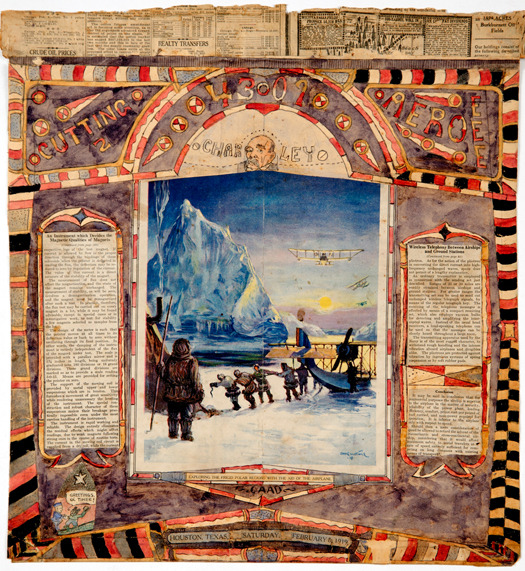


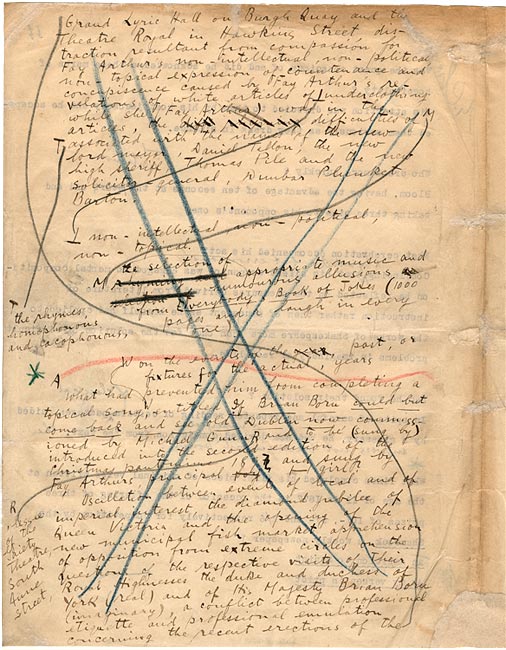


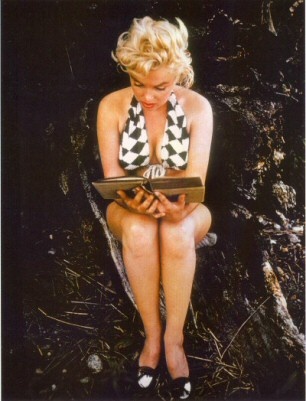


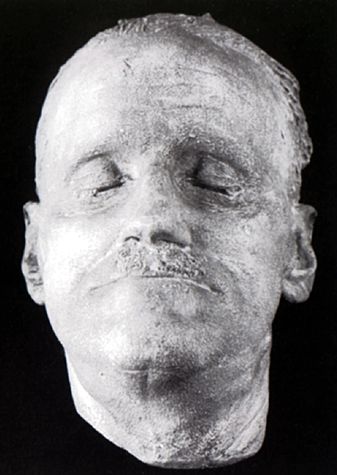
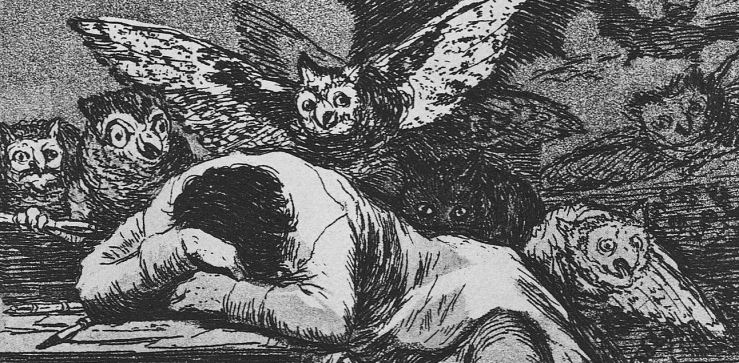
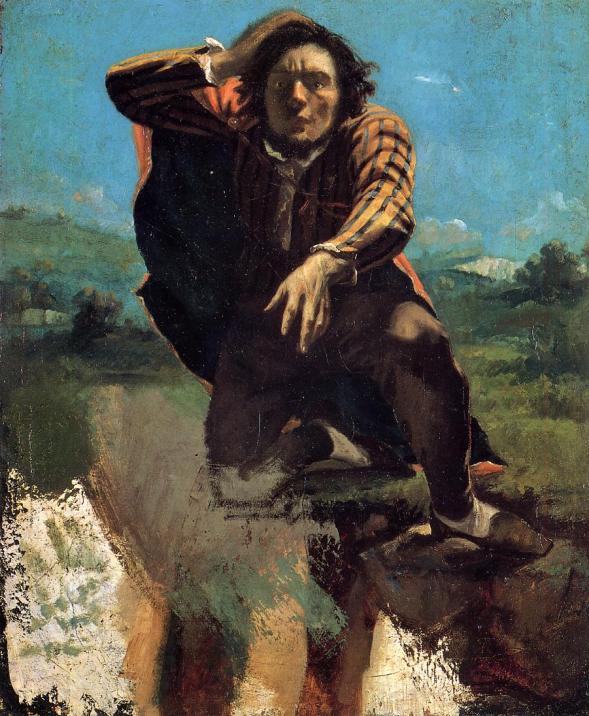



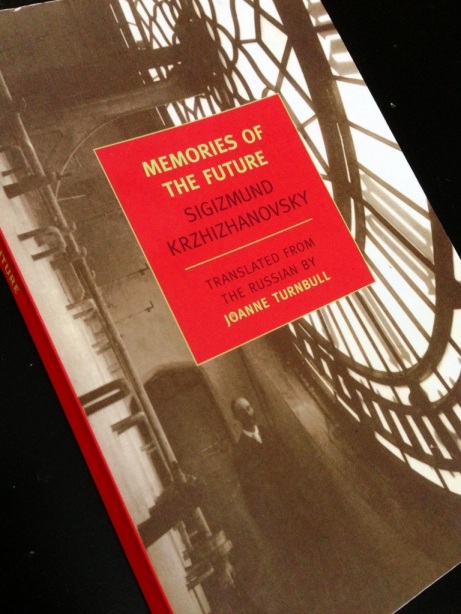

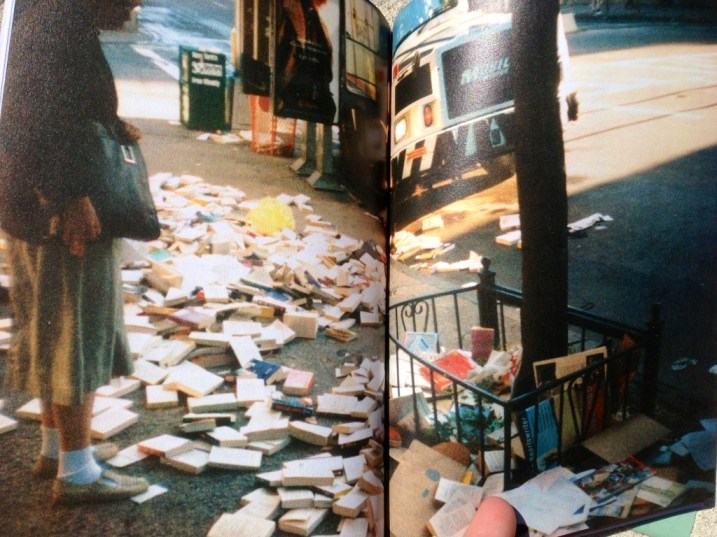






 Biblioklept