I Riff on Eugenides’s The Marriage Plot, Which I Haven’t Read (Book Acquired, 8.22.2012)


20120902-141345.jpg

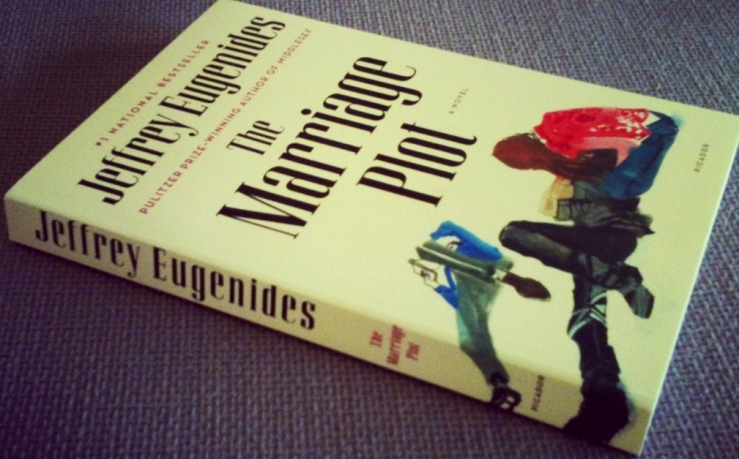
1. Jeffrey Eugenides’s third novel The Marriage Plot is out in paperback from Picador this month. I haven’t read it.

2. I like the cover, a sort of watercolor job on thick textured paper.

3. I read Eugenides’s first novel The Virgin Suicides in 1997 or 1998. I was a freshman or sophomore in college. It was one of those books that everyone had on their shelves (I read my girlfriend’s roommate’s copy in maybe two sittings). I recall liking its style but the story had no emotional impact on me.

I was suspicious of the talent everyone ascribed to Eugenides.

4. I bought Eugenides’s second novel Middlesex in a train station in Rome. I bought it because I needed something to read. I read most of it on trains. This was the summer of 2005 or 2006, I think.

5. Middlesex is one of the first novels I can think of that I read and thought, “Here is a writer trying to fool me. Here is a writer trying to hide a fairly predictable plot under a mask of thematic importance. Here is a writer trying to hide mundane and often clunky prose beneath relevant issues. Here is an author trying to hide a lack of penetrating insight beneath the dazzle of historical sweep.”

6. Middlesex: The seams show. It’s literary-fiction-as-genre. And I have no problem with that. I wish it was weirder.

7. Here’s the back cover blurb for The Marriage Plot:

It’s the early 1980s. In American colleges, the wised-up kids are inhaling Derrida and listening to Talking Heads. But Madeleine Hanna, dutiful English major, is writing her senior thesis on Jane Austen and George Eliot, purveyors of the marriage plot that lies at the heart of the greatest English novels. As Madeleine studies the age-old motivations of the human heart, real life, in the form of two very different guys, intervenes—the charismatic and intense Leonard Bankhead, and her old friend the mystically inclined Mitchell Grammaticus. As all three of them face life in the real world they will have to reevaluate everything they have learned.

8. I sort of feel like I’ve already read the novel after reading this. Or maybe I feel like I could guess the trajectory of the novel.

9. Okay, so maybe I should read the first few pages . . .

10. I stopped on page 11, at this paragraph:

The cafe had just opened. The guy behind the counter, who was wearing Elvis Costello glasses, was rinsing out the espresso machine. At a table against the wall, a girl with stiff pink hair was smoking a clove cigarette and reading Invisible Cities. “Tainted Love” played from the stereo on top of the refrigerator.

Espresso! Cloves! Soft Cell! Calvino! Costello!

Okay. Maybe it’s Gloria Jones’s version of “Tainted Love.”

Anyway. There’s something insufferable about the paragraph.

I suppose I need to name or define the “something.”

11. Let me backtrack then, to the first paragraphs of the novel, to its first line even: “To start with, look at all the books.”

I like that as an opening line. I do. And I don’t mind an intertextual read. I’ll even accept this opening gambit as a form of characterization for our heroine Madeleine—this listing of authors—Wharton, Henry James, “a lot of Dickens, a smidgen of Trollope” (a smidgen!), “good helpings of Austen, George Eliot” etc. etc. We learn she reads Collette “on the sly” (who is stopping her?).

The references pile up: The surroundings of College Hill are compared to a “Charles Addams cartoon or a Lovecraft story”; those damn RISD kids are “blaring Patti Smith”; Madeleine has borrowed her roommate’s Betsey Johnson dress; you might recognize Madeleine by her “Katherine Hepburn-ish cheekbones and jawline”; etc.

For, fun, let me pick three pages at random:

On page 75, we find out that someone named Dinky is “a frosted blonde with late-de Kooning teeth.”

Page 187 is clean.

Page 87: Roland Barthes. Harpo Marx. Grolsch beer.

(I can’t help but skim over 86, a motherlode: Kafka, Borges, Musil, Vanity FairThe Sorrows of Young Werther, Derrida).

12. Erudition in a novel can be a fine thing, and works that explicitly reference and engage other works can be marvelous (Sebald’s The Rings of Saturn is an easy example to go to here). But references can also be used lazily as placeholders for real meaning, or even as a substitution for an entire milieu. (This is what I mean by the “something insufferable,” re: point 10).

13. There seems to be a trend in genre-bound “literary fiction” novels (again, I mean literary-fiction-as-genre) that lazily tie themselves to another, greater novel, without actually adding to the themes. I’m thinking explicitly of Franzen trying to borrow some of the weight of War and Peace in Freedom and Chad Harbach’s bid for Moby-Dick comparisons in The Art of Fielding. My intuition is that Eugenides is doing the same thing in The Marriage Plot.

14. Of course I’m probably (improbably enough) not the ideal audience for The Marriage Plot, not despite the fact but because of the fact that I happen to dig Talking Heads and Derrida and Barthes and literary theory &c. A romcom that involves a semiotics seminar as a setting is especially unappealing to me.

My wife, on the other hand, snapped up the copy of The Marriage Plot that the kind people at Picador sent me. I had to pull it from her night stand to write this riff. I’ll get her reaction down the line, which will certainly be more informed than my own.
 

“New Continent” — Georges Perec

Don Quixote After His Battle with the Cat — Gustave Dore

William S. Burroughs on Jack Kerouac

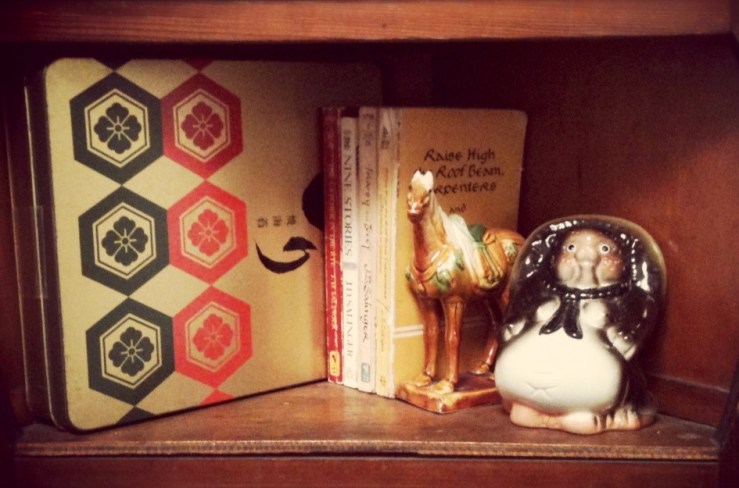
Book Shelves #36, 9.02.2012


20120902-101430.jpg

Book shelves series #36, thirty-sixth Sunday of 2012

Continuing the corner book shelf in the family room.

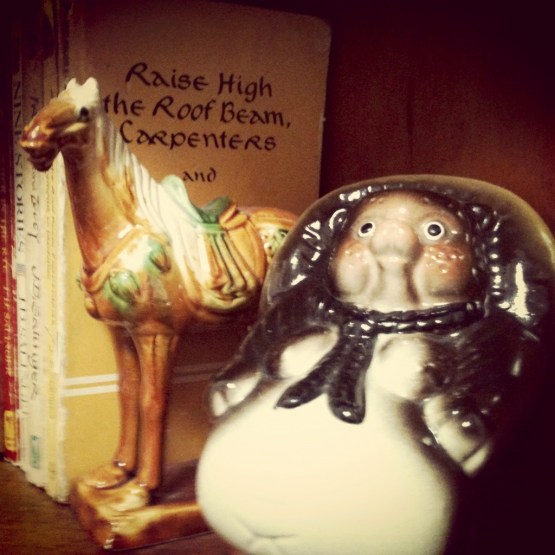
The bookends are tschotskes from a ¥100 shop; we bought them years ago in Tokyo.

Not particularly fancy but they have a sentimental value. (The big guy is a tanuki, if you’re unfamiliar).

The tin on the far left is filled with miscellaneous papers, old stickers, other small bricabrac.


20120902-101437.jpg

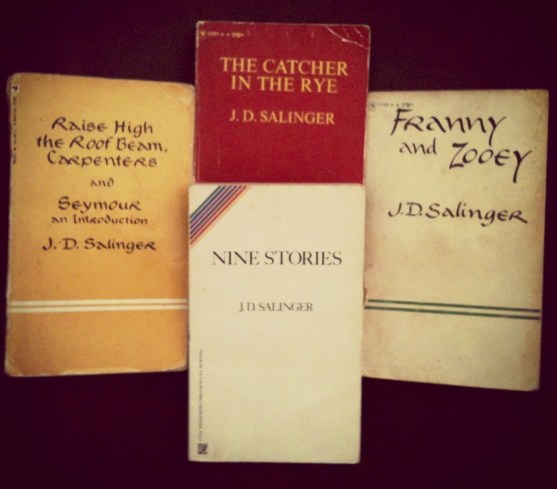
Only four books on this shelf—the more-or-less complete works of J.D. Salinger, in gloriously ratty mass paperback editions:

20120902-101444.jpg

Not sure if these are my wife’s or mine—probably a mix of both. I stole most of these from my high school.

The Catcher in the Rye was as important to me as any other book, I suppose. I wrote about it here.

Nine Stories contains some of Salinger’s most disciplined stuff.

It took me years to finally find the discipline to read Seymour, which is probably the best thing he wrote.


Don Quixote and the Windmills — Salvador Dali

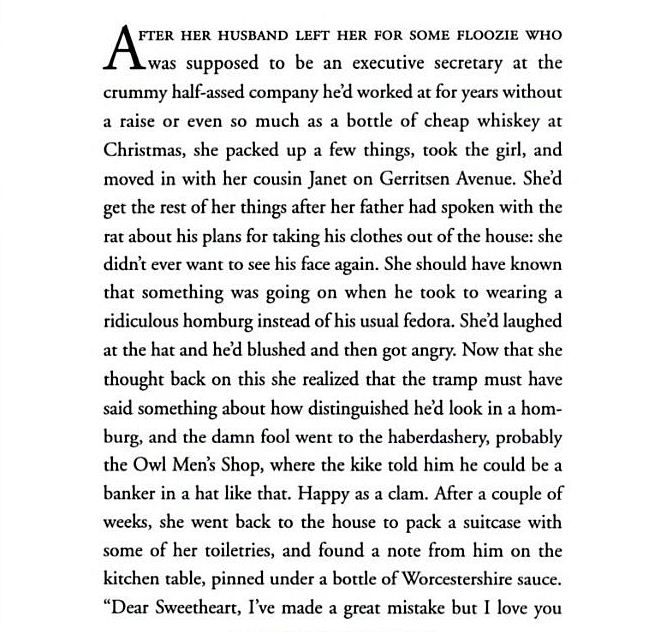
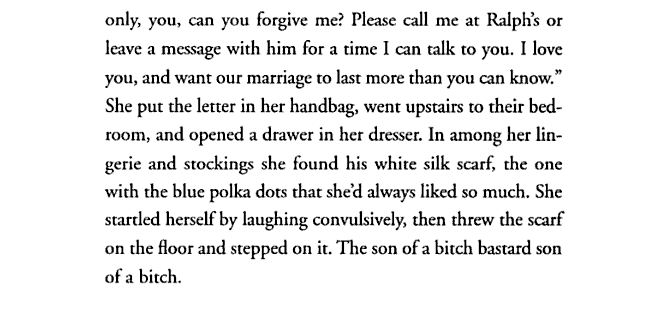
“In the Bedroom” — Gilbert Sorrentino

“In the Bedroom” by Gilbert Sorrentino. From A Strange Commonplace.

“A Little Fable” — Franz Kafka


“Alas,” said the mouse, “the whole world is growing smaller every day. At the beginning it was so big that I was afraid, I kept running and running, and I was glad when I saw walls far away to the right and left, but these long walls have narrowed so quickly that I am in the last chamber already, and there in the corner stands the trap that I must run into.”

“You only need to change your direction,” said the cat, and ate it up.

–Franz Kafka’s “A Little Fable”


Don Quixote — Will Eisner

(Via Hey Oscar Wilde!)

Stephen Greenblatt on Lucretius’s On the Nature of Things

Malcolm Lowry’s “Big Books,” as Reported by David Markson


From “Malcolm Lowry: A Remininiscence,” the final chapter of David Markson’s Malcolm Lowry’s Volcano, a study of Under the Volcano:

His big books, however, would at the moment remain these: Moby-DickBlue Voyage, the Grieg, Madame Bovary, Conrad (particularly The Secret Agent), O’Neill, Kafka, much of Poe, Rimbaud, and of course Joyce and Shakespeare. The Enormous Room is a favorite, as is Nightwood. Kierkegaard and Swedenborg are the philosophers most mentioned, and in another area William James and Ouspensky. Also Strindberg, Gogol, Tolstoy.

Lifting a Maupassant from the shelf (nothing has been said of the man before this): “He is a better writer than you think.”


Guy Debord on “Consumable Pseudocyclical Time”


Consumable pseudocyclical time is spectacular time, both in the narrow sense as time spent consuming images and in the broader sense as image of the consumption of time. The time spent consuming images (images which in turn serve to publicize all the other commodities) is both the particular terrain where the spectacle’s mechanisms are most fully implemented and the general goal that those mechanisms present, the focus and epitome of all particular consumptions. Thus, the time that modern society is constantly seeking to “save” by increasing transportation speeds or using packaged soups ends up being spent by the average American in watching television three to six hours a day. As for the social image of the consumption of time, it is exclusively dominated by leisure time and vacations — moments portrayed, like all spectacular commodities, at a distance and as desirable by definition. These commodified moments are explicitly presented as moments of real life whose cyclical return we are supposed to look forward to. But all that is really happening is that the spectacle is displaying and reproducing itself at a higher level of intensity. What is presented as true life turns out to be merely a more truly spectacular life.

Guy Debord, section 153 of The Society of the Spectacle


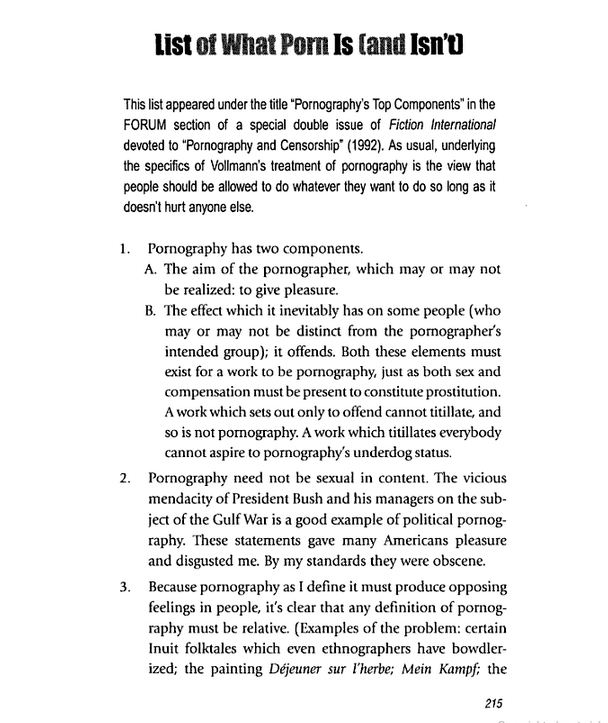
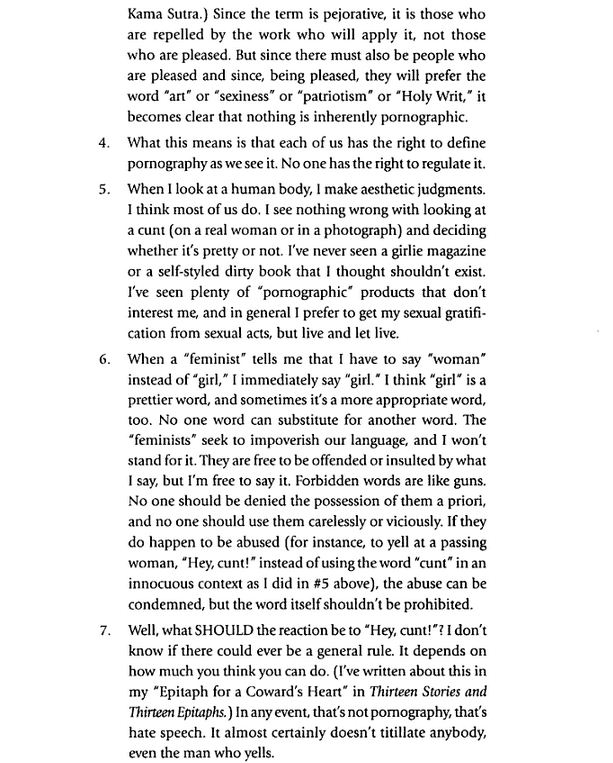
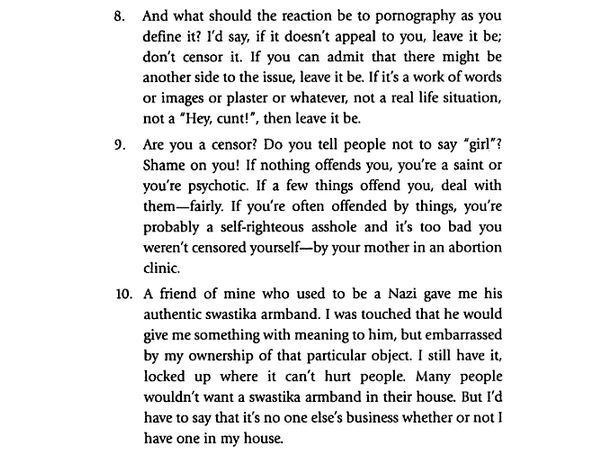
“List of What Porn Is (and Isn’t)” — William T. Vollmann

Portrait of George Sand — Eugene Delacroix

A Rambling Riff on the Age of the Amateur, Book Review Ethics, and Adam Johnson’s The Orphan Master’s Son

1.There’s been a lot of hubbub (at least in my particular echo chamber) the past few weeks about book reviews and the ethics of book reviews:

Too nice?

Too mean?

Just fine?

What about straight-up buying a book review?

And what about when authors get involved, via social media, in calling out reviewers?

2. A sloppy synthesis of what I’ve linked to above might be:

The traditional position of the serious book critic is perhaps being undermined via social media in the hands of well-meaning amateurs.

3. I’m not sure that I exactly agree with the statement above.

4. Still, we live in the Age of the Amateur.

(Saturday Night Live parodied this phenomena in a sketch called “You Can Do Anything!” that hits nail on head).

5. (SNL also unintentionally documented what happens when an amateur is given a forum beyond her untested abilities).

6. I suppose I could spend a few paragraphs parsing the delicate distinctions between literary criticism and book reviews and awarding fucking stars on Amazon or Goodreads, but I think you, gentle reader, probably get all that already.

7. (I consider myself an amateur book reviewer with an interest in but no pretension to literary criticism. I don’t intend to write about myself, but I do feel like I should clarify this).

8. (I know I just said that I don’t intend to write about myself, but again, perhaps germane:

I don’t read a lot of book reviews, especially contemporary book reviews. I mean, I hardly ever read contemporary book reviews. If I’m planning to review the work, a contemporary review may poison any pretense of objectivity I have.

With the occasional new major release, it’s almost impossible not to get a fix on some critical consensus—and I always scan of course.

I usually read a handful of reviews of a book I’m reading after I’ve drafted a review.

And I read lots of old reviews. Lots.

Again, maybe germane to all of this).

9.  But I’m riffing out all over the place. Let me get to the point. Let’s return to the second part of Point 2:

The traditional position of the serious book critic is perhaps being undermined via social media in the hands of well-meaning amateurs.

Is this true? I don’t know, exactly. A few points to consider:

Literary criticism has existed via two more-or-less stable forms for about a century now: Academic scholarship and popular media.

Academic scholarship tends to be highly-specialized and literally inaccessible for most people. I think academic scholarship and research about literature is important and I don’t want to knock it all—but most of it simply isn’t exposed to, let alone absorbed by, a reading public.

Popular media—magazines and newspapers—is clearly in a transitional phase. A lot of this boils down to the dissemination of new technologies, the advent of the so-called “citizen journalist,” and the oligarchization of mass media. Journalism, as taught in journalism school, prescribed a set of methods and ethics that seem frankly quaint when set against the internet and 24hr cable networks. How book reviews fit—if they fit at all—into the emerging paradigm of popular media is hard to say.

10. Obviously, one model for how book reviews/lit crit fits into the emerging paradigm of popular media  is Goodreads, which I really don’t know much about to be honest. Another is Amazon, which has so many problems I don’t even begin to know how to start. Both of these sites use star ratings though, which has always struck me as probably the worst critical model available.

11. (I got an email recently about Riffle, a new service “powered by the Facebook social graph and loaded with expert curated recommendations.” I mean, how’s that for a shudder down the metaphorical spine?)

12. (Re: Point 11—What is it with this term “curator”? Is it synonymous with: “I produce no original content”?)

13. So, to return to the pretense that I have a point:

I’ve written about 300 reviews on this site. Most for books, some movie reviews, and a few other things as well (uh, malt liquor). I didn’t really know what I was doing in the beginning—I mean, I wasn’t even intending to review books. I was just writing about books I’d pilfered, pinched. Stolen. (The name of the site was its mission statement).  At some point I started making critical judgments, trying to, you know, recommend books that I loved to people who I hoped would love them also.

And at some point I came across John Updike’s rules for reviewing books.

I’m not an Updike fan—wasn’t then, amn’t now—but his rules resonated with me, and I made a point of reading his criticism, which is generally excellent.

In short, I’ve tried to follow his rules.

14. (To clarify: A simple thesis for this whole riff: I think book reviewers need to follow some kind of aesthetic, ethical rubric, one that accounts for subjectivity in an objective way—and I think Updike’s list is great).

15. Updike’s first rule is his best:

Try to understand what the author wished to do, and do not blame him for not achieving what he did not attempt.

This one seems fairly straightforward, but is abused all the time, whether it’s Kakutani at the NYT pretending YA is not YA, or a reviewer at Book Kvetch lamenting that a metaphor-laced experimental novel isn’t a science textbook.

(I might have abused Updike’s first rule myself, but I’m not going to ransack the archives for self-incrimination).

16. Updike’s first rule is so graceful because it allows for a sliding scale of sorts, a range of possibilities beyond the critic’s own highly-subjective taste.

Put another way, it’s very easy to say, “I loved it” or “I hated it,” but Updike’s first rule places the onus of critical imagination on the reviewer. The responsible reviewer has to understand his or her audience (or at least has to try to understand his or her audience).

17. The subjective can’t be removed from reviews of course—nor should it be. I think the balancing act here might be described as taste.

18. I’ve occasionally broken some of Updike’s rules, especially when I super hated a book (usually #s 2 &3–didn’t bother to cite text—actually, I’ve done this repeatedly),

19. Sometimes a book confuses my approach to criticism.

20. Hence, Adam Johnson’s novel The Orphan Master’s Son, which I reviewed in hardback a few months ago, and which is now available in trade paperback, and which I will use now as some sort of loose illustration for whatever point there is in this ramble:

20120724-194425.jpg

21. (Okay. So, normally I photograph reader copies (and other books I obtain) and run a little blurb—usually the publisher’s copy or another review—and I was gonna do this with The Orphan Master’s trade paperback (citing my own review in this case), but the post lingered, thoughts accrued around it as I glommed onto all the ideas reverberating around my little echo chamber re: this whole riff. I bring this up in the recognition that a post purporting to address in some way the ethics of book reviewing should point out that the publisher in question (e.g. this blog, e.g. me) regularly posts what amounts to a kind of advertisement for forthcoming books).

22. So why The Orphan Master’s Son?

I use it as example (barring info re: Point 21 for a moment) of a book that didn’t do what I wanted the book to do.

Here’s the end of my review:

 Toward the end of The Orphan Master’s Son, I began imagining how the novel might read as a work divorced from historical or political reality, as its own dystopian blend—what would The Orphan Master’s Son be stripped of all its North Korean baggage? (This is a ridiculous question, of course, but it is the question I asked myself). I think it would be a much better book, one that would allow Johnson more breathing room to play with the big issues that he’s ultimately addressing here—what it means to tell a story, what it means to create, what it means to love a person who can not just change, but also disappear. These are the issues that Johnson tackles with aplomb; what’s missing though, I think, is a genuine take on what it means to be a North Korean in search of identity.

I think my review of The Orphan Master’s Son was/is fair, but it didn’t—couldn’t—exactly capture how I felt about the book: a mix of disappointment and admiration.

23. To be clear, I took pains to clarify that I thought highly of Johnson’s prose and that I thought most readers would really dig his book.

I gave it, I suppose, a mixed review, which is almost like giving it a negative review.

24. But I didn’t give it a mixed review to be nice—I tempered my criticisms with the knowledge that any attack I made on The Orphan Master’s Son was really a way of defining my own aesthetic tastes. Let me cite Updike’s fifth rule:

 If the book is judged deficient, cite a successful example along the same lines, from the author’s ouevre or elsewhere. Try to understand the failure. Sure it’s his and not yours?

Ultimately, my problem with The Orphan Master’s Son boils down to me wanting Johnson to have written a different book. I feel like I have plenty of reasonable reasony reasons for wanting a different book—first and foremost Johnson’s prowess as proser and storyteller—but that’s no way to review a book. From my review:

I should probably clarify that I think many people will enjoy this novel and find it very moving and that the faults I found in its second half likely have more to do with my taste as a reader than they do Johnson’s skill as a writer, which skill,  again I’ve tried to demonstrate is accomplished.

25. Let me end here in repetition (and, perhaps, here in the safety of these parentheses point to how riffing in a rambling wine-soaked list somehow frees me from actually coherently writing about any of the things I promised to—or maybe it doesn’t—which is of course its own ethical ball of worms) by restating a basic answer to some of the basic problems of amateurism:

Book reviewers need to follow some kind of aesthetic, ethical rubric, one that accounts for subjectivity in an objective way.

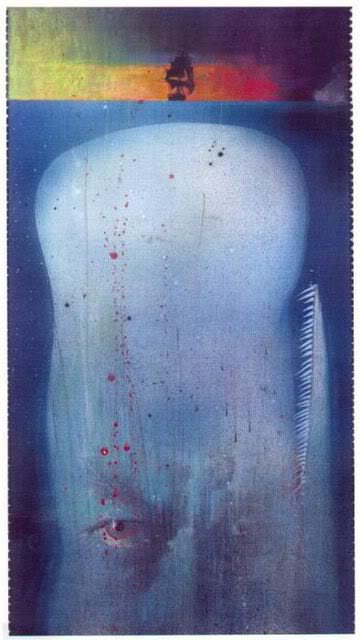
Moby-Dick Illustration — Bill Sienkiewicz

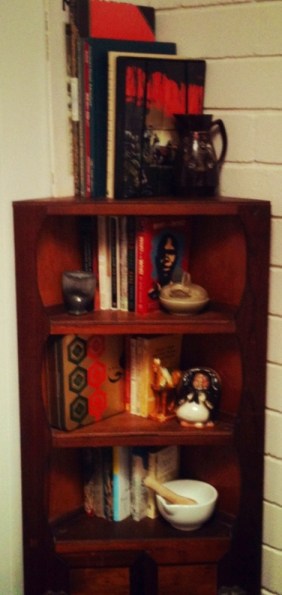
Book Shelves #35, 8.27.2012


20120826-135649.jpg

Book shelves series #35, thirty-fifth Sunday of 2012

Corner case in the family room. Today’s shelf:

20120826-135655.jpg

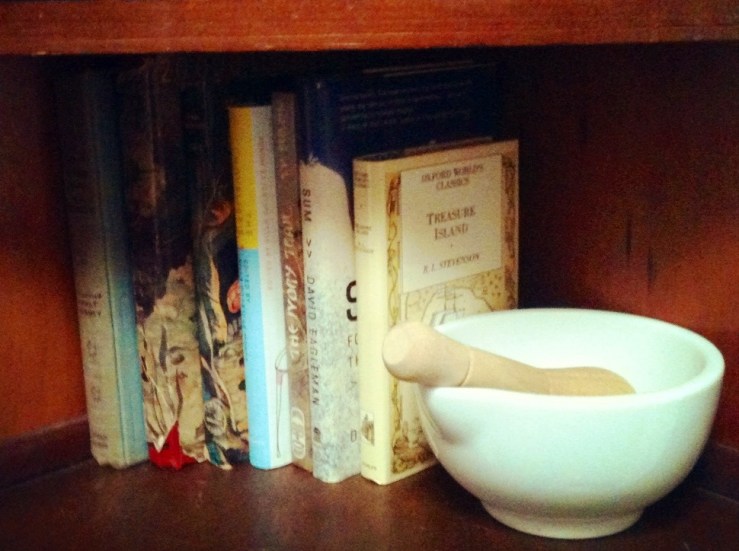
The depth makes getting the shadow off the shot almost impossible without using additional lighting.

Note the use of mortar and pestle as bookend, a genteel move that screams respectability.

Volumes on this shelf include:

20120826-135702.jpg

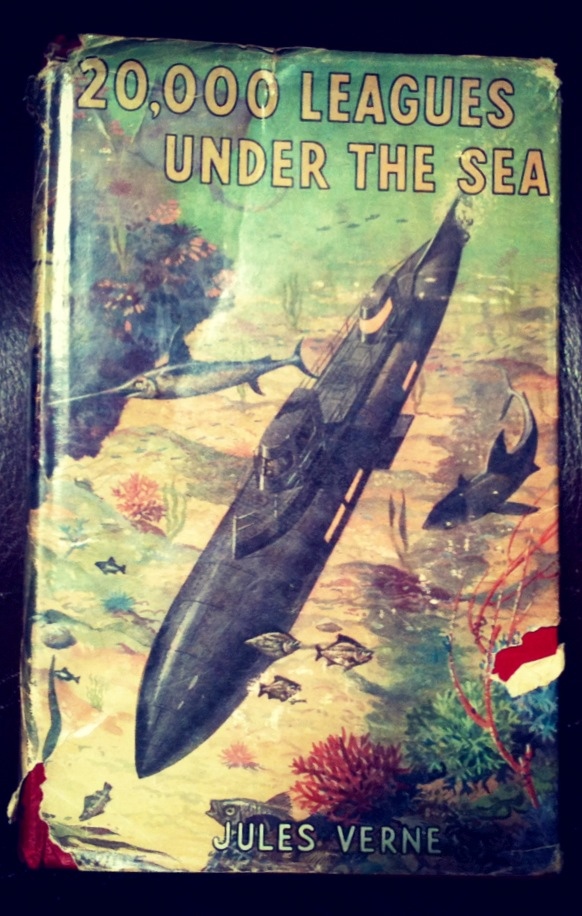
And:

20120826-135710.jpg


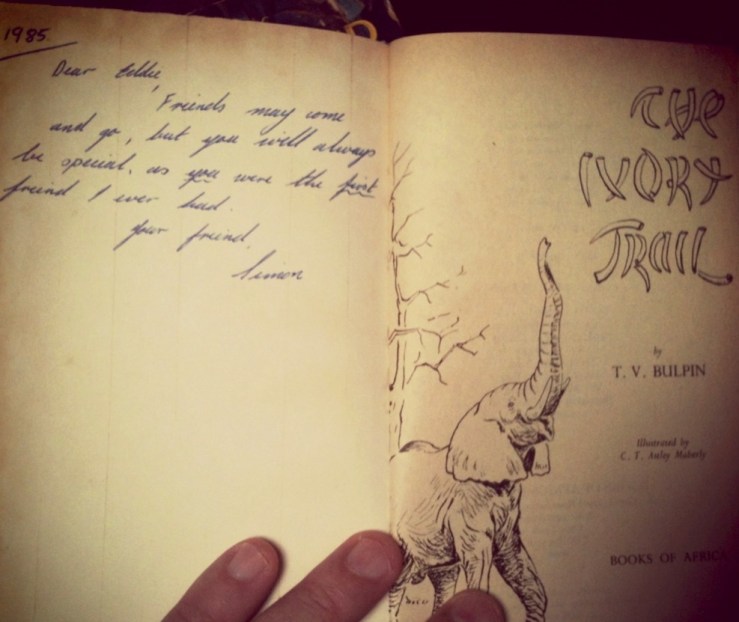
As well as The Ivory Trail, inscribed by my the mother of one of best friends of early childhood (and attributed to him):

20120826-135716.jpg