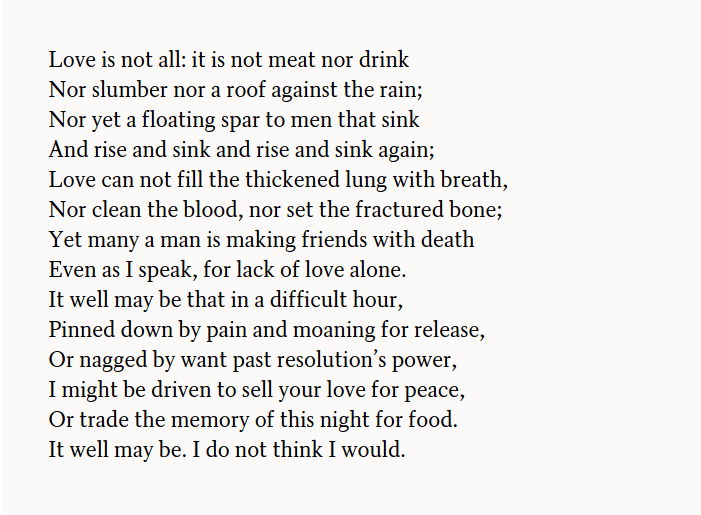
“Love is not all” — Edna St. Vincent Millay

Screenshot 2015-05-04 at 7.33.58 PM

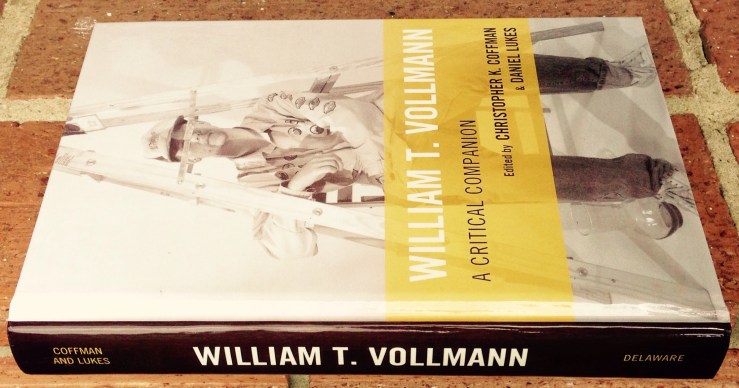
An Interview with Christopher K. Coffman and Daniel Lukes, Editors of William T. Vollmann: A Critical Companion (Part 2)

William T. Vollmann: A Critical Companion, newish from University of Delaware Press, collects academic essays and memoir-vignettes by a range of critics and authors to make the case that Vollmann is, as the blurb claims, the “most ambitious, productive, and important living author in the US.” I interviewed the book’s editors, Christopher K. Coffman and Daniel Lukes, over a series of emails in a two-part interview. You can read the first part here. A few days after the first part of the interview posted, Lukes and Coffman hosted a book launch party in NYC for WTV: ACC; the pics in this interview are from that event (check out the Facebook page for more, including Jonathan Franzen reading from his piece on Vollmann).

IMG_6524


Biblioklept: Let’s talk about the formal elements of William T. Vollmann: A Critical Companion. The collection seems to balance essays of a more academic flavor with memoir-vignettes, personal accounts, and riffs.

Christopher K. Coffman: We decided early on to intersperse among the academic essays pieces by non-scholars, or by scholars writing in a non-scholarly mode. The goal here was at least two-fold. We wanted to offer something a bit more accessible to WTV readers who were not in academia (although I think the average WTV fan can follow scholarly arguments as well as many of us in academia can). Also, we realized that some people with a privileged view on WTV’s work–such as those of WTV’s book designers who contributed (Bolte and Speaker Austin)–could add something of interest and great value to audiences in and out of academia, and we wanted to make space for that. I would have to look back through the e-mail log to be sure, but I think Daniel first came up with the idea of soliciting shorter pieces from non-scholars, and that I then conceived the structural component. I am a huge fan of Hemingway’s In Our Time, and the contrapuntal play between the stories and the very short inter-chapters in that book served for me as a paradigm of what Daniel and I have tried to do in this regard. Of course, as soon as we brought up the example of Hemingway, we recalled that WTV does something similar in Thirteen Stories and Thirteen Epitaphs, so he beat us to the punch even there. At any rate, my hope is that our readers find in the short chapterlets material that serves as a response to or as an extension of ideas presented in the more properly scholarly readings that surround those shorter pieces.

The second question of arrangement was the placement of essays and interchapters, and we here grouped according to subject matter as well as we could, without merely replicating what McCaffery and Hemmingson had done for Expelled from Eden. We also, obviously, made space for both Larry and Michael as the authors of the Preface and Afterword. Our intention there, insofar as I can speak for both of us, is to make it clear that we are trying to situate our contribution to scholarship on WTV in relation to the work that Larry and Michael have already done. Finally, I wrote the Introduction not only because one of us had to, but also because Daniel was spoken for in the sense that he already had material that formed the basis for the really great chapter that he contributed. Also, I found the chance to frame the book’s material via an introduction that dealt with WTV’s place in the landscape of post-1945 American fiction appealing. That said, while the introduction bears my byline, my ongoing conversation with Daniel during the past few years shaped my thinking about WTV as much as any original ideas of my own, so he deserves a lot of credit for the introduction as well.

Daniel Lukes: I’ve been going back over the timeline to see if Samuel Cohen and Lee Konstantinou’s edited volume The Legacy of David Foster Wallace, which also features some shorter pieces, was an influence on that, but it looks like we took our approach independently. Though I will say their book did serve as a model in some ways of what ours could be. Dealing with the “non-scholarly” pieces has been for me one of the most exciting parts of putting this book together (the distinction between “scholarlies” and “non-scholarlies” itself being one of the various amusing frameworks that Chris and I have been carrying around throughout the process). From the beginning I thought it would be very helpful to have some of Vollmann’s literary peers chime in: you just don’t hear too much from them about him. So we reached out to writers we thought might be Vollmann readers: some just weren’t (I’d love to know if Cormac McCarthy reads Vollmann: the letter I mailed to a presumed representative of his returned unopened). Some were Vollmann fans/friends, but couldn’t make it for another reason; when Jonathan Franzen came through and expressed his enthusiasm for the project and willingness to contribute a piece, I felt some relief. And James Franco was a pleasure to work with. That said I think the primary value of the non-scholarlies is in the insights they offer into Vollmann’s world and writing practices, from those who have worked closely with him, in particular Carla Bolte, Mary Austin Speaker, and Mariya Gusev’s excellent and vivid pieces. Continue reading “An Interview with Christopher K. Coffman and Daniel Lukes, Editors of William T. Vollmann: A Critical Companion (Part 2)”

Antaeus Setting Down Dante and Virgil in the Last Circle of Hell — William Blake

514484

Read J.G. Ballard’s story “The Terminal Beach”

“The Terminal Beach”

by

J.G. Ballard


The Terminal Beach


At night, as he lay asleep on the floor of the ruined bunker, Traven heard the waves breaking along the shore of the lagoon, like the sounds of giant aircraft warming up at the ends of their runways. This memory of the great night raids against the Japanese mainland had filled his first months on the island with images of burning bombers falling through the air around him. Later, with the attacks of ben-ben, the nightmare passed and the waves began to remind him of the deep Atlantic rollers on the beach at Dakar, where he had been born, and of watching from the window in the evenings for his parents to drive home along the corniche road from the airport. Overcome by this long-forgotten memory, he woke uncertainly from the bed of old magazines on which he slept and went out to the dunes that screened the lagoon.


Through the cold night air he could see the abandoned Superfortresses lying among the palms beyond the perimeter of the emergency landing field three hundred yards away. Traven walked through the dark sand, already forgetting where the shore lay, although the atoll was little more than half a mile in width. Above him, along the crests of the dunes, the tall palms leaned into the dim air like the symbols of a cryptic alphabet. The landscape of the island was covered by strange ciphers.


Giving up the attempt to find the beach, Traven stumbled into a set of tracks left years earlier by a large caterpillar vehicle. The heat released by the weapons tests had fused the sand, and the double line of fossil imprints, uncovered by the evening air, wound its serpentine way among the hollows like the footfalls of an ancient saurian.


Too weak to walk any further, Traven sat down between the tracks. Hoping that they might lead him to the beach, he began to excavate the wedge-shaped grooves from a drift into which they disappeared. He returned to the bunker shortly before dawn, and slept through the hot silences of the following noon.


The Blocks


As usual on these enervating afternoons, when not even a breath of on-shore breeze disturbed the dust, Traven sat in the shadow of one of the blocks, lost somewhere within the centre of the maze. His back resting against the rough concrete surface, he gazed with a phlegmatic eye down the surrounding aisles and at the line of doors facing him. Each afternoon he left his cell in the abandoned camera bunker among the dunes and walked down into the blocks. For the first half an hour he restricted himself to the perimeter aisle, now and then trying one of the doors with the rusty key in his pocket – found among the litter of smashed bottles and cans in the isthmus of sand separating the testing ground from the air-strip – and then inevitably, with a sort of drugged stride, he set off into the centre of the blocks, breaking into a run and darting in and out of the corridors, as if trying to flush some invisible opponent from his hiding place. Soon he would be completely lost. Whatever his efforts to return to the perimeter, he always found himself once more in the centre.


Eventually he would abandon the task, and sit down in the dust, watching the shadows emerge from their crevices at the foot of the blocks. For some reason he invariably arranged to be trapped when the sun was at zenith – on Eniwetok, the thermonuclear noon.


One question in particular intrigued him: ‘What sort of people would inhabit this minimal concrete city?’

Continue reading “Read J.G. Ballard’s story “The Terminal Beach””

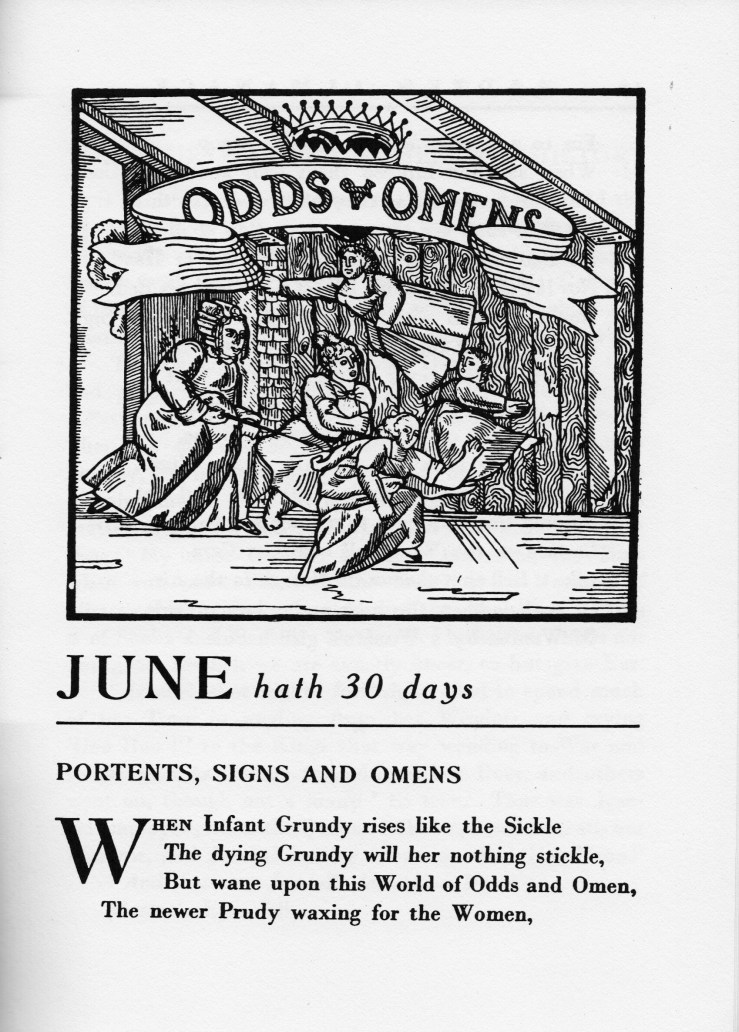
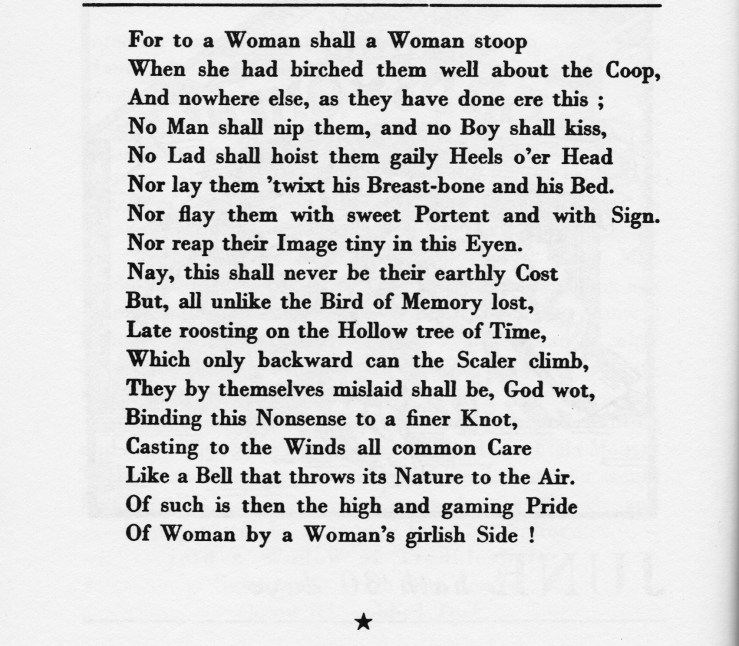
“June” — Djuna Barnes

image image

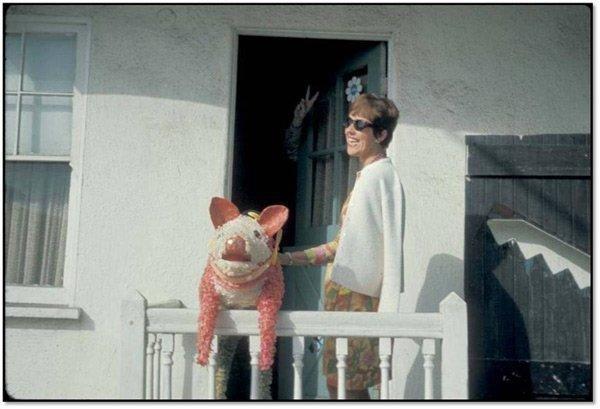
Possible photographic evidence of Thomas Pynchon’s hand (and a pig piñata)

6a00d8341c630a53ef014e88434d23970d

From an article in LAist:

A photograph on the back cover of a memoir by Phyllis Gebauer, a close friend of Pynchon’s, shows the author’s hand extending out of the door of his apartment giving a peace sign with a pig piñata named Claude and Gebauer in the foreground. In 2011, Gebauer donated her rare collection of signed Pynchon novels to UCLA.

I seem to recall mention of this pig piñata in A Journey into the Mind of P (but I could be wrong).

Big thanks to Doug Eklund for pointing the photo out to me.

Milton’s Mysterious Dream — William Blake

Reviews and riffs of May 2015 (and an unrelated owl)

Reviews and riffs, May 2015

In which I read Playboy for the Pynchon article.

This is not a review of Lydia Davis’s Can’t and Won’t.

What the hell is Pynchon in Public Day?

A review of Jim O’Rourke’s new record Simple Songs.

Han Kang’s The Vegetarian reviewed.

A somewhat contrarian take on Mad Max: Fury Road.

Mad Men’s cynical finale.

Gravity’s Rainbow and Disney’s Fantasia.

Unrelated owl by Durer:


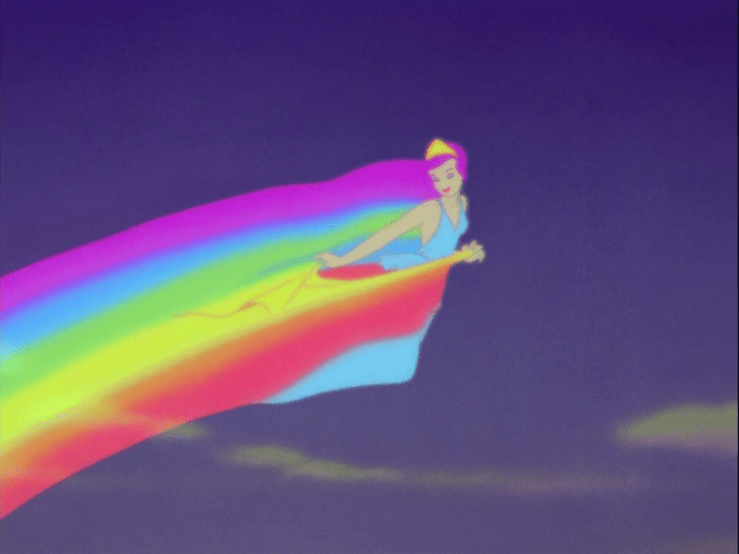
A last riff (for now) on Gravity’s Rainbow (and Disney’s Fantasia)

Screenshot 2015-04-24 at 9.27.30 PM

Disney’s Fantasia is one of the better film adaptations of Thomas Pynchon’s novel Gravity’s Rainbow. 

At least this thought zipped into my head a few weeks back, as I watched the film with my wife and kids. I was in the middle of a second reading of the novel, an immediate rereading prompted by the first reading. It looped me back in. Everything seemed connected to the novel in some way. Or rather, the novel seemed to connect itself to everything, through its reader—me—performing a strange dialectic of paranoia/anti-paranoia.

So anyway, Fantasia seemed to me an adaptation of Gravity’s Rainbow, bearing so many of the novel’s features: technical prowess, an episodic and discontinuous form, hallucinatory dazzle, shifts between “high” and “low” culture, parodic and satirical gestures that ultimately invoke sincerity, heightened musicality, themes of magic and science, themes of automation and autonomy, depictions of splintering identity, apocalypse and genesis, cartoon elasticity, mixed modes, terror, love, the sublime, etc.

(There’s even a coded orgy in Fantasia).

But Fantasia was first released in 1940 right, when Pynchon was, what, three or four? And Gravity’s Rainbow was published in 1973, and most of the events in that novel happen at the end of World War II, in like, 1944, 1945, right? So the claim that “Fantasia is one of the better film adaptations of Gravity’s Rainbow” is ridiculous, right?

(Unless, perhaps, we employ those literary terms that Steven Weisenburger uses repeatedly in his Companion to Gravity’s Rainbow: analepsis and prolepsis—so, okay, so perhaps we consider Fantasia an analepsis, a flashback, of Gravity’s Rainbow, or we consider Gravity’s Rainbow a prolepsis, a flashforward, of Fantasia…no? Why not?).

Also ridiculous in the claim that “Fantasia is one of the better film adaptations of Gravity’s Rainbow” is that modifier “better,” for what other film adaptations of Gravity’s Rainbow exist?

(The list is long and mostly features unintentional titles, but let me lump in much of Robert Altman, The Conversation, Richard Kelly’s Southland Tales, Paul Thomas Anderson’s The Master, that Scientology documentary Going Clear, a good bit of stuff by the Wachowksis, The Fisher King (hell, all of Terry Gilliam, why not?), the Blackadder series, which engenders all sorts of wonderful problems of analepsis and prolepsis…).

Gravity’s Rainbow is of course larded with film references, from King Kong and monster movies to German expressionism (Fritz Lang in particular), and features filmmakers and actors as characters. The novel also formulates itself as its own film adaptation, perhaps. The book’s fourth sentence tells us “…it’s all theatre.” (That phrase appears again near the novel’s conclusion, in what I take to be a key passage). And the book ends, proleptically, in “the Orpheus Theatre on Melrose,” a theater managed by Richard M. Nixon, excuse me, Zhlubb—with the rocket analeptically erupting from the past into “The screen…a dim page spread before us, white and silent.” Indeed, as so many of the book’s commentator’s have noted, Pynchon marks separations in the book’s sequences with squares reminiscent of film sprockets —  □ □ □ □ □ □ □. Continue reading “A last riff (for now) on Gravity’s Rainbow (and Disney’s Fantasia)”

“Gorse Is Not People,” a short story by Janet Frame

“Gorse Is Not People”

by

Janet Frame


Do you remember your twenty-first birthday? The party, the cake, and cutting a slice of it to put under your pillow that night, to make you dream of your future beloved; the giant key; the singing:

I’m twenty-one today!

Twenty-one today!

I’ve got the key of the door!

Never been twenty-one before!

Trivial, obvious words. Yet when the party was over and you lay in bed remembering the glinting key and the shamrock taste of the small glass of wine, and perhaps the taste of a sneaked last kiss in the dark, then the song seemed not trivial or obvious but a poetic statement of a temporal wonder. You had, as they say, attained your majority. You could vote in the elections; you could leave home against your parents’ wishes; you could marry in defiance of all opposition. You had crossed a legal border into a free country, and you now walked equipped with a giant tinsel key, a cardboard key covered with threepenny spangles.

Or perhaps your twenty-first birthday did not happen that way. Perhaps there was no party, no cake, no wine, and no kiss? I would like to tell you about Naida’s twenty-first birthday.

Naida was a dwarf, which is not really a rare thing. I suppose in our lifetime we see many dwarves—first, perhaps, at the circus, where they are advertised as the tiniest people in the world and we pay to watch them moving about in their almost walnut-shell or matchbox beds. Sometimes we pass them in the street and stare hard for a moment, then pretend we haven’t seen them, until they have passed us and we look back, saying, “It must be strange, how strange it must be, such tiny folk, and us out of reach, like tall trees!” Continue reading ““Gorse Is Not People,” a short story by Janet Frame”

The trailer for that David Foster Wallace movie

Look, I’m trying not to be a hater. I am (trying). And a lot of film critics who I generally respect the opinions of have said the film is good or even great. I’ve already ranted my No about this whole thing, and I know that a trailer is not the same as a movie, and I know that I didn’t like the book so why should I like the film—but—ugh. No. No. No.

“Decoration Day” — Sarah Orne Jewett

“Decoration Day” by Sarah Orne Jewett

I.

A week before the thirtieth of May, three friends—John Stover and Henry Merrill and Asa Brown—happened to meet on Saturday evening at Barton’s store at the Plains. They were ready to enjoy this idle hour after a busy week. After long easterly rains, the sun had at last come out bright and clear, and all the Barlow farmers had been planting. There was even a good deal of ploughing left to be done, the season was so backward.

The three middle-aged men were old friends. They had been school-fellows, and when they were hardly out of their boyhood the war came on, and they enlisted in the same company, on the same day, and happened to march away elbow to elbow. Then came the great experience of a great war, and the years that followed their return from the South had come to each almost alike. These men might have been members of the same rustic household, they knew each other’s history so well.

They were sitting on a low wooden bench at the left of the store door as you went in. People were coming and going on their Saturday night errands,—the post-office was in Barton’s store,—but the friends talked on eagerly, without being interrupted, except by an occasional nod of recognition. They appeared to take no notice at all of the neighbors whom they saw oftenest. It was a most beautiful evening; the two great elms were almost half in leaf over the blacksmith’s shop which stood across the wide road. Farther along were two small old-fashioned houses and the old white church, with its pretty belfry of four arched sides and a tiny dome at the top. The large cockerel on the vane was pointing a little south of west, and there was still light enough to make it shine bravely against the deep blue eastern sky. On the western side of the road, near the store, were the parsonage and the storekeeper’s modern house, which had a French roof and some attempt at decoration, which the long-established Barlow people called gingerbread-work, and regarded with mingled pride and disdain. These buildings made the tiny village called Barlow Plains. They stood in the middle of a long narrow strip of level ground. They were islanded by green fields and pastures. There were hills beyond; the mountains themselves seemed very near. Scattered about on the hill slopes were farmhouses, which stood so far apart, with their clusters of out-buildings, that each looked lonely, and the pine woods above seemed to besiege them all. It was lighter on the uplands than it was in the valley, where the three men sat on their bench, with their backs to the store and the western sky.

“Well, here we be ‘most into June, an’ I ‘ain’t got a bush-bean above ground,” lamented Henry Merrill.

“Your land’s always late, ain’t it? But you always catch up with the rest on us,” Asa Brown consoled him. “I’ve often observed that your land, though early planted, was late to sprout. I view it there’s a good week’s difference betwixt me an’ Stover an’ your folks, but come first o’ July we all even up.”

“‘Tis just so,” said John Stover, taking his pipe out of his mouth, as if he had a good deal more to say, and then replacing it, as if he had changed his mind.

“Made it extry hard having that long wet spell. Can’t none on us take no day off this season,” said Asa Brown; but nobody thought it worth his while to respond to such evident truth.

“Next Saturday’ll be the thirtieth o’ May—that’s Decoration Day, ain’t it?—come round again. Lord! how the years slip by after you git to be forty-five an’ along there!” said Asa again. “I s’pose some o’ our folks’ll go over to Alton to see the procession, same’s usual. I’ve got to git one o’ them small flags to stick on our Joel’s grave, an’ Mis’ Dexter always counts on havin’ some for Harrison’s lot. I calculate to get ’em somehow. I must make time to ride over, but I don’t know where the time’s comin’ from out o’ next week. I wish the women folks would tend to them things. There’s the spot where Eb Munson an’ John Tighe lays in the poor-farm lot, an’ I did mean certain to buy flags for ’em last year an’ year before, but I went an’ forgot it. I’d like to have folks that rode by notice ’em for once, if they was town paupers. Eb Munson was as darin’ a man as ever stepped out to tuck o’ drum.” Continue reading ““Decoration Day” — Sarah Orne Jewett”

Problems begin the moment we’re born (Hayao Miyazaki)

 From The Kingdom of Dreams and Madness. The speaker is Hayao Miyazaki.

Gorgeous madness | George Saunders on Thomas Pynchon

I don’t think anyone has gotten closer than Thomas Pynchon to summoning the real audacity and insanity and scope of the American mind, as reflected in the American landscape. I read Pynchon all out of order, starting with Vineland, and I still remember the shock of pleasure I got at finally seeing the America I knew—strange shops and boulevards, built over former strange shops and former boulevards, all laid out there in valleys and dead-end forests, heaped on top of Indian cemeteries, peopled with nut jobs and hustlers and moral purists—actually present in a novel, and present not only in substance but in structure and language that both used and evoked the unruly, muscular complexity of the world itself.

In Pynchon, anything is fair game—if it is in the world, it can go in the book. To me there is something Buddhist about this approach, which seems to say that since the world is capable of producing an infinity of forms, the novel must be capable of accommodating an infinite number of forms. All aesthetic concerns (style, form, structure) answer this purpose: Let in the world.

This is why Pynchon is our biggest writer, the gold standard of that overused word inclusiveness: No dogma or tidy aesthetic rule or literary fashion is allowed to prefilter the beautiful data streaming in. Everything is included. No inclination of the mind is too small or large or frightening. The result is gorgeous madness, which does what great literature has always done—reminds us that there is a world out there that is bigger than us and worthy of our utmost humility and attention.

I have often felt that we read to gain some idea of what God would say about us if someone were to ask Him what we’re like. Pynchon says, through the vast loving catalogue he has made, that we are Excellent but need to be watched closely. He says there is no higher form of worship than the loving (i.e., madly attentive) observation of that-which-is, a form of prayer of which Pynchon’s work is our highest example.

George Saunders on Thomas Pynchon. From the Summer 2005 issue of Bookforum.

Ishmael Reed . . . and more Pynchon (Books acquired, 5.22.2015)

So I finished my second full reading of Gravity’s Rainbow today. And then I read the last section three more times. And my brain feels fried. I was thinking about rereading V. after this, but I think a break will do nicely. So I picked up Ishmael Reed’s Mumbo Jumbo on Pynchon’s recommendation (“check out Ishmael Reed,” the narrator tells us on page 588 of Gravity’s Rainbow). A stroll through the lit crit section led to my spying (okay, looking for and finding) the 20th Century Views collection on Pynchon. So we’ll see how that reads.

Selections from One-Star Amazon Reviews of David Foster Wallace’s Infinite Jest

[Ed. note: I usually don’t preface these one-star Amazon selection riffs with much, other than to note the occasion for the post. In this case, the occasion is my coming to the end of a second reading of Pynchon’s novel Gravity’s Rainbow, a novel that is very much about the military-industrial-entertainment complex. And so well anyway, I keep thinking about Infinite Jest, which I have not read in full since 2002, but plan to reread later this summer. I expected Pynchon to show up a few times in the one-star reviews, but he’s present throughout, often obliquely referenced. Otherwise, the one-star reviews are typical: Rants against academia, “literary elites,” etc. The term “self-indulgent” appears again and again. Only one reviewer bothers to engage the plot though.]

***

slop

passably clever

completely pointless

superfluous logorrhea

spawn of PC Elitist writers

reads like a math textbook

This is the T.S. Eliot Effect

terminally adolescent drivel.

The footnotes have footnotes.

Big words and run-on sentences

utterly lacking in aesthetic merit

I only read the first 50 pages or so

wow, that’s a heck of a lot of words.

challenging, involving, and horrifying

A humorous book? – no. Absurd – Yes.

never made it to the end of chapter one.

I never did get through Gravity’s Rainbow

the magnum opus of American hipsterism.

the worst science fiction novel ever written.

If you like Pynchon, fine, go ahead, you’ll like this.

over a hundred pages of notes that serve no purpose

I pride myself on being an intelegent well read person

At least Pynchon, has humor, literary references, etc.

He probably sold more books on hype than on talent.

All in all, I suppose Wallace will just become a footnote.

this book(?) would not be worth the money if it was free

I trie d to think of Catcher in the Rye, but no comparison.

If you want to be warm, burn your overrated copy of Infinite Jest.

Wallace makes up words which does not help one reading a story.

I think it was in that book that I learned the word “omphaloskepsis.”

I’ll bet Dave had to beat off the nubile young co-eds after they read this one

obviously didn’t follow Elmore Leonard’s last tenet of his “10 Rules for Writing”

I suppose that some might consider Wallace a great writer, but was he popular?

It’s written in the first-person from the point of view of a mentally ill teenager.

he filled it with worthless footnotes that pretend to enlighten the victim of his prose

I just don’t understand how my fellow Amazon reviewers could have scored this book highly.

I realize that this book is considered to be “literature” but IMHO the internal ravings of mentally ill people isn’t literature.

It is called “INFINITE JETS” but there is not a single aircraft within, in fact the book is about people on land with drugs problems.

The book contains an anecdote plagiarized from the humorist, Gerard Hoffnung, who recorded it in the 1950s.

700 pages of clumsy sci-fi and the kind of smarty pants absurdist nonsense you’d expect from a precocious middle schooler

The premise for this novel derives from a Monty Python sketch in which the world’s funniest joke is also fatal.

Oh one other thing that drove me crazy: he started so many sentences with “And but so..” or “So but and…”

if Finnegans Wake was a rancid fart that was proudly left to rip, Infinite Jest is a weak one, lacking sound and odor.

Just a bunch of irrelevant words to set the scene…. not to mention he described everything into painful detail.

a kid thinks he’s going to the dentist but it’s really some sort of counselor and they have a long battle of wits to see which one of them is the bigger booger-eating nerd

DWF is desperately trying to emulate one of the century’s greatest authors, and utterly fails.

Put down the bong, go outside and get some real world experience before putting pen to paper.

Comparing Wallace to Pynchon is like comparing a kettle of sponges to Disney World

Academics also praise it as a badge of courage for (allegedly) reading it

It’s just the narrator’s interior thoughts about trying to buy drugs.

I was two pages in and started to feel confused, zoned out, and lost.

It reads like the stream of consciousness of a spoiled 10th grader.

What I read would have gotten an F in a freshman writing class.

The style is Pynchon. And by style, I mean, an exact duplication

At least, now I know where Dave Eggers ripped off his garbage

sorry Amazon,you definitely missed the boat with this one.

completely lacking in any kind of moral or ethical center

He and this book are simply silly, and a waste of pulp.

Book was a work of art, one I wasted my time viewing.

seems to spend forever talking about tennis and drugs

Characters are unbelievable and are over analyzed

Sure, he was making good points, for the 1990s!

Reading a thesaurus does not count as research.

Over 1000 pages of pseudo-subersiveness.

It’s the tyranny of the English Deparment

I only read about four percent of the book

For my taste, there were too many words

I think his suicide inflated his reviews.

I still feel awful thinking about it.

narcissistic garbage

wannabe Pynchon

Bad read no stars.

…is this an essay?

Generic Pynchon

Troglodyte.

Boring.

Skip it.

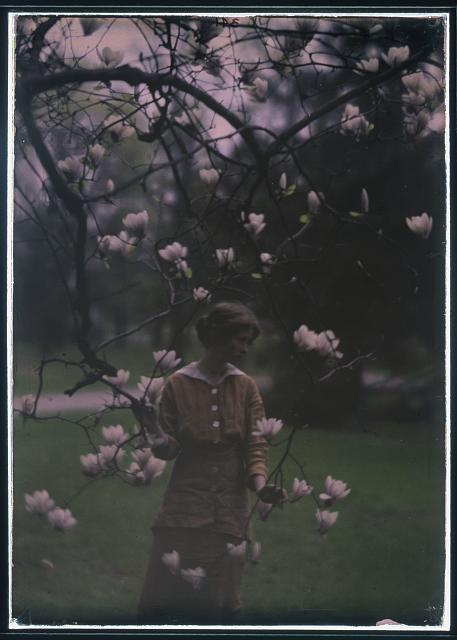
Edna St. Vincent Millay at Mitchell Kennerley’s house in Mamaroneck, New York — Arnold Genthe

7a18029r