RIP Toni Morrison

bdkyvyujr2crj4r4q8gm

RIP Toni Morrison, 1931-2019

The great American writer Toni Morrison died yesterday at the age of 88. Morrsion was a writer, academic, teacher, and playwright (among many other things), but will likely be best remembered for her eleven novels, which include Beloved (1987), The Bluest Eye (1970), and most recently God Help the Child (2015). Morrison’s slim essay collection Playing in the Dark (1992) remains a standard in college classrooms.

Playing in the Dark was probably the first thing I read by Morrison. I read it more than 20 years ago in a college classroom, and it was one of the first works of cultural criticism I’d read. I think I was probably too young to fully appreciate its scope, but I’ve since used elements of it (as well as Morrison’s essay on Adventures of Huckleberry Finn) in my own classes many times. Beloved, which I read around the same time, also as an undergraduate, had a more profound, visceral effect on me.

While Beloved, a mature exercise published when the author was in her fifties, is likely to be the book most people associate with Morrison, her early novels are especially compelling. The Bluest Eye is a study in abjection, painful, rich, fertile. The follow up, Sula (1973), centers on a black township in Ohio in the thirties. It’s also a painful and beautifully-written novel. Song of Solomon (1977) is maybe my favorite Morrison novel. Its protagonist Milkman Dead remains one of her most complex and memorable figures. I tend to think of these three early novels as a fecund trilogy, the rich base from which Morrison’s themes of race, memory, location, family, identity, and love continued to grow. These themes continued throughout her works, notably Beloved, of course, as well as Jazz (1992) and Paradise (1997). Morrison’s later works are perhaps underread or understudied compared to her early and middle period, but her 2008 novel A Mercy is a particularly focused and strong exploration of the myth of early America. It remains one of my favorites by Morrison. Morrison published two novels after: Home (2012) and God Help the Child. She also wrote the libretto for the opera Margaret Garner (2005), who was the historical inspiration for Beloved. Days after the 2016 election, Morrison published “Making America White Again” in The New Yorker.

A documentary film about her life, Toni Morrison: The Pieces I Am is in theaters now.

“Heat” — Denis Johnson

“Heat”

by

Denis Johnson


Here in the electric dusk your naked lover
tips the glass high and the ice cubes fall against her teeth.
It’s beautiful Susan, her hair sticky with gin,
Our Lady of Wet Glass-Rings on the Album Cover,
streaming with hatred in the heat
as the record falls and the snake-band chords begin
to break like terrible news from the Rolling Stones,
and such a last light—full of spheres and zones.

August,
you’re just an erotic hallucination,
just so much feverishly produced kazoo music,
are you serious?—this large oven impersonating night,
this exhaustion mutilated to resemble passion,
the bogus moon of tenderness and magic
you hold out to each prisoner like a cup of light?

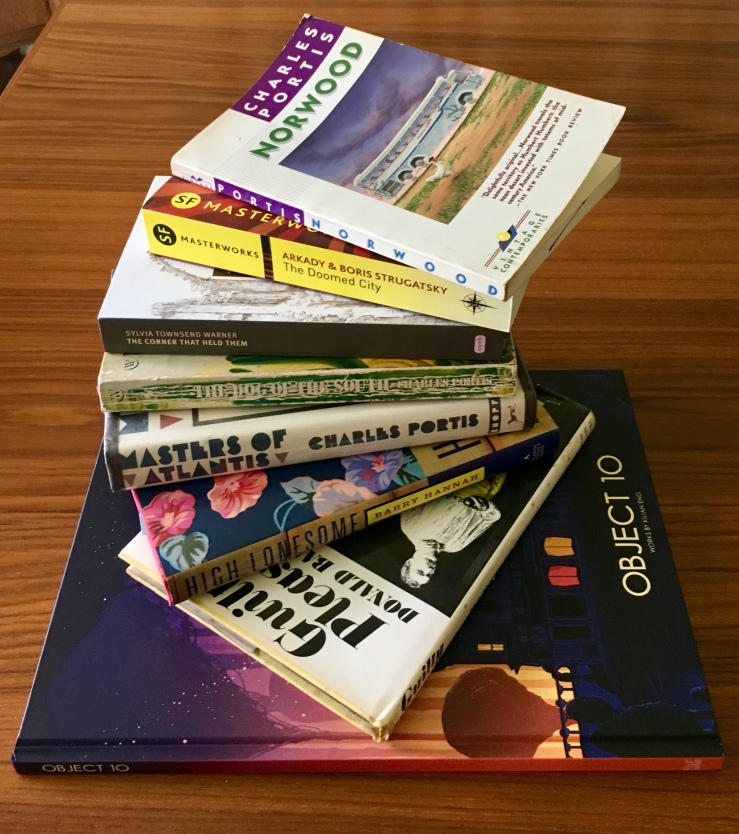
Blog about some books acquired

img_3745

My family and I spent a wonderful week in Oregon at the end of July. We visited friends who live in Portland, where we based our stay, and we drove to the coast, to Mount Hood, and to all kinds of beautiful places. It was really fucking lovely.

Among all the gardens and forests and breweries and record shops, we managed to fit in some bookstores too, of course.

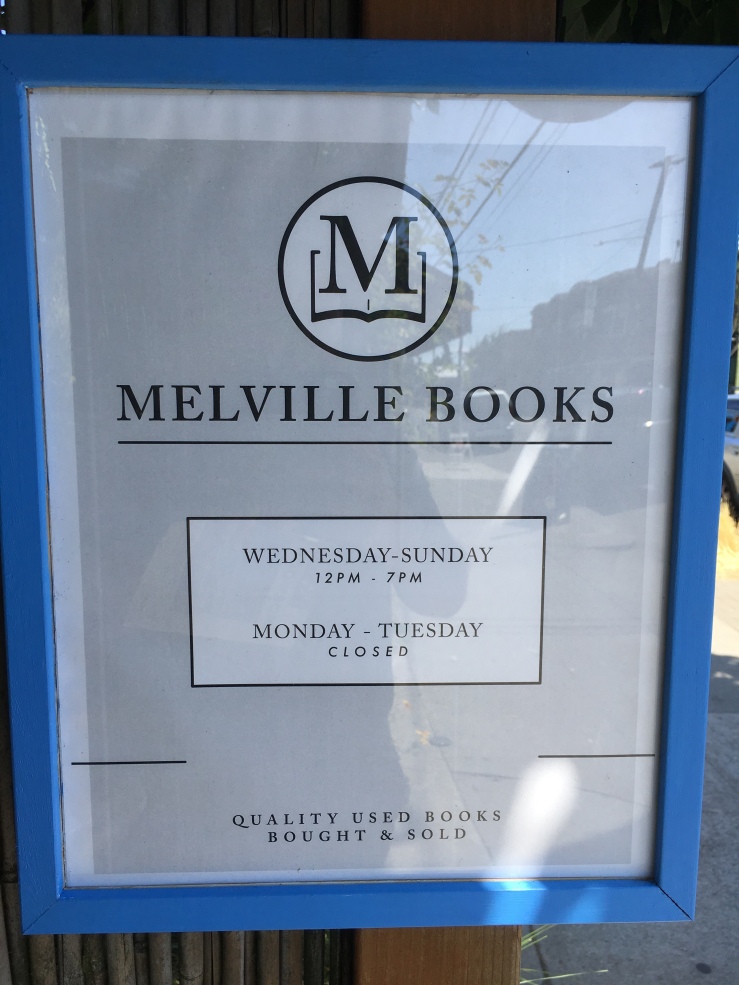
The first was Melville Books, right off of Alberta Street, tucked away just a bit. Our rental house was a block from Alberta, and we got there early in the afternoon and took a stroll. Melville Books is pretty new. The owner-proprietor was making a wooden “Open” sign while he chatted with me about his stock and his experiences scouting and buying used books. He was really friendly, and the small store was very well curated.

img_3259

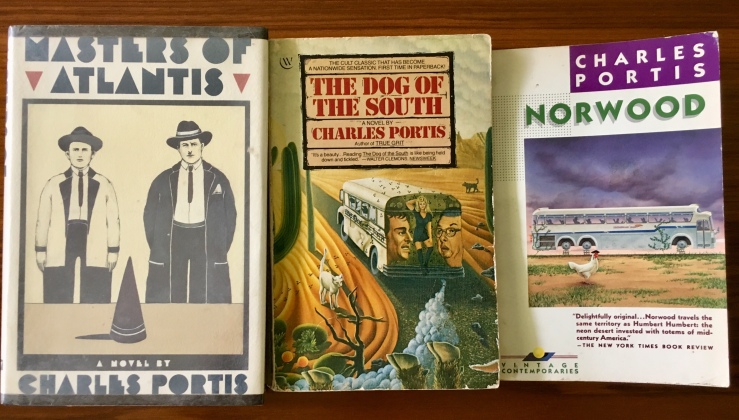
I picked up Charles Portis’s first novel Norwood there on something of a whim. I’ve never read Portis, but I know his fans love his stuff, and I couldn’t pass up the Vintage Contemporaries cover. There was also a hardback copy of True Grit in stock at Melville that I now regret not having picked up. Norwood is hilarious, and has evoked in me a need to read more Portis.

I actually went to my local used book store today to get some stuff for my kids (and maybe just to get out of the house), but the only copy of True Grit they had in stock was a Coen Brothers film adaptation tie in. I did pick up copies of Masters of Atlantis (in hardback) and The Dog of the South though.

img_3733

We also visited Powell’s, of course. I wasn’t expecting it to be as big as it was. Powell’s is a very well-stocked general bookstore, but I was a little disappointed that I couldn’t find more weird or rare stuff there (I think my local place, Chamblin Bookmine, has spoiled me).

img_3558

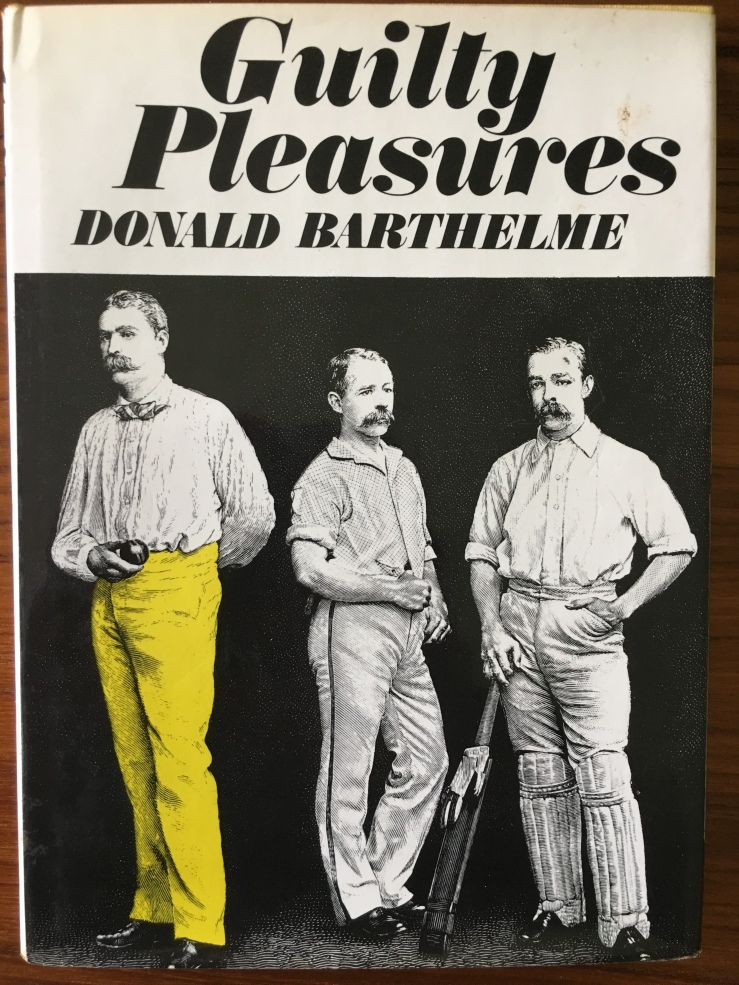
I picked up a first-edition hardback of Donald Barthelme’s “nonfiction” collection Guilty Pleasures for just a few bucks.

img_3734

It includes one of my favorite Barthelme pieces, “Eugenie Grandet.” It also includes quite a bit of his collage work.

img_3735

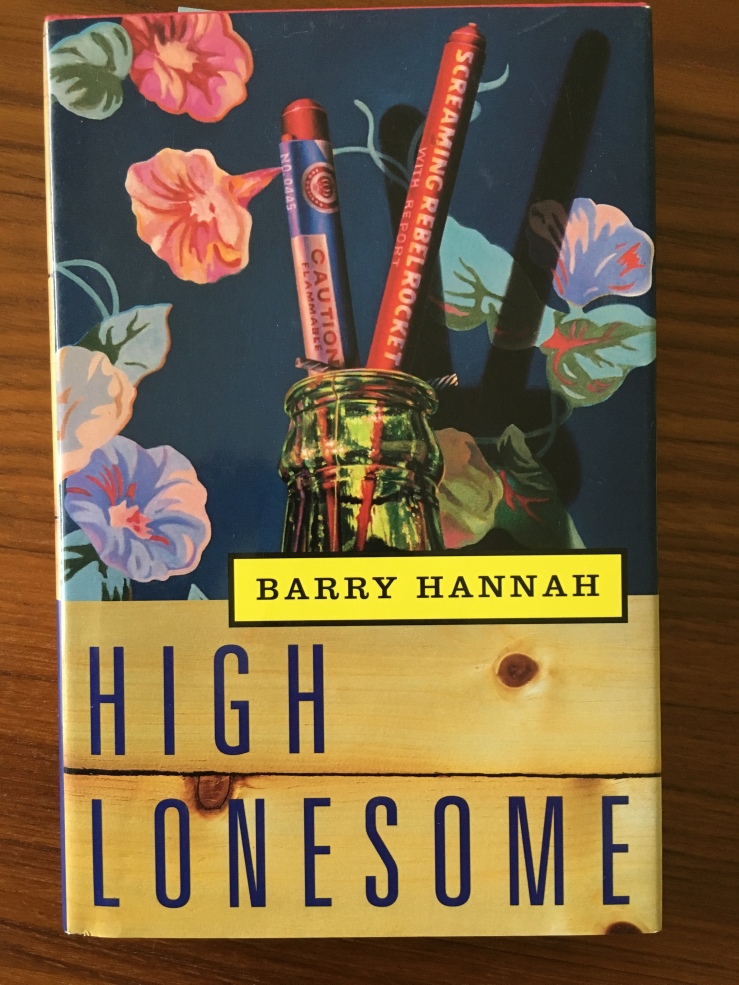
I also picked up a hardback copy of Barry Hannah’s High Lonesome. I’ve read a lot of the stories in here (collected in Long Lost Happy), but some are unfamiliar. Also, the cover is by the photorealist painter Glennray Tutor, a Southern contemporary of Hannah’s. Tutor did the covers for several other Hannah volumes.

img_3736

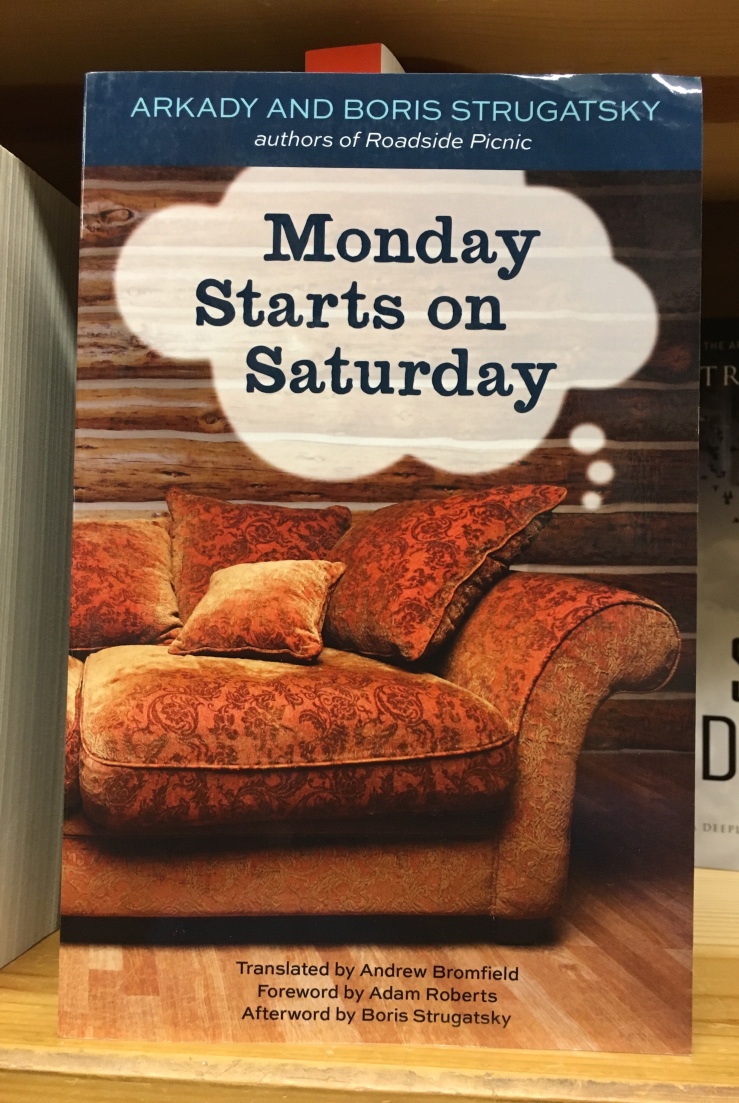
Over in the sci-fi section of Powell’s I found some books by the Strugatsky brothers, which I’ve been into lately. I’ve heard Monday Starts on Saturday is good, but the cover for this edition is so godawful bad that I couldn’t go for it. That’s what library e-books are for, I guess. (Really though, a blank white cover would have been better.)

img_3553

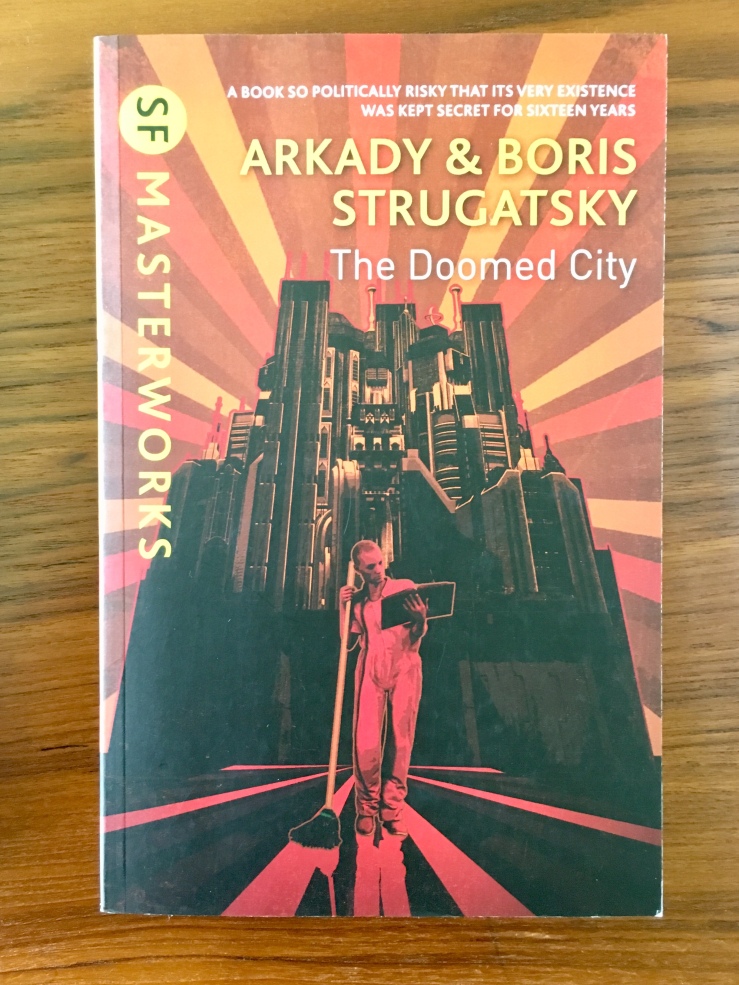
I ended up picking up The Doomed City instead, which I might try to squeeze in before the end of summer.

img_3737

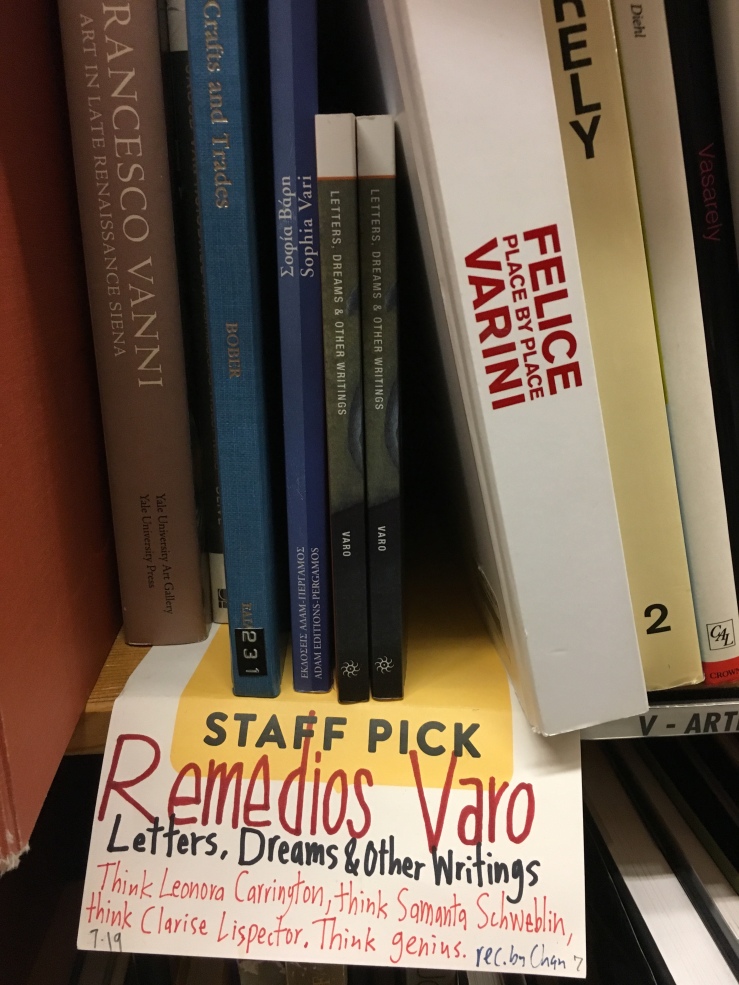
I was impressed with the art books collection at Powell’s but also disappointed not to find anything by Remedios Varo or Leonora Carrington, other than recent editions of their fiction—no real art books though. I was happy though to see a shelf recommendation for Margaret Carson’s recent translation of Varo’s Letters, Dreams & Other Writings though. I sent a pic to Margaret, who was really generous to me with her time in recent interview about her translation.

img_3555

I visited a few other bookshops, not so much as destinations, but rather in happy accidents in the neighborhoods we visited—but I restrained myself from picking anything else up. (And no, I didn’t make it to Mother Foucault’s, unfortunately, although many folks told me to. Next time.)

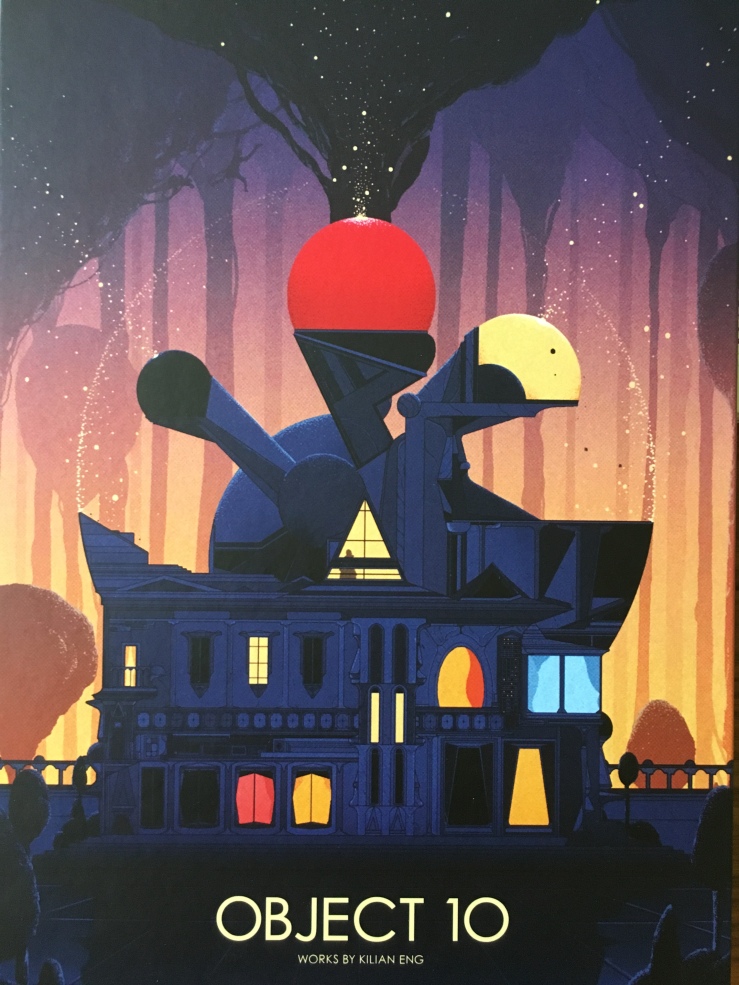
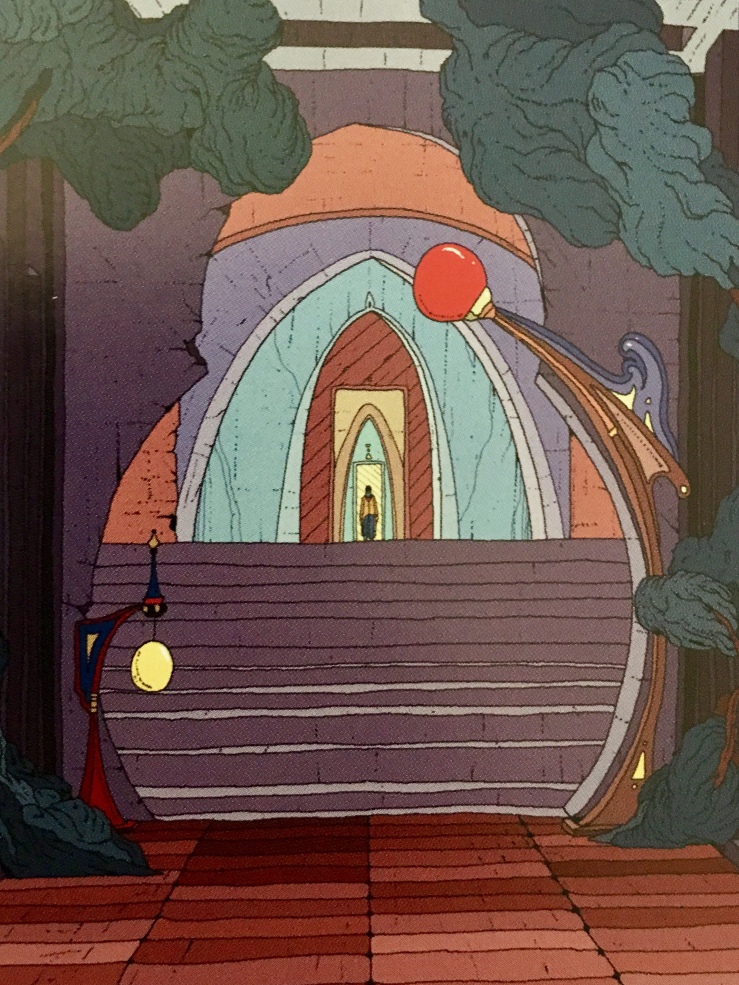
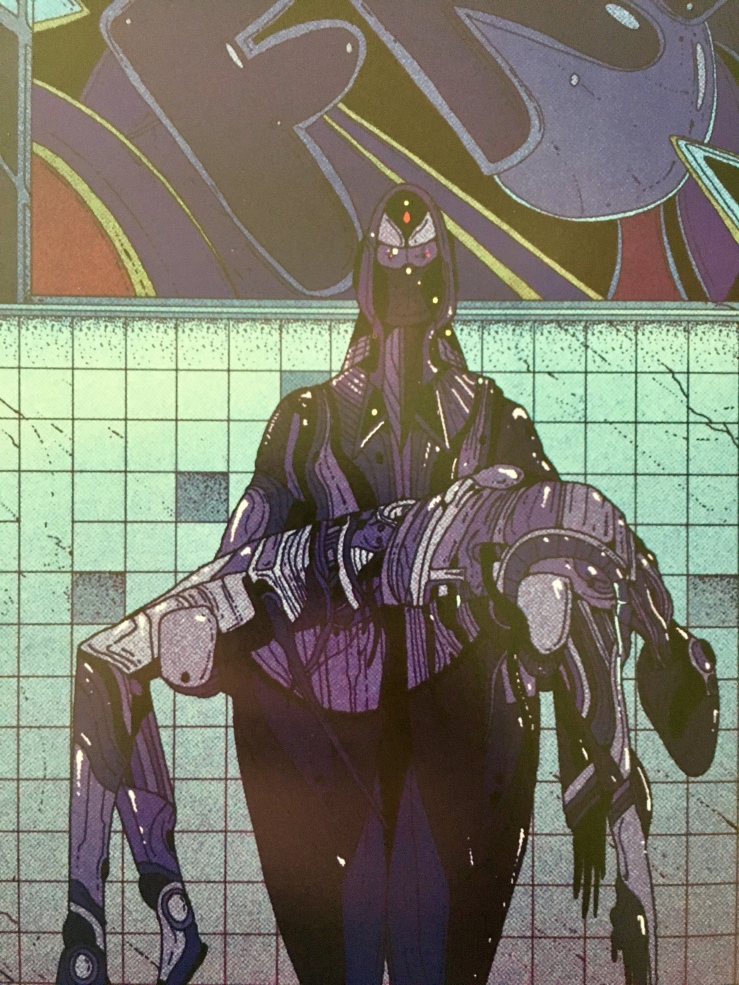
We visited Floating World Comics the same day as Powell’s, where I picked up a copy of Kilian Eng’s Object 10. I’ve been a fan of Eng’s for years, sharing his images on the blog and following him on Instagram. I hadn’t realized though that Floating World was his publisher. Object 10 is lovely.

img_3740

img_3743img_3744img_3742

I also picked up a pack of 1993 Moebius trading cards there for a dollar. I haven’t opened them yet though. Saving it for a treat later. It was neat to see copies of Anders Nilsen’s Tongues in the wild, too. I had reviewed the title awhile back for The Comics Journal, but I hadn’t realized that Nilsen lived in Portland. We also checked out Bridge City Comics on Mississippi, which had a nice selection of dollar comics that I indulged my kids in.

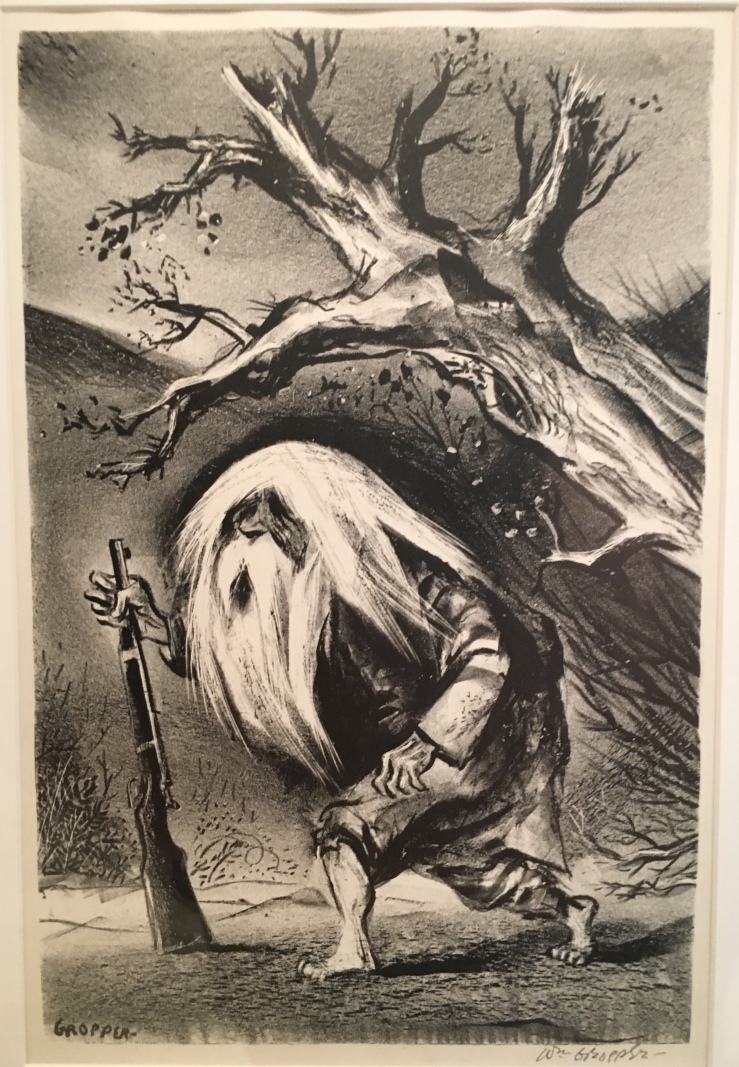
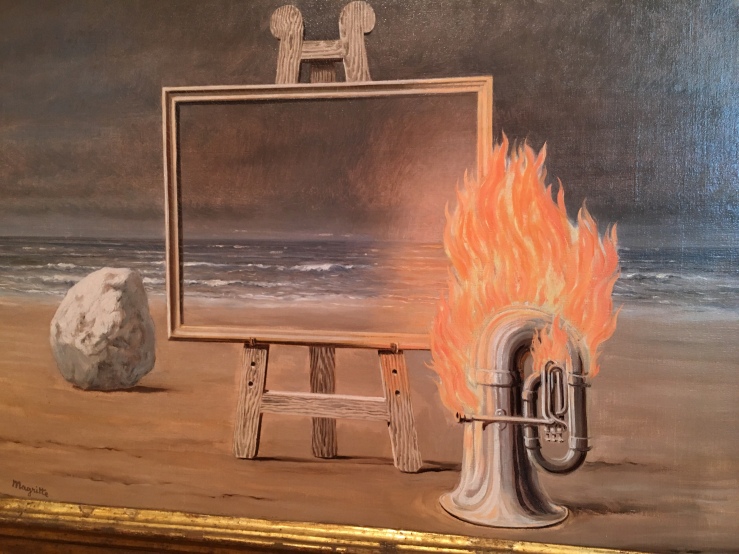
Portland was fantastic in general. The only real disappointment came when we visited the Portland Art Museum expecting to see a major Frida Kahlo exhibit. Unfortunately, we misread the dates—the show starts next summer. The museum has a nice collection though. Just a few pics of some pieces I liked:

Rip Van Winkle (1945) by William Gropper:

img_3291

The Fair Captive (1948) by Rene Magritte

img_3339

and The Femminiello (1740-60) by Giuseppe Bonito.

img_3302

Here’s the museum’s description of this unusual painting:

Owing to widespread social prejudice, cross-dressing was rarely depicted in European art until the modern era. This recently discovered painting from the mid-eighteenth century is a testament to the exceptional and long-standing acceptance of cross-dressers known as femminielli in the great Italian city of Naples. The term, which might be translated “little female-men,” is not derogatory, but rather an expression of endearment. Femminielli come from impoverished neighborhoods, as is evidenced by this individual’s missing tooth and goiter, a common condition among the poor in the Neapolitan region. Although femminiellicross-dress from an early age, they do not try to conceal their birth sex completely. Rather than being stigmatized, they are deemed special and are accepted as a “third sex” that combines the strengths of both males and females. In particular, femminielli are thought to bring good luck, so Neapolitans often take newborn babies to them to hold. Femminielli are also popular companions for an evening of gambling. This association is represented by the necklace of red coral, which is similarly thought to bring good fortune. Neapolitan genre paintings (images of everyday life) frequently feature a grinning figure to engage the viewer. Here, we are invited to consider the artist’s playful inversion of traditional views of gender, which contrasts the pretty young male with the more masculine femminiello.

Maybe we’ll get back to the Pacific Northwest next summer and see the Kahlo then.

Anyway so well—

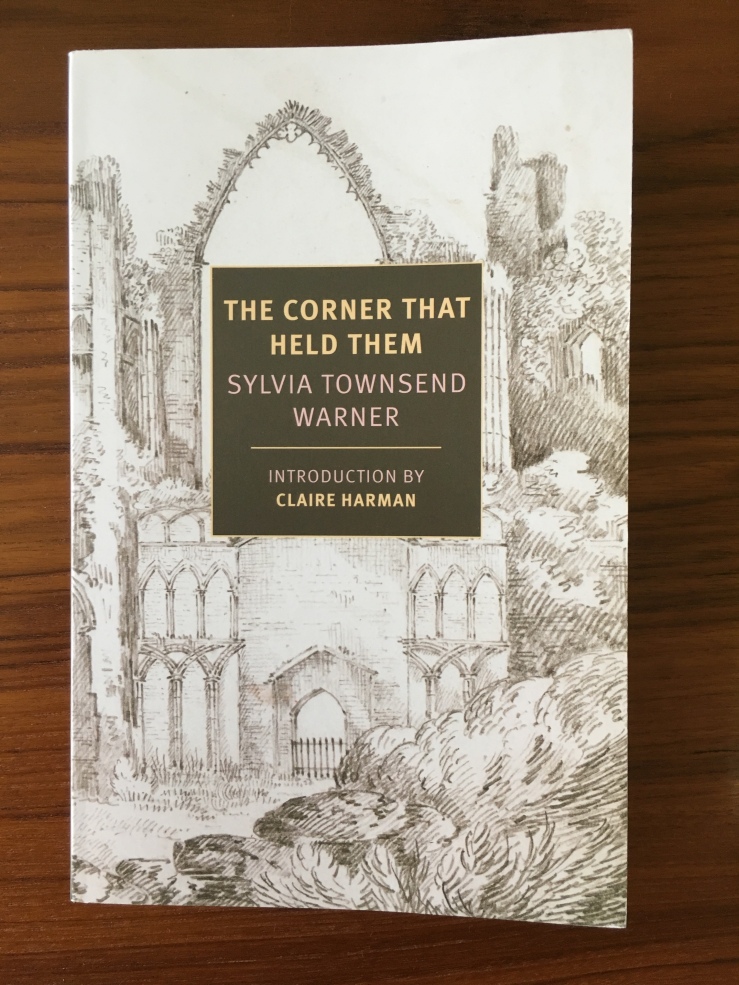
Like I said, I went to the bookstore today, not looking for myself (promise!) except that I did stop and browse Portis briefly, picking up the aforementioned copies. When I got home, I had a package from NYRB containing The Corner That Held Them by Sylvia Townsend Warner. It immediately interested me when I flicked through it—seems like a weird one. NYRB’s blurb below; more to come.

img_3738

Sylvia Townsend Warner’s The Corner That Held Them is a historical novel like no other, one that immerses the reader in the dailiness of history, rather than history as the given sequence of events that, in time, it comes to seem. Time ebbs and flows and characters come and go in this novel, set in the era of the Black Death, about a Benedictine convent of no great note. The nuns do their chores, and seek to maintain and improve the fabric of their house and chapel, and struggle with each other and with themselves. The book that emerges is a picture of a world run by women but also a story—stirring, disturbing, witty, utterly entrancing—of a community. What is the life of a community and how does it support, or constrain, a real humanity? How do we live through it and it through us? These are among the deep questions that lie behind this rare triumph of the novelist’s art.


Last Dance — Clive Smith

716653_cs-3154v1

Last Dance, 2018 by Clive Smith (b. 1967)

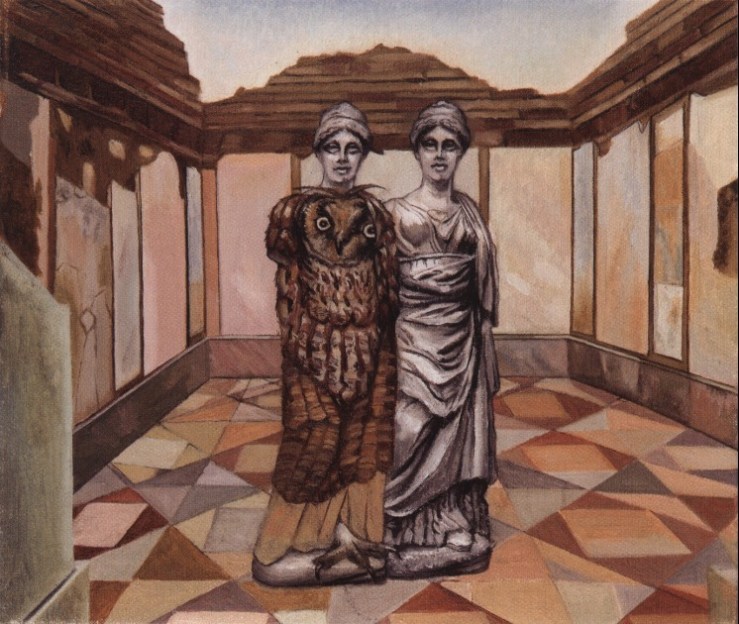
Sisters of Anarchy — Edith Rimmington

1940-4120sisters20of20anarchy

Sisters of Anarchy, 1941 by Edith Rimmington (1902-1986)

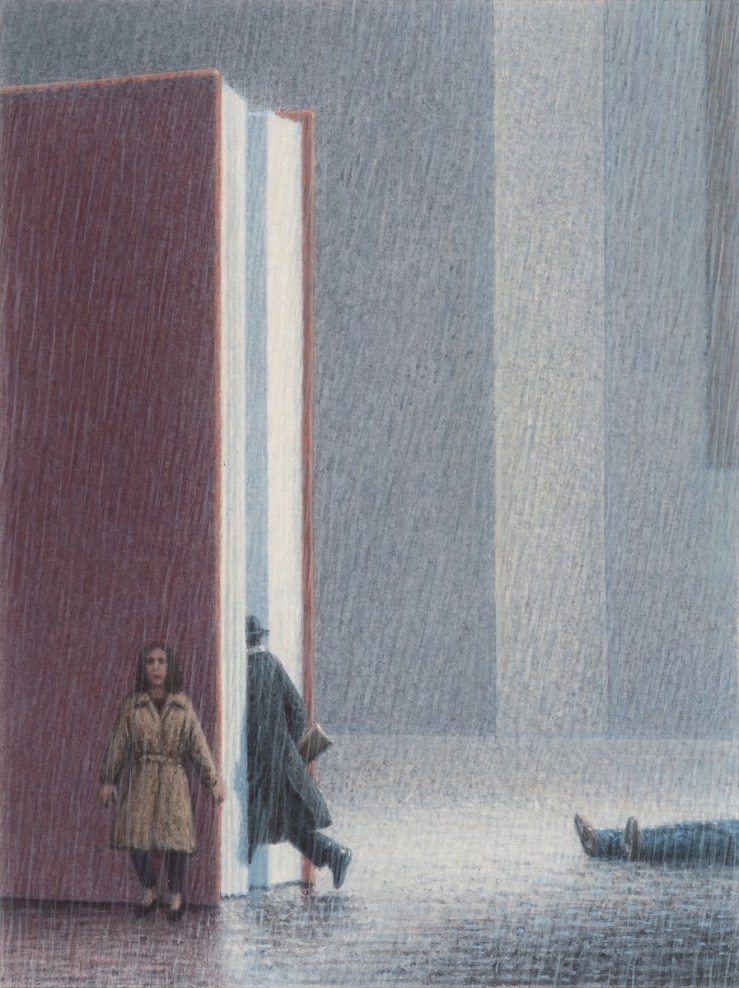
Narrative in the Rain — Quint Buchholz 

quint-buchholz-narrative-in-the-rain-2013

Narrative in the Rain, 2013 by Quint Buchholz (b. 1957)

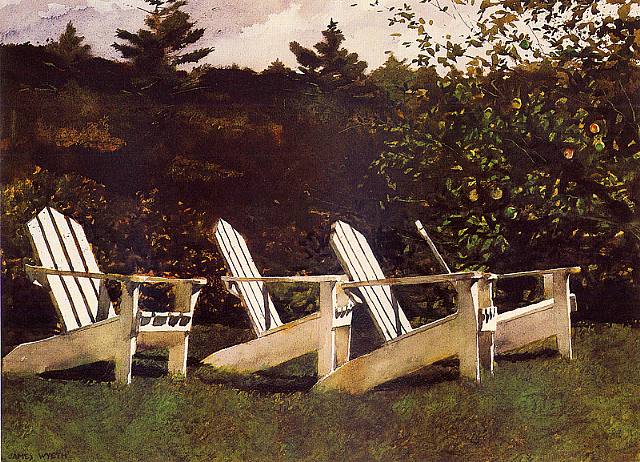
Island Library — Jamie Wyeth

island-library-1977

Island Library, 1977 by Jamie Wyeth (b. 1946)

Sic Transit — George Frederic Watts

Sic Transit 1891-2 by George Frederic Watts 1817-1904

Sic Transit, 1892 by George Frederic Watts (1817–1904)

“A Rabbit as King of the Ghosts” — Wallace Stevens

“A Rabbit as King of the Ghosts”

by

Wallace Stevens


The difficulty to think at the end of day,
When the shapeless shadow covers the sun
And nothing is left except light on your fur—

There was the cat slopping its milk all day,
Fat cat, red tongue, green mind, white milk
And August the most peaceful month.

To be, in the grass, in the peacefullest time,
Without that monument of cat,
The cat forgotten in the moon;

And to feel that the light is a rabbit-light,
In which everything is meant for you
And nothing need be explained;

Then there is nothing to think of. It comes of itself;
And east rushes west and west rushes down,
No matter. The grass is full

And full of yourself. The trees around are for you,
The whole of the wideness of night is for you,
A self that touches all edges,

You become a self that fills the four corners of night.
The red cat hides away in the fur-light
And there you are humped high, humped up,

You are humped higher and higher, black as stone—
You sit with your head like a carving in space
And the little green cat is a bug in the grass.

“Bartleby” is the first great epic of modern Sloth (Thomas Pynchon)

By the time of “Bartleby the Scrivener: A Story of Wall-Street” (1853), acedia had lost the last of its religious reverberations and was now an offense against the economy. Right in the heart of robber-baron capitalism, the title character develops what proves to be terminal acedia. It is like one of those western tales where the desperado keeps making choices that only herd him closer to the one disagreeable finale. Bartleby just sits there in an office on Wall Street repeating, “I would prefer not to.” While his options go rapidly narrowing, his employer, a man of affairs and substance, is actually brought to question the assumptions of his own life by this miserable scrivener — this writer! — who, though among the lowest of the low in the bilges of capitalism, nevertheless refuses to go on interacting anymore with the daily order, thus bringing up the interesting question: who is more guilty of Sloth, a person who collaborates with the root of all evil, accepting things-as-they-are in return for a paycheck and a hassle-free life, or one who does nothing, finally, but persist in sorrow? “Bartleby” is the first great epic of modern Sloth, presently to be followed by work from the likes of Kafka, Hemingway, Proust, Sartre, Musil and others — take your own favorite list of writers after Melville and you’re bound sooner or later to run into a character bearing a sorrow recognizable as peculiarly of our own time.

From Thomas Pynchon’s 1993 essay “Sloth; Nearer, My Couch, to Thee.”

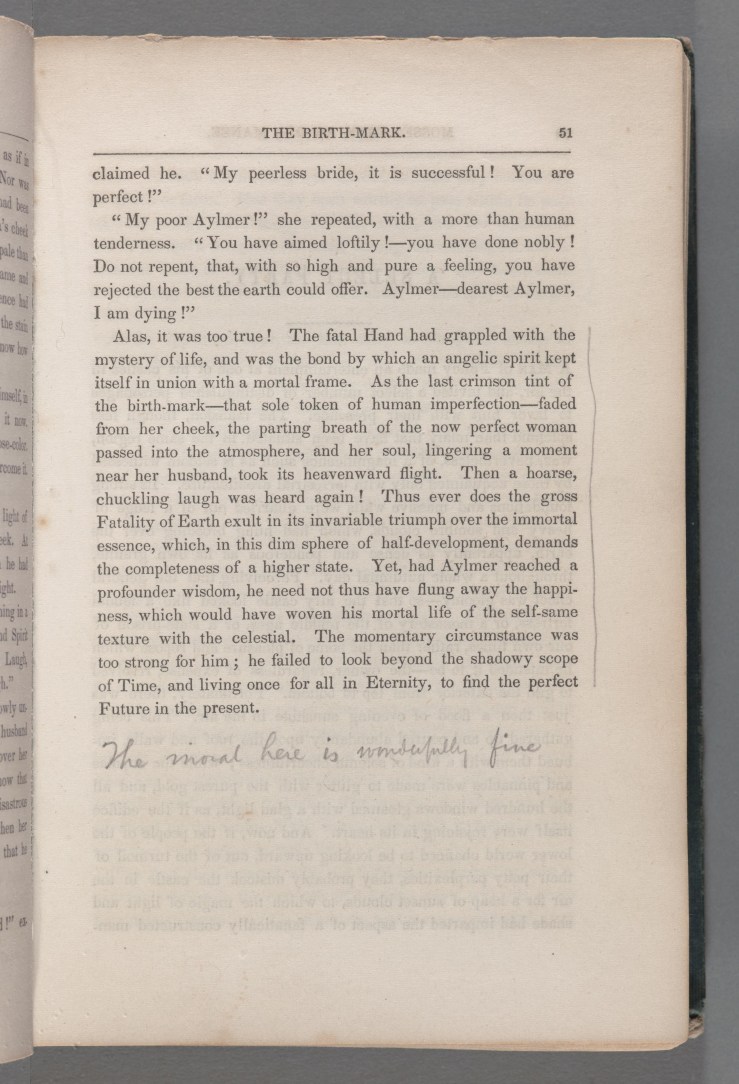
The moral here is wonderfully fine | Melville annotates Hawthorne

Herman Melville’s markings and annotations on the last page of Nathaniel Hawthorne’s short story “The Birth-mark.” From Melville’s Marginalia Online.

The problems of Bartleby

What are the problems of Herman Melville’s story “Bartleby, the Scrivener: A Story of Wall Street”?

This question seems like a bad starting place.

Let me share an anecdote instead.

—I was in the tenth grade the first time I read “Bartleby.”

At the time, I thought I was a teacher’s dream—a sharp reader, someone who loved English class, someone with opinions about the texts we read. Lots and lots of opinions. In retrospect, I realize that I was a nightmare for poor Ms. Hall, a wonderful teacher who I’m sure dreaded our meetings (there were like 15 guys in the class, all unruly).

Simply put, I didn’t want to do things her way.

So she gave me a copy of Billy Budd, Sailor and Other Stories and told me to read “Bartleby,” suggesting that there was something I might learn from it.

I don’t know if backfired is exactly the right term for the results of this experiment. I do know that “Bartleby” offered me a brilliant retort—a literary allusion!—to refuse any task I didn’t feel like undertaking in 10th grade English:

“I would prefer not to.”

—While we’re here—

“I would prefer not to”

So, this is clearly one of the problems of “Bartleby,” if not the core problem condensed into one utterance: Why would? Why the conditional?

Consider, vs. I prefer not to, a constative (or maybe even performative) utterance.

But Bartleby “would prefer not to.”

Contrast this with the imperative must that the narrator employs:

At the expiration of that period, I peeped behind the screen, and lo!
Bartleby was there.

I buttoned up my coat, balanced myself; advanced slowly towards him, touched his shoulder, and said, “The time has come; you must quit this place; I am sorry for you; here is money; but you must go.”

“I would prefer not,” he replied, with his back still towards me.

“You must.”

He remained silent.

Now I had an unbounded confidence in this man’s common honesty. He had frequently restored to me sixpences and shillings carelessly dropped upon the floor, for I am apt to be very reckless in such shirt-button affairs. The proceeding then which followed will not be deemed extraordinary.

“Bartleby,” said I, “I owe you twelve dollars on account; here are thirty-two; the odd twenty are yours.—Will you take it?” and I handed the bills towards him.

These brief lines perhaps serve to summarize Melville’s tale.

We see here the basic plot—our titular scrivener will not leave the lawyer’s office after weeks of refusing (although refusing is not quite the right word) to work.

We also see here what I take to be the theme of “Bartleby,” the strange ethical position Bartleby’s (conditional) would prefer not to places the narrator’s (imperative) must set against the moral backdrop of do unto others: namely, an impossible ethical position for a Wall Street lawyer especially and most of us in general.

And “Bartleby,” as you’ll no doubt recall, is in some ways Melville trying to work out the problems of Matthew 25:35-39—

For I was an hungred, and ye gave me meat: I was thirsty, and ye gave me drink: I was a stranger, and ye took me in:

Naked, and ye clothed me: I was sick, and ye visited me: I was in prison, and ye came unto me.

Then shall the righteous answer him, saying, Lord, when saw we thee an hungred, and fed thee? or thirsty, and gave thee drink?

When saw we thee a stranger, and took thee in? or naked, and clothed thee?

Or when saw we thee sick, or in prison, and came unto thee?

Perhaps our narrator tries to do these things—tries to feed and clothe and help this stranger Bartleby—but he can’t. Because Bartleby won’t give him an agency to relate to.

Because Bartleby’s utterance “I would prefer not to” denies the performative or constantive or declarative—indeed, it suspends or disrupts its own conditionality, the relation of the subject to its predicate verb.

Or consider one of Bartleby’s only other lines: “What is wanted?” His grammar again suspends agency, disrupts the notion of a stable I (let alone objective case me) that the narrator can interface with, dictate to, interrogate, see his own narcissistic reflection in).

—Hang on though, I was telling an anecdote. It was about the first time I read “Bartleby,” when I was fourteen or fifteen. This is the book:

20121112-150751.jpg

I stole it of course, or never returned it. Yes, that’s duct tape on its side. It is more or less falling apart. Here’s the back, barcode and all.

20121112-150740.jpg

Over the years, like many readers, I returned many times to “Bartleby,” reading it again in high school, then in college, then in grad school. I read it unassigned too, of course—when I read Kafka and it recalled itself to me, and when I read Moby-Dick for the first time. I read it when compelled. And then I read it with my own students. (I read most of the other stuff in the collection too, of course — Billy Budd and then later (why so much later?!) Benito Cereno).

I scrawled through so much of the book that my annotations are basically worthless, virtually everything underlined or circled:

20121112-151659.jpg

So we butt up against the problems of “Bartleby”—the problems of interpretation. How to figure an eponymous “hero” who is no more than a phantom, a trace, a lack? How to hash out a narrator who presents himself in relatively admirable terms and yet is so clearly an ethical failure? Why oh why would Bartleby prefer not to? Is the story a tragedy or a comedy? Does it present a world with rules, codes, ethics, or is all absurd here—nihilistic even? Is Bartleby a Christ figure? An ascetic monk? A ghost? Is the story just about Melville’s own anger over the poor reception of Pierre? How much of contemporary transcendentalist thought can we find in the story?

—Slight shift:

The kind people of Melville House were sporting enough to send a copy of “Bartleby” my way. The book is part of their HybridBooks project; these books offer “digital illuminations” along with traditional (uh, paper) books.

I’d requested a HybridBook—any one of them, really—because I now read about half the time on a Kindle Fire—so I was particularly interested in what a “hybrid” had to offer. What is the reading experience like?

First, the book itself is part of Melville House’s Art of the Novella series—beautiful, minimal design with French flaps. I read it on my porch the afternoon it arrived, enjoying its pristine, white, unmarked pages. Then, I checked out the “Digital Illuminations.”

The illuminations are available in several device-specific options, all easy to download with the QRC that comes with the book. I read most of the illuminations on my Kindle, but I also put them on my iPhone and my laptop. I had originally intended this post to be specifically about the digital illuminations, but hell, “Bartleby” is just too damn freighted a read for me at this point. Anyway, there’s a lot of good stuff in there, including “The Transcendentalist” by Ralph Waldo Emerson, selections from Jonathan Edwards and Joseph Priestly, Thoreau’s “Civil Disobedience,” and several excerpts from Melville himself, including letters, other books, and reviews. What I found must, uh, illuminating was “Of Some of the Sources of Poetry Amongst Democratic Nations” from Democracy in America by Alexis de Tocqueville. There are also illustrations, including a map; there’s even a recipe for ginger nuts. I wish that MH had included a digital copy of the book though. From a practical, concrete standpoint, I found it easier to switch between the free public domain version of “Bartleby” on my Kindle and MH’s illuminations than it would have been to pick up the physical book.

Now, to shift back (perhaps):

Do the digital illuminations help to answer or solve or address some of the problems of “Bartleby,” some of the issues posed above?

Should they?

—I suppose the hedging answer is yes and no.

The additional material illuminates some of the philosophical, political, historical, and even personal context for “Bartleby.” The material is edited with minimal intrusion, but with enough explication to clearly connect the various selections to Melville’s story. If I’m reading with my teacher hat on (this is a metaphor; there is no literal hat), I’d say you probably couldn’t do better than what Melville House has put together here. The digital illuminations provide a strong foundation for an informed reading, a range of texts that speak (obliquely or otherwise) to “Bartleby.”

Does it all add up to a deeper or richer understanding of “Bartleby”?

Should it?

—Well. No. And then no.

I mean, would we want a series of essays that would provide the missing pieces that would allow us to puzzle out “Bartleby”? Could we even trust such pieces, let alone trust ourselves to trust such pieces? Isn’t this strange uncertainty why “Bartleby” endures—and endures apart from Moby-Dick or Billy Budd, strange texts themselves, but also not nearly as confounding?

“Bartleby” simultaneously wriggles and plays dead; it burns with apparent wit but then reminds us that we might not be in on the joke. It is Kafkaesque thirty years before Kafka was even born. It shakes off its allegorical idiom the minute we think we might limn its contours. It makes us read it again because we cannot pin it down.

—But maybe you want to pin it down, tickle it, torture it, make it solve its problems (or at least respond, damn it!).

And maybe I claimed that “Bartleby” was about something—that it was about ethical relations, about duty to one’s fellows—especially when a fellow isn’t a fellow but rather the trace of a fellowthe idea of a fellowa ghost.

So, look, here’s a take on it:

The narrator—let’s call him Lawyer—Lawyer, see he’s a dick, in the parlance of our times. He’s a dick because he doesn’t know that he’s a dick, which is one of the constituting factors of the ontological state of being a dick. He also does not want to see himself as being a dick (this is another factor in the ontological state of being a dick). He wants to see himself as a good guy, this Wall Street dickhead, but Bartleby won’t let him do that. Bartleby won’t even let him see himself at all: Bartleby doesn’t reflect back. He prefers not to.

Our Lawyer, see, he’s all buttoned up, he’s snug (these are his words). He tells us upfront that he possesses “a profound conviction that the easiest way of life is the best”; he repeatedly points out the way that people are “useful” to him (or to others). He sees no possibility of an ethics outside of usefulness; on top of that, he cannot see that he cannot see any possibility of an ethics based on anything but “usefulness” (or the negative economy of obstruction figured in Bartleby).

And ah Bartleby, ah humanity: One time model employee, once apparently free from the eccentricities that plague the Lawyer’s other scriveners, Turkey and Nippers. Machinelike.

Bartleby mechanically completes large quantities of copies without comment or complaint.  But when asked to simply read in unison with Lawyer and his scriveners, Bartleby replies: “I would prefer not to.” Bartleby will not read with others—he is literally not on the same page as his colleagues.

Lawyer confronts Bartleby with his noncompliance; Bartleby repeats his mantra. Fuck mantra though because it’s not a mantra. It’s only repeated for Lawyer, to Lawyer, really, who can’t schematize/name/pin down Bartleby’s response. In fact, I would prefer not to so startles Lawyer that he says he’s  “unmanned” by the words. So he rationalizes Bartleby’s odd response, internalizes it, paraphrases it, if you like.

And then Bartleby ceases to even do his copying work. Oh the anarchy! But wait, there’s not even anarchy. There’s not even protest. There’s just big nothing. But not even big nothing—instead the smallest nothing (which proves that big nothing is possible).

So Lawyer attempts to “help” Bartleby. Lawyer believes doing so is his “Christian duty.” And to know that this duty has been met, Lawyer needs Bartleby to be his echo. But Bartleby’s I prefer not to denies this narcissistic exchange. He empties his I of ego (shades of Emerson’s Transparent Eyeball).

Confused, Lawyer tries to pay off Bartleby. When that doesn’t work, Lawyer actually packs up and moves to a new office. But even here he can’t cut off Bartleby. The office’s landlord comes to Lawyer to remove Bartleby.

And when Bartleby refuses to leave the office he is taken to “the Tombs”—prison.

Here, Lawyer tries to provide comfort for Bartleby (hearken ye back to Matthew 25:35-39). He arranges for Bartleby to receive good food in the prison. Bartleby prefers not to eat though, and dies curled up in the fetal position during a visit by Lawyer.

Lawyer is the first reader of Bartleby. But like many readers of “Bartleby,” he is confused.

Lawyer’s confusion results from his need for safety—for ease, for comfort, for a snug, buttoned-upness—and that safety is bought through an affirmation of first-person experience: namely, in the affirmation of the self in the other. That security is bought through assimilating another person’s first-person perspective. But Bartleby is empty of I, of self, of ego.

Bartleby would prefer not to: He will not be ventriloquized: He will not echo: He will not read from the same script: He will not be “of use,” as Lawyer puts it.

So Bartleby dissipates and dissolves: He goes down in the Tombs: a ghost, and impossibility, presence coupled with absence.

— And the epilogue:

We all recall the epilogue, yes?

Lawyer offers up “one little item of rumor,” a morsel, a “vague report . . . that Bartleby had been a subordinate clerk in the Dead Letter Office at Washington.” The idea tears the narrator up inside: “Dead letters! does it not sound like dead men?”

For Lawyer, Bartleby is a dead letter, a failed letter.

Did Melville worry that “Bartleby” would be a failed letter? That it would not find an audience? That his work would not be delivered? If he did, it seems too then that Bartleby’s negations foreclose or reject this concern. Not sure of how to wrap up this riff, I’ll retreat to the safety of my title.

We find the final problems (in basic narrative chronology, that is) of “Bartleby” in its final line. Has Lawyer learned from his experience? Can he empathize, finally feel something for Bartleby beyond the confines of a perceived ethical duty? Is Bartleby a place holder for all humanity? Or is Bartleby in opposition to humanity? What does it mean—-

Ah Bartleby! Ah humanity!

?

[Ed. note–Biblioklept originally posted this riff in November of 2012. I’m running it again for Herman Melville’s 200th birthday.]


No writer has produced such inconsistent characters as nature herself has (From Melville’s The Confidence-Man)

…it may be urged that there is nothing a writer of fiction should more carefully see to, as there is nothing a sensible reader will more carefully look for, than that, in the depiction of any character, its consistency should be preserved. But this, though at first blush, seeming reasonable enough, may, upon a closer view, prove not so much so. For how does it couple with another requirement—equally insisted upon, perhaps—that, while to all fiction is allowed some play of invention, yet, fiction based on fact should never be contradictory to it; and is it not a fact, that, in real life, a consistent character is a rara avis? Which being so, the distaste of readers to the contrary sort in books, can hardly arise from any sense of their untrueness. It may rather be from perplexity as to understanding them. But if the acutest sage be often at his wits’ ends to understand living character, shall those who are not sages expect to run and read character in those mere phantoms which flit along a page, like shadows along a wall? That fiction, where every character can, by reason of its consistency, be comprehended at a glance, either exhibits but sections of character, making them appear for wholes, or else is very untrue to reality; while, on the other hand, that author who draws a character, even though to common view incongruous in its parts, as the flying-squirrel, and, at different periods, as much at variance with itself as the butterfly is with the caterpillar into which it changes, may yet, in so doing, be not false but faithful to facts.

If reason be judge, no writer has produced such inconsistent characters as nature herself has. It must call for no small sagacity in a reader unerringly to discriminate in a novel between the inconsistencies of conception and those of life as elsewhere. Experience is the only guide here; but as no one man can be coextensive with what is, it may be unwise in every ease to rest upon it. When the duck-billed beaver of Australia was first brought stuffed to England, the naturalists, appealing to their classifications, maintained that there was, in reality, no such creature; the bill in the specimen must needs be, in some way, artificially stuck on.

But let nature, to the perplexity of the naturalists, produce her duck-billed beavers as she may, lesser authors some may hold, have no business to be perplexing readers with duck-billed characters. Always, they should represent human nature not in obscurity, but transparency, which, indeed, is the practice with most novelists, and is, perhaps, in certain cases, someway felt to be a kind of honor rendered by them to their kind. But, whether it involve honor or otherwise might be mooted, considering that, if these waters of human nature can be so readily seen through, it may be either that they are very pure or very shallow. Upon the whole, it might rather be thought, that he, who, in view of its inconsistencies, says of human nature the same that, in view of its contrasts, is said of the divine nature, that it is past finding out, thereby evinces a better appreciation of it than he who, by always representing it in a clear light, leaves it to be inferred that he clearly knows all about it.

But though there is a prejudice against inconsistent characters in books, yet the prejudice bears the other way, when what seemed at first their inconsistency, afterwards, by the skill of the writer, turns out to be their good keeping. The great masters excel in nothing so much as in this very particular. They challenge astonishment at the tangled web of some character, and then raise admiration still greater at their satisfactory unraveling of it; in this way throwing open, sometimes to the understanding even of school misses, the last complications of that spirit which is affirmed by its Creator to be fearfully and wonderfully made.

At least, something like this is claimed for certain psychological novelists; nor will the claim be here disputed. Yet, as touching this point, it may prove suggestive, that all those sallies of ingenuity, having for their end the revelation of human nature on fixed principles, have, by the best judges, been excluded with contempt from the ranks of the sciences—palmistry, physiognomy, phrenology, psychology. Likewise, the fact, that in all ages such conflicting views have, by the most eminent minds, been taken of mankind, would, as with other topics, seem some presumption of a pretty general and pretty thorough ignorance of it. Which may appear the less improbable if it be considered that, after poring over the best novels professing to portray human nature, the studious youth will still run risk of being too often at fault upon actually entering the world; whereas, had he been furnished with a true delineation, it ought to fare with him something as with a stranger entering, map in hand, Boston town; the streets may be very crooked, he may often pause; but, thanks to his true map, he does not hopelessly lose his way. Nor, to this comparison, can it be an adequate objection, that the twistings of the town are always the same, and those of human nature subject to variation. The grand points of human nature are the same to-day they were a thousand years ago. The only variability in them is in expression, not in feature.

But as, in spite of seeming discouragement, some mathematicians are yet in hopes of hitting upon an exact method of determining the longitude, the more earnest psychologists may, in the face of previous failures, still cherish expectations with regard to some mode of infallibly discovering the heart of man.

From Herman Melville’s novel The Confidence-Man.

List of smutty-sounding Moby-Dick chapters

The Spouter-Inn.

A Bosom Friend.

Nightgown.

Wheelbarrow.

The Mast-Head.

Moby Dick.

The First Lowering.

The Spirit-Spout.

The Gam.

The Town-Ho’s Story.

Of the Monstrous Pictures of Whales.

The Dart.

The Crotch.

Cutting In.

The Battering-Ram.

The Nut.

The Pequod Meets The Virgin.

Pitchpoling.

The Fountain.

The Tail.

Fast-Fish and Loose-Fish.

Heads or Tails.

The Pequod Meets The Rose-Bud.

A Squeeze of the Hand.

Leg and Arm.

The Needle.

The Log and Line.

The Cabin.

The Pequod Meets The Delight.

The Chase.

Moby-Dick | A short riff on a long book

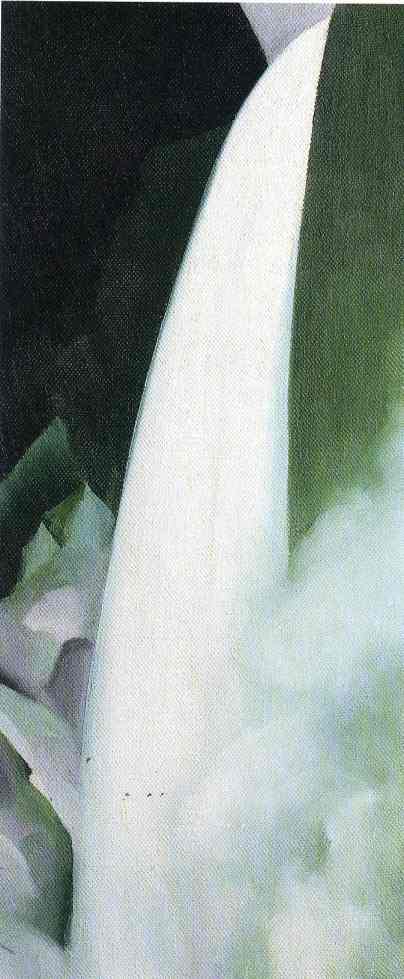
Green and White, Georgia O'Keeffe
Green and White, Georgia O’Keeffe

Prompted by Call Me Ishmael, Charles Olson’s marvelous study of Moby-Dick, I took a fifth trip through Melville’s massive opus this past month.

Every time I read Moby-Dick it seems funnier and sadder. Richer. Thicker.

I cobbled together my reading over different media and spaces: I listened to William Hootkins‘ outstanding unabridged audiobook version, and then reread on my Kindle key passages I’d mentally underlined; I then checked those passages against the copy of Moby-Dick I annotated the hell out of in grad school. As I read, I posted some of my favorite excerpts on this blog.

I posted some of my favorite excerpts of Moby-Dick here on Biblioklept because I knew that I wouldn’t be able to write about the book—not really—that I wouldn’t be able to handle all of its language. (My riff on Olson’s book obsesses over Olson’s ability to write after Melville and Melville’s ability to write after Shakespeare).

Really, in posting so many fragments of Moby-Dick, I suppose that I’ve attempted to abrogate any kind of critical duty to describe the book under discussion in terms of its own language.

The above is really a way of saying: Moby-Dick, like any sublime work of literature, is a self-defining, self-describing, and even self-deconstructing text.

Or, another way of making such a claim: Let me (mis)appropriate Samuel Beckett’s description of Finnegans Wake and contend that the description fits Moby-Dick just as aptly: 

Here form is content, content is form. You complain that this stuff is not written in English. It is not written at all. It is not to be read – or rather it is not only to be read. It is to be looked at and listened to. His writing is not about something, it is that something itself.

So here circumnavigate back to my own recent reading and auditing of the book: Hootkins’ audio recording would make a great starting point for anyone (unnecessarily) daunted by Melville’s big book. He performs the book, commanding his audience’s attention. He unpacks the humor that might otherwise hide from untuned 21st century ears; he communicates the book’s deep, profound sorrow. His Ishmael is perceptive, clever, generous. His Stubb, hilarious. His Ahab a strange philosophical terror.

After listening to Hootkins on my commute, I’d return to key passages on my Kindle, and then finally review the notes I wrote in the cheap hardback Signet edition I read in grad school.

But why bring this up?

I don’t know.

Maybe: Unpacking Moby-Dick is too hard, too much—would require its own book, a book that would cite the entirety of Melville’s book.

But discussing the book this way seems a disservice to potential readers; it’s as if we would cloak the book in a mystic veil.

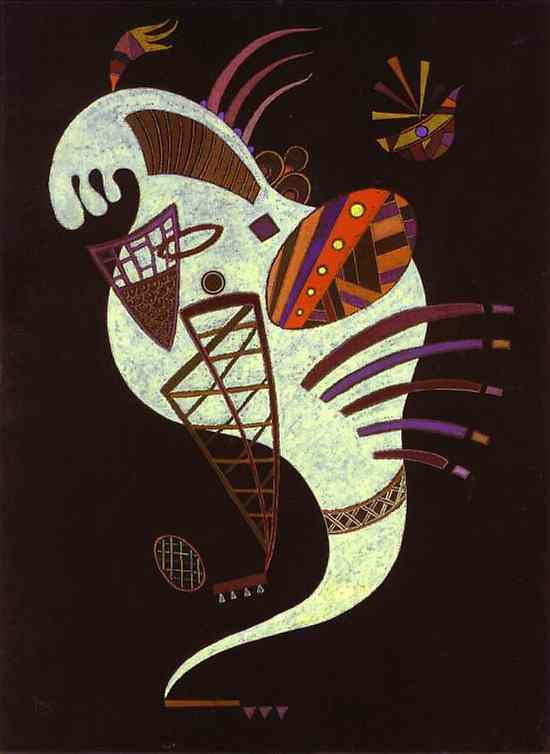
White Figure, Wassily Kandinsky

If I have a point to all of this: Moby-Dick is wonderful, funny, moving, engaging; a genre-bender that tackles philosophy, history, science; an adventure tale; a psychological novel brimming with ideas, allusions—but one delivered in sonorous, poetic language. It’s good, great, grand. Read it, if you haven’t. Reread it.

So I’ve failed to even try to begin to attempt to pretend to describe the plot.

Here: Ishmael, depressed, suicidal perhaps, decides to go to sea. To go whaling.

He tries to measure the whale, and by measuring the whale, maybe measure the world. But this is not really possible, certainly not in language. Certainly not in first-person perspective.

In Chapter 86, “The Tail,” Ishmael tells us:

The more I consider this mighty tail, the more do I deplore my inability to express it. At times there are gestures in it, which, though they would well grace the hand of man, remain wholly inexplicable. … Dissect him how I may, then, I but go skin deep. I know him not, and never will. But if I know not even the tail of this whale, how understand his head? much more, how comprehend his face, when face he has none? Thou shalt see my back parts, my tail, he seems to say, but my face shall not be seen. But I cannot completely make out his back parts; and hint what he will about his face, I say again he has no face.

(I don’t suppose I need to remark that Melville here lets one mighty tail stand in for another mighty tale—a tale he cannot face).

Call me Ishmael”: our protagonist hails us.

But these famous opening lines aren’t really the beginning of the book. First we have the section titled “Extracts,” and before that “Etymology.” The first entry on the etymology of the whale, from  Hackluyt, warns us not to leave out “the letter H, which almost alone maketh up the signification of the word.”

Whaling. Hailing. Wailing.

The whiteness of the whale.

The witness of the wail.

How, just how, does Ishmael witness? How does he manage to tell this story? Did I obsess over this in earlier readings? I don’t think so—I was too concerned with absorbing the what and the why of the story to closely attend the how of its telling.

The novel begins in standard first-person point-of-view territory, Ishmael guiding us through Manhattan, New Bedford, Nantucket—but by the time he’s boarded the Pequod and set out into the wide watery world, this first-person perspective transcends the limits of physics: Our narrator not only attends the private conversations of Ahab, his mates, his harpooners, his men—but also the very interior of those men, their minds, their dreams, their imaginations.

Is Ishmael a ghost?

Leviathan-Job 40-21, Salvador Dali

And to return to Ahab for a moment: My godwhat a voice! His infecting, addicting insanity. His agon with Moby Dick, with the sun, with himself.

And Starbuck: Starbuck comes across weaker and weaker each time I read the book. We’re to believe he’s a man of convictions, but he moves in half-measures. In his final moments he tries to match or feign or approximate Ahab’s insanity: tragicomedy.

And Stubb: Despite his cruelties, he may be my favorite character in the book.

While I’m riffing: Is there a novel more phallic in the American canon than Moby-Dick? All that sperm: All that life-force.

This is maybe what Moby-Dick is about: Life-force. The attempt to to resurrect and die and resurrect again. The coffin that serves as life-buoy. The life-line that connects men that might also be their death. A counterpane to counter pain. A condensation of oppositions.

A yarn, a rope, a series of knots, layered, layering, self-contextualizing.

An attempt to put into language what cannot be put into language.

Have I reached my end? Maybe too long for the “short riff” promised in the title, but also surely too short to even begin to start to approach to pretend to say something adequate about the novel. So a parting thought: Moby-Dick is better—richer, fuller, deeper—each time I read it, and I look forward to reading it again.

[Ed. note—Biblioklept originally ran a version of this riff in February 2013. I’m running it again for Herman Melville’s 200th birthday. I haven’t read Moby-Dick in full since 2013.]

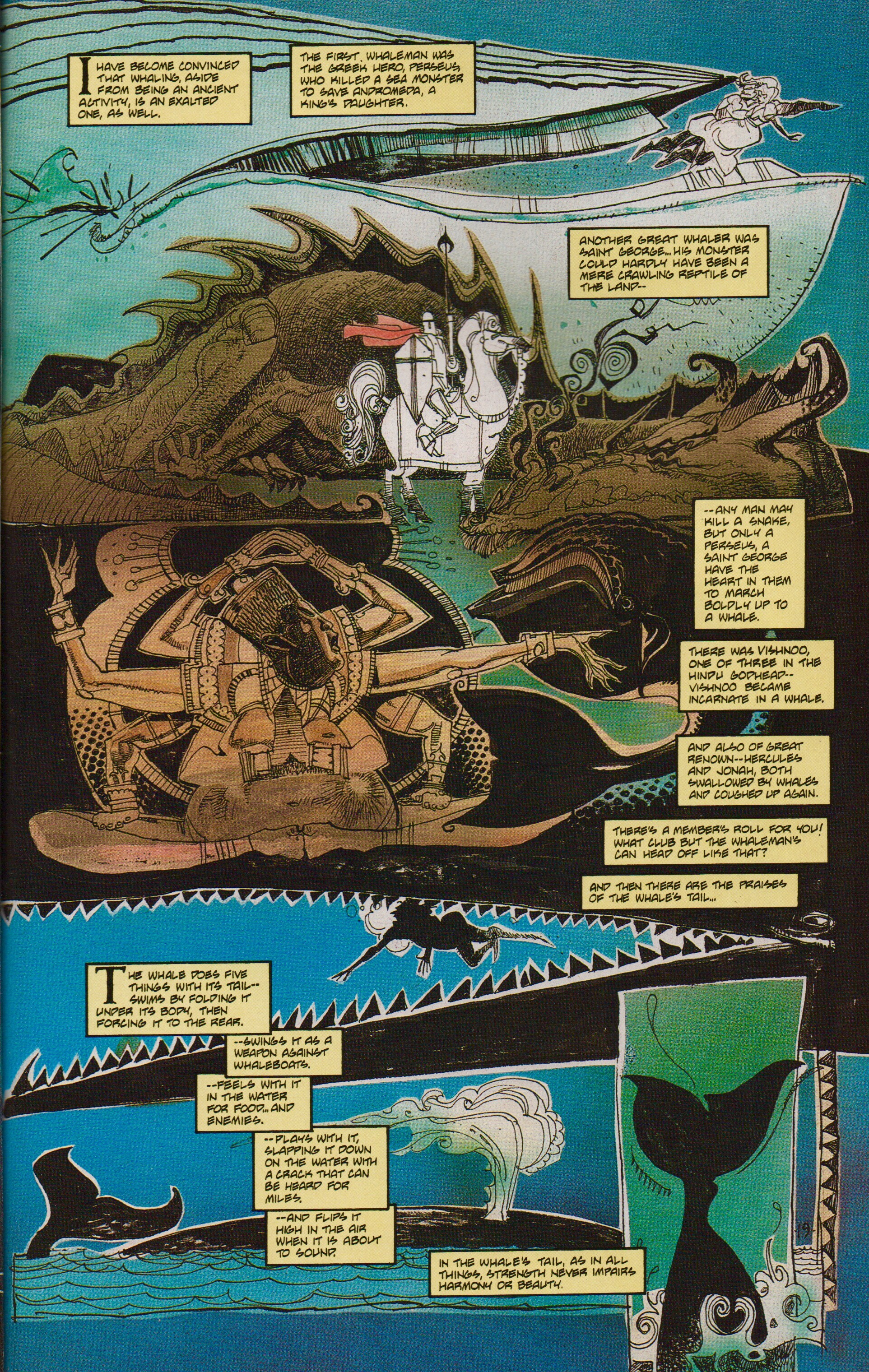
Perseus, whaleman (Melville/Sienkiewicz)

img_7584

From Bill Sienkiewicz’s adaptation of Herman Melville’s Moby-Dick. The Classics Illustrated edition (February 1990) is one of my favorite Moby-Dicks.

Of all divers, thou hast dived the deepest | Moby-Dick

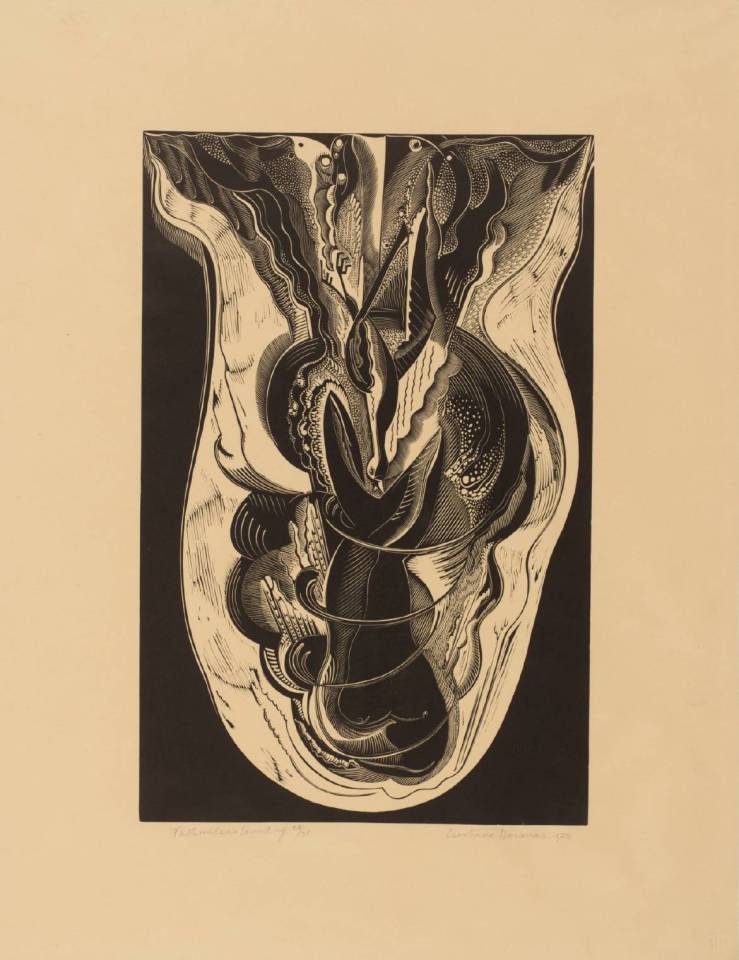
Fathomless Sounding 1932 by Gertrude Hermes 1901-1983
Fathomless Sounding, 1932 by Gertrude Hermes (1901-1983)

It was a black and hooded head; and hanging there in the midst of so intense a calm, it seemed the Sphynx’s in the desert. “Speak, thou vast and venerable head,” muttered Ahab, “which, though ungarnished with a beard, yet here and there lookest hoary with mosses; speak, mighty head, and tell us the secret thing that is in thee. Of all divers, thou hast dived the deepest. That head upon which the upper sun now gleams, has moved amid this world’s foundations. Where unrecorded names and navies rust, and untold hopes and anchors rot; where in her murderous hold this frigate earth is ballasted with bones of millions of the drowned; there, in that awful water-land, there was thy most familiar home. Thou hast been where bell or diver never went; hast slept by many a sailor’s side, where sleepless mothers would give their lives to lay them down. Thou saw’st the locked lovers when leaping from their flaming ship; heart to heart they sank beneath the exulting wave; true to each other, when heaven seemed false to them. Thou saw’st the murdered mate when tossed by pirates from the midnight deck; for hours he fell into the deeper midnight of the insatiate maw; and his murderers still sailed on unharmed—while swift lightnings shivered the neighboring ship that would have borne a righteous husband to outstretched, longing arms. O head! thou hast seen enough to split the planets and make an infidel of Abraham, and not one syllable is thine!”

From Ch. 70 of Moby-Dick by Herman Melville.