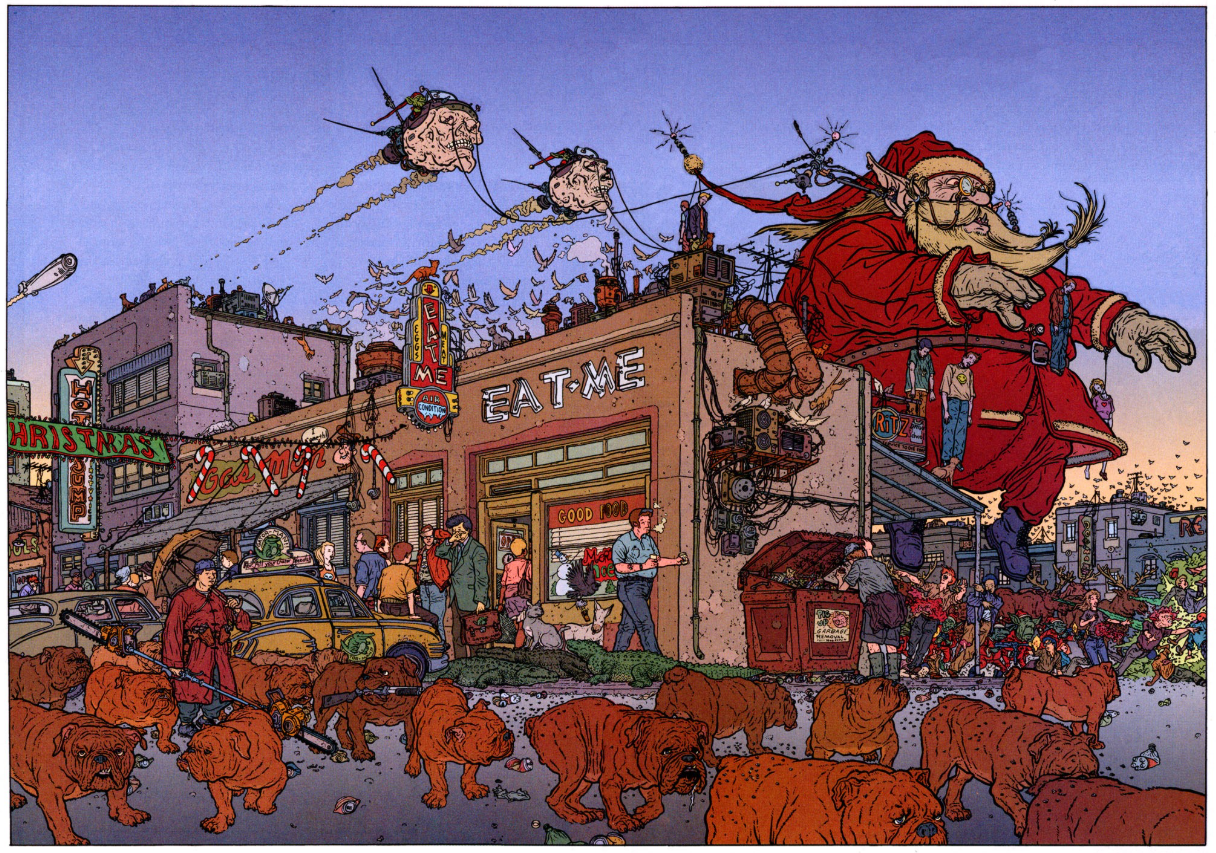
You Are Very Tacky and Everyone Hates You — Sarah Theresa Lee

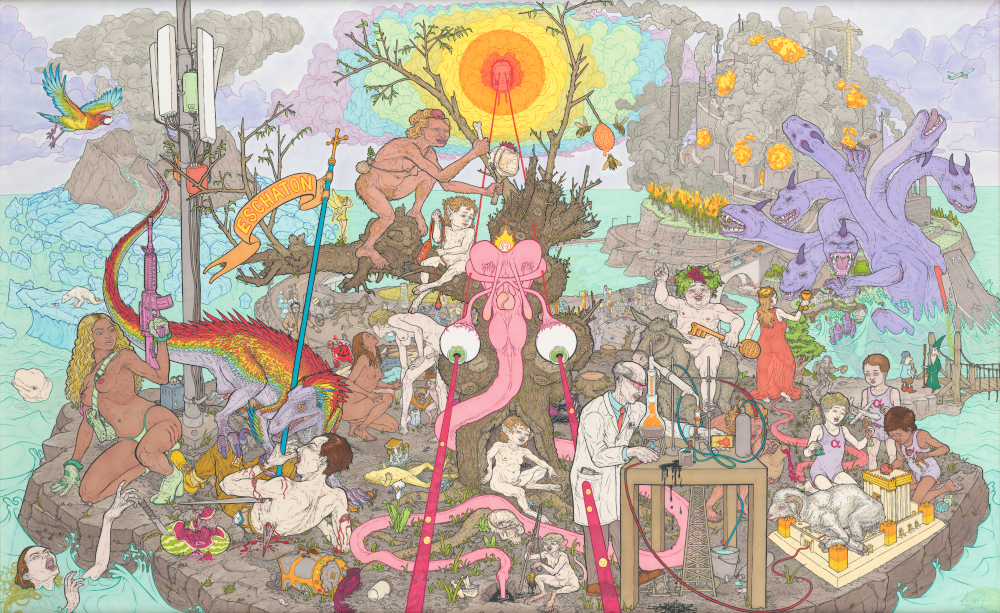
You Are Very Tacky and Everyone Hates You, 2025 by Sarah Theresa Lee (b. 1980)

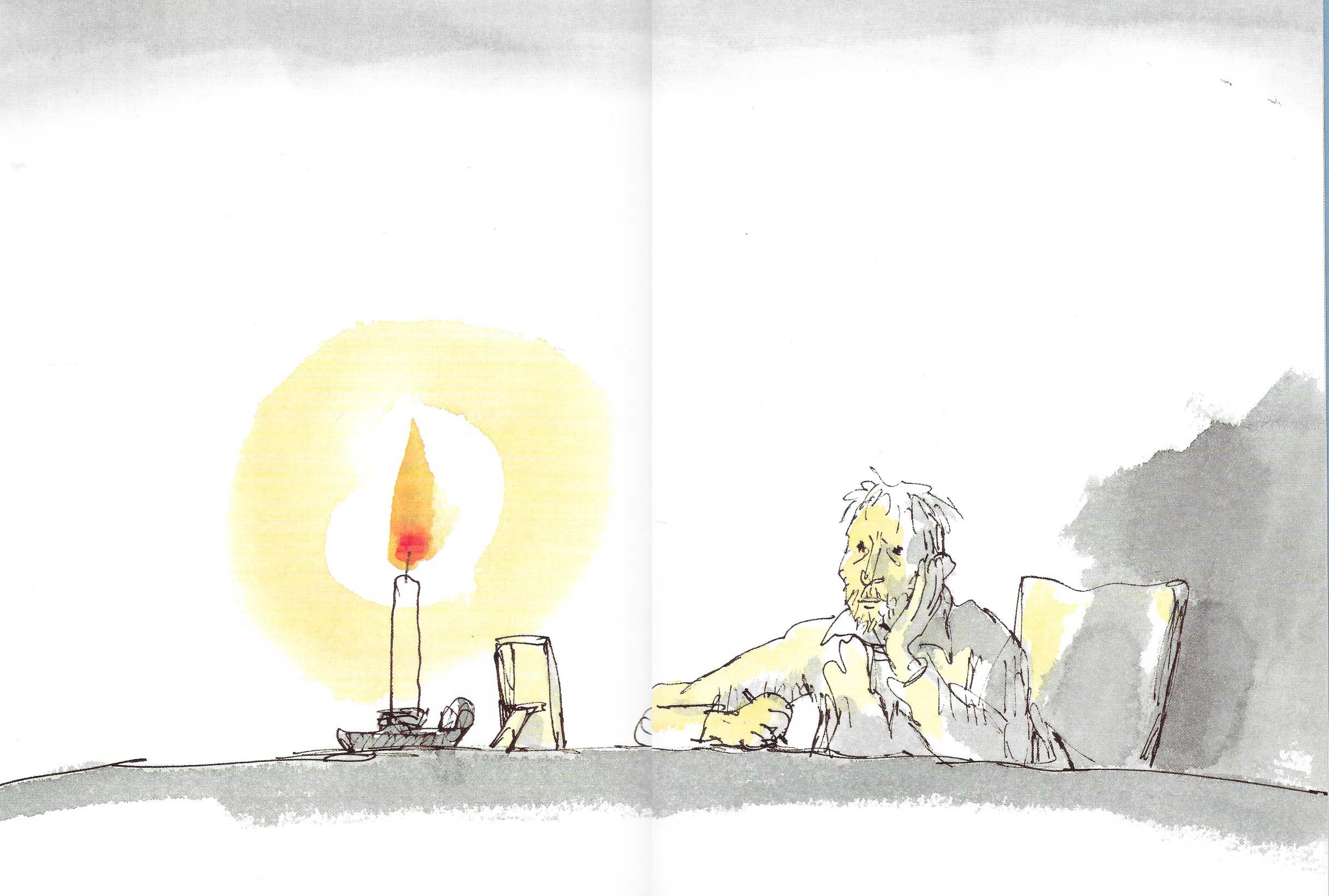
A previously unpublished Dream Song by John Berryman

“The applause of the world comes to an empty heart”

by

John Berryman


The applause of the world comes to an empty heart,
sure the man is thinking now of something else,
something else, a fearless end
‘I have lost, of course, the fear of death’, BUT.
Messages enchant me, as from Ireland
I am an old middle-aged man about to do his best

love old men
The bartender did just call me ‘my friend’
I say the wonder is these busy caves
explored by men, & then by men, & then
by cold & dismal
engineers, are so costless

Deep in the angels let the good coat come
& I will wheedle home, who misséd you,
I can’t fix him. He’ll go down there apart,
that would be the wicked part of him that falls.
Henry has in Ireland no friend.
Alone, in the half-dark


Read five more previously-unpublished Dream Songs at Conjunctions. The poems are collected in the forthcoming volume Only Sing: 152 Uncollected Dream Songs, edited by Shane McCrae.


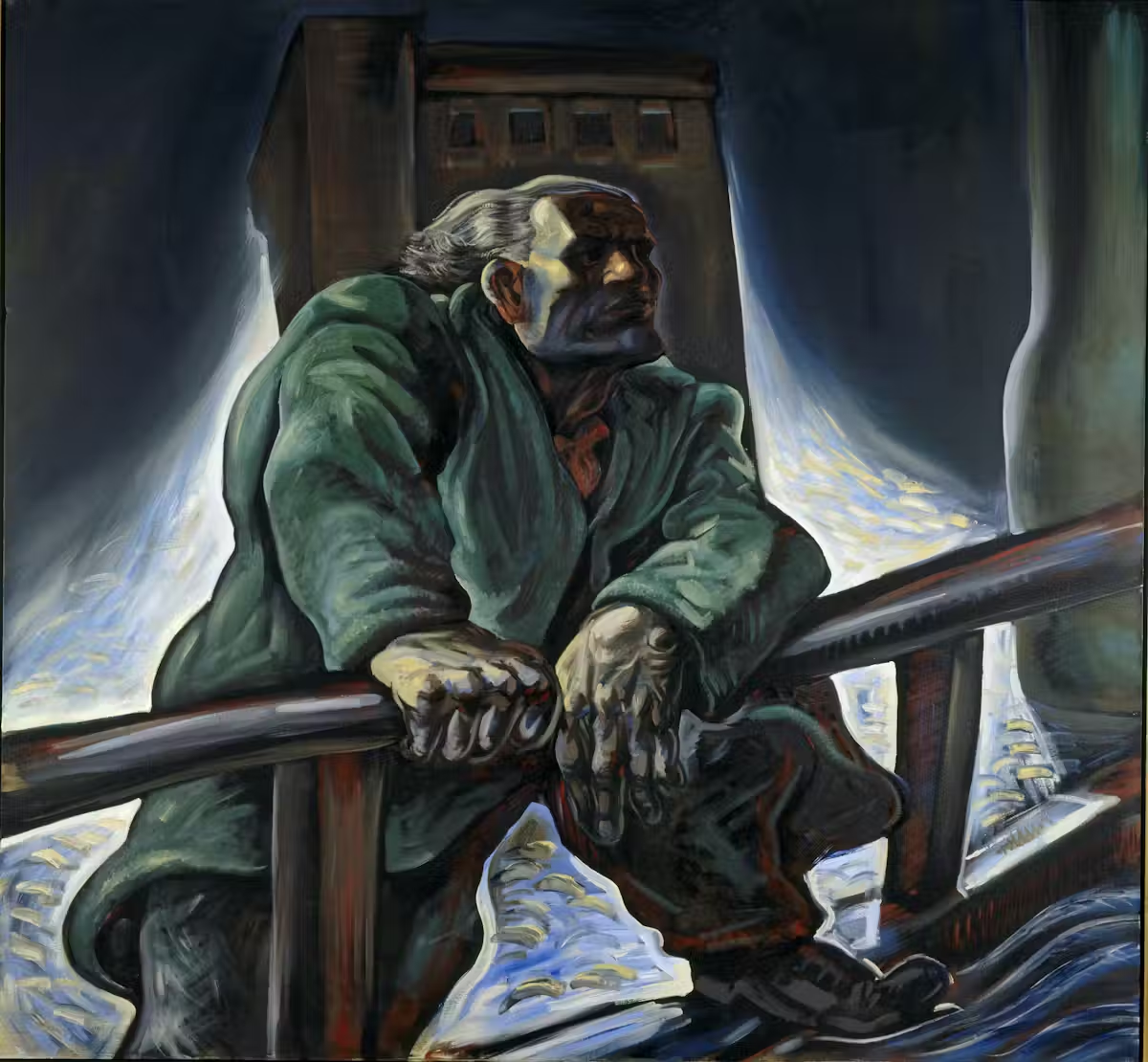
Voyager — Kerry James Marshall

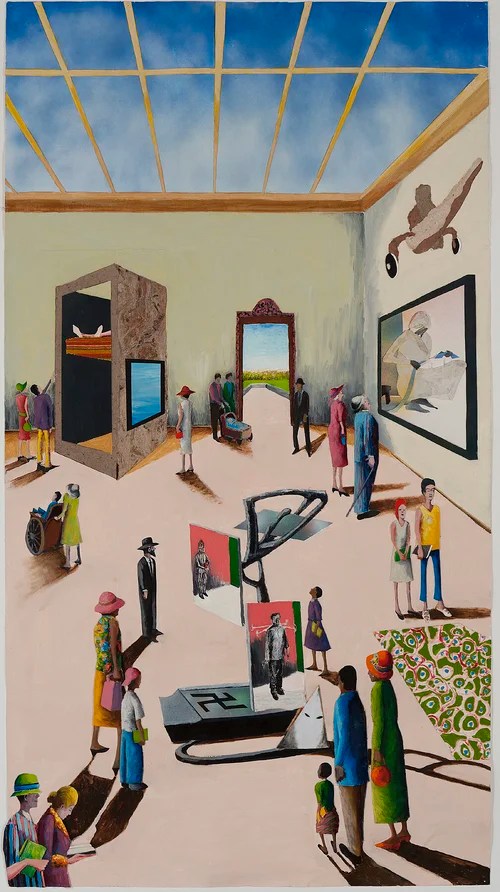
Voyager, 1992 by Kerry James Marshall (b. 1955)

Siegfried Kracauer’s Ginster (Book acquired, 16 Sept. 2025)

Siegfried Kracauer’s 1928 novel Ginster is forthcoming in translation by Carl Skoggard from NYRB. Their blurb:

Ginster is a war novel about not going to war; about how war, far from the front, comes to warp every aspect of outer and inner life and to infect the workings of language itself. The subject is World War I, but this novel by the brilliant twentieth-century sociologist, journalist, and film critic Siegfried Kracauer, first published in 1928, has as much to say about what it means to live under the sulking great powers and blood-imbrued satrapies of today as it does about the inflamed self-righteousness of late imperial Germany. In Ginster, as in Greek tragedy, massacre occurs offstage, arriving only as “news,” but the everyday horror of a society engineered for the continual production of violence is not to be denied. Ginster, the Chaplinesque antihero, intent chiefly on saving his own skin, works hard to keep his distance from the war machine, and yet making a living, he discovers, is all about keeping it running. How different, in the end, is his dreamy self-absorption from the empty military language that has come to pervade every aspect of civilian life in the homeland?

A review of Rebecca Gransden’s novella Figures Crossing the Field towards the Group

In Rebecca Gransden’s novella Figures Crossing the Field Towards the Group, an unidentified blight spreads from the south of England, driving refugees northward. Our hero, a girl named Flo, walks north through this ruined England on a quest to find her lost twin brother. In her strange journey, Flo encounters scattered figures who spill fragmented stories in broken voices. This England is barren, etiolated, and foul. Gransden conjures this apocalyptic barrenness in oblique and elliptical language. Most of the narration in Figures Crossing the Field Towards the Group slips out in clipped single-syllable beats, as if the world itself has been pared down to bone. The book’s end-times aren’t explosions or spectacle but the exhausted rhythms of a world already gone, the voice itself a survivor stumbling forward, blunt and breathless. What remains is not plot so much as the scraping of words against ruin.

And yet, within that scraped-down ruin, Gransden finds a strange fullness: stark fields and broken voices bloom with uncanny images, fleeting surges of feeling, flashes of lyric intensity that make the blasted landscape thrum with life even as it crumbles. Consider this passage, in which our hero Flo encounters a band of freed apes:

Howls eke out through branch and twig, and bods slink down the fell trunks, climb in shift shads on the broke build roof, a mess of swol leaves and wet spikes. Lab apes crawl and tick, their mugs stretch flesh, their heads bolt. Freed by the flee, and left to lone, their house fell in and they, shy and of wound nerve, did peek to the wood, and then run out and claim the trees. They stay near to where they know, fear keeps them so. One ape chomps on a bat, its legs kick as it dies. Most of the lab apes have one eye, a square patch of bald skin, a rash and some scabs.

Figures propels forward with a loose, picaresque energy, its moody, elliptical atmosphere stretched across an almost shapeless structure. It’s best not to look for causality here; things just happen. This isn’t post-apocalyptic fiction. The apocalypse is underway. And Gransden’s language drifts on the fumes of that apocalypse. I often found myself reading lines aloud, even repeatedly, in gnarly little loops: “Town rats puff with nits in their ruffs” is a simultaneously abject and beautiful image. Or consider this lovely little passage:

A shock of white moth wings sings from the shrubs, makes Flo step back and near fall. White flies round her like a snow storm, and moth dust fills the small grove. A film forms on dark leaves and the air smells of old nests. Moths brush her,just close to push a soft stroke on her face. Small round white moths, small white moth round.

The monosyllabic narrative style that dominates Figures may challenge or, more frankly, irritate some readers. I found it hypnotic. Gransden’s characters are not bound to single syllables though. When Flo talks to someone she encounters (an insane royalist, say, or a man sacrificing his body as food to tiny furry beasts), they speak in normal, multi-syllabic dialogue. More fascinating is a solitary chapter that divides the novella in halves. “Public Information Dreams” reads almost like its own Ballardian short story. Told in a clinical, detached style, the chapter gives an incomplete picture of observations made from afar on two children, Kid P and Kid Q. A taste:

Observer: 35

Day: 163

10:37:45 am — Kid Q exits property by back door (3b) and moves to end of garden. Weather is bright sunshine, occasional cloud shadows. No occlusion. Kid Q walks back and forth between end of garden and house, carrying objects. Objects observed to be recording equipment as previously noted (ID476). Kid Q collects the objects together on an empty patch of lawn behind the garden shed. The patch of lawn is square and is mostly unseen from the house. It ends at an overgrown fence, approx. 6ft tall that marks the perimeter boundary of the property’s rear. Beyond the rear fence are fields but the garden is not visible from this location due to the density of the foliage (full description and photographs of the layout of the property and garden are included in additional notes, at this time in the process of compilation). Kid Q assembles the recording equipment. Video camera on tripod is situated in the corner behind the shed and arranged to point across the lawn square diagonally, taking in as much of the space as possible.

10:52:13 am — Kid P exits house by the open back door (3b). Observed to have a listless demeanour. Kid P joins Kid Q. Kid Q and Kid P engage in long conversation (see transcript).

Are Kid Q and Kid P Flo and her brother? If you care, this book probably isn’t for you.

Too, Gransden refuses to settle Flo’s quest—or the apocalypse itself—into any final meaning. The ruined England she describes is not a backdrop but a language, one that stutters, doubles back, and opens fissures rather than closing them. Flo walks north, chasing the shadow of her brother, but whether she finds him, or whether there is anything left to find, hardly matters. What matters is the walking, the scraping of words across ruin, the pulse of strange life inside the waste. Figures Crossing the Field Towards the Group dwells in that space where endings blur into continuations, where survival is indistinguishable from loss, and where language itself flickers like the last light left to see by. Strange, gnarly, alive–great stuff.

Sunday Comix

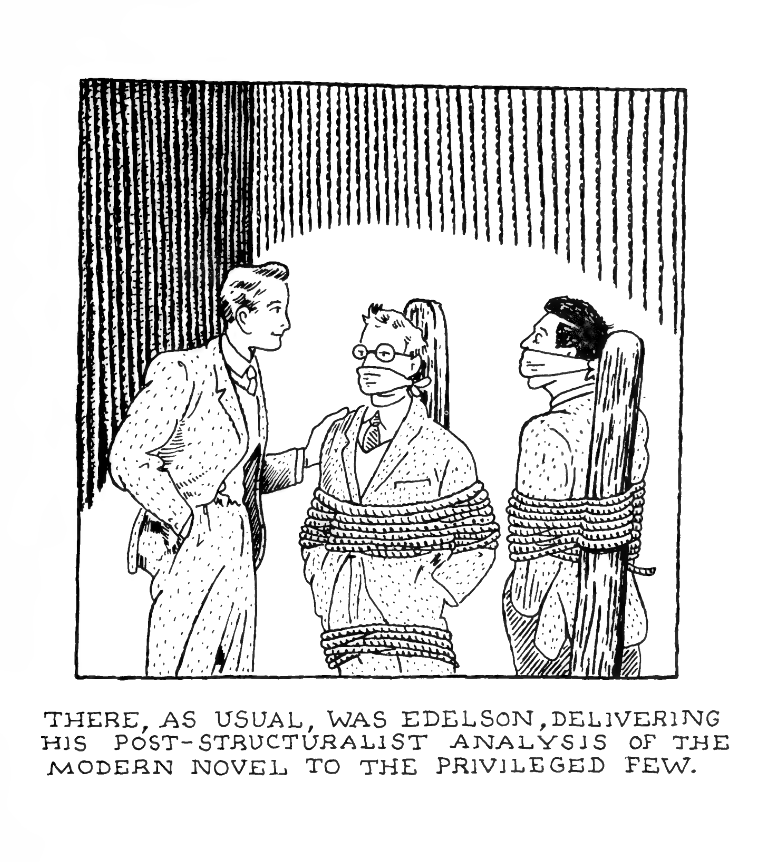
A one-pager by Robert Crumb from Weirdo #2, Summer 1981, Last Gasp.

Combat — Taylor Schultek 

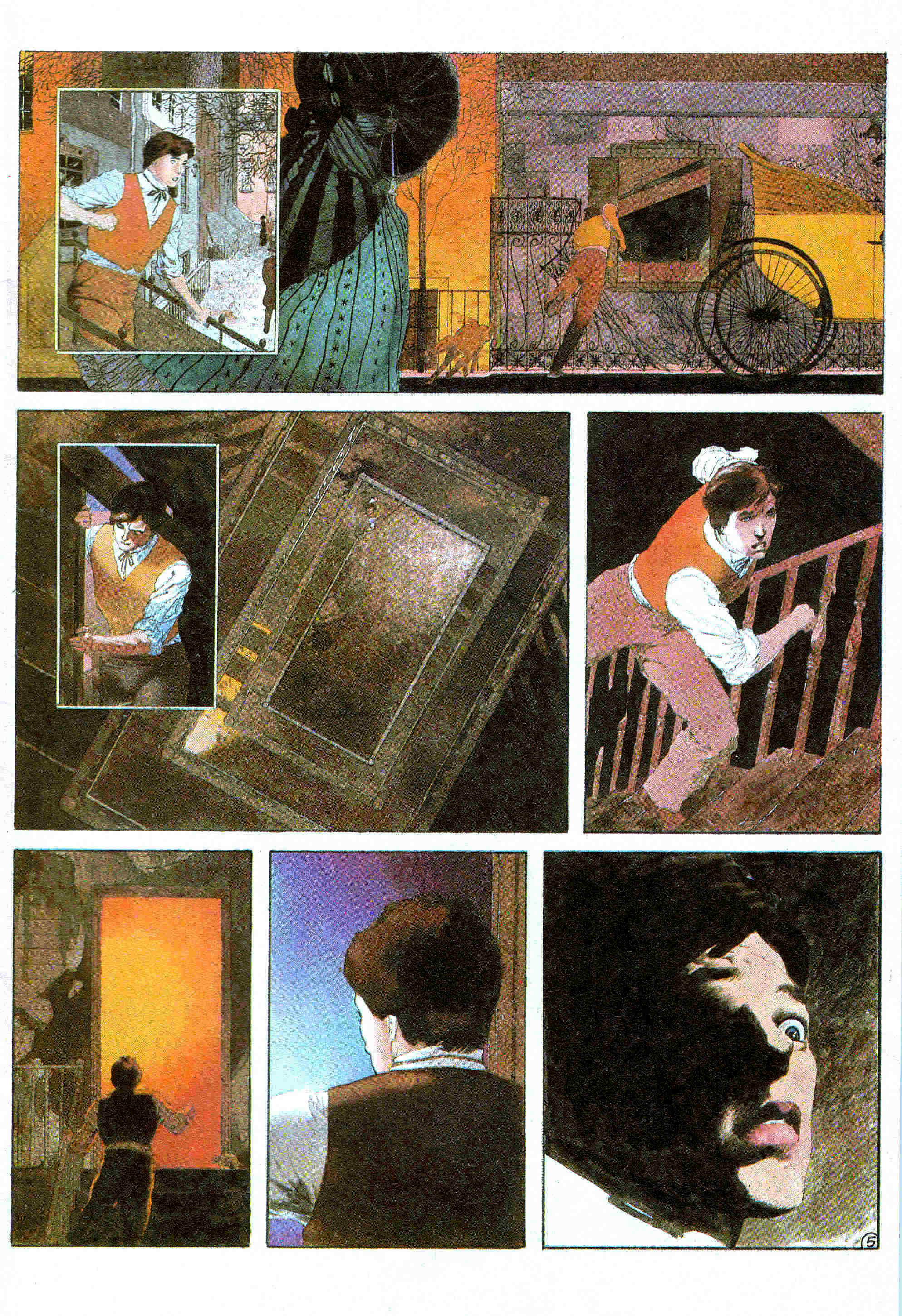
Combat, 2025 by Taylor Schultek (b. 1990)

“I Had Raised Dust,” a short vision from Daniil Kharms

“I Had Raised Dust”

by

Daniil Kharms

translated by

Neil Cornwell


I had raised dust. Children were running after, me, tearing their clothing. Old men and old women fell from roofs. I whistled, I roared, my teeth chattered and I clattered like an iron bar. Lacerated children raced after me and, falling behind, broke their thin legs in their awful haste. Old men and old women were skipping around me. I rushed on! Filthy, rachitic children, looking like toadstools, got tangled under my feet. Running was hard going. I kept remembering things and once I even almost fell into the soft mush of old men and women floundering on the ground. I jumped, snapped a few heads off toadstools and trod on the belly of a thin old woman, who at this emitted a loud crunch and softly muttered – They’ve worn me out. – Not looking back, I ran on further. Now under my feet was a clean and smooth pavement. Occasional streetlamps lit my way. I ran up to the bath-house. The welcoming bath-house flickered in front of me and the cosy but stifling bath-house steam was already in my nostrils, ears and mouth. Without undressing, I ran straight through the changing-room, then past the taps, the tubs and the planks, to the shelf. A hot white cloud surrounds me, I hear a weak but insistent sound. I seem to be lying down.

And at this point, a mighty relaxation stopped my heart.

Bialik/Rilke (Two poetry collections acquired, 13 Sept. 2025)

Two new collections from NYRB’s Poets imprint: On the Slaughter by Hayim Nahman Bialik, translated by Peter Cole, and Fifty Poems by Rainer Maria Rilke, translated by Geoffrey Lehmann. NYRB’s Bialik blurb:

Few poets in the history of Hebrew have possessed the power and prescience of Hayim Nahman Bialik. Born in 1873 in a small Ukrainian village, he spent his most productive years in Odessa and in his fifties made his way to British Mandatory Palestine. He died in Vienna in 1934. His body of work opened a path from the traditional Jewish world of Eastern Europe into a more expansive Jewish humanism. In a line that stretches back to the Bible and the Hebrew poetry of Muslim and Christian Spain, he stands out—in the words of Maxim Gorky—as “a modern Isaiah.” He remains to this day an iconic and shockingly relevant poet, essayist, and tutelary spirit.

Translated and introduced by MacArthur-winning poet Peter Cole, On the Slaughter presents Bialik for the first time in English as a masterful artist, someone far more politically and psychologically unsettling than his reputation as the national poet of the Jewish people might suggest. This compact collection offers readers a panoramic view of Bialik’s inner and outer landscapes—from his visionary “poems of wrath” that respond in startling fashion to the devastations of pogroms and revolutionary unrest to quietly sublime lyrics of longing and withering self-assessment. The volume also includes a sampling of slyly sophisticated verse for children, and a moving introduction that bridges Bialik’s moment and our own.

And “The Grown-up,” a poem from Rilke in Lehmann’s translation:

“The Grown-up”

All stood on her, all that has ever been
and was the world, and stood, its fears and grace,
as trees stand straight and rooted in one place, and solemn, like the memory of a race
or Ark of God, all-seeing and not seen.

She carried it; knowledge of who they are,
the flyers, those who flee, the distant ones,
the monsters and the awkward, diffident sons,
casually like a brimming water jar
on her calm head. Then in the midst of play,
preparing, changing slowly, cell by cell,
she did not sense the first white veil that fell
across her open face, bland as the day,

almost opaque, never to lift again.
And she forgot the answers she once knew,
leaving some vagueness she could not explain:
in you, the child who you have been, in you.

“Fladry” — Ed Skoog

“Fladry”

by

Ed Skoog


Fladry: a line of rope mounted along the top of a fence, from
which are suspended strips of fabric or colored flags that will flap
in a breeze, intended to deter wolves from crossing the fence-line.

USDA National Wildlife Research Center

I am weak and edible. Some human quality
stays weird, alien to the wild, outsiders,
bad sport with spooky habits not just fladry—
other enchantments against order, house paint,
yard art, border fences and the tunnels under borders,
the amen, the wedding ring, the flavored condom.
The wolves are back. I’ve seen them, seen the fladry
ranchers tie, red flags’ flutter to puzzle or annoy,
folk-work tendered back from wood-shadow,
more each year, abjured with clover.
What I like most about the first shot of bourbon
is how it feels like letting go of a grudge.
In the dream, I kill my friend and bury him
lime in the church basement between sump pump
and broken fireplace. On my knees I tile
red stone back to mosaic. Soldiers beat me up
and called me names in my own language,
this one, the one Whitman used to soothe
the dying, limbless, the bleeding, the infected.
Beat me with fists slight more stone
than the shape that holds this pencil.
A house is held together by shapes.
And yet in the ongoing negotiations between
the world where I hold my son and
famine, bombings, hate, prosperity—
two notes, octaves apart
attenuate what’s hidden inside your body
to the invisible. It might help remembering
shadows and not hours. Infinity
also has the contour of a children’s game.
Infants remember fladry, safe in the car seat grasping,
grasping. Some forces are enormous and move
against you, and when you pretend they aren’t
there, surge. Some swing on a hinge
which at night sounds like don’t look back,
don’t look back. Anyone can tie fladry.
See it out riding. I go out at French-horn dawn,
boots in mud, string fladry at intervals,
each tongue labeling the field, calling
beyond language. And if fladry bears
the conditions of a spell, redness of the flag,
the measure between them, it’s flapping
which charms the wolf away, for a term.
Warnings to keep the flock from the wolf’s belly.
Messages for ourselves. See it from there,
turn overall and plaid flannel; we would
tear our own fur to cross these lines.

A put-upon frogman with too little oxygen vs. his angry father in Markus Werner’s novel The Frog in the Throat

The hero of Markus Werner’s 1985 novel The Frog in the Throat is Franz Thalmann, a disgraced, divorced, defrocked clergyman, who lives ashamed and diminished, yet nevertheless resilient in a philosophical recalculation of his life. There’s a major complication to Franz’s reevaluation though: the memory (or ghost?) of his stern father Klement turns up as a literal (or is it just metaphorical?) frog in his throat. Klement presents as a tragicomic, pestering apparition who ventriloquizes his son—and the novel—with rural grumbles. He milks cows, rants against modernity, and accuses Franz of having betrayed the world he was born into. In Michael Hofmann’s translation, Werner’s prose is crisp, dryly mortified and quietly savage: intimate cruelty turned into a dark, pinprick comedy about guilt, family, and the stubbornness of provincial life.

The voices of son and father drive The Frog in the Throat. These voices collide in bursts that never find harmony. There are ten punchy chapters: Thalmann the Younger takes the odd chapters; Daddy Klement narrates the even ones. Franz’s chapters are philosophical, discursive, and given to a choppy, aphoristic rhythm. (Franz does, however, declare at one point, “Well. I’m not a philosopher, am I. I’m a put-upon frogman with too little oxygen.) Klement’s sections are denser and earthier, but, for all their ravings and rantings, somehow easier to digest. The voices prickle and stick, evoking that ancient tale, a failure to communicate. This is not a duet, not a dialogue.

Franz, helming the novel’s odd chapters, takes the lead. Here’s childhood, adolescence, nascent adulthood, distilled into fragments:

Obedience. Belief. Suffering. Instructions followed. Expectations fulfilled. Said yes and please and thank you and three bags full, sir. Controlled stray impulses. Cleaned teeth, ditto ears. Swilled elderberry syrup. Studied the Good Book. Knew mastery and eventually self-mastery. Did what was dinned into me, and eventually started doing some dinning of my own. Shoveled snow. Madonnified women. Got in shape. Fiddled. Suffered. Was afraid. Could barely stand Father’s glower. Rarely laughed. Prayed. Fed swine. Visited libraries. Mucked out the cowshed. Dogmas, apologias, ethics. Kissed Helen. Struggled for purity. Homiletics, catechesis, liturgy. Forswore eggs. Was afraid. Was good. Marriage. Ministry.

Franz betrays Helen not in a torrid tryst or a meaningful long-term affair with an extramarital soulmate. It’s a one-off, an almost comically ordinary lapse. It’s not a fling; it’s a thing that happens—and yet it detonates his life, initiating an existential crisis in Franz-as-preacher:

Once it’s been understood that our existential crisis is first and foremost a crisis of our senses, then in spite of metaphysical obfuscations we can see the therapy: The extension and promotion of sensuality. An expansion of the realm of the senses. Humanity will only have a future if we are successful in establishing a new Age of Tulips. The individual sets aside his gloom as soon as he feels his body is a house of joy. A precondition for this is moral enfeeblement, because morality has seen its role for thousands of years as an impediment to French kisses. To put it briefly: Traditional morality impedes sensuality.

Franz’s desire for sensuality is undercut by an intellectual airiness, a quippiness of the spirit. Our man is full of aphorisms:

Castrate the fathers, gag the mothers.

and

I say again, gladly: Happiness is remote.

and

Cleared out the attic, threw all the rubbish away. My concern: The head empty of rubbish and without level crossing attendant will produce badness.

and

Humor, though. Almost eludes description. Strangely adorable bastard child of love and wistfulness.

You can throw a small dart in this short book and find a nice line from Franz. (I plucked most of these from very early in the novel, before too much of the (non)plot develops.)

But back to our Franz’s claim that “Traditional morality impedes sensuality” and thus human joy requires “moral enfeeblement” — a problem for a one-time theologian.

In contrast, Franz’s father Klement expresses an earthy sensuality in each of his chapters; he milks his cows and reflects on their udders, their calfing, their literal breeding. His bovine reflections drift into memories of his family, sketching out the often painful history of his children. We also come to see that, like his son, Klement is an outsider. He doesn’t quite fit in at the local pub. The other patrons can’t comprehend his contempt for the modern world.

Some of the finest moments in The Frog in the Throat happen when Franz wanders into a theme that Klement, grumbling from the cowshed, will half-pick up on in the next chapter—less a conversation than a comic game of misheard telephone. These echoes and prefigurations create a thematic tone, however discordant. Take for instance middle-aged Franz, feeling as if he’ll never really mature:

I’ll be fifty soon and I wonder what being grown-up will feel like. Was I grown-up when I turned twenty-two? For a bet, then, I ate a coffee cup. No problem. My stomach was equal to the challenge. Today, I poke at my sauerkraut. An un-grown-up way of behaving, only confirming one’s suspicion that being grown-up, like everything else, is a passing condition.

And a chapter later, Klement confirms Franz’s intuition:

People remain a mystery, you can read a hundred books and you’ll be no closer to understanding them, that’s my view, and when I was younger, I always used to think: When I’m older, I’ll work it out. You see, when you’re young, you see old fellows with white hair, and you think: They may be old and knackered, but they have experience of life, they’re not floundering like us, and maybe they have wisdom. And suddenly you’re old and gray yourself, and you realize that’s all you are, old and gray and just as clueless as you ever were, and so I say: No one’s got the secret. I often think we should view everything from above, we should look down on the world from way up high, and who knows what we would see, what connections, what never-guessed bridges and linkages, or then again maybe not. What a tangled mess, what a confused jumble, I don’t know.

Perhaps the two preceding passages might give a prospective reader the incorrect impression that The Frog in the Throat is a dour novel; it is not. It is often quite funny and quite moving. It’s easy to identify with Franz’s groping questions, and as the book progresses, we come to see under Klement’s anger a wounded pathos. Perhaps the father’s name is not ultimately ironic; perhaps there is a mercy in his haunting his son. Maybe Franz sees the past with new eyes (or, rather ears) through his father’s visitation. But I’m inclined to agree with translator Michael Hofmann in his introduction, when he suggests that “reconciliation is out of the question, but equally there is no possibility of not laughing.”

Synthesis between father and son was never the goal of this novel, let alone a metaphysical coherence. Rather, Werner seems to express his own literary ambitions most directly near the end of the novel, when his antihero Franz declares his admiration for novels that

…are subversive, making clear that their authors, in writing them, did so to avoid doing something far worse…the books that crackle subtly, the semi-house-trained powder kegs of books, the incautious, unconsidered, and if you like erroneous ones…

I’m not sure that The Frog in the Throat is a powder keg, but it does crackle subtly.

I have perhaps overshared Werner’s prose in this review. The truth is I just really loved the way his sentences stack up. And I must again applaud translator Michael Hofmann’s work here; his new  translation of Alfred Döblin’s 1929 novel Berlin Alexanderplatz was one of my favorite reads in recent memory. So I’ll share one last stack of sentences, again from a Franz section. It’s a passage I dogeared, perhaps thinking it exemplary of the novel’s sharp pacing and shifts between pathos and dark humor:

In the morning I’m miserable, at night I’m scared, and during the day I am at pains not to attract attention, putting one foot in front of the other, forming sentences, combing my hair, leaving tips for the waitstaff and buying five tomatoes and answering the telephone in my best and brightest voice, reading this and that in the newspaper, not killing myself, showering regularly. And I give advice to people and listen to them and feel moved by their confidence in me. I sit around, I drink, I brood, I pat myself down for flaws and find many and each evening I say: Starting tomorrow I’m going to get a grip on myself.

—but really it’s that last clause there hanging from the colon that I most connect to. For tomorrow, I too will get a grip on myself.

Highly recommended.


Sunday Comix

A one-panel gag by Jay Lynch (as “Phil Space”) from Gothic Blimp Works #3, 1969, the East Village Other.

“Parents and Children,” a very short story by Alberto Savinio

“Parents and Children”

by

Alberto Savinio

translated by Richard Pevear


Today, at the table, my daughter complained to her mother and me about the antipathy that we, her parents, show towards her friends of both sexes, and had shown to her little playmates when she was still a child. She added: “I make a point of not inviting my friends to the house, knowing so well how badly you’ll treat them.”

I was about to deny it, but I didn’t. My daughter’s words had enlightened me. They had clarified a feeling in me that until now had been obscure. And what they clarified most of all was the analogy that suddenly appeared to me between this feeling of mine and an identical feeling which for some time I had recognized in my daughter: the antipathy she has for my and her mother’s friends.

We’re at the table, as a family, united in love, and behind that veil, we are mute enemies on a silent battlefield.

The reasons for this war are the same: the will to affirm yourself, the will to deny your neighbor and, if possible, to annihilate him. Whoever it may be. Even your own father, even your own child. And if the will to annihilate your own father or your own child rarely reveals itself, that is not because it isn’t there but because it is overlaid by another will: that of affirming yourself through your own father or your own child and, beyond that, through relatives, friends, through all those who are or whom we believe are part of ourselves, an extension of ourselves, a development of our own possibilities.

At the table, my daughter’s words had revealed this usually hidden and silent will at one stroke.

Nobody spoke. We all felt the pricking of conscience under our seats.

Which of us is entirely alone? Each of us has a maniple, or a cohort, or even an army of persons by means of which he reinforces himself, extends himself, expands himself. The force of association is that much greater in the young, the more recent is the discovery in themselves of this force, its usefulness, its possibilities.

Hence that most strict, most active, most fanatical jealousy that unites my children to their friends (parts of themselves), and to their teachers, and to all that constitutes their “personal” world; hence the jealousy, though more loose, that unites me to my friends—I who also know how to fight alone; I who also know not to fight; I who am also aware of the vanity of fighting.

There are four of us at the table: a family; and behind each of us a little army is drawn up—invisible.

Rarely does the presence of this militia manifest itself; rarely does this militia have occasion to manifest itself. So complex, so various, so different, so contrary are the feelings in the heart of a single family: that mess.

But any reason at all, and the most unexpected at that, can spark a clash or even a most cruel battle. And the invisible troops go into action.

The most indirect of combats. The armies, here more than elsewhere, are passive—and indifferent—instruments. But this most indirect of combats, fought by invisible armies, is in truth the most direct of combats, fought between the most visible adversaries: husband and wife, parents and children.

The combat between parents and children is more bitter, because the children bring to it an enormous load of personal interests, a whole future of them; and the parents for their part have to defend themselves, defend the field against the threat of dispossession, against the “humiliating” danger of substitution.

And if the war between parents and children almost never ends in a fatal way, that is because at a certain point, when the battle is about to get rough, the parents and children separate; the children abandon the parents and go their own way; they understand the uselessness, the absurdity of combat with adversaries with whom, at bottom, they have nothing in common.

The battle between parents and children—the not always silent battle between parents and children—though ended not by the victory of one of the parties, but by a peaceful abandoning of the field, has its epinicium in a closer, more profound, more passionate union of the parents.

If silver anniversaries and golden anniversaries are celebrated, with even greater reason we should celebrate the new and more solemn anniversary once the children, having become adult, having left their training period behind, having become conscious of the need for a different strategy, abandon the parents and set out on their own way, towards the only true and fruitful battles, which are those that are fought between people of the same generation.

Because matrimony, that poetic song of generation (if the pun be permitted), is a pact bound with sacred ties between a man and a woman of the same generation, against other generations, against other people, all of them, including their own children. Once the children leave, the
union between husband and wife is purified of its practical reason (procreation); it withdraws into its own pure reason; it enters into the condition of poetry.

One point remained obscure to me. Why this antipathy of mine for my daughter’s friends, little men and women whom I do not know and have almost never seen; why this antipathy of my daughter’s for her mother’s friends and mine, men and women whom my daughter rarely sees, and with whom she has no common affections, feelings, tastes, interests?

I understood.

Friends, in this case, are a way of playing off the cushions (a term from billiards).

The empire of the good, in spite of so many transmutations of values, and though the reasons that first established that empire have weakened greatly and are becoming more and more confused—the empire of the good still has so much force, so much authority, that it does not allow a son to say, or even think, “I dislike my father,” nor a father to say, or even think, “I dislike my son.” But there is antipathy between fathers and sons. And even hatred. All the more antipathy, all the more hatred, insofar as the conditions for antipathy and hatred are much more frequent between those who love each other and who are united not only by love but by a common life, by common means, by a common affection for people and things, by common habits. Antipathy and hatred do not exclude sympathy and love, just as sympathy and love do not exclude antipathy and hatred. On the contrary. A strange cohabitation, but cohabitation all the same. And they either alternate, or one gains the upper hand over the other, or one hides the other—hides behind the other, as most often happens, despite the will to the good that we put into it, that we know we should put into it, that we feel a duty to put into it—that we sense the convenience of putting into it. And there is antipathy and hatred—there is “even” antipathy and hatred—of children for parents and parents for children behind love, behind great love, behind the greatest love; but since this antipathy and hatred cannot be given directly and openly to those it is destined for, the antipathy and hatred go, by an automatic transfer, and unbeknownst to the interested parties, to those who represent the “continuation” of the children, the continuation of the parents: to the friends of the children, to the friends of the parents.

The deepest ground of the drama of passion.

Sept. 11 — Nicola Verlato 

Sept. 11 by Nicola Verlato (b. 1965)

Birthday stacks | Not really a blog about Biblioklept turning nineteen

A few weekends ago we did the take-your-kid-to-college thing, made the ninety-minute SW drive to Gainesville, FL to move our daughter into her first place on her own. She’s living in the same apartment complex her mom lived in, only under a different name. (The apartment complex has a different name. Not my daughter or wife — although I guess my wife has something of a different name, having taken my own last name up as hers.) There was some nostalgia, some weird feelings, etc. But mostly excitement, followed by backache, muscle ache, and an intense week of schlepping even more stuff around my house, cleaning, painting, refinishing, etc. as we repurposed our daughter’s room into an office and my wife’s old office into a studio space for our son.

This process displaced many many books. The house was already littered with stacks, with at least two established semi-permanent piles of incoming volumes and TBRs and etc., but somehow all the furniture relocation led to an entire bookcase heading south and west of Biblioklept World Headquarters. I culled what I could and vowed to get to the rest later. And here we are.


I started this blog on 9 Sept. 2006, nineteen years ago today. I don’t think I would have remembered this connection, even though I’ve blogged about Biblioklept’s birthday several times before, if I hadn’t heard the local sportscaster on his local morning-commute sports show give a shoutout to his wife, whose birthday is today. I thought, Oh, that’s Biblioklept’s birthday too.


(The local sportscaster’s wife is his second wife, or maybe third, I’m not really sure. But he used to be married, way back in the gay nineties, to the news anchor. They were our little big town’s version of a celebrity couple, maybe. (I remember I took a date to Barnes & Nobles and then the Chili’s by the Barnes & Noble — these places are long gone — and I saw the sportscaster and his anchor wife bickering in the Chili’s parking lot before I ate fajitas or whatever.) The sportscaster’s news anchor wife had an affair with the weatherman, a bold blond surfer specimen who frequently wore suspenders on air. This affair was something of an open secret, and I think some of the people involved were fired, or shuffled to different networks. It’s like the most low rent version of prime Fleetwood Mac you could imagine.

Anyway, the anchor and the weatherman are still married. He still does the weather and she’s the mayor of the city now. Her ex covers local sports on TV, the web, and the radio. I listen to his show in the mornings as a diversion from reality. It’s not very good, but it’s better than the complacent centrism of NPR. I haven’t been able to listen to music on morning drives in decades (I would have to pull the vehicle over and weep); I cannot follow audiobooks or even podcasts in the mornings; I take the inane meaningless chatter for aural breakfast. Today was the sportscaster’s current wife’s birthday. And Biblioklept’s.)


So well and anyway, I thought, I should do some kind of birthday post for the blog. So again, here we are. (Or maybe you have wisely left by this point.)


How about those promised stacks, those totem poles that keep getting moved from room to room? Here’s one:

What these books have in common is that some of them used to be in a bookcase that is now in Gainesville and I don’t know where to put them. All the B.S. Johnson books came from a B.S. Johnson jag I went on a few years ago, and they ended up tucked away — can’t stick them on the shelf of American postmodernists, right? And Christie Malry’s Own Double-Entry? What an amazing novel? How have I not reread it. I got the Tim Tebow and Werner Herzog books for Christmas and I read them both. José Donoso’s The Obscene Bird of Night is maybe my richest reading experience of the past year.


Here’s another picture of a stack of books:

I got another copy of Woolf’s Mrs Dalloway a few weeks ago, which I think led to me pulling out some Woolfs (Wolves?); everything else here seems random, chaotic, emblematic maybe of my self-disgust—what am I doing with all these books? Of course I want to own a hardback first of Angela Carter’s Wise Children, even if I can’t find a proper home for it, right? And why wouldn’t I snap up every Alasdair Gray novel I come across? I think all these Evan Dara books were stacked up in the same missing bookcase that the B.S. Johnson books were stacked in; now they are loose, reminding me of the novelist’s diminishing career. Do I really need to hold on to Permanent Earthquake? The novel is terrible and the book itself is a cheaply-bound print-on-demand thing. It makes me feel sad. The Lost Scrapbook is amazing.


I was 27 when I started this blog.


What am I even doing here?


The Gordon Lish books were almost certainly smashed up against the B.S. Johnson and Evan Dara books — I think I wasn’t sure where to shelf them. I have been very mad at Gordon Lish for a few years now for reasons I promised not to divulge but which basically have to do with his being a flaming asshole. I finished Markus Werner’s novel The Frog in the Throat a week ago and the ending made me tear up. It’s a novel about aging and failure and fear; it’s very, very funny. The late great David Berman once said that Robert Stone’s Dog Soldiers was his favorite novel. I loved it and I suppose I’ll refuse to read another Robert Stone novel. (Why?)


For some years, David Berman kept Biblioklept on the blog roll of his blog Menthol Mountains. That’s like the proudest I’ve ever been of anything that ever happened on this blog. I miss him.


Last stack — not really the last stack, there are at least three others, but I’m getting tired of this, in several senses:

John Keene’s collection/semi-novel Counternarratives is one of the best things I’ve read in forever. He refracts history through these layered polyphonic fictions that pull truth from the margins. My favorite piece in the collection reads like a riff on Melville’s Benito Cereno. I read Leonora Carrington’s novel The Stone Door, realized I misread it, then read it again. I have about four tabs open attempting to properly review it, but alas! I don’t know. I keep failing to find a grip into Di Benedetto’s The Suicides; maybe it’ll take soon. I started reading Antoine Volodine’s Mevlido’s Dreams around 12:30am this morning. It’s much funnier so far than I would have imagined. I’d mislaid the novel maybe a year ago; it was in a pile in the back of a bookcase that is now south and west of here.


I don’t have a way out of this post. I’ll do this blog at least one more year. Odysseus did twenty years, right? That’s a ridiculous stupid fucking sentence, the previous one.


This summer has been the weirdest one of my life, but it’s over now, right?

Vessels — Josh Dorman

Vessels, 2021 by Josh Dorman (b. 1966)

Mass-market Monday | Ishmael Reed’s Mumbo Jumbo

Mumbo Jumbo, Ishmael Reed, 1972. Avon Bard Books (1978). Cover art by Andrew Rhodes (not credited); no designer credited. 256 pages.

A perfect novel. Reed’s five-novel run from ’67 to ’76 is astounding (the later stuff is good too).

From Mumbo Jumbo:

…Faust was an actual person. Somewhere between 1510 and 1540 this “wandering conjurer and medical quack” made his travels about the southwest German Empire, telling people his knowledge of “secret things.” I always puzzled over why such a legend was so basic to the Western mind; but I’ve thought about it and now I think I know the answer. Can’t you imagine this man traveling about with his bad herbs, love philters, physicks and potions, charms, overcharging the peasants but dazzling them with his badly constructed Greek and sometimes labeling his “wonder cures” with gibberish titles like “Polyunsaturated 99½% pure.” Hocus-pocus. He makes a living and can always get a free night’s lodging at an inn with his ability to prescribe cures and tell fortunes, that is, predict the future. You see he travels about the Empire and is able to serve as a kind of national radio for people in the locales. Well 1 day while he is leeching people, cutting hair or raising the dead who only have diseases which give the manifestations of death, something really works. He knows that he’s a bokor adept at card tricks, but something really works. He tries it again and it works. He continues to repeat this performance and each time it works. The peasants begin to look upon him as a supernatural being and he encourages the tales about him, that he heals the sick and performs marvels. He becomes wealthy with his ability to do The Work. Royalty visits him. He is a counselor to the king. He lives in a castle. Peasants whisper, a Black man, a very bearded devil himself visits him. That strange coach they saw, the 1 with the eyes as decorations drawn to his castle by wild-looking black horses. They say that he has made a pact with the devil because he invites the Africans who work in various cities throughout the Empire to his castle. There were 1000s in Europe at the time: blackamoors who worked as butlers, coachmen, footmen, pint-sized page boys; and conjurors whom only the depraved consulted. The villagers hear “Arabian” music, drums coming from the place but as soon as the series of meetings begin it all comes to a halt. Rumors circulate that Faust is dead. The village whispers that the Black men have collected. That is the nagging notion of Western man. China had rocketry, Africa iron furnaces, but he didn’t know when to stop with his newly found Work. That’s the basic wound. He will create fancy systems 13 letters long to convince himself he doesn’t have this wound. What is the wound? Someone will even call it guilt. But guilt implies a conscience. Is Faust capable of charity? No it isn’t guilt but the knowledge in his heart that he is a bokor. A charlatan who has sent 1000000s to the churchyard with his charlatan panaceas. Western man doesn’t know the difference between a houngan and a bokor. He once knew this difference but the knowledge was lost when the Atonists crushed the opposition. When they converted a Roman emperor and began rampaging and book-burning. His sorcery, white magic, his bokorism will improve. Soon he will be able to annihilate 1000000s by pushing a button. I do not believe that a Yellow or Black hand will push this button but a robot-like descendant of Faust the quack will. The dreaded bokor, a humbug who doesn’t know when to stop.