Occupy Gaddis (A William Gaddis Resource Page)

Why Occupy Gaddis?

 The Gaddis Annotations is, like, the source

Biblioklept reviews J R (part 1)

Biblioklept reviews J R (part 2)

“Trickle-Up Economics: JR Goes to Washington” (1987 sequel to J R)

“Fire the Bastards!”: Jack Green’s wonderful rant against the critics who panned The Recognitions

Biblioklept reviews The Recognitions

William Gaddis fiction-to-music entelechy transducer

Gaddis’s interview with The Paris Review

Julian Schnabel’s Gaddis portrait:

Gaddis interview at The Dalkey Archive

Why did Gaddis write J R?

Biblioklept reviews Agapē Agape

“A well-meaning, sincere hypocrite” : Gaddis on his title character, JR (and capitalism)

“Authenticity’s wiped out” — A passage from Agapē Agape

“Recognizing Gaddis” (1987 NYT article)

William Gaddis’s self-portrait:

William Gaddis on the Pulitzer Prize: “The Ultimate Seal of Mediocrity”

Gaddis on hipsters

“Mr. Difficult” (Jonathan Franzen whines about Gaddis)

William Gaddis on James Joyce

The State of Gaddis

The Guardian review of Agapē Agape

Cynthia Ozick’s review of Carpenter’s Gothic

Gaddis annotates Thomas Bernhard

The failure of Gaddis

LRB review of Agapē Agape/The Rush for Second Place

The Flood — Hans Baldung

I Review Tom McCarthy’s Essay “Transmission and the Individual Remix”

Telephone Picture EM 3 — Laszlo Moholy-Nagy

In an interview published back in 2010 (coinciding roughly with the release of his excellent novel C), Tom McCarthy evaluated his work:

I see what I’m doing as simply plugging literature into other literature. For me, that’s what literature’s always done. If Shakespeare finds a good speech in an older version of Macbeth or Pliny, he just rips it and mixes it. It’s like DJing.

McCarthy’s new essay “Transmission and the Individual Remix” explores the idea of artist as DJ, as remixer, as synthesizer. It’s a brief, fun read—28 pages on paper the publicity materials claim, but it’s only available as an etext, so its length is hard to measure in terms of pages. It took me less than an hour to read it on my Kindle Fire. Then I read it again. Although publisher Vintage kindly sent me a copy, I’d argue that it’s well worth the two bucks they’re asking.

“Transmission” is playful and discursive, as befits its subject. The essay is not nearly as pretentious as its subtitle (“How Literature Works”) might suggest. McCarthy riffs on a few subjects to illustrate his thesis: Kraftwerk, the Orpheus myth (and its many, many retellings and interpretations), Rilke, Alexander Graham Bell, “Blanchot, Barthes, or any other dubious French character whose names starts with B,” Ulysses, Kafka, Beckett, etc. But what is his thesis? What does he want? He tells us:

My aim here, in this essay, is not to tell you something, but to make you listen: not to me, nor Beckett and Kafka, but to a set of signals that have been repeating, pulsing, modulating in the airspace of the novel, poem, play—in their lines, between them and around them—since each of these forms began. I want to make you listen to them, in the hope not that they’ll deliver up some hidden and decisive message, but rather that they’ll help attune your ear to the very pitch and frequency of its own activity—in other words, that they’ll help attune your ear to the very pitch and frequency of its own activity—in other words, that they’ll enable you to listen in on listening itself.

McCarthy’s concern here is to point out that nothing is original, that all creation is necessarily an act of synthesis. To read a novel is to read through the novel, to read the novelist’s sources (or, to use McCarthy’s metaphor, to listen through). McCarthy’s insights here are hardly new, of course—Ecclesiastes 1:19 gives us the idea over 2000 years ago, and surely it’s just another transmitter passing on a signal. What makes “Transmission” such a pleasure is its frankness, its clarity. Unlike so much postmodern criticism, McCarthy doesn’t trip over jargon or take flights of fancy into obscure metaphor. And even when he does get a bit flighty, he manages to clarify so many ideas of basic deconstructive theory:

This is it, in a nutshell: how writing works. The scattering, the loss; the charge coming from somewhere else, some point forever beyond reach or even designation, across a space of longing; the surge; coherence that’s only made possible by incoherence; the receiving which is replay, repetition—backward, forward, inside out or upside down, it doesn’t matter. The twentieth century’s best novelist understood this perfectly. That’s why Ulysses’s Stephen Dedalus—a writer in a gestational state of permanent becoming—paces the beach at Sandymount mutating, through their modulating repetition, air- and wave-borne phrases he’s picked up from elsewhere, his own cheeks and jaw transformed into a rubbery receiver . . .

Amazingly, the name Derrida doesn’t show up in “Transmission,” even as McCarthy gives us such a clear outline of that philosopher’s major ideas, as in the above riff’s explication of différance and iterability (with twist of Lacanian lack to boot). Or here, where McCarthy deconstructs the notion of a stable self:

All writing is conceptual; it’s just that it’s usually founded on bad concepts. When an author tells you that they’re not beholden to any theory, what they usually mean is that their thinking and their work defaults, without even realizing it, to a narrow liberal humanism and its underlying—and always reactionary—notions of the (always “natural” and preexisting, rather than constructed self, that self’s command of language, language as vehicle for “expression,” and a whole host of fallacies so admirably debunked almost fifty years ago by the novelist Alain Robbe-Grillet.

So I read Derrida through McCarthy’s reading of Robbe-Grillet. This is all transmission, writing as remix, but also reading as remix.

I could go on, but I fear that I’ll simply start citing big chunks of McCarthy’s essay, which is supremely citable, wonderfully iterable. Recommended.

Drawing of a Flood — Leonardo da Vinci

Titus Reading — Rembrandt

Tom McCarthy: “All Writing Is Conceptual”

From Tom McCarthy’s essay “Transmission and the Individual Remix”:

All writing is conceptual; it’s just that it’s usually founded on bad concepts. When an author tells you that they’re not beholden to any theory, what they usually mean is that their thinking and their work defaults, without even realizing it, to a narrow liberal humanism and its underlying—and always reactionary—notions of the (always) “natural” and preexisting, rather than constructed self, that self’s command of language, language as vehicle for “expression,” and a whole host of fallacies so admirably debunked almost fifty years ago by the novelist Alain Robbe-Grillet.

“This Is What All Good Writers Are Doing” — Tom McCarthy on Library as Source Code

A passage from Tom McCarthy’s essay “Transmission and the Individual Remix”:

This is what all good writers are doing, and always have been. Here I’d part company even with Robbe-Grillet: there is nothing “new” about this. Shakespeare was remixing Ovid, Plutarch, Holinshed, not to mention the authors of the King Leirs and Hamlets already in circulation when he penned his versions. Cervantes was remixing Montalvo, Ariosto, Apuleius, and any number of picaresque authors—and doing this with such delirious selfconcsiousness that at one point he even makes the characters of Don Quixote pause to take stock of the library, the engine room behind their mad associate’s reenactments, perusing it as though it were some kind of source code—which it is. Pound was remixing Villon, Daniel, and Sordello; De Mailla, Marco Polo, and Malatesta; Jefferson, Adams, and Jackson, merging all these feed together as he wound them through his typewriter, splicing them in with fragments of newsprint, shards of radio transmissions—merging them yet in a manner that made no attempt to mask their fragmentary, collated character, to “naturalise” them. With the Cantos, he kept up this furious enterprise for five whole decades, ramping its intensity up and up until the overload destroyed him, blew his mind to pieces, leaving him to murmur, right toward the end: “I cannot make it cohere.”

Speaking for Trees — Cat Power

Woman Reading — Camille Corot

“This Never Happened” — A Clip from Malick’s Badlands

Wind Fallen Trees (1880) — Ivan Shishkin

I Audit Hilary Mantel’s Bring Up the Bodies (Part 2 — In Which I Make Some Game of Thrones Comparisons and Share a Van Gogh Sketch)

1. For context/overview/summary/brief review, read part one.

2. I’m about three-quarters of the way through Bring Up the Bodies, and have thoroughly enjoyed it so far. Rich and detailed, full of ideas and keen perceptions. Mantel posits protagonist Thomas Cromwell as one of the first English Renaissance figures—pre-Elizabeth, pre-Shakespeare. The big payoff of this reading is to see the machinations of a character whose grand task is to make the rest of the world’s ideals (and illusions of those ideals) fit with his own emerging plans for a more egalitarian and democratic world. This isn’t to say that Cromwell is always a nice guy—he can’t be, he has to keep spoiled King Henry happy—but he’s generally sympathetic.

3. Mantel’s Cromwell recalls to me Tyrion Lannister, my favorite character of George R. R. Martin’s A Song of Ice and Fire epic (I enjoyed the first three books very much). In his role as Hand of the King (chronicled this season on the HBO adaptation Game of Thrones), Tyrion faces the thankless task of protecting the people (common and royal) of King’s Landing through a difficult time. Like Cromwell, Tyrion is seriously misunderstood and even hated; he does great good for the “small folk,” yet they will never understand or credit him with these efforts.

Tyrion is also extremely shrewd and cynical, yet also honorable—just like Cromwell. Both characters must play the game of thrones (a game, Martin’s characters remind us and Cromwell equally understands, that you either win or die), but they do not play solely for their own gain. Sure, Cromwell is making boatloads of money from his gig as Henry’s chief minister, but he ultimately has the good of his family and the good of the English people at heart. He and Tyrion want the best for average, common people, and these characters’ humble origins have ensured that they actually understand the needs and wants of average, common people.

4. Why am I belaboring a Game of Thrones comparison? I don’t know. It’s just what’s running through my head as I audit the Bring Up the Bodies audiobook. I guess I think a lot of Martin fans would dig Bring Up the Bodies (and vice versa). Mantel and Martin both do an excellent job at showing the plotting and the scheming, the crafty intrigue that underwrites politics. Both writers have a keen ear for sharp, ironic dialogue, and both writers know not to tip their hands too much to the reader, instead letting the reader puzzle out the shady circumstances for himself.

5. Perhaps off track: Here’s a sketch by Vincent van Gogh of Austin Friars, where Cromwell lived:

6. The thread of language that links Mantel and Martin in my reading is undoubtedly their sources: I am sure that when my ears perk to certain shared phrases (terms of heraldry, descriptions of a plague, “bedwarmer”), what’s really happening is that I’m reading through them, reading their origin texts.

7. Martin handles female perspectives in a patriarchal world with savage aplomb. His women transcend their limited circumstances (as well as the stock conventions that can beleaguer genre fiction). Mantel provides her own subtle critique of patriarchy in Bring Up the Bodies without tripping on historical reality. There’s a remarkable moment when one character—I don’t recall exactly who, but probably a member of Henry’s Privy Council—questions why God didn’t make women’s bellies transparent so that the important matters of succession, inheritance, and paternity might be made, well, clear to all. And while Anne Boleyn is hardly a sympathetic character in Bodies, keep in mind that we’re limited to Cromwell’s perspective. In Wolf Hall, Cromwell showed great concern for Thomas More’s wife and daughters, who were punished for (perceived) crimes that they had no possible agency in abetting. In Bodies, Cromwell shares similar concern for Jane Parker (among other women), wife of George Boleyn (Anne’s brother). Of course, Jane is going to help seal the case against Anne Boleyn for—

8. —brother/sister incest.

9.  And yes, bro-sis incest may be lurid (lurid enough, I’ll admit, to get its own tidy spot on this list)—but it’s to Mantel’s credit that she never exploits the lurid attraction of historical reality (see: Showtime’s The Tudors); she doesn’t have to. That’s not Cromwell’s bag and it’s not necessary anyway. (Here is an obligatory sentence pointing out that one of the major plot points of Game of Thrones rests on brother-sister incest: One of the major plot points of Game of Thrones rests on brother-sister incest ).

10. I’ll end by sticking to Bring Up the Bodies but obliquely suggesting that everything I say about Mantel’s book could apply to Martin’s books, but I’m not going to belabor this post through example (we can chat in the comments section, should you care to, gentle reader). Here’s that ending:

11. Some of my favorite passages in Bring Up the Bodies have to do with Thomas Cromwell’s imaginative capacity,which Mantel channels with fierce brilliance. Cromwell taps into his past in order to shape the present into the future he envisions (an episode with an aging Portuguese knight is especially entertaining). In a few wonderful scenes (perhaps coming to fruition at game’s end?) he imagines a dinner he’ll host with all the courtiers he’s pushing around like pawns; the way he imagines their interactions at table helps him to determine his course of action (or inaction). But the most chilly episodes of imaginative capacity involve Cromwell’s own understanding that his unnatural death is probably a foregone conclusion. He’s too perspicacious to not see that eventually his favor with Henry can only eventually fail. But that’s for the future—for Mantel’s last book in this trilogy, I’m sure, The Mirror and the Light.

Great Bather Reading — Pablo Picasso

Book Shelves #26, 6.24.2012

20120624-143352.jpg

Book shelves series #26, twenty-sixth Sunday of 2012: Some old art books.

This little shelf sits next to a solitary couch in a den/fireplace room that abuts the eat-in kitchen. The shelf is mostly to hold the occasional drink if feet are propped on the coffee table. There are old art books in here, dating back to high school and college, when my wife and I (separately, of course, in those days) still bought lots and lots of art books, before the internet made accessibility to images so ubiquitous. As such, the shelf holds books that reflected our tastes of fifteen, sixteen, seventeen years ago: Lots of Pre-Raphaelite and Romantic stuff (hers) and lots of surrealist/modernist/cubist stuff (mine). Anyway. These rarely get dug out these days. If I want to check out Burne-Jones I usually visit an online gallery.

The portrait of Joan Miro and his daughter in the upper right corner is by the painter who called himself Balthus. I love the painting. It’s deeply creepy but also tender.

The Evil Thief — Albrecht Dürer

Flower Shell — Max Ernst

Apostle Islands/Another Country (Books Acquired, Some Time Last Week)

20120624-101945.jpg

Tommy Zurhellen’s Apostle Islands is forthcoming from indie Atticus. Their write up:

It’s not easy for a messiah to grow up in the Badlands of North Dakota. And it’s even harder for him to share his message when radical ideas and so-called “miracles” are the surest way to get the FBI breathing down your neck. The sequel to Nazareth, North DakotaApostle Islandsfollows Sam Davidson and his group of roughneck followers as they save wedding receptions, cure cancer patients, and boost a flagging fishing season, all while breaking bread and laws and making peace and enemies.

On a mission to change one botched up world, Sam knows he will one day be called to make the ultimate sacrifice, and indeed he sees the writing on the shores of Lake Superior when one of his inner circle betrays him. A playful and delightfully irreverent take on the New Testament, Apostle Islands reveals what it takes to shake up the status quo while paying the price to save the ones you love.

20120624-101953.jpg

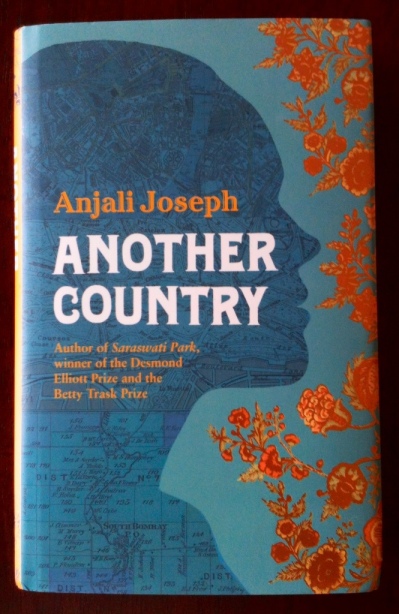
Anjali Josephs’s Another Country also has a map on its cover. This one got a bit of a scathing review in The Guardian last week; the first few pages seem well written though. Blurb:

Paris, London, Bombay: three cities form a backdrop to a journey through Leela’s twenties at the dawn of the new millennium, as she learns to negotiate the world, work, relationships and sex, and find some measure of authenticity. Sharp, funny, and melancholy, Another Country brings a cool eye to friendship, love, and the idea of belonging in its movements through old and new worlds. As with her debut, Saraswati Park (2010), which won the Desmond Elliott Prize, the Betty Trask Prize and India’s Vodafone Crossword Prize, Anjali Joseph’s beautiful, clear writing captures exactly both emotions and surroundings.