Books Acquired, Some Time Last Week (12.14.2011, Perhaps)

20111221-125306.jpg

Bobbi Lurie’s Grief Suite, a slim collection of poems that seem to be mostly about death and loss. Love the woodcut cover, which Ms. Lurie made herself. I read most of Grief Suite last week and found it moving if bewildering. I’m not sure how to review a book of poetry. I have no idea.

20111221-125952.jpg

The Book of Khalid by Ameen Rihani is part of Melville House’s Neversink line; it’ll get a Spring release. I read a bit the other night. Strange and romantic.

20111221-130019.jpg

Joe Dunthorne’s Wild Abandon is set on a crumbling Welsh commune. Dunthorne’s Submarine was adapted into a film last year by Richard Ayoade. I didn’t see the film. Anyway, I usually thumb through the first few pages of every review copy that shows up and try to shuffle the book into a certain stack; I wound up reading way more of Wild Abandon than I had initially expected. The first 50 pages are good—flawed but good—and it seems like a smart, funny novel that will appeal to readers who like smart, funny novels.

Sorry that my descriptions today were so lame (lamer than usual). I’m tired.

Novels Make Lousy Gifts (But We Should Give Them Anyway)

Novels make lousy gifts.

Now, if you have even a passing acquaintance with this little blog, you know that I love novels, that Biblioklept primarily focuses on novels, and that I love books in general. I am not anti-novel or anti-giving-novels-as-gifts. Send me a novel as a gift. I will appreciate it (or trade it toward another book, which is kinda sorta a form of appreciation).

I went to my favorite bookstore today, in fact, to buy some books for Christmas presents. But I restrained myself from picking up novels as gifts.

If you love books like I do, I’m sure that some of your most favorite gifts ever have been novels. Some of my most favorite gifts have been novels. The remaindered copy of The Lord of the Rings (from the South Barwon Library that some friends of the family gave me on Dec. 5th, 1990 when we visited Melbourne (the one in Australia, not Florida)) is probably one of my all-time favorite gifts. I know the exact date because the nice lady who gave it to me wrote a kind note in book and included the date in her note.

I could never bear to get rid of an inscribed book given as a gift, but lots of people do get rid of inscribed books. This is a monstrous practice, one that attests to just how easily people will discard your oh-so-earnest gifts. If you spend a lot of time in used bookstores (I do) you will come across these sad markings. Because it’s close at hand, and I’m aware of its inscription, I’ll share the note that Jean wrote to Helen (no, of course I know neither of them) in my copy of Balthus’s memoir, Vanished Splendors:
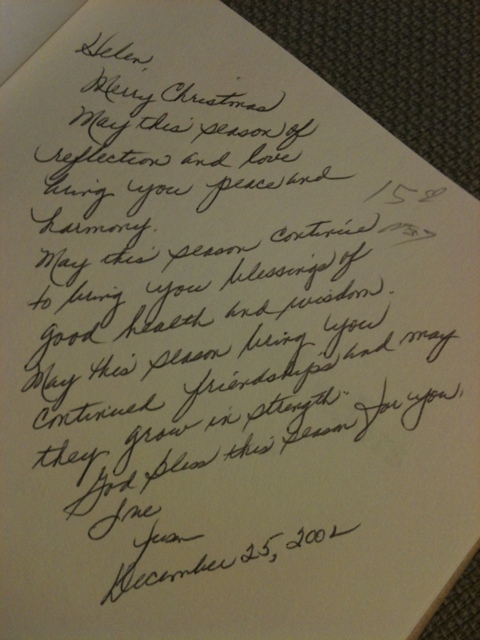
20111220-195619.jpg

I am aware that the memoir of a pervy artist is not the same as a novel, and that, as my first illustrating example, I already seem to be losing my metaphorical balance, but again, it was close at hand, right near the Tolkien in fact (by the bye, Vanished Splendors is pure gold).

In any case, I think Balthus’s memoir “reads” like a novel, which is to say that it’s mostly big chunks of text that require time and energy to decipher, set against the backdrop of TV, internet, movies, etc. It has some pictures, but not many. There’s no gimmick to it. I’m guessing that Helen just wasn’t into Balthus, or, if she had a passing interest in his art, it didn’t translate into wanting to read his memoir. She certainly didn’t read any of it (yes, I have a special sense that tells me when a book has been read. This baby was a virgin). Every time I look over the book, I feel sorta bad for Jean, whose gift seems to have gone unappreciated (by Helen; not by me. I was happy to pick it up used).

To return to an earlier point: yes, some of our favorite gifts ever might be novels. However, most of the life-changing novels I received were rarely given as birthday or Christmas gifts. They weren’t gifts of obligation, if you’ll forgive the ugliness of that term. Most of the great novels that were given to me were handed along free of occasion, given because the giver thought (knew) I should read them.

At Christmas though, we feel obliged to give. Sometimes we get some great novels as gifts. More often though, it seems like that relative who knows you “like to read” gives you a novel by, I dunno, Clive Cussler or Tom Clancy. The worst though are those tiny little hardback books that are designed specifically to be gifts, little faux-tomes of faux-philosophy usually connected to golf or angels or some other bullshit (I was horrified last year when DFW’s “This Is Water” speech got this treatment). Anyway, if you like books, you probably just go trade in this bullshit toward the books you like.

But this post isn’t really about the problem of getting airport novels or gimmick books as gifts. This post is about those of us who insist on giving novels we love to people who we know don’t really love reading novels. Especially really big, somewhat (or very) experimental novels. Important novels. Those novels that we read and decide that everyone needs to read this to become a fully realized human being [gags on that phrase].

I think sometimes we give our friends and relatives novels as gifts because we love them so much and we also love the book so much that we are maybe gunning for an intellectual three-way. We want them to read the novel so that we can share in it together, discuss it, rant about it, argue about it (remember though: that’s what the internet is for).

What often happens though is that these gifted novels (forgive the ambiguous, awkward modifier) tend to lurk about the giftee’s abode, brickishly unread, like dour unwanted houseguests. They skulk at the margins of bookshelves or migrate to the bottom of “to read” stacks; a lucky one might find occasional fingering above a commode. They are ugly reminders to the giftee, signals of how he or she has failed to meet your expectations (your expectations re: 9 or 15 or 25 or 30 hours of her time). (Young people, by which I mean college students in the liberal arts, are the exception here; they probably aren’t going to read the novel, but they are absolutely fine with putting it out for show).

People like books with pictures though, generally.

Even though I think novels tend to make lousy gifts, we should give them to our friends and loved ones anyway, even on those days of obligated giving. We should still offer novels up like they were somehow a part of our own selves in the deluded hope that the giftee will read them and discuss them with us, and that the novel will become an internal, virtual, shared experience. We should give them knowing that it’s likely they’ll go unread, that they may even be a point of shame for the giftee (especially when we ask, “Have you started . . . ?”). We should give them aware that they might point toward our own selfish desires.

Even if a novel may be a gift that implies a certain level of intellectual work, it also implies a  sense of trust and respect toward the giftee, and in this sense, giving a loved novel is a clear way to show love.
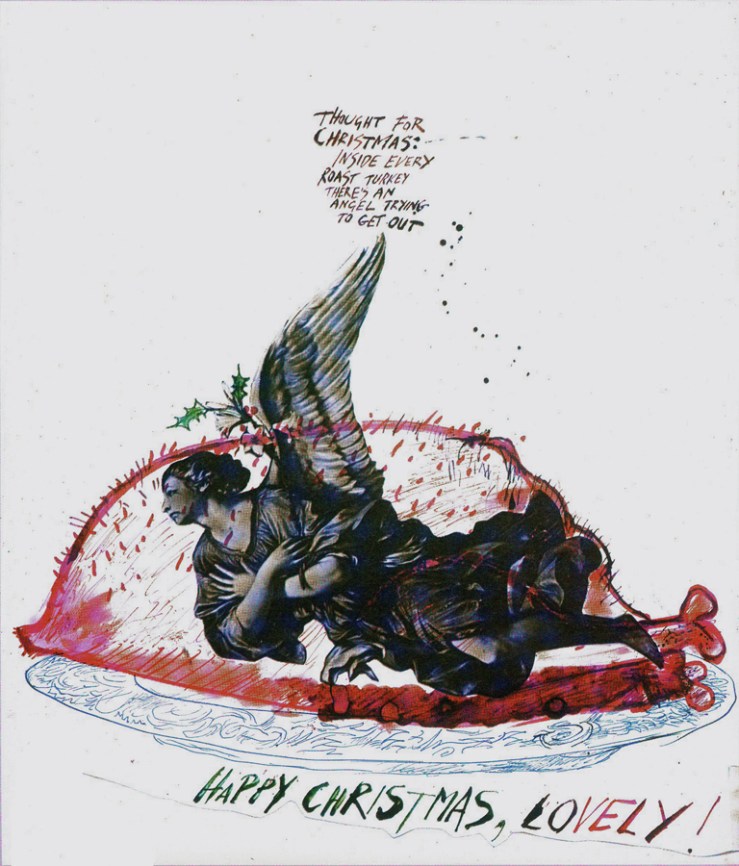
“Happy Christmas, Lovely!” — A Christmas Card from Ralph Steadman

(Thanks to Bblklpt reader JESCIE for the link).

The Hobbit Film Trailer

Jonathan Franzen Talks About Dysfunctional Families

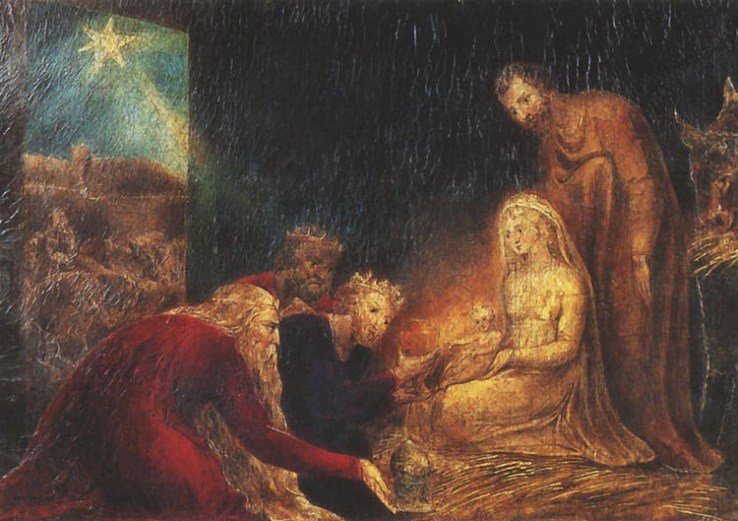
Adoration of the Magi — William Blake

The Myth of The Vollmann

  • Europe Central: 832 pages
  • Imperial: 1344 pages
  • The Royal Family: 800 pages
  • Rising Up and Rising Down: 3352 pages

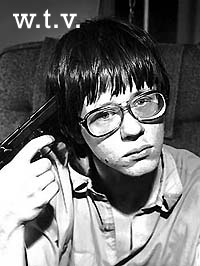
I still hesitate to believe that William T. Vollmann actually exists. Has anyone ever read one of his super-long books? Can we prove that somewhere around page 700 of Imperial that the text doesn’t just become

ALLWORKANDNOPLAYMAKEWILLIAMLOVEPROSTITUESALLWORKANDNOPLAYMAKEWILLIAMLOVEPROSTITUES ALLWORKANDNOPLAYMAKEWILLIAMLOVEPROSTITUESALLWORKANDNOPLAYMAKEWILLIAMLOVEPROSTITUES ALLWORKANDNOPLAYMAKEWILLIAMLOVEPROSTITUESALLWORKANDNOPLAYMAKEWILLIAMLOVEPROSTITUES ALLWORKANDNOPLAYMAKEWILLIAMLOVEPROSTITUESALLWORKANDNOPLAYMAKEWILLIAMLOVEPROSTITUES ALLWORKANDNOPLAYMAKEWILLIAMLOVEPROSTITUESALLWORKANDNOPLAYMAKEWILLIAMLOVEPROSTITUES ALLWORKANDNOPLAYMAKEWILLIAMLOVEPROSTITUESALLWORKANDNOPLAYMAKEWILLIAMLOVEPROSTITUES ALLWORKANDNOPLAYMAKEWILLIAMLOVEPROSTITUESALLWORKANDNOPLAYMAKEWILLIAMLOVEPROSTITUES ALLWORKANDNOPLAYMAKEWILLIAMLOVEPROSTITUESALLWORKANDNOPLAYMAKEWILLIAMLOVEPROSTITUES ALLWORKANDNOPLAYMAKEWILLIAMLOVEPROSTITUESALLWORKANDNOPLAYMAKEWILLIAMLOVEPROSTITUES ALLWORKANDNOPLAYMAKEWILLIAMLOVEPROSTITUESALLWORKANDNOPLAYMAKEWILLIAMLOVEPROSTITUES

for the next 600 pages? How can we prove this if no one has actually read it? Can we prove that somewhere someone actually read Imperial (and I mean all of it)? What about that seven-volume first edition of Rising Up and Rising Down? Sure we all know about it, but has anyone actually SEEN the thing? I don’t even mean OWN it, certainly not that, none of you OWN the first edition of RURD. Oh heavens no, but have any of you seen it in person, to verify for me its actual existence?

It’s sort of like those kids who had pet monkeys when you were in elementary school, always someone’s cousin, or their neighbor’s friend from another school; sometimes the story was accompanied by a thumbprint-smudged Polaroid of the creature, clutching lovingly to some human torso. But did you ever actually see it? No never. Not once. And anyone who says they did is part of the conspiracy. Sure, maybe somewhere in Mexico someone has a monkey for a pet, but not here, no way, and certainly not your cousin. And look, I agree that it’s a weird thing to lie about, but that’s part of what makes good liars good, it’s some sort of weird emotional long-con that you are complicit in by listening to them.

Why would someone lie about writing a 3000 page book about violence? I have no idea. And why the hell would the same guy write 800 pages about Shostakovich and the Russians during World War Two? You got me. It’s a brilliant scheme in a way. If Vollmann is lying about something, then he has avoided attention by writing books so long and esoteric that NO ONE can prove or disprove their legitimacy.

Of course, whatever game he’s playing at, it isn’t money.

I contacted Mr. Bob Amazon (the guy who started Amazon.com) and he confirmed my suspicion that literally no human has ever purchased a copy of either Imperial or The Royal Family. When asked if physical copies of these books were actually housed in an Amazon facility somewhere, just in case someone ever actually did buy one he hung up on me.

So, I’m thinking this thing goes deep, deeper than any of us ever imagined. Obviously Dave Eggers is involved somehow, either as the mastermind behind the whole thing, or just another pawn like the rest of us. I emailed Mr. Heartbreaking Jerk himself, asking if even he of all people can claim to have actually read all of Rising Up and Rising Down, and in return I received an auto-reply, something about the volume of emails he receives blah blah blah—the point is I think I scared him, and now I know I’m on the right trail . . .

The funny thing with all of this is that I’m pretty sure there is no hoax going on. I have no reason to think William T. Vollmann is anything but a real guy, a weirdo dude who writes epically long books that no one reads. But if you read about his life at all it sounds more made up than any of the recently famous literary hoaxes. Maybe only that old asshole with his holocaust apples can really claim to have a bigger imagination, because neither James Frey nor JT Leroy can hold a candle to this (straight from Wikipedia):

In his youth, Vollmann’s younger sister drowned while under his supervision, a tragedy for which he felt responsible. This experience, according to him, influences much of his work.

What? Really? So he’s literature’s own Batman, The Dark Knight . . . or, wait for it: Vollman!

And I’m not even going to get into all the crack smoking with prostitutes and moving to Afghanistan in the 1980s. But I will talk briefly about his “hobby” of aimlessly train-hopping, which he apparently chronicled in Riding Toward Everywhere (a book whose existence I can confirm, as I bought it as a gift for a friend). Honestly though, that’s his hobby?

“So Mr. Vollmann, when you’re not hanging out with prostitutes in Cambodia, smoking crack, dodging bullets in Bosnia, spending 20 years writing a 3000 page book about violence, running around in the desert with a rebel army, or any of your other notable pursuits . . . what do you do for fun? How does William T. Vollmann relax?”

“Oh you know, I hop trains and just go where they take me.”

What? How do we know that Vollmann’s entire “career” isn’t the longest viral marketing campaign ever for a Wes Anderson movie that’s coming out ten years from now?

I’m not really heading towards anything conclusive or coherent here. I have no big point and the answer to all of my questions is that I should just devote the next few years of my life to actually reading these books instead of doubting their existence. But that would take 1) time and 2) money. Maybe I should turn it into some kind of art project and get funding on Kickstarter or something. Or maybe I could get review copies somehow.

Actually I just looked on Amazon and I see that Imperial is no longer the $40 book it once was. A new copy in paperback will run just $3.23 and with that free prime shipping I could be reading this thing by Friday.

So I just did it,  it is on its way, but we all know I’m not going to actually read it, right? It’s gonna go on the shelf next to Europe Central and the abridged copy of RURD and it will damn well stay there until, I don’t know, I become the omega man or something and I literally have nothing else to do and no one to talk to and no pointless articles to write and nothing to do with my boredom besides consume 1300 pages about border-crossing by a guy who looks like a serial killer.

“The Magi,” A Stark Christmas Poem by William Butler Yeats

“The Magi” by William Butler Yeats. A Christmas poem that’s not about Christmas, I guess. I love the final image:

Now as at all times I can see in the mind’s eye,
In their stiff, painted clothes, the pale unsatisfied ones
Appear and disappear in the blue depth of the sky
With all their ancient faces like rain-beaten stones,
And all their helms of silver hovering side by side,
And all their eyes still fixed, hoping to find once more,
Being by Calvary’s turbulence unsatisfied,
The uncontrollable mystery on the bestial floor.

Book Acquired, Some Time Last Week: An Exaltation of Larks (The Venereal Game)

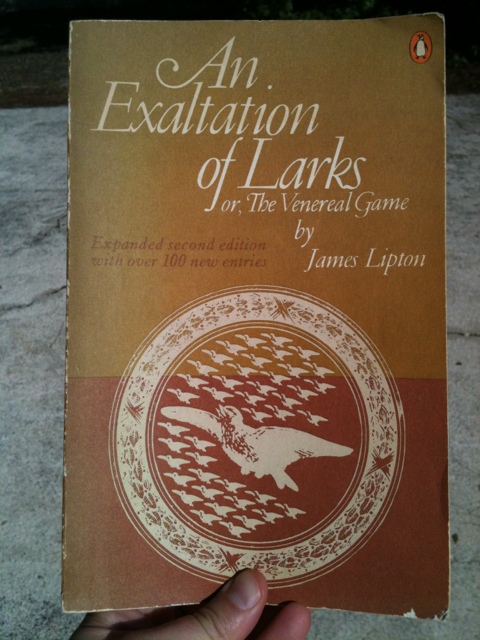
20111219-131203.jpg

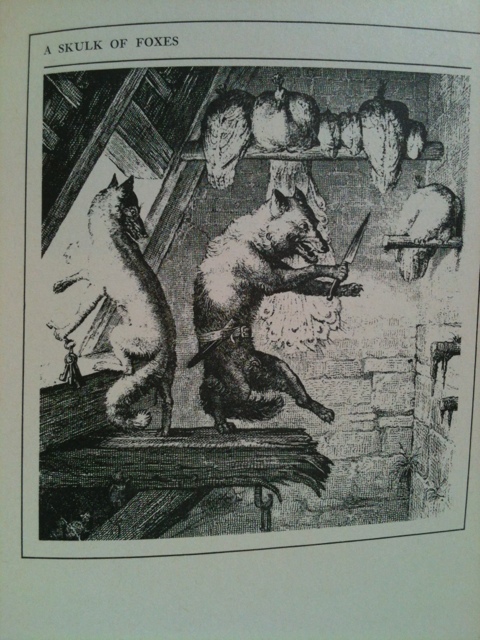
I had never heard of James Lipton’s dictionary of terms of venery, An Exaltation of Larks, or The Venereal Game before I found it wedged between some old etymological dictionaries I was browsing in my favorite book store, but when I picked it up I knew I was going to buy it almost immediately. Part dictionary, part etymology, and part linguistic game, An Exaltation explores those strange collective noncount nouns of English that anglophiles (like me) find so charming and weird. The first part of the book deals with some of the more common terms of venery, like “pride of lions,” or “skulk of foxes”:

20111219-131213.jpg

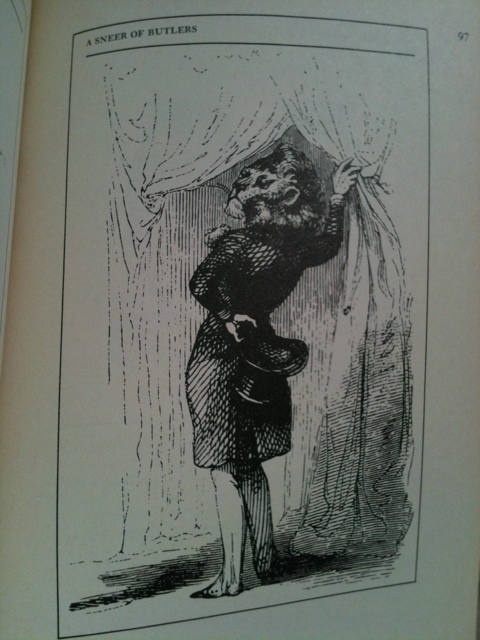
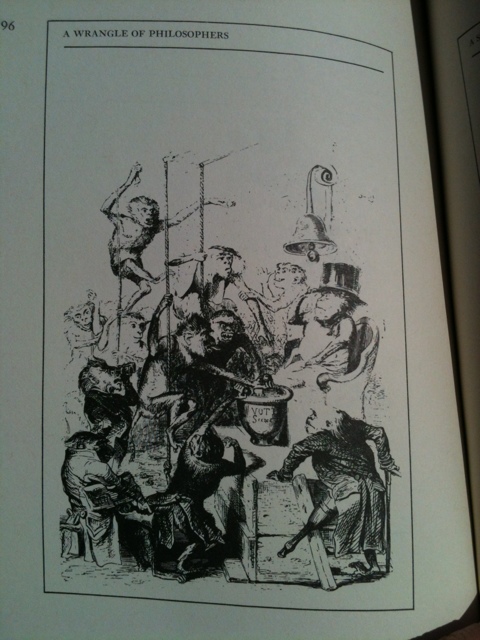
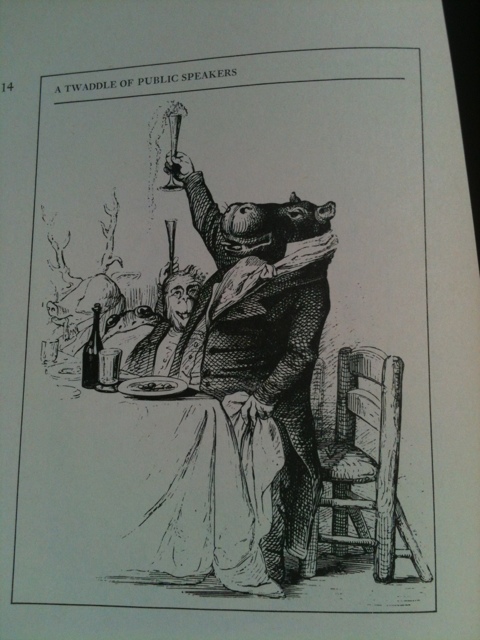
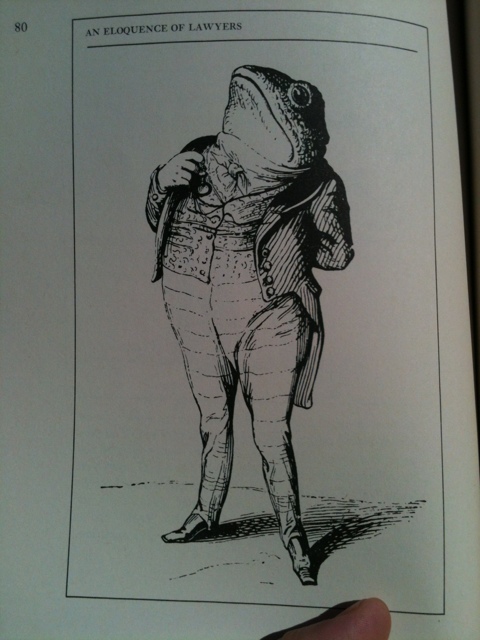
But Lipton soon gives over to more esoteric terms, and then eventually plays with outright invention. The book’s illustrations recall Max Ernst’s surrealist graphic novel Une Semaine de Bonté; they also remind me of the recapitations of recent Biblioklept interviewee Click Mort. Anyway, a very cool book, likely a cult favorite, and lots and lots of fun.

20111219-131224.jpg

20111219-131243.jpg

20111219-131301.jpg

20111219-131308.jpg

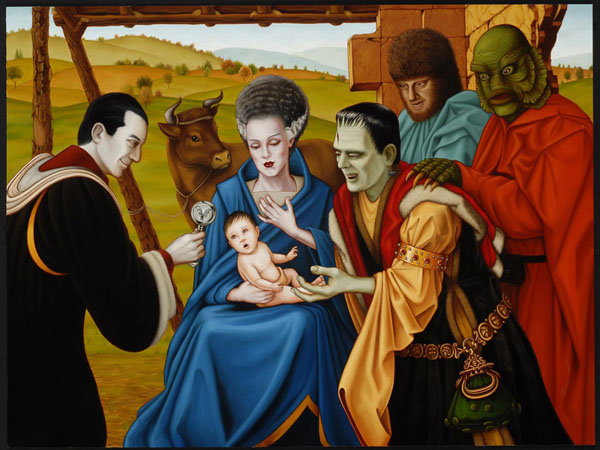
Nativity — Isabel Samaras

“Christmas Card from a Hooker in Minneapolis” — Tom Waits

“Peace on Earth/Little Drummer Boy” — Will Ferrell & John C. Reilly

Vodpod videos no longer available.

Teddy Roosevelt’s Death Mask

I Review Def Jam 25, the Overstuffed Illustrated Oral History of a Record Label that Helped Change American Culture

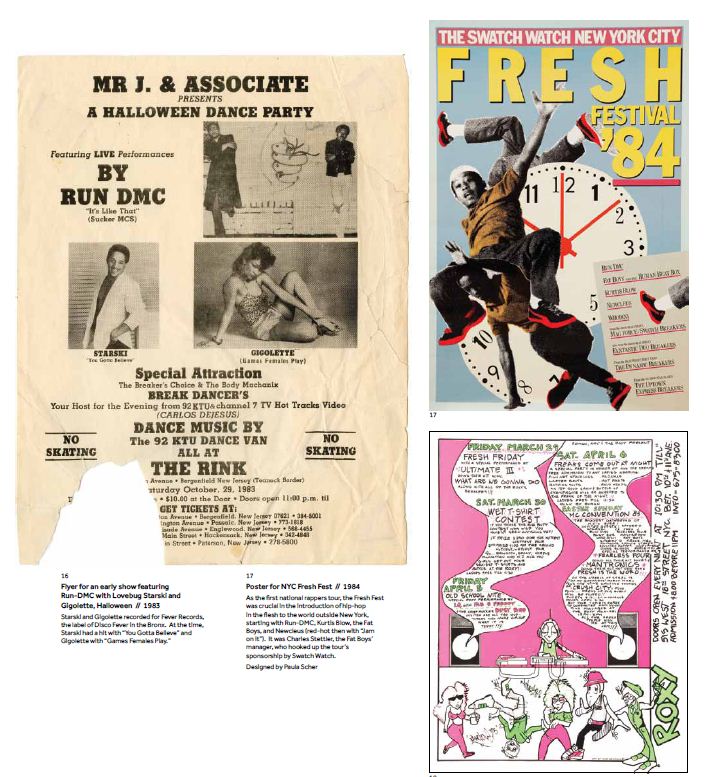
It’s hard to underestimate the influence that Def Jam Records brought to bear on contemporary culture. Not only did the label help to legitimize rap and hip hop as commercially viable (and artistic) art form, it also helped to redefine attitudes about fashion, culture, race, and even business. At its core, the early days of Def Jam were an energetic experiment in synthesis, combining the DIY spirit of punk rock with the nascent rhythms of hip hop, all twisted up in a graffiti writer’s aesthetic. Def Jam 25, a huge, overstuffed illustrated oral history of the label’s first quarter century, details the fascinating beginnings, successes—and many, many troubles—of the strange child of Rick Rubin and Russell Simmons.

Rick Rubin Hard at Work

Def Jam 25 focuses its initial energy on Rick Rubin, who comes across as the dark, eccentric spirit whose aesthetic and temperament would come to define the label’s early successes. Rubin started the label out of his NYU dorm to release a single by his artcore band Hose. Rubin was soon introduced to Simmons (by Vincent Gallo, of all people), and the duo would go on to produce and release huge hits from the Beastie Boys, L.L. Cool J, Run DMC, and a host of others.

Early Flyers

Def Jam 25 combines photographs and essays with shorter eyewitness commentaries from the artists, designers, musicians, producers, and business guys who helped define Def Jam. The effect is intriguing, often insightful, occasionally funny, and especially fascinating when folks share very different accounts of how things went down. The early years of the label are documented with an energy that matches the verve of Def Jam’s pioneering work in the ’80s, and if I dwell on the first thirds, it’s only because there’s something so electrifying about those early years, when Slayer and Public Enemy were labelmates and Aerosmith and Run DMC could craft a top ten hit together.

From the "Walk This Way" Sessions

Def Jam’s success continued unabated after Rubin’s departure in 1988, and it’s hard to argue that a label putting out records by EPMD, Nas, De La Soul, Public Enemy, and the Roots was somehow less artistic and more commercial after that point. Still, Rubin’s strange punk rock energy was clearly irreplaceable, and while it remains part of the Def Jam template to this day, it’s hard to get as psyched about Rihanna and Ja Rule as it is about Slick Rick or even Onyx. But that has little to do with the actual book I suppose, which is lovingly crafted and impeccably designed.

Def Jam 25 is a great big coffee table book for people who actually like to read (and for your guests who don’t like to read, the book explodes with vivid imagery). The book reveals (and reflects) Def Jam Records as a marvelous synthesis of art, design, fashion, and business, a label that was (and is) dramatically unstable and also wildly innovative. The book will appeal to fans of music and culture alike. Def Jam 25 is new in hardback from Rizzoli.

Rubin and Simmons, 2009

“Winter Wonderland” — SNL Original Cast

The original SNL cast’s take on “Winter Wonderland” is one of my favorite Christmas recordings ever. It’s from the first season of Saturday Night Live; Candice Bergen is hosting, and you can see her singing along with Gilda Radner, Jane Curtin, and Laraine Newman. The underrated Garrett Morris delivers the powerful lead vocal, and there’s something magical about the moment when the boys — Chevy, Aykroyd, Belushi — come in for support.

When I was a kid, I was always puzzled by the clip. I saw it several times on Comedy Central reruns; this is back when Comedy Central was a fledgling network that ran SNL about 8hrs a day, along with lots of bad ’80s stand up shows, MST3K, and a show I loved called Short Attention Span Theater hosted by some guy named John Stewart. Anyway, I guess what puzzled me so much was that it seemed so damn sincere, and so good. I suppose Morris’s vocal provides much of the earnest authenticity that so baffled me when set against the goofy, ironic sloppiness of those (very) early SNL skits. I guess I was looking for a joke and couldn’t find one. They didn’t seem to be mocking the song. In retrospect, I can see that there’s something of a loving parody at work in their version of “Winter Wonderland,” a gentle poke at old, hokey Christmas musicals, but the emphasis is on loving — it’s almost bizarre in its tenderness and earnest emotion.


(An Incomplete) List of Writers Who Died in 2011

Vaclav Havel

Christopher Hitchens

Russell Hoban

Ken Russell

Joe Simon

Stetson Kennedy

Sidney Lumet

George Whitman

Lilian Jackson Braun

Edwin Honig

Michael S. Hart

Gil Scott-Heron

Bill Keane

Jerry Leiber

Diana Wynne Jones

Bert Jansch

Leonora Carrington

Brian Jacques

Barbara Grier

Edouard Glissant

Dwayne McDuffie

Hisaye Yamamoto

Phoebe Snow

Anne McCaffrey

Leonard B. Stern

Vincent Cronin

Tony Geiss

MK Binodini

Kenneth Grant

Joe Gores

Maria Elena Walsh

Del Reisman

Christopher Trumbo

Loreen Rice Lucas

Diana Norman

Reynolds Price

John Ross

David Hart

B.H. Friedman

Dick King-Smith

Susana Chavez

Park Wun-suh

Wilfrid Sheed

Jean Dutord

Sun Axelsson

Ruth Cavin

Max Wilk

Hans Joachim Alpers

Donald S. Sanford

Peter J. Gomes

Ion Hobana

Rudi Bass

Anson Rainey

Perry Moore

Sean Boru

Bo Carpelan

Elaine Crowley

Martin Quigley Jr.

Charles E. Silberman

Andree Chedid

Iakovos Kambanelis

Sara Ruddick

Doris Burn

Steven Kroll

May Cutler

Thor Vilhjálmsson

H.R.F. Keating

Joe Bageant

Jean Liedloff

Bill Blackbeard

Alberto Granado

Hazel Rowley

Al Morgan

Raymond Garlick

John Haines

Ernesto Sabato

Abdul Hameed

Rafael Menjívar Ochoa

John Sullivan

Sidney Michaels

Madelyn Pugh

Sol Saks

Arthur Marx

Bill Brill

L.J. Davis

Ulli Beier

Kevin Jarre

Joanna Russ

David Wilkerson

Beverly Barton

Craig Thomas

Ira Cohen

W.J. Gruffydd

Anne Blonstein

Paul Violi

Johanna Fiedler

Dick Wimmer

Oniroku Dan

Hans Keilson

Martin Woodhouse

Newton Thornburg

Patrick Galvin

Wallace Clark

Carlos Trillo

Kate Swift

Arthur Laurents

Frans Sammut

William Kloefkorn

Thierry Martens

E.M. Broner

Tom Hungerford

Kathryn Tucker Windham

Harry Bernstein

Joel Rosenberg

Simon Heere Heeresma

David Rayfiel

Oscar Sambrano Urdaneta

Robert Kroetsch

Josephine Hart

Gloria Sawai

Anne LaBastille

Blaize Clement

Sissel Solbjørg Bjugn

Francis King

Agota Kristof

Henry Carlisle

Iain Blair

Hideo Tanaka

Michael Legat

Ruth Thomas

Colin Harvey

David Holbrook

Simona Monyová

William Sleator

Samuel Menashe

Selwyn Griffith

Sara Douglass

Ida Fink

Sergio Bonelli

Arthur Evans

Hella Haasse

David Croft

David Zelag Goodman

Emanuel Litvinoff

José Miguel Varas

Jo Carson

Cengiz Dağcı

Frank Parkin

Hugh Fox

Herbert Lomas

Florence Parry Heide

Stanley Mitchell

Uno Röndahl

Mildred Savage

Mick Anglo (LINK)

Alvin Schwartz

Sri Lal Sukla

Piri Thomas

Gerald Shapiro

Vittorio Curtoni

Morio Kita

Andrea Zonzotto

Taha Muhammad Ali

Georg Kreisler

Daniel Sada

H.G. Francis

Helen Forrester

Čestmír Vejdělek

Hal Kanter

Les Daniels

Leonid Borodin

Franz Josef Degenhardt

Morris Philipson

Ana Daniel

Ruth Stone

Peter Reading

Ruslan Akhtakhanov

Ivan Martin Jirous

Tomás Segovia

Kabir Chowdhury

Hans Heinz Holz

Ke Yan

Mario Miranda

Jean Baucus

Gilbert Adair

Jerry Robinson

Ambika Charan Choudhury

Matti Yrjänä Joensuu

Louky Bersianik

Christopher Logue

Christa Wolf

Elisabeth Young-Bruehl

“Death Is a Very Liberating Thought” — RIP Christopher Hitchens