I’m getting decrepit, while Pynchon is even older | William T. Vollmann reviews Thomas Pynchon’s Shadow Ticket

I’ve avoided reviews of Thomas Pynchon’s newest novel Shadow Ticket, but I couldn’t help but read William T. Vollmann’s piece on the novel at UnHerd. From Vollmann’s review:

…this author’s longstanding genius there on that private swivel chair of the Department of Character Appellations matches long-gone Lord Dunsany’s for imaginary gods and cities. I cast my grin back upon Tyrone Slothrop, who was first printed in 1973, and wonder to what extent my delight in Shadow Ticket derives from nostalgia. For I’m getting decrepit, while Pynchon is even older, so which will come first, the old lion’s last roar, or my last read? Enriching the nostalgia is Pynchon’s lyrically sad and squalidly beautiful Milwaukee, a place to which I have no connection, and at a time before my parents were born, so why should I care about it? But I do, because it’s a shadow Milwaukee, all the more worth missing for being unreal.

There is a gentleness to Pynchon, and sometimes even a cynical sweetness (and so forth); then come prankish pineapples.

“The Last Untamed Writer in America,” another William T. Vollmann profile

Photograph of William Vollmann in his studio by Ian Bates

Late last week, The Wall Street Journal published “The Last Untamed Writer in America,” a profile of William T. Vollmann. The piece begins with its author Alexander Nazaryan politely refusing breakfast scotch from Vollmann, who is hosting Nazaryan at his studio (a converted Mexican restaurant):

It was breakfast time at the Sacramento, Calif., home of the novelist William T. Vollmann, which meant time for scotch. Out came two gold-colored shot glasses, modeled after 50-caliber rounds, a gift from a relative to the gun-loving writer. Despite gentle pressure, I stuck to my coffee, so Vollmann poured himself only a perfunctory nip of the Balvenie DoubleWood 12. “This will get me buzzed up,” Vollmann said. Then he added, ruefully, “I can hardly drink at all anymore.”

The piece has some interesting quips from Vollmann, but it doesn’t really expand on Alexander Sorondo’s long essay “The Last Contract: William T. Vollmann’s Battle to Publish an American Epic,” from this spring–notes on Vollmann’s cancer, getting dropped by his publisher Viking, and finding a home for his epic A Table for Fortune with Skyhorse, an iffy group that has published books by RF Kennedy Jr. and Alex Jones. A lot of the notes will be familiar with those tuned into the myth of the Vollmann (guns, drugs, sex, volume, etc.), but it’s kinda sorta interesting to see how the conservative Wall Street Journal frames Vollmann. They play up Vollmann’s enthusiasm for guns and note that he is not an author to be “cowed by sensitivity readers”; they even get a quote from him decrying “people who want trigger warnings.” And yet even when Vollmann professes a tinge of patriotism, he deflates it immediately:

“I love America because it’s my homeland, and I love Americans,” Vollmann says. “What I dislike is the whole hypocritical American exceptionalism. We do all these dirty, crummy things.”

There are some cool photos by Ian Bates accompanying the article, which you can read unpaywalled here.

I knew that the American Empire in which I lived was approaching its imminent end, but I could not quite believe it | William T. Vollmann reports from Ukraine in “Drones and Decolonization”

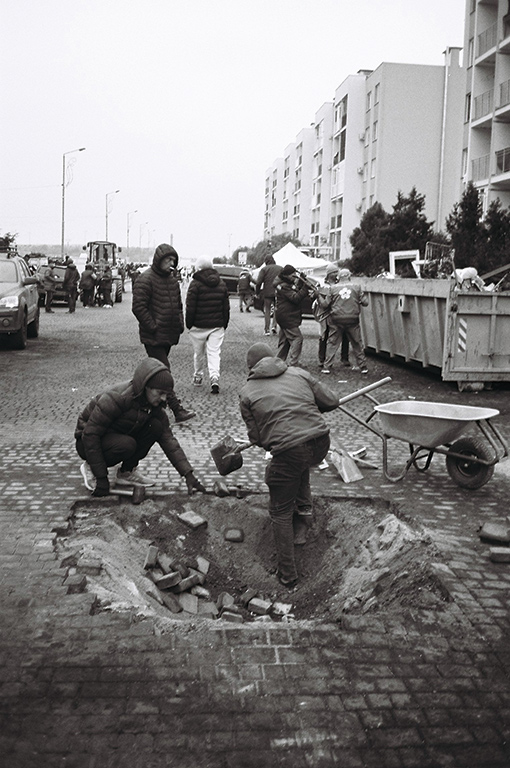
William T. Vollmann has a new essay in Granta. “Drones and Decolonization” is reportage from the Russia-Ukraine war, but in typically Vollmannesque fashion the essay is also about a lot of other things (Joseph Roth, Isaac Babel, language and names, food, monuments, etc. — at one point Vollmann editorializes on his own habits to let his projects swell: “all Granta had commissioned was 5,000 words, and I would exceed expectations by submitting 40,000 words, which they would only be able to cut down so much”).

Here is the opening of the essay:

Some of her was Austria once, and part of her had been Poland. Starved and tortured by Stalinists into Soviet Republichood, then raped by Hitler’s Reich, she finally became some version of herself, but then V. Putin thought to annex her back into another empire: Re-Russify her! Give it to her good and hard, then beautify the corpse with a mask of iron!

Her de-Russifiers fought back, and not only with drones and artillery: Amputate the occupier’s monuments! Ban his writers, no matter how long ago they lived; rename his streets . . . ‘Little Father is no more,’ cried that Ukrainian, Russian, Polish or maybe Austro-Hungarian writer Joseph Roth. ‘Where is the czar? . . . What sort of world is this? A crooked world!’

I went to help her in my helpless way, with journalistic good intentions which sorrowed into love. From Berlin to Vienna I went, and then through the Czech Republic’s golden-red forests, which here and there burst into ultra-yellow blazes beneath an ever-darkening silver sky. I glimpsed long, gentle slopes of well-mown or -grazed green grass and I saw decrepit towns; then it was afternoon among Poland’s boarded-up brick buildings, with crew-cut young men lounging in packs while wearily beautiful old women dragged home heavy shopping bags. Passing through the town of Liszki I spied a church steeple graying in the twilight, and long after dark came the final border.

And I can’t help but share these lines from Vollmann’s conclusion (I do not think they constitute a so-called spoiler), which point out that our murder drones will one day come home to roost:

I knew that the American Empire in which I lived was approaching its imminent end, but I could not quite believe it. All those drones our corporations pimped out, when would they come to us to spread terror, agony and grief?

Odesa, photograph by William T. Vollmann

“The Last Contract,” a longish profile on William T. Vollmann’s difficult journey getting his novel A Table for Fortune published

“The Last Contract: William T. Vollmann’s Battle to Publish an American Epic” is a nice long essay by Alexander Sorondo. First few paragraphs:

A few years ago, the novelist William T. Vollmann was diagnosed with colon cancer. The prognosis wasn’t great but he went ahead with the treatment. A length of intestine drawn out and snipped. It was awful but it worked. The cancer went into remission.

Then his daughter died.

Then he got dropped by his publisher.

Then he got hit by a car.

Then he got a pulmonary embolism.

But things are looking up.


William T. Vollmann spent “twelve or fifteen years” researching and writing a novel about the CIA called A Table for Fortune; as of this writing it has a few back-channel blurbs from editors and assistants who’ve caught glimpses and say it might be his masterpiece, or at the very least a new sort of achievement for him. But when he finished it, in 2022, he turned it over to his publisher, the final installment of a multi-book contract (although even that part gets complicated), and that’s when, to use Vollmann’s words, “Viking fired me.”

His publisher of thirty years.

It’s more complicated than that.

For starters, when he first turned it in, A Table for Fortune was 3,000 pages.

Read the rest of “The Last Contract: William T. Vollmann’s Battle to Publish an American Epic.”

“Edgy Pleasures” — William T. Vollmann

“Edgy Pleasures”

by

William T. Vollmann


The most significant characteristic of the lovely nineteenth-century Indian daggers I collect is their blunt edges. Their purpose, in short, is to symbolize the power and authority of weapons, much like an officer’s pistol or even a policeman’s uniform. They are talismanic, like a crucifix or a Platonic form. Evidently, beauty was an absolute requirement in their crafting, since any such dagger was metonymic with the official function of a maharaja, whose life had to symbolize perfection to the rest of society. What purpose now? The maharajas are impoverished, and even such distant cousins of these daggers as bayonets are frequently used. For acts of war, we have our bombs, flying machines, crawling machines, swimming machines; for acts of legislation, the truncheon and the gun; for acts of atrocity, again the gun. Thus, these daggers are doubly removed from sharpness. It is emblematic that the little store in Udaipur that sold them (lubricated well with coconut oil, wrapped in bundles of old newspaper) was equally forward in displaying jointed silverfish made up of many small pieces more complex than bones. This made the daggers seem even more beautifully useless, metonymic still of the maharaja but only the Maharaja of Astonishment—for instance, Sawai Madho Singh I, who was reputedly seven feet tall and four feet wide.

In Jaipur, I saw his maharani’s eighteen-pound dress. “That must have been heavy,” I said. The guide smiled. “The Indian women don’t feel the weight when it’s real gold,” he said. The real gold of these daggers is, of course, their craftsmanship. The longer I handle the smooth, yellow ivory of that camel’s head or peer into the checkered gape of that flower-inlaid tiger, the more I perceive this and the more fairylike the pieces become. I have seen the maharaja’s sun emblem: It was composed of muskets raying outward from sacredness. Surely these muskets were never fired. How blasphemous it would have been to wrench off a ray from the sun! I went to another palace, whose wooden gates were forty feet high. I saw the high window where the maharani used to welcome her husband with rose flowers. I passed through green-bordered receding arches like the leaves of artichokes. Now: the Hall of Glory. The ceiling was inlaid with silvered glass in tiny, complex pieces to shimmer a million reflected flames of a single candle. Skeletons dazzled me in the perforated marble screens. But the guide said, “Before, the maharaja had elephants. Now, not a single one!” No utility anywhere. Consider the so-called tiger knife, which is shaped like the letter A with two horizontals. The hand grips one of them: The legs of the A curve inward into parallels to enclose the wrist and lock it. The tiger comes; the point of the A stabs him; he falls dead. Functional, no doubt. But many of these tiger knives—old ones gilded, damascened, tawny-striped like tigers— are for sale. A good one goes for $3,000 (less, of course, if you bargain, cash in hand). A maharaja had placed it on consignment. The maharajas sell things incognito, I heard; the maharajas are ashamed. Sometimes, to decrease the likelihood that the knives will be recognized as theirs, they sell to distant provinces, even though there’s less money that way. This is how it must be. Recently, an art connoisseur came to buy Mogul miniatures. He asked a maharaja if anything was for sale. The maharaja said no, but if the man was serious, he knew another noble who might sell. It had to be understood, however, that the connoisseur would never meet him or learn his name. What is a tiger knife without its maharaja? And, indeed, the matter is worse, much worse, for in Udaipur I saw towers alone and incongruous upon the desert hills. Sentries used to watch there for tigers, but that was when there were still forests. The trees are all burned now. What use, then, a tiger knife? No matter whether any blade is sharp.


From a 1996 Esquire feature called “My Favorite Things.” The feature also included Charles M. Schulz, Francis Ford Coppola, David Lee Roth, Wayne Gretzky, Susan Sontag, John Travolta and many other folks on their favorite thing.

This is the meat locker, where Dolores’s parts are | From Conversations with William T. Vollmann

What’s in here?

This is the meat locker, where Dolores’s parts are. When the electrician wired it up, he asked, “What do you use this for?” I said, “Oh, that’s just where I keep my victims.” There was a long silence….She’s got her dresses here and I have my bulletproof helmet and various stuff from my journalism in there.

Have you taken many reporting trips recently?

No, that seems to being drying up. It seems that the magazines have less and less money. They’re mostly interested in domestic stuff. I don’t know whether it’s to save costs or if they really think Americans are only interested in America. I get sort of sick of it. So there are the wig heads. Whatever woman comes in here, I always say, “Now, those are your rivals.” They kind of freak out.

Do you have many visitors or is this mostly a solitary space?

I have the occasional visitor, yeah. And then let’s see. [Opens the door to the bathrooms.] I figure the men’s room and the women’s room ought to connect.

Why is that?

Well, you know male and female should always get together wherever possible. The men’s room is the toilet. The women’s room is the shower. They didn’t used to connect. It was really, really gross when I bought the place. This old restaurant—everything was all rotted out with pee.

[Bill takes me into another small room.] And then this is the books and bullets room. I put my phone in the closet most of the time, so I never have to hear it. I got all the extra copies of my books and all the bullets I’ll need for my various pistols.

Read the rest of Stephen Heyman’s 2013 interview with William Vollmann at 3:AM Magazine.

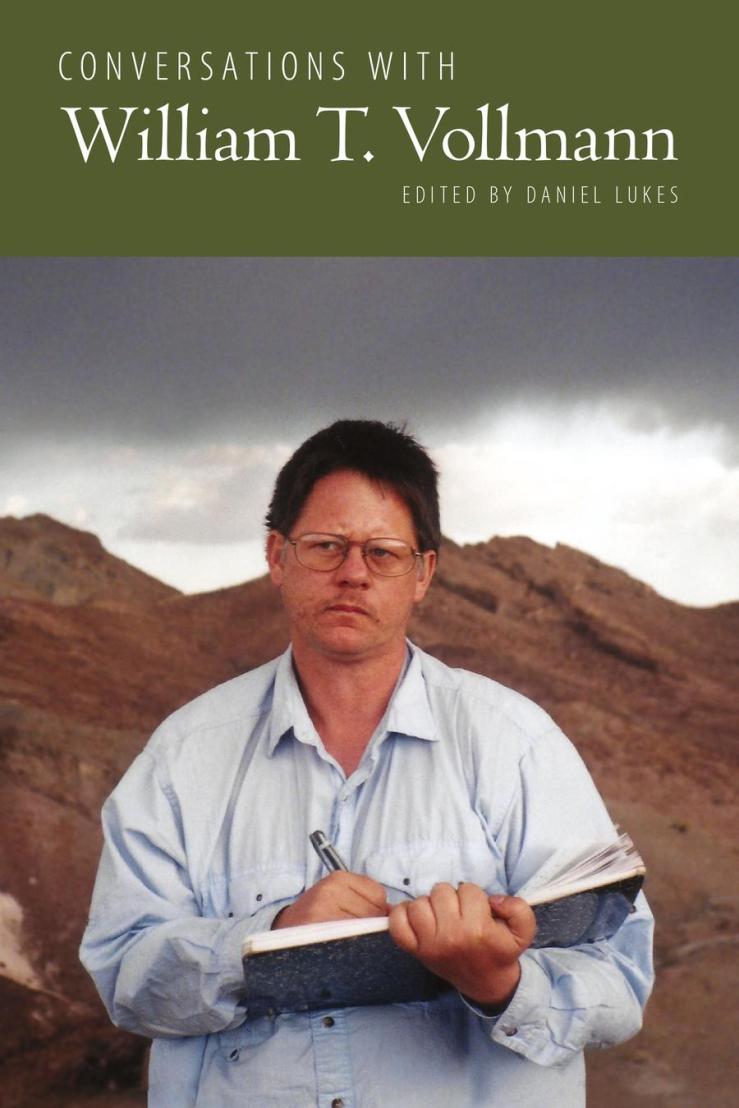
The interview is one of 29 that comprise Conversations with William T. Vollmann, a new collection edited by Daniel Lukes.

If you’re able, check out the book launch for Conversations with William T. Vollmann tonight (8 Feb. 2020) at 6:00pm at Unnameable Books, 600 Vanderbilt Ave., Brooklyn, NY 11238. 

image-front-cover_rb_modalcover

“Lunch” — William T. Vollmann

“Lunch”

by

William T. Vollmann


Faces at lunch, oh, yes, smirking, lordly, bored or weary—here and there a flash of passion, of dreams or loving seriousness; these signs I saw, notwithstanding the sweep of a fork like a Stuka dive-bomber, stabbing down into the cringing salads, carrying them up to the death of unseen teeth between dancing wrinkled cheeks; a breadstick rose in hand, approached the purple lips in a man’s dull gray face; an oval darkness opened and shut and the breadstick was half gone! A lady in a red blazer, her face alert, patient and professionally kind like a psychoanalyst’s, stuck her fork lovingly into a tomato, smiling across the table at another woman’s face; everything she did was gentle, and it was but habit for her to hurt the tomato as little as possible; nonetheless she did not see it. Nodding and shaking her head, she ate and ate, gazing sweetly into the other woman’s face. Finally I saw one woman in sunglasses who studied her arugula as she bit it…It disappeared by jagged inches, while across the table, in her husband’s lap, the baby watched in dark-eyed astonishment. Her husband crammed an immense collage of sandwich components into his hairy cheeks. He snatched up pommes-frites and they vanished in toto. When the dessert cart came, the starched white shoulders of businessmen continued to flex and shine; the faces gazed at one another over emptiness, maybe happier now that they had eaten, unthinking of what they had wrought.

Read “The Forgetful Ghost,” a supernatural tale by William T. Vollmann

“The Forgetful Ghost”

by

William T. Vollmann


After my father died, I began to wonder whether my turn might come sooner rather than later. What a pity! Later would have been so much more convenient! And what if my time might be even sooner than soon? Before I knew it, I would recognize death by its cold shining as of brass. Hence in those days, I do confess, I felt sometimes angry that the treasures of sunlight escaped my hands no matter how tightly I clenched them. I loved life so perfectly, at least in my own estimation, that it seemed I deserved to live forever, or at least until later rather than sooner. But just in case death disregarded my all-important judgments, I decided to seek out a ghost, in order to gain expert advice about being dead. The living learn to weigh the merits of preparation against those of spontaneity, which is why they hire investment counselors and other fortune-tellers. And since I had been born an American, I naturally believed myself entitled to any destiny I could pay for. Why shouldn’t my postmortem years stretch on like a lovely procession of stone lamps?

If you believe, as H.P. Lovecraft asserted, that all cemeteries are subterraneously connected, then it scarcely matters which one you visit; so I put one foot before the other, and within a half-hour found myself allured by the bright green moss on the pointed tops of those ancient stone columns of the third Shogun’s loyally suicided retainers. Next I found, glowing brighter than the daylight, more green moss upon the stone railings and torii enclosing these square plots whose tombstones strained upward like trees, each stone engraved with its undertenant’s postmortem Buddhist name.

The smell of moss consists of new and old together. Dead matter having decayed into clean dirt, the dirt now freshens into green. It is this becoming-alive that one smells. I remember how when my parents got old, they used to like to walk with me in a certain quiet marsh. The mud there smelled clean and chocolate-bitter. I now stood breathing this same mossy odor, and fallen cryptomeria-needles darkened their shades of green and orange while a cloud slid over the sun. Have you ever seen a lizard’s eyelid close over his yellow orb? If so, then you have entered ghostly regions, which is where I found myself upon the sun’s darkening. All the same, I had not gone perilously far: On the other side of the wall, tiny cars buzzed sweetly, bearing living skeletons to any number of premortem destinations. Reassured by the shallowness of my commitment, I approached the nearest grave. 

The instant I touched the wet moss on the railing, I fell into communication with the stern occupant, upon whose wet dark hearthstone lay so many dead cryptomeria-tips. To say he declined to come out would be less than an understatement. It was enough to make a fellow spurn the afterlife! I experienced his anger as an electric shock. To him I was nothing, a rootless alien who lacked a lord to die for. Why should he teach me?

Humiliated, I turned away, and let myself into the lower courtyard behind the temple. Here grew the more diminutive ovoid and phallic tombs of priests. Some were incised with lotus wave-patterns. One resembled a mirror or hairbrush stood on end. I considered inviting myself in, but then I thought: If that lord up there was so cross, wouldn’t a priest have even less use for me? 

So I pulled myself up to the temple’s narrow porch and sat there with my feet dangling over, watching cherry blossoms raining down on the tombs. The gnarled arms of that tree pointed toward every grave, and afternoon fell almost into dusk. 

A single white blossom sped down like a spider parachuting down his newest thread. Then my ears began to ring—death’s call. 

So I ran away. I sat down in my room and hid. Looking out my window, I spied death up boards and pouring vinegar on nails. Death killed a dog. What if I were next?

Read the rest of “The Forgetful Ghost” at VICE.

The tale is collected in Vollmann’s forthcoming book, Last Stories and Other Stories.

Three Books

img_3394

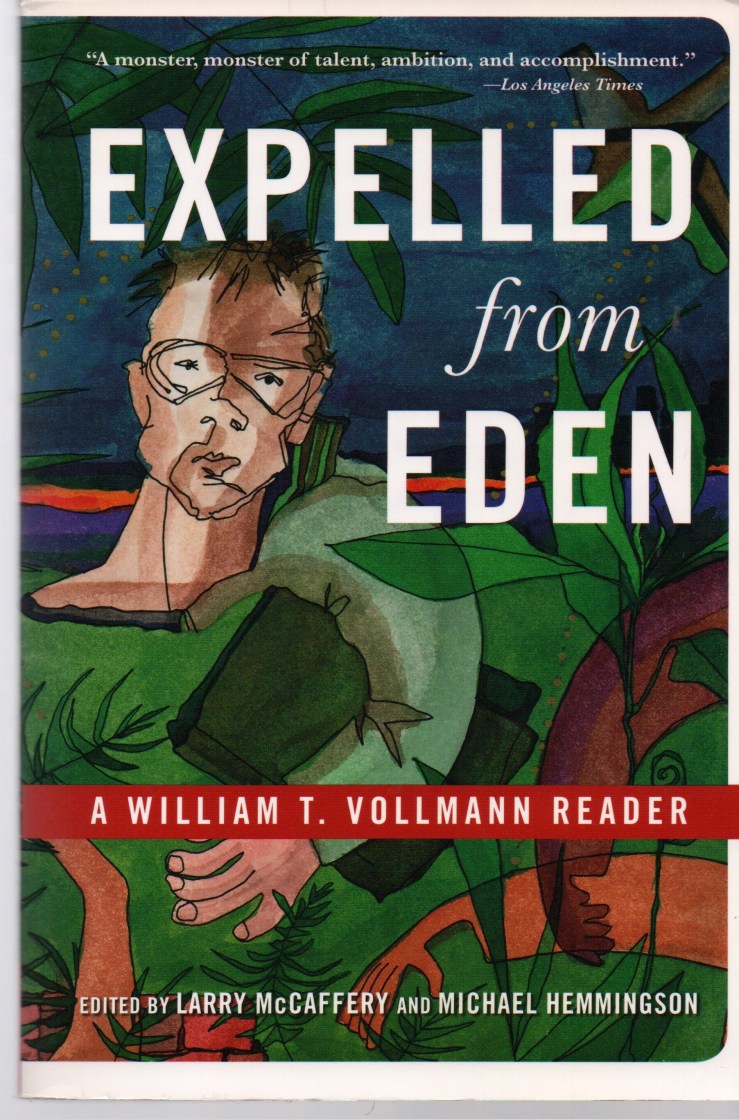
Expelled from Eden: A William T. Vollmann Reader by William T. Vollmann. Edited by Larry McCaffery and Michael Hemmingson. 2004 trade paperback from Thunder’s Mouth Press/Avalon Publishing. Cover design by David Riedy; cover art by Moira Brown.

This book features an illustration of its author on the cover. It is also a book I can dip into at any time.

img_3392

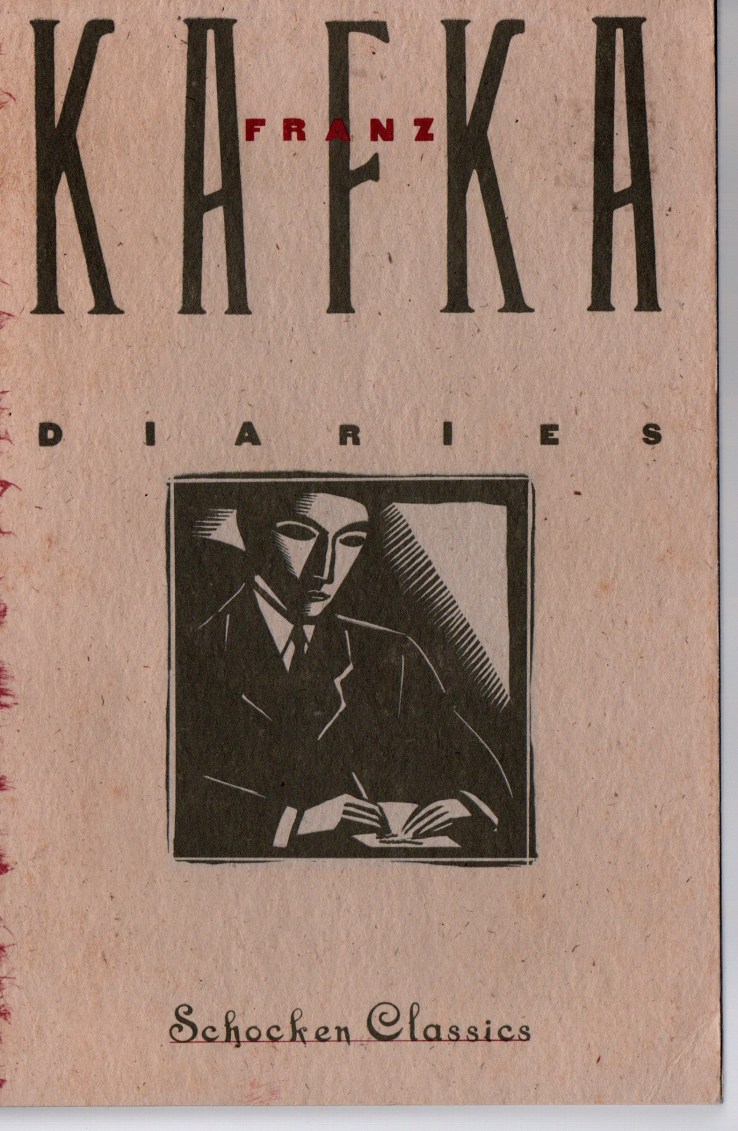
Diaries by Franz Kafka. English translation by Joseph Kresh and Martin Greenberg (with Hannah Arendt). Trade paperback by Schocken, 1988. Cover design by Louise Fili. Cover illustration by Anthony Russo.

This book features an illustration of its author on the cover. It is also a book I can dip into at any time.

img_3391

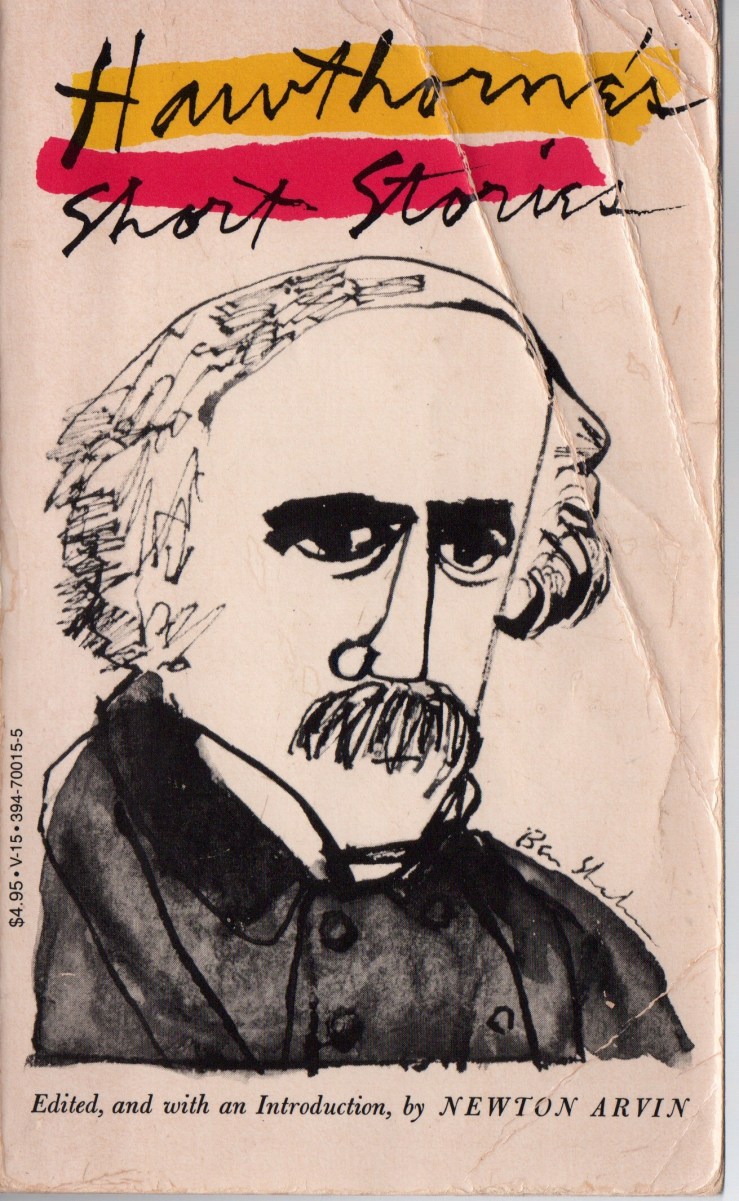
Hawthorne’s Short Stories by Nathaniel Hawthorne. Edited by Newton Arvin. Mass market paperback by Vintage. No designer/artist credited, and I can’t make out the signature over Hawthorne’s left shoulder. But this blog’s readers are smart and have good taste and identified the artist as Ben Shanh (I should’ve recognized the signature, after posting Shanh’s painting Peter and the Wolf on this blog a few years ago). This book is close to falling apart.

This book features an illustration of its author on the cover. It is also a book I can dip into at any time.

Three Books

img_2676

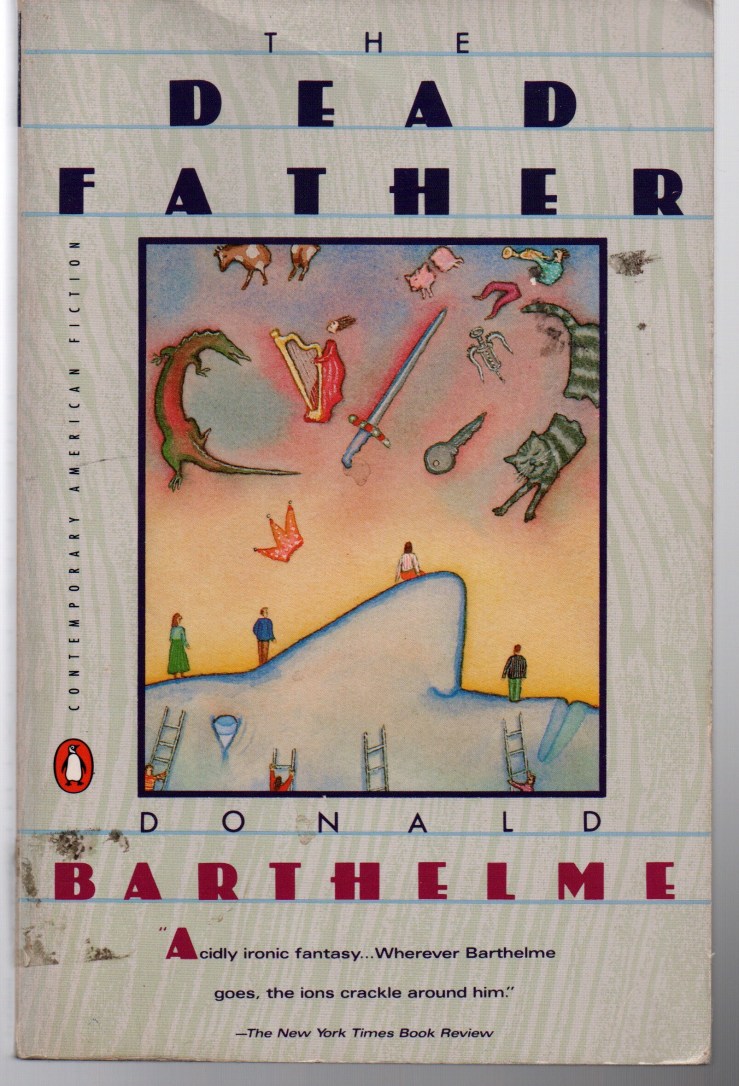
The Dead Father by Donald Barthleme. Penguin paperback, 1986. Cover design by Todd Radom; cover illustration by Lonnie Sue Johnson.

Saturn, Orpheus, Lear, Nobodaddy. A sleeping undead giant, a quest. Good angry fun. I’ll say it’s my favorite Barthelme today (answers will change in the future).

img_2674

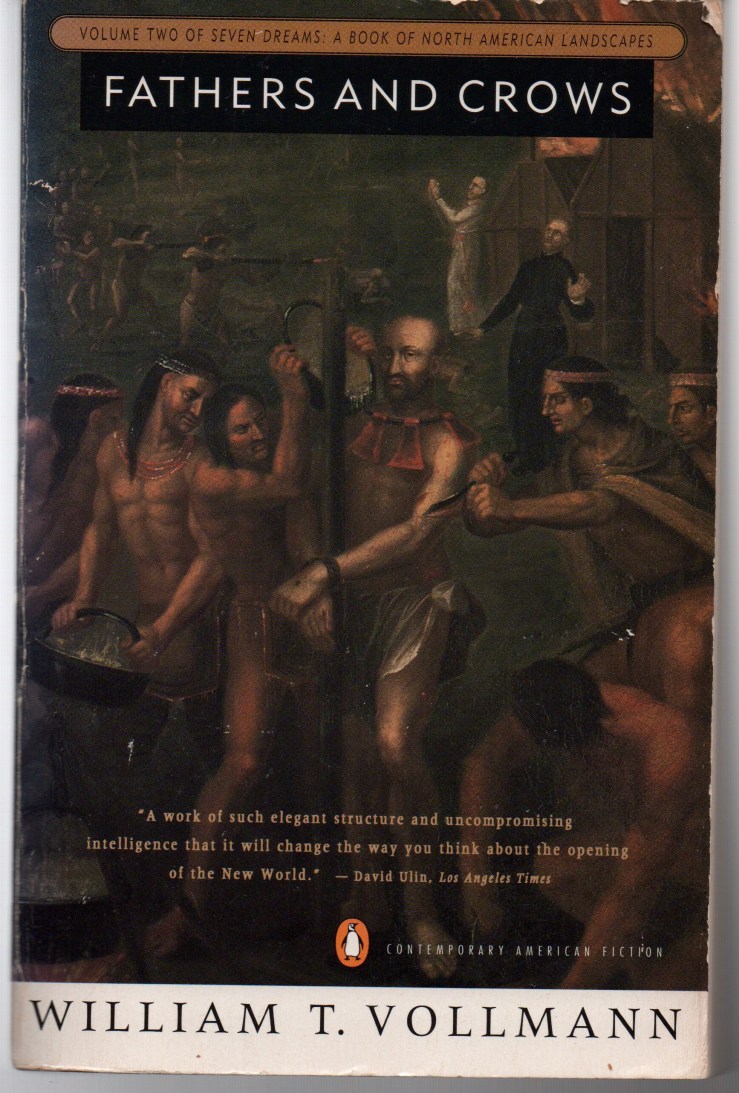
Fathers and Crows by William T. Vollmann. Penguin paperback, 1992. (An enormous paperback—990 pages—it flops slightly on the scanner, refuses to square up neatly). Cover design by Daniel Rembert employing a detail from a painting titled Le Martyrs des missionaires Jesuites (credited to “Anonymous”).

Different fathers, maybe, than the ones celebrated today, Father’s Day, the conceit I’ve lazily tied my Three Books post to…Jesuits. Or maybe they are the fathers. How many times have I tried all of this novel? If you’re interested in Vollmann’s Seven Dreams series, start with The Ice-Shirt or The Rifles instead.

img_2678

King Lear by William Shakespeare. Edited by R.A. Foakes. Arden, 1997. Cover design by Interbrand Newell and Sorrell; illustration by the Douglas Brothers.

Lear is maybe my favorite fictional father. I don’t know why. The man is a fool, but a pitiable one. Maybe I just love the play that much—its abjection, its darkness, its insanity. Out vile jelly, etc. Happy Father’s Day!


William T. Vollmann talks sex and death; reads from Last Stories and Other Stories

Why the hell did I buy William Vollmann’s Argall? (Book acquired, 2.12.2016)

img_1546

I don’t know what’s wrong with me.

First, I bought an ebook of William T. Vollmann’s really really long new novel The Dying Grass a few weeks ago.

I bought this ebook rather late at night, after rather many drinks, against rather better judgment—or, rather, no judgment. If I can reconstruct my thought process: I think I rationalized paying so much money for an electronic file would like, necessitate a commitment to reading The Dying Grass that I might not feel if it were, say, a review copy, or a copy obtained via store credit at my favorite local book shop. Well I’ve been reading the ebook, putting a little edent in it in little eincrements, but it’s still damn long, and our narrator William the Blind can be awfully opaque at times (not to mention the shifts in narrative).

Anyway, I’ve been reading the ebook, which does, I think (?) a nice job of preserving Vollmann’s occasional indulgence in Whitmanesque free verse (prose) style—but well, I sort of want the physical thing too. So I went by my local bookshop in the hopes of securing a copy (and also pick up some Valentine’s books for my kiddoes). No luck in the new hardback section, so they directed me to Historical Fiction, an area I rarely browsed. No luck for The Dying Grass, but there was a hardback copy of Argall there. All 736 pages of it.

Reader, I acquired it.

Why? I don’t know. I love the faux-Elizabethan prose that Pynchon deployed in Mason & Dixon (and I tolerated Barth’s in The Sot-Weed Factor)—and Vollmann’s has a different flavor that’s intriguing (and difficult). The story, the base story, is the Pocahontas story, which in Vollmann’s telling might go past the Pocahontas myth (more than Malick, more than Disney).

But when oh when am I going to get to the thing?!

I’ll close with a selection from Vollmann’s own review of his novel;  the review originally ran in the October 7, 2001 edition of The Los Angeles Times, and was later collected in Expelled from Eden:

“Argall,” whose story emblematizes a personified and of course feminine Virginia, is no better or worse than any of the other “Seven Dreams.” That is why nobody reads “Argall.” No one looks for “Argall.” No one can find “Argall.” Good riddance, say I. To quote from “Argall” itself (the reference is to a fellow who’s searching for Pocahontas’ skeleton), “had the critic found her, what would he have done? Coffined her, borne her back seaward to some brown Virginian marsh crowned by grey and yellow weeds? Locked her into his cabinet of curiosities? All he discovered was a menagerie of human and animal remnants. What power could have swallowed her so thoroughly, but ooze?”

Enough. Holding our noses, let’s try to take this menagerie of remnants on its own terms.

This book’s first sin, as you might have already gathered from the foregoing, consists in its so-called Elizabethan language, whose archaisms, variant spellings and preposterous figures of speech substantially impede the reader in any attempt to envision the ball in any uniform fashion. Here is a sentence plucked at random from the mess: “He search’d for an issue of fair water, there to make another well, for he misdoubted him not that the river they drunk from was somehow tainted with disease, yet could discover no convenient place to make his diggings.” Much time and trouble would have been saved, had this so-called novelist written what he meant: “In order to get more healthful water, he intended to dig a well, but couldn’t.” The arch apostrophe, the ignorant substitution of “drunk” for “drank,” the ink-wasting double negation, well, really all this makes me crave to spew.

Reviews and riffs of June and July, 2015 (and an unrelated owl)

The second part of my (long) interview with Christopher K. Coffman and Daniel Lukes, editors of William T. Vollmann: A Critical Companion. Chock full of all sorts of riffage: sincerity, authenticity, Vollmann’s visual art, etc. Special bonus: slightly frazzled Franzen pic.

I reread David Foster Wallace’s novel Infinite Jest in June/July. First time I’d read the whole thing since 2001. I wrote about reading the first 299 pages. I was also reading some of the essays in William H. Gass’s Fiction and the Figures of Life, and I riffed at some length on Wallace contra Gass, masscult entertainment, etc. From that riff:

…this is Wallace’s big insight in Infinite Jest, right?—that our consciousnesses, mapped in the muck, are framed in desire and reward, and we are conditioned/subjected into that system of desire/reward, so that we desire the desire, even as our consciousnesses…can sneer at something we love, can dismiss the muck that helped shape us even as we plunge into it, the muck. And—too, part of Wallace’s insight in Infinite Jest—too, the consciousness of the consciousness of the desire of desire—that that’s, like, the contemporary condition. And what Wallace…seems to want to point to is some way out of the muck of pop consciousness, a reconciliation toward a pure consciousness that doesn’t sneer—right?

I also wrote a brief note to readers new to Infinite Jest, and included a list of motifs, which (the list) may or may not be helpful.

Nell Zink’s debut novel The Wallcreeper is fucking incredible.

Loved loved loved J.G. Ballard’s degenerate debauched depraved novel High-Rise

—but his later novel Millennium People, despite a great concept and some fascinating ideas, really isn’t so good.

Here’s that owl—with a special guest no less!

tumblr_m35xhxxMkN1qekndso1_500

What books does William T. Vollmann find himself returning to again and again?

William T. Vollmann is the interviewee in the New York Times feature “By the Book” this week. It’s a fun read (he chooses Sappho to write his life story, which cracked me up). From the piece:

What books do you find yourself returning to again and again?

I often reread certain parts of my Oxford Revised Standard Bible, which I recommend for the maps and footnotes. The parables of Jesus are haunting in the fashion of certain Zen koans. And the story of Jacob, Leah and Rachel, and the way it leads to young Joseph’s conceit and fall, is of gripping psychological interest. When she was very young I used to tell my daughter about the coat of many colors, and she would say: “But, why, Daddy? Why did they throw Joseph underground?” — “Because they were jealous.” — “Why were they jealous?” — “Because his father loved him more than the others.” She and I would follow the story backward and forward; its elegance was so perfect that my little child could understand it.

Georg Christoph Lichtenberg always inspires me to try to be myself. Here is one of his powerful aphorisms: “I believe that man is in the last resort so free a being that his right to be whatever he believes himself to be cannot be contested.”

I love that fountainhead of Norse myth and saga, the Elder Edda. It is, after all, part of my ethnocultural heritage. Its glorification of ruthless and often pointless cruelty troubles me, and I refuse to identify with that. But I can enjoy the delicate eeriness of other ghost stories without reveling in gruesome murders and wailing horrors, so why can’t I drink in the strangeness of Skirnir’s ride down to Hel on his quest to win the giant maiden? Moreover, the Norse ethos privileges steadfast endurance in the face of pain, bravery in the face of inevitable doom, and loyalty. These qualities would well become all of us mortals, and may grow more relevant once climate change really kicks in.

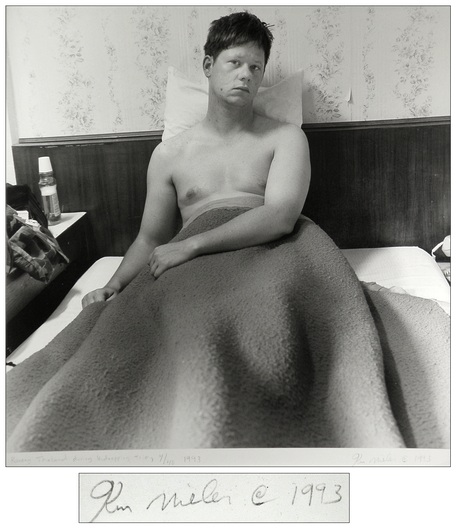
Topless William T. Vollmann

029367

William T. Vollmann photographed by Ken Miller during the, uh, adventures chronicled in Butterfly Stories. (Photo via).

An Interview with Christopher K. Coffman and Daniel Lukes, Editors of William T. Vollmann: A Critical Companion (Part 2)

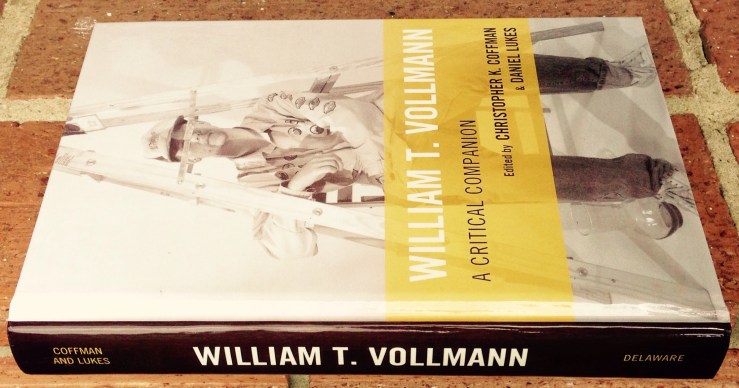
William T. Vollmann: A Critical Companion, newish from University of Delaware Press, collects academic essays and memoir-vignettes by a range of critics and authors to make the case that Vollmann is, as the blurb claims, the “most ambitious, productive, and important living author in the US.” I interviewed the book’s editors, Christopher K. Coffman and Daniel Lukes, over a series of emails in a two-part interview. You can read the first part here. A few days after the first part of the interview posted, Lukes and Coffman hosted a book launch party in NYC for WTV: ACC; the pics in this interview are from that event (check out the Facebook page for more, including Jonathan Franzen reading from his piece on Vollmann).

IMG_6524


Biblioklept: Let’s talk about the formal elements of William T. Vollmann: A Critical Companion. The collection seems to balance essays of a more academic flavor with memoir-vignettes, personal accounts, and riffs.

Christopher K. Coffman: We decided early on to intersperse among the academic essays pieces by non-scholars, or by scholars writing in a non-scholarly mode. The goal here was at least two-fold. We wanted to offer something a bit more accessible to WTV readers who were not in academia (although I think the average WTV fan can follow scholarly arguments as well as many of us in academia can). Also, we realized that some people with a privileged view on WTV’s work–such as those of WTV’s book designers who contributed (Bolte and Speaker Austin)–could add something of interest and great value to audiences in and out of academia, and we wanted to make space for that. I would have to look back through the e-mail log to be sure, but I think Daniel first came up with the idea of soliciting shorter pieces from non-scholars, and that I then conceived the structural component. I am a huge fan of Hemingway’s In Our Time, and the contrapuntal play between the stories and the very short inter-chapters in that book served for me as a paradigm of what Daniel and I have tried to do in this regard. Of course, as soon as we brought up the example of Hemingway, we recalled that WTV does something similar in Thirteen Stories and Thirteen Epitaphs, so he beat us to the punch even there. At any rate, my hope is that our readers find in the short chapterlets material that serves as a response to or as an extension of ideas presented in the more properly scholarly readings that surround those shorter pieces.

The second question of arrangement was the placement of essays and interchapters, and we here grouped according to subject matter as well as we could, without merely replicating what McCaffery and Hemmingson had done for Expelled from Eden. We also, obviously, made space for both Larry and Michael as the authors of the Preface and Afterword. Our intention there, insofar as I can speak for both of us, is to make it clear that we are trying to situate our contribution to scholarship on WTV in relation to the work that Larry and Michael have already done. Finally, I wrote the Introduction not only because one of us had to, but also because Daniel was spoken for in the sense that he already had material that formed the basis for the really great chapter that he contributed. Also, I found the chance to frame the book’s material via an introduction that dealt with WTV’s place in the landscape of post-1945 American fiction appealing. That said, while the introduction bears my byline, my ongoing conversation with Daniel during the past few years shaped my thinking about WTV as much as any original ideas of my own, so he deserves a lot of credit for the introduction as well.

Daniel Lukes: I’ve been going back over the timeline to see if Samuel Cohen and Lee Konstantinou’s edited volume The Legacy of David Foster Wallace, which also features some shorter pieces, was an influence on that, but it looks like we took our approach independently. Though I will say their book did serve as a model in some ways of what ours could be. Dealing with the “non-scholarly” pieces has been for me one of the most exciting parts of putting this book together (the distinction between “scholarlies” and “non-scholarlies” itself being one of the various amusing frameworks that Chris and I have been carrying around throughout the process). From the beginning I thought it would be very helpful to have some of Vollmann’s literary peers chime in: you just don’t hear too much from them about him. So we reached out to writers we thought might be Vollmann readers: some just weren’t (I’d love to know if Cormac McCarthy reads Vollmann: the letter I mailed to a presumed representative of his returned unopened). Some were Vollmann fans/friends, but couldn’t make it for another reason; when Jonathan Franzen came through and expressed his enthusiasm for the project and willingness to contribute a piece, I felt some relief. And James Franco was a pleasure to work with. That said I think the primary value of the non-scholarlies is in the insights they offer into Vollmann’s world and writing practices, from those who have worked closely with him, in particular Carla Bolte, Mary Austin Speaker, and Mariya Gusev’s excellent and vivid pieces. Continue reading “An Interview with Christopher K. Coffman and Daniel Lukes, Editors of William T. Vollmann: A Critical Companion (Part 2)”

An Interview with Christopher K. Coffman and Daniel Lukes, Editors of William T. Vollmann: A Critical Companion (Part I)

William T. Vollmann: A Critical Companion, new from University of Delaware Press, collects academic essays and memoir-vignettes by a range of critics and authors to make the case that Vollmann is, as the blurb claims, the “most ambitious, productive, and important living author in the US.” I interviewed the book’s editors, Christopher K. Coffman and Daniel Lukes, over a series of emails.

If you live in NYC (or feel like traveling), you can check out the book launch for William T. Vollmann: A Critical Companion this weekend, hosted by Coffman and Lukes (4:30pm at the 11th Street Bar).

This is the first part of a two-part interview.

IMG_5107

Biblioklept: How did William T. Vollmann: A Critical Companion come about?

Daniel Lukes: The starting point would be the MLA panel I put together in January 2011, called “William T. Vollmann: Methodologies and Morals.” Chris’s was the first abstract I received and I remember being impressed with its confidence of vision. Michael Hemmingson also gave a paper, and Larry McCaffery was kind enough to act as respondent. Joshua Jensen was also a panelist. I kept in touch with Chris and we very soon decided that there was a hole in the market, so to speak, so we put out a call for papers and took it from there.

One of my favorite things about putting together this book has been connecting with – and being exposed to – such a range of perspectives on Vollmann: people seem to come at him from – and find in his works – so many different angles. It’s bewildering and thrilling to talk about the same author with someone and not quite believe you are doing so. And I think this started for me, in a way, at least as far as this book is concerned, with reading Chris’ MLA abstract.

Biblioklept: I first heard about Vollmann in connection to David Foster Wallace (Wallace namechecks him in his essay “A Supposedly Fun Thing I’ll Never Do Again”). A friend “loaned” me his copy of The Ice-Shirt and I never gave it back. When was the first time you read Vollmann?

Christopher K. Coffman: I first encountered William T. Vollmann’s work about ten years ago. At the time, I had just finished grad school, and as my dissertation work had been focused on aspects of modern and contemporary poetry, I had let my attention to contemporary prose slip a bit. When I realized this had happened, I starting reading a lot of recent fiction. Of course David Foster Wallace’s books were part of this effort, and I, like so many others, really developed a love for Infinite Jest and some of the stories in Girl with Curious Hair. My memory’s a bit fuzzy on the timeline, but my best guess, given what I know I was reading and thinking about at the time, is that in my reading around DFW I discovered the Summer 1993 issue of The Review of Contemporary Fiction with which Larry McCaffery had been involved, and that the interview with DFW in that issue–along with the WTV materials themselves–woke me up to WTV and his work. I can’t say enough about how important Larry’s championing of WTV has been, and continues to be. Of course, one could say that about his support for so many of the interesting things that have happened in fiction during the past three or four decades. His interviews, his editorial work, the part he played with the Fiction Collective …. the list of the ways that he identifies and promotes some of the best work out there could go on for a while, and no one else that I know of has done it as well as Larry has for as long as he has. Anyway, as I was pretty much broke at the time, my reading choices were governed in large part by what I could find at libraries or local used bookstores, and The Ice-Shirt was the first volume I came across in one of these venues. I was already a huge fan of The Sot-Weed Factor and Mason & Dixon, and the entire Seven Dreams project very much struck me as a next step forward along the trajectory those books described. As a consequence, I immediately started tracking down and reading not only the rest of the Dreams, but also everything else I could find by WTV.

What about The Ice-Shirt that really won me over, aside from my impression that this was another brilliant reinterpretation of the historical novel, is that WTV was clearly bringing together and pushing to their limits some of my favorite characteristics of post-1945 American fiction (structural hijinks of a sort familiar from works by figures like Barth and Barthelme, a fearlessness in terms of subject matter and the occasional emergence of a vatic tone that reminded me of Burroughs, an autofictional element of the sort you see in Hunter S. Thompson). Furthermore, as a literary critic, I was really intrigued by two additional aspects of the text: the degree to which The Ice-Shirt foregrounds the many ways that it is itself an extended interpretation of earlier texts (the sagas on which he draws for many of the novel’s characters and much of its action), and the inclusion of extensive paratexts–the notes, glossaries, timelines, and so forth. In short, this seemed like a book that united my favorite characteristics of contemporary literary fiction with a dedication to the sort of work that I, as a scholar, spend a lot of my time doing. How could I resist? It took my readings of a few more of WTV’s books for me to be able to recognize what I would argue are his other most significant characteristics: his global scope and his deep moral vision.

As for your also having begun reading WTV with The Ice-Shirt: It’s an interesting coincidence to me that we both started with that book. I have always assumed that most people start into WTV via either the prostitute writings (which have a sort of underground cachet by virtue of subject matter) or Europe Central (which is of course the book that got the most mainstream attention), but here we both are with The Ice-Shirt. WTV has indicated he sees it as under-realized in certain ways, but I am still quite fond of it, even in comparison to some of the later books. Continue reading “An Interview with Christopher K. Coffman and Daniel Lukes, Editors of William T. Vollmann: A Critical Companion (Part I)”