Plazoleta Julio Cortázar

Big thanks go out to Biblioklept correspondent Nicky Longlunch for this inspiring photo of Plazoleta Julio Cortázar. On special assignment in Buenos Aires, Longlunch visited the plaza, supposedly the bohemian heart of a hip neighborhood. Will Longlunch manage to photograph the school and library that also bear the name of this famous Argentine writer? We wait to see. This also reminds us that we should give Hopscotch another tangle.

Best of the Aughties

So, this is Biblioklept’s 500th post [pauses for applause].

Thank you, thank you. To mark the special occasion, we’ve artfully and scientifically compiled a list of the best stuff of the aughties (or 2000s, or whatever you want to call this decade that’s ending so soon). We know the year’s not over yet, and we readily admit that our list is incomplete: we didn’t read every book published in the decade, listen to every record, watch every film, etc. So, feel free to drop a line and let us know who we forgot (or, perhaps, snubbed).

Here, in no particular order, is the best of the past decade:
Picture 1

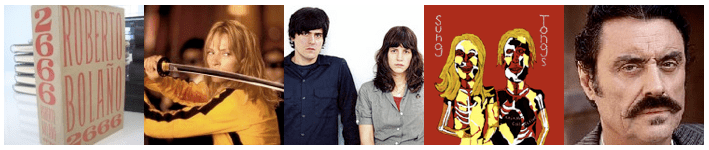
Roberto Bolaño’s 2666, Children of Men, The Fiery Furnaces, The Wire, Kill Bill, Sen to Chihiro no Kamikushi (Spirited Away), The Believer, Peter Jackson’s The Lord of the Rings trilogy, Beyoncé’s “Single Ladies” (and its marvelous video), David Foster Wallaces’s essays in Consider the Lobster, Denis Johnson’s Tree of Smoke, Animal Collective, Barack Obama, Terrence Malick’s The New World, Mad Men, Deadwood, Dave Chappelle, Curb Your Enthusiasm, Mitch Hedberg, R. Kelly, YouTube, Drag City Records, Cormac McCarthy’s The Road, Nathan Rabin’s “My Year of Flops,”

Picture 2

Chris Adrian’s The Children’s Hospital, Extras, Harry Potter on Extras, Dave Eggers’s A Heartbreaking Work of Staggering Genius, Missy Elliott’s “Get Ur Freak On,” Wong Kar-wai’s In the Mood for Love, Pixar movies–especially the latest three: WALL-E, Up, and Ratatouille, McSweeney’s #13 (the Chris Ware Issue), Jimmy Corrigan, the Smartest Kid on Earth, that time the Shins were on Gilmore Girls, the first six episodes of The OC, Arrested Development, Nintendo Wii, Andre 3000’s “Hey Ya!,” The Office, Will Ferrell, Bob Dylan’s Theme Time Radio Hour, Picador Books, Donnie Darko,

Picture 3

Veronica Mars, The Venture Brothers, Home Movies, the third Harry Potter movie, Wikipedia, Bob Dylan’s Chronicles, Jonathan Lethem’s The Fortress of Solitude, DFW’s Oblivion, especially “The Suffering Channel,” Wallace’s 2005 Kenyon commencement address, Wonder Showzen, Toni Morrison’s A Mercy, the totally goofy but totally fun troubadour sequence from Gilmore Girls with Yo La Tengo, Thurston, Kim, and daughter Coco Haley, and Sparks jamming, OutKast’s Stankonia, Pan’s Labyrinth, The Devil’s Backbone, The Orphanage, Cat Power’s “Willie Deadwilder,”Flight of the Conchords, Girl Talk’s Night Ripper, The Daily Show with John Stewart, The Colbert Report,

Picture 4

Andy Samberg’s Digital Shorts, Autotune the News, Tim Tebow, Panda Bear’s Person Pitch, Nels Cline’s guitar solo in “Impossible Germany,” Judd Apatow, Be Kind Rewind, Eternal Sunshine of the Spotless Mind, Thrill Jockey Records, I Heart Huckabees, Chris Bachelder’s U.S.!, David Lynch’s INLAND EMPIRE, Fennesz’s Endless Summer, Gmail, the Coens’ No Country for Old Men, MF Doom (all iterations), Broken Social Scene’s You Forgot It in People, Satrapi’s Persepolis, UGK’s “International Player’s Anthem,” Bob Dylan’s “Things Have Changed,” Bonnie “Prince” Billy,
Picture 5

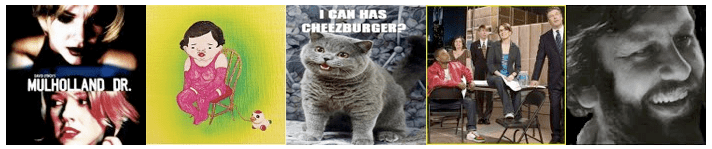
The Silver Jews’ Tanglewood Numbers, lolcatz, Once, Lynch’s Mulholland Drive, the Coens’ O Brother, Where Art Thou?, web two point oh, 30 Rock, Belle & Sebastian’s “Stay Loose,” It’s Always Sunny in Philadelphia, Philip Pullman’s The Amber Spyglass, Werner Herzog’s Grizzly Man, WordPress, Jim O’Rourke’s Insignificance, the first season of Battlestar Galactica, Superbad, half a dozen or so short stories by Wells Tower, David Cross’s Shut Up, You Fucking Baby!, Drunk History, the action sequence at the end of Tarantino’s Death Proof (and especially the joyous, headcrushing final shot), Slavoj Žižek’s Violence, The Royal Tennenbaums, the first 20 minutes of Gangs of New York,

Picture 7

Firefox, the increasing and continuing availability of English translations of authors like Roberto Bolaño and W.G. Sebald, Bill Murray, Margot at the Wedding, Rachel Getting Married, Top Chef, The Dirty Projector’s Bitte Orca, Battles’ “Atlas,” Revenge of the Sith, Sarah Vowell, Art Spiegelman’s In the Shadow of No Towers, Christoph Waltz’s bravura performance in Inglourious Basterds, the surreal animations of Carson Mell, Margaret Atwood’s Oryx and Crake, Tina Fey’s impression of Sarah Palin, David Mazzucchelli’s Asterios Polyp, Neko Case’s “Star Witness,” Jason Statham, The Pirate Bay,  HDTV, Charles Burns’s Black Hole, &c . . .

New Cormac McCarthy Interview

cormac-mccarthy-in-new-york11

There’s a very cool new interview with Cormac McCarthy, published yesterday at The Wall Street Journal, of all places. McCarthy speaks frankly about the movie adaptations of his work, including John Hillcoat’s upcoming (and long-delayed) adaptation of The Road. He also proffers this nugget, explaining why he prefers novels to short fiction: “Anything that doesn’t take years of your life and drive you to suicide hardly seems worth doing.” Sure. McCarthy also talks about the book he’s writing now: “It’s mostly set in New Orleans around 1980. It has to do with a brother and sister. When the book opens she’s already committed suicide, and it’s about how he deals with it. She’s an interesting girl.” But why are you still here? Go read the interview.

Comic Book Artists and Criminals

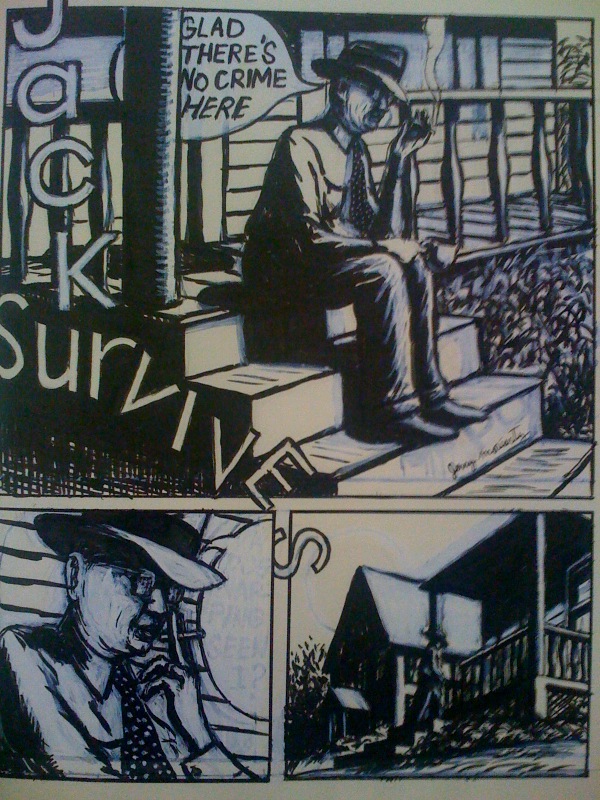
The Beilever’s 2009 Art Issue came in the mail today. It’s got cool interview between Chris Ware and Jerry Moriarty. A large poster of one of Moriarty’s painting comes with issue, which also prints several of the “paintoonist’s” works. But not this one:

Jerry Moriarty
Jerry Moriarty

Image via Molossus, where you can read an insightful review of Moriarty’s collection, The Complete Jack Survives.

The new Believer also features an interview with Aline Kominsky-Crumb, as well as some of her images. But not this one:

need_more_loveWB
Aline Kominsky-Crumb

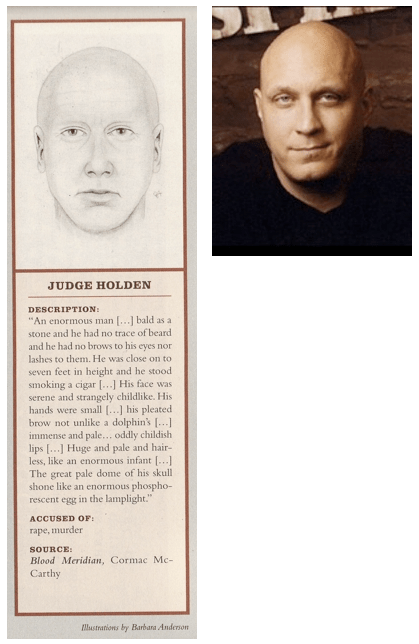
There’s also a pretty cool rogue’s gallery of of famous literary criminals. Forensic artist (y’know, a police sketch-artist) Barbara Anderson recreates eight criminals based solely on literary description. The list includes Oliver Twist’s Fagin, who looks like some dark-elf pedophile, Crime and Punishment’s Raskolnikov, that irascible pedophile Humbert Humbert, and, surprisingly, master forger Wyatt Gwyon, erstwhile hero of William Gaddis’s The Recognitions. One of our all-time favorite baddies is also there, although we really didn’t imagine Blood Meridian‘s Judge Holden would look look like Steve from The Jerry Springer Show:

Picture 2


Jack O’ Lanterns 2009

Happy Halloween!

DSC03756
Ghoulish Gourd Harvest
DSC03796
Massacre
DSC03795
Guts
DSC03857
Jack O' Lanterns 2009


Destroy All Monsters

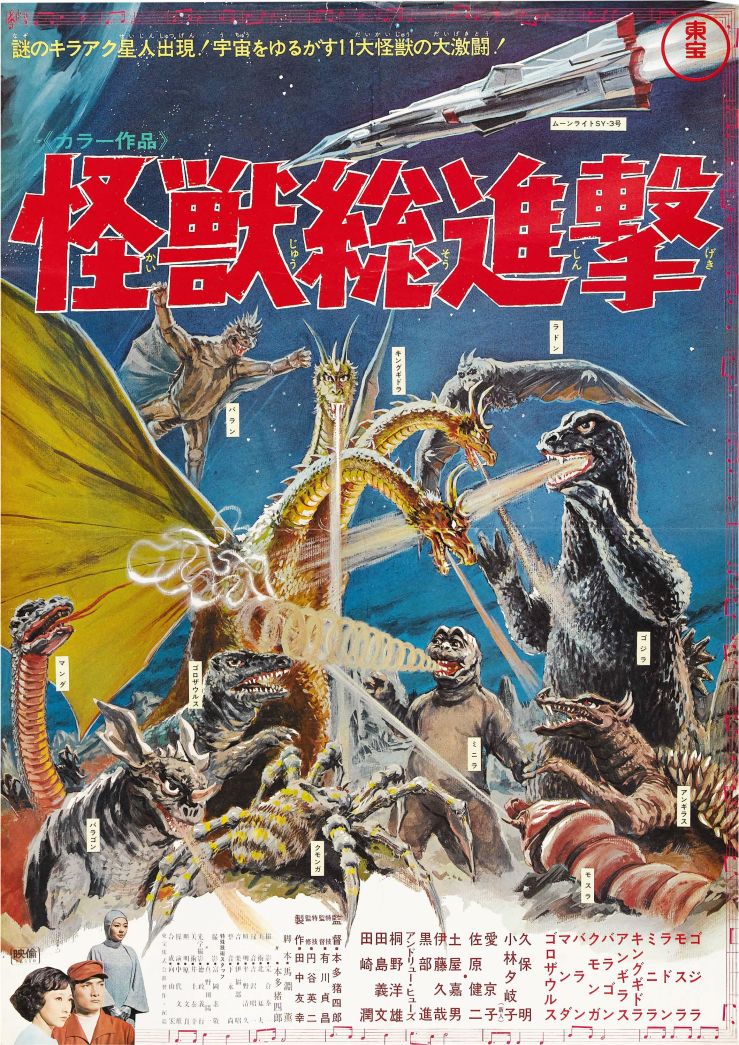
Wonderfully weird horror movie posters via Wrong Side of the Art‘s fantastic database.

destroy_all_monsters_poster_002
Destroy All Monsters
traveller_1979_poster_01
The Traveler
nosferatu_1979_poster_02
Nosferatu
torso_poster_01
Torso
Antropophagus
Anthropophagous


Doomed He Was

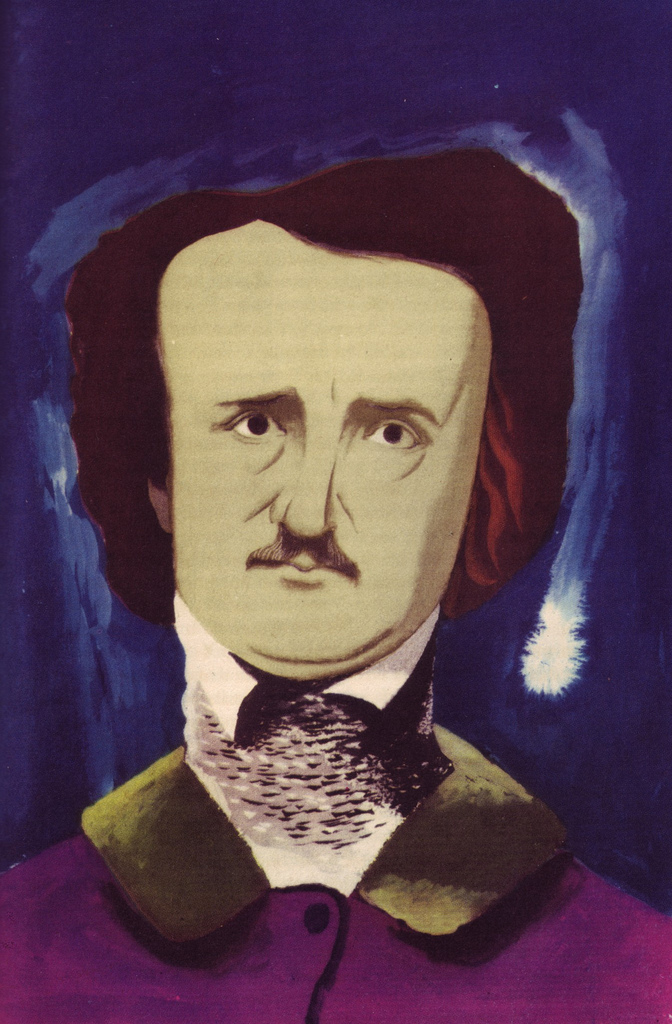
Image of Poe by Edward McKnight Kauffer, via A Journey Round My Skull

So, instead of grading essays like I should’ve today, I reread D. H. Lawrence’s essay on Edgar Allan Poe, collected in the former’s incomparable Studies in Classic American Literature. Lawrence asserts that Poe is “absolutely concerned with the disintegration-processes of his own psyche,” and goes on to try to prove this over a close-reading of some of Poe’s most famous tales, including “Ligeia” and “The Fall of the House of Usher.” Lawrence concludes his essay a bit melodramatically, but it seems to suit Poe’s depraved dilemmas:

But Poe knew only love, love, love, intense vibrations and heightened consciousness. Drugs, women, self destruction, but anyhow the prismatic ecstasy of heightened consciousness and sense of love, of flow. The human soul in him was beside itself. But it was not lost. He told us plainly how it was, so that we should know.

He was an adventurer into vaults and cellars and horrible underground passages of the human soul. He sounded the horror and warning of his own doom.

Doomed he was. He died wanting more love, and love killed him. A ghastly disease, love. Poe telling us of his disease: trying even to make his disease fair and attractive. Even succeeding.

Actually, a University of Maryland Medical Center study finds that rabies likely caused Poe’s death, not love, as Lawrence suggests. Rabies. Not drugs or women–or love–rabies. How’s that for a “disintegration-process”?

Alexeieff’s “Usher” Aquatints, Lovecraft’s Dagonic Covers, and Henson’s Monster Maker

Halloween fun time:

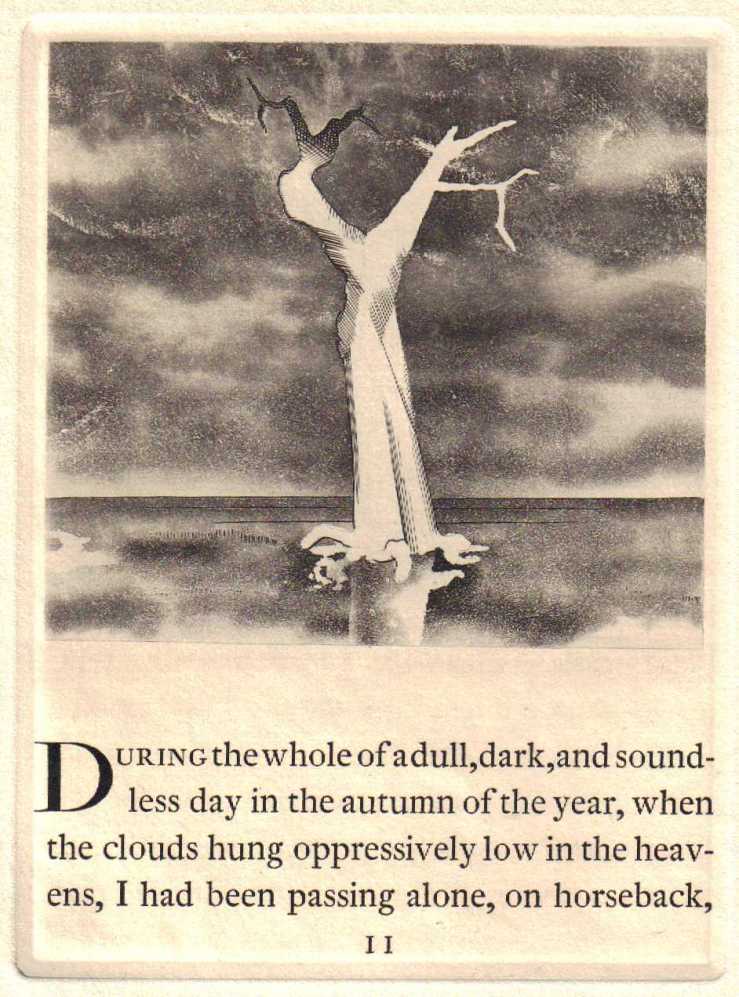
Excellent gallery of Alexander Alexeiff’s aquatint illustrations for Edgar Allan Poe’s short story, “The Fall of the House of Usher” via A Journey Round My Skull (what a fantastic site).

poe

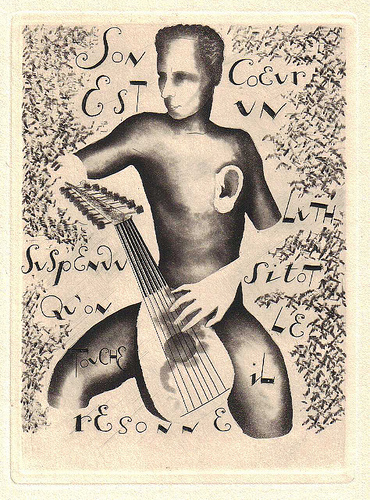
Alexeieff’s moody tints and stark designs beautifully match Poe’s gloomy tale. (We just love the lyrical and melancholy opening paragraph–all those thudding ds, low, somber o’s, and lilting ls). His rendering of Usher’s maniac composition is particularly ethereal:

poe2

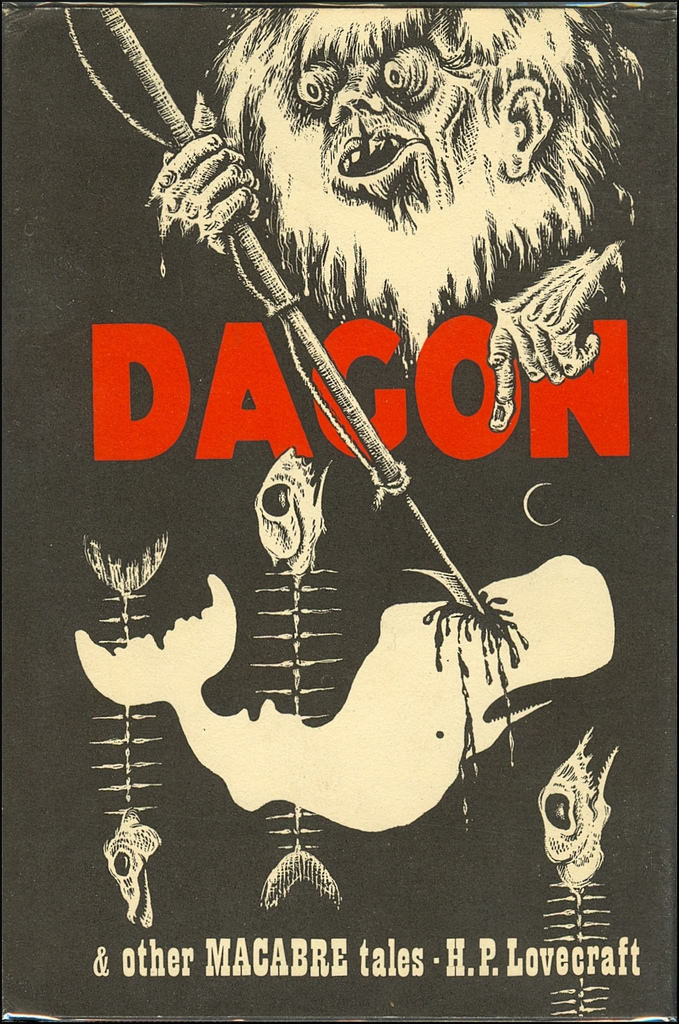
For more Halloween fun, check out this gallery of HP Lovecraft covers via Fantasy Ink. Spooky (and, alternately goofy) designs. We like this jam:

dagon

If you like your pictures moving and with sound yet still highly-stylized, check out Jim Henson’s “The Monster Maker,” from Henson’s short-lived but well-beloved series The Jim Henson Hour.

Blood’s a Rover — James Ellroy

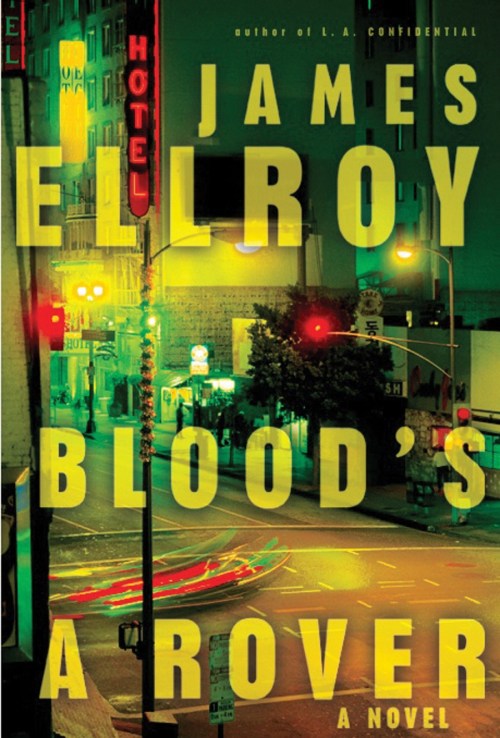
bloods-a-rover

A few things up front: this can’t really be a proper review of James Ellroy’s Blood’s a Rover as I’m less than a 100 pages into it and its over a 600 pages long. So far though, the book is fantastic, and has completely ameliorated my mistaken impression of what, exactly, Ellroy is doing. You see, I had long thought of Ellroy, author of L.A. Confidential and The Black Dahlia, as a writer of potboiler genre-fiction–which is to say I never considered him a “serious” writer. But when advanced press for Blood’s a Rover came out, I couldn’t help but ask for a review copy. The idea of an alternate history of the late sixties/early seventies, set to a backdrop of black militant movements, Cuban revolution, and heroin dealing, complete with historical figures like Howard Hughes and J. Edgar Hoover seemed pretty cool.

The opening scene of Blood’s a Rover, a breathtaking armored car robbery, quickly establishes the book’s tense, terse pacing telegraphed through Ellroy’s signature simple sentences (his style: subject-verb-object, repeat–with the occasional clause or adjective thrown in for flair). Ellroy’s rhetorical style perfectly matches his plot, as sentence after sentence hammers away depictions of lurid, unrelenting violence. In a sense, Blood’s comes across as the evil twin of Thomas Pynchon’s recent novel Inherent Vice. Both novels threaten to crush the reader under the densities of their plots, yet, where Pynchon allows his hippie detective Doc Sportello’s marijuana haze to infiltrate (and thus lighten) the novel’s discourse, Ellroy’s technique simply compounds and confounds in its ugliness. But don’t be mistaken–Blood’s is a thrilling book, with tightly-drawn characters doing really mean and interesting things. There’s even a sardonic sense of humor under the punchy grisliness of it all. If Pynchon’s universe propels on the paranoia of not knowing but sensing that the Powers That Be are conspiring against you, Ellroy makes it expressly clear that, yes, a sinister cabal of underworld agents are running the show. And not for the better. Even the novel’s hero Wayne Tedrow Jr. is pretty much a creep (or whatever word you want to pick for a heroin runner who kills his dad in a bid for his step mom’s affection)–but he’s a fascinating creep, and in Ellroy’s plotting, one you want to root for.

So, if you’ve had any passing interest in this book, you probably want to go ahead and pick it up. I’ll do a full, proper review when I finish it, but for now, I want to repent for my erstwhile (and unfounded) prejudices against Ellroy. Makes me wonder what other writers I’ve dismissed out of genre prejudice.

Blood’s a Rover is now available in hardback from Knopf.

Seven Horror Novels Masquerading In Other Genres

We often identify genre simply by its conventions and tropes, and, when October rolls round and we want scary stories, we look for vampires and haunted houses and psycho killers and such. And while there’s plenty of great stuff that adheres to the standard conventions of horror (Lovecraft and Poe come immediately to mind) let’s not overlook novels that offer horror just as keen as any genre exercise. We offer seven horror novels masquerading in other genres:

cormac5.jpg_jpeg_300x1000_q85

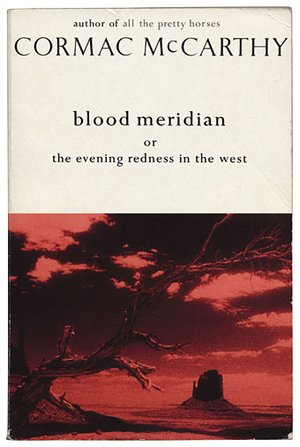
Blood Meridian — Cormac McCarthy

In our review (link above) we called Blood Meridian “a blood-soaked, bloodthirsty bastard of a book.” The story of the Glanton gang’s insane rampage across Mexico and the American Southwest in the 1850s is pure horror. Rape, scalping, dead mules, etc. And Judge Holden. . . [shivers].

Rushing to Paradise — J.G. Ballard

On the surface, Ballard’s 1994 novel Rushing to Paradise seems to be a parable about the hubris of ecological extremism that would eliminate humanity from any natural equation. Dr. Barbara and her band of misfit environmentalists try to “save” the island of St. Esprit from France’s nuclear tests. The group eventually begin living in a cult-like society with Dr. Barbara as its psycho-shaman center. As Dr. Barbara’s anti-humanism comes to outweigh any other value, the island devolves into Lord of the Flies insanity. Wait, should Lord of the Flies be on this list? 

2666 — Roberto Bolaño

Okay. We know. This book ends up on every list we write. What can we do?

While there’s humor and pathos and love and redemption in Bolaño’s masterwork, the longest section of the book, “The Part about the Crimes,” is an unrelenting catalog of vile rapes, murders, and mutilations that remain unresolved. The sinister foreboding of 2666‘s narrative heart overlaps into all of its sections (as well as other Bolaño books); part of the tension in the book–and what makes Bolaño such a gifted writer–is the visceral tension we experience when reading even the simplest  incidents. In the world of 2666, a banal episode like checking into a motel or checking the answering machine becomes loaded with Lynchian dread. Great horrific stuff.

King Lear — William Shakespeare

Macbeth gets all the propers as Shakespeare’s great work of terror (and surely it deserves them). But Lear doesn’t need to dip into the stock and store of the supernatural to achieve its horror. Instead, Shakespeare crafts his terror at the familial level. What would you do if your ungrateful kids humiliated you and left you homeless on the heath? Go a little crazy, perhaps? And while Lear’s daughters Goneril and Regan are pure mean evil, few characters in Shakespeare’s oeuvre are as crafty and conniving as Edmund, the bastard son of Glouscester. And, lest we forget to mention, Lear features shit-eating, self-mutilation, a grisly tableaux of corpses, and an eye-gouging accompanied by one of the Bard’s most enduring lines: “Out vile jelly!Peter Brook chooses to elide the gore in his staging of that infamous scene:

The Trial — Franz Kafka

Kafka captured the essential alienation of the modern world so well that we not only awarded him his own adjective, we also tend to forget how scary his stories are in light, perhaps, of their absurd familiarity. For our money, none surpasses his unfinished novel The Trial, the story of hapless Josef K., a bank clerk arrested by unknown agents for an unspecified crime. While much of K.’s attempt to figure out just who is charging him for what is hilarious in its absurdity, its also deeply dark and really creepy. K. attempts to find some measure of agency in his life, but is ultimately thwarted by forces he can’t comprehend–or even see for that matter. Nowhere is this best expressed than in the famous “Before the Law” episode. If you’re too lazy to read it, check out his animation with narration by the incomparable Orson Welles:

Sanctuary — William Faulkner

In our original review of Sanctuary (link above), we noted that “if you’re into elliptical and confusing depictions of violence, drunken debauchery, creepy voyeurism, and post-lynching sodomy, Sanctuary just might be the book for you.” There’s also a corn-cob rape scene. The novel is about the kidnapping and debauching of Southern belle Temple Drake by the creepy gangster Popeye–and her (maybe) loving every minute of it. The book is totally gross. We got off to a slow start with Faulkner. If you take the time to read our full review above (in which we make some unkind claims) please check out our retraction. In retrospect, Sanctuary is a proto-Lynchian creepfest, and one of the few books we’ve read that has conveyed a total (and nihilistic) sense of ickyness.

n14559

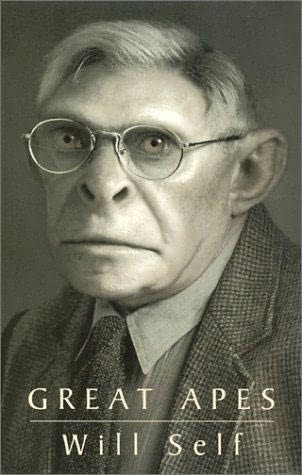
Great Apes — Will Self

Speaking of ickiness…Self’s 1997 novel Great Apes made me totally sick. Nothing repulses me more than images of chimpanzees dressed as humans and Great Apes is the literary equivalent (just look at that cover). After a night of binging on coke and ecstasy, artist Simon Dykes wakes up to find himself in a world where humans and apes have switched roles. Psychoanalysis ensues. While the novel is in part a lovely satire of emerging 21st-century mores, its humor doesn’t outweigh its nightmare grotesquerie. Great Apes so deeply affected us that we haven’t read any of Self’s work since.

“The Tell-Tale Heart” — Edgar Allan Poe

Edgar Allan Poe’s “The Tell-Tale Heart” is one of our all-time favorite scary stories. Poe’s story explores the troubled mind of a murderer suffering from manic bipolar depression. Or maybe it’s all about the suppression of dark secrets. Is the Evil Eye an “evil I”? I think so! Dig this great animation from 1953, featuring the vocal talents of James Mason:

October Reading List

October is here–time to read (or reread) favorite scary stories, watch our favorite horror films, and carve up Jack O’ Lanterns. We have a couple of spooky reviews coming up (vampires!) but in the meantime, those searching for a good horror read can troll through a few older posts. Biblioklept: Lazy blogging at its best since 2006.

Two of our favorite posts ever are analyses of the scary stories our students wrote for extra-credit in’06 and ’07. Not sure what happened in ’08, but the ’09 contest is in full effect, yo.

For good horrific fun, check out Quirk Book’s recent Jane Austen mash-ups Sense and Sensibility and Sea Monsters and Pride and Prejudice and Zombies.

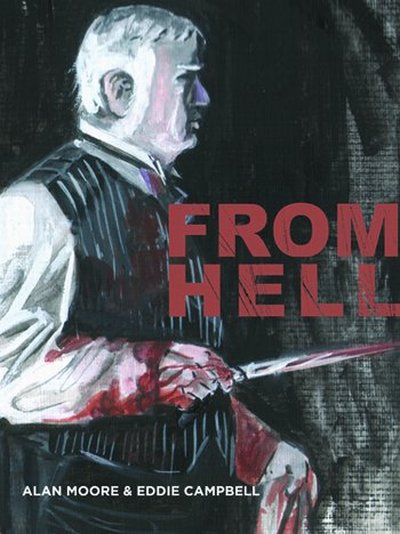
Eddie Campbell Alan Moore From Hell psychogeography

One of our favorite books ever is From Hell, by Eddie Campbell and Alan Moore. If you haven’t read it yet, that should be your sacred Halloween mission in ’09.

Snapshot 2009-10-04 19-58-53

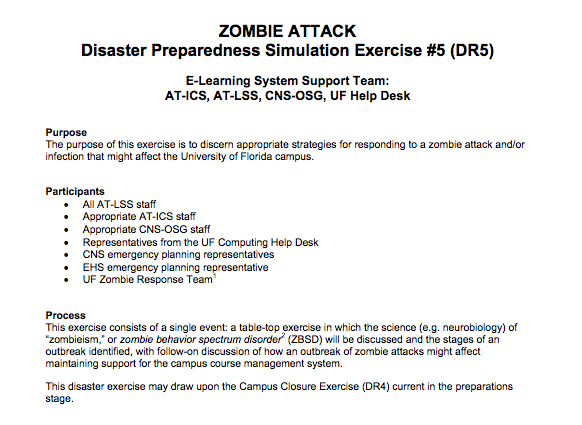
My glorious alma mater, the University of Florida, had a lovely zombie preparedness plan at their official website–up until a day or two ago. When university officials were alerted to the pdf (written in full academic language, complete with citations!) they quickly removed it. Too bad. It was really fun and funny. Don’t worry though, you can still download the official document here.

As non-scary (or at least not overtly-scary) reading goes, we’ve got a pretty big stack of books we vow to get through in October, including W.G. Sebald’s Austerlitz, Julio Cortázar’s Blow-up and Other Stories, and the newest issue of McSweeney’s. There’s also a ton of promos of upcoming releases to wade through.

Back to the scaries–check out the Brothers Quay illustrating His Name Is Alive’s “Are We Still Married?”:

Proust 101

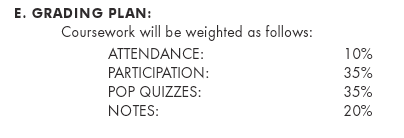
For the next week, October 1st-7th 2009, the folks who brought you Patrick Alexander’s guide to Marcel Proust, Marcel Proust’s Search for Lost Time will host a series of 140-character “lectures” about Proust’s oeuvre on Twitter. The course will repeat on the week of the 8th. The press release includes the following grading component:

Picture 1We’re pretty sure the grading plan is fairly tongue in cheek, but the lectures might be fun, and perhaps might contain something a bit more substantial than the average, uh, tweet (ugh). More at Proust Guide. There’s also a chance to win free Proust stuff for those who participate in the Proust Questionnaire on Facebook, so check that out too. In the meantime, we got a kick out of this “Shocking Things You Didn’t Know about Marcel Proust” flier that came with the press release:
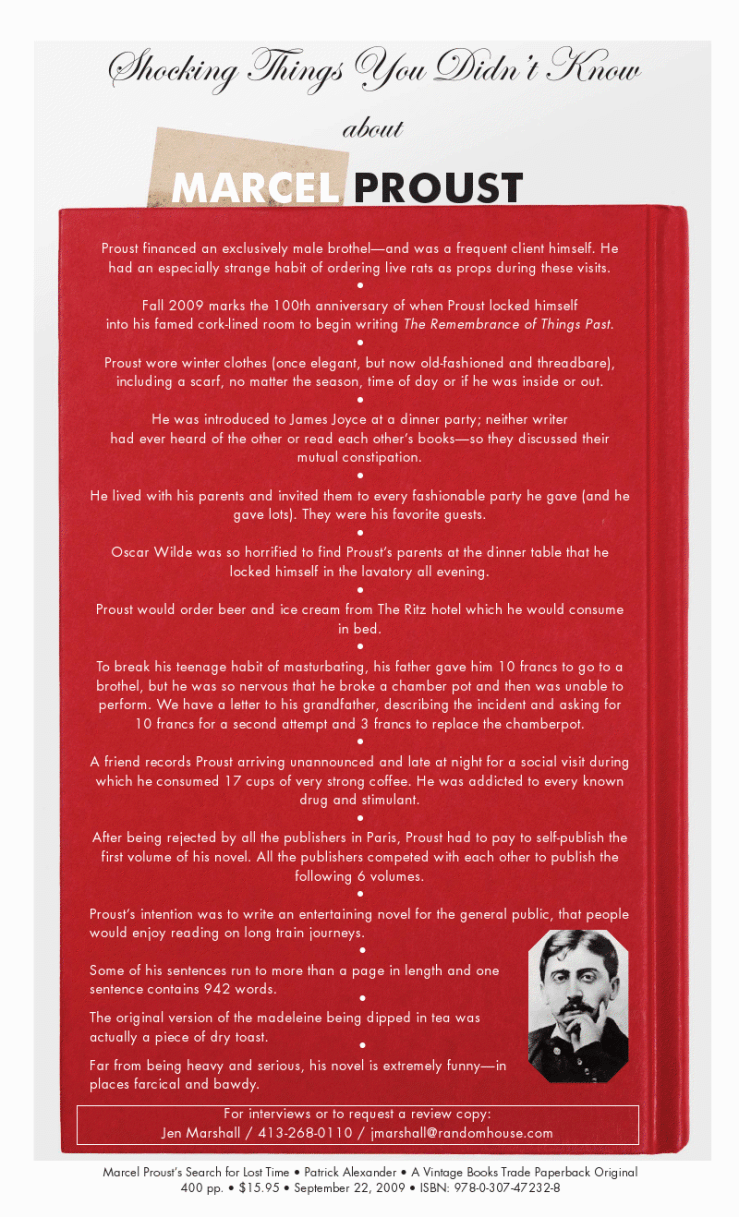
gview

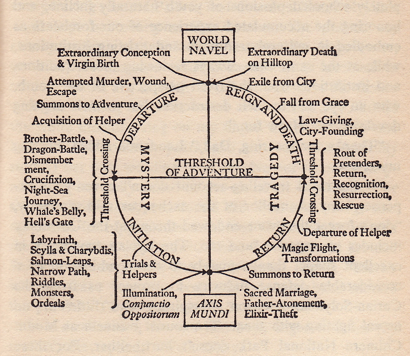
Where the World Navel Intersects the Threshold of Adventure

the threshold of adventure_john barth

Hey you. Yeah, you. Were you the guy that borrowed my copy of John Barth’s Chimera and never had enough human compassion/decency to return it? No? Not you? Never mind. I picked up another copy last weekend specifically for the diagram above (I also wanted to re-read “Perseid.”) Now that I look at it again, I’m not sure that it’s so much enlightening as it is mystifying. In any case, it’s an intriguing bit of navel gazing. Fun stuff.

Reading Kafka and Watching Lynch Will Make You Smarter

We knew it. Reading Kafka’s The Metamorphosis and watching David Lynch’s Blue Velvet at such a young, tender age, didn’t screw us up for nothing. According to a joint study to be published this month in the journal Psychological Science, researchers Proulx and Heine have linked engaging in non-linear, non-traditional narratives with improved ability to recognize patterns. Proulx: “People feel uncomfortable when their expected associations are violated, and that creates an unconscious desire to make sense of their surroundings. That feeling of discomfort may come from a surreal story, or from contemplating their own contradictory behaviors, but either way, people want to get rid of it. So they’re motivated to learn new patterns.” Cool.

Full press release after the jump, or, just try to make sense of this clip from one of our favorite Lynch films, INLAND EMPIRE

Continue reading “Reading Kafka and Watching Lynch Will Make You Smarter”

A Modern Symphony of Music that Is Not Music but Asks that You Remember Music

byrne_david_jpg_280x450_q85

We are just loving the advance reading copy of David Byrne’s Bicycle Diaries that we got in the mail today. Plenty of quotable material from Byrne’s discursive journeys, but why not share one of our favorite musician’s thoughts on ring tones?

I hear the faint cacophony of many distant cell-phone rings in the train car–snippets of Mozart and hip-hop, old-school ring tones, and pop-song fragments–all emanating out of minuscule phone speakers. All tinkling away here and there. All incredibly poor reproductions of other music. These ring tones are “signs” for “real” music. This is music not meant to be actually listened to as music, but to remind you of and refer to other, real, music. These are audio road signs that proclaim “I am a Mozart person” or, more often, “I can’t even be bothered to select a ring tone.” A modern symphony of music that is not music but asks that you remember music.

Covers, Old, Bold, and Missing

I spent a few hours cleaning up/out the office today. Hundreds and hundreds of books. Here are a few scans of old favorites, cool covers, and some I didn’t know I even had, like this one:

IMG_0001

No memory of acquiring this book at all. Dig the cover though. Here’s another one with a cool cover the origins of which are dim:

IMG

Probably a remainder from my high school’s library, like this book about our Fair Florida:

IMG_0004

I’m pretty sure that the fort here is meant to be the fort in Old St. Augustine. As a Floridian, I will attest that this image captures the essence of Florida life. Lovely.IMG_0002

Jock of the Bushveld was one of my favorite books as a kid. I actually used to live in the part of South Africa depicted in this book. Sorta. My dad bought me this book.

IMG_0003

Cat’s Cradle is one of my favorite books. My copy is clearly in terrible shape. The cover disappeared years ago. I think my cousin gave me this book.

IMG_0009

I know I swiped this one from my cousin: Anthony Scaduto’s biography of Bob Dylan. I’ve read this book probably more than any other nonfiction book I own. A lot of my friends have read it too, and remarkably, it’s always made it’s way back. Not sure when the cover went MIA. Apparently, I forged Dylan’s autograph on the upper right. I’m sure there was a joke behind this at some point.

IMG_0008

I haven’t written about an honest-to-God book theft in awhile. I stole this book from a large corporate book store when I was sixteen or seventeen. It’s pretty small. I think I just put it in my pocket. It was easy and I got a thrill from the experience. That said — kids, don’t steal stuff!