Ulysses “Seen” — Robert Berry

telemachus-color-18

Because of its daunting reputation, many readers shy away from James Joyce’s Ulysses, when really the book is not nearly as challenging as some literati would have you believe. It’s funny and poignant and moving, and sure, it’s loaded with so many allusions that you’d have to spend a lifetime sorting them out, but once you get into its rhythm, its voices, it’s actually not that hard to read, and it’s certainly one of the most rewarding books I’ve ever read. One of the key difficulties for readers new to Ulysses is simply penetrating those first few pages, getting a visual for what’s going on with Buck Mulligan and young Stephen. Because Joyce is transposing events, both mythically, religiously, and chronologically, the opening is particularly challenging–especially because Joyce doesn’t explicate these shifts for the reader. There are plenty of aids out there, of course, from Harry Blamires’s The New Bloomsday Book to Joseph Campbell‘s fantastic lectures, and readers new to the book should not feel daunted or put off by the fact that this book might require a good. Led by Robert Berry, the folks at  Throwaway Horse have started a new project, a comic book representation of Ulysses that is, to say the least, wildly ambitious. I’ll let them put it in their own words:

“Ulysses ‘SEEN’” is the inaugural project of Throwaway Horse LLC. Throwaway Horse is devoted to fostering understanding of public domain literary masterworks by joining the visual aid of the graphic novel with the explicatory aid of the internet. By creating “Web 2.0” versions of these works, we hope to proliferate and help to not only preserve them, but ensure their continued vitality and relevance. Throwaway Horse projects are meant to be mere companion pieces to the works themselves—by outfitting the reader with the familiar gear of the comic narrative and the progressive gear of web annotations, we hope that a tech-savvy new generation of readers will be able to cut through jungles of unfamiliar references and appreciate the subtlety and artistry of the original books themselves which they otherwise might have neglected.

So far, Berry has illustrated the first chapter (commonly referred to as “Telemachus”). Berry’s work is far more detailed than I initially had imagined was possible, and there are even useful annotations by scholar Mike Barsanti. This is truly a massive project, given the level of detail Berry has committed to the first chapter, and I think it will be an invaluable resource to readers new to Ulysses as well as those who’ve already been through the book before. Here’s hoping that we’ll get all the way to Molly’s final monologue!

(Thanks to Nick for the tip).
Five Favorite Fictional Fathers

Literature seems to have an ambivalence toward fatherhood that’s too complex to address in a simple blog post–so I won’t even try. But before I riff on a few of my favorite fathers from a few of my favorite books, I think it’s worth pointing out how rare biological fathers of depth and complexity are in literature. That’s a huge general statement, I’m sure, and I welcome counterexamples, of course, but it seems like relationships between fathers and their children are somehow usually deferred, deflected, or represented in a shallow fashion. Perhaps it’s because we like our heroes to be orphans (whether it’s Moses or Harry Potter, Oliver Twist or Peter Parker) that literature tends to eschew biological fathers in favor of father figures (think of Leopold Bloom supplanting Stephen Dedalus in Ulysses, or Merlin taking over Uther Pendragon‘s paternal duties in the Arthur legends). At other times, the father is simply not present in the same narrative as his son or daughter (think of Telemachus and brave Odysseus, or Holden Caulfield wandering New York free from fatherly guidance). What I’ve tried to do below is provide examples of father-child relationships drawn with psychological and thematic depth; or, to put it another way, here are some fathers who actually have relationships with their kids.

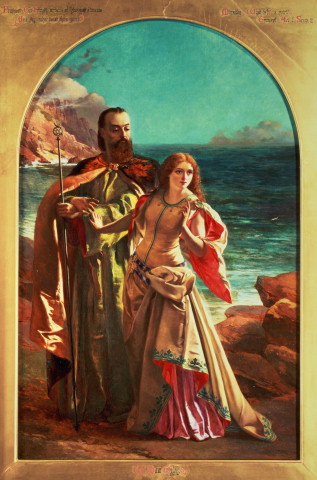
Prospero and Miranda--William Maw Egley

1. Prospero, The Tempest (William Shakespeare)

Prospero has always seemed to me the shining flipside to King Lear’s dark coin, a powerful sorcerer who reverses his exile and is gracious even in his revenge. Where Lear is destroyed by his scheming daughters (and his inability to connect to truehearted Cordelia), Prospero, a single dad, protects his Miranda and even secures her a worthy suitor. Postcolonial studies aside, The Tempest is fun stuff.

2. Abraham Ebdus, The Fortress of Solitude, (Jonathan Lethem)

Like Prospero, Abraham Ebdus is a single father raising his child (his son Dylan) in an isolated, alienating place (not a desert island, but 1970’s Brooklyn). After Dylan’s mother abandons the family, the pair’s relationship begins to strain; Lethem captures this process in all its awkward pain with a poignancy that never even verges on schlock. The novel’s redemptive arc is ultimately figured in the reconciliation between father and son in a beautiful ending that Lethem, the reader, and the characters all earn.

3. Jack Gladney, White Noise (Don DeLillo)

While Jack Gladney is an intellectual academic, an expert in the unlikely field of “Hitler studies” (and something of a fraud, to boot), he’s also a pretty normal dad. Casual reviewers of White Noise tend to overlook the sublime banality of domesticity represented in DeLillo’s signature novel: Gladney is an excellent father to his many kids and step-kids, and DeLillo draws their relationships with a realism that belies–and perhaps helps to create–the novel’s satirical bent.

4. Oscar Amalfitano, 2666 (Roberto Bolaño)

Sure, philosophy professor Amalfitano is a bit mentally unhinged (okay, more than a bit), but what sane citizen of Santa Teresa wouldn’t go crazy, what with all the horrific unsolved murders? After his wife leaves him and their young daughter, Amalfitano takes them to the strange, alienating land of Northern Mexico (shades of Prospero’s island?) Bolaño portrays Amalfitano’s descent into paranoia (and perhaps madness) from a number of angles (he and his daughter show up in three of 2666‘s three sections), and as the novel progresses, the reader slowly begins to grasp the enormity of the evil that Amalfitano is confronting (or, more realistically, is unable to confront directly), and the extreme yet vague danger his daughter is encountering. Only a writer of Bolaño’s tremendous gift could make such a chilling episode simultaneously nerve-wracking, philosophical, and strangely hilarious.

5. The father, The Road (Cormac McCarthy)

What happens when Prospero’s desert island is just one big desert? If there is a deeper expression of the empathy and bonding between a child and parent, I have not read it. In The Road, McCarthy dramatizes fatherhood in apocalyptic terms, positing the necessity of such a relationship in hard, concrete, life and death terms. When the father tells his son “You are the best guy” I pretty much break down. When I first read The Road, I had just become a father myself (my child was only a few days old when I finished it), yet I was still critical of McCarthy’s ending, which affords a second chance for the son. It seemed to me at the time–as it does now–that the logic McCarthy establishes in his novel is utterly infanticidal, that the boy must die, but I understand now why McCarthy would have him live–why McCarthy has to let him live. Someone has to carry the fire.


Harold Bloom on McCarthy’s Blood Meridian

bloom_harold

AV Club posted a great interview with master critic Harold Bloom this week. Bloom speaks at some length on one of our favorite books, Cormac McCarthy‘s violent opus Blood Meridian, which was AV Club’s “Wrapped Up In Books” book club selection for June (pretty good discussions of the book there, as well). An excerpt:

The first time I read Blood Meridian, I was so appalled that while I was held, I gave up after about 60 pages. I don’t think I was feeling very well then anyway; my health was going through a bad time, and it was more than I could take. But it intrigued me, because there was no question about the quality of the writing, which is stunning. So I went back a second time, and I got, I don’t remember… 140, 150 pages, and then, I think it was the Judge who got me. He was beginning to give me nightmares just as he gives the kid nightmares. And then the third time, it went off like a shot. I went straight through it and was exhilarated. I said, “My God! This reminds me of Thomas Pynchon at his best, or Nathanael West.” It was the greatest single book since Faulkner’s As I Lay Dying.

More Excerpts from Werner Herzog’s Conquest of the Useless

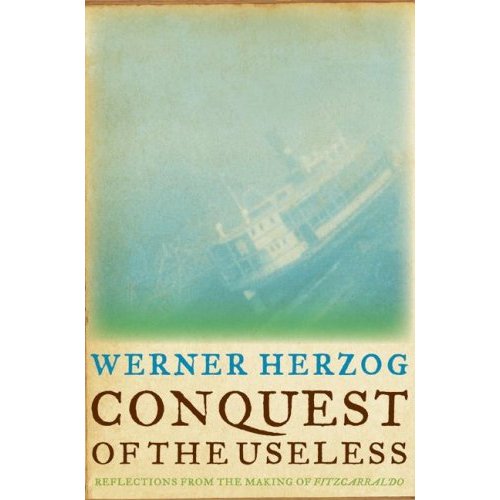
conquest

Last month, we were delighted to read some excerpts from Conquest of the Useless, Werner Herzog‘s forthcoming account of the making of his epic Fitzcarraldo (we wrote about it here). The paragons of moral literature at Vice Magazine have henceforth published a few more excerpts, available here. Here’s a morsel to whet the appetite:

I hurried to the first-aid station and saw a native man and a woman, both of whom had been struck with enormous arrows. They had been fishing for the camp three hours upstream by speedboat, and had spent the night on a sandbank. During the night they had been ambushed and shot at close range by Amehuacas. The woman had been hit by three arrows and almost bled to death. The wounds were close together. One arrow had gone all the way through her body just above her kidney, one had bounced off her hip bone, and the most life-threatening one was still sticking in her abdomen, broken off on the inner side of her pelvis. I spent several hours helping out while she was operated on, shining a powerful flashlight into her abdominal cavity and with the other hand spraying insect repellent to try to drive away the clouds of mosquitoes the blood had attracted. The man still had an arrow made of razor-sharp bamboo and almost thirty centimeters long sticking through his throat. He had broken off the two-meter-long shaft himself, and was gripping it in his hand. In his state of shock he refused to let go of it. The arrow’s tip, which looked more like the point of a lance, had spliced open one of his shoulders along the collarbone and was sticking crossways through his neck, with the tip lodged in his shoulder on the other side. He seemed to be in less immediate danger and was operated on only after the woman. Here is what had happened: the man, his wife, and a younger man, all three of them Machiguengas from Shivankoreni, who provide us with yucca, had gone up the Camisea to hunt. They were sleeping on a sandbank, and during the night the woman woke up because the man next to her was gasping strangely. Thinking a jaguar had got him by the throat, she grabbed a still glowing branch from the fire and jumped up. At that moment she was struck by three arrows. The younger man woke up; he had a shotgun with him, and, grasping the situation, fired two shots blindly into the night, since everything was happening in pitch darkness and complete silence. None of the three saw any trace of the attacking Amehuacas; they disappeared, leaving only a few footprints in the sand.

Lovely!

Away We Go — Dave Eggers and Vendela Vida

away

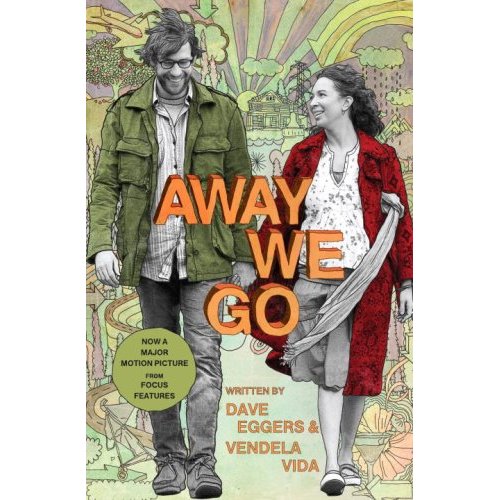
Away We Go is the story of Verona and Burt, an unmarried couple in their early thirties expecting a child. After discovering that the child’s only living grandparents will be moving to Belgium, Verona and Burt realize that there’s nothing anchoring them in Colorado. The pair set out on a cross country journey in their boxy old Volvo, meeting up with old friends and family in an attempt to find the right place to start their new family.

“We’ve attempted to make this readable to a non-screenwriting population, from whose ranks we’ve recently come,” write Dave Eggers and Vendela Vida in their introduction to their screenplay for Away We Go. Released last week in conjunction with the film, the screenplay, with its vivid cover and prestige trade format, seems to physically back up Eggers’s and Vida’s wish–they’re hoping that you’d want to, y’know, actually read it, like, a book, and not just watch Sam Mendes‘s filmed version. There’s that hopeful, informative introduction, for starters, and they really do make good on their claim of readability; stage directions and location shifts are clear but never overbearing, allowing the reader to engage the characters in his or her own imagination. The book also includes scenes (apparently) cut from the movie–should I mention now that I haven’t seen the movie?–as well as an alternate “admittedly radical Bush-era ending.” Still, it is a screenplay–not a novel, not a play, but a text intended for a movie, a movie out there getting reviewed now, a movie with physical entities playing the key roles. “Verona and Burt were written with Maya Rudolph and John Krasniski in mind,” Eggers and Vida state in their introduction, and, between this admission and press for the movie, its almost impossible to read the script without imagining these actors’ mannerisms and tics. Not that that’s a bad thing, it just limits any nuance in (and in between) the lines, and again brings up the question of why one might want to own this book.

The answer for many readers, of course, will simply be Eggers, a modern literary luminary. For the record, we’re a huge fan of Dave Eggers, even when his writing isn’t the best. Eggers is perhaps the most visible of a whole crop of post-David Foster Wallace writers (for lack of a better term), a linchpin of a (non-)movement whose literary house McSweeney’s, and its attendant magazines, Timothy McSweeney’s Quarterly Concern, The Believer, and the video journal Wholphin frequently feature some of the best writing and art out there today. His 2000 memoir A Heartbreaking Work of Staggering Genius might be a bit overrated, but it’s also one of the first post-DFW books to grapple with irony and earnestness in a moving discourse. Besides all of that, Eggers is the founder of 826 National, a nonprofit organization that tutors kids in writing and reading across the country. In short, Eggers is all about making reading and writing fun and cool and demystified for lots and lots of people, and because of that, he’s a hero of ours. Of course, he has his haters; there are many who claim that McSweeney’s is form without substance, all show, fancy design without good writing. This is a pretty silly argument, because all you have to do is sit down with an issue of McSweeney’s or The Believer and actually, y’know read it to realize that 99% of the writing is fantastic. Better yet, check out one of the books they’ve published, like Chris Adrian‘s The Children’s Hospital. Eggers’s haters generally don’t have a lucid argument because what they hate is an attitude, a vibe, a feeling. I’ll readily admit that I’m hip to what they’re describing, and something of that backlash has come out in reviews of the film–especially New York Times critic A.O. Scott’s overly-analytical takedown of Away We Go. There’s a preciousness, a smug quirkiness, an awareness that people simply do not have discussions in the manner that Verona and Burt do, and this puts people off. Of their fictional parents-to-be, Eggers and Vida–who were pregnant with their own child October when they wrote the screenplay–write: “When we conceived them, we thought of a couple who was as different from ourselves as we could muster.” People who read into things deeply might find it hard to believe that Verona and Burt are anything but stand-ins for Vida and Eggers, and that couples casual resistance to the extreme drama of having a child is, honestly, a bit offputting. (If you really want to see some visceral Eggers-hating/Eggers-defending, check out the comments on this recent A.V. Club interview with the pair).

But back to the screenplay, which I suppose was the occasion for this writing. I enjoyed it. It was funny. At times there was an irking quirk to the characters, a certain shallowness that doesn’t do justice to the intensity of pregnancy. I read it in two short sittings–less time than the film would take to watch, I suppose. It also made me want to watch the film, rather than putting me off. Eggers completists might want to add the screenplay for Away We Go to their collections; newbies interested in his work should check out his novel What Is the What, Eggers’s remarkable novelization of the life story of Valentino Achak Deng, one of the “lost boys” of Sudan.

Away We Go is now available in trade paperback from Vintage.

“The Old Flame” — Robert Lowell

robertlowell

Listening to Robert Lowell read his poem “The Old Flame” is way better than just reading it yourself. Really.

Listening Library’s Fantasy Road Trip Contest

PrintWe’re big advocates of audiobooks here at Biblioklept. A good audiobook helps the most mundane of chores zip by, making you a more educated, conscientious, and cultured person in the process (probably). Audiobooks are also essential to any road trip, and the good folks at Random House’s Listening Library labs have a new contest to help encourage parents and their kids to listen to audiobooks this summer. The contest, open to teens ages 13 to 18, is to create a video that addresses the following prompt: “If you could go on a road trip with a character from your favorite audio series, where would you go? What would you do along the way? How would you travel?” The winner will get an 8GB iPod Touch, as well as signed copies of audiobooks by the contest judges authors Libba Bray, Tamora Pierce, and Rick Riordan, all accomplished writers of young adult fantasy series. Get full details of the contest at Listening Library’s website. Seems pretty cool.
Movie Trailer for Hillcoat’s Adaptation of McCarthy’s The Road

Australian director John Hillcoat’s movie adaptation of Cormac McCarthy‘s bleak and beautiful novel The Road finally has a proper trailer as well as (another) release date, October 16th, 2009. Here’s the trailer:

I weighed in on the possible merits (and possible demerits) of a film adaptation of The Road way back in October of last year, back when the movie was planned for a Thanksgiving release (what better time than Turkey Day to watch a story with baby cannibalism?)

The trailer makes the movie look kinda “big”–explosions, way more people than I remember being in the novel, and what appears to be a heavily expanded role for the wife, played by Cherlize Theron. Still. I wanna see this. At the same time, the trailer seems to scream “Go read the book, now!” And you should. It’s great.

Will Eisner’s Adaptation of Herman Melville’s Moby-Dick

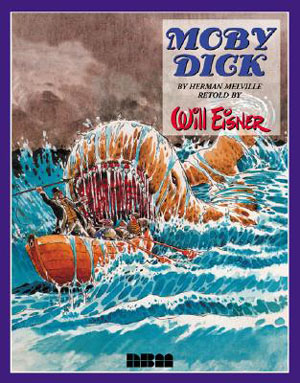
moby_dick_cv_300

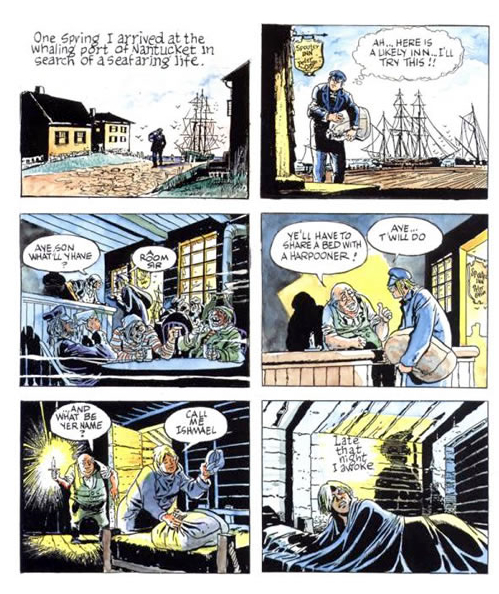
Will Eisner’s adaptation of Herman Melville’s Moby-Dick was one of his last works, completed in 2001 just four years before his death. While no comic book adaptation can match Ishmael’s expansive voice, Eisner’s work here does capture the spirit of adventure and the wish for communion that underpins Melville’s tome. We think it would make a great introduction for younger readers to Melville’s massive book, and will surely interest older readers apprehensive of Moby-Dick. Great stuff.

Eisner Moby-DickMore here.

Bryson’s Dictionary for Writers and Editors — Bill Bryson

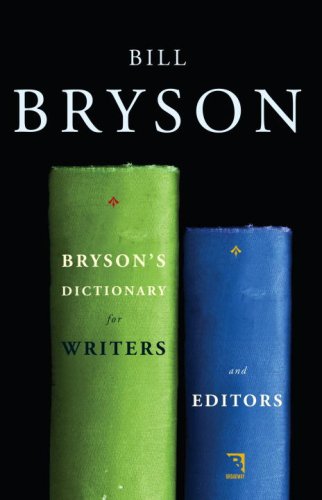
That Bill Bryson’s Bryson’s Dictionary for Writers and Editors (new this week in paperback from Anchor Books) should surpass utility and be loads of fun as well seems almost unfair. Aren’t dictionaries and style manuals meant to be dry? brysonBryson’s title here is pretty honest; he’s made a dictionary of hard-to-remember/easy-to-forget words, including plenty of commonly misspelled words. In the age of spell-check, it’s not so much Bryson’s spellings that are essential as it is the context in which he puts his words. For instance, do you know the difference between “gabardine” and “gaberdine”? (“The first is a type of worsted cloth, the second a long cloak”). Bryson goes further (not farther!) than mere distinctions between words like “creole” and “pidgin” or “bravado” and “bravery”: he actually gets into the fray of how one ought to use words. Consider the entry on “past”:
“Often a space waster, as in this example: ‘Davis said the dry conditions had been a recurrent problem for the past thirty years.’ In this sentence, and in countless others like it, ‘the past’ could be deleted without any loss of sense. Equally tautological and to be avoided are such expressions as past records, past history, past achievements, and past precedents.”

The exasperation is almost palpable! When I first picked up the dictionary, I immediately checked out what Bryson had to say on one of my own pet peeves, “couldn’t of” as the contracted form of “couldn’t have.” Here’s Bryson, in a solution that mixes humor with a bit of common sense:

“As a shortened form of ‘couldn’t have,’ couldn’t of does unquestionably avoid the clumsy double contraction couldn’t’ve, a form not often seen in print since J.D. Salinger stopped writing. However, I would submit that that does not make it satisfactory. Using the preposition of as a surrogate for ‘ve seems to me simply to be swapping an ungainly form for an illiterate one. If couldn’t’ve is too painful to use, I would suggest simply writing couldn’t have and allowing the reader’s imagination to supply the appropriate inflection.

As we see, Bryson’s interest isn’t so much on presenting himself as an absolute authority on the English language as it is in helping writers to be more lucid. We see this again–with the same wittiness–when discussing the differences between “Shakespearean” and “Shakespearian”:

“The first is the usual spelling in America and the second is the usual spelling in Britain, but, interestingly, don’t look to The Oxford English Dictionary for guidance on any spellings concerning England’s greatest poet. Perversely and charmingly, but entirely unhelpfully, the OED insists on spelling the name Shakspere, a decision it based on one of the six spellings Shakespeare himself used. It does, however, acknowledge that Shakespeare is ‘perhaps’ the commonest spelling now used.

While Bryson’s Dictionary is plenty of fun for word nerds, it’s utility and ease-of-use are really what make it a must-have for writers. Bryson devotes 11 pages of his short, useful appendix to punctuation, a section that every young (or not so young) writer should read (the three pages he devotes to comma use are particularly insightful). In sum, Bryson’s Dictionary for Writers and Editors is a witty and intuitive aid that many a writer will love having on their desk. I know I do. Highly recommended.

“The Jungle Is Obscene” — Werner Herzog’s Visceral Nature Writing

wernerherzogfitz

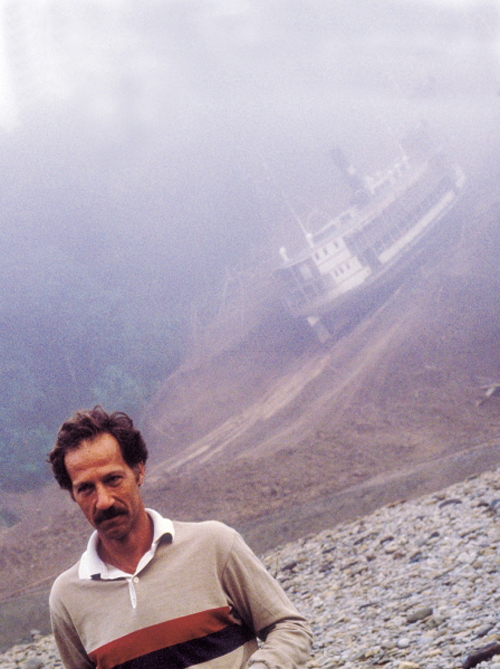
This month’s issue of Harper’s features a fantastic collection of diary entries by German film director Werner Herzog. These entries are excerpted from the forthcoming book Conquest of the Useless: Reflections from the Making of Fitzcarraldo. Released in 1982, Fitzcarraldo tells the story of a would-be rubber magnate who attempts to haul a steamship over a small mountain in Peru so that he can access an area rich in rubber trees. The infamous Klaus Kinski plays Fitzcarraldo, a European who pushes his crew to the breaking point in this mad quest; the semi-fictional plot was doubled in the real-life production disasters that plagued the movie. Fitzcarraldo dramatizes one of the oldest narrative conflicts, man vs. nature, in an earnest yet completely unromantic way. Fitzcarraldo, the opera-lover who brings ice to the natives, shatters any romantic illusions one might have about the power and majesty of nature in his mad schemes. This theme repeats throughout Herzog’s work, from the conquistador opus Aguirre, the Wrath of God to his outstanding 2005 documentary Grizzly Man. Again and again, Herzog’s films ironize, disrupt, or otherwise show the folly of romanticizing nature. His diary entries from Conquest of the Useless lay these sentiments bare in ways both bleakly poetic and terribly funny.

Take this entry from December 8, 1980: “The jungle is obscene. Everything about it is sinful, for which reason the sin does not stand out as sin.” Here, Herzog provides a succinct antithesis to Rousseau’s concept of the “noble savage.” Herzog’s view of man—de-politicized, that is—seems more Hobbesian, actually. In an entry from April 6, 1981, he writes:

“This morning I woke up to terror such as I have never experienced before: I was entirely stripped of feeling. Everything was gone; it was as if I had lost something that had been entrusted to me the previous evening, something I was supposed to take special care of overnight. I was in the position of someone who has been assigned to guard an entire sleeping army, but suddenly finds himself mysteriously blinded, deaf, and effaced. Everything was gone. I was completely empty, without pain, without longing, without love, without warmth and friendship, without anger, without hate. Nothing, nothing was there anymore, and I was left like a suit of armor with no knight inside. It took a long time before I even felt alarmed.”

Nature seems to nullify Herzog, to void any essential humanity he might have had. His repetition of “Nothing, nothing was there anymore” reminds me of King Lear’s famous lines “Never, never, never, never, never.” Although Lear is weeping over the body of his kind daughter Cordelia, the psychology of these lines surely reflect his own terrible experiences, his own nullified identity of homelessness on the wild heath.

For Herzog, nature is a war, nature will eat you. “Moss grows on lianas, and in the knobby places where the moss is thicker, a leafy plant like a slender hare’s ear grows out of the moss: a parasite on a parasite on a parasite,” he observes. If Herzog is melancholy or mordant in these grim reckonings, he’s also very, very funny. Take this hilarious June 4th entry concerning a giant albino turkey that’s been terrorizing the set:

“The camp is silent with resignation; only the turkey is making a racket. It attacked me, overestimating its own strength, and I quickly grabbed its neck, which squirmed and tried to swallow, slapped him left-right with the casual elegance of the arrogant cavaliers I had seen in French Three Musketeers films who go on to prettily cross swords, and then let the vain albino go. His feelings hurt, he trotted away, wiggling his rump but with his wings still spread in conceited display.”

And yet one senses that Herzog’s humor is a defense against the absurdity of nature, one that derives from an acute awareness that humanity is at once of and apart from nature, and at that by its own definition, its own choice. In a June 2nd entry featuring his nemesis the albino turkey, Herzog details an incident that highlights the essential ugliness of a Darwinian world:

“Our kitchen crew slaughtered our last four ducks. While they were still alive, Julian plucked their neck feathers, before chopping off their heads on the execution block. The white turkey, that vain creature, the survivor of so many roast chickens and ducks transformed into soup, came over to inspect, gobbling and displaying, and used his ugly feet to push one of the beheaded ducks, as it lay there on the ground bleeding and flapping its wings, into what he thought was a proper position and making gurgling sounds while his bluish-red wattles swelled, he mounted the dying duck and copulated with it.”

There we go. We get it all, all the order of nature. Food, sex, death, the whole deal, laid out keenly and with grim humor, neatly compacted into a single, grotesque episode. If these excerpts are any indication of the rest of the book’s trajectory, Conquest of the Useless promises to transcend standard making-of fare. Indeed, Herzog’s book seems nothing less than a profound meditation on the intersection of man, nature, terror, and mortality.

Conquest of the Useless: Reflections on the Making of Fitzcarraldo is available June 30th from HarperCollins.

May Day? Labour Day? Loyalty Day?

The following is excerpted from one of our favorite freely-found books, Alice van Straalen’s The Book of Holidays Around the World:

May Day Worldwide In a festival that lasted from April 28 to May 3, the Romans offered flowers to Flora, their goddess of spring. They brought the custom to all the European lands they conquered; and by the Middle Ages it became especially popular in England. People rose early in the morning to “bring in the May.” They gathered flowers and tree branches to decorate their homes and later went to the town square where the maypole–often over 100 feet tall–was raised, and a woman representing the May Queen presided over the celebrations. Dancers held the streamers that fell from the top of the pole and, as they circled around it, wove them into tight patterns. When they changed directions the streamers untangled again and blew free, a tradition that some towns in England and America have continued. In 1889 the Second Internationale, an association of French socialists, dedicated May Day to working people, and today in many countries it is celebrated as a labor day. The Soviet Union marks the day with a military parade in Moscow.

Soviet Union…yeah, the book is almost 25 years old…

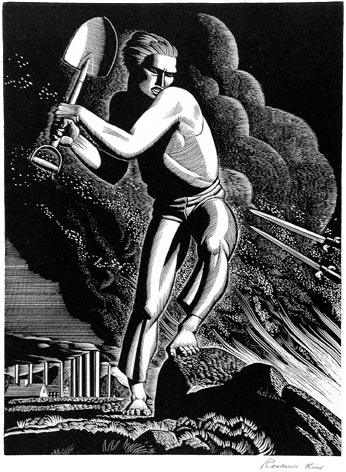
Workers of the World Unite -- Rockwell Kent

But don’t worry, God-fearing Americans! It turns out that, in order to reclaim May Day from pinkos and anarchists, the U.S. government declared May 1st “Loyalty Day.” From 36 US Code §115:

(a) Designation.— May 1 is Loyalty Day.

(b) Purpose.— Loyalty Day is a special day for the reaffirmation of loyalty to the United States and for the recognition of the heritage of American freedom.
(c) Proclamation.— The President is requested to issue a proclamation—

(1) calling on United States Government officials to display the flag of the United States on all Government buildings on Loyalty Day; and
(2) inviting the people of the United States to observe Loyalty Day with appropriate ceremonies in schools and other suitable places.

Loyalty Day? Okay, sure, why not? I wonder though, in 2009, are the two perspectives on this ancient festival–the concept of workers standing up for the right to control the means of production, etc., and the idea of being loyal to America–are they so different?

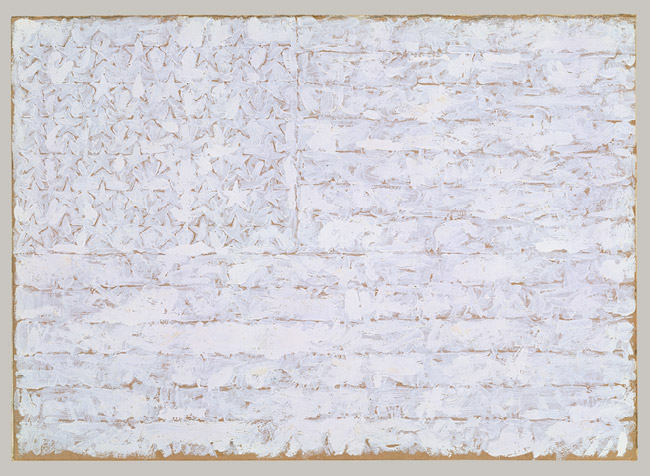
Flag -- Jasper Johns

“The Distance from the Moon” — Italo Calvino

We’re loving this very cool animation of Calvino’s short tale “The Distance from the Moon,” from the collection Cosmicomics. This month’s Harper’s features two funny and thoughtful little fables told by Cosmicomic‘s strange narrator Qfwfq , and if you’re too lazy to buy that, check out The New Yorker‘s recent publication of “The Daughters of the Moon.” Presumably these stories will be published in the upcoming volume Complete Cosmicomics. Stay ahead of the curve by reading them now. Special mp3 bonus: actress Maria Tucci reads from Cosmicomics.

Shanghai Jim

Shanghai Jim is a fascinating BBC documentary about the strange expatriated life of J.G. Ballard. While the doc focuses on Ballard’s autobiographically-inspired works like Empire of the Sun, there is some detail about his experimental works. Lots of cool footage here, but the highlight, of course, is hearing Ballard tell his own story. Plenty of insight into his characters, their motives, and his reasons for writing. Go here if you hate squinting at Youtube vids or here for Ubuweb’s avi.

Continue reading “Shanghai Jim”

J.G. Ballard Cover Gallery

Some of our favorite Ballard covers:

1crash_cover2Nice gear shift…

1pocket_crashLove the enthusiasm there…

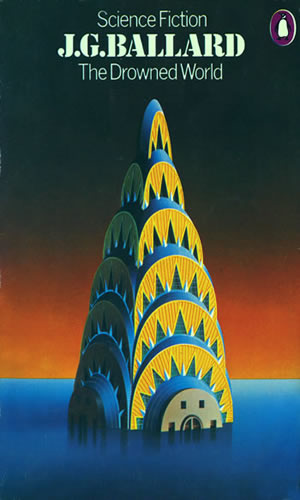
1drowned_pelham

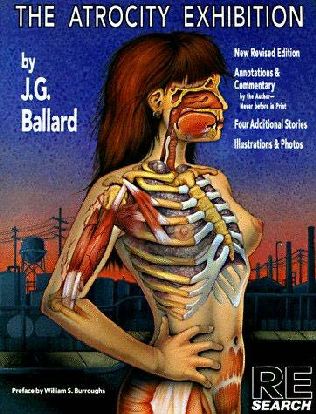
1atrocityc760

My buddy Tilford lent me his RESearch edition of The Atrocity Exhibition (I didn’t steal it and that makes me a moral being). I think it’s probably the definitive edition. I wish I had it (maybe I should’ve stolen it…).

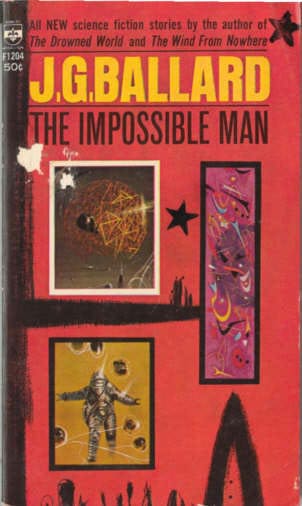
1impossiblec2143

Pulp fiction.

1terminalbeach1

Why is “Ballard” in katakana?

1highrise-book

This one is sorta Magritte by way of Calvino (if that makes any sense).

For lots more covers and lots more Ballard check out JG Ballard and Ballardian.

Historic Photos of Ernest Hemingway

eh-coverhihgres5

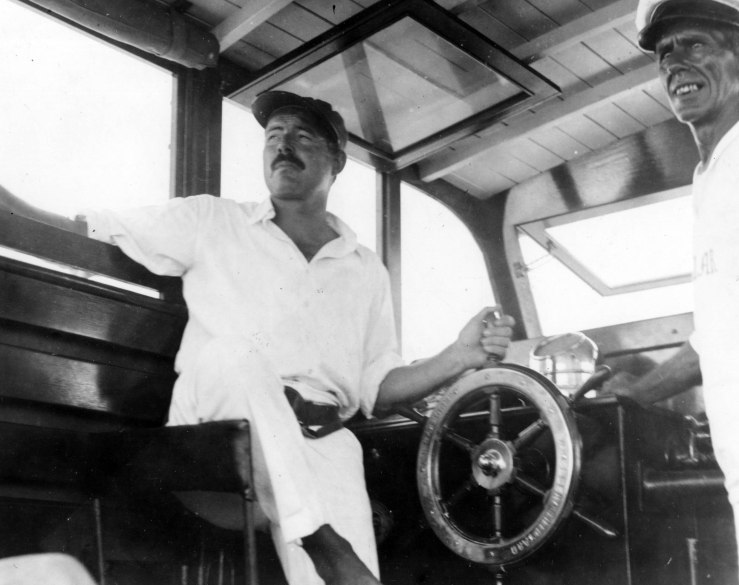
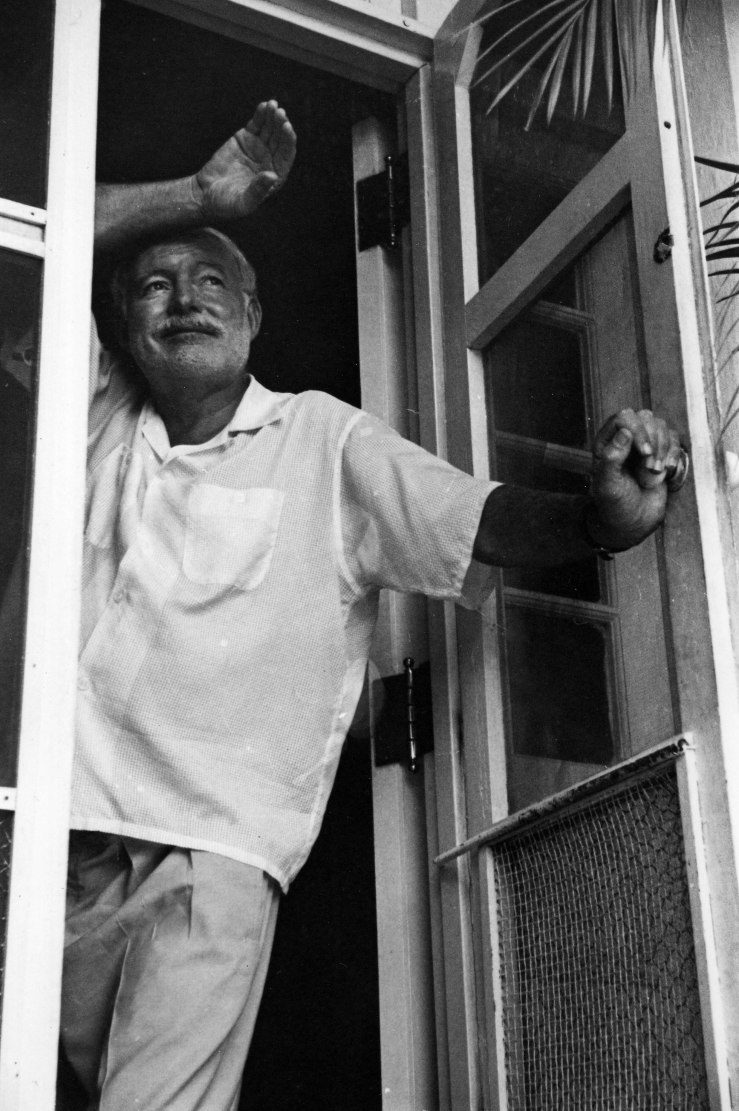
Historic Photos of Ernest Hemingway, new this month from Turner Publishing, combines over 200 black and white photographs of Hemingway with text and captions by James Plath to form a sort of visual biography of one of America’s most iconic writers. Spanning the entire 61 years of the author’s life, the book treats us to over a dozen photos of Hemingway’s childhood, including several (surprisingly high resolution) images of Papa as a baby. Admittedly, these are kind of uncanny, but for me, seeing baby Hemingway is not nearly as strange as seeing the many photos of teenage/early 20s Hemingway. The Key West Hemingway–bearded and burly–has become so iconic that seeing the writer in his youth is almost like seeing an entirely different person. He’s very handsome, with a vigorous smile that radiates charm and energy–much like the older Hemingway–but with a certain sheen and optimism missing in the older Hemingway. Even on crutches or in a wheelchair, young Hemingway seems less damaged than old Hemingway.

Hemingway on the Pilar

As you might expect, a majority of the pictures throughout the volume find Hemingway engaged in some sort of sport or activity–sport fishing, hunting, sailing, boxing, skiing, and so on. And drinking. Lots and lots of drinking. There’s plenty of shots of Hemingway with famous friends (fishing, boxing, and, um, drinking), but also many images of Hemingway with his various families (the man had four wives in 25 years). There’s an unexpected vitality in the photos that sustains throughout the volume, due in part perhaps to Hemingway’s engaging, larger-than-life personality, but also attributable to the fact that the book works in some ways as a cultural history of the first half of the 20th century. The images trace Hemingway from his Illinois birth, to Italy in WWI, to his ex-pat glory days in Paris (in particular) and Europe (in general). Of course, there’s plenty of Papa in Key West, as well as his time in Bimini on his boat Pilar. As Hemingway moves from Spain to Communist Cuba, we see his health deteriorate: all that boxing and drinking and loving and fighting has clearly caught up to him. He looks very, very old for a man in his late fifties. With the specter of his impending suicide hanging over the final photos, it’s hard not to read pain and depression into those last images.

Hemingway in Cuba
Hemingway in Cuba

Plath’s text adds greater depth to Hemingway’s biography than one might expect from a coffee table book. He explicates the photos by providing context and background, both historical and literary, and while he’s never gossipy, there’s a wry humor and ironic understatement to many of his captions that help to shade Hemingway’s character (Plath’s deadpan note that Hemingway “broke poet Wallace Steven’s jaw, marooned poet Archibald MacLeish on an abandoned cay after an argument [and] got sore at Fitzgerald when he messed up on timekeeping in a supposedly friendly boxing match” is particularly funny). Plath also proffers insight into Hemingway’s literary works. And about those literary works. They are not dominant in Historic Photos of Ernest Hemingway, nor should they be. If anything, the book makes a solid visual case for Hemingway as icon, a figure that at least appeared to live the life he wrote about. Plath’s text is hardly fawning, pointing to many of Hemingway’s myriad flaws, but it also recognizes Hemingway as a kind of symbol of America’s progression in the 20th century, its movement from isolation to the world stage. Recommended.

Good Friday

As the B-52s understood so well, we all need some good stuff in our life. Here’s some good stuff:

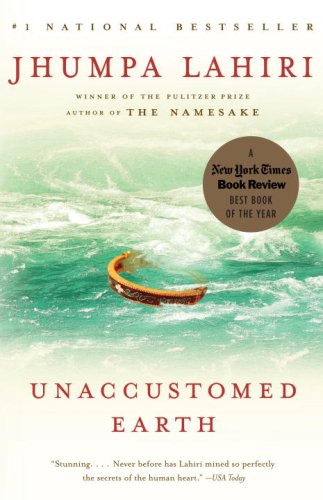
unaccustomed-earth

Jhumpa Lahiri’s much-lauded collection of short stories, Unaccustomed Earth, is out in paperback from Vintage this week. Although I’ve only read three of the collection’s eight stories so far, it’s already easy to see why the book was so beloved last year. Lahiri explores the intersection of different cultures and the subtleties of generational conflict, but the themes and content of her stories always veer toward universals of domesticity–siblings, marriage, children, and all the troubles that go with them are studied here. I found bits of my own life echoed here in insightful and analytical detail, particularly in the heart breaker “Only Goodness.” Good stuff.

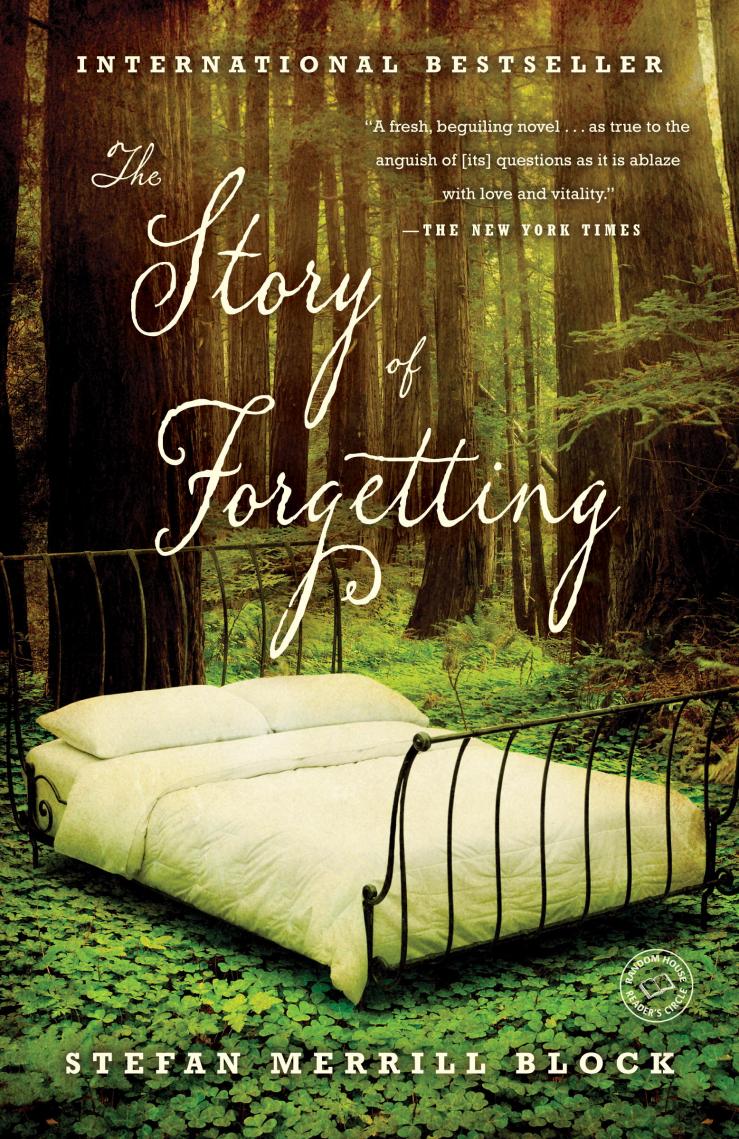
the-story-of-forgetting

Also new in paperback this week from Randomhouse is Stefan Merrill Block’s debut novel The Story of Forgetting, and while I haven’t had a chance to get too far into it, its blend of science, medicine, memory, and fantasy seems pretty intriguing. Block examines Alzheimer’s disease through the lens of an elderly man named Abel, a misanthropic teen named Seth, and a Calvinoesque fantasy world called Isadora–a world without memory. Seems pretty cool; potential good stuff. Trailer here.

For more good stuff, check out our new tumblog Pet Zounds.

Here’s a cool interview from The Times with Bob Dylan on Presidential autobiographies and more. Good stuff.

neko-case-an02

You can also listen to all ninety minutes of Neko Case’s concert at the 9:30 club, broadcast live last night on NPR. Lovely Ms. Case transcends good stuff, of course.

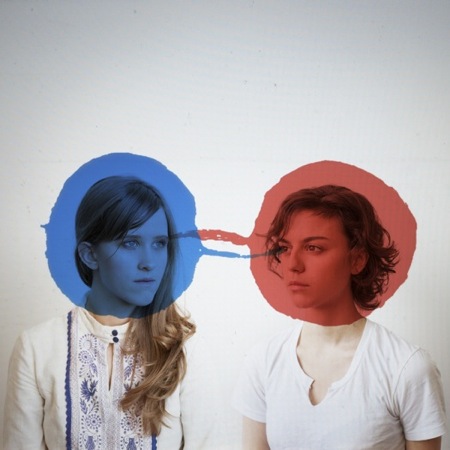
dirty_projectors-bitte_orca-art

Speaking of transcendent good stuff, the new Dirty Projectors album, Bitte Orca, has, ahem, leaked. It’s the sort of greatness that makes you ashamed to be a pirate, the kind of album you can’t wait to actually buy even though you’ve been listening to it in full for a few months (it doesn’t drop until June 9th). Lush and ethereal, somewhere between Kate Bush and Storm & Stress, Bitte Orca is the sort of stuff that would play at high school proms around this country this year if this country had any class. Here they are playing “Stillness is the Move”: