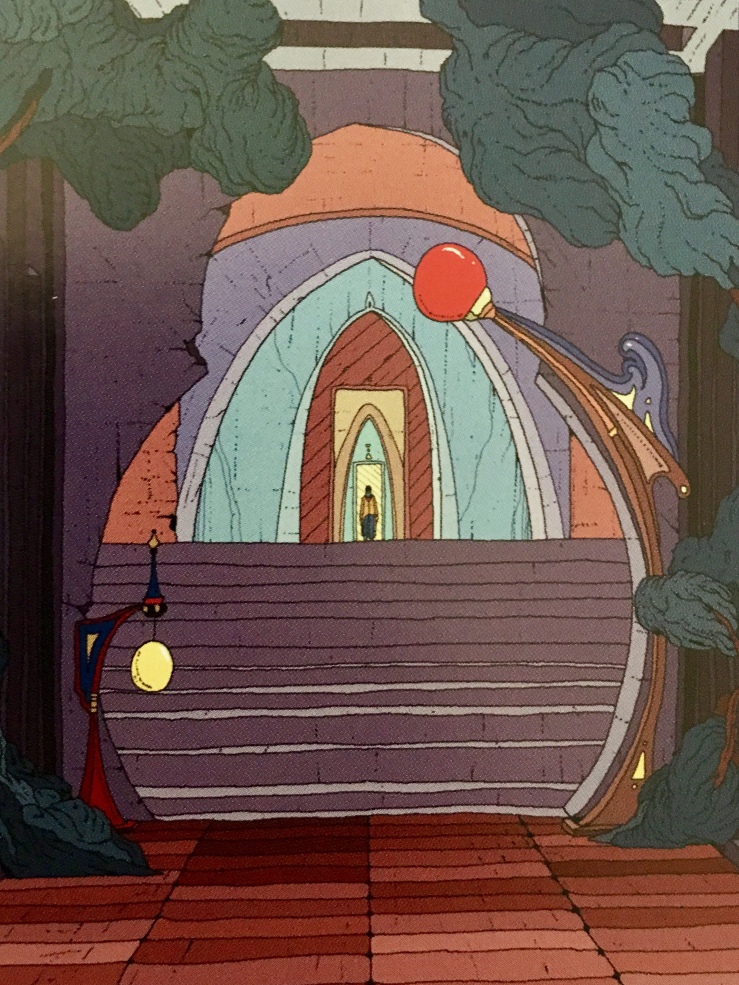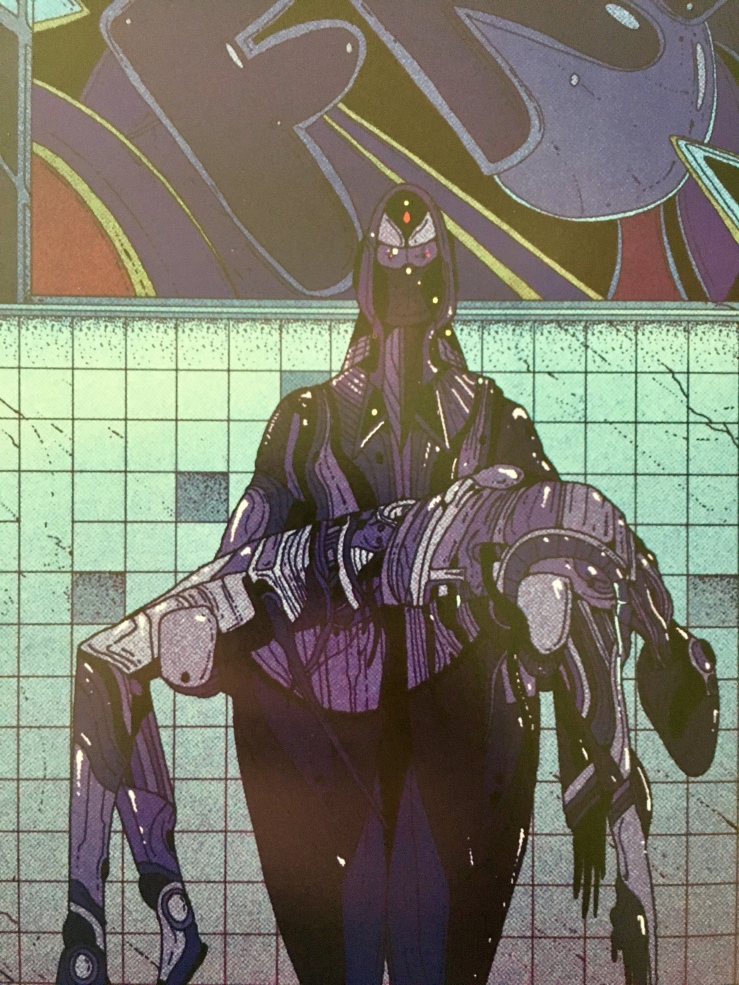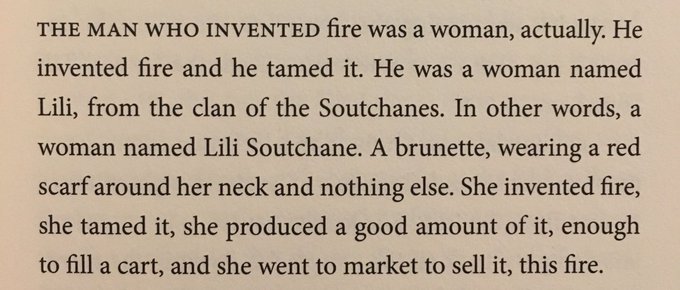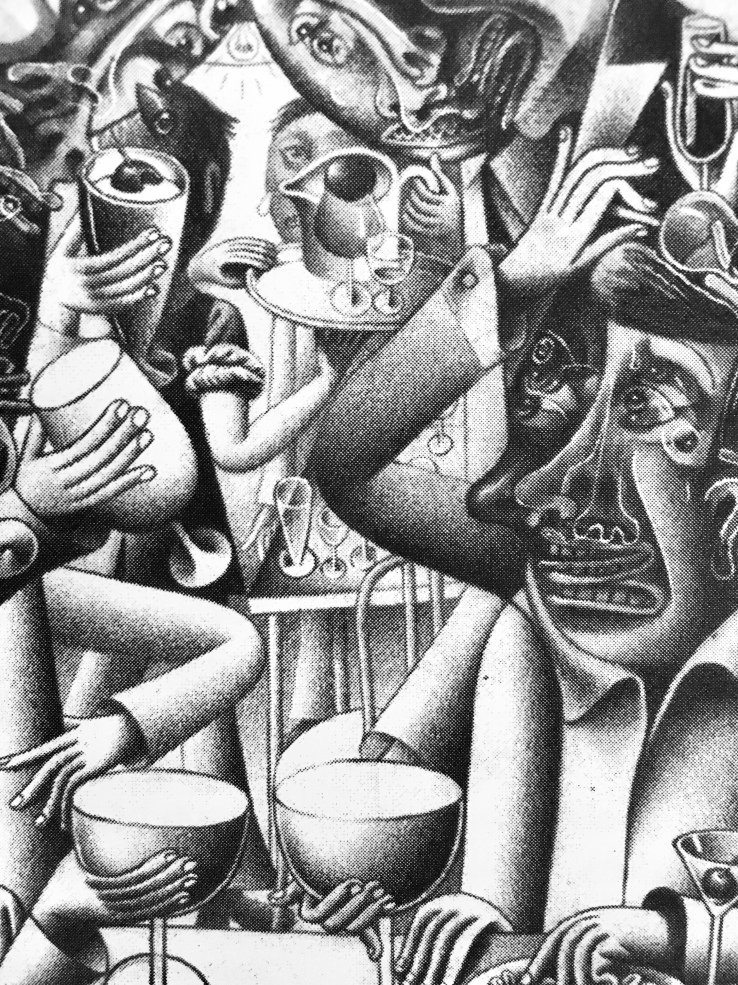
Blog about Chris Ware’s Rusty Brown (Book acquired, 7 Aug 2019)

img_3799-1

I finally dug into Chris Ware’s forthcoming graphic novel, Rusty Brown yesterday. A finished review copy arrived on August 7th, 2019, the day that David Berman died.

I had spent some time simply looking at the book’s exquisite book jacket, which unfolds into a kind of two-sided poster thing, complete with notes and suggestions how the reader might personalize the jacket by folding it in different ways. The spine section of the jacket is also quite amusing—a sort of TV Guide goof that stages Rusty Brown as a television special (in four parts, including comedy, western, sci-fi, and drama). There’s also a crossword puzzle, a maze, and other minutiae. If you’ve read Ware, you’ll know that his work is often crammed with little details like this. Here are two pictures that fail to capture how gorgeous this thing is:

img_3802-2img_3801-2

Here’s the inside cover, too:

img_3800-1

So well and anyway. I tooled around with the cover for a half hour or so on that Wednesday then started in on making dinner, the making of which was interrupted by a text from a friend telling me about Berman’s suicide.

If you’ve read Chris Ware—maybe you’ve read Jimmy Corrigan: The Smartest Kid on Earth or Building Stories, both of which are exceptional—hell, Building Stories is like the invention of a new genre of reading itself—if you’ve read Chris Ware you likely know that his work can be really fucking sad.

I have not wanted to read anything really fucking sad for the past few days.

(I’ve been rereading Berman’s collection Actual Air and reading Charles Portis’s comic picaresque The Dog of the South.)

On Sunday afternoon I decided to dig in. I met the cast of Rusty Brown:

img_3803-1img_3804-2

–and picked up the setting:

img_3806-1

The introduction of Rusty Brown runs over a 100 pages and intertwines several of the characters’ perspectives. If there’s a lead though, it’s Woody Brown, a miserable son of a bitch who hates his life (wife, kid, teaching job) and daydreams about running away or even killing himself.

img_3782-1

Woody’s poor son, the titular Rusty, daydreams as well, fantasizing that he’s gained superpowers (well, a superpower—incredible hearing) and fixating on his Supergirl action figure, who enters his bored mind when he’s at school. School is bad for Rusty, too; he’s bullied terribly. Ware depicts these scenes with honesty and pathos, but also humor. Consider this little cut scene:

img_3783-1

The comic timing frequently leavens the first part of Rusty Brown. The thought bubble here cracked me up:

img_3805-1

We also meet Alison and Chalky White, a brother and sister who are starting their first day at a new school. They’ve moved in with their grandmother; they’re new to Nebraska, and they’re miserable. Ware runs their story concurrently with the Browns’ story, and the two occasionally sync up in wonderful little plays on perspective.

img_3808

Ware also inserts a version of himself into the story. Mr. Ware is the art teacher at Rusty’s school. Ware’s depiction of Mr. Ware is a kind of mean self-parody, but also very funny and even warm at times.

img_3786-1

Mr. Ware has been working on a series of Pop Art paintings that he hopes will achieve “an intuitive transcendence of culture and corpus.”

img_3785-1

Ware has been working on Rusty Brown for over a decade and a half now (you might’ve read bits of it here and there over the years), and the depth of storytelling here shows. Full review forthcoming, but for now, here’s publisher Pantheon’s blurb:

Rusty Brown is a fully interactive, full-color articulation of the time-space interrelationships of three complete consciousnesses in the first half of a single midwestern American day and the tiny piece of human grit about which they involuntarily orbit. A sprawling, special snowflake accumulation of the biggest themes and the smallest moments of life, Rusty Brown literately and literally aims at nothing less than the coalescence of one half of all of existence into a single museum-quality picture story, expertly arranged to present the most convincingly ineffable and empathetic illusion of experience for both life-curious readers and traditional fans of standard reality. From childhood to old age, no frozen plotline is left unthawed in the entangled stories of a child who awakens without superpowers, a teen who matures into a paternal despot, a father who stores his emotional regrets on the surface of Mars and a late-middle-aged woman who seeks the love of only one other person on planet Earth.


Blog about some books acquired

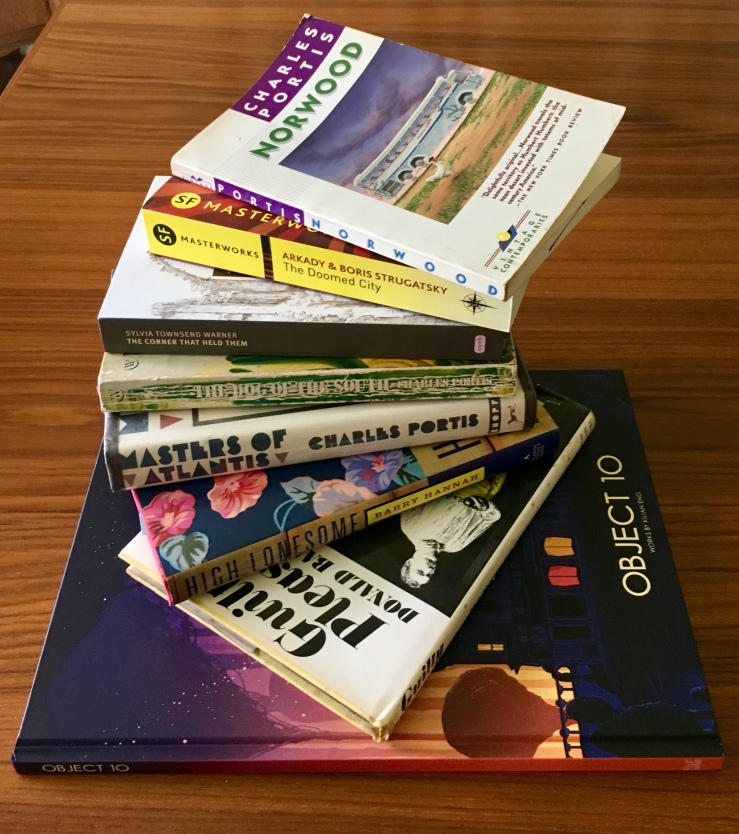
img_3745

My family and I spent a wonderful week in Oregon at the end of July. We visited friends who live in Portland, where we based our stay, and we drove to the coast, to Mount Hood, and to all kinds of beautiful places. It was really fucking lovely.

Among all the gardens and forests and breweries and record shops, we managed to fit in some bookstores too, of course.

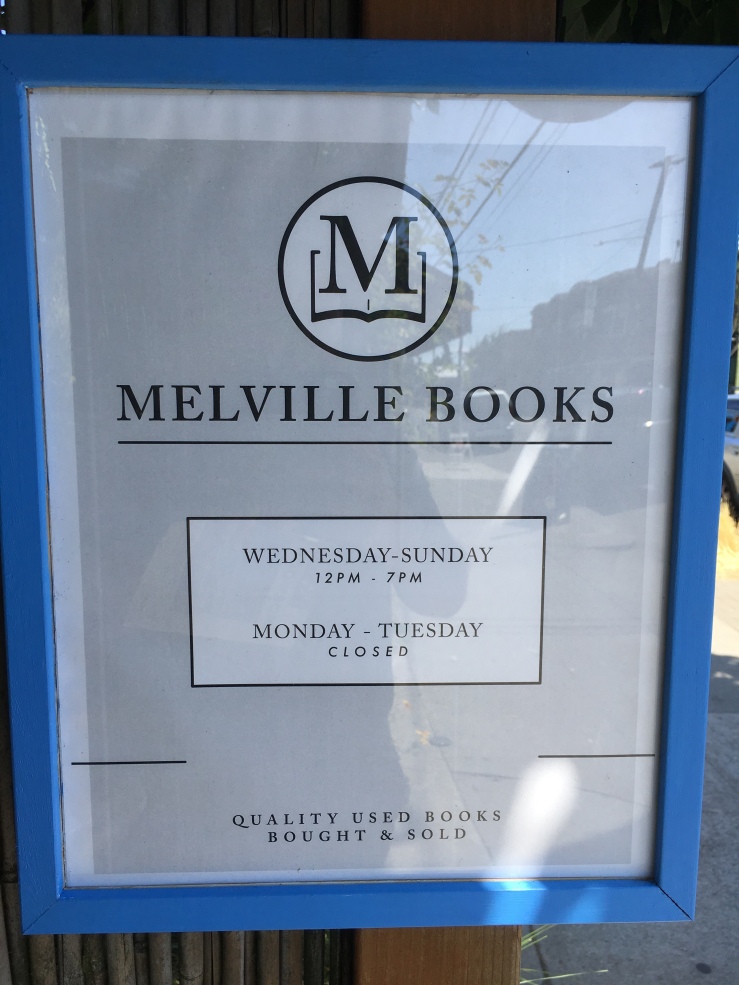
The first was Melville Books, right off of Alberta Street, tucked away just a bit. Our rental house was a block from Alberta, and we got there early in the afternoon and took a stroll. Melville Books is pretty new. The owner-proprietor was making a wooden “Open” sign while he chatted with me about his stock and his experiences scouting and buying used books. He was really friendly, and the small store was very well curated.
img_3259

I picked up Charles Portis’s first novel Norwood there on something of a whim. I’ve never read Portis, but I know his fans love his stuff, and I couldn’t pass up the Vintage Contemporaries cover. There was also a hardback copy of True Grit in stock at Melville that I now regret not having picked up. Norwood is hilarious, and has evoked in me a need to read more Portis.

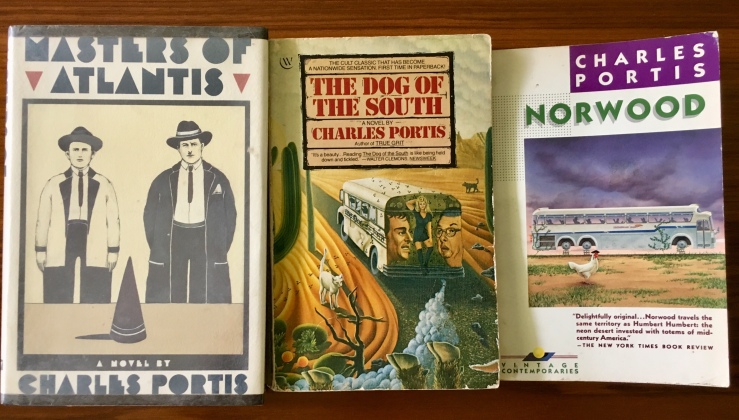
I actually went to my local used book store today to get some stuff for my kids (and maybe just to get out of the house), but the only copy of True Grit they had in stock was a Coen Brothers film adaptation tie in. I did pick up copies of Masters of Atlantis (in hardback) and The Dog of the South though.
img_3733

We also visited Powell’s, of course. I wasn’t expecting it to be as big as it was. Powell’s is a very well-stocked general bookstore, but I was a little disappointed that I couldn’t find more weird or rare stuff there (I think my local place, Chamblin Bookmine, has spoiled me).

img_3558

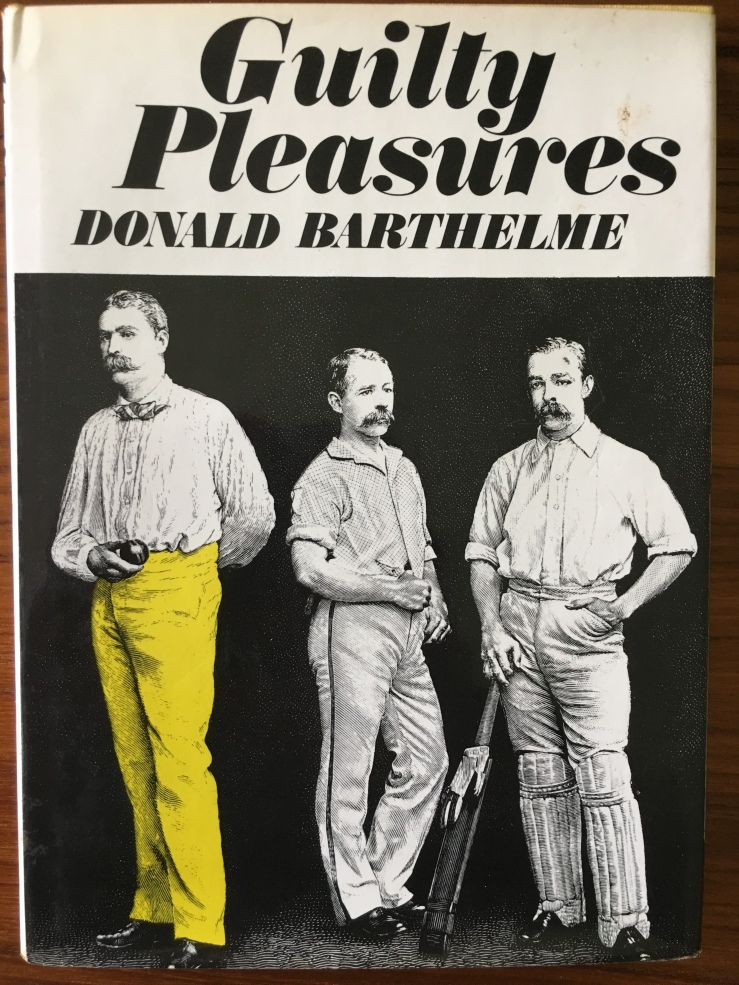
I picked up a first-edition hardback of Donald Barthelme’s “nonfiction” collection Guilty Pleasures for just a few bucks.
img_3734

It includes one of my favorite Barthelme pieces, “Eugenie Grandet.” It also includes quite a bit of his collage work.

img_3735

I also picked up a hardback copy of Barry Hannah’s High Lonesome. I’ve read a lot of the stories in here (collected in Long Lost Happy), but some are unfamiliar. Also, the cover is by the photorealist painter Glennray Tutor, a Southern contemporary of Hannah’s. Tutor did the covers for several other Hannah volumes.
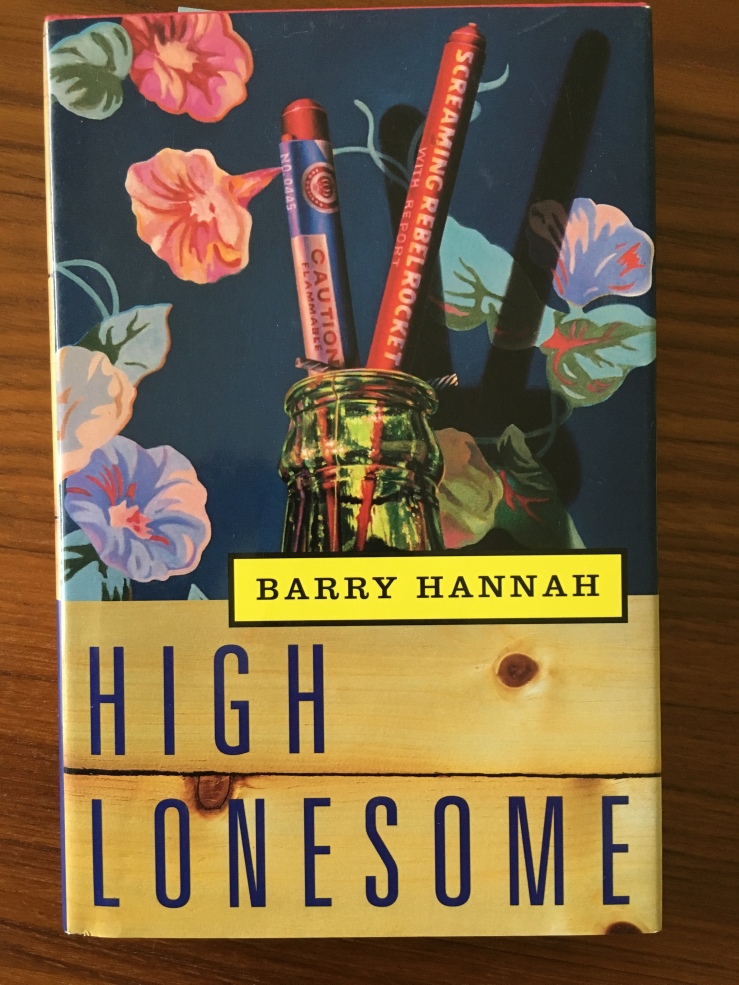
img_3736

Over in the sci-fi section of Powell’s I found some books by the Strugatsky brothers, which I’ve been into lately. I’ve heard Monday Starts on Saturday is good, but the cover for this edition is so godawful bad that I couldn’t go for it. That’s what library e-books are for, I guess. (Really though, a blank white cover would have been better.)

img_3553

I ended up picking up The Doomed City instead, which I might try to squeeze in before the end of summer.
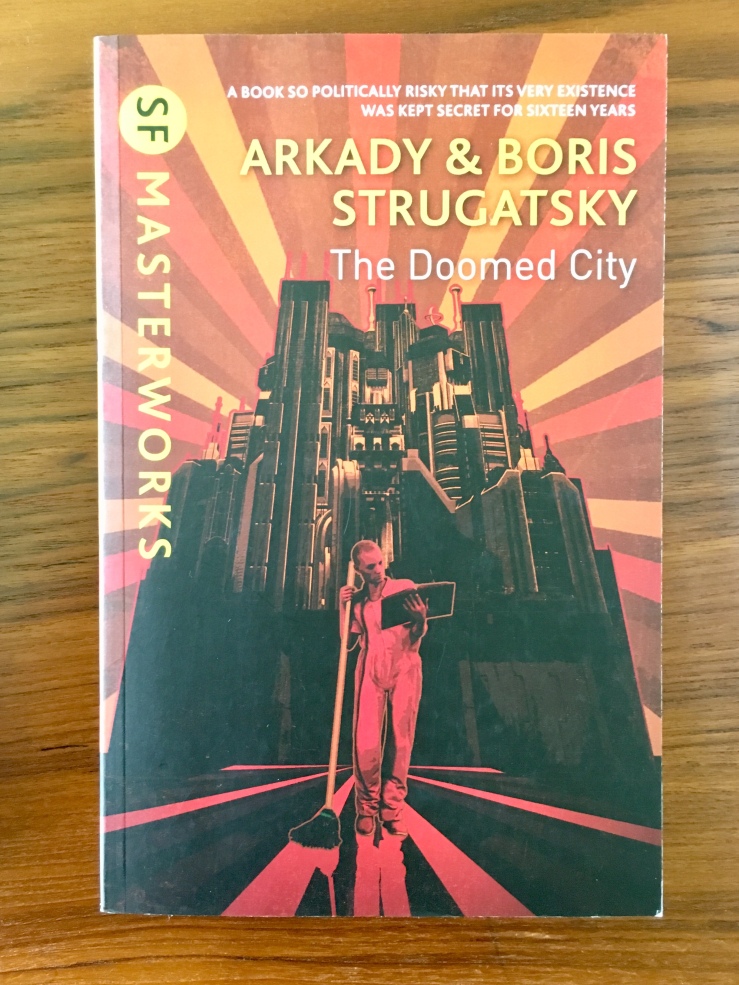
img_3737

I was impressed with the art books collection at Powell’s but also disappointed not to find anything by Remedios Varo or Leonora Carrington, other than recent editions of their fiction—no real art books though. I was happy though to see a shelf recommendation for Margaret Carson’s recent translation of Varo’s Letters, Dreams & Other Writings though. I sent a pic to Margaret, who was really generous to me with her time in recent interview about her translation.
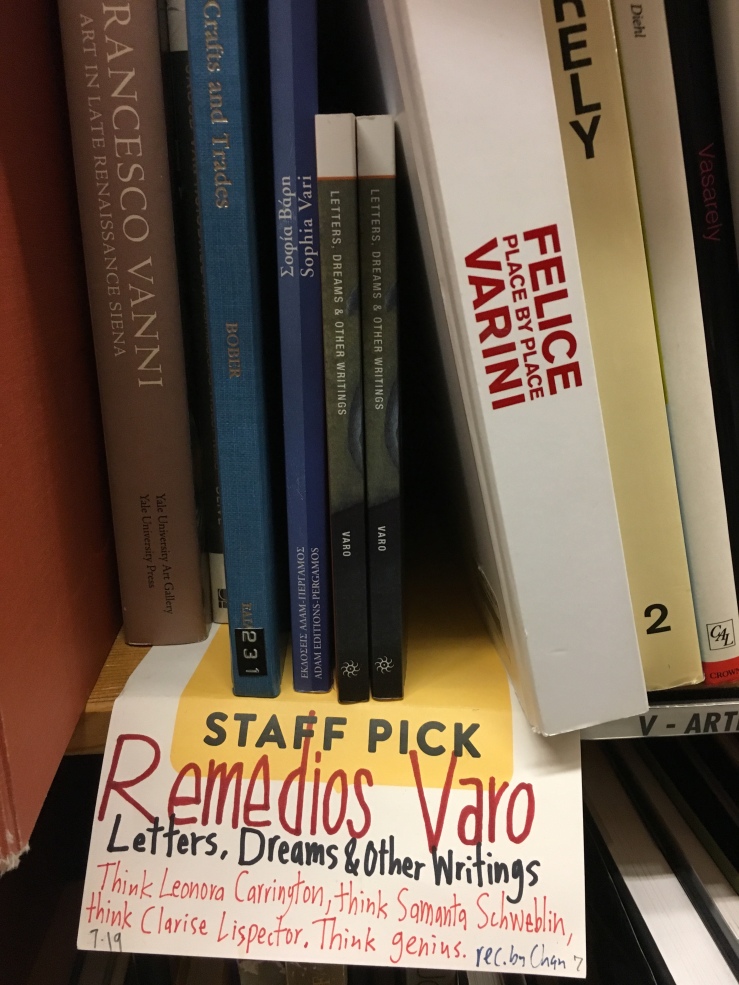
img_3555

I visited a few other bookshops, not so much as destinations, but rather in happy accidents in the neighborhoods we visited—but I restrained myself from picking anything else up. (And no, I didn’t make it to Mother Foucault’s, unfortunately, although many folks told me to. Next time.)

We visited Floating World Comics the same day as Powell’s, where I picked up a copy of Kilian Eng’s Object 10. I’ve been a fan of Eng’s for years, sharing his images on the blog and following him on Instagram. I hadn’t realized though that Floating World was his publisher. Object 10 is lovely.
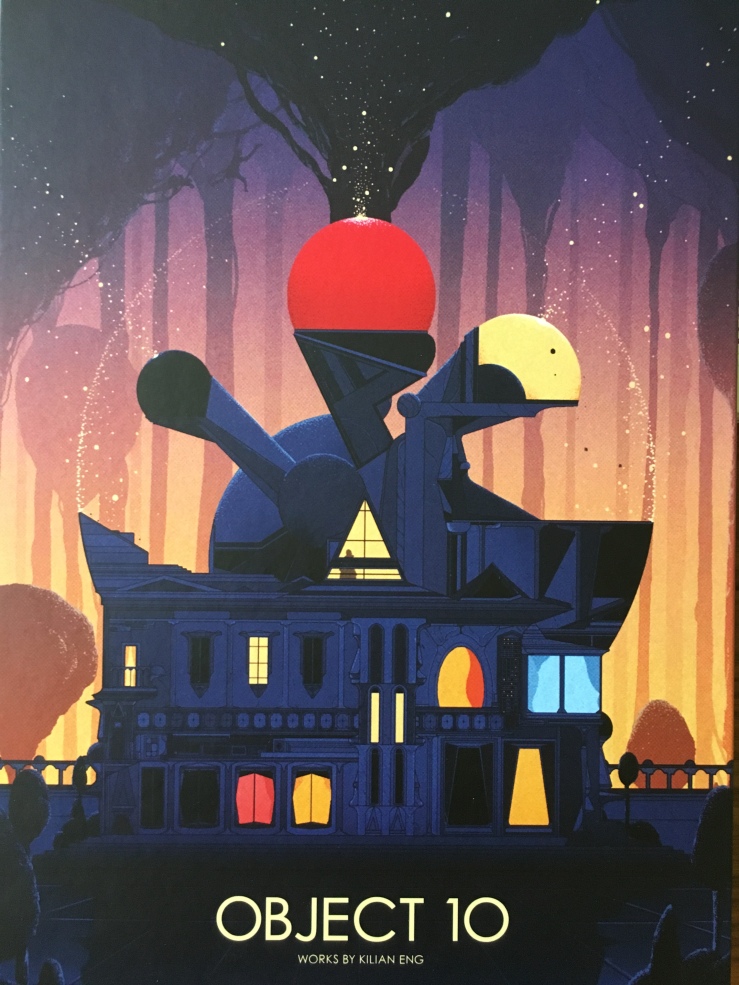
img_3740

img_3743img_3744img_3742

I also picked up a pack of 1993 Moebius trading cards there for a dollar. I haven’t opened them yet though. Saving it for a treat later. It was neat to see copies of Anders Nilsen’s Tongues in the wild, too. I had reviewed the title awhile back for The Comics Journal, but I hadn’t realized that Nilsen lived in Portland. We also checked out Bridge City Comics on Mississippi, which had a nice selection of dollar comics that I indulged my kids in.

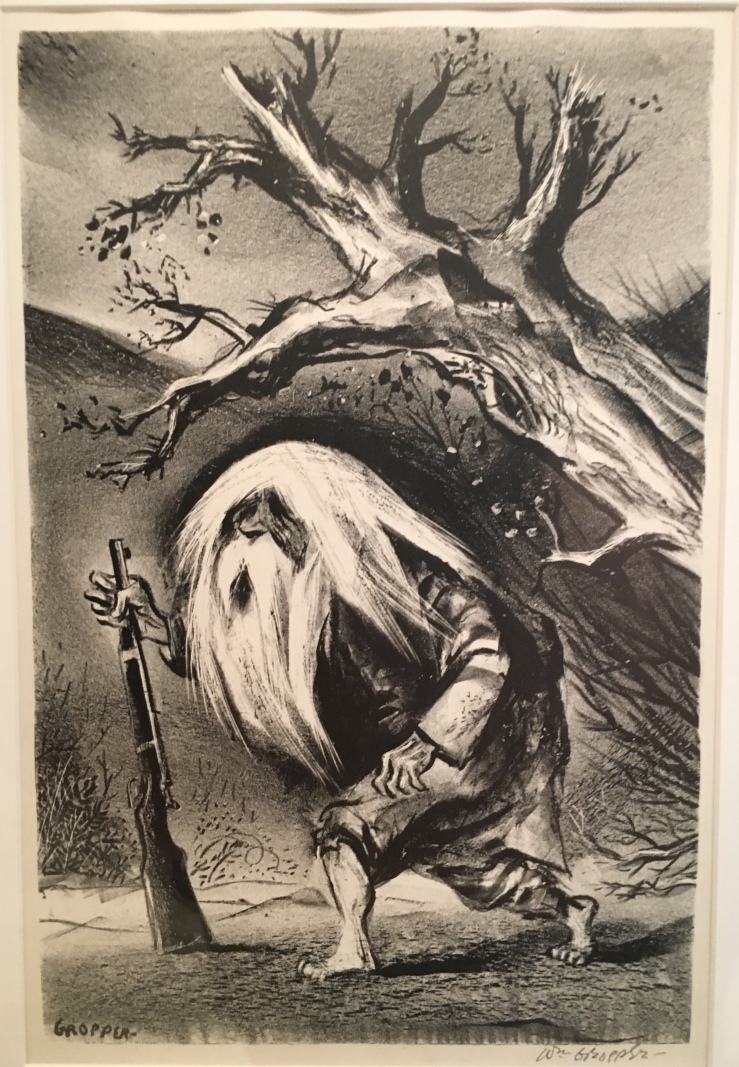
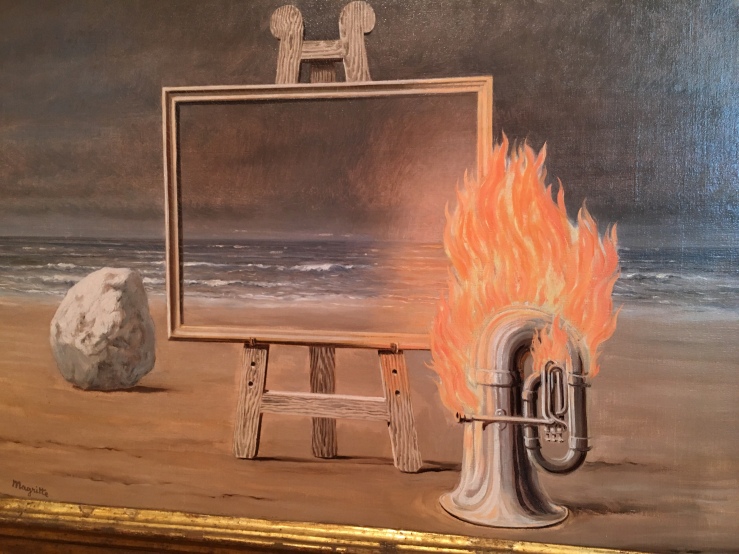
Portland was fantastic in general. The only real disappointment came when we visited the Portland Art Museum expecting to see a major Frida Kahlo exhibit. Unfortunately, we misread the dates—the show starts next summer. The museum has a nice collection though. Just a few pics of some pieces I liked:

Rip Van Winkle (1945) by William Gropper:
img_3291

The Fair Captive (1948) by Rene Magritte
img_3339

and The Femminiello (1740-60) by Giuseppe Bonito.

img_3302

Here’s the museum’s description of this unusual painting:

Owing to widespread social prejudice, cross-dressing was rarely depicted in European art until the modern era. This recently discovered painting from the mid-eighteenth century is a testament to the exceptional and long-standing acceptance of cross-dressers known as femminielli in the great Italian city of Naples. The term, which might be translated “little female-men,” is not derogatory, but rather an expression of endearment. Femminielli come from impoverished neighborhoods, as is evidenced by this individual’s missing tooth and goiter, a common condition among the poor in the Neapolitan region. Although femminiellicross-dress from an early age, they do not try to conceal their birth sex completely. Rather than being stigmatized, they are deemed special and are accepted as a “third sex” that combines the strengths of both males and females. In particular, femminielli are thought to bring good luck, so Neapolitans often take newborn babies to them to hold. Femminielli are also popular companions for an evening of gambling. This association is represented by the necklace of red coral, which is similarly thought to bring good fortune. Neapolitan genre paintings (images of everyday life) frequently feature a grinning figure to engage the viewer. Here, we are invited to consider the artist’s playful inversion of traditional views of gender, which contrasts the pretty young male with the more masculine femminiello.

Maybe we’ll get back to the Pacific Northwest next summer and see the Kahlo then.

Anyway so well—

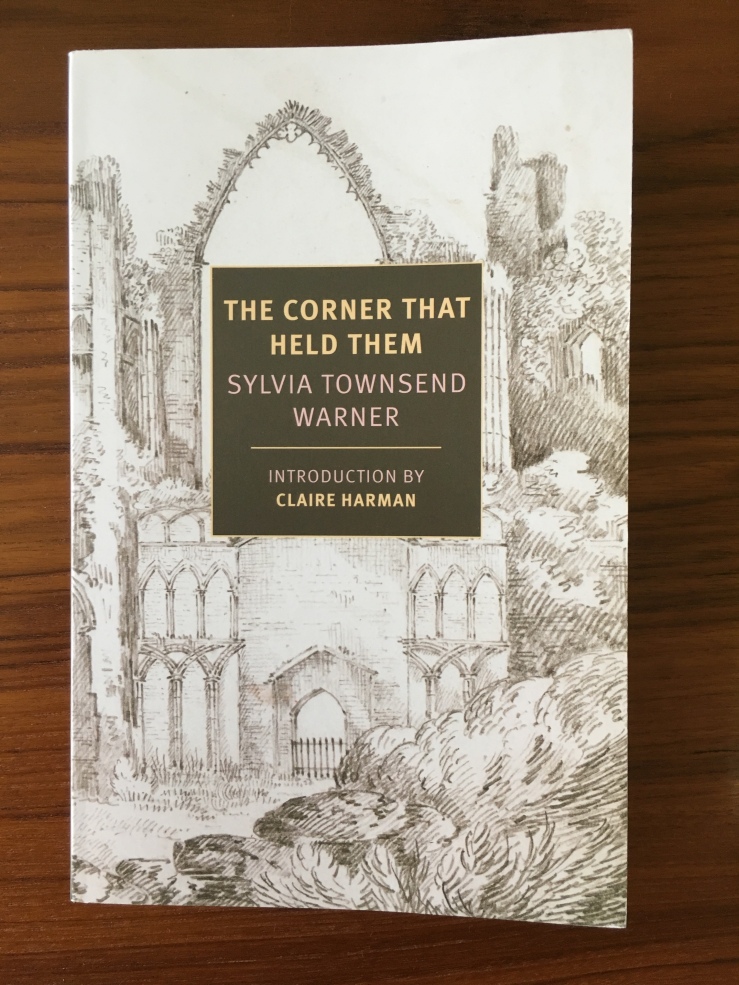
Like I said, I went to the bookstore today, not looking for myself (promise!) except that I did stop and browse Portis briefly, picking up the aforementioned copies. When I got home, I had a package from NYRB containing The Corner That Held Them by Sylvia Townsend Warner. It immediately interested me when I flicked through it—seems like a weird one. NYRB’s blurb below; more to come.
img_3738

Sylvia Townsend Warner’s The Corner That Held Them is a historical novel like no other, one that immerses the reader in the dailiness of history, rather than history as the given sequence of events that, in time, it comes to seem. Time ebbs and flows and characters come and go in this novel, set in the era of the Black Death, about a Benedictine convent of no great note. The nuns do their chores, and seek to maintain and improve the fabric of their house and chapel, and struggle with each other and with themselves. The book that emerges is a picture of a world run by women but also a story—stirring, disturbing, witty, utterly entrancing—of a community. What is the life of a community and how does it support, or constrain, a real humanity? How do we live through it and it through us? These are among the deep questions that lie behind this rare triumph of the novelist’s art.
 

Blog about some books acquired, 17 July 2019 (and some Poe and Whitman illustrations)

img_3158

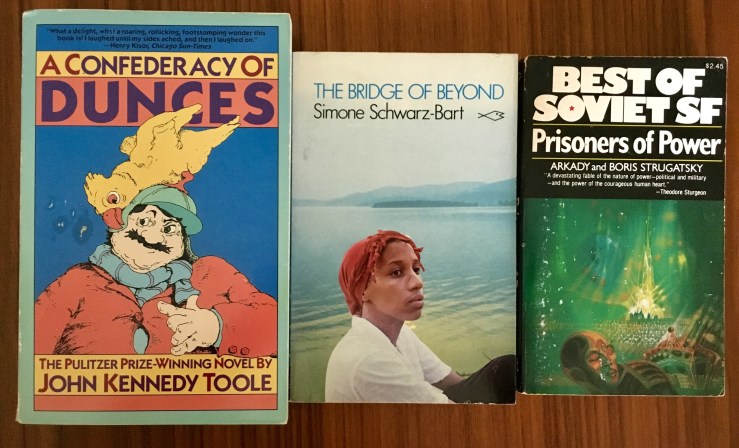
Despite having a pretty large TBR stack, I killed this afternoon’s spare hour at my favorite used bookstore. This particular bookstore is a maze of used books, labyrinthine walls of books, with ever-mutating shelves growing from the floor all the way up to the ceiling. I confess I don’t always stoop low—I get old, I get dizzy—but stooping low to look for something else (which I now misremember; I get old) I found a big fat stack of copies of John Kennedy Toole’s cult novel A Confederacy of Dunces. Which I have never read. Which was recommended to me twenty years ago when I wasn’t so old, when I was way into Vonnegut, Burroughs, Hemingway. Which was recommended to me by someone who had made me read Tom Robbins. Which was why I didn’t bother to read A Confederacy of Dunces. I’ve always sort of assumed that I’d missed my window with this one—not sure why—-like that I should’ve read it before I was thirty. Anyone, I threw it out on twitter and some smart folks gave me the go ahead. So we’ll see.

I also found a copy of The Bridge of Beyond by Simone Schwarz-Bart. Again, I wasn’t looking for this book. Actually, I found this Heinemann Caribbean Writers Series edition quite by accident, but recalled the NYRB edition (both are translated by Barbara Bray) and picked it up. I usually am not a big fan of photographs of people on covers, but I really like this one.  I’ll steal NRYB’s blurb:

This is an intoxicating tale of love and wonder, mothers and daughters, spiritual values and the grim legacy of slavery on the French Antillean island of Guadeloupe. Here long-suffering Telumee tells her life story and tells us about the proud line of Lougandor women she continues to draw strength from. Time flows unevenly during the long hot blue days as the madness of the island swirls around the villages, and Telumee, raised in the shelter of wide skirts, must learn how to navigate the adversities of a peasant community, the ecstasies of love, and domestic realities while arriving at her own precious happiness. In the words of Toussine, the wise, tender grandmother who raises her, “Behind one pain there is another. Sorrow is a wave without end. But the horse mustn’t ride you, you must ride it.”

My good luck streak of finding old massmarket paperback copies of Strugatsky brothers novels continued when I found Prisoners of Power (English translation by Helen Saltz Jacobson).

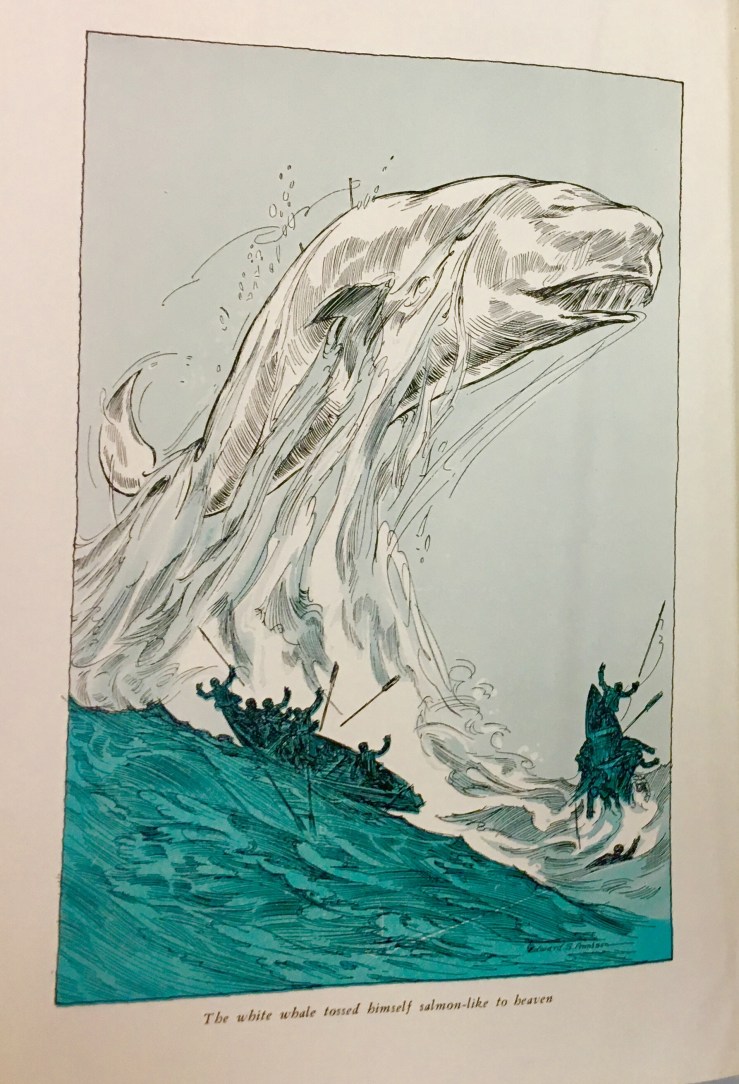
I also found myself intrigued by some large illustrated editions of Melville and Poe, although I resisted picking them up. I really love the simple design of this 1931 omnibus Romances of Herman Melville—

As far as I could tell, the publishers failed to credit the edition’s illustrator, but he signed it—Edward S. Annison.

img_3147

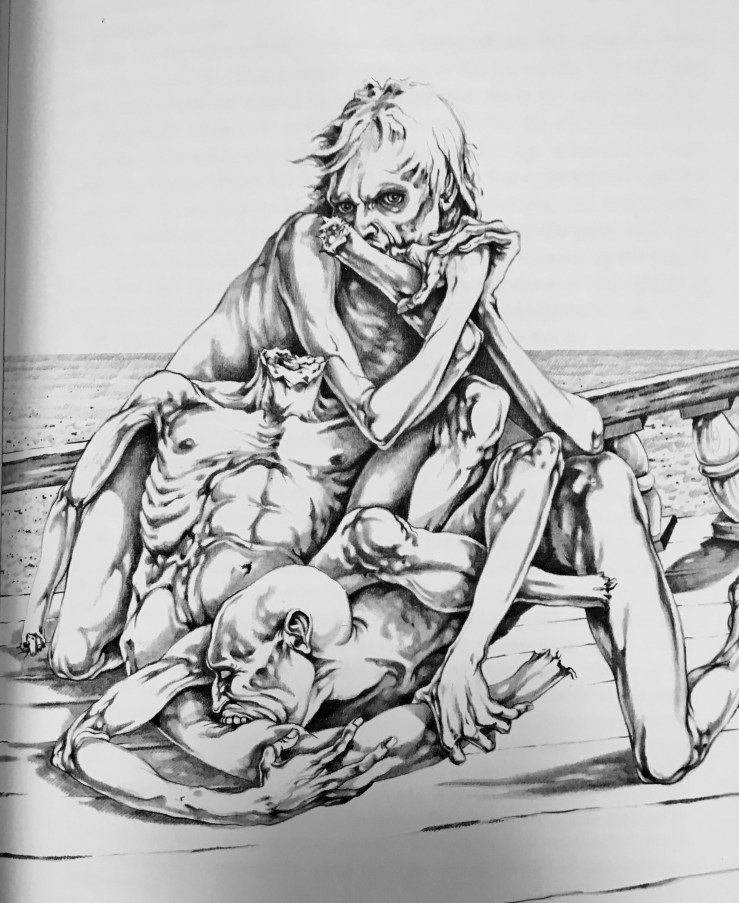
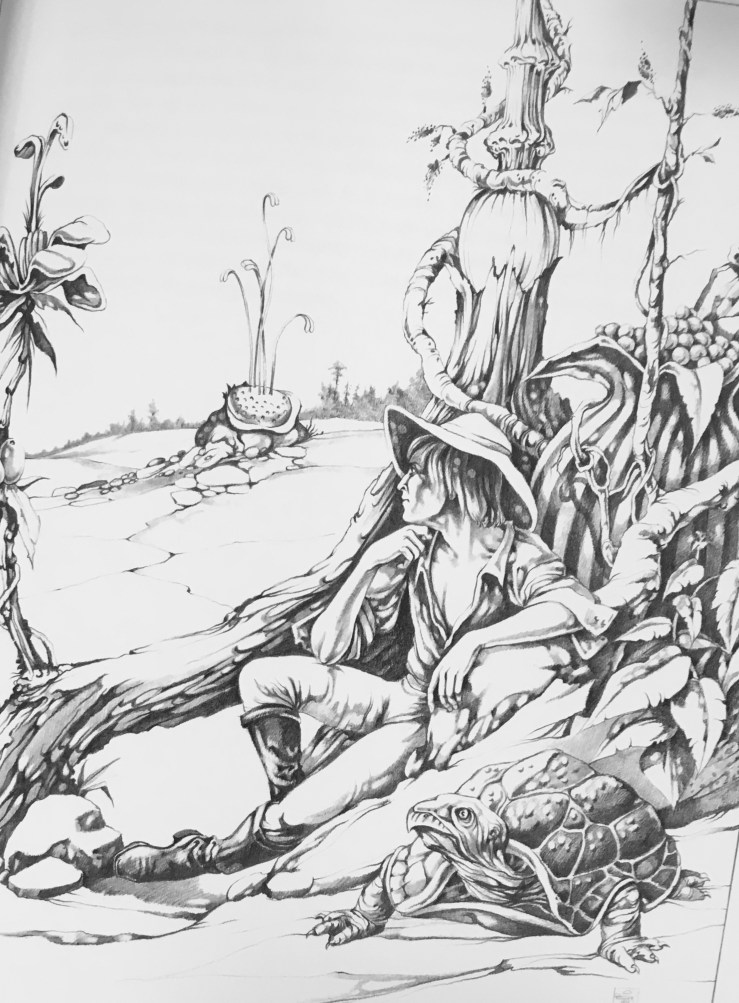
The editors of an oversized 1973 David R. Godine edition of Poe’s only novel, The Narrative of Arthur Gordon Pym did bother to name the illustrator: Gerry Hoover. Hoover’s illustrations are pretty creepy:

img_3152img_3151img_3150

Okay—maybe the last one isn’t creepy. But the tortoise’s grimacing beak is intense.

Blog about a book acquired and a bit of recent reading

img_3073

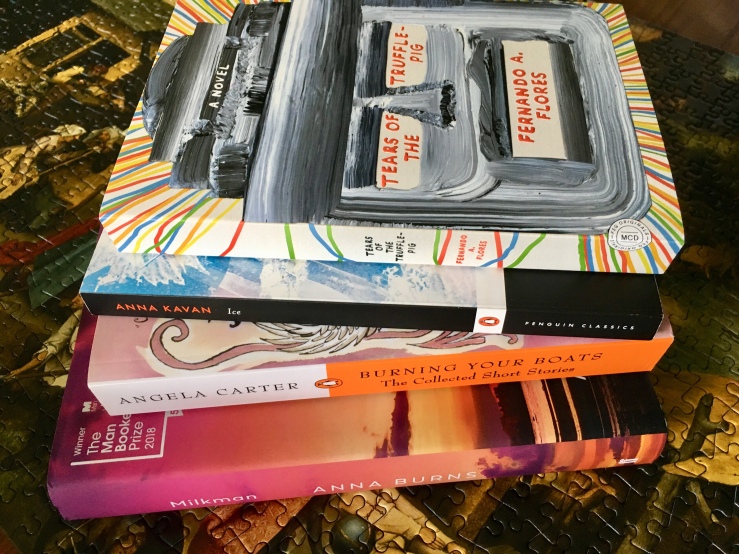
The copy I ordered of Fernando A. Flores’ novel Tears of the Trufflepig arrived today and I finished the first three chapters before putting on the USA-ENG World Cup game—sort of a noir sci-fi tone so far (Flores’ novel, not the World Cup match).

I ordered the book after reading the first five paragraphs of J. David Gonzalez’s review in the Los Angeles Review of Books a few days ago. I’ll read the rest of the review after I finish Trufflepig; these are the paragraphs I stopped with—

Now, about the plot. Drugs have been made legal, so the cartels have taken to trafficking “filtered” animals, bio-engineered exotics brought back from extinction and served at black market dinners for the incredibly rich and extraordinarily vacuous. The death (by filtered ostrich, no less) of El Gordo Pacheco, the leader of the world’s most powerful cartel, has led to a global turf war for control of the filtering syndicates. Australia, Helsinki, Tangiers, New Hampshire: They all want in. Enter Leone McMasters, the silver-mustached head of McM Imports, a shadowy multinational corporation. Think Pynchon’s Golden Fang. Think Monsanto.

Also, there is a thriving black market for the shrunken heads of the Aranaña Indians, a fictional tribe of indigenous people at the heart of Trufflepig’s mystery. Having been vanished for over 400 years, their sudden reappearance portends something. Perhaps it’s doom, but perhaps it’s nothing at all, simply the passing of time. Still, tokens of their existence have led to a Möbius strip of tragedy, “with Indians now killing other Indians for their heads, because they are left out on the margins of the modern world and have few recourses to feed their families.”

I finished Anna Kavan’s novel Ice a few days ago (I wrote about it herehere, and here). I realized after having written about Ice that I’d neglected to compare it favorably to a number of other novels and stories. By compare—well, what I want to say is that reading Ice feels a particular way; it’s disorienting, a bit upsetting, and truly strange. I had meant to compare it to Georg Büchner’s novella Lenz, the novels of João Gilberto Noll, Kazuo Ishiguro’s “A Village after Dark,” plenty of Poe, and the films of David Lynch.

After Ice I read a bit of Anna Burns’ recent novel Milkman, but it didn’t stick for whatever reason—I’ll give it a proper effort soon though. I ended up pulling a collection of Angela Carter from the shelf and rereading some of the tales in The Bloody Chamber (specifically, Carter’s riffs on Bluebeard and Beauty and the Beast). I think maybe it was the lingering Kavan flavors—the fable-making psychosexual thrust of it all—that prompted rereading a bit of Carter, which served as almost a palate cleanser. I’ll probably read a few more tales from it after I finish Trufflepig. But now back to the soccer match, which just tied up at 2-2.

Blog about some recently acquired books

img_3038

I have acquired a goodly amount of books in the last two weeks and failed to do any of these silly “books acquired” posts about them, having been busy with summer classes and occupying summer-bound children (and, admittedly spending too many free hours rewatching Deadwood so that I can watch the Deadwood film and doing a Brueghel puzzle, and not really writing).

I ordered Pierre Senges’ strange little book Geometry in the Dust. It’s new in English translation by Jacob Siefring from publisher Inside the Castle. (Siefring also translated Senges’ novel The Major Refutation, which I read a few years ago.) Geometry in the Dust is a rectangular novella that includes black and white illustrations by Patrice Killoffer. The text is set in two columns, with occasional inset notes set in a smaller font.

img_3040

I mention the size/shape, the inset notes, and the illustrations because, for whatever reason, these things make the reading experience even odder (although I can’t articulate why, and to be clear, I find the oddness compelling).

img_3041

Told in the articulate, observant, and often-funny first-person voice of the “sole faithful minister…advisor, chamberlain and…scapegoat” of a certain monarch—a “you” this minister addresses—like, you, the reader—told in this funny and strange voice, Geometry in the Dust is “about” (a term that we’d have to place under suspicion here) the planning, the mental construction of a great city. A sort of extended thought experiment, Senges’ novella captivated me for two quick afternoon reads, and I hope to go through it again in preparation for a proper review. For now, I’ll lazily compare it to Borges, Calvino, Perec, and Antoine Volodine—writers that Senges does not imitate, but seems to drink from the same imaginative well as.

img_3031

I went to my beloved used bookstore last Friday to browse, as is often my habit, and while I didn’t find any of the Joy Williams Vintage Contemporaries I was hoping to find, I did find a copy of Anna Kavan’s 1967 novel Ice. I’ll admit I hadn’t heard of Kavan until I read Ann Quin’s fantastic novel Berg (which I reviewed recently on this blog). I subsequently read/heard Kavan’s name brought up in conversations concerning Quin. Ice is my next read.

I also spied a new copy of Anna Burns’ Milkman at half price and picked it up. I’d heard good things about the novel—that it’s weird, challenging; that a lot of folks hated it. And, like, look—Ann, Anna, Anna. Why not? Milkman after Ice?

I got home to three separate review copies in the mail, a bit of an overwhelming shock, really, as one is NYRB’s new edition of Gregor von Rezzori’s The Death of my Brother Abel (translated by Joachim Neugroschel and revised by Marshall Yarbrough) b/w Cain: The Last Text (translated by David Dollenmayer). (The novel and its sequel have been published as Abel and Cain.) At nearly 900 pages it is a brick, or maybe a nice big hole to fall into soon.

I was also pleasantly surprised to see that Contra Mundum Press has published Iceberg Slim’s novel Night Train to Sugar Hill, which was never published in Slim’s (aka Robert Beck’s) lifetime. I’m not sure if this is the first publication of this late novel, but I think it is.

I had read some of Greg Gerke’s essays at LARB and 3:AM before getting See What I See (which is out later this year), and am generally impressed with what I’ve read so far. I admit that I skipped around almost immediately, reading (or rereading, in one case) pieces on William Gass and William Gaddis, before turning through pieces on Paul Thomas Anderson and Ingmar Bergman. An essay ostensibly on Mike Leigh’s film Mr. Turner is really about criticism itself, and contains this paragraph:

Critics have a job incompatible with their raw materials. They are to respond promptly and pithily to a work of art—the very life of which changes by different viewings, listenings, and readings, and at different times in one’s life. It is like being a bull rider—one being is not made to situate itself onto the other. Yet, our culture still respects some views and honors the guidance offered. In conjunction, it is no exaggeration to say we live in an era that disposes of language, including the etiolation of the sentence, punctuation, spelling, and grammar by the rush to judgment, and by the ego not caring what it’s form of thought is like, only that it’s owner’s name is lit up. Our species is changing—words, because they are not respected, boil more easily over into lies and exaggeration, disregarding the best humanistic advice possible, courtesy of Shakespeare: “Speak what we feel, not what we ought to say.” Where once words were imbricated and limned to grasp at wisdom, we now have the sweet satisfactions of irony, the insulting tweet, and the ham-handed “article” on why this or that does or doesn’t meet one’s satisfaction.

Gerke’s essay reminded me that I had wanted to see Mr. Turner (admiring both Leigh and his subject). (And if Gerke is a namegoogler—I loved Boyhood.)

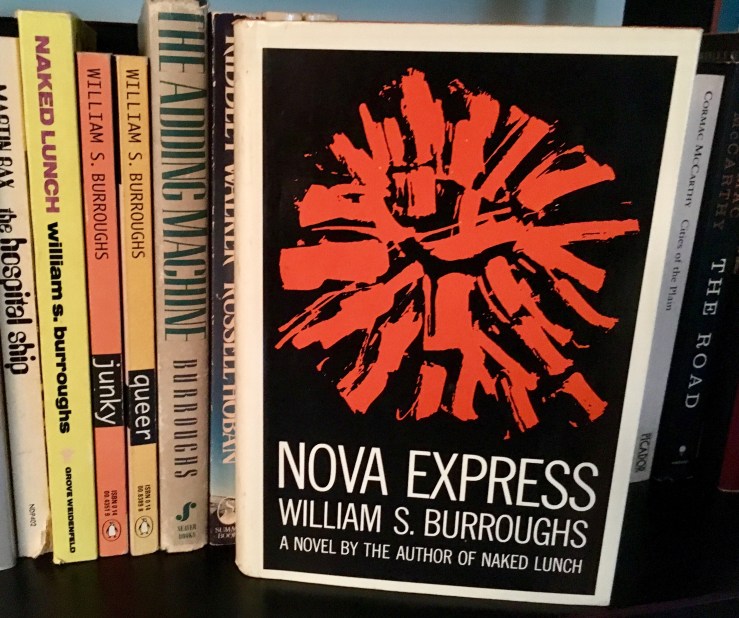
William Burroughs’ Nova Express (Book acquired sometime last week)

img_2863

So I couldn’t pass up this first edition hardback Grove Press edition of William Burroughs’ 1964 novel Nova Express (with cover design by Grove Press stalwart Roy Kuhlman) that I found a few hot days ago, wandering decomposing stacks of pressed leaves here in North Florida. It ate up half of my credit at this particular used bookstore and yet was still cheaper than a new hardback NYT bestseller. Haven’t read the damn thing since college, and don’t own a copy so. Here’s the back cover with an author photo of Burroughs in which he looks like a goddamn baby (how did he live so long?):

img_2866

“[T]he greatest satirical writer since Jonathan Swift”! I’m sure Jack Kerouac wouldn’t like hyperbolize even a smidge. What was Burroughs satirizing? Like modernism, modern machine life, etc. Control, as in all Burroughs.

Biologic Agent K9 called for his check and picked up supersonic imitation blasts of The Death Dwarfs — “L’addition — Laddition — Laddittion — Garcon — Garcon — Garcon” — American tourist accent to the Nth power — He ordered another coffee and monitored the café — A whole table of them imitating word forms and spitting back at supersonic speed — Several patrons rolled on the floor in switch fits — These noxious dwarfs can spit out a whole newspaper in ten seconds imitating your words after you and sliding in suggestion insults — That is the entry gimmick of The Death Dwarfs: supersonic imitation and playback so you think it is your own voice — (do you own a voice?) they invade The Right Centers which are The Speech Centers and they are in the right — in the right — in thee write — “RIGHT” — “I’m in the right — in the right — You know I’m in the right so long as you hear me say inside your right centers ‘I am in the right’” — While Sex Dwarfs tenderize erogenous holes — So The Venusian Gook Rot flashed round the world —

Read the rest of the death dwarf routine.

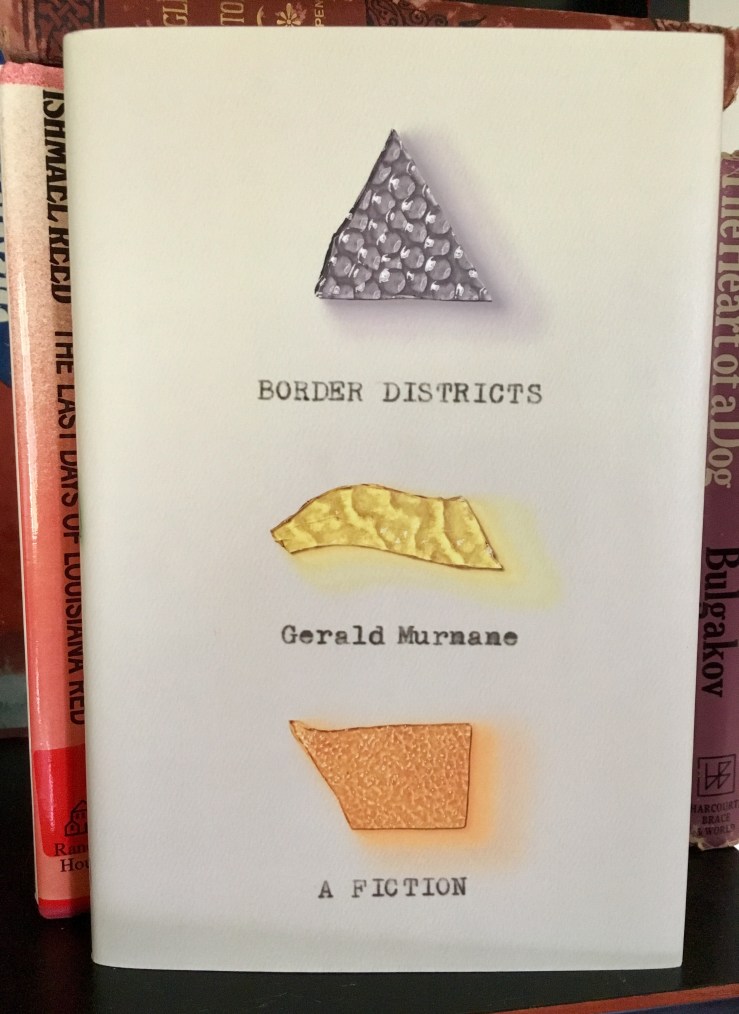
Gerald Murnane’s Border Districts (Book acquired, 20 May 2019

img_2844

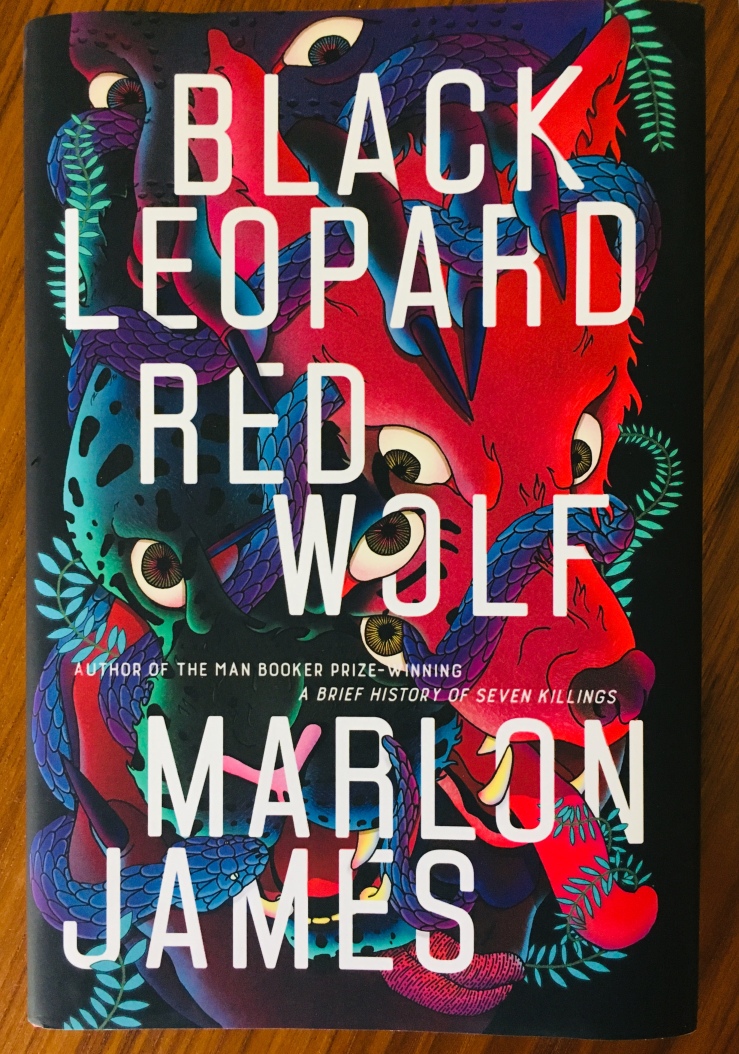
I picked up a hardback copy of Gerald Murnane’s latest novel Border Districts on something of a whim today. It’s only 120 pages in hardback, and, despite Murnane’s metamodernist mode, is probably a bit more cohesive than the last few novels I’ve read (Thomas Pynchon’s Vineland, Kathy Acker’s Don Quixote, and Marlon James’s Black Leopard, Red Wolf). First two paragraphs—

Two months ago, when I first arrived in this township just short of the border, I resolved to guard my eyes, and I could not think of going on with this piece of writing unless I were to explain how I came by that odd expression.

I got some of my schooling from a certain order of religious brothers, a band of men who dressed each in a black soutane with a bib of white celluloid at his throat. I learned by chance last year, and fifty years since I last saw anyone wearing such a thing, that the white bib was called a rabat and was a symbol of chastity. Among the few books that I brought here from the capital city is a large dictionary, but the word rabat is not listed in it. The word may well be French, given that the order of brothers was founded in France. In this remote district, I am even less inclined than I was in the suburbs of the capital city to seek out some or another obscure fact; here, near the border, I am even more inclined than of old to accept as well founded any supposition likely to complete a pattern in my mind and then to go on writing until I learn the meaning for me of such an image as that of the white patch which appeared just now against a black ground at the edge of my mind and will not be easily dislodged.


Strugatsky brothers/Mutis/Pynchon (Books acquired, 8 May 2019)

img_2805

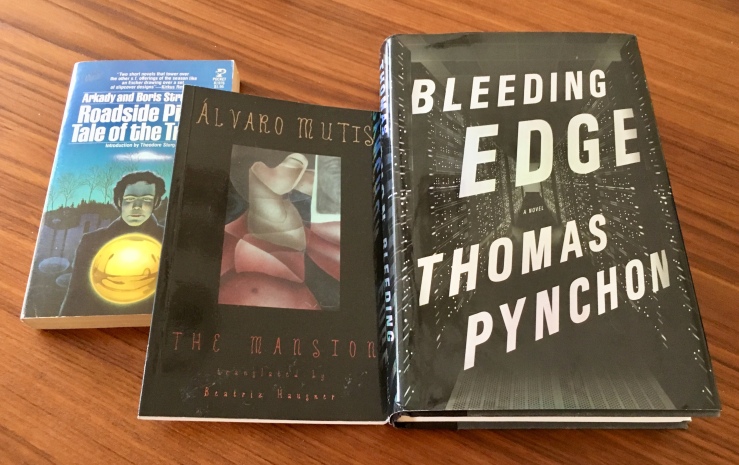
I went to the bookstore on Pynchon in Public Day, 2019 to pick up the only Thomas Pynchon novel I don’t own, Bleeding Edge. I’ve given the book a shot or three, checking it out from the library, but it’s never quite clicked for me. I’m reading Vineland right now though, the other Pynchon novel I haven’t previously read, and finally really digging it. So maybe I’ll read Bleeding Edge after (although I think I’ll probably immediately reread Vineland after reading Vineland).

img_2806

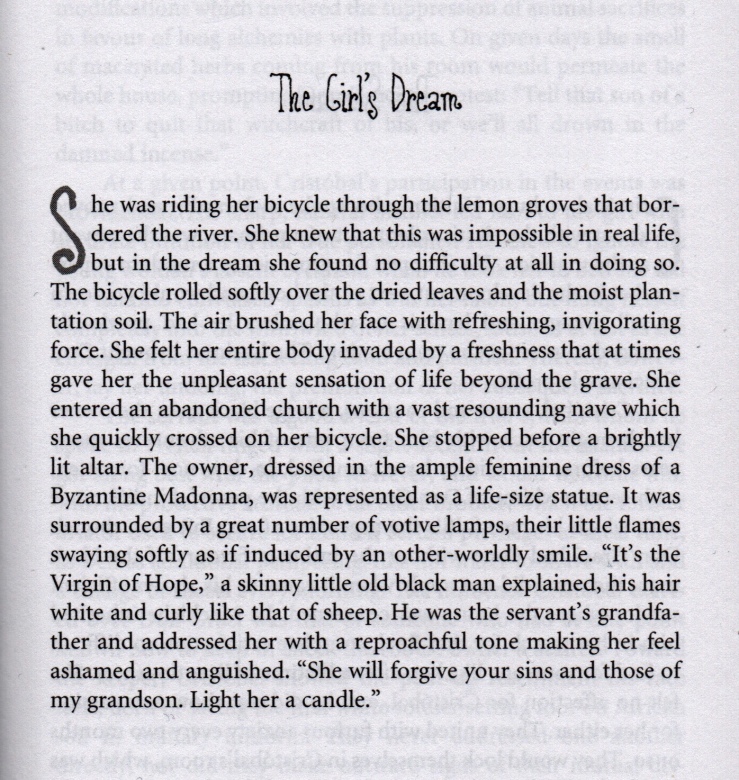
I have a little mental list of books and authors I look for while browsing, including the Australian writer Gerald Murnane whom I did not find a scrap by—but I did unexpectedly find The Mansion, a collection of early short stories and fragments by Colombian author Álvaro Mutis. Here’s one of those little sections (in translation by Beatriz Hausner):

img_2807

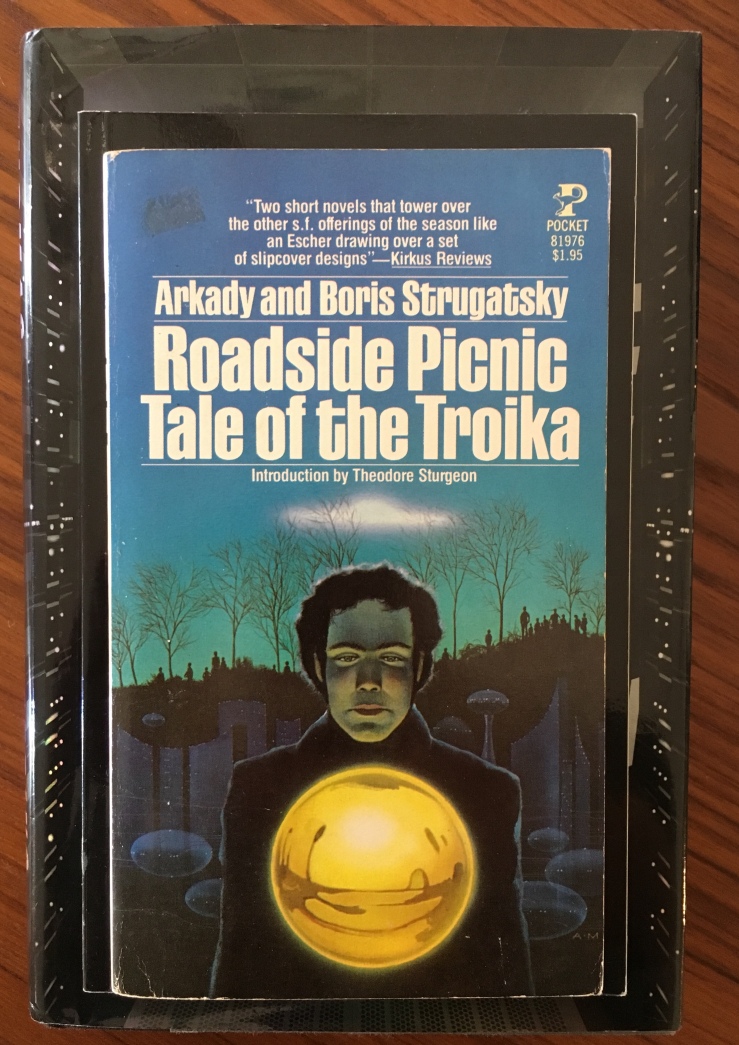
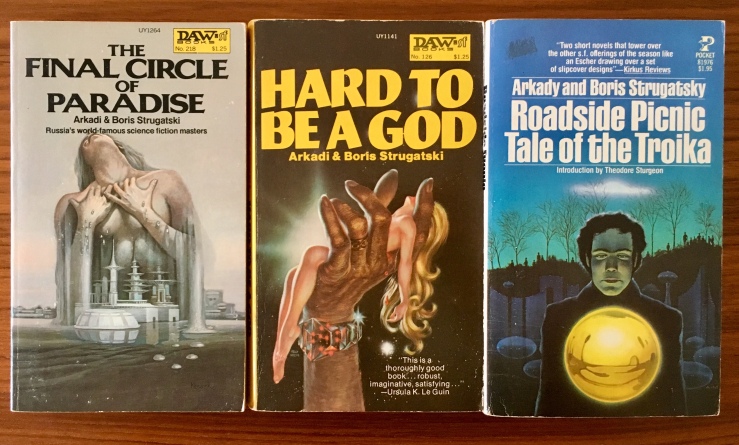
I also like to scan the massmarket scifi paperbacks at this particular used bookstore for original US editions of works by the Strugatsky Brothers. I’ve been a bit lucky lately, finding Hard to Be a God and The Final Circle of Paradise—and I was thrilled to find the Pocket edition of Roadside Picnic/Tale of the Troika. I read Olena Bormashenko’s 2012 translation of this book a few years ago, and loved it (I also really dug her translation of the Strugatsky’s superweird novel The Snail on the Slope). This translation is by Antonina W. Bouis, and includes an introduction by Theodore Sturgeon. I haven’t read Tale of the Troika, but Sturgeon describes it as a satire that evokes “Kafkaesque horror.” Sounds delightful.

img_2809

Pynchon in Public Post, 2019

img_2774

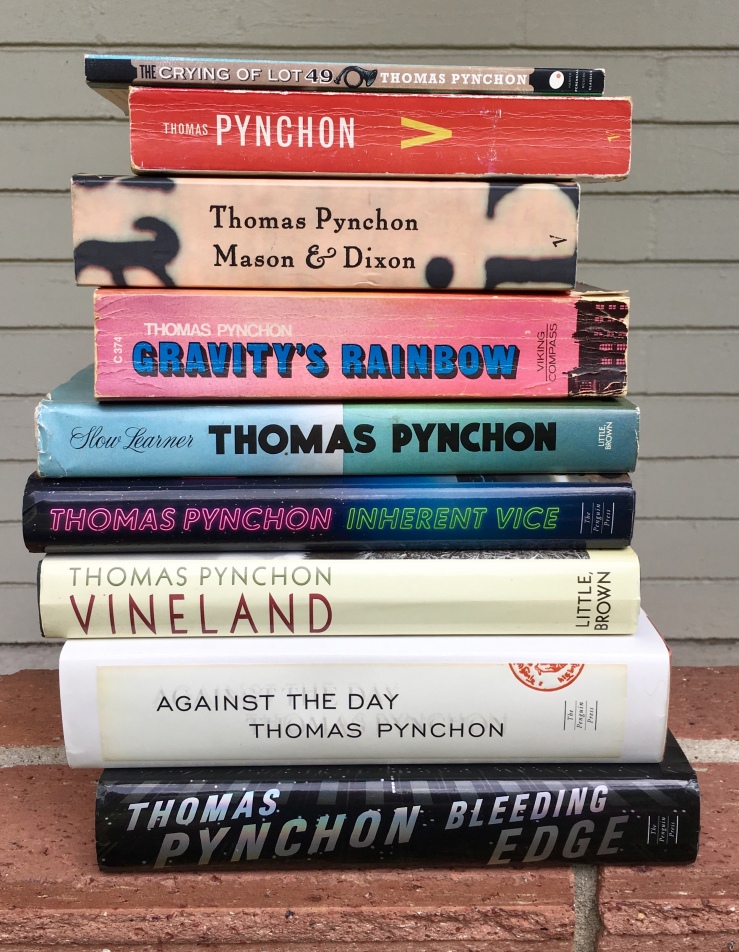
Today is the 82nd birthday of the American author Thomas Ruggles Pynchon, which a lot of jokers on the internet have turned into Pynchon in Public Day.

The spirit of Pynchon in Public Day is zany fun, and mostly centers around reading Pynchon’s works in public and spreading the muted post horn symbol from The Crying of Lot 49 around as much as possible. I am the last person in the world who will read a book in a coffee shop, but I did don my second 49 shirt today—-

66581c11-b06d-4dfe-89e3-0bc25fa0c64c

—and head to the bookstore to pick up the only Pynchon novel I don’t own, Bleeding Edge. More on that in second, but—no real recognition on the shirt today, although I’ve gotten some reactions to the other muted post horn shirt I own over the years, mostly from booksellers (not that interesting I know).

A few years ago though, wandering around downtown Los Angeles (wearing a muted post horn shirt), a stranger passing opposite me on the sidewalk hailed me with this question: “Are you the Trystero, guy?” At least that’s what I thought I said. I looked confused, asked, “What?” and he repeated — “Are you the Trystero guy?”

This particular moment struck me with a neat silly wave of minor paranoia, a Pynchonian moment, maybe—was this some kind of call sign for me to repeat, a password in a game of good fun? So I did the only thing that seemed sensible and replied, “Yes, I am the Trystero.”

The guy then proceeded to tell me that he loved my coffee. This confused me, so I told him that loved his coffee. Then he looked confused. After a few minutes on the hot July L.A. sidewalk we finally figured out a few things: He was referring to Trystero Coffee, which he showed me all about on his iPhone, and I was referring to The Crying of Lot 49, which he promised to read at the end of our exchange.

So anyway I went to the bookstore and picked up Bleeding Edge (and a few other books too, I admit). Along with Vineland, it’s the only Pynchon novel I haven’t read (despite two attempts on each). I’ll read Bleeding Edge before May 8th, 2020 though.

I started a retry of Vineland though. I had hoped to get past the farthest I remember going in—like the first 90 pages—before this post—-but I only made it through the first five chapters these past two days (through page 67). Still, I’d forgotten all about Ch. 5, the “Kahuna Airlines” chapter, which steers the book into new territory, and even though it still hasn’t hooked me yet (unlike the other Pynchons at this point), I’m starting to appreciate it for what I guess it is: Pynchon’s analysis of the eighties, of the absorption of the counterculture into culture, of nostalgia. The jokes are often hilarious and terrible, sometimes simultaneously. Pynchon sets up a Loony Tunes diner bit to deliver the execrable punchline, “Check’s in the mayo” for example. Pynchon names a lawn care company “The Marquis de Sod.” There’s a moment where protagonist Zoyd Wheeler pays for a ludicrous psychedelic party dress with “a check both he and the saleslady shared a premonition would end up taped to this very cash register after failing to clear,” a wonderful little throwaway line that shows Zoyd’s brokeassedness and empathy (and also highlights the Lebowski-Pynchon overlap, if you like). The line that’s cracked me up each time I’ve read it though is Zoyd’s daughter Prairie’s punker boyfriend being described as “the NBA-sized violence enthusiast who might or might not be fucking his daughter.” It’s just so dumb and poetic. I had also missed a few things — the night manager of Bodhi Dharma Pizza is named “Baba Havabananda,” a reference I’m thinking to Gravity’s Rainbow (“Have a banana”). There’s also a reference to the Vulcan hand salute, which shows up improbably in Pynchon’s next novel, Mason & Dixon (more on that here). And there’s the whole Bigfoot motif too, which Pynchon would echo in Inherent Vice, with Zoyd and Zuniga prefigurations of Doc Sportello and Bigfoot Bjornsen. And like every Pynchon novel, I’m sure I’ve already missed a ton of stuff.

Anyway, more on Vineland to come. In the meantime, if you haven’t read Pynchon–why not check him out?

Blog about acquiring some books (Books acquired, 3 May 2019)

img_2751

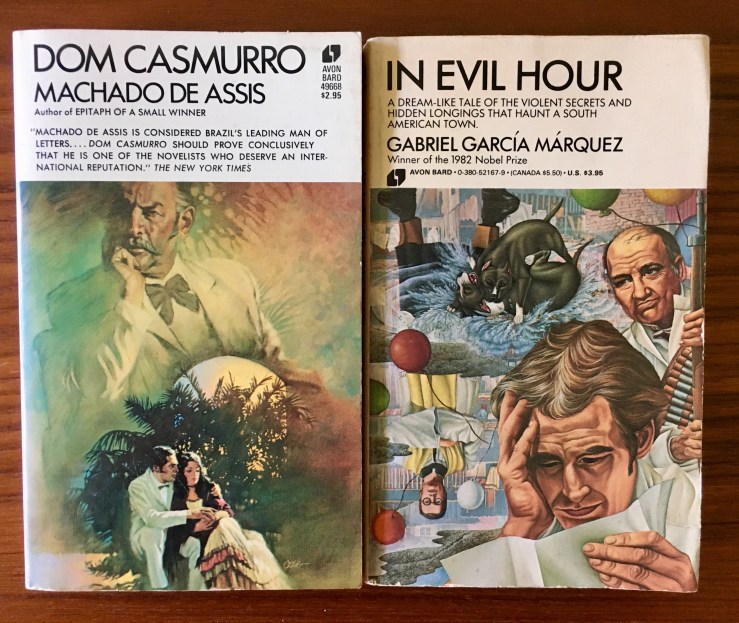
Yesterday marked both my wedding anniversary and the end of my spring semester, so I celebrated by spending a spare hour browsing my beloved used bookshop. I had dropped by last week to drop off a box of trade books—mostly old instructor editions of textbooks no longer in use—but I didn’t pick anything up. I did, however, snap a few photographs of the covers of the old 1980s Latin American authors series that Avon Bard put out. I love these covers, and have bought a few over the years.

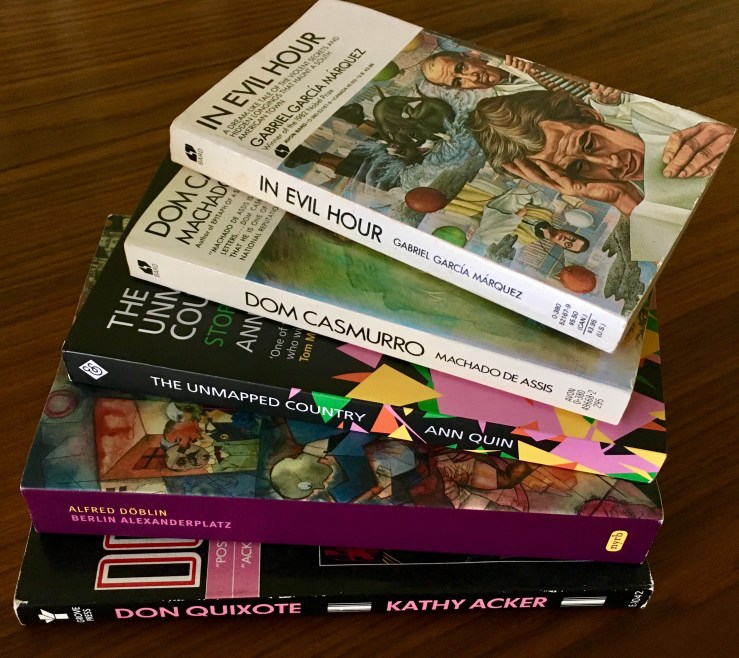
I ended up picking up two yesterday: Gabriel Garcia Marquez’s In Evil Hour and Machado de Assis’s Dom Casmurro. The cover for Dom Casmurro is pretty bad, actually, but I want to read it.

img_2752

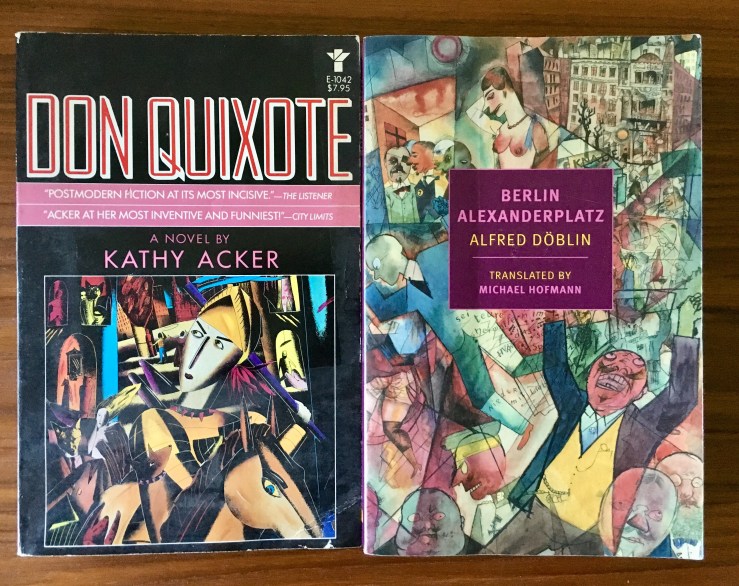
Near the Machado de Assis, I found a used copy of Berlin Alexanderplatz by Alfred Döblin, which I couldn’t resist. I also found a Grove edition of Kathy Acker’s Don Quixote, which I haven’t read since college.

img_2753

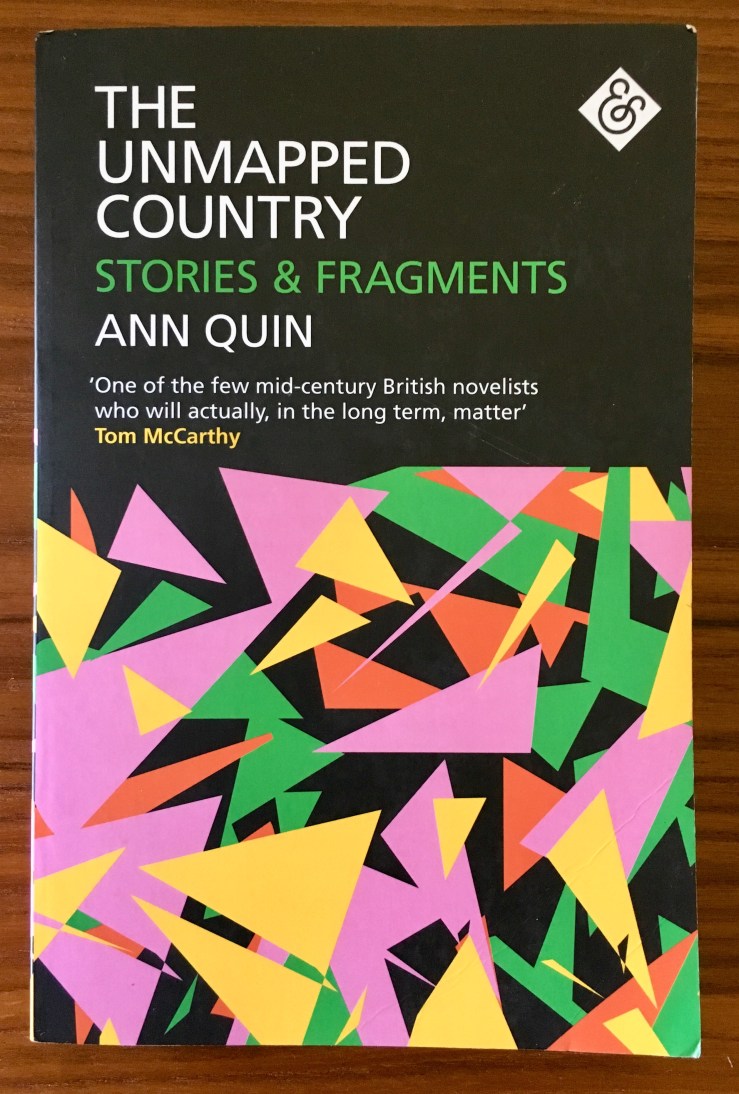
I also got a book in the mail. I loved Ann Quin’s novel Berg so much that I had to get more Quin, so I ordered The Unmapped Country from publisher And Other Stories. Very excited for this one.

img_2754

Baudelaire/Musil (Books acquired, mid-April 2019)

img_2678

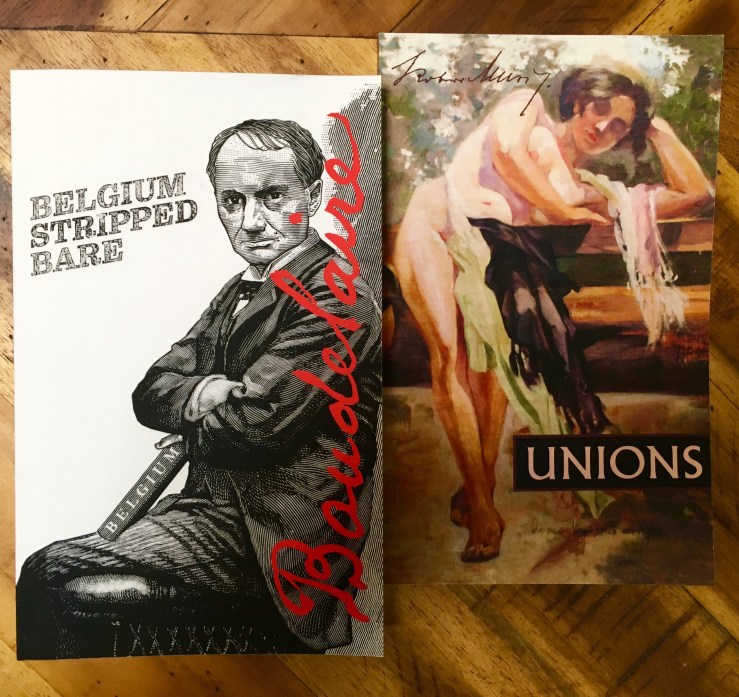
Contra Mundum has two new ones in translation.

Robert Musil’s Unions, translated by Genese Grill, comprises two early stories, “The Completion of Love” and “The Temptation of Quiet Veronica.” From Contra Mundum’s blurb.


The stories in Unions, drawn from Martha’s [Marcovaldi, Musil’s wife] life, explode conventional morality; explore questions of self, union, and dissolution of self; and approximate exceptional sensations of erotic and intellectual perception in a shimmering and exceedingly dense proliferation of metaphors. The images, Musil tells us in a note, are the bone, not just the skin, of these carefully crafted stories. Each word is as motivated as the internal and external moments it attempts to embody in language. Although Musil did not continue to work in this experimental style in his later writing, in a late note he affirmed that Unions, the fruit of much artistic struggle and deep personal engagement, was the only one of his books that he sometimes still read from.

Belgium Stripped Bare is bad boy Baudelaire’s bad-mood visit to Belgium in the mid-1860s. This translation by Rainer J. Hanshe is comprised of Baudelaire’s journal entries, observations, and clippings of his time in Belgium, the place he left Paris for in 1864 in self-imposed exile. The entries, like this one, are fucking mean:

Screenshot 2019-04-25 at 5.25.28 PM

And I have no idea what to make of this—

Screenshot 2019-04-25 at 5.30.48 PM

I have yet to read Hanshe’s lengthy introduction for context, though—but from the blurb:

 Belgium Stripped Bare is an aesthetico-diagnostic litany of often vitriolic observations whose victory is found in the act of analysis itself, in the intoxication of diagnosis, just as great comedians exult in caustic and biting observations of society, a slap in the face of the status quo.

Anne Boyer’s A Handbook of Disappointed Fate (Book acquired, 8 April 2019)

img_2617

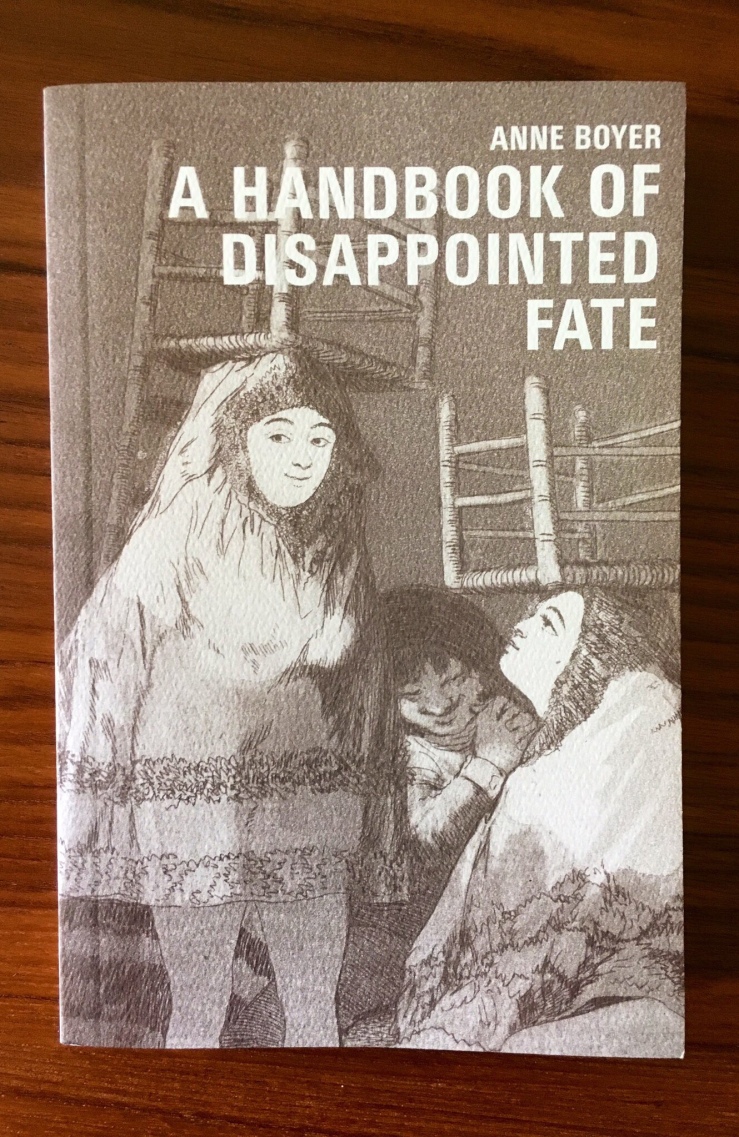
A tremendous thank you to to BLCKDGRD for sending me a copy of Anne Boyer’s strange discursive book of essays-poems-critiques-I-do-not-know-whats A Handbook of Disappointed Fates. It showed up in the mail unexpectedly, and I figured it might be from him (he posted excerpts last week). I’m really digging the book so far, although I haven’t been reading it in a straight line. I did start at the beginning though, which starts like this:

img_2624

(Bartleby prefers not to arrive in this essay on “No,” but it is nevertheless rather rich in its refusals).

Thanks to my friend again.

Blog about giving books away and buying books for a friend and acquiring some books for myself

img_2588

This morning my dean told me that I needed to pack up my office over the summer as the building I’m in will be undergoing a renovation. Even though I knew this was coming, the prospect hit me as a series of big anxiety waves. My walls are covered with masks, art, pictures. I have file drawers of student work going back over a decade. And books. Lots and lots of books. Books and art and stuff that I don’t really have room for anywhere else, even for a season.

Three shelves in my office are doublestacked with old mass market paperbacks from my youth—-Vonnegut, Edgar Rice Burroughs, Hemingway, Jack London, Philip K. Dick, Richard Adams, Stephen Crane, etc. Shabby books, well worn, glue splitting. Over the years I’ve acquired nicer versions of the ones I want to reread, but my sentimental attachment to this small library of paperbacks doesn’t quite fade. When I taught high school, they were the bulk of my classroom library. I insisted on their return, and was always disappointed in students who seemed interested in certain novels but never quite managed to steal them. I was always thrilled when a student would ask to borrow one “over the summer” and then forget to return it.

This sorry shabby mass-market library has been depleted over my past decade teaching community college. Every semester, a few students ask if they can borrow something they see on the shelves when they stop by to chat. It is the most wonderful feeling to give a young person a copy of Brave New World (“I’ve heard it’s good”) or Cat’s Cradle (“Is it as good as Slaughterhouse Five?”) of Studies in Classic American Literature and then insist that they keep it and not worry about returning it.

This morning, a young man approached me after class and told me he’d noticed I had a copy of Do Androids Dream Electric Sheep? in my office—could he maybe borrow it? He made a point of calling it Do Androids Dream Electric Sheep? and not Blade Runner, despite the fact that it’s a movie tie-in. He seemed so happy when I repeated that the book was his now.

Earlier that morning I gave another student my copy of Howard Zinn’s A People’s History of the United States. He’s taken a couple of classes with me, and based on our conversations and his writing, I thought he could us the book more than I could. Again—young kid so happy to get a book, to think that someone thought he should read a particular book—I recall the feeling so vividly, from the other side. I love watching the old library dwindle away. Maybe I can give away more before I have to pack it up again.

img_2578

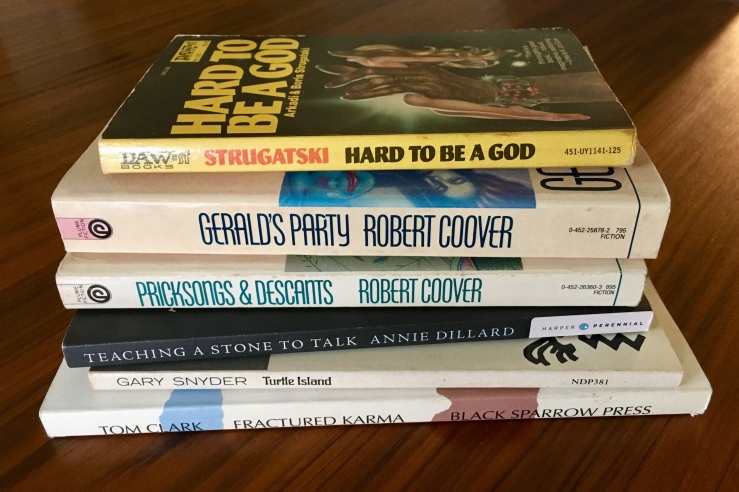
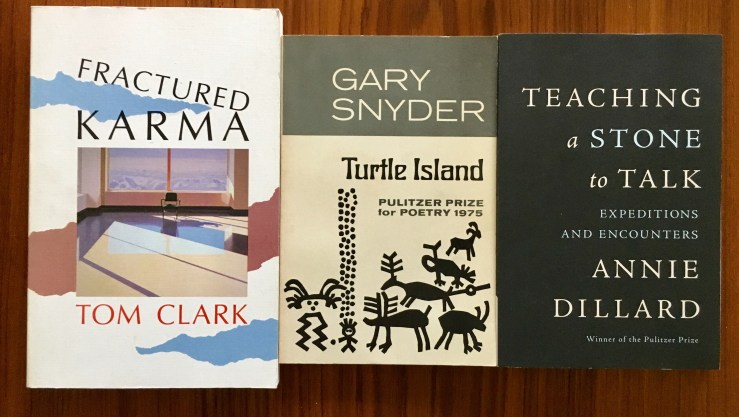
After classes and office hours I swung by my beloved bookstore. I do this a lot on Fridays, in the spare hour that I have between work and picking up kids. I had a little mission this time—buying some books for a great old friend who turns forty this weekend. He loves hiking and camping and poetry—more than I love those things, I think—so I asked twitter to throw out some recommendations, which they did. I had fun browsing the “Nature” section. I ended up getting three: Tom Clark’s Fractured Karma (a favorite of mine), Gary Snyder’s Turtle Island (I had never heard of it until today), and Annie Dillard’s Teaching a Stone to Walk (I dug a few of the short essays I read in the store). I enjoyed buying books for my friend. I am almost 100% he never reads this blog so I’m sure my posting this will not spoil his present, and, if not, Happy Birthday.

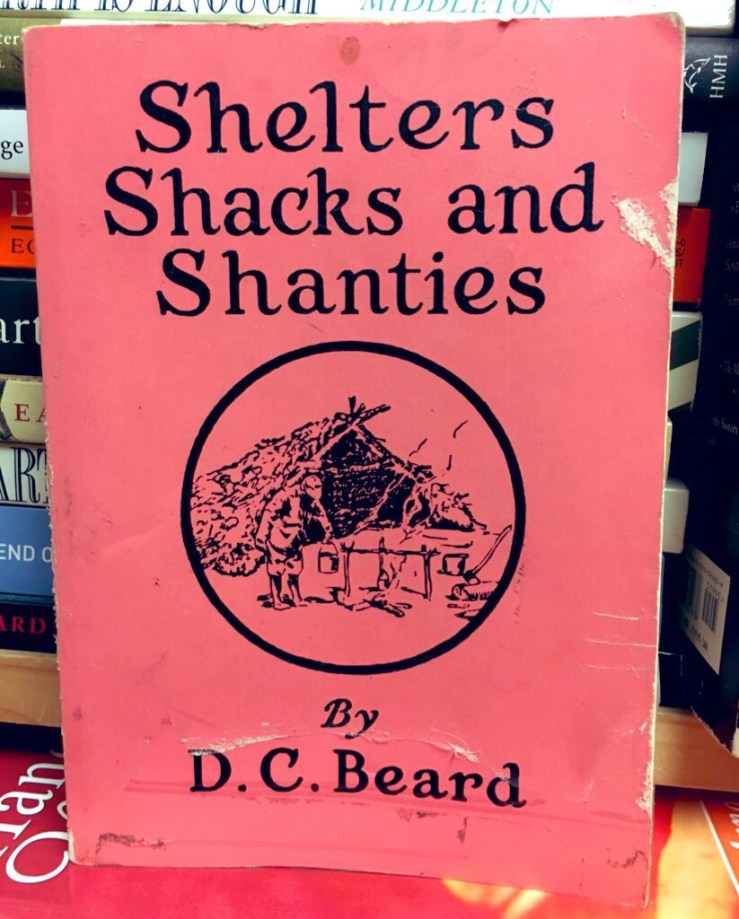
While browsing the “Nature” section, I resisted Shelters Shacks and Shanties—for now. Apologies to D.C. Beard, whose hut diagrams are exquisite:

img_2575

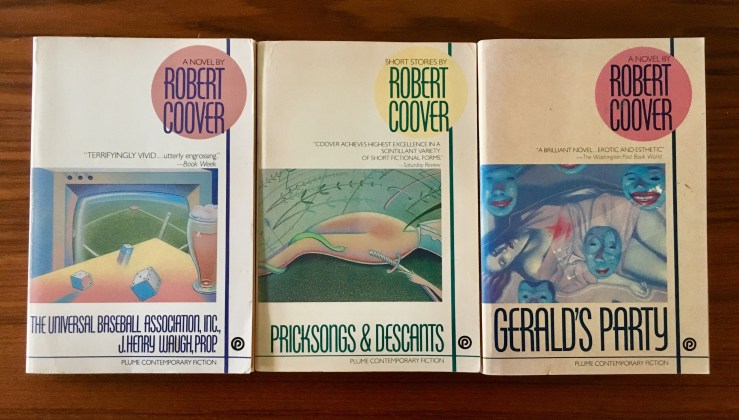
I of course selfishly picked up books for myself, although I didn’t browse for myself. I keep a silly geeky list of names to check in on, including Robert Coover. Even though I’m slogging my way through his first novel, The Origin of the Brunists, I still have a desire to read its sequel, The Brunist Day of Wrath. No wrath, but I picked up Plume editions of Pricksongs & Descants (which I’ve read but didn’t own) and Gerald’s Party (which I haven’t read and now own). The editions match the copy of  The Universal Baseball AssociationInc., J. Henry Waugh, Prop. I picked last summer (and no I have not read goddamn it).

img_2589

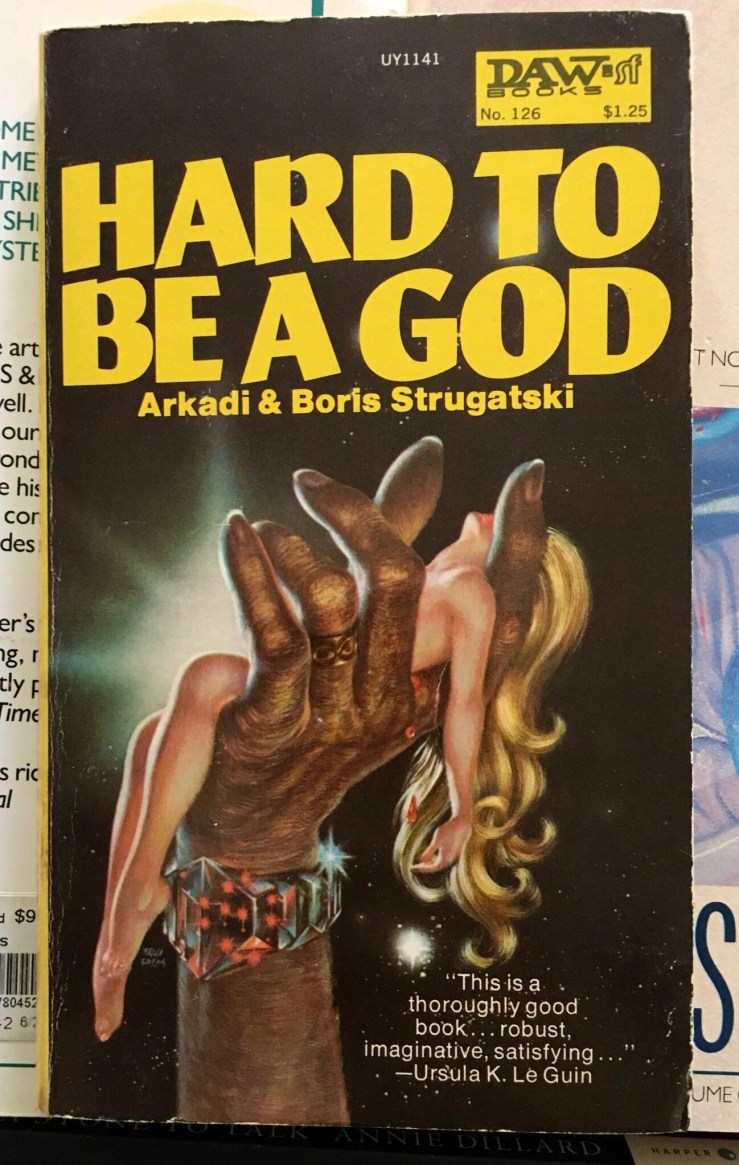
I was also thrilled to pick up a 1974 Daw Paper edition of Wendayne Ackerman’s translation of Arkadi and Boris Strugatsky’s Hard to Be a God. I read Olena Bormashenko’s translation as an e-book a few years ago, after seeing Aleksei German’s film adaptation. (I loved Bormashenko’s translation of Snail on the Slope, by the way).

img_2577

This copy of Hard to Be a God, blurbed by Ursula K. Le Guin, will end up in a stack on my shelf of massmarket paperbacks, cheap pulp editions with colorful, zany, vibrant covers. Lovely unroughed, somehow pristine copies of Philip K. Dick and Stanislaw Lem and Ishmael Reed and Ursual K. Le Guin and J.G. Ballard and etcetera that’s been building up over the years, a private collection—but another library I’m sure I’ll eventually end up giving away.

Blog about starting Marlon James’s novel Black Leopard, Red Wolf (Book acquired, 23 March 2019)

img_2496

I was skeptical about Marlon James’s new novel Black Leopard, Red Wolf when it came out earlier this year in hardback. The novel had plenty of buzz and a big blurb from Neil Gaiman on the back—two things that often turn me off. I was also a bit skeptical about some of the novel’s marketing hype. James referred to his novel as an “African Game of Thrones,” and a lot of folks ran with that tag. James has since professed in an interview that this comparison was a joke.

A friend had read something about the book and texted me questions about it, so I thought, Hey, why not go to my favorite source of literary criticism: What did people who really hated this book have to say about it? And as usual, the one-star reviews at Amazon did not disappoint. Indeed, I was a bit optimistic about Black Leopard, Red Wolf after seeing this curve:

curve

Just look at that! Amazon stats for big publisher/big buzz books tend to be suspiciously positive, but here I saw a sign of something that intrigued me—a book that a lot of people either loved or hated. And some of those one-star reviews?

Filled with gratuitous and rampant cursing, sexuality, violence and brutality. Too much even for fans of dark fantasy. I could not finish it.

…Confusing, nasty, all-over-the-place, just plain LOST. Sorry, but this needs a particular kind of person to stomach or understand.

If you don’t mind being confused and unsure of the direction of a story, this book is for you. You must have patience to read this book. 

sounds like it was written by someone on hallucinogens.

I knew at this point I wouldn’t wait for the paperback.

If James’s comparing Black Leopard, Red Wolf to Game of Thrones was a joke, it’s a pretty good one, the kind of joke that could sell a lot of copies of his novel to fantasy fans who want a plot-driven tale. From the four baffling, surreal, vivid (and often lurid) chapters I’ve read so far, Black Leopard, Red Wolf isn’t really like Game of Thrones at all. There’s an opaqueness to James’s prose, a distancing effect to the language that alienates the reader in the most wonderful way. It’s all so terribly strange! Fans of plot-centric fantasy where the author explains and explicates what’s happening will likely be very quickly bothered by what James is doing here.

So far, Black Leopard, Red Wolf is first-person narrative of a man who may or may not be named Tracker, who is telling his story—or rather, manymany stories—to someone called Inquisitor (shades of One Thousand and One Nights?). These stories flow and roil into and out of each other. The minute James lets us find our bearings a bit, we’re out into new territory—one moment fighting “Omoluzu…Roof walkers” who seem to exist on a tangential plane to our own, and not long after running through a jungle of giant trees with a shapeshifting Leopard who leads us to a village of cursed children. Black Leopard, Red Wolf overflows with energy: the novel is kinetic, bright, and sharp, but also dark, eerie, and upsetting—it’s abject, puzzling, slippery. I love it so far.

The novel completely won me over on its tenth page, with this wild episode:

I kept walking until I came to an old woman by a river with a tall stick sitting at the banks. Her hair white at the sides, her head bald at the top. Her face had lines like paths in the forest and her yellow teeth meant her breath was foul. The stories say she rises each morning youthful and beautiful, blooms full and comely by midday, ages to a crone by nightfall, and dies at midnight to be born again the next hour. The hump in her back was higher than her head, but her eyes twinkled, so her mind was sharp. Fish swam right up to the point of the stick but never went beyond.

“Why have you come to this place?” she asked.

“This is the way to Monono,” I said.

“Why have you come to this place? A living man?”

“Life is love and I have no love left. Love has drained itself from me, and run to a river like this one.”

“It’s not love you have lost, but blood. I will let you pass. But when I lay with a man I live without dying for seventy moons.”

So I fucked the crone. She lay on her back by the bank, her feet in the river. She was nothing but bones and leather, but I was hard for her and full with vigor. Something was swimming between my legs that felt like fishes. Her hand touched my chest and my white clay stripes turned into waves around my heart. I thrust in and out of her, unnerved by her silence. In the dark I felt she was getting younger even though she was getting older. Flame spread inside me, spread to the tips of my fingers and the tip of me inside her. Air gathered around water, water gathered around air and I yelled, and pulled out, and rained on her belly, her arms, and her breasts. A shudder ran through me five times. She was still a crone, but I was not angry. She scooped my rain off her chest and flicked it off in the river. At once fish leapt up and dived in, leapt up again. This was a night when dark ate the moon, but the fishes had a light within them. The fishes had the head, arms, and breasts of women.
“Follow them,” she said.

I followed them through day and night, and day again. Sometimes the river was as low as my ankle. Sometimes the river was as high as my neck. Water washed all the white from my body, leaving just my face. The fish- women, womenfish, took me down the river for days and days and days until we came to a place I cannot describe. It was either a wall of river, which stood firm even though I could push my hand through it, or the river had bent itself downward and I could still walk, my feet touching the ground, my body standing without falling.

So the narrator ejaculates on a witch, she flicks his semen into a river, and the fish who eat it turn into mermaids who lead him to the land of the dead. There, he accomplishes on of the earliest quests in this very-questy novel. Instead of my describing the quest, I’ll point you instead to the publisher’s website–you can read the full first chapter there.

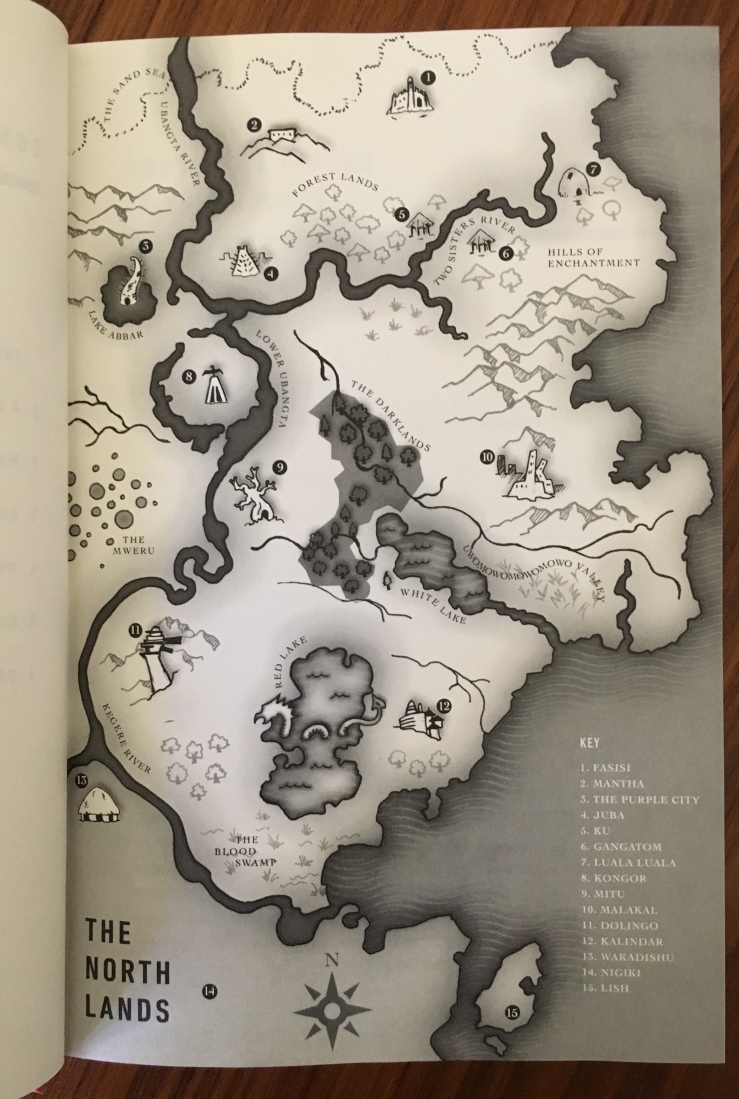
Did I mention that Black Leopard, Red Wolf has maps in it?  Black Leopard, Red Wolf has maps in it.
img_2497

More to come in the future. For now, I’m really digging the novel’s surreal, lurid thrusts into wild territory.
Books acquired (and not acquired) 8 and 15 March 2019

img_2466

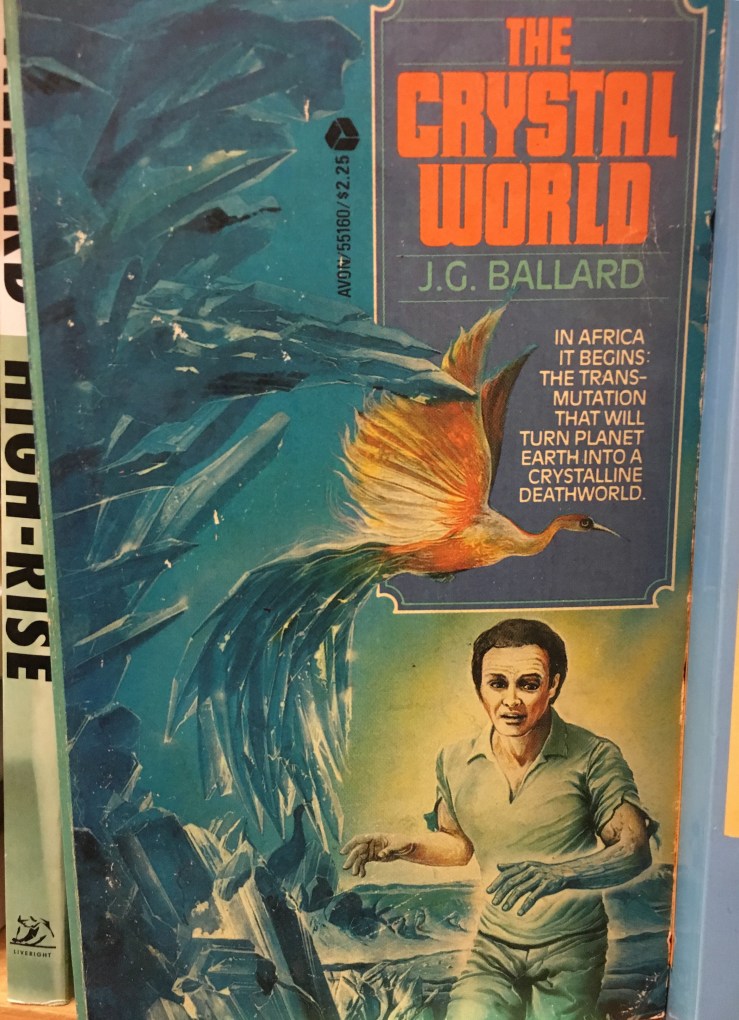
On Friday, I went to my trusty local used bookstore to look, once again, for a copy of Octavia Butler’s novel Parable of the Sower. They had four new copies, all of Grand Central Publishing’s 2000 edition, the cover of which is frankly awful. I know I shouldn’t be so shallow, but…I’ll end up checking out the ebook from my library I guess. I like sci-fi books to look like sci-fi books, not like bland approximations of “literary fiction.” I like sci-fi covers like this edition of J.G. Ballard’s novel The Crystal World which I took a pic of in the shop (I already have a mass market paperback copy of the Ballard and couldn’t bring myself to get another one)—

img_2451

I unexpectedly picked up Anne Hébert’s novel Kamouraska. I’d heard P.T. Smith drop Hébert’s name a couple of times on Twitter, and she sounds interesting. (He wrote about Kamouraska here). The movie tie-in cover is awful, but for two bucks what the hell.

I also finally found another copy of Alasdair Gray’s novel Lanark. I’ve been wanting to re-read Gray’s novel ever since I first read it five years ago. I lent my copy of the novel to someone who never gave it back. One of Gray’s illustrations for Lanark

img_2467

The previous week, I got two weird ones in the mail, Anthony Howell’s Consciousness (with Mutilation) and 99 Practical Methods of Utilizing Boiled Beef, an 1893 cookbook reprinted by Cow Eye Press as a kind of in-joke on indie publishing.

img_2381

Here’s Cow Eye’s blurb:

Originally published in 1893 as a cookbook for the American housewife, 99 Practical Methods of Utilizing Boiled Beef: With a new Preface from the Publisher has been revised, adapted, and reissued as a new work of fiction celebrating the principles of independent publishing.

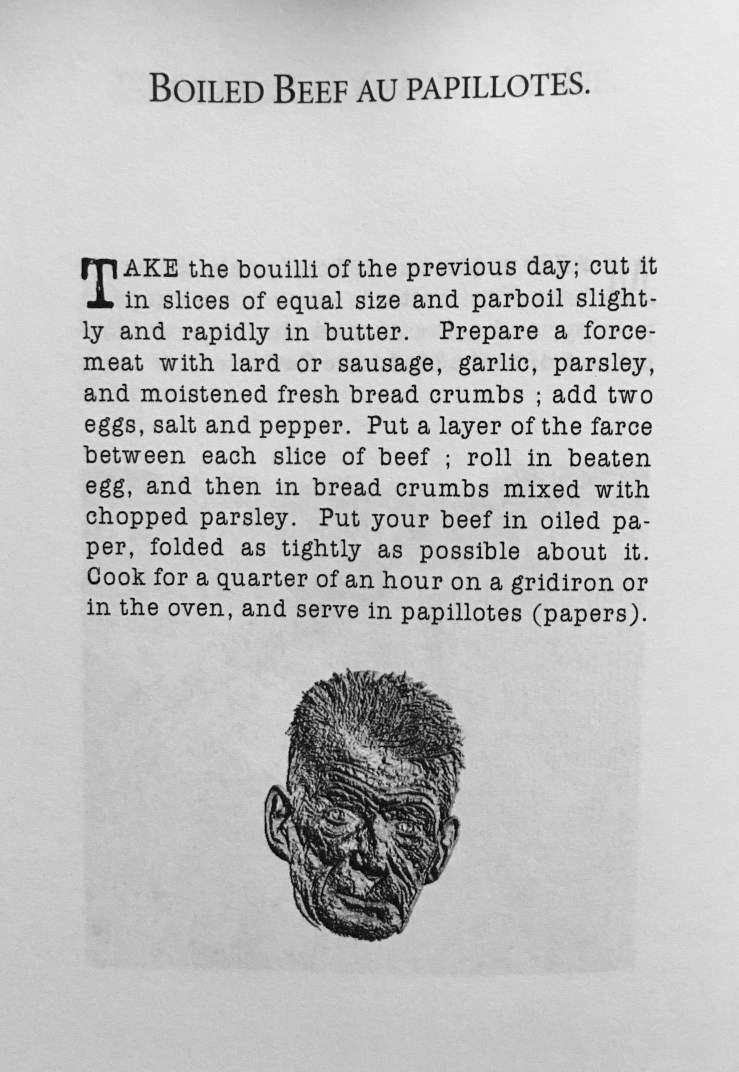
The original 99 Practical Methods was by a pseudonymous author named “Babet,” and purported to be translated from the French by one “A.R.” After reading publisher Natalie Zeldner’s preface and the “New Preface from the Intern,” I wasn’t quite sure that Babet’s original book ever existed. It turns out it does exist, but the prefaces by Zeldner and the (now-supposedly-ex-)intern point to the project as something closer to an aburdist joke about publishing than a recipe book. There are recipes here, though—100 of them, actually—like this one:

img_2469

Cow Eye’s edition includes pictures, like this one of Samuel Beckett, with each recipe, that are often little oblique jokes, I guess. The edition does not include King Henry the Fourth’s Recipe for Stewed Chicken, which is included in the 1893 edition.

In her preface, publisher Zeldner laments that,

All anyone cares about anymore, it seems, is boiled beef. Boiled beef with the satisfying plot arc. Boiled beef with a light dash of novelty. Boiled beef prepared by celebrity chefs. Boiled beef with a titillating message and eminently discoverable hashtag.

So here you go, my friends: here’s your boiled beef.

Indeed.

Poet Anthony Howell’s Consciousness is another strange one. It actually includes another narrative in it, a novella by Mamdouh Adwan called Mutilation. In an author’s note, Howell points to Burroughs’ Naked Lunch as his work’s predecessor, and the collage technique has led me quite randomly through the book. Here’s Howell’s blurb:

Consciousness (with Mutilation) is a non-fiction novel. Every sentence that begins any paragraph within it also serves as the concluding sentence of another paragraph. The trigger for the text is an epileptic seizure the author experienced in April 2018. This event prompted an investigation of the meaning of continuity in individuals, families and states. Could we have been somebody else yesterday, or become somebody else tomorrow? Consciousness annexes a Syrian novella – Mutilation – within its pages; a novella by Mamdouh Adwan, first published in Damascus in 1971. Reading this book is to be drawn into whirlpools, perhaps to drown. It is self-analysis, but, since the author’s lineage is both Jewish and Quaker, it evolves into an analysis of Zionism, of which Howell’s grandfather was a proponent, and of the role of the British in the Middle East. Having experienced sudden lapses of consciousness, the author senses that “life is not a river. Life is a collage.” This book takes The Naked Lunch by William Burroughs and Jealousy by Alain Robbe-Grillet for its literary forbears. In the way of ancient tragedy, the dilemma of the individual becomes the dilemma of the state, in this case Israel, and the author carries the reader into a world of smoke and mirrors, sustained by collage mediated through its formal constraint.

The Cow Eye Press people may wish to know that there is some small mention of cows in Consciousness, including the theft of an Arnesby Brown painting.


An early round-cornered John Barth and Unica Zürn’s The Trumpets of Jericho (Books acquired 26 Feb. 2019)

img_2319

I cleaned up a large bookcase this weekend, and filled a purge box with close to two dozen books. I took that box to the used bookstore I frequent to trade in for store credit, and browsed a bit, hoping to find a used copy of Joy Williams’ The Visiting Privilege (I finished her debut collection Taking Care this weekend).

No luck with the Williams. I ambled down by the Zs though, where I found a new copy of  Unica Zürn’s novella The Trumpet in English translation by Christina Svendsen. I knew a bit about Zürn (mostly her art and text poems, as well as her relationships with Hans Bellmer and Henri Michaux), but I hadn’t heard of Trumpets.

The Trumpets of Jericho is published by Wakefield Press, which has a great track record as far as I’m concerned. I loved their edition of Gisèle Prassinos’ The Arthritic Grasshopper and they’re recent book Letters, Dreams & Other Writings by Remedios Varo is one of my favorite things this year. Anyway, here’s the Wakefield blurb for The Trumpets of Jericho:

This fierce fable of childbirth by German Surrealist Unica Zürn was written after she had already given birth to two children and undergone the self-induced abortion of another in Berlin in the 1950s. Beginning in the relatively straightforward, if disturbing, narrative of a young woman in a tower (with a bat in her hair and ravens for company) engaged in a psychic war with the parasitic son in her belly, The Trumpets of Jericho dissolves into a beautiful nightmare of hypnotic obsession and mythical language, stitched together with anagrams and private ruminations. Arguably Zürn’s most extreme experiment in prose, and never before translated into English, this novella dramatizes the frontiers of the body—its defensive walls as well as its cavities and thresholds—animating a harrowing and painfully, twistedly honest depiction of motherhood as a breakdown in the distinction between self and other, transposed into the language of darkest fairy tales.

The Trumpets of Jericho includes a few of Zürn’s illustrations, including this one—

img_2321

I also browsed John Barth books a bit. I’ve been reading Robert Coover’s early novel Origin of the Brunists, which reminds me a bit of John Barth’s first two novels, The Floating Opera and End of the Road. It’s not the content as much as the style of these early works that I find similar, and I wanted to dip into the prose of The Floating Opera, which I do not own.

(I have a movie tie-in version of End of the Road. I have never seen the movie, but one of my favorite reading memories is reading the entire novel in a friend’s mother’s childhood bedroom in an entire night. We had gone down to Miami for a few days and were staying with his grandfather. His mother had been an English major, and her bedroom seemed wholly unchanged from like, 1973 (the whole house seemed stuck wonderfully in 1973), and I picked up End of the Road at like midnight and read until four or six or whatever. Great times).

Anyway, this round-cornered Avon copy (1964) of End of the Road jumped out at me. I was smitten! I feel like I’ve seen round-cornered massmarket paperbacks before, but I don’t really remember any specifically. So I googled, and came up with this unsigned article from The New York Times from 17 March 1964:

Avon Books, a division of the Hearst Corporation, has attacked the problem of the dogeared paperback by cutting off the ears. The result is a book with rounded corners at the edges and square corners at the binding.

The company has also improved design, type and paper of its paperbacks. The first titles in the new format are “The Time Has Come” by John Rock, Brendan Behan’s “Borstal Boy,” Herbert Tarr’s “The Conversion of Chaplain Carr,” Nathaniel West’s “Miss Lonelyhearts,” Aldous Huxley’s “After Many a Summer Dies the Swan” and “Those Barren Leaves,” and Van Wyck Brooks’s “The Writer in America.”

I dogear the hell out of my books, by the way.

img_2320

The Journal of David Foster Wallace Studies, Vol. 1, Issue 1 (Book acquired, 28 Jan. 2019)

img_2152

The Journal of David Foster Wallace Studies is a peer-reviewed academic journal devoted to the work of David Foster Wallace. The Journal is published by the DFW Society.

img_2153

Here is the table of contents for Vol. 1, issue 1;

img_2154

I enjoyed Nash’s essay on boredom and attention in The Pale King, and found Saylor’s piece on race in Wallace’s fiction—focusing on Wallace’s whiteness within the context of his overall project of literary empathy–especially interesting.

I’m glad to see the journal finally in print after a few years of chatter about its creation. Perhaps there might be a future article or two that takes on the current wave of anti-Wallace think pieces that have been floating around lately.