Two lovely Kafkas (Books acquired, 11.29.2016)

img_4365

Two volumes of Franz Kafka’s letters are forthcoming next month from SchockenLetters to Friends, Family, and Editors; and Letters to Felice.

Both covers are designed by Peter Mendelsund (as are all those lovely Schocken Kafka editions).

Schocken’s blurb for Friends, Family and Editors:

Collected after his death by his friend and literary executor Max Brod, here are more than two decades’ worth of Franz Kafka’s letters to the men and women with whom he maintained his closest personal relationships, from his years as a student in Prague in the early 1900s to his final months in the sanatorium near Vienna where he died in 1924.

Sometimes surprisingly humorous, sometimes wrenchingly sad, they include charming notes to school friends; fascinating accounts to Brod about his work in its various stages of publication; correspondence with his publisher, Kurt Wolff, about manuscripts in progress, suggested book titles, type design, and late royalty statements; revealing exchanges with other young writers of the day, including Martin Buber and Felix Weltsch, on life, literature, and girls; and heartbreaking reports to his parents, sisters, and friends on the declining state of his health in the last months of his life.

And Felice:

Franz Kafka met Felice Bauer in August 1912, at the home of his friend Max Brod. Energetic, down-to-earth, and life-affirming, the twenty-five-year-old secretary was everything Kafka was not, and he was instantly smitten. Because he was living in Prague and she in Berlin, his courtship was largely an epistolary one—passionate, self-deprecating, and anxious letters sent almost daily, sometimes even two or three times a day. But soon after their engagement was announced in 1914, Kafka began to worry that marriage would interfere with his writing and his need for solitude.

The more than five hundred letters Kafka wrote to Felice—through their breakup, a second engagement in 1917, and their final parting in the fall of that year, when Kafka began to feel the effects of the tuberculosis that would eventually claim his life—reveal the full measure of his inner turmoil as he tried, in vain, to balance his desire for human connection with what he felt were the solitary demands of his craft.

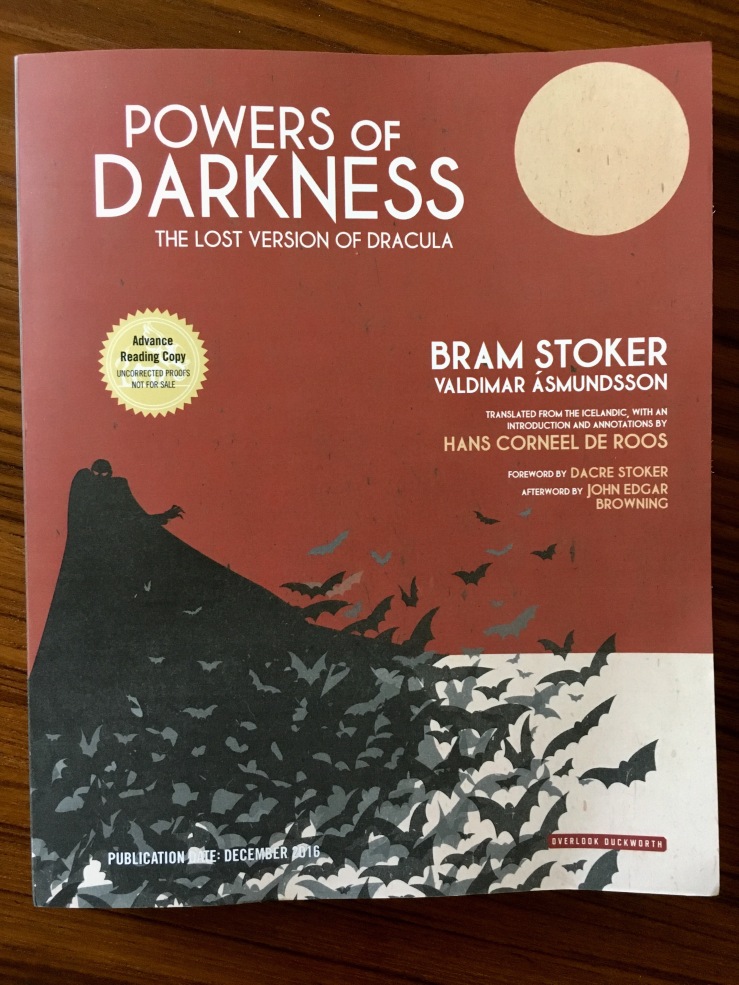
Powers of Darkness: The Lost Version of Dracula (Book required, appropriately, on Halloween, 2016)

img_4120

Ha! Look what showed up in today’s mail?

Powers of Darkness was Valdimar Ásmundsson’s 1901 Icelandic “translation” (Makt Myrkranna) of Stoker’s Dracula; however, translator Hand de Roos discovered that Ásmundsson had actually repurposed and added to the story.

Publisher Duckworth’s blurb:

Powers of Darkness is an incredible literary discovery: In 1900, Icelandic publisher and writer Valdimar Ásmundsson set out to translate Bram Stoker’s world famous 1897 novel Dracula. Called Makt Myrkranna (literally, “Powers of Darkness”), this Icelandic edition included an original preface written by Stoker himself. Makt Myrkranna was published in Iceland in 1901 but remained undiscovered outside of the country until 1986, when Dracula scholarship was astonished by the discovery of Stoker’s preface to the book. However, no one looked beyond the preface and deeper into Ásmundsson’s story.

In 2014, researcher Hans de Roos dove into the full text of Makt Myrkranna, only to discover that Ásmundsson hadn’t merely translated Dracula but had penned an entirely new version of the story, with all new characters and a totally reworked plot. The resulting narrative is one that is shorter, punchier, more erotic, and perhaps even more suspenseful than Stoker’s Dracula. Incredibly, Makt Myrkranna has never been translated or even read outside of Iceland until now.

Powers of Darkness presents the first ever translation into English of Stoker and Ásmundsson’s Makt Myrkranna. Powers of Darkness will amaze and entertain legions of fans of Gothic literature, horror, and vampire fiction.

The intro to the book is fascinating—lots of historical detail, newspaper clippings, and a thorough mapping of Castle Dracula. The text proper is riddled with comparative annotations. A sample:
img_4121

Vítězslav Nezval’s The Absolute Gravedigger (Book acquired, 10.17.2016)

img_4036

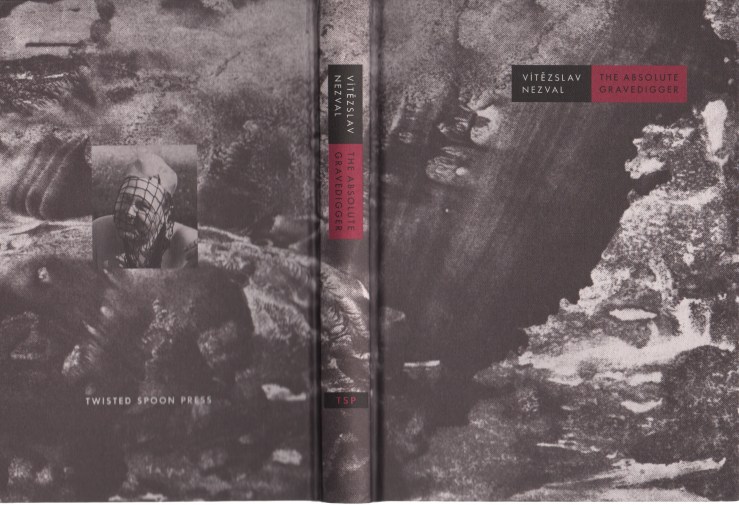
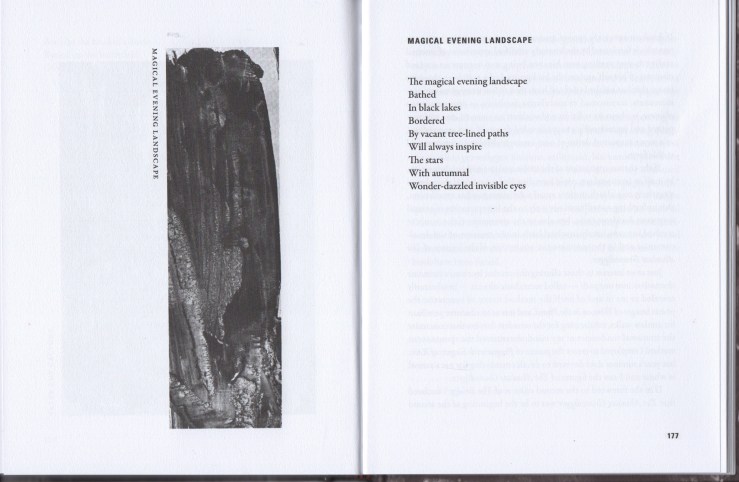
Vítězslav Nezval’s 1937 poetry collection The Absolute Gravedigger is new in English translation by Stephan Delbos and Tereza Novická, thanks to Twisted Spoon Press. As usual, Twisted Spoon’s edition is a beauty, including some of Nezval’s original illustrations.

img_4034

The Absolute Gravedigger seems comprised of seven “books,” and I ended up barreling through one of them, Bizarre Town, in one sitting. Nezval’s surrealist poems are seemingly spare, but the parts jar against each other in unsettling ways; Bizarre Town evokes Bosch, or Goya’s etchings.

img_4035

You might know Nezval as the author of Valerie and Her Week of Wonders, which was adapted into a marvelously disturbing 1970 film by Jaromil Jireš.


More to come as I read more, but for now, here’s Twisted Press’s blurb:

The Absolute Gravedigger, published in 1937, is in many ways the culmination of Vítězslav Nezval’s work as an avant-garde poet, combining the Poetism of his earlier work and his turn to Surrealism in the 1930s with his political concerns in the years leading up to World War II. It is above all a collection of startling verbal and visual inventiveness. And while a number of salient political issues emerge from the surrealistic ommatidia, Nezval’s imagination here is completely free-wheeling and untethered to any specific locale, as he displays mastery of a variety of forms, from long-limbed imaginative free verse narratives to short, formally rhymed meditations in quatrains, to prose and even visual art (the volume includes six of his decalcomania images).

Together with Nezval’s prior two collections, The Absolute Gravedigger forms one of the most important corpora of interwar Surrealist poetry. Yet here his wild albeit restrained mix of absolute freedom and formal perfection has shifted its focus to explore the darker imagery of putrefaction and entropy, the line breaks in the shorter lyric poems slicing the language into fragments that float in the mind with open-ended meaning and a multiplicity of readings. Inspired by Salvador Dalí’s paranoiac-critical method, the poems go in directions that are at first unimaginable but continue to evolve unexpectedly until they resolve or dissolve – like electron clouds, they have a form within which a seemingly chaotic energy reigns. Nezval’s language, however, is under absolute control, allowing him to reach into the polychromatic clouds of Surrealist uncertainty to form shapes we recognize, though never expected to see, to meld images and concepts into a constantly developing and dazzling kaleidoscope.

Arno Schmidt’s The Egghead Republic (Book acquired, 10.20.2016…and a bunch of pics of German-language books)

img_3911

I filled 45 minutes that I had to wait for something at my favorite used bookstore. I spent most of the time perusing the section of German books—I’d never looked at them before. I was kinda sorta browsing for a copy of Arno Schmidt’s Zettels Traum. I picked up the English translation of Zettels Traum (Bottom’s Dream) not quite two weeks ago, and I was curious to see what the original looks like. It may or may not (I’m guessing probably not) have been there—I got a bit lost. (There are almost three million books in this store; at least 1000 or so in the German section, and not particularly well-organized).

did pick up Schmidt’s sci-fi novel The Egghead Republic, which is much much shorter (and much much more accessible) than Bottom’s Dream. Here’s the blurb:

img_3912

I couldn’t help but snap some pic of some of the German-language, German-published books I perused:


>intoxication o’r dizziness< | On "starting" Arno Schmidt's enormous novel Bottom's Dream

img_3817

Arno Schmidt’s 1970 novel Bottom’s Dream is finally available in English translation by John E. Woods. The book has been published by the Dalkey Archive.

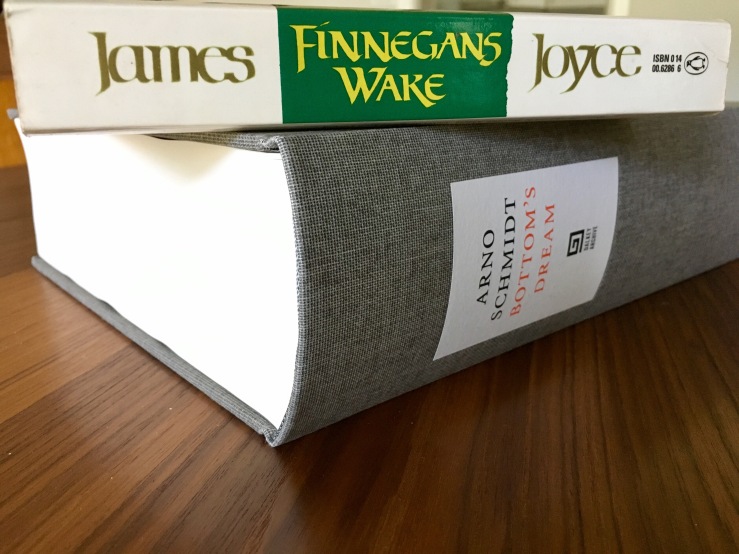
It is enormous.

As you can see in the picture above: Enormous.

But what’s Bottom’s Dream about? (This is the wrong question).

Dalkey’s blurb:

“I have had a dream past the wit of man to say what dream it was,” says Bottom. “I have had a dream, and I wrote a Big Book about it,” Arno Schmidt might have said. Schmidt’s rare vision is a journey into many literary worlds. First and foremost it is about Edgar Allan Poe, or perhaps it is language itself that plays that lead role; and it is certainly about sex in its many Freudian disguises, but about love as well, whether fragile and unfulfilled or crude and wedded. As befits a dream upon a heath populated by elemental spirits, the shapes and figures are protean, its protagonists suddenly transformed into trees, horses, and demigods. In a single day, from one midsummer dawn to a fiery second, Dan and Franzisca, Wilma and Paul explore the labyrinths of literary creation and of their own dreams and desires.

And Wikipedia’s summary:

The novel begins around 4 AM on Midsummer’s Day 1968 in the Lüneburg Heath in northeastern Lower Saxony in northern Germany, and concludes twenty-five hours later. It follows the lives of 54-year-old Daniel Pagenstecher, visiting translators Paul Jacobi and his wife Wilma, and their 16-year-old daughter Franziska. The story is concerned with the problems of translating Edgar Allan Poe into German and with exploring the themes he conveys, especially regarding sexuality.

Did I mention that it’s enormous?

Look, I know that dwelling on a book’s size probably has nothing to do with literary criticism, but Bottom’s Dream poses something of a special case. As an article on Bottom’s Dream at The Wall Street Journal points out, Schmidt’s opus is 1,496 pages long, contains over 1.3 million words, and weighs 13 pounds.

It’s a physical challenge as well as a mental challenge.

And, Oh that mental challenge!

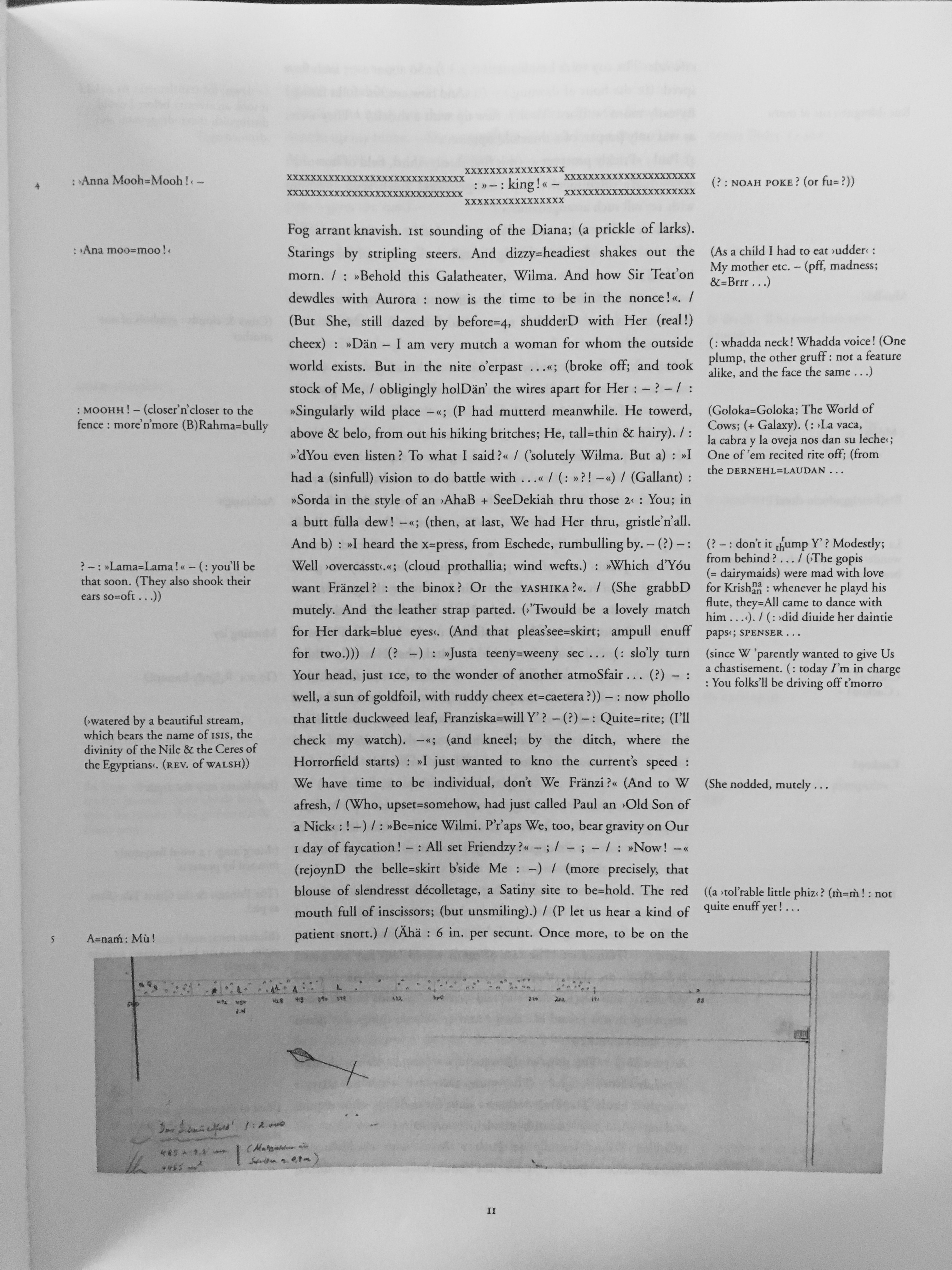
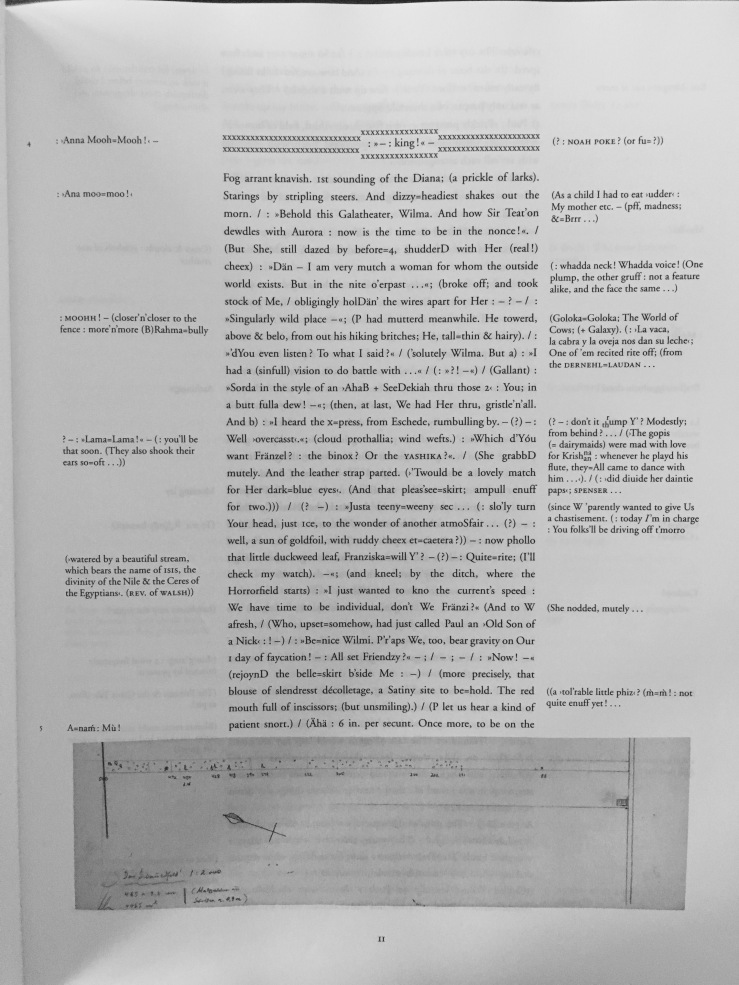
Here’s the first page of Bottom’s Dream (the pic links to a much larger image):
img_3901

Hmmm…? What do you think?

The obvious easy reference point here is Joyce’s Finnegans Wake, which indeed Schmidt was actively following, both in form and style: competing columns, a fragmentary and elusive/allusive style, collage-like metacommentary, an etymological explosion—words as paint, text as meaning. Etc.

(Did I mention it’s a lot longer than Finnegans Wake? Did I mention it’s enormous?)
img_3841

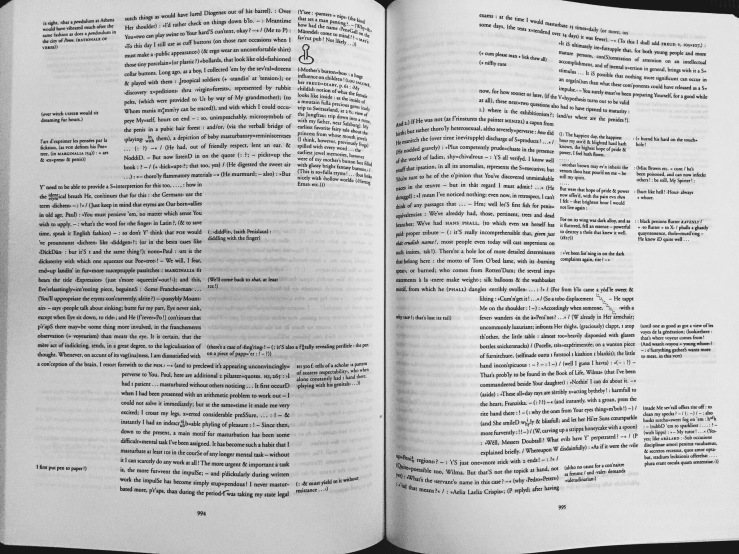
Here’s a glimpse at two random pages (don’t be afraid to click on that image and get the full, y’knoweffect):

img_3811

I’ll never forget one of my graduate school professors warning us not to “peer too long into Finnegans Wake.” He called it an abyss. (The man loved Joyce’s work, by the way, and had studied under Hugh Kenner. I’m not sure if he meant abyss pejoratively. It was, like I say, a warning).

Bottom’s Dream seems like an abyss. As its title (a reference to A Midsummer Night’s Dream) suggests, “it hath no bottom.”

After nine days, I’m “on” page 21 of Schmidt’s novel now, and I have no idea what’s going on. And not just because it’s a primal gobbledygook wordmass. No, part of my incomprehension results from a very strong physical reaction to “reading” Bottom’s Dream. This physical reaction goes beyond the size of the volume—although there’s certainly something to the size. I more or less have to read the thing on my dining room table; it’s dreadfully uncomfortable on a couch, and probably impossible on my hammock or in the bathtub. I can’t really hold it while I read it. I think this matters, although I can’t really say how right now. The multiple columns, marginalia, images, etc. are engaging but also fragment my attention—and I generally find myself flicking through Bottom’s Dream, rather than sustaining the will to follow the “plot.” Right now, anyway, I find myself wrapped up in the aesthetics of reading Bottom’s Dream. It’s a tactile read. I enjoy it most when I smooth my hands over it, jump out of the stream, 20, 30, 100 pages forward, backwards. Relax a little.

Otherwise, Bottom’s Dream becomes a bit of a nightmare for me: I get all dizzy, thirsty, my eyes seem to thrum. Something going on in the inner-ear. It’s like a slow-motion panic attack. When that abyss-stress comes on, I jump ahead.

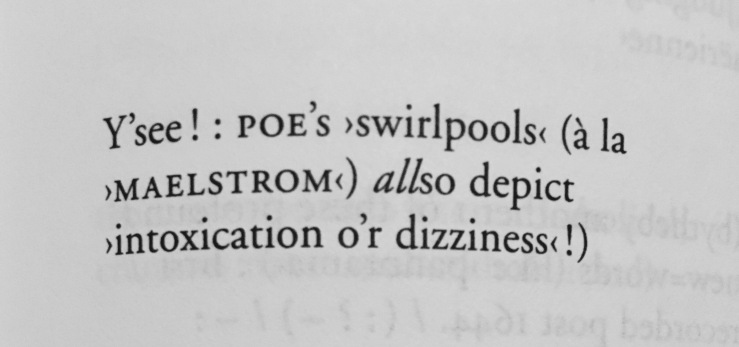
Which is how I found this bit of marginalia (I wish I’d recorded the page when I photographed it; but, also: the iPhone camera is a better recorder of Bottom’s Dream’s aesthetic textuality than any word-processing program. Even a scanner might straighten some of its bends and arcs, its voluminous volume):
img_3818

Yes! Poe’s >swirlpools<! >intoxication o’r dizziness<! — there’s a description for me of my own reaction to reading Bottom’s Dream.

Poe might be something of a guide for me if I do try to stick out wandering through Bottom’s Dream, and his story “A Descent into the Maelstrom,” referenced above, seems a particularly nice parallel to Schmidt’s bigass book.

“Descent” relates the tale of a sailor (a voyager!–a, like, metaphorical reader, y’know) transformed by his encounter with the “Moskoestrom” —a swirling abyss from which no one returns. This vortex, “absurd and unintelligible,” breaks the sailor, “body and soul.” He can’t comprehend the storm. It’s unknowable, un-nameable. At best, he is able to make a sidelong glance at it, but can never plumb its depths. And not only is his glance broken, but all of his senses are fragmented. He escapes the maelstrom, but is unrecognizable to the sailors who rescue him. He becomes the voice of the vortex, the metonymy of a force he can perceive but can’t comprehend.

The maelstrom—the vortex, the abyss—this, for Poe, was language.

I’m not sure how deep I’ll travel into Schmidt’s maelstrom. I managed large sections of Finnegans Wake—but I had a guide in Joseph Campbell’s Skeleton Key. Someone to map out the terrain, show me the ropes, etc.

Obviously, there isn’t much English-language scholarship on Bottom’s Dream right now (and in a very real and radical sense that I’m not touching on here, Woods’s translation is its own separate book). There are a few blogs taking on Schmidt’s monster though. The Untranslated has been writing (in English) about the original German text for over a year now. At Messenger’s Booker, Tony Messenger has been writing about Woods’s translation. There might be some other folks out there attempting the same—if you know let me know. For now, my updates from this maelstrom will be sporadic at best.


Harry Crews’s A Childhood (Book acquired, 9.20.2016)

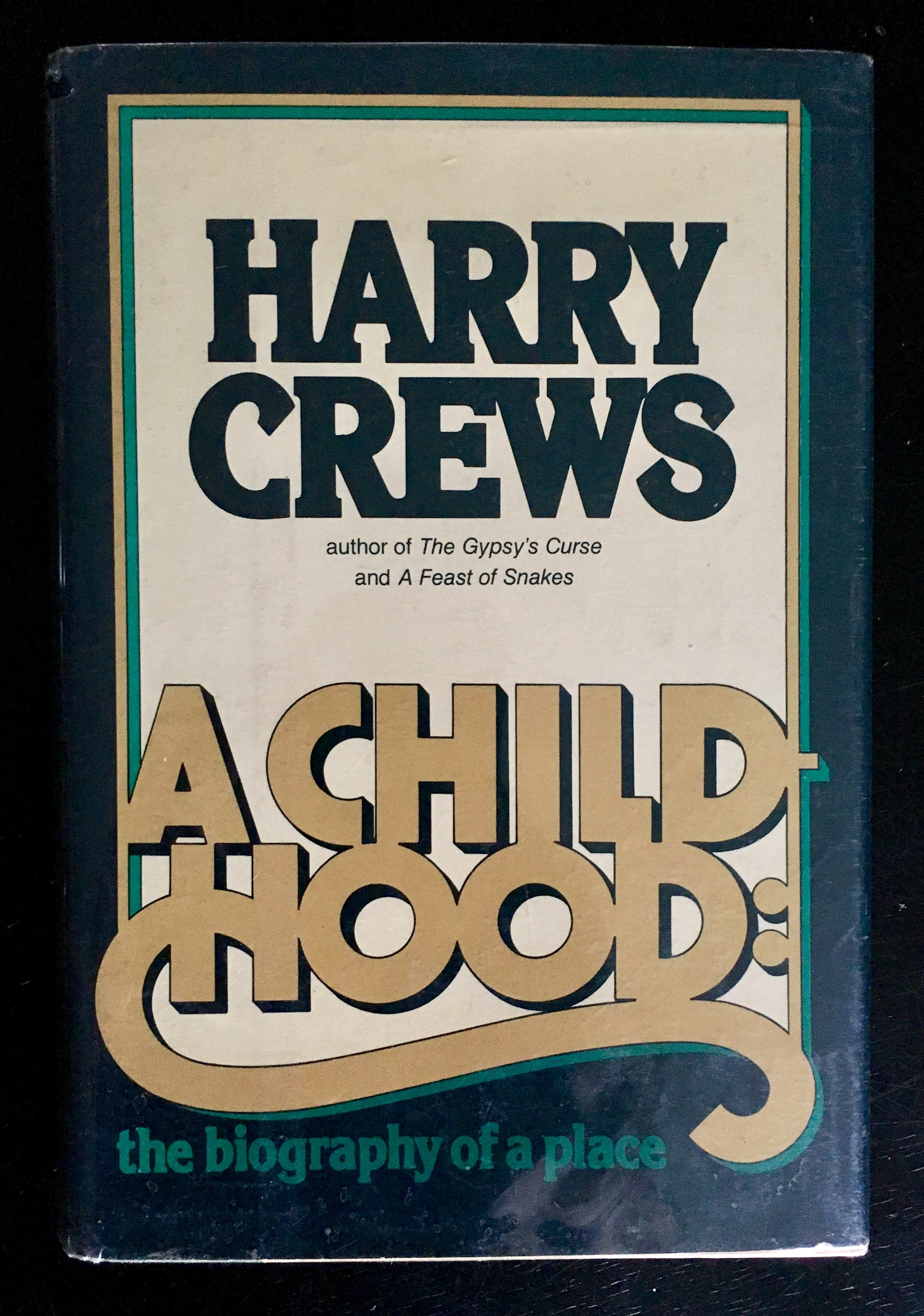
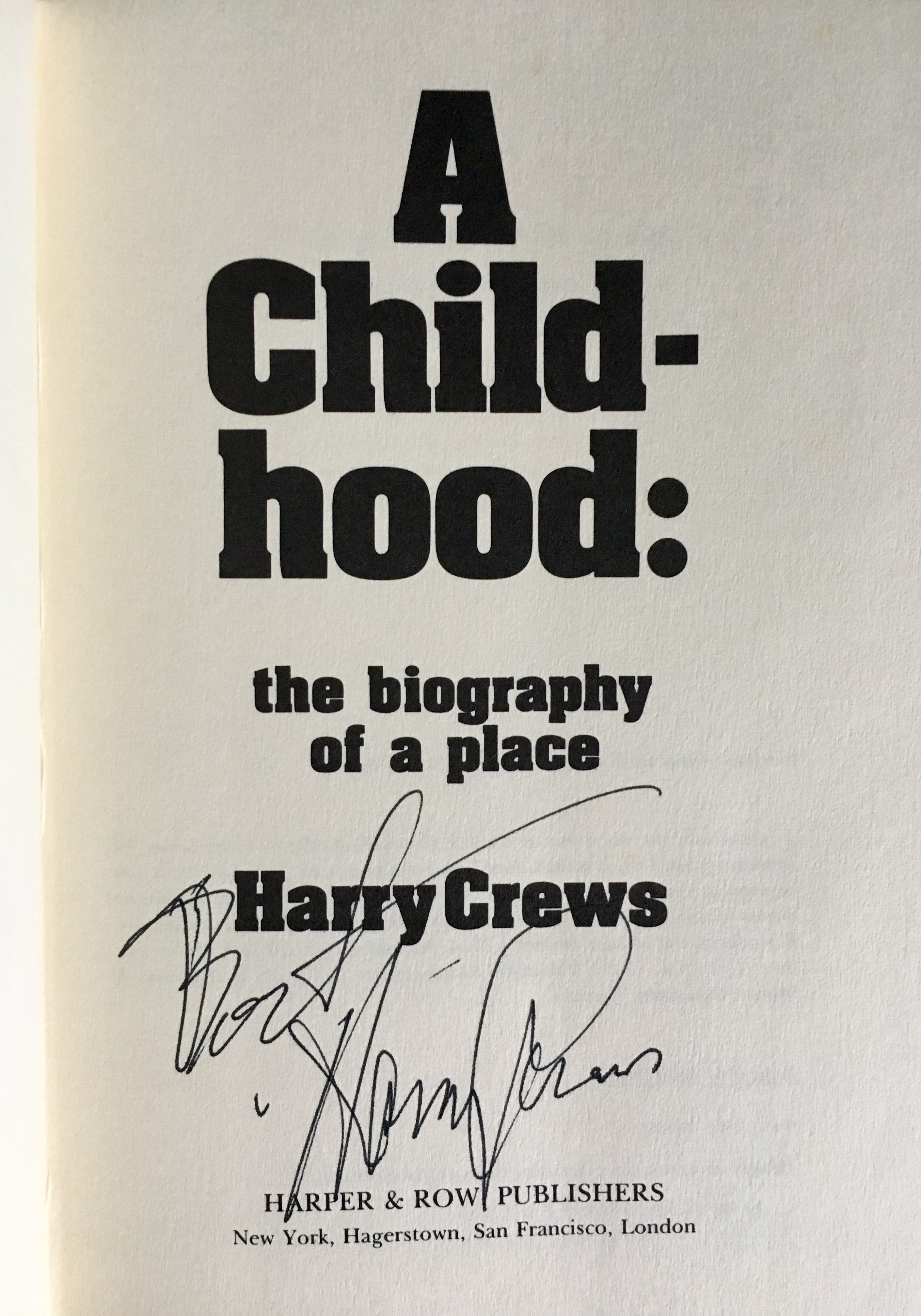
A couple of weeks back, I was looking for John Berryman’s biographical study of Stephen Crane. I did not find it, but I did find a signed hardback edition (not sure if it’s a first or second printing) of Harry Crews’s amazing memoir A Childhood.

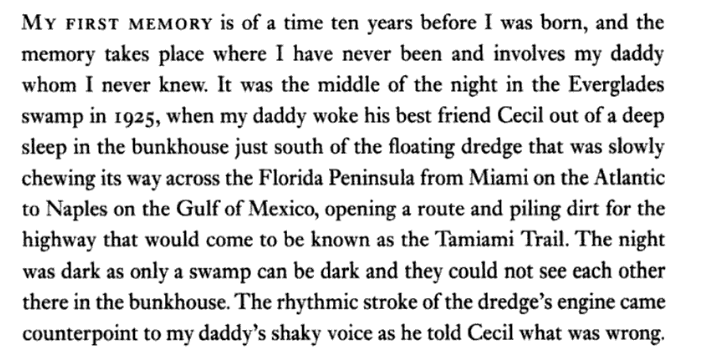
Here’s the opening paragraph:

screenshot-2016-10-14-at-2-44-06-pm

I already have the book (it’s included in Classic Crews—the best starting place for Crews (you should start)), but I couldn’t pass up a signed copy. (It was like 8 bucks I think, and I have store credit out the wazoo).

Still looking for that Crane biography though.

(My thoughts on Crews here).

He Comes in Fire (Book acquired, sometime in early September, 2016)

img_3634

Aaron R. Even’s novel He Comes in Fire is new from Atticus Books. Their blurb:

In the late 1990s a rash of mysterious arsons swept the Southern United States. For some months the fires (many striking African-American churches in rural communities) made the national news, raising fears of a racist criminal conspiracy. Then slowly they faded from the public eye, with no clear pattern, motive, or responsible group ever detected.

He Comes In Fire is a fictional, investigative composite of a country in flames, a dark and fast-paced crime drama that explores how the search for comprehensible answers and meaning can lead a people astray—into false assumptions, accusations, and terrible miscarriages of justice.

The setting is a semi-fictitious county (Zion) in central Virginia, a stark and fallen world of preachers, felons, and lost souls whose voices God no longer hears. When a misunderstood drifter (Lucas Sneed) tangles with a preacher struggling to lead a moral life (Jack Dixon), the two men collide in an unforgiving place teeming with sin, selfishness, and violence.

Marian Engel’s Bear (Book acquired, 9.10.2016)

img_3514

I can’t remember where or how I read about Marian Engel’s 1976 novel Bear, but I was intrigued. In lieu of the blurb, here’s Sara Bynoe at Hazlitt on Bear:

The first thing you need to know about Marian Engel’s 1976 novel Bear is that it is about a woman who has sex with a giant bear. Not a metaphorical, figurative, concept-within-a-creature bear: a real, furry, wild brown bear. There’s more to it than that, but why bury the lead?

The second thing you need to know, however, is that this is not some fringe underground chapbook: it won the Governor General’s award—the highest Canadian honour for the literary arts—in a year in which the jury included Mordecai Richler, Margaret Laurence, and Alice Munro.

We’re talking about Bear right now, though, because someone recently posted its cover and some particularly raunchy sections of the book to Imgur under the title, “WHAT THE ACTUAL FUCK, CANADA?” There was even a little boost in e-book sales after the book’s cover—an illustration of a lithe, topless woman with flowing brunette locks being embraced from behind by a bear standing on its hind legs—went viral. It looks like a Harlequin romance novel: ursine Fabio and his eager human companion, lost together, alone in a world that will never understand the depths of their potentially life-threatening interspecies love.

Hazlitt also commissioned some alternate covers for Bear. I like the cover on the Nonpareil (2003) edition I got (a wood engraving by Wesley W. Bates)—but the original cover is a trashy doozy:

bearprimesma

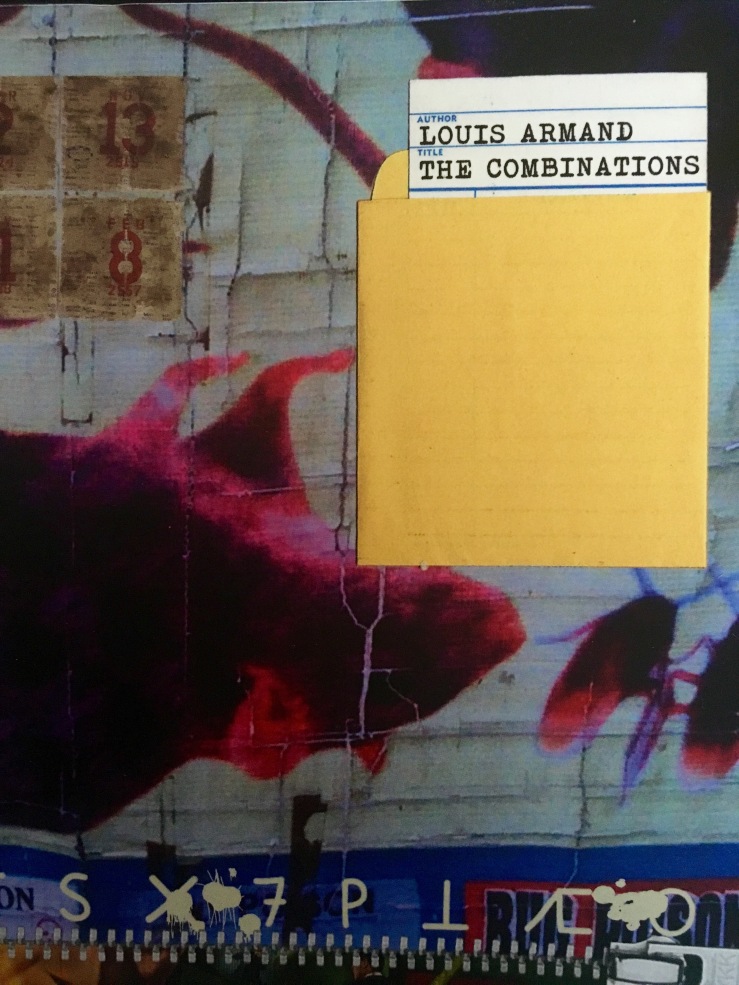
The Combinations (Insanely long book acquired, 9.01.2016)

img_3456

Louis Armand’s novel (or anti-novel, or whatever) is new from Equus Press.

It’s bigger than a brick.

Lots of footnotes, end notes, different fonts, maps, images, etc. The “text proper” (whatever that means) refuses to begin—epigraphs, notes, an “Overture,” etc.

img_3457

Here’s the blurb from Equus:

Fiction. Drama. Art. The “European anti-novel” in all its unrepentant glory is here in THE COMBINATIONS, following in the tradition of Sterne, Rabelais, Cervantes, Joyce, Perec.

In 8 octaves, 64 chapters and 888 pages, Louis Armand’s THE COMBINATIONS is an unprecedented “work of attempted fiction” that combines the beauty & intellectual exertion that is chess with the panorama of futility & chaos that is Prague (a.k.a. “Golem City”), across the 20th-century and before/after. Golem City, the ship of fools boarded by the famed D’s (e.g. John) and K’s (e.g. Edward) of the 16th/17th centuries (who attempted and failed to turn lead into gold), and the infamous H’s (e.g. Adolf, e.g. Reinhard) of the 20th (who attempted and succeeded in turning flesh into soap). Armand’s prose weaves together the City’s thousand-and- one fascinating tales with a deeply personal account of one lost soul set adrift amid the early-90s’ awakening from the nightmare that was the previous half-century of communist Mitteleuropa. THE COMBINATIONS is a text whose 1) erudition dazzles, 2) structure humbles, 3) monotony never bores, 4) humour disarms, 5) relentlessness overwhelms, 6) storytelling captivates, 7) poignancy remains poignant, and 8) style simply never exhausts itself. Your move, Reader.


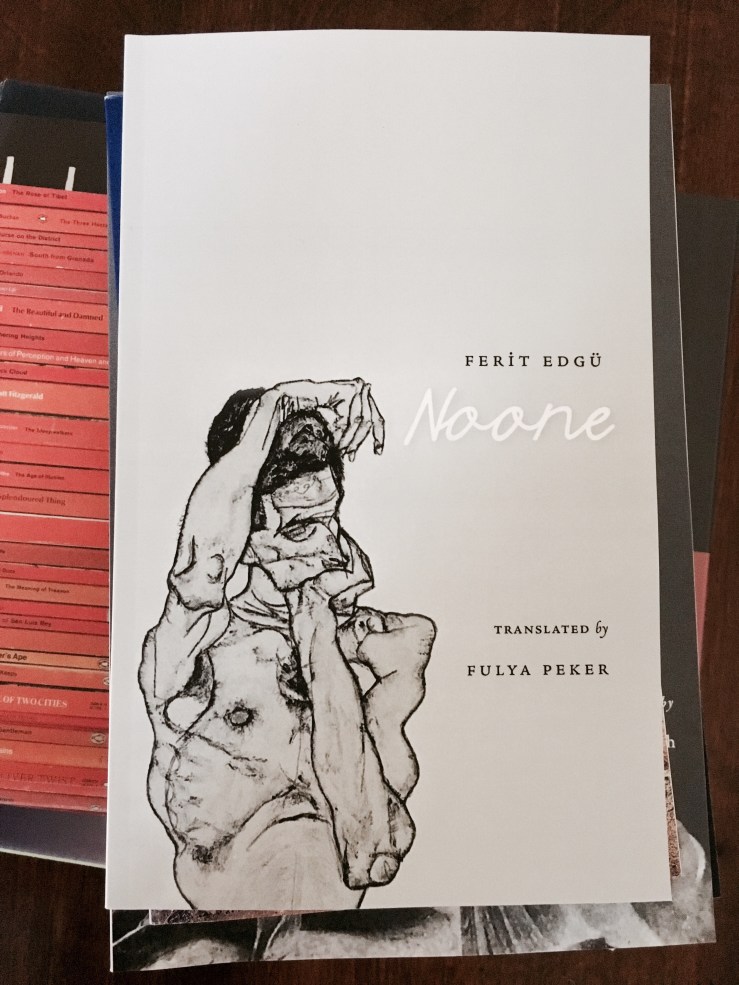
Ferit Edgü’s Noone (Book acquired, 8.17.2016)

img_3380

Ferit Edgü’s Noone is newish in English translation from Contra Mundum Press.

Here’s translator Fulya Peker’s introductory note to the volume:

Written between 1964 and 1974, between Paris and Hakkari, Ferit Edgü’s Noone approaches politics from a poetic standpoint and transforms a social-realist setting into a metaphor for a self that is in search of a subject for a sentence, or rather, that is subjected to a sentence.

As a record of history that is both personal and universal, Edgü depicts in Noone the severity of alienation, the difficulty of communication, the importance of memory, and the hidden rhyme of ‘existential’ and ‘survival,’ two grand words pronounced by pronouns suffering oppression and isolation. Noone compels us to consider the politically imposed idea of “the other” and how this “other” is not somewhere outside, external to us, but within. It prompts us to reflect on questions concerning the failure, or inability, to communicate, not only with others, but with one’s self due to man-made borders, whether lingual or geopolitical. Edgü’s acute and subtle observations about adverse living conditions that reduce humans to creatures of mere subsistence echo not only the current political climate in eastern Turkey, but also the general climate of despotism in many parts of the world.

While people are constantly forced to be ‘noone,’ the traces of history are buried (or frozen) under snow, and memory is dismantled, Noone reminds us of tomorrow, by re-momenting the past and keeping a record of the moment.

Read a sample of Noone.

Delany’s Dhalgren, Forrest’s Eden (Books acquired, 8.09.2016)

img_3280

Picked up Samuel Delany’s famous/infamous novel Dhalgren today. I had an Audible credit and used it to get the audiobook (35 hours!), but as always, I need to do a tandem thing.

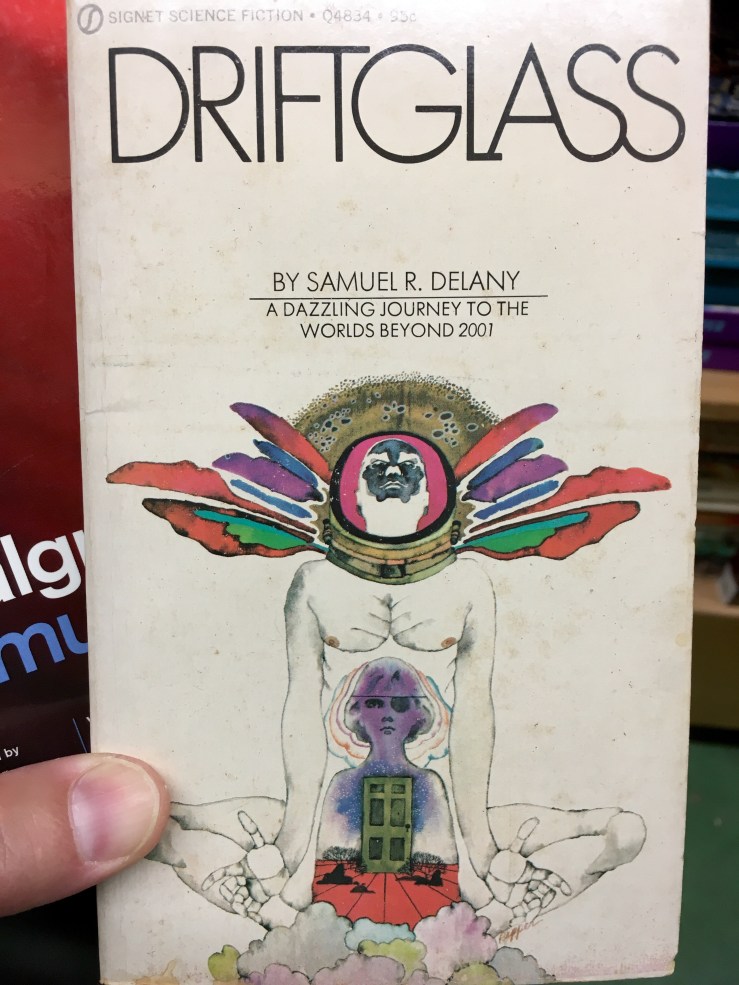
The book is enormous. I also hate the generic “prestige” cover (with a quote from Jonathan Lethem, of course). Okay, “hate” is a bit strong a verb, but c’mon—I mean look at this “genre” cover for Delany’s novel Driftglass that was right by the used copy of Dhalgren I picked up:

img_3277

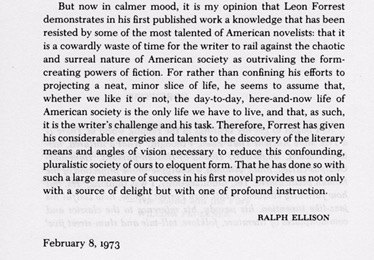
I also picked up Leon Forrest’s 1973 debut novel There Is a Tree More Ancient Than Eden on the recommendation of a dude I follow on Twitter who has the Good Taste. From Ralph Ellison’s introduction:

img_3281-1

I finally break down and buy Easy Riders, Raging Bulls (Book acquired August 1, 2016)

img_3254

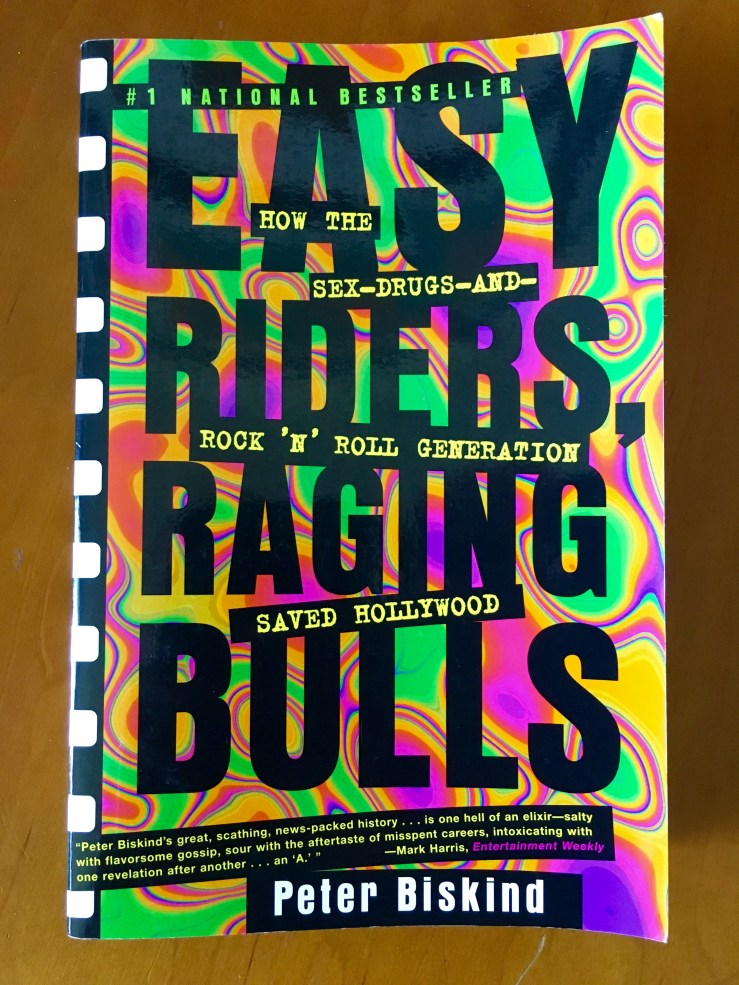
Peter Biskind’s Easy Riders, Raging Bulls has been on my radar forever (or at least since its publication in the late nineties), but I’d resisted picking it up until earlier this week—maybe because of its awful, awful cover (good lord), or maybe because of that off-putting subtitle, which just seems to scream, Boomer mythologies!

But after watching William Friedkin’s Sorcerer a third time, I wanted to read about the film, and Biskind’s book was easy to find used and so well hey. Of course I skipped to the index, and found enough pages on Sorcerer to take the book home. I read those pages at home, right away, with mounting disappointment, or frustration, rather. Biskind’s dishy, bitchy style is annoying, (although I assuaged the bad prose by reading the whole thing, as best as I could, in a Robert Evans accent) and beyond the bad prose is a paucity of information about, like, the actual filmmaking behind Sorcerer. It might be interesting to some people that Friedkin was a total asshole to his girlfriend, but I guess I wanted to know about the work, y’know? At least there’s a whole bunch of stuff on Heaven’s Gate too.

So well anyway, I read the introduction to the book and I can see how it does seem promising, but there’s also something deeply frustrating about Biskind’s approach (from the outset, anyway)—he seems to want to valorize the Baby Boomers at every turn. He introduces the first wave of the heroes of his book at “white men born in the mid- to late ’30s” without a hint of irony, noting that the “second wave was made up of the early boomers.” Of course it’s the names of the heroes that attract the reader: Bogdanovich, Coppola, Nichols, Scorsese, Malick, De Palma, etc. (It’s also sort of fascinating that even in the late ’90s, Biskind, a few paragraphs later, parses the “new group of actors” he lauds (Nicholson, De Niro, Keitel, et al) from “the women,” the “new faces.” Yeesh). My guess is that I’ll pick at this book as I watch and/or re-watch the films of the decade it valorizes—the films of the ’70s—the films that it so boomerishly insists were The Last Great Golden Age of Film Never to Be Replicated Again, Nope, That’s All Folks.

Here’s the trailer for Friedkin’s Sorcerer (the soundtrack is by Tangerine Dream, who also scored Michael Mann’s 1981 film Thief. Mann is not indexed in Easy Riders, Raging Bulls):


I Will Send Rain (Book acquired, some time at the end of July, 2016)

img_3205

I Will Send Rain by Rae Meadows is new in hardback from Henry Holt & Co. Their blurb:

Annie Bell can’t escape the dust. It’s in her hair, covering the windowsills, coating the animals in the barn, in the corners of her children’s dry, cracked lips. It’s 1934 and the Bell farm in Mulehead, Oklahoma is struggling as the earliest storms of The Dust Bowl descend. All around them the wheat harvests are drying out and people are packing up their belongings as storms lay waste to the Great Plains. As the Bells wait for the rains to come, Annie and each member of her family are pulled in different directions. Annie’s fragile young son, Fred, suffers from dust pneumonia; her headstrong daughter, Birdie, flush with first love, is choosing a dangerous path out of Mulehead; and Samuel, her husband, is plagued by disturbing dreams of rain.

As Annie, desperate for an escape of her own, flirts with the affections of an unlikely admirer, she must choose who she is going to become. With her warm storytelling and beautiful prose, Rae Meadows brings to life an unforgettable family that faces hardship with rare grit and determination. Rich in detail and epic in scope, I Will Send Rain is a powerful novel of upheaval and resilience, filled with hope, morality, and love.

Two Brazilian sci-fi books (Books acquired, 7.21.2016)

img_3106

Yesterday, I spent over an hour browsing old sci-fi paperbacks at my favorite book store. I posted some pics of ones I didn’t pick up.

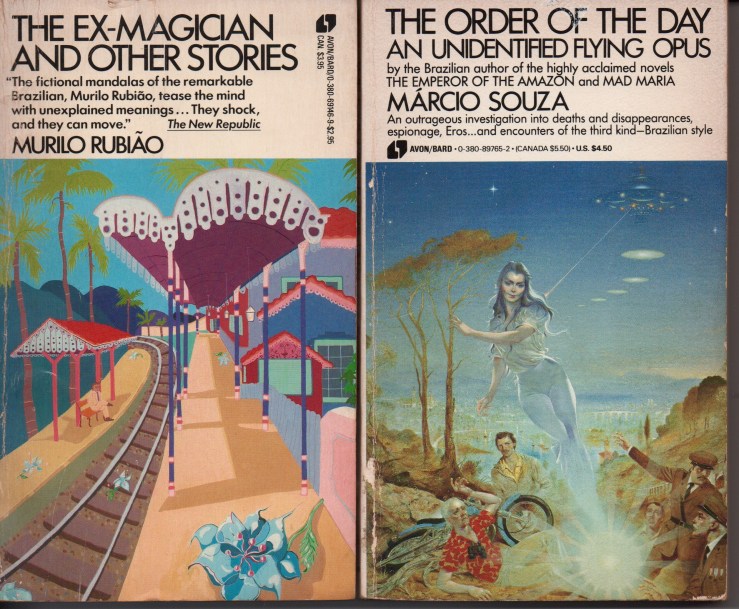
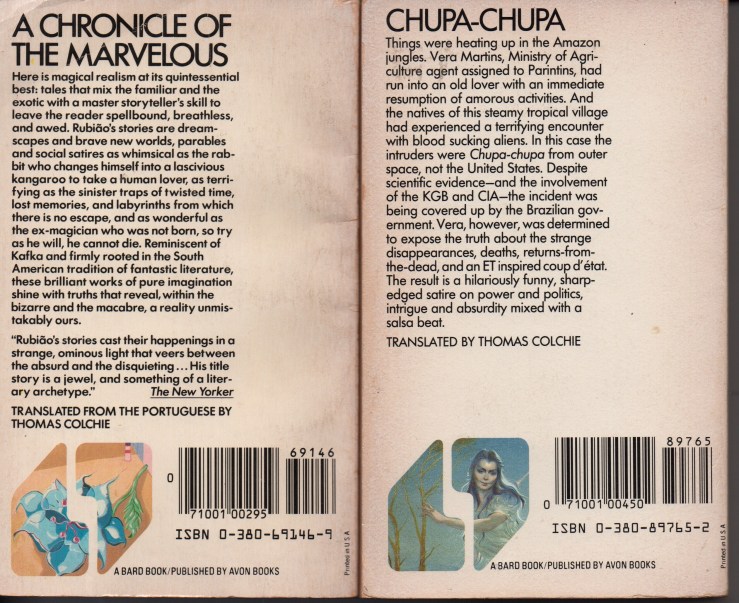
I couldn’t resist these two though, books by Brazilian authors I’d never heard of—The Order of the Day, a novel by Marcio Souza, and Murilo Rubiao’s collection The Ex-Magician and Other Stories.

img_3107

Books acquired, 7.13.2016

img_3010-1

Four review copies in yesterday’s mail (solicited and unsolicited). I get behind on these books acquired posts, so I’ll lump the books in all at once and quickly.

First and foremost: Lucia Berlin’s collection A Manual for Cleaning Women is new in trade paperback from Picador. The book got a ton of buzz last year when it came out in hardback last year, and I didn’t read it then, but I did read the Black Sparrow-published collection HomesickMany of the stories in Manual were first published in Homesick. They are very good stories—funny and gritty and elegant and sad and real. Full review forthcoming; in the meantime here’s Lydia Davis, who wrote the intro to Manual:

I have always had faith that the best writers will rise to the top, like cream, sooner or later, and will become exactly as well-known as they should be-their work talked about, quoted, taught, performed, filmed, set to music, anthologized. Perhaps, with the present collection, Lucia Berlin will begin to gain the attention she deserves.

Continue reading “Books acquired, 7.13.2016”

(Another copy of) The Charterhouse of Parma (Book acquired sometime the week before last)

img_2734

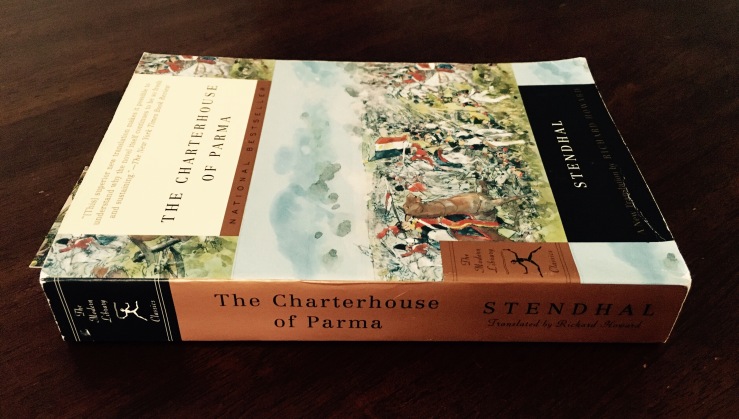
I included Stendhal’s The Charterhouse of Parma in a post I wrote a few weeks ago about books I start repeatedly yet have never been able to finish. Various folks on Twitter and elsewhere told me I need to stick it out with the novel, including Jacob Siefring, who suggested I try Richard Howard’s 1999 Modern Library translation (instead of the 1925 Moncrieff translation I’d been struggling with).  Jacob wrote about this translation on his blog Bibliomanic, by the way. I’m a little over halfway through with Stanley Elkin’s novel The Dick Gibson Show and I plan to give this a shot next.

Luke Pearson’s Hildafolk series (Books acquired, 6.20.2016)

img_2736

The kind people at Nobrow sent along three gorgeous Hilda graphic novels by Luke Pearson ten days ago, and we’ve (my family, I mean) read each of them repeatedly since then—we’ve read them independently and to each other (my daughter started her own Hilda comic). I’ll have a proper essay-review thing up down the line, but for now, the short review: These are excellent, gorgeous books—funny, richly-detailed, sweet, and just a little scary (when they need to be).