Glows in the dark | Notes on Thomas Pynchon’s Shadow Ticket, Ch. 1-7

Let’s start with the epigraph:

“Supernatural, perhaps. Baloney…perhaps not.”

—Bela Lugosi,
in The Black Cat (1934)

Dr. Vitus Werdegast, Bela Lugosi’s character in The Black Cat, gives this line to mystery novelist Peter Alison (portrayed by David Manners). Here is the scene:

Pynchon is not the first to sample this line.

The epigraph for Shadow Ticket highlights a concern with the metaphysical that Pynchon has shown throughout his novels. The epigraph encapsulates this concern, ties it to the talkies, the American Gothic tradition, and wedges in a slice of absurd (and drily-delivered) humor early on.


Chapter 1; the novel’s first line:

“When trouble comes to town, it usually takes the North Shore Line.”

Shadow Ticket is set, thus far and for the most part, in Milwaukee Wisconsin in early 1931. For about half a century, The Chicago North Shore and Milwaukee Railroad ran from Chicago to Milwaukee, roughly a long the coast of Lake Michigan. It ceased operations in early 1963.

(Even went through Kenosha, kid.)
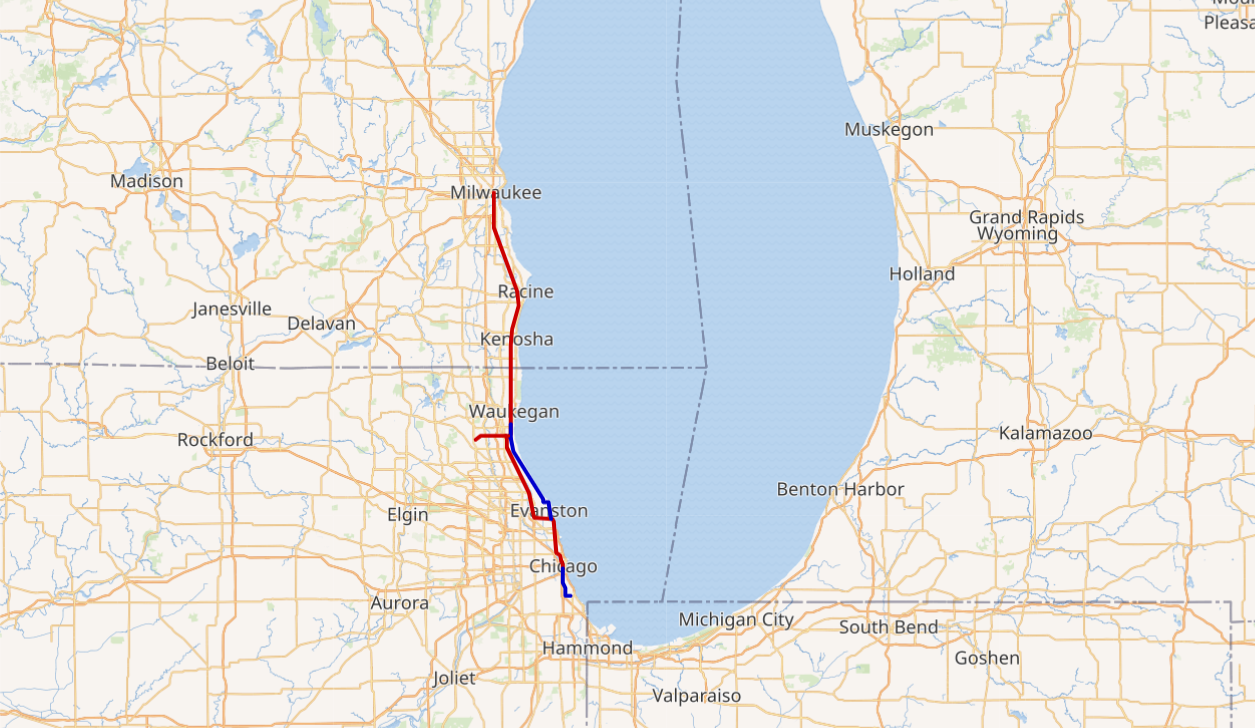
The opening paragraphs introduce us to Shadow Ticket’s hero Hicks McTaggart and establish a snappy, hardboiled style reminiscent of films of the thirties and forties (or films of the Coen Brothers that pay homage to those films).


“Everybody is looking at everybody else like they’re all in on something. Beyond familiarity or indifference, some deep mischief is at work.”

These lines append the postprandial scene of a noontime explosion. We get paranoia and a whiff of the supernatural — that “deep mischief…at work.”


“Pineapples come and pineapples go,” declares Hicks’s boss Boynt Crosstown, dismissing the explosion. (Perhaps the name Boynt Crosstown evokes “Burnt Cross Town”?)

Pineapples, slang for grenades specifically or explosives more generally, pops up repeatedly early on in Shadow Ticket.


“…local multimillionaire Bruno Airmont, known throughout the dairy industry as the Al Capone of Cheese in Exile…this one’s more about his daughter Daphne…Seems your old romance has just run off with a clarinet player in a swing band.”

Daphne Airmont, Runaway Cheese Heiress: an early MacGuffin or possible red herring to look out for. One of many, many of Pynchon’s female characters on the run.
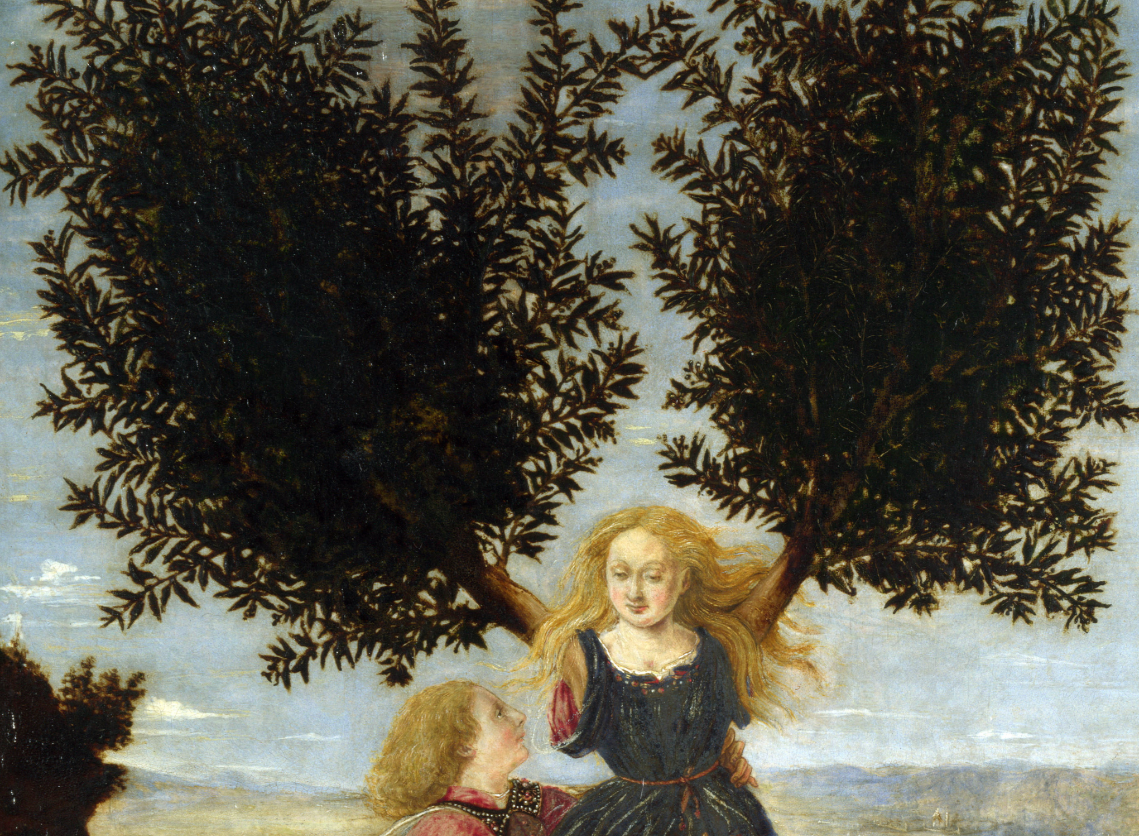
Detail from Apollo and Daphne by Pollaiuolo, c. 1470–1480

(Parenthetically, I suppose, because it’s of such minor note, but there’s a mention of one “Zbig Dubinsky” — surely, Shirley, a minor character? — but the name seems to echo the Coens’ film The Big Lebowski.)


“Getting sentimental, kid, better watch ’at, once.”

A warning from Hicks to his protege Skeet Wheeler, a “flyweight juvenile in a porkpie hat.” We’ll see more of Skeet’s apparent sentimentality when he pockets a ball bearing from an exploded REO Speed Wagon. The line would be a throwaway for me, except that it is the first instance of the word kid in the novel. We see it pop up frequently in several forms, including kidding and kiddies. In Ch. 1, Skeet refers to his “snub nose service .32″ pistol as a “Kids’ Special.” We learn that Skeet is tapped into the “kid underworld—drifters, truants, and guttersnipes, newsboys at every corner and streetcar stop—who in turn have antennas of their own out.” The system of littler kids reporting to bigger kids, etc., reports Skeet to bigger kid Hicks, is “like Mussolini.” (Hitler will show up soon.)


“‘…New watch, I see.’

‘Hamilton, glows in the dark too.'”

The first of (by my count) four specific references to things that glow in the dark. I’ll remark on them in turn, but the other three are Hicks’s hair gel (Ch. 3), a jello salad served at the Velocity Lunch diner (Ch. 5), and a pair of novelty vampire fangs (Ch. 7).

In Pynchon’s books, and in particular in Against the Day and Mason & Dixon, there is a concern with the invisible world, which might be taken as the metaphysical world, or, the supernatural-but-not-baloney world. Perhaps these novelties that glow in the dark point in that direction?


Chapter 2 begins at the crime scene, the scene of an exploded bootlegger’s hoochwagon (the aforementioned REO Speed Wagon).

The “kid” motif develops with references to “Federal kiddies that nobody’s ever heard of,” “Chicago Latin kids,“ and “German storm kiddies.“ A page or two later soda jerk Hoagie Hivnak (of a certain “adenoidal brashness”) laments that his Ideal Pharmacy “was no place for kids, the words ‘soda fountain’ would send mothers all over town into fits, worse than ‘opium den.'” No more coke in the sodas for the “Leapers and sleigh riders” to enjoy.

Hoagie moves the plot forward, telling Hicks to “Track down Bruno Airmont wherever he’s got to.”

Chapter 3: We meet Hicks’s special lady, April Randazzo. She’s a femme fatale, folks, a singer-dancer making the late night speakeasy scene. Hicks and April seem like a suave match, but we learn that she has a fetish for married men: “A gold-accented ring finger has the same effect on April as a jigging spoon on a Lake trout, especially when kept on while kidding around, good as a framed copy of a marriage license hanging up on a love-nest wall.” 

Note the kidding around there; perhaps Pynchon teases kidness as the illusion of a romanticized time of faux-innocence, an idealized (and ironized) notion of primeval purity. “Any town but this one / Couldn’t we be kids again” croons April in “what’s gotten to be her trademark ballad, backed by a minor-key semi-Cuban arrangement for accordion, saxes, banjo-uke, melancholically muted trumpet.”


Oh and before I forget, our glow-in-the dark fetish for this episode is delivered from Hicks’s “hip flask from which he pours not hooch but some slow green liquid, rubs it between his hands, runs both hands through his hair as an intensely herbal aroma fills the room…” (21). Hicks attests that his hair jelly “Lasts for days, glows in the dark” (21).


(Parenthetically–we get our first two Pynchon songs in this chapter, one from Hicks and one from April (as cited above.) The chapter ends with Hicks getting nudged again, this time to visit his Uncle Lefty, a retired cop.)


Chapter 4 starts at Uncle Lefty and Aunt Peony’s house. They, sorta, raised Hicks; like his protege Skeet (and every other hero), Hicks is an orphan.

Uncle Lefty has prepared a special “Surprise Casserole [in which] Hicks can detect sport peppers, canned pineapple, almost-familiar pork parts marinated in Uncle Lefty’s private cure, based on wildcat beer from a glazed-crock studio just across the Viaduct.” Here, a pineapple is a pineapple. But it can still be part of a surprise.


Uncle Lefty’s name is a bit ironic. He opines: “Der Führer,” gently, “is der future, Hicks. Just the other day the Journal calls him ‘that intelligent young German Fascist.’ ”

Aunt Peony is more sympathetic. We learn that her words have taken on an edge as her marriage advanced, “as if some maidenly spirit, searching and pious, has set out on a trip Peony has no plans herself to make, toward a destiny quietly lifted away from her when she wasn’t looking.” Unlike Daphne (and April?), Peony failed to make her escape in good time.


We learn of Hicks’s fresh-out-of-school job as a strikebreaker. This job would generally make him on the wrong side in Pynchonian terms, but the novel extends some heartstrings his way, pulling him over to the light. Hicks, it seems, would not turn a Pinkerton villain the likes of which Pynchon castigated in Against the Day. His road to Damascus moment happens when his “lead-filled beavertail sap” disappears before he can decimate a striking “truculent little Bolshevik.” The metaphysics of this disappearing object has a profound effect on our hero.


A bit later in the chapter, Boynt offers a through-a-glass-darkly description of Milwaukee, Cream City USA, evoking, “Hitler kiddies, Sicilian mob, secret hallways and exit tunnels, smoke too thick to see through, half a dozen different languages, any lowlife thinks they can turn a nickel always after you for somethin, there’s your wholesome Cream City, kid, mental hygiene paradise but underneath running off of a heartbeat crazy as hell, that’s if it had a heart which it don’t.” 

There’s the invisible world, but it might sometimes glow in the dark.


Chapter 4 segues into Chapter 5; Uncle Lefty tells Hicks to talk to ex-vaudeville mentalist Thessalie Wayward. They meet at Velocity Lunch, a cafe where “Today’s Special [is] a vivid green salad centerpiece the size and shape of a human brain, molded in lime Jell-O, versions of which have actually been observed to glow.” Hicks is hoping to learn more about the metaphysical disappearance of his beavertail sap–what divine hand intervened to prevent his killing another person?

Thessalie teaches him about ass and app: “Asported. When something disappears suddenly off to someplace else, in the business that’s called an asport. Coming in at you the other way, appearing out of nowhere, that’s an ‘apport.’ Happens in séances a lot, kind of side effect. Ass and app, as we say.”

After some speculation on this “unnamed force,” Thessalie sends Hicks out again, this time to “Talk to Lew.”


That Lew, as we see in Chapter 6, is none other than Lew Basnight, one of the many heroes of Pynchon’s opus Against the Day (which, so far, Shadow Ticket feels very much akin to). Lew’s chapter is beautiful, short and sweet, a kind of elegy for Western phantasia. He was already late to the Manifest Destiny goldrush: “Didn’t even get out there till late in life, after years of dancin the Pinkertonian around what only a couple of old-timers were still callin the Wild West anymore. Hell, I’m ready to go back…”

Pynchon then extends Lew’s fantasy of returning to a mythical Old West via “lucid dreaming… flown in from strange suburban distances, past radio antennas and skyscrapers, down the gloomy city canyons, skimming echo to echo, banking into the Dearborn station, flown invisible, ticketless, right onto the Santa Fe Chief. And away. Away, so easy…” An escape from the Modern world. Invisible, ticketless–that’s the fantasy.


Lew’s episode ends with a warning to Hicks not to become “another one of these metaphysical detectives, out looking for Revelation.”


In Chapter 7, Hicks takes his (his?) gal April to Chicago to see Dracula. April’s smitten by Bela Lugosi, and “Soon she is sending away to Johnson Smith down in Racine for a set of Glow-in-the-Dark Vampire Choppers, 35¢ postpaid.”

A paragraph later our hero is getting some bad news about his (his..?) gal April and one Don Peppino Infernacci. “April Randazzo is in fact the promised bride of evil,” we learn; Infernacci (good golly that name, Pynchon, chill) is “lord of the underworld.” 

Infernacci could be Hades, but April doesn’t strike me as a Persephone. But we’ll see.
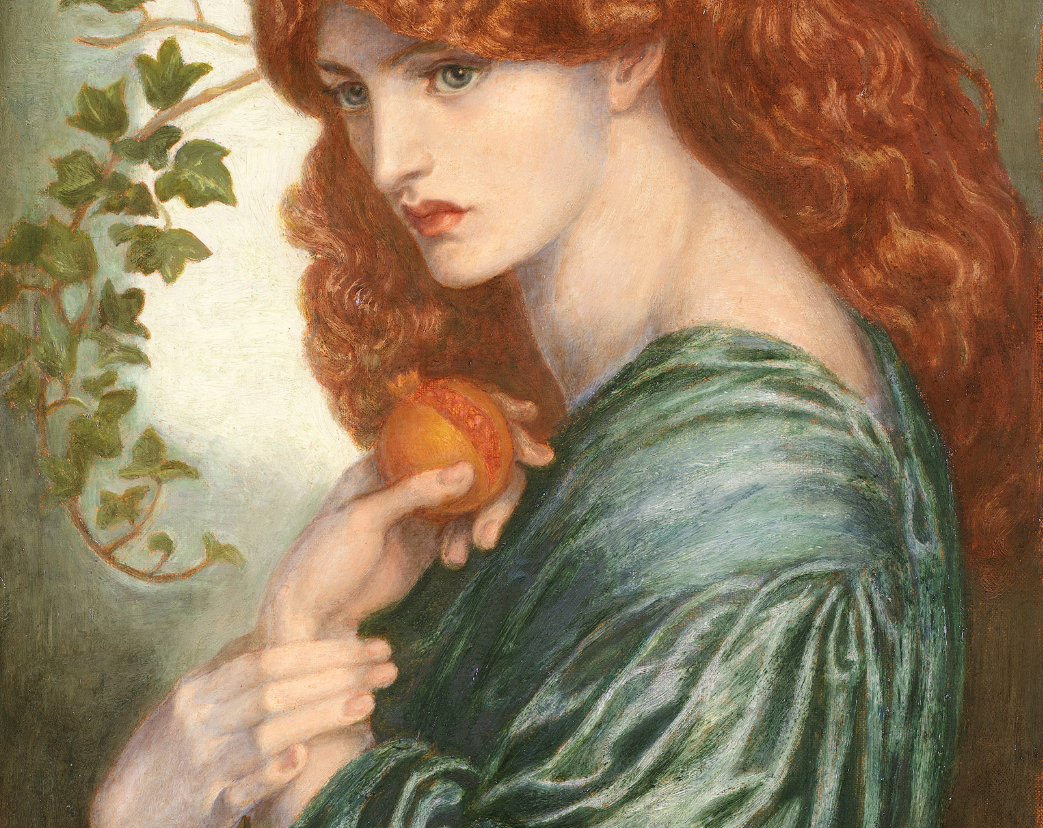
Detail from Proserpine, 1882 by Rossetti

It still believes in night | A review of Antoine Volodine’s post-exotic novel Mevlido’s Dreams

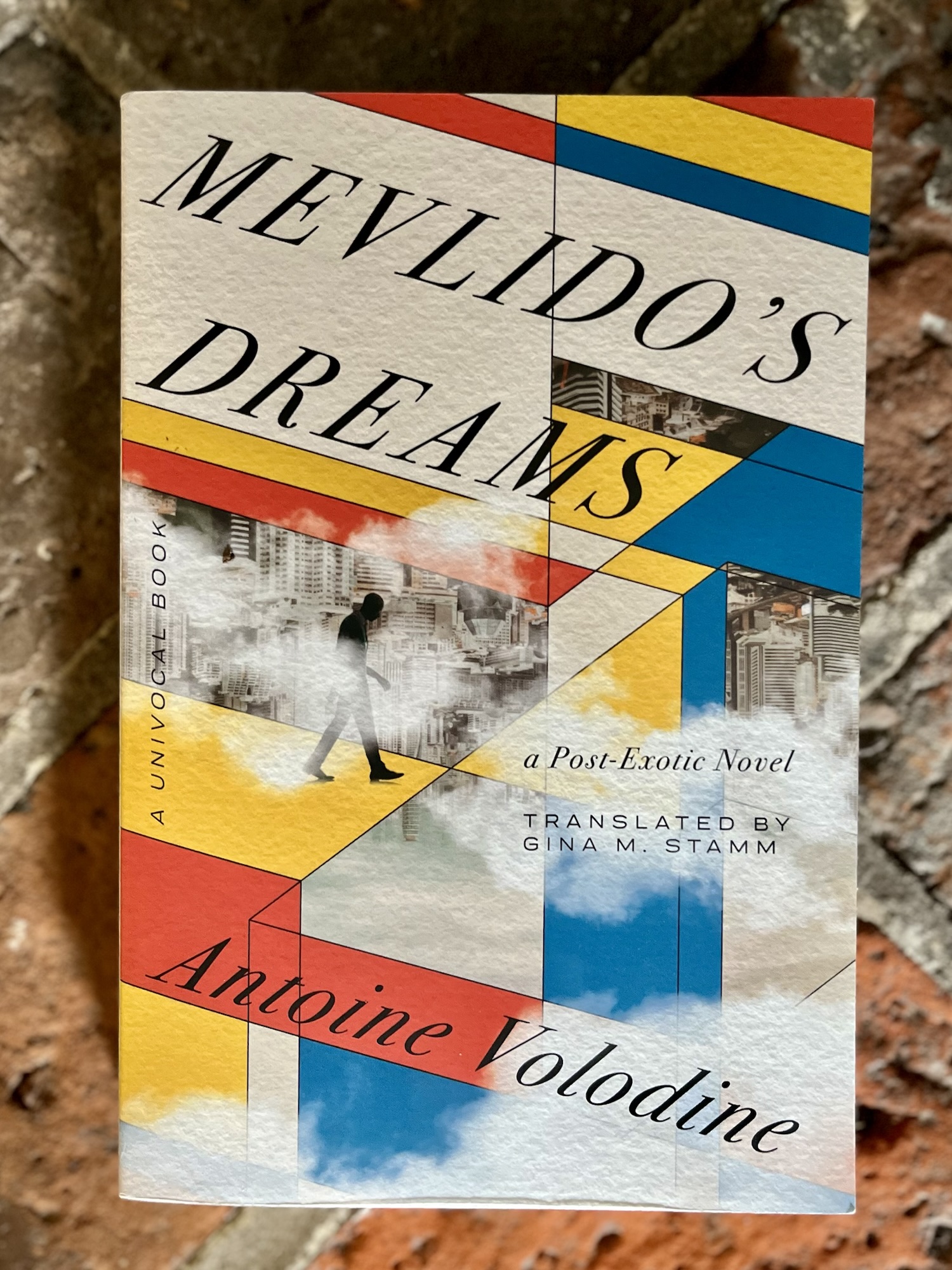
Antoine Volodine’s 2007 novel Mevlido’s Dreams is a bleak, dystopian noir novel set several centuries in the future in the ruined city-state of Oulang-Oulane. Here, weary revolutionary Mevlido lives in a decaying ghetto called Henhouse Four, an eerie quarter inhabited by indigents, junkies, and other remnants of failed uprisings who must contend with the giant mutated birds who terrorize the borough.

Once a soldier of the revolution, Mevlido now serves as a policeman, yet he may also be a double or even triple agent, a sleeper sent through time from a kind of liminal afterlife, a bardo between death and rebirth. The novel drifts between waking and dream states, war memories and spectral futures, as Mevlido’s fragmented consciousness becomes a vessel for Volodine’s haunting post-exotic vision of history, language, and apocalypse.

About halfway through the novel, Mevlido’s bardo boss offers a handy summary of the apocalypse:

They’ve become an inexplicable species. They are just getting out of multiple wars of extermination, but a new conflict is already in sight. The population has decreased by a hundredfold, even more. Entire continents are currently uninhabitable. Those who have survived remain socially organized, but they no longer believe in themselves, or in society. They’ve inherited political systems to which they’ve lost the keys; for them ideology is a prayer devoid of meaning. The ruling classes have become criminalized, the poor obey them. Both classes act as if they were already dead. And as if, on top of that, they don’t even care. … Something in them has changed. You’d think that they no longer have the ability to differentiate between life, dreams, and death.

Our hero will be reborn into this turmoil, his consciousness a roiling mess of anxious irreality. “Even if I’m dreaming, I’m in reality,” he concludes at one point, as if to anchor himself in his mission. What that mission is, exactly, is never fully clear to Mevlido or the reader. Or perhaps the mission is very clear; as translator Gina M. Stamm puts it in her introduction, the plot of Mevlido’s Dreams “has the elements of a fairly classic tragic romance: man and woman are in love, the world prevents their being together, man descends into tragic circumstances.” This motif repeats in dreamlike iterations in the novel; Mevlido drifts through a post-exotic wasteland following orders no one remembers giving, haunted by his dead wife Verena Becker, whose presence threads through his days like a recurring dream or a flickering film reel.

We come to learn that Verena Becker died cruelly, murdered by the “child soldiers” who were pressed in to service by agents of the exploitative upper class. In Mevlido’s present time (or, more specifically one of Mevlido’s present times), the child soldiers are now “ex-child soldiers,” reviled refugees who hide under new identities, hoping to avoid the vengeance of people like Mevlido. The vengeance is not aimed just at these foot soldiers though; one of the novel’s heroes, Sonia Wolguelane, plots the assassination of the upper-echelon genociders who, now absolved of their war crimes, continue to rule the city-state with their one-time political foes. Here is Volodine’s description of one of the men Wolguelane assassinates:

Toni Müller, forty-nine years old, delegate to the Office of Fuel, policy officer during the final project of pacification of the remaining zones, initiator of the so-called controlled genocide practice, threatened with legal action after the disappearance of the Wongres, the Spanish, and the Myrzes, sued for not having been able to provide an explanation for the mysterious annihilation of the inhabitants of the Philippines. Amnestied. Director of the petroleum trusts in the remaining zones, billionaire, numerous books of economics published in his name, numerous honorific titles. During his last self-criticism, he admitted having constantly hidden from the masses the fact that he didn’t share the household chores with his wife.

While the apocalyptic stakes here are swollen to hyperbolic levels, Volodine’s critique of how the ruling class wields power nevertheless applies neatly to our own 21st-century blues. Henry Kissinger, for example, died fat and happy. I’m reminded too here of Thomas Pynchon’s critique of power, particularly in Gravity’s Rainbow, where the narrator laments that the Nazi war criminal Weissmann will not be punished but rather elevated, set to sit “among the successful academics, the Presidential advisers, the token intellectuals who sit on boards of directors. He is almost certainly there. Look high, not low.” Look low for the preterite heroes of Mevlido’s Dreams though. They are the “faded zombies, probably candidates for another hallucinatory expedition, left-behinds who imagine they will be able to leave again.”

I am making the novel sound too grim. It is rich, and much of that richness comes from a bureaucratic, deadpan humor, the laughter of exhausted ideologues trapped in their own paperwork. But what happens to faith in any ideology when it is sundered from observable reality? Consider this exchange, in which a lost Mevlido tries to communicate with a band of men who fail to recognize him as a human being:

“Incredible,” says one of the normal ones, “it’s still talking.”

“And what is it talking about?” asks the red cap.

“About the night,” says the fat one.

“It’s talking about the night?” the bare-chested one asks, surprised.

“Yes, it must still believe in night,” says one of the normal ones.

“Incredible,” says the other normal one, “it still believes in night.”

And beneath the satire, there’s love. Volodine writes love as a metaphysical condition, a persistence that outlasts ideology, memory, and even death. The tenderness between Mevlido and Verena gives the novel its pulse. It’s the one human rhythm left in a mechanical world. Stamm’s translation conveys this rhythm in clipped, moody sentences, wounded and precise.

Like Volodine’s 2014 novel Radiant Terminus, Mevlido’s Dreams operates in the twilight between horror and tenderness. But Mevlido’s Dreams is quieter, more interior—a story of a single man’s dissolution told in flickering vignettes. It reads like the afterimage of a life projected on a cracked wall.

That light, dim and trembling, is what Volodine and Stamm preserve. Mevlido’s Dreams reads not like a film script but like a film itself: shadowy scenes unfolding in silence, broken by bursts of deadpan dialogue and ghostly humor. You can see the ash swirling, hear the echo of curses in an alley haunted by mutant birds.

Oulang-Oulane feels shot through a grim lens, intense, ugly, beautiful, like something from Tarkovsky’s Stalker or a Béla Tarr film, with scenes of desolation punctuated by tenderness. Volodine isn’t cinematic because he borrows film tropes, but because he composes through atmosphere and rhythm. His sentences drift like a camera through fog and memory.

That line above—“it still believes in night”—could be the novel’s credo. Dreaming isn’t retreat; it’s resistance. Writing, too. Mevlido’s Dreams works as both a political fable and a séance for the lost, a way of keeping consciousness flickering in the dark. Highly recommended.


Mass-market Monday | Philip K. Dick’s Dr. Bloodmoney

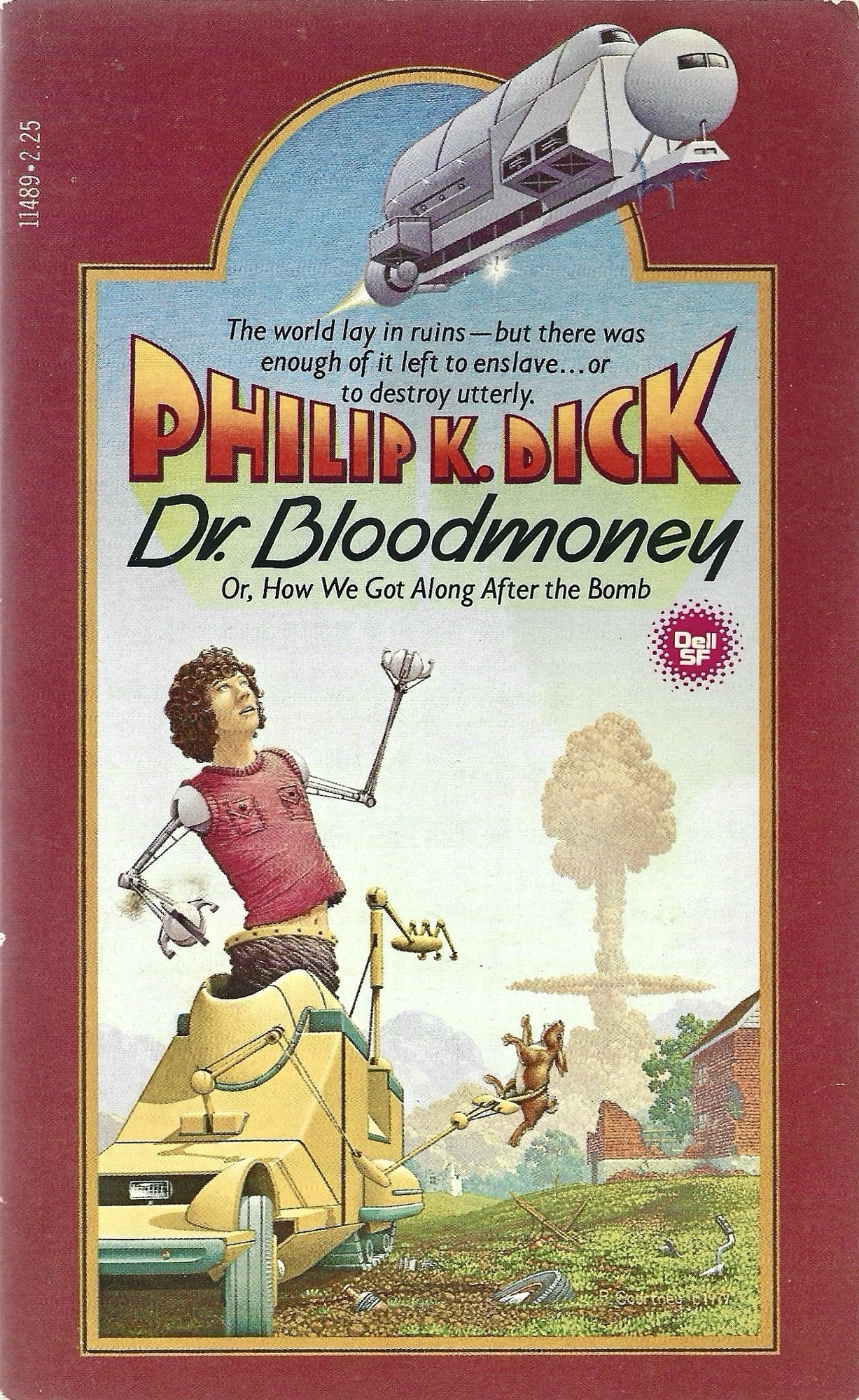
Dr. Bloodmoney, or, How We Got Along After the Bomb, Philip K. Dick, 1965. Dell Books (1980). Cover art by Richard Courtney (not credited; cover signed R. Courtney); no designer credited. 304 pages. Continue reading “Mass-market Monday | Philip K. Dick’s Dr. Bloodmoney” →

Paul Thomas Anderson’s One Battle After Another is a frenetic, vital reimagining of Thomas Pynchon’s Vineland

Paul Thomas Anderson’s One Battle After Another takes Thomas Pynchon’s 1990 novel Vineland and sets it ablaze, reshaping its abstract paranoia and fractured narrative into something both deliriously immediate and ominously timeless.

The bones of Pynchon’s original are still present: a family broken by state violence; a daughter growing up without a mother; a father caught between shame and reluctant resistance. In PTA’s feverish recasting of Vineland, Zoyd Wheeler becomes Bob Ferguson (Leonardo DiCaprio), a former “Rocket Man” revolutionary burning out the past in a haze of weed smoke. Frenesi Gates is reimagined as Perfidia Beverly Hills (Teyana Taylor), a revolutionary addicted to the sexual thrill of power. Prairie Wheeler morphs into Willa (Chase Infiniti — and like wow jeez that’s a Pynchonian name the young actress has there, isn’t it?). And villainous Brock Vond is warped into Colonel Lockjaw (Sean Penn), a grotesque embodiment of authoritarian menace. Timelines collapse into themselves, Reagan-era dread transposes into our own disturbed now. Vineland is set in 1984; in One Battle After Another, PTA shows that we’ve never really moved on from that dystopian year. PTA condenses Vineland’s sprawling flashbacks and absurd digressions into an action-forward narrative that’s far more linear yet equally dizzying. The result is enthralling.

The film’s plot might be distilled simply from its title. One Battle After Another follows the trajectory of most of Pynchon’s fiction: individual resistance to authoritarian evil. In PTA’s film, that resistance takes the form of the French 75, a loose clandestine revolutionary group to which Bob and his partner Perfidia once belonged. There’s really no retiring for French 75 agents though, and soon Willa is tangled in the same web her parents sought to sunder in their radical actions. Penn’s maniacal Colonel Lockjaw hunts her down. She’s on the run, and so is papa Bob.

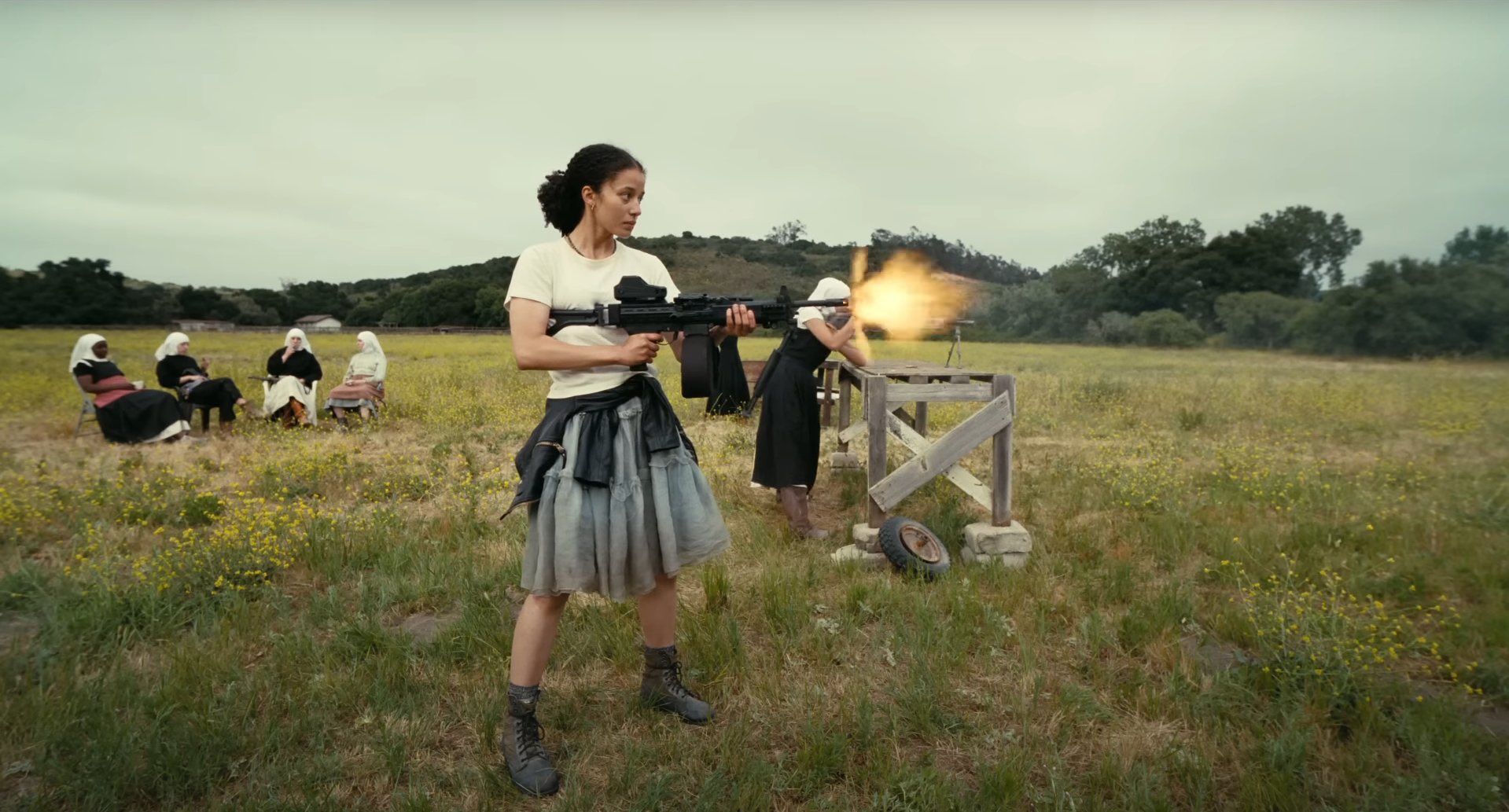
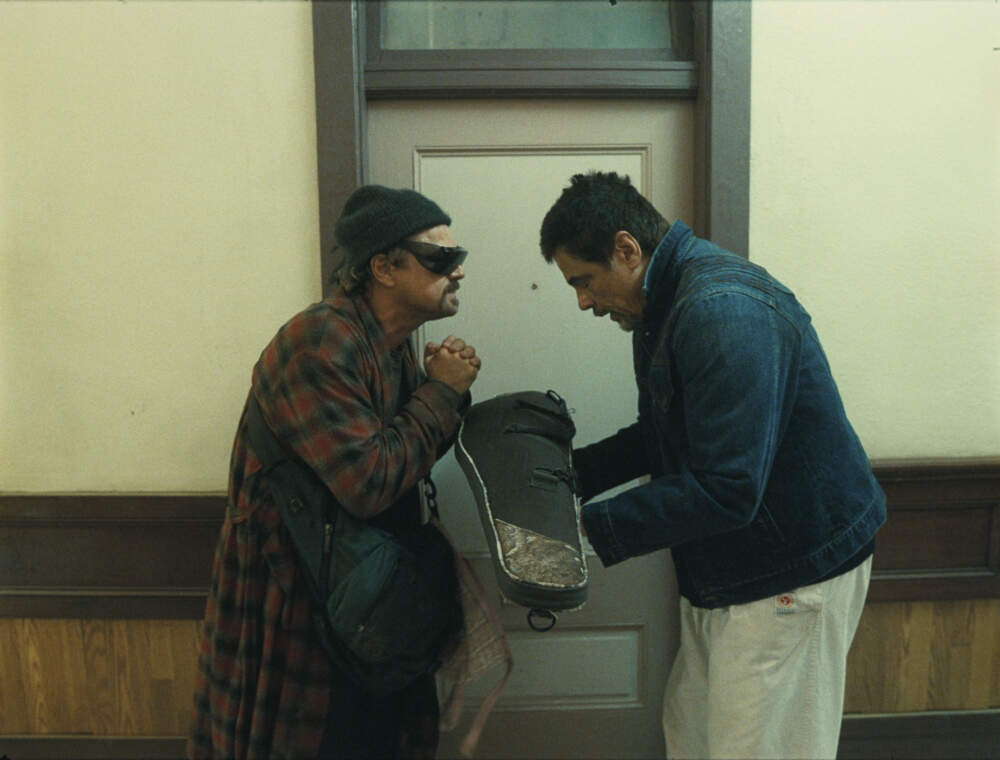
Pynchon’s novels frequently contrast Us vs Them systems — preterite vs. elect; misfits vs. authoritarians; freaks vs. the Man. And like Pynchon’s work, One Battle After Another shows the invisible overlapping and hierarchical confusions these Us/Them systems engender. The French 75’s sympathies directly correlate with the values of the immigrant community in Baktan Cross, the fictional sanctuary city Bob and Willa take refuge in. The de facto leader of these immigrants, Francisco (Benicio Del Toro), aids Bob in his fevered search for Willa. Francisco’s zen calm offers a counterbalance to Bob’s mania. Another Us group are the Sisters of the Brave Beaver (One Battle After another is crammed with Pynchonian vagina jokes), weed-growing nuns who offer Willa a brief safe harbor.

These disparate pockets of rebellion resist the tyranny of the modern racist capitalist system, embodied by Colonel Lockjaw and the military forces he commands (seemingly without any government oversight). We first meet Lockjaw running a migrant detention center — one of many timely PTA updates to Vineland — and his weird, forced, masochistic machismo plays out on the screen with a mix of menace and despair. For all his power and evil though, there’s yet another Them he isn’t part of. That would be the Christmas Adventurers Club, a shadowy cabal of elites on a racist mission to rid the world of “freaks.” Lockjaw would do quite literally anything to become a member of this club; his drive to to become even more Them propels the narrative while showing that Us-Them systems rely on hierarchies to perpetuate oppression.

One Battle After Another zigzags through a whirlwind of absurdity, suffocating paranoia, and frantic action. The film balances chaotic humor with a darker exploration of the emotional impulses that underlie power and attraction. Colonel Lockjaw’s obsessive fixation on Perfidia (arguably the film’s closest connection to Vineland) underscores the irrational power dynamics of obsession and control. PTA frames their relationship—along with Lockjaw’s obsession with Willa—as a twisted mirror reflecting the power imbalances that define both the personal and the political in Us-Them systems. PTA’s films have always explored systems of exploitation that grind people down and the outsiders who try to navigate them; One Battle After Another is, thus far, his most sustained, howling effort in this vein.

The film is gorgeous, too, as fans would expect from PTA. Michael Bauman’s cinematography conveys frenzied energy without sacrificing cohesion or clarity. There are several outstanding set pieces, including a beautiful sequence in which Bob does his best to keep up with a trio of skateboarders traversing rooftops at night, their figures silhouetted against the flames of a riot below. The film’s climactic three-car chase scene is particularly magnificent, its every twist and turn symbolizing not just physical pursuit, but deeper spirals of control, conflict, and paranoia. It made me physical ill. (That’s high praise.)

And while, yes, One Battle After Another is a bona fide action film, it’s still larded with strange little morsels that we’d expect from a PTA film — the image of Lockjaw licking his comb before taking it to his hair, his face contorted in anxious hope, or Bob, in his threadworn bathrobe, shoplifting a pair of cheap sunglasses. (Parenthetically, while the bathrobe is on my mind — Battle plays as a sinister inversion to The Big Lebowski. I will file the pair away for a future double feature.) One of the film’s funniest moments comes from Willa, who, despite being apparently subjugated by Lockjaw, nevertheless delivers the kind of crushing blow that can only come from a teen: “Why is your shirt so tight?” Indeed, Chase Infiniti’s portrayal of Willa is a revelation. In a movie crammed with paranoia and plot twists, she imbues in Willa a kind of moral force. She’s not an anchor exactly, because nothing is steady here. But maybe she’s the string you follow through the labyrinth.

One Battle After Another is almost three hours long, but it never drags, thanks to the tight direction and enthralling plot. Long-time PTA collaborator Jonny Greenwood’s score also keeps the film moving at a quick pace. The score is ever-present — something that usually irritates me in a film — but here the music provides emotional cohesion. It’s also just really fucking pretty.  Frenetic drumming and altered pianos meet up with swelling strings that suggest sirens, banshees. Take “Mean Alley,” for example, which initially greets the ear as if the guitar is out of tune, but then coheres into beautiful dissonance. And although Greenwood’s wall-to-wall score leaves little room for the needle drops we might expect from a PTA joint, the film deploys Tom Petty’s “American Girl” in a moment of transcendent bliss that brought a tear to my eye.

Pynchon has always soundtracked his novels. Pynchonwiki gives close to 400 musical references for Vineland, but I don’t think any of these tracks ended up in One Battle After Another. My giving this data is a weak way of transitioning to the sentence, This is a film inspired by Vineland, not an adaptation of it. And while PTA captures the soul of the book, the vibe, or spirit, or whatever you like to call it, is decidedly different: darker, edgier, uglier. He captures the same strange humor and frustration of Vineland, but it’s amplified here with a chaotic energy that matches our current moment.

It’s also instructive to compare One Battle After Another to PTA’s earlier Pynchon adaptation, Inherent Vice. While Inherent Vice was a hazy sunsoaked journey through the disorienting aftereffects of the muddled sixties, One Battle After Another feels darker, more urgent, as if the timeline of history has compressed itself into an unyielding present. Both films deal with the fracturing of the American dream, but One Battle After Another does so with a sharper edge, drawing clearer political parallels. In some ways, PTA’s Inherent Vice is closer to Pynchon’s Vineland in tone and theme, less angular, more forgiving.

With both of his Pynchon films, PTA foregrounds a sweet final note, a belief in love as a sustaining force against Them. To borrow my favorite lines from Pynchon’s opus Gravity’s Rainbow: “They are in love. Fuck the war.” In his adaptation of Inherent Vice, PTA pulled a loose thread from the novel to neatly weave back into a prettier picture. He allows Doc Sportello to restore the heroin-addicted musician Coy to his family. One Battle offers a similarly fractured, imperfect restoration of family, a rewriting of rat-sins answered on the ghost of radio waves. He cleans up Pynchon’s messiness, but doesn’t sacrifice the deep danger that underwrites radical love.

One Battle After Another feels dangerously prescient, or, more accurately, a diagnosis of the big ugly now. In PTA’s Inherent Vice, there was an underlying fractured partnership between Us and Them; weirdo Doc Sportello tried to find some kind of brotherhood of man with The Man, Detective Bigfoot. No humanity can be extended to Lockjaw — not even from the club that will refuse him. They are unforgiving of any perceived impurity. The themes of mass surveillance, state violence, and detention resonate deeply in today’s climate. The recent death of Assata Shakur—possibly one inspiration for Perfidia Beverly Hills—adds a haunting layer to the film’s exploration of systemic oppression, the ways in which the state seeks to control and erase voices of resistance. The political urgency is palpable, and will undoubtedly alienate a large section of the genpop normies that Warner Brothers has heavily advertised the film to. Some folks will always root for Them.

But fuck Them. One Battle After Another is a triumph, a dizzying, chaotic masterpiece that never loses its grip on the present—one battle after another, all too real, all too important. See it on the biggest screen you can.

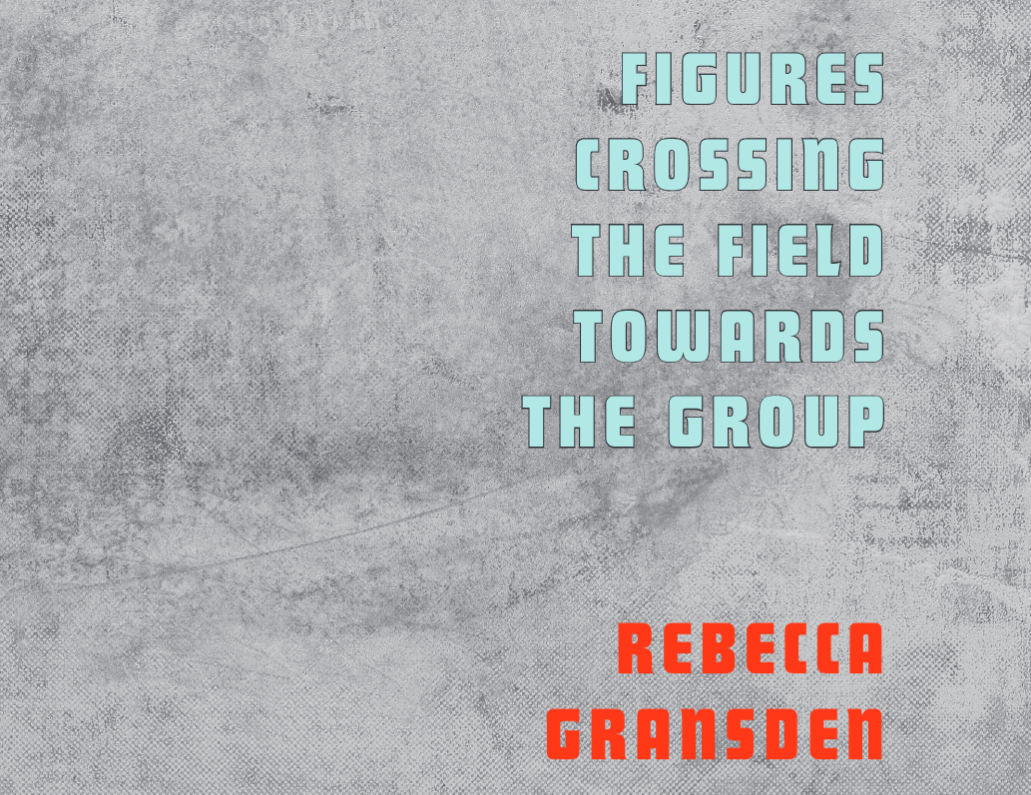
A review of Rebecca Gransden’s novella Figures Crossing the Field towards the Group

In Rebecca Gransden’s novella Figures Crossing the Field Towards the Group, an unidentified blight spreads from the south of England, driving refugees northward. Our hero, a girl named Flo, walks north through this ruined England on a quest to find her lost twin brother. In her strange journey, Flo encounters scattered figures who spill fragmented stories in broken voices. This England is barren, etiolated, and foul. Gransden conjures this apocalyptic barrenness in oblique and elliptical language. Most of the narration in Figures Crossing the Field Towards the Group slips out in clipped single-syllable beats, as if the world itself has been pared down to bone. The book’s end-times aren’t explosions or spectacle but the exhausted rhythms of a world already gone, the voice itself a survivor stumbling forward, blunt and breathless. What remains is not plot so much as the scraping of words against ruin.

And yet, within that scraped-down ruin, Gransden finds a strange fullness: stark fields and broken voices bloom with uncanny images, fleeting surges of feeling, flashes of lyric intensity that make the blasted landscape thrum with life even as it crumbles. Consider this passage, in which our hero Flo encounters a band of freed apes:

Howls eke out through branch and twig, and bods slink down the fell trunks, climb in shift shads on the broke build roof, a mess of swol leaves and wet spikes. Lab apes crawl and tick, their mugs stretch flesh, their heads bolt. Freed by the flee, and left to lone, their house fell in and they, shy and of wound nerve, did peek to the wood, and then run out and claim the trees. They stay near to where they know, fear keeps them so. One ape chomps on a bat, its legs kick as it dies. Most of the lab apes have one eye, a square patch of bald skin, a rash and some scabs.

Figures propels forward with a loose, picaresque energy, its moody, elliptical atmosphere stretched across an almost shapeless structure. It’s best not to look for causality here; things just happen. This isn’t post-apocalyptic fiction. The apocalypse is underway. And Gransden’s language drifts on the fumes of that apocalypse. I often found myself reading lines aloud, even repeatedly, in gnarly little loops: “Town rats puff with nits in their ruffs” is a simultaneously abject and beautiful image. Or consider this lovely little passage:

A shock of white moth wings sings from the shrubs, makes Flo step back and near fall. White flies round her like a snow storm, and moth dust fills the small grove. A film forms on dark leaves and the air smells of old nests. Moths brush her,just close to push a soft stroke on her face. Small round white moths, small white moth round.

The monosyllabic narrative style that dominates Figures may challenge or, more frankly, irritate some readers. I found it hypnotic. Gransden’s characters are not bound to single syllables though. When Flo talks to someone she encounters (an insane royalist, say, or a man sacrificing his body as food to tiny furry beasts), they speak in normal, multi-syllabic dialogue. More fascinating is a solitary chapter that divides the novella in halves. “Public Information Dreams” reads almost like its own Ballardian short story. Told in a clinical, detached style, the chapter gives an incomplete picture of observations made from afar on two children, Kid P and Kid Q. A taste:

Observer: 35

Day: 163

10:37:45 am — Kid Q exits property by back door (3b) and moves to end of garden. Weather is bright sunshine, occasional cloud shadows. No occlusion. Kid Q walks back and forth between end of garden and house, carrying objects. Objects observed to be recording equipment as previously noted (ID476). Kid Q collects the objects together on an empty patch of lawn behind the garden shed. The patch of lawn is square and is mostly unseen from the house. It ends at an overgrown fence, approx. 6ft tall that marks the perimeter boundary of the property’s rear. Beyond the rear fence are fields but the garden is not visible from this location due to the density of the foliage (full description and photographs of the layout of the property and garden are included in additional notes, at this time in the process of compilation). Kid Q assembles the recording equipment. Video camera on tripod is situated in the corner behind the shed and arranged to point across the lawn square diagonally, taking in as much of the space as possible.

10:52:13 am — Kid P exits house by the open back door (3b). Observed to have a listless demeanour. Kid P joins Kid Q. Kid Q and Kid P engage in long conversation (see transcript).

Are Kid Q and Kid P Flo and her brother? If you care, this book probably isn’t for you.

Too, Gransden refuses to settle Flo’s quest—or the apocalypse itself—into any final meaning. The ruined England she describes is not a backdrop but a language, one that stutters, doubles back, and opens fissures rather than closing them. Flo walks north, chasing the shadow of her brother, but whether she finds him, or whether there is anything left to find, hardly matters. What matters is the walking, the scraping of words across ruin, the pulse of strange life inside the waste. Figures Crossing the Field Towards the Group dwells in that space where endings blur into continuations, where survival is indistinguishable from loss, and where language itself flickers like the last light left to see by. Strange, gnarly, alive–great stuff.

Bialik/Rilke (Two poetry collections acquired, 13 Sept. 2025)

Two new collections from NYRB’s Poets imprint: On the Slaughter by Hayim Nahman Bialik, translated by Peter Cole, and Fifty Poems by Rainer Maria Rilke, translated by Geoffrey Lehmann. NYRB’s Bialik blurb:

Few poets in the history of Hebrew have possessed the power and prescience of Hayim Nahman Bialik. Born in 1873 in a small Ukrainian village, he spent his most productive years in Odessa and in his fifties made his way to British Mandatory Palestine. He died in Vienna in 1934. His body of work opened a path from the traditional Jewish world of Eastern Europe into a more expansive Jewish humanism. In a line that stretches back to the Bible and the Hebrew poetry of Muslim and Christian Spain, he stands out—in the words of Maxim Gorky—as “a modern Isaiah.” He remains to this day an iconic and shockingly relevant poet, essayist, and tutelary spirit.

Translated and introduced by MacArthur-winning poet Peter Cole, On the Slaughter presents Bialik for the first time in English as a masterful artist, someone far more politically and psychologically unsettling than his reputation as the national poet of the Jewish people might suggest. This compact collection offers readers a panoramic view of Bialik’s inner and outer landscapes—from his visionary “poems of wrath” that respond in startling fashion to the devastations of pogroms and revolutionary unrest to quietly sublime lyrics of longing and withering self-assessment. The volume also includes a sampling of slyly sophisticated verse for children, and a moving introduction that bridges Bialik’s moment and our own.

And “The Grown-up,” a poem from Rilke in Lehmann’s translation:

“The Grown-up”

All stood on her, all that has ever been
and was the world, and stood, its fears and grace,
as trees stand straight and rooted in one place, and solemn, like the memory of a race
or Ark of God, all-seeing and not seen.

She carried it; knowledge of who they are,
the flyers, those who flee, the distant ones,
the monsters and the awkward, diffident sons,
casually like a brimming water jar
on her calm head. Then in the midst of play,
preparing, changing slowly, cell by cell,
she did not sense the first white veil that fell
across her open face, bland as the day,

almost opaque, never to lift again.
And she forgot the answers she once knew,
leaving some vagueness she could not explain:
in you, the child who you have been, in you.

Birthday stacks | Not really a blog about Biblioklept turning nineteen

A few weekends ago we did the take-your-kid-to-college thing, made the ninety-minute SW drive to Gainesville, FL to move our daughter into her first place on her own. She’s living in the same apartment complex her mom lived in, only under a different name. (The apartment complex has a different name. Not my daughter or wife — although I guess my wife has something of a different name, having taken my own last name up as hers.) There was some nostalgia, some weird feelings, etc. But mostly excitement, followed by backache, muscle ache, and an intense week of schlepping even more stuff around my house, cleaning, painting, refinishing, etc. as we repurposed our daughter’s room into an office and my wife’s old office into a studio space for our son.

This process displaced many many books. The house was already littered with stacks, with at least two established semi-permanent piles of incoming volumes and TBRs and etc., but somehow all the furniture relocation led to an entire bookcase heading south and west of Biblioklept World Headquarters. I culled what I could and vowed to get to the rest later. And here we are.


I started this blog on 9 Sept. 2006, nineteen years ago today. I don’t think I would have remembered this connection, even though I’ve blogged about Biblioklept’s birthday several times before, if I hadn’t heard the local sportscaster on his local morning-commute sports show give a shoutout to his wife, whose birthday is today. I thought, Oh, that’s Biblioklept’s birthday too.


(The local sportscaster’s wife is his second wife, or maybe third, I’m not really sure. But he used to be married, way back in the gay nineties, to the news anchor. They were our little big town’s version of a celebrity couple, maybe. (I remember I took a date to Barnes & Nobles and then the Chili’s by the Barnes & Noble — these places are long gone — and I saw the sportscaster and his anchor wife bickering in the Chili’s parking lot before I ate fajitas or whatever.) The sportscaster’s news anchor wife had an affair with the weatherman, a bold blond surfer specimen who frequently wore suspenders on air. This affair was something of an open secret, and I think some of the people involved were fired, or shuffled to different networks. It’s like the most low rent version of prime Fleetwood Mac you could imagine.

Anyway, the anchor and the weatherman are still married. He still does the weather and she’s the mayor of the city now. Her ex covers local sports on TV, the web, and the radio. I listen to his show in the mornings as a diversion from reality. It’s not very good, but it’s better than the complacent centrism of NPR. I haven’t been able to listen to music on morning drives in decades (I would have to pull the vehicle over and weep); I cannot follow audiobooks or even podcasts in the mornings; I take the inane meaningless chatter for aural breakfast. Today was the sportscaster’s current wife’s birthday. And Biblioklept’s.)


So well and anyway, I thought, I should do some kind of birthday post for the blog. So again, here we are. (Or maybe you have wisely left by this point.)


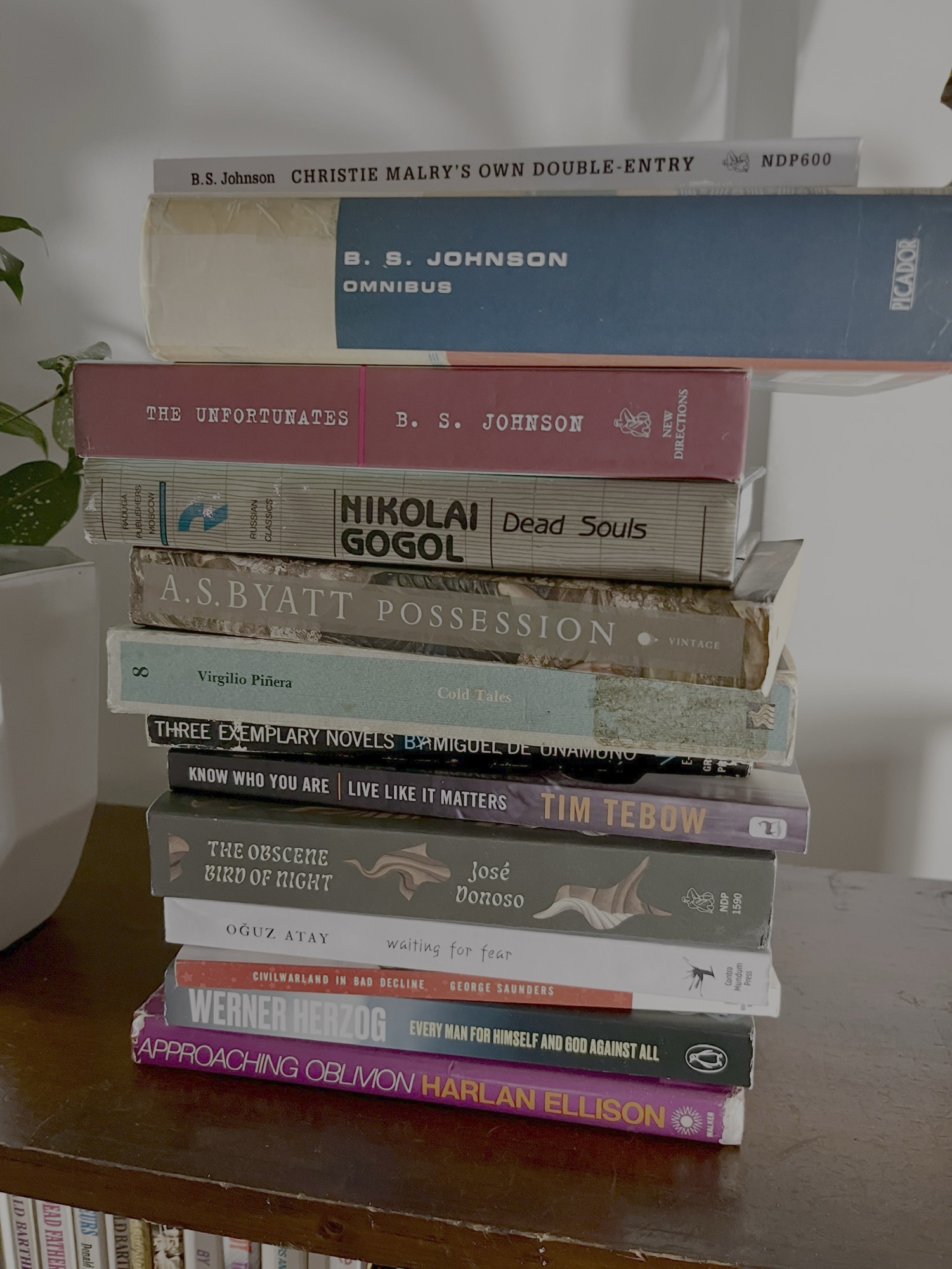
How about those promised stacks, those totem poles that keep getting moved from room to room? Here’s one:

What these books have in common is that some of them used to be in a bookcase that is now in Gainesville and I don’t know where to put them. All the B.S. Johnson books came from a B.S. Johnson jag I went on a few years ago, and they ended up tucked away — can’t stick them on the shelf of American postmodernists, right? And Christie Malry’s Own Double-Entry? What an amazing novel? How have I not reread it. I got the Tim Tebow and Werner Herzog books for Christmas and I read them both. José Donoso’s The Obscene Bird of Night is maybe my richest reading experience of the past year.


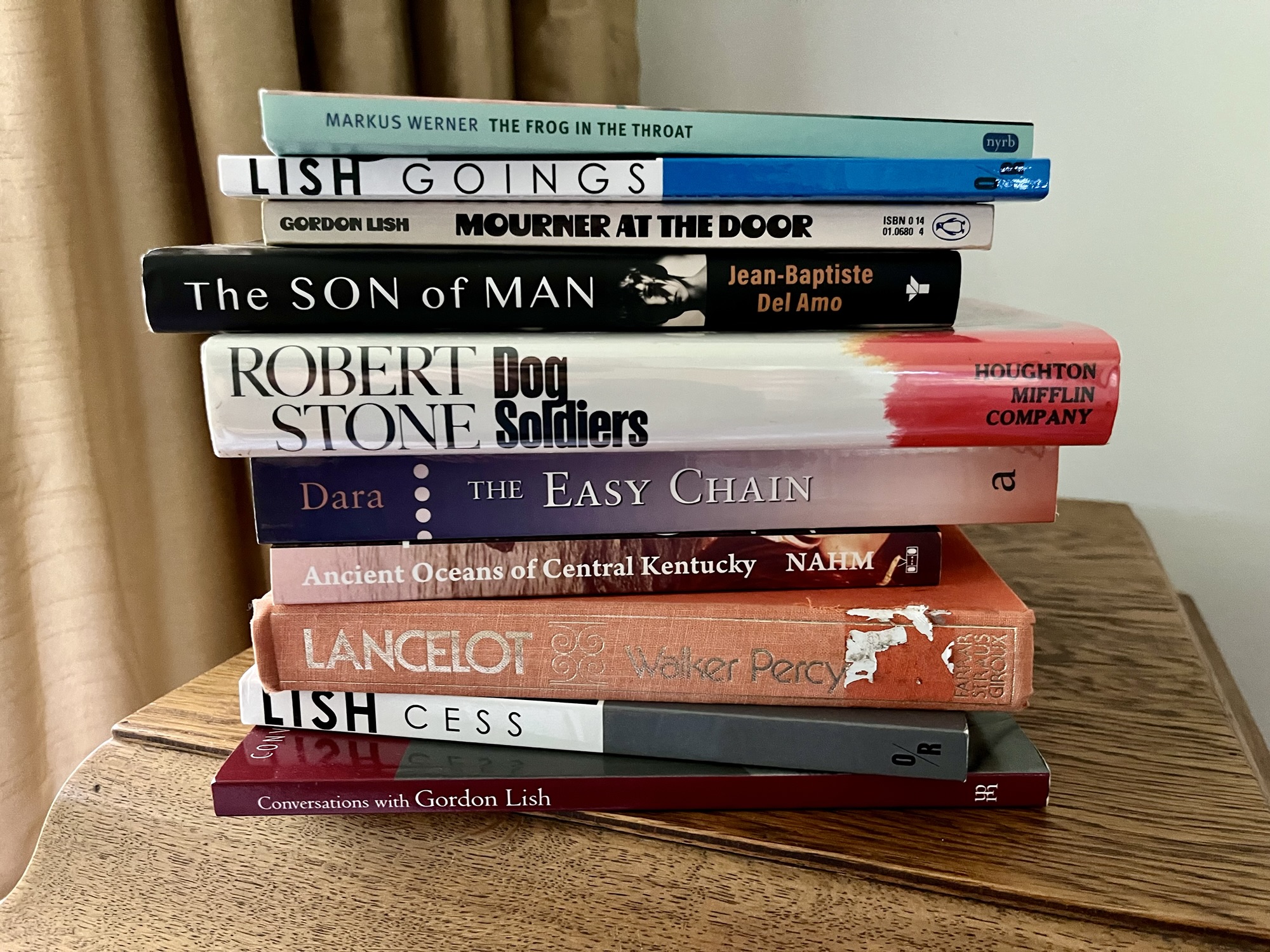
Here’s another picture of a stack of books:

I got another copy of Woolf’s Mrs Dalloway a few weeks ago, which I think led to me pulling out some Woolfs (Wolves?); everything else here seems random, chaotic, emblematic maybe of my self-disgust—what am I doing with all these books? Of course I want to own a hardback first of Angela Carter’s Wise Children, even if I can’t find a proper home for it, right? And why wouldn’t I snap up every Alasdair Gray novel I come across? I think all these Evan Dara books were stacked up in the same missing bookcase that the B.S. Johnson books were stacked in; now they are loose, reminding me of the novelist’s diminishing career. Do I really need to hold on to Permanent Earthquake? The novel is terrible and the book itself is a cheaply-bound print-on-demand thing. It makes me feel sad. The Lost Scrapbook is amazing.


I was 27 when I started this blog.


What am I even doing here?


The Gordon Lish books were almost certainly smashed up against the B.S. Johnson and Evan Dara books — I think I wasn’t sure where to shelf them. I have been very mad at Gordon Lish for a few years now for reasons I promised not to divulge but which basically have to do with his being a flaming asshole. I finished Markus Werner’s novel The Frog in the Throat a week ago and the ending made me tear up. It’s a novel about aging and failure and fear; it’s very, very funny. The late great David Berman once said that Robert Stone’s Dog Soldiers was his favorite novel. I loved it and I suppose I’ll refuse to read another Robert Stone novel. (Why?)


For some years, David Berman kept Biblioklept on the blog roll of his blog Menthol Mountains. That’s like the proudest I’ve ever been of anything that ever happened on this blog. I miss him.


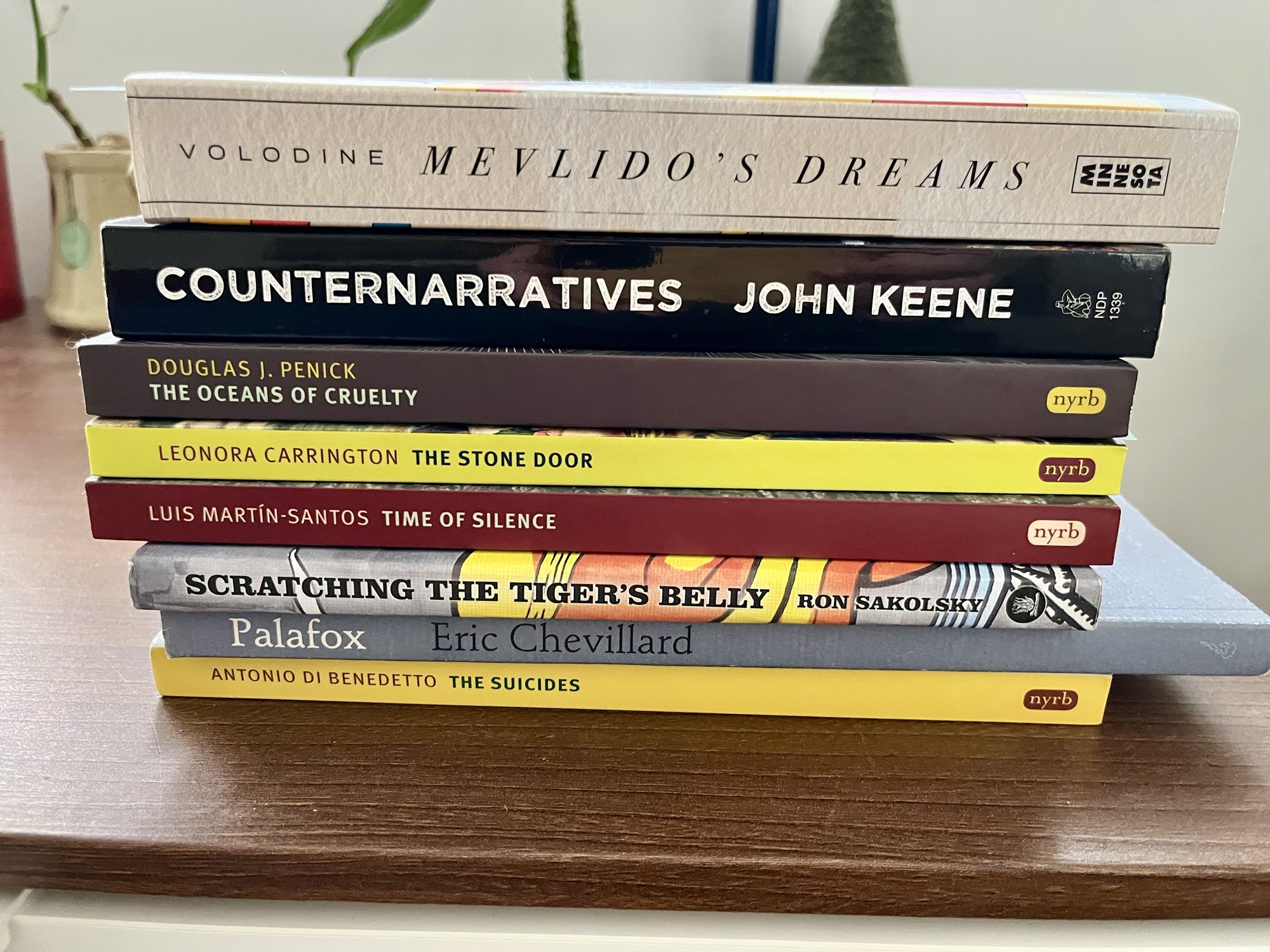
Last stack — not really the last stack, there are at least three others, but I’m getting tired of this, in several senses:

John Keene’s collection/semi-novel Counternarratives is one of the best things I’ve read in forever. He refracts history through these layered polyphonic fictions that pull truth from the margins. My favorite piece in the collection reads like a riff on Melville’s Benito Cereno. I read Leonora Carrington’s novel The Stone Door, realized I misread it, then read it again. I have about four tabs open attempting to properly review it, but alas! I don’t know. I keep failing to find a grip into Di Benedetto’s The Suicides; maybe it’ll take soon. I started reading Antoine Volodine’s Mevlido’s Dreams around 12:30am this morning. It’s much funnier so far than I would have imagined. I’d mislaid the novel maybe a year ago; it was in a pile in the back of a bookcase that is now south and west of here.


I don’t have a way out of this post. I’ll do this blog at least one more year. Odysseus did twenty years, right? That’s a ridiculous stupid fucking sentence, the previous one.


This summer has been the weirdest one of my life, but it’s over now, right?

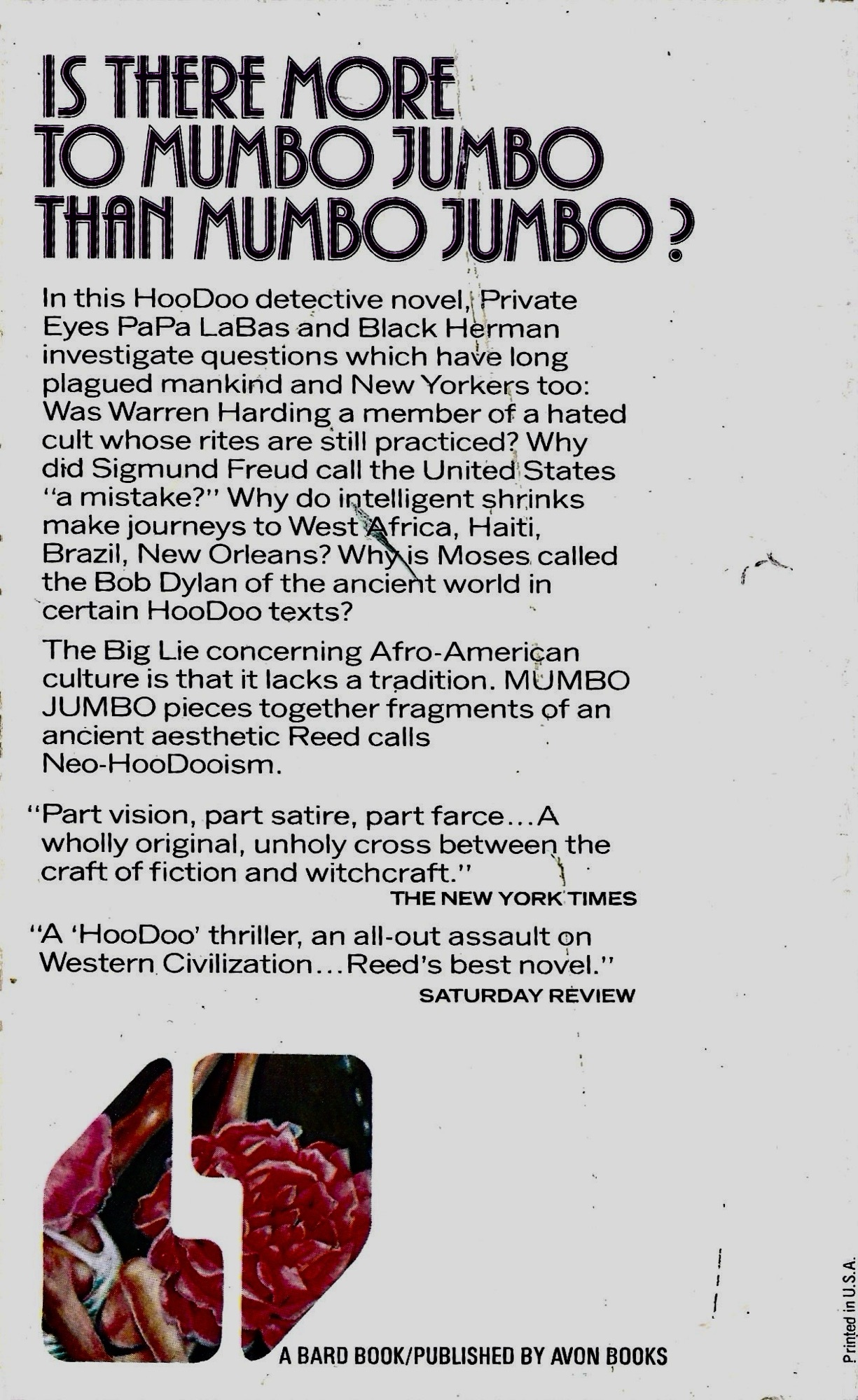
Mass-market Monday | Ishmael Reed’s Mumbo Jumbo

Mumbo Jumbo, Ishmael Reed, 1972. Avon Bard Books (1978). Cover art by Andrew Rhodes (not credited); no designer credited. 256 pages.

A perfect novel. Reed’s five-novel run from ’67 to ’76 is astounding (the later stuff is good too).

From Mumbo Jumbo:

…Faust was an actual person. Somewhere between 1510 and 1540 this “wandering conjurer and medical quack” made his travels about the southwest German Empire, telling people his knowledge of “secret things.” I always puzzled over why such a legend was so basic to the Western mind; but I’ve thought about it and now I think I know the answer. Can’t you imagine this man traveling about with his bad herbs, love philters, physicks and potions, charms, overcharging the peasants but dazzling them with his badly constructed Greek and sometimes labeling his “wonder cures” with gibberish titles like “Polyunsaturated 99½% pure.” Hocus-pocus. He makes a living and can always get a free night’s lodging at an inn with his ability to prescribe cures and tell fortunes, that is, predict the future. You see he travels about the Empire and is able to serve as a kind of national radio for people in the locales. Well 1 day while he is leeching people, cutting hair or raising the dead who only have diseases which give the manifestations of death, something really works. He knows that he’s a bokor adept at card tricks, but something really works. He tries it again and it works. He continues to repeat this performance and each time it works. The peasants begin to look upon him as a supernatural being and he encourages the tales about him, that he heals the sick and performs marvels. He becomes wealthy with his ability to do The Work. Royalty visits him. He is a counselor to the king. He lives in a castle. Peasants whisper, a Black man, a very bearded devil himself visits him. That strange coach they saw, the 1 with the eyes as decorations drawn to his castle by wild-looking black horses. They say that he has made a pact with the devil because he invites the Africans who work in various cities throughout the Empire to his castle. There were 1000s in Europe at the time: blackamoors who worked as butlers, coachmen, footmen, pint-sized page boys; and conjurors whom only the depraved consulted. The villagers hear “Arabian” music, drums coming from the place but as soon as the series of meetings begin it all comes to a halt. Rumors circulate that Faust is dead. The village whispers that the Black men have collected. That is the nagging notion of Western man. China had rocketry, Africa iron furnaces, but he didn’t know when to stop with his newly found Work. That’s the basic wound. He will create fancy systems 13 letters long to convince himself he doesn’t have this wound. What is the wound? Someone will even call it guilt. But guilt implies a conscience. Is Faust capable of charity? No it isn’t guilt but the knowledge in his heart that he is a bokor. A charlatan who has sent 1000000s to the churchyard with his charlatan panaceas. Western man doesn’t know the difference between a houngan and a bokor. He once knew this difference but the knowledge was lost when the Atonists crushed the opposition. When they converted a Roman emperor and began rampaging and book-burning. His sorcery, white magic, his bokorism will improve. Soon he will be able to annihilate 1000000s by pushing a button. I do not believe that a Yellow or Black hand will push this button but a robot-like descendant of Faust the quack will. The dreaded bokor, a humbug who doesn’t know when to stop.

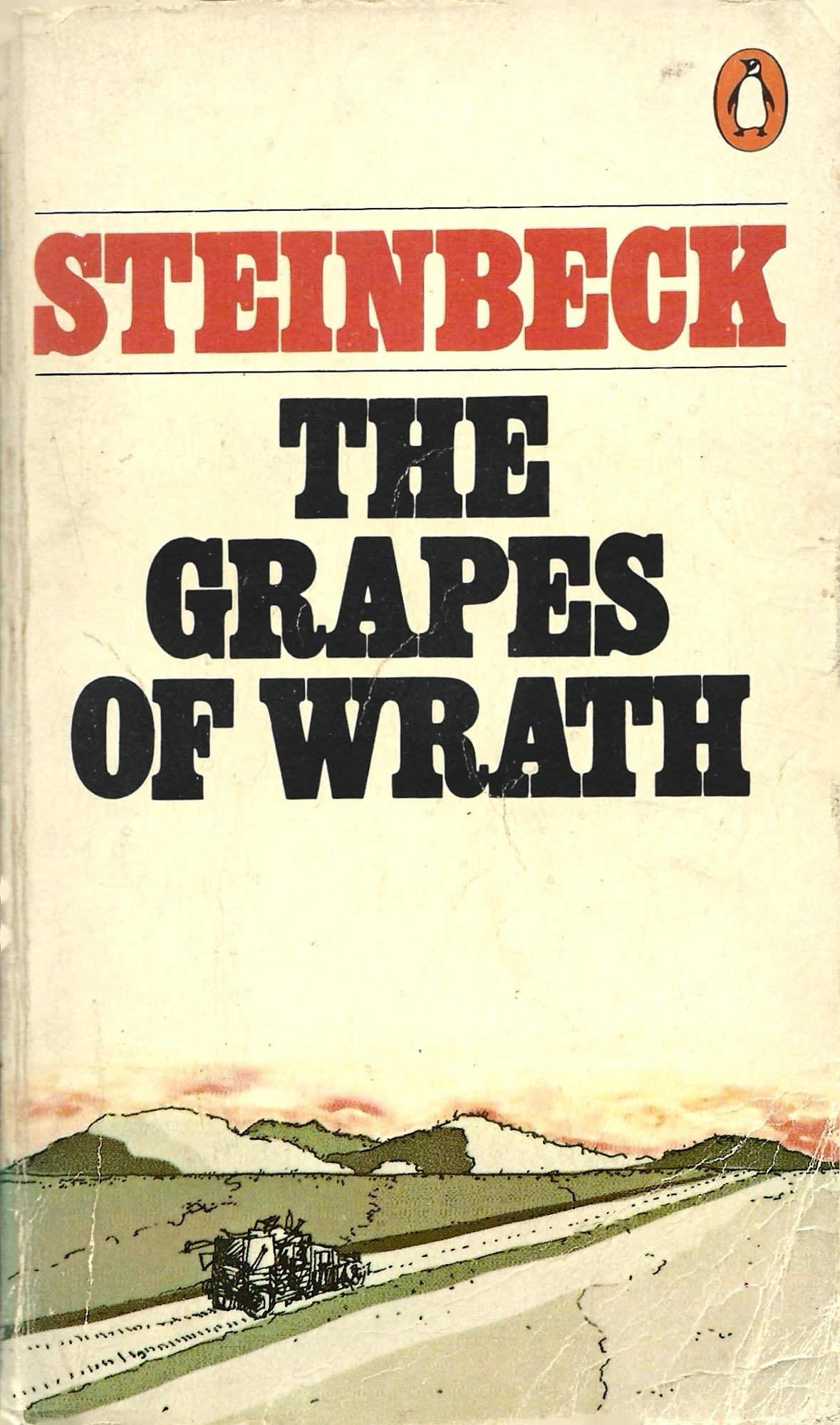
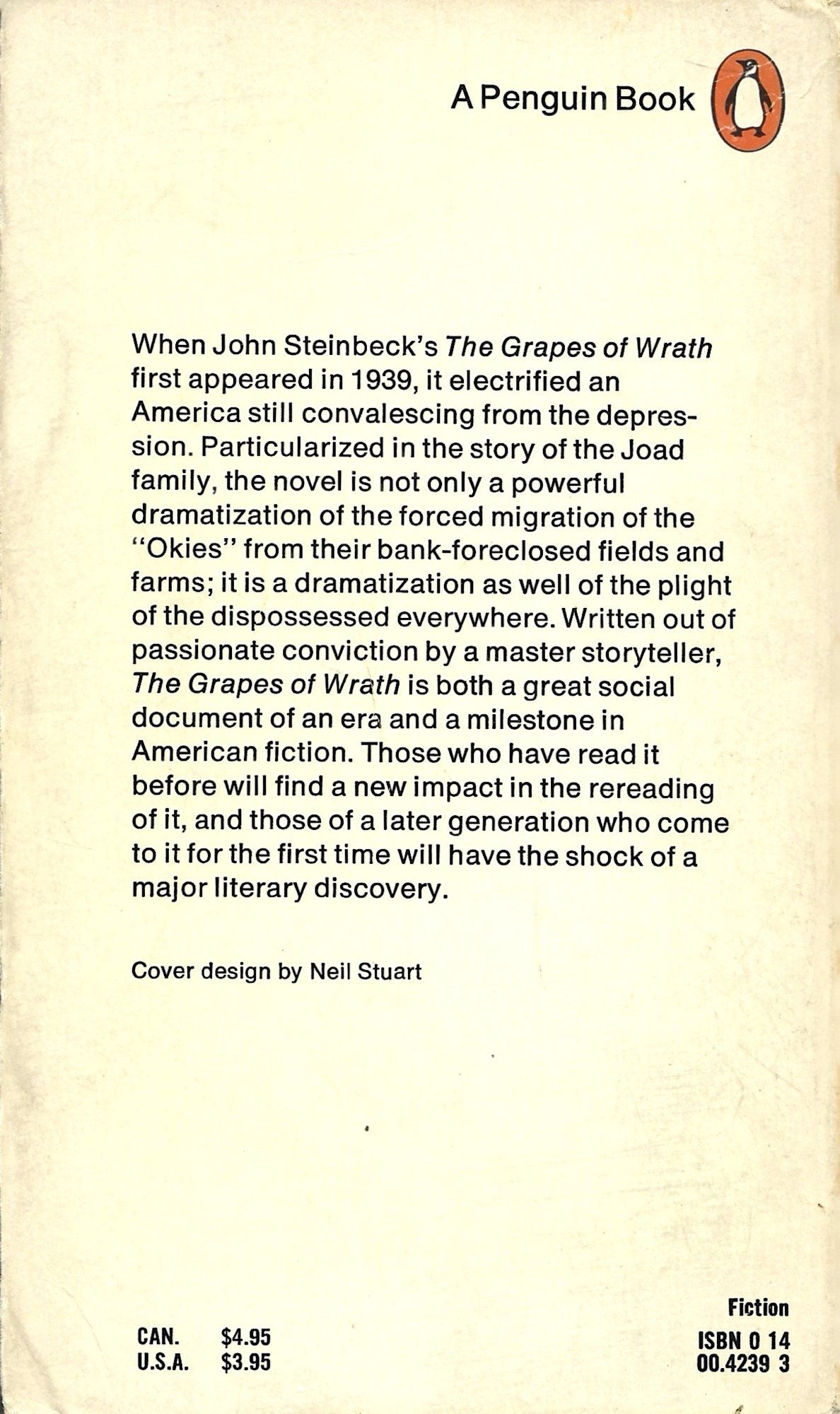
Mass-market Monday | John Steinbeck’s The Grapes of Wrath

The Grapes of Wrath, John Steinbeck, 1939. Penguin Books (1979). Cover design by Neil Stuart. 502 pages.

While it is not fair to call The Grapes of Wrath underrated I think it continues to be under-read. There’s something corny and beautiful I love in Steinbeck’s prose, and while the novel is not without its problems, it remains a sympathetic and convincing depiction of people — laborers — resisting the dehumanizing machinations of capital. Here is Chapter Twenty-One, one of the many stand-alone intercalary vignettes that flesh out the Joad’s saga–


The moving, questing people were migrants now. Those families which had lived on a little piece of land, who had lived and died on forty acres, had eaten or starved on the produce of forty acres, had now the whole West to rove in. And they scampered about, looking for work; and the highways were streams of people, and the ditch banks were lines of people. Behind them more were coming. The great highways streamed with moving people. There in the Middle- and Southwest had lived a simple agrarian folk who had not changed with industry, who had not formed with machines or known the power and danger of machines in private hands. They had not grown up in the paradoxes of industry. Their senses were still sharp to the ridiculousness of the industrial life.

And then suddenly the machines pushed them out and they swarmed on the highways. The movement changed them; the highways, the camps along the road, the fear of hunger and the hunger itself, changed them. The children without dinner changed them, the endless moving changed them. They were migrants. And the hostility changed them, welded them, united them—hostility that made the little towns group and arm as though to repel an invader, squads with pick handles, clerks and storekeepers with shotguns, guarding the world against their own people.

In the West there was panic when the migrants multiplied on the highways. Men of property were terrified for their property. Men who had never been hungry saw the eyes of the hungry. Men who had never wanted anything very much saw the flare of want in the eyes of the migrants. And the men of the towns and of the soft suburban country gathered to defend themselves; and they reassured themselves that they were good and the invaders bad, as a man must do before he fights. They said, These goddamned Okies are dirty and ignorant. They’re degenerate, sexual maniacs. These goddamned Okies are thieves. They’ll steal anything. They’ve got no sense of property rights.

And the latter was true, for how can a man without property know the ache of ownership? And the defending people said, They bring disease, they’re filthy. We can’t have them in the schools. They’re strangers. How’d you like to have your sister go out with one of ’em?

The local people whipped themselves into a mold of cruelty. Then they formed units, squads, and armed them—armed them with clubs, with gas, with guns. We own the country. We can’t let these Okies get out of hand. And the men who were armed did not own the land, but they thought they did. And the clerks who drilled at night owned nothing, and the little storekeepers possessed only a drawerful of debts. But even a debt is something, even a job is something. The clerk thought, I get fifteen dollars a week. S’pose a goddamn Okie would work for twelve? And the little storekeeper thought, How could I compete with a debtless man?

And the migrants streamed in on the highways and their hunger was in their eyes, and their need was in their eyes. They had no argument, no system, nothing but their numbers and their needs. When there was work for a man, ten men fought for it—fought with a low wage. If that fella’ll work for thirty cents, I’ll work for twenty-five.

If he’ll take twenty-five, I’ll do it for twenty.

No, me, I’m hungry. I’ll work for fifteen. I’ll work for food. The kids. You ought to see them. Little boils, like, comin’ out, an’ they can’t run aroun’. Give ’em some windfall fruit, an’ they bloated up. Me. I’ll work for a little piece of meat.

And this was good, for wages went down and prices stayed up. The great owners were glad and they sent out more handbills to bring more people in. And wages went down and prices stayed up. And pretty soon now we’ll have serfs again.

And now the great owners and the companies invented a new method. A great owner bought a cannery. And when the peaches and the pears were ripe he cut the price of fruit below the cost of raising it. And as cannery owner he paid himself a low price for the fruit and kept the price of canned goods up and took his profit. And the little farmers who owned no canneries lost their farms, and they were taken by the great owners, the banks, and the companies who also owned the canneries. As time went on, there were fewer farms. The little farmers moved into town for a while and exhausted their credit, exhausted their friends, their relatives. And then they too went on the highways. And the roads were crowded with men ravenous for work, murderous for work.

And the companies, the banks worked at their own doom and they did not know it. The fields were fruitful, and starving men moved on the roads. The granaries were full and the children of the poor grew up rachitic, and the pustules of pellagra swelled on their sides. The great companies did not know that the line between hunger and anger is a thin line. And money that might have gone to wages went for gas, for guns, for agents and spies, for blacklists, for drilling. On the highways the people moved like ants and searched for work, for food. And the anger began to ferment.

A visit to Cormac McCarthy’s “enormous and chaotically disorganized personal library”

Photograph of Cormac McCarthy’s living room by Wayne Martin Belger

The September/October issue of Smithonian Magazine includes a visit to the late Cormac McCarthy’s house in New Mexico. The piece is by Richard Grant, who explains how the visit came about:

I was invited to the house by two McCarthy scholars who were embroiled in a herculean endeavor. Working unpaid, with help from other volunteer scholars and occasional graduate students, they had taken it upon themselves to physically examine and digitally catalog every single book in McCarthy’s enormous and chaotically disorganized personal library. They were guessing it contained upwards of 20,000 volumes. By comparison, Ernest Hemingway, considered a voracious book collector, left behind a personal library of 9,000.

It’s a long feature and contributes more information to McCarthy’s biography than I would have thought (please, Josh Brolin, give us McCarthy’s full story about “drinking wine with André the Giant in Paris”). Grant also focuses heavily on the scholarship going into cataloging McCarthy’s library. Grant describes “looking through a batch [of books to be cataloged] about Cistercian abbeys, violin makers, metaphysics, meta-ontology, the incest taboo and the material foundations of ancient Mesopotamian civilization.” We learn that McCarthy owned at least thirteen editions of Moby-Dick. Scholars found uncashed royalty checks to the tune of ten grand bookmarking William Faulkner’s niece’s memoir. Grant also shares some of McCarthy’s annotations, like this one:

In his copy of The Suit: A Machiavellian Approach to Men’s Style, McCarthy penciled his opinion of slip-on dress shoes: ‘disgusting.’ Further down the same page, next to a sentence praising shiny-buckled monk-strap shoes, he wrote, ‘yet more horror.’

The photographs by Wayne Martin Belger are likely to particularly interest McCarthy nerds. My favorite of the batch is a slip of paper in McCarthy’s handwriting, posed atop a Wittgenstein volume. The slip includes what appears to be a rough budget, notes on “Spengler’s number,” and a short grocery list:

“TARTAR SAUCE

CELERY SALT.”

I also dig Belger’s photograph of McCarthy’s gun barrel schematic; check out the piece for more:

Photograph of “Gun books and catalogs including a schematic, hand-drawn by McCarthy, of a plan to make a gun barrel” by Wayne Martin Belger

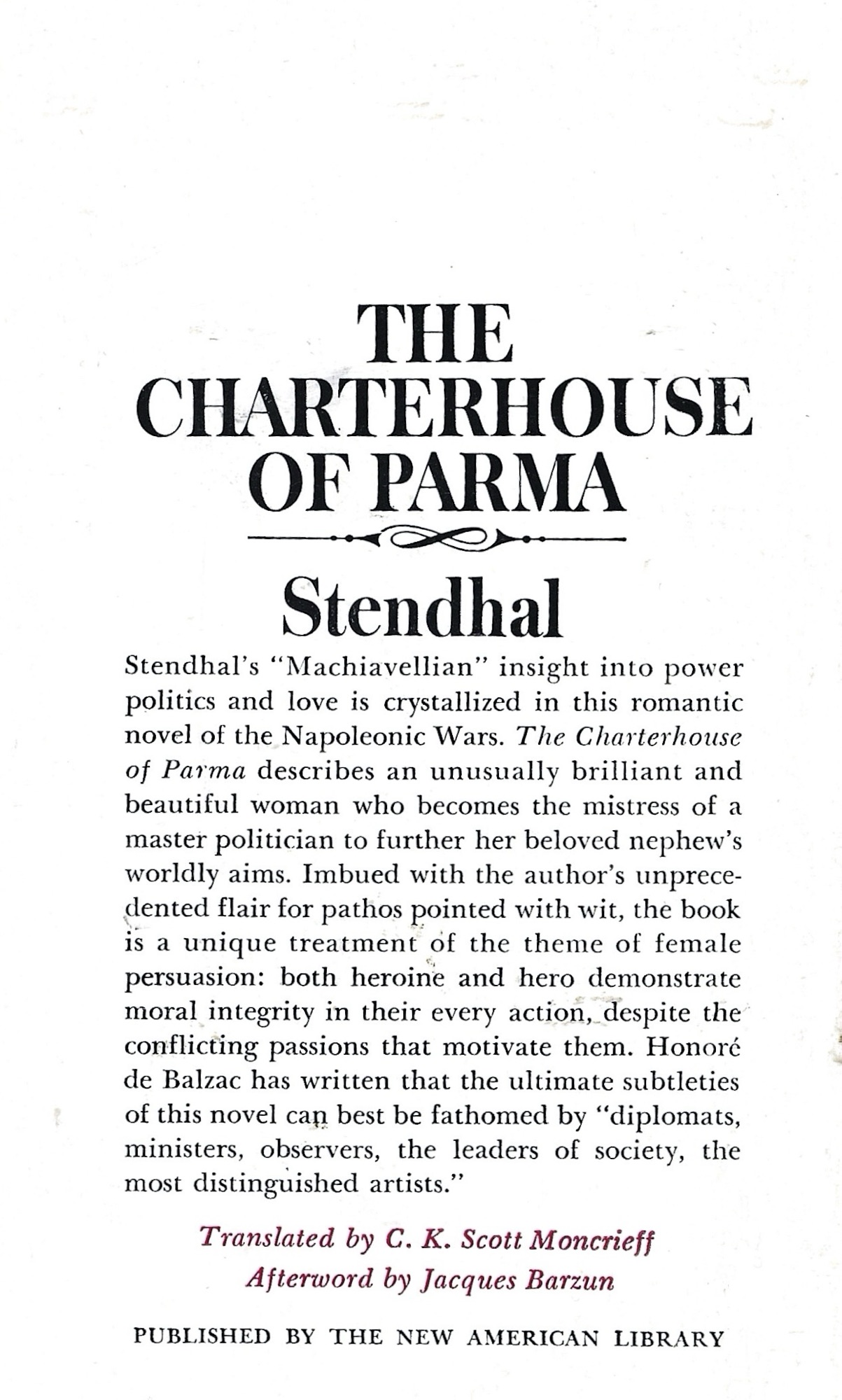
Mass-market Monday | Stendhal’s The Charterhouse of Parma

The Charterhouse of Parma, 1839, Stendhal. Translation by C.K. Scott Moncrieff. Signet Classics (1962). No cover artist credited. 502 pages.

I have fond memories of reading Stendhal’s The Charterhouse of Parma. These memories turn out to be faulty, or perhaps more accurately, not indicative of the experience I had of actually reading the book. I went back and read the riffs I wrote nine years ago on the novel, and words like “boredom” and “slog” pop up. From my last riff on the novel:

Balzac was a great admirer of Charterhouse, as was Italo Calvino, and countless writers too. Indeed, the novel is, I suppose, a cult favorite for writers, which makes sense: Stendhal crowds each page with such psychological realism, such rich life, that every paragraph seems its own novel. I’ll admit that by page 400 or so I was exhausted though.

I’ve noted here a few times that Charterhouse is a “Modernist” novel; perhaps “proto-Modernist” is the term I need. (Again—I’m sure that countless lit critics have sussed over this; pardon my ignorant American ass). And yet Charterhouse also points back at the novels before it, the serialized novels, the epistolary novels, the romances and histories and etceteras of the seventeenth and sixteenth centuries. My favorite lines of the novel were often our ironic narrator’s brief asides like, “Doubtless the reader grows tired…” or “The conversation went on for hours more in trivial detail…” or “The letter went on for pages more after the same fashion…” (These aren’t actual quotes, dear reader, but I think I offer a fair paraphrase here). Stendhal’s modernism, or Modernism, or proto-Modernism, or whatever, is his wily irony, his winking at the novel’s formal characteristics. My own failing, then, is to perhaps want more of this. As I wrote last time I riffed on it, what I suppose I want is a postmodern condensation of The Charterhouse of Parma, such as Donald Barthelme’s 1968 story “Eugénie Grandet,” which parodied Honoré de Balzac’s 1833 novel Eugénie Grandet. 

Screenshot 2016-07-25 at 5.08.00 PM

How much of Balzac’s novel is lovingly leapt through right here?!

This wish of mine is of course my failure, not the novel’s.

The Charterhouse of Parma is undoubtedly an oddity, a work of genius, often thrilling, and often an utter slog. I suppose I’m glad that I finally finished it after so many years of trying, but I’m not sure if I got what I wanted out of it. The failure is mine.

I’ll close with the novel’s final line though, which I adore:

TO THE HAPPY FEW

Annotations on The Guardian’s ranking of Thomas Pynchon’s books

Thomas Pynchon’s ninth novel Shadow Ticket is out fifty days from now. In anticipation, there’s a piece today in The Guardian by John Keenan ranking Pynchon’s books to date.

I undertook a similar silly project just over a year ago on this blog in a post titled “A(nother) completely subjective and thoroughly unnecessary ranking of Thomas Pynchon’s novels” (this list was a correction to a previous 2018 list I foolishly compiled). Lists like these are obviously personal judgments (like, opinions man).

But Keenan’s list is wrong. So here are my annotations.

9. Keenan selects Slow Learner, writing,

A collection of early short stories that is chiefly of interest for the introduction, in which the author spells out why he thinks they fail. Pynchon does not spare himself but, unfortunately, he is right. For aficionados only.

I didn’t include Slow Learner in my rankings because it is not a novel. Pynchon’s intro to it is probably the best thing in it. I agree with Keenan’s assessment here.

8. Keenan selects Against the Day, writing,

Practically plotless, prolix and gargantuan, this novel landed with a thump following a nine-year gap. Characters fragment and double in a bewildering array, the style pastiches pulp novels, adventure stories and science fiction. It does not add up to more than the sum of its admittedly ingenious parts.

This assessment is egregious. Against the Day is perhaps the most directly political of Pynchon’s novels, and, in my estimation, the clearest (if not the most concise) expression of Pynchon’s political sympathies. I ranked it #3, writing: “I think this novel would make an excellent American history textbook. Its thesis: resist the military-industrial-entertainment-complex. Start here!”

7. Keenan selects Bleeding Edge, writing,

Pynchon’s most recent novel is a lightweight. The protagonist, Maxine Tarnow, mother of two, longsuffering partner to a feckless financier, finds herself chasing shadows around Manhattan’s Silicon Alley. Maxine’s skills as a fraud investigator are put to the test unravelling the machinations of the nasty controller of a computer security firm who will do anything to get his hands on a virtual reality simulator called DeepArcher (geddit?). There are plentiful puns, red herrings and surnames that serve as possibly unhelpful acronyms – the usual Pynchon ingredients, in other words. Here they fail to cohere into an entirely satisfying whole.

Bleeding Edge is not top-tier Pynchon, but it’s hardly lightweight. I ranked it #6, writing,

Reading Bleeding Edge helped evoke all the weirdness the 2000s were about to lay out for us. It made me angry again, or reminded me of the anger that I’d sustain for most of the decade. It reminded me of our huge ideological failure after 9/11, an ideological failure we are watching somehow fail even more today.  But I also loved the novel’s unexpectedly sweet domestic plot, and found a kind of solace even in its affirmation of family, even as its final image pointed to the kind of radical inconclusiveness at the heart of being a parent.

6. Keenan selects Vineland, writing,

It is 1984, the year of Reagan’s re-election but for Zoyd Wheeler, Los Angeles-based veteran of the radical left, time has stopped. His wife, Frenesi, has left him to raise their daughter, Prairie, alone and he resorts to dismal acts of self-sabotage in order to qualify for government benefits. Prairie, in turn, flees the family coop to track down her mother, a subversive turned informant in league with federal baddy Brock Vond. Pynchon’s themes are prescient – surveillance, media saturation, generational miscommunication – but his aim is off.

I don’t think “Pynchon’s aim is off” is the best metaphor here. I think he hits what he shoots at — his targets are clear, and he’s an author, right? His characters are props he can set out where he likes, guaranteeing a bullseye. But that’s not always satisfying. I think the execution of Vineland is a bit slapdash. The book has always had cult status among Pynchon aficionados, perhaps stemming from a contrarian spirit. Paul Thomas Anderson’s (very) loose film adaptation, One Battle After Another, has also appeared to prompt a lot of reading, rereading, and online chatter about Vineland. I ranked it last in my list, at #8, writing that, “Vineland is ultimately depressing and easily my least-favorite Pynchon novel, but it does have some exquisite prose moments.”

5. Keenan selects V., writing,

Sincerity is not a quality readily associated with Pynchon, but his debut novel displays an affection for his characters that would later take second place to irony. The story bounces between Benny Profane, unemployed sailor, and Herbert Stencil, obsessive seeker of the elusive V. The language shows its age in places, but the plight of people determined to keep themselves in the dark is as relevant as ever.

I love V. and also had it at #5 on my list. Keenan is right that “sincerity” is not associated with Pynchon, but absolutely incorrect that Pynchon’s mode of affection is displaced by irony in the later novels. It’s clear that Pynchon loves Jeremiah Dixon, Charles Mason, Webb Traverse, Roger Mexico, Maxine Tarnow, etc. In my list, I wrote,

I’ll repeat my endorsement that “V. makes a good starting place for anyone new to Pynchon” and recommend that anyone interested in Pynchon but daunted by the scope check out the book from their library and read the ninth chapter, the story of of Kurt Mondaugen.

4. Keenan selects The Crying of Lot 49, writing,

The author regretted publishing this novel but he was being unduly harsh on himself. Short, funny and shot through with allusions you can choose to follow or ignore, the story of Oedipa Maas’s search for the meaning behind the supposed rivalry of postal companies is the literary equivalent of non-Euclidean geometry.

I also had Crying at #4. I wrote,

The Crying of Lot 49 is probably a better novel than V. but I think I like V. better. 49 is very funny and showcases Pynchon’s tonality of paranoia/hope wrapped up in zaniness/horror. It’s an excellent sophomore novel, but also dense, claustrophobic even. I guess I like the Pynchon sprawl a bit better.

3. Keenan selects Inherent Vice, writing,

Wilfully weird, often sordid and occasionally borderline unintelligible, Pynchon’s seventh novel was adapted for the big screen by Paul Thomas Anderson in 2014. The adaptation was nominated for an Oscar, making Pynchon as mainstream as he’s ever likely to get. Larry “Doc” Sportello is a private investigator with a broken heart and a huge appetite for marijuana. His ex-girlfriend reappears out of nowhere, implores Doc to find her married lover, then promptly vanishes again. At the heart of the murky tale lurks the sinister presence of the Golden Fang, a vessel that means, as Doc surmises, “a lot of things to a lot of people” – all of them unsavoury.

I love Inherent Vice, but it’s hardly top-three! I had it at #7, above Vineland.

2. Keenan selects Gravity’s Rainbow, writing,

This kaleidoscopic tour de force cemented Pynchon’s reputation as a writer of baffling, farcical and profound genius. A chief delight is his brilliant ear for dialogue which is given full rein in this twisted tale of allied intelligence officers, Nazis, scientists and seers united by a MacGuffin in the shape of a mysterious rocket. The action arcs from London under bombardment to a postwar zone of surrender. What is striking is how the themes explored here – forever wars, technological domination, uncontrollable cartels – have become staples of internet discourse.

I had Mason & Dixon at #2 and Gravity’s Rainbow at #1.

1 . Keenan selects Mason & Dixon, writing,

Pynchon gives the 18th-century novel a postmodern twist to explore the relationship between Charles Mason and Jeremiah Dixon. . . The author layers fact over anachronistic fiction, scientific inquiry over conspiratorial rumour, and tragedy over knockabout farce, in a virtuoso display of storytelling. . . It is a ripping yarn spun for the incredulous enjoyment of both the cleric’s family and the grateful reader.

Here’s what I wrote in my (thoroughly unnecessary) list:

2. Mason & Dixon (1997)

A measurement of the world and a story about friendship. It would be Pynchon’s best novel if he hadn’t written—

1. Gravity’s Rainbow (1973)

The best book.

Rankings are stupid fun, and I appreciate Keenan giving me an opening for some stupid fun on a Monday morning when I should really be prepping for the onset of the fall semester. I’ll close with a more honest ranking — all of these books are good, most are excellent, and at least two are American classics. It might be better to rank Pynchon’s oeuvre on one of those dorky tier lists.

So here is my dorky unnecessary Pynchon tier list:

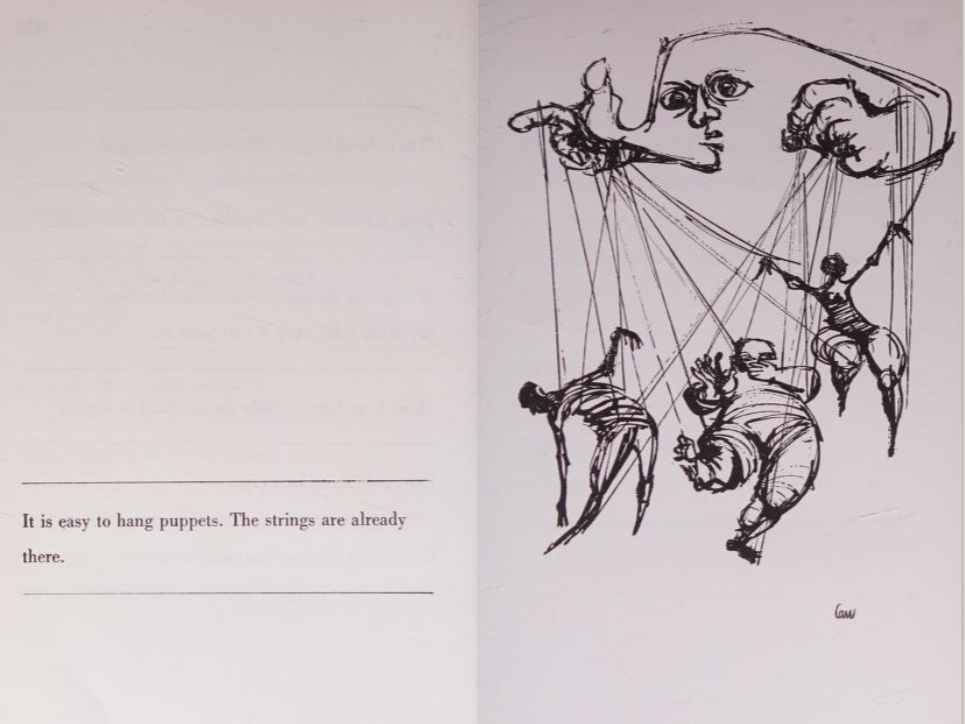
Easy to hang puppets

An aphorism from Stanislaw J. Lec’s Unkempt Thoughts with an illustration by Barbara Carr. Translation by Jacek Galazka.

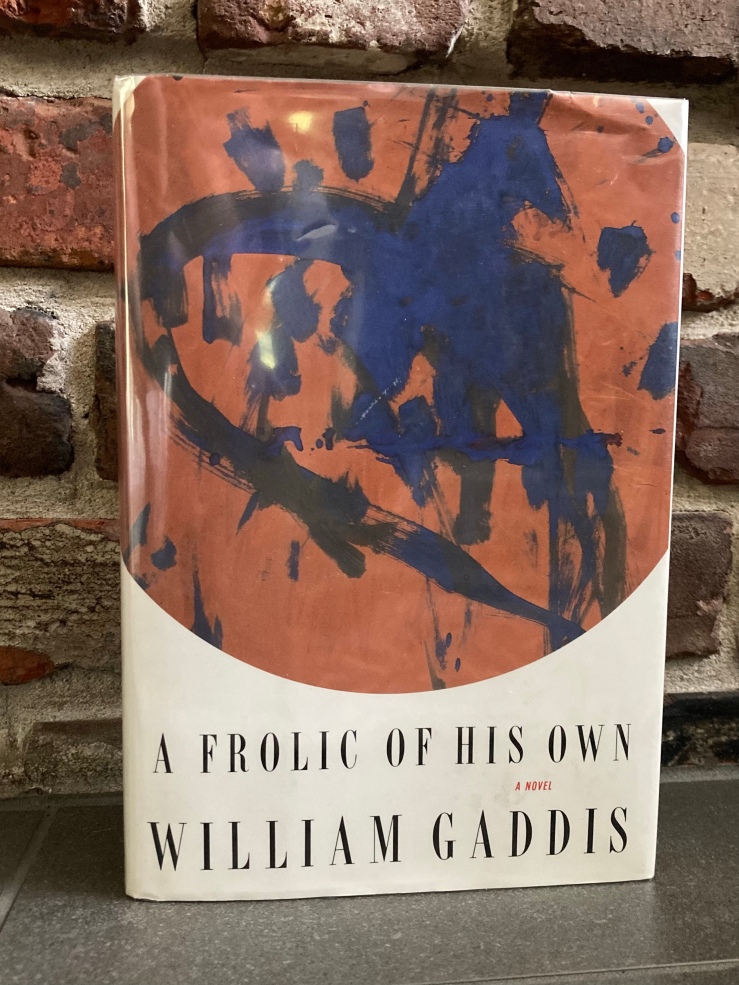
Cannibals all | On William Gaddis’s novel A Frolic of His Own

I want to comment on the themes and style of William Gaddis’s fourth novel, 1994’s A Frolic of His Own, and I’d like to do so without the burden of summarizing its byzantine plot, so I’ll crib from Steven Moore’s contemporary review of the novel that was first published in the Spring 1994 issue of The Review of Contemporary Fiction. Although he initially protests that the “plot is too wonderfully complex to summarize,” Moore nevertheless offers a concise precis. Moore writes that A Frolic of His Own

…concerns an interlocking set of lawsuits involving the Crease family: Oscar, a historian and playwright; Christina, his stepsister and married to a lawyer named Harry Lutz; and their father Judge Thomas Crease, presiding over two cases in Virginia during the course of the novel. The story unfolds by way of Gaddis’s trademark dialogue but also by various legal opinions, brilliantly rendered in the majestic language of the law.

Law, one of the major themes of the novel, is announced in its opening lines: “Justice? —You get justice in the next world, in this world you have the law.” A Frolic of His Own delves into the intersection of justice, law, art, theft, and compensation, all while foregrounding language as the mediating force of not just these nebulous concepts, but the medium, of course, of the novel itself. “What do you think the law is, that’s all it is, language,” the exasperated lawyer Harry declaims to his wife Christina.

Language is always destabilized and destabilizing in A Frolic of His Own. Gaddis lards the novel with mistakes, misinterpretations, and muddles of every mixture. Characters repeatedly fail to communicate clearly with each other, their dialogue twisting into new territories before they’ve mapped out their present concerns. A Frolic reads as linguistic channel surfing, an addled mind constantly turning the dial before a thought can fully land.

The effect of this linguistic channel surfing at times stuns and overwhelms the reader, approximating the noise of modern language that Gaddis’s heroes so often rail against, even as they participate in and create more of this noise. It’s worth sharing a paragraph in full to offer a sense of what Gaddis is doing in A Frolic of His Own. Here, Christina takes a phone call from her husband Harry, while her brother Oscar (who is slowly going mad) watches the evening news:

—Has Harry called? And when it finally rang —We’re fine, did you get to that new doctor? Well whatever you call him, you… I know that Harry but you’ve simply got to make time, if you don’t you’re going to end up like… that’s exactly what I mean, he’s sitting right here waiting for the evening news to whet his appetite for supper, I mean I can’t take care of both of you can I? Scenes of mayhem from Londonderry to Chandigarh, an overweight family rowing down main street in a freak flood in Ohio, a molasses truck overturned on the Jersey Turnpike, gunfire, stabbings, flaming police cars and blazing ambulances celebrating a league basketball championship in Detroit interspersed with a decrepit grinning couple on a bed that warped and heaved at the touch of a button —because they offered him a settlement Harry, almost a quarter million dollars but of course he insists on going ahead with the case or rather Mister Basie does, he was out here for… what? The Stars and Bars unfurled in a hail of rocks and beer cans showering the guttering remnants of a candlelight vigil—but if you can just try to be patient with her Harry, you know her mother just died and she’s been in an awful state trying to… to what? Oscar will you turn that down! that now she wants you to help her break her mother’s will? I don’t see what… well they never really got on after her mother was converted by that wildeyed Bishop Sheed was it? a million years ago convincing her that it was more exclusive with Clare Luce and all that after the wads of money she’d been giving St Bartholomew’s with these millions of Catholics jamming every slum you can think of if you call that exclusive, she…—Look! Christina look! Placards brandishing KEEP GOD IN AMERICA, MURDERER  come quickly! and caught in the emergency vehicles’ floodlights towering over it all the jagged thrust of —that, that Szyrk thing that, look!

The noisy force of mass-mediated language threatens to overwhelm the reader, whom Gaddis challenges to make meaning of his mess. Later, Christina sums up the problem: “I mean you talk about language how everything’s language it seems all that language does is drive us apart.” Naive Oscar, whose multiple lawsuits initiate the plot of A Frolic, tries to clarify the problem of language in his own way too: “—Isn’t that what language is for? to say what you mean? That’s why man invented language, isn’t it? so we can say what we mean?” But the events that Gaddis arranges in his novel suggest that the answer is, Not quite. There’s only one language all Americans understand—money:

—You want to sue them for damages, that’s money isn’t it?

—Because that’s the only damn language they understand! …Steal poetry what do you sue them for, poetry? …Two hundred hours teaching Yeats to the fourth grade?

Oscar’s complaint is the apparent plagiarism of his Civil War play Once at Antietam by a major Hollywood studio that has turned it into a “piece of trash” called The Blood in the Red White and Blue. Gaddis includes large sections of Oscar’s play in A Frolic of His Own, often having various characters (including its author) stop to make critical remarks. Here, Gaddis has actually cannibalized parts of a play he wrote in the late 1950s after he’d finished The Recognitions. He was unable to get Once at Antietam produced or published. In a 1961 letter, he admitted that “Now it reads heavy-handed, obvious, over-explained, oppressive,” adding that there might be some value somewhere in the work “but the vital problem remains, to extract it, to lift out something with a life of its own, give it wings, release it.” A Frolic of His Own may, on one hand, “release” Gaddis’s old play, but it denies it any life of its own. The play is bound within the text proper, incomplete, riddled with elisions, terminally unfinished.

It also comes to light (via a lengthy legal deposition) that Oscar (and perhaps the younger Gaddis?) has plagiarized large sections of his play, notably from Plato’s Republic. Oscar pleads that his plagiarisms are justified—they are art. But in A Frolic of His Own, “it all evaporates into language confronted by language turning language itself into theory till it’s not about what it’s about it’s only about itself turned into a mere plaything.”

Language is, of course, Gaddis’s plaything, and his novel repeatedly underlines its own textuality without the preciousness that sometimes afflicts postmodernist writing. For all his innovations and experimentation with form, Gaddis here and elsewhere is at his core a traditionalist like his hero T.S. Eliot. And like Eliot, he seeks to pick up the detritus of culture and meld it into something new, all while attacking the hollow men who run America. There’s more than just crankiness here: There is howling and bleating and often despair. There’s no justice for our characters, but at the same time, they hardly deserve any. For all their apparent cares and worries, these rich, venal, petty characters are ultimately, to borrow a phrase from another book, careless people, leaving messes for others to clean up (often quite literally). The satire bites; it’s rightfully mean-spirited, caustic, and bitter.

As such, A Frolic of His Own, for all its humor, is often very bleak. It also becomes increasingly claustrophobic. The characters get stuck in their language loops; the only way out seems to be madness or death. Gaddis’s writing had long evoked suffocating domestic spaces, whether it was the paper-stuffed 96th Street apartment shared by Bast, Eigen, and Gibbs in 1975’s J R or the haunted house of 1985’s Carpenter’s Gothic. A Frolic of His Own takes the madness to another level, setting the stage for the monolingual stasis of his final work, Agapē Agape.

Even if its cramped quarters are often gloomy and crammed with sharp objects, there’s a zaniness to the linguistic channel surfing of A Frolic that propels its fractured narrative forward. “The rest of it’s opera,” repeats Harry throughout, calling attention to the novel’s satirical histrionics. “It’s a farce,” repeats Oscar, pointing to both his own legal cases and his family history. As A Frolic progresses, its farcical twists become more and more bizarre, yet Gaddis always ties his loose ends. The modern world he satirizes is absurd, but it is real.

The realism Gaddis evokes in A Frolic centers around food and shelter. The action is confined primarily to the dilapidated old Crease estate, with its family (in ever-shifting configurations) frequently trying to feed themselves: “We’ve got to get some food in the house” becomes a mantra. Poor privileged half-siblings Oscar and Christina can hardly shop for themselves, let alone cook.

They are very adroit at drinking, however. As the novel careens towards madness, the half-siblings respond by hitting the booze. Consumption runs throughout the novel, presaged in its domestic-but-dooming epigraph, a recollection of something Thoreau said to Emerson while they were walking:

What you seek in vain for, half your life, one day you come full upon, all the family at dinner. You seek it like a dream, and as soon as you find it you become its prey.

Gaddis was fond of repurposing language, and first used the lines in his first novel, 1955’s The Recognitions. The last line of the epigraph, which finds the seeker become prey to his own dream, seems to me now to further highlight A Frolic’s themes of consumption—taboo consumption: cannibalism.

Very early in the novel, the narrator calls attention to Oscar’s copy of George Fitzhugh’s 1857 defense of slavery, Cannibals All! The phrase “cannibals all” is then inverted near the very end of the novel, when a former lawyer, in the hopes of perpetrating an insurance scam, wedges his foot in Oscar’s door: “they’re cannibals Mister Crease, they’re all cannibals,” the former lawyer insists, referring broadly to the insurance industry (he’ll later extend the term to those working in the real estate market in particular and humanity in general).

These direct inversions—cannibals-all/all-cannibals—bookend A Frolic of His Own, neatly encasing the metaphorical cannibalism that runs through the novel. Gaddis depicts a “dog eat dog” world (full of literal dead dogs) ruled by venal consumption. Family members cannibalize family members, law cannibalizes art, texts cannibalize texts. “When the food supply runs out and the only ones around are your own species, why go hungry?” interjects the narrator of a nature documentary that Oscar watches absentmindedly. Harry puts it succinctly:

That’s…what this whole country’s really all about? tens of millions out there with their candy and beer cans and this inexhaustible appetite for being entertained? Anything they can get their hands on…

Gaddis depicts a world where all attempts at culture and art are ultimately cannibalized and excreted by capital. In one of the novel’s goofiest and meanest gags, an entrepreneur seeks to exploit the highly-publicized death of Spot, a dog trapped and then zapped in an ugly postmodernist sculpture. The huckster, capitalizing on the public’s love for Spot, creates “Hiawatha’s Magic Mittens…labeled ‘Genuine Simulated Spotskin® Wear ‘Em With The Furside Outside.'”

“Hiawatha’s Magic Mittens” might seem like a throwaway joke, but the joke is nevertheless part of the novel’s theme of cannibalized culture. Those familiar with the legend of Hiawatha may recall that in many versions, Hiawatha practices ritual cannibalism until he is converted by the Great Peacemaker Deganawida. After his conversion, Hiawatha ceases to eat human flesh and strives for mutual aid and cooperation.

Gaddis also evokes the Hiawatha of Henry Wadsworth Longfellow’s epic poem, itself a cannibalization of sorts of the mytho-historical Hiawatha. Gaddis grafts the oft-cited opening line of “Hiawatha’s Childhood,” “By the shores of Gitche Gumee” a few times early in the novel. The poem seems to loll and roll around in Oscar’s skull; as his alcoholic madness increases, the poem’s trochaic tetrameter infects his thoughts. The result is some of the most beautiful prose in the book (even if the lines are intended as half-parody). Consider the following passage, which begins with Oscar watching the sunset on the wetlands around his crumbling estate, takes flight into the poetic cannibalization of Longfellow’s lines, and winds up in the jumble of Oscar’s fish tank (I strongly suggest reading the passage aloud to hear the trochaic tetrameter):

Neither the red scream of sunset blazing on the icebound pond nor the thunderous purple of its risings on a landscape blown immense through leafless trees off toward the ocean where in flocks the wild goose Wawa, where Kahgahgee king of ravens with his band of black marauders, or where the Kayoshk, the seagulls, rose with clamour from their nests among the marshes and the Mama, the woodpecker seated high among the branches of the melancholy pine tree past the margins of the pond neither rose Ugudwash, the sunfish, nor the yellow perch the Sahwa like a sunbeam in the water banished here, with wind and wave, day and night and time itself from the domain of the discus by the daylight halide lamp, silent pump and power filter, temperature and pH balance and the system of aeration, fed on silverside and flake food, vitamins and krill and beef heart in a patent spinach mixture to restore their pep and lustre spitting black worms from the feeder when a crew of new arrivals (live delivery guaranteed, air freight collect at thirty dollars) brought a Chinese algae eater, khuli loach and male beta, two black mollies and four neons and a pair of black skirt tetra cruising through the new laid fronds of the Madagascar lace plant.

Forgive the long quote. Or don’t. As the novel swerves to its gloomy end, the poem overtakes Oscar’s consciousness, the transcendental beauty of Longfellow’s vision cannibalized by the chainsaws of “land developers,” the real fauna replaced with Disneyfied simulations to send him off to drunken troubled dream. Dreamy Oscar:

…made a bed with boughs of hemlock where the squirrel, Adjidaumo, from his ambush in the oak trees watched with eager eyes the lovers, watched him fucking Laughing Water and the rabbit, the Wabasso sat erect upon his haunches, watched him fucking Minnehaha as the birds sang loud and sweetly where the rumble of the trucks drowned the drumming of the pheasant and the heron, the Shuh-shuh-gah gave a cry of lamentation from her haunts among the fenlands at the howling of the chainsaws and the screams of the wood chipper for that showplace on the corner promising a whole new order of woodland friends for the treeless landscape, where Thumper the Rabbit and Flower the Skunk would introduce the simpering Bambi to his plundered environment and instruct him in matters of safety and convenience by the shining Big-Sea-Water, by the shores of Gitche Gumee where the desolate Nokomis drank her whisky at the fireside, not a word from Laughing Water left abandoned by the windows, from the wide eyed Ella Cinders with the mice her only playmates as he turned his back upon them with his birch canoe exulting, all alone went Hiawatha.

Many contemporary reviewers suggested that A Frolic of His Own was Gaddis’s most accessible novel to date, and it might be. Whereas J R and Carpenter’s Gothic are composed almost entirely in dialogue, Gaddis provides more stage direction and connective tissue in A Frolic. There are also the fragments of other forms: legal briefs, depositions, TV news clips, Oscar’s play…Some of these departures can exhaust a reader. Gaddis’s parodies of legalese are full of jokes, but the tone of the delivery can lead one’s mind’s eye to glaze over. Oscar/Gaddis’s play is problematic too, but in a rewarding if confounding way: Is it supposed to be, like, good? The answer, I think, comes in its cannibalized version—I mean the cannibalized version that Oscar watches over broadcast television. When he finally sees The Blood in the Red White and Blue, Oscar experiences a wild array of emotions, both positive and negative—but his feelings are real.

A Frolic of His Own is not the best starting point for anyone interested in William Gaddis’s fiction, although I don’t think that’s where most people start. It is rewarding though, especially read contextually against his other works, in which it fits chaotically but neatly, underscoring the cranky themes in a divergent style that still feels fresh three decades after its original publication. Highly recommended.

[Ed. note — Biblioklept first ran this review in June 2023. I’ve been falling asleep to William Hootkins’ reading of The Song of Hiawatha every night for the past two weeks.]

Mass-market Monday | Gabriel García Márquez’s No One Writes to the Colonel

No One Writes to the Colonel and Other Stories, Gabriel García Márquez. Translation by J.S. Bernstein. Avon Bard (1973). No cover artist credited. 220 pages.

Another beautiful Avon Bard Latin American series cover that fails to attribute the cover artist. The “other” stories that supplement the titular novella are García Márquez’s 1962 collection Los funerales de la Mamá Grande. When I picked this up I fully expected the translator to be Gregory Rabassa, who did several of García Márquez’s major works, along with many, many of the other Avon Bard LA titles. But it’s J.S. Bernstein; as far as I can tell, this is their (his? her?) most famous translation. (Maybe Rabassa was doing a Richard Bachman thing.)

Continue reading “Mass-market Monday | Gabriel García Márquez’s No One Writes to the Colonel” →

Reading — Ishikawa Toraji

Reading, 1934 by Ishikawa Toraji (1875-1964)

Mass-market Monday | John Barth’s End of the Road

End of the Road, 1958, by John Barth. Avon Books (1960). No cover artist or designer credited. 158 pages.

I already owned a more attractive edition of John Barth’s The End of the Road (or End of the Road as the title is given in this edition), but I couldn’t pass up on the odd rounded corners.