“In other words, I stole from a kid” | Don DeLillo and Atticus Lish

Like ”Ratner’s Star,” a book in which Mr. DeLillo says he tried to ”produce a piece of mathematics,” ”The Names” is complexly structured and layered. It concludes with an excerpt from a novel in progress by Axton’s 9-year-old son, Tap. Inspiration for the ending came from Atticus Lish, the young son of Mr. DeLillo’s friend Gordon Lish, an editor.

”At first,” Mr. DeLillo says, ”I had no intention of using excerpts from Tap’s novel. But as the novel drew to a close I simply could not resist. It seemed to insist on being used. Rather than totally invent a piece of writing that a 9-year-old boy might do, I looked at some of the work that Atticus had done when he was 9. And I used it. I used half a dozen sentences from Atticus’s work. More important, the simple exuberance of his work helped me to do the last pages of the novel. In other words, I stole from a kid.”

Young Atticus is given ample credit in the book’s acknowledgments, but creative borrowing from life is not a new technique for Mr. DeLillo, who has been praised for his ear for dialogue. ”The interesting thing about trying to set down dialogue realistically,” he says, ”is that if you get it right it sounds stylized. Why is it so difficult to see clearly and to hear clearly? I don’t know. But it is, and in ‘Players’ I listened very carefully to people around me. People in buses. People in the street. And in many parts of the book I used sentences that I heard literally, word for word. Yet it didn’t sound as realistic as one might expect. It sounded over-refined even.”

From a 1982 profile of Don DeLillo in The New York Times

Atticus Lish’s 2014 novel Preparation for the Next Life was one of the best novels I read last year, and one of the best contemporary American novels I’ve read in ages.
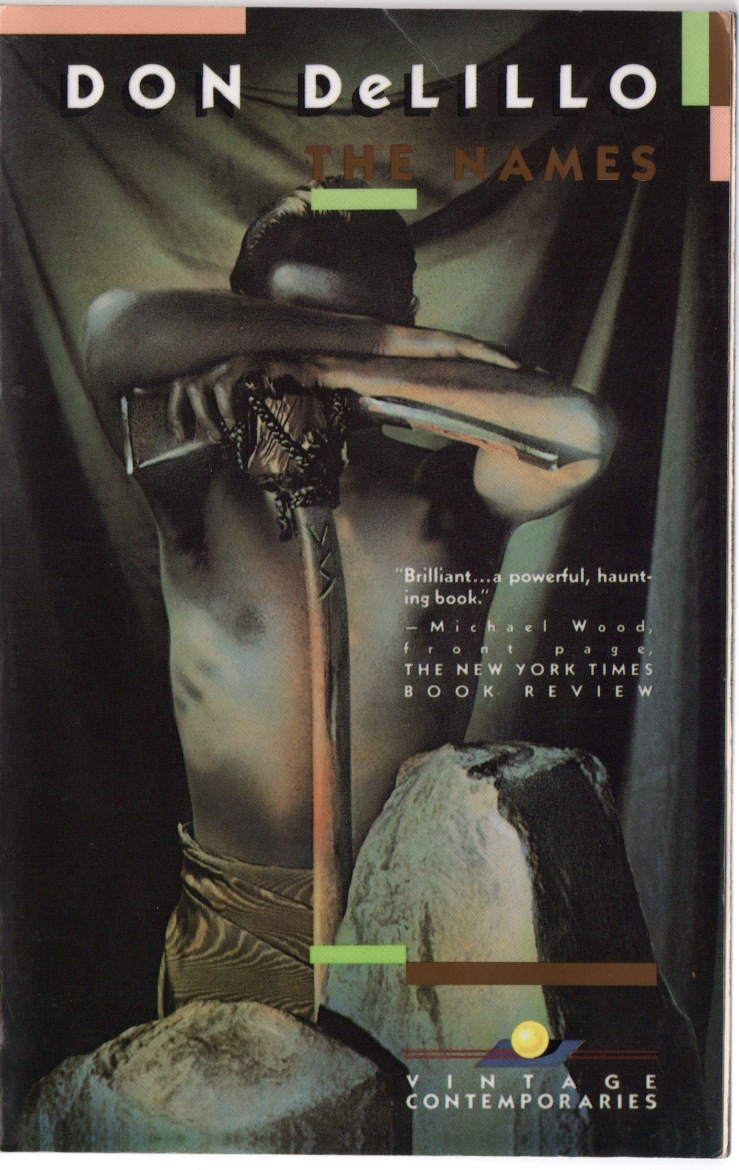
Air travel reminds us who we are. It’s the means by which we recognize ourselves as modern (Don DeLillo)

In this vast space, which seems like nothing so much as a container for emptiness, we sit with our documents always ready, wondering if someone will appear and demand to know who we are, someone in authority, and to be unprepared is to risk serious things.

The terminal at each end is full of categories of inspection to which we must submit, impelling us toward a sense of inwardness, a sense of smallness, a self-exposure we are never prepared for no matter how often we take this journey, the buried journey through categories and definitions and foreign languages, not the other, the sunlit trip to the east which we thought we’d decided to make. The decision we’d unwittingly arrived at is the one that brings us through passport control, through the security check and customs, the one that presents to us the magnetic metal detector, the baggage x-ray machine, the currency declaration, the customs declaration, the cards for embarkation and disembarkation, the flight number, the seat number, the times of departure and arrival.

It does no good to say, as I’ve done a hundred times, it’s just another plane trip, I’ve made a hundred. It’s just another terminal, another country, the same floating seats, the documents of admission, the proofs and identifications.

Air travel reminds us who we are. It’s the means by which we recognize ourselves as modern. The process removes us from the world and sets us apart from each other. We wander in the ambient noise, checking one more time for the flight coupon, the boarding pass, the visa. The process convinces us that at any moment we may have to submit to the force that is implied in all this, the unknown authority behind it, behind the categories, the languages we don’t understand. This vast terminal has been erected to examine souls.

It is not surprising, therefore, to see men with submachine guns, to see vultures squatting on the baggage vehicles set at the end of the tarmac in the airport in Bombay when one arrives after a night flight from Athens.

All of this we choose to forget. We devise a counter-system of elaborate forgetfulness. We agree on this together. And out in the street we see how easy it is, once we’re immersed in the thick crowded paint of things, the bright clothes and massed brown faces. But the experience is no less deep because we’ve agreed to forget it.

From Don DeLillo’s novel The Names.

America is the world’s living myth (Don DeLillo)

Terror. This is the subject she chose. In Europe they attack their own institutions, their police, journalists, industrialists, judges, academics, legislators. In the Middle East they attack Americans. What does it mean? She wanted to know if the risk analyst had an opinion.“Bank loans, arms credits, goods, technology. Technicians are the infiltrators of ancient societies. They speak a secret language. They bring new kinds of death with them. New uses for death. New ways to think about death. All the banking and technology and oil money create an uneasy flow through the region, a complex set of dependencies and fears. Everyone is there, of course. Not just Americans. They’re all there. But the others lack a certain mythical quality that terrorists find attractive.”

“Good, keep going.”

“America is the world’s living myth. There’s no sense of wrong when you kill an American or blame America for some local disaster. This is our function, to be character types, to embody recurring themes that people can use to comfort themselves, justify themselves and so on. We’re here to accommodate. Whatever people need, we provide. A myth is a useful thing. People expect us to absorb the impact of their grievances. Interesting, when I talk to a Mideastern businessman who expresses affection and respect for the U.S., I automatically assume he’s either a fool or a liar. The sense of grievance affects all of us, one way or another.”

“What percentage of these grievances is justified?”

I pretended to calculate.

From Don DeLillo’s novel The Names.

img_2722

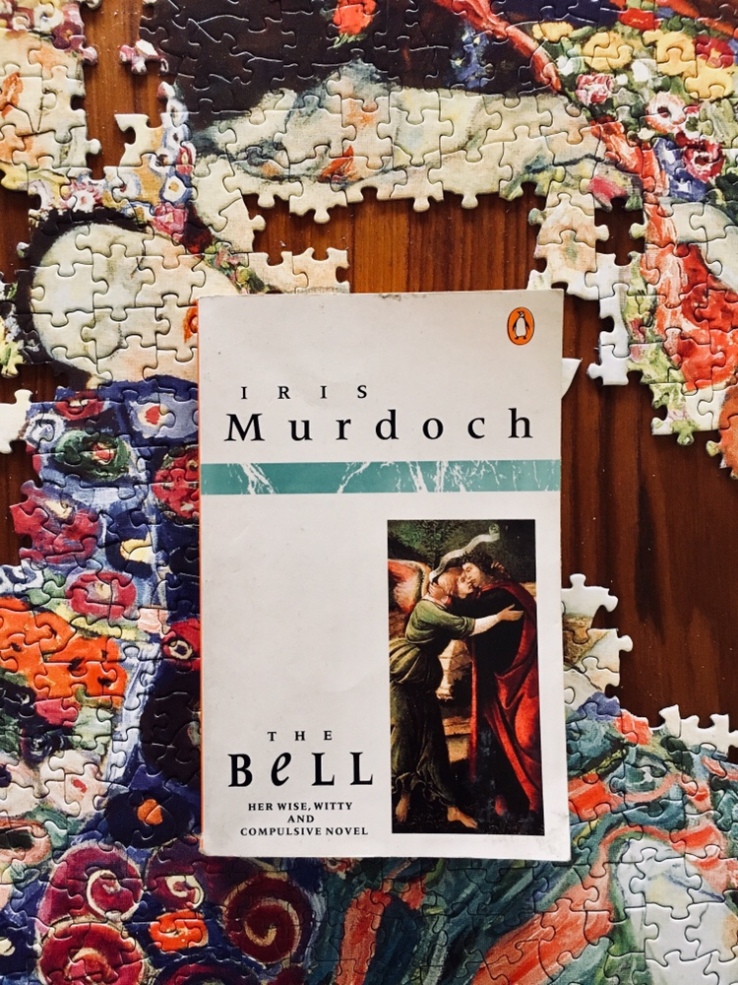
Iris Murdoch’s The Bell (Book acquired, 23 Feb. 2018)

img_9112

I picked up Iris Murdoch’s novel The Bell the other day. I’d put it on my 2018 Good Intentions Reading List, but somehow failed to find it at the big used bookstore I frequent. I found six copies there on Friday, all in different editions—it turns out there was another shelf of Murdoch, but higher up and to the right of where I was looking. Anyway.

How is my progress on that 2018 list, you ask? Not great. I stalled out on William Gass’s The Tunnel after about 60 pages. I usually have fun reading Gass and I wasn’t having fun; in fact, I started approaching the book as a chore, which is not what I want to be doing with my spare time. I got sidetracked with Stanisław Witkiewicz’s Narcotics (not on The List—I hope to have a review up this week), and then picked up Don DeLillo’s The Names (on The List) instead of The Tunnel. I sank into the DeLillo, which feels a bit like a smart beach read after tangling with The Tunnel’s difficult defensive barriers. I plan to dip into The Bell next, and then approach the bigger books on The List—MiddlemarchWar & Peace, uh, The Tunnel—this summer when my teaching load is a lot lighter.


“The 27 Depravities” — Don DeLillo

Every day made her more certain of my various failings. I compiled a mental list, which I often recited aloud to her, asking how accurate it was in reflecting her grievances. This was my chief weapon of the period. She hated the feeling that someone knew her mind.

1.      Self-satisfied.

2.      Uncommitted.

3.      Willing to settle.

4.      Willing to sit and stare, conserving yourself for some end-of-life event, like God’s face or the squaring of the circle.

5.      You like to advertise yourself as refreshingly sane and healthy in a world of driven neurotics. You make a major production of being undriven.

6.      You pretend.

7.      You pretend not to understand other people’s motives.

8.      You pretend to be even-tempered. You feel it gives you a moral and intellectual advantage. You are always looking for an advantage.

9.      You don’t see anything beyond your own modest contentment. We all live on the ocean swell of your well-being. Everything else is trivial and distracting, or monumental and distracting, and only an unsporting wife or child would lodge a protest against your teensy weensy happiness.

10.   You think being a husband and father is a form of Hitlerism and you shrink from it. Authority makes you uneasy, doesn’t it? You draw back from anything that resembles an official capacity.

11.   You don’t allow yourself the full pleasure of things.

12.   You keep studying your son for clues to your own nature.

13.   You admire your wife too much and talk about it too much. Admiration is your public stance, a form of self-protection if I read it correctly.

14.   Gratified by your own feelings of jealousy.

15.   Politically neuter.

16.   Eager to believe the worst.

17.   You will defer to others, you will be acutely sensitive to the feelings of strangers, but you will contrive to misunderstand your family. We make you wonder if you are the outsider in this group.

18.   You have trouble sleeping, an attempt to gain my sympathy.

19.   You sneeze in books.

20.   You have an eye for your friends’ wives. Your wife’s friends. Somewhat speculative, somewhat detached.

21.   You go to extremes to keep your small mean feelings hidden. Only in arguments do they appear. Completing your revenge. Hiding it even from yourself at times. Not willing to be seen taking your small mean everyday revenge on me, which, granted, I have sometimes abundantly earned. Pretending your revenge is a misinterpretation on my part, a misunderstanding, some kind of accident.

22.   You contain your love. You feel it but don’t like to show it. When you do show it, it is the result of some long drawn-out decision making process, isn’t it, you bastard.

23.   Nurser of small hurts.

24.   Whiskey sipper.

25.   Underachiever.

26.   Reluctant adulterer.

27.   American.

We came to refer to these as the 27 Depravities, like some reckoning of hollow-cheeked church theologians. Since then I’ve sometimes had to remind myself it was my list, not hers.

From Don DeLillo’s novel The Names.

img_2722

Stanisław I. Witkiewicz’s Narcotics (Book acquired, 5 Feb. 2018)

dvsfm7rvwaaoolo

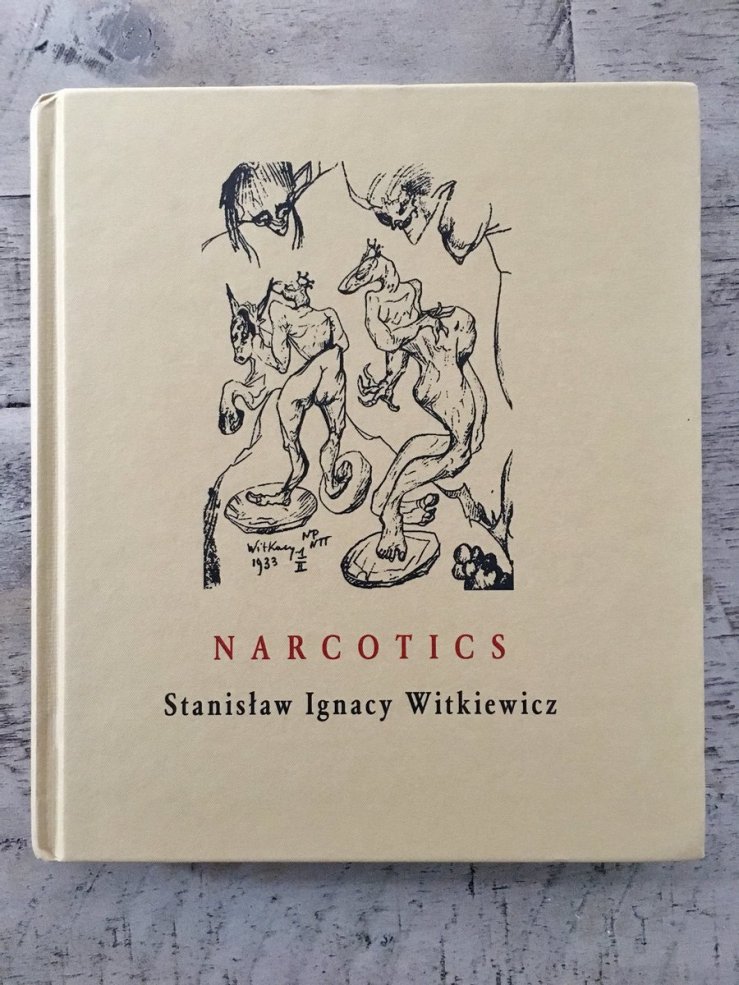
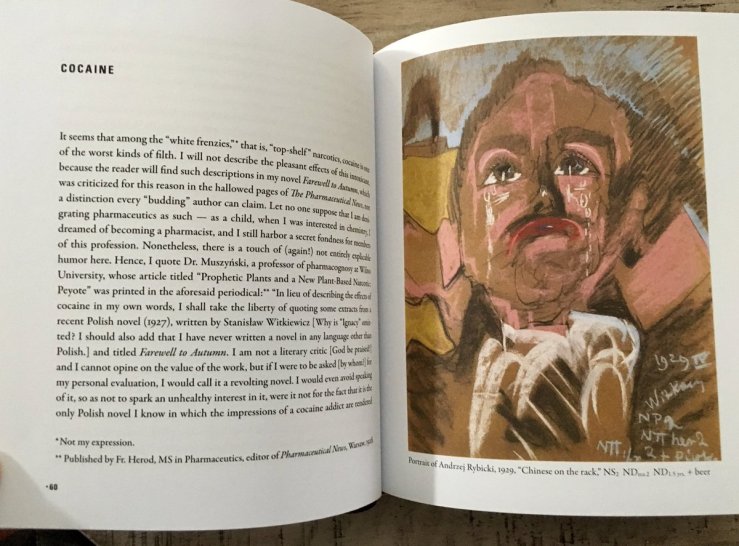
Stanisław I. Witkiewicz’s Narcotics is forthcoming in full-color hardback from Twisted Spoon PressSubtitled “Nicotine, Alcohol, Cocaine, Peyote, Morphine, Ether + Appendices,” the volume consists of Witkiewicz’s musings on his intake of these substances, both in his creative and personal life, as well as the various portraits he composed while taking those substances. Narcotics is translated by Soren Gauger, who also authors a helpful afterword that contextualizes Witkiewicz’s volume. Narcotics was written and published in Poland in the 1930s, and was apparently quite a big hit. I read Witkiewicz’s foreword last night (as well as the section on, um, peyote). In its strange moralizing, the foreword—an apologia really–reminded me a bit of Henri Michaux’s similar exercise, Miserable Miracle, which also strikes a defensive tone at the outset.

dvsfm7qvqaa8cwv

The book, like Witkiewicz’s portraits, is gorgeous. Here is Twisted Spoon’s blurb; full review forthcoming—

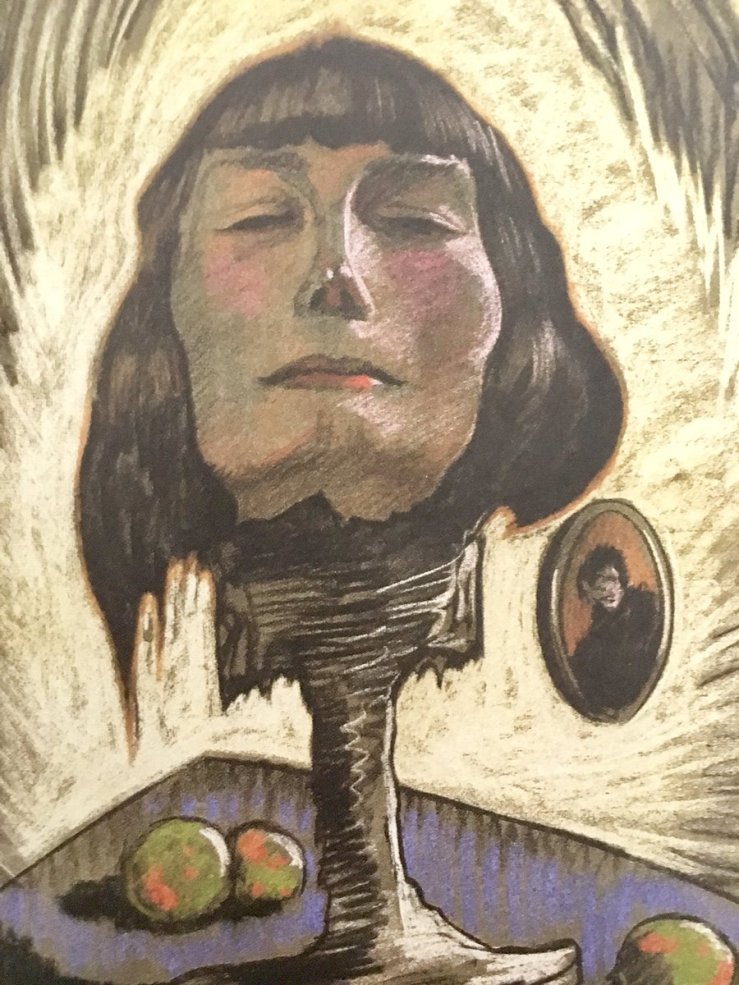
For his “portrait painting firm,” established rules and types for his portrait work, marking the paintings and pastels with corresponding symbols and abbreviations of the substances he had either taken or, in the case of alcohol and nicotine, not taken at the time. Type C were created under the influence of alcohol and “narcotics of a superior grade” to produce abstract compositions he called “Pure Form.” A variety of drugs and their combinations were taken to produce a variety of distortions and effects, and often this would be the portrait subject’s choice. And in some instances a given portrait might be marked with symbols denoting how many days he had gone without smoking or without drinking (and type D were executed to achieve the same results without any artificial means). Different substances resulted in different color combinations or brought out different aspects of the subject’s features or psyche. One stunning series of self-portraits, for example, was executed while on a combination of moderate amounts of beer and cocaine.

In the vein of the well-known drug writings of De Quincey and Baudelaire from a century earlier and those of his contemporaries Walter Benjamin and Jean Cocteau – and foreshadowing the later writings of Aldous Huxley and Carlos Castaneda on psychoactive drugs – Witkacy composed Narcotics in 1930 to discuss and document not only his own experimentation with different substances but the nature of addiction itself and the prevailing social attitude toward drugs, particularly those that were considered “acceptable.” As life became increasingly mechanized, Witkacy felt that a sense of the metaphysical could only be achieved by artificial means, and like Henri Michaux, he produced an extensive oeuvre of singular visual art while under the influence of a variety of substances.

Meandering, acerbic, and burlesque, rife with neologisms and expressions from German, French, English, and Russian, Witkacy dissects Polish society and the art world as well as himself via the hypocrisy surrounding drug use. Since it was first published in the 1930s, Narcotics has achieved a cult status in Poland where it is considered both a modernist classic and a paragon of Witkiewiczian madness. This edition, the first complete translation in English, includes a second appendix written later, passages from the novel Farewell to Autumn, and 34 color reproductions of a cross section of portraits to show how various substances impacted Witkacy’s art.

dvsfm7svoau9vvg

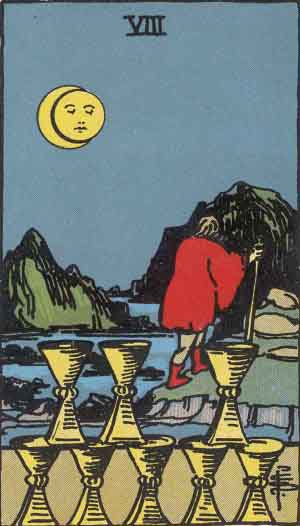
The Significance of the Number 8 in Blood Meridian

cu08

“The Significance of the Number 8 in Blood Meridian is a compelling analysis by William Wickey. Wickey lists numerous examples of the number in McCarthy’s (anti)Western, and touches on the number as a motif connected to gnosticism, tarot, and more.

From the beginning of Wickey’s essay:

The first “major” example of eight occurs in Chapter V when Sproule and the kid stumble across a tree hung with dead babies in a mountain pass after the destruction of Captain White’s war party at the hands of The Comanches.

“The way narrowed through the rocks and by and by they came to a bush that was hung with dead babies. / They stopped side by side reeling in the heat. These small victims, seven, eight of them had holes punched in their under jaws and were hung so by their throats from the broken stobs of mesquite to stare eyeless at the naked sky.” (57)

This grizzly scene sets the tone for subsequent uses of eight in the novel. Every major appearance of eight implies death.

A very similar description follows in the same chapter, describing a group of delirious Mexican soldiers that save Sproule and the kid’s lives by giving them water.

“The refugees stood by the side of the road. The riders looked burnt and haggard coming up out of the sun and they sat their horses as if they had no weight at all. There were seven, eight of them. They wore broadbrimmed hats and leather vests and they carried escopetas across the pommels of the saddles and as they rode past the leader nodded gravely to them from the captain’s horse and touched his hatbrim and they rode on. (63)

Only a few days prior, these eight horses carried the only mounted survivors of the Commanche attack. Their former riders, including the captain, are now dead, presumably at the hands of these Mexican soldiers, having just escaped death at the hands of the Commanches.

Read the whole article.

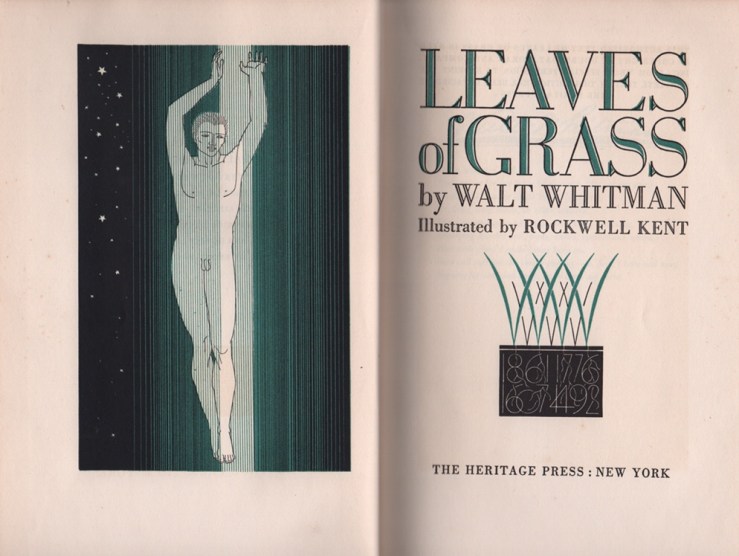
Walt Whitman’s Leaves of Grass, Illustrated by Rockwell Kent (Book acquired, 3 Feb. 2018)

img_9012

I couldn’t pass up on this illustrated Heritage Press copy of Leaves of Grass. I’m not sure of the exact date of publication, but this nice long post on the book suggests it was likely published in 1950 and designed in the mid-thirties.

img_9011

My daughter and I were browsing the poetry section of our favorite used bookshop—quite randomly actually—and she pulled this volume of Leaves of Grass downward like a lever, pretending it might open a secret passage. It didn’t open a secret passage, but when she pushed it back again, I saw Kent’s name on the spine. I love Kent’s work, and I’m a huge Whitman fan, and my copy of Leaves of Grass is literally falling apart. Plus only $10 and I had plenty of store credit…so…

img_9013

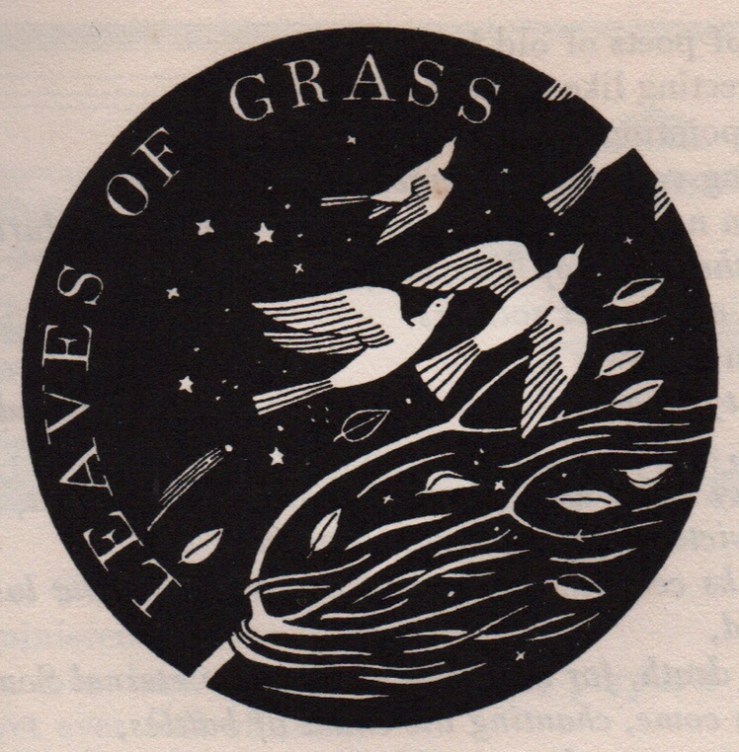
I’ll share some of the illustrations and verses over the next few months—a nice excuse to go through Leaves of Grass again.

img_9019

Thomas S. Klise’s The Last Western (Book acquired, 3 Jan. 2018)

dsogdprvaaettv2

So after maybe one tumbler of scotch too many, I finally broke down and just ordered a copy of Thomas S. Klise’s out-of-print cult novel The Last Western (1974) online. I’d been looking for it in used bookshops for awhile after reading it as a pirate ebook earlier this year. I’ll admit I’m a bit disappointed in the quality of this mass market paperback I paid fifteen U.S. dollars for, but it’s nice to have the novel to check against the ebook (like, if I ever get off my ass to really write about it). The Last Western is a prescient, zany, often sad political/religious thriller set in a kinda-sorta future—a dystopia just a shade off from our own current dystopia. The central figure, Willie, is a multiracial baseball phenom who eventually becomes the Pope. Despite its clean, lucid, straightforward prose style, Klise’s novel definitely has a heavy 70s vibe to it; fans of Vonnegut and Ishmael Reed would likely dig The Last Western. Its later cult fame seems to stem from its resonance with Infinite Jest, a novel that resembles it in several ways (although Wallace said he’d never heard of it). Anyway, I’ve said this before, but I think that some brave indie should reprint The Last Western so folks like me could buy nice new crisp well-bound copies.

Civics and selfishness (David Foster Wallace)

Chapter 19 David Foster Wallace’s The Pale King (or, §19, if you prefer the book’s conceit) begins with this paragraph—

‘There’s something very interesting about civics and selfishness, and we get to ride the crest of it. Here in the US, we expect government and law to be our conscience. Our superego, you could say. It has something to do with liberal individualism, and something to do with capitalism, but I don’t understand much of the theoretical aspect—what I see is what I live in. Americans are in a way crazy. We infantilize ourselves. We don’t think of ourselves as citizens—parts of something larger to which we have profound responsibilities. We think of ourselves as citizens when it comes to our rights and privileges, but not our responsibilities. We abdicate our civic responsibilities to the government and expect the government, in effect, to legislate morality. I’m talking mostly about economics and business, because that’s my area.’

‘What do we do to stop the decline?’

I riffed on §19 of The Pale King here and here.

Robert Coover on genre fiction

Which genres do you avoid?

The conventional novel, only readable if the writing’s stunningly or quirkily great. On the other hand, sci-fi, detective novels, westerns, pornography, spy stories, horror and romance, though very conservative forms, are all more like folk and fairy tales, and so much more alluring to a writer trying to burrow inside the collective psyche.

From Robert Coover’s “By the Book” interviewette in today’s New York Times

Selections from One-Star Amazon Reviews of Virginia Woolf’s Mrs. Dalloway

[Editorial note: The following citations come from one-star Amazon reviews Virginia Woolf’s novel Mrs. DallowayI’ve preserved the reviewers’ original punctuation and spelling. More one-star Amazon reviews.].


I had been warned about Woolf

written, I believe, to impress rather than to relate.

I don’t appreciate her writing and keep coming back for more

I may not be giving it a fair review since I only made it to page 65

pages and pages of surreal metaphors that go on for 10 paragraphs

Woolf had a huge obsession with semi-colons

The book just does not make any sense

I really liked the movie “the Hours”

nonsensical semi-flashbacks

Groundbreaking prose?

I tried, I really did

describing nothing

Written by a lesbian

Kind of like F. Scott Fitzgerald’s works

DO read “The Hours”, you will be impressed

I kept losing track of which character was musing about nothing

I suppose Woolf is considered a genius since she was apparently a cavalier writer of her generation

Let us listen to an old farty woman stream her consciousness to us to hear, pointless thoughts that go nowhere

I’m grateful that contemporary writers can at least string together 2 sentences that follow one another in a logical sequence

Lets burn every sentence she ever penned to end all the unneccesary suffering that curious readers have to go through when they first pick up “Mrs. Dalloway.”

My suggestion: just watch The Hours – you’ll get all the beauty and none of the confusion

the person responsible, Virginia Wolf, has been dead for quite some time now

i have no interest in reading about that lifestyle

am stuck in her growling semicolons

slower than a tortoise

ramblings of a lunatic

As bad as Faulkner

So much language

dreadfully boring

run-on sentences

“literary” drivel

terribly written

so many words

and never getting to a plot

Stream of conscience you say?

I normally enjoy stream of consciousness

The narrative reads like the inner thoughts of a sugar crazed autistic kid with ADD in the middle of a carnival

everyone i know who likes this book only does so because he or she was told by some professor that it’s supposed to be good and can provide no evidence to confirm it

This book certainly shows the depravity of man and a self-centered life and the meaningless found amongst those who think of none but themselves.

The absence of spacing to differentiate between each character’s thought process makes for unnecessary confusion

I really liked the idea of the story taking place over the course of one day

THIS BOOK IS WORSE THAN AIDS!

meandering and repetetive

will suffice as kindling

The party! The party!

VW was mentally-ill

“Dense”

put me off

definitley not a fun read

pretty gross hair and stuff on it/ in it

I had had to read it, or was supposed to

haven’t been able to get past the first chapter

lovely idea, virginia and i applaud you for your creativity

I felt like I was reading some writing student’s homework assignment

The Hours is better, despite its inspiration

this story line is too depressing for me

Descriptions were beaten to death

Not one thing uplifting

I am an avid reader!

the book failed

hyphens

A review of Ursula K. Le Guin’s novel The Lathe of Heaven

The City I Dream, Victor Brauner

George Orr is not well. The meek protagonist of Ursula K. Le Guin’s novel The Lathe of Heaven abuses prescription drugs in a desperate and unsuccessful attempt to stop himself from falling asleep. Orr doesn’t want to sleep because he believes that his dreams come true—that they literally alter reality—but in such a way that no one but Orr realizes that the world has changed. Orr gets caught using a “Pharmacy Card” that doesn’t belong to him, and is court-ordered to begin treatment with a sleep research psychiatrist, Dr. William Haber. Although Haber initially doesn’t believe Orr’s claim to be cursed with “effective dreams” that transform reality, he soon realizes that Orr’s dreams somehow do come true. Then, via hypnotic suggestion (and an “Augmentor” device), Haber begins wielding Orr’s gift/curse as a clumsy tool to “better” the world.

The world of The Lathe of Heaven is grim, gray, dystopian. Published in 1971 and set in Portland in the palindromic year of 2002, Le Guin’s novel is depressingly prescient. Not only does she capture the onset of seventies malaise (the ashes of hope that burned out in the sixties), she also points to a future of environmental catastrophe:

Very little light and air got down to street level; what there was was warm and full of fine rain. Rain was an old Portland tradition, but the warmth—70° F on the second of March—was modern, a result of air pollution. Urban and industrial effluvia had not been controlled soon enough to reverse the cumulative trends already at work in the mid-twentieth century; it would take several centuries for the CO2 to clear out of the air, if it ever did. New York was going to be one of the larger casualties of the Greenhouse Effect, as the polar ice kept melting and the sea kept rising…

This is also a world of urban sprawl, overpopulation, malnutrition, and total war (a clusterfuck in the Middle East, wouldn’t you know). The government is a vague and menacing presence here—vaguely totalitarian, vaguely Big Brotheresque. We learn of the “New Federal Constitution of 1984,” one of many references to Orwell’s book. (The most obvious is our passive hero’s name).

So it’s no wonder that Haber sets about to create a utopia, right? Wouldn’t you, like, try to make the world a better place if you could? Haber is repeatedly described as a “benevolent man”—Le Guin withholds the word dictator—but the central theme comes through repeatedly: Is it possible to alter reality for the greater good? Or do we simply exist in nature, a part of everything around us?

Haber’s experiments with Orr’s mind have unintended consequences. How might we, say, cure overpopulation? How about an awful plague. Orr’s “effective dreams” revise history, rewrite reality, remap consciousness. But he’s never quite able to pull off the massive tasks Haber sets for him—end racism, end war, cure the damaged ecosystem (Le Guin is extremely pessimistic on this last front). Orr is burdened with the consciousness of multiple realities, and feels deep guilt for his role in uncreation. He starts to go crazy:

“I am cracking,” he said. “You must see that. You’re a psychiatrist. Don’t you see that I’m going to pieces? Aliens from outer space attacking Earth! Look: if you ask me to dream again, what will you get? Maybe a totally insane world, the product of an insane mind. Monsters, ghosts, witches, dragons, transformations—all the stuff we carry around in us, all the horrors of childhood, the night fears, the nightmares. How can you keep all that from getting loose? I can’t stop it. I’m not in control!”

Continue reading “A review of Ursula K. Le Guin’s novel The Lathe of Heaven”

If civilization has an opposite, it is war (Ursula K. Le Guin)

Tibe spoke on the radio a good deal. Estraven when in power had never done so, and it was not in the Karhidish vein: their government was not a public performance, normally; it was covert and indirect. Tibe, however, orated. Hearing his voice on the air I saw again the long-toothed smile and the face masked with a net of fine wrinkles. His speeches were long and loud: praises of Karhide, disparagements of Orgoreyn vilifications of “disloyal factions,” discussions of the “integrity of the Kingdom’s borders,” lectures in history and ethics and economics, all in a ranting, canting, emotional tone that went shrill with vituperation or adulation. He talked much about pride of country and love of the parentland, but little about shifgrethor, personal pride or prestige. Had Karhide lost so much prestige in the Sinoth Valley business that the subject could not be brought up? No; for he often talked about the Sinoth Valley. I decided that he was deliberately avoiding talk of shifgrethor because he wished to rouse emotions of a more elemental, uncontrollable kind. He wanted to stir up something which the whole shifgrethor-pattern was a refinement upon, a sublimation of. He wanted his hearers to be frightened and angry. His themes were not pride and love at all, though he used the words perpetually; as he used them they meant self-praise and hate. He talked a great deal about Truth also, for he was, he said, “cutting down beneath the veneer of civilization.”

It is a durable, ubiquitous, specious metaphor, that one about veneer (or paint, or pliofilm, or whatever) hiding the nobler reality beneath. It can conceal a dozen fallacies at once. One of the most dangerous is the implication that civilization, being artificial, is unnatural: that it is the opposite of primitiveness… Of course there is no veneer, the process is one of growth, and primitiveness and civilization are degrees of the same thing. If civilization has an opposite, it is war. Of those two things, you have either one, or the other. Not both. It seemed to me as I listened to Tibe’s dull fierce speeches that what he sought to do by fear and by persuasion was to force his people to change a choice they had made before their history began, the choice between those opposites.

From Ursula Le Guin’s 1969 novel The Left Hand of Darkness. The bold emphases are mine—mea culpa, I couldn’t help it.

On Ursula K. Le Guin’s Hainish novels


img_1190

“Are we not Men?”

— The Island of Dr. Moreau, H.G. Wells (1896)

“A country, a people…Those are strange and very difficult ideas.”

— Four Ways to Forgivenss, Ursula K. Le Guin (1995)

—Each of the novels in Ursula K. Le Guin’s so-called Hainish cycle obliquely addresses Wells’s question by tackling those strange and very difficult ideas of “a country, a people.” The best of these Hainish books do so in a manner that synthesizes high-adventure sci-fi fantasy with dialectical philosophy.

—What am I calling here “the best”? Well—

The Left Hand of Darkness

Planet of Exile/City of Illusions (treat as one novel in two discursive parts)

The Dispossessed

—(How oh how oh how dare I rank The Dispossessed—clearly a masterpiece, nay?—so low on that little list? It’s too dialectical, maybe? Too light on the, uh, high adventure stuff, on the fantasy and romance and sci-fi. Its ideas are too finely wrought, well thought out, expertly cooked (in contrast to the wonderful rawness of Rocannon’s World, for example). None of this is to dis The Dispossessed—it’s probably the best of the Hainish books, and the first one casual readers should attend to. (It was also the first one I read way back when in high school)).

—The novels in Le Guin’s so-called Hainish cycle are

Rocannon’s World (1966)

Planet of Exile (1966)

City of Illusions (1967)

The Left Hand of Darkness (1969)

The Dispossessed (1974)

The Word for World is Forest (1976)

Four Ways to Forgiveness (1995)

The Telling (2000)

—Okay, so I decided to include For Ways to Forgiveness in the above list even though most people wouldn’t call it a “novel” — but its four stories (novellas, really) are interconnected and tell a discrete story of two interconnected planets that are part of the Hainish world. And I pulled a quote from it above. So.

—I read, or reread, Le Guin’s so-called Hainish cycle close to the chronological order proposed by the science fiction writer Ian Watson. I don’t necessarily recommend this order.

—(I keep modifying “Hainish cycle” with “so-called” because the books aren’t really a cycle. Le Guin’s world-building isn’t analogous to Tolkien’s Middle Earth or Faulkner’s Yoknapatawpha County. (Except when her world-building is analogous). But let us return to order).

Le Guin on the subject:

People write me nice letters asking what order they ought to read my science fiction books in — the ones that are called the Hainish or Ekumen cycle or saga or something. The thing is, they aren’t a cycle or a saga. They do not form a coherent history. There are some clear connections among them, yes, but also some extremely murky ones. And some great discontinuities (like, what happened to “mindspeech” after Left Hand of Darkness? Who knows? Ask God, and she may tell you she didn’t believe in it any more.)

OK, so, very roughly, then:

Rocannon’s World, Planet of Exile, City of Illusions: where they fit in the “Hainish cycle” is anybody’s guess, but I’d read them first because they were written first. In them there is a “League of Worlds,” but the Ekumen does not yet exist.

—I agree with the author. Read this trilogy first. Read it as one strange book.

—(Or—again—pressed for time and wanting only the essential, read The Dispossessed and The Left Hand of Darkness—but you already knew that, no?).

Continue reading “On Ursula K. Le Guin’s Hainish novels”

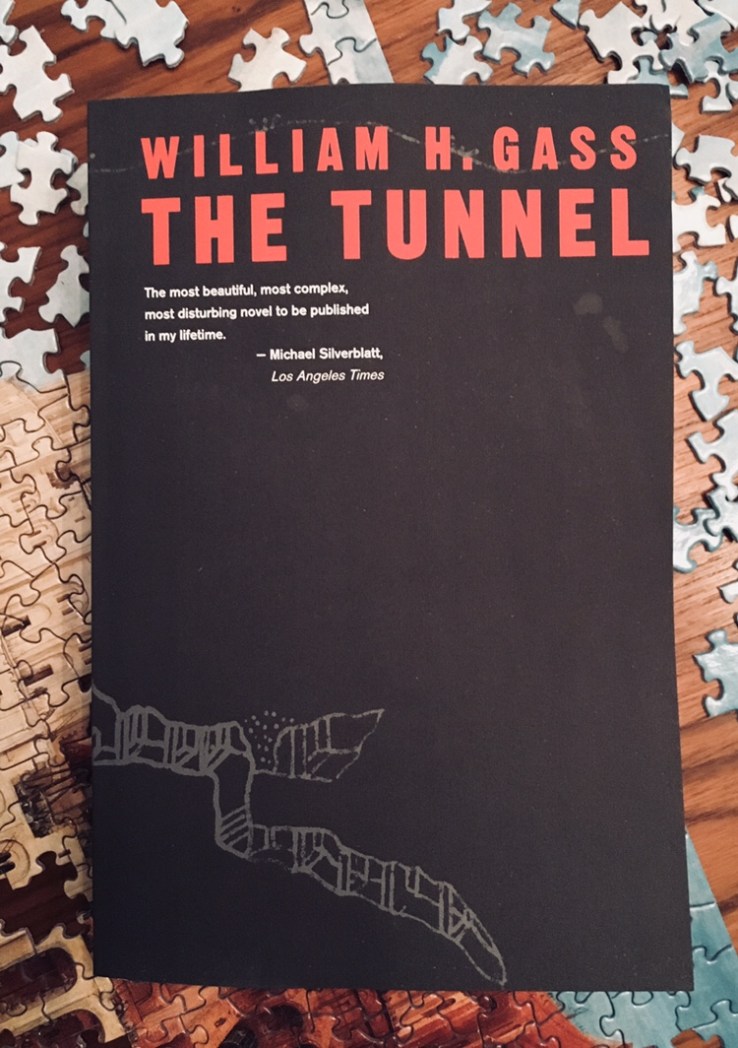
William H. Gass’s The Tunnel (Book acquired, 22 Jan. 2018)

img_8960

The great late great William H. Gass’s very big novel The Tunnel was one of four books I put on my 2018 Good Intentions Reading List that I didn’t previously own. (I did check it out from the library a few years back and download the audiobook—read by Gass himself–but I didn’t make a big dent). I ordered it from my favorite bookstore and it came in yesterday. The Tunnel is one of three Great Big Books I plan to (attempt to) read this year, including Middlemarch and some novel called War & Peace. I’ll probably start The Tunnel first.

Here are two selections from The Tunnel:

img_8962

An Invocation to the Muse

O brood O muse upon my mighty subject like a holy hen upon the nest of night.
O ponder the fascism of the heart.
Sing of disappointments more repeated than the batter of the sea, of lives embittered by resentments so ubiquitous the ocean’s salt seems thinly shaken, of let-downs local as the sofa where I copped my freshman’s feel, of failures as frequent as first love, first nights, last stands; do not warble of arms or adventurous deeds or shepherds playing on their private fifes, or of civil war or monarchies at swords; consider rather the slightly squinkered clerk, the soul which has become as shabby and soiled in its seat as worn-out underwear, a life lit like a lonely room and run like a laddered stocking.
Behold the sagging tit, the drudge-gray mopped-out cunt-corked wife, stale as yesterday’s soapy water or study the shiftless kind, seedy before any bloom, thin and mean as a weed in a walk;
Smell the grease that stands rancid in the pan like a second skin, the pan aslant on some fuel-farting stove, the stone in its corner contributing what it can to the brutal conviviality of close quarters,
Let depression like time-payments weigh you down; feel desperation and despair like dust thick in the rug and the ragged curtains, or carry puppy pee and plate-scrapings, wrapped in the colored pages of the Sunday paper, out to the loose and blowing, dog-jawed heap in the alley;
Spend your money on large cars, loud clothes, sofa-sized paintings, excursions to Hawaii, trinkets, knicknacks, fast food, golf clubs, call girls, slimming salons, booze;
Suffer shouting, heat rash, chilblains, beatings, betrayal, guilt, impotence, jail, jealousy, humiliation, VD, vermin, stink.
Sweat through a St. Louis summer and sing of that.
O muse, I cry, as loudly as I can, while still commanding a constricted scribble, hear me! help me! but my nasty echo answers: one muse for all the caterwauling you have called for! where none was in that low-life line of work before?
It’s true. I’ll need all nine for what I want to do—perhaps brand new—all nine whom Hesiod must have frigged to get his way, for he first spoke their secret names and hauled their history by the snout into his poem. For what I want to do …
Which is what—exactly? to deregulate Descartes like all the rest of the romancers? to philosophize while performing some middle-age adultery? basically enjoying your anxieties like raw lickker when it’s gotten to the belly? I know—you want to make the dull amazing, you want to Heidegger some wholesome thought, darken daytime for the TV, grind the world into a grain of Blake.
O, I deny it! On the contrary! I shall not abuse your gift. I pledge to you, if you should choose me, not to make a mere magician’s more of less, to bottle up a case of pop from a jigger of scotch. I have no wish to wine water or hand out loaves and fishes like tickets on a turkey. It is my ambition to pull a portent—not a rabbit but a raison d’être—from anything—a fish pond, top hat, fortune cookie—you just name it—a prophecy in Spengler’s fanciest manner, a prediction of a forlorn future for the world from—oh, the least thing, so long as it takes a Teutonic tone—a chewed-over, bubble-flat wad of baseball gum, say, now hard and sour in the street, with no suggestion of who the player’s picture was, impersonal despite its season in someone’s spit, like a gold tooth drawn from a Jew’s jaw.
Misfits, creeps, outcasts of every class; these are my constituents—the disappointed people—and if I could bring my fist down hard on the world they would knot together like a muscle, serve me, strike as hard as any knuckle.
Hey Kohler—hey Koh—whistle up a wind. Alone, have I the mouth for it? the sort of wind I want? Imagine me, bold Kohler, calling out for help—and to conclude, not to commence—to end, to bait, to 30, stop, leave off, to hush a bye forever … to untick tock.