Moby-Dick: A Short Riff on a Long Book

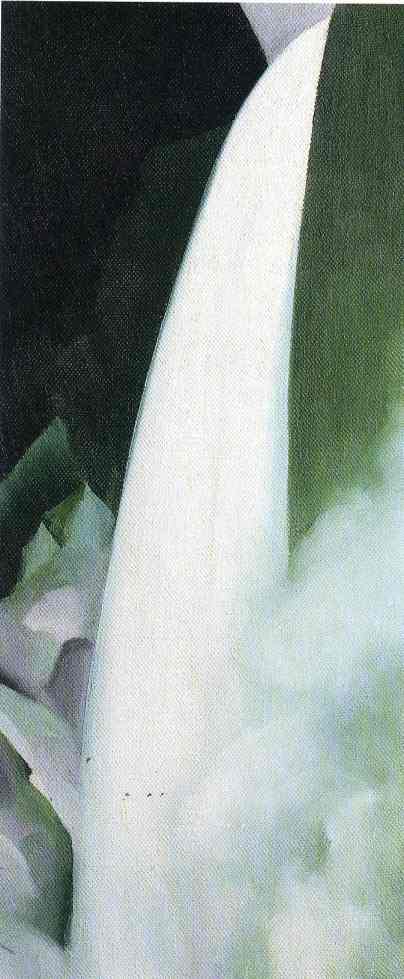
Green and White, Georgia O'Keeffe
Green and White, Georgia O’Keeffe

1. Prompted by Call Me Ishmael, Charles Olson’s marvelous study of Moby-Dick, I took a fifth trip through Melville’s massive opus this past month.

2. Every time I read Moby-Dick it seems funnier and sadder. Richer. Thicker.

3. I cobbled together my reading over different media and spaces: I listened to William Hootkins‘ outstanding unabridged audiobook version, and then reread on my Kindle key passages I’d mentally underlined; I then checked those passages against the copy of Moby-Dick I annotated the hell out of in grad school.

As I read, I posted some of my favorite excerpts on this blog.

4. I posted some of my favorite excerpts of Moby-Dick here on Biblioklept because I knew that I wouldn’t be able to write about the book—not really—that I wouldn’t be able to handle all of its language. (My riff on Olson’s book obsesses over Olson’s ability to write after Melville and Melville’s ability to write after Shakespeare).

5. Really, in posting so many fragments of Moby-Dick, I suppose that I’ve attempted to abrogate any kind of critical duty to describe the book under discussion in terms of its own language.

6. Point 5 is really a way of saying: Moby-Dick, like any sublime work of literature, is a self-defining, self-describing, and even self-deconstructing text.

7. Or, another way of making such a claim:

Let me (mis)appropriate Samuel Beckett’s description of Finnegans Wake and contend that the description fits Moby-Dick just as aptly:

Here form is content, content is form. You complain that this stuff is not written in English. It is not written at all. It is not to be read – or rather it is not only to be read. It is to be looked at and listened to. His writing is not about something, it is that something itself.

8. So here circumnavigate back to my own recent reading and auditing of the book:

Hootkins’ audio recording would make a great starting point for anyone (unnecessarily) daunted by Melville’s big book. He performs the book, commanding his audience’s attention. He unpacks the humor that might otherwise hide from untuned 21st century ears; he communicates the book’s deep, profound sorrow. His Ishmael is perceptive, clever, generous. His Stubb, hilarious. His Ahab a strange philosophical terror.

After listening to Hootkins on my commute, I’d return to key passages on my Kindle, and then finally review the notes I wrote in the cheap hardback Signet edition I read in grad school.

But why bring this up?

9. I don’t know.

Maybe: Unpacking Moby-Dick is too hard, too much—would require its own book, a book that would cite the entirety of Melville’s book.

But discussing the book this way seems a disservice to potential readers; it’s as if we would cloak the book in a mystic veil.
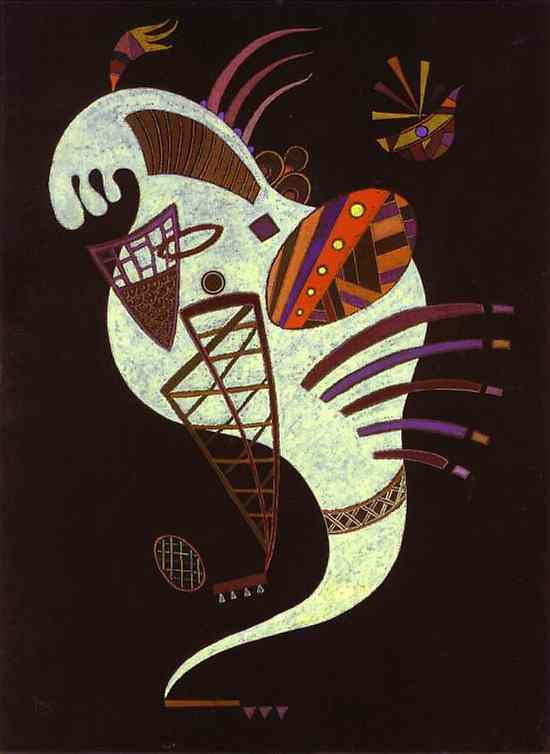
White Figure, Wassily Kandinsky

10. If I have a point to all of this: Moby-Dick is wonderful, funny, moving, engaging; a genre-bender that tackles philosophy, history, science; an adventure tale; a psychological novel brimming with ideas, allusions—but one delivered in sonorous, poetic language. It’s good, great, grand. Read it, if you haven’t. Reread it.

11. So I’ve failed to even try to begin to attempt to pretend to describe the plot.

Here: Ishmael, depressed, suicidal perhaps, decides to go to sea. To go whaling.

He tries to measure the whale, and by measuring the whale, maybe measure the world. But this is not really possible, certainly not in language. Certainly not in first-person perspective.

In Chapter 86, “The Tail,” Ishmael tells us:

The more I consider this mighty tail, the more do I deplore my inability to express it. At times there are gestures in it, which, though they would well grace the hand of man, remain wholly inexplicable. … Dissect him how I may, then, I but go skin deep. I know him not, and never will. But if I know not even the tail of this whale, how understand his head? much more, how comprehend his face, when face he has none? Thou shalt see my back parts, my tail, he seems to say, but my face shall not be seen. But I cannot completely make out his back parts; and hint what he will about his face, I say again he has no face.

(I don’t suppose I need to remark that Melville here lets one mighty tail stand in for another mighty tale—a tale he cannot face).

12. “Call me Ishmael”: our protagonist hails us.

But these famous opening lines aren’t really the beginning of the book. First we have the section titled “Extracts,” and before that “Etymology.” The first entry on the etymology of the whale, from  Hackluyt, warns us not to leave out “the letter H, which almost alone maketh up the signification of the word.”

Whaling. Hailing. Wailing.

The whiteness of the whale.

The witness of the wail.

13. How, just how, does Ishmael witness? How does he manage to tell this story? Did I obsess over this in earlier readings? I don’t think so—I was too concerned with absorbing the what and the why of the story to closely attend the how of its telling.

14. The novel begins in standard first-person point-of-view territory, Ishmael guiding us through Manhattan, New Bedford, Nantucket—but by the time he’s boarded the Pequod and set out into the wide watery world, this first-person perspective transcends the limits of physics: Our narrator not only attends the private conversations of Ahab, his mates, his harpooners, his men—but also the very interior of those men, their minds, their dreams, their imaginations.

Is Ishmael a ghost?

Leviathan-Job 40-21, Salvador Dali

15. And to return to Ahab for a moment: My godwhat a voice! His infecting, addicting insanity. His agon with Moby Dick, with the sun, with himself.

16. And Starbuck: Starbuck comes across weaker and weaker each time I read the book. We’re to believe he’s a man of convictions, but he moves in half-measures. In his final moments he tries to match or feign or approximate Ahab’s insanity: tragicomedy.

17. And Stubb: Despite his cruelties, he may be my favorite character in the book.

18. While I’m riffing: Is there a novel more phallic in the American canon than Moby-Dick? All that sperm: All that life-force.

19. This is maybe what Moby-Dick is about: Life-force. The attempt to to resurrect and die and resurrect again. The coffin that serves as life-buoy. The life-line that connects men that might also be their death. A counterpane to counter pain. A condensation of oppositions.

A yarn, a rope, a series of knots, layered, layering, self-contextualizing.

An attempt to put into language what cannot be put into language.

20. Twenty points: Maybe too long for the “short riff” promised in the title, but also surely too short to even begin to start to approach to pretend to say something adequate about the novel. So a parting thought: Moby-Dick is better—richer, fuller, deeper—each time I read it, and I look forward to reading it again.
“Game” — Donald Barthelme

“Game” by Donald Barthelme

Shotwell keeps the jacks and the rubber ball in his attaché case and will not allow me to play with them. He plays with them, alone, sitting on the floor near the console hour after hour, chanting “onesies, twosies, threesies, foursies” in a precise, well-modulated voice, not so loud as to be annoying, not so soft as to allow me to forget. I point out to Shotwell that two can derive more enjoyment from playing jacks than one, but he is not interested. I have asked repeatedly to be allowed to play by myself, but he simply shakes his head. “Why?” I ask. “They’re mine,” he says. And when he has finished, when he has sated himself, back they go into the attaché case.

It is unfair but there is nothing I can do about it. I am aching to get my hands on them.

Shotwell and I watch the console. Shotwell and I live under the ground and watch the console. If certain events take place upon the console, we are to insert our keys in the appropriate locks and turn our keys. Shotwell has a key and I have a key. If we turn our keys simultaneously the bird flies, certain switches are activated and the bird flies. But the bird never flies. In one hundred thirty-three days the bird has not flown. Meanwhile Shotwell and I watch each other. We each wear a .45 and if Shotwell behaves strangely I am supposed to shoot him. If I behave strangely Shotwell is supposed to shoot me. We watch the console and think about shooting each other and think about the bird. Shotwell’s behavior with the jacks is strange. Is it strange? I do not know. Perhaps he is merely a selfish bastard, perhaps his character is flawed, perhaps his childhood was twisted. I do not know.

Each of us wears a .45 and each of us is supposed to shoot the other if the other is behaving strangely. How strangely is strangely? I do not know. In addition to the .45 I have a .38 which Shotwell does not know about concealed in my attaché case, and Shotwell has a .25 caliber Beretta which I do not know about strapped to his right calf. Sometimes instead of watching the console I pointedly watch Shotwell’s .45, but this is simply a ruse, simply a maneuver, in reality I am watching his hand when it dangles in the vicinity of his right calf. If he decides I am behaving strangely he will shoot me not with the .45 but with the Beretta. Similarly Shotwell pretends to watch my .45 but he is really watching my hand resting idly atop my attaché case, my hand resting atop my attaché case, my hand. My hand resting idly atop my attaché case. Continue reading ““Game” — Donald Barthelme”

“The drama’s done” (Moby-Dick)

The drama’s done. Why then here does any one step forth?—Because one did survive the wreck.

It so chanced, that after the Parsee’s disappearance, I was he whom the Fates ordained to take the place of Ahab’s bowsman, when that bowsman assumed the vacant post; the same, who, when on the last day the three men were tossed from out of the rocking boat, was dropped astern. So, floating on the margin of the ensuing scene, and in full sight of it, when the halfspent suction of the sunk ship reached me, I was then, but slowly, drawn towards the closing vortex. When I reached it, it had subsided to a creamy pool. Round and round, then, and ever contracting towards the button-like black bubble at the axis of that slowly wheeling circle, like another Ixion I did revolve. Till, gaining that vital centre, the black bubble upward burst; and now, liberated by reason of its cunning spring, and, owing to its great buoyancy, rising with great force, the coffin life-buoy shot lengthwise from the sea, fell over, and floated by my side. Buoyed up by that coffin, for almost one whole day and night, I floated on a soft and dirgelike main. The unharming sharks, they glided by as if with padlocks on their mouths; the savage sea-hawks sailed with sheathed beaks. On the second day, a sail drew near, nearer, and picked me up at last. It was the devious-cruising Rachel, that in her retracing search after her missing children, only found another orphan.

The untitled epilogue to Melville’s Moby-Dick, which I’ve always thought of by its epigraph from Job, “And I Only Am Escaped Alone to Tell Thee.”

I’ve enjoyed citing these extracts through this reading of Moby-Dick.


“On Some Technical Elements of Style in Literature” — Robert Louis Stevenson

There is nothing more disenchanting to man than to be shown the springs and mechanism of any art.  All our arts and occupations lie wholly on the surface; it is on the surface that we perceive their beauty, fitness, and significance; and to pry below is to be appalled by their emptiness and shocked by the coarseness of the strings and pulleys.  In a similar way, psychology itself, when pushed to any nicety, discovers an abhorrent baldness, but rather from the fault of our analysis than from any poverty native to the mind.  And perhaps in æsthetics the reason is the same: those disclosures which seem fatal to the dignity of art seem so perhaps only in the proportion of our ignorance; and those conscious and unconscious artifices which it seems unworthy of the serious artist to employ were yet, if we had the power to trace them to their springs, indications of a delicacy of the sense finer than we conceive, and hints of ancient harmonies in nature.  This ignorance at least is largely irremediable.  We shall never learn the affinities of beauty, for they lie too deep in nature and too far back in the mysterious history of man.  The amateur, in consequence, will always grudgingly receive details of method, which can be stated but never can wholly be explained; nay, on the principle laid down in Hudibras, that

‘Still the less they understand,
The more they admire the sleight-of-hand,’

many are conscious at each new disclosure of a diminution in the ardour of their pleasure.  I must therefore warn that well-known character, the general reader, that I am here embarked upon a most distasteful business: taking down the picture from the wall and looking on the back; and, like the inquiring child, pulling the musical cart to pieces.

1.  Choice of Words.—The art of literature stands apart from among its sisters, because the material in which the literary artist works is the dialect of life; hence, on the one hand, a strange freshness and immediacy of address to the public mind, which is ready prepared to understand it; but hence, on the other, a singular limitation.  The sister arts enjoy the use of a plastic and ductile material, like the modeller’s clay; literature alone is condemned to work in mosaic with finite and quite rigid words.  You have seen these blocks, dear to the nursery: this one a pillar, that a pediment, a third a window or a vase.  It is with blocks of just such arbitrary size and figure that the literary architect is condemned to design the palace of his art.  Nor is this all; for since these blocks, or words, are the acknowledged currency of our daily affairs, there are here possible none of those suppressions by which other arts obtain relief, continuity, and vigour: no hieroglyphic touch, no smoothed impasto, no inscrutable shadow, as in painting; no blank wall, as in architecture; but every word, phrase, sentence, and paragraph must move in a logical progression, and convey a definite conventional import.

Now the first merit which attracts in the pages of a good writer, or the talk of a brilliant conversationalist, is the apt choice and contrast of the words employed.  It is, indeed, a strange art to take these blocks, rudely conceived for the purpose of the market or the bar, and by tact of application touch them to the finest meanings and distinctions, restore to them their primal energy, wittily shift them to another issue, or make of them a drum to rouse the passions.  But though this form of merit is without doubt the most sensible and seizing, it is far from being equally present in all writers.  The effect of words in Shakespeare, their singular justice, significance, and poetic charm, is different, indeed, from the effect of words in Addison or Fielding.  Or, to take an example nearer home, the words in Carlyle seem electrified into an energy of lineament, like the faces of men furiously moved; whilst the words in Macaulay, apt enough to convey his meaning, harmonious enough in sound, yet glide from the memory like undistinguished elements in a general effect.  But the first class of writers have no monopoly of literary merit.  There is a sense in which Addison is superior to Carlyle; a sense in which Cicero is better than Tacitus, in which Voltaire excels Montaigne: it certainly lies not in the choice of words; it lies not in the interest or value of the matter; it lies not in force of intellect, of poetry, or of humour.  The three first are but infants to the three second; and yet each, in a particular point of literary art, excels his superior in the whole.  What is that point? Continue reading ““On Some Technical Elements of Style in Literature” — Robert Louis Stevenson”

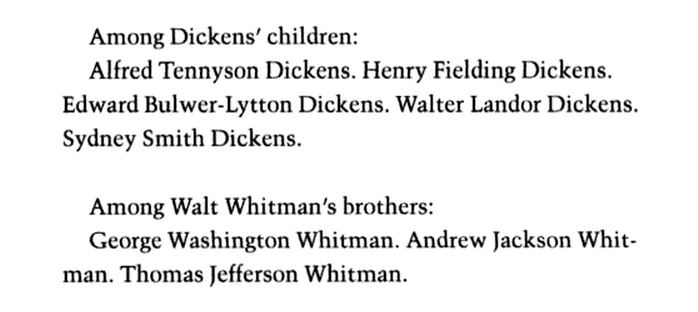
Dickens’ Children // Whitman’s Brothers — David Markson

Capture

“I turn my body from the sun” (Moby-Dick)

“I turn my body from the sun. What ho, Tashtego! let me hear thy hammer. Oh! ye three unsurrendered spires of mine; thou uncracked keel; and only god-bullied hull; thou firm deck, and haughty helm, and Pole-pointed prow,—death-glorious ship! must ye then perish, and without me? Am I cut off from the last fond pride of meanest shipwrecked captains? Oh, lonely death on lonely life! Oh, now I feel my topmost greatness lies in my topmost grief. Ho, ho! from all your furthest bounds, pour ye now in, ye bold billows of my whole foregone life, and top this one piled comber of my death! Towards thee I roll, thou all-destroying but unconquering whale; to the last I grapple with thee; from hell’s heart I stab at thee; for hate’s sake I spit my last breath at thee. Sink all coffins and all hearses to one common pool! and since neither can be mine, let me then tow to pieces, while still chasing thee, though tied to thee, thou damned whale! THUS, I give up the spear!”

From “The Chase—The Third Day,” Chapter 135 of Melville’s Moby-Dick. Ahab’s final monologue.


“The Queen of Spades” — Alexander Pushkin

“The Queen of Spades” by Alexander Pushkin

I

There was a card party at the rooms of Narumov of the Horse Guards. The long winter night passed away imperceptibly, and it was five o’clock in the morning before the company sat down to supper. Those who had won, ate with a good appetite; the others sat staring absently at their empty plates. When the champagne appeared, however, the conversation became more animated, and all took a part in it.

“And how did you fare, Surin?” asked the host.

“Oh, I lost, as usual. I must confess that I am unlucky: I play mirandole, I always keep cool, I never allow anything to put me out, and yet I always lose!”

“And you did not once allow yourself to be tempted to back the red?…
Your firmness astonishes me.”

“But what do you think of Hermann?” said one of the guests, pointing to a young Engineer: “he has never had a card in his hand in his life, he has never in, his life laid a wager, and yet he sits here till five o’clock in the morning watching our play.”

“Play interests me very much,” said Hermann: “but I am not in the position to sacrifice the necessary in the hope of winning the superfluous.”

“Hermann is a German: he is economical—that is all!” observed Tomsky. “But if there is one person that I cannot understand, it is my grandmother, the Countess Anna Fedotovna.”

“How so?” inquired the guests.

“I cannot understand,” continued Tomsky, “how it is that my grandmother does not punt.”

“What is there remarkable about an old lady of eighty not punting?” said Narumov.

“Then you do not know the reason why?”

“No, really; haven’t the faintest idea.” Continue reading ““The Queen of Spades” — Alexander Pushkin”

“Ahab never thinks; he only feels, feels, feels” (Moby-Dick)

“D’ye see him?” cried Ahab; but the whale was not yet in sight.

“In his infallible wake, though; but follow that wake, that’s all. Helm there; steady, as thou goest, and hast been going. What a lovely day again! were it a new-made world, and made for a summer-house to the angels, and this morning the first of its throwing open to them, a fairer day could not dawn upon that world. Here’s food for thought, had Ahab time to think; but Ahab never thinks; he only feels, feels, feels; THAT’S tingling enough for mortal man! to think’s audacity. God only has that right and privilege. Thinking is, or ought to be, a coolness and a calmness; and our poor hearts throb, and our poor brains beat too much for that. And yet, I’ve sometimes thought my brain was very calm—frozen calm, this old skull cracks so, like a glass in which the contents turned to ice, and shiver it. And still this hair is growing now; this moment growing, and heat must breed it; but no, it’s like that sort of common grass that will grow anywhere, between the earthy clefts of Greenland ice or in Vesuvius lava. How the wild winds blow it; they whip it about me as the torn shreds of split sails lash the tossed ship they cling to. A vile wind that has no doubt blown ere this through prison corridors and cells, and wards of hospitals, and ventilated them, and now comes blowing hither as innocent as fleeces. Out upon it!—it’s tainted. Were I the wind, I’d blow no more on such a wicked, miserable world. I’d crawl somewhere to a cave, and slink there. And yet, ’tis a noble and heroic thing, the wind! who ever conquered it? In every fight it has the last and bitterest blow. Run tilting at it, and you but run through it. Ha! a coward wind that strikes stark naked men, but will not stand to receive a single blow. Even Ahab is a braver thing—a nobler thing than THAT. Would now the wind but had a body; but all the things that most exasperate and outrage mortal man, all these things are bodiless, but only bodiless as objects, not as agents. There’s a most special, a most cunning, oh, a most malicious difference! And yet, I say again, and swear it now, that there’s something all glorious and gracious in the wind. These warm Trade Winds, at least, that in the clear heavens blow straight on, in strong and steadfast, vigorous mildness; and veer not from their mark, however the baser currents of the sea may turn and tack, and mightiest Mississippies of the land swift and swerve about, uncertain where to go at last. And by the eternal Poles! these same Trades that so directly blow my good ship on; these Trades, or something like them—something so unchangeable, and full as strong, blow my keeled soul along! To it! Aloft there! What d’ye see?”

“Nothing, sir.”

From “The Chase—The Third Day,” Chapter 135 of Melville’s Moby-Dick.


“Bluebeard” — Edna St. Vincent Millay

“Bluebeard” by Edna St. Vincent Millay—

This door you might not open, and you did;
So enter now, and see for what slight thing
You are betrayed… Here is no treasure hid,
No cauldron, no clear crystal mirroring
The sought-for truth, no heads of women slain
For greed like yours, no writhings of distress,
But only what you see… Look yet again—
An empty room, cobwebbed and comfortless.
Yet this alone out of my life I kept
Unto myself, lest any know me quite;
And you did so profane me when you crept
Unto the threshold of this room to-night
That I must never more behold your face.
This now is yours. I seek another place.

“The Blind Man” — Guy de Maupassant

“The Blind Man” by Guy de Maupassant

How is it that the sunlight gives us such joy? Why does this radiance when it falls on the earth fill us with the joy of living? The whole sky is blue, the fields are green, the houses all white, and our enchanted eyes drink in those bright colors which bring delight to our souls. And then there springs up in our hearts a desire to dance, to run, to sing, a happy lightness of thought, a sort of enlarged tenderness; we feel a longing to embrace the sun.

The blind, as they sit in the doorways, impassive in their eternal darkness, remain as calm as ever in the midst of this fresh gaiety, and, not understanding what is taking place around them, they continually check their dogs as they attempt to play.

When, at the close of the day, they are returning home on the arm of a young brother or a little sister, if the child says: “It was a very fine day!” the other answers: “I could notice that it was fine. Loulou wouldn’t keep quiet.”

I knew one of these men whose life was one of the most cruel martyrdoms that could possibly be conceived.

He was a peasant, the son of a Norman farmer. As long as his father and mother lived, he was more or less taken care of; he suffered little save from his horrible infirmity; but as soon as the old people were gone, an atrocious life of misery commenced for him. Dependent on a sister of his, everybody in the farmhouse treated him as a beggar who is eating the bread of strangers. At every meal the very food he swallowed was made a subject of reproach against him; he was called a drone, a clown, and although his brother-in-law had taken possession of his portion of the inheritance, he was helped grudgingly to soup, getting just enough to save him from starving. Continue reading ““The Blind Man” — Guy de Maupassant”

Alice — Jan Švankmajer (Full Film)

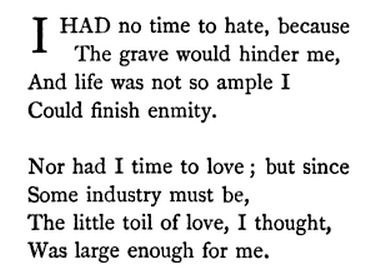
“I had not time to hate, because” — Emily Dickinson

ed

“Markheim” — Robert Louis Stevenson

“Markheim” by Robert Louis Stevenson

“Yes,” said the dealer, “our windfalls are of various kinds. Some customers are ignorant, and then I touch a dividend on my superior knowledge. Some are dishonest,” and here he held up the candle, so that the light fell strongly on his visitor, “and in that case,” he continued, “I profit by my virtue.”

Markheim had but just entered from the daylight streets, and his eyes had not yet grown familiar with the mingled shine and darkness in the shop. At these pointed words, and before the near presence of the flame, he blinked painfully and looked aside.

The dealer chuckled. “You come to me on Christmas Day,” he resumed, “when you know that I am alone in my house, put up my shutters, and make a point of refusing business. Well, you will have to pay for that; you will have to pay for my loss of time, when I should be balancing my books; you will have to pay, besides, for a kind of manner that I remark in you to-day very strongly. I am the essence of discretion, and ask no awkward questions; but when a customer cannot look me in the eye, he has to pay for it.” The dealer once more chuckled; and then, changing to his usual business voice, though still with a note of irony, “You can give, as usual, a clear account of how you came into the possession of the object?” he continued. “Still your uncle’s cabinet? A remarkable collector, sir!”

And the little pale, round-shouldered dealer stood almost on tip- toe, looking over the top of his gold spectacles, and nodding his head with every mark of disbelief. Markheim returned his gaze with one of infinite pity, and a touch of horror.

“This time,” said he, “you are in error. I have not come to sell, but to buy. I have no curios to dispose of; my uncle’s cabinet is bare to the wainscot; even were it still intact, I have done well on the Stock Exchange, and should more likely add to it than otherwise, and my errand to-day is simplicity itself. I seek a Christmas present for a lady,” he continued, waxing more fluent as he struck into the speech he had prepared; “and certainly I owe you every excuse for thus disturbing you upon so small a matter. But the thing was neglected yesterday; I must produce my little compliment at dinner; and, as you very well know, a rich marriage is not a thing to be neglected.”

There followed a pause, during which the dealer seemed to weigh this statement incredulously. The ticking of many clocks among the curious lumber of the shop, and the faint rushing of the cabs in a near thoroughfare, filled up the interval of silence.

“Well, sir,” said the dealer, “be it so. You are an old customer after all; and if, as you say, you have the chance of a good marriage, far be it from me to be an obstacle. Here is a nice thing for a lady now,” he went on, “this hand glass—fifteenth century, warranted; comes from a good collection, too; but I reserve the name, in the interests of my customer, who was just like yourself, my dear sir, the nephew and sole heir of a remarkable collector.” Continue reading ““Markheim” — Robert Louis Stevenson”

Barfly (Full Film)

Letter to Ernest Hemingway — F.Scott Fitzgerald

Dear Ernest:

It’s a fine novel [For Whom the Bell Tolls], better than anybody else writing could do. Thanks for thinking of me and for your dedication. I read it with intense interest, participating in a lot of the writing problems as they came along and often quite unable to discover how you brought off some of the effects, but you always did. The massacre was magnificent and also the fight on the mountain and the actual dynamiting scene. Of the sideshows I particularly liked the vignette of Karkov and Pilar’s Sonata to death—and I had a personal interest in the Moseby guerilla stuff because of my own father. The scene in which the. father says goodbye to his son is very powerful. I’m going to read the whole thing again.

I never got to tell you how I like To Have and to Have Not either. There is observation and writing in that that the boys will be imitating with a vengeance—paragraphs and pages that are right up with Dostoiefski in their undeflected intensity.

Congratulations too on your new book’s great success. I envy you like hell and there is no irony in this. I always liked Dostoiefski with his wide appeal more than any other European—and I envy you the time it will give you to do what you want.

With Old Affection,

P.S. I came across an old article by John Bishop about how you lay four days under dead bodies at Caporetto and how I flunked out of Princeton (I left on a stretcher in November—you can’t flunk out in November) … What I started to say was that I do know something about you on the Italian front, from a man who was in your unit—how you crawled some hellish distance pulling a wounded man with you and how the doctors stood over you wondering why you were alive with so many perforations. Don’t worry—I won’t tell anybody. Not even Allan Campbell who called me up and gave me news of you the other day.

P.S. (2) I hear you are marrying one of the most beautiful people I have ever seen. Give her my best remembrance.

(November 8, 1940; republished in New Directions’ edition of The Crack Up).


“Is Ahab, Ahab? Is it I, God, or who, that lifts this arm?” (Moby-Dick)

“What is it, what nameless, inscrutable, unearthly thing is it; what cozening, hidden lord and master, and cruel, remorseless emperor commands me; that against all natural lovings and longings, I so keep pushing, and crowding, and jamming myself on all the time; recklessly making me ready to do what in my own proper, natural heart, I durst not so much as dare? Is Ahab, Ahab? Is it I, God, or who, that lifts this arm? But if the great sun move not of himself; but is as an errand-boy in heaven; nor one single star can revolve, but by some invisible power; how then can this one small heart beat; this one small brain think thoughts; unless God does that beating, does that thinking, does that living, and not I. By heaven, man, we are turned round and round in this world, like yonder windlass, and Fate is the handspike. And all the time, lo! that smiling sky, and this unsounded sea! Look! see yon Albicore! who put it into him to chase and fang that flying-fish? Where do murderers go, man! Who’s to doom, when the judge himself is dragged to the bar? But it is a mild, mild wind, and a mild looking sky; and the air smells now, as if it blew from a far-away meadow; they have been making hay somewhere under the slopes of the Andes, Starbuck, and the mowers are sleeping among the new-mown hay. Sleeping? Aye, toil we how we may, we all sleep at last on the field. Sleep? Aye, and rust amid greenness; as last year’s scythes flung down, and left in the half-cut swaths—Starbuck!”

But blanched to a corpse’s hue with despair, the Mate had stolen away.

From “The Symphony,” Chapter 132 of Melville’s Moby-Dick. The speaker is, of course, Ahab.


Ben Marcus Doing His David Markson Impression

In his early writings, Thoreau called the alphabet the saddest song. Later in life he would renounce this position and say it produced only dissonant music.

Letters, Montaigne said, are a necessary evil.

But are they? asked Blake, years later. I shall write of the world without them.

I would grow mold on the language, said Pasteur. Except nothing can grow on that cold, dead surface.

Of words Teresa of Avila said, I did not live to erase them all.

They make me sick, said Luther. Yours and yours and yours. Even sometimes my own.

If it can be said, then I am not interested, wrote Schopenhauer.

When told to explain himself, a criminal in Arthur’s court simply pointed at the large embroidered alphabet that hung above the king.

Poets need a new instrument, said Shelley.

If I could take something from the world, said Nietzsche, and take with it even the memory of that thing, so that the world might carry on ever forward with not even the possibility that thing could exist again, it would be the language that sits rotting inside my mouth.

I am a writer, said Picasso. I make my own letters.

Shall I destroy this now, or shall I wait for you to leave the room, said his patron to Kadmos, the reputed inventor of the alphabet.

Kadmos is a fraud, said Wheaton. Said Nestor. Said William James.

Do not read this, warned Plutarch.

Do not read this, warned Cicero.

Do not read this, begged Ovid.

If you value your life. Bleed a man, and with that vile release spell out his name in the sand, prescribed Hippocrates.

No alphabet but in things, said Williams.

Correction. No alphabet at all.

The entirety of Chapter 35 of Ben Marcus’s novel The Flame Alphabet. It’s a departure of style from the novel that seems to owe more than a passing nod to David Markson’s notecard novels.