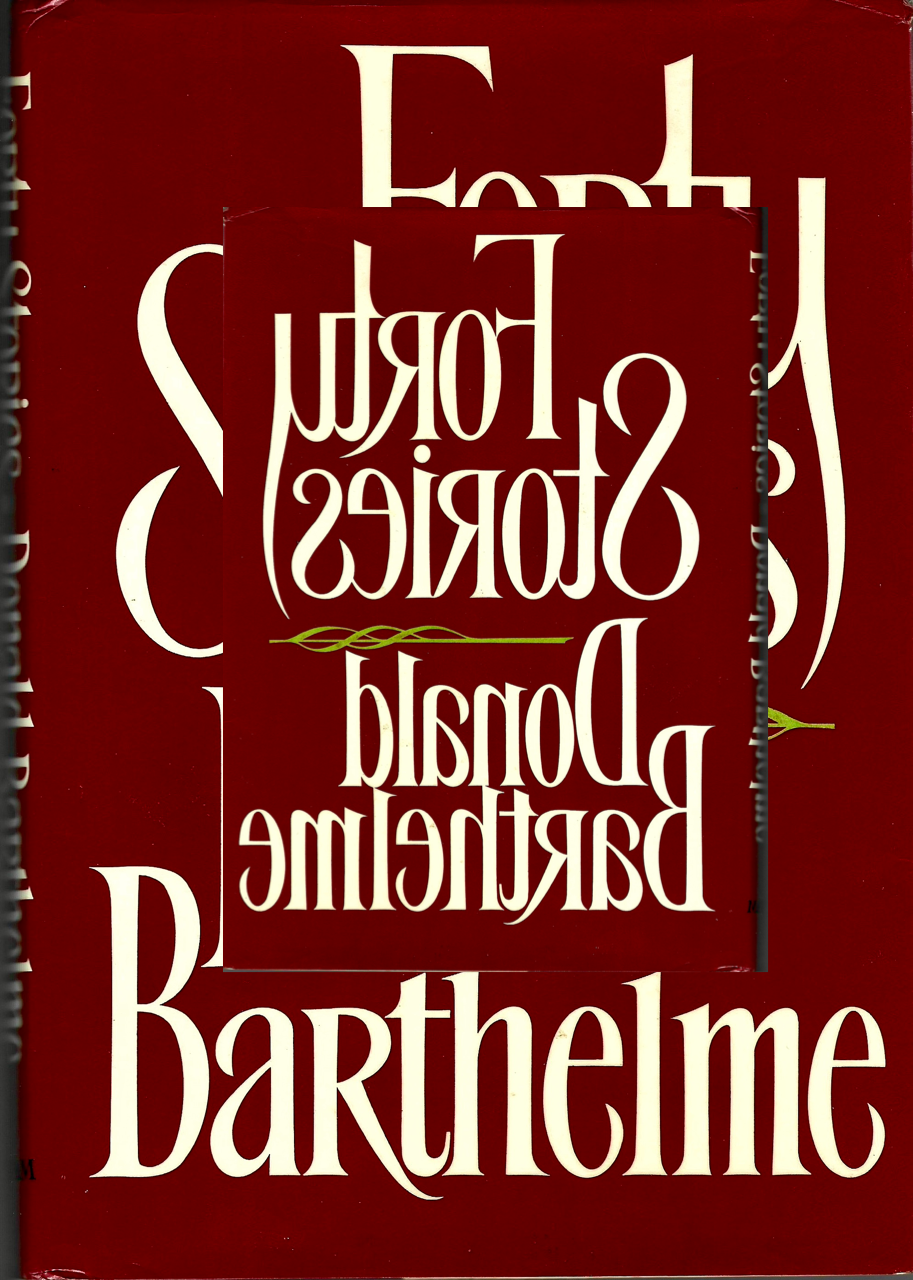
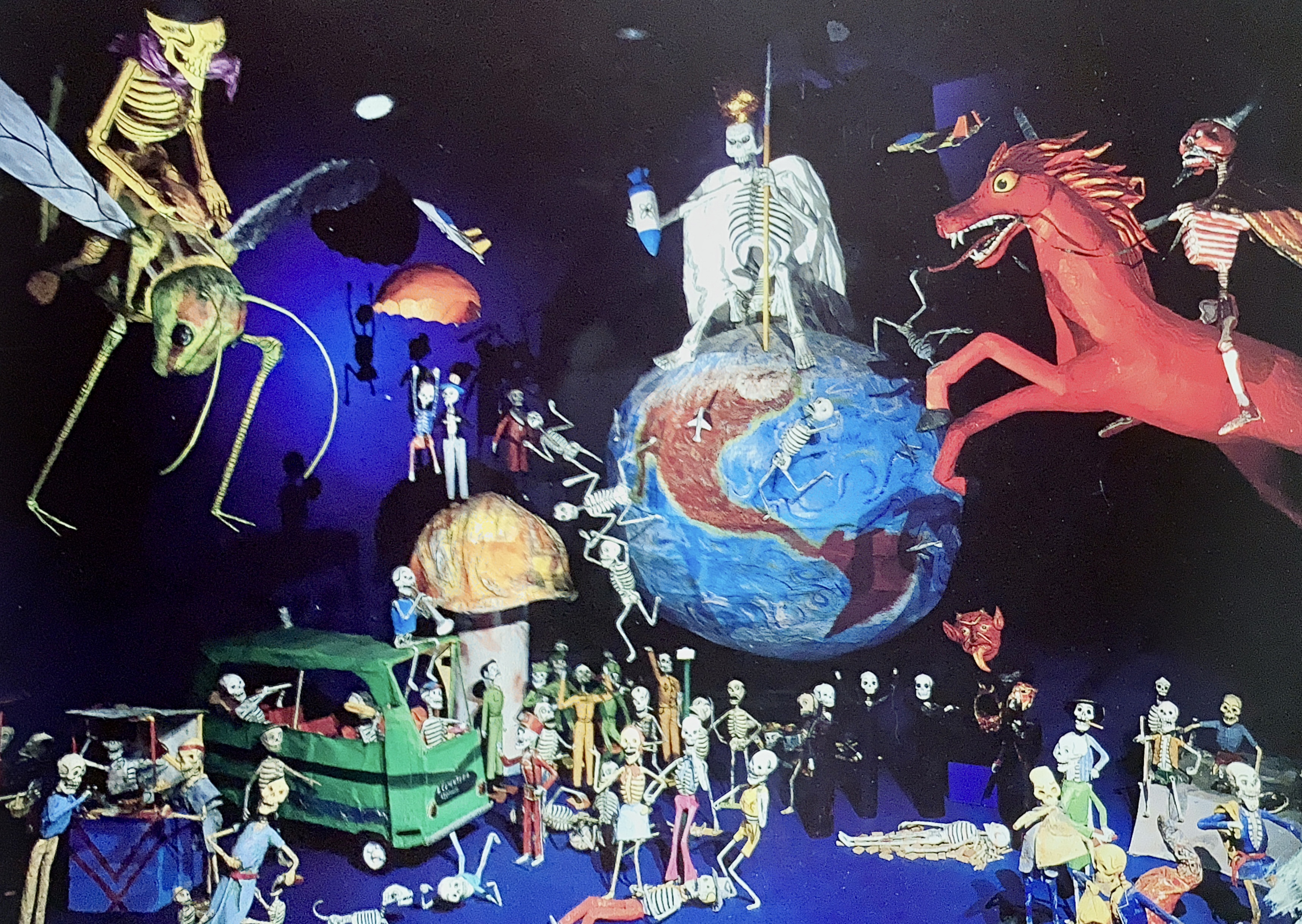
Donald Barthelme’s Forty Stories in reverse, Part II

Previously,

Stories 40-36

35. ” Overnight to Many Distant Cities” (Overnight to Many Distant Cities, 1983)

In Hiding Man, his 2010 Barthelme biography, Tracy Daugherty notes that Barthelme’s collection Overnight to Many Distant Cities was not particularly well-received by critics. Reviews were a mix of bafflement and derision, as Daugherty has it, which fits the tone near the end of Hiding Man: a career winding-down—Barthelme a happy father, content with a teaching gig, and committed to a new form for his stories, now pared down to spare and often oblique dialogues. Daugherty relays a detail from a rejection letter from Barthelme’s (one-time) champion at the New Yorker, Roger Angell: “Well, maybe we’ll learn to read you. It won’t be the first time that happened.”

In my estimation, Barthelme’s later stories do not diverge too radically from his earlier work. The techniques may have evolved (or devolved, if you like), but collage and pastiche are still a major mode, domestic themes prevail, and Our Bard is ever the ironist.

Barthelme sprinkles vignettes throughout Overnight to Many Distant Cities (like Hemingway’s In Our Time); its title track, coming at the end of the collection, is a travelogue in vignettes with our narrator and his family visiting places like Paris, London, Copenhagen… The story is essentially a series of anecdotes and arch asides (“Asked her opinion of Versailles, my daughter said she thought it was overdecorated”), and, as Barthelme’s wife Marion disclosed in Daugherty’s book, some of the material was directly drawn from their honeymoon in Barcelona (“In Barcelona the lights went out”). A taste:

In Stockholm we ate reindeer steak and I told the Prime Minister… That the price of booze was too high. Twenty dollars for a bottle of J&B! He (Olof Palme) agreed, most politely, and said that they financed the Army that way. The conference we were attending was held at a workers’ vacation center somewhat outside the city. Shamelessly, I asked for a double bed, there were none, we pushed two single beds together. An Israeli journalist sat on the two single beds drinking our costly whiskey and explaining the devilish policies of the Likud. Then it was time to go play with the Africans. A poet who had been for a time a Minister of Culture explained why he had burned a grand piano on the lawn in front of the Ministry. “The piano,” he said, “is not the national instrument of Uganda.”

Is it essential Barthelme? Of course not. But it’s nice enough.

34. ” The Film” (first published as “A Film” in the The New Yorker, September 26, 1970)

A nice little story that never quite transcends it’s marvelous opening lines:

Things have never been better, except that the child, one of the stars of our film, has just been stolen by vandals, and this will slow down the progress of the film somewhat, if not bring it to a halt. But might not this incident, which is not without its own human drama, be made part of the story line?

I just went back and read the last lines though, and they are also very good:

Truth! That is another thing they said our film wouldn’t contain. I had simply forgotten about it, in contemplating the series of triumphs that is my private life.

33. “110 West Sixty-First Street” (Amateurs, 1976)

An ugly tragic domestic comedy in just over a dozen paragraphs: Paul and Eugenie are trying to get over the death of their infant by going to erotic films. It doesn’t work; they take up cruelty–

“You are extremely self-righteous,” Eugenie said to Paul. “That is the one thing I can’t stand in a man. Sometimes I want to scream.”

“You are a slut without the courage to go out and be one,” Paul replied. “Why don’t you go to one of those bars and pick up somebody, for God’s sake?”

“It wouldn’t do any good,” Eugenie said.

32. “Captain Blood” (Overnight to Many Distant Cities, 1983)

So like one of my favorite things that Melville does in Moby-Dick is turn the whole thing into a drama, a play that is taking place in the narrator-cum-Ishmael’s consciousness, with Starbuck and Stubb milling and mulling on various decks, soliloquizing. And while the Captain Blood of “Captain Blood” is no Ahab, he’s still a compellingly goofy brooder:

Blood, at dawn, a solitary figure pacing the foredeck. The world of piracy is wide, and at the same time, narrow. One can be gallant all day long, and still end up with a spider monkey for a wife. And what does his mother think of him?

This isn’t Barthelme at his best—that stock was poured into Sixty Stories—but it’s still the jaunty, boyish fun flavor that I want when I dip into his stuff.

Riff on some Friends of the Library Sale acquisitions

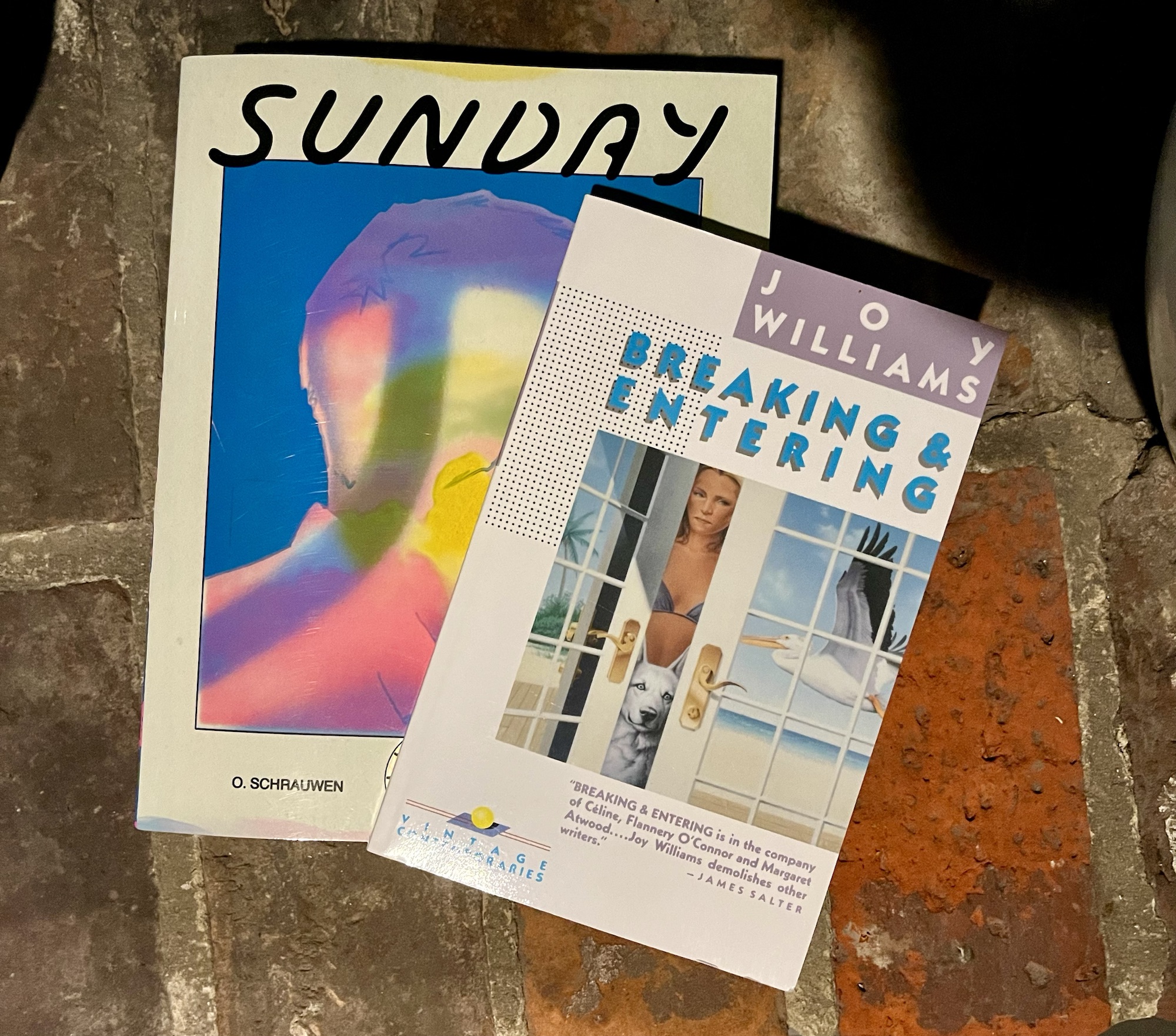
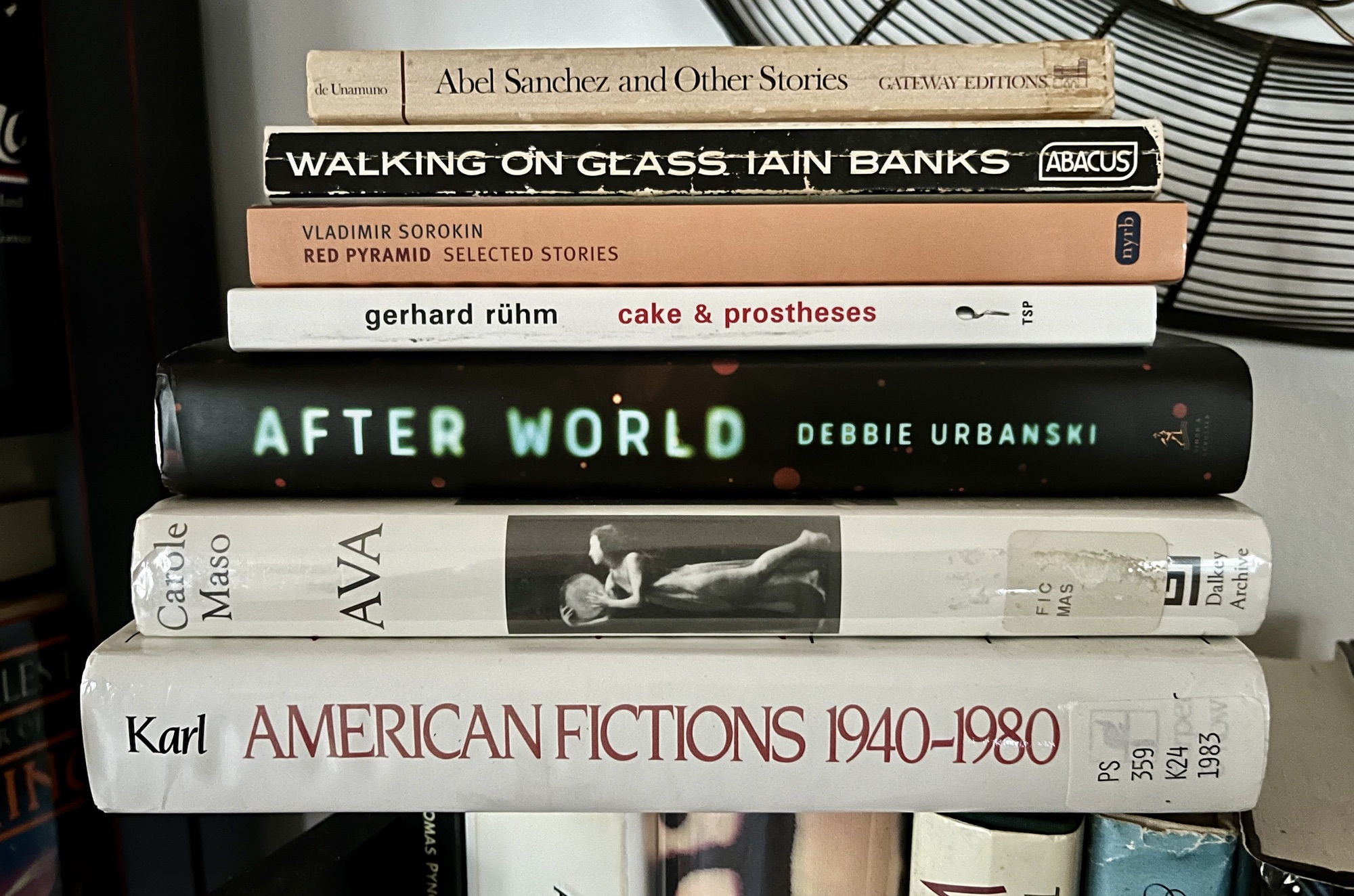
I ducked out of work maybe a little bit early on Friday and filled a brown paper bag with books at a Friends of the Library sale.

I picked up some hardback first editions of books I already own in cheaper formats–Lucia Berlin’s A Manual for Cleaning Women, Denis Johnson’s The Laughing Monsters, P.D. James’s The Children of Men, and Ben Marcus’s Leaving the Sea. I also got hardcover editions of Rachel Cusk’s Second Place, Amy Hempel’s Sing to It, Atticus Lish’s The War for Gloria, and Eugenio Corti’s The Red Horse.

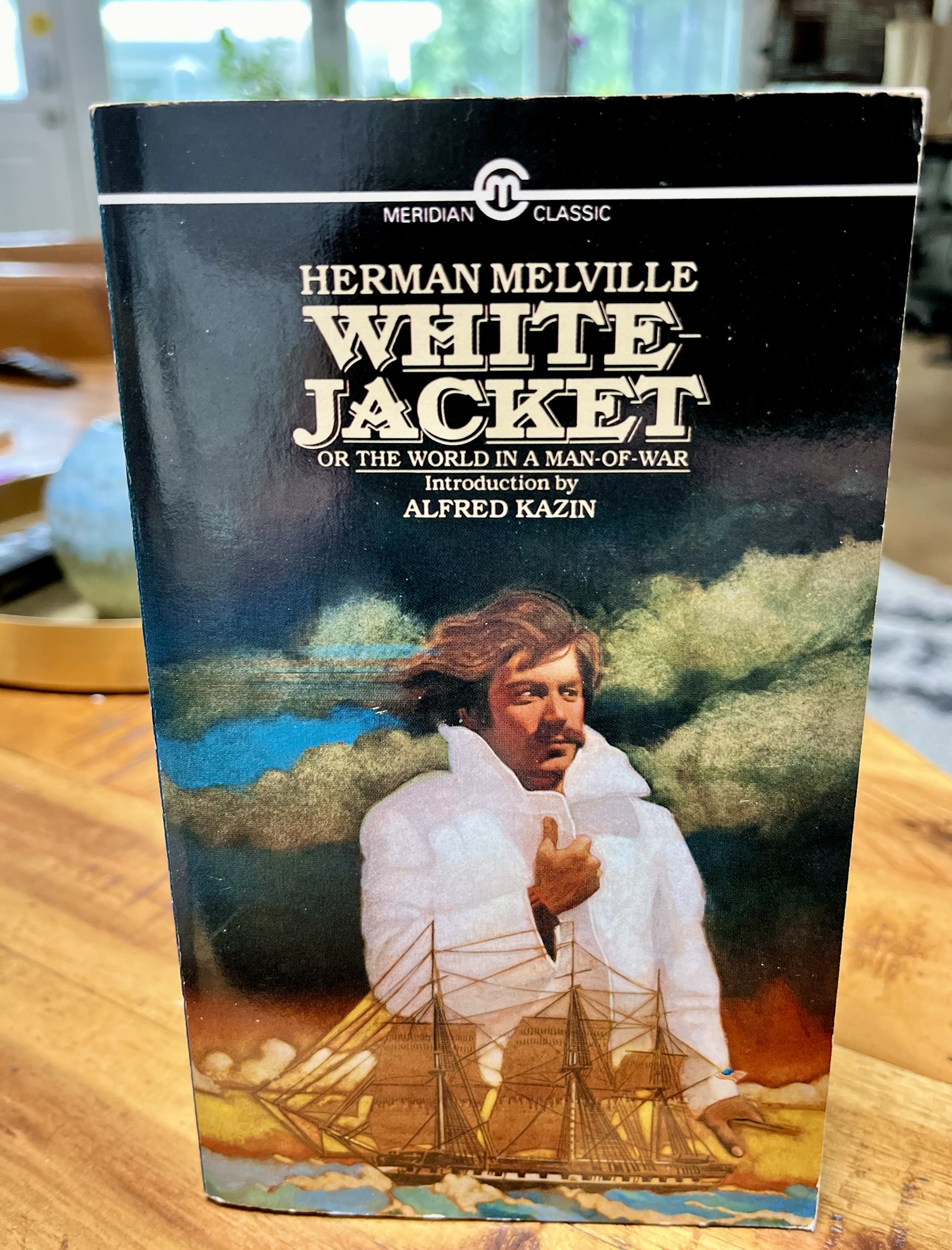
I also grabbed some duplicates or alternate paperback editions of books I already own, including an academically-oriented edition of Gertrude Stein’s Three Lives, Italo Calvino’s If on a winter’s night a traveler, and William Faulkner’s Light in August. I gave the Calvino to my son; the Stein is for a colleague. I’ll give Light in August to a student. (I got the same edition of the Faulkner at the last Friends of the Library sale I went to; my son claimed it.) I’ll also probably offer the Bourdain memoir to a student. I’m pretty sure we have a copy of Kitchen Confidential somewhere around the house. I couldn’t pass up on the cheap mass-market copy of Melville’s White Jacket. I mean, just look at this cover—dude’s wearing a white jacket

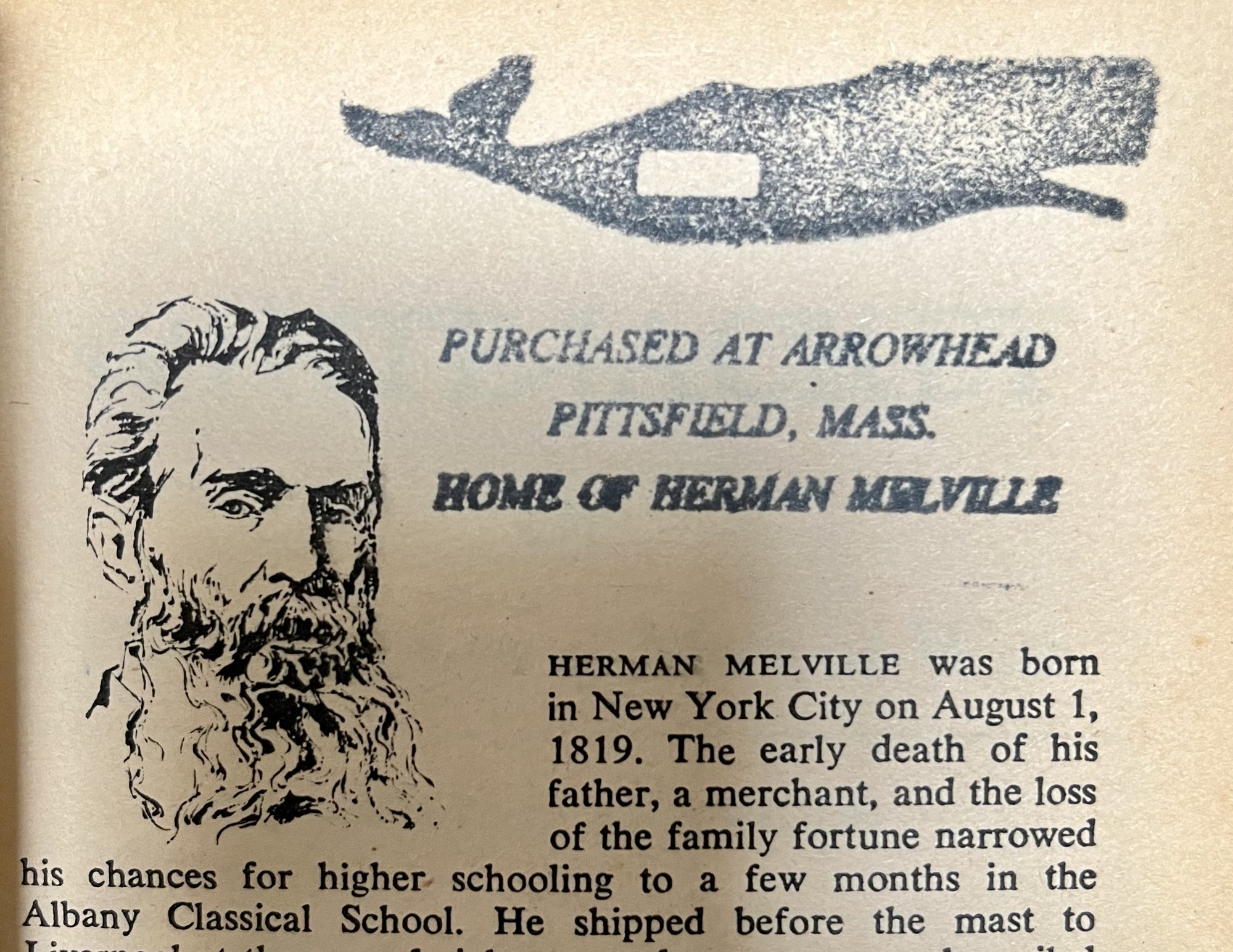
The book also bears a stamp claiming it originated (in a sense) at the old Melville Manse, Arrowhead:

I also couldn’t resist letting a paperback copy of Lucy Ellmann’s Ducks, Newburyport take up a lot of real estate in my paper grocery bag. The hype has died down enough for me to perhaps eventually sink into it. The edition of Alan & John Lomax’s American Ballads & Folk Songs is kinda beat up, but it’s got a lovely cover:

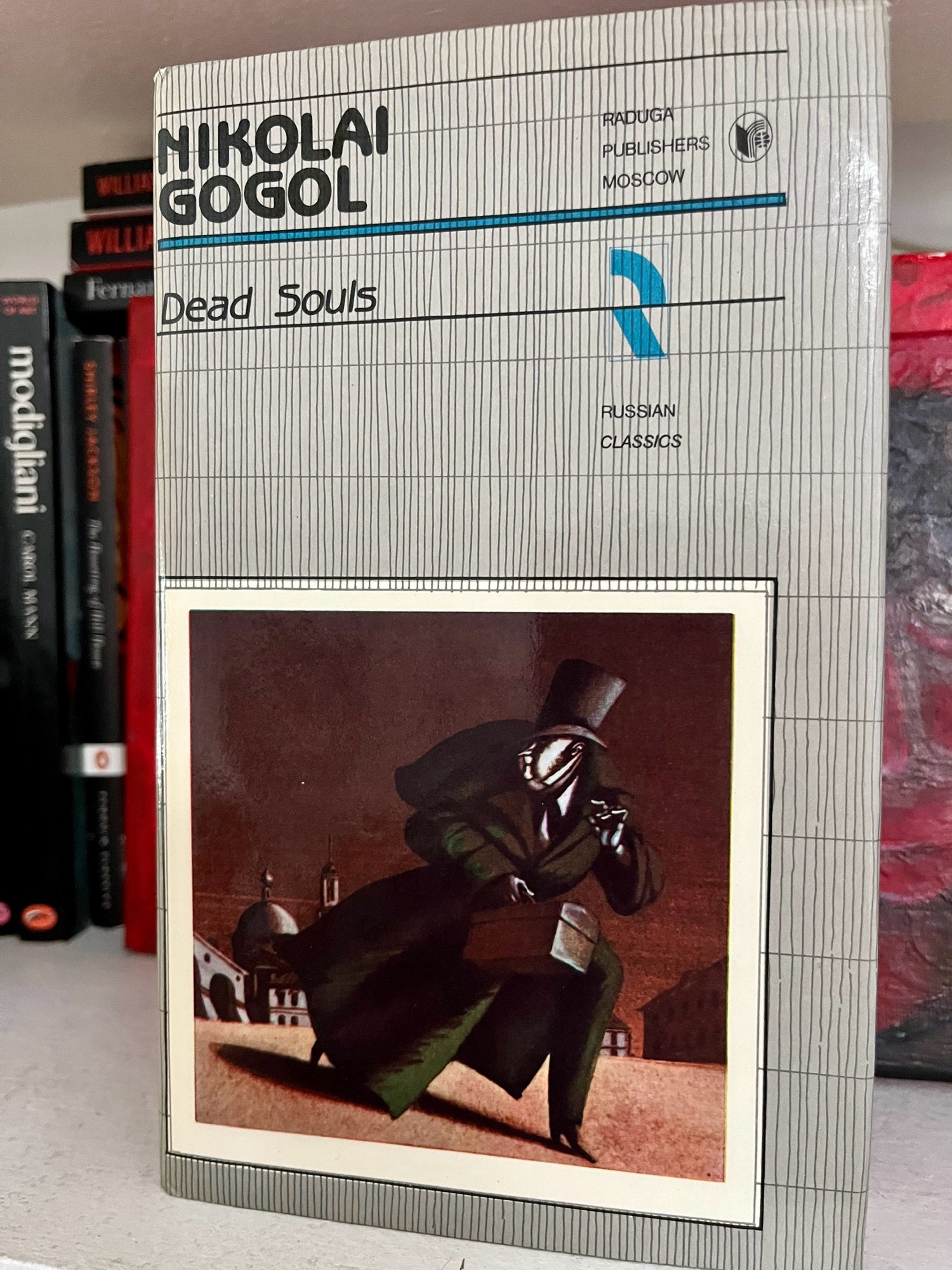
I was also attracted to this strange edition of Nikolai Gogol’s Dead Souls. It’s a 1987 hardback from the Soviet house Raduga Publishers, featuring a full-color portrait of Gogol and blue (?) page headings. The translation is by Christopher English and the book was printed in the U.S.S.R.—I’m not really sure who the intended audience was.

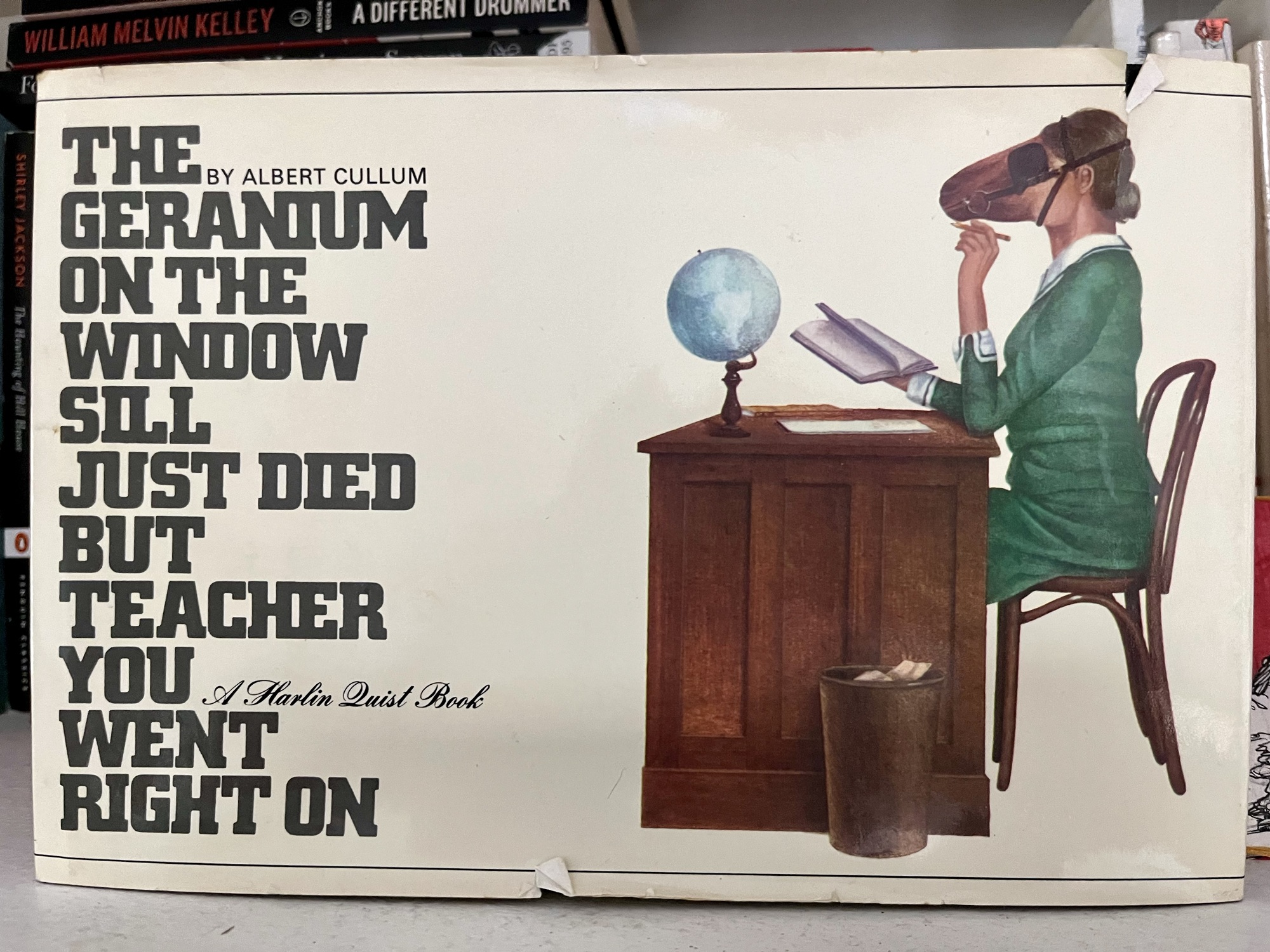
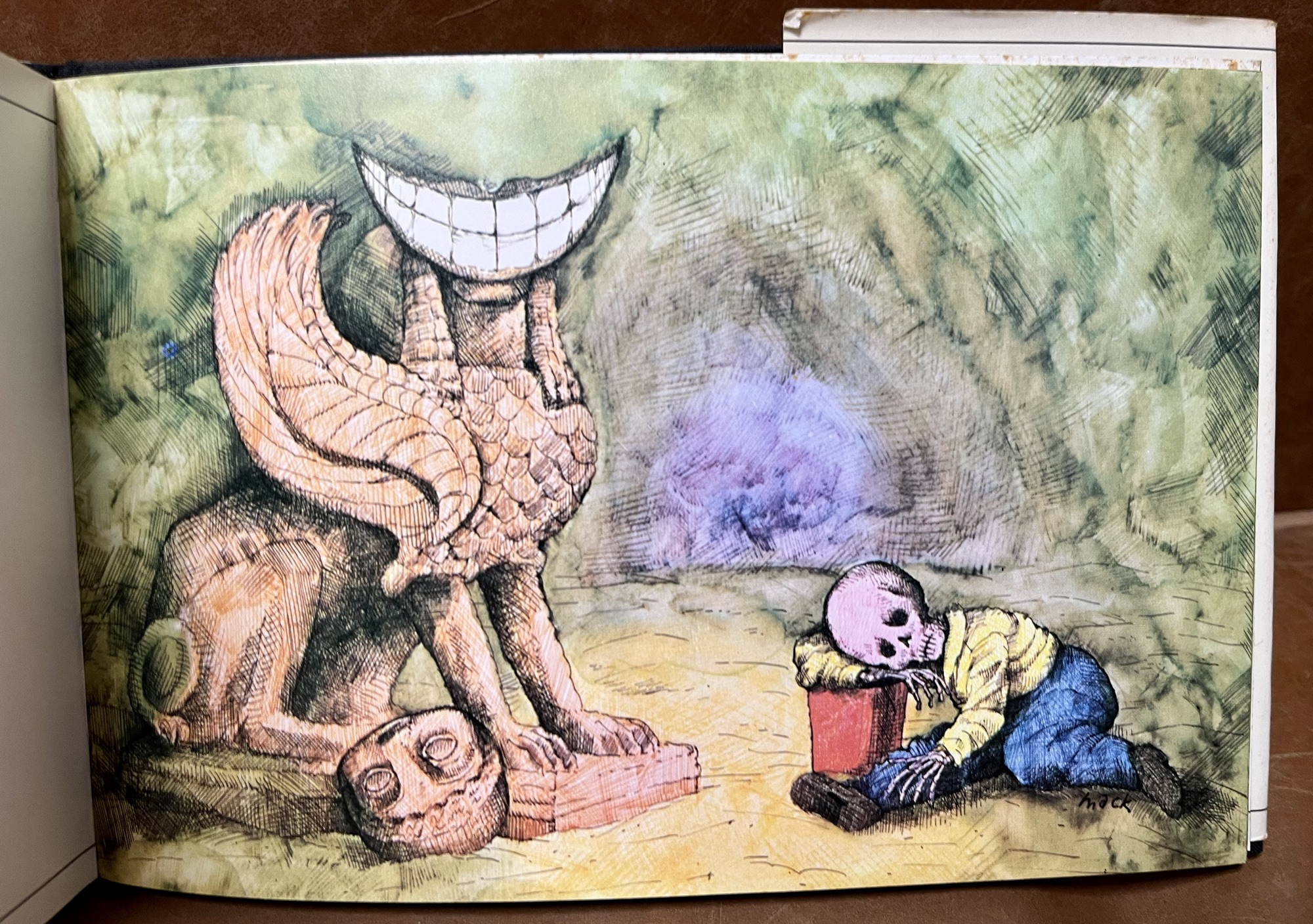
Albert Cullum’s The Geranium in the Window Sill Just Died But Teacher You Went Right On was another oddity I came across. Ostensibly a children’s book, The Geranium ultimately seems aimed at teachers. It features illustrations on every other page, each one by a different artist; many are remarkable, like this one by Stanley Mack–

There were a few titles, not pictured in the image at the top of this post, that I grabbed to cram into my bag simply because I had extra room at the end. I can usually offset the ten dollar bag fee by identifying a handful of pristine trade paperbacks that my local used bookstore will take for trade credit. So maybe I’m not, like, really offsetting the ten dollar fee so much as redirecting it toward obtaining more books.

There were plenty of titles at this particular sale that I would’ve crammed into the bag maybe ten or fifteen years ago—lots of books by Haruki Marukami, who has never been my guy, Jonathan Lethem (who I once really loved), Michael Chabon, Irvine Welsh, and even Chuck Palahniuk (there was a time when I was younger and had a broader range of friends that I could’ve given Palahniuk titles away easily). But I ended up imagining some younger person showing up to the sale, maybe today, Saturday, filling up a bag with titles that promised something beyond the YA formula stuff that makes up their current literary diet.

And if I imagined a younger person growing their library, I also imagined some of the older people whose collections had clearly ended up at the sale. Beyond the obvious airport thrillers and glut of titles by fiction factory Authors™, there were sets of strange, off-brand looking fantasy series in hardback, a seemingly-full run of Agatha Christie mysteries (also in hardback), Westerns no one will read again. Other people’s oddities ended up here; their children had no place for them, having subscribed to their own burdensome addictions.

I’ll have to give away all these books I’ve acquired at some point. But there’s joy in that too.


Riff on July 2024 reading, etc.

I experienced the middle weeks of July 2024 as simultaneously rapid and static. Doldrums should never be so frenetic. If this decade were a novel I would’ve put it down several chapters back. I try not to obsess over things I cannot control. I try to get away from screens. I try to go outside, but the feels like heat index here in north Florida goes over a hundred and five every day. (At least it’s raining again and nothing is on fire.) So I try to read more (and actually write more).

This July I read some great stuff.

I finished Katherine Dunn’s first novel Attic a couple of days ago. The book is seriously fucked up—like William Burroughs-Kathy Acker fucked up—an abject rant from a woman in prison in the mode of Ginsberg’s Howl. The narrator seems to be an autofictional version of Dunn herself, which is perhaps why Eric Rosenblum, in his 2022 New Yorker review described it as “largely a realist work in which Dunn emphasizes the trauma of her protagonist’s childhood.” Rosenblum uses the term realism two other times to describe Attic and refers to it at one point as a work of magical realism. If Attic is realism then so is Blood and Guts in High School. I need to read her second and third novels (Truck, 1971 and the posthumous Toad) and then go back and reread Geek Love, which I remember as being Gothic and gross but also whimsical. (I don’t sniff any whimsy in Attic.)

There are eight stories in Oğuz Atay’s story collection Waiting for the Fear (in translation by Ralph Hubbell); I’ve read the first five this summer, including the long title story, which is especially good, as is the opener “Man in a White Overcoat.” Atay’s heroes (I use the term loosely) find their antecedents in Kafka’s weirdos. Or Paul Bowles. Or Jane Bowles. I should have a proper review up near the end of October when NYRB publishes Waiting for the Fear.

I had picked up Mauro Javier Cárdenas’s third novel American Abductions earlier this summer and finally started it a few nights ago after finishing Attic. Each chapter is a run-on sentence that has made me want to keep reading and reading, running on with it. The novel is, at least so far, both challenging and entertaining; it is not difficult, exactly, but rather engrossing. Sometimes I’ll find myself a bit lost in the layered consciousnesses, layers (layerings) of speech in Cárdenas’s sentences—especially when I find myself startled by an image or a joke or idea—and then I’ll wade backwards again and pick up the rhythm and keep going. The plot? I’ll steal from the Dalkey Archive’s blurb: “American Abductions opens in a near-future United States whose omnipresence of data-harvesting and algorithms has enabled the mass incarceration and deportation of Latin Americans—regardless of citizenship.” But that’s not really the plot; I mean, this isn’t a third-person dystopian world-building YA thing. The novel, at least its first half, is about a family, daughters Ada and Eva and their father Antonio, a novelist who was abducted by the titular abductors (the Pale Americans!). It’s also about writing, how we construct memory in a surveillance state, and, I suppose, love.

I reviewed Jean-Baptiste Del Amo’s latest novel The Son of Man (in translation by Frank Wynne) in the middle of July, although I think I probably read it in late June. In my review I suggested that The Son of Man “is ultimately a novel about the atavistic transmission of violence from generation to generation.” I also highly recommended it.

I went on a big Antoine Volodine binge a couple of years ago which stalled out before I got to (what I believe is) his longest novel in English translation, Radiant Terminus. I finally started into it a few weeks ago (in translation by Jeffrey Zuckerman), and I think it might be Volodine’s best work. In my longish review, I declared Radiant Terminus “an astounding novel, a work that will haunt any reader willing to tune into its strange vibrations and haunted frequencies. Very highly recommended.” I think it’s a perfect starting place for anyone interested in Volodine’s so-called post-exotic project.

Denis Johnson’s The Stars at Noon was one of two novels I revisited via audiobook this month (the other is Portis’s Gringos, which we’ll get to in a moment). I honestly didn’t remember much about The Stars at Noon other than its premise and the fact that its narrator was an alcoholic journalist-cum-prostitute in Nicaragua. It hadn’t made the same impression on me as other Johnson novels had when I went through a big Johnson jag in the late nineties and early 2000s, and I think that assessment was correct—it’s simply not as strong as AngelsFiskadoro, or Jesus’ Son. As an audiobook though I enjoyed it, especially in Will Patton’s reading. (His narration of Johnson’s perfect novella Train Dreams is the perfect audiobook.) I guess the audiobook came out in conjunction with Claire Denis’ 2022 adaptation of the film, which I still haven’t seen.

The collection of Remedios Varo’s writings On Homo rodans and Other Writings is another book I read earlier in the summer but didn’t write about until July. I was fortunate enough to get a long interview with the translator, Margaret Carson, and I think the result is one of the better things Biblioklept has published this year.

I picked up Dinah Brooke’s “lost” novel Lord Jim at Home in late June, and then read it in something of a sweat over a few days. In my review, I wrote that

Lord Jim at Home is squalid and startling and nastily horrific. It is abject, lurid, violent, and dark. It is also sad, absurd, mythic, often very funny, and somehow very, very real for all its strangeness. The novels I would most liken Lord Jim at Home to, at least in terms of the aesthetic and emotional experience of reading it, are Ann Quin’s BergAnna Kavan’s Ice, Mervyn Peake’s Gormenghast novels, Virginia Woolf’s Mrs. Dalloway, and James Joyce’s Portrait (as well as bits of Ulysses).

Gringos is the other book I “reread” via audiobook this July. Charles Portis wrote five novels and all of them are perfect—but I think Gringos might be my favorite. David Aaron Baker’s reading of the novel is excellent. He conveys the dry humor of narrator Jimmy Burns as well as the cynical sweet pathos at the core of Portis’s last novel. Highly recommended.

So well I guess July is over; the kids will be back in school again soon, and so will I. The air here will remain swamp thick, humidity that starts cooking you the minute you venture out of the desiccating AC that licensed growth on this weird peninsula. It might let up by November. Maybe because I’ve spent my entire adult career as a teacher I have always thought of August as the end of the year, not December. And some years I feel melancholy at this end, this pivot away from freer hours. But writing this on the last day of July, I think I want a return to routine, to something I can think of as a return to normalcy, the kind of normalcy that makes me appreciate the weird fucked up oddball novels that I do so love to hang out inside of.

On Vladimir Sorokin’s Blue Lard, pp. 277-354 (Hitler’s head, Stalin’s brain, Blue Lard’s end?)

Previously on Blue Lard…
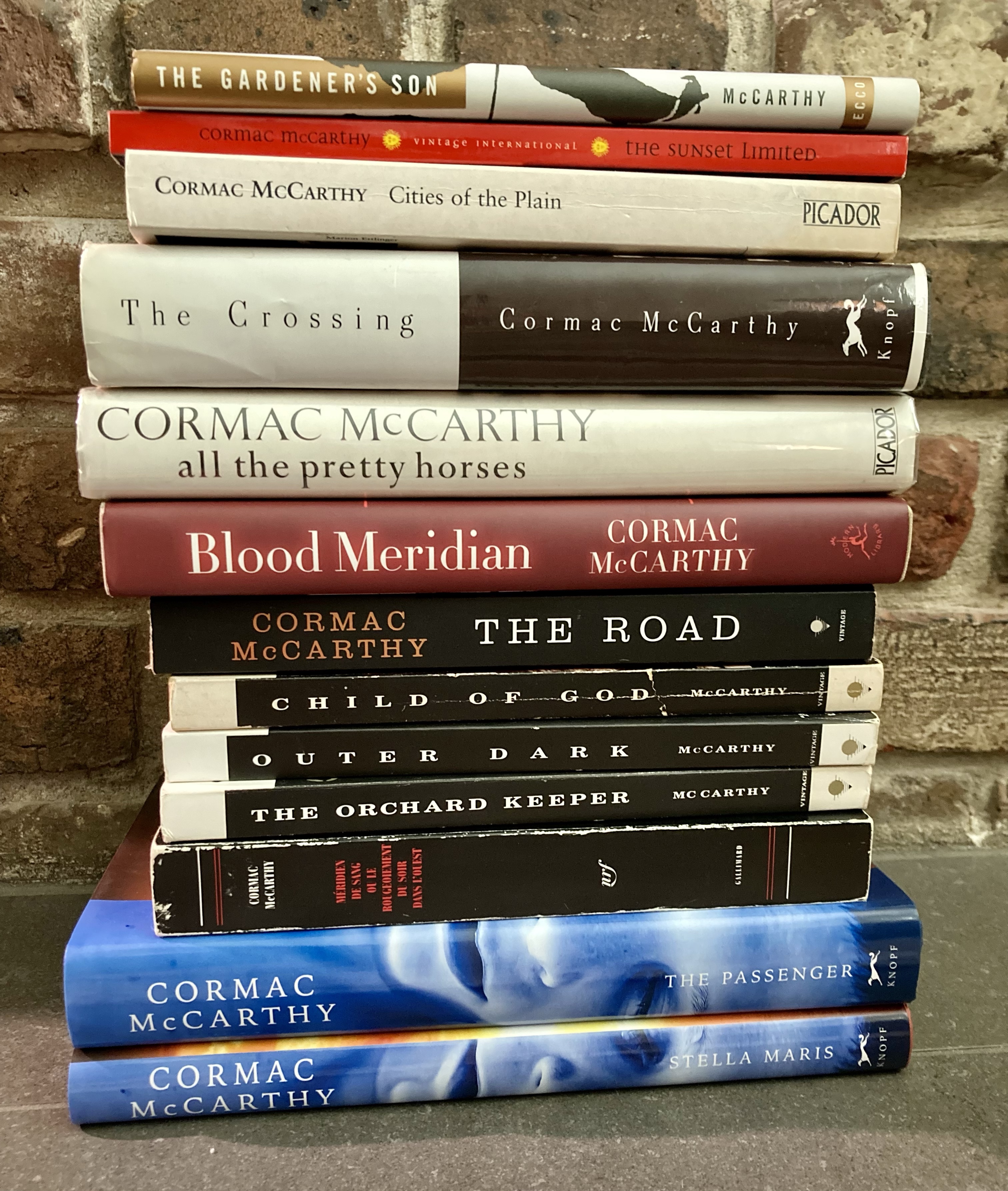
pp. 1-47

pp. 48-110

pp. 111-61

pp. 162-87

pp. 188-222

pp. 223-76

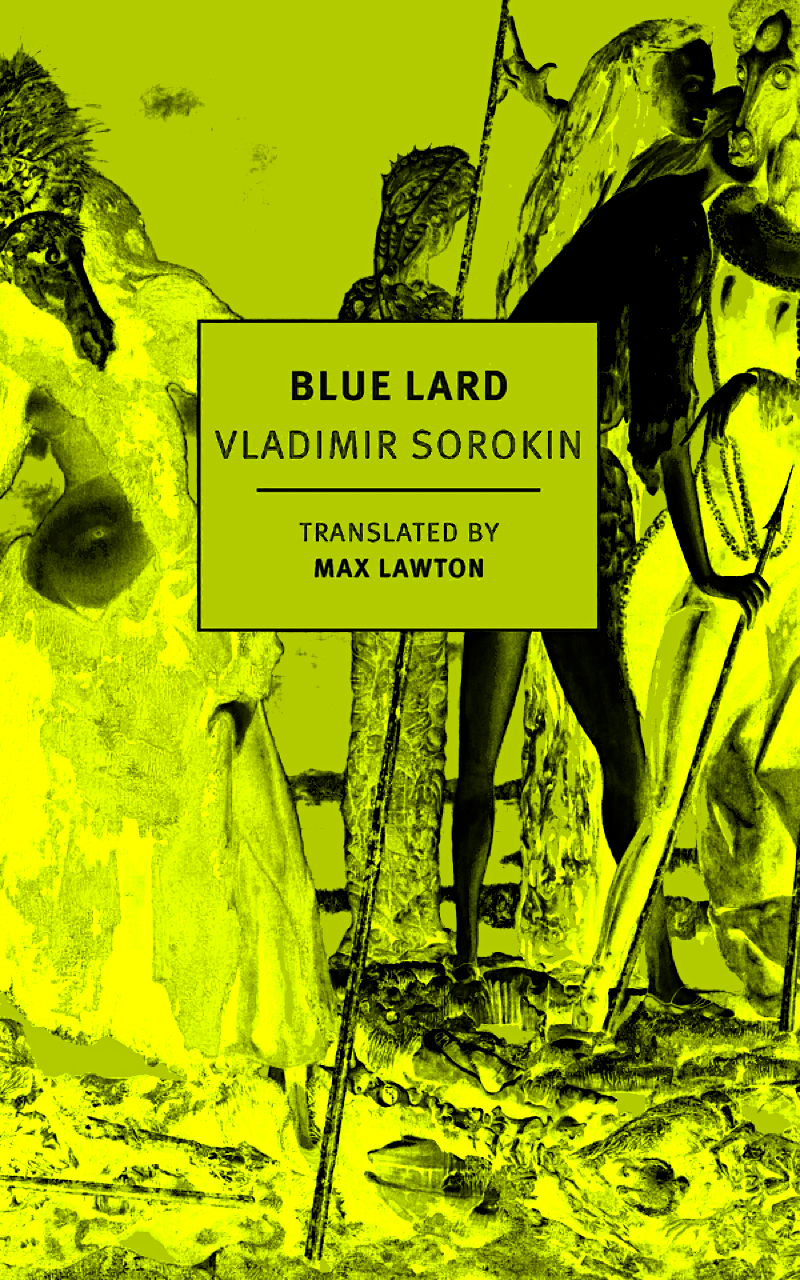
The following discussion of Vladimir Sorokin’s novel Blue Lard (in translation by Max Lawton) is intended for those who have read or are reading the book. It contains significant spoilers; to be very clear, I strongly recommend entering Blue Lard cold.

I’ve had too many false starts with this last (for now) riff on Blue Lard that I’ve ended up rereading the last 100 or so pages maybe four times now. When I first started this ridiculous series of riffs–way back in February!–I promised to surf Blue Lard’s wave; I have not done that. I’ve bogged myself down in summarizing. I’ve found myself reading Wikipedia entry after Wikipedia entry of the various Soviet luminaries–politicians, artists, writers, scientists, etc.–who lard the end of the novel. I’ve tried to figure out the ending by going back to the epistolary beginning. I’ve tried, I suppose, to flesh out the thesis I arrived at in the last riff I did, where I suggested that “Blue Lard is hypersurreal, shocking, deviant. But it’s also more balanced and nuanced than a first go-through might suggest, not just absurdist shit-throwing and jabberwocky, but an accomplished analysis of the emerging post-Soviet era.”

So well where were we? Or rather, where are we? The novel’s final section begins with Hitler loading his family, his bodyguard, his lover Khrushchev and a retinue of ninjas into his private plane. They abscond with the cache of blue lard and make their way to Germany to meet up with their old pal Hitler, irking Beria and his murderous allies.

On route to Hitler’s Berghof, Stalin’s wife Nadezhda reads aloud the first act of  a new play by Konstantin Simonov, A Glass of Russian Blood. The play seems to be an allegory framing the Soviet intelligentsia as literal bloodsuckers, vampires feasting on the proletariat. Khrushchev dismisses the play’s subject as “fashionable rancor”; Stalin is more charitable, remarking that “Every writer has his ups and downs.” As usual, I found myself going down a rabbit hole, trying to glean a possible critique of the Simonov’s journal Novy Mir in particular and Soviet literature in general. This is not the way to read Blue Lard. Meanwhile, unconcerned with absurd theater, Stalin’s daughter is hungry; she declares she’d like to eat a unicorn. (In one of the earlier translations of Blue Lard I read, Max includes a footnote explaining that he’s substituted unicorn for the original tyanitolkai (тяни-Толкай) in the interest of readability.)

Back in Moscow, Beria is trying to track down Stalin and the missing blue lard. He’s also ordered the torture of Andrei Sakharov who’s been condemned for, as his torturer notes, suggesting that “Time is a head of cabbage and all events are just aphids eating their way through it” — a complete rejection of Soviet communism’s teleological conception of historical materialism.

Sakharov’s torturer is Alexander Khvat, who the narrator informs us was “the lead investigator on the case of the sinister saboteur Vavilov who’d devoted his life to cultivating ‘quick ergot’ and using it to infect Kuban wheat.” The historical Vavilov, which is to say our historical Vavilov, was an agrinomical geneticist who tried to use science to feed the world.

But Sorokin’s critique doesn’t seem to be aimed at Soviet communism alone; rather, he seems to condemn the brutal stupidity and close-mindedness of those who fear what they do not comprehend. Blue Lard’s absurdity and violence critiques power—and the fear of loss of power that consumes those who hold power.

Stalin’s crew passes over the great Prague Wall which separates the West from the East, the Third Reich and its partner the USSR, and soon arrive at the Berghof:

The long, unusually smooth tarmac of the airfield was reminiscent of a frozen mountain lake and ran up against a granite statue of Hitler’s head, carved from an entire mountain by the efforts of Arno Breker and six thousand French and British prisoners.

The Hitlers (the führer has married mistress Eva in this reality) and the Stalins kiss their hellos and with their accompanying entourages head to yet another of Blue Lard’s many, many feasts. (The narrator notes that “Meanwhile, in the plane, Ajooba, Sisul, and the ninjas were quickly and professionally strangling the airplane’s crew” — the adverb professionally there is marvelous.)

Just as he does with Stalin, Sorokin renders Hitler in kitschy pop-glam strokes:

Hitler put his unfinished glass down on a tray held up to him by an SS servant, then, opening his long arms in the narrow sleeves of a dark-blue frock coat, lace cuffs spilling out of them, walked over to Stalin, his high-heeled shoes with their golden spurs loudly knocking against the marble. Eva followed him, her thin body nestled snugly into a leopard dress.

Tacky-glam of Hitler of Blue Lard is also a bit of a carnivore, unlike the vegetarian of our own historical record. “The table was covered primarily in meat-based hors d’oeuvres, as the Führer couldn’t stand fruits and vegetables,” the narrator notes. But he’s still an animal lover. When he pets his dog Blondie, his hands sparkle and crackle with electric energy. This Hitler shoots electrical beams from his fingertips, a talent that helps him win WW2.

Blue Lard’s final sequence in Hitler’s Berghof is full of depravities and (soap) operatics. Hitler essentially rapes Vesta, while her mother Nadezdha watches through a keyhole. Stricken, Nadezdha makes a call to her on-again-off-again lover Boris Leonidovich—presumably Boris Pasternak (we encountered his clone, author of the thirteen-stanza poem “Pussy” in the first section of Blue Lard), who chastises her for the sin of “pleonasm” (!) after she accuses him of cheating on her with “that jester… that clown… that idiot” Shklovsky (presumably the literary theorist Viktor Shklovsky).

Then all kinds of shit goes down. I’ve gotten bogged down in over-summarizing again; not my intention. The final strands of Blue Lard twist about like fragments of old spy films or war films—double crosses, unclear intentions. Heinrich Himmler shows up with just a few pages left in the novel, a thousand-pound mutant (Jabba to Hitler’s Emperor? Did Sorokin, like, get mad coked up and watch Return of the Jedi and write Blue Lard?)

It all ends, or doesn’t end, with Stalin injecting blue lard into his brain, which then expands and expands and expands:

Iosif Stalin’s brain gradually filled up the entire universe, absorbing its planets and stars. After 126,407,500 years, the brain turned into a black hole and began to shrink. After 34,564,007,330 years, the brain had shrunk back to the original size of Iosif Stalin’s brain. But the mass of the leader’s brain was 345,000 times greater than the mass of the sun. Then Stalin remembered about the pear.

And opened his eyes.

And now we are back where we started, a hundred years or so from Stalin’s then-present. An old, old man with a thick rural accent, he attends to the bratty recipient of Boris Gloger’s letters. In fact, he gives the brat the missive from Gloger dated 2 January (2048) that initiates Blue Lard—we are in a strange loop. (Is this an endorsement or refutation of the aphids-in-a-head-of-cabbage theory of time?) The letter’s recipient, Gloger’s “tender bastard,” tosses it to the ground after just a few sentences or two.

He’s more interested in the outfit he’ll wear to the Easter ball, a special outfit Stalin has apparently tailored: a mantle composed of blue lard. So rise again.


Gravity’s Rainbow — annotations and illustrations for pages 627-28 | Our optimum time is 8 May

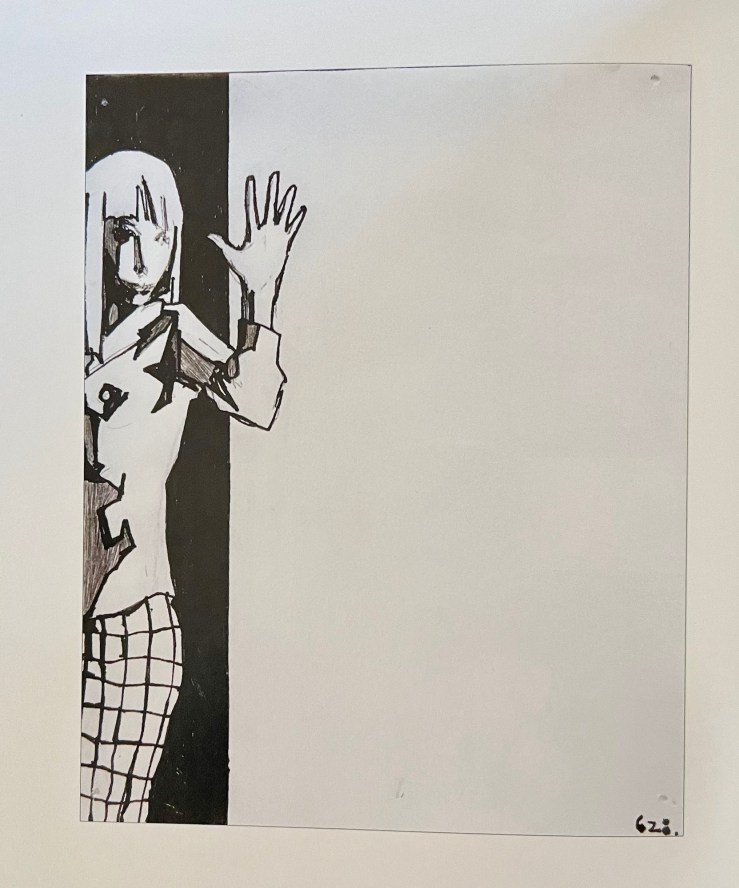
Page 628 from Zak Smith’s Pictures Showing What Happens on Each Page of Thomas Pynchon’s Novel Gravity’s Rainbow (2006)

A week before she1 left, she came out to “The White Visitation”2 for the last time. Except for the negligible rump of PISCES, the place was a loony bin again. The barrage-balloon cables3 lay rusting across the sodden meadows, going to flakes, to ions and earth4—tendons that sang in the violent nights, among the sirens wailing in thirds smooth as distant wind, among the drumbeats of bombs, now lying slack, old, in hard twists of metal ash. Forget-me-nots boil everywhere underfoot, and ants crowd, bustling with a sense of kingdom. Commas, brimstones, painted ladies coast on the thermoclines along the cliffs.5 Jessica has cut fringes since Roger saw her last, and is going through the usual anxiety—“It looks utterly horrible, you don’t have to say it. . . .”

“It’s utterly swoony,” sez Roger, “I love it.”

“You’re making fun.”

“Jess, why are we talking about haircuts for God’s sake?”6

While somewhere, out beyond the Channel, a barrier difficult as the wall of Death7 to a novice medium, Leftenant Slothrop, corrupted, given up on, creeps over the face of the Zone. Roger doesn’t want to give him up: Roger wants to do what’s right. “I just can’t leave the poor twit out there, can I? They’re trying to destroy him—”8

But, “Roger,” she’d smile, “it’s spring. We’re at peace.”9

No, we’re not. It’s another bit of propaganda. Something the P.W.E. planted10. Now gentlemen as you’ve seen from the studies our optimum time is 8 May11, just before the traditional Whitsun exodus, schools letting out, weather projections for an excellent growing season, coal requirements beginning their seasonal decline, giving us a few months’ grace to get our Ruhr interests back on their feet—no, he sees only the same flows of power, the same impoverishments he’s been thrashing around in since ’3912. His girl is about to be taken away to Germany, when she ought to be demobbed like everyone else. No channel upward that will show either of them any hope of escape13. There’s something still on, don’t call it a “war” if it makes you nervous, maybe the death rate’s gone down a point or two, beer in cans is back at last and there were a lot of people in Trafalgar Square one night not so long ago . . . but Their enterprise goes on.

The sad fact, lacerating his heart, laying open his emptiness, is that Jessica believes Them14. “The War” was the condition she needed for being with Roger. “Peace” allows her to leave him. His resources, next to Theirs, are too meager.

1 The she here, for those wishing to tune in, is Jessica Swanlake, who has decided post-War to return to her normie roots: she will choose a petite bourgeoisie life with Beaver/Jeremy, and reject Roger Mexico (and, implicitly, refuse the Counterforce and the mission to save Tyrone Slothrop).

2 Normally wouldn’t give a gloss for this, as its so late in the novel, but it’s been like eight years since I’ve done one of these, so: Pynchon Wiki gives the following description for the White Visitation:

former mental hospital located in the fictional town of Ick Regis on the coast of southern England; now part of SOE [Special Operations Executive; aka the “Firm”]; location of PISCES; D-Wing still has “loonies”; “devoted to psychological warfare”

I like to imagine The White Visitation as a kind X-Men scenario–or, more geekily, an X-Force scenario–a group of the freaky preterite using their weird powers for Maybe Good. But at this point, post eurowar, it’s all over, a “negligible rump” to be absorbed into post-war administrative Control.

3 I’ve read Gravity’s Rainbow like half a dozen times and rusting barrage-balloon cables is the kind of image I just keep going past, just kinda sorta like, letting my imagination fill in the details. But doing these posts makes me stop and look around a bit. A description from Keith Thomson’s website:

Barrage balloons are large balloons tethered to the ground or the deck of a ship with metal cables. They are deployed as a defense against low-level air attack, damaging aircraft on collision with the cables or, at the least, making flying in the vicinity treacherous.

1940s Barrage Balloon At The Kew Bridge Steam Museum, London. Jim Linwood.

4 Everything in the Zone is disintegrating–including Our Hero Tyrone Slothrop.

5 “Commas, brimstones, painted ladies coast on the thermoclines along the cliffs” — an absolutely gorgeous sentence, and also one we might pass over at this fragmented, surreal section of the novel as a bit of surrealist poetry.

But it’s not—these are butterflies. From Pynchon Wiki:

627.28-29 Commas, brimstones, painted ladies
Three taxa of butterflies. The Comma (Polygonia c-album) is one of the anglewings; sulfur-yellow brimstones are in the genus Gonepteryx in the family Pieridae; painted ladies are in the genus Vanessa. The Comma is named for a so-shaped white mark on the underside of its hindwing; a similarly-marked North American congener is called the Question Mark (P. interrogationis).

Cigarette card depicting a fanciful “brimstone butterfly”

6 “Can’t say it often enough–change your hair, change your life,” Inherent Vice.

7 “Wall of Death,” Richard and Linda Thompson, 1982:

Let me ride on the Wall of Death one more time / You can waste your time on the other rides / This is the nearest to being alive / Oh let me take my chances on the Wall of Death / You can go with the crazy people in the Crooked House / You can fly away on the Rocket or spin in the Mouse / The Tunnel of Love might amuse you / Noah’s Ark might confuse you / But let me take my chances on the Wall of Death

8 Every time I go through Gravity’s Rainbow, I find Slothrop’s fate more distressing and dispiriting—but also more inspiring. I think what’s important to remember here is that Roger Mexico is a numbers guy, a statistics guy—in 2024 terms, he might be a spreadsheet guy, a potential money guy. But he finds himself dedicated to Something Bigger Even If It Destroys Him, which means dedicating hope to the ever-fragmenting figure of Tyrone Slothrop, who, through his dispersal, might sow new seeds.

9 A devastating reversal of “They are in love. Fuck the war,” the lines we get from our first meeting of the failed lovers.

10 Political Warfare Executive (an iteration of Them). From Pynchon Wiki:

In 1940, MIR and Section D were combined with the War Office to form the Special Operations Executive (SOE). A “black” (sub rosa) propaganda section of SOE, created by the Foreign Office and named “Electra House,” was attached to the SOE in 1940 to become the Political Warfare Executive (PWE), charged with political and psychological warfare.

11 Thomas Ruggles Pynchon was born on 8 May 1937. Today is his 87th birthday.

If you’re the kinda weirdo who likes to celebrate Pynchon’s work and legacy, indulge in Pynchon in Public Day.

Steven Weisenburger’s 2nd’ edition of the Companion gives the following gloss on the date:

8 May, just before the traditional Whitsun exodus. Recall that part 2 ends with Pointsman and crew spending “Whitsun by the sea” (V269.26n). This traditional British holiday weekend fell on May 20 in 1945.

12 Roger Mexico “sees only the same flows of power, the same impoverishments” that he’s seen throughout the war. Unlike Jessica, he’s hep now to the knowledge that “the real business of the War is buying and selling.”

13 Pynchon here reiterates one of GR’s central themes, of the preterite vs the elect, of a “channel upward” or crashing down. The theme permeates the book, right from its opening lines. Consider the novel’s fourth sentence “The Evacuation still proceeds, but it’s all theatre.” The opening “evacuation” scene is surreal and apocalyptic, with each potential evacuee hearing an inner voice that cruelly coos, “You didn’t really believe you’d be saved. Come, we all know who we are by now. No one was ever going to take the trouble to save you, old fellow. . . .” The narrator’s very early note that “it’s all theatre” is one of Pynchon’s central diagnoses of power in GR, and one that not every character comes to fully understand. As if to underline that it’s all kayfabe, Pynchon ends GR by introducing a new character, Richard M. Zhlubb, a parody of Nixon. Zhlubb is the night manager of the Orpheus Theatre.

14 I think what finally most breaks Roger’s heart isn’t the loss of Jessica, but that “Jessica believes Them.” She’s subscribed to the theater of “war” and “peace,” an illusion that can no longer comfort Roger.

Gravity’s Rainbow — annotations and illustrations for pages 712-13 | The Man has a branch office in each of our brains

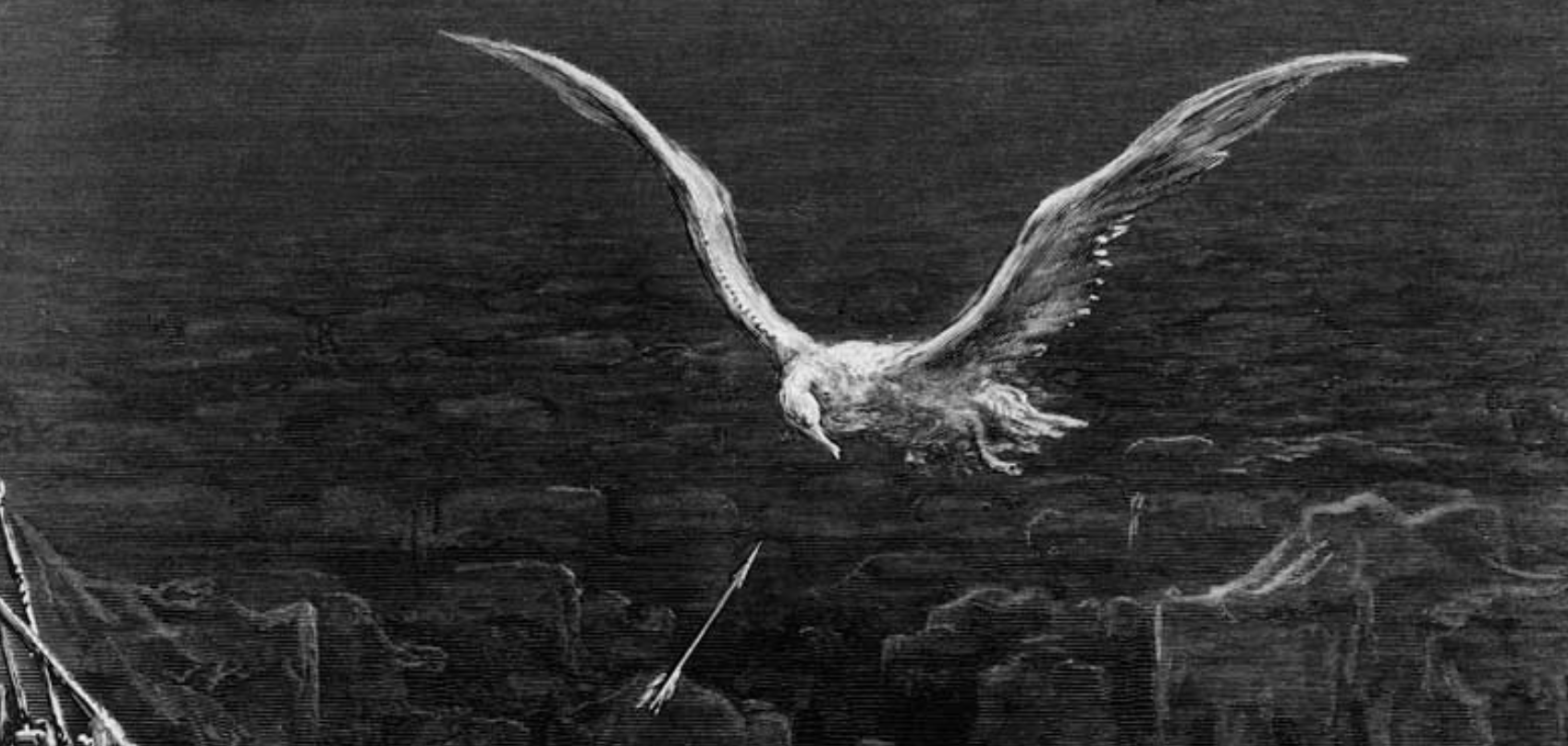
Illustration for Coleridge’s The Rime of the Ancient Mariner, Gustave Doré, 1876

Well1, if the Counterforce2 knew better what those categories3 concealed, they might be in a better position to disarm, de-penis and dismantle the Man4. But they don’t. Actually they do, but they don’t admit it. Sad but true. They are as schizoid, as double-minded in the massive presence of money, as any of the rest of us, and that’s the hard fact5. The Man has a branch office in each of our brains, his corporate emblem is a white albatross, each local rep has a cover known as the Ego, and their mission in this world is Bad Shit6. We do know what’s going on, and we let it go on7. As long as we can see them, stare at them, those massively moneyed, once in a while. As long as they allow us a glimpse, however rarely. We need that. And how they know it–how often, under what conditions. . . .8 We ought to be seeing much popular-magazine coverage on the order of The Night Rog and Beaver Fought Over Jessica While She Cried in Krupp’s Arms, and drool over every blurry photo–9

Roger must have been dreaming10 for a minute here of the sweaty evenings of Thermidor11: the failed Counterforce, the glamorous ex-rebels, half-suspected but still enjoying official immunity and sly love, camera-worthy wherever they carry on . . . doomed pet freaks.

They will use us. We will help legitimize Them12, though They don’t need it really, it’s another dividend for Them, nice but not critical. . . .

Oh yes, isn’t that exactly what They’ll do.

1 Well, hell, the last time I composed one of these silly annotations posts was way back in the unfortunate Fall of 2016, when I lost my goddamn mind for a while. I never made any notes on the novel’s final quadrant, “The Counterforce,” and never mustered any more notes when I reread GR in 2020. Over the past two weeks, I listened to George Guidall’s excellent narration in a long, long audiobook that kept me good company through some serious Spring cleaning projects. As has been the case in each of my treks through GR, I found it intensely prescient, a wonderful, terrifying diagnosis of the grand ugly 20th c. that we will never recover from.

2 I’ve read Gravity’s Rainbow all the way through six or seven times now, and each time I always find myself buoyed by the Counterforce—Pynchon’s heroic band of preterite rebels who resist the forces of Control. And every time I reread it I seem to forget that the Counterforce fails—the Counterforce (I dare not use the appropriate pronoun they, for They is the enemy of the Counterforce’s We) simply can’t stop the coming new world order of the military-industrial-entertainment complex. The short passage I’ve selected here, with Counterforce hero and one-time lover Roger Mexico as its medium, showcases one of the many reasons the Counterforce will fail.

3 Those categories refers to Pynchon’s previous paragraph, an academic spoof highlighting various “albatross nosologies”; nosology refers to the classification of diseases; the albatross is a metaphorical curse, of course.

Illustration for Coleridge’s The Rime of the Ancient Mariner, Gustave Doré, 1876

4 The Man: authority, control, They, the force, the fuzz, the cops, the heat, the money guys, the enemies of art, love, and the human soul…

5 A depressing notion, of course, and one Pynchon would return to in his 1990 follow-up to GRVineland, a novel that parodied the so-called counterculture of the 1960’s massive ideological failure, to, like, follow through with any true revolutionary project. 

6 The economic metaphors here are appropriate. Again, fuck the money guys whose mission in this world is Bad Shit.

7 An even more depressing notion—that the double-mindedness of Counterforce consciousness includes knowing that we let the Bad Shit go on; maybe our resistant spirit curdles into a brittle apathy; maybe we overindulge in mindless pleasures; maybe we explode. 

mindless-pleasures
An early trial cover for GR, featuring one of its working titles, Mindless Pleasures

8 The date of publication for this post coincides with the May 6, 2024 annual Met Gala, a capitalist spectacle of wealth and fame costumed in the trappings of art. This year’s ticket is $75,000, more than the average U.S. salary. And yet it might be fair to consider that those “massively moneyed” costumed revelers at the Met Gala aren’t even really the true massively moneyed, but rather their avatars, projected on innumerable screens, avatars of mindless pleasures to distract us from all the Bad Shit the massively moneyed are up to.

9 Pynchon here plays on lurid tabloid headlines that aren’t too different from the ones we see today, reconfiguring the one-time lovers Jessica and Roger as the elect, figures of celebration. It’s all fantasy though—literally; as the next lines seem to suggest, we’ve been in Roger’s addled mind. Pynchon’s headline reminds me of Donald Barthelme’s 1964 short story “Me and Miss Mandible,” which includes a list of trashy titles about Elizabeth Taylor, Debbie Reynolds, and Eddie Fisher like “The Private Life of Eddie and Liz,” “Debbie Gets Her Man Back?” and “Eddie’s Taylor-Made Love Nest.”

I found the wartime love affair between Jessica and Roger more depressing this time than in previous reads of Gravity’s Rainbow. When we first meet them, we get one of the best lines in the novel: “They are in love. Fuck the war.” But it is the war that licenses their love; in its absence (or, really dormancy), a bureaucratizing control subsumes their ardor. They fail.

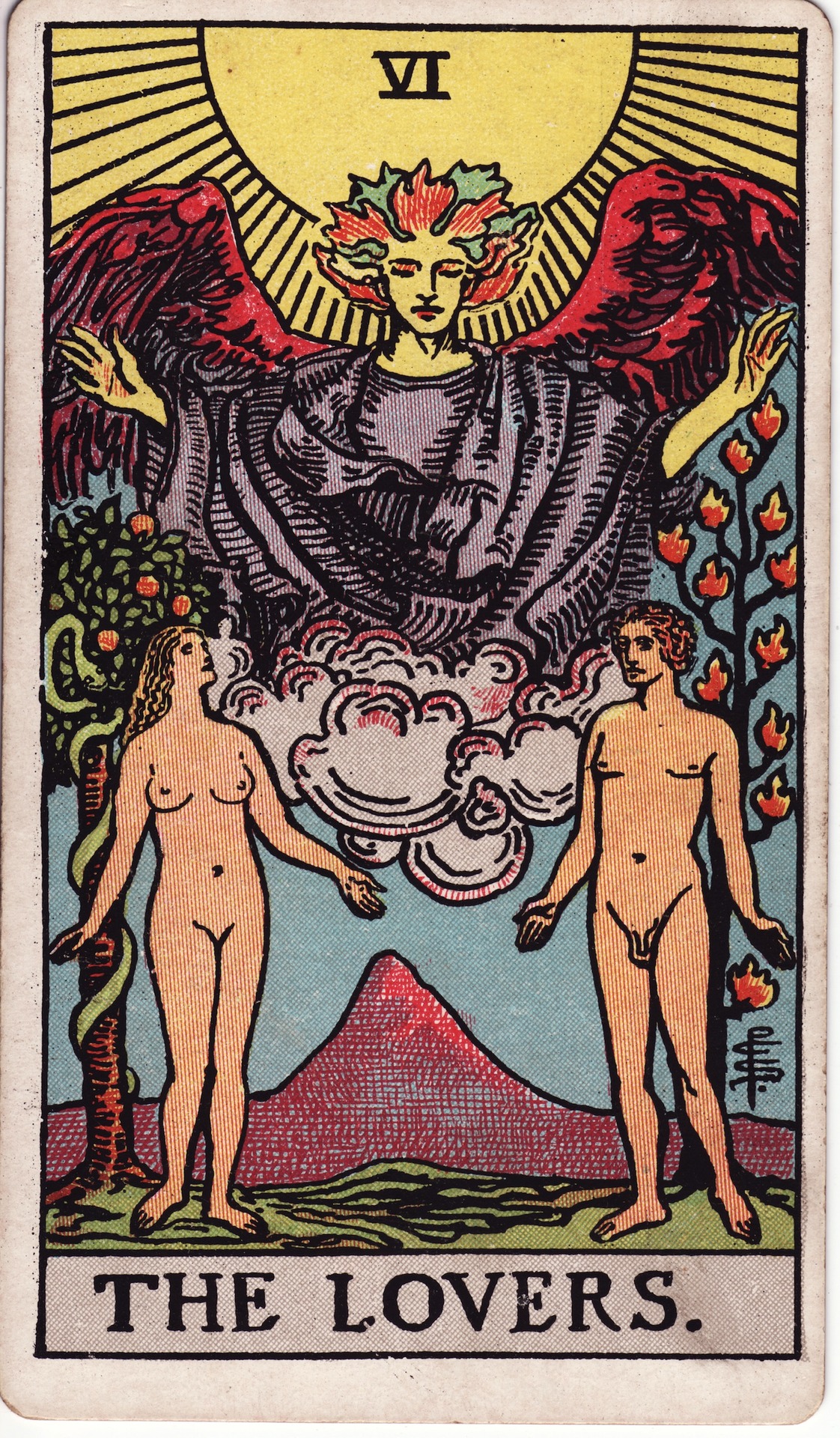
The Lovers card from the Rider–Waite tarot deck

10 The gerund dreaming here helps to foreground Roger’s current tabloid-headline-revenge-against-the-powers-that-be-fantasy as fantasy while also analeptically connecting the post-WW2 Counterforce’s nebulous mission to the fallout of the French Revolution. Dreaming also suggests that Roger is the “narrator” of this section; it also reminds me of Roger’s mentor Pirate Prentice, whose dream (of failed escape, “all theater”) initiates Gravity’s Rainbow. Pirate’s psychic power is to inhabit the fantasies of others; this is also Thomas Pynchon’s power.

11 In the second edition of his A Companion to Gravity’s Rainbow, Steven Weisenburger gives the following gloss:

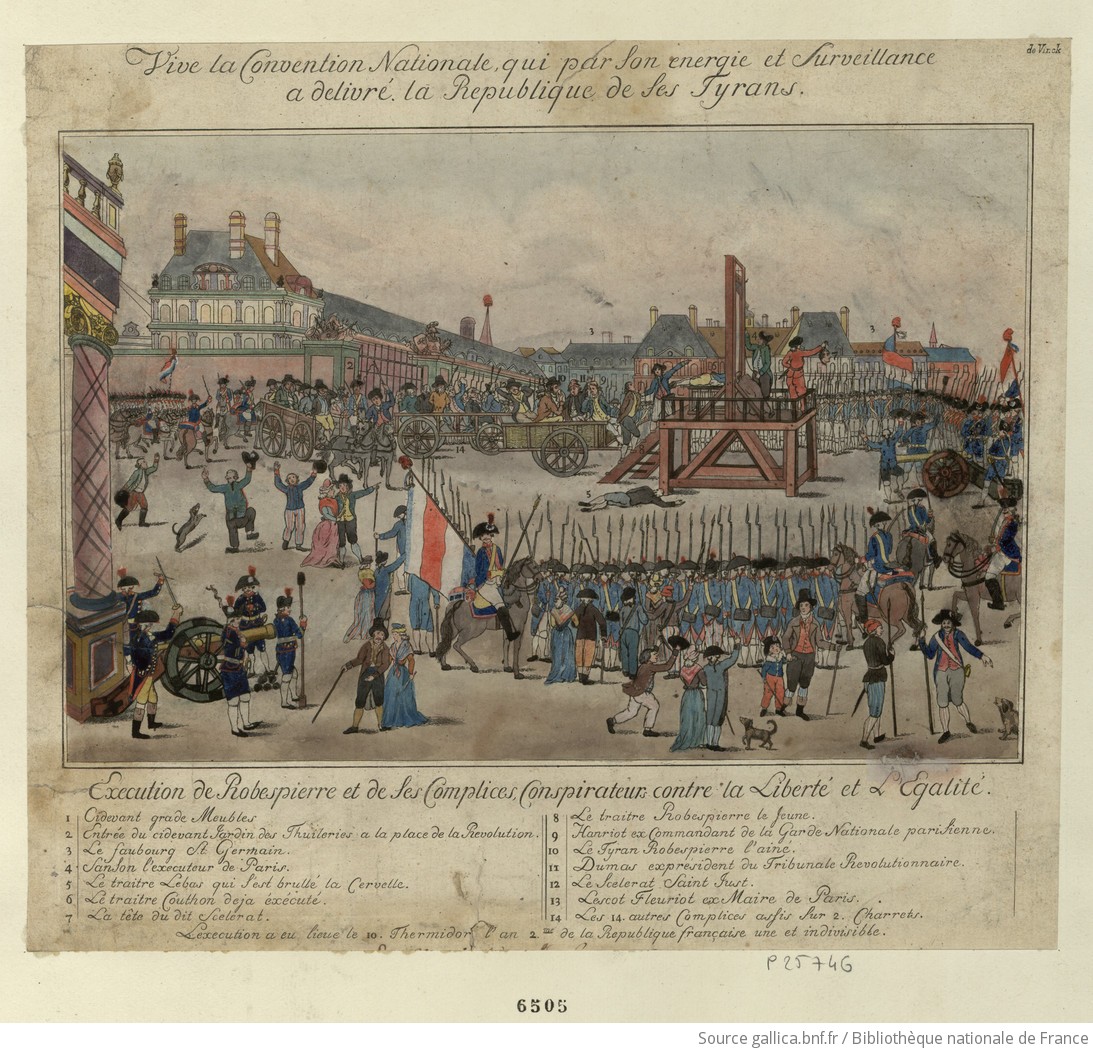
If Roger Mexico is dreaming of these evenings, then his dreams contain a warning. Thermidor was the eleventh month of the French revolutionary calendar, corresponding to the period from July 19 to August 17. Moreover, it was on the eighth of Thermidor, in the French Revolution’s second year (in other words, July 27, 1794), that Robespierre, Saint-Just, and other leaders of massive redistribution of wealth and upheaval of the aristocratic order, known as the Reign of Terror, were arrested and, the next day, executed.

Weisenburger’s annotation here is a significant update from the Companion’s first edition, which essentially gives a brief definition of what Thermidor was without any greater political or historical context.

The Pynchon Wiki Gravity’s Rainbow annotation gives the following,  which repeats (or precedes?) Weisenburger’s note, adding also that, “In one of his newspaper articles later, Pynchon would speak of the Nixon years as a ‘Thermidorian reaction’ to the 1960s.”

I have no idea what “one of his newspaper articles” is being referenced here. What immediately came to mind was likely “Is It Okay to Be a Luddite?” or “Nearer, My Couch, to Thee,” both of which appeared in The New York Times, and neither of which, as far as I can tell, use the phrase “Thermidorian reaction” or “Nixon.” (In “Luddite,” Pynchon does refer to the French Revolution—and also gives us a nice little summary of Roger’s complaint against Power in our little passage here: “there is now a permanent power establishment of admirals, generals and corporate CEO’s, up against whom us average poor bastards are completely outclassed”). The closest phrasing I can find to the Pynchon Wiki’s framing comes from a 2016 essay by James Liner that primarily deals with Inherent Vice. Liner writes: “Even in the Thermidor of Nixon’s 1970s, on the eve of the Reagan/Thatcher ’80s, Doc holds fast to utopian hope and the possibility of antisystemic praxis.”

Execution de Robespierre et de ses complices conspirateurs contre la liberté et l’egalité : vive la Convention nationale qui par son energie et Surveillance a delivré la Republique de ses Tyrans

12 Doomed pet freaks. The money guys will put the counterculture on the market as a Fuck You to freaks and rubes alike, icing on their cake.

Don’t legitimize their grasping at capital as culture. 

We might be freaks, but We are not doomed and We are not Their pets. 

On Vladimir Sorokin’s Blue Lard, pp. 188-222 (black brows, white silk, silver belt, golden syringe)

Previously on Blue Lard…
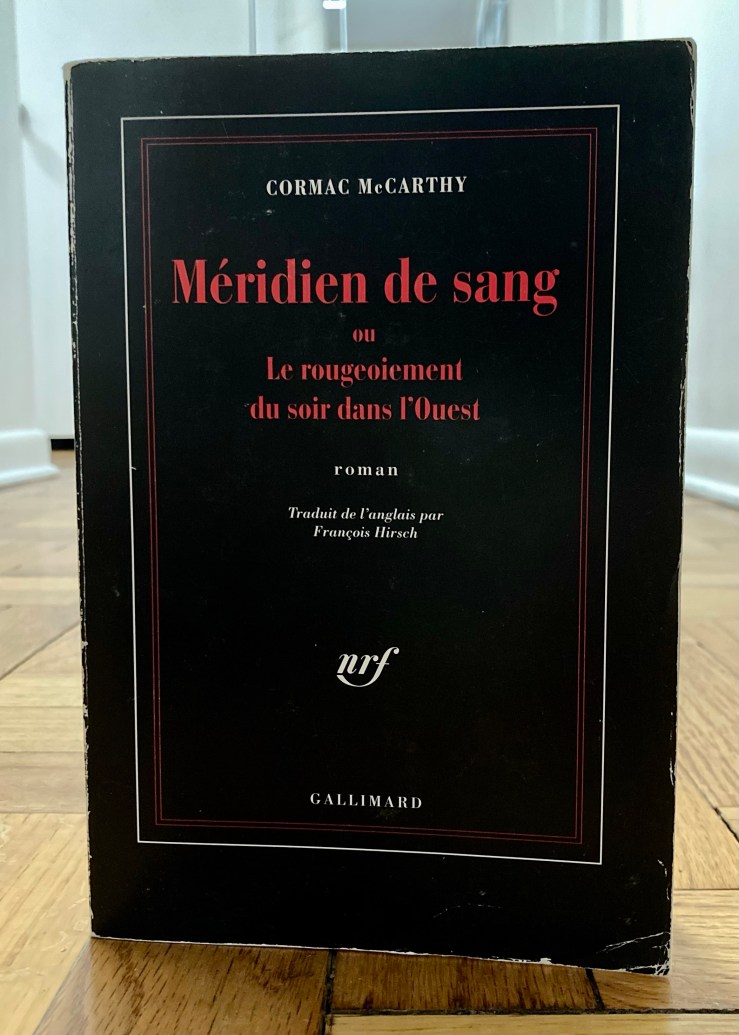
pp. 1-47

pp. 48-110

pp. 111-61

pp. 162-87

The following discussion of Vladimir Sorokin’s novel Blue Lard (in translation by Max Lawton) is intended for those who have read or are reading the book. It contains significant spoilers; to be very clear, I strongly recommend entering Blue Lard cold.

We’d left off with the Earth-Fucker’s successfully sending an enormous frozen cherub with enormous frozen genitals backwards in time to land in the middle of the Bolshoi Theater in the Spring of 1954. The alarmed comrades in the audience are (momentarily) pacified by Joseph Stalin’s chief advisers who are in attendance, even if their Leader is not.

In our—which is to say our historical timeline as persons in this historical world, and not our timeline as in our timeline as readers of this novel—in our own timeline, both Stalin and Lavrentiy Beria, the head of his secret police, died in 1953. But the world of Blue Lard is quite different and Beria and Stalin are both quite alive.

Stalin is somehow extra-alive, ultravivid, a kind of holographic pop art caricature of himself whose bearing, attire, and aura seem to owe more to glam rock and Hollywood than drab Mao tunics. We first meet him as his lieutenants try to give him the news of the time-travelling ice cone. His private rooms are opulent pink marble, adorned with Chinese rugs, vases, and priceless art, and attended by “Uzbek governesses in silk Uzbek dresses, bloomers, and tubeteikas” — all guarded by Sisul, his “personal servant” who sleeps like a guard dog upon a carpet in front of Stalin’s rooms. And Dear Leader himself?

The leader was tall and well built with an open, intelligent face that looked as if it had been carved from ivory; his short-cropped black hair was streaked with gray, his tall forehead smoothly intersected with the beginnings of his baldness, and his beautiful, black brows smoothly arched up from his lively, penetratingly brown eyes….Stalin looked to be about fifty years old. He was dressed in a kosovorotka of white silk with a silver belt and tight pants of white velvet tucked into patent leather white ankle books lacquered boots with silver embroidery.

An aging rock star. But he still has the juice.

And no wonder Stalin is aging. When we first meet him, he is berating his sons Yakov and Vasily who are in full evening cross-dress:

A long evening dress of black velvet hugged Yakov’s thin, muscular figure; it was fastened with a diamond scorpion and emblazoned with white spots upon its wearer’s miserly bosom; his curly, chestnut-colored wig drowned in the dark-blue boa around his naked shoulders; black mesh gloves, one of which was torn, reached from his thin, feminine hands to his forearms; three rings of white gold with sapphires and emeralds and two platinum bracelets with the tiniest of diamonds decorated his hands and wrists; his thin face, with his father’s distinctive features, was covered in a thick layer of powder, which couldn’t disguise the swelling of his bruised right cheekbone; his eyes, made up with blue eyeliner, were fixed on the floor; he held a thin snakeskin handbag underneath his armpit. Vasily, short and very portly, was dressed in a beige crepe-de-chine dress with a standing collar and high shoulders cascading down to the floor in tiny ruffles and embroidered with peach-colored roses upon the bosom; a large pearl dangled from his neck along a long, thin chain; his chubby hands were squeezed into white kid gloves soiled with filth from the street; though his blond wig had lost its initial shape, there was still a mother-of-pearl comb stuck into it; his chubby neck was covered with ribbons of black silk; his puffy, painted face, with an abrasion on its chin and features that very much recalled his mother’s, also looked down at the floor; a white patent leather bag on a massive golden chain dangled down from the leader’s youngest son’s shoulder.

Perhaps I have over-quoted here–and I will do so, I fear, in a moment–but I am in love with Sorokin’s lush descriptions of opulent decadence in these scenes (captured in the blue warmth of Max Lawton’s translation). Sorokin’s not exactly crafting a satire or a parody in the alternate Soviet reality he’s ushering us through. Sure, there are satirical and parodical elements and devices, but Sorokin weaves them into something odder, something harder to recognize. It’s beautifully grotesque, and while the bruised cross-dressed half brothers’ attempts to get laid in a fine restaurant and ending up in a brawl is played for slapstick laughs, there’s also real pathos to the familial dynamic Sorokin establishes among the Stalins. And, as I promised to over-share, let me give a description of the rest of Stalin’s family when his second wife and his only daughter enter (giving the half brothers some reprieve):

Both spouse and daughter were dressed in the traditional Russian style. Alliluyeva was wearing an evening dress of apricot-colored silk with a sable fringe and a pearl necklace infiltrated by a large ruby at its lowest extremity; her beautifully styled dark-chestnut hair was fitted into a samshara cap covered in pearls; hanging from her ears shone diamonds on ruby pendants and on her chubby hands gleamed a heavy bracelet and two enchanting diamond rings that once belonged to the Empress Maria Feodorovna. Stalin’s daughter’s slim figure was beautifully enveloped in a tight whitish-grayish-lilac sundress embroidered with gold, silver, and pearl; Vesta’s head was ornamented by a pearl- and diamond-covered kokoshnik and coral threads were woven into her long black braid; dangling from her ears blued earrings of turquoise and pearl and her fingers glittered with emeralds and diamonds.

The lush decadence of the Stalin clan in the second half of Blue Lard mirrors the sordid partying of the BL-3 team way back in the future (?), in the book’s first section (perhaps the monastic Earth-Fuckers, chaste in the main, despite their moniker, mediate these depraved poles). Sorokin’s style is highly-cinematic, and the second half of Blue Lard is particularly filmic, recalling the glittery surrealism of Alejandro Jodorowsky’s The Holy Mountain. But if there’s a tinge of Jodorowsky, there’s also a big dose of Pasolini’s Salò. (Writing this now, I realize that maybe the happy (?!) medium or synthesis of this decadent filmic axis is the comedy/horror of Peter Greenaway’s The Cook, The Thief, His Wife, and Her Lover.)

Blue Lard’s Iosif Stalin exudes a glamorous depravity that’s both charismatic and menacing. Again, Sorikin crafts him into a heightened, pop art reinvention of his historical counterpart. Sorokin’s Stalin dons high-neck collars under bottle-green suits, pomades his thick black hair into a pompadour, and sports a thirty-karat emerald pendant. He’s also addicted to an unspecified substance, which he consumes in an elegant ritual involving a mobile marble column:

Atop the yellowed marble of the column, there was a thin, golden pencil case. Stalin picked it up, opened it, and took out a small golden syringe and a small ampoule. With a deft and laconic motion, he broke the ampoule, filled the syringe with the transparent liquid from the ampoule, opened his mouth, stuck the syringe under his tongue, and made an injection. He then put the syringe and the empty ampoule back into the pencil case and onto the column. This entire procedure, which had long been part of the leader’s life, described and elaborated thousands of times in dozens of world languages, captured by hundreds of film cameras, embodied in bronze and granite, painted with oil and watercolor, woven into carpets and tapestries, carved into ivory and onto the surface of a single grain of rice, glorified by poets, artists, scientists, and writers, sung in simple drinking songs by workers and peasants, was done by Stalin with such striking ease that all those present froze and lowered their eyes, as they had often done in the past.

Again, I didn’t mean to share so much of the language, but I felt myself rushing on the run of Sorokin’s long last sentence there. The decadence of Blue Lard is fun.

And Blue Lard’s fun decadence continues to ramp up as Stalin and his boys prepare for a sumptuous, sinister dinner to discuss the Earth-Fuckers’ time-travelling gift, which they bring into their dining area to observe thawing as they chow. (Meanwhile, elsewhere, Sorokin treats us (?!) to a not-quite-incestuous-but-still-disturbing-sex-scene.) Who is invited to Stalin’s special Earth-Fucker time-travelling ice-cone supper?

In addition to Molotov, Voroshilov, Beria, Mikoyan, Landau, and Sakharov, Stalin had invited Bulganin, Kaganovich, Malenkov, Prince Vasily, the sugar producer Gurinovich, the writers Tolstoy and Pavlenko, the composer Shostakovich, the painter Gerasimov, and the film director Eisenstein to dinner.

For such fine company, a fine meal must be set; again (I repeat again again), I perhaps overshare—but I’ll just lay out the appetizers here (noting that the main course Stalin’s crew will later enjoy a roast pig costumed to resemble “the Judas Trotsky”):

The table was gorgeous; Alexander I’s gold and silver tableware was laid out on a whitish-blue tablecloth, homespun in the Russian style; the abundant Russian appetizers were provocative in their variety: there was smoked eel and jellied sturgeon, venison pâté and stuffed grouse, simple sauerkraut, calf tongue and calf brain, salted mushrooms and jellied suckling pig with horseradish; a golden bear towered up in the middle of the table with a yoke over its shoulders, from which were hanging two silver buckets filled with the oily gleam of black beluga caviar and small, grayish sterlet caviar.

The dinner scene is comic and menacing, giving voices to the various Soviet luminaries and artists assembled. The filmic quality again recalls the aforementioned The Cook, The Thief, His Wife, and Her Lover, as well as the infamous dinner scene in De Palma’s The Untouchables. The violence here never reaches those limits, but it is still grotesque and climaxes in a (literal) punchline.

The night ends with the cone finally cracking, revealing “A frozen giant with monstrous genitals and a small suitcase in his lap was left sitting atop the pallet in the melted water and surrounded by chunks of ice.” Beria and Stalin share an amusing exchange about the creature’s enormous pecker (“How they must love their native soil,” Stalin muses of the Earth-Fuckers), before taking the briefcase and retiring for bed (to Beria’s apparent chagrin).

Next time on Blue Lard: The return of AAA aka Anna Akhmatova and the first appearance of Nikita Khrushchev, whose relations with Blue Lard’s version of Stalin led Russians to protest the book by throwing copies of it into a giant sculpture of a toilet—an abject pop art stunt worthy of a scene from Blue Lard itself.

On Vladimir Sorokin’s Blue Lard, pp. 162-87 (indigo pill, fecal culture, piss blood, ice cone)

Previously on Blue Lard…
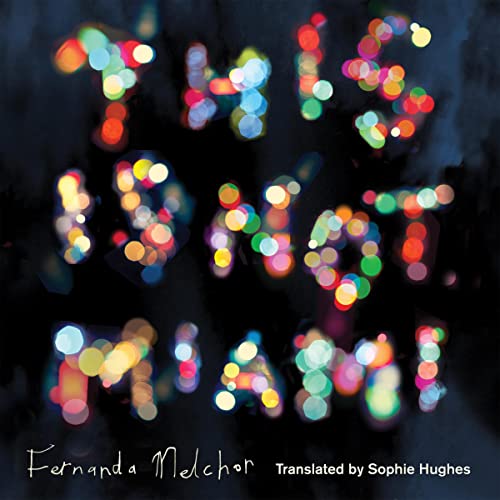
pp. 1-47

pp. 48-110

pp. 111-61

The following discussion of Vladimir Sorokin’s novel Blue Lard (in translation by Max Lawton) is intended for those who have read or are reading the book. It contains significant spoilers; to be very clear, I strongly recommend entering Blue Lard cold.

We left off right before the gross abject center of Vladimir Sorokin’s novel Blue Lard (in gross abject translation by Max Lawton). The midpoint is a strange short story, “The Indigo Pill” (by one Nikolai Buryak, author of The Flood). “The Indigo Pill” is the textual tissue between Blue Lard’s warped lobes, a segue that marries opera and shit, champagne and piss. Buryak’s setting (which is to say, of course, Sorokin’s setting) is the Bolshoi Theater in Moscow sometime in an alternate 1950s—one that is, presumably, an alternate version of the alternate 1950s Moscow the second half of Blue Lard will deliver.

But “The Indigo Pill” is really about a romantic date. Our first-person narrator will escort his belle to Tchaikovsky’s opera Eugene Onegin. How might one dress for the Bolshoi?

I am wearing a lightweight ultramarine diving suit. The mask is shifted back on my head. Freshly fallen snow crunches beneath my lead soles.

Our country’s main theater is brightly illuminated. All around it are people in diving suits of every possible color and shape. I ascend the steps, stand to the left of the second and third columns, and look at my waterproof watch. 7:22. No Masha.

Don’t worry! Masha’s just a minute or two late. Our young (oldish) lovers will have plenty of time to enter the airlock and descend into the theater, the seat of post-war Soviet big-C Culture:

The hall of the Bolshoi Theater constitutes the primary sump of the Moscow sewage system. Those who are superficially familiar with fecal culture suppose the contents of a sewer system to be a thick, impenetrable mass of excrement. This is not even remotely the case. Excrement makes up only twenty percent of its contents. The rest is liquid. Though this liquid is murky, it is still possible to survey the entire hall with enough lighting––from the floor spread with carpets to the ceiling with its famous chandelier.

(By now you, sweet dear reader, know if the Blue Lard is your particular flavor or not, right?)

Sorokin’s Buryak’s “Indigo Pill” episode ends in textuality: “the Bolshoi opens like a fat book, letters running and jumping, I swallow my own head and wake up.” Again, Blue Lard is writing about writing, writing as a kind of living (or at least counter-history/future). This metatextuality evinces in one of the stranger paragraphs in a novel full of strange paragraphs—a very short paragraph, which begins right after “I swallow my own head and wake up”:

Night.

Must go piss blood. Then make myself a coffee. And disdainfully recall my own ordinary life.

The lines are presumably, at least in the text proper, the final words of Nikolai Buryak reading his story “The Indigo Pill” over a loudspeaker to the Earth-Fuckers. But might they also be an authorial intrusion from Sorokin himself who, even if he may not piss blood (or prepare coffee, for that matter), shows a disdain for “ordinary life” in his fiction? Or not.

We transition back to the Earth-Fuckers who, in a time-travel sequence worthy of the Golden Age of Looney Tunes, explode a giant-testicled babe to deliver a package of iced blue lard (and Blue Lard; and us, the readers) to Sexy Swingin’ Moscow in the Spring of 1954! We land at a “celebratory concert dedicated to the opening of the All-Russian House of Free Love” in the Bolshoi Theater.

In a novel full of twists and turns, the next few pages of Blue Lard are especially challenging. Sorokin offers up an alternate post-war USSR history radiating decadence. Of course he does not follow the “rules” of sci-fi, whereby we might be treated to exposition (or at least a brief overview) that explains the alternate timeline we are about to navigate. Instead, the transition into Blue Lard’s second half is alarming, vivid, and very funny.

A “great Russian bard” delivers a song to the Bolshoi audience from a massive pink granite bathtub “filled with a translucent jellylike substance” (he’s tub-bound from a “pathological softening of bone matter.” The audience is moved by the drama of the bard’s song, but it’s soon interrupted by the interposition of the Earth-Fuckers’ time traveling blue lard in the form of a “semi-transparent funnel about the size of a person.” Luckily Joseph Stalin’s top lieutenants are in attendance to calm the audience and take control of the situation.

The first time I read Blue Lard I went through it stunned and guffawing, jogging in places to keep up and not lingering too long for fear of getting left behind. I didn’t pick up on the significance of that year, 1954–a whole year after Stalin’s historical death in March of 1954. Rereading Blue Lard, I took the time to apply the paltry bits of Soviet history I recalled and to index the various Politburo members who show up in this section.

The predominant of these Politburo ministers is Lavrentiy Beria, chief of the NKVD, Stalin’s secret police. The historical Beria was responsible for purges and other crimes against humanity; some historians conjecture that Beria poisoned Stalin; Beria was executed in the summer of ’53 after Khruschev’s coup. He was also a serial rapist.

Beria explains the rude intrusion of the funnel to the aghast theatergoers:

“This is the so-called ice cone sent to us from the not-too-distant future by the Order of the Earth-Fuckers of Russia. The order will be formed from numerous smaller sects of Earth-Fuckers in 2012. In 2028, some members of the order will settle in Eastern Siberia, on Bald Mountain, in dungeons in which there is evidence of the settlements of Siberian Zoroastrians, descendants of a small sect that… it seems… fled from the great Achaemenid Empire to the north at the end of the sixth century BC. They slowly ended up in the taiga, between the two Tunguskas, then on to Bald Mountain, into the granite of which they successfully burrowed over the course of four centuries. Why? They were searching for the so-called Underground Sun, the rays of which, according to their belief system, would destroy the difference between good and evil and return the human race to a heavenly state. The Siberian Zoroastrians invented a time machine capable of sending small objects into the past. One of those objects is what you see here.”

Wait, didn’t I say this section of the novel eschewed exposition? Because that’s a lovely exposition dump there, friends!

Beria continues his exposition—if we believe it!—assuring his audience that the theater-crashing “ice cone” will likely be the last one: the Siberian Zoroastrians possessed but three time travel devices. These Earth-Fuckers blew their first load in “the summer of 1908 near Torzhok… Inside of it was a book bound in buckskin describing the history and structure of the Order. Nikolai II’s talentless government considered it to be a prank.” Again, in rereading Blue Lard more slowly and deliberately, I was attenuated enough to see the obvious cue here; namely, the Earth-Fuckers precipitated the Tunguska Event. (Blue Lard is a brother book then to Pynchon’s Against the Day.)

Beria’s audience demands to know what was in the second cone, which “destroyed a train going from Moscow to Vladivostok on July twenty-ninth, 1937.” Beria informs them the cargo “was the body of a half-human, half-animal being. A six-year-old boy with horns, hooves, and a tail. There was a tattoo on his forehead that said: ‘A Babe of the Whorish World.'” Beria helpfully adds that the corpse was pickled and then hidden. 

Beria’s audience then asks the question of Blue Lard’s second half “And where is Comrade Stalin?”

And where’s Stalin? We’ll meet him in a few pages. More to come.

On Vladimir Sorokin’s Blue Lard, pp. 111-61 (L-harmony, 2 measures of red ants, a child’s tiny golden hand, fantasies on paper)

Previously on Blue Lard…

pp. 1-47

pp. 48-110

The following discussion of Vladimir Sorokin’s novel Blue Lard (in translation by Max Lawton) is intended for those who have read or are reading the book. It contains significant spoilers; to be very clear, I strongly recommend entering Blue Lard cold.

The first hundred or so pages of Sorokin’s Blue Lard switch between Boris Gloger’s letters to his lover and the narratives of seven cloned Russian writers (the clone-narratives are, textually speaking, included in Boris’s letters).

The shifts between these layered texts are initially quite disarming. Boris’s letters are filled with invented futurese, neologisms, and Chinese slang; the clone-narratives each impose their own linguistic taxes (and rewards) on the reader.

However, these first hundred pages do establish some of the baselines one might expect of a traditional novel: setting (a futuristic laboratory in frozen northeast Siberia), characters (scientists with a military guard—and seven clones), and a basic mission (cloning Russian writers who, in writing their compositions, produce an enigmatic substance called blue lard).

That mission is a clear success by the time we get to Boris’s last letter (dated 8 April for those keeping track), and our team, “the arbiters of the BL-3 Project, have total L-rights to relax.” So they decide to throw a cocktail party. (“It’s sometimes necessary to drink cocktails all day. Not, of course, for L-harmony, rips ni ma de, but JUST ‘CAUSE,” bold Boris boasts boldly.)

As in some of the previous scenes of hard-drinking downtime, the BL-3 Project’s futuristic cocktail party feels like something from a pop sci-fi film. Much of the dialogue seems inscrutable in a first run through the novel, but the jargon and bickering and bantering over political and cultural circumstances alien to the reader are simply texture–verbal adornment to fill out the scene.

Sorokin does bolster his futurese with occasional asides of historical analysis though:

Everything is working out for the Chinese now, just as it did for the Americans in the twentieth century, the French in the nineteenth century, the English in the eighteenth century, the Germans in the seventeenth century, the Italians in the sixteenth century, the Russians in the fifteenth century, the Italians in the fourteenth century, and the Jews in the first (I think) century.

That “I” is Boris, although the style of the party section has subtly but significantly shifted from the flirtatious and gossipy tone of his love letters home.

But enough with style! Back to the party!

There is drinking and dancing and drinking and drinking and drinking. The ol’ fashioned colonel whips up a batch of whiskey sours (“A drink for lonely men who test AEROSEX once a month and prefer books to holo-bubbles,” a geneticist opines), and from there, the BL-3 Project crew goes to town in inventing ever-more daring cocktails.

Here is the recipe for Fan Fei’s CHINA 21:

5 measures of tomato juice

3 measures of spiritus vini

2 measures of red ants

1 measure of salty ice

1 pod of red pepper

Our party is in full drunken swing, abject sweat flung from the dancefloor, another round of cocktails called for, when all of a sudden the novel’s perspective upends itself (again).

The disruptive narrative event here would, again, not be out of place in a sci-fi actioner. A band of rebels (the “Brothers,” as they refer to themselves) breach the laboratory’s bunker, exchange gunshots with the soldiers, and kill everyone but our heretofore main character, Boris.

But the stylistic shift is intense—we go from the strange comfort of Boris’s letters to a new style, one utterly outside of Boris’s consciousness. Indeed, it’s through the eyes of these invading “Brothers” that we actually see Boris for the first time: The Brothers-centered narrator informs us he is “rail-thin… His face was narrow and swarthy skin clung to the bones of his skull. Metal plates in complicated shapes were visible beneath the skin of his temples.” He is the last living witness to the BL-3 Project—but not for long.

Again, the scene plays out as a cinematic trope, the scientist interrogated before his death. Boris isn’t much use explaining just what the blue lard is for or how it works. But he does tell us there’s

something called the MINOBO Project. I don’t know the details… [but] they’re building a reactor on the moon, a constant-energy reactor. They’re building it in the shape of pyramids… pyramids made of fifth-generation superconductors and blue lard… layers… layers and layers of it… and that allows them to plus-directly solve the problem of perpetual energy.

Our one-time narrator is then summarily executed, his brains ironically sprayed over a safety placard.

We are now firmly in the narrative purview of the Brothers. They harvest the blue lard from the bodies of the clones and head back to their lair, mumbling about their poor diet and their ever-constant war with “the whorish” who populate the surface of the earth. They are of the Earth-Fuckers, a bizarre monastic sect dwelling in a strange hierarchical series of underground caverns that seem to descend infinitely into the earth.

The narrative too moves with these earth-fucking brothers, as does the blue lard, a vibrant constant in a constantly-changing scene. Along the way we are treated to ever-stranger rituals and routines. Sorokin, in Lawton’s deft translation, gives us a surreal but limpid portrait of this subterrestrial monastery, where sacred cloister gives way to another sacred cloister:

The descent was quick––the staircase led into a large, dusky hall with a marble floor and marble walls. In the hall, there were ten marble desks, at which bald men in black suits were sitting. Green lamps were burning atop their desks. On the wall, a sigil made of rock crystal, jasper, and granite was illuminated in green light: a man copulating with the earth.

The blue lard slowly makes its way down to “the magister” who informs the reader that when he looks at his hands, he sees tiny golden children’s hands on his wrist. These tiny golden children’s hands speak to him through a language based on wrist rotations. He has transcribed some of these communications, including something called “The Swim,” a very short story about a group of military swimmers who hold torches aloft to create a constellation of language. They are swimming raft of lighted language, passing by crowds who read from afar the quotations they have created—quotations that the swimmers themselves cannot rightly read. They are, quite literally, marks. The story “The Swim” is actually a version of an older Sorokin short story, underscoring the intertextual nature of Blue Lard’s internal and external composition. This is a novel about writing; or, a novel about writing writing.

The Earth-Fuckers section of Blue Lard is probably where, on first reading, I truly gave into the novel’s strange wave and just went with it. After all, my dear epistolarian Boris Gloger was now deceased and I found myself far from the false stability of the BL-3 Project’s base. The section plays out as a series of wonderful deferrals, stories that descend into new stories as one Earth-Fucker descends to a new level of their strange subterranean labyrinth. There’s the infanticidal Nadelina, who gives birth to a child by a different father every year–twenty-six children in total in Max’s translation (one for each letter of the English-language alphabet?). She sacrifices the children so that she might always be able to “water the earth with her milk.” There are three mischievous “babes” — devilishly horny little cherubs who float around in what could be the set of a nightmarish technicolor Hollywood musical. There’s the history lesson of the great schism between the Northern and Southern Earth-Fuckers. There are enormous genitals.

The Earth-Fuckers section is larded with surreal episodes (all anchored in precise, clear imagery), but a re-read reveals that Sorokin is not solely interested in throwing bizarre satirical scenarios at his reader. Traditional novel-making elements are in play here, even if it’s easy to miss them in a dazzled first read. As Sorokin prepares to transition to a new sequence, he offers his readers a recap of the story so far, a blunt summary from an Earth-Fucker’s perspective. After declaring the blue lard an “eternal substance” that will never burn or freeze but “shall forever be exactly as warm as the blood of man,” we get this exchange:

And how did the whorish manage to produce this substance?

By accident, oh my father. They were doing whorish experiments restoring and regrowing people from the memories in their bones. These were people of various professions. But only those people who had at some point written down their fantasies on paper turned out to be capable of producing blue lard.

Again, Blue Lard is writing about writing (about writing about writing…). And, soon, another writer will enter the text and deliver the textual tissue between Blue Lard’s lobes: “The Indigo Pill.”

More to come.

On Vladimir Sorokin’s Blue Lard, pp. 1-47 (frozen words, tender bastard, jasper casket, chicken’s word)

I first read Max Lawton’s translation of Vladimir Sorokin’s novel Blue Lard in the summer of 2022. It totally fucked me up. I was in the middle of a nice fat interview with Max at the time, ostensibly about his translation of Telluria. He sent his digital manuscript of Blue Lard and insisted I read it asap. To say it zapped me is an understatement. I’d loved the polyglossic twists and turns and the hypercolored surrealism of Telluria—and still do—but Blue Lard was something different. Reading it late into the night on my oldass iPad I’d sometimes find myself breaking into a weird sweat. Sometimes I’d disrupt my sweet wife’s sweet sleep when something Sorokin conjured made me get up out of the bed and walk around my house in the dark, agitated and anxious. I’d go back to the screen in morning’s light, maybe making a few notes, maybe reading some of its stranger passages aloud just to hear the sound Max had made from Sorokin’s prose.

By the time I got to the end, I was pretty sure I’d read a real masterpiece, some beast that had invented its own skeleton and scales, its own stripes, claws and tusks. A muscular beast distilling sci-fi tropes, Soviet history, nineteenth and twentieth-century Russian-language literature, and aesthetic taste in general into glowing pulp fiction, searing satire, something new. I was and am in love.

Max was kind enough to undertake a second interview with me; the occasion this time the red/blue NYRB publications of Blue Lard and his translation of a collection of Sorokin’s stories published under the name Red Pyramid. During that interview process, I was lucky enough again to sample some of Max’s forthcoming Sorokin translations (The Norm is particularly far out, while The Sugar Kremlin will appeal to anyone who dug Telluria). That interview needs a few edits, but it’ll run in a day or so. In it, Max suggests that when approaching Blue Lard, we should “surf its wave and not expect full comprehension.”

As a reading experience Blue Lard offers a hell of a wave: strange image after strange image; strange word after strange word; surreal sequences snaking into even more surreal sequences, often presented in the clearest of detail—pristine or sharp or ugly or beautiful, collapsing feelings and flavors and rhythms and registers. It coos and howls and jabs and tickles. It spits and prances.

When I started rereading Blue Lard—that is, reading the finished, printed NYRB edition of Max’s translation; that is reading, or rereading, in anticipation of reviewing or blogging about or riffing on or otherwise writing about Blue Lard—

—when I started rereading Blue Lard, I realized that not only am I not capable of distilling my thoughts (or maybe more accurately impressions, feelings) into a review or blog post, but also that I did not want to even approach the text in that way. There will be reviews in the proper places. I will keep Biblioklept messy.

In that spirit, I will be writing about Blue Lard in sections, none of these sections especially defined or neat or parceled out (unless that happens by chance), but rather when I am so moved or motivated to write. My goal is not to summarize, analyze, or explain Blue Lard, but rather to surf its wave, share some of its flavor, riff a little, blog a bit. And so—


Blue Lard is prefaced by two epigraphs: the first from Rabelais’ Gargantua and Pantagruel, the second from Nietzsche’s Twilight of the Idols. The epigraph from Rabelais (in Burton Raffel’s translation) finds Pantagruel tossing “handfuls of frozen words” to his companions as they travel the frozen northern sea. The words thaw and the crew can hear them—but they do not understand them. The epigraph from Nietzsche (in English translation by Kaufmann and Hollingdale) is brief enough to share in full: “There are more idols than realities in the world: that is my ‘evil eye’ upon this world; that is also my ‘evil ear.'”

Blue Lard proper is then underway. The first section might be summarized, which I said I wouldn’t be doing, as “letters n’ clones.” Pages 5-30 comprises seven letters from a certain “Boris” to his presumable lover, his “heavy little boy,” his “tender bastard,” his “divine and vile top-direct.” Not sure what the term “top-direct” might mean, nestled there in only the second sentence of the novel? Rips laowi, honey, don’t fret—fretting’s bad for your L-harmony. You don’t wanna get your M-balance out of whack (not to mention your BORBO-LIDE). If the verbiage confuses, don’t worry—I’m sure the helpful glossary in the back of the book will help you parse meaning.

Boris’s letters to his tender bastard might be encountered as a linguistic barrier to be hurdled, but again, and forgive my mixing metaphors–-surf the wave. The letters are funny, and we can quickly glean basic context from them if we just relax a little: setting (way way up there in northeast Siberia sometime in a future January–we’ll find out exactly when much later in the book, but for now, we’re several generations removed from now), characters (a cadre of scientists with a military escort), and a purpose (the cadre is harvesting a mysterious substance from a bunch of clones). But need we fuss too much with plot when Sorokin gives us such evocative imagery and characterization? Here’s our letter writer Boris describing some of the crew:

“The geneticists: Bochvar is a ruddy, prolix Russkiy with about a dozen marmalon plates around his lips, Witte is a gray German, Martha Karpenkoff is a corpulent woman with a history of TEO-Amazonianism who loves: horse-clones, old-hero-techno, aeroslalom, and conversations about M-balance.”

Do you too love horse-clones and aeroslalom?

Sorokin continues to parcel out the cloning motif in small doses. Sharing the daily dining details of their Siberian science base life, Boris reports that “Yesterday at lunch they served turkey-clone with red ants, which provoked a fit of violet nostalgia in me.” Is this food satisfactory? “The L-harmony coefficient of such a menu is between 52 and 58 units on the Gerashenko scale. Not bad, huh?” our hero informs us. A few paragraphs later he praises the sleepless clone-pigeon for its tenacity and ferocity.

And then: the clones: “There are seven objects: Tolstoy-4, Chekov-3, Nabokov-7, Pasternak-1, Dostoevsky-2, Akhmatova-2, and Platonov-3.” We will soon enjoy some of these clones blue-lard-producing narratives; Doestoevsky-2’s begins on p. 31, and hence falls into this riff—so let’s enjoy Boris’s description of our cloned author:

Dostoevsky-2.

An individual of indeterminate gender, medium height, with a pathology of the rib cage (it sticks out like a fin) and of the face (the temporal bone is fused with the nose in the shape of a saw handle). His felt cubicle is illuminated with soffit. His erregen-object is a jasper casket filled with diamond dust.

Oh! To have a jasper casket filled with diamond dust! I’m tempted to share some of the other clone’s erregen-objects, but, like: read the book. Enjoy Blue Lard’s highly-imagistic pop-art distortions. Its larder is full, crammed with improbable figments that nevertheless spring to life. It transmutes the old materials, casts the frozen words in a primal cauldron, sets them bubbling.

But before we get to the business of those marvelous clones and their drafts (let alone a “BL-business-trip,” as our Boris puts it—have I mentioned that he’s a “biophilologist,” some kind of linguist I suppose, studying that, uh, what did WS Burroughs call it?—virus from outer space was it?)—where was I?—

Before we get to the business of clones and their drafts (really, Dostoevsky-2 and his/its draft), there’s a bit of pop cinematic set piecing to attend to. Scientists and soldiers, off duty, do a bit of hard drinking in their cool arctic lair, bickering and bantering in Sorokin’s late-21st-century patois. The futurey room buzzes with Chinese slang and jabberwocky jargon. Such scenes recall the techno-militarist fantasies of late-twentieth century Hollywood films; one could mentally transpose such episodes through the lens of an imaginary James Cameron shooter, its dialogue and set design translated through Alejandro Jodorowsky’s frontal lobe.

But back to our Boris’s biophilological games—our letter writer informs us (and, uh, his “tender little boy”) that Dostoevsky-2 has successfully completed the “script-process” which should yield “up to 6 kg. of blue lard.” Hurrah! (Do not worry, surf the wave.)

We are then treated to “Count Reshetovsky,” a 14-page story by Dostoevsky-2. The clone’s tale begins with this paragraph:

At the very end of July, past two in the afternoon, during a spell of extremely rainy weather that was all too dank for summer, a shabby carriage with a removable roof, spattered in dirt from the road and harnessed to a pair of homely horses, rolled over A– Bridge and stopped on G– Street in front of the entrance to a gray, three-story home, and all of this was, to the point of extremity, as if by no means, sir, and about the chicken’s word about the chicken’s word already by no means good.

Notice those odd avian tics at the end? Fear not: our clone jerks and spins but doesn’t completely unravel. I won’t add more, except to offer up another nugget from my interview with Max: “The Dostoevsky parody was especially fun to translate, as it allowed me to indulge the worst instincts of a Dostoevsky translator. I leave it to you to figure out what that might mean.”

You don’t really have to figure it out to surf the wave. Lots more to come.

Blog about some recent reading

A few weeks ago, I picked up Anthony Kerrigan’s translation of Miguel de Unamuno’s Abel Sanchez and Other Stories based on its cover and the blurb on its back. I wound up reading the shortest of the three tales, “The Madness of Dr. Montarco,” that night. The story’s plot is somewhat simple: A doctor moves to a new town and resumes his bad habit of writing fiction. He slowly goes insane as his readers (and patients) query him about the meaning of his stories, and he’s eventually committed to an asylum. The tale’s style evokes Edgar Allan Poe’s paranoia and finds an echo in Roberto Bolaño’s horror/comedy fits. The novella that makes up the bulk of the collection is Abel Sanchez, a Cain-Abel story that features one of literature’s greatest haters, a doctor named Joaquin who grows to hate his figurative brother, the painter Abel. Sad and funny, this 1917 novella feels contemporary with Kafka and points towards the existentialist novels of Albert Camus. (I’m saving the last tale, “Saint Manuel Bueno, Martyr,” for a later day.)

I’m near the end of Iain Banks’s second novel, Walking on Glass (1985), which so far follows three separate narrative tracks: one focusing on an art student pining after an enigmatic beauty; one following an apparent paranoid-schizophrenic who believes himself to be a secret agent of some sort from another galaxy, imprisoned on earth; and one revolving around a fantastical castle where two opposing warriors, trapped in ancient bodies, play bizarre table top games while they try to solve an unsolvable riddle. I should finish later tonight, I think, and while there are some wonderful and funny passages, I’m not sure if Banks will stick the landing here. My gut tells me his debut novel The Wasp Factory is a stronger effort.

I’ve been soaking in Sorokin lately, thanks to his American translator Max Lawton, with whom I’ve been conducting an email-based interview over the past few months. Max had kindly shared some of his manuscripts with me, including an earlier draft of the story collection published as Red Pyramid. I’ve found myself going through the collection again now that it’s in print from NYRB—skipping around a bit (but as usual with most story collections, likely leaving at least one tale for the future.)

I very much enjoyed Gerhard Rühm’s Cake & Prostheses (in translation by Alexander Booth)—sexy, surreal, silly, and profound. Lovely little thought experiments and longer meditations into the weird.

I really enjoyed Debbie Urbanski’s debut novel After World. The novel’s “plot,” such as it is, addresses the end of the world: Or not the end of the world, but the end of the world of humans: Or the beginning of a new world, where consciousness might maybe could who the fuck actually can say be uploaded to a virtual after world. After World is a pastiche of forms, but dominated by the narrator [storyworker] ad39-393a-7fbc whose task is to reimagine the life of Sen Anon, one of the final humans to live and die on earth—and the last human to be archived/translated/transported into the Digital Human Archive Project. This ark will carry humanity…somewhere. [storyworker] ad39-393a-7fbc creates Sen’s archive through a number of sources, including drones, cameras, Sen’s own diary, and a host of ancillary materials. [storyworker] ad39-393a-7fbc also crafts the story, drawing explicitly on the tropes and forms of dystopian and post-apocalyptic literature. After World is thus explicitly and formally metatextual; [storyworker] ad39-393a-7fbc archives the life of Sen Anon, last witness to the old world and Urbanski archives the dystopian and post-apocalyptic pop narratives that populate bestseller lists and serve as the basis for Hollywood hits. [storyworker] ad39-393a-7fbc namechecks a number of these authors and novels, including Octavia Butler, Margaret Atwood, and Ann Leckie, while Sen Anon holds tight to two keystone texts: Mark Z. Danielewski’s House of Leaves and Emily St. John Mandel’s Station Eleven. But the end-of-the-world novel it most reminded me of was David Markson’s Wittgenstein’s Mistress. Even as it works to a truly human finale, Urbanski’s novel is spare: post-postmodern, post-apocalyptic, and post-YA. Good stuff.

Speaking of: Carole Masso’s 1991 novel Ava also strongly reminded me of Markson’s Wittgenstein’s Mistress. Its controlling intelligence is the titular Ava, dying too young of cancer. The novel is an elliptical assemblage of quips, quotes, observations, dream thoughts, and other lovely sad beautiful bits. Masso creates a feeling, not a story; or rather a story felt, intuited through fragmented language, experienced.

I continue to pick my way through Frederick Karl’s American Fictions. He is going to make me buy Joseph McElroy’s 1974 novel Lookout Cartridge. 

Have a weird Xmas (Blog about books acquired in Dec. 2023)

Maybe an hour ago, browsing in a used bookstore, I opened a worn and some might say dirty copy of Iain Banks’s 1985 novel Walking on Glass. The very first page of this old book was inscribed with the following:

Have a weird Xmas ’90

                 John

This copy of Iain Banks’s 1985 novel Walking on Glass—a 1990 Abacus trade paperback printed in London, the embossing on its cover yellowed by wear on its cover and back near its spine—this particular copy was addressed to no named person, its inscription signed by a name so anonymous we apply it to unidentified cadavers and prostitute clients.

I take myself to be the unidentified person being addressed by the identified generic John, wishing me weird wellness, a ghost of Xmas past.

Earlier this year I made the tragic mistake of not pulling the trigger on first-edition hardbacks of Banks’s first two novels, The Wasp Factory and Walking on Glass. I hadn’t read Banks at that point, and my familiarity with his work came almost entirely of his proximity to the J.G. Ballard titles I routinely perused. I ended up reading and loving The Wasp Factory this summer (reviewed it here), and the blurb on the back of Walking on Glass promising further perversions intrigues me too, of course.

Today, I also came across a first-edition, first-U.S.-printing of Roberto Bolaño’s opus 2666It was marked at a third of the original cover price and has never been read. I could not leave it behind.

I actually traded some books in today, including my trade paperback of Alasdair Gray’s Poor Things. I had recently reread the novel in anticipation of Yorgos Lanthimos’ film adaptation, and, during that reread, oddly came across an inexpensive pristine first edition of the novel while browsing for something else. Maybe a week or two after finding that hardback of Poor Things, I found a hardback first edition of Gray’s 1990 novel Something Leather. Unlike Poor Things, which features lots of art and typographic adventures, Something Leather is pretty standard (apart from a few chapter heading illustrations)—but it does have a lovely cover under its cover:

Maybe a week after that, I was browsing with my son, who wanted a collection of Harlan Ellison short stories. I was shocked that we couldn’t find any—I had given away two mass market collections to some students maybe seven or eight years ago in a purge. Apparently a lot of it is out of print, but a “greatest hits” collection is coming out this spring. Anyway, I ended up finding hardback editions of Robert Coover’s Whatever Happened to Gloomy Gus of the Chicago Bears? Denis Johnson’s novel Fiskadaro. 

The Johnson is a British edition, Chatto & Windus, and while it’s hardly my favorite novel by him, I found its form too attractive to pass (and it was, like, cheaper than a beer in the same bookstore). I also picked up a book by Lewis Nordan, a slim collection of short stories called Welcome to the Arrow-Catcher Fair. I picked it up because I love those horrid lovely wonderful gross stylish Vintage Contemporaries editions, and then acquired it based on the blurb, which compared it to Flannery O’Connor, Ellen Gilchrist, and Harry Crews. Here it is next to my Vintage Contemporaries copy of Denis Johnson’ Fiskadaro:

I hope you have a weird Xmas. And I hope that John, wherever they are, has a weird Xmas too.

Questions for the quaking ovoid of lamplight | Passage from (and a little riff on) Cormac McCarthy’s novel Suttree

A clear night over south Knoxville. The lights of the bridge bobbed in the river among the small and darkly cobbled isomers of distant constellations. Tilting back in his chair he framed questions for the quaking ovoid of lamplight on the ceiling to pose to him: Supposing there be any soul to listen and you died tonight?

They’d listen to my death.

No final word?

Last words are only words.

You can tell me, paradigm of your own sinister genesis construed by a flame in a glass bell.

I’d say I was not unhappy.

You have nothing.

It may be the last shall be first.

Do you believe that?

No.

What do you believe?

I believe that the last and the first suffer equally. Pari passu.

Equally?

It is not alone in the dark of death that all souls are one soul.

Of what would you repent?

Nothing.

Nothing?

One thing. I spoke with bitterness about my life and I said that I would take my own part against the slander of oblivion and against the monstrous facelessness of it and that I would stand a stone in the very void where all would read my name. Of that vanity I recant all.

From Cormac McCarthy’s novel Suttree.

I first read Suttree around thirteen years ago. I’m not sure how many times I’ve waded into it since then. At least two more times in full, plus another two times on audiobook, via Richard Poe’s marvelous narration. I checked the audiobook out from my library again (via Hoopla, which has about everything Audible has, I reckon) a few weeks ago, and fell asleep to Buddy Suttree’s various McAnally misadventures, often not falling asleep as quickly as I planned to. The novel is incredibly rich and fertile, filled with pockets that seem to reverberate stronger from the past viewed through the strange glass of having read McCarthy’s final novel The Passenger late last year, a capstone novel, a novel of insane sobriety that answers to Suttree’s oversoul drunkenness. The Passenger is perhaps Suttree’s secret sequel. Poe’s Suttree narration dipped into my daytime hours—drives and chores, and then just listening and doing nothing else. I forgot so many things: How fucking funny the novel is (I knew this but forgot it, remembering all its bumbling and baffling tragedies); all the shenanigans Suttree and his boys get into (he, I suspect the deferred narrator of his own manic enterprises, always allows himself a measure of impartiality as a witness). I forgot how many of Suttree’s McAnally pals die. I forgot how sad the novel is. Anyway. I was finishing up some domestic chore—let’s call it squeezing the late fall lemons from the lemon tree into a concentrate to freeze, we’ve given all we can away, and they’ll spoil otherwise; or maybe I was finishing kneading a loaf of bread; or maybe something mundane as folding towels and rags hot from the dryer—anyway, I was finishing some or other chore when this passage floated through my ears, caught a bit of purchase, seemed worth sharing. Read Suttree!

Riff on rereading Riddley Walker, Russell Hoban’s post-apocalyptic coming-of-age novel

  1. I first read Russell Hoban’s 1980 post-apocalyptic quasi-religious coming-of-age novel Riddley Walker in maybe 1996 or 1997, when I was sixteen or seventeen, or possibly eighteen.
  2. That was the right age to read Riddley Walker for the first time, although I think anyone of any age, for the most part, could read Riddley Walker, if they want.
  3. This is not a review of Riddley Walker, but here is a nice summary from Benjamin DeMott’s 1981 NYT’s review:
  4. Set in a remote future and composed in an English nobody ever spoke or wrote, this short, swiftly paced tale juxtaposes preliterate fable and Beckettian wit, Boschian monstrosities and a hero with Huck Finn’s heart and charm, lighting by El Greco and jokes by Punch and Judy. It is a wrenchingly vivid report on the texture of life after Doomsday.

  5. The setting is near what was known – until 1997, when cataclysms wiped us out – as Canterbury, England. It is about 2,000 years after that disaster. The mostly dim lights of human life who survive are slaves to the obsessions of their invisible rulers. From generation to generation, they labor ceaselessly, under close surveillance, to disinter by hand the past that lies buried beneath tons of muck – mangled machines, mysteriously preserved bits of flesh, indecipherable fragments of writing. The rulers dream of uncovering the secret of secrets – the key to the power that enabled the giants of yesteryear to create a world in which boats sailed in the air and pictures moved on the wind.

  6. If the plot of Riddley Walker seems a trickle familiar it of course is. It’s been warmed up and reserved many times (and wholesale ripped off in the third Mad Max Max film). (It’s good eating.)
  7. But the novel still feels fresh (and grimy!) because of Hoban’s electrifying prose. Young Riddley’s narration is odd and alienating, even if, in, say, 2023, the novel’s premise seems worn.
  8. Back in the halcyon nineteennineties, when the world seemed generally less apocalpytic, a very good friend of mine loaned me his copy of Riddley Walker.
  9. I never gave it back.
  10. (Somehow, he still gives me books.)
  11. I too lost the first copy of Riddley Walker that I read. I loaned it to a student who never returned it, or Dune, or The Left Hand of Darkness, or a bunch of other sci-fi novels, god keep his soul.
  12. Riddley Walker was one of the first novels I wrote about on this silly website, way back in 2006. It wasn’t a review, it was about book theft.
  13. I had no plan to reread Riddley Walker, but here’s what happened—
  14. —I had finished reading Ian Banks’s odd coming-of-age novel The Wasp Factory
  15. —and I had and have been listening to the audiobook of T.H. White’s Arthur saga, a return perhaps inspirited by—
  16. —reading Jim Dodge’s alchemical-grail-quest-coming-of-age novel Stone Junction
  17. —and really, there were a lot of coming-of-age novels I seemed to get into this year:
  18. Trey Ellis’s postmodern polyglossic satire Platitudes—
  19. —Kathy Acker’s Great Expectations and Blood and Guts in High School—
  20. Henri Bosco’s The River and the Child
  21. Bernardo Zanonni’s picaresque My Stupid Intentions—
  22. and Cormac McCarthy’s coming-of-age novel The Crossing
  23. And so well and anyway, I was reading a novel in bed, my eyes working overtime, they’re older now, lenses over them but still there’s never enough light. I was reading this novel, it doesn’t matter what novel, but there was this little weird urge, germinating from the reading of the novels I mentioned above, asking me to Go pick up Riddley Walker again and check in.
  24. So I went and found my copy of Riddley Walker.
  25. It was not, obviously, the copy that I stole from my good friend that was later stolen from me.
  26. I’m not sure when I picked up this particular copy of Riddley Walker, but I’m thinking it was around 2008 or 2009.
  27. I think that’s when I read the other Hoban novels that I’ve read: The Lion of Boaz-Jachin and Jachin-Boaz; Kleinzeit; Pilgermann.
  28. IMG_0010IMG_0012IMG_0013
  29. Of these three novels, Pilgermann is the best and most fucked up.
  30. (I like Kleinzeit, but it’s too indebted to Beckett.)
  31. Well so and anyway, I put down the novel I had been trying to read, and dug up Riddley Walker, put the thing under my poor old lensed eyes.
  32. Here are the first two paragraphs of Russell Hoban’s novel Riddley Walker:
  33. On my naming day when I come 12 I gone front spear and kilt a wyld boar he parbly ben the las wyld pig on the Bundel Downs any how there hadnt ben none for a long time befor him nor I aint looking to see none agen. He dint make the groun shake nor nothing like that when he come on to my spear he wernt all that big plus he lookit poorly. He done the reqwyrt he ternt and stood and clattert his teef and made his rush and there we wer then. Him on 1 end of the spear kicking his life out and me on the other end watching him dy. I said, ‘Your tern now my tern later.’ The other spears gone in then and he wer dead and the steam coming up off him in the rain and we all yelt, ‘Offert!’                                      The woal thing fealt jus that littl bit stupid. Us running that boar thru that las littl scrump of woodling with the forms all roun. Cows mooing sheap baaing cocks crowing and us foraging our las boar in a thin grey girzel on the day I come a man.

  34. I think this is probably the fifth time I’ve read Riddley Walker. I have a very distinct memory of using the novel as the basis for a project in a linguistics class in college. The project had something to do with graphemes and phonemes and was very harebrained, and I am lucky, as always, that the internet was an infant at the time. (I got a “B” on the project and recycled it my senior year in an English class, getting (earning?) an “A.”)
  35. The previous point is a way of protesting that, even as familiar as I was and perhaps am with Riddley Walker’s linguistic barrier, I still found rereading it physically exhausting.
  36. (I am older now, and all reading tires my body in ways I didn’t expect would be possible even five years ago.)
  37. I also find myself putting the book down to chase rabbits down internet holes that simply weren’t available to me the last times I read the book—
  38. —reading variations of the legend of St. Eustace or mapping Hoban’s Riddley Walker map to contemporary England—
  39. —or just getting hung up on particular phrases and images, letting them rattle around. (And now wishing I’d underlined them so as to share them here, which I didn’t, underline them that is.)
  40. Riddley himself is far more arrogant and decisive than I’d remembered; the angst here is more about a great becoming of a world to come than it is a becoming into the self of adulthood.
  41. (Whatever the fuck that last phrase means; sorry.)
  42. I find myself with new connections too—Aleksei German’s 2013 film adaptation of the Strugagtski’s novel Hard to Be a God comes readily to mind, as does Alfonso Cuarón’s 2006 film Children of Men.
  43. And David Mitchell’s novel Cloud Atlas, too (along with the Wachowskis’ film adaptation), which stole readily from Riddley Walker.
  44. The bookmark at the back of the copy of Riddley Walker I opened was a postcard from Mexico from Texas:
  45. The piece, according to the back of the postcard, is appropriately titled The Atomic Apocalypse—Will Death Die? The piece is a photograph of a painted papier mache menagerie, attirbuted to the Linares Family of Mexico City, 1989.
  46. Some old younger version of myself stuck it in the back of Riddley Walker as a joke.
  47. The postcard came from a man in Texas who won a contest to win a copy of the 25th-anniversary edition of Blood Meridian. 
  48. This man sent several postcards, and I scanned them and shared them on the site, but this particular postcard is not in that set of shared postcards.
  49. Why? Did the postcard not fit on the scanner? Was it sent later, as a polite Thank you? (I don’t think so; on the postcard’s b-side, the man who won the contest shared a quote from Blood Meridian describing the physical appearance of Judge Holden.)
  50. Let this postcard stand as aesthetic précis for Riddley Walker though, and let me be done. (I will find the other postcards over the years, or not.)

Riff on the death of Cormac McCarthy

We were about an hour north of the border, driving a rented car from Quebec City to a hiker hostel our friends own in Maine, when I got a text from my uncle: “It seems your favorite author has died…” (The ellipses were part of his text.)

At first, I thought he meant Thomas Pynchon, who is 86, which is pretty old. I opened Twitter and realized he meant Cormac McCarthy, who is also my favorite author, who died at the age of 89 about a week ago.

It may be unseemly to bring up another author, Pynchon, in an ostensible eulogy for McCarthy (to be clear, this is not a eulogy, this is a riff)—but I found my reactions to the non-news of Pynchon’s non-death and the true-news of McCarthy’s true-death revealing, insomuch as my reactions revealed how I thought about these two writers’ latest and last works. Simply put, I felt a sharp, ugly pang at the thought that there might not be one last Pynchon novel in the author’s lifetime, one last big, baggy, flawed, majestic synthesis of the artist’s oeuvre to capstone the grand career.

Cormac McCarthy published his big, baggy, flawed, majestic capstone last year and titled it The Passenger. It confused and irritated many reviewers and readers, who were likely expecting something other than a sprawling and elliptical summation of the philosophical and aesthetic preoccupations of McCarthy’s previous work. (I made an indirect argument for The Passenger as the elliptical summation of the philosophical and aesthetic preoccupations of McCarthy’s previous work in a series of riffs.) The subsequent release of Stella Maris, a short, spare novella composed entirely in dialogue further befuddled many readers. Neither sequel nor coda, Stella Maris is a cold satellite orbiting The Passenger’s strange sun. Or maybe Stella Maris is The Passenger’s incestuous sibling; the very nature of its publication as a separate text deliberately invites us to read the novels intertextually. And then to read the sibling novels intertextually with/against the McCarthy family of novels.

A proper eulogy (which this riff is not) would remark at some length on the McCarthy family of novels. Such a eulogy might demarcate the novels by both time and location, perhaps separating the early Southern novels (The Orchard Keeper, 1965; Outer Dark, 1968; Child of God, 1973; Suttree, 1978) from the later Westerns (1985’s Blood Meridian up through No Country for Old Men, 2005). Such a eulogy might also point to the commercial success and film adaptations of All the Pretty Horses (1992), No Country for Old Men, and 2006’s The Road. There’s even a segue there, I suppose, to mention McCarthy’s own efforts at screenwriting (The Gardener’s Son, 1976; The Counselor, 2013) and stage writing (The Stonemason, 1995; The Sunset Limited, 2006). Another segue presents itself: one might suggest that these screen and stage efforts need not be situated in McCarthy’s oeuvre. The eulogist might then attend himself to sorting McCarthy’s work into tiers: Blood Meridian and Suttree; The Crossing and The Passenger; everything else. But this riff is not a eulogy.

A eulogy, which this riff is not, should ideally contain a kernel of grief. Like most of his readers, I did not know Cormac McCarthy except through his work, and I feel gratitude for that work—for Blood Meridian and Suttree in particular, but also for The Passenger, which, as I’ve stated above, serves as a perfectly imperfect final marker for a fantastic and rightfully-lauded career. There’s no grief then; McCarthy wrote everything he could possibly write.

He was still writing at the time of his death, of course. Director John Hillcoat revealed just a few weeks ago that he was co-writing the screenplay for a Blood Meridan adaptation with McCarthy. Hillcoat, who adapted The Road into a 2009 film, did know McCarthy, and was working with him, again, and thus might feel a grief personal and professional, a grief and love that licensed him to author a eulogy for his friend, which he did here. I have no such license.

As my wife finished the drive from Quebec to Maine, I scrolled through Twitter, where readers and authors shared their thoughts on McCarthy’s passing. We soon arrived at our friends’ hostel, a large, comfortable old house not too far from the Appalachian Trail’s northern terminus. Years ago, one of these friends became infected with Blood Meridian, obsessed with its bombastic language. I spied his worn copy on the shelf, next to the copy of Suttree I had given him, which he still hasn’t finished. I vaguely recall toasting “Cormac” over some too-strong IPAs that night.

We drove back to Quebec City the following afternoon. (It is nice to visit one’s friends and see the hiker hostel they operate, but a hiker hostel is not a comfortable place for a family who is not hiking.) A day or two later we strolled Rue Saint-Jean outside of the Old City, where I visited four used bookstores. I can’t really read French, but I enjoy looking at book covers and simply looking at what’s in stock at a particular place. I ended up buying a used copy of François Hirsch’s French translation of Blood Meridian that I found for about eight U.S. dollars. I read the “legion of horribles” passage in Hirsch’s translation, and while my French vocabulary is awful, I know the book well enough to have enjoyed the experience. “Oh mon Dieu, dit le sergent” even made me crack up.

I was far from Florida and my home and my laptop in my home, so I did not write any riff on the death of Cormac McCarthy. I recycled old posts I’d written, reading and editing them from my phone, finding some of my early reviews pretty callow. My 2008 first-read review of Blood Meridian is particularly bad; the book clearly overwhelmed me. I’ve read it many, many times since then. The “review” I wrote of No Country back in 2007 is so bad I won’t even link to it. Like most great writers, McCarthy’s work is best reread, not read.

And I reread so much of his work this year. The Passenger left me wanting more McCarthy–not in an unsatisfied way, but rather to confirm my intimations about its status as a career capstone. I reread All the Pretty Horses in the lull before Stella Maris arrived. I went on to reread The Crossing (much, much stronger than I had remembered), Cities of the Plain (weaker than I had remembered), The Road (about exactly as I remembered), Child of God (ditto), and The Orchard Keeper (as funny as I had remembered but also much sadder than I had remembered).

This riff has been too long and too self-indulgent; it was not (as I promised it would not be) a eulogy for the great dead writer, but rather blather on my end—a need to get something out of my own system. If I were younger and more full of foolish energy, I’d probably take the time to rebut McCarthy’s detractors, critics who take to task both his baroque style and dark themes. The truth is I don’t care—I’ve got the books, I’ve read them and reread them, and I know what’s there and how it rewards my attention.

I’ll end simply by inviting anyone interested in McCarthy’s work to read him. And then I’ll really end, here, now, end this riff, with a Thank you to the void.

This is not a review of Fernanda Melchor’s This Is Not Miami

  1. This is not a review of Fernanda Melchor’s collection This Is Not Miami.
  2. First published in 2013, This Is Not Miami is now available in English translation by Sophie Hughes.
  3. Hughes previously translated Melchor’s two novels, the recent shorty Paradais and the superb 2017 novel Hurricane Season.
  4. Melchor composed the twelve pieces collected in This Is Not Miami between 2002 and 2011.
  5. In her introduction to the collection, Melchor declares that the pieces in This Is Not Miami are not properly tales or stories or works of journalism, but rather relatos—reports “based on events that really happened.”
  6. Melchor crafts her relatos from eyewitness accounts.
  7. (There’s also some journalistic research in there.)
  8. Like Paradais and Hurricane Season, the relatos of This Is Not Miami all take place in Melchor’s native Veracruz.
  9. Like Paradais and Hurricane Season, the relatos of This Is Not Miami describe and explore violent crime.
  10. Some characters: narcos, corrupt cops, crackheads, corrupt judges, petty drug dealers, petty drug users, an infanticidal beauty queen, a child rapist, a ufologist, a lynch mob, starving stowaways, scared cadets, a demon-possessed teen, a healer, a priest, an older couple clinging to the floor of their apartment as bullets fly through the walls, etc.
  11. (And Melchor’s “I” of course.)
  12. (Oh, and there’s a brief appearance by Mel Gibson.)
  13. Most of Melchor’s relatos are short. There are two significantly longer pieces: “Queen, Slave, Woman” and “The House on El Estero.”
  14. “Queen, Slave, Woman” tells the story of Evangelina Tejera Bosada, queen of the 1983 Veracruz Carnival who killed her children and cut them into pieces.
  15. In the previous sentence, the phrase “tells the story” is imprecise. In “Queen” and in most of the relatos in the collection, Melchor is telling the story of the witnesses who are telling the story.
  16. “The House on El Estero,” the longest piece, is a haunted house/exorcism riff that ends up being a kind of love story, a story about falling in love with a storyteller.
  17. “The House on El Estero” began to to wear thin for me, its premise stretched farther than my interest.
  18. However, William T. Vollmann singled out “The House on El Estero” as a favorite in his New York Times review of This Is Not Miami, a review I read a few minutes before I decided not to write a review of This Is Not Miami.
  19. While I don’t think “El Estero” is one of the better pieces in the collection, I generally agree with Vollmann’s assessment of the book’s trajectory.
  20. Vollmann points out that “because the relatos are arranged mostly in order between 2002 and 2011, during which time the author was obviously working hard at her craft, the style rapidly improves, in Sophie Hughes’s translation, into something natural, careful and smooth.”
  21. And, I’d add, rough when necessary.
  22. I hate to say that I was disappointed in This Is Not MiamiI mean, I was, disappointed, but also deeply interested.
  23. The sketches here are not sketchy; they are ballast, the raw and vivid material that points to the Hurricane Season’s masterful hallucinatory language explosion.
  24. As such, This Is Not Miami reads like a minor work, but one nonetheless vital to its creator’s artistic maturation.
  25. For me, This Is Not Miami is most appreciable as an apprenticeship work that points toward the Bigger Thing to come.
  26. And of course I want more.

First riff: The Letters of William Gaddis, “Growing Up, 1930–1946”

The Letters of William Gaddis, ed. Steven Moore, NYRB, 2023

Chapter One: “Growing Up, 1930-1946”

Earliest letter:

To Edith Gaddis (mother), 9 Dec. 1930

Latest letter:

To Frances Henderson Diamond (early love interest), 13 March 1946

Synopsis, citations, and observations:

Most of the letters collected by Moore in this first section of Letters are addressed to Edith Gaddis, whom Moore appropriately describes as “the heroine of the first half of this book: his confidante, research assistant, financial benefactor, his everything.”

His everything clearly includes everything, but I would’ve thrown in the words earliest audience. The letters featured in this earliest chapter show only the barest germ of the writer into which Gaddis would evolve—but they do show a tenacious foundation for practice, one facilitated by a loving, motherly reader.

Here is the first letter in the volume:

Merricourt
Dec. 9, 1930

Dear Mother.

Our vacation is from Sat. Dec. 20. to January 4.
We are making scrapbooks and lots of things. We are learning about the Greek Gods.
I am making an airplane book.

With love
Billy

Little Billy is a few weeks shy of eight years old here, attending boarding school in Connecticut. He attended Merricourt from the time he was five—around the same time his mother Edith separated from his father, William T. Gaddis.

It’s clear why Moore would single out this particular letter for inclusion. The mechanical notion of “making” books, in particular books from scrap, recalls Jack Gibbs, hero of J R., who keeps scraps of newspapers and magazines in his pockets). Our boy was always a scissors-and-paste man.

The Letters gets through childhood and adolescence fairly quickly (a few scant pages) before we find 17-year old Bill sailing on the Caribbean on the SS Bacchus. There’s not much to the Caribbean adventure, but it does initiate an early theme of The Letters—young Bill goes on adventures, often getting in over his head, but also expanding his worldview. “A good part of the crew are colored but they’re okay too,” he writes to Mama Gaddis, a cringeworthy line, sure, but also one that underscores that Our Hero is a man of privilege.

A year later he’s at Harvard.

But not at Harvard for long!

This theme of attending and departing Harvard goes on a bit in the first part of Letters. (Gaddis never earned a degree). Young Bill fell ill his first semester (making him part of a famous fraternity of sick writers: Joyce, O’Connor, Kafka, Walser, Keats, Crane, Wharton, etc.),

What to do? Our Hero heads West, eventually landing in Arizona to recuperate.

Eastern Boy Gaddis’s Western Adventure is especially humorous against the backdrop of his literary oeuvre to come, particularly The Recognitions, which sardonically roasted poseurs (while simultaneously lifting up the efforts of counterfeiters who channel True Art). Our Boy decides to be a cowboy. In a letter to Mama Edith dated 17 Jan. 1942, he details his cowboy outfit:

I have gotten a pair of blue jeans ($1.39) and a flannel shirt (98¢) for this riding—expect to get another pair of jeans today—and later perhaps a pair of “frontier pants” and a gabardine shirt. No hat as yet as they do seem sort of “dudey”—but I can see that it too will become almost a necessity before too long.

The letter is part of an early genre that Gaddis hacked away at, if never perfecting: Mom, need money. 

It continues:

As for wanting anything else—well there are things down here that make me froth just to look at them!—belts such as I never dreamed of—rings—beautiful silver and leather work—but I figure I don’t need any of it now and will let it go until I’ve been around a bit more and seen more of these things that I’ve always known must exist somewhere!

We’ve all been twenty, all made questionable fashion choices, all wanted Beautiful Things We Could Not Afford. (Most of us have not had the misfortune to have our private letters published.)

Letters includes a photograph of Cowboy Bill, duded up in boots with horse. He did not give up the affect easily; in a later letter from the fall of 1942, when he’d returned to Harvard, he requested the following of Dear Mother:

Say when you get a chance could you start the following things on their way up here to make our room more habitable[:] the leopard skin on the lodge closet door—the spurs on the floor nearby—both of Smokey’s pictures—the small rug—both machetes and the little Mexican knife & sheath & chain to the right of the east hayloft windows (one machete is over hayloft door—the other on edge of balcony)—also any thing else you think might look intriguing on our wall—oh yes the steers’ horns—

Bill Gaddis spent much of the year bumming around the American West, getting to Los Angeles, Wyoming, and as far as east as St. Louis, where he meets a woman

hard of hearing—and her son Otto, who’s about 23—is sort of—simple. He went thru college—then started in at Harvard (!) and then cracked up it seems.

The first time I read The Recognitions, I found Otto a repugnant poseur of the worst stripe. Reading and rereading The Letters and Gaddis’s first novel, I find myself far more sympathetic.

The version of Young Gaddis we get from these early letters will resonate with anyone who’s held artistic ambitions. He’s callow, largely unread, generally ignorant of just how ignorant he is, charming, brave, and foolish. And while his reliance on his mama’s money transfers can occasionally irk, there’s a deep tenderness in his writing to her—for her. Again, almost every one of these letters are written to and for Edith.

William Thomas Gaddis Junior’s father and namesake hardly pops up in the discourse (at least in Moore’s edit), but a letter to Edith dated 26 Jan. 1942 is unusually detailed on the paternal topic:

And then as you say this slightly ironic setup—about my father. …As you said it has not been a great emotional problem for me, tho it does seem queer; you see I still feel a little like I must have when I said “I have no father; I never had a father!,” and since things have been as they have, I have never really missed one—honestly—and only now does it seem queer to me. All I know of fathers I have seen in other families, and in reading, and somehow thru the deep realization I have gained of their importance; of father-and-son relations; and families: not just petty little groups, but generations—a name and honour and all that goes with it—this feeling that I have gained from other channels without ever having missed its actual presence: somehow these are the only ties I feel I have with him.

Father-son relationships wrinkle queerly throughout Gaddis’s novel, always deferrals and deflections, whether Wyatt-Otto in The Recognitions or Bast-JR in J R or the King Lear tirade of Gaddis’s final letter to the world, Agapē Agape.

Gaddis returned to Harvard in the fall of 1942 (“devil to pay for eight months hence I guess”). He reads Nietzsche and Schopenhauer, or at least tells his mother he reads Nietzsche and Schopenhauer—but I believe him. Reading Nietzsche and Schopenhauer seems like a thing a young man might do. In a letter of December 1942, “so angry now am about to fly,” he complains of being recommended a history book that “turns out to be history of Communism and Socialism–Marxism–enough to make me actively ill.” A postscript lauds William Saroyan but worries that “G Stein is still a little beyond!” Our Lad has room to grow.

By the spring of 1943, Gaddis is working on the Harvard Lampoon. He would eventually become the President of the Lampoon (or, um, ‘Poon, as he writes his Mama). This project seems to entirely consume him, distracting him from his studies.

Gaddis was eventually kicked out of Harvard after an “incident” with the police (Our Boy was drunk and disorderly). The last few letters in the collection are bitter and a bit sad. Gaddis worked as a fact checker at The New Yorker for not-quite-a-year, with scant letters from this period appearing in Letters. There is a letter from a vacation to Montreal in the summer of 1945 that attests the following disillusionment:

Frankly the more I move along the more I find that every city is quite like the last one.

Not long after, Gaddis would start writing material that would wind up in The Recognitions.

NYRB 2023 updates to the Dalkey Archive’s 2013:

In addition to a smattering of letters to women who are not Edith Gaddis, NYRB’s new edition includes two new pictures–Gaddis’s Harvard 1944 yearbook picture and a professional head shot of Frances Henderson Diamond. There’s also this close-up of a photograph of children included in the Dalkey edition, clarifying which kid is Billy Gaddis.

Love Our Dude’s pipe!