RIP John Prine

RIP John Prine, 1946-2020

Read “Carcassonne,” a short story by William Faulkner

“Carcassonne”

by

William Faulkner

And me on a buckskin pony with eyes like blue electricity and a mane like tangled fire, galloping up the hill and right off into the high heaven of the world. His skeleton lay still. Perhaps it was thinking about this.

Anyway, after a time it groaned. But it said nothing, which is certainly not like you he thought you are not like yourself, but I can’t say that a little quiet is not pleasant. He lay beneath an unrolled strip of tarred roofing made of paper. All of him that is, save that part which suffered neither insects nor temperature and which galloped unflagging on the destinationless pony, up a piled silver hill of cumulae where no hoof echoed nor left print, toward the blue precipice never gained. This part was neither flesh nor unflesh and he tingled a little pleasantly with its lackful contemplation as he lay beneath the tarred paper bedclothing.

So were the mechanics of sleeping, of denning up for the night, simplified. Each morning the entire bed rolled back into a spool and stood erect in the corner. It was like those glasses, reading glasses which old ladies used to wear, attached to a cord that rolls onto a spindle in a neat case of unmarked gold; a spindle, a case, attached to the deep bosom of the mother of sleep.

He lay still, savoring this. Beneath him Rincon followed.

Beyond its fatal, secret, nightly pursuits, where upon the rich and inert darkness of the streets lighted windows and doors lay like oily strokes of broad and overladen brushes. From the docks a ship’s siren unsourced itself. For a moment it was sound, then it compassed silence, atmosphere, bringing upon the eardrums a vacuum in which nothing, not even silence, was. Then it ceased, ebbed; the silence breathed again with a clashing of palm fronds like sand hissing across a sheet of metal.

Still his skeleton lay motionless. Perhaps it was thinking about this and he thought of his tarred paper bed as a pair of spectacles through which he nightly perused the fabric of dreams: Across the twin transparencies of the spectacles the horse still gallops with its tangled welter of tossing flames. Forward and back against the taut roundness of its belly its legs swing, rhythmically reaching and over-reaching, each spurning over-reach punctuated by a flicking limberness of shod hooves. He can see the saddlegirth and the soles of the rider’s feet in the stirrups. The girth cuts the horse in two just back of the withers, yet it still gallops with rhythmic and unflagging fury and without progression, and he thinks of that riderless Norman steed which galloped against the Saracen Emir, who, so keen of eye, so delicate and strong the wrist which swung the blade, severed the galloping beast at a single blow, the several halves thundering on in the sacred dust where him of Bouillon and Tancred too clashed in sullen retreat; thundering on through the assembled foes of our meek Lord, wrapped still in the fury and the pride of the charge, not knowing that it was dead.

The ceiling of the garret slanted in a ruined pitch to the low eaves. It was dark, and the body consciousness, assuming the office of vision, shaped in his mind’s eye his motionless body grown phosphorescent with that steady decay which had set up within his body on the day of his birth. The flesh is dead living on itself subsisting consuming itself thriftily in its own renewal will never die for I am the
Resurrection and the Life of a man, the worm should be lusty, lean, haired-over. Of women, of delicate girls briefly like heard music in tune, it should be suavely shaped, falling feeding into prettinesses, feeding, what though to Me but as a seething of new milk Who am the Resurrection and the Life. It was dark. The agony of wood was soothed by these latitudes; empty rooms did not creak and crack. Perhaps wood was like any other skeleton though, after a time, once reflexes of old compulsions had spent themselves. Bones might lie under seas, in the caverns of the sea, knocked together by the dying echoes of waves. Like bones of horses cursing the inferior riders who bestrode them, bragging to one another about what they would have done with a first-rate rider up. But somebody always crucified the first-rate riders. And then it’s better to be bones knocking together to the spent motion of falling tides in the caverns and the grottoes of the sea. where him of Bouillon and Tancred too.

His skeleton groaned again. Across the twin transparencies of the glassy floor the horse still galloped, unflagging and without progress, its destination the barn where sleep was stabled. It was dark. Luis, who ran the cantina downstairs, allowed him to sleep in the garret. But the Standard Oil Company, who owned the garret and the roofing paper, owned the darkness too; it was Mrs Widdrington’s, the Standard Oil Company’s wife’s, darkness he was using to sleep in. She’d make a poet of you too, if you did not work anywhere. She believed that, if a reason for breathing were not acceptable to her, it was no reason. With her, if you were white and did not work, you were either a tramp or a poet. Maybe you were. Women are so wise. They have learned how to live unconfused by reality, impervious to it. It was dark. and knock my bones together and together It was dark, a darkness filled with a fairy pattering of small feet, stealthy and intent. Sometimes the cold patter of them on his face waked him in the night, and at his movement they scurried invisibly like an abrupt disintegration of dead leaves in a wind, in whispering arpeggios of minute sound, leaving a thin but definite effluvium of furtiveness and voracity. At times, lying so while daylight slanted grayly along the ruined pitch of the eaves, he watched their shadowy flickings from obscurity to obscurity, shadowy and huge as cats, leaving along the stagnant silences those whisperings gusts of fairy feet.

Mrs Widdrington owned the rats too. But wealthy people have to own so many things. Only she didn’t expect the rats to pay for using her darkness and silence by writing poetry.

Not that they could not have, and pretty fair verse probably.

Something of the rat about Byron: allocutions of stealthful voracity; a fairy pattering of little feet behind a bloody arras where fell where jell where I was King of Kings but the woman with the woman with the dogs eyes to knock my bones together and together. “I would like to perform something,” he said, shaping his lips soundlessly in the darkness, and the galloping horse filled his mind again with soundless thunder. He could see the saddlegirth and the soles of the rider’s stirruped feet, and he thought of that Norman steed, bred of many fathers to bear iron mail in the slow, damp, green valleys of England, maddened with heat and thirst and hopeless horizons filled with shimmering nothingness, thundering along in two halves and not knowing it, fused still in the rhythm of accrued momentum. Its head was mailed so that it could not see forward at all, and from the center of the plates projected a projected a “Chamfron,” his skeleton said.

“Chamfron.” He mused for a time, while the beast that did not know that it was dead thundered on as the ranks of the Lamb’s foes opened in the sacred dust and let it through.

“Chamfron,” he repeated. Living, as it did, a retired life, his skeleton could know next to nothing of the world. Yet it had an astonishing and exasperating way of supplying him with bits of trivial information that had temporarily escaped his mind. “All you know is what I tell you,” he said.

“Not always,” the skeleton said. “I know that the end of life is lying still. You haven’t learned that yet. Or you haven’t mentioned it to me, anyway.

“Oh, I’ve learned it,” he said. “I’ve had it dinned into me enough. It isn’t that. It’s that I don’t believe it’s true.”

The skeleton groaned.

“I don’t believe it, I say,” he repeated.

“All right, all right,” the skeleton said testily. “I shan’t dispute you. I never do. I only give you advice.”

“Somebody has to, I guess,” he agreed sourly. “At least, it looks like it.” He lay still beneath the tarred paper, in a silence filled with fairy patterings. Again his body slanted and slanted downward through opaline corridors groined with ribs of dying sunlight upward dissolving dimly, and came to rest at last in the windless gardens of the sea. About him the swaying caverns and the grottoes, and his body lay on the rippled floor, tumbling peacefully to the wavering echoes of the tides.

I want to perform something bold and tragical and austere he repeated, shaping the soundless words in the pattering silence me on a buckskin pony with eyes like blue electricity and a mane like tangled fire, galloping up the hill and right off into the high heaven of the world Still galloping, the horse soars outward; still galloping, it thunders up the long blue hill of heaven, its tossing mane in golden swirls like fire.

Steed and rider thunder on, thunder punily diminishing: a dying star upon the immensity of darkness and of silence within which, steadfast, fading, deepbreasted and grave of flank, muses the dark and tragic figure of the Earth, his mother.
The thought of being shut in for ever drives me out of my senses | Anna Kavan

The thought of being shut in for ever drives me out of my senses, so that I try to bash down walls with my bare hands, tear at bricks with my nails, pick the mortar out. It’s too ghastly. I’m not the sort of person who can live without seeing the sky. On the contrary, I have to look at it many times a day; I’m dying to be a part of it like the stars themselves. A cold finger of claustrophobia touches me icily. I can’t be imprisoned like this. Somehow or other I must get out..

From “The Old Address” by Anna Kavan. Originally published in Julia and the Bazooka (1970); reprinted by NYRB in Machines in the Head: Selected Stories of Anna Kavan (2020).

Intimacy of the Void — Chitra Ganesh

4.-architects-of-the-future-intimacy-of-the-void-website-2016-25-3-4_-x-18-1-8_comp

Intimacy of the Void, from Architects of the Future by Chitra Ganesh (b. 1975)

Feast — Gely Korzhev

image002

Feast, 1983 by Gely Korzhev (1925-2012)

Drive Through — Sasha Gordon

drivethru

Drive Through, 2019 by Sasha Gordon (b. 1998)

Three Books

2020-04-05_1619032020-04-05_161903_1

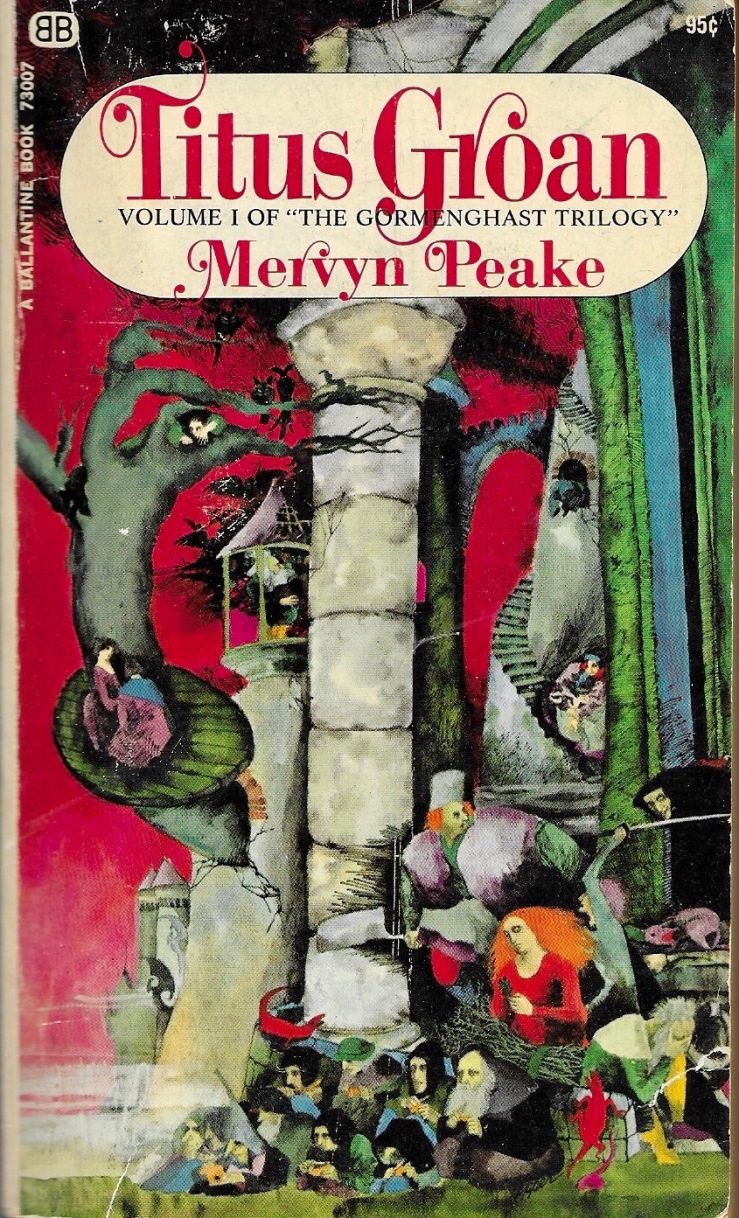
Titus Groan by Mervyn Peake. Mass-market paperback from Ballantine Books, 1968. Cover art by Bob Pepper (not credited); no designer credited.

The first of Mervyn Peake’s strange castle (and then not-castle trilogy (not really a trilogy, really)), Titus Groan is weird wonderful grotesque fun. Inspirited by the Machiavellian antagonist Steerpike, Titus Groan can be read as a critique of the empty rituals that underwrite modern life. It can also be read for pleasure alone.

2020-04-05_161903_22020-04-05_161903_3

Gormenghast by Mervyn Peake. Mass-market paperback from Ballantine Books, 1968. Cover art by Bob Pepper (not credited); no designer credited.

Probably the best novel in the trilogy, Gormenghast is notable for its psychological realism, surreal claustrophobia, and bursts of fantastical imagery. We finally get to know Titus, who is a mute infant in the first novel, and track his insolent war against tradition and Steerpike. The novel’s apocalyptic diluvian climax is amazing.

2020-04-05_161903_42020-04-05_161903_5

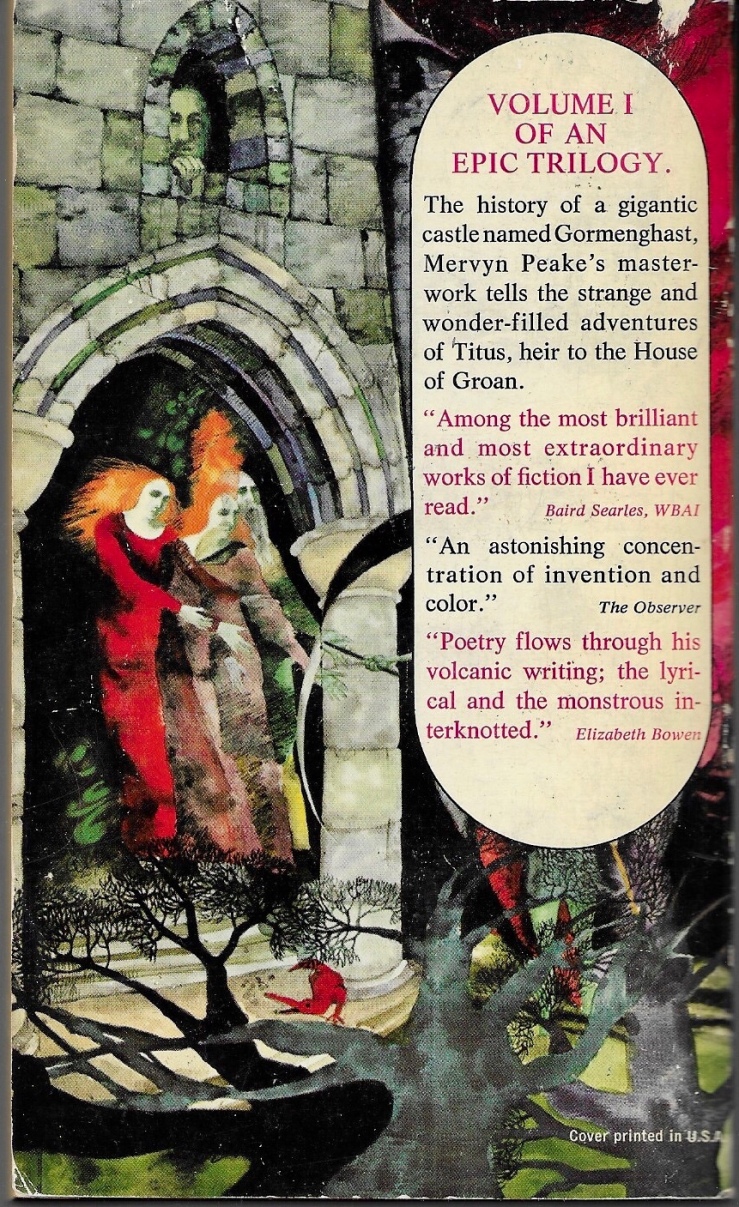
Titus Alone by Mervyn Peake. Mass-market paperback from Ballantine Books, 1968. Cover art by Bob Pepper (not credited); no designer credited.

I don’t usually include back covers in these Three Books posts, but I just love the way that Bob Pepper’s back-covers segue into each other.

Is Titus Alone my favorite in the trilogy, or is it just the one I read last? I don’t know. It’s a kind of beautiful mess, an episodic, picaresque adventure the breaks all the apparent rules of the first two books. The rulebreaking is fitting though, given that Our Boy Titus (alone!) navigates the world outside of Gormenghast—a world that doesn’t seem to even understand that a Gormenghast exists (!)—Titus Alone is a scattershot epic. Shot-through with a heavy streak of Dickens, Titus Alone never slows down enough for readers to get their bearings. Or to get bored. There’s a melancholy undercurrent to the novel. Does Titus want to get back to his normal—to tradition and the meaningless lore and order that underwrote his castle existence? Or does he want to break quarantine?

Titus Escapes might have been a better title for Peake’s third book, and its spirit of escape and adventure seem more compelling and comforting to me now than they did a month ago when I read this book.

“Cool gales shall fan the glades” — Harry Mathews

“Cool gales shall fan the glades”

by

Harry Mathews


But how choose the appropriate sticking point to start at?
Who wants to write a poem without the letter e,
Especially for Thee, where the flourished vowel lends such panache to your carnet de bal
(OK, peons: pizzazz to your dance card)? The alphabet’s such a horn
Of plenty, why cork up its treasure? It hurts to think of “you” reduced to u
In stingy text messages, as if ideally expression should be limited to formulas like x ≠ y,

Where the respectable truth of tautology leaves ambiguous beauty standing by
Waiting to take off her clothes, if, that is, her percentage of body fat
Permits it (a statement implicitly unfair, as if beauty, to remain sublime, had to keep up
Lineaments already shaped by uninhibited divinity); implying, as well, fixated onlookers, i.e.,
Men and women kidding themselves that full-front-and-back nudity is the north
Star of delight rather than imagined nakedness, shudderingly draped like a fully rigged, fully laden ship without a drop to bail,

Its hidden cargoes guessed at — perhaps Samian wine (mad-
making!) — or fresh basil
Gently crushed by its own slight weight, reviving memories of delights once stumbled on as a boy,
Delights often wreathed with necessary pain, like the stout unforgiving thorns
That tear shirt and skin as we stretch for ripe blackberries, to be gulped down fast,
Sweeter than butter and marmalade, quenching our thirst better than sucked ice,
Making us almost drunk as we shriek with false contempt at each benighted ump

Who decides against our teams. What happened to those blissful fruits, honeydew, purple plum,
White raspberry, for stealing which from Mrs. Grossman’s stand I invented ingenious alibis
That she never believed (insulting, or what?)? Where are childhood’s innocent sweetnesses, like homemade rice
Pudding and mince pie? Or the delicious resistances of various foods — bony
Lobsters, chops with their succulent tiny interstices, corn sticking to the cob, or the grilled feast
Of brook trout I caught without too much fuss after kicking a 
resentful hornets’

Nest? And when carnality replaced appetite, I was communally pronounced the horniest
Ten-year-old around; and I hadn’t even seen you. But when I did, you became the plume
In the horse’s hat of my lust. I was thirteen when we first danced together. There weren’t many afters
But I cherish my plume. There weren’t any afters, nothing, just a gentle abseil I
Could not climb back up. I still wave my plume, or my horse does, as he canters nobly
Into next year, my eighty-fifth. I hasten to add that “this coyness, lady, were no crime”

If I didn’t, in spite of all, feel so grateful to you. All manner of mercis
Fill my throat, along with immortal memories, of which I must acknowledge the thorniest
To be your disappearance, whether you tanked in river water or were scorched by Zeus’s proximity (or some such baloney);
But your firm breasts, taut nipples, and bent thighs? No thorns. All you wanted was a loosened peplum,
So I still bear your plume, and your name will not die: not to be written here or read, but my voice shall sibilate
It so shrilly that unseeded babies hear me, and every hidden woodworm wake from its dream to fall forever from the rafters.

Drink Scotch whiskey all night long and watch Steely Dan talk about making Aja

Just spent the last hour listening to a Steely Dan mix while making pizza and trying not to let terror creep into my heart, and I thought I’d re-recommend this joyous documentary about the making of Aja. Everything that follows after the jump is a copypaste of an older post.


Even if you don’t like Steely Dan, this 1999 documentary about the making of their 1977 album Aja is fantastic. (The first segment of the YouTube vid might be blocked in your country; watch via this link if so).

First off, the Aja documentary is fucking hilarious—Walter Becker and Donald Fagen come across as the smartest, most venomous guys in the room—a wicked mixture of witty and cruel—-and watching them discuss each track, and each part of each track is fascinating (especially when they pick apart failed guitar solos). The film also features a marvelous supporting cast, including braggart percussionist Bernard Purdie (of “The Purdie Shuffle” fame), and poor old Michael McDonald, who struggled to nail his background parts on “Peg.” What might be most fascinating though is seeing how Fagen and Becker pieced the instrumental tracks of Aja together, bringing in different session musicians—entirely different bands—from day to day. And if you’re still not convinced, here’s a sample (of a sample):

Sous le Ciel — Xiao Guo Hui

5843-xiao-guo-hui-sous-le-ciel-2016-egg-tempera-36x24ifweb-685x1024-1

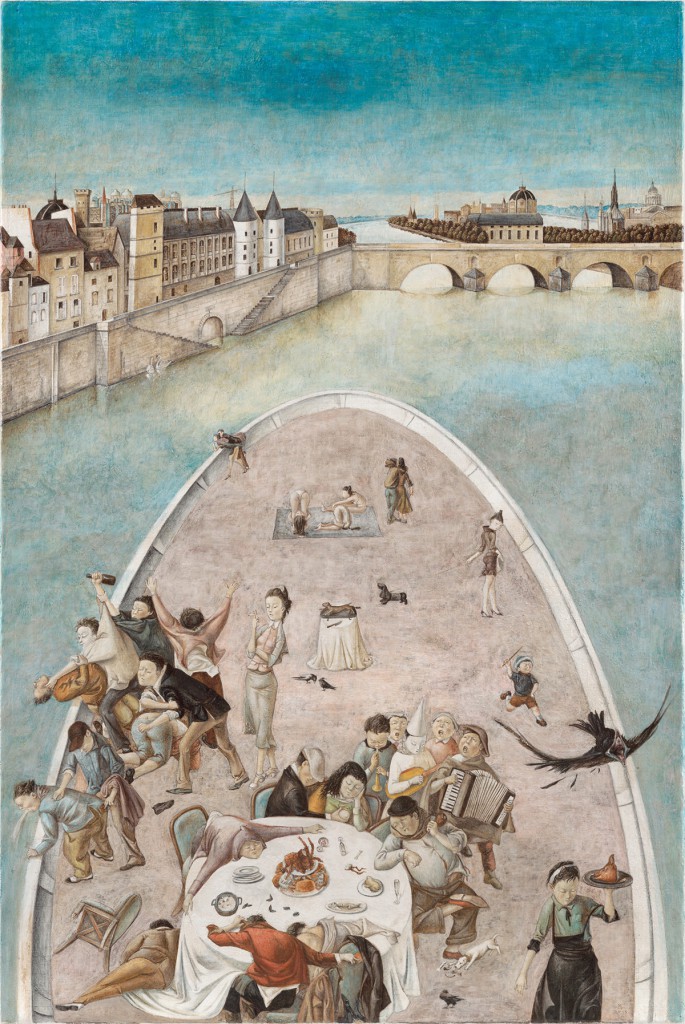
Sous le Ciel, 2016 by Xiao Guo Hui (b. 1969)

Reclining Man — Egon Schiele

5772c891d01

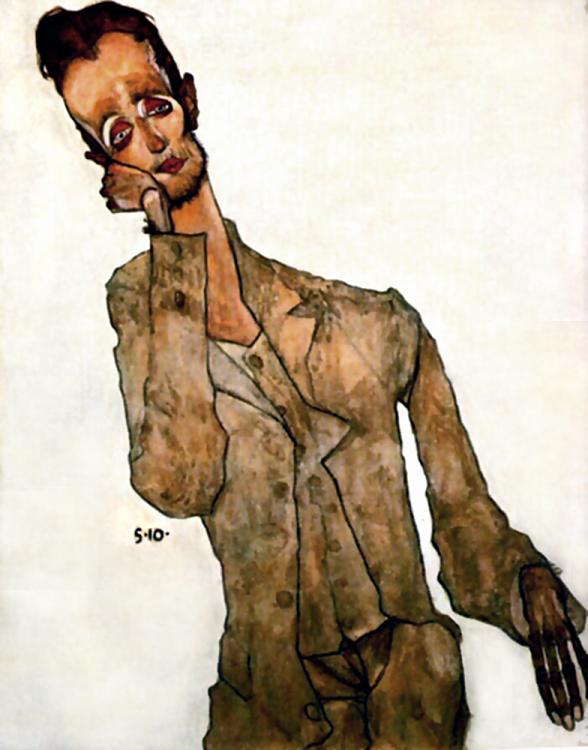
Reclining Man by Egon Schiele (1890-1918)

RIP Bill Withers

RIP Bill Withers, 1938-2020

Impossible to write traditional fiction (Leslie Fiedler)

I’ve just lived through, for instance, the granting of the National Book Award in fiction. It turned out to be impossible for me to persuade my fellow judges to consider seriously any work of literature which could be classified generically as science fiction. I have good news for you. One of the best writers of science fiction in the United States at the moment, which is to say one of the best writers of fiction in the U.S. at the present moment, Ursula LeGuin sneaked a prize as a writer of juveniles, an already ghettoized category that made it possible, and if you are juvenile to begin with, it doesn’t even matter if it is juvenile science fiction. But when Ursula LeGuin stood up, what she said was beautiful. In her acceptance speech, she said, “I hope this is felt as a prize not for juveniles but for science fiction, for all the fantasy literature.” The only way of rendering any sense of the reality of American life at the present moment is through fantasy. Our lives are indeed fantastic. It is not impossible to write fiction now. But it is impossible to write traditional fiction, the novel as high art, the novel as experimental art, the novel as avant-garde, the novel as realistic art. Only shock science fiction, fantasy, can render our lives.

From Leslie Fiedler’s 1973 address to the Third National Meeting of the Popular Culture Association. LeGuin won the 1973 National Book Award in the “Children’s” category for her excellent novel The Farthest Shore.

In-laws — David Bailin

in-laws

In-laws, 2018 by David Bailin

Thomas Pynchon beats J.G. Ballard to win the 2020 Tournament of Zeitgeisty Writers

2020-03-31_183554

Thomas Pynchon beat out J.G. Ballard, earning 61% of 337 votes of my totally-scientific and not-at-all arbitrary twitter poll to become the Champion of the 2020 Tournament of Zeitgeisty Writers. Mr. Pynchon’s trophy is at Biblioklept World Headquarters here in Florida. After this whole quarantine business is over I’m sure he’ll arrange to pick it up.

My gut feeling is that the people who follow me on twitter are skewed toward Pynchon more than Ballard. Either of the pair could have taken the prize and I’d have been happy.

FG2744-3-14a

J.G. Ballard described the late twentieth century as good as anyone, and anticipated almost every aspect of our zeitgeist. The dude not only understood the intersection of commerce and politics and sex and art, but he could convey it in wild (and wildly-entertaining, forgive the cliche) stories and novels of the blackest and bleakest humor. There are any number of great starting places for Ballard, but if you haven’t read him yet, I’d recommend High-Rise or Concrete Island before jumping into the more challenging Crash. Then: The Atrocity Exhibition, the earlier novels (1962’s The Drowned World is particularly prescient) and the early stories of Vermilion Sands. Actually, if you can get a hold of The Complete Short Stories of J.G. Ballard, go for it. (I riffed on reading all the stories back in 2014.) I don’t recommend starting with the later novels—Ballard’s descriptions are so prescient that there’s this weird drop off in quality when reality catches up to him. In the meantime, why not read “The Secret Autobiography of  J G B”? (It was composed in 1981 but published in 2009; it took autofiction a few decades to catch up with the Notorious JGB.) Ballard is great.

Thomas Pynchon’s novels are famously byzantine, shaggy, esoteric, and paranoid. He captures both the zaniness and the menace of our zeitgeist. His protagonists are often straight figures who go crooked, insiders pushed to the outside through maladventure and adventure alike. Pynchon places a premium on the underdog who resists the Them—the technocracy, the war machine, the military-industrial-entertainment complex. His most famous (and probably best) novel Gravity’s Rainbow is an indictment of war and capitalism; although it’s set in WW2, it also addresses itself, ultimately, to that war’s hangover and the Nixonian evil contemporary with its publication. Pynchon’s loose California trilogy—The Crying of Lot 49Vineland, and Inherent Vice—document, describe, and deconstruct the myth of the American cultural revolution of the 1960s. Pynchon’s “historical novels,” Mason & Dixon and Against the Day are probably my favorites. Both analyze American history as a series of strange mistakes, big blunders, and minor foibles. His longest (and strangely, most accessible) novel Against the Day is also his clearest attack on the nebulous Them who oppose freedom, progress, and, ultimately, love. The humor and intelligence of Pynchon’s writing often softens the core anger of his work, an anger directed at the invisible forces that cry out, to steal from the Dead Kennedys, “Give me convenience or give me death!” He is a national treasure and I hope he lives forever—which he will, through his works.

Finally: I hope that everyone who participated in this thing had (at least the tiniest of sliver of) fun. I don’t think pitting writers against each other has anything to do with literature. I missed college basketball in March, so this is what I did. It also helped me drift off into other places for a while. Ballard is gone but I would love to read his quarantine novel. And I’ll read anything else we get from Pynchon.

Peace to all.


The Cholmondeley Ladies

The Cholmondeley Ladies c.1600-10 by British School 17th century 1600-1699

The Cholmondeley Ladies, c.1600–10. Artist unidentified.