“Born Yesterday” — Tom Clark

“Born Yesterday”

by

Tom Clark


The concept of evil, as long ago 
Symbolized by the devil, has evolved 
Over centuries into the concept 
Of men, as delineated by (let's 
Call her) Naima, Halloween night 
At Fertile Grounds, where she stood 
Demurely chatting with Ayman, the handsome 
Proprietor (think Omar Sharif 
With soul and twinkle) at closing time, 
As I poked my ancient nose in and said 
"Trick or treat." Ayman offered a knuckle 
Bump solidarity hello—alone there 
By the counter with lovely young Naima, 
Who, when I said, What's new, smiled 
Ever so sweetly and said, "Men are evil!" 
Feeling it ungracious to disagree 
I didn't, for a moment. But then—
Well, solidarity is solidarity. 
"What about Ayman?" I said. "Ayman 
Doesn't look evil to me." Naima 
Fixed upon Ayman a glance of great 
Critical probity, smiled and said, "Hmm," 
A moment passed, pregnant, perhaps 
With reconsideration. Exceptions 
Prove rules are basically dumb, 
And really, that's the trouble, after all, 
With generalization. And what of love? 
"Isn't love," I ventured, "a matter of 
Recognizing someone has flaws 
And trying to help them limit the damage?" 
More thought. "Yes, that's exactly what it is," 
Naima said. And to myself I said, 
One point for a draw, quit while you're not losing. 
I fell out the door, squeezing between raindrops. 
Two ten-year-old girls walked past, one with horns, 
The other peeping from a full body cast. 
You forgot your treat, Ayman called out, 
Holding up a bag of old pastries 
From the "Born Yesterday" basket. 

Persephone and Pluto — Adam Miller

Persephone and Pluto, 2023 by Adam Miller (b. 1979)

“Frankenstein,” a poem by John Gardner

“Frankenstein”

by

John Gardner


(August 26th, 17—)

The myth is unchained: it staggers north,
insane. A ghost of lightning glows
in its eyes; its slow hands close in wrath
like child’s hands seizing flowers.

I hunt it, cavernous with hate—
my brain’s projection: speculum
of my dim soul, life-eating heart—
to tear it limb from limb

and lash it again to the bloodstained table
at Ingolstadt, beyond dark hallways,
sealed against night, where the busy smell of
death consumes like flies.

I made it giant. All its parts
of blood, bone, flesh must stand more plain
than life. Teased frail organic bits,
the mechanic dust of pain,

and so at last set loose my image,
mysterious as before, a monster
tottering now toward love, now rage.
He watched me like a stranger.

Make no mistake: I was not afraid,
not overawed, though I watched him kill
and stood like stone. I understood
his mind by a spinal chill.

But he bawled the woes of rejected things.
I could not say for a fact he lied
though I’d fathomed the darkest pits of his brains
and carved each scar on his hide.

And so he taught me nothing. He was.
Usurped my name, split off—raves home-
ward now by his own inscrutable laws
to his own disintegration,

staggering north. Outside my power,
beyond my understanding. And I,
who made him, cringe at my blood’s words:
None more strange than I.

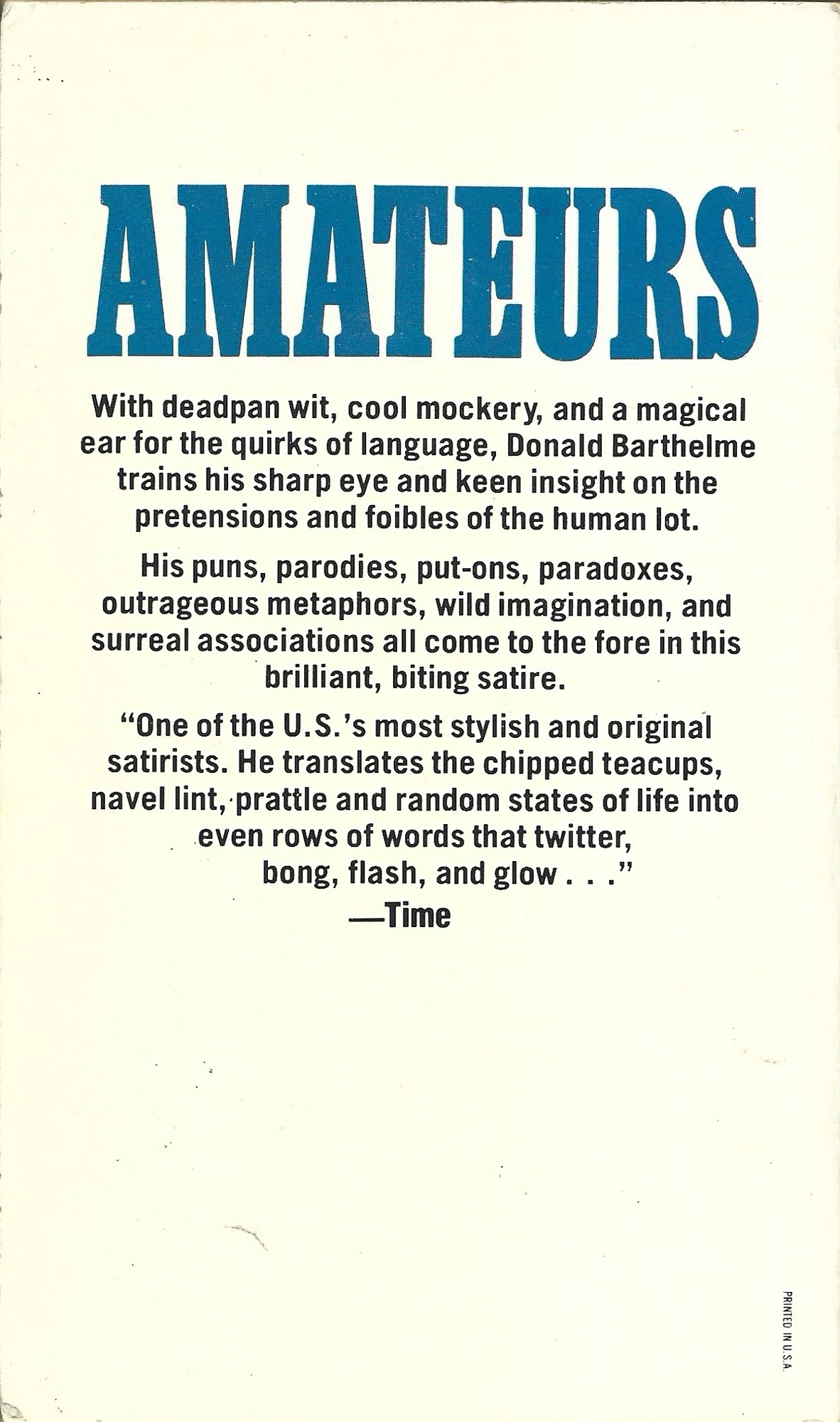
Mass-market Monday | Ignácio de Loyola Brandão’s Zero

Zero, Ignácio de Loyola Brandão. Translated by Ellen Watson. Avon Bard (1983). No cover artist or designer credited. 317 pages.

A very strange fragmentary hallucinatory novel. A few pages:

Charles Burns’ Final Cut explores the irreal reality of artistic ambition

Charles Burns’ latest graphic novel Final Cut tells the story of Brian, an obsessive would-be auteur grappling with an unrealized film project. Brian hopes to assemble his film — also titled Final Cut — from footage he shoots with friends on a weekend camping trip, but the messiness of reality impinges the weird glories of his vibrant imagination. He cannot bring his vision to the screen. He cannot capture all the “fucked-up shit going on inside my head.”

Capturing all the fucked-up shit going on inside my head is a neat encapsulation of the Artistic Problem in general. It’s not that Brian doesn’t try; if anything, he tries too hard. His best friend and erstwhile cameraman Chris is there to help him, along with his crush Laurie and their friend Tina—but ultimately, these are still kids at play. They indulge Brian’s artistic whims, but at a certain point they’d rather swim, drink, and smoke than shoot yet another scene they can’t comprehend.

Eschewing straightforward narrative conventions, Final Cut unfolds in a blend of flashbacks, dreamscapes, and flights into Brian’s imagination. The book also gives over to Laurie’s consciousness, providing an essential ballast of realism to anchor Brian’s (and Burns’, I suppose) surrealism. Brian would have Laurie as his muse, trying to capture her in his sketchbook, in his film, and in the intense gaze of his mind’s eye. And while Laurie is fascinated by Brian’s visions, she doesn’t understand them.

The last member of Brian’s would-be acting troupe is Tina, an earthy, funny gal who drinks a bit too much. She plays foil to Brian’s ambitions; her animated spirit punctures the seriousness of his film shoot. Again, these are just kids in the woods with a camera and camping gear.

And the film itself? Well, it’s about kids camping in the woods. And an alien invasion. And pod people.

The pod-people motif dominates Final Cut. We get the teens in their larval sleeping bags, transformed into aliens in their cocoons (echoed again in Brian’s imagination and in his sketches). The motif looms larger: Can we really know who a person is? Could they be someone else entirely? Can we really ever know all the fucked-up shit going on inside their head?

Indeed, Don Siegel’s 1956 film Invasion of the Body Snatchers is a major progenitor text for Final Cut. Brian even takes Laurie on a date to a screening of Invasion; he’s so mesmerized by the film that he weeps. Burns renders stills from the film in heavy chiaroscuro black and white, contrasting with the vibrant reds, maroons, and pinks that reverberate through the novel.

Burns recreates stills from another black and white film, Peter Bogdanovich’s 1971 coming-of-age heartbreaker The Last Picture Show. Again, Brian is obsessed with the film—or by the film, perhaps. In particular, he’s infatuated with Cybill Shepherd’s Jacy, whose character he imaginatively merges with his conception of Laurie.

While Invasion of the Body Snatchers is a science-fiction horror film, a deep sense of reality-soaked dread underpins it; The Last Picture Show is utterly real in its evocations of the emotional and physical lives of teenagers. Both films convey a maturity and balance of the fantastic with the real that Brian has not yet purchased via his own experiences, his own failures and heartbreaks. 

The maturity and balance that Brian can imagine but not execute in his Final Cut is precisely the maturity and balance that Burns achieves in his Final Cut. Simply put, Final Cut is the effort of a master performing at the heights of his power, rendered with inspired technical proficiency. It delivers on themes Burns has been exploring from the earliest days of his career.

There’s the paranoia and alienation of adolescence Burns crafted in Black Hole, here delivered in a more vibrant, cohesive, and frankly wiser book. There’s the hallucinatory trauma and repression he conveyed in the X’ed Out trilogy (collected a decade ago as Last Look, the title of which prefigures Final Cut). There’s also an absence of parental authority here, a trope that Burns has deployed since 1991’s Curse of the Molemen. (In Final Cut, Brian’s mentally-unstable mother is a dead-ringer for Mrs. Pinkster, the domestic abuse victim rescued by the child-hero of Curse of the Molemen). There’s all the sinister dread and awful beauty that anyone following Burns’ career would expect, synthesized into his most lucid exploration of the inherent problems of artistic expression.

Ultimately, in Final Cut Charles Burns crafts a portrait of the artist as a weird young man. Brian wrestles with the friction sparked from his vital imagination butting up against cold reality. His ambitious unfinished film mirrors his own incomplete journey as an artist, highlighting the clash between youthful creative fervor and the inevitable constraints of life, experience, and maturity. Burns’ themes of alienation and artistic ambition may be familiar, but Final Cut feels fresh and vibrant, the culmination of the artist’s own entanglements with the irreality of reality. Highly recommended.

Stevenson’s The Strange Case of Dr. Jekyll and Mr. Hyde, but just the punctuation

. ; , ; ; , , , . , , ; , – , . ; , ; , . ; , , ; . ” ‘ , ” : ” . ” , . , , . . ; , – . – ; ‘ . ; , , , . , . , , – . , , . , , . , , , , , . – . , . , , ; , . , , , ; , – , , . , ; . ; , ; , . , , . ; ; ; , . . – ; , . ” ? ” ; , ” , ” , ” . ” ” ? ” . , , ” ? ” ” , , ” . : ” , ‘ , . — — , — — . , : , . , , ; ; ‘ . , . ‘ ; . , , , . , , . ‘ ; , , . , , , ; . . . ‘ , . ‘ . , , . , , ; , . , ; , . . , . , , . ; , — — , — — , , . ‘ , ‘ , ‘ . , ‘ . ‘ . ‘ , ‘ ; ; , . ; ? — — , , ‘ , ‘ , ‘ , . ; . , , , ‘ . . ‘ , ‘ , ‘ . ‘ , , ‘ , , ; , , . , . . . ” ” – ! ” . . ” , ” . . ” , ‘ . , ; , , ( ) . , ; . , . , , , ” , . . : ” ‘ ? ” ” , ‘ ? ” . . ” ; . ” ” — — ? ” . . ” , ; , ” . ” ; . , ‘ . ; , ; ( ) . , : , . ” ” , , ” . ” , ” . . ” . , , , . ; ; ‘ . ; . ‘ ; , ‘ . ” ; ” , ” . , ” ‘ . ” ” , , ” . ” , ” , ” ‘ . . ” ” , ” . , ” ‘ . . ” ” , ” . . ” ? ” ” . ; , – . , . ; , ‘ . ‘ , . , ; ; ‘ . ‘ ; . ” . . ” ? ” . ” . . . ” , . ” , , ” ; ” . , , . , , . . ” ” , ” . ” , . ; ‘ , . . ” . ; . ” , ” . ” . . ” ” , ” . ” , . ” . . . , , , , , . , , . , . ‘ . , . , ; , , . . , . . . , . . . , . . . , . , ” , ” . ‘ ” , ” ‘ ‘ . ‘ . , . . ; , , . . ; , , , . ” , ” , , ” . ” , , , , , . , . ” , , ” . ; , – . . , , , – , , . . , . , , ; . , , , , ‘ . , . ” , , ” , ” ? ” ” , ” . . ” . ? . ” ” ? ” . ” . ” ” , ” . ” . , ; ‘ , , . , ” , , ” . ” . . ” , ” ; ( ) , : ” ! ” , . ” — — ? ” . ” ? ” . ” . . . ” , , . , . ‘ . ‘ , . ; , ; , . ‘ . ; ; ‘ ; , . , , ; , , , ! , , . ; , , , , , . ; , , ; ‘ , , . . , , . ‘ ( ) . : : , , . , . – . , , , , . ” . , ” , ” . . ” . ; ; ; , , . ‘ , , – , , . ; ; . . , . , , , . ; , . , . , , . , , ‘ . , ; , . . . ” . , ? ” . . ; , : ” . ? ” ” , ” . ” . ‘ — — . — — ; , . ” ” . ; , ” . , . , , ” ? ” . ” , ” . ” ? ” ” , ” . ” ? ” ” ? ” . . , , , ; . ” , ” . . ” . ” ” , ” . , ” ; , . ” . ” ! ” . , ” , , ? ” . ” , ” , ” ? ” ” , ” . ” ? ” ” , ” . . ” , ” . , . ” ? ” ” , , ” . ” , ” . , . ” . ” ” , ” . , ” . ” ; , , . . , . , . , . . , , , , , ; , , . . ” , ” . ” , . , ! , ? . ? , , ? , ; , , ‘ , . ” – , , , ; – , , . , , , ; , , , . . – , . ” . , ? ” . ” , . , ” , , , , – , , ( ) , , . ” , ? – ? ” ” , , ” , . , , ‘ ; . ; ; ( ) ; , . , . . ” . , , ” . ” , . ? ” ” , . , , ” . ” . . ” ” , , ” . ” , , , ” . ” . ” ” . ? ” . ” , , . , ” . ” ; . ” ” , – , . ” ” – , . . ” . ” , ” , ” ! ; ; , . , ; , : , , – . ” , , , , – – – . ; ; , . , . ” , , ” , ” ; , ; ‘ . . ‘ ; , ! ; , . , — — , ” , ” . ” ‘ , , . . , , , , ; . . , . , . , – – ; , , ‘ . , . ; — — , – , – , , — — . . ” , , ” . ” ? ” ; . ” , ” , ” . ; – , , . , ‘ — — ‘ — — , ; – ; , . . ” ” , ” , . ” ? , , , ” , . ” . ” ” , , ” . ” . ” . , . ” , ” . ” . ” ” , ” . ” . , ” , . ” , ; — — . . ” ” , ” , ” : . ; . ” ” , ” , ” , , . ; , , , ; ‘ ; ; , : , . . ; ; , , ‘ ‘ : , . ” , . ” , ” , . ” , , , ” , ” . . ; ; . , ; , , . , ; . ” ” ‘ , ” . ” ‘ , ” , ‘ ; ” ; , . ” . ” , ” , ” . ” , , — — , . . , . , , , ‘ , . , , , . ( , , ) , . , ; , , . ( ‘ ) . ; , , ; , , – , , – – . , . , . , ; , – . , , , ( ) . , ; . . , – , , . , . ‘ . ; , . , , ; — — , , . : , , , . . , ; , . ” , ” ; ” . . ” , . , . ” , ” , ” . . ” ” , , ” , ” ? ” . ” , ” . ” . ” , . . ; , ; , . ” . ? ” . ” – , , ” . . ; , , ” , ” , ” . ” , . – , ; , . ; – ; , , ; , , , . , , , , , , ‘ , . , , ; , ‘ , . , , , , , , , , ; , , . ‘ ; . – – . , : . , , . ‘ , ; , ; ; , ; , . ” , , , ” ; , ” , ” . ” . ” ‘ . ” ! ” , ” ! ? ” . . ” ‘ , ” . ” , , . ” , , . ; . ; , ; , ( ) , ; . , , ; , ; – ; , . , ; ; , . , ‘ , . ” , , ” . : ” . , , , . , ‘ . , . ” , , ; . — — ; ; ; , . ; . , . . ‘ , , , . ; , . ‘ ; , , , , , , . , ; , . ‘ . , , , – , . ; , ; , , . , . , . ” , ” . , , ” ? ” . ” , ” . ” – . ” ” , ” . ” , , . ? ” ” , , ” , ” . . . ; ; , ; , . ” ; ‘ . ” , ” ; ” , . , . ” ” , ” ; ” . . — — ; . , ; , ; . ” ” , , ? ” . ” , ” . ” ; . , . ” ; ‘ , . ” , ” , , ” . ” , ” ” : , , ‘ , . , , , . ; ; . ” ? ” . ” , ” , ” . . . ” ” ? ” . ” , ” . ” . ” ” , , ” . ” : ? ” ; . ” , ” . ” . . ” ” , ” : ” — — , , ! ” . , . ” , ” , ” – : ? ” ; ” , ” . . ; , , ; , , . , , : ” . . . ” ; . , , ; – , . ; , , . , , . , , , , , . , ; , ‘ . . ; , ; , . . . ; . ‘ ; ; . ‘ ; : , , ? , , ? , , ; ; . . ” , ” . ” , , . , ” . ” , , . ” ” , ” . ” ; , ; . ; : ‘ . ” ‘ , . ” , ” : ” ; . ” ” , ” . . ” . , ? ” . ” . , . ? ” ” . ? ? ” ” . , ; ” . ” , , ” , ; ” ‘ . ” , . . ” , ? ” . ” , , ” , ” ‘ ; : . ” ” , ” . ” , , , ” . ” ‘ , , ” . ” , , ” . ” . ” . , , . ” ! ” . ” ! ” . . ; , ; . . , , : ‘ , ; , , ; , . , ; , , . , . , , . . , . . , , ; , . , , ; , ; , . ‘ ; ; . , , . ” , ” , ” . ” , , ; , . ; . ‘ . ; , ‘ . – . ; ; ; ‘ , – . ; . ” , ” ; ” , ; . ” , . ” , ” , ” . . , ; ; , , . , . ” ” , , ” . ” ? ” ‘ , . ” . , ” , . ” ; . ” ” , ! ” . ; , ” ‘ ? ” . ” , ; . ” ” , ” ; ” . ” ” , ” . ” , ” . ” , , , . . , , ‘ , ; , ‘ , , . ” , , , ; , , . . ” , ” , ” . ; , , . . . , . ; , , , . ” ; , ; , ; , , , . ; ‘ , . . , . , , , , . ” : . . , , ” ; . ” – , ” : ” ? ” , . , , ” . . ” . , ; , , . , ; . , ? , ; ; . , ; , , . ; . ; ; , , , , . , , . , , , ; , , ; . , . , . . , – ; , . ” , ” , ” ‘ . . . ” ” , ” . ” , ? ” ” , ” . ” , , . ‘ ! , . ” ” , ? ” . ” , . , ; , . ” , , , , . – ; , , , . . ” ! ! ” . ” . ” ” , , ” , ” . , . ” ” , ” . ” , . . ( — — . — — . . ) ; . ” ” , ” . ” ; , , , ; . , , ; ; . , . ” ” , , ” , – , ” . ” ” , ” . , , . ; , . , , – ; , , . . ; . ” , , ” . . . , . . , . ” , , ? ” ; , ” ? ” ; ” ? ” ” . , ” , ” . ” ” , , ” . ” , , . ” ” ‘ , , ” , ” . , ‘ ; ‘ , — — . . , , ‘ . ” ” , , ” , ” . ? ” ” ‘ , ” , , ” . ” ‘ ; ; , . , , . ” , ” . ” , ” , ” , ; . . ” ” ‘ , ” , . ” ! ” , . ” ! ? ” ” ‘ , , ” ; ” ? ” . ‘ ; ‘ , , . , , , , , . , . , ; . . ; – ; , . , , , . , , , , – . , , ; , , . ” , , ” , ” , . ” ” , , ” . ; ; , ” , ? ” ” ‘ , ” . ” . ” , , ; ; , , . . , ; , ” ! ‘ . , ” . ” , ? ? ” . ” , ; . ” ” ‘ , ” . , ; . ” ! ” , ; , , . ” , ” , – , ” , ‘ . ” . , . ” , , ” , ” . , ‘ . , , , ‘ . ” . ‘ , – , ; , , . ; , , . ” . , , , ” ; , . : ” , ” . ” , , ” , ; , . , . ” , ” , . , ” ‘ ? ” ” , ” , , . ” ? , , , ” . ” ‘ , ? , ; ‘ ; , ; ‘ , , , . ! ” ” , ; , ” . , . ” , . — — , , ? ‘ ; ‘ . ” ” , . , , ‘ , ” . ” ( ) , , , . — — ‘ , — — . ‘ ; , , . , , , , , , . , , , . , , . ” ” ? ” . . , , , . : ” . . . . — — , . . . . , , . . . . . ” , , ‘ . ” ‘ , ” , ” . ” ” , ” . ; , ” ? ” ” ‘ , , , ” . ” ‘ , ? ” . ” , ” ; , , ” ? ” . ” ‘ ! ” ” ? ” . . ” ? ” ” ‘ ! ” . ” . . ; , . , , . , . , , ? , , ? . . . . ” . ” , ” . , ” . , , ; , , ; ; , — — ! ; , , , ; , , . ” ” , ” , , ” , ‘ . ” — — — — ” , , . ” . ” , , ” , ” ? , ? , , . — — , . ; . ” ” , ” , ” , . ‘ , , . ” ” , . , ‘ ! ” . ” , ” : ” ? ” ” , , , ” . ” ‘ , ” ; ” , . ” ” , ” ; ” . ” , . ” , , ” , , ” ? ” ” , , , ” . ” , , ” . ” ; . , ? ” ” , , , , , ” . ” , . ? — — , , ! , ; , ; ? , , ? ‘ . ‘ , . , . ? ” ” , ” , ” . ” ” — — — — ‘ , , : . ” ” , ” . . ” , , ” . ” , , . , ‘ , . ; ‘ – ; , – . ! ” ” , , ” . ” . , , — — — — . , ; ; ( , ) ‘ . , . . ” , . ” , , ” . ” , , ; . , , . , . , , , . . ” , . ” , , , ” ; , . , . , , , , . ; , . ” , , ” ; ” , . , ‘ . , ‘ ‘ ! , , ‘ ! , — — , . , , ‘ ? ” , , ; . . ” ? ” . . ” , ” . ” ! ” ” ? ? ” , . ” , ” . ” , . ” . ; ; , , . ” , ” , , ” . ” , . ” , , , ” ; ” , — — , ! ” ” , ” , ” ‘ , ! ” ” , ‘ ‘ — — ‘ ‘ ! ” . ” , ! ” ; , . , , . , ; ; ; , . , , . , , , , , , ; , , , , . . , . , ‘ ; , ; , – . ” , ” , ” . ; . ” , , , . – ; . . . , , , , . , , , ‘ ; , . , . . ” , ” , . ” , ” , – . ; , , . ” , ” . ” ! ” . ” , , ? . ” ” , ” , ” , , . ” . ” , , ” . ” . ” , , . , , , . ” , ” ; , . , – , ‘ , . ; , , , , . , , – , . , , . ” , , ” . ” , ” . ” ” — — , — — ” ? ” . ” ! ” . . , , , , ‘ , . . , . , , ; , , . , , . ” , ” . ” ; ; ; . ” ; ‘ . ” ! ” , ” . ; , ! , ? ? , ? , . . ” ” ‘ , ? ” . ” , ” . ” ! ” : ” , — — , , , . , ; , ” , ” . ” ” ? ” . ” , , ” , . . ” . , . ; ; , . ” , ; , , . . ‘ , , , , . ; ; , , , ; . ; : ” , — — . ” , — — ; , , , . , , ‘ , , , , , ‘ . , , , , ; – , . , , . . ” – — — , ; , ; , . , , ; . ; ; ( ) , ; , , ( ) . , ; , : , . . ” : . , , ; , , . , , , , . . , , ; , , . ” , . , , , , , . , ” , ” . . ” . . — — . – , – . , , ; . ; , . ” , ; , . , ; . , , ‘ . ; , . ; . ‘ , ( ) ‘ . , ; , ; . , ‘ , . ; , , . . , ; ‘ ; . , , – , . . . , . , : ” ” ; , ” ! ! ! ” , , . , ( ‘ ) . , , ? , ? , ? ; , , – . ‘ , . , . ” . ? ” . ” ” ; , . , ‘ ; , . , , ; , . , , . , . , ; , , — — — — , . , . , , , ; , . ( , , ) ; , , , — — , , . , . , — — , — — ; ‘ , , , . , , . , , . ” ? ” . ” ? ” . , . ” , , ” . ” . , . ” , , , , , . ” , . , ” . ” ; . , . , ; . . . ” , , , — — ” , . . . ” ‘ , . ” , , ” , , . , , ; ; . ” , ” . , , . , . , , ” ? ” . . , . , , , , , , . , , . , , , , . ” , ” , ” . ? ? ? ? , . , , , . , , , , , ; . ” ” , ” , , ” , . . ” ” , ” . ” , : . , , , — — ! ” . ; , , , , ; , , — — — — — — , , , . ” ! ” , ” ! ” ; — — , , , — — ! , . , , ; , , . ; ; ; , ; . , , , , . , , ( ) . , ‘ , . . ‘ — — , , , , , , . , , , . ; , , . ; , . , , , , ‘ . , , . – , ; ; , , , . , , . , , , , : , . , . , ; , . , , , . , , ; , , , ; , , , , . , , , ; , ; , , . — — , . , ? , , . , , , . , . , . , ‘ , , . , , , ! , . , , , , , . . ; , , , . . ; , , , , ; , , , , , . : , , . , . , , , . , , ; , , , . , , , , ; , , . , ; , . , , ; , . , — — , , — — ; , , . , , , , ; , ; , . , , . , , . , , , , , , . , , , . , . ( ) . , , . , , . . , , . . , . , , , , : , , . : ; ; , , , , . – . , , , , . ; ; ; , . ; , , ; . , , , , . . , . ; ( ) , , , . . , , , , . ; ; . , ; . , . ( ) ; , , . ; . , . , , , . , . . , , , . , , . — — ! , ; , ; , , , , . , , ; . , . , . , , ; ; ; . ; , . , , , . ; ; , , . . ( ) ; . , , . – , ; ‘ ; ; , , , . , ; , , , . , , , . ; ; ; , , . , , , , , . , , . ( ) ; , , . , , – , , , , , . . , , ; . , . , , . ? ; , — — ? ; ; — — , , , – . ; , ? , . , , : , . ; , . , , . . , , , , ; . , ; , ( ) ; , , , , . . , , ; , , , ; . , , ‘ , , , , . ; , . , . , . ( ) , , ; , . ‘ ; ‘ . , . , , , , . ; ; , . , ; ; , , . , , ; , , , , . , , , . , , ; , , . ; ; , ; , , . , , , ; , , , . . , . , , , . , , ; , , , ; . ; , , , . . , , ; , , , . ; ; , , , . , ( ) ; , , , – , . , , . , , , . – . : , ‘ , – , , , . ; ; , , . , . . ; , ; , ! ! , ! , , , . , . ; . ; , . ; . , , ; , , . ; ; ; , , , , . ; : , ; . ; ; . ; , . , , , , ; ‘ . ; ; , , . , , ; , , – . , , . , ; , , , , . ; ; . . ‘ , , — — – ; , , , , . , . , ; , , . ; ? ( ) . . , . , . ? ? , ? , , , . ? , : ; , . , , , , . ( , ) . ; — — — — , . , , ; ; , , . ; , , . ; ; , ; , . , , ; , , ; , , , . , — — , . ; . , , , , , , . , , , , . , , , . , . ‘ , : ; . . , . ‘ ; . , . , , . , ; , ; . , , ; , . ; ! , , , – . , , , . , ; , , , . , , , , , , , : . , , ( ) , , . . . , . , – : , , , , . ; ; ; , , . , , ; , ; , , , . . , ; , , . – , , ; , , . ; : , , , , . , , ; , ; , — — , — — , ; , , . , , . ; , , ; . ; ; , . , . , , , , ( ! ) . ; , . , ; , – . . , , , , , ( ) . ? ? ; ; , . , , .

Robert Louis Stevenson’s The Strange Case of Dr. Jekyll and Mr. Hyde—but just the punctuation.

Notice to mariners | Donald Barthelme

To the Editor:

The fall 1973 number of the Carolina Quarterly contains a story called “Divorce” and signed with my name. As it happens, I did not write it. It is quite a worthy effort, as pastiches go, and particularly successful in reproducing my weaknesses. A second story, titled “Cannon,” also signed with my name, appears in the current issue of Voyages. As a candidate‐member of the Scandinavian Institute of Comparative Vandalism, I would rate the second item somewhat inferior to the first, but again, I am not responsible. May I say, as a sort of notice to mariners, that only manuscripts offered to editors by my agent, Lynn Nesbit, are authentic—not good or bad, but at least authentic.

DONALD BARTHELME New York City.

(Barthelme’s letter was published in The New York Times, 23 Dec. 1963

Simon Critchley’s Mysticism (Book acquired, 17 Oct. 2024)

Simon Critchley’s Mysticism is new from NYRB. Their blurb:

Why mysticism? It has been called “experience in its most intense form,” and in his new book the philosopher Simon Critchley poses a simple question to the reader: Wouldn’t you like to taste this intensity? Wouldn’t you like to be lifted up and out of yourself into a sheer feeling of aliveness, both your life and those of the creatures that surround you? If so, it might be well worthwhile trying to learn what is meant by mysticism and how it can shift, elevate, and deepen the sense of our lives.

Mysticism is not primarily a theoretical issue. It’s not a question of religious belief but of felt experience and daily practice. A rough and ready definition of mysticism is that it is a way of systematically freeing yourself of your standard habits, your usual fancies and imaginings so as to see what is there and stand with what is there ecstatically. Mysticism is the practical possibility of the achievement of a fluid openness between thought and existence.

This is a book about trying to get outside oneself, to lose oneself, while knowing that the self is not something that can ever be fully lost. It is also a book about Julian of Norwich, Anne Carson, Annie Dillard, T.S. Eliot, and Nick Cave. It shows how listening to music can be secular worship. It is a book full of learning, puzzlement, pleasure, and wonder. It opens the door to mysticism not as something unworldly and unimaginable, but as a way of life.

Mass-market Monday | Lawrence Durrell’s Nunquam

Nunquam, Lawrence Durrell. Pocket Books (1971). No cover artist or designer credited. 258 pages.

Donald Barthelme’s Forty Stories in reverse, Part I

A few years ago, I reread Donald Barthelme’s collection Sixty Stories and wrote about them on this blog. I enjoyed the project immensely. A recent comment on the last of those Sixty Stories posts asked, or demanded, I suppose (the four-word comment is in the imperative voice) that I Now do Forty Stories. Which I am going to now do, Forty Stories.

40. “January” (first published in The New Yorker, 6 April 1987)

“January” begins as a dialogue between two characters, a mode Barthelme would return to repeatedly throughout his later career. The story is ostensibly a Paris Review style interview with one “Thomas Brecker,” who has authored seven books on religion over his thirty-five year career. The story begins as light satire; our Serious Writer is “renting a small villa” in St. Thomas; the interviewer notes that “a houseboy attended us, bringing cool drinks on a brown plastic tray of the sort found in cafeterias.” The interview quickly takes the shape of a career-spanning reflection, with Brecker sliding into a more melancholy mind frame. By the end of the story, the “interviewer” disappears, leaving us in Brecker’s imagination, where we have likely always been, and it’s hard not to read Barthelme’s autobiographical flourishes beneath Brecker’s mordant quips:

I think about my own death quite a bit, mostly in the way of noticing possible symptoms—a biting in the chest—and wondering, Is this it? It’s a function of being over sixty, and I’m maybe more concerned by how than when. That’s a … I hate to abandon my children. I’d like to live until they’re on their feet. I had them too late, I suppose. 

39. “The Baby” (Overnight to Many Distant Cities, 1983)

“The Baby” was composed around the same time as “Chablis” (1983); both stories are love letters of paternal affection for an infant daughter. Again, it’s hard not to see Barthelme’s own biography here. His daughter Katherine was an infant at the time he wrote them. While I don’t think “The Baby” is as strong as “Chablis” is (or, at least as strong in my memory — “Chablis” is the first story in Forty Stories, so we’ll get there, I guess) — while I don’t think “The Baby” is as strong as “Chablis,” it’s still a fun little ditty with an anarchic punchline. It’s also, like barely five short paragraphs–just read it.

38. “Great Days” (Great Days, 1979)

As I revisit my notes for “Great Days,” I realize I should probably read the story again, more slowly, and try to tune more into its voice. Or voices. Are there two voices here, or one? I think there is more of a n actual story story here than I can summarize — not that anyone wants summary of Barthelme —  but my takeaway is that this is Barthelme doing Stein doing Cubism doing… In his 2009 biography of Barthelme Hiding Man, Tracy Daugherty wrote that New Yorker fiction editor (and early Barthelme champion) Roger Angell rejected an early version of the story (under the title “Tenebrae”). According to Daugherty’s bio, while Angell recognized the story as a “serious work” and a “new form,” he ultimately thought it was too “private and largely abstract” for publication.

I think this bit is lovely read aloud:

 —Purple bursts in my face as if purple staples had been stapled there every which way—

—Hurt by malicious criticisms all very well grounded—

—Oh that clown band. Oh its sweet strains.

—The sky. A rectangle of glister. Behind which, a serene brown. A yellow bar, vertical, in the upper right.

—I love you, Harmonica, quite exceptionally.

—By gum I think you mean it. I think you do.

—It’s Portia Wounding Her Thigh.

—It’s Wolfram Looking at His Wife Whom He Has Imprisoned with the Corpse of Her Lover.

Elisabetta Sirani, Portia Wounding her Thigh, 1664


37. “Letters to the Editore” (Guilty Pleasures, 1974)

A lively little gem from Barthelme’s mid-seventies “non-fiction” collection Guilty Pleasures. Its inclusion seems to show an editorial need to pad out Forty Stories with more hits than the old boy had strung together by ’87. Anyway. “Letters to the Editore” is a fantastic send-up of small aesthetic aggressions writ large in the slim pages of little magazines. The ostensible subject is a dust-up surrounding an exhibition of so-called “asterisk” paintings by an American in a European gallery—but the real subject is language itself:

The Editor of Shock Art has hardly to say that the amazing fecundity of the LeDuff-Galerie Z controversy during the past five numbers has enflamed both shores of the Atlantic, at intense length. We did not think anyone would care, but apparently, a harsh spot has been touched. It is a terrible trouble to publish an international art-journal in two languages simultaneously, and the opportunities for dissonance have not been missed.

Barthelme’s comedic control of voices here is what makes this “story” an early (which is to say, late) standout in Forty Stories. It is the “opportunities for dissonance” that our author is most interested in and attuned to.

36. “Construction” (first published in The New Yorker, 21 April 1985)

“Construction” is the non-story of a writer flying out West to complete the “relatively important matter of business which had taken me to Los Angeles, something to do with a contract, a noxious contract, which I signed.” The documents he signs are “reproduced on onionskin, which does not feel happy in the hand.” This is one of two decent verbal flares in “Construction”; the other is an extended episode (as verbal flare-ups go) in which we find our Writer-Hero up against the wall of absurdity:

The flight back from Los Angeles was without event, very calm and smooth in the night. I had a cup of hot chicken noodle soup which the flight attendant was kind enough to prepare for me; I handed her the can of chicken noodle soup and she (I suppose, I don’t know the details) heated it in her microwave oven and then brought me the cup of hot chicken noodle soup which I had handed her in canned form, also a number of drinks which helped make the calm, smooth flight more so. The plane was half empty, there had been a half-hour delay in getting off the ground which I spent marveling at a sentence in a magazine, the sentence reading as follows: “[Name of film] explores the issues of love and sex without ever being chaste.” I marveled over this for the full half-hour we sat on the ground waiting for clearance on my return from Los Angeles, thinking of adequate responses, such as “Well we avoided that at least,” but no response I could conjure up was equal to or could be equal to the original text which I tore out of the magazine and folded and placed, folded, in my jacket pocket for further consideration at some time in the future when I might need a giggle.

Barthelme’s stand-in confesses here to what we’ve always known: He’s a scissors-and-paste man, a night ripper with a good ear, a good eye, but mostly one of us, a guy who needs a good giggle.

I also remember him talking to me about the structure of 2666 and a novel about bullfighters that he never finished (as far as I know), and which, he said, would be called Corrida

We are in December of 1997. I’m living in Barcelona, but I’ve gone to Girona to write an article for El País about an exhibition of work by a childhood friend, David Sanmiguel. At the same time as the opening, in Llibreria 22—right across the street from the art gallery—Ponç Puigdevall is presenting the book Last Evenings on Earth, by Roberto Bolaño. By now, Bolaño has in quick succession published Nazi Literature in the Americas and Distant Star, and his name is beginning to resonate in certain literary circles. But I, who am totally outside these circles despite having published three novels, have not yet read him, and have heard of him only from Enrique Vila-Matas, who is a mutual friend. Before the exhibition opens, I have a coffee with Bolaño and Puigdevall. Bolaño tells me he lives in Blanes, that all he does is write, that he makes a living—“a very modest one,” he emphasizes—through literature. Suddenly, while listening to him talk, I have a hunch. I ask Bolaño if he was living in Girona in the early eighties; he says he was. I ask him if he knew Xavier Coromina; he says yes. Then I tell him of our fleeting encounter outside the Bistrot and, once inside the Llibreria 22, I show him the passage in my second novel where a character says his thesis is going, but who knows where it’s really headed. Bolaño laughs; I laugh too.

From Javier Cercas’s memory-essay “Bolaño in Girona: A Friendship.”

Saint Jerome in His Study — Joos van Cleve

y1982-76

Saint Jerome in His Study, 1528 Joos van Cleve, (c. 1485–1540/41)

Read “The White People,” a supernatural tale by Arthur Machen

“The White People”

by

Arthur Machen


PROLOGUE

‘Sorcery and sanctity,’ said Ambrose, ‘these are the only realities. Each is an ecstasy, a withdrawal from the common life.’

Cotgrave listened, interested. He had been brought by a friend to this mouldering house in a northern suburb, through an old garden to the room where Ambrose the recluse dozed and dreamed over his books.

‘Yes,’ he went on, ‘magic is justified of her children. There are many, I think, who eat dry crusts and drink water, with a joy infinitely sharper than anything within the experience of the “practical” epicure.’

‘You are speaking of the saints?’

‘Yes, and of the sinners, too. I think you are falling into the very general error of confining the spiritual world to the supremely good; but the supremely wicked, necessarily, have their portion in it. The merely carnal, sensual man can no more be a great sinner than he can be a great saint. Most of us are just indifferent, mixed-up creatures; we muddle through the world without realizing the meaning and the inner sense of things, and, consequently, our wickedness and our goodness are alike second-rate, unimportant.’

‘And you think the great sinner, then, will be an ascetic, as well as the great saint?’

‘Great people of all kinds forsake the imperfect copies and go to the perfect originals. I have no doubt but that many of the very highest among the saints have never done a “good action” (using the words in their ordinary sense). And, on the other hand, there have been those who have sounded the very depths of sin, who all their lives have never done an “ill deed.”‘

He went out of the room for a moment, and Cotgrave, in high delight, turned to his friend and thanked him for the introduction.

‘He’s grand,’ he said. ‘I never saw that kind of lunatic before.’

Ambrose returned with more whisky and helped the two men in a liberal manner. He abused the teetotal sect with ferocity, as he handed the seltzer, and pouring out a glass of water for himself, was about to resume his monologue, when Cotgrave broke in—

‘I can’t stand it, you know,’ he said, ‘your paradoxes are too monstrous. A man may be a great sinner and yet never do anything sinful! Come!’

‘You’re quite wrong,’ said Ambrose. ‘I never make paradoxes; I wish I could. I merely said that a man may have an exquisite taste in Romanée Conti, and yet never have even smelt four ale. That’s all, and it’s more like a truism than a paradox, isn’t it? Your surprise at my remark is due to the fact that you haven’t realized what sin is. Oh, yes, there is a sort of connexion between Sin with the capital letter, and actions which are commonly called sinful: with murder, theft, adultery, and so forth. Much the same connexion that there is between the A, B, C and fine literature. But I believe that the misconception—it is all but universal—arises in great measure from our looking at the matter through social spectacles. We think that a man who does evil to us and to his neighbours must be very evil. So he is, from a social standpoint; but can’t you realize that Evil in its essence is a lonely thing, a passion of the solitary, individual soul? Really, the average murderer, quâ murderer, is not by any means a sinner in the true sense of the word. He is simply a wild beast that we have to get rid of to save our own necks from his knife. I should class him rather with tigers than with sinners.’

‘It seems a little strange.’

‘I think not. The murderer murders not from positive qualities, but from negative ones; he lacks something which non-murderers possess. Evil, of course, is wholly positive—only it is on the wrong side. You may believe me that sin in its proper sense is very rare; it is probable that there have been far fewer sinners than saints. Yes, your standpoint is all very well for practical, social purposes; we are naturally inclined to think that a person who is very disagreeable to us must be a very great sinner! It is very disagreeable to have one’s pocket picked, and we pronounce the thief to be a very great sinner. In truth, he is merely an undeveloped man. He cannot be a saint, of course; but he may be, and often is, an infinitely better creature than thousands who have never broken a single commandment. He is a great nuisance to us, I admit, and we very properly lock him up if we catch him; but between his troublesome and unsocial action and evil—Oh, the connexion is of the weakest.’

It was getting very late. The man who had brought Cotgrave had probably heard all this before, since he assisted with a bland and judicious smile, but Cotgrave began to think that his ‘lunatic’ was turning into a sage.

‘Do you know,’ he said, ‘you interest me immensely? You think, then, that we do not understand the real nature of evil?’ Continue reading “Read “The White People,” a supernatural tale by Arthur Machen”

Shadow Work (Chapters) — Dominic Chambers

Shadow Work (Chapters), 2022 by Dominic Chambers (b. 1993)

Woman Reading — Agnes Goodsir

Woman Reading, c. 1910 by Agnes Goodsir (1864-1939)

Benjamin Swett’s The Photograph Not Taken (Book acquired early October, 2024)

Benamin Swett’s The Picture Not Taken is forthcoming from NYRB. Their blurb:

In The Picture Not Taken, the photographer and writer Benjamin Swett considers the intersections between photography, memory, the natural world, and the course of life in essays on subjects that include family snapshots, images of racial violence, the shape of abiding love, and the experience of unforseen and irremediable loss. In these beautifully written, deeply affecting pages, Swett moves with a wonderful improvisatory freedom among his chosen themes. The Picture Not Taken is a book of transfixing pieces that possesses the intensity and integrity and heft of the wholly new.

Mass-market Monday | Philip K. Dick’s Martian Time-Slip

Martian Time-Slip, Philip K. Dick. Ballantine Books, second printing (1976). Cover art by Darrell K. Sweet. 220 pages.

I riffed on the novel a decade ago, writing,

Time-Slip rockets into rhetorical reverberation, cycling its final chapters into a strange decay. The timeslips jar the reader’s narrative perception—Hey wait, didn’t I already read this?—unsettling expectations, and ultimately suggesting that this Martian Time-Slip is just one version of Martian Time-Slip. That there are other timelines, distorted, slipped.