The Garden of Eden, Ernest Hemingway’s Tale of Doomed Polyamory

In general, I dislike reviews that frontload context—get to the book, right? So here’s a short review of Ernest Hemingway’s The Garden of Eden: it is stranger than most of what Hemingway wrote, by turns pleasant, uncomfortable, bewildering, and beautiful. And readable. It’s very, very readable. Young people (or older folks; let’s not be prejudiced) working their way through Hemingway shouldn’t put The Garden of Eden on the back-burner in favor of his more famous works, and anyone who might have written off Hemingway as unreflective macho bravado should take a look at some of the strange gender games this novel has to offer. So, that’s a recommendation, okay?

Now on to that context, which I think is important here. See, The Garden of Eden is one of those unfinished novels that get published posthumously, put together by editors and publishers and other book folk, who play a larger role than we like to admit in the finished books we get from living authors anyway. For various reasons, cultural, historical, etc., we seem to favor the idea of the Singular Artistic Genius who sculpts beauty and truth out of raw Platonic forms that only he or she can access (poor tortured soul). The reality of how our books get to us is a much messier affair, and editors and publishers and even literary studies departments in universities have a large hand in this process, one we tend to ignore in favor of the charms of a Singular Artistic Genius. There’s a fascinating process there, but also a troubling one. Editing issues complicate our ideals of (quite literally) stable authority—is this what the author intended?, we ask (New Critics be damned!). David Foster Wallace and Michael Pietsch, Raymond Carver and Gordon Lish, Franz Kafka and Max Brod, Mary Shelley and Percy Shelley . . . not to mention Shakespeare, Chaucer, Beowulf, The Bible, Homer, etc. etc. etc. But you’re here to read about The Garden of Eden, right gentle reader? Mea culpa. I’ve been blathering away. Let me turn the reins over to the estimable talents of E.L. Doctorow, who offers the following context in his 1986 review of the book in The New York Times

Since Hemingway’s death in 1961, his estate and his publishers, Charles Scribner’s Sons, have been catching up to him, issuing the work which, for one reason or another, he did not publish during his lifetime. He held back ”A Moveable Feast” out of concern for the feelings of the people in it who might still be alive. But for the novel ”Islands in the Stream” he seems to have had editorial misgivings. Even more deeply in this category is ”The Garden of Eden,” which he began in 1946 and worked on intermittently in the last 15 years of his life and left unfinished. It is a highly readable story, if not possibly the book he envisioned. As published it is composed of 30 short chapters running to about 70,000 words. A publisher’s note advises that ”some cuts” have been made in the manuscript, but according to Mr. Baker’s biography, at one point a revised manuscript of the work ran to 48 chapters and 200,000 words, so the publisher’s note is disingenuous. In an interview with The New York Times last December, a Scribners editor admitted to taking out a subplot in rough draft that he felt had not been integrated into the ”main body” of the text, but this cut reduced the book’s length by two-thirds.

So, yeah. The version we have of The Garden of Eden is heavily cut, and also likely heavily arranged. But that’s what editors do, and this is the book we have (for now, anyway—it seems like on the year of its 25th anniversary of publication, and the 50th anniversary of Hemingway’s death that Scribner should work toward putting out an unedited scholarly edition) — so I’ll talk about that book a bit.

The Garden of Eden tells the story of a few months in the lives of a young newlywed couple, David Bourne, an emerging novelist, and his wife Catherine, a trust fund baby flitting about Europe. The novel is set primarily on the French Riviera, in the thin sliver of high years between the two big wars. David and Catherine spend most of their days in this Edenic setting eating fine food and making love and swimming and riding bikes and fishing. And drinking. Lots and lots of drinking. Lots of drinking. It all sounds quite beautiful—h0w about a taste?

On this morning there was brioche and red raspberry preserve and the eggs were boiled and there was a pat of butter that melted as they stirred them and salted them lightly and ground pepper over them in the cups. They were big eggs and fresh and the girl’s were not cooked quite as long as the young man’s. He remembered that easily and he he was happy with his which he diced up with the spoon and ate with only the flow of the butter to moisten them and the fresh early morning texture and the bite of the coarsely ground pepper grains and the hot coffee and the chickory-fragrant bowl of café au lait.

Hemingway’s technique throughout the novel is to present the phenomenological contours of a heady world. It’s lovely to ride along with David and Catherine, rich and free and beautiful.

Their new life together is hardly charmed, however. See, Catherine gets a haircut—

Her hair was cropped as short as a boy’s. It was cut with no compromises. It was brushed back, heavy as always, but the sides were cut short and the ears that grew close to her head were clear and the tawny line of her hair was cropped close to her head and smooth and sweeping back. She turned her head and lifted her breasts and said, “Kiss me please.” . . .

“You see, she said. “That’s the surprise. I’m a girl. But now I’m a boy too and I can do anything and anything and anything.”

“Sit here by me,” he said. “What do you want, brother.”

David’s playful response—calling his wife “brother”—covers up some of his shock and fear, but it also points to his underlying curiosity and gender confusion. And indeed, Catherine’s new haircut licenses her to “do anything and anything and anything” — beginning with some strange bed games that night—

He had shut his eyes and he could feel the long light weight of her on him and her breasts pressing against him and her lips on his. He lay there and felt something and then her hand holding him and searching lower and he helped with his hands and then lay back in the dark and did not think at all and only felt the weight and the strangeness inside and she said, “Now you can’t tell who is who can you?”

“No.”

“You are changing,” she said. “Oh you are. You are. Yes you are and you’re my girl Catherine. Will you change and be my girl and let me take you?”

“You’re Catherine.”

“No. I’m Peter. You’re my wonderful Catherine. You’re my beautiful, lovely Catherine. You were so good to change. Oh thank you, Catherine, so much. Please understand. Please know and understand. I’m going to make love to you forever.”

David, partial stand-in for Hemingway, transforms into a girl who feels “something” during sex with Catherine (or, ahem, Peter)—note that that “something” has no clear referent. As their gender inverting games continue (much to David’s horror), Hemingway’s usually concrete language retreats to vague proforms without referents, “it”s without antecedents; his usually precise diction dissolves in these scenes, much as the Bournes’ marriage dissolves each time Catherine escalates the gender inversion. David gives her the nickname “Devil,” as if she were both Eve and Serpent in their Garden. Catherine’s transformations continue as she cuts her hair back even more, and sunbathes all the time so that she can be as dark as possible. She dyes her hair a silver blonde and makes David get his hair cut and dyed the same.

The bizarre behavior (shades of Scott and Zelda?) culminates in Catherine introducing another woman into the marriage. Marita falls in love with both David and Catherine, but her lesbian sex with Catherine only accelerates the latter’s encroaching insanity. David is initially radically ambivalent to the ménage à trois proposed by his wife; he has the good sense to see that a three-way marriage is ultimately untenable and that his wife is going crazy. He vacillates between hostility and love for the two women, but eventually finds a support system in Marita as it becomes increasingly apparent (to all three) that Catherine is depressed and mentally unstable, enraged that David has ceased to write about the pair’s honeymoon adventures on the Riviera. Catherine has been bankrolling David; jealous of good reviews from his last novel, she insists that he write only their story, but David would rather write “the hardest story” he knows—the story of his childhood in East Africa with his father, a big game hunter.

In some of the most extraordinary passages of The Garden of Eden, David writes himself into his boyhood existence, trailing a bull elephant with his father through a jungle trek. David has spotted the elephant by moonlight, prompting his father and his father’s fellow tracker and gun bearer Juma to hunt the old beast. As they trail the animal, David begins to realize how horrible the hunt is, how cruel it is to kill the animal for sport. The passages are somewhat perplexing given Hemingway’s reputation as a hunter. Indeed, this is one of the major features of The Garden of Eden: it repeatedly confounds or complicates our ideas about Hemingway the man’s man, Hemingway the writer, Hemingway the hunter. David describes the wounded, dying elephant—

They found him anchored, in such suffering and despair that he could no longer move. He had crashed through the heavy cover where he had been feeding and crossed a path of open forest and David and his father had run along the heavily splashed blood trail. Then the elephant had gone on into thick forest and David had seen him ahead standing gray and huge against the trunk of a tree. David could only see his stern and then his father moved ahead of him and he followed and they came alongside the elephant as though he was a ship and David saw the blood coming from his flanks and running down his sides and then his father raised his rifle and fired and the elephant turned his head with the great tusks moving heavy and slow and looked at them and when his father fired the second barrel the elephant seemed to sway like a felled tree and came smashing down toward them. But he was not dead. He had been anchored and now he was down with his shoulder broken. He did not move but his eye was alive and looked at David. He had very long eyelashes and his eye was the most alive thing David had ever seen.

David succeeds in writing this “hard” story, and the passages are remarkable in their authenticity—David’s story is a good story, the highlight of the book perhaps; it’s not just Hemingway telling us that David wrote a great story, we actually get to experience the story itself as well as the grueling process by which it was made. Hemingway and his surrogate David show us—make us experience—how difficult writing really is, and then share the fruit of that labor with us. These scenes raise the stakes of The Garden of Eden, revealing how serious David is when he remarks (repeatedly) that the writing is the most important thing—that it outweighs love, it surpasses his marriage. These realizations freight the climax of the novel all the more heavily, but I will avoid anymore spoilers.

The Garden of Eden has some obvious flaws. Marita is underdeveloped at best for such an important character, and her love for David and Catherine remains unexplored, and in fact barely remarked upon. The biggest problem with the book is its conclusion, which feels too pat, too obvious for such a strange, amorphous book. It is here that the presence of an editorial hand seems clearest, to the extent that I wonder if the short little chapter that concludes the novel wasn’t cobbled together from a few stray sentences throughout the manuscript. But The Garden of Eden, despite some shortcomings, is a book well worth reading. The novel complicates not just Hemingway’s reputation, but also our sense of Hemingway’s sense of himself. Recommended.

[Ed. note: Biblioklept originally published a version of this review in August of 2011]
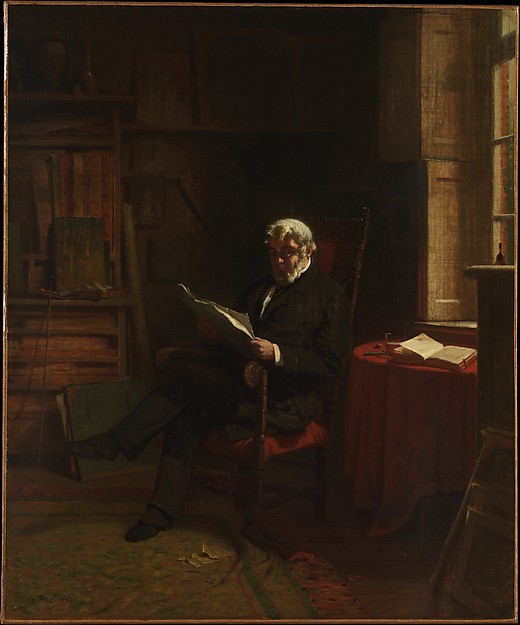
The Sleeping Scholar — F. Scott Hess

hess018

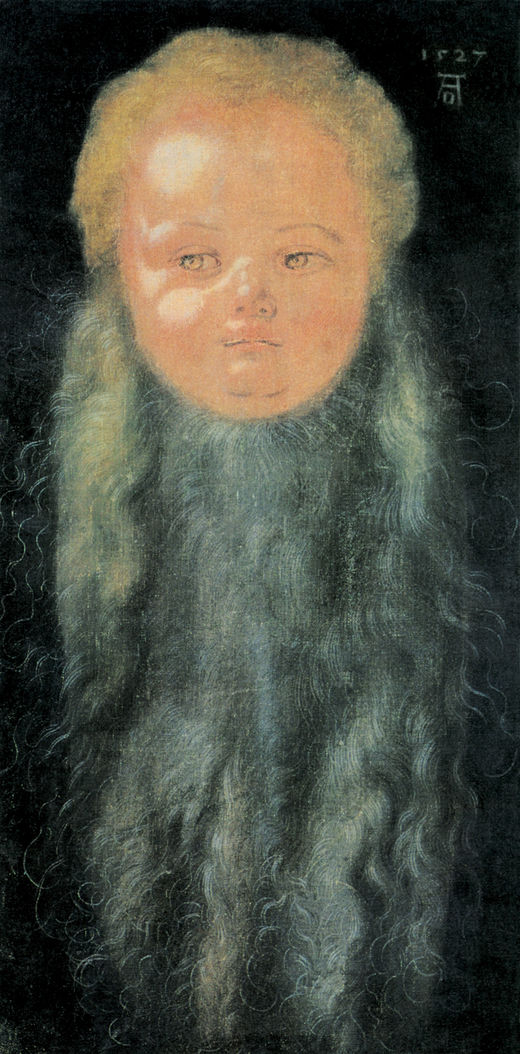
Portrait of a Boy with a Long Beard — Albrecht Durer

portrait-of-a-boy-with-a-long-beard

A short report from The Charterhouse of Parma

img_2734

Have you read Honoré de Balzac’s 1833 novel Eugénie Grandet?

I haven’t, but I’ve read the Wikipedia summary.

I’ve also read, several times, Donald Barthelme’s 1968 parody, “Eugénie Grandet,” which is very very funny.

Have you read  Stendhal’s 1839 novel The Charterhouse of Parma?

After repeated false starts, I seem to be finishing it up (I’m on Chapter 19 of 28 of Richard Howard’s 1999 Modern Library translation).

I brought up Eugénie Grandet (Balzac’s) to bring up “Eugénie Grandet” (Barthelme’s). Stendhal’s (1830’s French) novel Charterhouse keeps reminding me of Barthelme’s (1960’s American) short story “Eugénie Grandet,” which is, as I’ve said, a parody of Honoré de Balzac’s (1830’s French) novel Eugénie Grandet. Balzac and Stendhal are pre-Modernists (which is to say they were modernists, I suppose). Donald Barthelme wanted to be a big em Modernist; his postmodernism was inadvertent. By which I mean— “postmodernism” is just a description (a description of a description really, but let me not navelgaze).

Well and so: I find myself often bored with The Charterhouse of Parma and wishing for a condensation, for a Donald Barthelme number that will magically boil down all its best bits into a loving parody that retains its themes and storylines (while simultaneously critiquing them)—a parody served with an au jus of the novel’s rich flavor.

My frequent boredom with the novel—and, let me insert here, betwixt beloved dashes, that one of my (many) favorite things about Charterhouse is that it is about boredom! that phrases like “boredom,” boring,” and “bored” repeat repeatedly throughout it! I fucking love that! And Stendhal, the pre-Modernist (which is to say “modernist”), wants the reader to feel some of the boredom of court intrigue (which is not always intriguing). The marvelous ironic earnest narrator so frequently frequents phrases like, “The reader will no doubt tire of this conversation, which went on for like two fucking hours” (not a direct quote, although the word “fuck” shows up a few times in Howard’s translation. How fucking Modern!)—okay—

My frequent boredom with the novel is actually not so frequent. It’s more like a chapter to chapter affair. I love pretty much every moment that Stendhal keeps the lens on his naive hero, the intrepid nobleman Fabrizio del Dongo. In love with (the idea of) Napoleon (and his aunt, sorta), a revolutionist (not really), a big ell Liberal (nope), Fabrizio is a charismatic (and callow) hero, and his chapters shuttle along with marvelous quixotic ironic energy. It’s picaresque stuff. (Fabrizio reminds me of another hero I love, Candide). Fabrizio runs away from home to join Napoleon’s army! Fabrizio is threatened with arrest! Fabrizio is sorta exiled! Fabrizio fucks around in Naples! Fabrizio joins the priesthood! Fabrizio might love love his aunt! Fabrizio fights a duel! Fabrizio kills a man! (Not the duel dude). Fabrizio is on the run (again)! Fabrizio goes to jail! Fabrizio falls in love!

When it’s not doing the picaresque adventure story/quixotic romance thing (which is to say, like half the time) Charterhouse is a novel of courtly intrigues and political machinations (I think our boy Balzac called it the new The Prince). One of the greatest strengths of Charterhouse is its depictions of psychology, or consciousness-in-motion (which is to say Modernism, (or pre-modernism)). Stendhal takes us through his characters’ thinking…but that can sometimes be dull, I’ll admit. (Except when it’s not). Let me turn over this riff to Italo Calvino, briefly, who clearly does not think the novel dull, ever—but I like his description here of the books operatic “dramatic centre.” From his essay “Guide for New Readers of Stendhal’s Charterhouse:

All this in the petty world of court and society intrigue, between a prince haunted by fear for having hanged two patriots and the ‘fiscal général’ (justice minister) Rassi who is the incarnation (perhaps for the first time in a character in a novel) of a bureaucratic mediocrity which also has something terrifying in it. And here the conflict is, in line with Stendhal’s intentions, between this image of the backward Europe of Metternich and the absolute nature of those passions which brook no bounds and which were the last refuge for the noble ideals of an age that had been overcome.

The dramatic centre of the book is like an opera (and opera had been the first medium which had helped the music-mad Stendhal to understand Italy) but in The Charterhouse the atmosphere (luckily) is not that of tragic opera but rather (as Paul Valéry discovered) of operetta. The tyrannical rule is squalid but hesitant and clumsy (much worse had really taken place at Modena) and the passions are powerful but work by a rather basic mechanism. (Just one character, Count Mosca, possesses any psychological complexity, a calculating character but one who is also desperate, possessive and nihilistic.)

I disagree with Calvino here. Mosca is an interesting character (at times), but hardly the only one with any psychological complexity. Stendhal is always showing us the gears ticking clicking wheeling churning in his characters’ minds—Fabrizio’s Auntie Gina in particular. (Ahem. Excuse me–The Duchessa).

But Duchess Aunt Gina is a big character, perhaps the secret star of Charterhouse, really, and I’m getting read to wrap this thing up. So I’ll offer a brief example rather from (what I assume is ultimately) a minor character, sweet Clélia Conti. Here she is, in the chapter I finished today, puzzling through the puzzle of fickle Fabrizio, who’s imprisoned in her dad’s tower and has fallen for her:

Fabrizio was fickle; in Naples, he had had the reputation of charming mistresses quite readily. Despite all the reserve imposed upon the role of a young lady, ever since she had become a Canoness and had gone to court, Clélia, without ever asking questions but by listening attentively, had managed to learn the reputations of the young men who had, one after the next, sought her hand in marriage; well then, Fabrizio, compared to all the others, was the one who was least trustworthy in affairs of the heart. He was in prison, he was bored, he paid court to the one woman he could speak to—what could be simpler? What, indeed, more common? And this is what plunged Clélia into despair.

Clélia’s despair is earned; her introspection is adroit (even as it is tender). Perhaps the wonderful trick of Charterhouse is that Stendhal shows us a Fabrizio who cannot see (that he cannot see) that he is fickle, that Clélia’s take on his character is probably accurate—he’s just bored! (Again, I’ve not read to the end). Yes: What, indeed, could be more common? And one of my favorite things about Charterhouse is not just that our dear narrator renders that (common) despair in real and emotional and psychological (which is to say, um Modern) terms for us—but also that our narrator takes a sweetly ironic tone about the whole business.

Or maybe it’s not sweetly ironic—but I wouldn’t know. I have to read it post-Barthelme, through a post-postmodern lens. I’m not otherwise equipped.

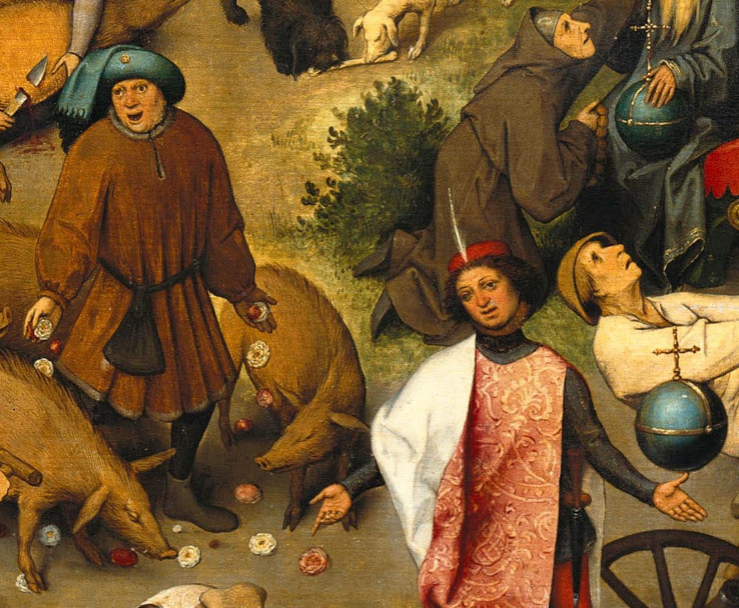
Netherlandish Proverbs (detail) — Pieter Bruegel the Elder

Screenshot 2016-06-26 at 11.31.01 AM

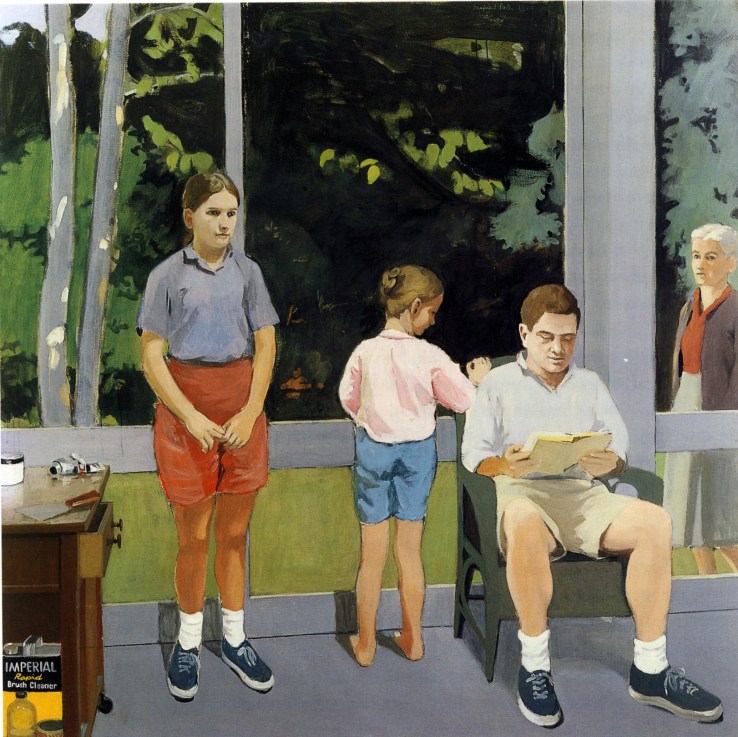
The Screen Porch — Fairfield Porter

porter1

Bored of Hell

img_3055

I am bored of Hell, Henri Barbusse’s 1908 novel of voyeurism.

Maybe I should blame the 1966 English translation (from the French) by Robert Baldick, which often feels stuffily stuffy for a book about “childbirth, first love, marriage, adultery, lesbianism, illness, religion and death” (as our dear translator puts it in his brief preface). Maybe I should blame it on Baldick, but that seems rash and wrong, and I have no basis of comparison, do I?

So I blame it on myself, this boredom of Hell.

Why write then? Why not write it off, rather, which is to say, do not write—I don’t know.

I’m bored with Hell and there are half a dozen novels I’ve recently  read (or am reading) that I should commend, recommend, attempt to write about—but here I am bored of Hell, and writing about it. Maybe it’s—and the it here refers to writing about Hell, a book I confesss a boredom of—maybe it’s because I’ve allowed myself over the last few days to good lord skim the goddamned infernal thing, not skimming for a replenishing sustenance, but rather looking for the juicy fat bits, the best bits, in the same way a teenaged version of myself skimmed Henry Miller and Anaïs Nin in a powerful sweat.

(I was a teenage cliché).

Maybe it’s that the best bits of Hell weren’t juicy enough. (In this novel, an unnamed narrator espies all sorts of sensual (and nonsensual) shenanigans through a small hole in his hotel room). Or maybe the juicy bits were juicy, but the translation dried them out. So many of the sentences made me want to close the book. But it’s unfair for me to write this, I suppose, without offering a sample. Here, from early in the novel, is an excerpt that did make me want to keep going:

The mouth is something naked in the naked face. The mouth, which is red with blood, which is forever bleeding, is comparable to the heart: it is a wound, and it is almost a wound to see a woman’s mouth.

And I begin trembling before this woman who is opening a little and bleeding from a smile. The divan yields warmly to the embrace of her broad hips; her finely-made knees are close together, and the whole of the centre of her body is in the shape of a heart.

…Half-lying on the divan, she stretches out her feet towards the fire, lifting her skirt slightly with both hands, and this movement uncovers her black-stockinged legs.

And my flesh cries out…

Those last ellipses were mine. Did you want more? I did, I admit. And yet after 50 pages, I grew bored. The voyeurism was boring—sprawling. Perhaps I’m lazy. Perhaps I want my voyeurism condensed. Maybe…weirder. I don’t know. Reader, I skimmed. I skimmed, like I said, for morsels—but also to the end, the the final chapter, to the final exquisite not boring paragraph, which I’ll share with you now before “I have done,” as the narrator states in this final section. Promised paragraph:

I believe that confronting the human heart and the human mind, which are composed of imperishable longings, there is only the mirage of what they long for. I believe that around us there is only one word on all sides, one immense word which reveals our solitude and extinguishes our radiance: Nothing! I believe that the word does not point to our insignificance or our unhappiness, but on the contrary to our fulfillment and our divinity, since everything is in ourselves.

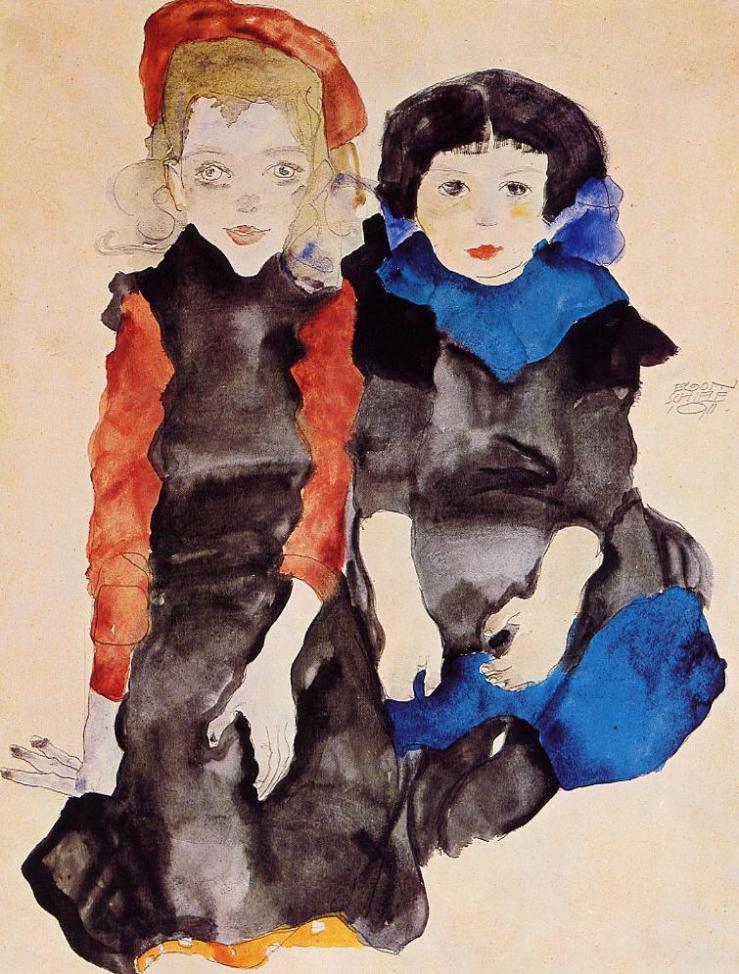
Two Little Girls — Egon Schiele

two-little-girls-1911

The Morning Paper — John Ferguson Weir

dp211998

Sonic Youth live in Düsseldorf, Germany, 1996

Sonic Youth live in Düsseldorf, Germany in April of 1996. As my buddy Nick points out in the email he sent me with this link: “ridiculously good quality and a killer setlist.”

Continue reading “Sonic Youth live in Düsseldorf, Germany, 1996”

You’re Not Boring Anymore — Tomer Hanuka

youre_not_boring_72

Three Books

img_3030

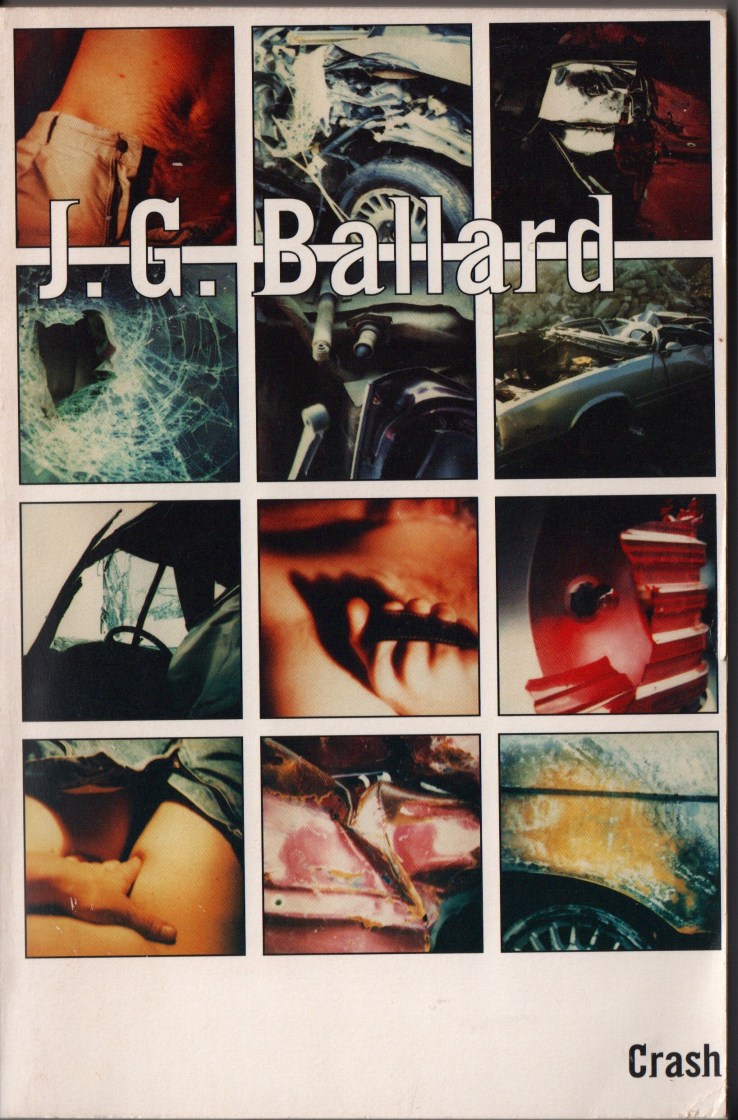
Crash by J.G. Ballard. 1994 trade paperback by Noonday (FS&G). Cover design by Michael Ian Kaye and Melissa Hayden.

I had a redneckish college roommate who was way into cars, so I encouraged him to watch Cronenberg’s adaptation of Crash with me, which he did. He was a nice guy. He watched all of it with me and our other roommate. The rest of the year he would joke, “Hey, let’s go crash this car and have sex!”

img_3031

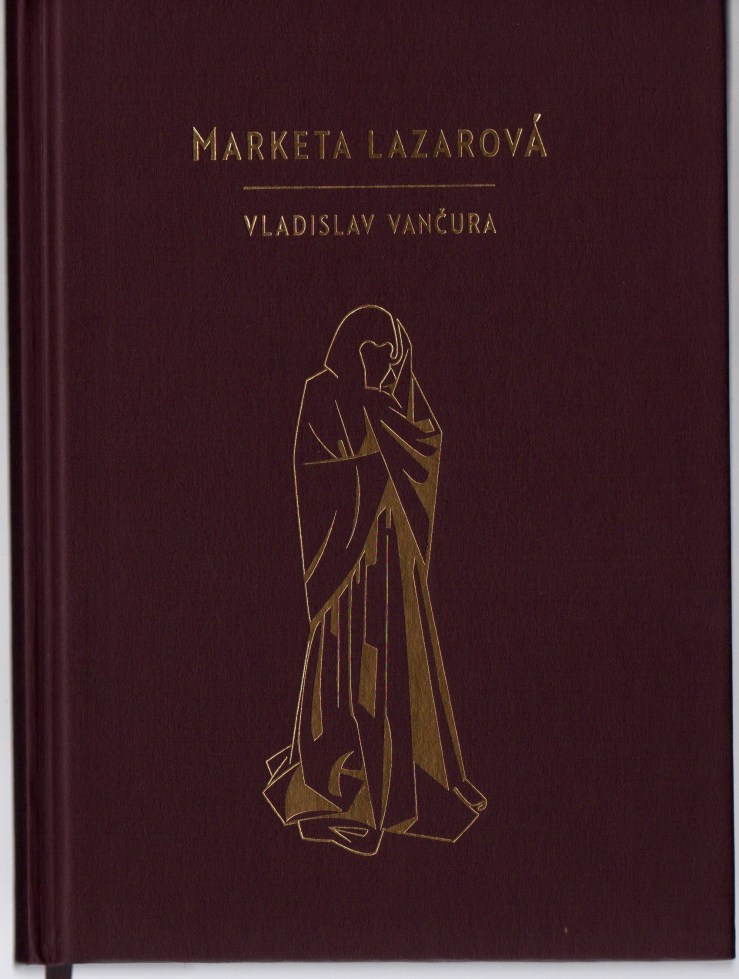
Marketa Lazarova by Vladislav Vančura. (First) English translation by Carleton Bulkin. First edition hardback by Twisted Spoon Press, 2016. Cover by Dan Mayer. A strange and often violent tale of multiple kidnappings and medieval intrigues, Marketa Lazarova reminds me of Le Morte D’Arthur, Nanni Balestrini’s Sandokan (both in its evocations of brutality and in its marvelous poetic prose), Aleksei German’s film Hard to Be a God, Bergman’s film The Virgin Spring, Bolaño’s sweetly ironic narrators, and, uh, Game of Thrones.

img_3029

Masquerade by Kit Wiliams. Eighth edition hardback from Shocken, 1981. While no designer is credited, the cover is obviously one of Williams’s lovely paintings. A puzzle book, a treasure hunt.

Netherlandish Proverbs (detail) — Pieter Bruegel the Elder

Screenshot 2016-06-26 at 11.28.33 AM

RIP Alan Vega

Nostalgia for a past that never existed

The empty frame where the image of the author is supposed to be (Elena Ferrante)

Evidently, in a world where philological education has almost completely disappeared, where critics are no longer attentive to style, the decision not to be present as an author generates ill will and this type of fantasy. The experts stare at the empty frame where the image of the author is supposed to be and they don’t have the technical tools, or, more simply, the true passion and sensitivity as readers, to fill that space with the works. So they forget that every individual work has its own story. Only the label of the name or a rigorous philological examination allows us to take for granted that the author of Dubliners is the same person who wrote Ulysses andFinnegans Wake. The cultural education of any high school student should include the idea that a writer adapts depending on what he or she needs to express. Instead, most people think anyone literate can write a story. They don’t understand that a writer works hard to be flexible, to face many different trials, and without ever knowing what the outcome will be.

Elena Ferrante in her Paris Review interview, 2015.

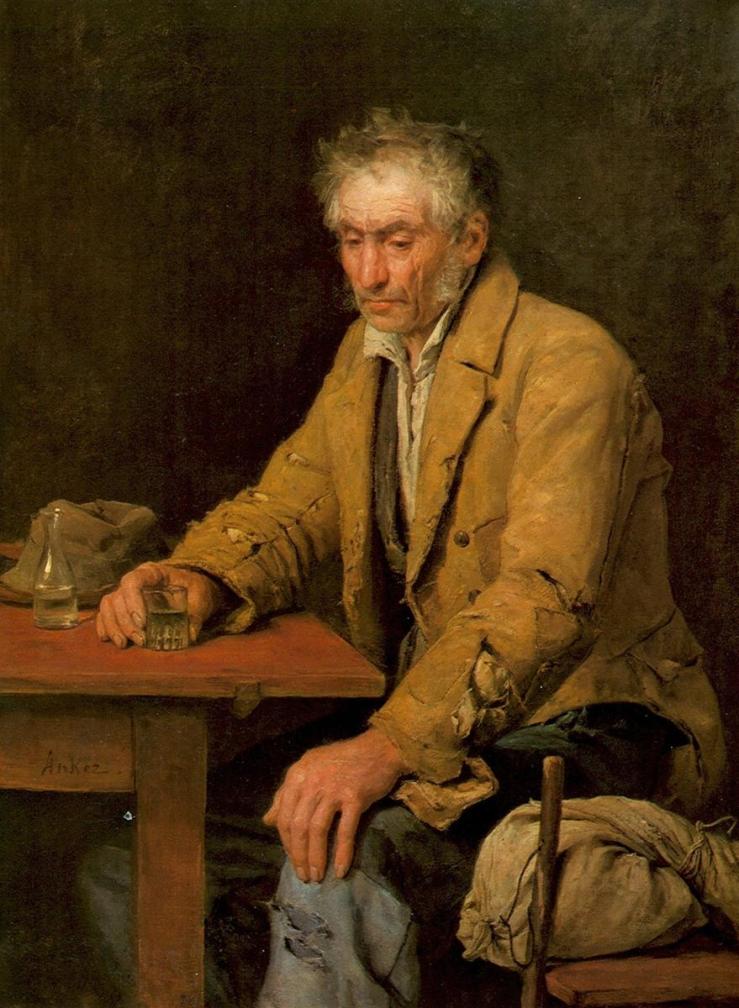
The Drinker — Albert Anker

der-trinker-1868hd