The Recognitions (Part I) — William Gaddis

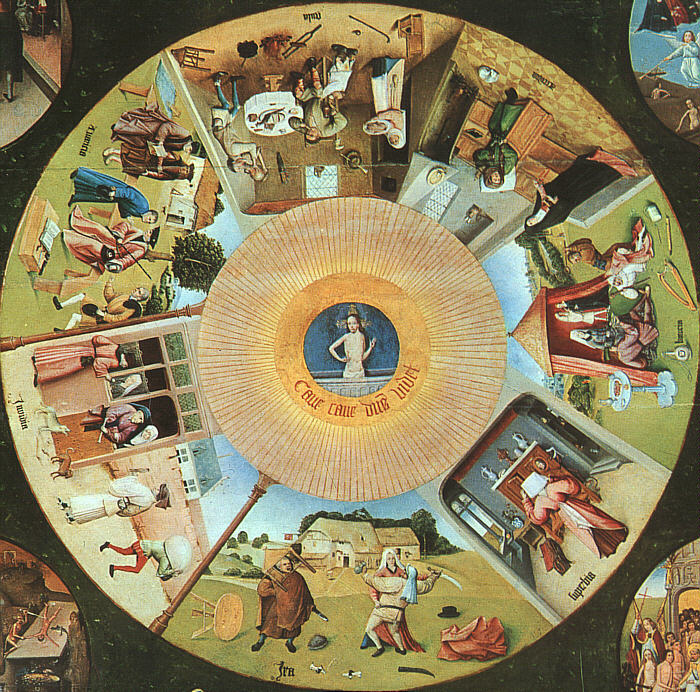
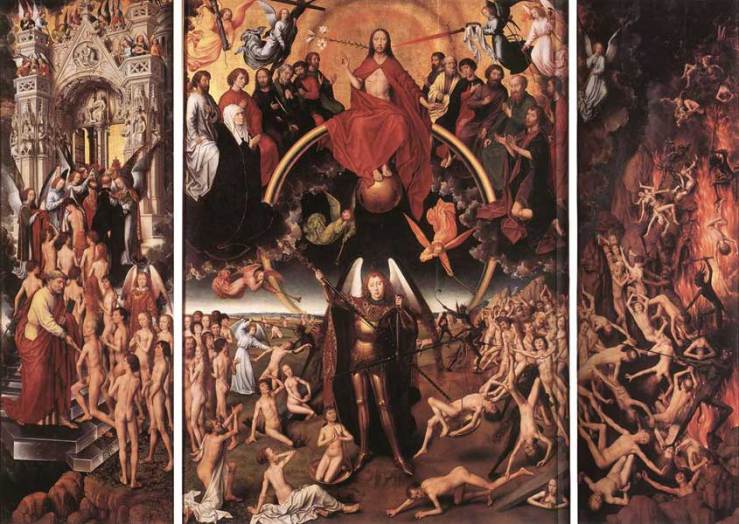
In William Gaddis‘s massive first novel, The Recognitions, Wyatt Gwyon forges paintings by master artists like Hieronymous Bosch, Hugo van der Goes, and Hans Memling. To be more accurate, Wyatt creates new paintings that perfectly replicate not just the style of the old masters, but also the spirit. After aging the pictures, he forges the artist’s signature, and at that point, the painting is no longer an original by Wyatt, but a “new” old original by a long-dead genius. The paintings of the particular artists that Wyatt counterfeits are instructive in understanding, or at least in hoping to understand how The Recognitions works. The paintings of Bosch, Memling, or Dierick Bouts function as highly-allusive tableaux, semiotic constructions that wed religion and mythology to art, genius, and a certain spectacular horror, and, as such, resist any hope of a complete and thorough analysis. Can you imagine, for example, trying to catalog and explain all of the discrete images in Bosch’s triptych, The Garden of Earthly Delights? And then, after creating such a catalog, explaining the intricate relationships between the different parts? You couldn’t, and Gaddis’s novel is the same way. I’ve finished the first of the novel’s three parts, 277 of 956 pages, and I’m going to go out on a limb and guess that the Gaddis has structured the novel as a triptych. The first part, like Bosch’s painting, The Seven Deadly Sins, is comprised of seven sections.
bosch16
The Seven Deadly Sins – Hieronymous Bosch

Early in The Recognitions, teenage Wyatt copies The Seven Deadly Sins–his father owns the original, a painted table top he purchased in Europe. Wyatt replaces the original with his own and gets away with this strange crime–no small feat considering the genius of his father, the Rev. Gwyon, a New England priest who, after the death of his wife at sea, comes to reject the austere puritanism of his order and embrace (much to the consternation of his dwindling congregation) a pluralistic religious world view. In one of many stunning passages centering on Gwyon and religion, the congregation is “stirred with indignant discomfort after listening to the familiar story of virgin birth on December twenty-fifth, mutilation and resurrection, to find they had been attending, not Christ, but Bacchus, Osiris, Krishna, Buddha, Adonis, Marduk, Balder, Attis, Amphion, or Quetzalcoatl.” This series of substitutions enacts a chain of recognitions, and, in a sense, compartmentalizes much of the thematic material of the novel: What is it to be a hero, a redeemer, a savior? What is originality, and how does one recognize it? Who originates whom? What does it mean to create? How is art separate from religion? Clearly, these are not simple questions, and The Recognitions is not a simple book.

Triptych with the Martyrdom of St. Hippolytus -- Dierck Bouts and Hugo van der Goes
Triptych with the Martyrdom of St. Hippolytus — Dierck Bouts and Hugo van der Goes

In order to pose (and perhaps offer varying answers to) these questions, Gaddis employs daring, richly detailed prose, larded with esoteric (and not so esoteric) references to mythology, religion, art, music, and literature. Like the discrete sections of Bosch’s Sins, each of the chapters of the first section of The Recognitions has its own distinct idiom, comportment, and rhythm; yet, even as Gaddis’s approaches seem discontinuous from chapter to chapter, these coalesce to a larger picture.

The first chapter is the best first chapter of any book I can remember reading in recent years. It tells the story of Rev. Gwyon looking for solace in the Catholic monasteries of Spain after his wife’s death at sea under the clumsy hands of a fugitive counterfeiter posing as a doctor (already, the book posits the inherent dangers of forgery, even as it complicates those dangers by asking who isn’t in some sense a phony). There’s a beautiful line Gaddis treads in the first chapter between pain, despair, and melancholy and caustic humor, as Gwyon slowly realizes the false limits of his religion. The chapter continues to tell the story of young Wyatt, growing up under the stern care of his puritanical Aunt May, whose religious attitude is confounded by the increasingly erratic behavior of Wyatt’s often-absent father. While deathly ill, Wyatt teaches himself to paint by copying masterworks. He also attempts an original, a painting of his dead mother, but he cannot bear to finish it because, as he tells his father, “There’s something about . . . an unfinished piece of work . . . Where perfection is still possible. Because it’s there, it’s there all the time, all the time you work trying to uncover it.” This problem of originality, of Platonic perfection guides much of the novel’s critique on Modernism.
memling_oordeel
The Last Judgment – Hans Memling

Wyatt studies but ultimately rejects the ministry, opting instead to become an artist. The second chapter finds him in Paris, attempting to sell his original work. The chapter is a bravura shift into the sounds, sights, and consciousness of another world, another distinct mythology–ex-patriot Paris, Hemingway’s Paris, Woolf’s Paris. Gaddis shows a heavy debt to James Joyce‘s innovations in Ulysses here (and throughout the book, of course), although it would be a mistake to reduce the novel to a mere aping of that great work. Rather, The Recognitions seems to continue that High Modernist project, and, arguably, connect it to the (post)modern work of Pynchon, DeLillo, and David Foster Wallace. (In it’s heavy erudition, numerous allusions, and complex voices, the novel readily recalls both W.G. Sebald and Roberto Bolaño as far as I’m concerned). By the third chapter we find Wyatt married, quite unhappily, producing hack work, copies he lets his boss put his name on. The chapter is painful and often ugly, as we see his marriage disintegrate. In this chapter he meets Recktall Brown, the Mephistophelean business man who will arrange Wyatt’s future career as a counterfeiter of original paintings. As the chapter ends, Wyatt is no longer referred to by his name, a device that continues throughout the rest of part one (and perhaps the whole book). It’s as if he’s lost something intrinsic, some core originality in exchange for the ability to “become” the artist he is emulating. Wyatt now disintegrates into the background of the narrative, and is exchanged for a young Harvard grad named Otto. Otto follows Wyatt around like a puppy, writing down whatever he says, absorbing whatever he can from him, and eventually sleeping with his wife. Otto is the worst kind of poseur; he travels to Central America to finish his play only to lend the mediocre (at best) work some authenticity, or at least buzz. He fakes an injury and cultivates a wild appearance he hopes will give him artistic mystique among the Bohemian Greenwich Villagers he hopes to impress. In the fifth chapter, at an art-party, Otto, and the reader, learn quickly that no one cares about his play–everyone’s busy making their own original art. Gaddis’s evocation of a Village party in the late forties/early fifties here is wonderful, fly-on-the-wall stuff. His rhetoric captures the buzzing musicality of a raucous house party, and even if his mockery of the assembled artists, critics, and wannabes is savage, it’s also loving. Gaddis has an astute ear for the mid-twentieth century, where gossip infiltrates debate on aesthetics, and commercials punctuate classical scores on the radio.

Wyatt (unnamed) returns for the seventh (and longest) chapter of part one. He’s been very successful at his work, although he seems not to care at all for the money he’s making. Instead, he seems obsessed with channeling these ancient masters, for only in this pre-modern world is originality possible. Of course, the levels of irony are confounding here: Wyatt’s only access to originality is to pretend to be another person. The originality of the paintings he creates is subject to the condition that they be not original to him (their creator) but to another. While this attack on Modernity–namely, that originality is impossible–is severe, it’s also worth noting that Gaddis’s writing enacts originality, even as it cobbles together disparate sources. This is what makes the novel such an addictive pleasure to read. While I cannot make any final claims about a novel before finishing it, I will go out on another limb and suggest that those who already own this novel and have not yet made a crack at it for fear of its massive size and allusive structure should go ahead and take it up: it’s dark, erudite, sad, and very, very funny. It’s also not that hard to read, and if the allusions get too dense, there’s always Steven Moore‘s fantastic resource, A Reader’s Guide to William Gaddis’s The Recognitions, now available in its entirety online. Have at it. More when I finish Part II.
The Music of Pynchon’s Inherent Vice

Thomas Pynchon‘s latest novel, Inherent Vice is loaded with musical references–the radio’s always buzzing, bands are always hammering out jams, and hero Doc Sportello is always singing a verse or two. Wouldn’t it be cool if someone would take the time to make a playlist of all the tunes in the book? Okay, that was a lame set-up. Obviously somebody did take the time, and according to the text accompanying the original list at Amazon (yeah, I’m shamelessly cutting and pasting and also saving you time), “the playlist that follows is designed exclusively for Amazon.com, courtesy of Thomas Pynchon.” Hmmmm…wonder if Pynchon made the list himself–after all, he writes his own book jacket blurbs, and he even narrated the trailer for Inherent Vice. Pretty cool. Links go to downloads (not free, sorry) or artist pages. In cases of no links, the band or artist is one of Pynchon’s original creations (although we’d really, really love to hear “Soul Gidget,” or really anything by Meatball Flag). Bonus vid after the list.

Road House, Paul Verhoeven, Modern Action Films, and The Ironic Vision of the Viewer

road house

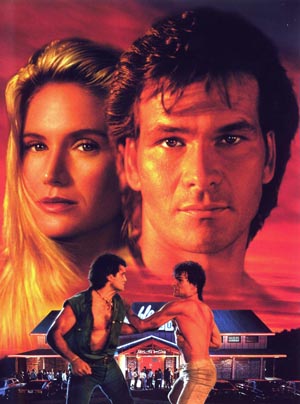
Twenty years after its release, Rowdy Herring’s neo-western Road House holds up better than ever. The film stars an iconic Patrick Swayze as a philosophical cooler named Dalton hired to clean up a road house bar. In this process, Swayze’s Dalton discovers that the small town is under the thumb of the bullying gangster Brad Wesley (played with zealous malice by Ben Gazzara). Dalton cleans up, kicking ass without bothering to take names, and leaving a not-unsubstantial body count. This short plot review in no way conveys the brilliance of this film, which can’t really be captured in words–Road House must be witnessed. You have to see the rampant brawling, hear the awesome dialog (sample: “Pain don’t hurt), experience the spectacle that is Road House. That said, not everyone can appreciate what’s going on here: it merits a 5.7 out of 10 at IMDB and a 42% at Rotten Tomatoes. In short, the film is divisive. In his original review of the film, Roger Ebert wrote, “Road House exists right on the edge between the “good-bad movie” and the merely bad. I hesitate to recommend it, because so much depends on the ironic vision of the viewer.” A careful reading of Ebert’s review reveals that he really enjoyed the film. “Was it intended as a parody?” he asks. “I have no idea, but I laughed more during this movie than during any of the so-called comedies I saw during the same week.”

Ebert’s question of intentionality is instructive (if not ultimately that important). Any savvy viewer–especially those with a fine-tuned sense of “ironic vision”–will have to ask herself whether director Rowdy Herring and his crew meant to create such a sublime parody, or if the resulting masterpiece is just a happy accident. The simple answer to the question is that it doesn’t really matter, of course, but I still find it a curious issue of aesthetics, especially in light of a new breed of action films that are particularly self-aware. These include Jason Statham’s Crank films (2006 and 2009), movies that ask the viewer to suspend any rudimentary understanding of physics in exchange for ninety-minute doses of adrenaline overdrive. I’ve actually just described most Statham vehicles, but it’s the knowingness of the Crank movies that make them such a joy: part of the joke is that the film recognizes its ludicrousness. The Cranks want to make sure that the audience gets that they get that the audience is getting what the films are getting at. 2007’s Shoot ‘Em Up, starring Clive Owen and Paul Giamatti operates on the same principle. Shoot ‘Em Up is a series of action set pieces so ridiculous that the phrase “over the top” doesn’t even begin to function as a critique (during one of the film’s many, many gun battles, Owen’s character delivers a baby and then cuts the umbilical cord by shooting it). In a sense, films like Shoot ‘Em Up and Crank operate outside of any normal critique, including not just visual cues but also dialog to announce their parodic intent (Giamatti’s villain exclaims that “Violence is one of the most fun things to watch,” at one point). This isn’t to say that it’s impossible to be critical of such films (it’s very, very possible, actually), just that the films incorporate a sort of generational “ironic vision” of their audience as part of the viewing experience.

Indeed, these films count their success on the audience’s ability to “get”–and appreciate–the irony being conveyed. While action films have long used irony and meta-fictional devices as part of their vocabulary, those devices have usually been an invitation to the viewer to deepen his or her fantastical identification with the film. 1993’s Schwarzenegger vehicle The Last Action Hero is a consummate example here; in this dreadful film an action hero comes to life at the behest of a young boy who becomes a surrogate for the audience. The meta-troping here isn’t so much ironic; rather, it’s just another reification of hero-spectacle-audience dynamics. Films like Shoot ‘Em Up and Crank, in contrast, ultimately disconnect the heroic-identification most traditional action movies strive for. This isn’t to say that the audience member’s ironic vision prevents him or her from living vicariously for 90 minutes through the hero (or, more accurately, anti-hero)–it’s just that the vicarious, distorted nature of the identification is always on display. Put another way, Shoot ‘Em Up, Crank, and other movies that fit this mold (these might include Tony Scott’s unfairly maligned 2005 film Domino, 2008’s Death Race, 2007’s Smokin’ Aces, and even Robert Rodriguez’s Planet Terror (although surely that particular film is a separate discussion)) invite their audiences to both revel in and mock the conventions of heroic narrative filmmaking. These films take place entirely within scare quotes; there’s no danger that their irony might be misinterpreted. Only the most callow of viewers will not “get” the intentionality of parodic irony here (contrast Ebert’s unconfused review of Shoot ‘Em Up with his questioning of Road House; there’s not a hint of nervousness that the silliness of the latter might be unintentional). These films wink so often at the viewer that the gesture becomes a distracting nervous tic.

While I have a certain fondness for the parodic, ironic action films I’ve mentioned, I have to admit that their greatest failure is, ironically, their defining characteristic. They announce their parodic content at all times, squashing any of the anxieties about intention that a viewing of Road House engenders, and, in doing so, they lose an unqualifiable, unquantifiable joy. The greatest parodies never announce themselves as such, and thus create a contradictory balance of trust and anxiety from savvy viewers. In my estimation, no one does this better than director Paul Verhoeven, auteur behind Robocop, Starship Troopers, and Showgirls. Verhoeven’s films are doubly generous: on one hand, they function beautifully as straightforward Hollywood fare; on the other hand, with the assistance of a particular ironic vision, they are brilliant satires of not just culture and politics, but also of the very art of filmmaking and the implicit contract between film and audience. In contrast with the studied irony of certain latter day action movies, the films of Verhoeven don’t blink, let alone wink at their audience, making the irony that much more delicious. Road House, without the benefit of a director with the oeuvre of Verhoeven, is certainly one of the most quizzical documents of the late eighties. Is the film self-aware? Swayze’s winning performance gives nothing away, allowing the audience to fully identify with his rampant bad-assery. There is no simple answer to the question the film must prompt to any contemporary viewer, just as it did to Ebert in 1989: “Is this for real?” It’s that anxiety of indulgence, of undecidability, this central ambiguity that makes Road House such a joy to watch. The film does not force you to watch it through any particular ideological lens. Celebrate Road House‘s 20th anniversary by giving it a proper re-viewing; whether you bring your ironic vision is up to you.

William Burroughs Speaks

OBIT BURROUGHS

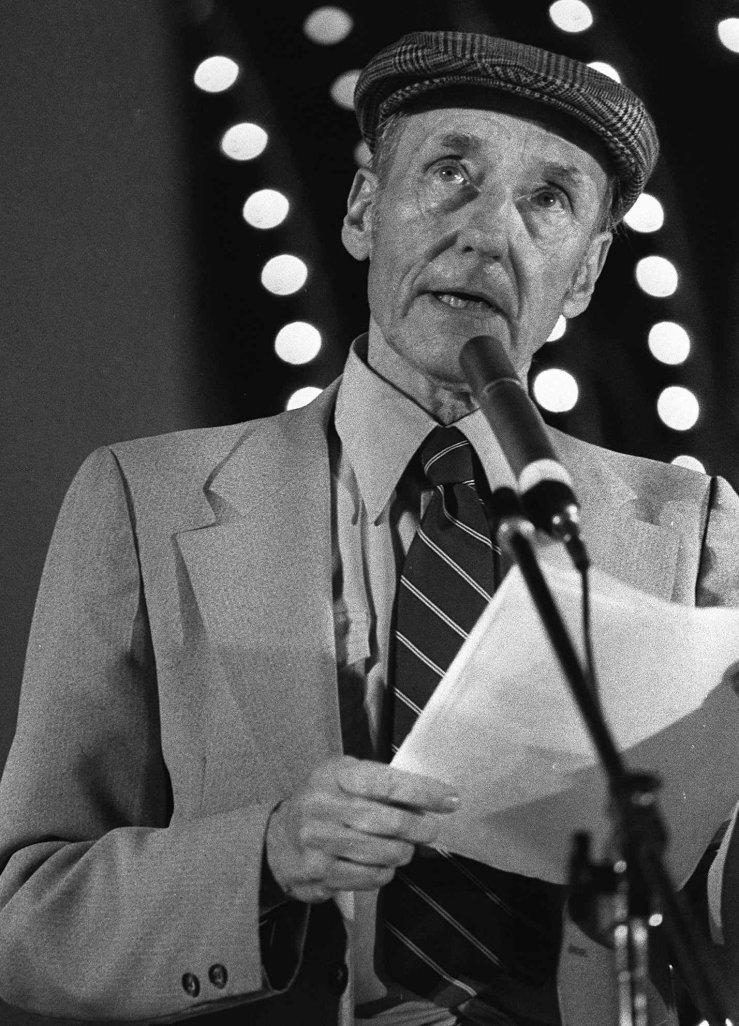
There are some great downloads available at Naropa University’s Internet Archive, including some lucid-but-still-weird lectures from William Burroughs. We highly recommend Burroughs’s 1979 lecture on creative reading, where he dissects Conrad and Gysin among others, waxes on heroic tropes, and talks about assassins. Also good is a 1980 forum on public discourse (Ginsberg introduces and sticks around). Good stuff.

Historic Photos of University of Florida Football–Kevin McCarthy

UFA-uapc8859

Prejudices up front: not only did I attend the University of Florida, but so did my parents, my wife, and many of my lifelong friends. I was raised on Gator football, and some of my family members, when cut, are known to bleed orange and blue. I think that Tebow is something of a national treasure (surely, had not Clinton succeeded in freeing journalists Euna Lee and Laura Ling from a North Korean labor camp, we would’ve sent Tebow), and I acted like a silly fool when I got to meet Urban Meyer last year (he was recruiting players at the high school where I teach English). Not only am I predisposed to liking a book like Historic Photos of University of Florida Football, I also happen to be a former student of the author, University of Florida professor Kevin McCarthy (I will never forget him calling me over to his desk after class one morning, poking me in the chest and commanding me, “Come to class!”).

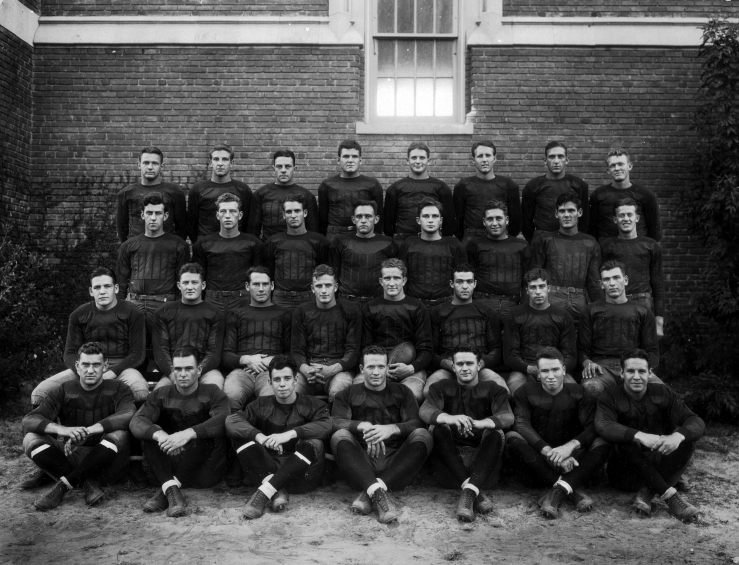
So, yeah, it’s possible that I’m enthusiastically biased about a book combining archival photos of the Gators with insightful text and captions. Fans of the Florida State Seminoles probably know that this book isn’t for them upfront, but that’s okay. True Gator fans will not be disappointed. Historic Photos of University of Florida Football (new from Turner Publishing) is as much a history text is it is a survey of Gator football, following a team from its humble origins at the turn of last century (McCarthy informs us that “its 1904 team in Lake City was outscored 224-0,”) to its present glories as National Champions.

1930 UF Homecoming
1930 UF Homecoming

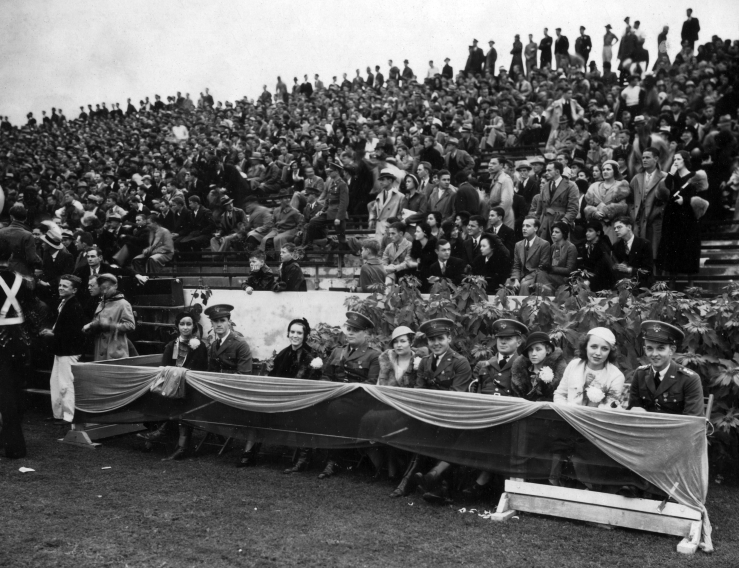
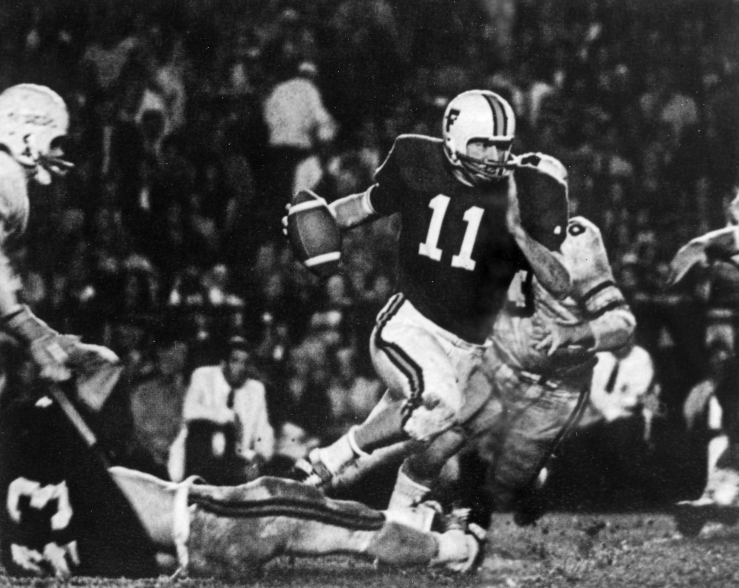
Most of the book chronicles the early days of Florida football (over half of the 200 images date from before 1960), and while some fans might be disappointed in a lack of more recent photographs, it’s worth pointing out that in our current media-saturated age it’s not so hard to come by these. Far more interesting are pics of the old days, with sweatered all-male cheerleading squads, bulky leather helmets, and folks dressed up to the nines to go to a football game (if you’ve ever lived in Gainesville you know that even in October a suit jacket, let alone a tie and pants, are pretty uncomfortable). Many of these photos capture the energy and intensity of the game, as well as a sense of nostalgia for a time when college football wasn’t so commercialized.

Steve Spurrier, 1965

The images collected here transmit a love for both the Florida Gators, as well as a sense of respect for the traditions of college football in general. As the Gators’ indomitable legacy grows, surely this book will one day be referred to as “Volume I,” as there are plenty more touchdowns to be scored, games to be won, and historical moments to be made. Recommended for Bull Gators everywhere.

No Great Book Is Explicable

About the same time I was finishing up James Wood’s How Fiction Works, I was also beginning William Gaddis‘s massive tome The Recognitions. So far the book is fantastic–I’m about 180 pages in–but it’s (very, very) long and there’s a big stack of upcoming releases here that needs to be digested for review, so who knows if I’ll finish it anytime soon. Anyway, I thought this notation from William H. Gass‘s brilliant introduction does a fantastic job of speaking to both the limits of literary criticisms (like Wood’s) as well as underscoring the value of reading–and rereading:

No great book is explicable, and I shall not attempt to explain this one. An explanation–indeed, any explanation–would defile it, for reduction is precisely what a work of art opposes. Easy answers, convenient summaries, quiz questions, annotations, arrows, highlight lines, lists of its references, the numbers of its sources, echoes, and influences, an outline of its design–useful as sometimes such helps are–nevertheless seriously mislead. Guidebooks are useful, but only to what is past. Interpretation replaces the original with the lamest sort of substitute. It tames, disarms. “Okay, I get it,” we say, dusting our hands, “and that takes care of that.” “At least I understand Kafka” is a foolish and conceited remark.

Philip Guston Literally Paints Gass
Philip Guston Literally Paints William H. Gass

Inherent Vice Trailer

Trailer for Thomas Pynchon’s new novel, Inherent Vice. Is it weird that books have trailers now? Not sure…

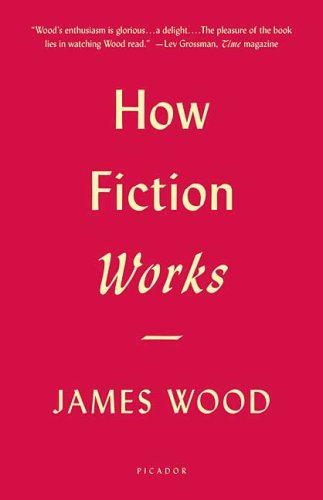
How Fiction Works — James Wood

howfiction

Literary critic and Harvard professor James Wood’s How Fiction Works, new in trade paperback from Picador, argues that “fiction is both artifice and verisimilitude, and that there is nothing difficult in holding together these two possibilities.” This thesis is rather broad, and really not so controversial; I’d certainly agree with it. It’s when Wood goes about showing how fiction successfully or unsuccessfully artfully represents reality that I find myself shouting at his text.

Not that I didn’t know that we were going to butt heads (to misapply a metaphor) before I began reading. After all, I was familiar enough with Wood’s aesthetic approach to literary criticism, one that eschews any notions of ideological underpinnings of a novel. In concrete terms, this means that all those discourses so (apparently) fashionable in English departments are out–you know, Marxist critiques, French deconstruction, post-colonial studies, gender readings, all that stuff. How wonderfully freeing for Wood to dispense with the baggage of history and ideology! Of course, certain novelists have felt the need to respond to these ideas, even if Wood hasn’t, leading our critic to deride a whole “genre” of “hysterical realism.” I happen to like a lot of this so-called “hysterical realism”: Pynchon, DeLillo, and David Foster Wallace spring to mind (Wood takes Wallace to task a few times in How Fiction Works, arguing that Wallace’s pseudo-business speak in “The Suffering Channel” is “fairly ugly, and a bit painful for more than a page or two”). Wood’s attack on “hysterical realism” centers on his claim that such novels privilege a (failed) attempt at a global, historical perspective at the cost of intimacy and human communication. The aesthetics here, for Wood, are precisely about how to accurately and intimately portray the world. To this end, Wood, favors writers like Henry James, Gustave Flaubert, and Chekov, and he spends much of How Fiction Works illustrating how marvelously these writers employ what he calls “free indirect style,” a type of narration where the lines between author’s and the character’s language are perfectly blended.

That Wood spends so much time on Flaubert and James (he devotes five pages to the latter’s ingenious use of the adverb “embarrassingly”) is telling when one considers the authors not represented in this book. While no literary critic should be condemned for not including every writer under the sun, it would be helpful if a book ostentatiously titled How Fiction Works took a look at something besides the work of dead white men. But there I go again, suggesting that ideology has some function in literature. Maybe I’m reaching here–to be fair, if Toni Morrison doesn’t even warrant a mention in Wood’s canon, then neither does Nathaniel Hawthorne (in fact, How Fiction Works is remarkably light on American writers in general–Melville only warrants a passing mention).

More disturbing than Wood’s limited pool of authors is his disingenuous claim that this book is for a common, everyday reader. With a hint of the anxiety of influence, he remarks that his hero Roland Barthes “does not write as if he expects to be read and comprehended by any kind of common reader,” but it must be noted that Wood will have lost anyone not fairly conversant with the history of literature by his first twenty pages.Hopefully, students new to literature will avoid Wood’s book and read something friendlier and more helpful, like Thomas C. Foster’s How To Read Literature Like a Professor.

Did I forget to mention in all of this that I liked reading this book? Like most people who love to read, both academically and for pleasure, I like a good argument, and Wood’s aesthetic criticism is a marvelous platform for my ire, especially in a world that increasingly seems to not care about reading fiction. Wood is a gifted writer, even if his masterful skill at sublimating his personal opinion into a front of absolute authority is maddening. There’s actually probably more in his book that I agree with than not, but it’s those major sticking points on literary approaches that stick in my craw. It’s also those major sticking points that make the book an interesting read. I’d like to think that I’m not interested in merely having my opinions re-confirmed. I’d recommend How Fiction Works with the caveat that the reader not fall victim to Wood’s forceful rhetoric, to the erroneous assumption that Wood’s aesthetic values somehow trump one’s own. Read this book, but don’t mistake it for a substitute for the real education that great novels can provide. “I am really talking about the real, which is at the bottom of my inquiries,” writes Wood in his introduction, but make no mistake, Wood cannot transmit the real in his criticism. It can only be found in reading the sources yourself.

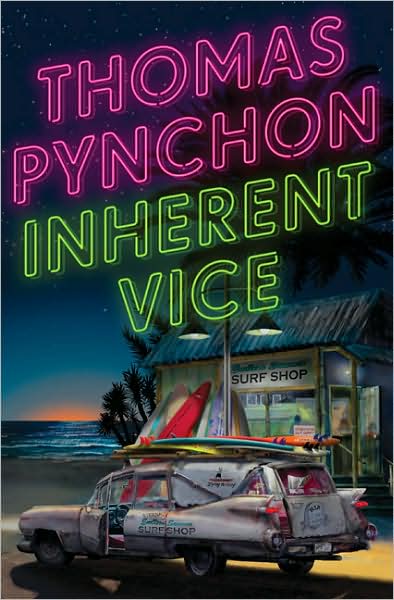
Inherent Vice — Thomas Pynchon

inherent_vice

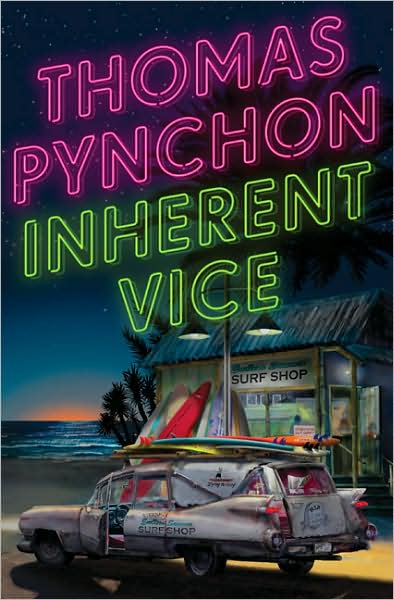
Thomas Pynchon’s latest novel, Inherent Vice is a detective-fiction genre exercise/parody set in a cartoonish, madcap circa-1970 L.A. redolent with marijuana smoke, patchouli, and paranoia. Navigating this druggy haze is private detective Doc Sportello, who, at the behest of his ex-girlfriend, searches for a missing billionaire in a plot tangled up with surfers, junkies, rock bands, New Age cults, the FBI, and a mysterious syndicate known as the Golden Fang–and that’s not even half of it. At a mere 369 pages, Inherent Vice is considerably shorter than Pynchon’s last novel Against the Day, not to mention his masterpieces Gravity’s Rainbow and Mason & Dixon, and while it might not weigh in with those novels, it does bear plenty of the same Pynchonian trademarks: a strong picaresque bent, a mix of high and low culture, plenty of pop culture references, random sex, scat jokes, characters with silly names (too many to keep track of, of course), original songs, paranoia, paranoia, paranoia, and a central irreverence that borders on disregard for the reader. And like Pynchon’s other works, Inherent Vice is a parody, a take on detective noir, but also a lovely little rip on the sort of novels that populate beaches and airport bookstores all over the world. It’s also a send-up of L.A. stories and drug novels, and really a hate/love letter to the “psychedelic 60s” (to use Sportello’s term), with much in common with Pynchon’s own Vineland (although comparisons to Elmore Leonard, Raymond Chandler, The Big Lebowski and even Chinatown wouldn’t be out of place either).

While most of Inherent Vice reverberates with zany goofiness and cheap thrills, Pynchon also uses the novel as a kind of cultural critique, proposing that modern America begins at the end of the sixties (the specter of the Manson family, the ultimate outsiders, haunts the book). The irony, of course–and undoubtedly it is purposeful irony–is that Pynchon has made similar arguments before: Gravity’s Rainbow locates the end of WWII as the beginning of modern America; the misadventures of the eponymous heroes of Mason & Dixon foreground an emerging American mythology; V. situates American place against the rise of a globally interdependent world. If Inherent Vice works in an idiom of nostalgia, it also works to undermine and puncture that nostalgia. Feeling a little melancholy, Doc remarks on the paradox underlying the sixties that “you lived in a climate of unquestioning hippie belief, pretending to trust everybody while always expecting be sold out.” In one of the novel’s most salient passages–one that has nothing to do with the plot, of course–Doc watches a music store where “in every window . . . appeared a hippie freak or a small party of hippie freaks, each listening on headphones to a different rock ‘n’ roll album and moving around at a different rhythm.” Doc’s reaction to this scene is remarkably prescient:

. . . Doc was used to outdoor concerts where thousands of people congregated to listen to music for free, and where it all got sort of blended together into a single public self, because everybody was having the same experience. But here, each person was listening in solitude, confinement and mutual silence, and some of them later at the register would actually be spending money to hear rock ‘n’ roll. It seemed to Doc like some strange kind of dues or payback. More and more lately he’d been brooding about this great collective dream that everybody was being encouraged to stay tripping around in. Only now and then would you get an unplanned glimpse at the other side.

If Doc’s tone is elegiac, the novel’s discourse works to undercut it, highlighting not so much the “great collective dream” of “a single public self,” but rather pointing out that not only was such a dream inherently false, an inherent vice, but also that this illusion came at a great price–one that people are perhaps paying even today. Doc’s take on the emerging postmodern culture is ironized elsewhere in one of the book’s more interesting subplots involving the earliest version of the internet. When Doc’s tech-savvy former mentor hips him to some info from ARPANET – “I swear it’s like acid,” he claims – Doc responds dubiously that “they outlawed acid as soon as they found out it was a channel to somethin they didn’t want us to see? Why should information be any different?” Doc’s paranoia (and if you smoked a hundred joints a day, you’d be paranoid too) might be a survival trait, but it also sometimes leads to this kind of shortsightedness.

Intrinsic ironies aside, Inherent Vice can be read straightforward as a (not-so-straightforward) detective novel, living up to the promise of its cheesy cover. Honoring the genre, Pynchon writes more economically than ever, and injects plenty of action to keep up the pace in his narrative. It’s a page-turner, whatever that means, and while it’s not exactly Pynchon-lite, it’s hardly a heavy-hitter, nor does it aspire to be. At the same time, Pynchon fans are going to find plenty to dissect in this parody, and should not be disappointed with IV‘s more limited scope (don’t worry, there’s no restraint here folks–and who are we kidding, Pynchon is more or less critic-proof at this point in his career, isn’t he?). Inherent Vice is good dirty fun, a book that can be appreciated on any of several different levels, depending on “where you’re at,” as the hippies in the book like to say. Recommended.

Inherent Vice is available from Penguin August 4th, 2009.

Imperial Vollmann, Populist Beach Reading, and Henry Louis Gates, Jr.

A few odds and ends (and perhaps a bit of ranting):

vollmann_imperial_cover1

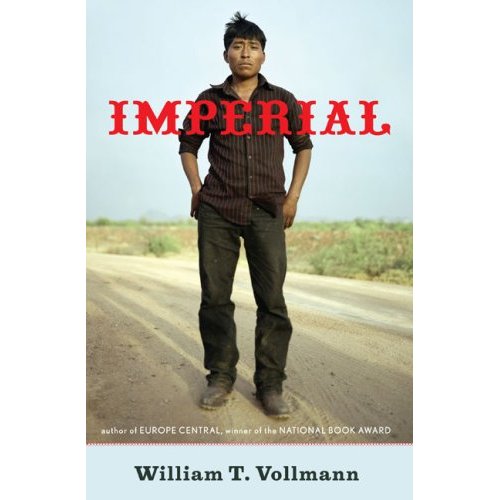
Read this fascinating profile of William Vollmann from this week’s New York Times. It makes me wish I had nothing to do but read everything this maniac writes. Vollmann’s new book Imperial comes out today from Viking. You can read an excerpt here.

Not really surprisingly, Vollmann did not make NPR‘s reader poll for the 100 Best Beach Books Ever. J.K. Rowling’s Harry Potter series topped a list that pretty much consists of a bunch of drivel (Twilight, Divine Secrets of the Ya-Ya Sisterhood), drivel posing as non-drivel (The Kite Runner, The Time Traveler’s Wife), overrated “classics,” (To Kill A Mockingbird), and a few surprises (Cormac McCarthy’s The Road is a fantastic book, but is it really best enjoyed on a sunny beach?)

TheClassicSlaveNarratives7517_f

This one didn’t make the beach reading list either. For a few years now, selections from The Classic Slave Narratives have been required reading in my high school classroom. I usually emphasize sections from Olaudah Equiano and Frederick Douglass, two masterful writers whose complex syntax and diction can be stunning, if not overwhelming, to the average AP student. I think that these narratives speak to why writing matters, and, importantly in today’s idiocracy, why reading matters as well. These first-person accounts of the horrors of slavery need to be read, and editor Henry Louis Gates, Jr. does a great job of setting the stage in his remarkable introduction to the collection. It’s sad, intellectually tragic, really, that Gates’s recent arrest should be given so much credit for sparking a “debate” or “teachable moment” about race, when Gates’s own scholarship makes the rootedness of racial tension in this country so plain. When a demagogue like Glenn Beck calls President Obama a “racist,” or a big fat idiot like Rush Limbaugh suggests that Obama simply has a “chip on his shoulder” because he’s black, we can see precisely why the first-person narratives of Equiano, Douglass, Mary Prince, and Harriet Jacobs are so important. These dangerous lunatics repeatedly suggest on their shows that America needs to keep its “traditions,” that our “history” is a strength, and that somehow the past was a place of better values. Perhaps if they read something outside of the dominant narrative they’d understand why someone might want to reappraise historically traditional values (and also, why someone might have a chip on his shoulder). But I’ve digressed from my main point: The Classic Slave Narratives is a valuable and important collection, and the stories collected here are a real entry point for any genuine discussion on race.

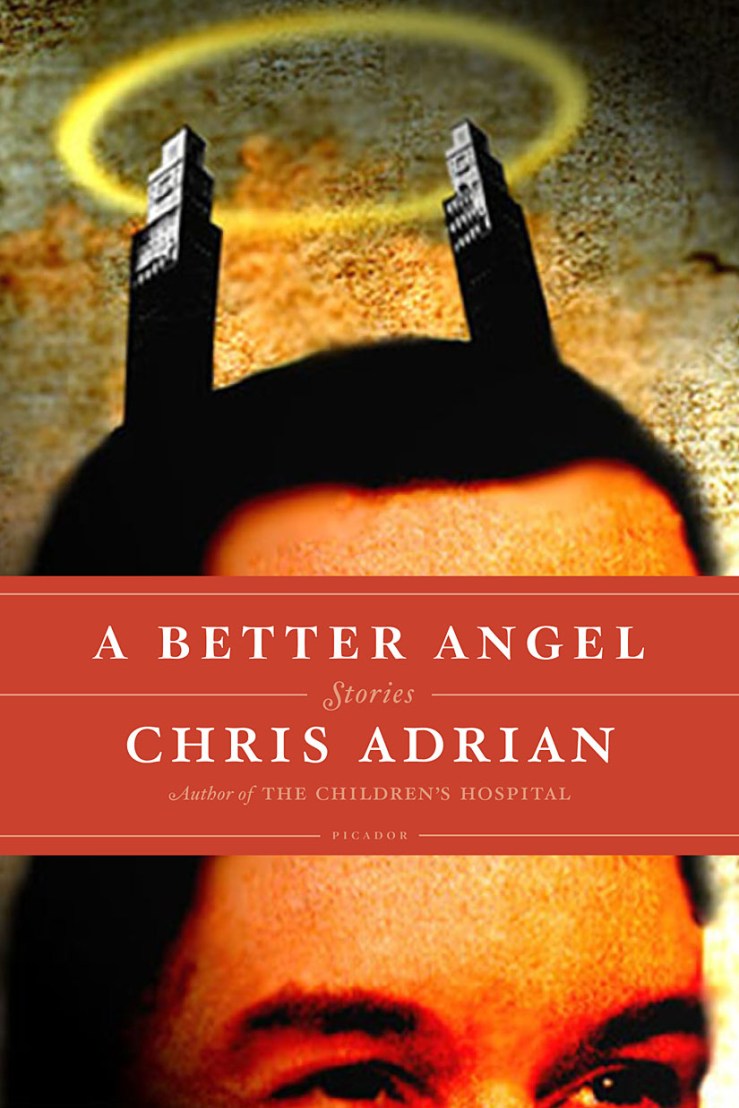
A Better Angel — Chris Adrian

Better Angel

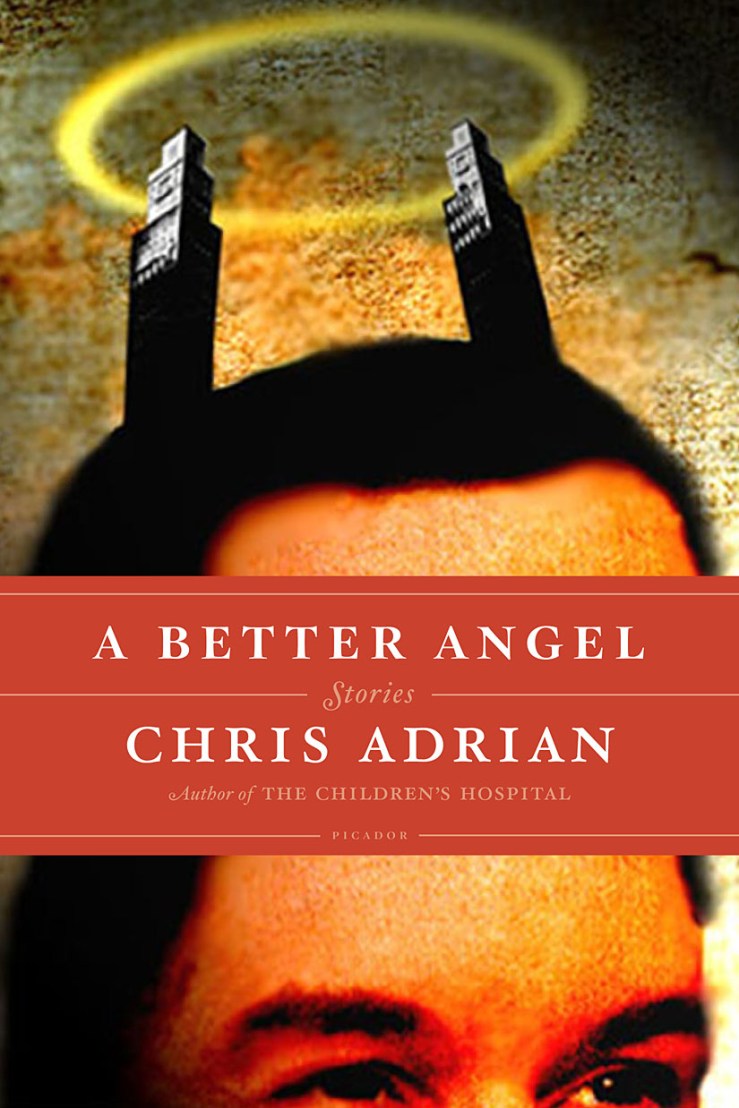
How does one grieve? This central question runs through the nine stories that comprise Chris Adrian’s A Better Angel (available now in trade paperback from Picador). For Adrian’s protagonists, mostly adolescents and children, the past is inescapable and insurmountable, and the future promises only depression at best and eternal suffering at worst. These are stories about hauntings. In Adrian’s world (and it is a fully-realized world in the same way that Tolkien’s Middle Earth is its own discrete place), ghosts, angels, and even wayward friends are all likely to to demonically possess some sad, troubled weird kid. Again and again, these stories force their protagonists–and their readers–to question how one might witness to death, disease, and disaster–and still keep a modicum of sanity.

Those who’ve read Adrian’s novels The Children’s Hospital and Gob’s Grief will find that the stories in A Better Angel work to flesh out a distinctly Adrianesque milieu. There are hospitals and doctors and nurses, dead brothers and absent parents, events of epic destruction and personal crises of illness, drugs and alcohol, ouija boards, and plenty of angels and demons. Adrian’s narratives explore a fine line between metaphysics and pure biology that each protagonist has to navigate. In “The Sum of Our Parts,” nurses and doctors wonder how our body parts make us individuals as a ghost tries to escape her coma-bound body. The fraudulent doctor of “A Better Angel” uses drugs as a way of subduing the angel who haunts him. “I make my living praising the beauty of well children,” he says. “I love babies and I love ketamine, and that’s really why I became a pediatrician, not because I hate illnesses, or really ever wanted to make anybody better.” Indeed, Adrian’s characters seem doubtful that anyone can make anyone else better, but it doesn’t stop them from trying. There’s the father of “The Changeling,” whose son is possessed by the ghosts of those murdered in the 9/11 attacks on the World Trade Center, who parcels out his own body as a sacrifice to appease the dead. The story recognizes though that it’s not really the dead he is honoring–he’s really showing his love for his son–but this measure of love is not enough for the dead. “The Changeling” is one of three stories in A Better Angel addressing the 9/11 attacks (we’ll write more about this trio in an upcoming post, and we’ve already addressed one of the stories here), but the September 11th victims are hardly the only ghosts here. In “A Hero of Chickamauga,” Civil War re-enactors try to commune with the dead and somehow bring personal justice to something beyond comprehension. “A Child’s Book of Sickness and Death” posits disease as the ultimate affront to cosmic justice. Its protagonist Cindy, an ailing “short gut girl” who lives in semi-permanent residence at a children’s hospital, remarks to no one in particular after the death of a young child,

“It seems to me, who should really know better, that all the late, new sadness of the past twenty-four hours ought to count for something, out to do something, ought to change something, inside of me, or outside in the world. But I don’t know what it is that might change, and I expect that nothing will change–children have died here before, and hapless idiots have come and gone, and always the next day the sick still come to languish and be poked, and they will lie in bed hoping not for healing, a thing which the wise have all long given up on, but for something to make them feel better, just for a little while, and sometimes they get this thing, and often they don’t.”

Cindy’s is just one of many negative epiphanies here. It’s also worth noting that this Cindy is but one of several Cindys populating this book, and she also seems to be another version of a short gut syndrome Cindy who appears in The Children’s Hospital. In fact, most of the primary characters in “A Children’s Book of Sickness and Death” are also present in The Children’s Hospital, underscoring the sinew that connects Adrian’s milieu.

This holistic vision marks Adrian as an accomplished–and challenging–author. Adrian’s challenge is not so much an issue of readability; we found ourselves quickly devouring these stories. No, what we have here are tales that many will find hard to digest, the sort of stuff that some readers will find too bitter to ruminate and puzzle out. Adrian, through his protagonists’ bleak outlooks, doesn’t offer a cure or even much solace from the pain and sickness in the world, but he does offer some temporary, if mild, relief, a sort of reckoning with that pain and sickness. Although the angels and demons and ghosts of Adrian’s world cannot be ignored or dismissed, they can be confronted, even if that confrontation must repeat without solution. Instead of pandering to his readers with Panglossian platitudes or metaphysical escape hatches, Adrian dramatizes the realities of our mortality in a way that compels both sympathy and repulsion, and above all, some deep thinking. Highly recommended.

Cronenberg Does DeLillo

David_Cronenberg2_bw

Via the AV Club:

Because he likes nothing more than to bring impossible-to-adapt novels to the big screen (see: Naked Lunch, Crash), Canadian super-genius David Cronenberg is set to direct the feature adaptation of Don DeLillo’s Cosmopolis. Released in 2003 to mixed notices, DeLillo’s book takes place almost entirely inside the limousine of a 28-year-old billionaire asset manager as he makes his way slowly across Manhattan in order to get a haircut. Traffic is slowed by everything from a Presidential motorcade to a rapper’s funeral, and several character [sic] slip into the limo alongside him. The trick for Cronenberg is to figure out how to make his hero’s adventure remotely cinematic, but if he pulls it off, the book has plenty to say about life in the new economy.

Shooting will commence in Toronto and New York next year.

We’ve thoroughly enjoyed Cronenberg’s last couple of films (A History of Violence, Eastern Promises) but his adaptations of J.G. Ballard’s Crash was problematic at best, and his take on William Burroughs’s Naked Lunch doesn’t even make for a good flawed film, in our humble expert opinion (here’s our review). We didn’t really like Cosmopolis either. Still, our interest is piqued. Here’s Cronenberg discussing Viggo Mortensen’s bathhouse fight scene in Eastern Promises:

Chris Adrian, 9/11 Lit, Thomas Pynchon, Beach Reading and More

I’m about half way through two books right now: Chris Adrian’s A Better Angel, and Thomas Pynchon’s Inherent Vice. Pynchon’s latest novel–I’ll talk a little bit about it in a sec–comes out in hardback from Penguin August 4th. Picador will release the first trade paperback edition of Chris Adrian’s latest collection of short stories on August 3rd. I’m really digging A Better Angel so far, but before I talk about it, I just wanna shill for Picador. They put out really cool, great-looking books from really cool authors like Roberto Bolaño, J.G. Ballard, Denis Johnson, William Burroughs, and DJ Kool Herc, and they also have a sexy little imprint called BIG IDEAS//small books that puts out some killer jams. They’re also really nice about sending review copies. Shill shill shill. I’m a whore, but I’m an earnest whore.

Better Angel

Anyway. Back to Adrian. Just finished “The Vision of Peter Damien,” a 9/11 story set in what seems to be nineteenth century rural Ohio. Damien, and then the other children of his small rural community, catch an illness that gives them unexplained, vivid hallucinations of the 9/11 attacks on the World Trade Center towers. Adrian works in a mode of distortion throughout most of these stories so far, repeatedly employing metaphysical disruptions as well as playing with time and setting as a way of alienating his characters from each other and the reader. Adrian uses the temporal/metaphysical disruptions of “The Vision of Peter Damien” to respond to 9/11, creating an uncanny milieu for his readers. The cognitive dissonance here reminds me of other responses to 9/11, like DeLillo’s Falling Man, David Foster Wallace’s short story “The Suffering Channel,” and even Art Spiegelman’s In the Shadow of No Towers. Actually, Wallace’s essay “The View from Mrs. Thompson’s” does a really good job of capturing all the problems of witnessing to, understanding, reacting to (etc.) spectacular disaster. Adrian’s story recapitulates the same paradoxes, injecting a motif of illness and brotherhood, contagious decay and redemption that seems to run through all of the stories collected here. I don’t have a larger comment about literature’s response to 9/11 yet, but I think that it’s fascinating to watch such stories emerge and evolve. We’re still seeing the various shapes, tropes, strategies, etc. that authors will employ to tackle (or chip at, or remark upon, or even elide) such a big historical marker. Full review of A Better Angel at the end of this month.

inherent_vice

Far less serious is Pynchon’s new novel, Inherent Vice, a detective noir painted in day-glo psychedelic swirls. Doc Sportello, at the behest of his ex-, is searching for a missing real-estate billionaire in the dope-haze of late 60s/early 70s LA (it appears to be set in 1969, as there are repeated references to “living in the sixties and seventies”). Pynchon’s new novel is a hard-boiled detective mystery, a psychedelic caper, an LA story, a comment on the decline of idealism and the emergence of media-unreality at the end of the 60s (because we needed another story about the 60s!), and probably a shaggy dog tale. The cover has gotten some criticism for its decidedly unliterary look, and last March I called it “horrendous.” I take it back: the campy cover, with its neon shock and beach-as-pastoral-idyll is lovingly ironic, satire that does not announce itself as satire and is thus always open to a straight-reading. Just like Pynchon’s novel, the cover can be read as an homage to both Dashiell Hammett and Elmore Leonard (with a sly nod to all the Leonard ripoffs out there (glancing your way, Jimmy Buffett). As its cover suggests, this is a Pynchon book you can read breezily on a beach or airplane. Sure, it’s got the usual Pynchon trademarks–it’s overcrowded with zany, one-dimensional characters, it operates on a Looney Toons system of logic, it’s full of linguistic goofs–but it’s also incredibly easy to read (unlike, say, just about everything else Pynchon has ever written). It’s also a lot of fun. And to prove it’s a beach read, I’ll finish it this week at St.Augustine Beach, inebriated by strong margaritas and even stronger sun. Full review when I get back.

Waiting for The Visitor

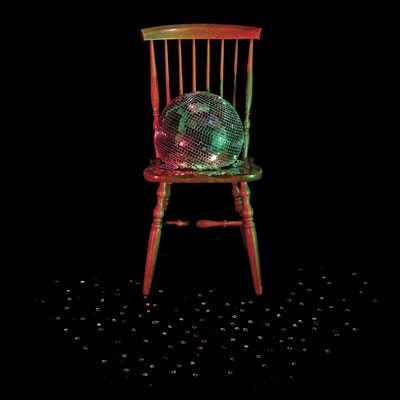
We’re pretty psyched about Jim O’Rourke‘s upcoming album, The Visitor, out on Drag City September 8th. O’Rourke hasn’t put out a “pop” record (as opposed to “experimental,” something of a false dichotomy really) since 2001’s Insignificance. Apparently, the new record is in the vein of one of our all-time favorite records, 1997’s Bad Timing. Supposedly the record will take the form of one long suite of music called “The Visitor,” and according to this interview from last year, “pretty much everyone is going to be disappointed.” He also says that the new record will be “pt. 4” after Bad Timing, Eureka, and Insignificance, so it’s hard to imagine being disappointed. Here’s the (we think) Nic Roeg connection (quick note: the three albums just cited are named after Nic Roeg films): in 1976’s The Man Who Fell to Earth, David Bowie plays a space alien stranded on Earth who records an album under the name The Visitor. Here’s the cover of The Visitor:

orourke-covermain

Here’s a Eureka-era audio interview with O’Rourke that you can download. He talks about his prolific powers, the influence of Godard and Roeg on his work, hierarchy and didacticism in music, the cheesy sax solo on “Eureka” (“Of course it’s stupid!”), and why listening to music is a process of education. Good stuff. Or, if you want music, not words, here’s the sorta kinda rarity, “Never Again,” from the Chicago 2018 comp. Also good stuff.

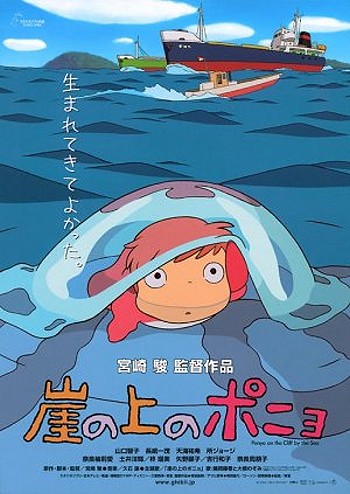
Hayao Miyazaki’s Ponyo on the Cliff by the Sea Reviewed

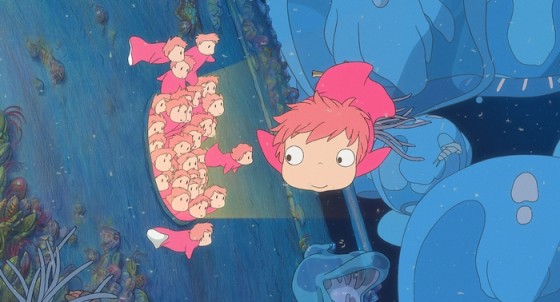
ponyo

Before Hayao Miyazaki‘s latest opus, Ponyo on the Cliff by the Sea (Gake no Ue no Ponyo) gets Disneyfied this August, interested parties might wish to purloin one of the pirate copies floating around and get a sneak peek. I’m not advocating not going to the movies to see the film–one of the greatest pleasures of Miyazaki’s works is the sensory overload of his stunning visuals–but Disney’s dubbed versions tend to over-explicate Miyazaki’s mysteries, draining his films of some of the unsettling ambiguities that make them so interesting.

Ponyo tells the story of a little fish-girl (girl-fish?), a mermaid who escapes from her mad-scientist father and meets a boy named Sosuke. After tasting some of Sosuke’s blood, Ponyo begins to morph into a human. However, her transmutation causes bizarre and violent weather, including a giant tsunami resulting in a massive flood; even the moon starts to pull out of orbit. Sosuke and Ponyo navigate this surreal post-flood world, searching for Sosuke’s mother Lisa. The tale of these children is sweet but never maudlin, and like most Miyazaki films, Ponyo taps into sentimentality and pathos without ever becoming mawkish.

ponyo2-560x302

Visually, Miyazaki employs a sketchy, watery style here, painted in beautiful pastels and flashy complimenting brights. The look of this film is a significant departure from the fine detail and rich heaviness of Miyazaki’s masterpiece, Spirited Away (Sen to Chihiro no Kamikakushi), and might disappoint some, but we thought it was both beautiful and fitting. Of course, we were watching a pirated version that someone lovingly and bravely shot in a theater, undoubtedly inferior to the spectacle we expect from the theatrical release.

Perhaps the best critic of the film would be my two-year old daughter, who sat riveted and zombie-eyed throughout the whole film, only diverting her gaze occasionally to clarify some plot point. She loved the movie and talked about it the whole next morning, pretending that she was Ponyo (or, alternately, that someone else was Ponyo). Ponyo has more in common with Miyazaki’s lighter, kid-friendlier films like My Neighbor Totoro and Kiki’s Delivery Service than it does with his epic adventure films like Nausicaa and Princess Mononoke, but it retains enough adventure and glows with enough charm to keep longtime fans and newbies alike invested for all of its ninety minutes. Great good stuff. Here’s the trailer for the US release:


Harry Potter Sex Romp, Part II

First thing’s first: if you’re looking for Harry Potter slash fiction, you’ll have to check out our original Harry Potter Sex Romp post for links, you dirty dawg (you’re weird but you’re welcome). Just like that post a few years ago, this post’s title is really kinda sorta mostly irrelevant to what this post is about. What is it about? I want to take a look at some of the homoerotic tension in the new Harry Potter movie, Harry Potter and the Half-Blood Prince. If you want to find a proper review of the film, with plot summary and insight, shop around. That’s not gonna happen here.

Also, there will be SPOILERS, okay? Fair warning.

INTL_HarryDumbledore (Large)
#1 Stunnas

Okay. So, I saw the new film last night (henceforth HP6). And it was pretty good or whatever. But I noticed a subtext that cracked me up quite a bit, an underlying motif that might be lost on most summer blockbuster audiences. I’m talking about the implicit love between men and boys in this film.

At the beginning of the film, in an apparently insignificant scene, young Harry makes a date with an attractive young girl. However, old man Dumbledore shows up and dashes any hopes for a late sumer romance. Instead of meeting up with this lithe young thing, Harry has to grip hard to Dumbledore’s stiff arm to be apparated away to meet Horace Slughorn, an old potions master. Dumbledore uses Harry as fresh young bait for Slughorn, who has something the old wizard needs–a key memory about the development of Tom Riddle–Voldemort–a former protégé of Horace’s (lots of mentors and mentees here). Much of the narrative’s conflict revolves around the task Dumbledore has given Harry; it’s almost as if Dumbledore is pimping out the young wizard. These multiple man-boy relationships are doubled darkly in the failing bond between Snape and emo Draco.

In contrast, heterosexual relationships between the teens are treated with a lightness and even frivolity that codes such romances as ephemeral, or perhaps even inessential. Although the film solidifies the groundwork for the long-term relationships between the series’ principals (Harry-Ginny/Ron-Hermione), the real love story here is between older men and their young apprentices. HP6 depicts teen romance as silly without coloring any of its fragility with pathos. What the film really argues for is a sort of Greek or Platonic ideal of love; that love exists as a conduit for wisdom, passed from an older, experienced man to a younger boy in exchange for some of that youth’s beauty and vitality. Although moments of teenage adventure punctuate the film, the real scope of heroic encounters are shared between older men and their attendant lads (particularly Dumbledore and Harry, although even Snape, through the annotations of his old textbook, manages to plant part of himself into Harry).

The film reaches its climax with a lot of phallic wand waving and a bit of indecision over who gets to shoot off at whom. The climactic scene encodes the strange aggressions and series of shifting allegiances between the male wizards present. Dumbledore becomes the tragic figure; his death allows for Harry’s maturation, enacting a definitive arc in Harry’s Oedipal complex, where Dumbledore is both father figure and secret sex object. The weight of this tragedy initiates Harry into the adult world and adult responsibilities.

So why bother to write about this? No reason really, and I’m sure plenty of readers will find my analysis insupportable, silly, offensive, or just plain wrong. That’s fine. I guess I mostly find it remarkable that this motif should prevail so heavily in a summer blockbuster. There was also a whole drug motif going on–so many of the film’s plot development hinge on the ingestion of mind-altering substances–so maybe I just like the idea that the film is kinda sorta subversive.

Perdido Street Station/The City & The City — China Miéville

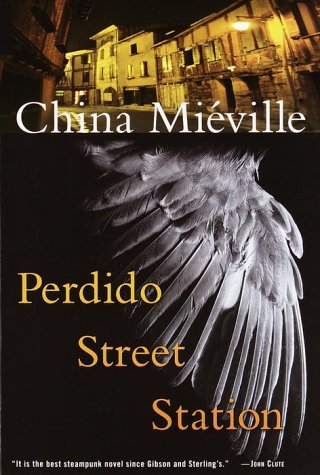
perdido_street_station_us

Despite being a bit too long, I enjoyed listening to Random House’s new audiobook recording of China Miéville‘s second novel, Perdido Street Station, read by John Lee. Perdido Street Station is Miéville’s first novel set in the steampunk world of Bas-Lag, a strange world populated by plenty of bizarre races and even more bizarre “Remades,” persons who have been forced (or in some instances have chosen) to restructure their biological makeup to perform (very) specific jobs. This sci-fi adventure story centers around protagonist Isaac Van der Grimnebulin, an overweight renegade scientist trying to perfect a new technology he calls “crisis energy.” Isaac is trying to help a Garuda named Yagherak who, as a form of punishment, has had his marvelous wings cut off. To this end, Isaac experiments with a strange caterpillar that feeds off of an hallucinogenic drug called “dreamshit.” Unfortunately, the caterpillar turns into a giant dream-feeding, brainsucking moth that, along with its relatives, terrorizes the city at night. Isaac tries to stop the moths and save his girlfriend, an artist with a bug’s head. Lots of picaresque adventuring ensues.

Miéville’s Bas-Lag world is finely detailed and richly imagined, and will no doubt appeal to anyone who digs H.P. Lovecraft or William Gibson. Miéville certainly has a handle on both of his many concepts (artificial intelligence, the nature of bodies, difference and (literal) alienation), and his story unfolds with the thrilling clip one expects from pulp fiction. Still, the book felt overwritten to me. Miéville never settles on just one adjective if two (or three) come to mind, and he’s in love with adverbs (oh the adverbs in this book! Is there a sentence without one?). And while exposition of a sort is certainly necessary in a novel about such a profoundly strange world, I think that Miéville would get a bigger payoff if he trusted his reader a bit more. Perdido Street Station feels rhetorically claustrophobic, as if Miéville is afraid to let his reader imagine even a little of Bas-Leg for him or herself. It’s a bit selfish, really. On the whole though, a great read (or listen, in this case), and it intrigued us enough to go straight into Miéville’s latest book, The City & The City (also newly released this summer from Random house, also read by John Lee).

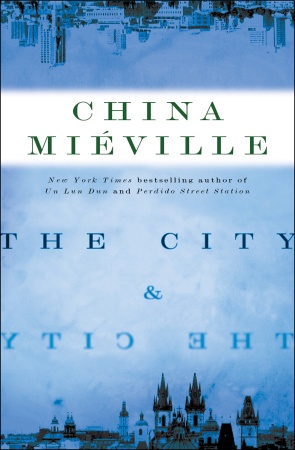
the city and the city

The City & The City combines noir detective fiction with one of science fiction’s greatest gambits, namely, positing something utterly implausible, unimaginable, and then making it ordinary. In The City & The City, two cities, Beszel and Ul Qoma, occupy the exact same geographic space, yet their citizens are trained from birth to “unsee” and “unhear” all aspects of the other city. Inspector Tyador Borlu is drawn into the mysterious death of a beautiful young woman (is there an older trope? Edgar Allan Poe even wrote an essay on why and how you should use beautiful yong dead girls in your literature). His investigation leads him into crossing the border between the cities, an impossible border, of course, and yet the genius of the book here is that, through Borlu’s narration, the reader doesn’t experience this bordercrossing (and its attendant “unseeing”) as satirical or even ridiculous; rather, we witness the uncanny alienation of double consciousness. Miéville, a Marxist, is working in part from some of Althusser‘s ideas, and he’s not afraid to namedrop Foucault or Žižek. Thankfully, however, Miéville not only knows his theorists, he knows enough not to let theory get in the way of a Chandleresque murder mystery that explores themes of surveillance, alterity, and what it means to see someone seeing you seeing them seeing you (seeing them seeing you . . .). Great stuff.