Books Acquired, Some Time Last Week (New Stuff from Pantheon)


20120818-173956.jpg

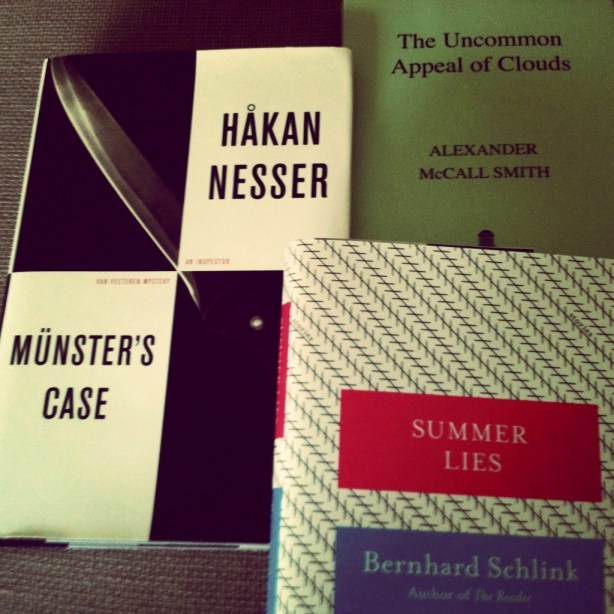
A trio from Pantheon came in last week. There’s a new one from mystery writer Håkan Nesser, called Müenster’s Case, featuring Inspector Van Veeteren. Alexander McCall Smith’s The Uncommon Appeal of Clouds is also a mystery, also part of a series, this one featuring  Isabel Dalhousie. I don’t really read these kind of books—I mean mystery series—but I know lots of people dig them, and some of the folks in my English department really dig McCall Smith.

Bernhard Shchlink’s new collection of stories seems interesting. Pantheon’s blurb—

From Bernhard Schlink, the internationally best-selling author of The Reader, come seven provocative and masterfully calibrated stories. A keen dissection of the ways in which we play with truth and less-than-truth in our lives. Summer Lies brims with the delusions, the passions, the outbursts, and the sometimes irrational justifications people make within a mélange of beautifully rendered relationships. In ”After the Season,” a man falls quickly in love with a woman he meets on the beach but wrestles with his incongruous feelings of betrayal after he learns she’s rich. In “Johann Sebastian Bach on Ruegen,” a son tries to put his resentment toward his emotionally distant father behind him by proposing a trip to a Back festival but soon realizes, during his efforts to reconnect, that it wasn’t his father who was the distant one. A philandering playwright is accused to infidelity by his wife in “The Night in Baden-Baden,” but he sees her accusations as nothing more than a means to exculpate himself of his guilt as he carries on with his ways. And in “Stranger in the Night,” an obliging professor becomes an accomplice—not entirely unwittingly—to the temporary escape of a charismatic fugitive on a delayed flight from New York to Frankfurt.

The truth, as once character puts it, is “passionate, beautiful sometimes, and sometimes hideous, it can make you happy and it can torture you, and it always sets you free.” Tantalizingly, so is the act of telling a lie—to others and to ourselves.


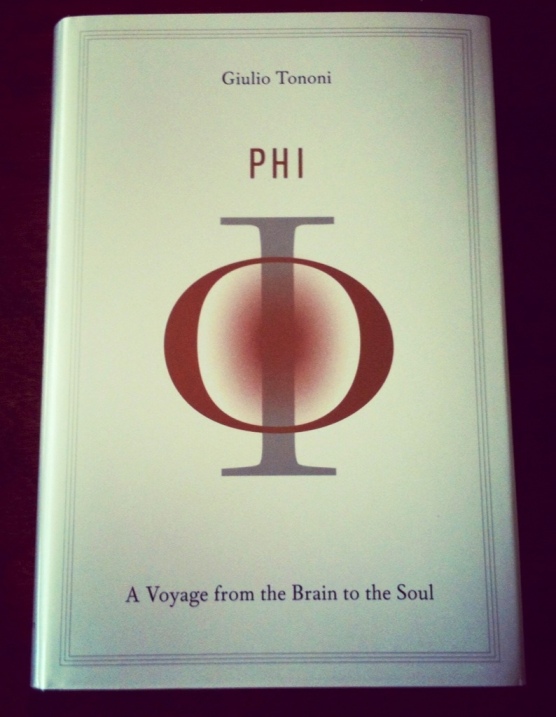
Phi (Very Beautiful Book Acquired, 8.08.2012)

20120818-173817.jpg


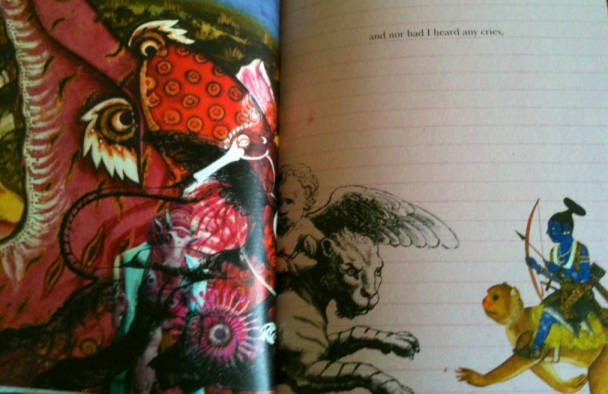
Giulio Tononi’s Phi—remarkable, beautiful, strange. Sort of a novel, sort of philosophical text, sort of a history, sort of a science book . . . I don’t know. Here’s the blurb:

From one of the most original and influential neuroscientists at work today, here is an exploration of consciousness unlike any other—as told by Galileo, who opened the way for the objectivity of science and is now intent on making subjective experience a part of science as well.

Galileo’s journey has three parts, each with a different guide. In the first, accompanied by a scientist who resembles Francis Crick, he learns why certain parts of the brain are important and not others, and why consciousness fades with sleep. In the second part, when his companion seems to be named Alturi (Galileo is hard of hearing; his companion’s name is actually Alan Turing), he sees how the facts assembled in the first part can be unified and understood through a scientific theory—a theory that links consciousness to the notion of integrated information (also known as phi). In the third part, accompanied by a bearded man who can only be Charles Darwin, he meditates on how consciousness is an evolving, developing, ever-deepening awareness of ourselves in history and culture—that it is everything we have and everything we are.

Not since Gödel, Escher, Bach has there been a book that interweaves science, art, and the imagination with such originality. This beautiful and arresting narrative will transform the way we think of ourselves and the world.

The comparison to Hofstadter’s Gödel, Escher, Bach might be apt. The book also recalls The Rings of Saturn to me. I’ve put it in a “read this” pile.

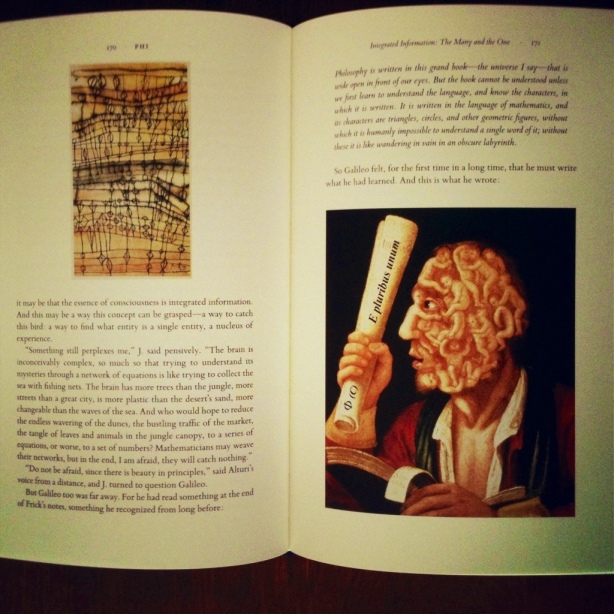
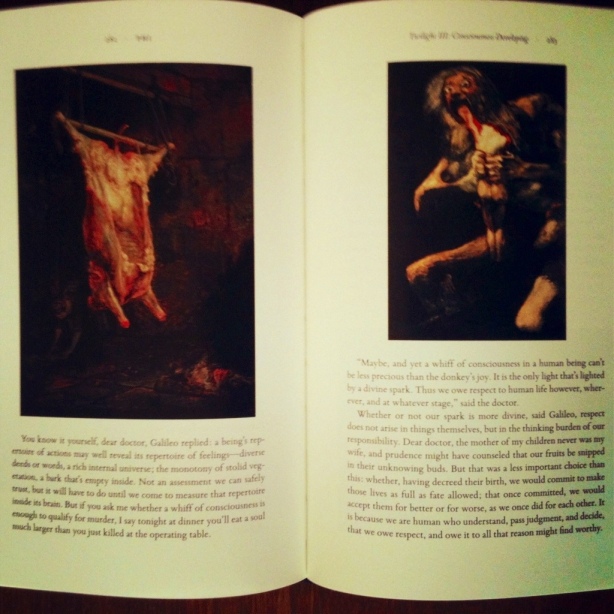
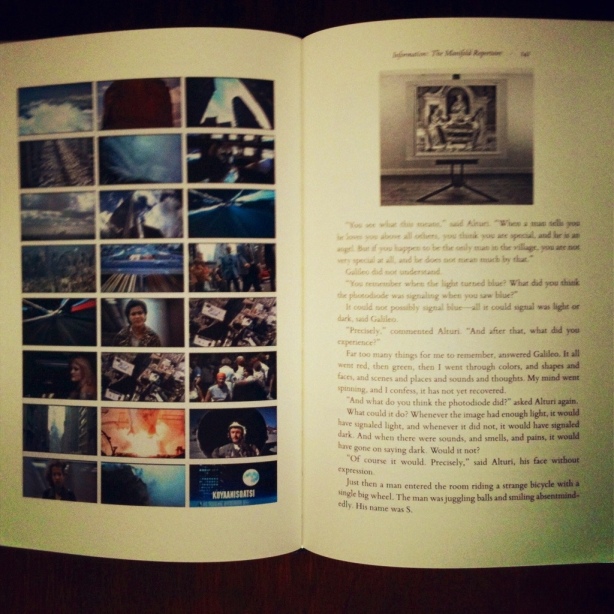
More to come, but here are some shots at random from its interior:

20120818-173834.jpg

20120818-173840.jpg

20120818-173847.jpg


Vanishing Is the Last Art (Book Acquired, Some Time in the Past Two Weeks)

20120818-174148.jpg

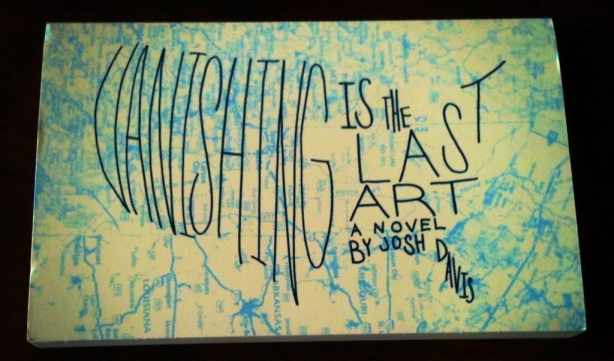
Josh Davis’s novel Vanishing Is the Last Art. Blurb:

Charlie Fell sells baseball cards with seemingly hallucinogenic properties out of his bedroom, takes road trips to places he loves (New York City) and loathes (Southern California), and trips over a series of romantic entanglements. When the young writer releases his first novel, his life begins to unravel as the fallout from his published inner-monologues drive him back inside his already frail mind

Treacherous Beauty (Book Acquired, 7.30.2012)


20120809-104800.jpg

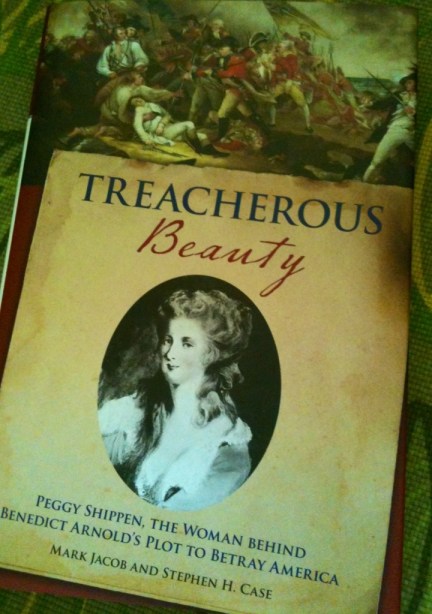
Treacherous Beauty by Mark Jacob and Stephen H. Case. Blurb—

Histories of the Revolutionary War have long honored heroines such as Betsy Ross, Abigail Adams, and Molly Pitcher. Now, more than two centuries later, comes the first biography of one of the war’s most remarkable women, a beautiful Philadelphia society girl named Peggy Shippen. While war was raging between Britain and its rebellious colonists, Peggy befriended a suave British officer and later married a crippled revolutionary general twice her age. At age 19, she brought these two men together in a treasonous plot that, had it succeeded, might have turned George Washington into a prisoner and changed the course of the war.

Peggy Shippen was Mrs. Benedict Arnold.


Rivalry: A Geisha’s Tale (Book Acquired, 8.06.2012)

20120809-104953.jpg

I haven’t read any of Nagai Kafu’s 1917 novel Rivalry: A Geisha’s Tale (new in paperback from Columbia University Press in translation from Stephen Snyder) because my wife immediately took it and started reading it. I think she’s almost finished with it. I can only assume it involves some kind of rivalry, probably between geisha. I’ll ask her (the following is a more or less an accurate transcription of wife’s comments to me from the kitchen as she prepared some kind of corn salad):

Um, it’s about this geisha, who, when she was like 17, 18 became a geisha, then got married and moved out to the country, this is like in her early 20s, and after a couple of years her husband died, so she went back to Tokyo back to her old geisha house and ran into one of her former, um, clients, and he fell in love with her like immediately so they started a relationship but she fell in love with an actor, but then, I’m not finished with it, but the client found out about the affair, so he’s going to patronize this rival geisha. Which I guess is why, Rivalry.

Do you like it?

I mean, it’s what you’d expect from a geisha book, I mean it’s about a geisha. It’s a good geisha story.

My wife reports she’s about half way through it and wants to find out how it will end.

Faulkner House/Crescent City Books (Books Acquired Some Time Last Week)

Had a wonderful if sweaty trip to New Orleans last week.

Great food, great music, and great bookstores.

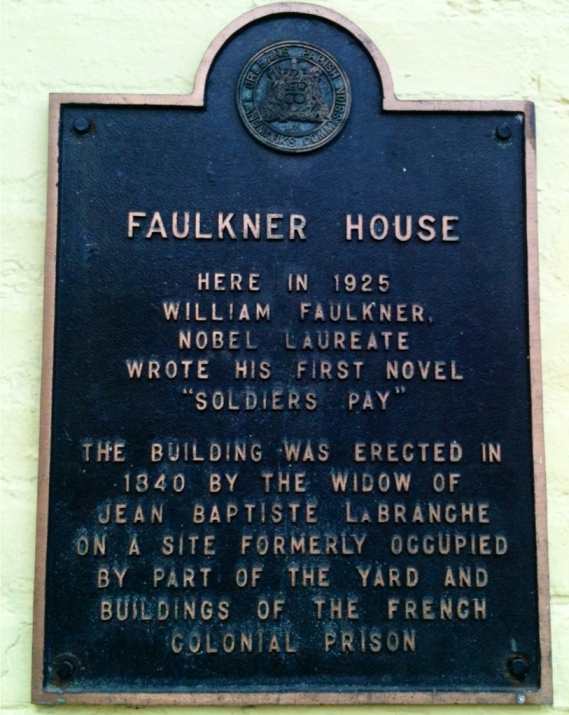
First up, Faulkner House:

20120808-163344.jpg

Faulkner House is a tiny little shop just off Jackson Square. Its two rooms (really, a main room and a hallway) are lined from bottom to top with literature, poetry, and philosophy. I can’t overstate the excellence of the collection in here—all kinds of rare and beautiful tomes, signed stuff, local and localish stuff, etc (local gal Anne Rice was the closest thing I saw to genre fiction). It’s great to walk into a bookshop and see a near-complete collection of new NYRB volumes stacked prominently upfront along with new novels by Richard Ford and Teju Cole.

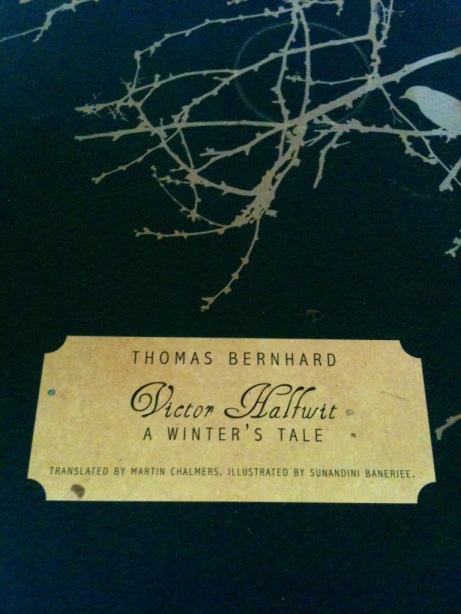
I picked up this handsome illustrated edition of Thomas Bernhard’s Victor Halfwit, the handsomeness and bigness and luxuriousness of which simply doesn’t come across in this lousy iPhone pic:

20120808-163414.jpg

Random framed shot:

20120808-163426.jpg

And a random two-page shot with glare:

20120808-163432.jpg

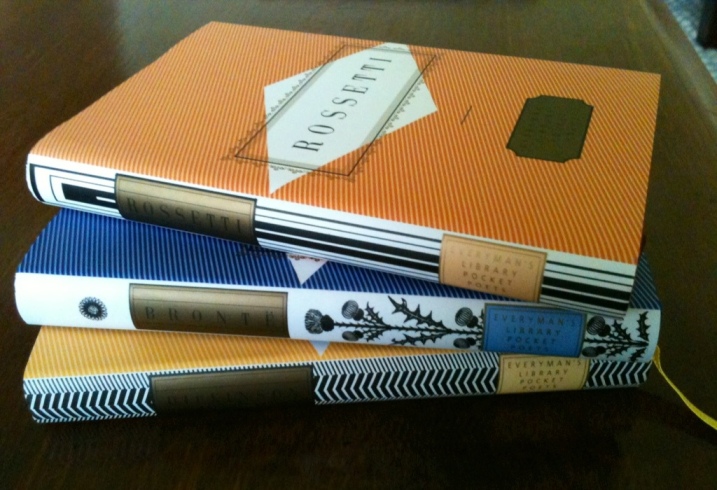
My wife picked out three lovely editions from Everyman’s Library Pocket series, poems from Christina Rosetti, Emily Dickinson, and Emily Brontë:

20120808-163439.jpg

The owner and the manager were very kind, knowledgeable, and tolerant of my questions about what kind of stock they moved (biggest seller, unsurprisingly, is Soldier’s Pay).

Info for Faulkner House, via bookmark (the manager put one in each book I bought):

20120808-163445.jpg

A few days later after a three-Bloody-Mary-breakfast I stumbled into Crescent City Books:

20120808-163523.jpg

This is a great shop that, like Faulkner House, doesn’t waste precious shelf space on glitter vampires or self-help books or novelty cookbooks. Lots of art volumes (many rare and in German, French, Italian, etc.), a large poetry section, philosophy, history, etc. Lots of great old prints too. And an old cat, who was basically boss of the place.

They also carry physical copies of Rain Taxi, which I haven’t seen in years.

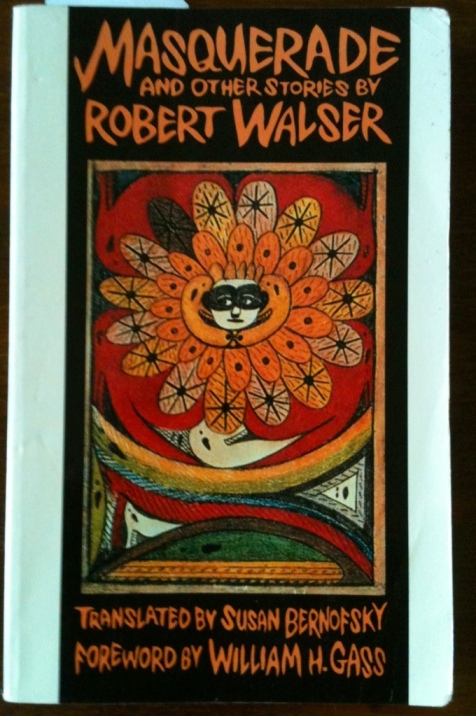
I picked up Masquerade and Other Stories after a Biblioklept commenter recommended Walser (by way of Kafka). I read about half of this over the next few days (full review to come):

20120808-163504.jpg

Books Acquired a Few Weeks Ago, Or, Here’s What’s New from Picador This Month

20120729-154520.jpg

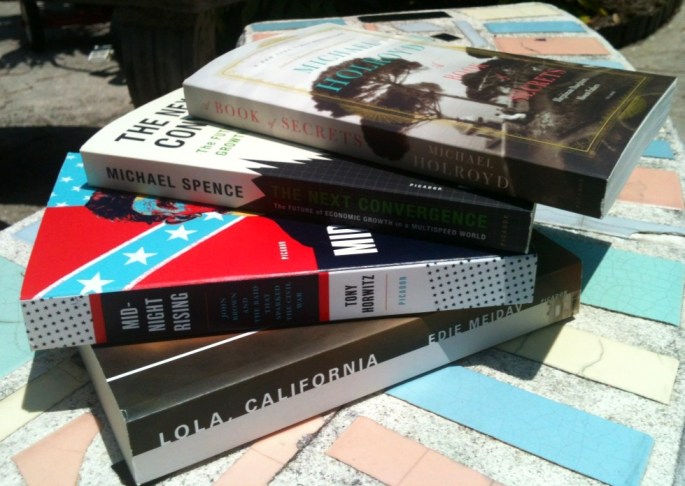
Short stack of fat books from Picador this month.

Some highlights:

20120729-154535.jpg

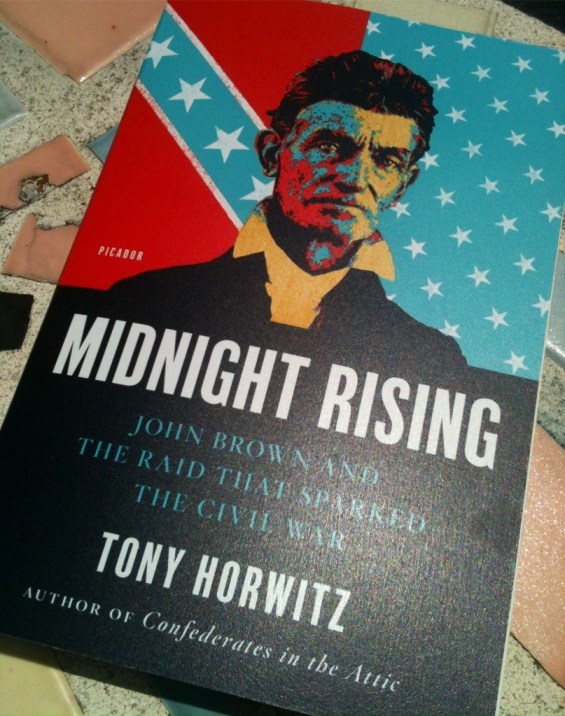
Tony Horwitz’s Midnight Rising piqued my interest last year when it came out in hardback. I am a buff of the American history. From Kevin Boyle’s review in the NYT last year:

. . . Horwitz has given us a hard-driving narrative of one of America’s most troubling historical figures: the fearsome John Brown, whose blood-soaked raid on the federal armory at Harpers Ferry, Va., in October 1859 — a “misguided, wild and apparently insane” act, in the abolitionist William Lloyd Garrison’s words — helped to push the nation into the most devastating war it would ever endure.

In Horwitz’s telling, Brown was set on the road to Harpers Ferry from birth. His parents were fervent Calvinists who raised their children to see life as a constant struggle against sin. Much of the battle was personal: Brown’s earliest memory, from age 5, was of being whipped by his mother for having stolen a handful of brass pins. But it was political as well. The Browns believed that the devout had to bear witness against the sins of the nation. And there was no greater sin, they said, than the institution of slavery. So Brown’s father turned the family home in northeast Ohio into a stop on the Underground Railroad. And he turned his son into an ardent abolitionist.

Horwitz moves nimbly through Brown’s deepening involvement in the movement in the 1830s and ’40s, setting his devotion alongside the growing national conflict over slavery’s place in a country ostensibly dedicated to equality. Abolitionism was then dominated by pacifists like Garrison, who insisted that the evil could be destroyed by moral suasion. Brown didn’t agree. In 1837 he gathered together his wife and three teenage boys — the eldest of 20 children he would father — and asked who among them “were willing to make common cause with him in doing all in our power to ‘break the jaws of the wicked and pluck the spoil out of his teeth.’ ”

20120729-154551.jpg

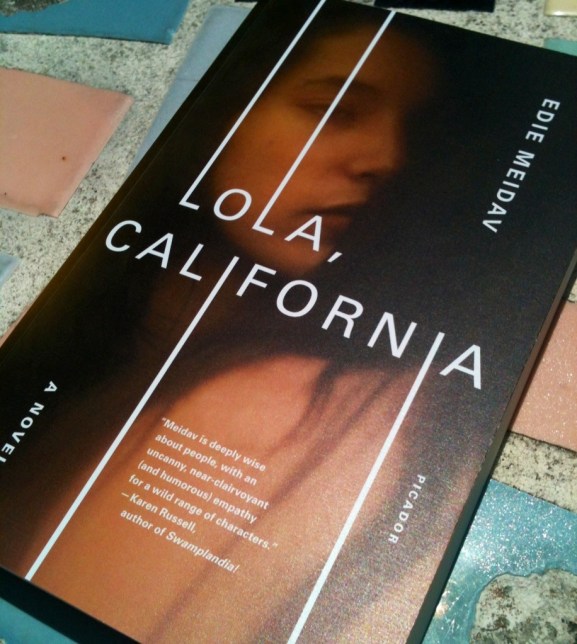
Edie Meidav named her third novel Lola, California, which I think is a pretty great name for a novel. Ellen Wernecke reviewed it in hardback for The AV Club last year and gave it an “A” (NB: I almost always disagree with AV Club’s reviews and I think grading books is a ridiculous gesture. Still):

A decades-old murder in New Age-inflected Berkeley forces a reunion between two high-school best friends in Edie Meidav’s textured, disquieting third novel. Lola, California plumbs the rise and fall of a friendship, finding its terrifying resonance for the adults it produced. Former Berkeley professor and ’70s guru Vic Mahler sits in a California prison with brain cancer, an unwitting cause célèbre for opponents of the tough new death penalty under which he is sentenced to die. Even though he won’t see her, a lawyer named Rose, who practically grew up in Vic’s house, believes she can secure him a stay so he can die in peace. After they met at 14, Rose and Vic’s daughter Lana were so inseparable, they called each other by the same name, Lola, sharing clothes and secret dances; even when sneaking out on Lana’s parents or Rose’s foster mother, they always went home together. After Vic’s arrest, Lana walked out of her best friend’s life, moving to L.A. and changing her name. The former best friends reencounter each other at a hot spring where Lana has moved with her new boyfriend, who hopes to follow in Vic’s footsteps.

Privacy/Homesick (Books Acquired, Some Time Last Week, Both Bearing an Eye)


20120724-194309.jpg

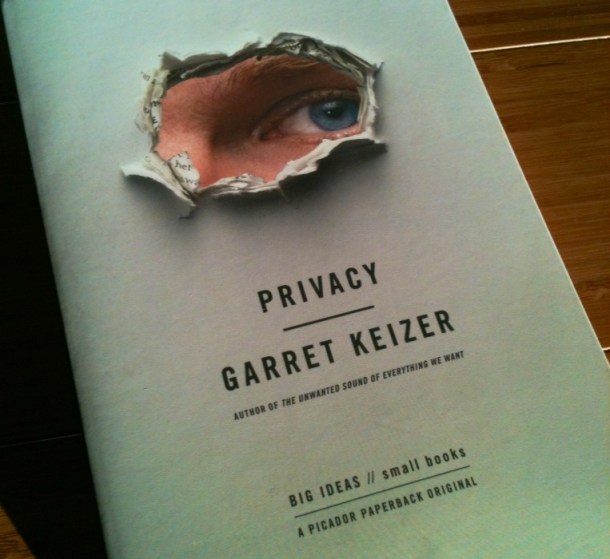
Maybe you saw Garret Keizer on Colbert, or maybe you’ve read his stuff at Harper’s; anyway, his new little book Privacy seems pretty good. I’ve enjoyed all the titles in Picador’s BIG IDEAS // small books so far, and a scan over Privacy suggests another intriguing entry. Full review down the line.

20120724-194318.jpg

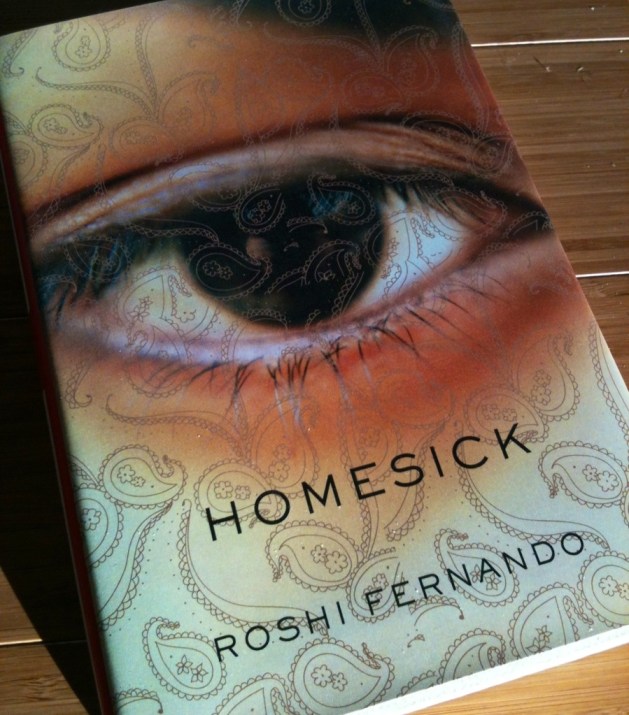
Roshi Fernando’s Homesick came out a few years ago in the UK; it’s now getting the deluxe treatment from Knopf. Their blurb:

In this stunningly assured debut work of fiction, Roshi Fernando weaves together the lives of an extended Sri Lankan family.

At Victor and Nandini’s home in southeast London, the New Year’s Eve celebration is under way. Everyone is gathered around—clinking glasses of arrack and whisky, eating freshly fried poppadoms, listening to baila music—waiting to ring in 1983. Upstairs, The Godfather is playing on repeat for a bedroom filled with teenagers drunk on pilfered wine. And in the middle of it all is sixteen-year-old Preethi, tipsy on youth and friendship and covert cigarettes, desperate to belong.

But what does that mean, to belong? As Preethi moves through her life—befriending the local outcast, revealing her brother’s deepest secret, struggling with her own unhappiness and through a souring marriage—this desire for acceptance remains the one constant, both for her and for everyone she knows.Homesick moves back and forth in time, between London and Sri Lanka, circling the people in Preethi’s world: her brother Rohan; her friends Nil, Clare, Deirdre, and Lolly; her aunty Gertie; and terrible cousin Kumar. Together, they are bound by this shared need to fit in somewhere, this rootless desire for a place to call home.

Gorgeously drawn, told with wit and pathos, this poignant narrative blends love with loss, politics with pop culture, tradition with youthful rebellion. Homesick is rich with insight and a kaleidoscopic view of contemporary immigrant life that introduces us to the work of Roshi Fernando, a remarkable new talent.

I usually sift through these books acquired books before I post, but I haven’t had time to do it thus far with Homesick, so I can’t really comment on the prose. The cover has an eye on it, so it’s here, in this post.


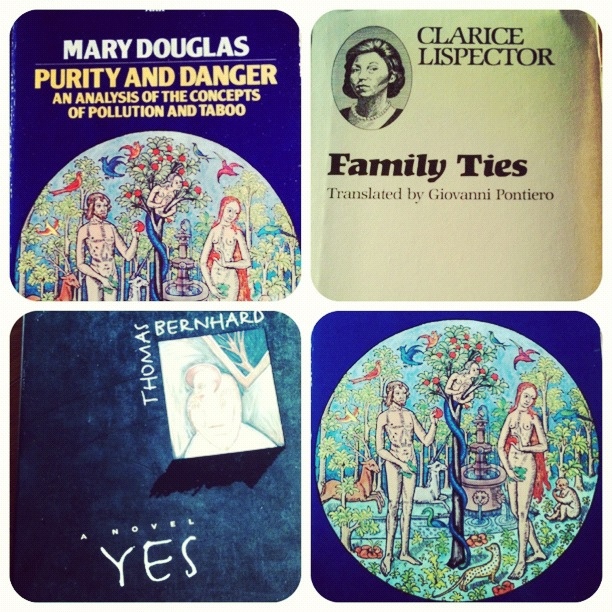
Thomas Bernhard/Mary Douglas/Clarice Lispector (Books Acquired, 7.19.2012)

20120724-194225.jpg

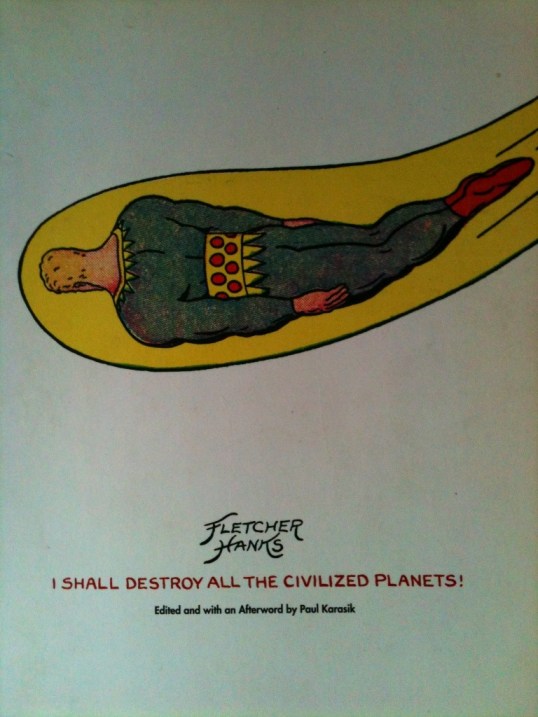
Fletcher Hanks/Gilbert Sorrentino (Books Acquired, 7.12.2012)

20120716-124509.jpg

I’ve been wanting to get my mitts on this Fletcher Hanks collection since I first read about it in The Believer five years ago. Finally came across a used copy in pristine shape.

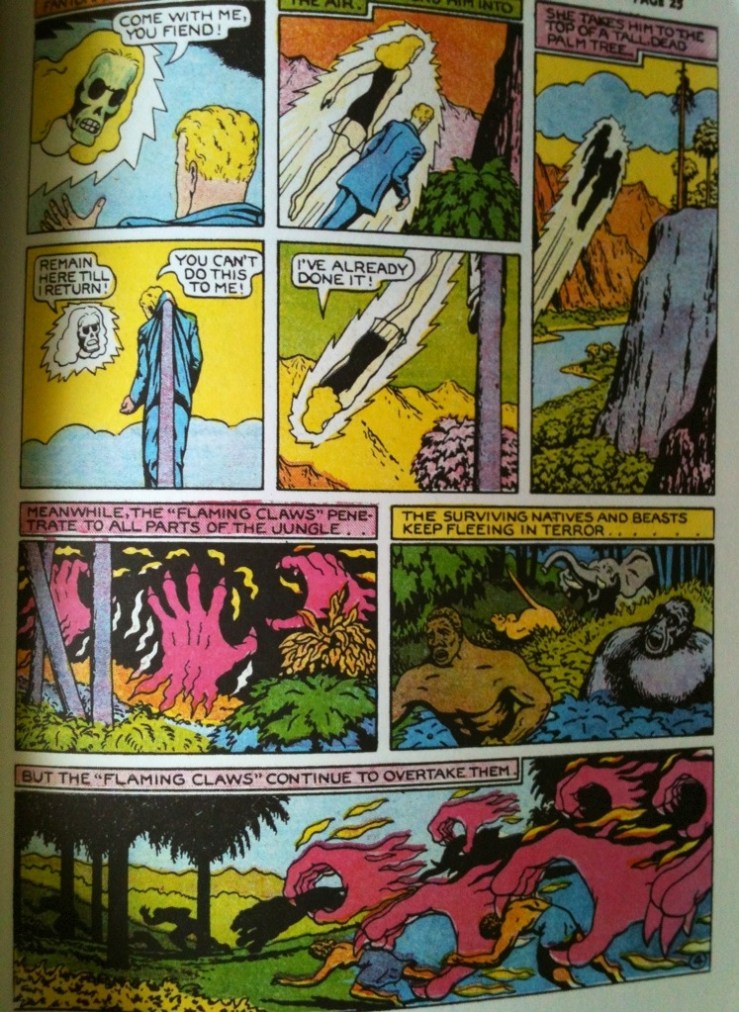
It’s really, really fucking weird. Sample page; full write-up forthcoming:

20120716-124542.jpg

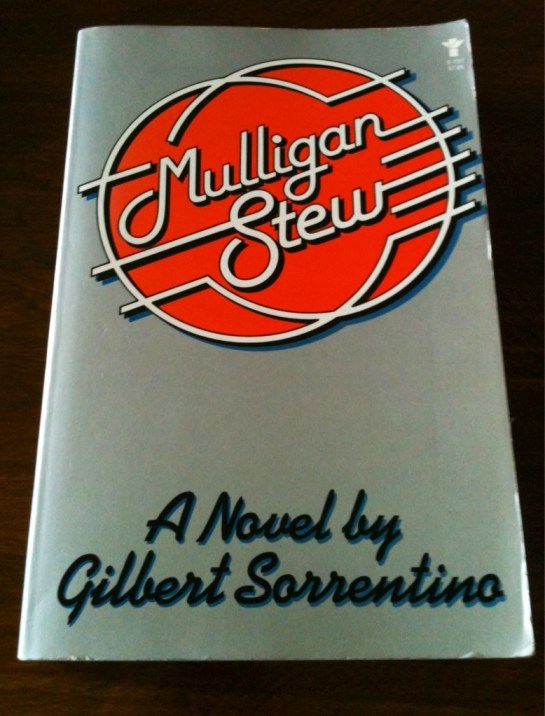
I’ve been itching to read Gilbert Sorrentino’s Mulligan Stew for a while. This copy may or may not be a first edition paperback—the rejection letters in the front are on a different type of paper than the rest of the novel (color/stock). It’s a big book—I’m finishing up a rereading of 2666, so maybe this one will jump in front of Georges Perec’s Life: A User’s Manual. Thoughts?

20120716-124550.jpg

Books Acquired, 6.25.2012—Or, Here’s What’s New from Picador This Month

20120711-100508.jpg

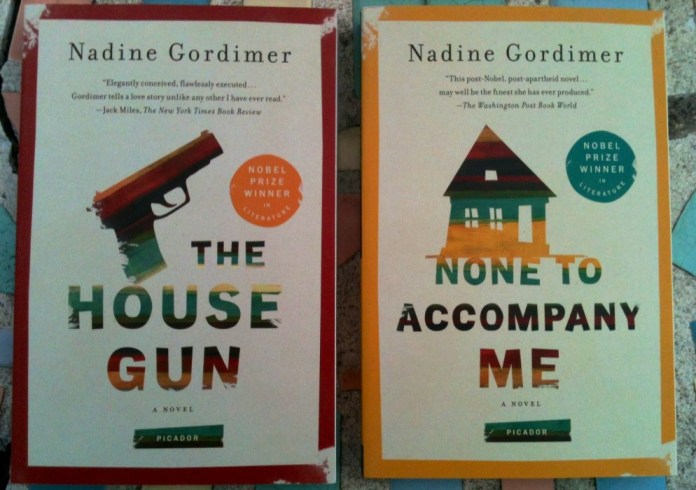
A nice stack from the good folks at Picador this month, including two new entries in their ongoing Nadine Gordimer reissues. I like the design on the series:
20120711-100530.jpg

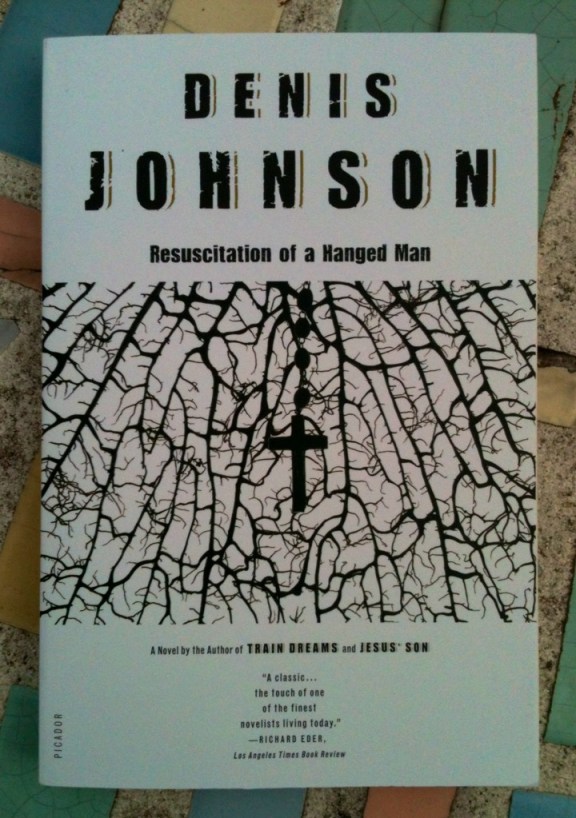
There’s also a reissue of Denis Johnson’s 1991 novel Resuscitation of a Hanged Man, which I haven’t read, but will read soon, because Johnson is just one of those writers I’ll end up reading everything by eventually. From a 1991 NYT review of the novel:

There has never been any doubt about Denis Johnson’s ability to write a gorgeous sentence. The author of “Angels,” “Fiskadoro” and “The Stars at Noon” has become increasingly musical in his prose, and his latest novel, “Resuscitation of a Hanged Man,” depends on such sentences as the primary unit of narrative motion. The novel seems, like a poem, to be written line to line. It is very much a book about one man, one sensibility.

At the outset of the novel, Leonard English, driving to the tip of Cape Cod in the off season, stops for a drink, then spins out of control, running his car onto a traffic island. He ends up taking a taxi to his destination, which is Provincetown. He has attempted suicide before the book’s beginning; now he is moving to the Cape to work for Ray Sands, a private investigator who also owns a small radio station. When we can see him most clearly, English seems very similar to the narrator of the short story — drifting, guilty, in a world of strangers, striving to connect with another person and with his God.
20120711-100537.jpg

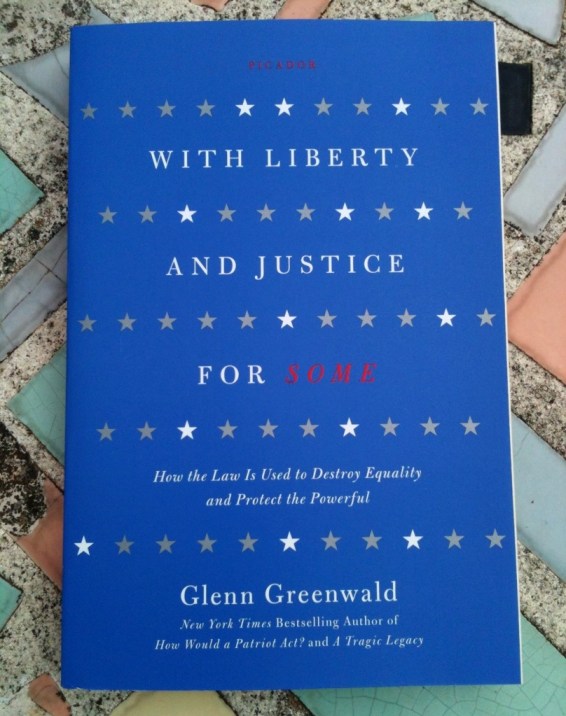
Last year’s With Liberty and Justice for Some is out now in trade paperback. If you are even slightly familiar Glenn Greenwald’s columns at Salon, you’ll likely know what to expect. For those of us predisposed to agree with his analyses, With Liberty and Justice for Some is likely to inspire outrage and a certain kind of fatigue.
20120711-100545.jpg

Here’s an excerpt from an interview between Harper’s Scott Horton and Greenwald:

American history is suffused with violations of equality before the law. The country was steeped in such violations at its founding. But even when this principle was being violated, its supremacy was also being affirmed: resoundingly and unanimously in the case of the founders. That the rule of law—not the rule of men—would reign supreme was one of the few real points of agreement among all the founders. Arguably it was the primary one.

There’s an obvious element of hypocrisy in this fact; espousing a principle that one simultaneously breaches in action is hypocrisy’s defining attribute. But there’s also a more positive side: the country’s vigorous embrace of the principle of equality before law enshrined it as aspiration. It became the guiding precept for how “progress” was understood, for how the union would be perfected.

And the most significant episodes of progress over the next two centuries—the emancipation of slaves, the ending of Jim Crow, the enfranchisement and liberation of women, vastly improved treatment for Native Americans and gay Americans—were animated by this ideal. That happened because “blind justice”—equality before law—was orthodoxy in American political culture. The principle was sacrosanct even when it was imperfectly applied.

The Ford pardon of Nixon changed that, radically and permanently. When President Ford went on national television to explain to an angry, skeptical citizenry why the most powerful political actor would be fully immunized for the felonies he got caught committing, Ford expressly rejected the rule of law. He paid lip service to its core principle—the “law is no respecter of persons”—but then tacked on a newly concocted amendment designed to gut that principle: “but the law is a respecter of reality.”

In other words, if—in the judgment of political leaders—it’s sufficiently disruptive, divisive, or distracting to hold powerful political officials accountable under the law on equal terms with ordinary Americans, then they should be exempt and the rule of law suspended, all in the name of political harmony, of “moving on.” But of course, it willalways be divisive and distracting, by definition, to prosecute the most powerful political leaders, so Ford’s rationale, predictably, created a template for elite immunity.

The rationale for Ford’s pardon of Nixon was subsequently legitimized, and it created a precedent for shielding the most powerful elites from the consequences of their lawbreaking. The arguments Ford offered are the same ones now hauled out over and over whenever it is time to argue why the most powerful among us should not be held accountable: It’s not just for the good of the immunized criminal, but in the common good, to Look Forward, Not Backward. This direct assault on the rule of law was pioneered by the pardon of Richard Nixon.

20120711-100609.jpg

Steve Sem-Sandberg’s The Emperor of Lies is a Swedish novel in English Translation by Sarah Death. Look, I’m generally dismissive of Holocaust fiction because 1) the sheer number of books that come in to Biblioklept World Headquarters that use the Holocaust as a milieu and 2) the tacky and generally lazy way that such books often attempt to manipulate their audiences. Still, The Emperor of Lies seems like it’s probably a sight better than most such books, and it’s gotten generally good reviews, including this one from The Independent (UK), which apparently thinks that a book review of five sentences is fine:

Any writer – let alone one from neutral Sweden – who sets out to place another brick in the vast wall of Holocaust fiction must be deluded or inspired. Astonishing to report: Sem-Sandberg belongs in the tiny second band.

Utterly involving, morally scrupulous, written with a verve and pace that belie its dreadful setting, The Emperor of Lies – in Sarah Death’s masterly translation – really does renew the genre.

Its portrait of resistance and survival in the ghetto of Lodz between 1940 and 1944 focuses on the monstrous enigma of Chaim Rumkowski, despotic overlord of his fellow-Jews. Sem-Sandberg catches his capricious charisma. Other characters, who record their fate or fight it, also shine, while their tragic destiny moves on at mesmerising speed.

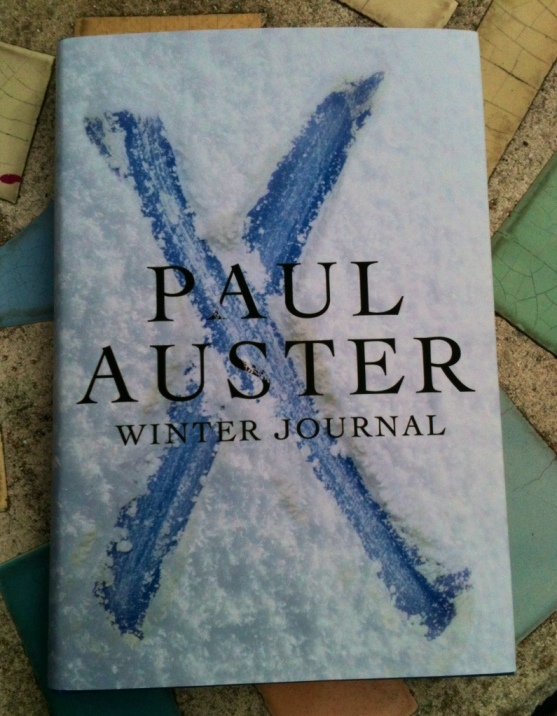
Paul Auster’s Winter Journal (Book Acquired Some Time Over the July 4th Holiday)

20120711-100349.jpg

I was pleasantly surprised to find Paul Auster’s forthcoming memoir Winter Journal in the mail after being away for a week. I had mixed feelings about Auster’s last novel Sunset Park, but I dig his nonfiction, and I opened Winter Journal randomly to an episode where the adolescent Auster loses his virginity to a hooker in a passage that’s both tender and funny, so this one seems promising. (It’s also written entirely in the second person pronoun).

Publisher Henry Holt’s blurb:

Facing his sixty-third winter, internationally acclaimed novelist Paul Auster sits down to write a history of his body and its sensations—both pleasurable and painful.

Thirty years after the publication of The Invention of Solitude, in which he wrote so movingly about fatherhood, Auster gives us a second unconventional memoir in which he writes about his mother’s life and death. Winter Journal is a highly personal meditation on the body, time, and memory, by one of our most intellectually elegant writers.

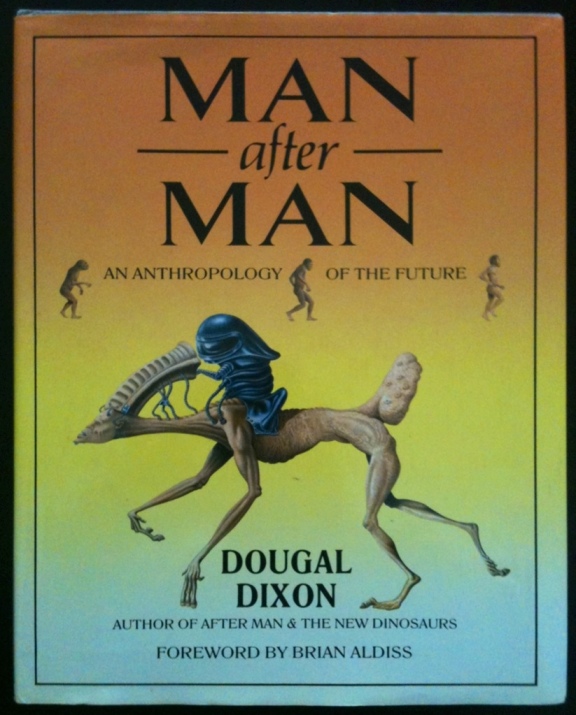
Dougal Dixon’s Man After Man (Book Acquired 6.30.2012)

20120710-095416.jpg

I found a first edition hardback copy of Dougal Dixon’s cult book Man After Man not quite two weeks ago when I was browsing books for my cousins’ kids, who I would see over the July 4th holiday. I’ve possessed an illicit digital copy of Man After Man for a few years, but it’s not nearly as fun as the real thing. As its subtitle attests, Dixon’s book is an anthropology of the future, a sort of speculative sci-fi textbook that imagines a future-history of genetically engineered humanity. The illustrations by Philip Hood (who deserves bigger billing) are especially weird and wonderful. Some samples below.

20120710-094738.jpg

20120710-094752.jpg

20120710-094800.jpg

20120710-094806.jpg

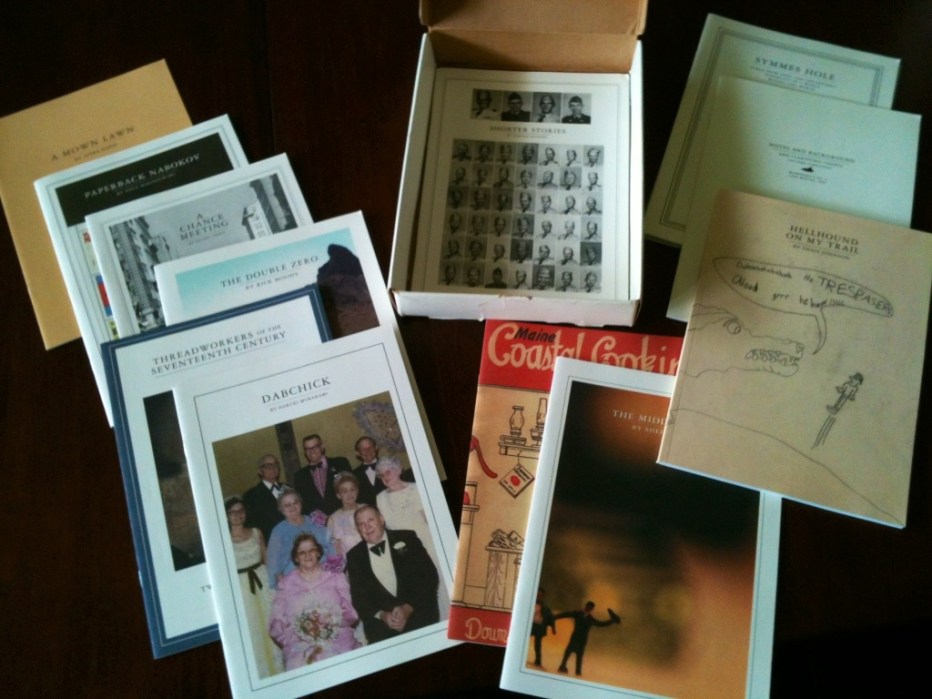
McSweeney’s #4 (Box of Books Acquired 6.14.2012)

20120626-095248.jpg

The novelist John Warner (The Funny Man), in an act of incredible kindness, sent me a copy of McSweeney’s #4, which he helped to put out years ago. In one of our emails, John offers the following:

It could be the best issue ever, a kind of platonic ideal of the McSweeney’s aesthetic before people started saying that things had a McSweeney’s aesthetic, a more innocent time if you will. My memory is that we were selling them at a live event at the Ethiopian Diamond restaurant in Chicago that we set up to help promote Neal Pollack’s book, and somehow the leftovers wound up in my trunk and I’ve been hauling them place to place ever since. . .

It’s a sort of fun artifact of the early/carefree days of McSweeney’s before Dave was DAVE, and the whole thing was still very haphazard.
It’s difficult to overstate the range of writers here: Lydia Davis, Jonathan Lethem, George Saunders, Rick Moody, Haruki Murakami, a three-act play by Denis Johnson, and much, much more:

20120626-100530.jpg

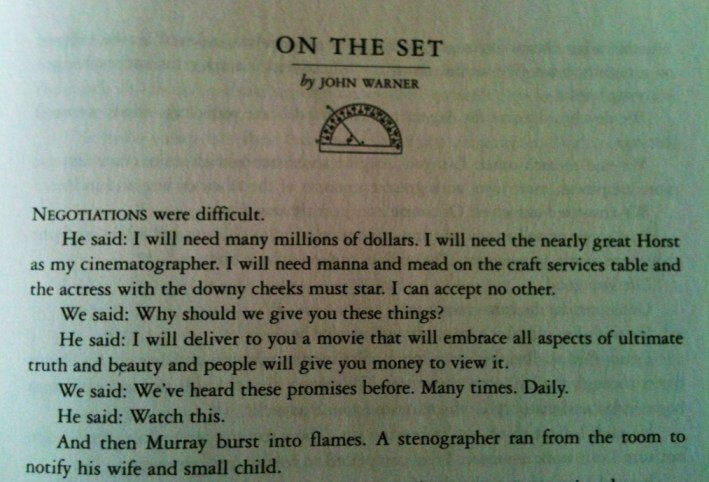
 There are also many short stories, including “On the Set” by John Warner, his second published story:

20120626-100545.jpg

It’s wonderfully absurd.

To read something hilarious and absurd and ultimately kind of touching, read John’s interview with critic Kevin Morris, who hated The Funny Man.

Apostle Islands/Another Country (Books Acquired, Some Time Last Week)

20120624-101945.jpg

Tommy Zurhellen’s Apostle Islands is forthcoming from indie Atticus. Their write up:

It’s not easy for a messiah to grow up in the Badlands of North Dakota. And it’s even harder for him to share his message when radical ideas and so-called “miracles” are the surest way to get the FBI breathing down your neck. The sequel to Nazareth, North DakotaApostle Islandsfollows Sam Davidson and his group of roughneck followers as they save wedding receptions, cure cancer patients, and boost a flagging fishing season, all while breaking bread and laws and making peace and enemies.

On a mission to change one botched up world, Sam knows he will one day be called to make the ultimate sacrifice, and indeed he sees the writing on the shores of Lake Superior when one of his inner circle betrays him. A playful and delightfully irreverent take on the New Testament, Apostle Islands reveals what it takes to shake up the status quo while paying the price to save the ones you love.

20120624-101953.jpg

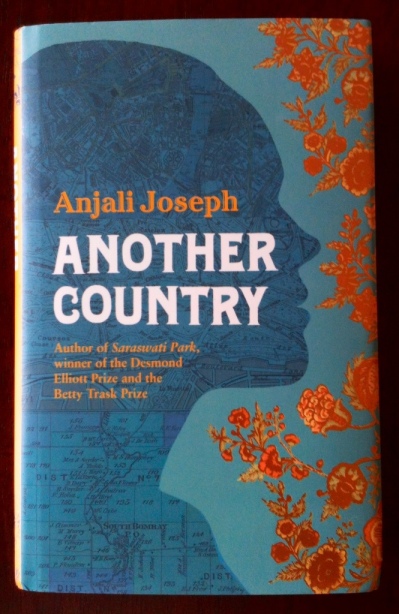
Anjali Josephs’s Another Country also has a map on its cover. This one got a bit of a scathing review in The Guardian last week; the first few pages seem well written though. Blurb:

Paris, London, Bombay: three cities form a backdrop to a journey through Leela’s twenties at the dawn of the new millennium, as she learns to negotiate the world, work, relationships and sex, and find some measure of authenticity. Sharp, funny, and melancholy, Another Country brings a cool eye to friendship, love, and the idea of belonging in its movements through old and new worlds. As with her debut, Saraswati Park (2010), which won the Desmond Elliott Prize, the Betty Trask Prize and India’s Vodafone Crossword Prize, Anjali Joseph’s beautiful, clear writing captures exactly both emotions and surroundings.

Clarice Lispector/Malcolm Braly (Books Acquired 6.22.2012)

20120622-184839.jpg

It’s a sickness. Should I explain that the bookstore is like 1.1 miles from my house? And that it holds somewhere between one and two million books? (No exaggeration). That it’s like three or four buildings  cobbled together in snaking passages, all said passages lined by books? It’s also like .2 miles from the grocery store I/we usually shop at. Which I had to go by to get mozzarella. For make your own pizza night. But of course, I had to stop off and browse. (Is it weird I set the timer on my iPhone? Gave myself 17 minutes?).

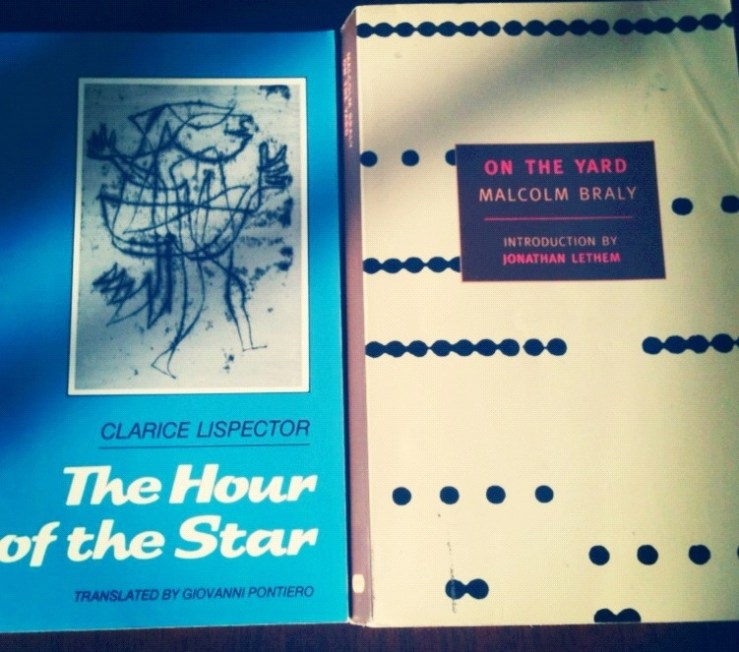
Anyway. Picked up these two.

The Lispector comes via recommendation of Scott Esposito, although this New Directions edition is not the latest translation, but, I dunno. It’s short. The Braly, well, I’d never heard of it, honestly, but it’s an NYRB edition, and the spines of those books always standout, and Lethem introduces it, and even though I haven’t liked Lethem’s last few books, well, he’s still a tastemaker par excellence, and Kurt Vonnegut blurbs it on the back, calling it, “Surely the great American prison novel.” And I just finished “The Part About the Crimes” in 2666 (yet again, more on that to come) and maybe a prison novel seems especially intriguing.

Apple, Calvino, Žižek (Books Acquired, 6.15.2012)

20120615-171630.jpg