“It was a lone tree burning on the desert” | Blood Meridian’s Moral Core

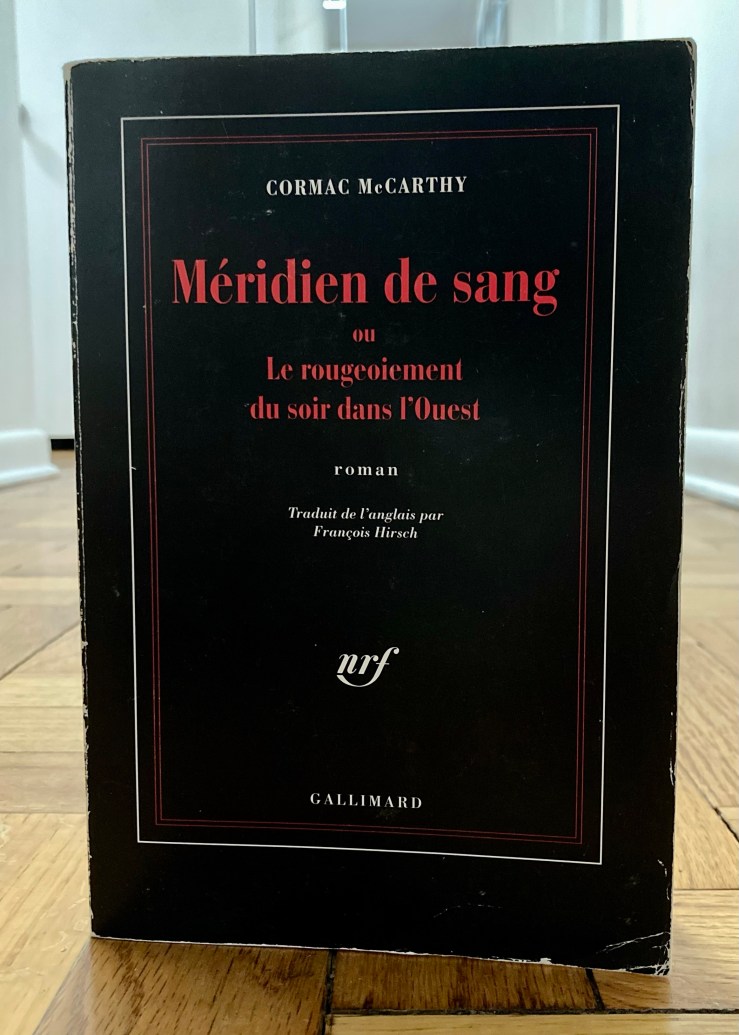
Cormac McCarthy’s Blood Meridian begins as a strange, violent picaresque bildungsroman, detailing the adventures of a teenage runaway known only as “the kid.” When the Kid falls in with John Glanton’s marauders, the narrative lens expands and pulls back; Glanton’s gang essentially envelopes the Kid’s personality. The pronoun “they” dominates the Kid’s own agency, for the most part, and the massive figure of Judge Holden usurps the narrative’s voice. The effect is that the Glanton gang’s killing, raping, and scalping spree becomes essentially de-personalized, and, to a certain extent, amoralized.

The Kid, and perhaps the ex-priest Tobin and the Kid’s erstwhile partner Toadvine, are the only major characters who bear any semblance of conventional morality in the narrative. The Kid exhibits a willingness to help others early on when he agrees to stitch one of Tobin’s wounds; later, he removes an arrowhead from a wounded man when no other member of the company will (Tobin chides him for caring, declaring that the wounded man would have killed the Kid had the Kid’s efforts been unsuccessful). For most of the central narrative though, the Kid’s individual actions are consumed into the gang’s “they.” However, at the beginning of chapter 15 the narrative focuses again on the Kid, who is charged with killing a wounded man named Shelby to “spare” him from the approaching Mexican army (this is a bizarre version of mercy in Blood Meridian). Shelby pleads to live and the Kid allows it, even giving the man some water from his own canteen. After he leaves he catches up with a man named Tate whose horse is wounded. Tate remarks on the boy’s foolishness for helping him, but the Kid does so nonetheless, sharing Tate’s burden as they try to make their way back to the rest of their party. Tate is soon killed by Mexican scouts. In both cases, the outcome of the Kid’s moral actions–the will to help, to save, to preserve life–are negated by the book’s narrative outcomes, but I would argue that his intentions in the face of violence somehow secure his humanity.

His journey alone to rejoin the Glanton gang is figured as a kind of vision quest, a strange echo of Christ in the desert, perhaps. At its core–and perhaps the moral core of the book–is the following strange passage–

It was a lone tree burning on the desert. A herladic tree that the passing storm had left afire. The solitary pilgrim drawn up before it had traveled far to be here and he knelt in the hot sand and held his numbed hands out while all about in that circle attended companies of lesser auxiliaries routed forth into the inordinate day, small owls that crouched silently and stood from foot to foot and tarantulas and solpugas and vinegarroons and the vicious mygale spiders and beaded lizards with mouths black as a chowdog’s, deadly to man, and the little desert basilisks that jet blood from their eyes and the small sandvipers like seemly gods, silent and the same, in Jedda, in Babylon. A constellation of ignited eyes that edged the ring of light all bound in a precarious truce before the torch whose brightness had set back the stars in their sockets.

The burning tree alludes to YHWH’s appearance to Moses as a burning bush, and also the tree of smoke that led the Israelites through the desert. Significantly, all the strange, terrible creatures of the desert come to meet around it in a “precarious truce.” The burning tree inverts the natural, inescapable violence that dominates the novel and turns it into a solitary, singular moment of peace. When the Kid awakes–alone–the tree is merely a “smoldering skeleton of a blackened scrog.” God is not in the permanence of the object but rather in the witnessing of the event–Blood Meridian locates (a version of a) god in the natural violence of burning and consumption. There is a strong contrast here, I believe, with the book’s other version of god, the Judge’s proclamation that “War is god.” The Judge, a cunning, devilish trickster, wants to reduce (or enlarge) war to all contest of wills, to pure violence–to divorce it from any ideological structure. Yet the burning tree episode reveals natural violence divorced from ideology. The animals (and the man, the Kid) suspend their Darwinian animosities in order to witness the sublime. The episode is silent, outside of language, order, ideology. This silence is echoed in the novel’s final confrontation between the Judge and the Kid, who retorts simply “You ain’t nothin'” to the Judge’s barrage of grandiose language. While the rejoinder may not save the Kid, its rejection perhaps saves his soul (if such a thing exists in the novel, which I believe it does). So, while larger-than-life Judge Holden may dominate the novel, Cormac McCarthy has nonetheless given us another moral road to follow, should we choose.

[Ed. note—Biblioklept first published a version of this post in October, 2010.]

“Books are made out of books” | Blood Meridian and Samuel Chamberlain

In his 1992 interview with The New York Times, Cormac McCarthy said, “The ugly fact is books are made out of books. The novel depends for its life on the novels that have been written.” McCarthy’s masterpiece Blood Meridian, as many critics have noted, is made of some of the finest literature out there–the King James Bible, Moby-Dick, Dante’s Inferno, Paradise Lost, Faulkner, and Shakespeare. While Blood Meridian echoes and alludes to these authors and books thematically, structurally, and linguistically, it also owes much of its materiality to Samuel Chamberlain’s My Confession: The Recollections of a Rogue.

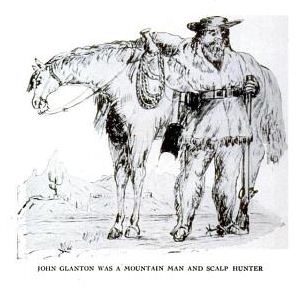
Chamberlain, much like the Kid, Blood Meridian’s erstwhile protagonist, ran away from home as a teenager. He joined the Illinois Second Volunteer Regiment and later fought in the Mexican-American War. Confession details Chamberlain’s involvement with John Glanton’s gang of scalp-hunters. The following summary comes from the University of Virginia’s American Studies webpage

According to Chamberlain, John Glanton was born in South Carolina and migrated to Stephen Austin’s settlement in Texas. There he fell in love with an orphan girl and was prepared to marry her. One day while he was gone, Lipan warriors raided the area scalping the elderly and the children and kidnapping the women- including Glanton’s fiancee. Glanton and the other settlers pursued and slaughtered the natives, but during the battle the women were tomahawked and scalped. Legend has it, Glanton began a series of retaliatory raids which always yielded “fresh scalps.” When Texas fought for its independence from Mexico, Glanton fought with Col. Fannin, and was one of the few to escape the slaughter of that regiment at the hands of the Mexican Gen. Urrea- the man who would eventually employ Glanton as a scalp hunter. During the Range Wars, Glanton took no side but simply assassinated individuals who had crossed him. He was banished, to no avail, by Gen. Sam Houston and fought as a “free Ranger” in the war against Mexico. Following the war he took up the Urrea’s offer of $50 per Apache scalp (with a bonus of $1000 for the scalp of the Chief Santana). Local rumor had it that Glanton always “raised the hair” of the Indians he killed and that he had a “mule load of these barbarous trophies, smoke-dried” in his hut even before he turned professional.

Chamberlain’s Confession also describes a  figure named Judge Holden. Again, from U of V’s summary–

Glanton’s gang consisted of “Sonorans, Cherokee and Delaware Indians, French Canadians, Texans, Irishmen, a Negro and a full-blooded Comanche,” and when Chamberlain joined them they had gathered thirty-seven scalps and considerable losses from two recent raids (Chamberlain implies that they had just begun their careers as scalp hunters but other sources suggest that they had been engaged in the trade for sometime- regardless there is little specific documentation of their prior activities). Second in command to Glanton was a Texan- Judge Holden. In describing him, Chamberlain claimed, “a cooler blooded villain never went unhung;” Holden was well over six feet, “had a fleshy frame, [and] a dull tallow colored face destitute of hair and all expression” and was well educated in geology and mineralogy, fluent in native dialects, a good musician, and “plum centre” with a firearm. Chamberlain saw him also as a coward who would avoid equal combat if possible but would not hesitate to kill Indians or Mexicans if he had the advantage. Rumors also abounded about atrocities committed in Texas and the Cherokee nation by him under a different name. Before the gang left Frontreras, Chamberlain claims that a ten year old girl was found “foully violated and murdered” with “the mark of a large hand on her throat,” but no one ever directly accused Holden.

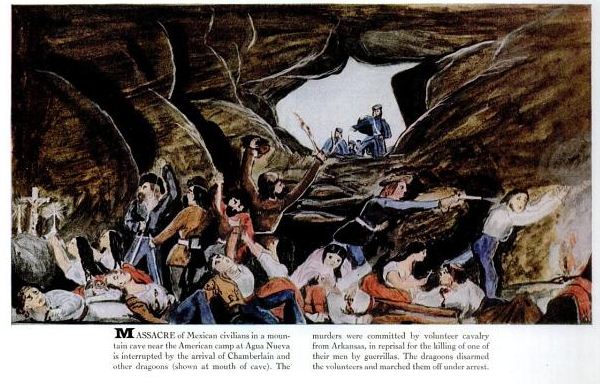
It’s fascinating to note how much of the Judge is already there–the pedophilia, the marksmanship, the scholarship, and, most interesting of all, the lack of hair. Confession goes on to detail the killing, scalping, raping, and raiding spree that comprises the center of Blood Meridian. Chamberlain even describes the final battle with the Yumas, an event that signals the dissolution of the Glanton gang in McCarthy’s novel.

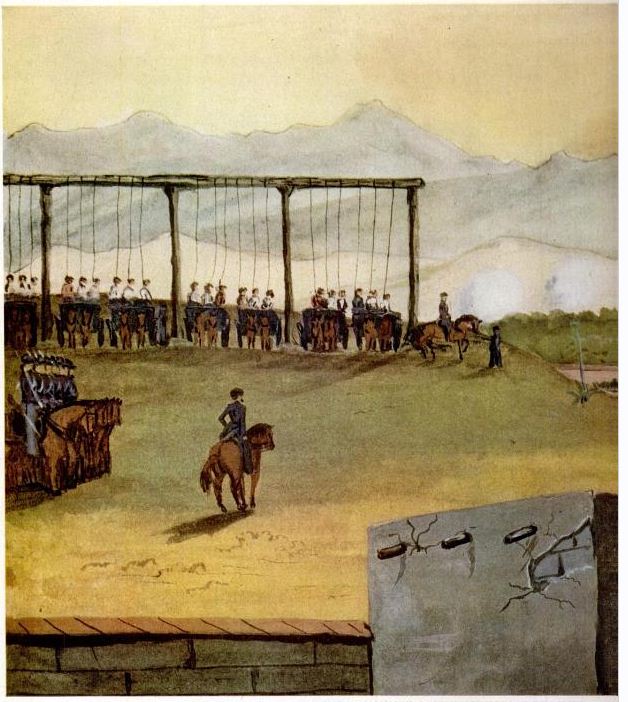
Content aside, Chamberlain’s prose also seems to presage McCarthy’s prose. In his book Different Travelers, Different Eyes, James H. Maguire notes that, “Both venereal and martial, the gore of [Chamberlain’s] prose evokes Gothic revulsion, while his unschooled art, with its stark architectural angles and leaden, keen-edged shadows, can chill with the surreal horrors of the later Greco-Italian painter Giorgio de Chirico.” Yes, Chamberlain was an amateur painter (find his paintings throughout this post), and undoubtedly some of this imagery crept into Blood Meridian.

You can view many of Chamberlain’s paintings and read an edit of his Confession in three editions of Life magazine from 1956, digitally preserved thanks to Google Books–here’s Part I, Part II, and Part III. Many critics have pointed out that Chamberlain’s narrative, beyond its casual racism and sexism, is rife with factual and historical errors. He also apparently indulges in the habit of describing battles and other events in vivid detail, even when there was no way he could have been there. No matter. The ugly fact is that books are made out of books, after all, and if Chamberlain’s Confession traffics in re-appropriating the adventure stories of the day, at least we have Blood Meridian to show for his efforts.

[Ed. note–Biblioklept first ran this post in September of 2010.]

Selections from One-Star Amazon Reviews of Cormac McCarthy’s Blood Meridian

[Editorial note: The following citations come from one-star Amazon reviews Cormac McCarthy’s novel Blood MeridianI’ve preserved the reviewers’ original punctuation and spelling. More one-star Amazon reviews.].


It may be art.

Damn McCarthy.

I find him boring.

unrelenting nihilism

The story is thin at best.

Are we supposed to enjoy it?

I felt abused by Blood Meridian

not a traditionally enjoyable book

this book is simply just not “all that”

wordy, over the top speechy dialogue

endless streams of dependent clauses

I am a devout fan of Cormac McCarthy.

The characters are not really sympathetic

He is obviously a sick man psychologically.

all about violence and no plot what so ever.

if I was a trained geologist I might like it better.

too many words that are not in standard dictionary

I guess people think he is cool because he writes so violent.

This one guy peed on some clay stuff to create a bomb like thing

murder, slaughter, killing, massacre, beating, stabbing, shooting, scalping

It consists of a series of almost unconnected scenes of unspeakable violence.

Esoteric words, eccentric expressions, pedantic philosophizing, arcane symbolism

I have to believe that he must be embarrassed to have this book back on the market.

A bunch of guys ride around Mexico killing everyone they come across for no particular reason

If you’re a fan of babies, quotation marks, and native americans, then avoid this book like the plague.

The reception he has had shows how tone deaf America has become to moral values, any moral values.

This book was written long before McCarthy had mastered the style that has brought him so much fame and credit.

the unrelenting amount of violence and cruelty in Blood Meridian strikes me as having crossed the line to pornography

It seemed like Cormac McCarthy wrote this with a dictionary in his lap trying to find words that he had never used before

Many of the words have to have been made up or are contractions of words and/or non-words, including much Spanish dialogue

Eliminate five words from the English language (“They rode on” and “He spat”)and this book would have been about 25 pages long

In this book, one sees him trying hard to hone his now-extraordinary powers of observation and description, and failing badly.

The standards for writing have clearly fallen far if all the praise heaped upon this inchoate, pompous mess of a novel is to be taken seriously.

Everything died: mules, horses, chickens, plants, rivers, snakes, babies, toddlers, boys, girls, women, men, ranchhands, bartenders, cowboys, good guys, bad guys…

I dont think the writer knows very much about AMERICAN history, the way he makes all the scalping get done by the AMERICANS and never by the indians, nor do I think he a PATRIOT

Wherein a company of men wander northern Mexico and the West killing, maiming, raping, and/or torturing everyone they meet, all described in gory, endless detail, led by the symbolic characters Glanton and his advisor, ‘the judge’, and supposedly illustrating that war and bloodletting are the only things that count, and the rest of life is just a meaningless dance.

Some kid with a few guys and a spattering of mans rambling through some part of the US or Mexico or a post-apocalyptic Australian desert seeing scores of gruesome, pointless scenes of violence, inhumanity, and death.

Holden is the sort of overt child defiling character who in real life wouldn’t last a month in a state penitentiary, because someone would rightly dispatch him as soon as possible.

Self-consciously faux-baroque linguistic stylings make this fetus-hurtin’ Treatise a feast for weakest link readers fascinated by the mark of the beast.

This book has some wonderful flowery language, and some beautiful descriptions of the southwest countryside.

They say that this book contains BIBLICAL themes, but I’ve read it and I don’t see how that could be so.

The author seems as if he is somehow trying to make some kind of “statement” about AMERICA

In a well ordered society McCarthy would be serving a life term or he would not exist at all.

there are times when it even seems as though English were not McCarthy’s first language

this book cannot be called a novel because it does not have character development

Would you let Cormac McCarthy look after your child for the night?

McCarthy is the most evil person because he is a talented writer

the author likes to use pronouns without establishing a subject

Who are the good guys and the bad guys, everyone is bad.

read Lonesome Dove instead, it’s a hundred times better

rampant nonstop mindless violence and depravity

I can’t dislike a book more than I dislike this one

This is a great writer being lazy and skating

good if you enjoy violence and nonsense

Theres lots of scalping of indians

Was there a quota on similes?

this booked scarred me

sociopath killers

It’s pure bunk.

a moral blight

utter trash

Ugh

Suttree, Cormac McCarthy’s Grand Synthesis of American Literature

In his 1992 interview with The New York Times, Cormac McCarthy said, “The ugly fact is books are made out of books. The novel depends for its life on the novels that have been written.” McCarthy’s fourth novel, 1979’s Suttree is such a book, a masterful synthesis of the great literature — particularly American literature — that came before it. And like any masterful synthesis, Suttree points to something new, even as it borrows, lifts, and outright steals from the past. But before we plumb its allusions and tropes and patterns, perhaps we should overview the plot, no?

The novel rambles over several years in the life of Cornelius Suttree. It is the early 1950s in Knoxville, Tennessee, and Suttree ekes out a mean existence on the Tennessee River as a fisherman, living in a ramshackle houseboat on the edge of a shantytown. This indigent life is in fact a choice: Suttree is the college-educated son of an established, wealthy family. His choice is a choice for freedom and self-reliance, those virtues we like to think of, in our prejudicial manner, as wholly and intrinsically American. Suttree then is both Emersonian and Huck Finnian, a reflective and insightful man who finds his soul via a claim to agency over his own individuality, an individuality poised in quiet, defiant rebellion against the conforming forces of civilization. These forces manifest most pointedly in the Knoxville police, a brutal, racist organization, but we also see social constraint in the form of familial duty. One thinks of the final lines of Huckleberry Finn: “I reckon I got to light out for the Territory ahead of the rest, because Aunt Sally she’s going to adopt me and sivilize me and I can’t stand it. I been there before.”

Like Huck, Suttree aims to resist all forces that would “sivilize” him. His time on the river and in the low haunts of Tennessee (particularly the vice-ridden borough of McAnally) brings him into close contact with plenty of other outcasts, but also his conscience, which routinely mulls over its place in the world. Suttree is punctuated by–perhaps even organized by–several scenes of hallucination. Some of these psychotrips result from drunkeness, one comes from accidentally ingesting the wrong kind of mushrooms (or, the right kind, if that’s your thing), and the final one, late in the novel, sets in as Suttree suffers from a terrible illness. In his fever dream, a small nun–surely a manifestation of the guilt that would civilize us–accuses him–

Mr. Suttree it is our understanding that at curfew rightly decreed by law in that hour wherein night draws to its proper close and the new day commences and contrary to conduct befitting a person of your station you betook yourself to various low places within the shire of McAnally and there did squander several ensuing years in the company of thieves, derelicts, miscreants, pariahs, poltroons, spalpeens, curmudgeons, clotpolls, murderers, gamblers, bawds, whores, trulls, brigands, topers, tosspots, sots and archsots, lobcocks, smellsmocks, runagates, rakes, and other assorted and felonious debauchees.

The passage is a marvelous example of McCarthy’s stream-of-consciousness technique in Suttree, moving through the various voices that would ventriloquize Suttree, into the edges of madness, strangeness, and the sublimity of language. The tone moves from somber and portentous into bizarre imagery that blends humor and pathos. This is the tone of Suttree, a language that gives voice to transients and miscreants, affirming the dignity of their humanity even as it details the squalor of their circumstance.

It is among these criminals and whores, transvestites and gamblers that Suttree affirms his own freedom and humanity, a process aided by his comic foil, Gene Harrogate. Suttree meets Harrogate on a work farm; the young hillbilly is sent there for screwing watermelons. After his release, Harrogate moves to a shantytown in Knoxville. He’s the country mouse determined to become the city rat, the would-be Tom Sawyer to Suttree’s older and wiser Huck Finn. Through Harrogate’s endless get-rich-quick schemes, McCarthy parodies that most-American of tales, the Horatio Alger story. Simply put, the boy is doomed, on his  “way up to the penitentiary” as Suttree constantly admonishes. In one episode, Harrogate tries to buy arsenic from “a grayhaired and avuncular apothecary” to poison bats he hopes to sell to a hospital (don’t ask)–

May I help you? said the scientist, his hands holding each other.

I need me some strychnine, said Harrogate.

You need some what?

Strychnine. You know what it is dont ye?

Yes, said the chemist.

I need me about a good cupful I reckon.

Are you going to drink it here or take it with you?

Shit fire I aint goin to drink it. It’s poisoner’n hell.

It’s for your grandmother.

No, said Harrogate, craning his neck suspectly. She’s done dead

Suttree, unwilling father-figure, eventually buys the arsenic for the boy against his better judgment. The scene plays out as a wonderful comic inversion of William Faulkner’s “A Rose for Emily,” from which it is so transparently lifted. McCarthy borrows liberally from Faulkner here, of course, most notably in the language and style of the novel, but also in scenes like this one, or a later episode that plays off Faulkner’s comic-romantic story of a man and a woman navigating the aftermath of a flood, “Old Man.” Unpacking the allusions in Suttree surpasses my literary knowledge or skill, but McCarthy is generous, if oblique, with his breadcrumb trail. Take, for example, the following sentence: “Suttree with his miles to go kept his eyes to the ground, maudlin and muttersome in the bitter chill, under the lonely lamplight.” The forced phrase “miles to go” does not immediately present itself as a reference to Robert Frost’s famous poem, yet the direction of the sentence retreats into the history of American poetry; with its dense alliteration and haunted vowels, it leads us into Edgar Allan Poe territory. Only a few dozen pages later, McCarthy boldly begins a chapter with theft: “In just spring the goatman came over the bridge . . .” The reference to e.e. cummings explicitly signifies McCarthy’s intentions to play with literature. Later in the book, while tripping on mushrooms in the mountains, Suttree is haunted by “elves,” the would-be culprits in Frost’s poem “Mending Wall.” The callback is purposeful, but tellingly, McCarthy’s allusions are not nearly as fanciful as their surface rhetoric might suggest: the goatman does not belong in Knoxville–he’s an archaic relic, forced out of town by the police; the elves are not playful spirits but dark manifestations of a tortured psyche.

Once one spots the line-lifting in Suttree it’s hard to not see it. What’s marvelous is McCarthy’s power to convert these lines, these riffs, these stories, into his own tragicomic beast. An early brawl at a roadhouse recalls the “Golden Day” episode of Ralph Ellison’s Invisible Man; a rape victim’s plight echoes Hubert Selby’s “Tralala”; we find the comic hobos of John Steinbeck’s Cannery Row–we even get the road-crossing turtle from The Grapes of Wrath. A later roadhouse chapter replays the “Circe/Nighttown” nightmare in James Joyce’s Ulysses. Ulysses is an easy point of comparison for Suttree, which does for Knoxville what Joyce did for Dublin. Suttree echoes Ulysses’s language, both in its musicality and appropriation of varied voices, as well as its ambulatory structure, its stream-of-consciousness technique, its rude earthiness, and its size (nearly 600 pages). But, as I argued earlier, there’s something uniquely American about Suttree, and its literary appropriations tend to reflect that. Hence, we find Mark Twain, Herman Melville, Ernest Hemingway, Walt Whitman, Emerson and Thoreau, Emily Dickinson, and William Carlos Williams, to name just a few writers whose blood courses through this novel (even elegant F. Scott Fitzgerald is here, in an unexpected Gatsbyish episode late in the novel).

Making a laundry list of writers is weak criticism though, and these sources–all guilty of their own proud plagiarisms–are mentioned only as a means to an end, to an argument that what McCarthy does in Suttree is to synthesize the American literary tradition with grace and humor, while never glossing over its inherent dangers and violence. So, while it appropriates and plays with the tropes of the past, Suttree is still pure McCarthy. Consider the following passage, which arrives at the end of a drunken, awful spree, Suttree locked up for the night–

He closed his eyes. The gray water that dripped from him was rank with caustic. By the side of a dark dream road he’d seen a hawk nailed to a barn door. But what loomed was a flayed man with his brisket tacked open like a cooling beef and his skull peeled, blue and bulbous and palely luminescent, black grots his eyeholes and bloody mouth gaped tonguless. The traveler had seized his fingers in his jaws, but it was not alone this horror that he cried. Beyond the flayed man dimly adumbrate another figure paled, for his surgeons move about the world even as you and I.

Suttree’s dark vision points directly toward the language of McCarthy’s next novel, 1985’s Blood Meridian, roundly considered his masterpiece. Critics who disagree tend to point to Suttree as the pinnacle of McCarthy’s writing. I have no interest at this time in weighing the books against each other, nor do I think that doing so would be especially enlightening. For all of their sameness, they are very different animals: Suttree provides us intense access to its hero’s consciousness, where Blood Meridian always keeps the reader on the outside of its principals’ souls (if those grotesques could be said to have souls). And while Blood Meridian does display some humor, it is the blackest and driest humor I’ve ever read. Suttree is broader and more compassionate; it even has a fart joke. Blood Meridian, at least in my estimation (and many critics will contend this notion) has no flawed episodes; much of this results from the book’s own internal program–it resists love, compassion, and even human dignity. In contrast, Suttree is punctuated by two deaths the audience is meant to read as tragic, yet I found it impossible to do so. The first is the death of Suttree’s child, whom he has abandoned, along with its mother. As such, he is not permitted to take part in the funeral, observing the process rather from its edges. The second tragedy is the death of Suttree’s young lover in a landslide. The book begs us to empathize with Suttree, just as he often empathizes with the marginal figures in the novel, but ultimately these tragedies are a failed ploy. They underwrite a sublime encounter with death for Suttree, an encounter that deepens and enriches his character while paradoxically freeing him from the burdens of social duty and familial order. McCarthy is hardly alone in such a move; indeed, it seems like the signature trope of American masculine literature to me. It’s the move that Huck Finn wishes to make when he promises to light out for the Territory to escape the civilizing body of Aunt Sally; it’s the ending that Hemingway was compelled to give to Frederic Henry at the end of A Farewell to Arms; it’s all of Faulkner, with his mortification of fatherhood and the dramatic responsibility fatherhood entails. It is a cost analysis that neglects any potential benefits.

But these are small criticisms of a large, beautiful, benevolent novel, a book that begs to be reread, a rambling picaresque of comic and tragic proportions. “I learned that there is one Suttree and one Suttree only,” our hero realizes, but this epiphany is set against a larger claim. Near the end of the novel, Suttree goes to check on an old ragman who he keeps a watchful eye on. He finds the man dead, his shack robbed, his body looted. Despairing over the spectacle’s abject lack of humanity, Suttree cries, “You have no right to represent people this way,” for “A man is all men. You have no right to your wretchedness.” Here, Suttree’s painful epiphany is real and true, an Emersonian insight coded in the darkest of Whitman’s language. If there is one Suttree and one Suttree only, he is still beholden to all men; to be anti-social or an outcast is not to be anti-human. Self-hood is ultimately conditional on others and otherness. To experience the other’s wretchedness is harrowing; to understand the other’s wretchedness and thus convert it to dignity is life-affirming and glorious. Suttree is a brilliant, bold, marvelous book. Very highly recommended.

[Ed. note—Biblioklept originally published a version of this review on November 27, 2010].


Still Life with Mug, Pipe and Book — John Frederick Peto

Still Life with Mug, Pipe and Book,1899 by John Frederick Peto (1854-1907)

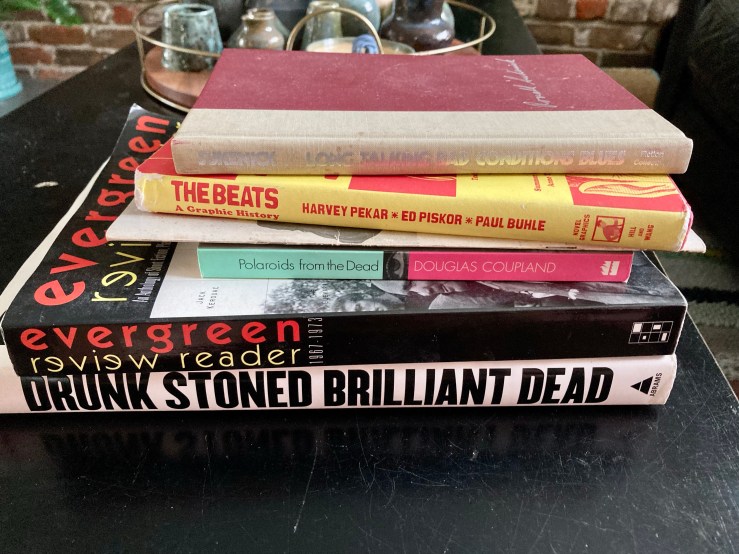
Mystery box (Books acquired, 17 May 2023)

One of my oldest friends (by which I mean friend I’ve had for a long time, not, like, old, although we’re both getting up there, although by no means old, but I suppose certainly definitely no longer youngmiddleaged, I guess, although when we were young we would have thought ourselves now (middleaged) old)

—one of my oldest friends Patrick sent me a mystery box of books earlier this week. Highlights include The Evergreen Review Reader (begins with William S. Burroughs and ends with Kathy Acker, two writers Patrick introduced me to way back in seventh or eighth grade), a graphic history of the Beats by Harvey Pekar et al, and a signed copy of Ronald Sukenick’s Long Talking Bad Condition Blues. Thanks PT!

A review of Trey Ellis’s polyglossic satire Platitudes

Trey Ellis’s 1988 debut novel Platitudes begins with a typical metatextual conceit: the novel-within-a-novel gambit. Our story starts with Earle, a nerdy, idealistic high school sophomore who lusts after True Love (and some sex if he can get it). After about a dozen pages though, the “author” shows his hand. Depressed divorced Dewayne Wellington is Earle’s creator, and he’s stuck in his novel-in-progress Platitudes. “I’m sorry. I don’t know what more to write,” Wellington declares, before soliciting help from his readers.

Wellington soon receives manuscript pages from bestselling author Isshee Ayam, who transplants his story from 1980s Manhattan to 1930s rural Georgia. When Wellington introduces worldly and gorgeous Dorothy as Earle’s romantic foil, Ayam’s rhetorical interventions take on a new intensity as the two authors duel to guide the spirit of the novel-in-progress.

The plot threads and styles intertwine, with Wellington’s experimental mode clashing with Ayam’s “Afro-baroque” style (as Ellis described it in a 1989 Los Angeles Times profile). A parodic pastiche of competing Black American artistic voices, Platitudes ultimately synthesizes polyglossic tones into a strangely endearing romantic comedy. Sharp but breezy, ironic and earnest, and utterly metatextual yet soaked in pathos, Ellis’s first novel seems to be an overlooked late-postmodernist gem.

Although Platitudes remains in print (via Northeastern University Press’s New England Library of Black Literature series), I have never seen it mentioned along with its contemporaries—books like David Foster Wallace’s 1989 collection Girl with Curious Hair or Bret Easton Ellis’s 1987 novel The Rules of Attraction. Instead, Ellis’s novel seems to be connected more often along with the works of Ishmael Reed, particularly his 1986 novel Reckless Eyeballing.

Reed’s novel concerns an experimental playwright who finds his career under attack from feminists. As Itabari Njeri pointed out in the LA Times profile mentioned above, many readers “assumed that Ayam is a thinly veiled Alice Walker and that Wellington is the novelist, poet and playwright, Ishmael Reed.” Ellis told Njeri that he hadn’t read Reckless Eyeballing until after he finished Platitudes. He also stated in the profile that he hadn’t read Walker’s The Color Purple. Before I read the Njeri profile I was almost certain that Ellis was parodying (lovingly though at times sharply) Reed and Walker.

Ayam’s “Afro-baroque” style is a particularly purple prose, telegraphed in the oh-so-unsubtle titles of her bestsellers: Chillun o’ de Lawd, Hog Jowl Junction, and My Big Ol’ Feets Gon’ Stomp Dat Evil Down. Here’s the first sentence of Ayam’s version of Platitudes:

Earle awakened to a day as new and as fresh as Mama’s hand-starched and sun-dried petticoat, a huge, plain garment as large and as fresh-smelling as the revival tents that bloomed every summer along Route 49 in Lowndes County, Georgia.

What an awesomely bad awesome sentence! The simple sentence is there: “Earle awakened,” but the adornment tacks on and on, a traffic jam of adjectives glommed onto a simile growing out of another simile, like a lichen that grows on a moss that grows on a rock.

Here’s Ayam’s next sentence:

Yes, from out of those wide Baptist thighs, thighs that shook with the centuries of injustice and degradation, thighs that twitched with the hope of generations yet unplanted, thighs that quivered with the friction of jubilant, bed-thumping, and funky-smelling lovemaking, emerged Earle.

“I’m speechless, Ms. Ayam,” responds Wellington by post after receiving her pages, and offers up as a return gift a list of Earle’s favorite things (to be sung to the tune Coltrane’s take on the Rodgers and Hammerstein song):

All kinds of tanks, Janey Rosebloom, Cream of Wheat, neighbors, Corinthians, toast-r-waffles, his own bean-fart vapors,

A tightly-tucked-in-bed,

Chef Boy-Ar-Dee

Schefflera, balsa wood, and Pay TeeVee.

Eff. Ay. Oh. Schwarz, lingerie straps, cowboy boots and hats.

Sunggle sacks, Chap Stick tubes, BeeBee guns, and films!

Sci-fi, cars, dance—Slurpees.

This list, printed in the console font that demarcates the many other lists, charts, menus, etc. that populate Platitudes then gives way to a brick list paragraph in whatever font Vintage Contemporaries are printed in. This second list might also comprise some of Wellington’s (and perhaps even Ellis’s?) favorite things, and includes “Jamaican accents, cleavage, efficiency, artificial cheese-food product” and

the way a pretty woman’s high heel dangles insecurely from the big toe of the crossed leg always near falling or—from a slight kick—flying spike-over-toe—an exotic Oriental weapon; but never doing either, just dangling, the toe of the shoe covering just enough to promise…

The back-and-forth of the two authors plays out as a personification of the tensions between two modes of Black literature that Ellis seeks to parody, synthesize, and ultimately transcend in Platitudes. While appreciative of the traditions and anti-traditions that came before him, he sought something new in his novel. A year later after the publication of Platitudes, Ellis published his essay “The New Black Aesthetic” in the journal Callaloo. Here, Ellis argued for a new kind of Black arts, evoking the concept of a ludic “cultural mulatto,” an artist free to borrow from both tradition and popular culture alike: “We no longer need to deny or suppress any part of our complicated and sometimes contradictory cultural baggage to please either white people or black,” Ellis declared in his essay.

Platitudes is not an essay—far from it—but it does enact the radical hybridization that Ellis put forth in his New Black Aesthetic manifesto. In his LA Times profile, Ellis declared Platitudes an “anti-novel,” adding that “It’s satirical and primarily about language performance, which has its own delights, as opposed to traditional narrative.”

And yet there is a traditional narrative here. Call it boy meets girl or coming of age or classical-in-the-Aristotelian-sense comedy or whatever you want, but Platitudes offers its reader a satisfying conclusion without selling out the ambiguities and ironies that course through its 180 or so pages.

In his back-cover blurb for Platitudes, Ishmael Reed wrote: “I was zapped by Trey Ellis’s humongous talent. His book, Platitudes, is delightfully rad.” Zapped and delightfully rad are perfect descriptors, and I feel like I’ve neglected to share enough of Ellis’s prose, which at times approximates linguistic channel surfing (at one point, quite literally). The book is both fun and funny, and while the book has not been neglected in academia (Christian Schmidt devotes a chapter to it in his study Postblack Aesthetics, for example), it deserves a wider readership from those who enjoy satirical postmodern novels. Highly recommended.

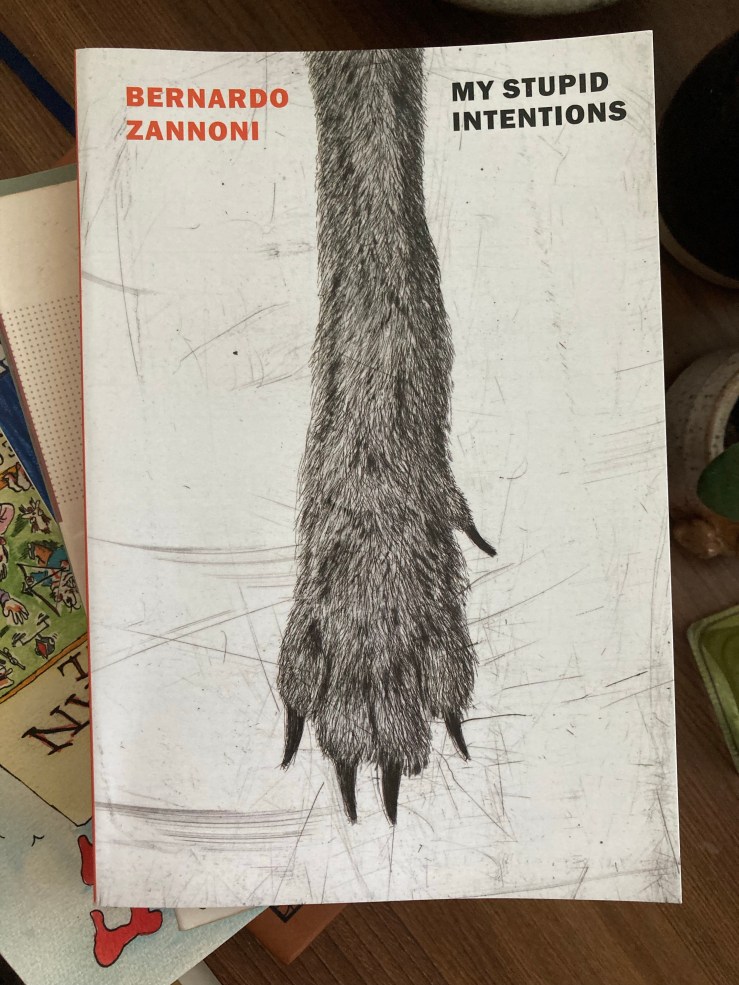
Bernardo Zannoni’s My Stupid Intentions is a brash and brilliant picaresque fable

A few pages into Bernardo Zannoni’s brash, brilliant novel My Stupid Intentions, our narrator Archy and his eldest brother Leroy have the following conversation about their youngest brother Otis:

“Are you cold?” he said.

“I’m hungry.”

“Me too. We could eat Otis. He’s small, and weak.”

Otis is small and weak, but his brothers ultimately elect to remain hungry and not consume him. A few pages later, Archy falls from a tree, leaving one leg permanently lame. He then engages in sexual intercourse with his sister Louise. And poor Otis? “I’m going to die because I’m not growing,” he declares at the family dinner. This prediction quickly proves true. Archy is then sold into the service of a writer named Solomon for the low price of one and a half chickens.

Perhaps, having put forth details in lieu of a bigger picture, I should backtrack:

My Stupid Intentions (I miei stupidi intenti) is Bernardo Zannoni’s first published novel. It won the 2022 Campiello Prize, and is now available in English thanks to translator Alex Andriesse and publisher NYRB. I enjoyed all 211 pages of it.

Archy, the narrator of My Stupid Intentions is a beech marten, a kind of mustelid similar to a weasel or ferret. My Stupid Intentions is Archy’s life story—and it is crammed with life, with nerve, joy, terror, anger, and discovery.

I mentioned some names above, mostly of Archy’s family members, but we can dispense with them now. The most important character in Archy’s life is Solomon, an old fox who has learned to read and write. Solomon’s ability to cipher makes him a market nexus for the animals of the forest, who come to him to trade in goods like chickens, eggs, and vegetables. A fiercely loyal dog named Joel protects Solomon and their enterprise (Joel claims that Solomon rescued him from a wasp’s nest when he was an infant). Crippled Archy soon finds his place in Solomon and Joel’s routine, even venturing out with Joel to collect delinquent accounts.

In time, Solomon teaches Archy to read and write. They begin with the business, keeping track of customers’ debts, but soon advance to the bible. Here, Archy learns about God and comes to despise him: “Why had he inflicted this pain upon me? Why wasn’t I a man? Hadn’t I sought him, hadn’t I been on his side?”

In knowing God, Zannoni seems to suggest, Archy and Solomon become imbued with a consciousness otherwise unavailable to animals. The curse of this consciousness is the revelation of mortality. While other animals comprehend that death exists, they do not, at least from Archy’s perspective, fully understand what death entails. Understanding his own mortality is Archy’s curse, and his agon with God weaves through the novel’s bright and dark adventures. In one of the novel’s most poignant moments, Archy, unable to provide succor to his friend Joel, offers him an illusion, a proper telos for his dog’s soul:

He went off searching for a place that didn’t exist, beyond the wrong mountains, where no three rivers parted ways. He would wander all his life, clinging to a spurious hope, the only thing that made him keep going, like a phantom. I am terrified to think he may still be out there, searching. I am terrified to think he may have realized he has been damned to a pointless existence, a life of grasping at smoke. I am terrified to think I have been crueler than God.

My Stupid Intentions is full of cruelties and heroics. There are bandits and thieves and duels. There is a strange underground club for maimed and toothless animals to huddle together. (“Even in their loneliness, their exhaustion, their absence of appetite, they did not think they were going to die, and absurdly I envied them.”) There are doctors and apprentices and violent brigands—again, Zannoni’s novel bristles with life, teems with a propulsive energy.

This energy pulses at both the sentence and paragraph level in Andriesse’s nimble translation. The book’s jacket summary describes My Stupid Intentions as a “picaresque fable,” and it indeed rockets along with picaresque energy, its sharp turns often made even sharper by an ironic quip from Archy.

As for the “fable” bit…well, any story with anthropomorphic animals might be called a “fable,” especially if there is a moral dimension highlighted. Archy’s complaint against God is direct yet ultimately ambiguous. I didn’t catch a didactic whiff from Zannoni. My Stupid Intentions is more complex than Aesop’s fables; it has more in common with the visceral reality of Richard Adam’s novel Watership Down or the zany violence of Roald Dahl’s The Fantastic Mr. Fox (especially in Anderson’s film adaptation). My Stupid Intentions also reminded me strongly of Neko Case’s nature songs, some of the essays in Joy Williams’ collection Ill Nature, Disney’s loose, picaresque 1970’s take on the legend of Robin Hood, Russell Hoban’s inimitable novel Riddley Walker, Brian Jacques’ Redwall books, and Italo Calvino’s novel The Baron in the Trees.

My Stupid Intentions is also a book about writing, a kind of self-creating document, Archy’s autobiography in action, a sort of funny animal Künstlerroman. If there were any urges on Zannoni’s part to give into postmodern cleverness here, to play with the metatextual nature of his tale, not a trace of such frippery is evident. The novel is, for all its twisting and turning and snapping, wonderfully and refreshingly straightforward. There is nothing stupid about this book. I loved it. Highly recommended.


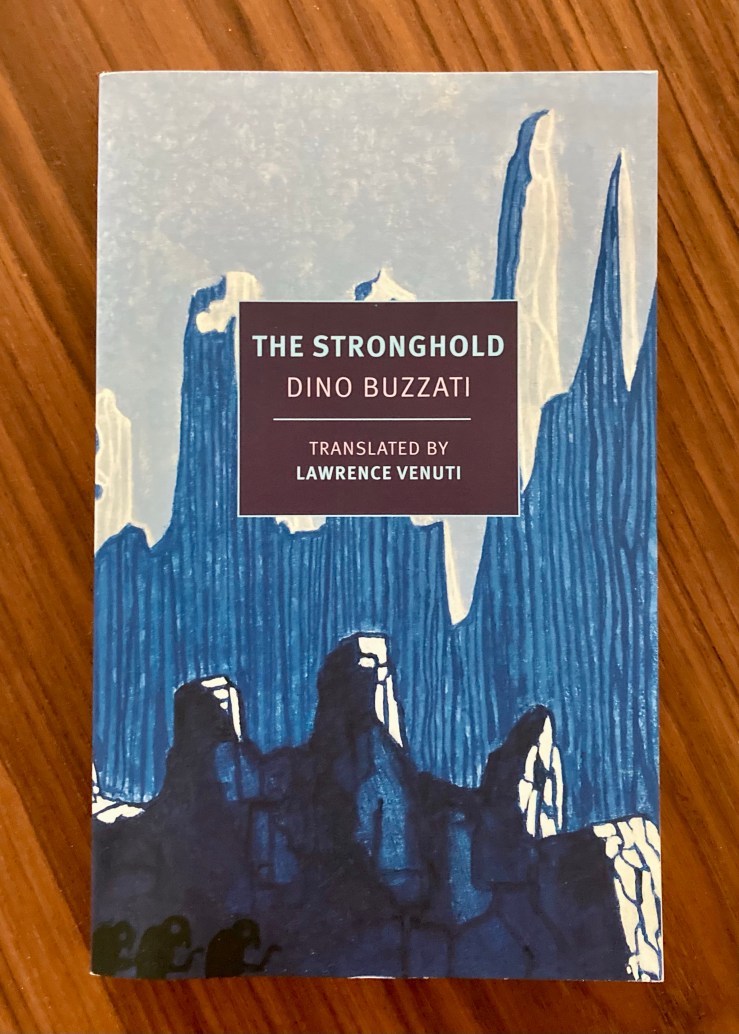
A review of The Stronghold, Dino Buzzati’s novel of deferred hope and ecstatic boredom

Dino Buzzati’s 1940 novel Il deserto dei Tartari (retitled The Stronghold in Lawrence Venuti’s new English translation) takes place in an unidentified time in an unidentified country. Our protagonist is Giovanni Drogo, freshly graduated from an unspecified military academy and ready for a thrilling life of combat and adventure at his new post, Fortezza Bastiani, a fortress at the border of the Tartar steppe. He and his fellow soldiers wait in the hope of attaining glory.

And they continue to wait.

The nebulous Tartars repeatedly fail to appear, offering only the vaguest hints of their alien existence. The soldiers of Fortezza Bastiani live a life of anxious monotony, their desires and hopes for the heroics of war flattened by the boredom of day to day life. It’s all very existentialist.

From the opening pages of The Stronghold, Buzzati conjures a strange but familiar world, usually telegraphed in brisk, unadorned prose (a style he honed in his career as a journalist). Everything is slightly off, slightly anxious. Initially, a reader might chalk the disquieting style up to our viewpoint-character Drogo’s own hesitancy as he enters into a new life as a military officer, but we soon find ourselves in an uncanny realm.

The world of the fortezza is somehow simultaneously dull and enthralling. Consider Drogo’s first glimpse of the fortress:

Fortezza Bastiani was neither imposing, with its low walls, or beautiful in any  way. Its towers and ramparts weren’t picturesque. Absolutely nothing alleviated its starkness or recalled the sweet things of life. Yet Drogo gazed at it, hypnotized, as on the previous night at the base of the gorge. And an inexplicable ardor penetrated his heart.

This “inexplicable ardor” is nevertheless ambiguous in its penetration; after learning he is nominally free to choose a different, perhaps more invigorating post, Drogo elects to transfer from the fort. However, his commanding officer suggests that he stay for four months to avoid bureaucratic problems with the higher ups. That four-month season of waiting turns into a lifetime of waiting. And then waiting some more.

Drogo and his fellow soldiers hunger for the glory of contesting the Tartars, an enemy they know utterly nothing about. Like almost every sociopolitical, cultural, and even technological detail in The Stronghold, the specific nature of the Tartar enemy is collapsed into something closer to a fairy tale or a rumor. Vague and dreamlike, the Tartars are not a geopolitical entity; they are not even an other, but rather the figment of an other, the kernel of a dream that promises action. And this dim promise keeps the soldiers waiting at the Fortezza:

From the northern desert would arrive their fortune, the occasion of their exploits, the miraculous hour that befalls everyone at least once. Because of this vague eventuality, which grew increasingly uncertain with time, grown men wasted the best part of their lives there.

The narrator, hovering in Drogo’s consciousness, imagines an interlocutor explaining to one of these soldiers that his “entire life will be the same, utterly the same, till the very last moment” — and then imagines the hypothetical soldier’s response: “Something else must come to pass, something truly worthy.” Drogo here believes he has grasped the “transparent secret” of the soldiers of the Fortezza, but also imagines himself an “uncontaminated onlooker.” But it’s too late. Drogo too has committed to waiting for something else to come to pass.

Nothing comes to pass—or nearly nothing. (One might read The Stronghold as an extended riff on Kafka’s wonderful parable “Before the Law.“) However, this is not to say though that Buzzati’s portraiture of tedium is itself tedious. The boredom he conjures is an ecstatic boredom, anxious and writhing, exploding in strange, magical moments of hallucinations and night terrors.

In one of the novel’s most extraordinary sequences, “fragile apparitions, quite like fairies” enter Drogo’s dreams, bearing away to some spectacular land Drogo’s fallen comrade who is now converted to a child dressed in a rich velvet suit. In another episode, a mysterious horse appears from the desert, sending the men into fits of hope and despair culminating in a horrific incident that underscores the absurdities of military rigor. Late in the novel, a much-older Drogo’s desire for action, for something to come to pass, tips into near-comic paranoia, as he and a younger officer fool around with a telescope to no avail.

After all this waiting in hope, The Stronghold concludes with a devastating Kafkaesque punchline which I shall not spoil here.

It will be clear to most seasoned readers that Kafka was an influence on Buzzati even without Venuti’s afterword, which details Buzzati’s admiration for the Bohemian writer. Buzzati does not ape the older master so much as evoke the same state of anxious alterity we find in texts like “The Great Wall of China” and The Castle. Stepping into The Stronghold, one is reminded of other branches of the Kafka tree, like Kazuo Ishiguro’s The Unconsoled, Kobo Abe’s The Woman in the Dunes, Alasdair Gray’s Lanark, and Albert Camus’ The Stranger, among many others.

Like many Kafkaesque works, one might be inclined to fob his own allegorical readings onto The Stronghold. In his afterword, Venuti points out that early English-language readings of Buzzati’s novel tended to interpret Il deserto dei Tartari as an anti-totalitarian tract. Il deserto dei Tartari was first translated as The Tartar Steppe by Stuart Hood in 1952, and many of its contemporary critics read the novel against the backdrop of the Cold War.

While praising the “remarkable accomplishment” of Hood’s translation, Venuti differentiates his own “historically oriented interpretation” of the novel; namely, his attempt to more emphatically underline Il deserto dei Tartari’s “latent critique” of fascism. Venuti points out that “Hood had twice rendered the generic ‘stivali’ (boots) with the politically marked term ‘jackboots,'” adding, “I tripled its use.”

Venuti also discusses at some lengths his choice to change Hood’s title. He writes that Buzzati initially wanted to title the book La fortezza, but this name was rejected by the novel’s publisher who worried it might be misunderstood by the reading public. In his attempt to further historicize his translation (and differentiate it from Hood’s), Venuti elected to remove Steppe from the title fearing it “might be taken as an anachronistic reference to the Soviet Union.” He also avoided The Fort or The Fortress as a possible titles, worried they might underscore Buzzati’s “debt to Kafka’s The Castle.” Venuti eventually settled on The Stronghold, suggesting that this title helps to emphasize the “cult of virility championed during the Fascist period” while also “conveying the sheer tenaciousness of the soldier’s heroic fantasies, as well as their inability to escape their debilitating obsession.”

I haven’t read Hood’s translation of Il deserto dei Tartari, but I appreciated Venuti’s, which, as I pointed out above, takes place in an unidentified time in an unidentified country. The novel’s eerie, fable-like quality—a quality that resists historicity—is what most engages me. Buzzati’s book captures the paradox of a modern life that valorizes the pursuit of glory (or at least happiness) while simultaneously creating a working conditions that crush the human spirit. We can find this paradox in Herman Melville’s Bartleby or Mike Judge’s Office Space; we can find it in Antonio di Benedetto’s Zama or Mike Judge’s Enlightened; we can find if in David Foster Wallace’s The Pale King or Dan Erickson’s recent show Severance. I could go on of course.

Some of these boredom narratives seek to assuage us, or make us laugh or cry—in recognition, spite, pity, despair, or hope. Some of these boredom narratives find resistance in art, or in just plain resistance. Buzzati’s novel offers something more like a warning. It is not possible to be an “uncontaminated onlooker” in one’s own life. It’s not enough to wait forever, even if we wait in hope.

The Stronghold is available now from New York Review Books.

Father Fairing’s Sewer Rat Parish | Thomas Pynchon

They were entering Fairing’s Parish, named after a priest who’d lived topside years ago. During the Depression of the ’30s, in an hour of apocalyptic well-being, he had decided that the rats were going to take over after New York died. Lasting eighteen hours a day, his beat had covered the breadlines and missions, where he gave comfort, stitched up raggedy souls. He foresaw nothing but a city of starved corpses, covering the sidewalks and the grass of the parks, lying belly-up in the fountains, hanging wrynecked from the streetlamps. The city—maybe America, his horizons didn’t extend that far—would belong to the rats before the year was out. This being the case, Father Fairing thought it best for the rats to be given a head start—which meant conversion to the Roman Church. One night early in Roosevelt’s first term, he climbed downstairs through the nearest manhole, bringing a Baltimore Catechism, his breviary and, for reasons nobody found out, a copy of Knight’s Modern Seamanship. The first thing he did, according to his journals (discovered months after he died) was to put an eternal blessing and a few exorcisms on all the water flowing through the sewers between Lexington and the East River and between Eighty-sixth and Seventy-ninth Streets. This was the area which became Fairing’s Parish. These benisons made sure of an adequate supply of holy water; also eliminated the trouble of individual baptisms when he had finally converted all the rats in the parish. Too, he expected other rats to hear what was going on under the upper East Side, and come likewise to be converted. Before long he would be spiritual leader of the inheritors of the earth. He considered it small enough sacrifice on their part to provide three of their own per day for physical sustenance, in return for the spiritual nourishment he was giving them.

Accordingly, he built himself a small shelter on one bank of the sewer. His cassock for a bed, his breviary for a pillow. Each morning he’d make a small fire from driftwood collected and set out to dry the night before. Nearby was a depression in the concrete which sat beneath a downspout for rainwater. Here he drank and washed. After a breakfast of roast rat (“The livers,” he wrote, “are particularly succulent”) he set about his first task: learning to communicate with the rats. Presumably he succeeded. An entry for 23 November 1934 says:

Ignatius is proving a very difficult student indeed. He quarreled with me today over the nature of indulgences. Bartholomew and Teresa supported him. I read them from with me today over the nature of indulgences. Bartholomew and Teresa supported him. I read them from the catechism: “The Church by means of indulgences remits the temporal punishment due to sin by applying to us from her spiritual treasury part of the infinite satisfaction of Jesus Christ and of the superabundant satisfaction of the Blessed Virgin Mary and of the saints.”

“And what,” inquired Ignatius, “is this superabundant satisfaction?”

Again I read: “That which they gained during their lifetime but did not need, and which the Church applies to their fellow members of the communion of saints.”

“Aha,” crowed Ignatius, “then I cannot see how this differs from Marxist communism, which you told us is Godless. To each according to his needs, from each according to his abilities.” I tried to explain that there were different sorts of communism: that the early Church, indeed, was based on a common charity and sharing of goods. Bartholomew chimed in at this point with the observation that perhaps this doctrine of a spiritual treasury arose from the economic and social conditions of the Church in her infancy. Teresa promptly accused Bartholomew of holding Marxist views himself, and a terrible fight broke out, in which poor Teresa had an eye scratched from the socket. To spare her further pain, I put her to sleep and made a delicious meal from her remains, shortly after sext. I have discovered the tails, if boiled long enough, are quite agreeable.

Evidently he converted at least one batch. There is no further mention in the journals of the skeptic Ignatius: perhaps he died in another fight, perhaps he left the community for the pagan reaches of Downtown. After the first conversion the entries begin to taper off: but all are optimistic, at times euphoric. They give a picture of the Parish as a little enclave of light in a howling Dark Age of ignorance and barbarity.

Rat meat didn’t agree with the Father, in the long run. Perhaps there was infection. Perhaps, too, the Marxist tendencies of his flock reminded him too much of what he had seen and heard above ground, on the breadlines, by sick and maternity beds, even in the confessional; and thus the cheerful heart reflected by his late entries was really only a necessary delusion to protect himself from the bleak truth that his pale and sinuous parishioners might turn out no better than the animals whose estate they were succeeding to. His last entry gives a hint of some such feeling:

When Augustine is mayor of the city (for he is a splendid fellow, and the others are devoted to him) will he, or his council, remember an old priest? Not with any sinecure or fat pension, but with true charity in their hearts? For though devotion to God is rewarded in Heaven and just as surely is not rewarded on this earth, some spiritual satisfaction, I trust, will be found in the New City whose foundations we lay here, in this Iona beneath the old foundations. If it cannot be, I shall nevertheless go to peace, at one with God. Of course that is the best reward. I have been the classical Old Priest—never particularly robust, never affluent—most of my life. Perhaps

The journal ends here. It is still preserved in an inaccessible region of the Vatican library, and in the minds of the few old-timers in the New York Sewer Department who got to see it when it was discovered. It lay on top of a brick, stone and stick cairn large enough to cover a human corpse, assembled in a stretch of 36-inch pipe near a frontier of the Parish. Next to it lay the breviary. There was no trace of the catechism or Knight’s Modern Seamanship.

“Maybe,” said Zeitsuss’s predecessor Manfred Katz after reading the journal, “maybe they are studying the best way to leave a sinking ship.”

The stories, by the time Profane heard them, were pretty much apocryphal and more fantasy than the record itself warranted. At no point in the twenty or so years the legend had been handed on did it occur to anyone to question the old priest’s sanity. It is this way with sewer stories. They just are. Truth or falsity don’t apply.

From Thomas Pynchon’s 1963 novel V.

img_2194

Virginia Woolf’s Jacob’s Room, but just the punctation

” , ” , , ” . ” , ; ; , . ; ; . ‘ . . . . ; ; ; . ” … , ” . ” , ‘ ” ( , , , — — ) , ” ‘ ” — — ! . ” ? ” . ” ‘ . . . ” ” … , ” , , ” , , ‘ … . ” ‘ — — – , – . : : . , , . , ‘ , , – . ‘ , , , , , , . . . ” — — ! — — ! ” . ” , ” . , ; ; . ? ; ; , – . . — — — — ! – . . — — , — — . , , ‘ , , — — . ” — — ! — — ! ” . , , . ” — — , ” , , , , . ” — — , ” , , , ‘ . ” — — ! — — ! ” , . . , , , , , — — . ; — — . ” , ! ‘ … ” , , . . , , . , , . , , , . , , , ; , . . – , – — — ” , , ” — — . ! . . , , , , , , , , , . ( – ) , – , , , , . . . , , , . . . ” ! ! ” , . . . . . . . , , — — ‘ , , , . , – , . ” ! ” . , . ” ? , ! ! , . ‘ ? ! . , ” , ‘ . ‘ , . , , ‘ , . , . , . ‘ . , , – , – , . – ; , , , — — , , . . ‘ . ‘ . ; . ” , , , ” , ; ; , – , , . . , , , , . – ‘ . ; . . ” , ” . . ” ‘ , . ‘ , ” , , , , , , , . ‘ . . ” ? ” . ” ‘ , ” . ” , ‘ , ” , , , , , ‘ , , , , — — ? , , . . ” ! ” , . . . . ‘ ‘ . ; ; ‘ . . . ; – ; . ; ‘ . – – . , . , , . . . . . ” , ” . ” , . . , ” , ” . ” – ; ; . ” ‘ ? ” . ” ‘ , ” . . . ” , ‘ ? ” , . ” ‘ , ” . . ” ‘ . , , , . ” ” ‘ — — , ” , – . , – , . ” ? ” . , , . , , . , . – , . . . . . ” ? ” , . . . ” – , , ” . , ‘ , . . . , ; . . ; ‘ , . , , , , . ! , , ! , , . – . . . . . . . . ‘ — — , – . . ; . , . ; – . , , , , ; – . , , . ‘ . – . . . ‘ – ; – , ; , . ” . ” — — ” ” — — ” ” — — ” ‘ ” — — ” ‘ ! ” ” ‘ — — , . ” ” ‘ ‘ , ” . ” ‘ . ” ” — — . ” ” ; , . ” ( . . ) , , , , . – . ; , ; ; ; ; , ‘ , — — ? ? , — — , , ; — — , , , . , ‘ ‘ , , , , ‘ . ; ‘ . , ; ; , , , , , , – . ” , ” ; , , , , , , — — , . . , , ? , ‘ , . , ; , , , , , , , , , , ‘ , . ; , , , , ‘ — — . , . ” ‘ , ? ” . , ‘ , . ” ! ” . . – , , , . , , , . , , , . . . . , . , . . ; . . ; ; , , , . ; . ” ‘ , ” . . , , . , . , . ; , . — — , , . . , , . ‘ ; , , ; ; ; ; – ; . , , , . ; . ; ; – ; ; . ; ; . – . . . – . , , . . . , , ; . , , , , – , , ( ) , , . ; , . , ; ; . ; . . . . , , – , , , – , , , , , , , . ( ) . ‘ ; — — . ; — — ; — — ; ‘ — — ; . ? — — ‘ . , . ‘ . , ‘ , ! ‘ . – ; – ; . . — — . , ‘ ? . , ‘ ; , , , . ” , ” – , , ; ; ‘ . ” ‘ , . . , . . – ! – ! ” ” – ! – ! ” , , . , . ” ? ” . , . ” ? ” , . ” ‘ , ” . . ” ‘ — — , ‘ — — , ‘ . . , . ” ” , . ! ” , ‘ , . , , , . , , , , , — — — — , . , , , , . , , — — . ? . — — . . . . , . ” . , ? — — — — , — — ” . , . ” , – – — — — — ” ” . ” , . . . , – , – , , . . . ” ? ” , . ” ‘ ! ” , . ” ‘ . ‘ , ‘ . ‘ ! ” , . ‘ , . ” ! ” , . , , . ‘ , . – , – , . ‘ , ” , ” , , — — . , , — — . ” . , ” . — — ” ? ” , . , . ” … ” . . ” , ” , , , ; , ; . , ; , , , – , . – , ; ; , , . ‘ , , . : ” . ” . ‘ ( ) ; ( ) ; — — , , , — — , , , – , , . . ‘ — — , . , . . . ” , ” . , . , . , . , , ” . . ” . ; ; . , , . . . . ” , ” ( . ‘ , , ) . ” , ” . , , , , . , . – . . – ( ) . . . , , – . . . ; , . ‘ – . . . . . – . . . – . . , . ” . ” . , , . , , , , . . . . , . , , . ” ! ” . . , . , , , . , – . – . ‘ , — — , . . , . , , , . ; . . , . , , . , . , , . , . . , . ” ‘ , , ” , , ” ‘ – . ” . ‘ . , – — — , — — ‘ . . , – , . . ” , ” . , . , ” ‘ , , . . ” ; . , . — — ‘ . – , , , ‘ , – , ‘ – . ( ) , , , , . – — — ‘ — — , , – , . , . , . — — — — . ‘ — — — — . , — — . . . . , , ; ; , . . , . ; , . – , , – , . — — , . . , . . , , . , . , . . , . . – , . , , . . . . , , – , . . . . , , , , , . ” , ! ” . . ” – , . , ” . , . ‘ , , : ” – , . . ” . . . ? : ” , , ! ” . . , – , ; , , . , , – , , , , ‘ , . ‘ . , , , ‘ , . — — — — , , , , , … , , ; , , , ; , , ; ; , ; , , — — . , , , ” … … . ” , . ” . , , ” . – . , , , , . . ? . ” ” , ? ; , . , ” . . . , ” , , , , , , – , , . ” , ” . , , ” ‘ ‘ ‘ , ‘ ” … . , , , – . . ” , , ” . , – , ” ‘ … … … ” , , – – , , , , , , , . , – . . ; , , , — — . ” , ” , ” ‘ . . ” . . ” . … , … , , ” . . . , . ” , ” . ” . ” ” , ” , . ” , ” . , , ” , . ” ” , ” . ” ? ” . , . ” , , ” , . , , , . ” – , ” . , , . . , , , . – , – ‘ ( , ) . – , , . , . , . ; … . . ? — — . ( ) , ( ) , . . . , . , , , — — ! , , ! , , , ‘ . , … , … , , … — — — — . , . – — — . , . — — — — … . . . ‘ . ( ) : ” , ‘ ” ? : … . , , , — — — — , , , , , ? . , , . . , , — — , , . , ‘ – , , : ” ” ; . ” … ” , ; , . , – , , , – , – . . , , , , , , , . — — ‘ — — . . , ‘ , , , ? , ? , , , . , , , . . ; ; . , , , , , , . , , . — — – — — . ; , . – ; , , . … — — , , — — . , , . , ‘ ? – — — ; — — . — — , . , . ‘ — — ? , ( , , – ) , – . , — — , ; , – – . . , , , , , ( — — , ) , . — — , , , , , . . , , ‘ . . ‘ ; ; , , . ” , ” , . , , , – , . ” , ” . . ” . ? ” . ; , , , — — . . . . . . , , , , , . , . . , , — — . ” , ” . , , , , , , . , . , , , , , , , — — — — ” , , ? ” , . ” ‘ , , ” , . . . . , , . . , , , — — . , . . — — . , . . . . — — ? , – , , – ? ? ; , , . , , . ” , ” , ” . ” . – , . . ‘ . , . , . ; – — — — — . ” ‘ ‘ ! ” . , , . ” , , ! ” , . ” , ! ” ” ! ” , — — . ” , ” , – , — — — — , — — ! , , ? , , ? . . . — — . , , , . ; . . , , , — — — — ; ; ; ; ‘ ; — — ” , , ” . . . — — — — — — — — — — , , , , , , , — — , , , , , . , , , , , . , – . — — ; , , – . ‘ ; , , . , , , . , , ; ; , , , . . ” ‘ , ” . , . , , , , — — ‘ . , , , . ” – – – , ” , , , . ” – – – ! ” , . ” ‘ ‘ , ” . ” . ” . , . , – , , , … ” ‘ , ” . ” ‘ , ” ( , ) . ” , ” . ( . ) ” , ” , . ” ? ” . ‘ . ” ‘ , , ” . ” , , ‘ ! ” , , . ‘ . , , . ” … … ” . , . ; ; – . , . ‘ , , ‘ ; ; ; ‘ . , . ‘ , , . , . ; , , ; , – . . ‘ . ; ; , , ; ; — — , — — ” ? ” ; ; ‘ , , . , ; ; ; ; ; . , ‘ . , — — . , , , , ‘ . . , , – . , ; . – , . [ – ; , ] , , , , , , ; , . , , , ; , . ; . , ; ; ; . ‘ ; — — , , ; . , , , , ( ‘ , , ) , ! ! ” . ” ; . , , ; ; ; ; . . ‘ . , , , , – , , , , , , , . . ‘ , , , , , , , , , , , . — — . , . , , – , . , , ; ; . , , — — — — ‘ , . , ‘ , , . ” , . ‘ . , ‘ ? ” , , , , , ” ” — — , , , , ; , ; ; , ; . . ; — — — — , , , , . . , ‘ , , , , , , — — ‘ . . , , , , . , , , , ; , , , , . — — — — ? ” ? ” , , , , ‘ , , , , , , , , , , . . . , , , , : ” , ? ” — — , , ‘ . , , , . , . , , . , , , , ; , . , — — , , , , , . , , , , , ‘ , , — — . ” ‘ ‘ , ” , , . , , . . . ? – , , , , , , , , ; . ; . , . , , , , . . ? . , , , , ; , , ; ; , — — , , — — ; ; ; , , . : ” — — ! — — ! ” , , , , , , . . , – , ; , , ‘ . . — — , . , — — , , , , ; , , , , , . ? — — — — , ! ‘ . , , , , , , — — , , . , , , , — — , ; , , , , . , , , . ; , . . , – , ; , , , — — . , – , — — — — . . , . , , , . ? ? ? ? , — — , ; , . ‘ — — , , , , – . . . ; ; , – , , . , ? . . . ; ; , ( ) ; ; – ; ; , , , . , , , , , , , , , , . , – , ? ? ? , . . ” … … . ” ? , , ; . ” ” — — . , , , , . , , , , . ” . ” ‘ . . . ” , ” . , . , , . ” , , ” , ‘ . ; . , . . . — — , , , . , , , , , , ‘ . ‘ . . – . . . , , , . , , , , : ” — — — — – . ” ‘ , , – ? , , , . ! – – . , , , , , , , – , . , , . , ; . . , , , , . , ; ; — — . – . . , . , , , , , . . – – … . , . . , , . . . ; — — — — ? , ; – – ; , , , , . ; , , ; ; ; , , , ; . . , , , , , , , . , , — — ! . . , ; . , , , . , — — , , — — , , . , . , , , , , ; , , – , , , , . , , . , , . , , , . ; , , . , – . ? . . , . . . ‘ , , ‘ , ; . ( ) … . . ‘ . ‘ . ‘ , … . ‘ . ” … ” . . , , , ; . ; ; , , , . , , . ; . – . . ” ‘ , ” . . ” … ” . ; – . , , , , ? ” … ” . ” , ” , . ” . ” , , , , , — — , — — , , , , , – , , , ‘ , . ” , ” , ” . ” . ” ‘ ‘ ? ” . ” , ” . ” , ” . ” , ” . ” , ” . ” , ” , ” . ” ” ‘ ‘ , , ” . ” ‘ , ” . ” — — ‘ — — ” ” , , ” , . ” ‘ … ” . ” ‘ … ” ” ? ” . ” — — – , ” . ” ‘ , ” . ” ‘ , ” . ” , ” . ” ‘ . ” ” . ” ” ? ” . ; , , , . / * ” : ; ; , , ” * / . ” / * , ? ” * / . ; , , ; , , , . / * ” , , , ” * / . , ; ; . / * ” , ” * / , , , , . ‘ ; ; – – ‘ , ‘ , , . , – ; , , . . ; , , , . , . . . ‘ . , , , … , , . . ; . , . . . , , , – . ; ; , . , , , ‘ , , ‘ . . ” — — . ” ” , , . ” ‘ . , . . , . , – . , . , , . , , . ‘ , ‘ ‘ , . , . , , . , , . . , , , . , , , , , , . , , . . , , , , , , ‘ , . ‘ . , ‘ . , , . , . … . , . , – . , . , , , . , , . ‘ . . . ” . ? ” . , . , . . . ” , . , ” . , . ‘ . . . ” , ” . . ” … . , . ? ” – . , , . ; ; , , . . . . . . ( ; ) . . . . . . . ; . . . ; ; ” , ” . . ” ‘ — — ‘ , ” . . . . ‘ . ” , , ” ; ; . . , , . . ; ; , , ; . . . , . . . , , . . . ‘ . . , , , . , . , ; , ; , , , . . ; . . – ; , , . , , . ; – . . . . . , , , , , . – , , , — — — — — — — — . , , , . , , , , . , , – , . . , , , , , . – . . – ! , – . , , – , – – . ‘ . . . . , , , , . ” , , ! ” . , , ” , , ” ‘ , . . ‘ , . : ” , , . , ‘ ? … . ” , , – , . , , , – , . . . . ” , ? ” . ” . ‘ . ” . . ” , ” , ” … . ” , , . ” ? ” . ” . ” . . ” , ” , , . ” — — . . , . ” , . . ” , ” . . . , . ” , . , ” . ” . . ” ” — — , . , ” . ” ; , ” . ” , . . ” ” , ” . . ” ‘ , ” . ” … ” . ” , ” . , . . , , , ; , , , , . . ” , , ” . , ‘ . ” ? ” . ” ? , ” . . ” , . ‘ . ” ” ‘ . ” . . ‘ . , , : ” , , , … . ” ” , ” , . . . ” , ” . . – . ” , ” . ” , ” . , . ” … . ? ” – . ” , ” . ” , ” . ” , , ” . . ” , ! ‘ ! ” , . ” , ” , . . . ” ! ” . . ” ! ” . . , . ” … ” . ” ‘ … ” . ” , ” . ” , ” . ” , , , ” . ” . … ” . ” ‘ , ” . . . ” ‘ , ” . ” . ” ” ? ” . ” , ” . . ” , ; , ; , ; … ” . ” , ” . ” , ” . ‘ . ” ? ” , . ” ‘ — — ? ” . ” , , ” . . ” ? — — . ” ” , , ‘ , ” . ” , ‘ . ” ” ‘ , ” . ” , ” . ” ? ” , . ” ! ” . – . . . , , – . . . ” ; , ” . , . . ‘ , . ” , . , ” , , . . ” , ” . . , ; . ” , ” . . ” , ” . ” . ” ” , ” . . ” , ” , . ” – . ” ” … ” , … ” , , ” … , ” , ! ” . ” ? ” . ” , ” . , , . ” , . ” ; . . ” , ” … . ” ‘ … ” . ” , ” . , , . ” ‘ . ” ” ! ” , . ‘ . ” , ” . . ” ‘ — — ‘ ! ” . ” ‘ ! ” ” ‘ , ” , . . ” ! ” , . – , , , . ; . ” , ” , , , ‘ . ” , ” , . ” … ” , ” … . ” ” , ” , . ” … ” , ” , , ” , , . ” … … ” . . ” , , ” , . ” , ” , . ” , ‘ , ” . ” , , ” , ; . ” ‘ — — , ” , , . , , . , . ” ! ” . ” ? ” . ” , , ” . . ” , , , ” . , , – , . . , . ” – , ” . ” – , ” . ” – , ” . : ” – , . ! ” ” . ! ” . , . ” ! ” ” , , ” . . ” , ” , . ” , ” , , ” ‘ , ” , . , , – . ‘ , , , . ; . — — , ‘ — — ‘ , — — . , , , – , , . – . , , . ” , ; , — — , ! ” . ‘ . . . . ‘ . ‘ . . . ; , , , — — ” , ” ” . ” ; , , , — — . , ‘ , — — , . , , , , , . ‘ , , . , , , , … . ? . . , , . , ‘ ; ; . . . , , . — — . ‘ , , . ‘ , , . , ‘ , , , , , , , , … . , , . ‘ . ‘ , . ” ‘ ? , … . ‘ ‘ ? — — — — … . ? , ! ” — — — — … , , , , … , , ; . . ‘ , , ; ; . , ‘ , , ; , – , , , . . ; ; ; ; ; , . , , , , – , . ; . ; . , . , , , . , , , , ‘ , . , , , , ; . , , , , , . ” — — ‘ ” — — . — — , , , — — , , , , , , . – ‘ , , , , — — , — — , , , , ‘ , , , . . ; , , , . , , , , , , ; ; ; , . , , . , , – – – – — — , , , , . ” ? ? ? ” . ‘ . . . ; ‘ . . , . , ( ) , ; , — — , ( ) , . – , , , , – , . – , , ; , ; . , , ; . , ‘ , ; , ; … … , . , ; , , , . . . — — . — — ; ‘ ; , ; ; ? , ‘ , ‘ — — ‘ — — ; , , , . — — . ! , ; , : – ; . , – – , , . . ” ! ” . ” ‘ ! ” ; , . ” ; , ” , . . . ” ! ” , ; . , , , , , . , ; ; ; . . . , . — — , , , ; , , — — ‘ , , . . , , – . . . — — – — — . ( . ‘ , . , ) , , . , ; , ‘ , . . , – , … . ” ” — — . ” – . ” ” , ” , ” – . ” . , , : ” ” ( ) . ” ” … , , , , , , . ? – . ? ( ‘ ) . — — , . . ? ” , ” . ” . , , ‘ … ” . . . , ! ” , , , ” , , ” ‘ — — ‘ ” — — ? . , ‘ , , , , . . ‘ . , , ‘ , ” , ” , ‘ … . . ” , ” , : ” , . ” . . . ‘ ‘ , . ; ‘ . ; … . , , – . , . , . , . , , , . , — — , , , — — ? . . . ( ” ‘ – . ‘ . , . — — . — — . ” ) ” , , ? ” ( ” . — — — — ‘ . ” ) ” ‘ , . , … . ” ( ” . , , . ‘ . ‘ . ! ” ) . ” ? ” ( ” ‘ ? ” ) , – , ‘ . — — — — — — — — , – , , . , — — ; ; ; . — — , , ‘ , ‘ , , , ‘ . . , , , — — , , , ; ( ) ; . . ” , ” , ‘ , . ” , ‘ . ” . , , . ‘ . . — — ; ; — — . . ” ‘ . ‘ ! ” . ; . , ‘ . . . , – . . — — – . . , . . . , , , , , ; ; . ‘ , , – , – . , , , ; ; ; . ” , ” , , ” ‘ ! ” — — , ; , . – . ‘ ; , . , ” ” . – . , , , . . ” ‘ ! ” , , . , , , . . . ” , ” , , , ” . ” . . , , – . . ; , . ” , ” , ‘ – – , ” . ” — — , — — ‘ , ‘ ‘ , ( ‘ ) , ‘ . — — . — — ; ? , , . , ; ; , , . . . , , , , . ” , ” , ” . ” . , – , . . — — — — , , , , , , , , , , , , ; ; . . . , , ” , ” ; , , – … . . . . , , , ; ; . . . , , . ; – . , . — — , – , , , , ‘ , . ‘ , . , , , , . , ‘ ; , , . , , , ; , , . ? , : . , , ; , , ; . , , , . – . , ; ; ; ; , . . . ; ; ; ; ‘ , , ( ) , – . . , , . . , , ; ; . ‘ . . , , . . ( ) , — — — — ; , , , , , — — , . ; ; . , . ? . . , – ; — — , , , , , . . , , . . – . – . . . . , . . . , — — — — , . . , . , , , . , – , . . . . , , , , , . : ” ? … … . ‘ … . , . ” . ” . ‘ … . , ‘ ? … ” . ; . – ‘ , — — — — . ? , ‘ . ” ‘ — — … ” . ” ‘ ‘ , . ‘ . ” ; ; . ” , … ” . . ” – … … … … ! ” ! . . . . . — — ” , , ‘ . ! ? , ! ‘ , . . . ” . — — . , . . . . . – . . ” ‘ , ” . , , . ; ; . ? ? , ? ? . , , , , , . , . ; ; ‘ ; ‘ . ? — — . , . ! ‘ — — . , , – . , , , . . . , . , , , , , , – , , , , , , . ” ‘ , ” . . . . – . , . , , ; . . , . . ‘ , , , , ; ‘ , . , , . . , , – , – , , , ” ‘ , ” , , . . . – , . ; , . . . . , , . , , , . . ; ; . . , . ; ; ; — — . , , ; — — ‘ , , ‘ . . ‘ ; , , . . — — — — . . . . , , , . ‘ , ‘ , , . , , . . ; . , , , , , — — , , ‘ . ; , ? — — . . . ; , , . , . . , , – , – , . ‘ – , , , , . ‘ , , . , , , , , – , . . , , : / * ‘ , * / , , . ! , , , . ” , ” . , , — — . . . . ; , . ” , ” . ” , ” . . ” , ” . , , . . ” , ” , , ” ‘ . . , ” , . , , , , ” — — , . ” ” , ” . , ” . ! . ” ” ‘ ? ” , . ” … ? ” . , . ” … ” . . ” ‘ , ” . , ” . ‘ . . ” ” ! ” . ” , ” . . ” , ” . ” , ” . ” , ” , , ” . ” ” ? ” . . ” , ” . . ” . ! ” , . ” . . , . ? — — , — — , . . ! , . ! ” ” ‘ , ” . . ” , ” . ” , . , ‘ … . ” ” ‘ , ” . . ” , ” . ” … . . , . ” ” ? ” . . ” , ” . ” ? ” . . ” , ” . ” ? ” . . ” , ” . ” , ” . . ” ? ” . . ” … ” . ; . ; ; , . ” — — ” . . . , , , : ” ! ” ” ! ” . ” — — . ” ” , , ” . . ” . ” ” ? ” . ” — — ‘ … ” ” . , , ” . ” — — ! ” . ” ‘ , ? ” . ” . ” ” ? ” , . ” ? ” . ” , . ” ” ‘ , ” . ” , ” , . ” , . ‘ , . . ” ” ‘ , . , ” , . ” ‘ ? ” / * ” ? ? ? ” * / . , . ” , ” , , – . / * ” , ; . , ” * / . ” ! ” , ; ; . ” ? ” . ” , ” . ” ? ” ” . ” ” . . . . , . . … ” . ” ‘ . . ‘ ? , , — — , — — , , — — , , , — — . . , . , . — — , ” , . . ” ? ” . . ” . , ” . ” . ” ” , ” . . ” . , ? — — — — . . , ? ” . , , . , . ” ? ” . ” , . . , ” . . – . . , , , , , , ” . — — . . — — . — — . ” ” , ” . , . . – , , , , , , , . , , , , … . ” , ? ” … ” , . ” … , , ; – ; ‘ ; ; : ” — — — — — — , ” , , , , . , ; , , , , , , – , , . , ‘ , , — — ‘ , , . , , , , , ‘ , , , — — — — ‘ , ; ; , , . . ” , – ? ” ; ” ‘ , . . . , . , , ‘ , . ‘ . , , . , . . — — ” . . , , , ( , , ) , ‘ , ” , ” — — . . ; , . , , — — , , , – ‘ . . ” , ” , . ‘ ; ; ; ; . ; , , , , , ; . , , — — , — — ? — — , , , . ‘ . , , , , , , ; ; ; , , . ; , , , , – – . . – . ; , , . , , . – , , . , , , . , , , , , . , — — , , , , . . , , . — — , – , , , , , . , ; ; – — — ‘ . — — , , , — — ‘ ‘ . , , . , ‘ ; ; . , . , — — . , , , . . ” , , ‘ ? ? ; … . ” . . , … , – , ; ? , , — — ? ? . . . ” , ” , , , , ? , , ? , , – , , , , ? ; , , , — — ? — — . , . . . – . , , , – , ( ) , , , . ! ; , . . . . ; . ; . ; , ; , , . ‘ . — — . , , , , , . . . . — — ; — — — — . , , , – , . . , , , – , – , ( ) . ‘ . . . . , , , , . . ; ; ; ; . ; , ; , , , , . . . ‘ , ; — — , , ; — — , ; . ” ‘ ! ” , ‘ ? , . . , — — ‘ . , , . , . . . , . , . – . . … . . ; ; – ; ; ( , ) — — , , . ” — — , ” . , . ; . ? ” , ” . , , , , , , , , ‘ , ‘ ‘ , ( ) ‘ , , ; ; – , , , , — — . . . , . . ‘ , ( ) . . . – , . ; . . . ; . . . . . – . ‘ , , . . — — — — , . , ‘ ? . – . . , . . , , , . . – . – . , , . . , , . – . , — — . ; , , , . . – , , , , ‘ , . ; ; — — , . , , , – , — — ? . ? — — , ‘ . . . , . , , . ( ! . . . ‘ . ) . . . . , , , ; . ! , , . ‘ . , . , , . . . . — — . . , , ‘ . – ; , . — — . . . . . ‘ . . … . ‘ ‘ … . , , … . … . … . … . … . . … . . . . , , , . . . . . ( , ) , . , , ; ; , , . ( ) , ; . , , . ; . , . . ‘ . , ; . – , ; – – ; . , , . , , ‘ , . ” ? ” , . ” ‘ , , ” ‘ . , . . ” ” — — ” ” — — . , . — — . , , , , . , , , , . . ‘ , , , , , , . , , ; ; , , , , : ” ! ! ! ” – , , . . , , , , , , . ; , , , , ” , ” , , , , . , . . . , , , . , , , ; ; , – — — . . , , , . , ‘ , . . ; ; , ? , : : ” , ” , ” ” ” ” ” , ” ” . ” ; . ( , , ) . ” ” — — , , , — — – . ( ” ‘ , ” ) . ” , ” ; ” ” — — , . ” , ” , , , — — — — ; , , — — — — , . ” – ‘ , , ” , ; , , . . . ” , , ” , . , , , – , . – . — — , – . ” , ” , . ‘ , ‘ ? . , , , , , , ‘ , . . ” , ” , ” . ” , , , , . , , , . ‘ . ” , ” . . . . . . . ; ; . ; . ” , ” . , ‘ ; ; ; . ” , ” . ” , ” . ‘ ; ” , – — — ” ” – , ” , . ( , , ‘ ? ) ” ” — — ” ” — — ” , ” . , . ? . , ? , , , , , , – ( , ) , , , . , , – . ” ? ” . ” , ‘ — — . ” ” ‘ , ” , . ‘ , … . , . — — – . . , , , . , . ‘ , , , . . ” ‘ ‘ , ” . ” . ” ” ? ” . . ” – ? ” , – . ” , ” , . ” ‘ , ” . ” , ” . , . . . . ; ; . , , ( ) , , , . , . ” ” ‘ , . , – ; ; , . . ‘ ‘ . . , , – , ? , , — — , , . , . , ” , ‘ , ” , . — — ( ” ! ” ) , . ‘ , , ” , ” , . , ” — — . ” , . . , , , , , . — — , , ‘ . — — — — , , , , , , , . , — — ! . , , . . . . ‘ . — — — — ” , ” , ” ‘ ? ” ! , . , , , . . ? . . ; , ‘ . ‘ . . – ; , – . ? , — — — — . , . , . . . . ‘ . . . . . . , , , . . , , . – , , , , ( ) , ( ) . – . , , , . . . . — — , ! , , . . . . , , , ; , , , , . , , . ” ‘ , ” , . , . , . . — — , . , . . . . . . , , ; , , ; , . ‘ – ; – . . ; . . ( ‘ – ) ‘ , , . — — , , , . , , , — — . – . . . — — , , ‘ , . ; – . , . ; . . , , , . ; . – , , – , , — — , , , , . , . ‘ ‘ ; , , , , ; ; . , ; ; ; , ” ! ! ” ‘ . . . . , , ‘ , ‘ ; , ‘ . ; , , – , , ” ! ” , , , , . . , , , , ( ) , , , . . ‘ . ‘ ‘ , ‘ , , . , , , , , ; ; , , – , . , ; ; . , , , . ? ” ‘ . ” ” ? ” ” . ” , . . ‘ , , ‘ , ‘ , , , , : ” , , ‘ . ” … , . ‘ . , . , , , , . ; . , . ” ” , . , , , ‘ ‘ . , , , , . . – . , ( ; ) . ” ? ” , , , , , . ” , , , ” , , . . . ” , ” ( ) . , , , – , . – , ‘ , , ‘ . , , , , . — — , , … . . ‘ . , , , , , . ( ) . , – , . . , , . ; ; ; . , . . – ; – ; ; , , , . , . , , – – . . , – . , . . , , — — . . . , , ‘ . , . ; . , , , , , . , , , , , . . . . , . . . , , . ; . ‘ , , . – . ? ? , , , , . . . ; ; — — . , , , , , , , , , . . – . . ‘ . , . , . , . . , , , – , , , , ‘ , , , . , . , – , , , ‘ . . . , , , , . ‘ . , , . , . . ; . ; ; ; ; . . . , . ” , , — — , ‘ , ” , , , . , , , . . , , , , . . , , . ; . ; . . , , . – . ; , . , – , , , ; ; — — , , . . , – , , . . , , , , . , ; ; ; . , , , . . . . . . – . ” , ‘ , ” . , , , — — , , , . ‘ , , , , . . . , , . . . , , . , . ‘ . . . , . . . , , , , , , , , , . ” , , ” , . ” , ” . ” , ” . . . , – , : ” ! ” . , , . , , , ; ; ” ‘ , ” . . . , , , , , . . , , ( – , ) . , , , , – ; , — — , . . ” , ” , . ‘ , , , , ? , , , , , , . – . , . . — — , ; ; . . . . , , . . , , , . , , . . , , , . . . – . . . ; . ; . – . . . ‘ . , . , . . , , , . , . , — — ‘ — — – . , , , , ; — — , . ! , . . . . ” , , ‘ , ” ‘ . ” ‘ , ” , ; . ” , ” , ‘ . . ” , ! ” . , – . ” . . . . ” . ; . . . . , , . . ? , , , , – . ” ? ” . , . ” . . , ” . . . , , . , . , , ; ; ; ; . , , , , ? , . , , , , , , , . . . . — — . . . , , , , , . ” , . ” ” ‘ . — — ” , , , , , . ” , ” , – , – , , ” ‘ ‘ ” ; . ” ‘ ! ” . ” ‘ , , ” , – . — — ‘ ! ‘ , ‘ ? , ; , , – ” ? ” . ‘ . . . — — , – . — — , . , ‘ ‘ . . . ‘ — — ‘ , . . , , ; – ! . . ; . . , ; – , , — — , . ; ; , , ? ” , ” , . . ‘ , , — — . ( ) . . ‘ — — ; , , — — – , , – . . , , . . , . — — , – . , . – ; ; ‘ , , , ; . , , ; , , . . . ” , ” , – – . , ! . ; ; ( ) , – , , . , . , , , — — . . . . . ” ‘ ? ” . ” . ” – ; ; . ? ” , ” . – ? . ; ; ; . — — . ” ? ” . ” , ” . , , . . — — . . . . . , , . . . – . – , – – . . ; . – . . ? . . . , , , ( ) , — — . ” , ” . , ” – . ” ( , ; – ; , , ) , , , , , , , , . . – , , . , . . ( , ‘ , . ) ” ‘ , , ” , , , , . ” , , ? ” , , . , , . ” ? ” . ” , , ” . ” , ” . . ” ‘ , ” . ” ‘ . ‘ ” … . ” ‘ ‘ , ” . ” , ‘ . , ” . ” , , ” . ” . ‘ , . ‘ . . ‘ , ‘ ” , , – . ” , – ! ” . ” ‘ , ‘ ” , . ” , ” , . ” ? ” ” – , ” . ” , , ” . ” , ” . ” . . . ‘ ? , . , ‘ ? ” ” ‘ , , , ” , , , ‘ . ” ‘ , , ‘ ” , . ” – – … . , ” . ” ‘ . ” . , . ; , . ; ; ; . ” , , ” , ” ‘ ‘ . … ” … ” … . ‘ . . — — , . ” ” ‘ , ” , ” . , ‘ , . ” . ” ‘ , . ” . ” , ? ” . ” ‘ , ” , . ” , , ” , . ” ‘ , ” . ” ‘ ‘ , ” , . ” . ‘ . ‘ . ‘ … ” . ” , ” , . ” ‘ … ” , , , , . ” , ‘ . . . . . , … . ” . ” ‘ — — ‘ , ” . ” , ” . ” ‘ . ” . ” , . , . . , . . ‘ . . . — — ? ‘ . – , . ” ” ? ” . ” ? ‘ . , … . ” ” , ” . ” ‘ ? ” . ” , . ” ” … ” , . ” … ” ” , ‘ , ” . , . , ‘ . ” ! ! ” . ” ! ” , – . ” , ” , . , , . . . . – . , ! – , . , , ; ; ; – . , , – . . ” ? ” , . ; ; . ” ? ” , . ” , ” ; . , . – , , . ” ‘ , ” , . ” ‘ , ” , . ” . . — — … . ‘ ” ; . . ” ‘ , ” . ” ? … , , ‘ . — — ‘ ? — — ‘ . ‘ . — — … ” ” , ” , . ” ‘ . ” ” , ‘ , ” , . ” ‘ . ‘ . ” ” , ” . ” , ” . ” ‘ , ” , . ” ‘ . , . ” ” , . ‘ . , ? ” ” ‘ , ” . ” ! ” . ” . ” ” , , ” , ” ‘ . ” ” , ” . ” , ‘ . , . . . ” ” — — – ” . ” ‘ , ? , . . , — — ‘ . ” , , , ; . . . . ‘ . , , , , . — — . , , , ; , — — ; ; , , , , , ; ; , , . , , , ‘ . , , , , , , , . . , — — – ” ‘ , ” . , . ” … ” . , , , ” … . ” . . , ; ; . ” , ” . , , . , . ” , ” . . ” . ” . . ” ? ” . . ” , ” . . . ” , ” . , . ” ‘ , ” . ” , . ” ” , ” . . ” , , , ” . . . — — . ; . ” , ” . , . , , . , . ” ! ” . . . , . . – . . ; , , . . . . . , . . , ? . . , . , , , . ” , . , — — ” . . , ? . ‘ – ? . , , , ? . . – ” , ” , . , , ” , ” ” . ” , , , , . . , , , — — , . . , , . , , – . . , , , – . – , – . , , , . , . , , ” ! ” , ; , ; . . . . . , , . ” … , ” . , , ” . . ” ” , ” . . . . . . . . ‘ . , , , . , , — — ? ? , , . — — . , , . , . — — . ; – , . ‘ . . – , , . , . , , , , . , . , – , . . . . . , – – , . , , , , . , , . , ‘ . , , . — — — — . , . , . ” , ” . ” , ” , ” , ” . . , . — — . , , , , , , . . ; – . . — — . – , . , , — — , . . , . , . … . — — — — ‘ … . ” — — , ” , , — — , , , , . , , . ” ! ” , ” ! ” . – , . , ; ; ; ; ; ‘ ; ; ; . – ; . ? , , . , , , , , . ‘ ; — — — — . . . ( ) — — , , , , — — ; — — . . ; . — — , — — ; ” ” ; , , ; , , . , , . , , , ; ; . ” ‘ ‘ , ” . . . . . . – , — — — — , . , – , , , , , , . . . , , – , , , , . ” – , ” , . ” . ” , , . , , . . , , . — — , ? — — . , ‘ — — , , — — , . ; . ? , — — , , , , , – , . , , . , , , ” , ” . , ” ” ; . . , – , . ” , ” , ” . ” ” , , ” , . ” ‘ , ” , . , , , , , , , ‘ . ” , ” . ” . ” — — ‘ . , ‘ , , . . ‘ . — — ‘ , , , , ‘ . ‘ . , , , , , . — — , , ‘ , . . ” , ” , ” — — ” — — , . . ; ; , . ; — — , . , , ; , . ; ; ‘ ; . ; . . , — — — — ? — — — — ” , ” , , ” ‘ . ” , . ; ; ; — — — — , , , — — . . ” , ” . , ” — — — — . . , . , ” , , , . ” . ” — — — — , , , . ! . . . . . , , , , . , , . , , , . ; . ” , ” . . . , , , – . ” , ” . . ; ; ; . ; . ; . ” , ” . . ” , ; … ” ” , ” , . , . ; , , ; – – , — — , , , – , , — — , . ; . , , ; – , , , , . ” , ” , . . . ‘ . ” , ” . . ” , ” , . ( ” , , ” . ) . , ; . , , . , ( , ) , , ( , ) , . , , , . ” ! ” . ” ? ” , . ” , ” . ” . ” , , . . . ; . ( — — ‘ ? ) ‘ ; ; ( ) ? ” , ” , ” ” — — , , . , , – – , . . . . ” , ” , ” , ” . : ” . , , . ” , , , ” , ” . . . ; ; , , , . , , , , , . — — , , . ‘ . . . . , . , , , , — — ‘ . . . , , , , , , . . . , , , , , , , . ” , ” . , , . , , . , — — , , — — ! ! ! . ” , , ” , ‘ . ‘ , , , . ” , ” , ” . ” ” , ” . ” . ” ” , ” . , ‘ , , , , . – , , . ; . ” , ” . , . , . ” ‘ , ” , . ; , , , , ” ‘ . ” ; , , . ” ‘ , ” . ” ‘ – – ‘ ; … ” . . ; ; ; . ; ( , – , , , , , , , , – , ) , , . , , . ” ! ” ( ) . ” ! ” ( ) . ” … ! ” . , . , . ! ; . . ” , ” , , . . , . ; . . , . , , , , , ; , , ; , , . ; , , , ( ) ; , , . , , , , , , , , , . . , , , , , . . , — — , , , — — ; , , ( ) . , , , , ; , , , , . ” , , , ” , . ” , ” – . , . ; . . . , . . ” ‘ , ” . ” . ” ” ” , , — — — — — — ” ‘ — — — — ‘ — — , , , , ” — — , , , , , , , ‘ , . ; ; ; ; , , , , . ; , . . . ; ; . . ‘ , , , , , , . . ? . . . , , , . , ; ; ; . ( — — . ) . , , — — — — ; , , ‘ . . . ; ; , , — — ? . . ; . ! , , . , , , — — , , , , ; , . ” — — ! ” . . ” , ” , , . ( , ; . ) ” , ” , , . ( , , . ) , , , – . . , . , . , , , , , , . , , , , . . ; – ; , , , . — — ( . ) ‘ ; ; ‘ — — . ” ! ” , , , , , , ; ; . ” , ” , , ” ? — — ? ” , , , , , , , , , . , , , , , — — . ( . ) — — , , , , . ” , ” . , — — , , . , , . ; , ( ) ; ; , — — , ” , ” , ” . , . ” , — — ( , ) — — . . . . ” , ” , , , ” . . ” ” ? ” . ” ‘ . ” ” , — — . , ‘ . , ” , , . ? – ? . , , . , , . , , . . , ; , . , ‘ , . – . , — — , . ? , ( – ) ‘ , , ; , – , ‘ — — . ! , . , , — — . ‘ . . — — . ” … ” . ” , ” . , ” . ” , ‘ , . ” , , ” , ” — — . ” . — — , ‘ . ” ? ” . ” , , , ” . . ” ‘ . ” ” . ” ” , ? ” ” , ‘ . ‘ . . ” ” , . , ” . , , ” . ? , . ” . , , . — — — — – , , , , . , . ( , — — ) . ; ( ) . , , , , , , , – . , , , , , , . . , . , – ; , , – . . , , . ; . , , — — . ” ? ” , – , – . ” ? ” . . , , ; . , ( ) . ” ! ” , . , ” ! ” . . . . , . ‘ . , . ; ; . . . , , , . , . ” , ” . , . , — — — — , , , . — — . . . ” ? ” . ” , ” . , . ” , ” , . . . ” – , ” , , . . , , – : ” , — — ‘ ? , — — ? ” , , , , , , — — . , , . – , . ” , ” . ” . , … . … . … . ” ” , ” . ” . ” ” ‘ , ” . ” , ” . ” – . ” ” , ” , . . ” – , ” . ” ‘ – — — ? ” ” ? ” ” , ” . ” ? ” . ” . ” ” , ” . , , — — . ” , ” . ” — — . ? — — ! ‘ . . ” . ” ? ” . ” , ” . — — — — ? . ” ‘ , ” . ” — — . ‘ — — ! ” . ” … ” . ” , , ” . ” , ” , ” ? … . ” ” , ” . ” . ” . , . . . , . — — . ” , ” . ” . , ” . ” , ” . . ” , ” . ” . . ” . . ” , , ” . ” , … ” ” . ” ” ? ” . ” ! ” . . ; ; . , ; . , ; , . ” ‘ , , ” . ” — — , ” . ; — — . . , , . , , , . ‘ . ” , ” . ” . ? ” ( . ) . . . — — — — — — — — . . . . ; . , . – , . ‘ , , , , — — , ! — — . . . ; ? ; ; ? , ? , . ‘ – . ‘ . . , ( ) , – ; , , . . , , , ” ? ? ” ” ? ? ” , , – . , , ‘ : ” , ? ” — — ‘ . ” ? ? ” , ; ; , , – – . — — . . . , . , . , , , , . — — , , , — — . , , ; . ‘ , . ‘ . ‘ . , , . , – , — — , , . , , , – – , — — . , – , , , ? . ” , ” . , . – , . ( ) , , ” , ” , , , . . ( – ) , , . , , , . ; ; ; ; ; . — — — — , ; ; . ; ; ; ; . ; ; – . . , ; – ; – ; . – ; ; ; , , , , ‘ , ; ; ; . ” , ” . ; ; . , , . ” , ” . ; , , ; . ” , ” . ; , ; , ; ; , , . ” , ” . ” ” , , , , , , . ! ! ; ; ; , ? ” , ” . . , — — ; ; ( ) . ” ? ” . ” ? ” ” ‘ , ” . ” ‘ . , ” . ” ? ” ” , ” . , ; ‘ . ” ! ” . . . , , , , — — , ! — — , , ; ; ; ; . ‘ ? ‘ — — ‘ — — ‘ ? ? . , . — — — — , — — , ” ” — — . ” ! ” , . — — — — . , , , — — — — ” , ” ( ) . — — , . . — — , . , , ; , , , . ” , ” , . . ” , ” . ” — — – ” . . ” ‘ , ? ” . ” ‘ ? ” — — , , . , , . , . … , — — . ” ‘ , ” , ” . ” ? ? , , . ” ! ! ” ; . , , ; ; ‘ ; , — — ? — — . . . , , , . ; – . ” , ” ; . ” , ” , , , . ; . ‘ ; . ( ” ! ! ” . ) ” ‘ , ” . ” , ” . . ; ; , , . ” ‘ … ‘ ” . ” , . ! ! ” — — — — — — . ; . ” , ! , . ! ” , , , , , . ” – ! ” . – . ” – ! ” — — , , . , , , , , , . ; ; , , . ; ; – ; ; ; , , , . ‘ , , , , , , . , , . . . . . ‘ . , . ; ; ; ; , — — , , , ; , , . ; , , – , , . , , . ; ; , , . ; ; — — — — . , , . ; , , , ; . . . ” ‘ , ” , . ” . ” . , , , , , . ? , ( ) . ” , ” , ” . ” . . . ” ? ” , . ” , ” , – , ” . ” . ; , . ” ‘ , ” , . — — ? ” ! ” , – . ” , ” . ” ? ” ” , , ” – , . ” , , ” . ” . . . . ” – – , , , . , , , , ; . , . , ‘ , , . , , , ‘ , . . — — , , , – . ( ) , , , ; , , ; , , ( ) – , , , ; . ” ‘ , ” , , , — — ; , , , . ” . , ” . ” , ” , , . ” . ” . ” ? ” , . , , , . ; ; ; . ; , , – , , , , , , . , , , . ; — — ; ; ; ; ; , , . ; . – . ; ; ; ; ; ; . , ( ) , , , . , , , – , , , , – , . , , – . — — , – , – — — . , , ; , ; , , , , , , , , ; . , , , . , ; ; – ; , , , , , . , , – . , , . , , ; ; , , , , . ? , , . . , – , . , , . ” , ” . . ” ‘ ‘ , ” . ” . ” ; ; , , . ” , ” . , , ” … ” ” , ” – , ” . ” ” — — ” , ‘ , ” — — ? ” , , — — ” , ! ” . ; ; . ” ‘ , ” , , ; , , . , , . , , – , , – . – , ‘ . . , . – , . . , , , , . ” ! ” . , . ” ! ” . . ” ! , ” . . ” ‘ — — , ” , . . . ” ? ” . , . . , , ; , , , , , , , — — — — ( ) ; . ‘ . ; ; – ; ; , , . . – . – ; ; , , , . . . , – , , , , . , . . ” ? ” , , , . ” , ” . ” . ” , , , . , ; . ? ? ? . . . ” , ” . ” . . ? ? ” , ‘ . . , , . , ; ‘ . , – , . – . ” , ” . ‘ . . . … . , ; . – , . . ‘ . ‘ . , , , . . . ” ! ! ” , . . ” ! ” , . . ” , . ? ” ‘ .


Virginia Woolf’s Jacob’s Room, but just the punctuation.

The Letters of William Gaddis (Book acquired, 1 Feb. 2023)

Ten years ago, Dalkey Archive published The Letters of William Gaddis. Edited and introduced by Steven Moore, Letters functions as an ersatz autobiography or a one-sided epistolary autobiographical novel. As a public-facing author, Gaddis was hardly a Pynchon or Salinger, but, in a 1986 Paris Review interview, he did stick by the hero of his first novel The Recognitions, contending,

What’s any artist but the dregs of his work[?]: I gave that line to Wyatt thirty-odd years ago and as far as I’m concerned it’s still valid,

Wyatt, and Gaddis, wanted to know “what people want from the man they didn’t get from his work.” The Letters offers some answers—close to 700 pages of them in the new NYRB edition of the book that includes “over two dozen new letters and photographs.”

Portrait of William Gaddis, Julian Schnabel, 1987

I first read The Letters of William Gaddis slowly between 2014 and 2019 as an e-book (both legit and samizdat). Moore organized the collection around Gaddis’s five books, and I found myself often distracted, opening up the the volumes to find parallels between life and art (or moments where WG outright stole from reality). I’d never actually held the Dalkey edition, but I wanted to get a comparison, so I asked my librarian to engage in some hot library on library action, and I now have the University of Central Florida’s copy in my possession. The hardback volume is missing the jacket, which featured Julian Schnabel’s 1987 portrait of Gaddis on the cover.

The new NYRB edition, perhaps more appropriately, features Gaddis’s self-portrait as cover art. The black, gold, and red, as well as the extra-large dimensions (by NYRB standards) match the NYRB versions of The Recognitions and J.R. It’s longer and a bit smaller than the hardback Dalkey, but the print is about the same size.

I’ve decided to cover the book at my own pace; I’ve reread the first two sections, “Growing Up,” and “The Recognitions,” which covers 1930-1955. I remembered pretty much all of it, and my judgments remain the same: Gaddis is an unrepentant mama’s boy, his sweet ma Edith is the early hero of the book, quick to send money and books. Angry Young Man Gaddis is more Otto than Wyatt, but he can sling sentences with the best of them—and that’s the joy of The Letters: the writing is really, really good.

Like I said though, I’ll cover the volume at my own pace. I’ve got notes prepped for the first two sections, and I aim to get those blogs out sooner than later. In the meantime, here’s the publisher’s blurb, almost certainly Moore’s writing, updated just a tad from the Dalkey:

Now recognized as one of the giants of postwar American fiction, William Gaddis shunned the spotlight during his life, which makes this collection of his letters a revelation. Beginning in 1930 when Gaddis was at boarding school and ending in September 1998, a few months before his death, these letters function as a kind of autobiography, and also reveal the extent to which he drew upon events in his life for his fiction. Here we see him forging his first novel, The Recognitions (1955), while living in Mexico, fighting in a revolution in Costa Rica, and working in Spain, France, and North Africa. Over the next twenty years he struggles to find time to write the National Book Award–winning J R (1975) amid the complications of work and family; deals with divorce and disillusionment before reviving his career with Carpenter’s Gothic (1985); then teaches himself enough about the law to produce A Frolic of His Own(1994). Resuming his lifelong obsession with mechanization and the arts, he finishes a last novel, Agapē Agape (published in 2002), as he lies dying.

This newly revised edition includes clarifying notes by Gaddis scholar Steven Moore, as well as an afterword by the author’s daughter, Sarah Gaddis.


Still Life with Plaster Head and Books — Felice Casorati

Still Life with Plaster Head and Books by Felice Casorati (1883-1963)

JG Ballard Bingo

On Gwendoline Riley’s First Love, a spare, precise study of passive-aggressive cruelty, abjection, and sublimated dreams

I forced myself through the last half of Gwendoline Riley’s 2017 novel First Love wondering if I actually liked her latest novel My Phantoms, a book I read just a few weeks ago.

(What do I mean to capture in the puny verb like?)

The material of First Love will be familiar to anyone who’s read My Phantoms, and I kept mentally underlining the similarities: first-person narrator, woman, living in London, a city she is culturally alienated from; bad parents–abusive asshole dad, narcissistic dippy mum. Vegetarian cooking.

Like My Phantoms, First Love is a slim, spare, precise study of passive-aggressive cruelty, sublimated dreams, and lowered expectations. Pervading the novel is a general sense that one would prefer not to get stuck in a corner with any of these characters at a party, let alone end up living with one.

The thrust of First Love (one wouldn’t call it a plot, which isn’t a negative criticism) is something like this: Neve, a thirty-three-year-old writer (who makes some money teaching) is married to a man named Edwyn, who is a generation older from her, and suffering a heart condition. His heart condition has left him close to death at least once, but it also doubles as a symbol for his trashed spirit: Edwyn’s heart condition is that Edwyn has the heart of an asshole.

Edwyn belittles and abuses Neve, condescends her feminism, and generally bullies her. Most of the abuse is verbal, but sometimes it is physical. The abuse is always awful though—an abuse of spirit, of love.

Riley announces the themes of this awful “love” by the novel’s fourth paragraph:

We don’t talk much in the evenings, but we’re very affectionate. When we cuddle on the landing, and later in the kitchen, I make little noises—little comfort noises—at the back of my throat, as does he. When we cuddle in bed at night, he says, ‘I love you so much!’ or ‘You’re such a lovely little person!’ There are pet names, too. I’m ‘little smelly puss’ before a bath, and ‘little cleany puss’ in my towel on the landing after one; in my dungarees I’m ‘you little Herbert!’ and when I first wake up and breathe on him I’m his ‘little compost heap’ or ‘little cabbage.’ Edwyn kisses me repeatingly, and with great emphasis, in the morning.

There have been other names, of course.

‘Just so you know,’ he told me last year, ‘I have no plans to spend my life with a shrew. Just so you know that. A fishwife shrew with a face like a fucking arsehole that’s had…green acid shoved up it.’

‘You can always just get out if you find me so contemptible,’ he went on, feet apart, fists clenched, glaring at me over on the settee. ‘You have to get behind the project, Neve, or get out.’

What’s the project? you might wonder, as does Neve—well, it’s not “winding up” Edwyn and “feel like shit all the time!’”

Does Edwyn actually feel abused by Neve’s behavior?

Riley certainly gives the man plenty of opportunities to vocalize his self-pitying and abusive rants. The central totem Edwyn hangs his anger on is an episode in which Neve drank alcohol excessively and vomited (apparently) all over the couple’s apartment. Riley does not depict the episode because Neve, natch, cannot recall it. The bits we get from it involve Edwyn’s violence, his anger. An ugly and true recollection of the sweaty abject reality of a hangover.

Much of First Love is mired in abjection—sweat and grime and piss and shit. Early in the book Neve and Edwyn exchange reminiscences of their young mothers on the toilet, Neve’s suffering IBS, Edwyn terrified of “The thundering waterfall of her first piss” in the early morning. “Terrifying. I thought bodies were terrifying.”

The abject reality of bodies and filth repulses Edwyn, and he buries his repulsion into a store of misogynistic tropes and curses that explode with more ugly frequency as First Love progresses. “You live in shit, so we all have to live in shit, is that right?” he demands of Neve, who he repeatedly accuses of slovenliness, filth. For Edwyn, Neve’s apparent uncleanliness is also related to her Northernness, underscoring the novel’s themes of class and place. Neve herself capitulates, reminiscing:

But was anybody clean back then? When I think of my friends’ houses, they weren’t any less filled with shit. Here were cold, cluttered bedrooms, greased sheets. The kitchens were a horror show: ceilings bejewelled with pus-coloured animal fat, washing-up sitting in water which was spangled like phlegm. Our neighbour’s house, where we went after school, was an airlocked chamber smelling of bins that hadn’t been put out. There was a long skid mark, I remember, on one of the towels in their bathroom. It was there for three years.

So—I did grow up in shit. It was no slander.

Shit, filth, stupidity, dishonesty. (Mother looking up slyly from a crying jag.)

I did use to be sick a lot. No slander, though Edwyn didn’t know it.

Edwyn doesn’t know fucking anything. I was relieved in the novel’s final moments, where the narrative disappeared him.

But now and so I go back to the beginning of this riff and see the opening clause, I forced: I did force myself to finish First Love, poison cup. And, that second sentence up at the top: Did I like the novelNo. Reading it hurt. Riley offers up raw reality, ugly, abject, mean. The novel is well-written, which I don’t mean pejoratively: no seams show, and thematic resonance carries from minute details: dialogue, concrete imagery, minor moments that coalesce into an abject portrait of sick “love,” messy and cruel. I am so happy that I’m now outside of the thing.

Quelques Books: More of My Favorite SF Novels and Films — Moebius

Illustration for Frankenstein — Bernie Wrightson

Illustration for Frankenstein by Bernie Wrightson (1948-2017)