“Walter, Leave Off” — D.H. Lawrence on Walt Whitman

From Lawrence’s chapter on Whitman in Studies in Classic American Literature (more):

POST-MORTEM effects?

But what of Walt Whitman?

The ‘good grey poet’.

Was he a ghost, with all his physicality?

The good grey poet.

Post-mortem effects. Ghosts.

A certain ghoulish insistency. A certain horrible pottage of human parts. A certain stridency and portentousness. A luridness about his beatitudes.

DEMOCRACY! THESE STATES! EIDOLONS! LOVERS, ENDLESS LOVERS!

ONE IDENTITY!

ONE IDENTITY!

I AM HE THAT ACHES WITH AMOROUS LOVE.

Do you believe me, when I say post-mortem effects ?

When the Pequod went down, she left many a rank and dirty steamboat still fussing in the seas. The Pequod sinks with all her souls, but their bodies rise again to man innumerable tramp steamers, and ocean-crossing liners. Corpses.

What we mean is that people may go on, keep on, and rush on, without souls. They have their ego and their will, that is enough to keep them going.

So that you see, the sinking of the Pequod was only a metaphysical tragedy after all. The world goes on just the same. The ship of the soul is sunk. But the machine-manipulating body works just the same: digests, chews gum, admires Botticelli and aches with amorous love.

I AM HE THAT ACHES WITH AMOROUS LOVE.

What do you make of that? I AM HE THAT ACHES. First generalization. First uncomfortable universalization. WITH AMOROUS LOVE! Oh, God! Better a bellyache. A bellyache is at least specific. But the ACHE OF AMOROUS LOVE!

Think of having that under your skin. All that!

I AM HE THAT ACHES WITH AMOROUS LOVE.

Walter, leave off. You are not HE. You are just a limited Walter. And your ache doesn’t include all Amorous Love, by any means. If you ache you only ache with a small bit of amorous love, and there’s so much more stays outside the cover of your ache, that you might be a bit milder about it.

I AM HE THAT ACHES WITH AMOROUS LOVE.

CHUFF! CHUFF! CHUFF!

CHU-CHU-CHU-CHU-CHUFF!

Reminds one of a steam-engine. A locomotive. They’re the only things that seem to me to ache with amorous love. All that steam inside them. Forty million foot-pounds pressure. The ache of AMOROUS LOVE. Steam-pressure. CHUFF!

An ordinary man aches with love for Belinda, or his Native Land, or the Ocean, or the Stars, or the Oversoul: if he feels that an ache is in the fashion.

It takes a steam-engine to ache with AMOROUS LOVE. All of it.

Walt was really too superhuman. The danger of the superman is that he is mechanical.

A Riff on William Gaddis’s The Recognitions

20120325-143631.jpg

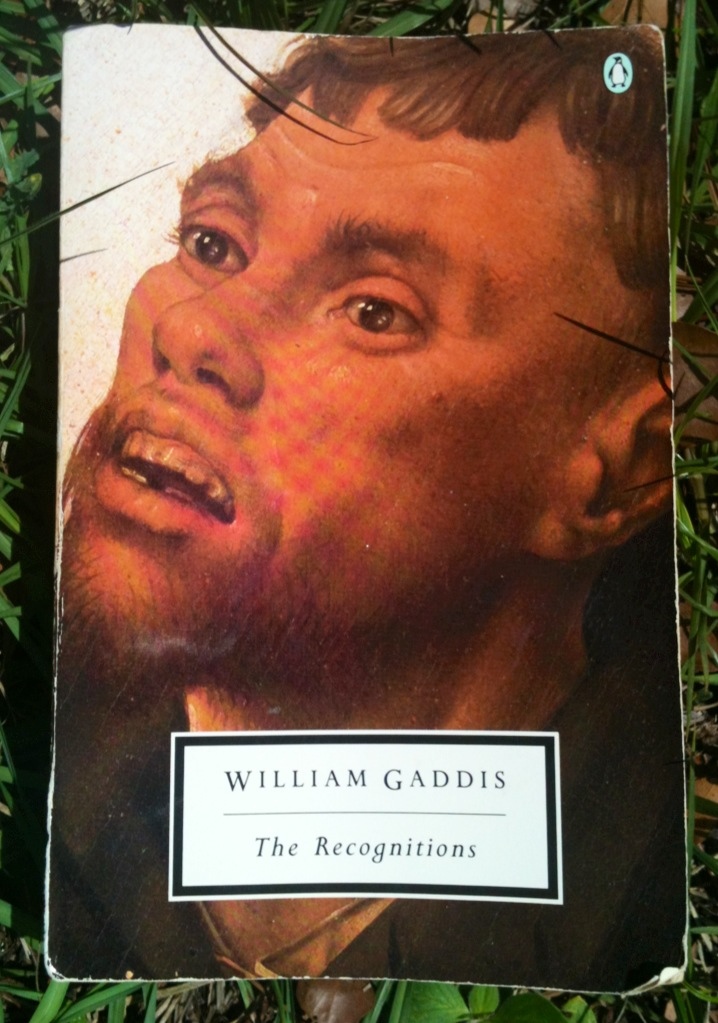
  1. I finished reading William Gaddis’s enormous opus The Recognitions a few days ago. I made a decent first attempt at the book in the summer of 2009, but wound up distracted not quite half way through, and eventually abandoned the book. I did, however, write about its first third. I will plunder occasionally from that write-up in this riff. Like here:

In William Gaddis‘s massive first novel, The Recognitions, Wyatt Gwyon forges paintings by master artists like Hieronymous Bosch, Hugo van der Goes, and Hans Memling. To be more accurate, Wyatt creates new paintings that perfectly replicate not just the style of the old masters, but also the spirit. After aging the pictures, he forges the artist’s signature, and at that point, the painting is no longer an original by Wyatt, but a “new” old original by a long-dead genius. The paintings of the particular artists that Wyatt counterfeits are instructive in understanding, or at least in hoping to understand how The Recognitions works. The paintings of Bosch, Memling, or Dierick Bouts function as highly-allusive tableaux, semiotic constructions that wed religion and mythology to art, genius, and a certain spectacular horror, and, as such, resist any hope of a complete and thorough analysis. Can you imagine, for example, trying to catalog and explain all of the discrete images in Bosch’s triptych, The Garden of Earthly Delights? And then, after creating such a catalog, explaining the intricate relationships between the different parts? You couldn’t, and Gaddis’s novel is the same way.

I still feel the anxiety dripping from that lede, the sense that The Recognitions might be a dare beyond my ken. Mellower now, I’m content to riff.

  1. I read this citation in Friedrich Nietzsche’s Human, All Too Human, Part II the other night, mentally noting, “cf. Gaddis”:

188. The Muses as Liars. —“We know how to tell many lies,” so sang the Muses once, when they revealed themselves to Hesiod.—The conception of the artist as deceiver, once grasped, leads to important discoveries.

  1. The Recognitions: crammed with poseurs and fakers, forgers and con-men, artists and would-be artists.
  2. To recognize: To see and know again. Recognition entails time, experience, certitude, authenticity.

  3. Who would not dogear or underline or highlight this passage?:

That romantic disease, originality, all around we see originality of incompetent idiots, they could draw nothing, paint nothing, just so the mess they make is original . . .

  1. In many ways The Recognitions, or rather the characters in The Recognitions whom we might identify with genuine talent, genius, or spirit (to be clear, I’m thinking of Wyatt/Stephan, Basil Valentine, Stanley, Anselm, maybe, and Frank Sinisterra) are conservative, reactionary even; this is somewhat ironic considering Gaddis’s estimable literary innovations.

  2. Esme: A focus for the novel’s masculine gaze, or a critique of such gazes?

  3. The central problem of The Recognitions (perhaps): What confers meaning in a desacralized world?

Late in the novel, in one of its many party scenes, Stanley underlines the problem, working in part from Voltaire’s (in)famous quote that, “If there were no God, it would be necessary to invent him”:

. . . even Voltaire could see that some transcendent judgments is necessary, because nothing is self-sufficient, even art, and when art isn’t an expression of something higher, when it isn’t invested you might even say, it breaks up into fragments that don’t have any meaning . . .

Here we think of Wyatt: Wyatt who rejects the ministry, contemporary art, contemporary society, sanity . . .

  1. Wyatt’s quest: To find truth, meaning, authenticity in a modern world where the sacred does not, cannot exist, is smothered by commerce, noise, fakery . . .
  • The Recognitions conveys a range of tones, but I like it best when it focuses its energies on comic irony and dark absurdity to detail the juxtapositions and ironies between meaning and noise, authenticity and forgery.

  • (I like The Recognitions least when its bile flares up too much in its throat, when its black humor tips over into a screed of despair. A more mature Gaddis handles bitterness far better in JR, I think—but I parenthesize this note, as it seems minor even in a list of minor digressions).

  • Probably my favorite chapter of the book — after the very first chapter, which I believe can stand on its own — is Chapter V of Part II. This is the chapter where Frank Sinisterra reemerges, setting into motion a failed plan to disseminate his counterfeit money (“the queer,” as his accomplice calls it). We also meet Otto’s father, Mr. Pivner, a truly pathetic figure (in all senses of the word). This chapter probably contains more immediate or apparent action than any other in The Recognitions, which largely relies on implication (or suspended reference).

  • More on Part II, Chapter V: Here we find a savagely satirical and very funny discussion of Dale Carnegie’s How to Win Friends and Influence People, a book that seems to stand as an emblem (one of many in The Recognitions) of the degraded commercial world that Gaddis repeatedly attacks. The entire discussion of Carnegie’s book is priceless — it begins on page 497 of my Penguin edition and unfurls over roughly 10 pages—and the book is alluded to enough in The Recognitions to become a motif.

  • I’ll quote from page 499 a passage that seems to ironically situate How to Win Friends and Influence People against The Recognitions itself (this is one of the many postmodern moves of the novel):

    It was written with reassuring felicity. There were no abstrusely long sentences, no confounding long words, no bewildering metaphors in an obfuscated system such as he feared finding in simply bound books of thoughts and ideas. No dictionary was necessary to understand its message; no reason to know what Kapila saw when he looked heavenward, and of what the Athenians accused Anaxagoras, or to know the secret name Jahveh, or who cleft the Gordian knot, the meaning of 666. There was, finally, very little need to know anything at all, except how to “deal with people.” College, the author implied, meant simply years wasted on Latin verbs and calculus. Vergil, and Harvard, were cited regularly with an uncomfortable, if off-hand, reverence for their unnecessary existences . . . In these pages, he was assured that whatever his work, knowledge of it was infinitely less important that knowing how to “deal with people.” This was what brought a price in the market place; and what else could anyone possibly want?

    1. I’m not sure if Gaddis is ahead of his time or of his time in the above citation.

    The Recognitions though, on the whole, feels more reactionary than does his later novel JR, which is so predictive of our contemporary society as to produce a maddening sense of the uncanny in its reader.

    1. Even more on Part II, Chapter V (which I seem to be using to alleviate the anxiety of having to account for so many of the book’s threads): Here we find a delineation of (then complication of, then shuffling of) the various father-son pairings and substitutions that will play out in the text. (Namely, the series of displacements between Pivner, Otto, and Sinisterra, with the subtle foreshadowing of Wyatt’s later (failed) father-son/mentor-pupil relationship with Sinisterra).
  • Is it worth pointing out that the father-son displacements throughout the text are reminiscent of Joyce’s Ulysses, a book that Gaddis pointedly denied as an influence?

  • Ignorant of Gaddis’s deflections, I wrote the following in my review almost three years ago:

    Gaddis shows a heavy debt to James Joyce‘s innovations in Ulysses here (and throughout the book, of course), although it would be a mistake to reduce the novel to a mere aping of that great work. Rather, The Recognitions seems to continue that High Modernist project, and, arguably, connect it to the (post)modern work of Pynchon, DeLillo, and David Foster Wallace. (In it’s heavy erudition, numerous allusions, and complex voices, the novel readily recalls both W.G. Sebald and Roberto Bolaño as far as I’m concerned).

    1. But, hey, Cynthia Ozick found Joyce’s mark on The Recognitions as well (from her 1985 New York Times review of Carpenter’s Gothic):

    When ”The Recognitions” arrived on the scene, it was already too late for those large acts of literary power ambition used to be good for. Joyce had come and gone. Imperially equipped for masterliness in range, language and ironic penetration, born to wrest out a modernist masterpiece but born untimely, Mr. Gaddis nonetheless took a long draught of Joyce’s advice and responded with surge after surge of virtuoso cunning.

    1. We are not obligated to listen to Gaddis’s denials of a Joyce influence, of course. When asked in his Paris Review interview if he’d like to clarify anything about his personality and work, he paraphrases his novel:

    I’d go back to The Recognitions where Wyatt asks what people want from the man they didn’t get from his work, because presumably that’s where he’s tried to distill this “life and personality and views” you speak of. What’s any artist but the dregs of his work: I gave that line to Wyatt thirty-odd years ago and as far as I’m concerned it’s still valid.

    1. And so Nietzsche again, again from Human, All Too Human, Part II:

    140. Shutting One’s Mouth. —When his book opens its mouth, the author must shut his.

    1. And if I’m going to quote German aphorists, here’s a Goethe citation (from Maxims and Reflections) that illustrates something of the spirit of The Recognitions:

    There is nothing worth thinking but it has been thought before; we must only try to think it again.

    1. And if I’m going to quote Goethe, I’ll also point out then that Gaddis began The Recognitions as a parody of Goethe’s Faust. Peter William Koenig writes in his excellent and definitive essay “Recognizing Gaddis’ Recognitions” (published in the Winter Volume Contemporary Literature, 1975):

    To understand Gaddis’ relationship to his characters, and thus his philosophical motive in writing the novel, we are helped by knowing how Gaddis conceived of it originally. The Recognitions began as a much smaller and less complicated work, passing through a major evolutionary stage during the seven years Gaddis spent writing it. Gaddis says in his notes: “When I started this thing . . . it was to be a good deal shorter, and quite explicitly a parody on the FAUST story, except the artist taking the place of the learned doctor.” Gaddis later explained that Wyatt was to have all talent as Faust had all knowledge, yet not be able to find what was worth doing. This plight-of limitless talent, limited by the age in which it lives-was experienced by an actual painter of the late 1940s, Hans Van Meegeren, on whom Gaddis may have modeled Wyatt. The authorities threw Van Meegeren into jail for forging Dutch Renaissance masterpieces, but like Wyatt, his forgeries seemed so inspired and “authentic” that when he confessed, he was not believed, and had to prove that he had painted them. Like Faust and Wyatt, Van Meegeren seemed to be a man of immense talent, but no genius for finding his own salvation.

    The Faust parody remained uppermost in Gaddis’ mind as he traveled from New York to Mexico, Panama and through Central America in 1947, until roughly the time he reached Spain in 1948. Here Gaddis read James Frazer’s The Golden Bough, and the novel entered its second major stage. Frazer’s pioneering anthropological work demonstrates how religions spring from earlier myths, fitting perfectly with Gaddis’ idea of the modern world as a counterfeit-or possibly inspiring it. In any case, Frazer led Gaddis to discover that Goethe’s Faust originally derived from the Clementine Recognitions, a rambling third-century theological tract of unknown authorship, dealing with Clement’s life and search for salvation. Gaddis adapted the title, broadening the conception of his novel to the story of a wandering, at times misguided hero, whose search for salvation would record the multifarious borrowings and counterfeits of modern culture.

    1. Is Wyatt the hero of The Recognitions? Here’s Basil Valentine (page 247 of my ed.):

    . . . that is why people read novels, to identify projections of their own unconscious. The hero has to be fearfully real, to convince them of their own reality, which they rather doubt. A novel without a hero would be distracting in the extreme. They have to know what you think, or good heavens, how can they know that you’re going through some wild conflict, which is after all the duty of a hero.

    1. If Wyatt is the hero, then what is Otto? Clearly Otto is a comedic double of some kind for Wyatt, a would-be Wyatt, a different kind of failure . . . but is he a hero?

    When I first tried The Recognitions I held Otto in special contempt (from that earlier review of mine):

    Otto follows Wyatt around like a puppy, writing down whatever he says, absorbing whatever he can from him, and eventually sleeping with his wife. Otto is the worst kind of poseur; he travels to Central America to finish his play only to lend the mediocre (at best) work some authenticity, or at least buzz. He fakes an injury and cultivates a wild appearance he hopes will give him artistic mystique among the Bohemian Greenwich Villagers he hopes to impress. In the fifth chapter, at an art-party, Otto, and the reader, learn quickly that no one cares about his play . . .

    But a full reading of The Recognitions shows more to Otto besides the initial anxious shallowness; Gaddis allows him authentic suffering and loss. (Alternately, my late sympathies for Otto may derive from the recognition that I am more of an Otto than a Wyatt . . .).

    1. The Recognitions is the work of a young man (“I think first it was that towering kind of confidence of being quite young, that one can do anything,” Gaddis says in his Paris Review interview), and often the novel reveals a cockiness, a self-assurance that tips over into didactic essaying or a sharpness toward its subjects that neglects to account for any kind of humanity behind what Gaddis attacks. The Recognitions likes to remind you that its erudition is likely beyond yours, that it’s smarter than you, even as it scathingly satirizes this position.

    I think that JR, a more mature work, does a finer job in its critique of contemporary America, or at least in its characterization of contemporary Americans (I find more spirit or authentic humanity in Bast and Gibbs and JR than in Otto or Wyatt or Stanley). This is not meant to be a knock on The Recognitions; I just found JR more balanced and less showy; it seems to me to be the work of an author at the height of his powers, if you’ll forgive the cliché.

    I’ll finish this riff-point by quoting Gaddis from The Paris Review again:

    Well, I almost think that if I’d gotten the Nobel Prize when The Recognitions was published I wouldn’t have been terribly surprised. I mean that’s the grand intoxication of youth, or what’s a heaven for.

    (By the way, Icelandic writer Halldór Kiljan Laxness won the Nobel in lit in 1955 when The Recognitions was published).

    1. Looking over this riff, I see it’s lengthy, long on outside citations and short on plot summary or recommendations. Because I don’t think I’ve made a direct appeal to readers who may be daunted by the size or reputation or scope of The Recognitions, let me be clear: While this isn’t a book for everyone, anyone who wants to read it can and should. As a kind of shorthand, it fits (“fit” is not the right verb) in that messy space between modernism and postmodernism, post-Joyce and pre-Pynchon, and Gaddis has a style and approach that anticipates David Foster Wallace. (It’s likely that if you made it this far into the riff that you already know this or, even more likely, that you realize that these literary-historical situations mean little or nothing).

    26.Very highly recommended.

    Worst Review Tactics

    “It’s like [name of thing you love]only so much better!”

    Has this ever happened to you? A friend or a “professional” reviewer of books, movies, records, etc. tries to sell you on some new thing by citing a comparison to something you love and then insulting that thing by telling you this new thing is aesthetically superior, the platonic ideal only glimpsed at by the thing you already love, exclaiming, “You should be so pumped to abandon that thing you already love in favor of this new thing that I am suddenly telling you is the more appropriate thing to admire!”

    What’s funny about all this is that the reviewer/friend is really only trying to connect with you, to personalize their recommendation within a framework they know you will understand. But often, by going this route, they inadvertently demean your love for whatever the thing is, and what ends up happening (for me anyway) is the exact opposite response they were trying to get from me:

    I end up hating this new thing.

    The earliest example I can remember happened in college when I was on the phone with a dear friend when he asked (unfortunately):

    “Have you heard this album Michigan by this guy Sufjan Stevens? It’s basically like Jim O’Rourke’s Eureka but the songwriting and arrangements are way better”

    And on that day, at that moment, I gave birth to an infinite unquenchable hatred for Sufjan Stevens.

    And why exactly did this happen? Because my discovery of Jim O’Rourke, (which had occurred a year or so before that conversation) was as close to a life-changing event as is possible with the consumption of art. Jim O’Rourke represents the nexus of so many wide-ranging creative ideas and disciplines, the perfect marriage of avant-garde and pop, melody and dissonance, improv and structure, (etc.) that I was obsessed with him to the point that he became a kind of index of creativity for me; I sought out every band or artist he had worked with; I read every interview with him published on the internet; I even kept a running Word doc where I copied and pasted the titles of any book or movie or album (or anything) that he mentioned liking.

     A brief list of a few of my favorite things I learned about via Jim O’Rourke:

    John Fahey

    Tony Conrad

    Dusan Makavejev

    Robert Downey Sr.

    Derek Bailey

    Faust

    CAN

    Whitehouse

    Arthur Russell

    Merzbow

    Ray Russell

    Bill Fay

    Van Dyke Parks

    Kevin Drumm

    Masayuki Takayanagi

    Otomo Yoshihde

    Keiji Haino

    Judy Sill

    Curt Boetcher

    Nic Roeg

    Luc Ferrari

    Robbie Basho

    Robert Wyatt

    Ivor Cutler

    Smog

    Scott Walker

    And the list can go on and on. Basically this man is my hero. And my friend knew this when he called me; maybe he didn’t quite know the depth and breadth of my love, but he knew as much as I was able to communicate verbally. And he certainly knew that at the time Eureka was my favorite of Jim’s albums. (I’ve since decided that Insignificance is the superior of that era of Drag City albums, although I prefer his instrumental, electronic or improve records to the songwriting ones in general).

    So what was my friend expecting me to do in response to his absurd claims? Drop all my built up love for the guy who has had the biggest influence on my creative life and suddenly take up with some dude whose name I couldn’t even pronounce yet? At his insistence I picked up Sufjan’s album and listened to a few songs, but all I was really doing was picking it apart, looking for all the ways it simply did not stack up to Eureka. Because of course, how could it stack up? That’s an impossible proposition considering the circumstance. I’m even willing to say that in a “blind taste test” situation it may be possible that 9 out of 10 listeners would prefer Sufbag Stevens to my Jim but I don’t care, I was and am so biased it’s not even worth pursuing.

    So why am I thinking of all of this now?

    Well the other day a dear, dear friend of mine wrote an article for NPR music where he outrageously overpraised an upcoming album by singer/composer Julia Holter—and it has been driving me nuts for the week or so since he posted it.

    I should preface by saying that my friend’s taste in music is among the sharpest most well-rounded of anyone I know. I take his word on basically everything and there is a reason he has this NPR job: he is better informed about music than almost anyone and he can keenly articulate his thoughts. So when he writes about an album, I almost always give whatever it is a listen—and in most cases I wholeheartedly agree with him.

    But in the first paragraph of this Julia Holter article, he pulls this shit on me, going straight for heart in the second sentence by referencing Scott Walker’s The Drift and Gaspar Noe’s film Enter The Void. My jaw dropped when he pulled those references; I may have spoken out loud to my wife, calling out to her in the other room, “Holy shit Lars just compared this girl to Enter the Void and Scott Walker!” Here’s Lars’s lede:

    When the world is at the tip of anyone’s fingers, there’s little space for a true vanguard of sound. Think about it: When was the last time you heard or saw something entirely new? Experiences like Gaspar Noe’s film Enter the Void and Scott Walker’s album The Drift shook me to my core, and questioned my ideas of not only art, but also life itself. But trace the steps and you’ll find Ennio Morricone and Krzysztof Penderecki in Walker, or Kenneth Anger and 2001: A Space Odyssey in Noe.

    One sentence further my heart was no longer the target; I felt that I had been kicked in the balls:

    We’re a culture that recycles — no revelatory observation — but with Ekstasis, Julia Holter has created a radically new world from a crystalline Venn diagram of sound.

    A “radically new world,” not recycled like Scott Walker or Gaspar Noe? So she’s more original than these mere recyclers? Well. Okay. I guess I’ll see about this.

    And so with that attitude I approached the listening to Holter’s album, and I can’t shake the comparison, I can’t get past the bitterness, the sour taste in my mouth of having two of my favorite things evoked and then dismissed in favor of This Thing

    I made it about halfway through Exstasis before I gave up. For all the grandstanding in the article, all I can hear is a younger Enya who is less interested in consonant melodies and who has probably seen Joanna Newsom live a few times–and even that description should sound cool to me! But it doesn’t. Lars’s overpraise acts as a numbing agent—sort of like when you eat pizza too soon out of the oven and it burns your tongue and you are doomed to taste less of the pizza for the rest of the meal, punished by the eagerness.

    Am I crazy? Is this album really as good as Lars is claiming? I fear now I won’t ever be able to judge it accurately. All week I’ve been linking my friends to his article to try to gather responses from others to try to help me get a more holistic, less reactionary understanding of what is going on here. So maybe that’s why I was moved to write this article as well. Please tell me that I’m way off base and that Ekstasis is totally amazing or whatever. But if you harbor any love for Scott Walker or Gaspar Noé maybe just go ahead and avoid it.

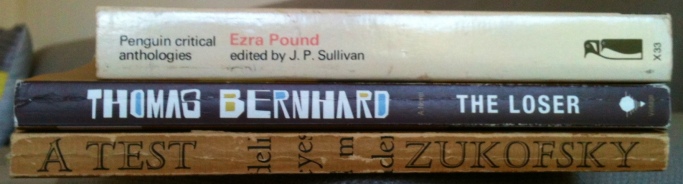
    Books Acquired, 1.13.2012 (Ezra Pound, Thomas Bernhard, Louis Zukofsky)

    20120115-163012.jpg

    Picked up these three last Friday.

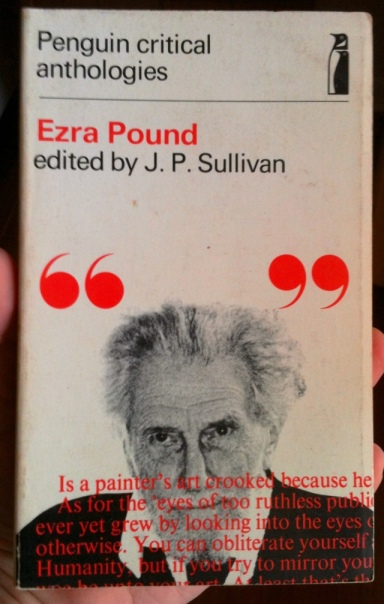
    20120115-163023.jpg

    This is a collection of letters to and from Ezra Pound, as well as criticism, introductions, etc. I like the cover, which is a bit too busy.

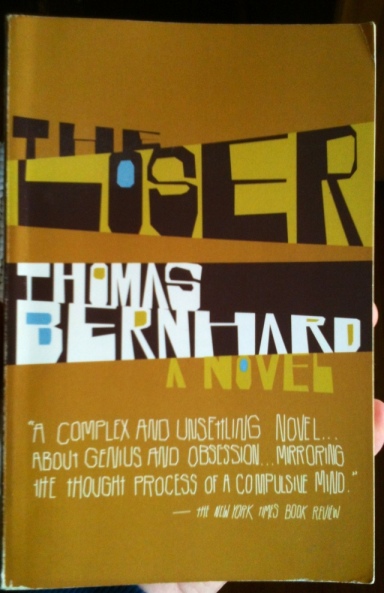
    20120115-163044.jpg

    I picked up Thomas Bernhard’s Correction last year on reader recommendation (recommendation: read Bernhard). Saw The Loser in the shop used, so I picked it up. Any recommendation on which one to start with?

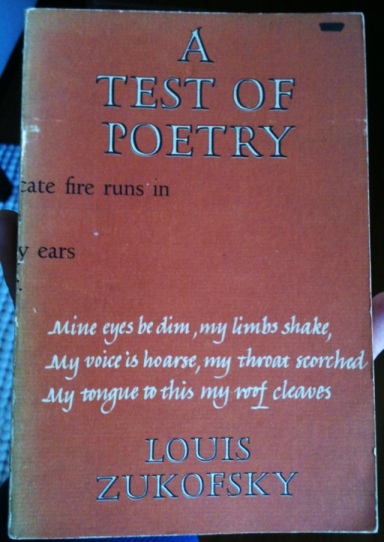
    20120115-163114.jpg

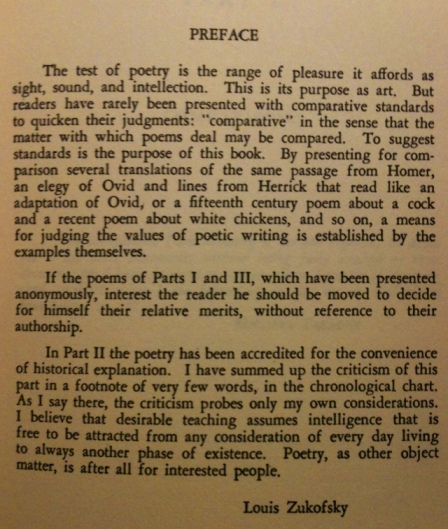
    A midcentury paperback of Louis Zukofsky’s A Test of Poetry. This is a strange book. I’d better let Zukofsky explain it:

    20120116-175731.jpg

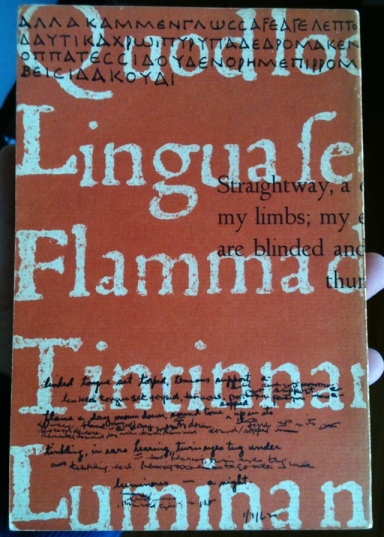
    The back cover is lovely as well:

    20120115-163132.jpg

    Check Out Movie Critic Armond White’s 2011 Better-Than-List

    Critic/contrarian Armond White’s 2011 Better-Than-List uses one movie to beat up on another. It’s grand reading—read it in full! A few choice snips:

    Terry Gilliam Explains Why Steven Spielberg Sucks and Stanley Kubrick Rules

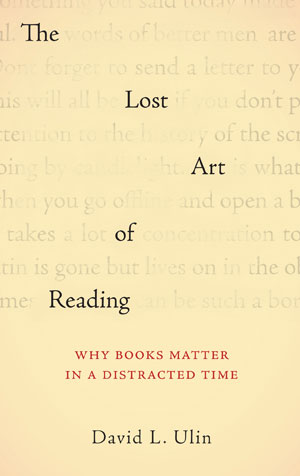
    The Lost Art of Reading — David L. Ulin

    “One evening not long ago, my fifteen-year-old son, Noah, told me that literature was dead,” begins David L. Ulin’s new book-length essay, The Lost Art of Reading. Noah is not enjoying The Great Gatsby; or, perhaps more accurately, he’s not enjoying how his English teacher is having him analyze the book. Noah’s experience with Gatsby is probably not too different from many young readers who are told that they must appreciate a book, break it down, reckon and account for all of its subtleties — all in the context of a classroom, for a grade. Reading literature is just a means to an end then, a way to pass a class; unlike Ulin, who “frame[s] the world through books,” Noah’s “inner-life is entwined within the circuits of his laptop.” Noah’s pronouncement that literature is dead is fraught with cultural and technological significance. And while such declarations are hardly new, the idea that books — literary works in particular — not only do not hold the place they once did in our society, but now cannot hold a place of significance seems to hold more water than it did even ten years ago. Books are no longer the dominant media. Discourse is frenetic, fractured, shallow. Accordingly, Ulin subtitles his book Why Books Matter in a Distracted Time.

    Gatsby — and Ulin’s conversations with his son about it — become organizing touchstones throughout the essay, along with Frank Conroy’s memoir Stop-Time, Faulkner’s obsession with time, and Thomas Paine’s Common Sense — a tract that Ulin points out might be “the most important book ever published in America.” It’s this consideration of Common Sense, along with his son’s declaration that lit is dead, that prompts Ulin to ask, “Could a book, any book, have this kind of impact in contemporary society? What about a movie or a website?” The questions continue–

    How do things stick to us in a culture where information and ideas flare up so quickly that we have no time to assess one before another takes place? How does reading maintain its hold on our imagination, or is that question even worth asking anymore?

    Ulin sets out to address these questions, drawing examples and analyses from a dizzying pool of books, websites, movies, and other media to do so. One of the highlights of The Lost Art of Reading is its confidence in defining reading as a meaningful art. Ulin tells us that–

    Reading is an act of contemplation, perhaps the only act in which we allow ourselves to merge with the consciousness of another human being. We possess the books we read, animating the waiting stillness of their language, but they possess us also, filling us with thoughts and observations, asking us to make them part of ourselves.

    And a few pages later–

    This is what literature, at its best and most unrelenting, offers: a slicing through of all the noise and the ephemera, a cutting to the chase. There is something thrilling about it, this unburdening, the idea of getting at a truth so profound that, for a moment anyway, we become transcendent in the fullest sense. I’m not talking here about posterity, which is its own kind of fantasy, in which we regard books as tombstones instead of souls. No, I’m thinking more of literature as a voice of pure expression, a cry in the dark.

    And yet Ulin admits to becoming, increasingly, a distracted reader, a reader who too quickly puts down his book to pick up his laptop or smart phone. This distraction seems endemic, environmental, even professionally necessary — and admittedly very, very familiar. The costs are also familiar–

    . . . to read, we need a certain kind of silence, an ability to filter out the noise. That seems increasingly elusive in our overnetworked society, where every buzz and rumor is instantly blogged and tweeted, and it is not contemplation we desire but an odd sort of distraction, distraction masquerading as being in the know. In such a landscape, knowledge can’t help but fall prey to illusion, albeit an illusion that is deeply seductive, with its promise that speed can lead us to more illumination, that it is more important to react than to think deeply, that something must be attached to every bit of time. Here, we have my reading problem in a nutshell, for books insist we take the opposite position, that we immerse, slow down.

    It’s key to note that Ulin is hardly a Luddite or a reactionary; when he writes “my reading problem” this is not a generalization — he is referring to his first-person experience as a reader. He is also open to the ways in which new media enhances literature. He writes, for example, of the ways in which Facebook and other websites create virtual platforms in which to honestly engage literature. He also discusses times when one habit of distraction — stopping to reference what he’s reading on YouTube or elsewhere on the net (a habit I fully identify with) — genuinely enriches his reading. However, Ulin’s greater fear is not so much his own personal distraction, but the costs of a permanently distracted populace–

    This is how we interact now, by mouthing off, steering every conversation back to our agendas, skimming the surface of each subject looking for an opportunity to spew. We see it on blogs and in e-mails, on television talk shows, in public meetings and community forums; we are a culture that seems unable to concentrate, to pursue a line of thought or tolerate a conflicting point of view.

    Wallowing through the comments section of any politicized news story is pretty much a recipe for depression, or at least a loss of faith in Americans’ ability, as Fitzgerald says ” to hold two opposed ideas in the mind at the same time, and still retain the ability to function.”

    I should admit my bias — Ulin had little work to do to convince me that a decline in “deep” reading — and meaningful, reflective discussion about that reading — can only further contribute to an increasingly shallow, trivial, and openly anti-intellectual society. So what is at stake here?–

    Stories, after all — whether aesthetic or political — require sustained concentration; we need to approach them as one side of a conversation in which we play a part. If we don’t, we end up susceptible to manipulation, emotional or otherwise. In February 1946, Hermann Goering told the judges of the Nuremberg tribunal, ‘Naturally the common people don’t war . . . But, after all, it is the leaders of a country who determine policy, and it is always a simple matter to drag people along, whether it is a democracy, or a fascist dictatorship, or parliament, or a communist dictatorship. All you have to do is tell them they are being attacked, and denounce the pacifists for lack of patriotism and exposing the country to danger. It works the same in every country.’ Such a statement is chilling on all sorts of levels, but nowhere more than in its recognition of the fact that we are complicit in our fate.

    One solution for Ulin (and I’m apt to agree) is reading, “an act of resistance in a landscape of distraction, a matter of engagement in a society that seems to want nothing more than for us to disengage.” Best of all, Ulin’s book is the act of criticism — both cultural and literary — that makes one want to read. He reminds us that the currency of ideas is always open to us if we put in the effort, and that the moments of enlightenment, of transcendence that we might gain from literature are part of what makes a life worth living. Recommended.

    The Lost Art of Reading is available now from Sasquatch Books.

    James Wood on Virginia Woolf and the Anxiety of Influence

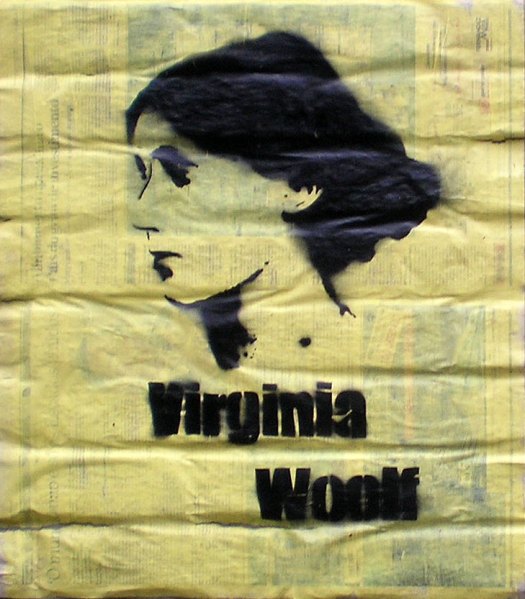
    James Wood, writing about Virginia Woolf in his essay “Virginia Woolf’s Mysticism” (collected in The Broken Estate)–
    Woolf, I think, became a great critic, not simply a “great reviewer.” The Collected Essays, which are still being edited, is the most substantial body of criticism in English this century. They belong in the tradition of Johnson, Coleridge, Arnold, and Henry James. This is the tradition of poet-critics, until the modern era, when novelists like Woolf and James join it. That is, her essays and reviews are a writer’s criticism, written in the language of art, which is the language of metaphor. The writer-critic, or poet-critic, has a competitive proximity to the writers she discusses. The competition is registered verbally. The writer-critic is always showing a little plumage to the writer under discussion. If the writer-critic appears to generalize, it is because literature is what she does, and one is always generalizing about oneself.

    Wood’s description of Woolf is really Wood’s description of Wood.

    James Wood Summarizes David Mitchell’s The Thousand Autumns of Jacob de Zoet

    I’m a few hours from the end of the audiobook version of David Mitchell’s new novel The Thousand Autumns of Jacob de Zoet. It’s fantastic stuff so far–engaging, imaginative, complex, and satisfying in its richness. Here’s a summary of the book from James Wood’s review of the book in The New Yorker, July 5, 2010:

    Jacob de Zoet is a pious, pedantic, upright young clerk for the Dutch East Indies Company, newly arrived on the man-made island of Dejima, in the bay of Nagasaki. It is 1799. The Japanese, enforcing their policy of isolation, confined the Dutch to their post at Dejima, a kind of floating village connected by a bridge to the mainland, and strictly monitored them. The Dutch were effectively prohibited from entering the landmass of Japan, except for the purpose of making an annual visitation to the shogun, in Edo; religious services were banned, and books of Christian devotion were seized upon arrival. Jacob is quickly involved in two difficult narratives: as an employee of the utmost probity, he is tasked with auditing the company, and purging its corruption (various employees have been fiddling the books and stealing goods); unfortunately, the man who has bestowed that task, Unico Vorstenbosch, the chief of the Dejima trading station, is himself on the take. When Jacob confronts Vorstenbosch about his dishonesty, he is suddenly isolated, without allies.

    The second struggle also isolates Jacob: he falls in love with Orito Aibagawa, an unusual Japanese woman who works as a midwife, and who has been taking medical instruction from a Dutch physician and intellectual, Dr. Marinus, long resident on Dejima. It is almost impossible for Jacob to advance his love; he is not even sure that Orito returns it, and, even if she did, how could a red-haired Dutchman and a wellborn Japanese woman form any serious bond? But, before anything might occur, Orito disappears. Her father has died, leaving large debts, and it seems that Orito’s family, in order to settle those debts, has “sold” the daughter into a kind of slavery: against her will, she is taken to a remote rural nunnery, run by a powerful and malevolent warlord, the Abbot Enomoto. Just as Jacob fought to unravel the corruptions of his company, so he now strives to unravel the corrupt potency of the Abbot Enomoto and his cultlike temple. As an English reviewer has remarked, the Abbot’s temple, where the enslaved nuns are drugged and impregnated by willing monks, is reminiscent of the world of Japanese anime.

    This summary is really the best part of Wood’s review, which works overtime to find fault in what is a very good book. He spends a good deal of his review dithering over the space Mitchell occupies in the contemporary literary world–is Mitchell a postmodernist? A post-postmodernist? A late postmodernist? It’s all quite silly, and I’ll probably write about it in a later post.

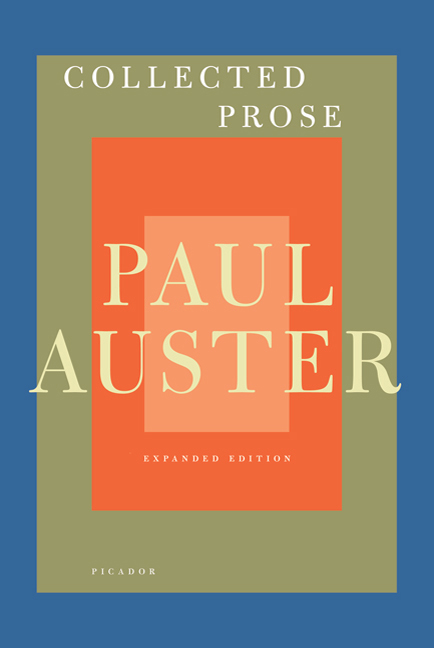
    Collected Prose — Paul Auster

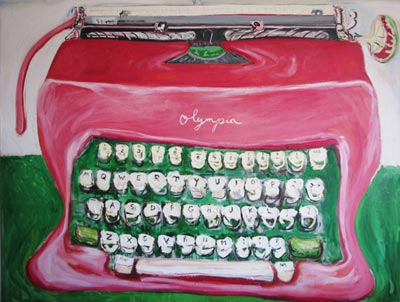
    This month, the good folks at Picador are issuing an expanded edition of Paul Auster’s essays, memoirs, prefaces, true stories, anecdotes, and interviews. Inconspicuously titled Collected Prose and running to just under six hundred pages, the volume includes Auster’s début work The Invention of Solitude in its entirety. Solitude is a strange blend of personal memoir, an account of the young writer’s reaction to and relationship with the death (and life) of his father, as well as a philosophical meditation on the absurdity of family, art, and time. Collected Prose also includes the later memoir, Hand to Mouth, a reflective piece on Auster’s early failures as he tries to make it as a writer, including his time in Paris, his marriage to Lydia Davis, his hunger, and his poverty. While Solitude inaugurates many of the experimental structures and postmodern tropes that Auster would be identified with throughout his career as a novelist, the flatter, more direct style of Hand to Mouth is more indicative of the tone of much of Collected Prose. There’s a journalistic directness and keen earnestness to Auster’s essays that perhaps belie his postmodern bona fides. That’s a good thing, allowing Auster to communicate directly about his sometimes challenging subjects to a wider audience. Style aside, both of the book-length memoirs at the front end of Collected Prose neatly delineate the themes that preoccupy much of the rest of the book: art, language, writing, writers, poverty, absurdity, movement, New York City, and so on. And although the book turns away from Auster’s memoirs and true stories in its second half, presenting his essays, editorials, and prefaces, there’s still a sharp sense of Auster in each essay. These are personal essays. Auster writes about his friend Philippe Petite, the French high-wire artist; he writes about the literal hunger artists face, using Knut Hamsun and Franz Kafka as examples; he writes a vindication for Dada daddy Hugo Ball; he writes on over half a dozen relatively obscure poets to let us know why they matter. There are wonderful little moments, like “The Story of My Typewriter,” where Auster exclaims his love for his quiet Olympia (he buys 50 typewriter ribbons fearing the specie’s eventual extinction). The book reprints the Sam Messner paintings that originally accompanied Auster’s text (or, perhaps, vice versa).

    Another great moment is the essay “Hawthorne at Home,” which takes a look at a little known piece by Nathaniel Hawthorne called Twenty Days with Julian & Little Bunny. Hawthorne’s piece is more or less a straightforward narrative account of Hawthorne alone with his five-year old son Julian and his pet rabbit for three weeks while wife Sophia visited the Peabodys. While Auster gives the reader a lesson on Hawthorne and his composition of The Scarlet Letter here, the essay focuses on the idyllic charm of a father and son, a rare subject in Hawthorne’s oeuvre. As a bonus, Herman Melville makes a cameo. “Hawthorne at Home” is the sort of essay that makes you want to go read the source material; it sent me hunting for a used copy of American Notebooks.

    As one might imagine, Collected Prose is absolutely larded with writers, and lovingly so. Auster does not suffer from the inclination toward meanness that so many critics feel toward their peers, perhaps because he writes foremost from the perspective of an artist. Not that it’s difficult to praise Art Spiegelman (“The Art of Worry”) or pray for Salman Rushdie (um, “A Prayer for Salman Rushdie”) or speak to the genius of Samuel Beckett (“Remembering Beckett on His One Hundredth Birthday”) and Jim Jarmusch (“Night on Earth: New York”)–but Auster illuminates their work in a way that transcends the postmodern concerns of technique, place, and politics, and speaks directly to a certain aesthetic excellence. His love for storytellers extends beyond the pros, of course, evinced in his work with NPR’s National Story Project. He credits wife Siri with coming up with the idea of having NPR listeners write and submit their own original stories, but his enthusiasm for her idea resonates in his warm preface to the eventual book that collected the listeners’ submissions. Auster writes, “I learned that I am not alone in my belief that the more we understand of the world, the more elusive and confounding that world becomes.” The world becomes more “confounding” after the 9/11 attacks, of course, and like so many other writers Auster attempted to somehow measure the tragedy in words. “Random Notes–September 11, 2001–4:00 PM” is a scrap, a fragment, a shell-shocked missive that ends with the haunting words “And so the twenty-first century finally begins.”

    It might be misleading to call Collected Prose a good introduction to Paul Auster’s nonfiction–can a work so comprehensive, so massive be a mere starting point?–but it is a great introduction, so there. It’s also a fantastic overview of critical, literary, and artistic theory, written from a deeply personal perspective. Let’s hope that fifteen years from now we’ll have another expanded edition of Auster’s prose; in the meantime, we can look forward to his new novel Sunset Park this November. Highly recommended.

    Criticism

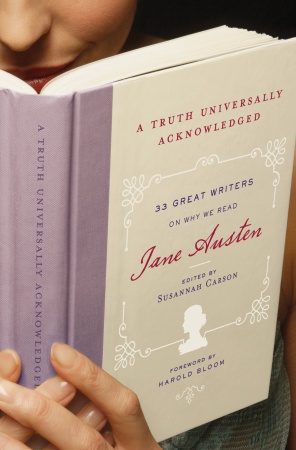
    A Truth Universally Acknowledged — 33 Great Writers on Why We Read Jane Austen

    In A Truth Universally Acknowledged, editor Susannah Carson collects thirty-three short essays on Jane Austen. In her introduction, Carson notes that each “of these essayists has taken a shot at defining and explaining Austen’s place both in the literary canon and in the cultural imagination.” And while there’s no mention of Austen’s recent tangles with zombies and sea monsters, the collection does cover quite a route of the cultural imagination that Carson promises. How could it not? There are short (and longish) essays from E.M. Forster, W. Somerset Maugham, Martin Amis, and C.S. Lewis, all proffering different reasons why Austen rules. Contemporary writer Susanna Clarke scolds those of us who might mistake film and TV adaptations as authentic representations of the lady’s work: “Austen wasn’t a visual writer,” Clarke writes, ” Her landscapes are emotional and moral–what we would call psychological.” Harold Bloom goes as far as to suggest that, “Like Shakespeare, Austen invented us.” Bloom’s usual Oedipal anxiety manifests itself in a more palatable line: “Because we are Austen’s children, we behold and confront our own anguish and our own fantasies in her novels.” (Never fear, Bloom gets some axe-grinding in as well: “Those who read Austen ‘politically’ now are not reading her at all.” Thank you again, oh great master critic, for telling us how to read our books). Benjamin Nugent gets pragmatic, seeing Pride and Prejudice as something of a self-help book: “Young nerds should read Austen because she’ll force them to hear dissonant notes in their own speech they might otherwise miss, and open their eyes to defeats and victories they otherwise wouldn’t even have noticed.” One of our favorite writers, Eudora Welty, writes a loving appreciation of the marvel of just how Austen constructed the complex ironies of her works: “Each novel is a formidable engine of strategy.” Rebecca Mead’s “Six Reasons to Read Jane Austen” is both funny and convincing. Reason four: “Because we are made to in school.” Mead’s little essay would be a worthy primer for any high school senior dreading wading into Pride and Prejudice. The great American critic Lionel Trilling points out, as those high schoolers know, that Pride and Prejudice “is the one novel in the canon that ‘everybody’ reads.” He wants you to know that of “Jane Austen’s six great novels, Emma is surely the one that is most fully representative of its author.” He makes a good case for this argument as well, comparing it to the “difficult” books of Proust, Joyce, and Kafka–company that we don’t always associate with Austen. Indeed, many of the essays here focus on Austen’s lesser-read volumes–Mansfield Park, Northanger Abbey, Emma–and to a positive end: these essayists will make you want to read these books. And isn’t that what real literary criticism should aim to do anyway–make the reader read the book herself, think critically about it herself? While Austen is hardly in need of a revival, A Truth Universally Acknowledged does a lovely job of balancing academic criticism with a popular appeal. Like Austen’s own work, it tempers social critique with sharp humor. A Truth will, of course, appeal mostly to Austen fans (many of whom will surely find it indispensable), but it’s also the sort of volume that will find a place in the hearts of those who simply love to read great writers writing about great writers. Recommended.

    A Truth Universally Acknowledged is new in hardback this month from Random House.

    Doomed He Was

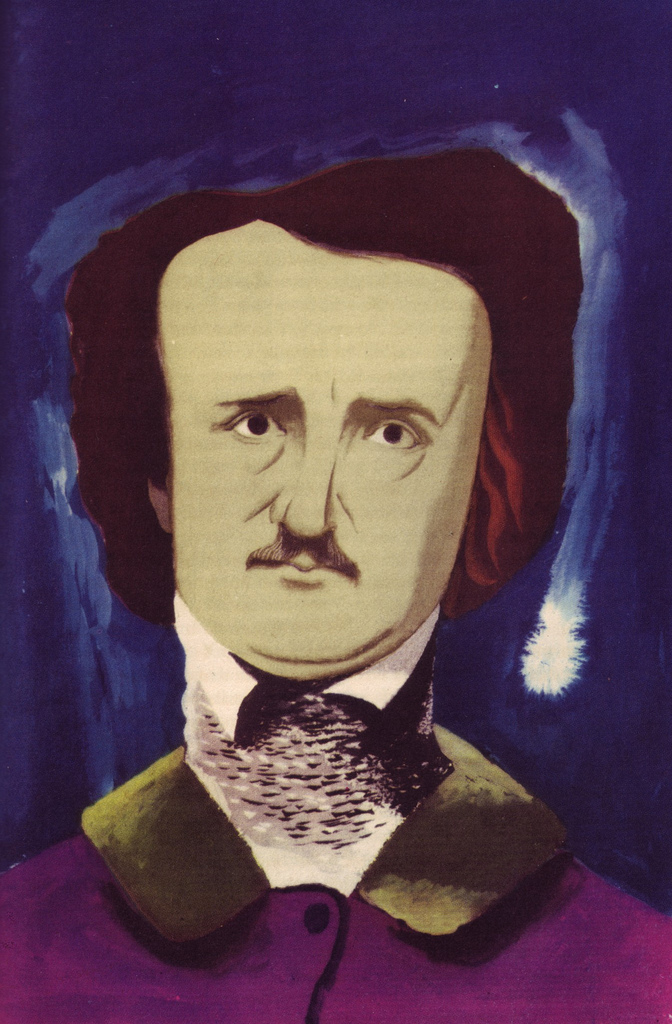
    Image of Poe by Edward McKnight Kauffer, via A Journey Round My Skull
    Image of Poe by Edward McKnight Kauffer, via A Journey Round My Skull

    So, instead of grading essays like I should’ve today, I reread D. H. Lawrence’s essay on Edgar Allan Poe, collected in the former’s incomparable Studies in Classic American Literature. Lawrence asserts that Poe is “absolutely concerned with the disintegration-processes of his own psyche,” and goes on to try to prove this over a close-reading of some of Poe’s most famous tales, including “Ligeia” and “The Fall of the House of Usher.” Lawrence concludes his essay a bit melodramatically, but it seems to suit Poe’s depraved dilemmas:

    But Poe knew only love, love, love, intense vibrations and heightened consciousness. Drugs, women, self destruction, but anyhow the prismatic ecstasy of heightened consciousness and sense of love, of flow. The human soul in him was beside itself. But it was not lost. He told us plainly how it was, so that we should know.

    He was an adventurer into vaults and cellars and horrible underground passages of the human soul. He sounded the horror and warning of his own doom.

    Doomed he was. He died wanting more love, and love killed him. A ghastly disease, love. Poe telling us of his disease: trying even to make his disease fair and attractive. Even succeeding.

    Actually, a University of Maryland Medical Center study finds that rabies likely caused Poe’s death, not love, as Lawrence suggests. Rabies. Not drugs or women–or love–rabies. How’s that for a “disintegration-process”?

    Harold Bloom on McCarthy’s Blood Meridian

    bloom_harold

    AV Club posted a great interview with master critic Harold Bloom this week. Bloom speaks at some length on one of our favorite books, Cormac McCarthy‘s violent opus Blood Meridian, which was AV Club’s “Wrapped Up In Books” book club selection for June (pretty good discussions of the book there, as well). An excerpt:

    The first time I read Blood Meridian, I was so appalled that while I was held, I gave up after about 60 pages. I don’t think I was feeling very well then anyway; my health was going through a bad time, and it was more than I could take. But it intrigued me, because there was no question about the quality of the writing, which is stunning. So I went back a second time, and I got, I don’t remember… 140, 150 pages, and then, I think it was the Judge who got me. He was beginning to give me nightmares just as he gives the kid nightmares. And then the third time, it went off like a shot. I went straight through it and was exhilarated. I said, “My God! This reminds me of Thomas Pynchon at his best, or Nathanael West.” It was the greatest single book since Faulkner’s As I Lay Dying.

    John Leonard, 1939-2008

    leonard_span

    American critic John Leonard died of lung cancer last Wednesday. From The New York Times obituary:

    John Leonard, a widely influential and enduringly visible cultural critic known for the breadth of his knowledge, the depth of his inquiries and the lavish passion of his prose, died on Wednesday in Manhattan. He was 69 and lived in Manhattan. . . .

    As a critic, Mr. Leonard was far less interested in saying yea or nay about a work of art than he was in scrutinizing the who, the what and the why of it. His writing opened a window onto the contemporary American scene, examining a book or film or television show as it was shaped by the cultural winds of the day.

    Amid the thicket of book galleys he received each week, Mr. Leonard often spied glimmers that other critics had not yet noticed. He was known as an early champion of a string of writers who are now household names, among them Mary Gordon, Maxine Hong Kingston and the Nobel Prize winners Toni Morrison and Gabriel García Márquez.

    Mr. Leonard’s prose was known not only for its erudition, but also for its sheer revelry in the sounds and sentences of English. Stylistic hallmarks included wit, wordplay, a carefully constructed acerbity and a syntax so unabashedly baroque that some readers found it overwhelming. The comma seemed to have been invented expressly for him.

    I’ve subscribed to Harper’s for about a decade now, and in that time John Leonard’s “New Books” column has been not only one of my favorite features of the magazine, but also an inspirational guide on how to review a book. Leonard knew how to show why a book mattered; he also knew how to capture the essence of not just the plot but the author’s style in just a few short lines–something that’s really, really tough to do. I read one of Leonard’s last reviews, a write up of Toni Morrison’s latest A Mercy in this month’s Harper’s, just last Monday to a group of my high school students who were interested in Morrison’s work. The review made one of them say: “I want to read that book.” I think there is no higher compliment for any critic. John Leonard will be missed.