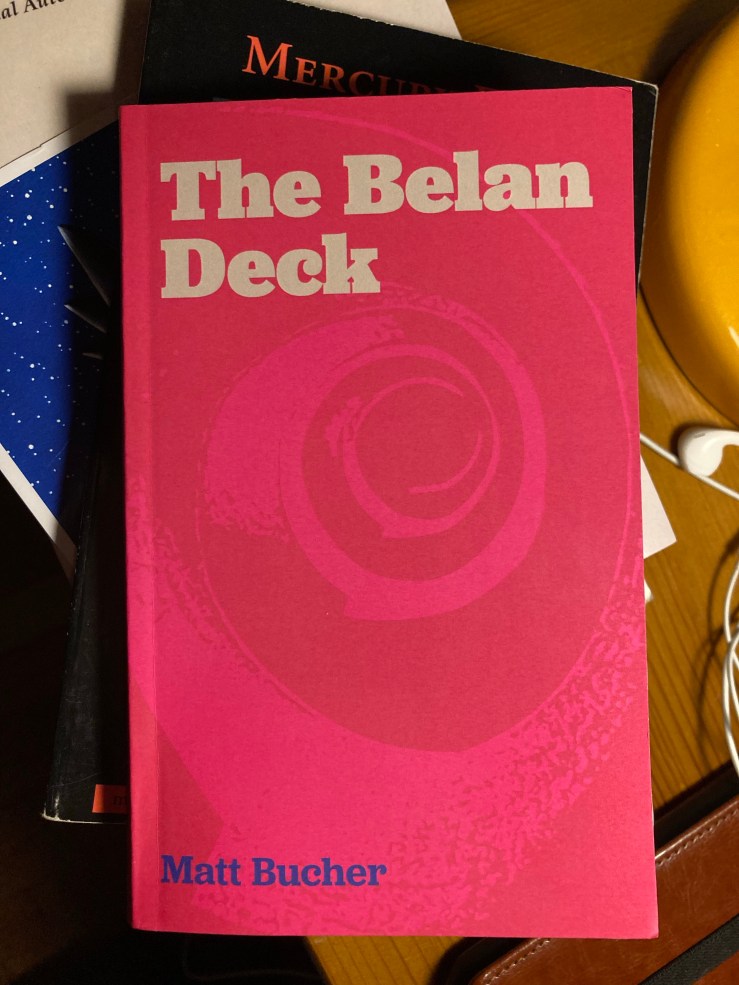
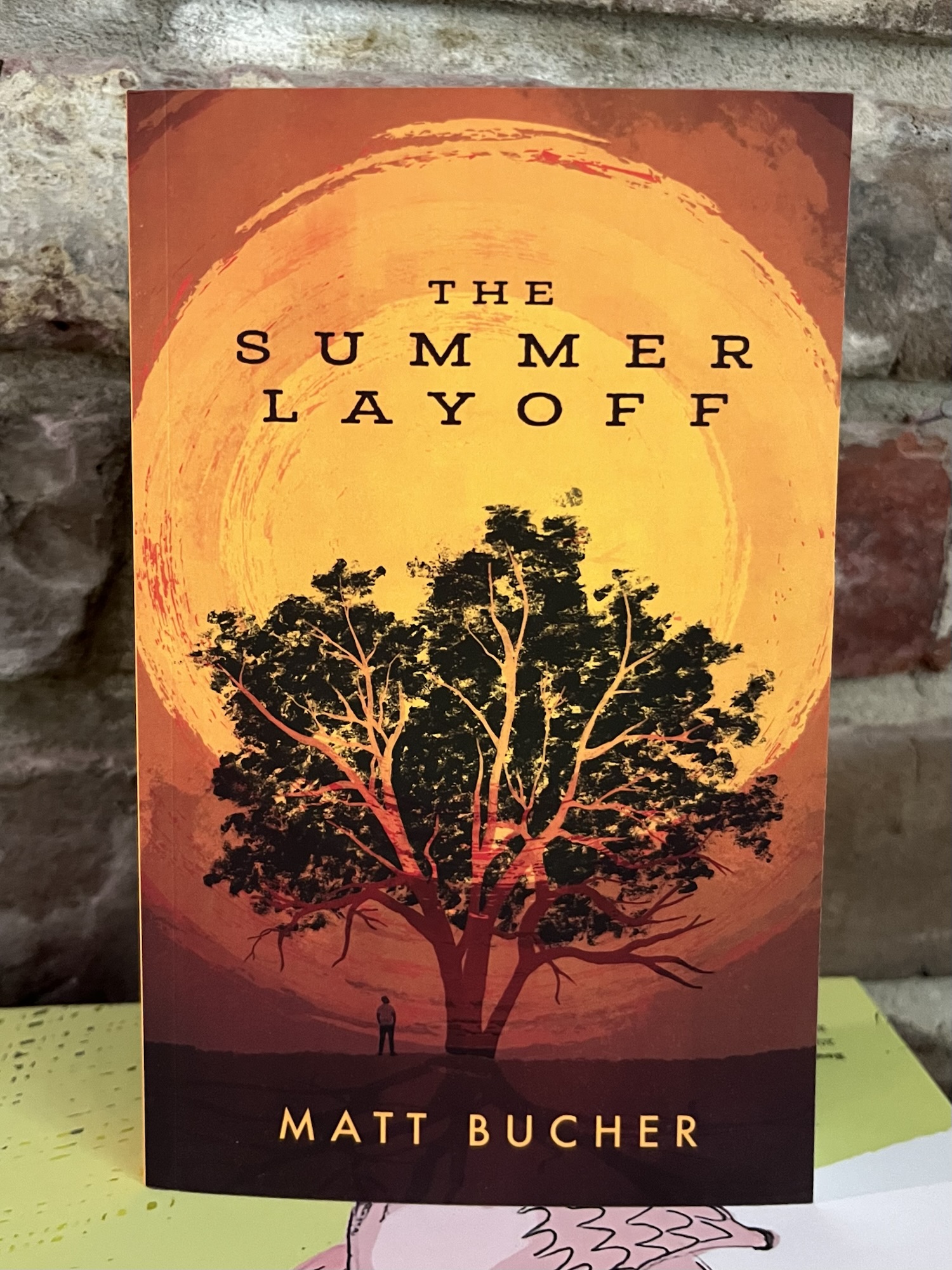
Matt Bucher’s The Summer Layoff (Book acquired, 24 April 2025)

Matt Bucher’s forthcoming novel The Summer Layoff is a semi-sequel to his debut, The Belan Deck. Blurb:

On Day 1, the narrator of The Summer Layoff is unceremoniously canned from his soul-sucking corporate job. But, he has a generous severance package that affords him the time off to do nothing, for once. Instead of attending virtual meetings and reviewing PowerPoint files relating to an amorphous Al project, he can now take long walks through his Texas suburb, write in his diary, scroll Wikipedia for hours at a time, and contemplate normal human anxieties. Part catalog, part self-help note-to-self, The Summer Layoff is a meditation on the modern metaphysics of work and stasis.

From my review of The Belan Deck:

Let’s talk about the spirit and form of The Belan Deck. Bucher borrows the epigraphic, anecdotal, fractured, discontinuous style that David Markson practiced (perfected?) in his so-called Notecard Quartet (1996-2007: Reader’s BlockThis Is Not A NovelVanishing Point, and The Last Novel). “An assemblage…nonlinear, discontinuous, collage-like,” wrote Markson, to which Bucher’s narrator replies, “Bricolage. DIY culture. Amateurism. Fandom. Blackout poems.”

Bucher’s bricolage picks up Markson’s style and spirit, but also moves it forward. Although Markson’s late quartet is arguably (I would say, by definition) formally postmodernist, the object of the Notecard Novels’ obsession is essentially Modernism. Bucher’s book is necessarily post-postmodern, taking as its objects the detritus and tools of postmodern communication: PowerPoint, Google Street View, Wikipedia, social media, artificial intelligence.

“Daily Reviewer-Haupt” — David Markson

Donald Barthelme wants you to please tell David Markson that he’s not always coming out of that liquor store where you frequently see him

I lived over near Sixth, and so I’d frequently walk up West Eleventh and we’d run into each other. He was a famous writer, and I had no reputation at all, so I was always kind of quiet around him. He was the Donald Barthelme. Once, I was walking with my daughter, who was about sixteen at the time, and we bumped into him. Afterward, she asked me who he was and I told her, and she said, ‘Dad! You didn’t even introduce me! My friends and I love his work!’ One time, [Barthelme’s editor] Faith Sale passed this message on to my wife; she said, ‘Donald Barthelme wants you to please tell David Markson that he’s not always coming out of that liquor store where you frequently see him. . .It was very funny. I, of course, went to a different liquor store, and was probably there more often than Don was in his!

An anecdote from David Markson, recorded in Tracy Daugherty’s Donald Barthelme biography, Hiding Man.

Matt Bucher’s The Belan Deck is an unexpectedly moving argument for humanity and serious triviality

I stayed up later than I meant to the other night reading all of Matt Bucher’s new book The Belan Deck in one cover-to-cover go. On his website, Bucher describes The Belan Deck as “a little book…set mostly during a layover at SFO” that “centers around a person who maybe doesn’t really fit in at their AI tech job but still needs to produce one final PowerPoint deck.” This description approximates the plot, in the barest sense, but doesn’t touch on the spirit or form of The Belan Deck.

Let’s talk about the spirit and form of The Belan Deck. Bucher borrows the epigraphic, anecdotal, fractured, discontinuous style that David Markson practiced (perfected?) in his so-called Notecard Quartet (1996-2007: Reader’s Block, This Is Not A NovelVanishing Point, and The Last Novel). “An assemblage…nonlinear, discontinuous, collage-like,” wrote Markson, to which Bucher’s narrator replies, “Bricolage. DIY culture. Amateurism. Fandom. Blackout poems.”

Bucher’s bricolage picks up Markson’s style and spirit, but also moves it forward. Although Markson’s late quartet is arguably (I would say, by definition) formally postmodernist, the object of the Notecard Novels’ obsession is essentially Modernism. Bucher’s book is necessarily post-postmodern, taking as its objects the detritus and tools of postmodern communication: PowerPoint, Google Street View, Wikipedia, social media, artificial intelligence.

At the same time, Bucher continues Markson’s obsessions with artists and death, adding to the mortality lists that wormed through DM’s quartet. Bucher’s updates are odd though, in that they seem to, in their print form, contextualize anew coincidences that were so raw and immediate when they popped up on Twitter and other social media:

Nicanor Parra died the day after Ursula K. LeGuin died.

Larry McMurty and Beverly Cleary died the same day.

(In my memory, William H. Gass died the day before LeGuin, but this is not true. He died almost two months before LeGuin. But I recall teaching selections from both of their work in a literature class in the spring semester of 2018, and pointing out to my students that the empty spaces behind the dashes after their birth years might now be filled in. “An encyclopedia entry demands at least a birth or a death,” notes Bucher’s narrator.)

The encyclopedia, by which I mean Wikipedia, becomes a heroic motif in The Belan Deck. “Wikipedia is the number one result for over 50% of Google searches,” Bucher’s narrator points out, following it up with,

Wikipedia, made by humans, for free, is a better search engine than Google, the most expensive and sophisticated algorithm in the world.

Earlier in The Belan Deck, the narrator points to the “mindless pleasure of going down a deep Wikipedia rabbit hole,” a pleasure that an artificial intelligence, no matter how developed, could never feel. About three dozen pages later, Bucher’s narrator throws a slant rhyme to his previous note on the “mindless pleasures” of Wikipedia rabbit holes, pointing out that Thomas Pynchon had used Mindless Pleasures as a working title for Gravity’s Rainbow. That’s how this book operates: Disparate fragments of information are “Clues rather than trivia.”

The goal is to find the sublime in these connections; Bucher’s narrator repeatedly and succinctly argues that finding the beautiful, much less the sublime, is impossible for an artificial intelligence. The Belan Deck plays out as a discursive, looping, and unexpectedly moving argument for humanity, in all its serious triviality, against the backdrop of capital’s rapid encroachment into the human position in the arts.

“Capitalism is incompatible with being an artist, for most people,” avers our narrator. “Yet you participate!” might come the retort, and it’s true—not only does Bucher’s narrator work in a soulless medium, the deck (trying to inject some soul, some sublime, some humanity into it), he also works for the soulless Belan, a money guy who would love to replace artists with machines. (In what I think has to be a great intentional gag, Bucher’s narrator’s point of contact for Belan is a middleman named  Jimmy Chen. I just have to believe that the character’s a take on the Jimmy Chen who wrote and designed on HTMLGIANT for all those years.)

The narrator participates because there aren’t that many other options, as we all know. “Do you understand what I am saying? Does it also feel this way to you?” the narrator plaintively asks. I mean, for me, that’s a Yes, all the time. 

There’s much more in The Belan Deck than I can get to here—more on art, artists, baseball, airports—it’s voluminous for a “little book.” (“When we buy a book, we think we are buying time to read” is a line I underlined but could not otherwise work into this review, so I’ll include it here parenthetically. (A lot of this review has happened in parentheses.))

I’ll end with two bits of personal trivia, two coincidences.

First: The day The Belan Deck arrived in my mail, which is the day that I read The Belan Deck, some AI-cheerleading dork went viral on Twitter for posting a series of unasked-for renderings of “what the backgrounds of the most famous paintings in the world look like with AI.” He was roundly and rightly mocked for his endeavors, and I found the general antipathy heartening, but still a small cadre of people who know absolutely nothing about art congratulated his vapidity.

Second: Earlier that same day, I read a passage from Walter Tevis’s 1980 dystopian novel Mockingbird, and found its sentiment largely heartening as well. The hero of the novel, staring at a “dumb parody of humanity” declares it “nothing, nothing at all.” He continues, pointing out that the forces of capital “had given robots to the world with the lie that they would save us from labor or relieve us from drudgery so that we could grow and develop inwardly.” But underneath this false promise was a deep “contempt for the ordinary life of men and women,”  a deep hatred of human life itself. The sentiment I find heartening here is in the hero’s recognition and resistance to this contempt.

The Belan Deck isn’t a straightforward guidebook or manifesto or map, but it nevertheless, in its elliptical, poetic approach, offers a winding, thinking, feeling path of opposition to not only the machines themselves, but also the hollow men who would gladly replace artists and creators and thinkers with those machines. It’s also really fun to read. Great stuff.

Books acquired, 26 May 2023

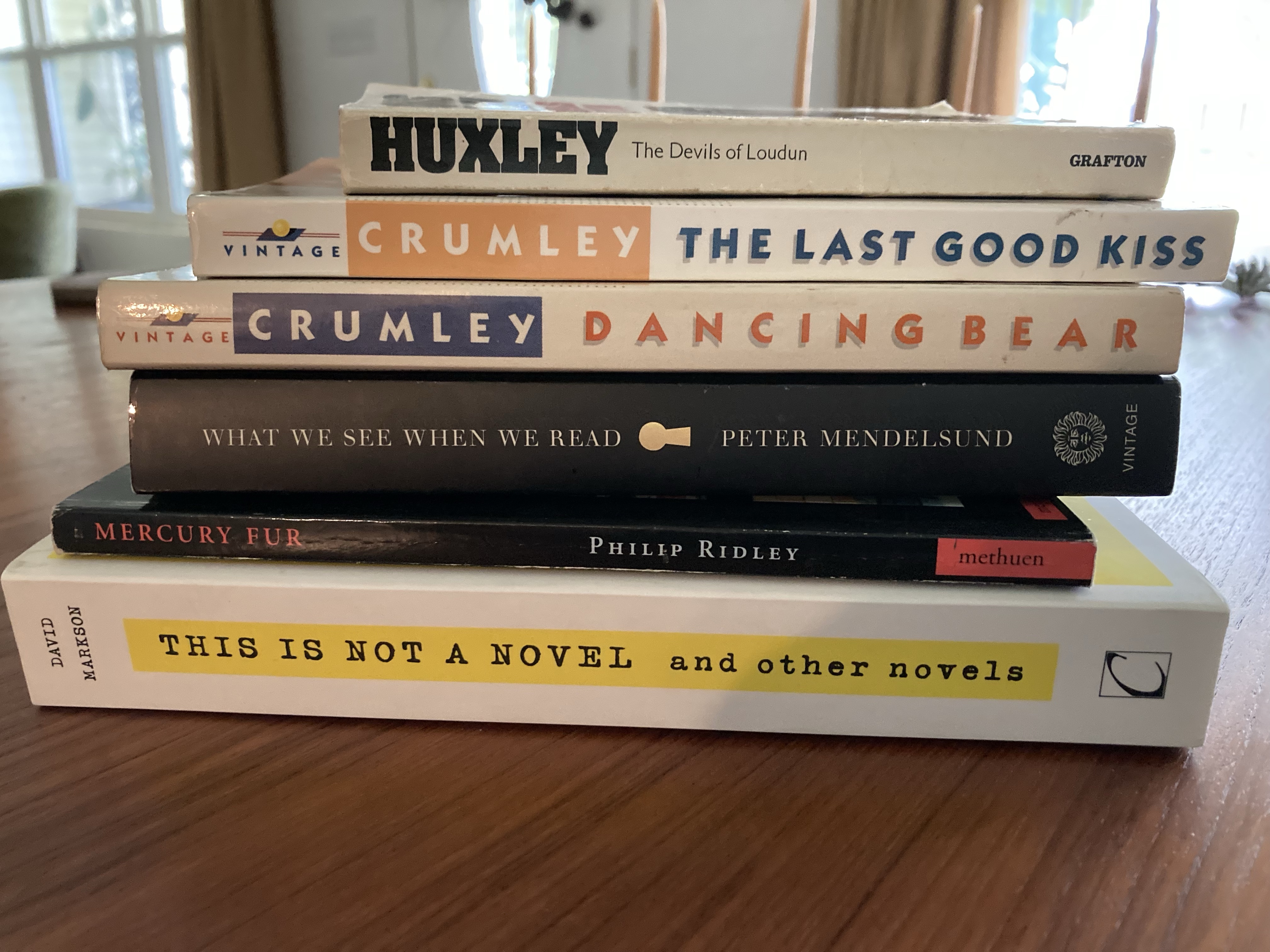
I brought a box of old books to my spot; I did not intend to pick up any books but then I picked up six:

I’d been looking for a handsome and/or cheap copy of Aldous Huxley’s The Devils of Loudon for a few years ago; success.

I posted something on Twitter a few days ago about how much I’ve been enjoying Steve Erickson’s Days Between Stations; one of the replies put James Crumley in his company (along with McCarthy and Joy Williams), so I picked up Dancing Bear and The Last Good Kiss:

I’ve long loved Peter Mendelsund’s cover designs, so I didn’t pass up on a used copy of What We See When We Read. It has a lot of pictures and diagrams and such.

I saw a very interesting looking person reading an actor’s edition of Philip Ridley’s play Mercury Fur on the train a few weeks ago. I had never heard of the play, but looked it up, thought it sounded pretty cool, and then looked for it in the drama section of this same book store the last time I was there. I didn’t find it. I found it yesterday mixed in with the novels. (I wasn’t actually looking for it.)

I don’t own physical copies of The Last Novel and Vanishing Point, two of the three novels collected in David Markson’s This Is Not a Novel and Other Novels, so I couldn’t pass on this omnibus. I do own a copy of Reader’s Block, which is not collected in This Is Not a Novel and Other Novels.

All of David Markson’s references in The Last Novel to Walt Whitman

All of David Markson’s references in The Last Novel to Walt Whiman:

I am he that aches with amorous love.            Wrote Whitman.

Walter, leave off.

Wrote D. H. Lawrence.


Walt Whitman’s claim — never in any way verified — that he had fathered at least six illegitimate children.


Gerard Manley Hopkins, on realizing that he feels a certain kinship with Whitman:

As he is a very great scoundrel this is not a very pleasant confession.


A writer of something occasionally like English — and a man of something occasionally like genius.

Swinburne called Whitman.


Future generations will regard Bob Dylan with the awe reserved for Blake, Whitman, Picasso and the like.

Said an otherwise seemingly rational writer named Jonathan Lethem.


Before the Euro, the portrait of Yeats on Ireland’s twenty-pound note.

America’s Whitman twenty-dollar bill, when?

The Melville ten?


Twenty-five years after his death, Poe’s remains were disinterred from what had been little better than a pauper’s grave and reburied more formally.

Walt Whitman, who made the journey from Camden to Baltimore in spite of being disabled from a recent stroke, was the only literary figure to appear at the ceremonies.

Problem with you Markson you’ve got no God damned fellow feeling in bosom (William Gaddis)

Problem with you Markson you’ve got no God damned fellow feeling in bosom, put yourself in the poor bastard’s place: like if your wife wrote a novel and the best agent in town declined to handle it, would you go around giving a free ride to the agent’s clients? I mean why the hell do you think some poor bastard wants to be a book calumnist in the first place.

–A 1975 letter from William Gaddis to David Markson. Collected in Letters of William Gaddis, edited by Steven Moore. Moore provides this context for Gaddis’s satirical letter:

When Christopher Lehmann-Haupt’s negative review of J R appeared in the daily New York Times on 30 October, Markson sent a postcard the same day to WG reading: “Dear Bill—Fuck Christopher Lehmann-Haupt!” (Lehmann-Haupt had also written a negative review of Markson’s Going Down five years earlier.) Gaddis’s reply, undated and without salutation, plays on a joke in J R whereby a foreigner takes literally a dictionary definition of “sympathy” (488–89)…

Darwin anecdote (David Markson)

Pat me on the head, I did manage to get through one novel that long in the past decade, David Markson remarked of Infinite Jest

Seriously—to paraphrase Ezra Pound, there’s no record of a critic ever saying anything significant about a writer who came later than he did. You grow up getting interested in books, and the writers of your own generation or the generation or two before your own are the ones you pay most attention to. But listen, I’m scarcely as bad as some of the people I know. But good lord, some of the people I went to college or even graduate school with pretty much quit about nine days after they got their diplomas. And haven’t read a poet since Auden, or a novelist since Hemingway. There was one fat novel I did read. In 1996, in fact. I remember the date because my novel Reader’s Block had also just been published: Infinite Jest. Before I’d heard of David Foster Wallace, way back in 1990, he’d written a very perceptive long essay on Wittgenstein’s Mistress for a periodical. Even though I was never able to solve the structure of his novel, to understand why it ended where it did, I admired the hell out of it. Eight or nine years ago even, I wasn’t reading with the equipment I possessed when I was younger. But pat me on the head, I did manage to get through one novel that long in the past decade.

David Markson, interviewed by Joey Rubin in 2005. Rubin’s interview was first published in Bookslut, and is reprinted in the inaugural issue of The Scofield with a new introduction.


Issue 1.1 of The Scofield catches up to David Markson

If someone is merely ahead of his time, it will catch up to him one day.

From Culture and Value by Ludwig Wittgenstein. Translation by Peter Winch.

David Markson was ahead of his time.

I don’t know if David Markson read Ludwig Wittgenstein’s Culture and Value but it seems unlikely incredible improbable impossible unreasonable that he didn’t.

I don’t know what the “merely” means in that quote above—it seems pejorative, perhaps, no?

Wittgenstein’s original German being Wer seiner Zeit voraus ist, den holt sie einmal ein. 

Was David Markson “merely” ahead of his time?

And what would that mean?

Issue 1.1 of a new literary magazine, The Scofield, is available as a free pdf.

For our inaugural issue, we have chosen David Markson and Solitude. We chose David Markson, I must confess, because I have long been obsessed with his work, especially the late novels. Five years ago, just after his death, when his personal library was sold off at the Strand Bookstore, I collected hundreds of his books, posting scans of the pages with marginalia on my tumblr blog Reading Markson Reading.

From editor Tyler Malone’s introduction to the volume.

There are poems and essays and riffs and stories and art and comics and marginalia and older public domainish things in The Scofield 1.1.

And a cocktail recipe.

There are interviews: With Markson, with Ann Beattie, with Steven Moore, with others.

There are bits and pieces you might’ve read before,

There are tendencies towards imitating Markson’s style too, which I’ve lapsed into here my own goddamn self.

Evan Lavender-Smith doesn’t imitate Markson in the quartet of stories he contributes, including this one:

Screenshot 2015-08-18 at 1.36.56 PM

But still: Was David Markson “merely” ahead of his time?

By which ahead I mean the last four (anti-)novels, the so-called Notecard Quartet.

I’m reminded of some lines from Evan Lavender-Smith’s Marksonesque novel From Old Notebooks.

I count David Markson’s literary-anecdote books among the few things I want to read over and over again, yet I have no idea whether they are actually any good. They’re like porn for English majors.

No idea whether they are actually any good.

In his essay contribution to The Scofield, Matt Bucher writes:

I think this is partly what makes the Quartet novels so easily digestible: the names change in every paragraph, but the context stays the same.

So easily digestible. There’s a sustenance there, yes. But also a kind of rhetorical infection.

I think they, the quartet, The Notecard Quartet, those (anti-)novels, are actually very very good.

You can read the beginning of the last one, The Last Novel in The Scofield.

You can also read the opening of Wittgenstein’s Mistress in The Scofield.

Capture

Wittgenstein’s Markson.

Merely ahead of his time, as in, like, not transcendent of his time?

I have not read all of The Scofield 1.1 yet (it is very long, as these things go, despite an easy digestibility), but it makes a very nice catching up to David Markson, a recognition/performance of his impact and influence on writers and readers of this time, which was his to be caught up into.

I squander untold effort making an arrangement of my thoughts that may have no value whatever.

From Culture and Value by Ludwig Wittgenstein. Translation by Peter Winch.

and

W o r t e   s i n d   T a t e n.

Ernest Hemingway vs. Wallace Stevens (David Markson)

Capture

Hemingway’s regard for T. S. Eliot, as a poet, a critic, and a man (David Markson)

IMG_0087.PNG

Read “Beliefs Reasonable, Unreasonable Beliefs,” Maxims by Gilbert Sorrentino

Reading Gilbert Sorrentino’s riff/story/essay “Beliefs Reasonable, Unreasonable Beliefs,” I couldn’t help but think of his correspondent, David Markson, whose 1996 novel Reader’s Block is anticipated in the structure of Sorrentino’s piece. Obviously Markson’s project and Sorrentino’s riff have literary roots that go way way back—maxims and riffs are hardly novel. Still, there’s something about the tone, rhythm, and content of the piece that reminds me of Markson’s tetralogy. A few samples below; read the whole thing in the Fall ’93 issue of Conjunctions.

I have never read a review of a play by Samuel Beckett in which the reviewer’s ignorance of Beckett’s fiction was not made clear.

All popular culture is essentially the same, i.e., it cannot transcend its audience-attentive whatness, nor can it escape the universe of camp toward which it is pointed at the moment of its birth. Lawrence Welk really is the same as Mick Jagger and “Saturday Night Live” the “Ed Sullivan Show”‘s other face.

No fatal disease is privileged, and all disease is as natural as health. To believe otherwise is to believe that we are “supposed to” die in a certain, “reasonable” way, sans pain and sadness. This attitude toward mortality makes for a lot of misery.

That Charles Olson made indisputably great poetry does not obviate the fact that he was also the Wizard of Oz.

There are few things more disgusting than a superior, mocking, self-important review of a trashy book by a hack writer.

Abstract love and generalized compassion increase in direct proportion to organized social viciousness.

Frank O’Hara is the saddest of all postwar American poets.

My father didn’t speak English until he was eleven, at which time he left school and went to work on the Brooklyn waterfront. His letters, despite an occasional spelling error or grammatical gaffe, are written in a better prose than can be managed by most of the university undergraduates I’ve taught. He was far from unique.

If, as Goethe’s Mephistopheles says, all theory is gray, theory concerning theory is Joycean brown.

Artists who pretend that they are no more than workers in the arts are neither artists nor workers.

To say that most book reviewers are lazy, illread and addicted to the banal is like saying “war is hell” or “greed is the root of evil.” These remarks hide their truths behind the deadening familiarity of their verbal representations; but they are truths nevertheless.

Popular art reflects and flatters popular culture, or, if you prefer, the Zeitgeist. In retrospect, it sometimes seems as if it leads and influences the true culture, or the innate wisdom of a people, but this isn’t so.

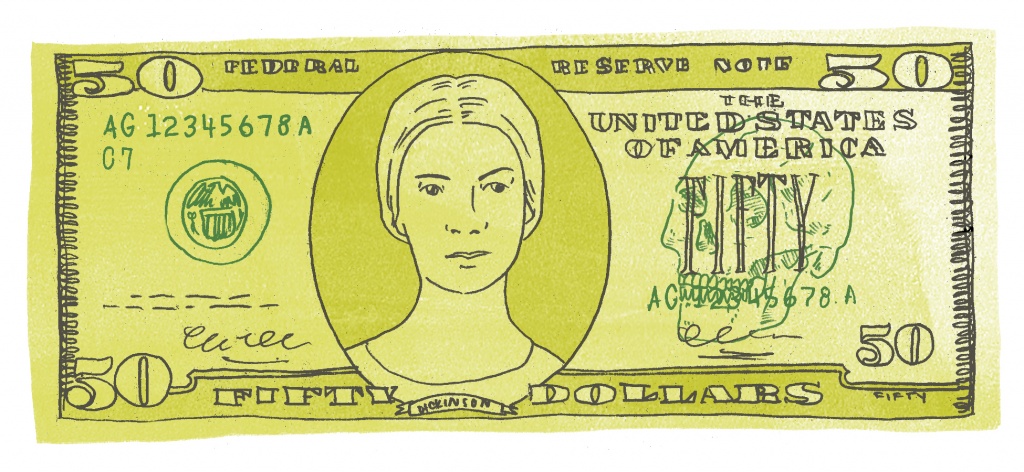
The Emily Dickinson Fifty-Dollar Bill

dickinson_dollar

See more American literary icons on American money by Shannon May.

And, by the bye—

In his last novel The Last Novel, David Markson lamented a lack of—

America’s Emily Dickinson dime?

—this preceded by:

Before the Euro, the portrait of Yeats on Ireland’s twenty-pound note.

America’s Whitman twenty-dollar bill, when?

The Melville ten?

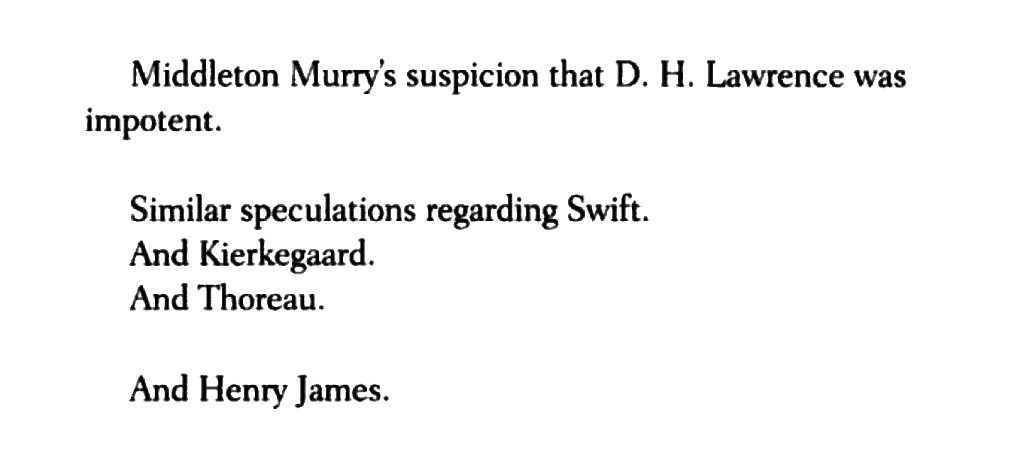
Suspicions (David Markson)

20140529-203223-73943207.jpg

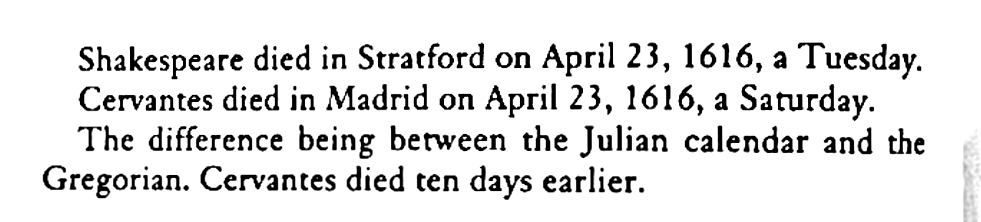
April 23, 1616 (David Markson)

dm


Dissection (David Markson)

Capture