July has been a strange month. The other day I went to the beach and I saw a woman of about thirty, pretty, wearing a black bikini, who was reading standing up. At first I thought she was about to lie down on her towel, but when I looked again she was still standing, and after that I didn’t take my eyes off her. For two hours, more or less, she read standing up, walked over to the water, didn’t go in, let the waves lap her shins, went back to her spot, kept reading, occasionally put the book down while still standing, leaned over a few times and took a big bottle of Pepsi out of a bag and drank, then picked up the book again, and, finally, without ever bending a knee, put her things away and left. Earlier the same day, I saw three girls, all in thongs, gorgeous, one of them had a tattoo on one buttock, they were having a lively conversation, and every once in a while they got in the water and swam and then they would lie down again on their mats, basically a completely normal scene, until all of a sudden, a cell phone rang, I heard it and thought it was mine until I realized it had been a while since I had a cell phone, and then I knew the phone belonged to one of them. I heard them talking. All I can say is that they weren’t speaking Catalan or Spanish. But they sounded deadly serious. Then I watched two of them get up, like zombies, and walk toward some rocks. I got up too and pretended to brush the sand off my trunks. On the rocks, I watched them talk to a huge, hideously ugly man covered in hair, in fact one of the hairiest men I’ve ever seen in my life. They knelt before him and listened attentively without saying a word, and then they went back to where their friend was waiting for them and everything went on as before, as if nothing had happened. Who are these women? I asked myself once it was dark and I had showered and dressed. One drank Pepsi. The others bowed down to a bear. I know who they are. But I don’t really know.
George Saunders has a new story called “Little St. Don” in this week’s New Yorker. A satirical hagiography of Donald Trump, “Little St. Don” is a pastiche told in little vignettes, parables roughly allegorical to today’s horrorshow headlines. Here’s an example from early in the story:
Little St. Don was once invited to the birthday party of his best friend, Todd. As the cake was being served, a neighbor, Mr. Aryan, burst in, drunk, threw the cake against the wall, insulted Todd’s mother, and knocked a few toddlers out of their seats, requiring them to get stitches. Then Todd’s dad pushed Mr. Aryan roughly out the front door. Again, Little St. Don mounted a chair, and began to speak, saying what a shame it was that those two nice people had both engaged in violence.
Here, Saunders transposes the racist rally at Charlottesville into a domestic affair, a typical move for the writer. Saunders’ heroes are often hapless fathers besieged by the absurdities of a postmodern world. These figures try to work through all the violence and evil and shit toward a moral redemption, a saving grace or mystical love. Collapsing history and myth into the personal and familiar makes chaos more manageable.
The vignettes in “Little St. Don” follow a somewhat predictable pattern: Little St. Don incites racial violence, Little St. Don makes up juvenile nicknames for his enemies, Little St. Don radically misreads Christ’s central message. Etc.
The story’s ironic-parable formula is utterly inhabited by Donald Trump’s verbal tics and rhythms. Here is Saunders’ Little St. Don channeling Donald Trump:
Gentle, sure, yeah, that’s great. Jesus sounds like a good guy. Pretty famous guy. Huh. Maybe kind of a wimp? Within our school, am I about as famous as Jesus was when alive? Now that he’s dead, sure, he’s super-famous. But, when alive, how did he do? Not so great, I bet. Anyway, I like Saviours who weren’t crucified.
We all know these terrible tics and rhythms too well by now—indeed they have ventriloquized the discourse. In repeating Trump’s rhetorical style, Saunders attempts to sharpen the contrast between the narrative’s hagiographic style and the amorality of the narrative’s central figure. Saunders inserts this absurd language into a genre usually reserved for moral instruction to achieve his satire. The reader is supposed to note the jarring disparity between our culture’s moral ideals and our current political reality. The result though is simply another reiteration of Trump’s rhetoric. George Saunders is not the ventriloquist here. He is being ventriloquized. “Little St. Don” redistributes the very rhetoric it seeks to deride. It spreads the virus.
“Little St. Don” exemplifies just how limited contemporary literature’s toolkit is when it comes to acutely skewering our zeitgeist. Trump’s rhetoric purposefully surpasses absurdity; indeed, Trump’s rhetoric is nihilistically absurd, the ur-huckster’s argot that distills over two centuries of American con-artist culture for a 21st-century mass media environment. Ahistorical and amoral, Trump’s rhetoric oozes outside the bounds of allegorical satire. His rhetoric is already kitsch, part and parcel of a self-ironizing aesthetic that is always only-joking-but-hey-not-really-joking. This rhetorical aesthetic is post-postmodern, and Saunders’ postmodern techniques in “Little St. Don” cannot lance it, deflate it, or expose it—Trump’s rhetoric is already exposed. Saunders here is simply describing it, repeating it, and reframing it within preëxisting literary genres.
Mashing up these genres is a typical 20th-century postmodernist move, one that Saunders’ audience in The New Yorker could expect. Indeed, it seems that connecting with an audience is Saunders’ main concern. But he’s preaching to the choir. The story is like a mediocre cover band’s copy of a terrible greatest hits record. In his mash-up we already know all the tunes, all the rhythms, and all the tones. Hell, we even know the mash-up’s not-so-secret formula. Saunders simply confirms the emotional and intellectual gestures that preëxist in his New Yorker audience. His story is there to assure us of our own moral rectitude.
There is nothing wrong with a writer writing to please his audience. However, Saunders, who won the Booker Prize last year for his novel Lincoln in the Bardo, is frequently praised as the greatest satirist of his generation. “Little St. Don” is not great satire, but that is not exactly Saunders’ fault. Again, what the little story does well (and why I find it worth writing about) is show us the limitations of literary fiction’s power to satirize our ultra-absurd age. Reality runs a lap or two on fiction, trampling it a little.
This is not to say that fiction is (or has been) powerless to properly target absurd demagoguery and creeping fascism. A number of fiction writers in the late 20th century anticipated, diagnosed, and analyzed our current zeitgeist. Philip K. Dick, JG Ballard, Don DeLillo, Thomas Pynchon, Octavia Butler, Ishmael Reed, and Margaret Atwood all come easily to mind. To be fair, these writers were anticipating a new zeitgeist and not always specifically tackling one corroded personality, which is what Saunders is doing in “Little St. Don.” Thomas Pynchon had 700 pages or so of Gravity’s Rainbow to get us to Richard Nixon, night manager of the Orpheus Theater—that’s a pretty big stage of context to skewer the old crook. But Pynchon’s satire is far, far sharper, and more indelible in its strangeness than “Little St. Don.” Pynchon’s satire offers no moral consolation. Similarly, Ishmael Reed’s sustained attack on a postmodern presidency in The Terrible Twos never tries to comfort its audience by suggesting that the reader is in a position of moral superiority to any of the characters. And I don’t know how anyone can top JG Ballard’s “Why I Want to Fuck Ronald Reagan.”
It might be more fair to look at another short piece from The New Yorker which engaged with the political horrors of its own time. I’m thinking here of Donald Barthelme’s 1968 story “The Indian Uprising.” Barthelme creates his own rhetoric in this weird and unsettling story. While “The Indian Uprising” is “about” the Vietnam War and the Civil Rights movement, it is hardly a simple allegory. To match the chaos and disruption of his time, Barthelme repeatedly disorients his audience, making them feel a host of nasty, contradictory, and often terrible feelings. The story requires critical participation, and its parable ultimately refuses to comfort the reader. None of this is particularly easy.
If Saunders’ “Little St. Don” is particularly easy, perhaps that’s because the moral response to Trump’s rhetoric should be particularly easy. That a moral response (and not a rhetorical response anchored in “civility”) is somehow not easy for certain people—those in power, say—is the real problem here. Saunders tries to anchor Trump’s rhetoric to a ballast that should have a moral force, but the gesture is so self-evident that it simply cannot pass for satire, let alone political commentary. Saunders offers instead a kind of mocking (but ultimately too-gentle) scolding. He doesn’t try to disrupt the disruptor, but rather retreats to the consolations of good old-fashioned postmodern literature.
But postmodern perspectives have thoroughly soaked our culture (whether we recognize this our not), and good old-fashioned postmodernism-by-numbers isn’t going to work. “Little St. Don” reveals nothing new to its audience, it simply amplifies what they already know and believe, and does so in the very rhetoric that we need to overpower. Literary satire needs to do more than confirm our own morality while lambasting those who perpetrate evil—it needs to invent its own rhetoric, its own form, its own new language.
Ultimately, Saunders’ genre distortions end up doing the opposite of what I think he intends to do. He wants the reader to look through a lens that turns history into fable, but that perspective assuages through distance, rather than alarming us. The ironic lens detaches us from the immediacy of the present—it mediates what should be slippery, visceral, ugly, vital, felt. Separating children from their parents and detaining them in concentration camps, banning entire groups of people from entering the country, fostering reckless xenophobia and feeding resurgent nativism—logging these atrocities as events that “happened” in a hagiographical history—no matter how ironic—promises a preëxisting, preordained history to come.
There’s a teleological neatness to this way of thinking (History will record!) that is wonderfully comforting in the face of such horror. Throughout his career George Saunders has moved his characters through horror and pain to places of hope and redemption. He loves the characters, and he wants us to love them too. And here, I think, is perhaps the biggest failure of “Little St. Don” — Saunders loves his reader too much. The story wants to make us feel comfortable now, comfortable, at minimum, in our own moral agency and our own moral righteousness. But comfort now will not do.
Some said that Ferguson gave up sailoring because he was tired of the sea. Some said that it was because he loved a woman. In truth it was because he was tired of the sea and because he loved a woman.
He saw the woman once, and immediately she became for him the symbol of all things unconnected with the sea. He did not trouble to look again at the grey old goddess, the muttering slave of the moon. Her splendours, her treacheries, her smiles, her rages, her vanities, were no longer on his mind. He took heels after a little human being, and the woman made his thought spin at all times like a top; whereas the ocean had only made him think when he was on watch.
He developed a grin for the power of the sea, and, in derision, he wanted to sell the red and green parrot which had sailed four voyages with him. The woman, however, had a sentiment concerning the bird’s plumage, and she commanded Ferguson to keep it in order, as it happened, that she might forget to put food in its cage.
The parrot did not attend the wedding. It stayed at home and blasphemed at a stock of furniture, bought on the installment plan, and arrayed for the reception of the bride and groom.
As a sailor, Ferguson had suffered the acute hankering for port; and being now always in port, he tried to force life to become an endless picnic. He was not an example of diligent and peaceful citizenship. Ablution became difficult in the little apartment, because Ferguson kept the wash-basin filled with ice and bottles of beer: and so, finally, the dealer in second-hand furniture agreed to auction the household goods on commission. Owing to an exceedingly liberal definition of a term, the parrot and cage were included. “On the level?” cried the parrot, “On the level? On the level? On the level?”
On the way to the sale, Ferguson’s wife spoke hopefully. “You can’t tell, Jim,” she said. “Perhaps some of ’em will get to biddin’, and we might get almost as much as we paid for the things.”
The auction room was in a cellar. It was crowded with people and with house furniture; so that as the auctioneer’s assistant moved from one piece to another he caused a great shuffling. There was an astounding number of old women in curious bonnets. The rickety stairway was thronged with men who wished to smoke and be free from the old women. Two lamps made all the faces appear yellow as parchment. Incidentally they could impart a lustre of value to very poor furniture.
The auctioneer was a fat, shrewd-looking individual, who seemed also to be a great bully. The assistant was the most imperturbable of beings, moving with the dignity of an image on rollers. As the Fergusons forced their way down the stair-way, the assistant roared: “Number twenty-one!”
“Number twenty-one!” cried the auctioneer. “Number twenty-one! A fine new handsome bureau! Two dollars? Two dollars is bid! Two and a half! Two and a half! Three? Three is bid. Four! Four dollars! A fine new handsome bureau at four dollars! Four dollars! Four dollars! F-o-u-r d-o-l-l-a-r-s! Sold at four dollars.”
“On the level?” cried the parrot, muffled somewhere among furniture and carpets. “On the level? On the level?” Every one tittered.
Mrs. Ferguson had turned pale, and gripped her husband’s arm. “Jim! Did you hear? The bureau—four dollars—”
Ferguson glowered at her with the swift brutality of a man afraid of a scene. “Shut up, can’t you!”
Mrs. Ferguson took a seat upon the steps; and hidden there by the thick ranks of men, she began to softly sob. Through her tears appeared the yellowish mist of the lamplight, streaming about the monstrous shadows of the spectators. From time to time these latter whispered eagerly: “See, that went cheap!” In fact when anything was bought at a particularly low price, a murmur of admiration arose for the successful bidder.
The bedstead was sold for two dollars, the mattresses and springs for one dollar and sixty cents. This figure seemed to go through the woman’s heart. There was derision in the sound of it. She bowed her head in her hands. “Oh, God, a dollar-sixty! Oh, God, a dollar-sixty!”
The parrot was evidently under heaps of carpet, but the dauntless bird still raised the cry, “On the level?”
Some of the men near Mrs. Ferguson moved timidly away upon hearing her low sobs. They perfectly understood that a woman in tears is formidable.
The shrill voice went like a hammer, beat and beat, upon the woman’s heart. An odour of varnish, of the dust of old carpets, assailed her and seemed to possess a sinister meaning. The golden haze from the two lamps was an atmosphere of shame, sorrow, greed. But it was when the parrot called that a terror of the place and of the eyes of the people arose in her so strongly that she could not have lifted her head any more than if her neck had been of iron.
At last came the parrot’s turn. The assistant fumbled until he found the ring of the cage, and the bird was drawn into view. It adjusted its feathers calmly and cast a rolling wicked eye over the crowd.
“Oh, the good ship Sarah sailed the seas,And the wind it blew all day—”
This was the part of a ballad which Ferguson had tried to teach it. With a singular audacity and scorn, the parrot bawled these lines at the auctioneer as if it considered them to bear some particular insult.
The throng in the cellar burst into laughter. The auctioneer attempted to start the bidding, and the parrot interrupted with a repetition of the lines. It swaggered to and fro on its perch, and gazed at the faces of the crowd, with so much rowdy understanding and derision that even the auctioneer could not confront it. The auction was brought to a halt; a wild hilarity developed, and every one gave jeering advice.
Ferguson looked down at his wife and groaned. She had cowered against the wall, hiding her face. He touched her shoulder and she arose. They sneaked softly up the stairs with heads bowed.
Out in the street, Ferguson gripped his fists and said: “Oh, but wouldn’t I like to strangle it!”
His wife cried in a voice of wild grief: “It—it m—made us a laughing-stock in—in front of all that crowd!”
For the auctioning of their household goods, the sale of their home—this financial calamity lost its power in the presence of the social shame contained in a crowd’s laughter.
Stephen Dedalus and Leopold Bloom have stopped at a cabman’s shelter, a small coffeehouse under the Loop Line Bridge, for a cuppa and a rest on their way home. And the hope that the coffee will sober Stephen up. After an appropriate period of such hospitality, Bloom sees that it is time to leave.
James Joyce. Ulysses, (1921).
To cut a long story short Bloom, grasping the situation, was the first to rise to his feet so as not to outstay their welcome having first and foremost, being as good as his word that he would foot the bill for the occasion, taken the wise precaution to unobtrusively motion to mine host as a parting shot a scarcely perceptible sign when the others were not looking to the effect that the amount due was forthcoming, making a grand total of fourpence (the amount he deposited unobtrusively in four coppers, literally the last of the Mohicans) he having previously spotted on the printed price list for all who ran to read opposite to him in unmistakable figures, coffee ad., confectionary do, and honestly well worth twice the money once in a way, as Wetherup used to remark.
Commonplaces Narrative Events
1. to cut a long story short authorial intervention
2. grasp the situation subjective interpretation
3. rise to his feet narrative action
4. don’t outstay your welcome rationale or justification
5. first and foremost subjective evaluation
6. good as his word characterization
7. foot the bill promise, therefore a prediction
8. take the wise precaution subjective evaluation
9. mine host authorial archness
10. parting shot subjective evaluation
11. scarcely perceptible sign narrative action
12. to the effect that subjective interpretation
13. amount due is forthcoming subjective interpretation
14. grand total characterization
15. literally the last of the Mohicans authorial intervention, allusion
16. previously spotted subjective interpretation
17. all who run can read authorial intervention, allusion
18. honestly (in this context) subjective interpretation
19. well worth it subjective interpretation
20. worth twice the money subjective interpretation
21. once in a waysubjective allusion
22. as [Wetherup] used to [remark] say attribution
The sentence without its commonplaces:
To be brief, Bloom, realizing they should not stay longer, was the first to rise, and having prudently and discreetly signaled to their host that he would pay the bill, quietly left his last four pennies, a sum—most reasonable—he knew was due, having earlier seen the price of their coffee and confection clearly printed on the menu.
Bloom was the first to get up so that he might also be the first to motion (to the host) that the amount due was forthcoming.
The theme of the sentence is manners: Bloom rises so he and his companion will not have sat too long over their coffees and cake, and signals discreetly (unobtrusively is used twice) that he will pay the four pence due according to the menu. The sum, and the measure of his generosity, is a pittance.
The sentence is itself an odyssey, for Bloom and Dedalus are going home. They stop (by my count) at twenty-two commonplaces on their way. Other passages might also be considered for the list, such as “when others were not looking.” Commonplaces are the goose down of good manners. They are remarks empty of content, hence never offensive; they conceal hypocrisy in an acceptable way, because, since they have no meaning in themselves anymore they cannot be deceptive. That is, we know what they mean (“how are you?”), but they do not mean what they say (I really don’t want to know how you are). Yet they soothe and are expected. We have long forgotten that “to foot the bill,” for instance, is to pay the sum at the bottom of it, though it could mean to kick a bird in the face. Bloom, we should hope, is already well above his feet when he rises to them. The principal advantage of the commonplace is that it is supremely self-effacing. It so lacks originality that it has no source. The person who utters a commonplace—to cut a long explanation short—has shifted into neutral.
From William H. Gass’s essay “Narrative Sentences.” Collected in Life Sentences.
There is a fascinating feature in today’s New York Times Magazineby Jack Hitt about John Kidd, a James Joyce scholar who “disappeared” two decades ago. The article, titled “The Strange Case of the Missing Joyce Scholar,” initially focuses on Kidd’s very-public (for academia, anyway) fight with Hans Walter Gabler. Gabler claimed to have produced a corrected version of Joyce’s 1922 novel Ulysses, and Kidd delighted at picking apart his “corrected version,” exposing minute errors to the literary world. As the article progresses though, Hitt draws a compelling portrait of Kidd as a kind of highly-artistic reader of encyclopedic literature driven by extreme horror vacui, fear of the void. A couple of paragraphs from late in the essay, in which Kidd explains his translation of The Slave Isaura (after the pair has escaped some knife-wielding thugs):
One day, Kidd and Igot up early to make our way to the Brazilian Academy of Letters, where he works. Crossing a vacant square beneath an aqueduct, we suddenly realized that five men with knives were tailing us; soon, they were chasing us. Kidd, a former high school sprinter, grunted a suggestion — run! — and we poured out our best 100-yard dash to a nearby food cart. Street vendors, Kidd explained later, collect money all day and are typically armed and tough. As we sailed under the cart’s umbrella, our churrasquinho-monger stepped up beside us and glared. The thugs melted away.
Inside the refuge of the academy, Kidd keeps a permanent cubicle occupied by a big old PC and a few books. For years he has been working on the first English edition of the novel “The Slave Isaura.” Kidd is translating the 19th-century book with a few rules he felt compelled to devise. The work will be in two parts, and every word in Part 1 will have its lexicographic partner in Part 2. If “cat feet” appears in Part 1, expect “cattail” in Part 2. His sense of what pairs up can get quite intricate, but that’s part of the fun, he told me. So he maintains lists of all the possible pairings and where and whether he has used one: six foot, six foot under, footing, foothills, footloose, footprint. There is a logic to the work, and the part I read resounded with the baroque tone you might expect of a translation that will obey his other rule: It will use every word exactly once.
Already, the work is nearly twice as plump as Joyce’s “Ulysses.” Kidd was particularly excited to show me his key apparatus — the homemade thesaurus where he keeps a running crosscheck on the entirety of the English language. So far, it runs to some 3,000 pages.
“As much as humanly possible, the 19th-century dictionary of English is in here,” he told me. His translation is titled “Isaura Unbound,” and he wanted me to understand its ambition: When the book is finished, it will be a complete reordering of one entire English dictionary into a single work of art. Take that, void.
From D.H. Lawrence’s chapter on Whitman in Studies in Classic American Literature (more):
POST-MORTEM effects?
But what of Walt Whitman?
The ‘good grey poet’.
Was he a ghost, with all his physicality?
The good grey poet.
Post-mortem effects. Ghosts.
A certain ghoulish insistency. A certain horrible pottage of human parts. A certain stridency and portentousness. A luridness about his beatitudes.
DEMOCRACY! THESE STATES! EIDOLONS! LOVERS, ENDLESS LOVERS!
ONE IDENTITY!
ONE IDENTITY!
I AM HE THAT ACHES WITH AMOROUS LOVE.
Do you believe me, when I say post-mortem effects ?
When the Pequod went down, she left many a rank and dirty steamboat still fussing in the seas. The Pequod sinks with all her souls, but their bodies rise again to man innumerable tramp steamers, and ocean-crossing liners. Corpses.
What we mean is that people may go on, keep on, and rush on, without souls. They have their ego and their will, that is enough to keep them going.
So that you see, the sinking of the Pequod was only a metaphysical tragedy after all. The world goes on just the same. The ship of the soul is sunk. But the machine-manipulating body works just the same: digests, chews gum, admires Botticelli and aches with amorous love.
I AM HE THAT ACHES WITH AMOROUS LOVE.
What do you make of that? I AM HE THAT ACHES. First generalization. First uncomfortable universalization. WITH AMOROUS LOVE! Oh, God! Better a bellyache. A bellyache is at least specific. But the ACHE OF AMOROUS LOVE!
Think of having that under your skin. All that!
I AM HE THAT ACHES WITH AMOROUS LOVE.
Walter, leave off. You are not HE. You are just a limited Walter. And your ache doesn’t include all Amorous Love, by any means. If you ache you only ache with a small bit of amorous love, and there’s so much more stays outside the cover of your ache, that you might be a bit milder about it.
I AM HE THAT ACHES WITH AMOROUS LOVE.
CHUFF! CHUFF! CHUFF!
CHU-CHU-CHU-CHU-CHUFF!
Reminds one of a steam-engine. A locomotive. They’re the only things that seem to me to ache with amorous love. All that steam inside them. Forty million foot-pounds pressure. The ache of AMOROUS LOVE. Steam-pressure. CHUFF!
An ordinary man aches with love for Belinda, or his Native Land, or the Ocean, or the Stars, or the Oversoul: if he feels that an ache is in the fashion.
It takes a steam-engine to ache with AMOROUS LOVE. All of it.
Walt was really too superhuman. The danger of the superman is that he is mechanical.
May 16th.–In our walks now, the children and I find blue, white, and golden violets, the former, especially, of great size and richness. Houstonias are abundant, blue-whitening some of the pastures. Theyare a very sociable little flower, and dwell close together in communities,–sometimes covering a space no larger than the palm of the hand, but keeping one another in cheerful heart and life,–sometimes they occupy a much larger space. Lobelia, a pink flower, growing in the woods. Columbines, of a pale red, because they have lacked sun, growing in rough and rocky places on banks in the copses, precipitating towards the lake. The leaves of the trees are not yet out, but are so apparent that the woods are getting a very decided shadow. Water-weeds on the edge of the lake, of a deep green, with roots that seem to have nothing to do with earth, but with water only.
David Winters: Literally: the act or way of leaving a place; an emergence, opening or exit. Egress is also a biannual literary magazine devoted to showcasing the most innovative writers on both sides of the Atlantic today. Our first issue features, among others, Gordon Lish, Diane Williams, Sam Lipsyte, Kathryn Scanlan, David Hayden and Kimberly King Parsons.
Biblioklept: How long has Egress been incubating? How did the magazine come about?
DW: Incubation began in May 2017, over a lunch of okonomiyaki in Bloomsbury, London. We met through Gordon Lish. Little Island had published Lish’s White Plains, as well as books by his students Russell Perrson and Jason Schwartz. I’d also alerted Andrew to the work of David Hayden, author of Darker with the Lights On, who has two new stories in Egress #1. So, there was a sense of shared tastes. A sense, too, that UK literary magazines–despite the efforts of a few pioneers—lacked the avant-garde spirit of US publications like NOON and New York Tyrant. We both saw a space for something new. Okonomiyaki, for the benefit of your readers, are a type of savoury Japanese pancake.
Andrew Latimer: Through David and Gordon Lish, I’d discovered writers like Christine Schutt and Sam Lipsyte (both in Egress #1) and desperately wanted a vehicle for engaging this type of work here, in the UK. Egress – the name, the style, the design – all came about quite naturally from a desire to bring writing like this into one place.
Biblioklept: For readers unfamiliar, can you describe the Lishian aesthetic, at least as you see it?
DW: Well, in a sense, there’s no such thing. Journalists in the eighties harped on about ‘minimalism’—a stupid label, with little purchase on the writers in question. Sven Birkerts once claimed there was a ‘School of Gordon Lish’. But Lish’s influence can’t be reduced in that way. Over the decades, hundreds of very different writers have worked with him, learned from him, bounced off him, swerved away from him. What the best of them have in common is an acute sensitivity to the power of language, and a commitment to creating new and lasting art—art that stands apart from the marketplace. Those are also the qualities we prize at Egress. But they are hardly restricted to “Lishian” fiction.
Biblioklept: That “acute sensitivity to the power of language” is on display in the two fictions from Lish in Egress #1, “Jawbone” and “Court of the Kangaroo.” The first Lish story, “Jawbone,” is about this seemingly unimportant minuscule moment, but Lish turns the whole thing into a drama about language itself. There’s this line in “Jawbone” that I kept tripping over, rereading and rereading: “Like lucky thing for the local citizenry someone on your side was there in there on duty on the nightbeat last night in the crapper last night.” The line is simultaneously gorgeous and ugly, elegant and clunky—rapturous really.
AL: Rereading is the key here. We’re familiar with rereading whole stories that we like or ones with endings that puzzle us. But what Lish, and writers of this ilk, ask us to do is to reread sentences in the course of making our first reading. This assumes a reader, a listener even, with the patience to linger over the page, its construction. (Gary Lutz prefers a “page-hugging” to a page-turning reader.)
DW: “Gorgeous and ugly” — exactly, yes. Donald Barthelme once said, “every writer in the country can write a beautiful sentence, or a hundred. What I am interested in is the ugly sentence that is also somehow beautiful.” Lish, when he was teaching, called this “burnt tongue”: “God only listens to those whose tongues are burnt, twisted, crippled.” Writers of fiction can achieve extraordinary power by attending to everything wrong, skewed, erratic in their natural speech — and, rather than being afraid of that wrongness, amplifying it on the page. But power of this kind needn’t be purely spontaneous; it can also be elicited by editing. The sentence you mention went through multiple revisions; Lish reworks his stories obsessively, right up to the final proof stage. When I edit fiction, in my lesser way, I often look out for those off-kilter sentences, isolate them, tweak them, try to increase their tension and pressure.
Biblioklept: How much and what kind of editing did you guys do with Egress #1. I mean, were the authors submitting finished pieces, or were you working with them through the process?
DW: It varies. Some stories are, with the authors’ approval, heavily edited. Some authors come to us in such command of their material that no editing is necessary. Sometimes, editing is simply about discovery: finding the new. Sometimes it’s about reinvention: getting stuck in and making it new. Between these extremes, there’s a whole spectrum of interventions.
Biblioklept: I’ll admit that I opened Egress with the idea that I’d probably go straight to Lish and then maybe read Christine Schutt or Evan Lavender-Smith—some of the writers I’d already read before—before reading ones that were new to me. However, the first story in Egress #1, which is by Kimberly King Parsons had a title that grabbed my attention: “Mr. Corpulent Wants Polaroid Proof.” So I started there, and all the sentences made me want to keep reading, and then read into her second story. Then I read the next story, Grant Maierhofer’s “Everybody’s Darling.” (The opening line “I suppose I took to mother’s unders when the end became too sure” sort of insisted Keep going). How important is sequencing the stories (and essays) of Egress and what was that process like? How much of your editorial mission involves opening up a place for newer voices?
DW: Openings are important. Andrew and I share the view that stories should command attention from their very first sentence–what some would call the ‘attack’. Again, though, an attack doesn’t have to be nailed down straight away; it can emerge in the process of revision. However they’re made, the best openings astonish, seduce, compel us, as you say, to ‘keep going’.
And if literary art is about attention, so too is the art of the literary magazine. Drawing attention to unknown writers has long been the mission of little magazines, ever since the heyday of modernism. Incidentally, this has also been my mission as a critic. When I started writing about Christine Schutt, Evan Lavender-Smith and others, they were largely overlooked and unpublished in the UK. Both in mainstream literary journalism and in the academy, critical attention often fixates on the famous and commercially successful. This is especially true of prose fiction, which inhabits a different institutional ecosystem to, say, poetry. With the current renaissance of small presses, the pendulum is starting to swing the other way. Even so, the writers who make the Booker Prize shortlist or get reviewed in The Guardian are not, by and large, the writers who’ll be remembered decades from now. The market exerts a powerful pull on our collective attention. Good publishing, like good criticism, resists that pull. The task is to look away from what everyone else is looking at–look at what they’re not looking at–and then make them see.
AL: Absolutely – and the sequencing of the stories and essays plays a huge part in showcasing those new voices. As a reader, there is always that pull to go to the names you know and love first. (It’s part of why you pick up a magazine.) But, as an editor, you can’t just rely on the big names; you’ve got to be in the business of making new ones. You have a responsibility to disrupt the reader’s expectations, to put things in their way. Beyond names and reputations, there’s also a careful and deliberate counterpointing of the work in Egress. David and I think about how one story or essay speaks to another, how it’s placement can enrich another’s meaning, its rhythms. This kind of editorial work, the imposition of an overarching rhythm to the issue, wills the reader to ‘keep going’. Catrin Morgan’s illustrations (of various egresses – trapdoors and staircases) are a neat visual cue to the reader to push on, to explore what’s round the corner.
Illustration for Egress #1 by Catrin Morgan
Biblioklept: Some of this blog’s readers might know Catrin Morgan from her illustrated version of Ben Marcus’s The Age of Wire and String. How did you get her involved with Egress? Do you plan for each issue to have a different artist?
AL: Originally we asked her for an image for the front cover, but she ended up drawing all these bizarre stairs and exits that were so compelling I just had to use them. I’d like to continue using her illustrations throughout the text for the future, but there will be a new artist featured in the colour plates each issue. The “artist” for this issue is Hob Broun.
Biblioklept: I know David has been enthusiastic about Hob Broun’s writing for a few years. Broun is sort of a “writer’s writer’s writer,” if that makes sense. The first issue of Egress features a section titled “Remembering Hob Broun: 1950-1987”; in addition to remembrances from the novelist Sam Lipsyte and Kevin McMahon, who befriended Broun when they attended Reed College together in the late sixties, you include a full color selection from one of Broun’s journals. Can you describe some of the journal for readers, and talk a bit about how the Broun section came together? For readers unfamiliar with Broun, what’s the appeal?
DW: Broun is a ‘writer’s (writer’s) writer’ only in that he isn’t well-known–his work isn’t at all opaque or aloof. He published three books in his lifetime, the novels Odditorium (1983) and Inner Tube (1985), and the superb short story collection Cardinal Numbers (1988). While writing Inner Tube, Broun underwent emergency surgery to remove a spinal tumour. He was left paralysed from the neck down. Remarkably, he finished the novel–and wrote the stories in Cardinal Numbers–using a kind of writing-machine: an oral catheter (or ‘sip-and-puff device’) connected to a customised word processor, triggered by his breath whenever a letter flashed on the screen. This aspect of Broun’s life lends itself to mythologization: what better image of writerly dedication? At the same time, it risks obscuring what really matters: the work itself. I was delighted, then, when Kevin McMahon got in touch. Kevin’s essay only glances at Broun’s illness, giving us, instead, a vivid portrait of the man behind the myth. Best of all, Kevin sent us Broun’s personal journal. It’s an extraordinary artefact–a scrapbook of doctored magazine clippings and miniature, fragmentary narratives–unmistakably Brounian in its pulpy, screwball surreality. Broun’s journal is continuous with his fiction (Cardinal Numbers contains the manifesto-like statement, ‘modus operandi: montage, collage, bricolage’), but, unlike his fiction, it wasn’t created for public consumption. Not unlike the art of, say, Ray Johnson or Joseph Cornell, it gives us a glimpse of a private world, a game played for inscrutable reasons—what Don DeLillo calls “the pure game of making up”. Our celebration of Broun ends with a wonderful essay by Sam Lipsyte–a writer Andrew and I both revere–who captures his essence far better than either of us ever could.
Biblioklept: Which of Broun’s three books do you think is the best starting place for folks interested in his work after reading about him in Egress?
DW: Cardinal Numbers, without a doubt. Open Road recently reissued all three titles as e-books, but I’d recommend picking up the old Knopf hardbacks, which can be had for as little as a dollar. Another Broun novel–a previously unpublished manuscript–might be out in a year or two.
Biblioklept: Maybe Egress could get a hold of a few pages.
DW: We’ve been looking at some of his unpublished work, yes.
Biblioklept: Why is it necessary to publish Egress in a physical, print form?
AL: Why is Egress in print? There are so many reasons, but I’ll focus on one. The role of curation has never been more important as it is now. We are distracted: information, entertainment, stuff causes our attention to bleed from one thing to the next. Egress, like all the best journals and mags, is a highly curated affair. David and I wanted there to be a palpable sensation derived from receiving and reading each issue of the magazine. The style of writing, the artwork, the design. Much of that effect relies on all the pieces being enclosed between covers – simultaneously held together and also cut off, if only briefly, from everything else that’s going on. It’s hard, likely impossible, to get that same sense of quietude, to enforce focus, when reading on a screen as infinite worlds suggest themselves merely clicks away. As well as this, there’s an indispensable sense of occasion one gets from a print magazine: ‘when is it out?’ The magazine, as a format, craves temporality.
Biblioklept: Do you envision future issues of Egress publishing some of the authors featured in the first issue?
AL: Yes, definitely.
Biblioklept: There’s an obvious aesthetic value to a literary journal or magazine publishing the same authors frequently, but are there any risks?
DW: There are risks and rewards. Magazines like Egress serve two roles in the culture. Our primary role is to discover and promote new writers. Often unpublished, unagented, and lacking industry connections, these writers reside at the margins. But we believe in them, fervently, and we believe they deserve to be heard. This gives rise to a second role. You might even call it a moral responsibility. Newness needs to be nurtured, protected, given a space in which it can grow. One contributor to Egress #1 only began writing fiction six months ago. She’d published nothing before she came to us. But what she’s doing is truly unique. Will we publish her again? You bet. We’ll do everything in our power to support her work. The same goes for any writer we believe in. If you do that and keep doing it–if you keep bringing new writers together–you become something more than a magazine. You become a community. Look at the best literary magazines of recent decades–from The Quarterly through to elimae, NOON, Tyrant and Unsaid–and that’s what you’ll see: artistic communities. Temporary autonomous zones; bubbles in which innovation can flourish. The risk, of course–and here I could name several lesser litmags–is that such communities can solidify into coteries, stables, ‘closed shops’. We’ll champion writers as long as they need us, but we’ll never close ourselves off in that way. After all, the real thrill is when someone comes to you from out of nowhere–no publications, no social media accounts, no ‘platform’, fuck, even no cover letter–just power on the page.
Biblioklept: Have you ever stolen a book?
DW: Sure, when they’re overpriced or out of print. Worse, I’ve had others steal them for me. Years ago, a friend went to great lengths to liberate Ilya Prigogine and Isabelle Stengers’ Order Out of Chaos from a university library for me. And a contributor to Egress #2 once smuggled an exorbitantly priced theology monograph out of a bookshop on my behalf. (Sorry Julie—see you in prison!)
AL: I’m bad for stealing books from places I’m staying at — friends’, hostels, BnBs — especially if I think I’d appreciate the book more myself. My favourite steal so far has been Epitaph of a Small Winner by Machado de Assis, which I’ve read the covers off so can’t return that now (not that I would).
Illustration for Egress #1 by Catrin Morgan
The first issue of Egressis out now in the UK. It will be available in the US on 21 June 2018.
David Winters is a literary critic. He has written for the Times Literary Supplement, the Los Angeles Review of Books, Bookforum, The Brooklyn Rail and elsewhere. He currently holds a postdoctoral research fellowship at the University of Cambridge, where he is writing a book about Gordon Lish. He co-edits both Egress and 3:AM Magazine, and can be found online at www.davidwinters.uk.
This weekend I picked up a new audiobook collection of Robert Coover short stories which has been titled Going for a Beer (presumably because “Going for a Beer” is a perfect short story). The audiobook contains 30 stories and is read by Charlie Thurston, a more than capable as an orator.
The opening story is one of Coover’s earliest published stories. “The Brother” (1962) retells the Noah narrative from the book of Genesis. I just wrote “retells,” but that’s not really the right term. Instead of retelling the story of Noah and the ark and YHWH’s flood, Coover imagines the apocalyptic affair from the perspective of Noah’s younger brother, who narrates this tale.
Noah’s unnamed brother is an earthy, sensual fellow who loves his wife and loves his wine. His wife—a sympathetic and endearing figure—is pregnant with their first child. They’re already picking out names (“Nathaniel or Anna”). Brother Noah keeps taking the narrator from his own familial duties to help build a boat though:
right there right there in the middle of the damn field he says he wants to put that thing together him and his buggy ideas and so me I says “how the hell you gonna get it down to the water?” but he just focuses me out sweepin the blue his eyes rollin like they do when he gets het on some new lunatic notion and he says not to worry none about that just would I help him for God’s sake and because he don’t know how he can get it done in time otherwise and though you’d have to be loonier than him to say yes I says I will of course I always would crazy as my brother is I’ve done little else since I was born and my wife she says “I can’t figure it out I can’t sec why you always have to be babyin that old fool he ain’t never done nothin for you God knows and you got enough to do here fields need plowin it’s a bad enough year already my God and now that red-eyed brother of yours wingin around like a damn cloud and not knowin what in the world he’s doin buildin a damn boat in the country my God what next? you’re a damn fool I tell you” but packs me some sandwiches just the same and some sandwiches for my brother
That’s kinda-sorta the opening paragraph—although no it’s not, because the whole story is just one big paragraph, a big oral fragment really, which begins with a lower-case r and keeps going in a verbal rush whose only concessions to punctuation are question marks and quotation marks. No periods or commas here folks. On the page, “The Brother” perhaps approximates the blockish brickish look of a Gutenberg Bible or even the Torah, neither of which give the reader a nice period to rest on, let alone a friendly pause between paragraphs.
“The Brother” might be typographically daunting, but the apparent thickness of verbal force on the page belies its oral charms. The story is meant to be read out loud. Hell, it’s biblical, after all—a witnessing. Read aloud, “The Brother” shows us a deeply sympathetic pair of characters, a husband and wife whose small pleasures, telegraphed in naturalistic speech, might remind the auditor of real persons living today. And yet there’s an apocalyptic backdrop here. Noah’s brother and Noah’s brother’s wife—and their unborn child, and all the unborn children—will not survive YHWH’s flood.
Coover does not paint Noah as anything but a shrugging reluctant weirdo. He’s no prophet who warns and helps his brother, but rather a defeated man:
and it ain’t no goddamn fishin boat he wants to put up neither in fact it’s the biggest damn thing I ever heard of and for weeks wee\s I’m tellin you we ain’t doin nothin but cuttin down pine trees and haulin them out to his field which is really pretty high up a hill and my God that’s work lemme tell you and my wife she sighs and says I am really crazy r-e-a-l-l-y crazy and her four months with a child and tryin to do my work and hers too and still when I come home from haulin timbers around all day she’s got enough left to rub my shoulders and the small of my back and fix a hot meal her long black hair pulled to a knot behind her head and hangin marvelously down her back her eyes gentle but very tired my God and I says to my brother I says “look I got a lotta work to do buddy you’ll have to finish this idiot thing yourself I wanna help you all I can you know that but” and he looks off and he says “it don’t matter none your work” and I says “the hell it don’t how you think me and my wife we’re gonna eat I mean where do you think this food comes from you been puttin away man? you can’t eat this goddamn boat out here ready to rot in that bastard sun” and he just sighs long and says “no it just don’t matter” and he sits him down on a rock kinda tired like and stares off and looks like he might even for God’s sake cry
Noah’s dismissing his brother’s work strikes me as utterly cruel—he makes no attempt to explain why his brother’s efforts at creating a better world are in vain. I shared the passage at length again in part because I hope you’ll read it aloud gentle reader, but also that you’ll note that maybe you didn’t note all its blasphemies—Coover’s story is larded with “my Gods” and “damns” and “goddamns,” no different than the speech of 1962, no different than the speech of 2018.
Coover gives us a narrator like us, human, earthly, driven by simple pleasures and a basic sense of love. Noah comes off like a prick. The Bible loves its heroes, but the ordinary folks don’t even get to live in the margins. There’s more morality in orality though—in conversation and communication and talk.
You don’t have to buy the audiobook though to hear “The Brother.” Here is Coover reading it himself:
In the novel’s second chapter, the Hawthorne-figure (Coverdale) arrives at Blithedale on “an April day, as already hinted, and well towards the middle of the month.” He complains that though the morning could be described as “balmy,” by noon it was snowing. Hawthorne’s corresponding journal entry (composed over a decade before he published Blithedale) perhaps-mockingly refers to Brook Farm as a “polar Paradise”; some of this language finds its way into the protagonist’s description of Blithdale: “Paradise, indeed! Nobody else in the world, I am bold to affirm—nobody, at least, in our bleak little world of New England,—had dreamed of Paradise that day except as the pole suggests the tropic.”
There are twenty-four chapters to Blithedale, and Hawthorne devotes the first five to that first day (presumably April 13th, 1841). The novel’s sixth chapter, “Coverdale’s Sick Chamber,” begins the next morning with our narrator too sick to attend to his first day of farm work. However, Hawthorne’s journal makes clear that the real-life Hawthorne did not fall ill until a few weeks later, around April 28th, and that he recovered around May 4th (“My cold no longer troubles me, and all the morning I have been at work under the clear, blue sky, on a hill-side”).
(I know my audience—you come to this site to read about Nathaniel Hawthorne’s head colds, right?).
Unlike his stand-in Coverdale, Hawthorne went to work at Brook Farm almost immediately. He recounts his first morning’s work in his journal entry for April 14, which I have annotated via footnotes:
April 14th, 10 A.M.–. . . I did not milk thecows last night, 1 because Mr. Ripley 2 was afraid to trust them to my hands, or me to their horns 3, I know not which. But this morning I have done wonders. 4 Before breakfast, I went out to the barn and began to chop hay for the cattle, and with such “righteous vehemence,” as Mr. Ripley says, did I labor, that in the space of ten minutes I broke the machine. 5 Then I brought wood and replenished the fires; and finally went down to breakfast, and ate up a huge mound of buckwheat cakes. 6 After breakfast, Mr. Ripley put a four-pronged instrument into my hands, which he gave me to understand was called a pitchfork 7; and he and Mr. Farley being armed with similar weapons, we all three commenced a gallant attack upon a heap of manure. This office being concluded 8, and I having purified myself, I sit down to finish this letter. . . .
Miss Fuller’s 9 cow hooks the other cows, and has made herself ruler of the herd, and behaves in a very tyrannical manner. . . . I shall make an excellent husbandman,–I feel the original Adam 10 reviving within me.
1 Coverdale’s first night at Blithedale ends with Slias Foster (the only real farmer there) telling everyone to go to sleep early as they have “nine cows to milk, and a dozen other things to do, before breakfast.”
2 George Ripley, a Unitarian minister and charter member of the Transcendentalist Club, founded Brook Farm in 1840. Following Charles Fourier’s brand of communal socialism, Brook Farm was intended to put transcendentalist idealism into concrete action. Ripley has no clear corollary in Blithedale as far as I can tell.
3 Never fear—Hawthorne reports in his journal a few days later (April 16th): “I have milked a cow!!!” What charming enthusiasm! Not two !! but three exclamation marks!!! Hawthorne only deploys a triple exclamation one other time in the journals collected as The American-Notebooks: On May 31st, 1844, he joyously notes, “P.S. 3 o’clock.–The beef is done!!!” Dude got excited for bovines.
4 I genuinely love Hawthorne’s ironic humor, which I think is often overlooked by some readers.
5 Good job breaking the farm equipment there, city boy! The reference to “machine” here is vague; you can read more about 19th-century feed-cutters (and see some images of them) here.
6 A contemporaryish recipe for buckwheat cakes from S. S. Schoff and B. S. Caswell’s 1867 cookbook The People’s Own Book of Recipes and Information for the Million: Containing Directions for the Preservation of Health, for the Treatment of the Sick and the Conduct of the Sick-room : with a Full Discussion of the More Prominent Diseases that Afflict the Human Family, with Full Directions for Their Rational Treatment : Also, 1000 Practical and Useful Recipes, Embracing Every Department of Domestic Economy and Human Industry : with Copious Notes and Emendations, Explanatory and Suggestive:
7 If you haven’t caught on, Hawthorne (and the rest of these fops too) is going to be a terrible farmer.
8 Hawthorne’s phrase “a gallant attack upon a heap of manure” is a wonderfully poetic turn, but his referring to finishing his shit-shoveling as “this office being concluded” straight up kills me.
9 Margaret Fuller was the author of Woman in the Nineteenth Century, one of American feminism’s earliest works. She was also the first editor of The Dial, (first a transcendentalist journal, and later a vehicle for modernist literature). Fuller spent time at Brook Farm, although she was never a full member. Many critics and historians suggest that Fuller is in part the inspiration for Zenobia, the soul of Hawthorne’s Blithedale.
10 The biblical Adam was of course the first gardener. Hawthorne’s romantic turn of phrase points to the idealism of Brook Farm’s utopian experiment—but also underscores the eventual fall.
Ursula K. Le Guin’s 1982 short story “Schrödinger’s Cat” is a tale about living in radical uncertainty. The story is perhaps one of the finest examples of postmodern literature I’ve ever read. Playful, funny, surreal, philosophical, and a bit terrifying, the story is initially frustrating and ultimately rewarding.
While I think “Schrödinger’s Cat” has a thesis that will present itself to anyone who reads it more than just once or twice, the genius of the story is in Le Guin’s rhetorical construction of her central idea. She gives us a story about radical uncertainty by creating radical uncertainty in her reader, who will likely find the story’s trajectory baffling on first reading. Le Guin doesn’t so much eschew as utterly disrupt the traditional form of a short story in “Schrödinger’s Cat”: setting, characters, and plot are all presented in a terribly uncertain way.
The opening line points to some sort of setting and problem. Our first-person narrator tells us: “As things appear to be coming to some sort of climax, I have withdrawn to this place.” The vagueness of “things,” “some sort,” and “this place” continues throughout the tale, but are mixed with surreal, impossible, and precise images.
The first characters the narrator introduces us to are a “married couple who were coming apart. She had pretty well gone to pieces, but he seemed, at first glance, quite hearty.” The break up here is literal, not just figurative—this couple is actually falling apart, fragmenting into pieces. (Although the story will ultimately place under great suspicion that adverb actually). Le Guin’s linguistic play points to language’s inherent uncertainty, to the undecidability of its power to fully refer. As the wife’s person falls into a heap of limbs, the husband wryly observes, “My wife had great legs.” Horror mixes with comedy here. The pile of fragmented parts seems to challenge the reader to put the pieces together in some new way. “Well, the couple I was telling you about finally broke up,” our narrator says, and then gives us a horrific image of the pair literally broken up:
The pieces of him trotted around bouncing and cheeping, like little chicks; but she was finally reduced to nothing but a mass of nerves: rather like fine chicken wire, in fact, but hopelessly tangled.
Nothing but a mass of nerves hopelessly tangled: one description of the postmodern condition.
The bundle of tangled nerves serves as something that our narrator must resist, and resistance takes the form of storytelling: “Yet the impulse to narrate remains,” we’re told. Narration creates order—a certain kind of certainty—in a radically uncertain world. The first-time reader, meanwhile, searches for a thread to untangle.
Like the first-time reader, our poor narrator is still terribly awfully apocalyptically uncertain. The narrator briefly describes the great minor uncertain grief she feels, a grief without object: “…I don’t know what I grieve for: my wife? my husband? my children, or myself? I can’t remember. My dreams are forgotten…” Is grief without object the problem of the postmodern, post-atomic world? “Schrödinger’s Cat” posits one version of uncertainty as a specific grief , a kind of sorrow for a loss that cannot be named. The story’s conclusion offers hope as an answer to this grief—another kind of uncertainty, but an uncertainty tempered in optimism.
This optimism has to thrive against a surreal apocalyptic backdrop of speed and heat—a world that moves too fast to comprehend, a world in which stove burners can’t be switched Off—we have only heat, fire, entropy. How did folks react? —
In the face of hot stove burners they acted with exemplary coolness. They studied, they observed. They were like the fellow in Michelangelo’s Last Judgment, who has clapped his hands over his face in horror as the devils drag him down to Hell—but only over one eye. The other eye is looking. It’s all he can do, but he does it. He observes. Indeed, one wonders if Hell would exist, if he did not look at it.
—Hey, like that’s Le Guin’s mythological take on Erwin Schrödinger’s thought experiment!—or at least, part of it.
(Hell exists because we keep one eye on it, folks. Look away, maybe).
I have failed to mention the titular cat thus far. Schrödinger’s cat is the Cheshire cat, the ultimate escape artist and trickster par excellence who triggers this tale (tail?!). He shows up to hang out with the narrator.
Le Guin peppers her story with little cat jokes that highlight the instability of language: “They reflect all day, and at night their eyes reflect.” As the thermodynamic heat of the universe cools around our narrator and the feline, the narrator remarks that the story’s setting is cooler— “Here as I said it is cooler; and as a matter of fact, this animal is cool. A real cool cat.” In “Schrödinger’s Cat,” Le Guin doubles her meanings and language bears its own uncertainty.
A dog enters into the mix. Le Guin’s narrator initially thinks he’s a mailman, but then “decides” he is a small dog. The narrator quickly decides that not only is the non-mailman a dog, she also decides that his name is Rover. In naming this entity, the narrator performs an act of agency in a world of entropy—she makes certain (at least momentarily) an uncertain situation.
Our boy Rover immediately calls out Schrödinger’s cat, and gives the narrator (and the reader) a fuzzy precis of the whole experiment, an experiment that will definitely give you a Yes or No answer: The cat is either alive or the cat is not alive at the end of our little quantum boxing. Poor Rover gives us a wonderful endorsement of the experiment: “So it is beautifully demonstrated that if you desire certainty, any certainty, you must create it yourself!” Rover gives us an unintentionally ironic definition of making meaning in a postmodern world. Agency falls to the role of the reader/agent, who must decide (narrate, choose, and write) in this fragmented world.
For Rover, Schrödinger’s thought experiment offers a certain kind of certitude: the cat is alive or dead, a binary, either/or. Rover wants to play out the experiment himself—force the cat into the box and get, like, a definitive answer. But the curious playful narrator pricks a hole in the experiment: “Why don’t we get included in the system?” the narrator questions the dog. It’s too much for him, a layer too weird on an already complex sitch. “I can’t stand this terrible uncertainty,” Rover replies, and then bursts into tears. (Our wordy-clever narrator remarks sympathy for “the poor son of a bitch”).
The narrator doesn’t want Rover to carry out the experiment, but the cat itself jumps into the box. Rover and narrator wait in a moment of nothingness before the somethingness of revelation might happen when they lift the lid. In the meantime, the narrator thinks of Pandora and her box:
I could not quite recall Pandora’s legend. She had let all the plagues and evils out of the box, of course, but there had been something else too. After all the devils were let loose, something quite different, quite unexpected, had been left. What had it been? Hope? A dead cat? I could not remember.
Le Guin tips her hand a bit here, like Nathaniel Hawthorne, the great dark romantic she is heir to; she hides her answer in ambiguous plain sight. Hope is the answer. But hope is its own radical uncertainty, an attitudinal answer to the postmodern problem—but ultimately a non-answer. The only certainty is non-certainty.
What of the conclusion? Well, spoiler: “The cat was, of course, not there,” when Rover and narrator open the box. But that’s not the end. The last lines of Le Guin’s story see “the roof of the house…lifted off just like the lid of a box” — so the setting of our tale this whole time, as we should have guessed, was inside the apocalyptic thought experiment of Schrödinger. Apocalyptic in all sense of the word—in the connotation of disaster, but also revelation. The revelation though is a revelation of uncertainty. In the final line, the narrator, musing that she will miss the cat, wonders “if he found what it was we lost.”
What I think Le Guin points to here as the “it” that we lost in these hot and fast times is the radical uncertainty of hope.
A new literary magazine called Egressdebuts in the UK this month and in the US next month. I have read an advance copy and it is Very Good. Egress features, for lack of a better term (although there are better terms; I’m just being lazy) experimental short fiction. It might be better just to list some of the authors featured in the inaugural issue: Diane Williams, Christine Schutt, David Hayden, Sam Lipsyte, Evan Lavender-Smith, and Gordon Lish (there are more).
There are two shorties by Lish in the collection. Both are Very Good and Very Funny. One of them, “Jawbone,” is about a narrator killing two bugs.
Have I spoiled Lish’s “Jawbone” by revealing its intricate plot (i.e., the murder (murders?) of a pair of (possibly copulating) bugs)? No, not really—for the story is really about language itself (which like so a lot of Lish’s fictions are ultimately about, yes?)
There’s a sentence in “Jawbone” that I could not leave alone. I kept reading it and rereading it, and then read it aloud almost rapturously:
Like lucky thing for the local citizenry someone on your side was there in there on duty on the nightbeat last night in the crapper last night.
The line is simultaneously gorgeous and ugly, elegant and clunky, elevated and base, smooth and harsh. The alliteration is at once sumptuous and unbearable–ells and kays fray into esses and zees; tittering alveolar touches stutter throughout the thirty-six syllables. The repetitions clip along, cleverer in the end than they at first seem: “was there in there on duty on the nightbeat” builds with a force that shuttles into not one but two “last nights,” a bit of redundant fun. Should a sentence of 27 words contain so many prepositions? I guess this one should. I would go on about the hyperbolic brilliance of the line but maybe that’s pinning it down a bit too much, which is not what one should really do with such a clean upstanding decent ugly sentence. (“Crapper”!).
Let’s close by connecting Lish’s ironic hyperbolic sentence to what I take to be the namesake of his short vengeful tale, an episode in the book of Judges. After tying together 300 fox tails and lighting them on fire, the great (and eventually-blinded) hero Samson kills a bunch of Philistines (Philistines!) with the jawbone of an ass. He then gets thirsty and God Provides Some Water from yon jawbone. Here is Judges 15:16, King James Version on this matter: “And Samson said, With the jawbone of an ass, heaps upon heaps, with the jaw of an ass have I slain a thousand men.”
Samson with the Jawbone, 1636 by Salomon de Bray (1597 – 1664)
And here—I mean, I hope I’m not being too tacky in revealing the last line but, Lish, but—
Well, fuck, bugs – I mean, what can anyone really do?
Murnane’s books are strange and wonderful and nearly impossible to describe in a sentence or two. After his third novel, “The Plains,” a fable-like story reminiscent of Italo Calvino published in 1982, Murnane largely turned away from what might be called conventional narrative pleasures. Dispensing almost entirely with plot and character, his later works are essayistic meditations on his own past, a personal mythology as attuned to the epic ordinariness of lost time as Proust, except with Murnane it’s horse races, a boyhood marble collection, Catholic sexual hang-ups and life as a househusband in the suburban Melbourne of the 1970s.
Murnane has not made the selling of himself an easy task. Even by the standards of the solitary writer, his eccentricities are manifest. He has never flown on an airplane; in fact, he has barely traveled outside of Victoria. In a 2001 speech that has become legend among Murnanophiles, he informed an audience at the University of Newcastle of his longstanding belief that “a person reveals at least as much when he reports what he cannot do or has never done.”
A lovely section from later in Binelli’s essay touches on Murnane’s archives:
Murnane began keeping the archives more than 50 years ago, both for posterity and to satisfy his own meticulous sense of order, and he has left strict instructions regarding their contents, which are not to be made public until after his own death and the death of his surviving siblings. (He has one brother, a Catholic priest, and a sister; another brother, who was born with an intellectual disability and was repeatedly hospitalized, died in 1985.) Nonetheless, Murnane opened the cabinets to give me a sense of their contents. His so-called Chronological Archive is stuffed with hanging files covering each period of his life and featuring headings like “I rebuff a wealthy widow,” “I fall out with an arrogant student of mine,” “Two women bother me,” “I decide that most books are crap,” “Hoaxes! How I love them!” and “Peter Carey exposed at last.” He also has multiple drafts of his 13 books; letters addressed, as in a time capsule, to a future Murnane scholar, whom he imagines as a young woman, and whom he addresses in the letters as “Fc,” for “future creature”; a notebook of 20,000 words titled “My Shame File”; a 40,000-word report on miraculous or unexplained events in his life; and a 75,000-word account of his dealings with everyone he has ever courted romantically or considered courting.
The Painter’s Daughters Chasing a Butterfly, c. 1756, Thomas Gainsborough
Dora had been in the National Gallery a thousand times and the pictures were almost as familiar to her as her own face. Passing between them now, as through a well-loved grove, she felt a calm descending on her. She wandered a little, watching with compassion the poor visitors armed with guide books who were peering anxiously at the masterpieces. Dora did not need to peer. She could look, as one can at last when one knows a great thing very well, confronting it with a dignity which it has itself conferred. She felt that the pictures belonged to her, and reflected ruefully that they were about the only thing that did. Vaguely, consoled by the presence of something welcoming and responding in the place, her footsteps took her to various shrines at which she had worshipped so often before: the great light spaces of Italian pictures, more vast and southern than any real South, the angels of Botticelli, radiant as birds, delighted as gods, and curling like the tendrils of a vine, the glorious carnal presence of Susanna Fourment, the tragic presence of Margarethe Trip, the solemn world of Piero della Francesca with its early-morning colours, the enclosed and gilded world of Crivelli. Dora stopped at last in front of Gainsborough’s picture of his two daughters. These children step through a wood hand in hand, their garments shimmering, their eyes serious and dark, their two pale heads, round full buds, like yet unlike.
Dora was always moved by the pictures. Today she was moved, but in a new way. She marvelled, with a kind of gratitude, that they were all still here, and her heart was filled with love for the pictures, their authority, their marvellous generosity, their splendour. It occurred to her that here at last was something real and something perfect. Who had said that, about perfection and reality being in the same place? Here was something which her consciousness could not wretchedly devour, and by making it part of her fantasy make it worthless. Even Paul, she thought, only existed now as someone she dreamt about; or else as a vague external menace never really encountered and understood. But the pictures were something real outside herself, which spoke to her kindly and yet in sovereign tones, something superior and good whose presence destroyed the dreary trance-like solipsism of her earlier mood. When the world had seemed to be subjective it had seemed to be without interest or value. But now there was something else in it after all.
These thoughts, not clearly articulated, flitted through Dora’s mind. She had never thought about the pictures in this way before; nor did she draw now any very explicit moral. Yet she felt that she had had a revelation. She looked at the radiant, sombre, tender, powerful canvas of Gainsborough and felt a sudden desire to go down on her knees before it, embracing it, shedding tears.
Dora got into the train. It was now very full indeed and people were sitting four a side. Before she sat down she inspected herself quickly in the mirror. In spite of all her awful experiences she looked good. She had a round well-formed face and a large mouth that liked to smile. Her eyes were a dark slaty blue and rather long and large. Art had darkened but not thinned her vigorous triangular eyebrows. Her hair was golden brown and grew in long flat strips down the side of her head, like ferns growing down a rock. This was attractive. Her figure was by no means what it had been.
She turned towards her seat. A large elderly lady shifted a little to make room. Feeling fat and hot in the smart featureless coat and skirt which she had not worn since the spring, Dora squeezed herself in. She hated the sensation of another human being wedged against her side. Her skirt was very tight. Her high-heeled shoes were tight too. She could feel her own perspiration and was beginning to smell that of others. It was a devilish hot day. She reflected all the same that she was lucky to have a seat, and with a certain satisfaction watched the corridor fill up with people who had no seats.
Another elderly lady, struggling through the crush, reached the door of Dora’s carriage and addressed her neighbour. ‘Ah, there you are, dear, I thought you were nearer the front.’ They looked at each other rather gloomily, the standing lady leaning at an angle through the doorway, her feet trapped in a heap of luggage. They began a conversation about how they had never seen the train so full. Dora stopped listening because a dreadful thought had struck her. She ought to give up her seat. She rejected the thought, but it came back. There was no doubt about it. The elderly lady who was standing looked very frail indeed, and it was only proper that Dora, who was young and healthy should give her seat to the lady who could then sit next to her friend. Dora felt the blood rushing to her face. She sat still and considered the matter. There was no point in being hasty. It was possible of course that while clearly admitting that she ought to give up her seat she might nevertheless simply not do so out of pure selfishness. This would in some ways be a better situation than what would have been the case if it had simply not occurred to her at all that she ought to give up her seat. On the other side of the seated lady a man was sitting. He was reading his newspaper and did not seem to be thinking about his duty. Perhaps if Dora waited it would occur to the man to give up his seat to the other lady? Unlikely. Dora examined the other inhabitants of the carriage. None of them looked in the least uneasy. Their faces, if not already buried in books, reflected the selfish glee which had probably been on her own a moment since as she watched the crowd in the corridor. There was another aspect to the matter. She had taken the trouble to arrive early, and surely ought to be rewarded for this. Though perhaps the two ladies had arrived as early as they could? There was no knowing. But in any case there was an elementary justice in the first comers having the seats. The old lady would be perfectly all right in the corridor. The corridor was full of old ladies anyway, and no one else seemed bothered by this, least of all the old ladies themselves! Dora hated pointless sacrifices. She was tired after her recent emotions and deserved a rest. Besides, it would never do to arrive at her destination exhausted. She regarded her state of distress as completely neurotic. She decided not to give up her seat.
She got up and said to the standing lady ‘Do sit down here, please. I’m not going very far, and I’d much rather stand anyway.’
‘How very kind of you!’ said the standing lady. ‘Now I can sit next to my friend. I have a seat of my own further down you know. Perhaps we can just exchange seats? Do let me help you to move your luggage.’
Dora glowed with delight. What is sweeter than the unhoped-for reward for the virtuous act?
From Iris Murdoch’s 1958 novel The Bell.
Iris Murdoch’s novel The Bell hooked me with its astonishing opening sentences: “Dora Greenfield left her husband because she was afraid of him. She decided six months later to return to him for the same reason.”
Those two simple, precise sentences foreground one of the major conflicts of The Bell, and also point towards the novel’s anxiety/comedy axis. There’s a comic beat to Murdoch’s rhythm that, paradoxically, simultaneously belies and highlights the terror under those two sentences. The rest of The Bell’s first chapter fills in the gaps between sentence one and sentence two, detailing the relationship between young Dora and her older husband Paul. The details of their troubled marriage reverberate with the same radical ambiguity we see in the first two sentences, a constant push-pull of desire and repulsion.
What’s most compelling for me here is Murdoch’s command of irony and free indirect speech. Murdoch inhabits Dora’s consciousness in a way that shows how the conflict between thought and emotion germinates, mutates, terminates, and often blooms into actions quite divorced from initial intention or desire. When Paul decides to send his departed wife an “allowance,” we get a wonderful syntactic example of how Murdoch captures the ambiguous disjunctions of thought and action: “Dora decided to refuse the money but accepted it.” Murdoch gives us one complete thought here, tacking on the key idea (“but accepted it”) in a dependent clause.
The long passage I’ve excerpted above (part of Chapter One, by the way) shows the same disjunction of thought and action, but at greater length. Not only did it make me laugh aloud, it also made me recognize part of myself in Dora—the extreme social anxiety, the narcissistic sense that others do not see what is happening within a social setting, the sense of selfish entitlement, etc.
The punchline in the episode is worth repeating: “She decided not to give up her seat. She got up and said to the standing lady ‘Do sit down here, please. I’m not going very far, and I’d much rather stand anyway.'” But that punchline is followed by a second punchline—the woman already has a seat. The episode culminates in a kind of callow but sincere moral victory.
I’m about half way through The Bell right now and loving it. As Murdoch layers the novel with perspective characters other than Dora, the overall picture gains depth, breadth, and complexity. Her sentences convey a psychological complexity that seems both raw and truthful, and yet those sentences are polished, refined, and quite funny. More thoughts to come.
“The main difficulty with Stanisław Ignacy Witkiewicz,” writes Soren Gauger in his translator’s note for Narcotics, “is that no matter what he was writing, it seems he wished he were writing something else.” Witkiewicz’s playful (and occasionally frustrating) discursive style is on vivid display in the six essays that comprise most of Narcotics (new in hardback from Twisted Spoon Press). Witkiewicz’s stylistic twists are one of the joys of Narcotics. A moralizing diatribe might veer into medical discourse; private anecdotes might shift into a rant on class theory or a patchy precis of a book about physiognomy. (All delivered in a semi-ironic-yet-wholly-sincere tone). In the case of Witkiewicz’s essay “Peyote,” we go from “Elves on a seesaw. (Comedic number)” to “A battle of centaurs turned into a battle between fantastical genitalia.” This last note is preceded by the observation that “Goya must have known about peyote.”
“Peyote” is the most vivid and surreal of the essays in Narcotics. Unlike the other sections, this chapter most closely resembles a conventional drug diary. “Peyote” begins with Witkiewicz taking his first of seven (!) peyote doses at six in the evening and culminating around eight the following morning with “Straggling visions of iridescent wires.” In increments of about 15 minutes, Witkiewicz notes each of his surreal visions. The wild hallucinations are rendered in equally surreal language: “Mundane disumbilicalment on a cone to the barking of flying canine dragons” here, “The birth of a diamond goldfinch” there. Gauger’s translation conveys not just the wild imagery, but also the wild linguistic spirit of Witkiewicz’s prose.
The prose in “Peyote” most closely approximates the spirit of Witkiewicz’s wonderful paintings. Narcotics includes 34 full-color reproductions of Witkiewicz’s art, which is reason enough to pick up this volume. According to Narcotics’ blurb, Witkiewicz (or Witkacy as he is commonly known) “established rules and types for his portrait work, marking the paintings and pastels with corresponding symbols and abbreviations of the substances he had either taken or, in the case of alcohol and nicotine, not taken at the time.”
For example, we see that Witkiewicz has noted that he had ingested cocaine and eucodal (a semi-synthetic opioid) in order to paint the Portrait of Michal Jagodowski (below). Narcotics includes a helpful “List of Symbols” as a glossary for the shorthand Witkiewicz used both in the text of his writings and in his paintings. (Although “her (herbata): tea” is included in the gloss, this vice regretfully does not merit its own essay).
In addition to peyote, we get essays on nicotine, alcohol, cocaine, morphine, and ether (a list that may remind you of a certain Queens of the Stone Age jam). In “Nicotine,” Witkiewicz despairs that “A person deadened by tobacco and alcohol…seeks even more mind-numbing entertainment to relax,” whether that be the “utterly depraved cinema with its vacuous attempts at artistry,” or the “sensory narcotization through music” achieved by “station surfing” on the radio. (Even worse is “chronic and brainless dancing, that most monstrous of modern society’s unacknowledged plagues”).
In “Alcohol,” Witkiewicz concedes that “alcohol lets you perform actions at a particular moment that otherwise would not have been possible right then,” before launching into a sustained attack on alcohol as a creative crutch. His most convincing (and depressing) line here is “alcohol is boring. Anyone who has abused it even mildly knows this to be true.” (If this were a different sort of review, I might riff here a bit on the fact that I drank no fewer than three glasses of Cabernet Sauvignon while writing about Narcotics).
Witkiewicz, despite his exorbitant indulgences, is a bit of a snob—a modernist snob though. From frenzied, enthusiastic experience he warns us that “cocaine is one of the worst kinds of filth,” before plugging his cocaine novel Farewell to Autumn and offering a synopsis of one of the novel’s chapters, a so-called “cocaine orgy.” (The editors of Narcotics graciously include a brief selection from Farewell to Autumn, as well as additional essays by Witkiewicz on hygiene and other matters).
In the last two essays, Wietkiewicz hands the reins over to friends (designated drivers?). In “Morphine,” Bohdan Filipowski warns that, “before you can taste the sweets of narcotic paradises you must first be miserable, you must first travel through all manner of hell and suffering in life, only then to find yourself in addled stupefaction, which ultimately is all there is.” The essay “Ether” — a drug that packs a “powerful metaphysical wallop” is attributed to “Dr. Dezydery Prokopowicz,” a pseudonym for Wietkiewicz’s friend, poet Stefan Glass.
The admonition that “before you can taste the sweets of narcotic paradises you must first be miserable” is pretty much the thesis for Narcotics, a book that simultaneously celebrates and reviles drug use. Misery is the byword here, a word we find repeated in in Henri Michaux’s 1956 collection Miserable Miracle. Published a quarter century after Narcotics, the two volumes share much in common. Too, Narcotics picks up some of the threads that we find in Thomas De Quincey’s Confessions of an English Opium-Eater(1821)–that foregrounding of suffering, even if it also anticipates the (exhaustive) drug literature of the 1960s, which wasn’t nearly so reticent about banging the narcotic gong. And yet Witkiewicz seems to wink at us through all the moralizing and apologia, suggesting that, yes, narcotics, are, like, bad—they are a crutch, a shortcut, a substitute for true artistic inspiration—but he also shows how utterly modern the process of consuming mind-and-body-altering substances is. Witkiewicz comprehends the dangers of narcotics. He’s out there on the ledge, dancing around a bit, his foot wagging over the precipice, while he grins and says, “Hey, don’t try this at home.”
Try this at home. Stanisław Ignacy Witkiewicz’s Narcotics, translated from the Polish by Soren Guager is new in hardback from Twisted Spoon Press. Just Say Yes.
Like ”Ratner’s Star,” a book in which Mr. DeLillo says he tried to ”produce a piece of mathematics,” ”The Names” is complexly structured and layered. It concludes with an excerpt from a novel in progress by Axton’s 9-year-old son, Tap. Inspiration for the ending came from Atticus Lish, the young son of Mr. DeLillo’s friend Gordon Lish, an editor.
”At first,” Mr. DeLillo says, ”I had no intention of using excerpts from Tap’s novel. But as the novel drew to a close I simply could not resist. It seemed to insist on being used. Rather than totally invent a piece of writing that a 9-year-old boy might do, I looked at some of the work that Atticus had done when he was 9. And I used it. I used half a dozen sentences from Atticus’s work. More important, the simple exuberance of his work helped me to do the last pages of the novel. In other words, I stole from a kid.”
Young Atticus is given ample credit in the book’s acknowledgments, but creative borrowing from life is not a new technique for Mr. DeLillo, who has been praised for his ear for dialogue.”The interesting thing about trying to set down dialogue realistically,” he says, ”is that if you get it right it sounds stylized.Why is it so difficult to see clearly and to hear clearly? I don’t know.But it is, and in ‘Players’ I listened very carefully to people around me.People in buses.People in the street.And in many parts of the book I used sentences that I heard literally, word for word.Yet it didn’t sound as realistic as one might expect.It sounded over-refined even.”
Atticus Lish’s 2014 novel Preparation for the Next Life was one of the best novels I read last year, and one of the best contemporary American novels I’ve read in ages.



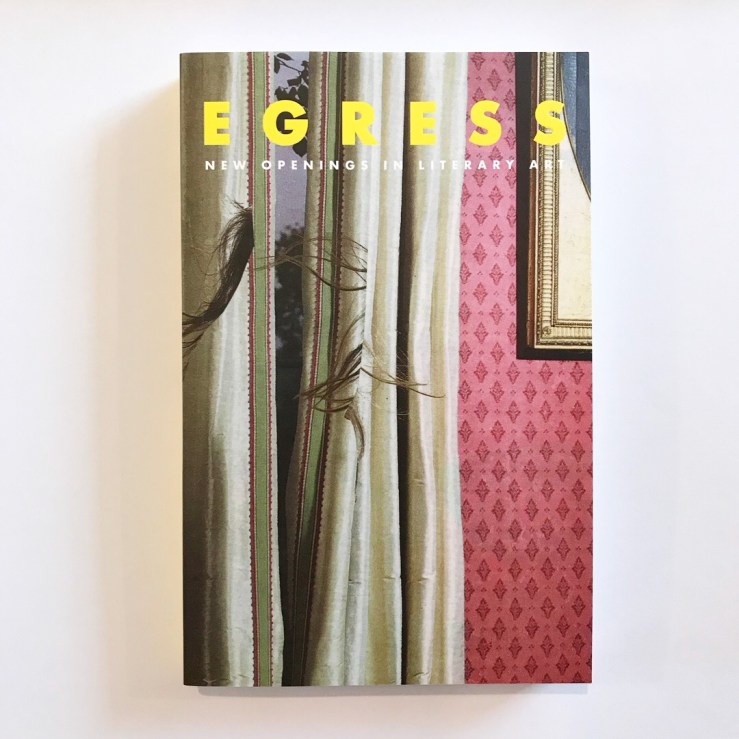

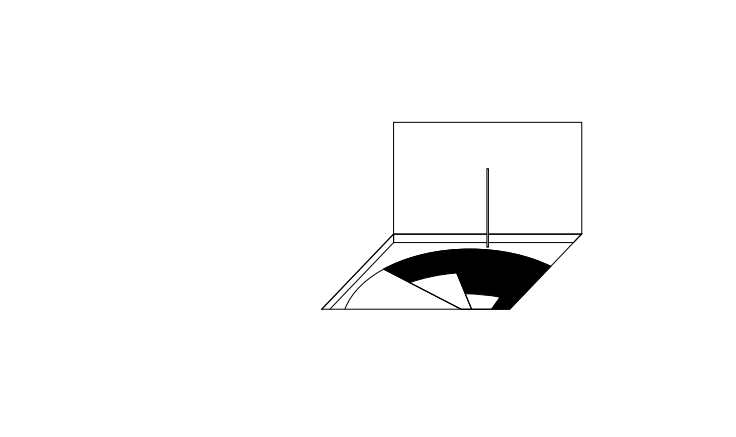

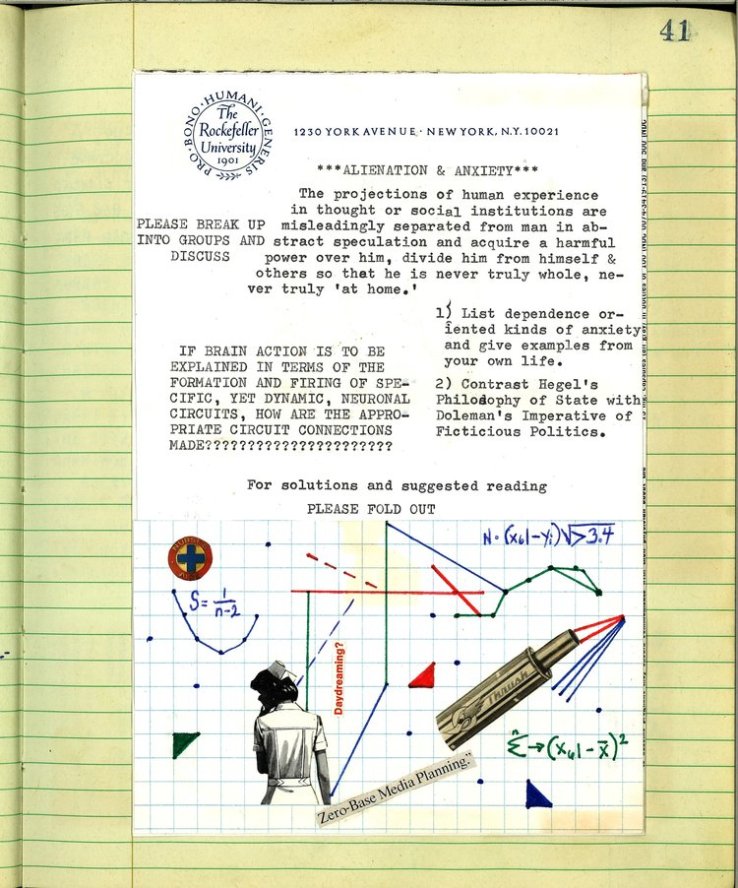
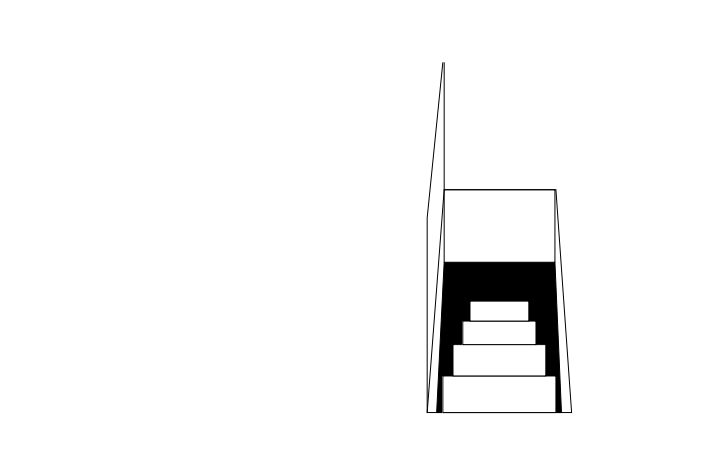


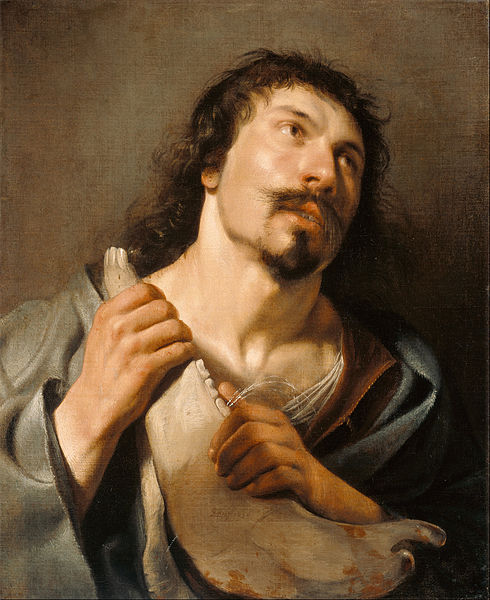




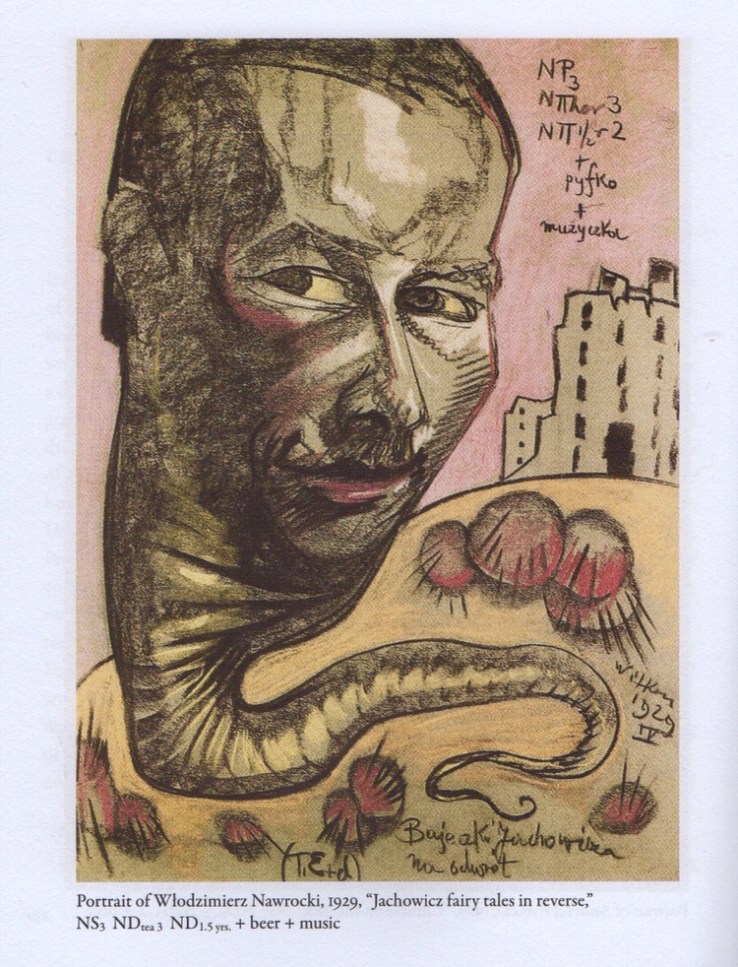


 Biblioklept