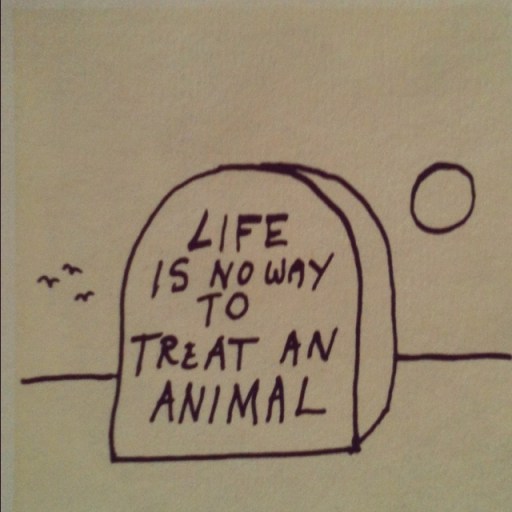
Trout’s Tomb — Kurt Vonnegut

20120203-163607.jpg

A Riff on the Kindle Fire

20120131-201536.jpg

1. I got a Kindle Fire for Christmas this year, and have been using it for about a month now. I’m not sure how to go about “reviewing” this product, so I’m going to riff a bit.

2. Let’s get the whole Amazon-as-Evil-Empire thing out of the way up front: Yes, Amazon’s business practices are unsavory; yes, attempting to decimate the publishing industry as it currently exists is Not Good; yes, their practices threaten brick-and-mortar stores (the kind that actually pay local and state taxes!); yes their practices work to undermine key figures in the publishing industry—y’know, people like editors.

3. Picking up on that last clause: self-publishing (and the self-publishing “revolution” that e-readers like the Kindle Fire entail) may seem fine and dandy cotton candy, but there’s a reason that editors (and publishers and publicists, etc.) exist. These people make books better. These people make books. (And no, by the way, I’m not interested in reading your self-published ebook, so quit sending me email blasts).

4. Seems like I’m riffing out a lot of context, so let’s keep going: Perhaps you read whinypants Jonathan Franzen decrying the impending moral failures/societal breakdown that will result from ebooks replacing print editions. Franzen’s position is, of course, reactionary and conservative, and deeply rooted in the fear that the perfect Platonic permanence of books will be subverted or decimated.

5. Franzen’s reaction is rooted in part against a (common, teleological, utopian) misconception about the longevity and stability of digital content. Simply put, many people are operating under a dramatic misunderstanding of just how unstable digital content is. Where will all these books be stored, and in what format? Who will be responsible for archiving these materials?

6. A simple thought experiment, germane to item 5 above: Think back on all the obsolete media that you have used in your lifetime. I am in my thirties; my list would include cassette tapes, VHS tapes, laser disks, floppy disks, minidiscs, CDRs . . . (I don’t include vinyl records in this list. I still own hundreds of them and play them regularly).

7. To recontextualize: Printed books are a far more stable format than ebooks.

8. To wit: Ursula LeGuin in her essay “Staying Awake” from a 2008 issue of Harper’s:

The book itself is a curious artifact, not showy in its technology but complex and extremely efficient: a really neat little device, compact, often very pleasant to look at and handle, that can last decades, even centuries. It doesn’t have to be plugged in, activated, or performed by a machine; all it needs is light, a human eye, and a human mind. It is not one of a kind, and it is not ephemeral. It lasts. It is reliable. If a book told you something when you were fifteen, it will tell it to you again when you are fifty, though you may understand it so differently that it seems you’re reading a whole new book.

9. Points 2-8 seem like so much hemming and hawing, so much reticence to discuss what I seemed to promise at the outset: Some sense of what reading on the Kindle Fire is like.

10. Some things I like very much about reading on the Kindle Fire:

It creates its own light for night reading.

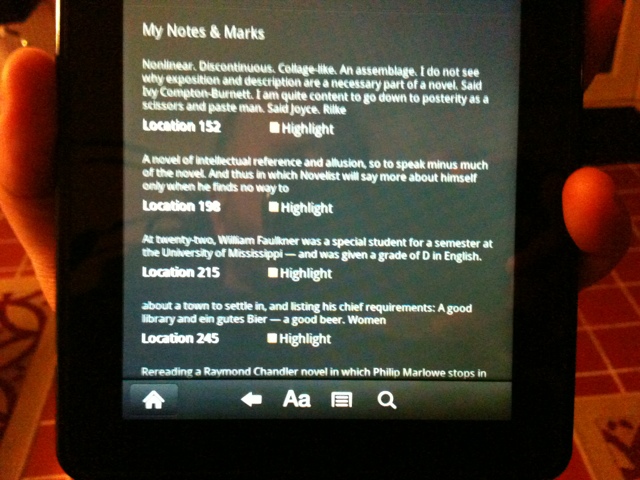
It’s easy to highlight and annotate passages (and then open up a new screen to look at just those highlights and annotations, isolated from the text proper).

It’s lightweight and ergonomic and, when I read with it over my head, my wrists don’t constrict and go tingly.

It holds a lot of books.
20120131-194740.jpg

11. Some things I like about the Kindle Fire that I would think I wouldn’t like about the Kindle Fire, were I to read such a list from another person:

I can determine how far I have read into a book as a percentage.

I can stop and browse the internet in the middle of reading.

I can look up words or even wikis as I go by simply hovering a finger over a word or phrase.

12. My daughter loves the thing. Loves loves loves it. She is probably the primary user. She is four and a half. I think the interactive books she adores are marvelous.

13. Some things I don’t like about the Kindle Fire:

No book smell.

One texture for all books: This is probably the biggest problem I can see with the Kindle Fire.

It requires a battery charge, so there’s a built in level of accessibility; a sense that one must needs “prepare” ahead of time to read, perhaps (unlike our old friend the print book, which only requires a light source).

No bath time reading.

I can’t read it around my daughter, because she will attempt to take it, or, at minimum, curl up in my lap.

It is not possible to have like three or four books open at once.

Can’t read .cbr files. Why? Why?

I had to buy a USB micro B cable to connect the Kindle to the computer that I use to store digital content. Why not include this cable, Amazon? (It’s almost as if the company wants consumers to be solely reliant on Amazon’s services as a content provider . . .)

14. I’ve found it nearly impossible to read an electronic book on the Kindle that I started as a print book. For example, I’m about half-way through Teju Cole’s novel Open City; the kind publicist who sent it to me also sent me an electronic version of the text. I began the print copy in earnest, but the other night, after reading a bit of Hawthorne on the Kindle, I found myself wanting to sink back into Cole’s Sebaldian orbit. When I found my place in the text though, I felt alienated, bleak even, as if I were not reading the definitive version of Cole’s book but instead its cheap ghost. There is no intellectual or objective justification for this feeling. Call it a vibe or a habit.

20120131-194747.jpg

15. Books that I enjoy reading on the Kindle Fire:

David Markson’s The Last Novel, which perhaps begs to be read on such a device.

Anything by Nietzsche, but his aphoristic works especially.

A .pdf version of Luigi Serafini’s rare and expensive book The Codex Seraphinianus (one of many verboten tomes on my Kindle, but remember the name of this site if you please . . .)

Anything by Whitman, especially letters and other non-essentials that I would not normally pursue.

Ditto Hawthorne.

Ditto Dickinson.

Ditto Melville.

Oh, and beyond the overlooked and underfamous works of certain American Renaissance faves: Moby-Dick too, which seems looser, freer, more aphoristic on the Kindle. (Why?)

Neal Stephenson’s novel Snow Crash, which seems simultaneously dated and futuristic. Like William Gibson with a strong streak of Pynchonian sillies.

And Gibson: Rereading Burning Chrome. Had forgotten how good some of these shorts are.

Houellebecq’s Whatever: its brevity, its succinctness gels with my nascent Kindle habits, or perhaps instructs my Kindle habits, or more likely creates my Kindle habits.

16. To return to a point in #13 above: The Kindle Fire necessarily imposes a uniform texture on every book that one reads on it; this would be true of any e-reader. Sure, you can change the background (white, black, or a sepia color, which is what I prefer), fonts, sizes, spacing, etc. — but there is no sense of physicality, of individual identity, of, dare I say it, specialness, to the texts. I am aware that these are terribly subjective and overtly Romantic terms, but hell, I like physical books. I like their covers and their smells and their discolorations. I like leaving bookmarks in every book that I finish or abandon—I almost always find a new bookmark for every book that I read (the autobookmark on the Kindle is useful, but how can it compare with a photograph of my son or drawing by my daughter or a postcard from a stranger or a scrap of poetry from a discontinued textbook or an old grocery list of my wife’s from years before we were married?).

17. I titled this post “A Riff on the Kindle Fire,” but that’s a bit ambiguous I suppose: I did not compose the post on the Kindle Fire, which I find awkward re: blogging/wordprocessing. I used a laptop (with some help from an iPhone). Maybe the preposition “about” would be more suitable.

18. By way of closing, after four weeks with the thing:

It’s light.

It’s convenient for night reading, but you probably shouldn’t take it in the bath.

No book smell.

Book Shelves #4, 1.22.2012

Book shelves series #4, fourth Sunday of 2012: In which we finally leave the master bedroom and check out the books in my children’s rooms.

In the previous weeks, I illustrated that my kids — a girl and a boy, 4 and 1, respectively (tack on a “half” to each of those numbers if you care to) — my kids leave books all over the house. Their books are everywhere. They are as bad as I am. I indicated at the beginning of this year-long series that the documentation would never be stable or absolute; that books float through my house, come and go like bad house guests or silly ghosts—this is probably more true of the children’s books in this house than any other kind of book.

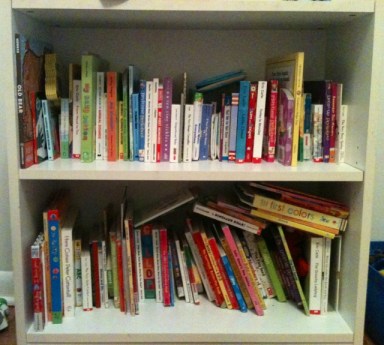
This week, I photograph the book shelves in my kids’ rooms, starting with my daughter’s. This is her big bookshelf:

20120121-174110.jpg

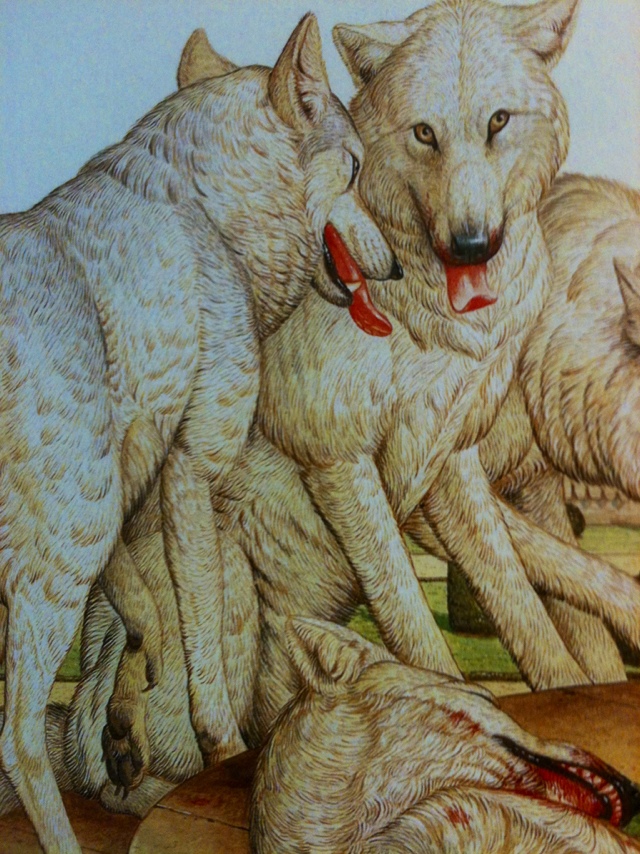
I did not photograph the big pile of books that set to the left. A close up of any of these shelves would reveal a mix of classics—stuff that my wife and I read and cherished as kids—and newer stuff as well. Here’s a shelf, sort of at random—it’s unusually well-organized:
20120121-174117.jpg

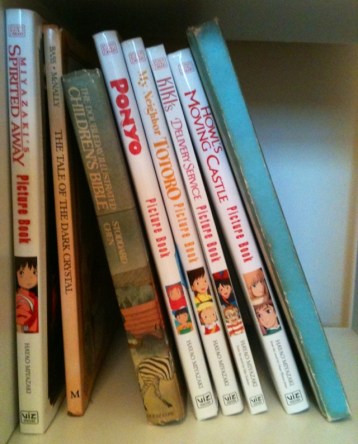
There’s a lot of Studio Ghibli books here; most narrativize Hayao Miyazaki’s films (we’re big fans in this house). My daughter loves these. The bible was my bible; the blue-spined book is this:

20120121-174125.jpg

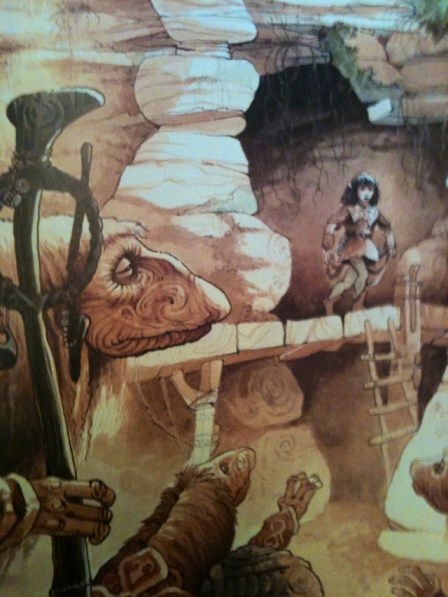
You might also note a book version of Jim Henson’s creepy classic The Dark Crystal; this was mine as a kid and it disturbed the hell out of me, so I gave it to my daughter, of course:

20120121-174143.jpg

The Studio Ghibli books combine beautiful stills of the film with narrative prose and comic book speech bubbles. From the standpoint of a fan of the films, they’re really interesting because they explicate some of the ambiguity. Our daughter loves them and asks for them (too much!):

20120121-174149.jpg

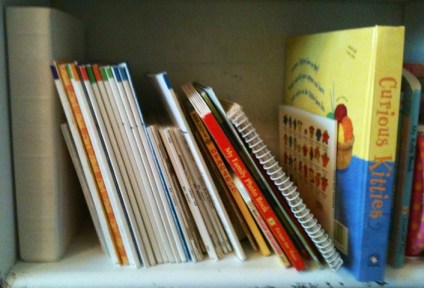
Another shelf from another book shelf—the only shelf with books on it in this piece of furniture, actually. Not interesting, but I said I’d photograph all book shelves as part of this project:

20120121-174157.jpg

Before my wife and I married, we lived in Tokyo for a while; we bought a bunch of these board books at a 100 yen shop. Here’s one:

20120121-174203.jpg

Night stand: always a place of shelving instability:

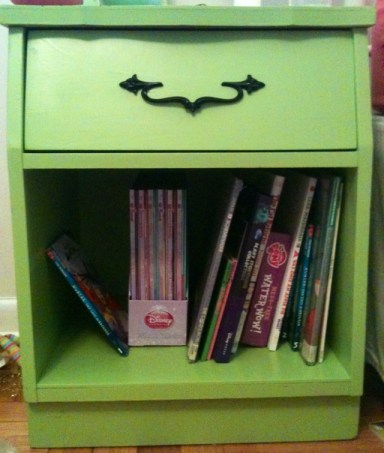
20120121-174209.jpg

The book shelf in my son’s room—lots of board books, Eric Carle, stuff like that. He likes trains and dogs:

20120121-174219.jpg

So, I covered both of the kid’s rooms in one post in the hopes of getting to more interesting volumes in the next few weeks. On deck: the den/kitchen space, featuring cookbooks, art books, and travel volumes.

Books Acquired, 1.17.2012—Or, Here’s What’s New from Picador This Month

20120121-100054.jpg

The kind people at Picador sent me a box of books, including a memoir (Margaux Fragoso’s Tiger, Tiger), a few novels (The Lover’s Dictionary by David Levithan; Ralph Sassone’s The Intimates; Alan Glynn’s noir thriller Bloodland; Dieter Schlesak’s The Druggist of Auschwitz, which purports to be a “documentary novel”; and Zoë Heller’s first novel, Everything You Know), and a work of political science (Ari Berman’s Herding Donkeys).

A box of books is a bit overwhelming, but I make it a point to spend some time with every book that comes into Biblioklept World Headquarters. Here’s some thoughts on these.

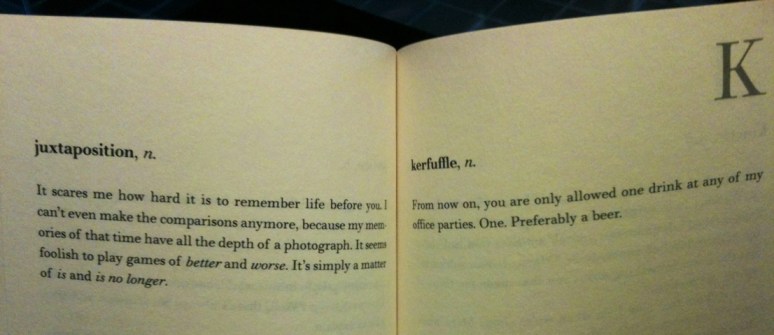
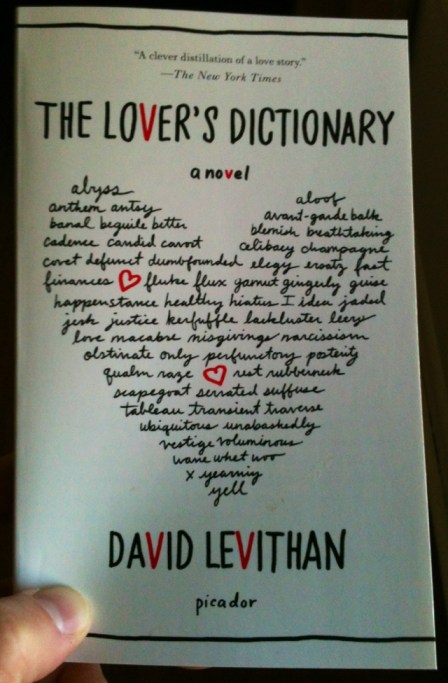
I actually ended up reading almost all of The Lover’s Dictionary, despite it having the word “lover” in the title, which, jeez. When my wife picked it up, she said something like, “How can they call this a novel?” — fair question, because the book is structured like a dictionary. In point of illustration:

20120121-100117.jpg

I’ve got a bigger post on Levithan’s book coming up, one that tries to situate it in the context of other non-novelly novels—but in short it is a novel, a very contemporary one that tells the oldest story in the proverbial book (boy meets girl) in an elliptical way that suits our post-information age. Like I said more to come, but for now: The Lover’s Dictionary is funny, occasionally cruel, too-often saccharine, awfully real, sometimes deeply flawed, but consistently engaging (sorry for all the adverbs).

I imagine Margaux Fragoso’s memoir Tiger, Tiger will capture the fascination of a large audience, but half an hour of the book was almost more than I could bear. Not because Fragoso can’t write—far from it, in fact—but her subject matter, which is to say her stolen childhood, is rendered too raw,   too real for me; there’s nothing pulpy or lurid about Fragoso’s work, nor is there the aesthetic sheen of Lolita to gloss any of the ugly, sordid details.  Kathryn Harrison ponders the question of Tiger, Tiger’s audience in her favorable review at The New York Times:

So who — other than voyeurs looking for a sustained close-up of a pedophile in action — will want to read this book? To bear witness to a numbingly long series of violations of a child by a man who has honed his wickedness for decades is not more pleasant than it sounds. As a society we energetically oppose sexual abuse; as individuals most of us shy away from investigating a relationship characterized by creepy kisses and inappropriate fondling. Worse, we defend cowardice by calling it discretion — minding our own business. Maybe a book like “Tiger, Tiger” can help us be a little braver. Certainly, it took courage to write.

20120121-100131.jpg

Ralph Sassone’s The Intimates: sex scenes (straight and gay); lots of notations about parents; lots of characters.

Dieter Schlesak’s The Druggist of Auschwitz: This “documentary novel” blends actual testimony from the Frankfurt Auschwitz Trial, interviews with camp guards and prisoners, and fictional narrative to tell the true story of Dr. Victor Capesius, an SS officer who worked with Mengele. The book is less gimmicky than it sounds in this description, and if its documentary elements are blunter and less ambiguous than W.G. Sebald’s historical fragments, I suppose that’s what the subject matter merits.

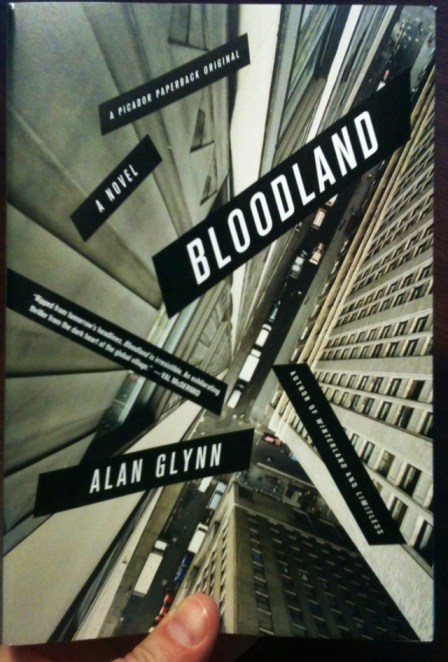
Alan Glynn’s new novel Bloodland (a Picador paperback original) is a noirish thriller set against the backdrop of political and corporate intrigue. Glynn writes with terse immediacy, telegraphing the plot in short punchy sentences that recall James Ellroy (without the finnicky slang). The book reads almost like a movie script, vivid and concrete. It’s a fast-paced page turner with a smart plot, just the sort of thing one wants from a thriller.

20120121-103504.jpg

Herding Donkeys by Ari Berman: Honestly not my thing, but if you want to read about the DNC from the time of Howard Dean to the rise of Barrack Obama, this is probably a book for you.

Zoë Heller’s Everything You Know: This is new in paperback again after over a decade. The story focuses on a cantankerous, unlikable son-of-a-bitch named Willy Muller. Things aren’t going well for him: he’s just suffered a heart attack, his daughter’s committed suicide, and the public still believes he murdered his wife. No wonder he hates humanity. Heller is probably most famous for her novel Notes on a Scandal, which was adapted into an excellent film in 2006.

Biblioklept’s picks: The Lover’s Dictionary; Tiger, Tiger; Bloodland.

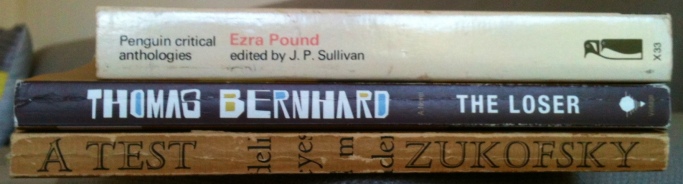
Books Acquired, 1.13.2012 (Ezra Pound, Thomas Bernhard, Louis Zukofsky)

20120115-163012.jpg

Picked up these three last Friday.

20120115-163023.jpg

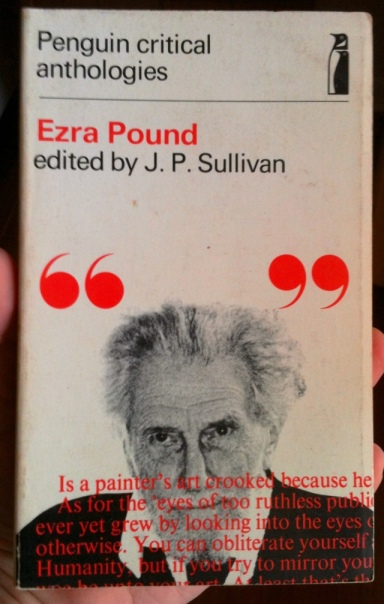
This is a collection of letters to and from Ezra Pound, as well as criticism, introductions, etc. I like the cover, which is a bit too busy.

20120115-163044.jpg

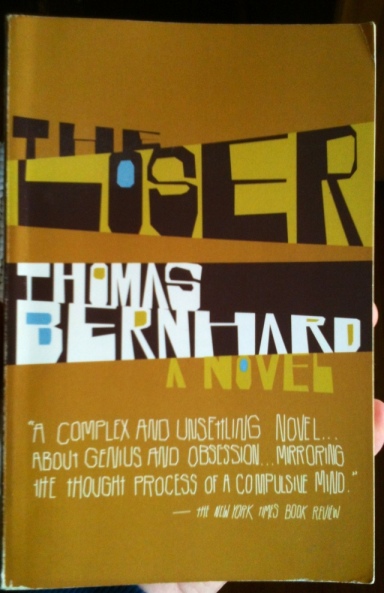
I picked up Thomas Bernhard’s Correction last year on reader recommendation (recommendation: read Bernhard). Saw The Loser in the shop used, so I picked it up. Any recommendation on which one to start with?

20120115-163114.jpg

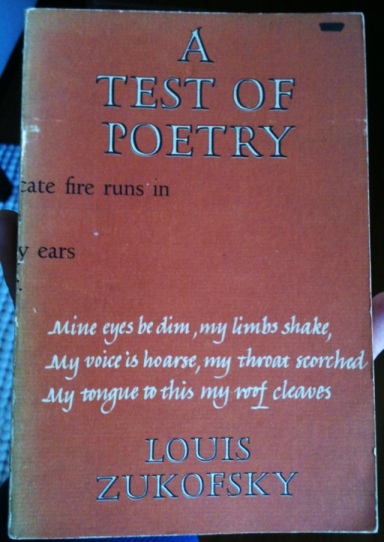
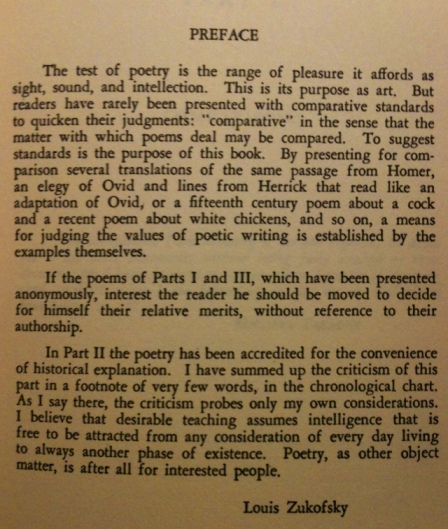
A midcentury paperback of Louis Zukofsky’s A Test of Poetry. This is a strange book. I’d better let Zukofsky explain it:

20120116-175731.jpg

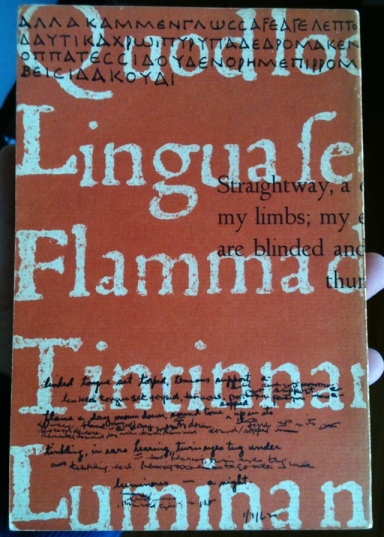
The back cover is lovely as well:

20120115-163132.jpg

Duchamp Is Our Misfortune — Art Spiegelman


20120116-110047.jpg

Book Acquired, 1.12.2012


20120114-110434.jpg

In the post from the kind people at Picador, The Lover’s Dictionary by David Levithan (I want to type “Leviathan,” of course). Publisher’s description:

How does one talk about love? Is it even possible to describe something at once utterly mundane and wholly transcendent, that has the power to consume our lives completely, while making us feel part of something infinitely larger than ourselves? Taking a unique approach to this age-old problem, the nameless narrator of David Levithan’sThe Lover’s Dictionary constructs the story of a relationship as a dictionary. Through these sharp entries, he provides an intimate window into the great events and quotidian trifles of coupledom, giving us an indelible and deeply moving portrait of love in our time.

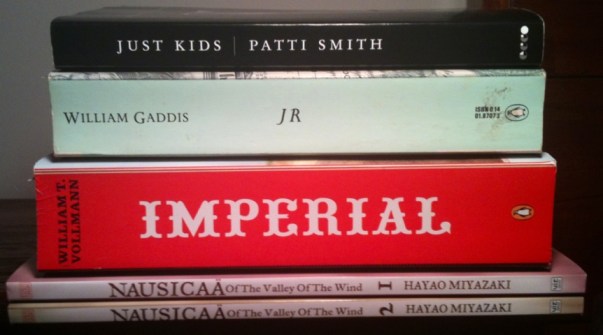
Riff on Recent Reading, 1.09.2012 (Gaddis, Vollmann, Dragons, Nausicaä, Patti Smith)

20120110-181813.jpg

1. Just Kids, Patti Smith

Really slowed down on this one, mostly because the spring semester hath begun, wreaking all sorts of destabilizing tasks on me. Momentum and reading habits will inevitably return. Anyway, Smith’s book is more or less a litany of famous meetings and infamous moments with lots and lots of descriptions of talismanic objects. The scene where she meets Allen Ginsberg is pretty cool. Smith presents herself as earnest, passionate, but also somehow at odds (or at least outs) with the whole Chelsea Hotel scene.

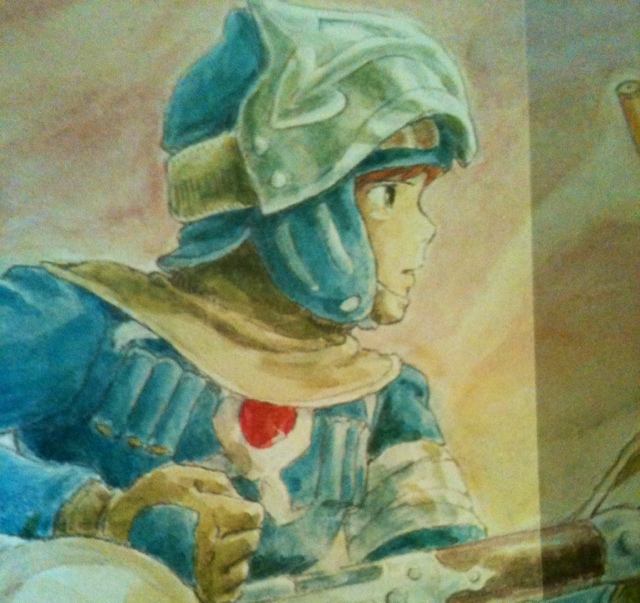
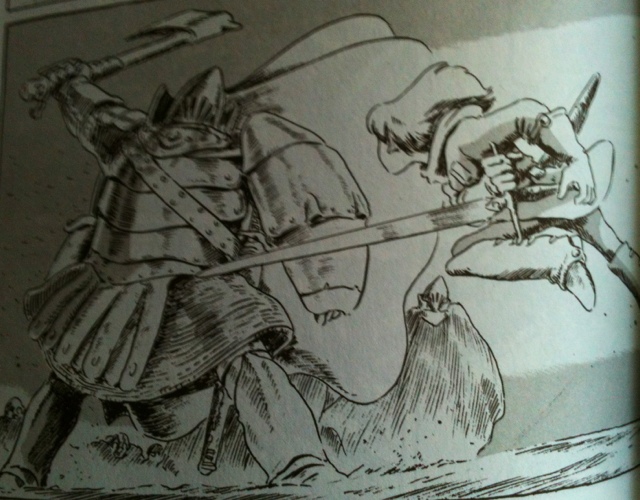
2. Nausicaä of the Valley of the Wind, Vol 1, Hayao Miyazaki

Completed the first volume of Miyazaki’s groundbreaking manga and started the second. The art is well crafted and distinct, but often extremely busy and even frenetic. It sometimes feels squashed in the panels, like it needs room to breathe. I can’t help but compare it to the film that followed, which is visually richer and more expansive. The film, in a sense, helps me to fill out the scope signaled in Miyazki’s inky illustrations.

The story in the manga so far differs subtly but significantly from the film; without adding spoilers (I think fans of the film will enjoy the book), the political dimension of the plot is heightened and gender roles are explored with greater concern. Nausicaä’s initial rashness is also presented with greater intensity (read: violent consequences). More to come.

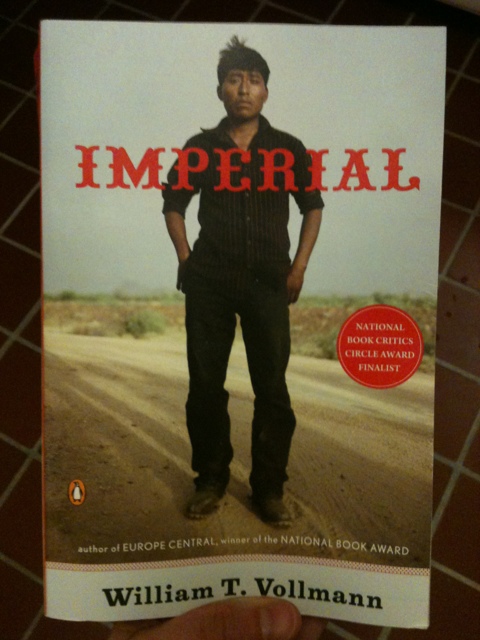
3. Imperial, William T. Vollmann

Chapter 3 of Imperial, “The Water of Life,” is some of the best gonzo journalism I’ve ever read. Vollmann (along with an improbably game ex-Marine/hotel clerk) takes a raft—a cheap rubber dinghy, really—down the infamous New River, purportedly one of the most polluted waterways in North America. This river is filled with dead birds, dead fish, probably dead humans, lots and lots of garbage, industrial runoff, and lots and lots of human shit.

Of course, Vollmann can find beauty and strangeness and ugliness all at once:

The chapter does everything one wants from the book, and if you’re at all intrigued, there’s a version in the excellent Vollmann reader Expelled from Eden, which is a good starting point for his work.

The next chapter, “Sublineations: Lovescapes,” is this awful emo exploration of a bad breakup and the following heartbreak Volls feels after. It was torturous to get through, the sort of thing that screams for an editor. It also underscores how deeply deeply deeply personal the book is to him, though. More to come.

4. A Dance with Dragons, George R. R. Martin (audiobook read by Roy Dotrice)

Well goddam if I didn’t finally finish it. As I’ve lamented elsewhere in these e-pages, Martin’s fourth and fifth books in the A Song of Ice and Fire series (I hate that name, by the way: Game of Thrones (without the indefinite article) is way cooler sounding) are bloated, sagging, overfilled beasts sorely in need of an enema. Still, Dragons picks up in its final third, and ends with some shockers that, if I remember them 12 years from now when he finally finishes the next one, I may want to read it. Roy Dotrice = a very gifted reader. A great audiobook (still, I can’t believe this one topped so many year end lists).

5. JR, William Gaddis  (tandem reading with audiobook read by Nick Sullivan)

Big thanks to Dwight at A Common Reader for suggesting the audiobook of JR read by Sullivan. I’m a few hours in; I’ve also been rereading bits immediately when I get home (I listen mostly in the car or on walks), retracing the lines that I’ve mentally underlined. Sullivan is a gifted voice actor who brings the many, many voices of JR to vivid life (that line seems hackneyed but it is in no way insincere. If I weren’t riffing I’d revise. If I weren’t riffing I’d edit parenthetical excuses. I’m gonna drink more red zin now). I’m reminded in some ways of RTE’s full-cast unabridged recording—performance really—of Joyce’s Ulysses. I’d read Ulysses twice before, but I feel like the full-cast production was an equally definitive version to the one in my head. Like Ulysses—especially the Sirens episode—JR is extremely aural; it’s mostly dialogue.

I’ve laughed out loud several times so far—had no idea the book would be this funny. Also, reading/hearing it, I can’t help but see how profoundly David Foster Wallace was influenced by Gaddis here: the bizarre corporate-speak, the disjunctive rhythms, the absurd humor, the satire on modernity, the ironic-earnest axis—even the passages of naturalistic description.

On deck: The Orphan Master’s Son by Adam Johnson, Open City by Teju Cole, Smut by Alan Bennett and more more more.

Book Acquired, 1.06.2012 — H.G. Adler’s Panorama, A Lost Modernist Classic

20120107-110240.jpg

Like Kafka, H.G. Adler was a German-speaking Jewish writer from Prague. About a year ago, Adler’s Panorama was released for the first time in in English (by Peter Filkins); The book is now available in trade paperback (Random House). Adler survived the Holocaust, forced first into Theresienstadt and then Auschwitz, where his wife and mother were murdered in the gas chambers. Panorama is an autobiographical bildungsroman, with its hero, young Josef Kramer, standing in for Adler. While the book clearly works its way into grim territory, the beginning is bucolic and sweet and strange, an account of young Josef at home with his family. There’s a cinematic scope to Adler’s prose – Panorama is a Modernist work, one where the narrative freely dips into its protagonist’s mind. By the bye, W.G. Sebald references Adler in Austerlitz, a book that tries to measure the continental memory of the Holocaust.

Riff on Recent Reading, 12.31.2011

20111229-200717.jpg

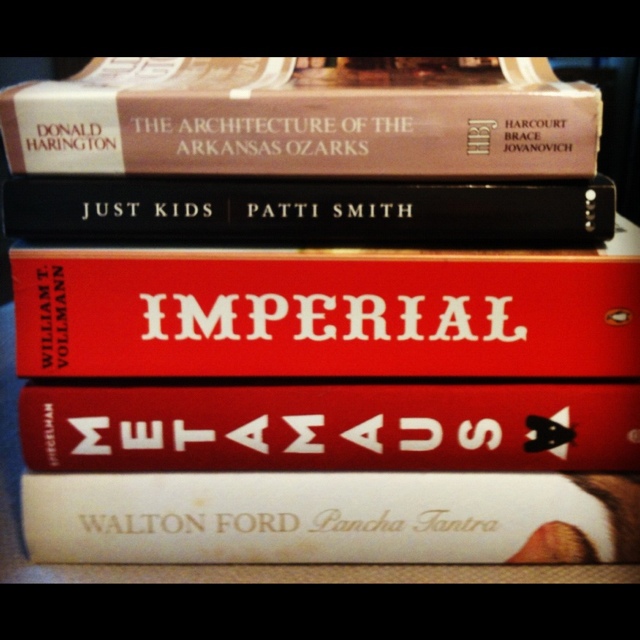
1. Donald Harington, The Architecture of the Arkansas Ozarks

I want to publicly thank blogger BLCKDGRD for sending me this book; it arrived in sections, the binding glue cracked, its abused condition surely a sign of love. I happened to be recaulking the margins of my screened in porch the day it arrived, so I used silicone caulk (along with c-clamp) to repair it.

The Architecture of the Arkansas Ozarks rightfully should have shown up on my Books I Didn’t Read in 2011 post, but it was doubly neglected, left under a pile of half-read books that I intend to keep reading: Georges Perec’s Species of Spaces, the Vollmann reader Expelled from Eden, a volume of stories by Breece D’J Pancake (two stories remain unread; I am sure they are awfully sad), Stendahl’s The Charterhouse of Parma. In short, I didn’t want to own up to abandoning it because I intend to go back and finish it. I read a little over half of Harington’s big, rich, funny history of Arkansas, told through the lens of the species of spaces inhabited by the Ingledews and their fellow Stay Morons. The book is lively, deeply ironic, and stands with Kurt Vonnegut as perfect American satire.

2. Just Kids, Patti Smith

I found Just Kids, which was a Big Deal book in 2010, while looking for a copy of Lillian Smith’s The Killers of the Dream (don’t fret; I found that book too). I’ve loved Smith’s music since I was a kid; like The Talking Heads, she was hard to place, not outright punk rock, definitely not pop, very weird.

I usually read the first few pages of books in the store if I think I’m going to buy them; I ended up reading about 10 pages of Just Kids, taking it home, and then reading for a few more hours. I’m almost finished with it now.

Smith documents a fascinating time in a fascinating place (New York City’s art/lit/music scene in the late sixties/early seventies), but her perspective for most of the book is that of an outsider, a would-be artist struggling to help Robert Mapplethorpe become famous for his art. Smith is in love with literature, particularly Romantic French stuff.

She’s also an object fetishist; I can’t think of another book that details so many tchotchkes, so many surfaces, so many contours, so many things. She’s an aesthete. There are also several incidences of book theft. I’m not sure if I’ll write up a proper review of this book—it won the Nat’l Book award and made all the year end lists in 2010—but I have been enjoying it as a chronicle of creative energy.

3. Imperial, William T. Vollmann

There’s a strange shift between the first and second chapters of Vollmann’s massive book about Imperial County. The first chapter, “The Gardens of Paradise,” reads like a magazine article (and it was; it was published in abbreviated form in Gear in 1999)—lots of dialogue, short paragraph breaks, a spare, lucid syntax, but nevertheless rippling with verve. The second chapter, “Delineations” is a heady brew, a page right out of Ishmael’s big book, as we see Vollmann try to delineate or define his white whale Imperial. And yet he seems to realize that delineation is a fantasy:

People say it was miraculous that Christ walked across the water, and yet they don’t think twice when the same is performed by this entity invisible everywhere except in its representations, whose substance is comprised of equal parts imagination, measurement, memory, authority, and jurisdiction! Delineation is the merest, absurdest fiction, yet delineation engenders control.

The territory and the time Vollmann treks in just a few dozen pages astounds . . .

4. MetaMaus, Art Spiegelman

Okay—not really recent reading, although I did pick it up again and thumb through it before writing this piece; mostly, I wanted to try to write something about this book before the end of the year (I put it on my “best of ’11” list, by the bye). This book is Spiegelman’s attempt to measure Maus: where it came from, how it was made, what making it did to him and for him—and to his family. Like Smith’s book, MetaMaus is very much about the creative process (forgive the hackneyed phrase)—only, where Smith breathlessly gushes in the glowing, enriching flames of art, Spiegelman guides us through the nitty-gritty nooks and crannies of how he made what is perhaps the signature work of comics art of the twentieth century.

The book is beautiful. Take a gander:

5. Pancha Tantra, Walton Ford

The index at the end of Pancha Tantra contains a series of citations that illustrate Ford’s paintings (hang on, the elements of that last phrase should be vice versa, right?). To wit:

20111230-205013.jpg

20111229-200847.jpg

6. A Dance with Dragons, George R. R. Martin (audiobook read by Roy Dotrice)

I really liked the first three Game of Thrones books (yeah, I know they have that long silly name; I’m not gonna write it). I listened to them on audio, all read by Roy Dotrice—who is a great reader—and I gave them a positive review. The first three books detail a world of Machiavellian scheming, a phallocentric, desacralized universe where power is constantly shifting and idealism will get you beheaded. The character development is excellent, the plots are engaging, and the prose is good enough.

The fourth book, narrated by John Lee, was almost too much to get through. Here are some words to describe it: bloated, plodding, sagging, lazy, meandering, over-expansive.

I’d heard that A Dance with Dragons was much better, knew that Dotrice was narrating again, and knew that the book picked up with some of my favorite characters who were left out of that fourth book (Tyrion, Danaerys).

I’m nearing the end—it’s much better than the last one, but not nearly as good as the first three. Martin could probably make the book a third shorter simply by cutting out the endless descriptions of food, the awful, gross sex scenes (actually, he can go ahead and keep those), and the terrible stock phrases. (How long do things last in ADwD? “Half a heartbeat.” Also, I would love to never hear the phrase “Much and more” again in my life. I’m not even kidding. And “Useless as the nipples on a breastplate” doesn’t need to show up more than once in your book).

Even with my gripes, there have been some good episodes so far, including a creepy cabin fever Sadean setpiece that reminded me of the South Africa episode of Pynchon’s V, which is like one of my favorite things in literature.

7. Various public domain books on Kindle Fire, including Poe, Hawthorne, Melville, Whitman, and Dickinson

I got a Kindle Fire. I like it. I downloaded a bunch of obscure American Renaissance stuff—letters, reviews, essays—and have been scrolling over it quite a bit late at night. More thoughts on this device to come.

Books I Didn’t Read in 2011 (And Books I Will Try to Read in 2012)

Okay. So obviously a list of the books I didn’t read in 2011 would be, y’know, long.

This post is about the books I set out to read, tried to read, wanted to read, abandoned, neglected, acquired and thought looked interesting, etc. It’s also about what I want to—what I plan to—read in 2012.

20111228-115819.jpg

A reasonable starting place: I wrote a post in early January of this year detailing the books I would try to read in 2011. I actually read most of the books I named in that post. But:

I failed to read past page 366 of Adam Levin’s incredibly long novel The Instructions, although I think I was a bit too harsh in my semi-review. Chalk it up to exhaustion.

I failed to even begin to try to read William Gaddis’s incredibly long novel JR. (But I swear to read it one year. Not next year, but maybe the year after?).

I failed to read past the first chapter of Katherine Dunn’s Geek Love.

I read most of the Tintin collections I picked up last year, but I didn’t get to volumes 5 or 6.

20111228-115848.jpg

Moving beyond that early post, books that I recall abandoning (although I’m sure there must be more):

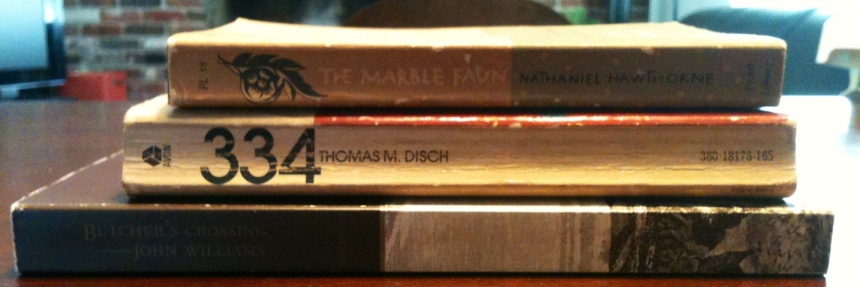
I abandoned Nathaniel Hawthorne’s Italian romance The Marble Faun after about 30 pages.

I abandoned 334 by Thomas Disch after about 50 pages. Somehow simultaneously dense and loose, it struck me as intensely imagined and sloppily composed.

I abandoned John Williams’s Butcher’s Crossing after the first chapter; it was a great opening chapter, but I thought it was going to be, I don’t know, more like Blood Meridian.

I also abandoned Chad Harbach’s big book The Art of Fielding (after 100 pages) because it was lame (notice it’s not pictured above because I traded in that sucker), but I had a nice dialog with some readers who responded to a post I wrote about abandoning it, so that was a plus.

20111228-115828.jpg

Books I bought in 2011 that I aim to read in 2012:

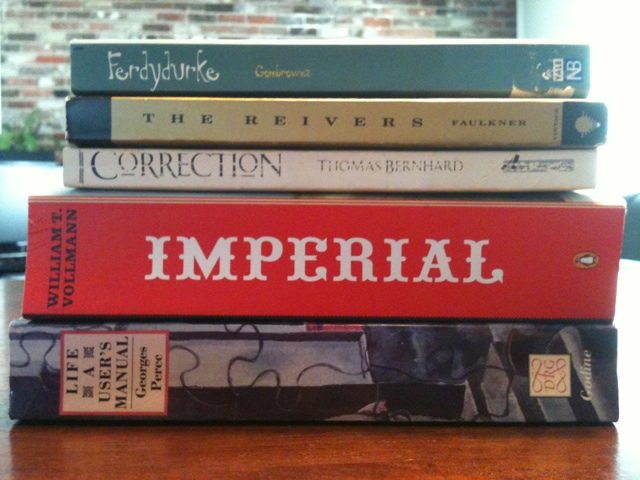
Correction by Thomas Bernhard. Bernhard was a repeated suggestion from readers in the aforementioned Harbach post/rant, and he was apparently a huge influence on W.G. Sebald, so, yes, looking forward to this.

The Reivers by William Faulkner. I read A Light in August this year and reread most of Go Down, Moses. My plan is to read one Faulkner a year for the next ten years.

Ferdydurke by Witold Gambrowicz. I struggled to make it through Gombrowicz’s bizarre jaunt Trans-Atlantyk, but once the novel taught me how to read it, I was enchanted by its strange humor and frenetic syntax. Over some beer and wine, I had a conversation about Ferdydurke with my father-in-law’s priest who is Polish. His pronunciation of Ferdydurke should win an award for charm.

I will read Georges Perec’s big book Life: A User’s Manual.

I have already promised to read William Vollmann’s Imperial.

There are many, many more, of course (too many, really).

20111228-115835.jpg

Books people sent me to read and review that look really cool that I will be reading and reviewing at some point in the very near future:

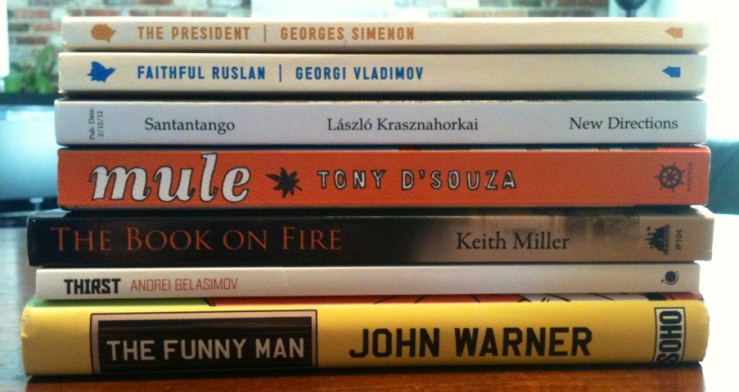
Satantango by László Krasznahorkai: I will read this and review this in the very near future.

The Funny Man by John Warner: Comedy, drugs, celebrity culture.

The Book on Fire by Keith Miller: This one is about a biblioklept. It’s been at the top of my stack for a few months now, but I keep letting myself get distracted.

Thirst by Andrei Gelasimov: Apparently this novella about a maimed alcoholic war vet is funny. (I hate the cover).

Mule by Tony D’Souza: Middle class man sells marijuana cross country. (I love the cover).

Various titles from Melville House’s Neversink line: I’ve got a few in the stack.

Also: I got a Kindle Fire for Christmas. I actually stayed up really late last night reading free public domain books from Hawthorne, Melville, Whitman, and Dickinson; I’ll read a contemporary novel on it this year—Neal Stephenson’s Snow Crash, perhaps? Suggestions welcome!—and try to review both novel and the process of reading the novel on a warm glowing machine.

And: I’m sure there are a ton of novels that will come out in 2012 that I’ll want to read; I’m already primed for Dogma, Lars Iyer’s sequel to Spurious.

So: What are you guys looking forward to reading in 2012? What did you fail to read in 2011?

Books Acquired, 12.25.2011 (Walton Ford; Hayao Miyazaki)

20111226-144256.jpg

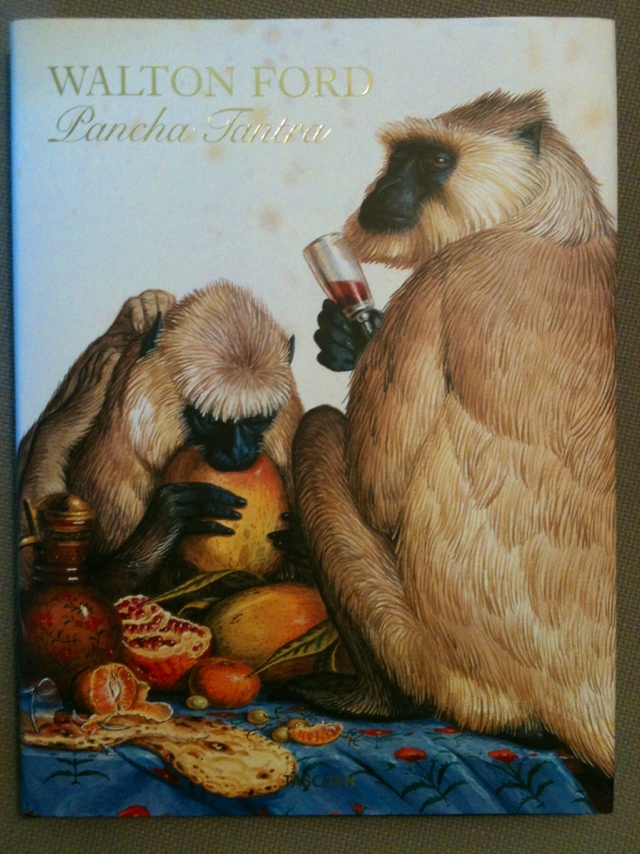
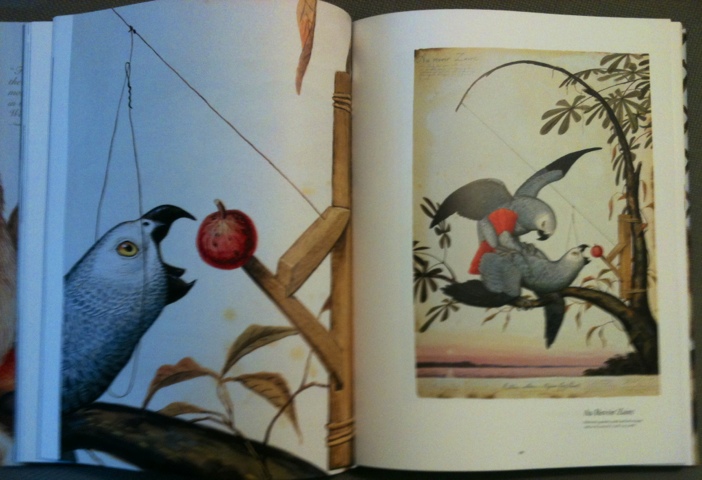
I finally got a copy of Walton Ford’s Pancha Tantra, a bestiary depicting the savage Darwinian competition between all biological species, including humans, whose encroachment upon animal habitats is examined in this book. Ford also explores themes of colonialism in his strange, naturalist paintings. My loving wife gave me this book. I took some clumsy photos with my iPhone which in no way do justice to this big, beautiful book; forgiveness please.

20111226-144302.jpg

20111226-144309.jpg

20111226-144317.jpg

20111226-144325.jpg

20111226-144333.jpg

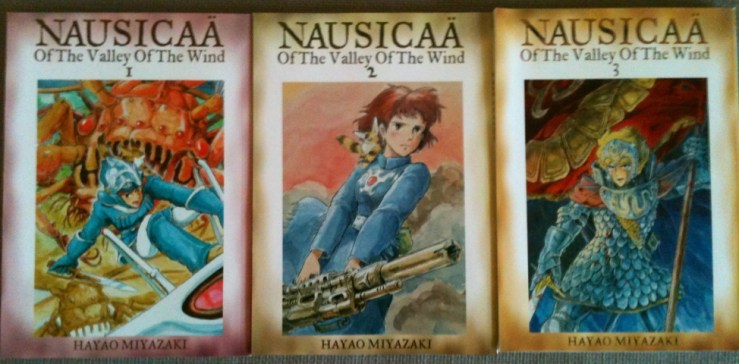
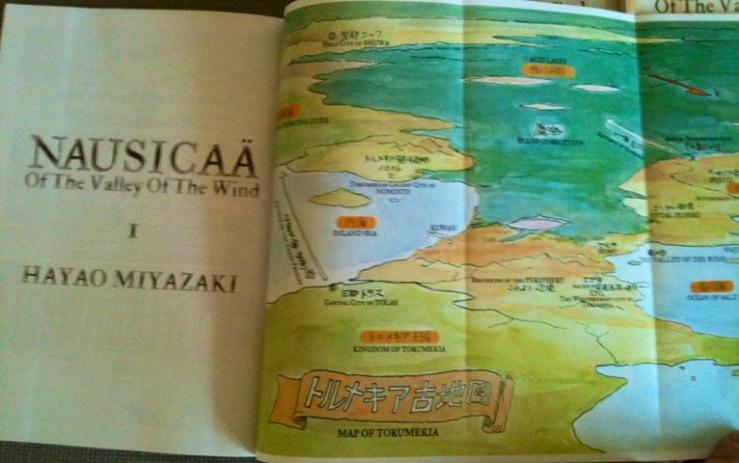
My wife also gave me Hayao Miyazaki’s graphic novel Nausicaa of The Valley of the Wind. The film based on this manga plays in our house about once a week, on heavy rotation with Miyazaki’s other films, which my four year old daughter is addicted to.

20111226-144343.jpg

20111226-144357.jpg

20111226-144406.jpg

20111226-144645.jpg

Book Acquired, 12.23.2011; Or, I Read the First 2% of William Vollmann’s Enormous Book Imperial

20111223-194549.jpg

Earlier this week, Biblioklept correspondent A King at Night suggested on this blog that William T. Vollmann, “literature’s own Batman,” may not be entirely real. While Mr. At Night’s post was perhaps a bit tongue-in-cheek, he did hip us to extremely cheap new copies of Vollmann’s 2009 California opus, Imperial. I bought one, of course, knowing that my chances of actually reading it in full were, uh, slim. It showed up today.

I read the first 25 pages, a little over 2% of the book (not counting Vollmann’s endnotes and bibliography). I read the book in the bathtub, drinking a beer (those of you who fear (or find repulsive the prospect of) visualizing my stubby little birthday-suited body besoaped and besudded, I suggest that that role may be played by Geena Davis, circa early nineties, although, obviously, you can pick whomever you like to imagine reading Imperial in a bathtub). I was cognizant of the fact that I was taking a bath—a luxury of sorts—while reading a book that deals in large part about who controls water. I also managed to get the book wet with both blood and water. I don’t know where the blood came from.

The first few pages thrust us right into typical Vollmann territory, with our protagonist paying a cokehead to guide him through the back alleys of Mexicali (Vollmann takes time to note the “street-whores,” of course). Alternately, Vollmann attends the nocturnal activities of the weary Border Patrol, who regularly catch and release Mexicans heading for the Northside (America).

There’s a great little moment, very early in this first chapter, when Vollmann ponders the Sisyphean task of the men who patrol the border:

. . . I almost pitied the futility of his occupation, as I suspect he did mine (the main purpose of my essays being to line birdcages), but then I fortunately persuaded myself that all vocations and callings are equally futile.

This seems like the prototypical Vollmann moment: earnestness bound in supple irony, self-deprecation glossing the intense pride in work that the contemporary world will be happy to (even sometimes boastfully) ignore.

I enjoyed the first pages of this massive book tremendously. Vollmann’s voluminous scope and strange background often eclipse his powers as a proseslinger, and Imperial, so far, is lucid, clean, sharp, and funny.

So I’ll go for it. I’ll read it. I’ll finish it before this time (id est, late Dec.) next year.

Books Acquired, Some Time Last Week (12.14.2011, Perhaps)

20111221-125306.jpg

Bobbi Lurie’s Grief Suite, a slim collection of poems that seem to be mostly about death and loss. Love the woodcut cover, which Ms. Lurie made herself. I read most of Grief Suite last week and found it moving if bewildering. I’m not sure how to review a book of poetry. I have no idea.

20111221-125952.jpg

The Book of Khalid by Ameen Rihani is part of Melville House’s Neversink line; it’ll get a Spring release. I read a bit the other night. Strange and romantic.

20111221-130019.jpg

Joe Dunthorne’s Wild Abandon is set on a crumbling Welsh commune. Dunthorne’s Submarine was adapted into a film last year by Richard Ayoade. I didn’t see the film. Anyway, I usually thumb through the first few pages of every review copy that shows up and try to shuffle the book into a certain stack; I wound up reading way more of Wild Abandon than I had initially expected. The first 50 pages are good—flawed but good—and it seems like a smart, funny novel that will appeal to readers who like smart, funny novels.

Sorry that my descriptions today were so lame (lamer than usual). I’m tired.

Novels Make Lousy Gifts (But We Should Give Them Anyway)

Novels make lousy gifts.

Now, if you have even a passing acquaintance with this little blog, you know that I love novels, that Biblioklept primarily focuses on novels, and that I love books in general. I am not anti-novel or anti-giving-novels-as-gifts. Send me a novel as a gift. I will appreciate it (or trade it toward another book, which is kinda sorta a form of appreciation).

I went to my favorite bookstore today, in fact, to buy some books for Christmas presents. But I restrained myself from picking up novels as gifts.

If you love books like I do, I’m sure that some of your most favorite gifts ever have been novels. Some of my most favorite gifts have been novels. The remaindered copy of The Lord of the Rings (from the South Barwon Library that some friends of the family gave me on Dec. 5th, 1990 when we visited Melbourne (the one in Australia, not Florida)) is probably one of my all-time favorite gifts. I know the exact date because the nice lady who gave it to me wrote a kind note in book and included the date in her note.

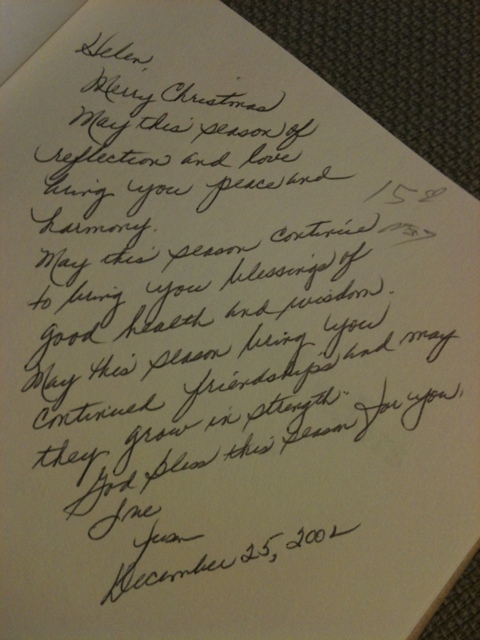
I could never bear to get rid of an inscribed book given as a gift, but lots of people do get rid of inscribed books. This is a monstrous practice, one that attests to just how easily people will discard your oh-so-earnest gifts. If you spend a lot of time in used bookstores (I do) you will come across these sad markings. Because it’s close at hand, and I’m aware of its inscription, I’ll share the note that Jean wrote to Helen (no, of course I know neither of them) in my copy of Balthus’s memoir, Vanished Splendors:

20111220-195619.jpg

I am aware that the memoir of a pervy artist is not the same as a novel, and that, as my first illustrating example, I already seem to be losing my metaphorical balance, but again, it was close at hand, right near the Tolkien in fact (by the bye, Vanished Splendors is pure gold).

In any case, I think Balthus’s memoir “reads” like a novel, which is to say that it’s mostly big chunks of text that require time and energy to decipher, set against the backdrop of TV, internet, movies, etc. It has some pictures, but not many. There’s no gimmick to it. I’m guessing that Helen just wasn’t into Balthus, or, if she had a passing interest in his art, it didn’t translate into wanting to read his memoir. She certainly didn’t read any of it (yes, I have a special sense that tells me when a book has been read. This baby was a virgin). Every time I look over the book, I feel sorta bad for Jean, whose gift seems to have gone unappreciated (by Helen; not by me. I was happy to pick it up used).

To return to an earlier point: yes, some of our favorite gifts ever might be novels. However, most of the life-changing novels I received were rarely given as birthday or Christmas gifts. They weren’t gifts of obligation, if you’ll forgive the ugliness of that term. Most of the great novels that were given to me were handed along free of occasion, given because the giver thought (knew) I should read them.

At Christmas though, we feel obliged to give. Sometimes we get some great novels as gifts. More often though, it seems like that relative who knows you “like to read” gives you a novel by, I dunno, Clive Cussler or Tom Clancy. The worst though are those tiny little hardback books that are designed specifically to be gifts, little faux-tomes of faux-philosophy usually connected to golf or angels or some other bullshit (I was horrified last year when DFW’s “This Is Water” speech got this treatment). Anyway, if you like books, you probably just go trade in this bullshit toward the books you like.

But this post isn’t really about the problem of getting airport novels or gimmick books as gifts. This post is about those of us who insist on giving novels we love to people who we know don’t really love reading novels. Especially really big, somewhat (or very) experimental novels. Important novels. Those novels that we read and decide that everyone needs to read this to become a fully realized human being [gags on that phrase].

I think sometimes we give our friends and relatives novels as gifts because we love them so much and we also love the book so much that we are maybe gunning for an intellectual three-way. We want them to read the novel so that we can share in it together, discuss it, rant about it, argue about it (remember though: that’s what the internet is for).

What often happens though is that these gifted novels (forgive the ambiguous, awkward modifier) tend to lurk about the giftee’s abode, brickishly unread, like dour unwanted houseguests. They skulk at the margins of bookshelves or migrate to the bottom of “to read” stacks; a lucky one might find occasional fingering above a commode. They are ugly reminders to the giftee, signals of how he or she has failed to meet your expectations (your expectations re: 9 or 15 or 25 or 30 hours of her time). (Young people, by which I mean college students in the liberal arts, are the exception here; they probably aren’t going to read the novel, but they are absolutely fine with putting it out for show).

People like books with pictures though, generally.

Even though I think novels tend to make lousy gifts, we should give them to our friends and loved ones anyway, even on those days of obligated giving. We should still offer novels up like they were somehow a part of our own selves in the deluded hope that the giftee will read them and discuss them with us, and that the novel will become an internal, virtual, shared experience. We should give them knowing that it’s likely they’ll go unread, that they may even be a point of shame for the giftee (especially when we ask, “Have you started . . . ?”). We should give them aware that they might point toward our own selfish desires.

Even if a novel may be a gift that implies a certain level of intellectual work, it also implies a  sense of trust and respect toward the giftee, and in this sense, giving a loved novel is a clear way to show love.

I Review The Avian Gospels, Adam Novy’s Dystopian Novel About Family, Torture, Rebellion, and Birds

20111127-205427.jpg

Adam Novy’s novel The Avian Gospels synthesizes dystopian themes with magical realism to tell the story of an unnamed city, in an unnamed time, afflicted by plagues of birds and bands of Gypsies. The novel is marvelous, surreal and very strange, disorienting in its tones and unnerving in its subjects; it’s at once a confounding allegory of torture, suppression, and rebellion, and at the same time a study in intrafamily relationships.

There are two families at the heart of The Avian Gospels. The aristocratic Giggs are led by the Judge, a ruthless patriarch who is both inheritor and perpetrator of endless war. Judge Giggs controls the city through fear, torture, and his fascist personal guard, the RedBlacks. While Judge Giggs seems to hold illimitable power in the city, it isn’t enough to retain the love or even respect of his family. His wife veers into a manic depressive breakdown, brought on in large part by the death of her elder son, who was killed during the last (foolish) war. His second son, Mike, is a loutish ne’er-do-well, a bully who fails to win his father’s approval. The Judge’s daughter Katherine is the apple of his eye, but as she matures in her adolescence, she begins to perceive the violent disconnect between her privileged life and the suppression and poverty forced on the city’s Gypsy population.

The other family (perhaps more of a duo, really) comprises Zvominir, an immigrant claiming to hail from Sweden, and his son Morgan, a petulant teen of an age with Katherine. Routinely beaten bloody by Mike Giggs and his RedBlack goons, Morgan develops a visceral hatred of the Judge’s regime, one that leads the lad to repeatedly (and rashly) lash out against the violent injustice he perceives around him. Zvominir and Morgan live in sad, motherless squalor, separated not only from the suburban greenzoned upper-class, but also from the Gypsies; Zvominir, who leads most of his life genuflecting to or cowering from power, will not even allow his son the joy of partaking in the Gypsies vibrant customs (like rowdy ska music and barbecues).

Most of all, Zvominir tries to contain his son’s bizarre power, a power that he shares with the boy: they can telepathically control the birds. This gift becomes both blessing and curse as the city is overrun by flocks of birds that block out the sun and make roads unnavigable. Zvominir, always kowtowing to power, agrees to employ his gift to “sweep” the city (particularly the area where the rich folks live) of the bird hordes; Morgan agrees to help, but only under the condition that he be allowed to show off his talent in the public square, where eager crowds (of Gypsies and suburbanites alike) gather to marvel at the spectacle of his “birdshows.” In time, Morgan begins writing dissent into his performances:

Birdshows were generally narrative, and featured a bird-made Morgan being chased through the streets by a soldier who was torn to bits by swans, though the swans were made of pigeons, and the soldier of flesh-colored plovers, his uniform of cardinals and crows. Swans would also be pursued through ghetto canyons by flying tigers made of orioles. These were his intentions for the birdshows, at any rate, but Zvominir would censor when the images betrayed but a hint of dangerous content, obscuring Morgan’s work with birdclouds, or worse, laughing babies made of birds. The audience found these touches psychedelic, and weren’t pacified so much as confused, so their passion turned to mumbles. The elder’s power over birds was superior, and Morgan couldn’t stop his father from suppressing the transgressive. It infuriated him.

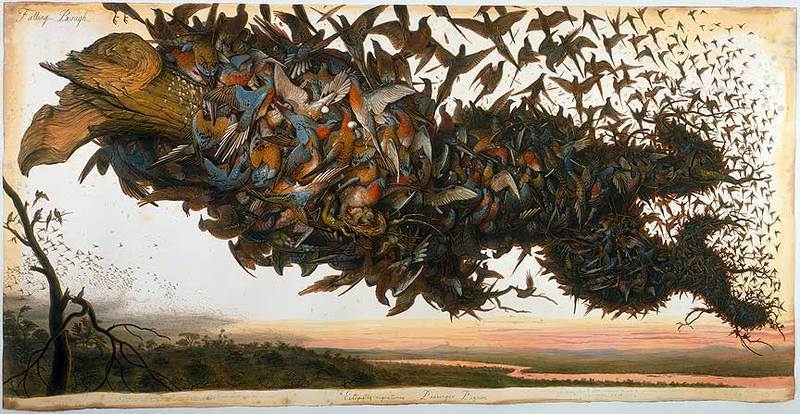
Falling Bough -- Walton Ford

Zvominir isn’t the only authority figure prone to parental censorship; as the poor old man tries to keep his son safe by “suppressing the transgressive,” the Judge in turn does all in his power to keep his precious daughter Katherine blind and ignorant to the violence and inequality that has purchased her material comfort. However, Katherine meets and becomes fascinated by Morgan, just as the young man’s rebellious attitude comes to find definition and ideology thanks to the Gypsy rebel Jane. Jane harnesses Morgan’s raw anger, turning him into the figurehead of a Gypsy resistance against the Judge’s terrible regime. She literally ushers him into the Gypsy underworld, a surreal setting of nightplants and black markets and ecstatic ska music and donkeys, sprawling in a labyrinthine network of caves and caverns and tunnels under the unnamed city. From this subterranean site, Jane becomes mastermind of a terrorist plot to overthrow the fascist Judge:

They—we—were helpless, and we knew it. She would do to us what Hungary had done, but with stealth; this terror stuff is easy, she mused. Who needs armies? She was poor, and lived in sewers, so nothing could be taken but her life, while we had homes, jobs, children, hopes, dreams and possessions we adored, which all gave meaning to our lives. There was no end to that of which she could deprive us. Our privilege made us vulnerable.

Now seems as reasonable a time as any to remark upon the narrator of The Avian Gospels, as its pronouns color much of the passage I just cited. A first-person plural “we” tells the story, a “we” whose contours and guts alike become more evident as the book unfolds. Much of the joy (and bewilderment and occasional frustration) I felt reading The Avian Gospels came from puzzling out just who this “we” is. As the book progresses, it becomes clear that, like the collective first plural person who narrates, say, William Faulkner’s “A Rose for Emily,” the narrator is part and parcel of the storyis the story, perhaps—and that Novy’s dystopian vision is realized not just in the book’s content, but also in the telling of that content. Calling the narrator unreliable is beside the point; the narrator is the ideology itself that Novy critiques. Rebel Jane provides a very real ideological anesthesia to the narrator’s methods, the Judge’s power, and Morgan’s artistic ambitions:

. . . Jane felt suspicious of beauty, which trafficked in desire, not in justice, and left you lonelier and sadder. It made you feel worse in the guise of feeling better, and left you hungry for more beauty. Further. It enfeebled you politically, by pointing at some hypothetical catharsis, a transcendence that could not be achieved, for who could really say they had communed with a non-religious paradise of aesthetics? The beauty effect: a crescendo of nothing. Beauty distracted from things that were important—the rights of disadvantaged people—in the name of something it claimed was more important, and which didn’t actually exist. It was a cognitive conspiracy, a con that disempowered.

If Jane seems a bit shrewish—and what zealot isn’t?—it’s worth pointing out that her ideas might be the novel’s thesis, a thesis ironically couched in the very beauty that Jane would make us wary of. She’s the cold conscience in a book filled with passions. And she’s a terrorist.

While The Avian Gospels surpasses any allegorical schema we might try to impose upon it, it’s still very much a response to America’s post-9/11 zeitgeist. Novy’s Judge is a figure of malevolence glossed in benevolence. If he’s a sicko who takes dull delight in torturing Gypsies in his Boom Boom Room, he’s also a family man with problems that most of us can relate to. He’s an authoritarian who maintains order in a fractured society through violence and suppression—but he delivers what the suburban greenzoners want from a leader. So what if security comes at the expense of justice, and on the backs of a displaced population to boot?

The Gypsies, refugees from countless wars afflicting the world of The Avian Gospels, aren’t the only displaced persons in the narrative. Novy displaces the readers as well. The Avian Gospels erupts with uncanny moments where the material of our recognizable world overlaps with the crumbled reality of the narrative. Social structures, attitudes, cultural norms and ideals—these remain, more or less. But how to puzzle out a world where China, Bolivia, Angloa, and Oklahoma are among the nations that surround the unnamed city? Or where technology has regressed to the point that the automobile is a thing of the past? (Guns remain). And, uh, the birds, of course.
Novy’s dystopian novel skews more fantasy (or, more properly, magical realism) than sci-fi, but it’s the novel’s strange, shifting tones that most likely will paradoxically estrange and engage most readers. There’s a violent zaniness to The Avian Gospels, but the zaniness is never tinted with even a hint of whimsy. The first-person plural “we” that narrates the text juxtaposes dense, poetic images against the teenspeak of the street. At times, the narrator staggers into a mordant lament, only to retreat into cruel, blackly ironic prose. The effect is disorienting and compelling. Novy’s writing moves rhythmically with a complex energy that I’m faltering to describe. You should probably just read the book.

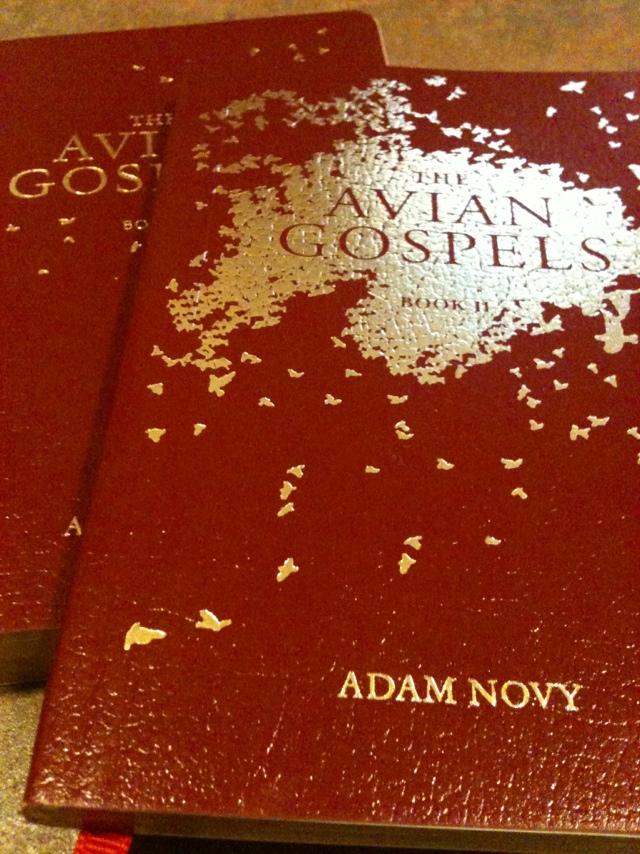
I’ve neglected thus far to comment on the actual physical books that comprise The Avian Gospels. They are beautiful, compact, oxblood volumes with gilded edges and bookmarks, reminiscent of Gideon bibles, I suppose, but more lovely. They’re also very small, the sort of thing that fits easily into a pocket or a purse. I love books like that.

The Avian Gospels deserves a place on the shelf (or in the pocket) of any fan of cult or dystopian novels. It’s a story about cyclical violence, power and powerlessness, and political and cultural repression. It’s also a story about family and parent-child relationships and what it means to love another person in the face of radical danger, a novel that foregrounds the very real stakes of rebellion, both Oedipal and political. It’s a strange book, one that offers little comfort to its readers and certainly proffers no simple answers. Deeply moving and highly original, I strongly recommend this book.
The Avian Gospels is available now from Hobart. Read my interview with Adam Novy.

Cormac McCarthy’s Turtle Soup

Another literary recipe to celebrate Thanksgiving—

In Cormac McCarthy’s novel Suttree, an Indian named Michael prepares a turtle soup for Suttree. First, catch the turtle. Then, kill the turtle, making sure to discard its head–

The Indian braced his feet and swung it up dripping from the river and onto the rocks and it squatted there watching them, its baleful pig’s eyes blinking. It was tied through the lower jaw with a section of wire and the Indian took hold of the wire and tugged at it. The turtle bated and hissed, its jaws gasped. The Indian had out his pocketknife and now he opened it and he pulled the turtle’s obscene neck out taut and with a quick upward motion of the blade severed the head. Suttree involuntarily drew back. The turtle’s craggy head swung from the wire and what lay between the braced forefeet was a black and wrinkled dog’s cunt slowly pumping gouts of near black blood. The blood ran down over the stones and dripped in the water and the turtle shifted slowly on the rock and started toward the river. The Indian undid the wire and flung the head into the river . . .

Appetizing, no? Now that you’ve thrown the bloody head in the river (or your garbage can or wherever you throw turtle heads), it’s time to dress the beast–

Suttree laid the turtle on the rock and the Indian scouted about him until he came up with a goodsized stone.

Watch out, he said.

Suttree stepped back.

The Indian raised the stone and brought it down upon the turtle’s back. The shell collapsed with a pulpy buckling sound.

I never saw a turtle dressed before, said Suttree. But the Indian had knelt and was cutting away the broken plates of shell with his pocketknife and pitching them into the river. He pulled the turtle’s meat up off the plastron and gouged away the scant bowels with his thumb. He skinned out the feet. What hung headless in his grip as he raised it aloft was a wet gray foetal mass, a dim atavism limp and dripping.

Plenty of meat there, said the Indian. He laid it out on the rock and bent and swished the blade of his knife in the river.

Okay. Now that you’ve removed the shell and gouged away the scant bowels with your thumbs, it’s time to prepare the wet gray foetal mass.

Put him in a pot and cook him slow. Lots of vegetables. Lots of onions. I got my own things I put in.

Got it? Lots of onions. Slow cook that dim, limp, dripping atavism. The fact that the Indian has his “own things” that he puts in implies a call to the reader to experiment with the recipe. And how did Suttree like his turtle?

He spooned up a piece of the meat and cradled it in his mouth to cool it. He chewed it. It was succulent and rich, a flavor like no other.