Bloomsday, an annual celebration of James Joyce’s Ulysses, is upon us today with moreexcitement than ever. Even with the festivities, the book’s reputation for density, erudition, and inscrutability still daunts many readers–leading to a glut of guidebooks, summaries, and annotations. Ironically, rather than inviting first-time readers to the text, the sheer volume of these guides to Ulysses can paradoxically repel. Their very existence seems predicated on an intense need, and although some of the guides out there can be helpful, others can get in the way. This need not be. Ulysses deserves its reputation as one the best books in the English language. It generously overflows with insight into the human experience, and it’s very, very funny. And, most importantly, anyone can read it.
Here are a few thoughts on how to read Ulysses, enumerated–because people like lists:
1. Ignore all guides, lists, maps, annotations, summaries, and lectures. You don’t need them; in fact, they could easily weigh down what should be a fun reading experience. Jump right into the text. Don’t worry about getting all the allusions or unpacking all the motifs.
Pretty soon though, you’ll get to the third chapter, known as “Proteus.” It’s admittedly hard to follow. You might want a guide at this point. Or you might just want to give up. (Of course, you might be a genius and totally get what Stephen is thinking about as he wanders the beach. Good for you). If frustration sets in, I suggest skipping the chapter and getting into the rich, earthy consciousness of the book’s hero, Leopold Bloom in chapter four, “Calypso.” It’s great stuff. You can always go back to chapter three later, of course. The real key, at least in my opinion, to reading (and enjoying) Ulysses is getting into Bloom’s head, matching his rhythm and pacing. Do that and you’re golden.
I’ve already advised you, gentle reader, not to follow any guides, so please, ignore the rest of my advice. Quit reading this post and start reading Ulysses.
For those who wish to continue–
2. Choose a suitable copy of the book. The Gabler edition will keep things neat and tidy and it features wide margins for all those clever game-changing annotations you’ll be taking. Several guides, including Harry Blamire’s The New Bloomsday Book align their annotation to the Gabler edition’s pagination.
3. Make a reading schedule and stick to it. The Gabler edition of Ulysses is nearly 700 pages long. That’s a long, long book–but you can read it in just a few weeks. There are eighteen episodes in Ulysses, some longer and more challenging than others, but reading one episode every two days should be no problem. If you can, try to read one episode in one sitting each day. As the book progresses, you’ll find yourself going back to previous chapters to find the figures, motifs, and traces that dance through the book.
4. So you’ve decided you need a guide. First, try to figure out what you want from the guide. Basic plot summary? Analysis? Explication? There’s plenty out there–too much really–so take the time to try to figure out what you want from a guide and then do some browsing and skimming before committing.
The most famous might be Stuart Gilbert’s James Joyce’s Ulysses, a dour book that manages to suck all the fun out of Joyce’s work. In a lecture on Ulysses, Vladimir Nabokov warned “against seeing in Leopold Bloom’s humdrum wanderings and minor adventures on a summer day in Dublin a close parody of the Odyssey,” noting that “it would be a complete waste of time to look for close parallels in every character and every scene in the book.” Nabokov scathingly continued: “One bore, a man called Stuart Gilbert, misled by a tongue-in-cheek list compiled by Joyce himself, found in every chapter the domination of one particular organ . . . but we shall ignore that dull nonsense too.” It’s perhaps too mean to call Gilbert’s guide “nonsense,” but it’s certainly dull. Harry Blamire’s The New Bloomsday Book is a line-by-line annotation that can be quite helpful when Joyce’s stream of consciousness gets a bit muddy; Blamire’s explications maintain a certain analytical neutrality, working mostly to connect the motifs of the book but letting the reader manage meaning. Don Gifford’s Ulysses Annotated is an encyclopedia of minutiae that will get in the way of any first time reader’s enjoyment of the book. Gifford’s notes are interesting but they can distract the reader from the text, and ultimately seem aimed at scholars and fanatics.
Most of the guidebooks I’ve seen for Ulysses share a common problem: they are obtrusive. I think that many readers who want some guidance or insight to aid their reading of Ulysses, rather than moving between books (what a chore!), should listen to some of the fantastic lectures on Joyce that are available. James Heffernan’s lectures for The Teaching Company provide a great overview of the book with some analysis; they are designed to be listened to in tandem with a reading of the book. Frank Delaney has initiated a new series of podcast lectures called re:Joyce; the first lecture indicates a promising series. The best explication I’ve heard though is a series of lectures by Joseph Campbell called Wings of Art. Fantastic stuff, and probably the only guide you really need. It’s unfortunately out of print, but you can find it easily via extralegal means on the internet. Speaking of the internet–there’s obviously a ton of stuff out there. I’ll withhold comment–if you found this post, you can find others, and have undoubtedly already seen many of the maps, schematics, and charts out there.
5. Keep reading. Reread. Add time to that reading schedule you made if you need to. But most of all, have fun. Skip around. If you’re excited about Molly’s famous monologue at the end of the book, go ahead and read it. Again, the point is to enjoy the experience. If you can trick a friend into reading it with you, so much the better. Have at it.
In Lee Rourke’s début novel The Canal, the unnamed narrator quits his job and begins walking to a canal everyday. Why? Out of boredom. At the titular canal, he watches (and describes in banal detail) the geese, swans, and coots that swim in the filthy water. He also keeps one eye on the drudges who go about emailing and faxing in the office building across from the bench on which he sits each day. A strange, icy young woman soon begins sharing the bench with the narrator; in time, she also shares her morbid secrets with him. Complicating the narrator’s paradise of boredom is a gang of youths who terrorize the area with random violence. The novel’s steady pace escalates to frantic tragedy as the narrator’s bored repose gives over to desperate obsession with his erstwhile bench mate and her horrific past.
The Canal takes boredom as its explicit subject. In the second paragraph of the book, the narrator tells us–
Some people think that boredom is a bad thing, that it should be avoided, that we should fill our lives with other stuff in order to keep it at bay. I don’t. I think boredom is a good thing: it shapes us; it moves us. Boredom is powerful. It should never be avoided. In fact, I think boredom should be embraced. It is the power of everyday boredom that compels people to do things–even if that something is nothing.
The canal seems (at first) the right place for the narrator to embrace his boredom, but it soon becomes a space–a “real” space, as the narrator eventually realizes–of transformation and excitement. This space quickly complicates the narrator’s will toward “nothing,” that pull toward nihilism. He’s keenly interested in the various birds that make the canal their home, and his obsessive derision toward the office workers highlights the fact (a fact he doesn’t seem to see) that his apathy is not as pure as he would like it to be. Rather, his “boredom” is a direct response to the apparent meaninglessness of 21st century life in general and, specifically, life in post-Blair London. His horror and fear at the four hoodied teens from a nearby estate (the English equivalent of an American housing project) who insult and attack him is grounded in a relatively conventional morality, one that belies his enduring belief in his own apathy.
The most dramatic challenge to his philosophy of boredom though is his unnamed female foil. Through cryptic, elliptical dialogues he soon becomes a bizarre confessor to her strange sins. Yet she’s remorseless in her unrepentant nihilism. In one conversation she tells him that “There’s nothing left to believe in anywhere. All is fiction. Somehow, we have to invent our own reality. We have to make the unreal real.” This cheerful little aphorism comes after she reveals her empathy for (and sexual attraction to) the perpetrators of the July 7, 2005 suicide bombings in London. Terrorism, particularly the 7/7 attacks and the 9/11 WTC attacks are a major motif of The Canal; the unnamed narrator obsesses about flight (both of airplanes and birds) and dwells on the image of the planes crashing into the towers. Although he never admits it, it seems that both flight and death are possible forms of escape from the very boredom he claims to embrace. At the same time, the violence of terrorism seems part and parcel of his philosophy of boredom–
“It is obvious to me now that most acts of violence are caused by those who are truly bored. And as our world becomes increasingly boring, as the future progresses into a quagmire of nothingness, our world will become increasingly more violent. It is an impulse that controls us. It is an impulse we cannot control.”
And yet the violent acts of the estate youths shock and disgust the narrator. In one of the book’s most stunning passages, he watches them in horror as they destroy a stolen motor scooter and then cast it into the creek while filming the whole business on a cell phone. The scooter upsets the resting birds and becomes one more piece of detritus clogging up the canal–part of the “quagmire of nothingness,” perhaps. Repeatedly in the novel, the narrator wishes that long-overdue dredges will come along to clean the canal, to restore it, an impulse to control the stochastic violence of life that doubles his horror at the teen gang’s violence. In short, despite what he tells us, the narrator cannot embrace his boredom–although he does wish to name it, recognize it, and perhaps treat it.
This treatment comes in the form of the anti-ingenue he meets with daily by the canal. His obsession with her soon gives way to outright stalking. For a man who claims to embrace boredom, he’s awfully interested in her. The narrator’s stalking feeds into the novel’s deft discourse on surveillance in the 21st-century world, where CCTV, mobile phone cameras, and live pictures of spectacular disaster make people feel alternately safe or horrified (or at least alleviate some of their boredom). The narrator’s relationship with the woman tests the bounds of his devotion to boredom and reveals to both him and the novel’s audience that opting out is not always opting out. Rourke uses a quote from Martin Heidegger – “We are suspended in dread” – as an epigraph to the novel; the narrator must learn how to live in that suspension.
What makes The Canal such a remarkable read is watching the disconnect between the narrator’s would-be solution to life-as-state-of-dread (“embrace boredom”) and his actual responses to the effects of boredom in the world around him (literal and figurative waste, violence). Although he seeks to mitigate the pain of his dread and boredom by submitting to it, the novel repeatedly finds him engaging–and resisting–the cruelty and inhumanity he perceives. While parts of The Canal occasionallyseem forced or overdetermined, there is much to commend here and the novel clearly suggests Rourke as a rising talent to watch out for. Recommended.
The Canal is available from Melville House on June 15, 2010.
The New York Times published a little piece yesterday on the pleasures of finding–and reading–random books in vacation spots. From the article: “There is fate in the moldy, dog-eared paperbacks found on the shelves and bedside tables of summer guest rooms. When the masterpiece we’ve dutifully brought along stalls five pages in, the accidental bounty of other people’s discarded reading beckons. Like conversations with strangers on a train, these random literary encounters can be unsettling, distracting or life changing.” They ask eight authors, including Wells Tower and Dave Eggers about some of their random reading encounters. Here’s Tower on The Bridges of Madison County:
“The Bridges of Madison County,” by Robert James Waller, found in a beach house in Brooklin, Me. Strenuously unrecommended as a novel, but if you strike every third verb and noun it converts into a superb volume of Mad Libs with which to pass idle hours by the sea.
I’ve picked up many weird books over the years, at guest houses, hostels, and other places I was staying: a cheap novelization of old Annie Oakley magazine serials (at a beach condo); H.G. Wells’s A Short History of the World (at a river house); too some mild shame, sundry trashy V.C. Andrews novels (they must have been my older cousin’s); any Stephen King novel I’ve ever read. Probably the best random reading experience I’ve had though was when staying at a friend’s grandfather’s house in Miami. I stayed in his mother’s old room–she had all kinds of cool books, including John Barth’s slim second novelThe End of the Road, which I devoured in one sleepless night. I did not steal it.
On the heels of last year’s hugely successful first-time-in-English publication of Every Man Dies Alone, the good folks at Melville House have issued another of Hans Fallada’s epic novels, Wolf Among Wolves. Set during Germany’s 1923 economic collapse, Wolf centers on Wolfgang Pagel, a former soldier and itinerant gambler languishing in the corruption of Weimar Berlin.The beginning of the novel focuses on a single summer day in Berlin; Fallada’s naturalist, realist eye paradoxically puts all the minutiae of this world under a microscope even as it expands to capture a holistic vision of life in morally-decadent, post-war Germany. The effect is both devastating and enlightening. It is epic realism, the condensation of the everyday existence of an alien world. Another paradox–behind Fallada’s omniscient, steady, neutral narrative, so plain and descriptive and frank, there lies another voice, a moral, ethical voice that prompts Pagel to transcend the wolf-eat-wolf world. Indeed, Fallada presents a vision of moral cooperation in a world dominated by self-interest. Here’s a passage describing some of Berlin’s heady post-war decadence:
But the girls were the worst. They strolled about calling, whispering, taking people’s arms, running alongside men, laughing. Some girls exposed their bodies in a way that was revolting. A market of flesh–white flesh bloated with drink, and lean dark flesh which seemed to have been burned up by spirits. But worst of all were the entirely shameless, the almost sexless: the morphine addicts with their contracted pupils, the cocaine sniffers with their white noses, and the cocaine addicts with high-pitched voices and irrepressibly twitching faces. They wriggled, they jiggled their flesh in low-cut or cunningly-slashed blouses, and when they made room for you or went round a corner they picked up their skirts (which, even so, didn’t reach their knees), exhibiting between stockings and drawers a strip of pale flesh and a green or pink garter. They exchanged remarks about passing men, bawled obscenities to each other across the street, and their greedy eyes searched among the slowly drifting crowd for foreigners who might be expected to have foreign currency in their pockets.
Melville House’s edition of Wolf Among Wolves is the first unabridged English translation ever–scholars Thorsten Carstensen and Nicholas Jacobs have restored passages originally omitted in Philip Owens’s contemporaneous translation.In his insightful afterward, Carstensen addresses why certain passages were not included in Owens’s original translation, pointing out that most omitted passages showed an inclination toward fairy-tale or mythic structures, aesthetics that “contradict the claim to naturalistic representation” one expects in Fallada’s work. By preserving the occasional “almost surreal mode of perception” omitted in the original, Carstensen argues that:
In short, the fully reconstructed text, with its enhanced inconsistency, provides the reader with insight into a literary aesthetics that is unique among the novels of German modernism: Fallada combines realist prose and ethical concerns with a narrative technique that renders ambiguous what is supposedly a semi-documentary representation, shaped by his very own experiences in the country.
We’re eating up Wolf Among Wolves right now, and will have a full review in time); for now, we recommend you pick it up for some good summer reading.
Poor Seymour Herson, protagonist of Simon Rich’s début novel, Elliot Allagash. Overweight, unpopular, and often bullied, he becomes yet another target when Elliot Allagash shows up as a new student in his school. Not that Elliot bullies Seymour. Instead, Elliot targets Seymour as part of a weird Pygmalionesque experiment to manipulate the social hierarchies of Glendale, the middling Manhattan private school the two attend. Why is billionaire Elliot attending such a low-rent school? Simple: He’s been kicked out of every other school in New York at one point, and Glendale needs his father’s largesse. Elliot, bored evil genius that he is, spies Seymour sitting all alone and quickly singles him out as his chief puppet in a Machiavellian scheme, one that soon pays off for Seymour as well. Under Elliot’s supervision (or manipulation), Seymour sheds his weight, becomes a figurative and literal baller, and soon earns (or, uh finagles) the respect of his peers and teachers. In time though, Elliot’s creation craves autonomy–and turns on him.
Although Elliot repeatedly insists that his work with Seymour is a mere experiment to occupy his interest during his tenure in the hell that is Glendale, it becomes clear that he genuinely craves Seymour’s friendship, and, at times, he even admires aspects of his puppet. “You’re lucky you can still experience pleasure,” he tells Seymour early in their relationship, “I’ve become accustomed to a level of decadence so extreme that to go without luxury for even a minute fills me with a powerful rage.” The line is a great example of Rich at his best in Elliot Allagash–cartoonish comedy that tips into pathos. The roots of Elliot’s decadence are revealed a few pages later when we meet his awful, awful father Terry, a billionaire monster of the Mongomery Burns school. In a scene both funny and painful, Terry explains to an artistic genius that, not only will no one besides Terry ever see the paintings he’s commissioned from the artist, but that those paintings, along with the rest of his “Personal Museum” will be destroyed when he dies. The artist cries and pleads to renege the Faustian bargain he’s struck with his patron; Terry counters with a chilling (and hilarious) story about making a Pulitzer Prize-winning author write a “profoundly beautiful novel . . . in longhand” in front of him. “I read his book in a single sitting and then burned it in my fireplace,” he tells the shocked artist. Talk about decadence. While the scene is both funny and dreadful, the relationship between Terry and his son is downright sad. He attaches a note to a gift that he gives to Seymour when he and Elliot visit Seymour and his parents (they all play Monopoly in a scene of awkward comedy). The note says: “Dear Seymour, Thank you for spending so much time with my strange, strange boy. What is it like? You must remind me to ask you sometime.”
Terry’s note about his son is just one of many instances in this novel that speaks to the alienation that many adolescents feel. These themes match nicely with Rich’s tight, descriptive writing, which moves quickly, propelled by snappy dialogue (and plenty of punchlines, both verbal and visual). I don’t think that Elliot Allagash is being promoted directly as a Young Adult novel, but it will have a ready audience in the same smart crowd who dig funny, bright novels like C.D. Payne’s Youth in Revolt and Sherman Alexie’s The Absolutely True Diary of a Part-Time Indian. Recommended.
Elliot Allagash is available today in hardback from Random House.
Michael Wiley is a mystery writer and professor of British Romantic literature and culture at the University of North Florida. He’s published academic volumes about geography and migration in Romantic literature, but we spoke to him about the latest edition in his detective series, The Bad Kitty Lounge. Dr. Wiley was kind enough to talk to us via email about ambiguity and resolution in mystery fiction, giving readers what they want, and the prospects of Wordsworth with a Glock. The Bad Kitty Lounge is available new in hardcover from Minotuar/St. Martin’s. Read more press at Michael Wiley’s website.
Biblioklept: Your new novel The Bad Kitty Lounge picks up with P.I. Joe Kozmarski, the protagonist from your first novel The Last Striptease; both books are set in Chicago. When you were working on Striptease did you envision it as the beginning of a series?
Michael Wiley: I did. To tell the truth, The Last Striptease catches the story already in motion. I wrote an earlier Joe Kozmarski manuscript that I called Little Girl Lost, almost got published, and then tucked into a box, where it remains. I liked the character and the settings well enough that I wrote a new manuscript, which became The Last Striptease. I had set Little Girl Lost in August and Last Striptease in September, so when I started writing The Bad Kitty Lounge I decided to set it in October and aim for a series that covers each month of the year. There’s no great logic to aiming for a twelve-book series, but it seems as good of a number as any.
B: There’s a tradition in detective fiction of recurring characters (Chandler’s Marlowe comes immediately to mind). When you are writing these books, do you consciously follow or inject tropes of mystery and crime fiction? How important is it to give mystery readers what they want?
MW: It’s always important to give readers what they want. But readers might not know what they want until a book gives it to them. In genre fiction and mysteries and thrillers in particular, conventions matter, but if a writer sticks too closely to conventions the result is cliché. The key isn’t to ignore the conventions but to finesse them, use them in new ways, invert or subvert them. The best mysteries, I think, are recognizable in form but still manage to surprise us and give us great unanticipated pleasures. Before Chandler’s Marlowe, there’s Arthur Conan Doyle’s Sherlock Holmes, and before Holmes, there’s Poe’s Dupin. Each of the greats has reinvented the form in big ways and has given readers what they’ve always wanted without knowing that they’ve wanted it. The rest of us innovate where we can.
B: Sometimes though it seems that writers who experiment too much with genre conventions can subvert, invert, or innovate in ways that trample on some of the great pleasures of mysteries and thrillers. I’m thinking explicitly about novels like Jonathan Lethem’s Gun, with Occasional Music, which weds PK Dick with hard boiled noir, or Thomas Pynchon’s recent exercise Inherent Vice. Such books prize ambiguity, which leads to a shaggy dog story. There’s certainly a pleasure in reading them but many of us read mysteries because Dupin or Sherlock Holmes or Marlowe (or whomever) actually solves the case. How important do you think it is to give mystery readers an answer or solution? What place does ambiguity have in your detective fiction?
MW: Right. Most of the best mystery writing right now includes at least some ambiguity, though. I’ve been reading and re-reading James Lee Burke’s Dave Robicheaux books lately, and while each of them solves a case at hand, we never have the sense that Robicheaux has restored a proper order to the universe. Just the opposite: we know that the universe is deeply screwed up and that Robicheaux is as much a part of the problem as he is part of the solution. Aside from that, some of Burke’s villains pop up again in later books even after we’re sure that Robicheaux has put them to rest.
My own books resolve crimes. At the end, we know who did what and when and why. But my books are also full of moral ambiguity. Some of the guilty parties don’t get punished. Some of the innocent parties do. Good people sometimes do bad things for either good or bad reasons. Bad people sometimes do good things. We get answers but we don’t necessarily like them.
B: I realize that I may have been putting carts before horses with some of these questions–can you tell us a little bit about the plot of The Bad Kitty Lounge?
MW: I like carts before horses. Here’s a synopsis that I wrote for the book flap:
Greg Samuelson, an unassuming bookkeeper, has hired Joe Kozmarski to dig up dirt on his wife and her lover Eric Stone. But now Samuelson has taken matters into his own hands. It looks like he’s torched Stone’s Mercedes, killed his boss, and then shot himself, all in the space of an hour. The police think they know how to put together this ugly puzzle. But as Kozmarski discovers, nothing’s ever simple. Eric Stone wants to hire Kozmarski to clear Samuelson. Samuelson’s dead boss, known as the Virginity Nun, has a saintly reputation but a red-hot past. And a gang led by an aging 1960s radical shows up in Kozmarski’s office with a backpack full of payoff money, warning him to turn a blind eye to murder. At the same time, Kozmarski is working things out with his ex-wife, Corrine, his new partner, Lucinda Juarez, and his live-in nephew, Jason. If the bad guys don’t do Kozmarski in, his family might.
In short, it’s a gritty hardboiled mystery set in Chicago. If your sense of humor runs the way mine does, it has some laughs. Booklist Magazine calls it “howlingly funny.” That may be overstating the case, but I appreciate the compliment.
B: Books critics must always be forgiven hyperbole, positive and negative.
You’re a professor of English literature; specifically, you’re an expert on the British Romantic poets. You might tire of this question–and forgive me if so–but do elements of British Romanticism find their way, consciously or not, into your detective fiction? It seems like a detective’s mission would be at odds with the spirit of Keats’s Negative Capability.
MW: From my perspective, it’s easier to deal with the positive hyperbolic criticism than the negative.
I once told an editor jokingly that I planned to write a mystery featuring William Wordsworth with a Glock. To my surprise, the editor was enthusiastic. I suppose there’s a market for these books. Abe Lincoln: Vampire Hunter has been doing well, and Pride and Prejudice and Zombies was a hit.
I mostly think of my day job as a British Romanticist as being separate from my night job as a writer of pulp fiction, but I know that that the two intersect and inform each other. Wordsworth and Raymond Chandler are two of the great English-language locodescriptive writers, and they’ve both influenced my handling of place. William Blake deals with ideas of innocence and experience, good and evil, and heaven and hell in ways that no noir writer has ever surpassed. And Lord Byron is great for moral ambiguity, as is S.T. Coleridge though in different ways.
So, I’ll probably get to that Wordsworth-with-a-Glock manuscript sooner or later.
B: Wordsworth with a Glock sounds great. Then you could write John Keats Vs. The Lamia; make it a graphic novel. Or just a screenplay. For now though, is the next Kozmarski book already in the works?
MW: I see a series here. My friend Kelli Stanley has set mysteries in ancient Rome. She calls them “Roman Noir.” I’ll just add a “tic” and I’ll have “Romantic Noir.” In the meantime, Joe Kozmarski will ride again. St. Martin’s Minotaur has said that they want to publish the third in the series. It’s done, it’s called A Bad Night’s Sleep, and it’s the best one yet. It should be out in 2011.
B: You teach full time and have a family–how do you make time to write? What advice could you give to young writers who want to develop that kind of discipline?
There’s never enough time in the day — or the week or the year — to write a book. There are thousands of excuses for doing something else, and nearly all of the excuses are good. I accept these facts and then write anyway. I write in the morning before breakfast if I can, or write in the evenings after the kids are in bed. I write in between. And when I’m not writing, I’m often thinking about plot, characters, and setting.
I draw from my own experience when I give advice, which is very simply (and annoyingly) this: “Just write.” Writing seems to me to be more of an act of will than of discipline. Don’t spend time worrying that you’re not writing enough; don’t spend time thinking about the act of writing (unless that’s the subject of your short story or novel) — Spend your time writing. Tell your story. Then revise it. Then think of another story and tell it. Oh, and when you’re not telling or revising or thinking of new details for your story, read other people’s stories and learn from them. That seems important too: others have told better stories than I’ll ever tell. I can learn from them. We all can.
In Sam Lipsyte’s 2004 novel Home Land, minor loser Lewis Miner sends missives to his high school alumni newsletter, Catamount Notes, about his awful, sad misadventures in small-time drug use, petty copy-writing, itinerant busboyism, and chronic masturbation (he has a strong erotic disposition toward leg warmer porn. If this idea repels you (with no reciprocal attraction) this book is not for you). Miner wants to be sweet but he can be mean. He’s obsessed with the past–and who can blame him? His nickname in high school was Teabag, an appellation literally thrust upon him by the dumbest of jock-bullies. He carries this kernel of spite for years like a pebble in the sock, one that rubs up a giant blister–Miner is all blister. Writing ostensibly to his former classmates, but really just for himself, another form of masturbation:
It’s always been this way, as many of you might recall. Somebody chucks a snowball, I’m scouring the school yard for rocks. The bully just wants to shove sadness around, shake me down for spare change, I’m looking to scrape out his eye. I lack a sense of proportion. I have no sensitivity to sport. I’m the aggrieved rider on the grievous plain. I’m still pissed about the parade.
For all his anger though, Miner is an engaging, preternaturally sensitive voice. Along with his best friend/foil Gary, he muddles through a wretched life, finding solace (and an outlet for an outsized comic voice) in his letters to Catamount Notes–even if disgraced Principal Fontana won’t publish them. Despite his censorious discretion, Fontana reignites a downright silly mentorship with Miner. Fontana, a man after Holden Caulfield’s heart who calls everyone a “phony,” plays a weird father-figure to our favorite loser (even though Lewis’s own “Daddy Miner” is an ever-present terror in this tragicomedy).
Fontana, Daddy Miner, and the other characters in Home Land often feel like props rather than fully-drawn beings. Take the aforementioned Gary, for example, flush with cash after suing the hypnotherapist who convinced him that his parents sexually abused him repeatedly as part of elaborate Satanic rituals. His ridiculous past is par for course in the book. Such characters are the stock-in-trade of Home Land; they are, paradoxically, both its strength and weakness, beings who seem to speak entirely in misplaced metaphors and fucked-up aphorisms. There are too many of them for the book’s 200 pages. The fast writing never sags under the huge cast, but, nonetheless, its spine, its plot, its quick rhythm can’t bear their weight. There’s a much bigger novel here, but I don’t think I’d want to read it. Even Lipsyte’s normals are grotesques–or maybe it’s just Miner’s bilious perspective. In any case, sympathy is in short supply in Catamount country.
None of this is meant to disparage the reading experience of Home Land, which is marvelous, quick, funny, and a little bit gross (in a good way). Lipsyte crafts his sentences with a concrete, witty excellence that is near unrivaled in contemporary lit. It’s true that he sacrifices the depth of his characters here from time to time, and then includes passages that add nothing to the plot as a whole, like this one:
An older shapely woman swerved past on rollerblades. Bronzed, undulant in black Lycra, she clutched a pack of menthol cigarettes, danced on her wheels to something pumped through headphones. It was an admirable kind of ecstasy, hard-won. I wanted her for a lewd aunt.
That last line, of course, tells us so much about Lewis Miner and is also indicative of his overall method of storytelling. Not that he sees his letters to his alumni newsletter as part of a larger narrative–indeed, he’s to be forgiven all his esoterica, his mean, incisive commentary on contemporary life that doesn’t add up. Halfway through the book he tells us:
It occurs to me, Catamounts, sitting here composing this latest update, that someday, if and when the collected works of Lewis Miner ever see the light of day, some futuristic editor-type might attempt to assemble these dispatches in a certain manner, to, for example, tell a story, or else effect some kind of thematic arrangement of interwoven leitmotifs: Work, Love, Masturbation, Gary.
This would be a mistake. There are no leitmotifs. There is no story.
Miner then goes on to makes a pretty convincing case against stories (or at least against narrative arcs) and, tellingly, Home Land is better as a series of ugly, gross, hilarious anecdotes than it is as a novel with a traditional character arc. Which it is–a novel with a traditional character arc, climax, all that good stuff. Strangely, this is the book’s biggest failure. But that failure doesn’t get in the way of what is a pretty great and often very funny reading experience. Miner’s voice is a pleasure to inhabit for a while, a postmodern Falstaff heavy on the self-loathing. Home Land is a quick, easy read, a novel destined for cult-status, and Lewis Miner’s pathetic ironic braggadocio will hit home for many folks. Recommended.
Home Land is available in trade paperback from Picador.
Keri Walsh’s new book The Letters of Sylvia Beach sheds light on one of modern literature’s most fascinating figures. Sylvia Beach was the nexus point for the ex-pat/Lost Generation/Modernist scene in the first half of the twentieth century. Along with her partner Adrienne Monnier, Beach ran the Left Bank bookstore Shakespeare & Company until the Nazi occupation of Paris in 1941. She was the first publisher of Joyce’s Ulysses, she translated Paul Valéry into English, and she was close friends to a good many great writers, including William Carlos Williams, Ezra Pound, H.D., and Ernest Hemingway. Walsh’s book compiles Beach’s letters, revealing a woman who cared deeply about literature and art, who was funny and sincere, and who loved her famous (and not so famous) friends dearly. Over a series of emails, we talked to Dr. Walsh about The Letters of Sylvia Beach, which is out now from Columbia UP. Keri Walsh teachers 20th Century British and Irish Literature at Claremont McKenna College in Los Angeles.
Biblioklept: How did you get interested in Sylvia Beach?
Keri Walsh: I got interested in Sylvia Beach in the same way that many English-speaking visitors to Paris do: when I stumbled upon the Shakespeare and Company bookstore in Paris. Of course, the current bookstore is its own entity: it’s not the direct descendant of Beach’s. It was founded after the Second World War by George Whitman, and it’s been there so long that it’s now legendary in its own right. Today it’s run by Whitman’s daughter, Sylvia Beach Whitman. The shop preserves many of the qualities of Beach’s original: the whimsicality, the friendliness, the sense of being a gathering place for expats. So it was easy to fall in love with it and to want to learn more about its origins.
Sylvia Beach grew up in Princeton, New Jersey. Beach’s father was minister of the Presbyterian Church just up the street from the university campus. I didn’t know that when I began my Ph.D. studies in the English department there. I was delighted to learn that Firestone library, where I worked every day, owned a vast collection of Sylvia Beach’s letters, photographs, books, and belongings. They even had the original “Shakespeare and Company” sign that had hung in front of her store. I started to read through her letters, beginning with the ones she wrote as a teenager. Even then she was always reading. I was charmed by how funny she was, and how resourceful. She could talk her friends into just about anything– including smuggling illegal copies of Ulysses into the United States.
Her correspondents were so illustrious that I was surprised to learn that her letters had never been published. Because she wrote to Gertrude Stein, Ernest Hemingway, H.D. and others, I hoped that this volume might make a contribution to the study of modernist literary culture. But I also wanted to share Beach’s story for its own sake, because she was so fascinating and endearing. I had a hunch that there would be other readers like me who wanted to know more about Beach, and about the sensibility that informed Shakespeare and Company. I thought about all the people who love modernist Paris and independent bookstores. Beach is a kindred spirit for bookworms, expatriates, bohemians, bluestockings, francophiles and salonnieres of all stripes.
Keri Walsh at Shakespeare and Company, Paris
B: You mention Sylvia Beach Whitman. I’ve read that she’s an ancestor of Walt Whitman–is that true?
KW: About Sylvia Beach Whitman and the Whitman connection– I don’t know. But I do know that the original Sylvia Beach had a Whitman connection, and she was proud of it. An aunt of hers had visited Whitman and asked permission to dig some manuscripts out of his trash bin. Sylvia had these on display in her shop. She writes in her memoir of “several little manuscripts of Walt Whitman scribbled on the backs of letters. These were the gift of the poet to my Aunt Agnes Orbison. Aunt Agnes, when she was a student at Bryn Mawr, had gone with her friend Alys Smith to Camden to visit Walt Whitman . . ..Manuscripts were strewn all over the floor, and some of them . . . were in the waste-paper basket. She got up the courage to draw out a few of these scribblings, mostly on the backs of letters addressed to Walt Whitman, Esq., and asked if she might keep them. “Certainly, my dear,” he replied. And that’s how our family got its Whitman manuscripts” (20).
B: Can you tell us a bit about Beach’s involvement in smuggling copies of Ulysses into the States?
KW: As for the smuggling of Ulysses, Beach tells us in her memoir Shakespeare and Company that some of Hemingway’s friends in Toronto smuggled copies to the Ulysses subscribers underneath their clothes. The original edition of Ulysses was paid for by subscribers in advance, so when Ulysses was banned in the US, it wasn’t a matter of getting copies into bookstores, it was a matter of getting them to the people who’d already bought them. Beach’s letters show us that she relied on her old friend Marion Peter to do some of the smuggling, receiving the books in non-descript looking parcels and forwarding them on to the subscribers in America. “You were such an angel to take all that trouble bootlegging for me!” she wrote to Marion Peter in 1923, a characteristically Sylvia-esque joke at the height of Prohibition to her eminently respectable friend.
B: In Beach’s letters, she comes across as both a friend and a fan to many of the authors to whom she writes. At times, there seems to be a tension there–there’s a late letter to Ezra Pound (#188), for example, where she seems almost ironically deferential; there’s a letter to Hemingway (#211) where she apologizes ahead of time for early “references to [his] domestic life” in her memoir Shakespeare and Company that “should be deleted.” How important was Beach to these writers, and how important were they to her? What was the response to her memoir?
KW: It must have been hard to know what to say to Pound in the years after the Second World War. His politics during the conflict had been abominable, and his mental health was precarious to say the least. Beach was a tactful person who disliked turning her back on anyone, so I think she struck a compromise, holding Pound at a distance but remaining polite. Beginning in the early 1930s her letters register her discomfort with his attraction to Italian fascism. In 1931 Beach wrote to Hemingway that “Ezra Pound is making us a visit, and an Italian tried to stick a stiletto into him during a soiree given in his honor at the Brasserie de l’Odeon. I think people should control themselves better” (134-5). You’re right to pick up on that ironic deference in the later letters. Perhaps it was her way of “handling” Pound: “Do tell me what the “factual error” was in my piece. Not the color of your shirt, I hope. I could swear it was blue. But I know how inaccurate I am. Adrienne is in despair over it” (214).
Her relationships varied, but as a general pattern her relationships with women like Bryher, H.D., and Adrienne Monnier were deep and mutual. One gets the sense that Joyce was more important to her than she was to him. Beach and Hemingway were genuine kindred spirits in the 1920s, and they retained a fond regard for each other throughout their lives. I think that by the 1950s Beach felt less certain about her friendship with Hemingway, wondering whether this cultural icon and Nobel Prize-winning writer still had time for her. But it was a gesture of thoughtfulness on her part to write to him wondering how much of his private story she could share in her memoir. And he responded with implicit trust in her judgment, telling her that anything she wrote would be OK.
One of my favorite Hemingway moments to come out of the Sylvia Beach archives nicely demonstrates their mutual understanding. Beach recorded on Hemingway’s Shakespeare and Company bill of 1934 that “Hemingway read Wyndham Lewis’s article ‘The Dumb Ox in Life and Letters’ and punched a vase of tulips on the table. Paid SB 1500 fr damages. SB returned 500 fr.” (“The Dumb Ox” was, of course, Lewis’s famously unflattering study of Hemingway’s writing).
B: You mention that “One gets the sense that Joyce was more important to her than she was to him.” There’s a letter published in the volume that Beach never actually sent to Joyce that is extremely angry and shows that, at least to some extent, she felt hurt by Joyce’s treatment of her–that she felt used. The letter also reveals the economic difficulties faced by writers and publishers alike, and perhaps hints that Joyce was more mercenary than he would have liked his public to know. To what extent was Beach merely a bank to Joyce?
KW: That letter is remarkable, isn’t it, because it shows the deep resentment Beach eventually felt toward Joyce. But more characteristically, especially in the early 1920s when they were working together on the publication of Ulysses, Beach was indulgent about the privileges of genius. To an extent that amazes me, she welcomed his incursions on her goodwill. She loved his writing, and she made a conscious decision to serve him and his art. This attitude was probably integral to her success. A less devoted, tenacious, and flexible person would simply not have been able to get Ulysses into print. But their intense and one-sided relationship proved unsustainable as his needs escalated and her resources diminished during the Depression.
Beach wasn’t the only one who put Joyce ahead of her own needs: Harriet Weaver, Paul Léon, Samuel Beckett, and Eugene Jolas were similarly devoted. Now, ideally, Joyce would have repaid these personal debts with magnanimity and grace. Sometimes he did. And sometimes he didn’t. In her recent piece on Beach’s letters in the London Times, Jeanette Winterson expresses the frustration that Beach admirers often feel:
“Joyce’s gigantic ego nearly ruined her. He took her cash, let her take all the risks on his (at the time) unpublishable book, and later reneged on the letter and the spirit of their agreements, simply reselling to Random House when he was famous enough to do so.”
But whatever his weaknesses of character, we have to remember that Beach indulged them. She was moved by Joyce’s work ethic in spite of his wretched health, the fact that he was terribly short of funds, and that he always seemed overmatched by circumstance. Her letters give us a glimpse into the sufferings he endured with his eye surgeries, for instance, and it’s harrowing reading. No, they never patched things up, but Beach remained loyal to Joyce’s family after his death, and she was a careful guardian of his legacy.
B: Beach lived with her partner Adrienne Monnier for years. To what extent were they “out” among Paris society, their literary friends, and their family?
KW: Most people who knew them accepted Beach and Monnier as a couple. Paris in the 1920s was tolerant of alternative lifestyles. As George Orwell put it in “Inside the Whale,” “for a time, the populace had grown so hardened to artists that gruff-voiced lesbians in corduroy breeches and young men in Grecian or medieval costume could walk the streets without attracting a glance.”
Beach was considered a member of the Monnier family and spent weekends and summers at Monnier’s parents’ home in Rocfoin. In Women of the Left Bank, Shari Benstock offers an insightful analysis of their relationship. She notes that Beach and Monnier’s relationship differed from Gertude Stein and Alice Toklas’s in its mutuality, and in its refusal of butch/femme roles or the model of heterosexual marriage. “Perhaps because both partners were strong feminists,” says Benstock, their relationship was characterized by: “an egalitarianism unusual in either homosexual or heterosexual relationships of the period. It was not marked by self-destructive behavior, neither was it given to self-indulgence. Indeed, this union might well serve as an alternative model to the more popular view of Paris lesbian experience… (210-211).”
Of course, then, as now, intolerance could rear its head at any time. I came across one patently homophobic response to Beach and Monnier’s relationship. It came from William Carlos Williams’ Autobiography. He wrote of Monnier: “She enjoyed the thought, she said, of pigs screaming as they were being slaughtered, a contempt for the animal—a woman toward whom it was strange to see the mannishly dressed Sylvia so violently drawn” (93). I think he misunderstood Monnier’s sense of humor, and the fun she had shocking the sensibilities of Americans.
B: Have you ever stolen a book?
KW: Hmm . . . does picking up novels left behind on planes count?
This isn’t a theft, but it did feel like a piece of good luck: while editing Beach’s letters, I wanted a copy of her translation of Henri Michaux’s A Barbarian in Asia. I ordered one though a second-hand bookstore online, and when it arrived, I found that it was inscribed with the name of Sylvia Beach’s Ulysses-bootlegger friend Marion Peter. It was the copy Beach had sent to her as a gift when it came out in 1949.
Jacksonville Public Library’s Zine Collection is one of the first–and largest– such collections in the Southeastern United States. Librarian and collection archivist Josh Jubinsky was kind enough to talk to Biblioklept about the collection, the essence of punk, the future of zines in an increasingly technologically-mediated world, and the million-fart bill. We corresponded via email, although we could have done the interview in person easily–in full disclosure, I should mention that Josh lives down the street from Biblioklept World Headquarters.
Biblioklept: What is a zine?
Josh Jubinsky: A zine is a self-published pamphlet that ranges in format, size and topic. Although zines are clearly something dating back to the chapbooks of beat poets, to early science fiction fanzines and writings, to the 1960’s super hero comic zines such as Alter Ego which help spearhead a comics industry focusing more of masked avengers than horror and romance stories – my involvement with them has been only over the last 10 or so years and from a predominantly punk background. Whether the zines are music fanzines, literary journalistic diatribe, or DIY projects of a particular focus they are grounded largely in a punk music subculture and involve some sort of activism or simply an independent alternative media appeal. Physically speaking, a zine is typically a stack of 8 1/2 x 11 paper folded in half and stapled along the folded edge – although size and format does drastically vary.
JJ: The collection at the library had it’s grand opening party during the October Artwalk of 2009. It was started mostly on donations we had accumulated from my contacts from having a record store and distro [Deadtank distribution — ed.] (the store for 2 years, and the distro about 8.). We’ve gotten some funding from the library that, while it may not be much money compared to many other library activities, it goes a long way when you’re purchasing zines that cost $1-$2 a piece. Everything in the collection circulates, nothing is purely a reference material. As of now we have about 500 zines, and most everything has been checked out at least once. The circulation stats are great considering the size of the collection, averaging around 100 – 150 items a month.
Personally, it’s become a great vehicle for me to branch out into other programming at the library. I work in children’s library so in the past my programming outlets were confined to children’s programming – storytimes, outreaches to schools. I took that and applied my personal tastes and preferences to the job by teaching guitar lessons, doing classes on bike repair and safety, getting a children’s band together and having kids play all the instruments à la Rock Camp. But that sort of personal job molding increases tenfold when you can do programming in the name of the zine collection. The outreaches are to the Harvest of Hope Festival, to Cinema Sounds, to punk rock shows in warehouses. The programs are bands playing and zine authors reading or being part of a panel discussion. And that focuses back on my being in the children’s department. I started and now run a weekly creative writing and comic drawing class for kids called Zine Machine. The projects the kids work on get put into a zine that becomes part of the library collection. We’re not just creating library patrons, we’re creating authors.
Josh (right) and some of the Zine Machine crew
B: Zine Machine sounds really cool. What are some of the things the kids are writing about?
JJ: The first issue was just completed. It’s writings, collages, comics, etc. from January to April. The writing covers everything from short bios on themselves (with self-portraits of course) to designing a car. Some writing prompts are for basic journal entries, writing a review of a book, movie, or video game, asking things like what sot of super powers they’d like to have and why, describing how they think libraries could be better. . . It’s really interesting to see what kids come up with and how they approach the writing and the comics. The class is for kids ages 8-13, though I can’t seem to say no to the 7 years olds that show up. To talk about the difference between a magazine and a zine and have the kids understand that – to be exposed to what an advertisement is and why they are in magazines – to learn about why zines are important and how hey can do this themselves – it’s all really empowering for anybody, especially young kids. Before these kids even have it ingrained in them that “writing is hard” or “what you do isn’t good enough” or “it’s hard to get published” – they are learning and experiencing the opposite. The next issue won’t be from as long a time period of writing.
We’re focusing all month on a single project of designing a country. They are drawing maps, flags, and currency, making laws and deciding things like the country motto and tree. I am so excited about it. The variations in projects from kid to kid are so vast. The variation is amazingly refreshing – amazingly unique- for someone who’s only been alive for 8 years. Some kids have currency that is all based on roman numerals they look up, and others – the king of the country “Only Boys!” has currency based on farts. Everything from a 5 fart coin to a 1,000,000 fart bill. The class is hilarious and fun.
B: I guess you know you’ve made it when your face is on the million-fart bill.
One of the things I like about zines is that they tend to be the products of a very personal, different perspective; they tend to be obsessive and weird. Do you have any particular favorites from the collection you could highlight for us?
JJ: One that I really enjoyed and I wish I saw more of is A La Maison. It’s a french zine, written in English though. It’s a guide to the city of Lyon, France by some people who live there. Definitely a punk perspective on the city, maybe like a punk travel guide. It goes through the city section by section with what bars, falafel places and record stores are best. And it comes with a CDR of all these bands from Lyon. It’s amazing. The people who put out the zine set up a show for my band [Josh is in about seventy bands –ed.] when we toured Europe. I got the zine for the library when their band came through Florida on tour. Touring with your band selling a zine and CDR for a few bucks, advertising how awesome your town is – it’s amazing. Another favorite of mine is a zine called Snakepit. It’s perfect for the short attention span comic reader. Books compiling the issues focus on an entire year of his life, where every three panels is a day. Some Florida ones I love are America? by Travis Fristoe and Seven Inches to Freedom by Joe Lachut. Travis is just an amazing writer that I can’t recommend enough. Joe’s zine is primarily about music, record collecting in terms of hardcore punk. We have the book version of Zine Yearbook 9; it’s a good “best of” type-thing that helps find what you like.
B: You bring up punk music, which many people closely associate with zines. What about non-punk zines? Or is zine-making punk in and of itself, despite aesthetics/ideology/taste/style?
JJ: We’re getting into really loaded words here, and I don’t think a conversation about what I think is punk and not punk will be too helpful for anyone. But yes, there are plenty of “non-punk” zines in terms of subject matter. Though to me they almost all seem like something punk – indeed not by musical interest, but an aesthetic appeal or just the fact that you’re doing a zine. People may not identify with being punk in some way, but if you do a zine you have a lot in common with punk. In terms of like doing it yourself, being part of a grassroots publishing world – in part, the medium is the message. I can’t really separate myself from that, although lots of bizarre gray areas exist. Are those little religious pamphlets people leave at the post office punk? Are these zines? That’s people expressing themselves, right? And they are sharing there thoughts at a grassroots level. Essentially, they already have the most published book in the world working for them. Take for example the Zine Machine zine. Nine year old kids aren’t automatically punk for contributing to a zine. But more punk than a kid who didn’t, maybe? It’s a very empowering exercise. It’d definitely be appreciated by anyone I’d consider punk. Does that sound too insular?
The zine collection is definitely helping me to branch out and find zines that aren’t somehow tied to the music scene I’m part of, to find zines besides fanzines, or amazing literary zines that are of course full of punk culture references or that I first got into because I know the author some other way (his or her band, label, meeting them at a show). Being a part of creating this is helping me understand it all more.
B: Why are zines important or meaningful in the age of the blogging? How are zines different than blogs? Is technology bad for zines? What’s the future of zines?
JJ: Maybe this sounds like an overused reason for me (since it’s the same main reason I give when people ask why I have records), but, essentially that zines are tangible. Personally, that tangibility helps me remember them. I can barely tell you what I read online yesterday, but I can tell you about the book or zine I’m reading. You can bring zines along when you go on a tour or go fishing or go to the bathroom or sit in the park – and you don’t have to have an expensive device you must charge to read them. They also exude a sense of time and place. A zine is self-contained, obviously not in literary or musical references, but you can’t get bored with it and click to an updated version. You can’t add it to your blog reader. Like a record, it’s not convenient. It’s romantic. You aren’t jogging while listening to an audio book – you aren’t trying to maximize productivity. You sit, enjoy and get fresh air at the same time.
The interruptions are minuscule compared to reading something online. Right now as people are reading this I bet they have other windows open – your friend messaging you, some work you need to finish, your email. These readers won’t read this without clicking over to something else. What sort of compromises are we making, as readers, with this convenience? How much are we losing from what we really want to be doing by always trying to do something else in tandem? Technology isn’t bad for zines, it’s just different. Blogs and zines, these have very different cultures around them. You used to mail order zines from a paper catalog or get them at your local record store. Those catalogs are gone. Those stores stay open largely because some kid who doesn’t care about his credit is paying rent on his credit card, or people live in the back room. I’m not saying any of this is good or bad, it’s just different. The idea of convenience is literally changing our landscape. Sometimes it’s more convenient to work around modern day conveniences, and even when it’s not, you want to because it’s what you love. Zines help me relax. I like [love — ed.] your blog and I have one too, but – the internet is so full of crap. It just adds to the rushed feeling of our days. Increasingly days are becoming more and more just a series of errands and obligations. When I want to read something, I don’t want to be in front of the same machine, sitting in the same position, probably at the same place, that I do work at.
I see the future of zines as a larger part of what Jacksonville and Florida is about. Our collection here is great and items circulate rampantly. On the librarian level, we just presented at the Florida Library Association conference to roaring optimism. People are scheduling us to teach classes about how to start a zine collection. I’m hoping the local populous answers this collection’s existence, answers the authors whose work are represented with works of their own. What you do, what you write, what you create can be part of the library. It’s not lowering the bar for what we catalog – we use the same standards any other department does. It’s adjusting the aperture of our collection. We’re letting in more light, more opinions, more voices. The goal of a library it is to create equality, to level the playing field. Any economic background or any ethnic group, the library is here for you to use. Now, more than ever, it’s here not just for its community to become it’s patron, but part of its collection.
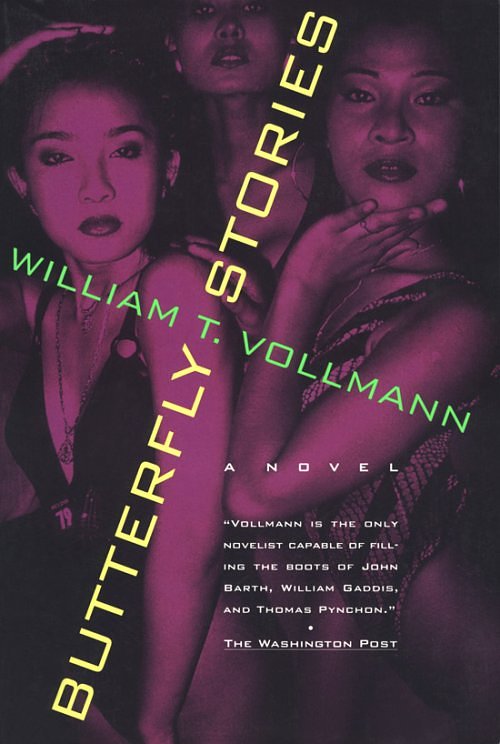
In his 1994 novel Butterfly Stories, William T. Vollmann explores the intense cost of unrelenting idealism. Butterfly Stories is a tragic-comic bildungsroman centered around the life of a protagonist who is almost certainly a semi-autobiographical stand-in for Vollmann. He’s never named in the text; few of the characters are. Instead, he goes by various appellations: the butterfly boy, the boy who wanted to be a journalist, the journalist, the husband. These names square with the protagonist’s painful idealism. He’s a professional alien, a traveler who reports on all the beautiful ugly poor places we Quiet (Ugly) Americans forget about (or never know of in the first place). The main set piece in Butterfly Stories takes place in Thailand and Cambodia:
Once upon a time a journalist and a photographer set out to whore their way across Asia. They got a New York magazine to pay for it. They each armed themselves with a tube of coll soft K-Y jelly and a box of Trojans. The photographer, who knew such essential Thai phrases as: very beautiful!, how much?, thank you and I’m gonna knock you around! (topsa-lopsa-lei), preferred the extra-strength lubricated, while the journalist selected the non-lubricated with special receptacle end. The journalist never tried the photographer’s condoms because he didn’t even use his own as much as (to be honest) he should have; but the photographer, who tried both, decided that the journalist had really made the right decision from a standpoint of friction and hence sensation; so that is the real moral of this story, and those who don’t want anything but morals need read no further.
I’ve quoted the passage at length because I think it delineates a good deal of Vollmann’s program very quickly: whoring-as-gonzo-journalism, a foreshadowing of the sexual grotesquerie to come, blackly ironic humor, and an uncomfortable gap between protagonist and narrator. It’s that gap between the narrator’s ironic detachment and the journalist’s earnest search for meaning–and love–in a world of violence and prostitution that made the book rewarding for me. However, I suspect many will not enjoy (perhaps even hate) this disconnect. The journalist falls in love with several prostitutes throughout the course of the novel, fixating on a Cambodian girl named Vanna in particular. His obsession with Vanna overcomes him, surpasses any rational course of action, and leads him to divorce his wife back in San Francisco in the hopes of marrying a girl he, over time, can no longer even visualize. In short, idealism tortures the protagonist; he’s in love with the idea of love. Late in the novel, he thinks (his thinking framed by the narrator, of course):
Better not to try anything than to be wicked! — That’s how most people acted, and they were probably right, dying their lumpish lives without collecting more than their share of the general blame; but he’d do whatever he was called to do . . .
And later, hallucinating in one of his STD-fueled fevers, he remembers the bully that tormented him back when he was the butterfly boy: “I’m not afraid of you anymore . . . Because I have someone whose life means more to me than mine.” The protagonist’s unrelentingly romanticized view of self-sacrifice is ultimately a defense mechanism against the world’s (equally unrelenting) Darwinian violence.
Vollmann’s milieu of disease-infested, war-torn, economically depressed lands dramatizes this conflict. The violence of the Khmer Rouge, the depravity of prostitution, and the specter of AIDS underpin the novel, and are never mere props for Vollmann, who places his protagonist in a paradoxically privileged vantage point from which to observe, investigate–or ignore–the atrocities of poverty. The book succeeds because of the tension between the narrator’s judgmental, ironic perspective and the protagonist’s big-hearted but ultimately facile dream of a self-sacrificing love. The narrator sees–and lets us see–the ironic selfishness of the protagonist’s dream to save the world, one prostitute at a time.
Just under 300 pages and larded with the author’s spidery black-ink sketches, Butterfly Stories is one of Vollmann’s shorter and more digestible (if that word may be used) volumes. It is bleakly funny, often depressing, and filled with erudite asides on Nobel prizewinners, transvestites, and the benefits of whiskey. And benadryl. Can’t forget the benadryl. Vollmann has an astounding gift for crafting concrete sentences that burst into blistering abstraction, but he can also drift rather aimlessly at times. Does he have an editor? What other literary writer can put out a book of at least 500 pages every year? Butterfly Stories may be a good start for those interested in Vollmann but daunted by his prolific output. It will also repel many readers with its grotesque depictions of sex, which recall Henry Miller and the best of Charles Bukowksi. I liked it very much. Recommended.
There are two distinct ironies in the title of George V. Higgins’s landmark 1970 novel The Friends of Eddie Coyle. The first is the word “friends” to describe the collection of folks on both sides of the law who Coyle tries to get over on in order to get out of an upcoming prison sentence (of course, most of these folks are looking to use or set up Coyle in turn). The second irony is that Eddie Coyle (aka Eddie Fingers aka “the stocky man”) is not so much the headliner here as he is the catalyst in a sharp and gritty tale of Boston gangsters, gunrunners, student radicals, cops, state police, and federal agents.
Like David Simon did three decades later in his Baltimore opus The Wire, Higgins throws his audience into the deep end. Coyle features almost no exposition. Instead Higgins, a former U.S. Attorney, forwards his intricate and fast-paced plot using machine-gun dialogue. While many crime writers fall for the lure of hyperbolic argot, Higgins’s dialogue rings very true and very raw. He trusts the reader to sort out the complex relationships between hustlers and dupes, cops and finks from their conversations alone; the rest of the prose is reserved for tight, cinematic descriptions of gritty urban Boston at the end of the 1960s. The imagery is straight out of a Scorcese film, and like that director, Higgins has a wonderful gift for showing his audience action without getting in the way. Coyle features a description of a bank robbery that is so clean, precise, and sharp that I wouldn’t be surprised to hear that someone somewhere had used it as a how-to manual.
Higgins also spares authorial intrusion when it comes to a moral voice in his novel. There are certainly bad guys here, to be sure, but they are complex and human, just like the cops and feds who hunt them. In this sense, Coyle is the prototype of a type of crime fiction that came to rise in the cinema of the ’70s–gritty actioners that viewed crime and punishment through a lens of absolute ambiguity. At the same time, Coyle doesn’t unravel into a mere shaggy dog story–there’s a definite conclusion to the story here, even if it doesn’t satisfy the district attorney who tries to make sense of it all (like, in a metaphysical sense) at the end.
I’ve read more crime fiction in the past year than I ever have before, inspired perhaps by “The Part About the Crimes” in Bolaño’s 2666 or Jonathan Lethem’s forays into noir. I wrote a little bit about this the other week when I praised Denis Johnson’s noveau-noir exercise Nobody Move for its purity and its “willingness to be what it is” (whatever that means). (The tone of Nobody Move is downright lighthearted next to Coyle. Not that they need to be compared–I enjoyed both very much). What I did not directly address in that post is my own prejudice against genre fiction, a prejudice that inflamed me in my early teens to such a degree that I probably outright disregarded a lot of great writing. But there’s always more great writing out there than one can read in a lifetime, so why dwell on the past? Suffice to say that The Friends of Eddie Coyle should correct any prejudicial notions of the limits of crime fiction. Highly recommended.
The Friends of Eddie Coyle 40th Anniversary Edition with a new introduction by Dennis Lehane is new this month from Picador.
Two weeks ago, I wrote a piece about the Insane Clown Posse and Juggalo culture where I argued that ICP’s project, so heavily distorted in the tropes and defenses of postmodernity, is essentially resistant to ironic satire and even parody. My piece was prompted largely by ICP’s newest video, “Miracles,” a mawkish, sweetly dumb anthem brought to life as a mutant Spencer’s Gifts blacklight poster. A day or two after I posted, a friend sent me Daniel O’Brien’s article in Cracked, “Learn Your Motherf#@kin’ Science: A Textbook for Juggalos.” O’Brien’s piece seeks to correct ICP’s notion that “rainbows,” “giraffes,” and “magnets” are somehow unexplainable “miracles”; he uses Juggalo vernacular to address the myriad questions (and misapprehensions) expressed in “Miracles.” O’Brien juxtaposes Juggalo-speak against the schema of school texts to point out that “Miracles” is insanely, almost heroically stupid. He does this to be funny, of course, but I think that there’s a sense of exasperation to his parody. It buckles under the strain of mocking something already so radically open to an ironic viewpoint as to render said viewpoint null and void.
About a week after O’Brien and I ran our pieces on “Miracles,” Saturday Night Live attempted another parody of ICP (see my first post for more on their first attempt). Here’s their spoof of “Miracles”:
Again, it’s not very funny. There’s no insight or satirical value, no allegorical leap–it’s just an ironic viewpoint. But what else could it be? What’s left to a satirist when his subject is literally a clown in oversized shorts rapping about the magical mysteries of magnets? In her review of the episode at AV Club, Claire Zullkey wondered, “if SNL should get much credit for a near line-by-line parody of an Insane Clown Posse video that is already ridiculous and ironic,” and Annie Wu at TV Squad noted that “it quickly became obvious that the real Insane Clown Posse video was funnier. Sorry, ‘SNL,’ but no matter how hard you try, you cannot top unintentional ICP hilarity.”
But are ICP unintentional? As I argued in my previous post, they clearly tap into authenticity or “realness” in their project, both in their music and in their connection to their fans, the Juggalos. At the same time, this authenticity is bolstered by commonplace idioms and tropes of postmodernism–code names, fictional personas, costumes, make-up, self-invented mythos, argot, and a keen emphasis on self-referentiality. These postmodern defenses render the question of intentionality radically ambiguous. This is why the old techniques of satire and parody do not hold up very well against ICP: the realness of the thing in itself transcends the ironic viewpoint. Cracked did a much better job with this video:
It’s hardly hilarious, but its mash-up technique actually surpasses ironic-viewpoint-as-parody: there’s some real commentary here. The mash-up artist juxtaposes two “real” sources–a Glade Plug-in ad and clips from the original “Miracles” video and the result is genuine satire. What’s being mocked though isn’t the inanity of the Insane Clown Posse, but the larger inanity of mass commercial culture itself, in which people are encouraged to lose critical perspective, to be reduced to a child-like state of wonder by a fucking air freshener, a consumer product. The satire works by pointing out that the ICP video isn’t really any dumber than most other commercials–it’s just so brazenly over-the-top that we notice its inanity. Indeed “Miracles” calls attention to its inanity. It’s self-aware (perhaps). In any case, this juxtaposition of “the real” shows us that successful post-postmodern satire will not invoke an ironic viewpoint, but rather call attention to the limits of an ironic viewpoint. The “loudness” of ICP’s stupidity is so extreme that we take an ironic view, but what of the far-more subtle stupidities of Glade Plug-in commercials and their ilk? If “Miracles” is to be instructive, let us learn from its distortions, for what it distorts is really just part and parcel of 21st century American culture. It is a priori irony. It is meta-criticism. But it need not be instructive. It can simply be enjoyed for (whatever) it is.
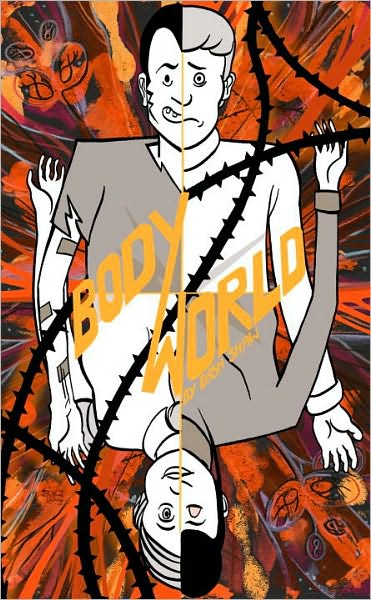
In the future Dash Shaw proposes in his graphic novel BodyWorld, the Second Civil War and rapid industrial growth have left most of America a concrete sprawl by 2060. An exception is Boney Borough, a (literal) green zone somewhere on the Atlantic seaboard. This small secluded town is a new Eden in an otherwise gray world. Enter Professor Paulie Panther, a fuck-up par excellence. He goes to Boney Borough as part of a freelance mission to find out about a new, strange plant he’s found there via the internet. Professor Panther, you see, is a botanist and poet, a would-be scientist who finds out about the psychopharmacological properties of plants by smoking them up in big fat joints (when he’s not too busy trying to commit suicide or stumbling around on one or more of the various drugs to which he’s addicted). Professor Panther is the perfect acerbic foil to the homogeneous folk of Boney Borough. He gets hot for teacher Jem Jewel, turns-on Peach Pearl, the small town girl who wants to go to the big city, and pisses off and confuses her dumb jock boyfriend Billy-Bob Borg. The alliterative names (along with Shaw’s sharp, cartoonish style) recall–and subvert–the classic all-Americanism of Archie comics. Professor Panther soon discovers that the mystery plant, when smoked, grants the user strange telepathic abilities–namely, users sense the “body-mind” of the bodies of others around them.
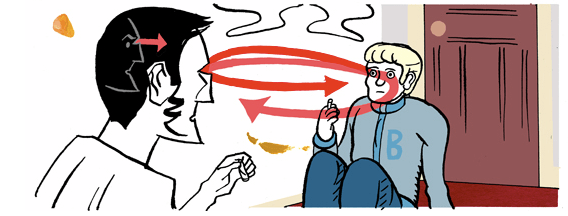
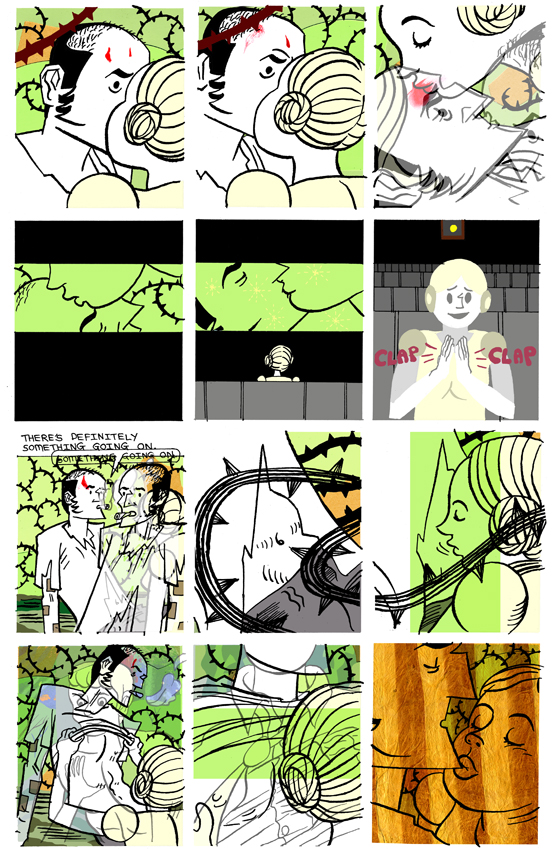
The plant’s telepathic effects allow Shaw to explore what happens within a literalized I-see-you-seeing-me-seeing-you-seeing-me (seeing-y0u-seeing-me . . .) structure. His bright Pop Art goes Cubist in psychedelic trip scenes, superimposing images to show a surreal conflation of not just the melding of two people’s pasts and presents, but those people’s perceptions of past and present. Very heady stuff–but seeing Shaw’s work is superior to my description, of course. Observe, as Panther sees Pearl seeing Panther seeing Pearl idealizing their attempt at romance:
BodyWorld is sardonically humorous in its psychoanalytic visions, guided in no small part by Professor Panther’s hilarious outsider perspective, but also tempered by Shaw’s larger project, a sci-fi satire of American exurbanist insularity. We wrote earlier this month about science fiction’s tendency to work within the dichotomy of wastelands and green zones, and Shaw’s work is no exception. His marvelous trick is to keep us within the green zone of Boney Borough the whole time and to make us identify with a waster, Panther. The greatest irony is that in this futurist vision, the zombies are the ones in the green zone.
Not everyone’s a conformist though. There are exceptions, of course, especially in the seedy Outer Rim where Panther takes up transient residence. We meet a psychotic latter-day Johnny Appleseed who certainly shares Panther’s weirdo proclivities. The episode is a marvelous spoof on the corny “origin stories” standard in Golden and Silver Age comics, with Shaw’s treatment more loving than mocking. To tell more about this weirdo might spoil the climax of Shaw’s graphic novel, and we don’t want to do that, of course, because you’re going to want to read it, aren’t you? Suffice to say that it’s part and parcel of Shaw’s program, a sweet and sour subversion of the 1950s comics and contemporary conformist groupthink politics. Shaw owes some debt to the neat precision, spacing, and rhythm of Chris Ware, as well as the haunting inks and sharp wit of Charles Burns but it would be a mistake to see this young talent as anything but original. Still, while we’re making comparisons: Richard Kelly could make a messy, sprawling treasure of a film out of BodyWorld.
There’s an admirable precision to Denis Johnson’s Nobody Move, a dark and funny crime caper originally serialized in Playboy over four months in 2008, now available in trade paperback from Picador. Johnson limits himself to a handful of characters, a span of a few days, and four fifty-page segments to tell his story. Johnson’s economy resonates from his tight plotting and structure down to his cool, concise sentences. He works in noir archetypes, to be sure–there’s the hard-luck loser in over his head, the femme fatale with a troubled past (and present), the sadistic thug and his moll, and the sinister mastermind. Johnson’s feat here is to present all of this in a manner that’s simultaneously invigorating to the genre but also a confirmation of its pleasures.
Consider Johnson’s erstwhile protagonist, Jimmy Luntz. The name alone seems to tell us everything about this guy, a lousy gambler who spends much of his time on the run. He owes money to the wrong guys, and when a gorilla appropriately named Gambol comes to collect, Luntz makes the mistake of shooting but not killing him. Johnson traffics in immediacy in Nobody Move–there’s not a lot of backstory or dwelling on psychological motivation, thankfully–but he does offer up the occasional nugget, like this one:
Early in his teens Luntz had fought Golden Gloves. Clumsy in the ring, he’d distinguished himself the wrong way–the only boy to get knocked out twice. He’d spent two years at it. His secret was that he’d never, before or since, felt so comfortable or so at home as when lying on his back listening to the far-off music of the referee’s ten-count.
And that’s all the personal history we really need about Luntz. It’s the gaps in the story that are so engaging, that force the reader to play the role of detective in this crime story. To this end, Johnson starts the story in media res, with Luntz leaving a disappointing competition performance of his barbershop chorus. He spends much of the novel’s first half still in his white tux. The novel’s end — well, I won’t spoil the end, of course — but let’s just say that the end of the novel finds our characters poised for further nefarious adventures. But there I go, getting ahead of myself. A little more on plot: Gambol, wounded by Jimmy, finds himself being nursed by a woman named Mary. Their nascent relationship is one of the highlights of the book, funny and cruel, a bizarre study in unlikely romance. Meanwhile, Jimmy hooks up with Anita Desilvera, a dark-eyed bombshell with a serious drinking problem and a series of upcoming court dates. They complicate their problems by going on the lam together. Gambol eventually comes looking for Jimmy (he wants to literally eat his testicles) and drama and danger ensue.
Denis Johnson is arguably among the best living American writers today, having produces no fewer than two masterpieces (Tree of Smoke, one of my favorite books of the past ten years, and Jesus’ Son, one of my favorite books ever). So when he wrote a genre fiction piece under a deadline for Playboy, many critics and readers wondered what he was up to. Was he serious? How serious were we supposed to take the work? Did he need the money? The book itself offers some answers. Nobody Move is fantastic as a genre exercise, witty, dark, lean, and hard-boiled, transcending the bad or formulaic writing that can plague the genre’s novels but never trying to transcend its tropes. Put another way, Johnson here demonstrates that he can master a genre that is not his, and that he can do it under the constraints of space and time. That’s quite a feat, if you think about it, especially if you compare Nobody Move to Thomas Pynchon’s recent genre exercise, Inherent Vice, or the detective-centered works of Jonathan Lethem like Motherless Brooklyn and Gun, With Occasional Music. Pynchon’s work is in many ways a covert, loving goof on the genre, but it’s still more or less a “Thomas Pynchon” book. Lethem likes the idea of writing crime noir, but he wants to subvert it, mash it up with sci-fi, see it as a form of post-modern allegory. Roberto Bolaño is almost painfully aware of this in his fiction–his narrator in Distant Star gets to play at being a detective for a bit, but finds that it’s not nearly as fun as he would like it to be. The Savage Detectives views literature and art as a crime scene to puzzle out. And 2666 . . . well, you know about 2666 (hang on wait, you don’t know about 2666? You should really get that taken care of). Or take James Ellroy’s postmoderinst crime fiction, which owes, unwittingly or not, as much to Don DeLillo as it does to Raymond Chandler. These are all great writers, of course. But I think contrasting what they are trying to do with what Johnson is trying to do is instructive.
There’s a purity to Nobody Move, to its utter willingness to simply be what it is–and many folks won’t like that; they may even accuse Johnson of slumming. Perhaps they think it’s easy to write a tight, funny crime novel. Perhaps they know it’s not, and they think that Johnson is being solipsistic, or even mercenary. In any case, Nobody Move will probably stand outside of Johnson’s canon. And that’s unfair. Cinematic and highly visual, it recalls some of the Coen brothers’ finest work, like Blood Simple and The Man Who Wasn’t There, and even Tarantino’s Jackie Brown(minus the messy sprawl). Perhaps the best thing about Nobody Move–other than the sheer pleasure of reading it over a few afternoons, of course–is that it might motivate readers to pick up Jesus’ Son or even Tree of Smoke. For many readers, especially young readers, genre is a vital gateway to what many of us prejudicially call “more serious” literature. So pick up Nobody Move, read it, love it, and then pass it on to someone who needs to know about Denis Johnson. Recommended.
Nobody Move is available in trade paperback from Picador on April 24, 2010.
Yann Martel’sBeatrice and Virgil tells the story of a writer named Henry whose follow-up novel to a surprise smash hit is rejected. He moves to a large metropolitan city, gets a dog and a cat, takes clarinet lessons, joins an amateur theater group, and slowly forgets about writing fiction altogether. One day a stranger sends Henry a short story by Gustave Flaubert called “St. Julian the Hospitator.” The sender has highlighted passages about Julian’s delight in slaughtering animals and also included a few pages of an original manuscript, a Beckettian play featuring two characters, Beatrice and Virgil. There’s also a note asking for help. Intrigued, or maybe bored, Henry visits the mysterious author, an old, creepy taxidermist (also named Henry). His play features two characters, Virgil, a howler monkey, and Beatrice, a donkey, who are trying to come to terms with a series of events they call The Horrors. The taxidermist’s project reignites Henry’s passion for writing and he’s soon helping the would-be playwright with revisions, blind to the inconsistencies and gaps in the old man’s strange behavior.
Beatrice and Virgil is a page turner, engaging, propulsive, and quite easy to read. It injects the philosophical and artistic concerns of literary fiction into the frame and pacing of a book designed for broader audiences. Martel displays his keenest literary skill in the early part of the novel, flitting through the kinds of subjects that bookish nerds of a certain postmodernist bent tend to obsess over: the possibilities and challenges of writing in a particular language, the complexity of pseudonymous fame, the intellectual allure of the essay versus the power of fiction to narrativize higher truth. To address this latter problem, Henry proposes that his new book comprise two sections–a work of narrative fiction and an essay to explicate that work. Why the need for an essay? Henry proposes to write an artful, fictive account of the Holocaust. The essay, which Henry wants published on the flip side of the fiction, thus eliminating a front/back cover distinction, is meant to explicate the fiction. In many ways the first section of Beatrice and Virgil functions as counterpoint to Henry’s proposed essay, concisely addressing the problems of using anything other than historical facts to represent the Holocaust.
After Henry gets the taxidermist’s package and reads “St. Julian the Hospitator,”Beatrice and Virgil moves into a faster rhythm and continues to accelerate to its end, never sagging. At times, Martel relies on stock phrasing and overt exposition to afford this pacing. I found myself wishing a few times that he would trust his audience a bit more. Is it really necessary to directly explain the titular allusion to Dante’s Divine Comedy? He could also be a bit less free with his narrator’s everyman style of questioning, a device employed often to propel the plot, but one somewhat inconsistent with Henry’s obvious intellectual acumen. Martel’s occasional use of lazy devices of the Dan Brown school directly contrasts the more experimental or postmodern aspects of his book. There’s the book’s initial section, which reads very much like a lyric essay; there’s the exegesis of “St. Julian”; there’s the taxidermist’s play, Beatrice and Virgil; there’s the book’s final section, “Games for Gustav.” This final section comprises thirteen short epigrams written in second-person perspective. “Games for Gustav,” Henry’s Holocaust art, demands audience identification with the victims of the Holocaust. Its brevity and ambiguity correlate to the narrative’s ahistorical engagement with the Holocaust and communicate a sense of apprehension and distance toward the subject. Is that subject Martel’s or Henry’s? In a piece I wrote last month aboutBeatrice and Virgil and the challenges of an aesthetic response to the Holocaust, I suggested that “Henry, a young French Canadian with no Jewish roots is utterly divorced from any authentic response to the Holocaust. He could write an academic essay on the subject, or a navel-gazing bit of metafiction that dithered over storytelling itself, but he essentially already has an answer to his own question of why there are so few artistic responses to the Holocaust–that to re-imagine or re-interpret or otherwise re-frame the real events of the Holocaust in art is to, at once, open oneself to dramatic possibilities of failure.”
Is Beatrice and Virgil an authentic response to the Holocaust? I won’t accuse Martel of using the Holocaust as a mere prop in his novel; indeed, anticipation of such an accusation is precisely what leads Henry to suffer over an essay to explicate his fiction. Martel’s book is about murder, horror, and how one might witness to or otherwise narrativize murder and horror; Henry’s “Games for Gustav” is just one of those attempts to witness. The novel engenders multiple readings then. We can take Henry’s “Games” as part and parcel of Martel’s program, read them perhaps as Martel’s own attempt at poetry after Auschwitz. This reading would subscribe to a traditional narrative arc–Henry faces a challenge, endures a perilous task, and finds resolution in his art: a valid artistic response to the Holocaust is possible. I think, however, that there is another, more complicated reading available, one far more ambiguous, one that places any aesthetic response to the Holocaust under suspicion. If we scrutinize the elements of traditional narrative fiction at work in the novel, we can see multiple ironies in Henry’s “hero arc,” ironies outside of Henry’s otherwise perspicacious gaze. To write an authentic aesthetic response to the Holocaust, Henry must face some kind of deathly extreme that will license such art. But is such a licensing, a conferring of authority possible? I won’t point to spoilers here but will say that I read the novel’s climax ironically. I believe it complicates Henry’s (and perhaps Martel’s) attempt to engage the Holocaust via metaphor and artifice and calls the novel’s resolution into question.
But these matters are probably better reserved for the detailed dialogues the book will no doubt inspire. Beatrice and Virgil raises essential questions of post-postmodernity, exploring the porous boundaries between autobiography and fiction, history and myth, and the limits of allegory. Its rewards are not in its answers but in its questions.
Beatrice and Virgil is new in hardback from Spiegel & Grau on April 13, 2010.
Last year, Saturday Night Live ran an unfunny parody of an infamous viral video. SNL sought to mock the 2009 Gathering of the Juggalos Infomercial which advertised the tenth anniversary spectacular for that venerable event. The Gathering of the Juggalos is an annual outdoor music and culture festival initiated by and starring Insane Clown Posse. The best way to (try to) understand it is to watch the infomercial. You can watch the infomercial and SNL‘s parody at Current, which I suggest you do now. Done? Okay.
SNL‘s parody is not funny, it is merely observational; that is to say, it doesn’t ever approach satire. It is unfunny mimicry of something far funnier. There is no topping the riotous authenticity of the thing in itself. The original Juggalo infomercial’s joyful exuberance resists SNL‘s ironic aims–it can’t really be satirized. It is beyond kitsch, and eventually even schadenfreude. It does not seem real. Can the ICP enterprise be in earnest, though? Take their new video “Miracles,” for example–are these guys for real? Take a few minutes to watch this. I insist. (NB: Lyrics NSFW).
The video, apparently directed by Lisa Frank, communicates a sincere adoration and sense of wonder and possibility in a world of shit that’ll shock your eyelids, like: long neck giraffes, pet cats and dogs, fucking shooting stars and fucking rainbows, UFOs, crows, ghosts, moms, kids . . . you know, pure motherfucking magic. There’s a paradox in Shaggy 2 Dope and Violent J in full malevolent get-up vamping in front of rainbows and stars and expressing anger at scientists who would dare to explain how fucking magnets work. Even more perplexing, earlier this year, ICP released the trailer for their Western film, Big Money Rustlas the deadly tale of debauchery, hedonism, and family love set in a small town of Mudbug. Again, I insist you watch the trailer. (NB: Language NSFW).
How might one go about satirizing that? It already seems framed as a parody of a parody. It’s anti-satiric. It self-ironizes. But again: How sincere are ICP?
Thomas Morton’s “In the Land of the Juggalos” (Vice magazine), the authoritative, in-depth investigation into the 2007 Gathering, reveals a close-knit culture of rejects reveling in “the worst aspects of goth, punk, gangsta rap, rave, nu-metal, and real metal to create a sub-culture so universally repulsive as to forestall any attempts at outside involvement.” Equally good, and more immediately accessible is Derek Erdman’s photo essay documenting the 2009 Gathering–the one advertised in the promo video. His marvelous, grotesque photos show a sincere audience, eager members of the Psychopathic Records “family.” Take a few minutes to suck it all in. These people are serious in their Juggaloness. But again, what of ICP themselves? They can’t be art-pranksters or scammers, can they? They are clearly serious about ICP as a money-making enterprise but what about as a form of art or cultural commentary? Can they be serious about the absurd sentimental content of “Miracles” or their woefully dumb Western film? Are they for real?
There is a radical authenticity about ICP’s project. It’s an autochthonous monster engendering a legion of mutant fans. Yet it also seems potently aware of its position. ICP/Juggalo culture strikes me as a form of ritual theater assuring a sense of belonging and even meaning in life to a group of people who choose to see themselves as outcast or othered. It is inconceivable to suggest that they are wholly or even partly unaware of how others see them; indeed, awareness of how others perceive them is exactly what gives meaning to being a down-assed ninja, a true Juggalo. They see you seeing them (seeing you seeing them).
Hence a condition of post-postmodernity, of a ludic and labyrinthine culture that produces subcultures resistant to irony, to parody, to the defenses of Modernism and the techniques of postmodernism. If we contrast the gap between SNL’s parody and the real thing, we might be led to what I think David Shields is trying to describe in his book Reality Hunger, a situation where the narrative techniques of modernity (and their counterparts in postmodernism) are no longer tenable forms of discourse and analysis in an increasingly technologically mediated world.
Experiment: Imagine that you wish to satirize (or parody) Walmart. Envision the details and observations you will use to mock the behemoth, its customers, its gross place in America. Then go to a Walmart. You are trumped. Hyperbole and irony are beyond you. There is no way to top the thing in itself. You are left merely with a set of observations, not insights. An ironic viewpoint does not cease to exist, but it can’t be supported via the traditional methods of Modernism or postmodernism. Contrast South Park‘s Walmart satire with the website People of Walmart. The former attempts to justify an ironic viewpoint through the logic of satire and mimesis. The latter is an ironic viewpoint of an objective reality. It’s not even parody. It’s “real.”
And this is why SNL’s Juggalo spoof signals the limits of parody and cultural parody’s satirical, mimetic aims. Like People of Walmart, it’s just an ironic viewpoint of an objective reality. The postmodern distortions of ICP (their clown paint, their mythos, their argot, their identities, their Faygo) and the surreal, trashy carnival of the Gathering present an objective reality radically open to a host of ironic semiotic machinations delivered in an earnestness that trumps satire. ICP have already done the work for you. Their world hosts ironic oppositions; their nihilistic anthem “Fuck the World” directly contradicts the sugary magical wonder of “Miracles.” The weird identity-symbiosis they share with their fans is wholly defined by radical otherness and alienation. If you take the time to wade through comment boards on ICP related videos, news, and articles (you shouldn’t do that, btw, dear reader), you’ll find a fierce hatred of Juggalos–a fierce hatred that paradoxically defines and confers identity upon the Juggalo. This is a priori irony. ICP’s aesthetic identity resists mockery, renders mockery moot. A recent internet video, “The Juggalo News,” attempts to satirize Juggalo culture. It’s mildly amusing but ultimately offers no insight. It’s failed satire.
Far better to dispense with pointless parody and enjoy ICP’s works for whatever they are. Re-watch “Miracles.” Around 1:09 or so Violent J raps: “I fed a fish to a pelican at Frisco bay / It tried to eat my cell phone” and Shaggy responds: “He ran away,” kicking a leg back and thrusting an arm forward in a pose evocative of Superman to illustrate the action of his bosom companion’s narrative. This is more precious than gold, Shaggy’s gesture, a miracle in “Miracles,” and I will take it as an earnest gift. ICP has brought me some measure of joy, and yes, tears (of laughter) in my time, so I do thank them.
I finished Martin Bax’s surreal dystopian romance The Hospital Ship last night and then finished the audiobook version of Margaret Atwood’s hyperreal dystopian anti-romanceThe Year of the Flood today. Both books take their cues from that first apocalypse story, the story of Noah and his ark, and continue that tradition imagining a version of the end of the world. Despite their mythical-biblical origins, such books tend to get ghettoized into a certain genre of science fiction — let’s call it apocalypse fiction — despite the artistic power or literary merit of the author’s prose itself. Apocalypse books like Kurt Vonnegut’s satire Cat’s Cradle, Cormac McCarthy’s The Road, and Aldous Huxley’s Ape and Essence diverge in style, tone, and execution. It’s their subject that compels us, each vision a proposition, a promise of some kind of future, a future after the future. Many of these apocalypse books remain prescient today. However, others feel dated simply because so much of what the author wrote twenty or fifty or more years ago more or less came true. For instance, is the homogenized, greenzoned aristocracy of Brave New World who lavish in the trivial culture of the feelies and centrifugal bumblepuppy all that different from contemporary exurbanites who basically live in walled-off compounds, little homogenized townships that strive to exist outside of civic reality and history? Robert Siegel’s recent report for NPR on the The Villages, an eerie Florida compound for senior citizens, illustrates how willing people are to buy into a company-owned, company-governed greenzone. The Villages even has its own whimsical fake “history,” complete with markers and plaques. It’s like The Prisoner or something. But enough about real life. We have apocalypse lit to tell us about the present.
The heroes of Atwood’s The Year of the Flood are not, for the most part, from the corporate-controlled compounds that keep the rest of the world at bay. There’s Toby, the orphan who grows up tough yet learns the healing arts. There’s Ren, a young girl trying to find her identity wherever she can. There’s their would-be spiritual guide, Adam One, and his lieutenant/rival Zeb. They are outsiders, members of an eco-cult called The Gardeners who worship saints like Rachel Carson, Ernest Shackleton, and Sojourner Truth. Flood is the sprawling companion to Atwood’s 2003 novel, Oryx and Crake, which I enjoyed very much. Both take place in a world where the “Waterless Flood,” a SARS/mega-flu type virus brought about via genetic tinkering, has turned most people into zombie-goo. I could go and on about the world Atwood shapes here, one full of genetic modification, eco-terrorism, religious fervor, and radical disparity, but other folks have already done it. So, in the grand tradition of internet laziness, I point you to excellent reviews here and here, which do a better job explicating the plot than I’m willing to do now (and it was an audiobook, remember, so I don’t exactly have it in front of me. Mea culpa). Apocalypse lit isn’t so much predictive as it is descriptive of the contemporary world, and Atwood’s dystopian vision is no exception. Viscerally prescient, Flood paints our own society in bold, vibrant colors, magnifying the strange relationships with nature, religion, and our fellow humans that modernity prescribes. Atwood ends her book in media res, with Toby and a handful of other characters somehow still alive, ready, perhaps, to become stewards of a new world. Flood concludes tense and, in a sense, unresolved, but Atwood implies hope: Toby will lead her small group to cultivate a new Eden. Despite all the ugliness and cruelty and devastation, people can be redeemed. The audiobook rendition of The Year of the Flood is very good, employing three actors to play the three principal roles, Ren, Toby, and Adam One. There are also terribly cheesy full-band versions of the hippy-dippy songs the Gardeners like to sing on certain Saint Days that are witty as parody but ultimately distracting. Atwood’s prose sometimes relies on placeholders and stock expressions common to sci-fi and YA fiction, and her complex plot (disappointingly) devolves to a simple adventure story in the end, but her ideas and insights into what our society might look like in a few decades are compelling reading (or, uh, listening in this case). Recommended.
The doctors, specialists, sailors, and patients of the titular vessel in Martin Bax’s The Hospital Ship are afloat in their own greenzone of sorts, a moving compound that seeks to treat the troubled world. What’s the trouble with the world? No one’s sure, exactly–there’s permanent all-out-war, of course, famine perhaps, insanity for sure. There’s also a bizarre army of bureaucrats going from continent to continent crucifying men and raping women for no clear reason. The ship’s psychiatrists diagnose it “The Crucifixion Disease.” Euan, Bax’s erstwhile lead, tries to figure out how to love and how to heal in the middle of hate and extinction. Aided by the eccentric, Falstaffian Dr. Maximov Flint, Euan conducts an experimental therapy between a Moi prostitute named V and a suicidal Wall Street broker named W. He also finds a lover and partner in an American girl named Sheila. About half of The Hospital Ship comprises citations from a variety of non-fiction texts, including medical textbooks, psychiatric studies, sociology texts, travelogues, war diaries, and more. The technique is bizarre and jarring, and Bax often imitates the style of such texts, most of which linger on sex or death. There’s also an obsession with the Vietnam War, which makes sense as the book was published in 1976. There’s a lovey-hippie type vibe to the hospital ship’s personnel, and like Atwood with her Gardeners, Bax is satirical and loving to his heroes at the same time. He mocks some of the silly idealism of the movement even as he finds solace in their vision of love and healing in an apocalyptic world. Bax’s book is wholly weird, disconnected, lurching and farcical, a madcap dystopian Love Boat on peyote. I spotted it at my favorite used bookstore, intrigued first by the (now retro-)futurist font, then the name, echoing Chris Adrian’s The Children’s Hospital, another book about a hospital-as-ark. If the black-and-white collage cover art didn’t seal the deal, then the blurb from J.G. Ballard comparing Bax favorably to William Burroughs did. Burroughs is an appropriate reference point, with the sexual alienation and the medical flavor and the cut-up technique and all, but Bax’s writing is utterly Ballardian (he even directly cites Ballard among other authors–like, you know APA style in-text citations). The Hospital Ship is a cult novel which might not have a big enough cult. It definitely belongs in print again; until then, pick up a copy if you can find one.


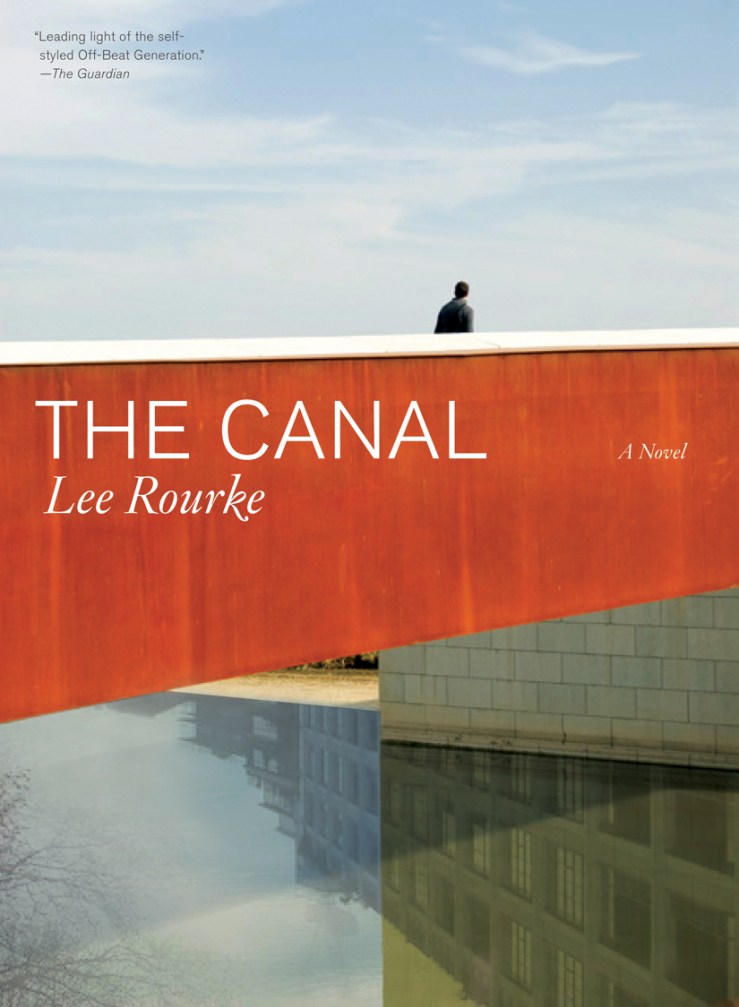
 On the heels of last year’s hugely successful first-time-in-English publication of Every Man Dies Alone, the good folks at Melville House have issued another of Hans Fallada’s epic novels,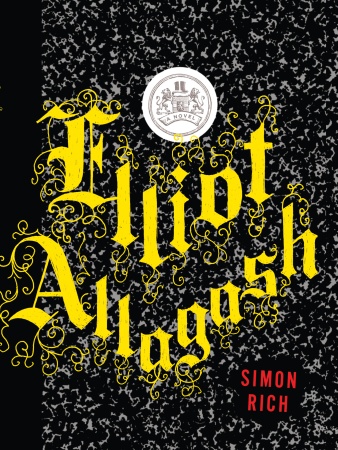
 Michael Wiley is a mystery writer and professor of British Romantic literature and culture at the University of North Florida. He’s published academic volumes about geography and migration in Romantic literature, but we spoke to him about the latest edition in his detective series, The Bad Kitty Lounge. Dr. Wiley was kind enough to talk to us via email about ambiguity and resolution in mystery fiction, giving readers what they want, and the prospects of Wordsworth with a Glock. The Bad Kitty Lounge is available new in hardcover from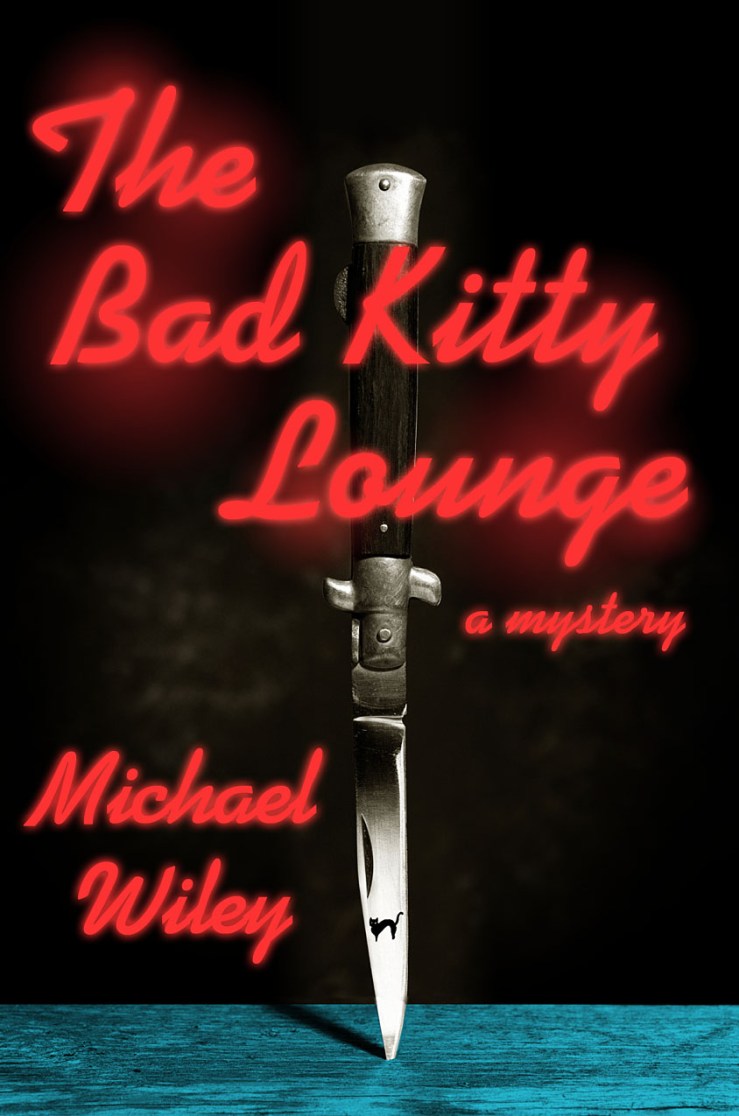

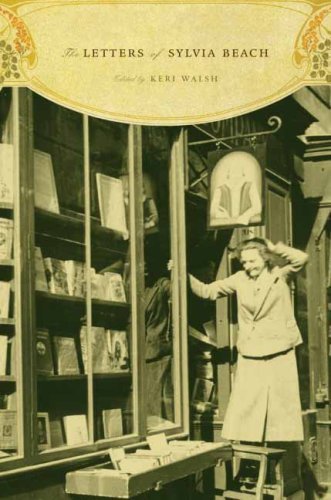

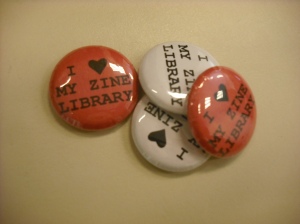 Jacksonville Public Library’s Zine Collection is one of the first–and largest– such collections in the Southeastern United States. Librarian and collection archivist Josh Jubinsky was kind enough to talk to Biblioklept about the collection, the essence of punk, the future of zines in an increasingly technologically-mediated world, and the million-fart bill. We corresponded via email, although we could have done the interview in person easily–in full disclosure, I should mention that Josh lives down the street from Biblioklept World Headquarters.
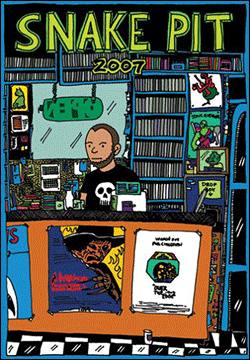 JJ: One that I really enjoyed and I wish I saw more of is A La Maison. It’s a french zine, written in English though. It’s a guide to the city of Lyon, France by some people who live there. Definitely a punk perspective on the city, maybe like a punk travel guide. It goes through the city section by section with what bars, falafel places and record stores are best. And it comes with a CDR of all these bands from Lyon. It’s amazing. The people who put out the zine set up a show for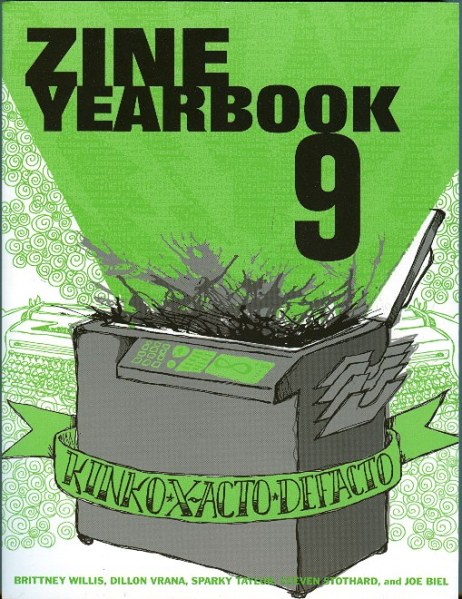
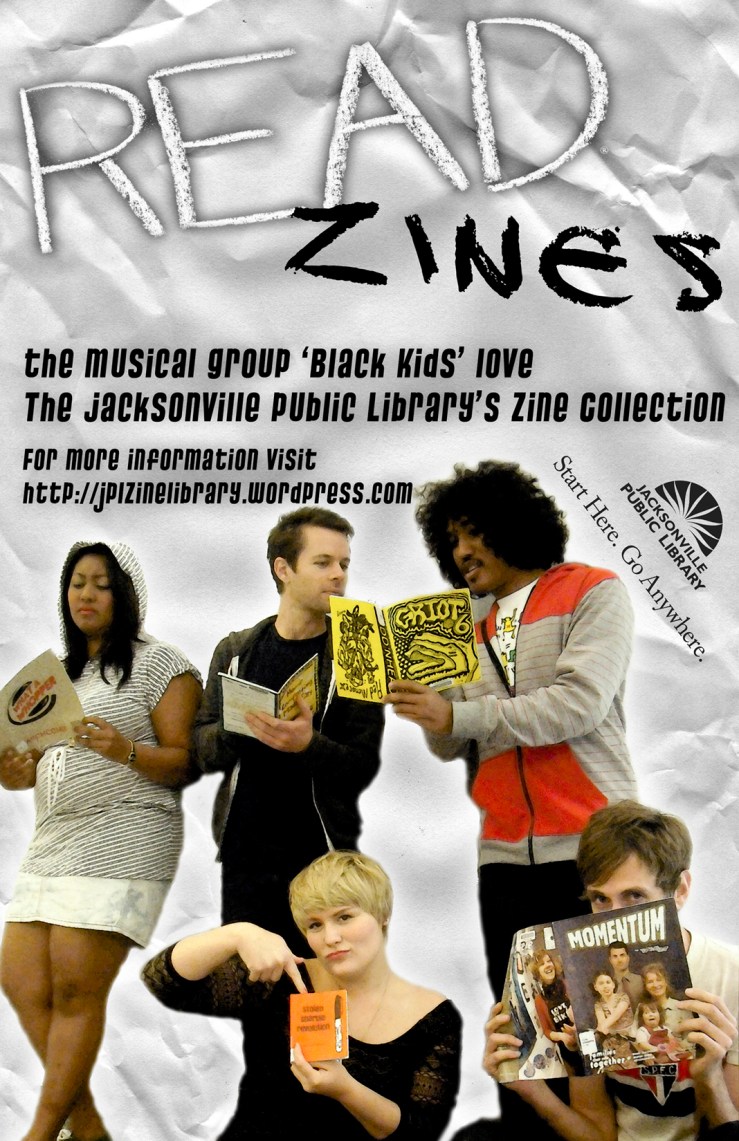 JJ: Maybe this sounds like an overused reason for me (since it’s the same main reason I give when people ask why I have records), but, essentially that zines are tangible. Personally, that tangibility helps me remember them. I can barely tell you what I read online yesterday, but I can tell you about the book or zine I’m reading. You can bring zines along when you go on a tour or go fishing or go to the bathroom or sit in the park – and you don’t have to have an expensive device you must charge to read them. They also exude a sense of time and place. A zine is self-contained, obviously not in literary or musical references, but you can’t get bored with it and click to an updated version. You can’t add it to your blog reader. Like a record, it’s not convenient. It’s romantic. You aren’t jogging while listening to an audio book – you aren’t trying to maximize productivity. You sit, enjoy and get fresh air at the same time.