Three Books

2019-09-22_160823

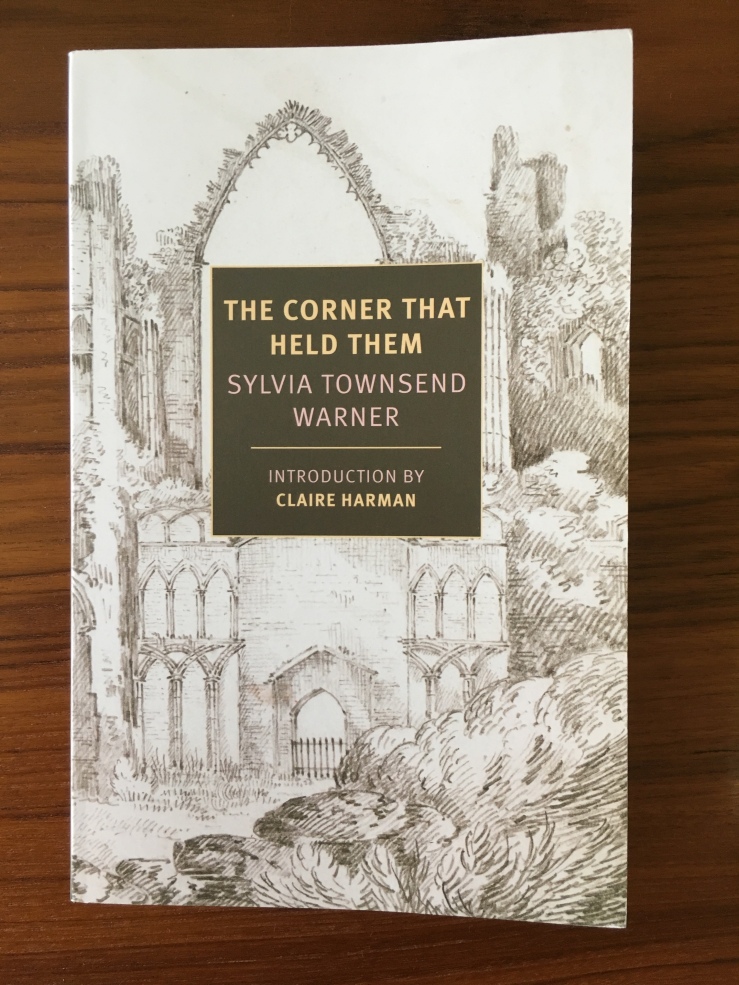
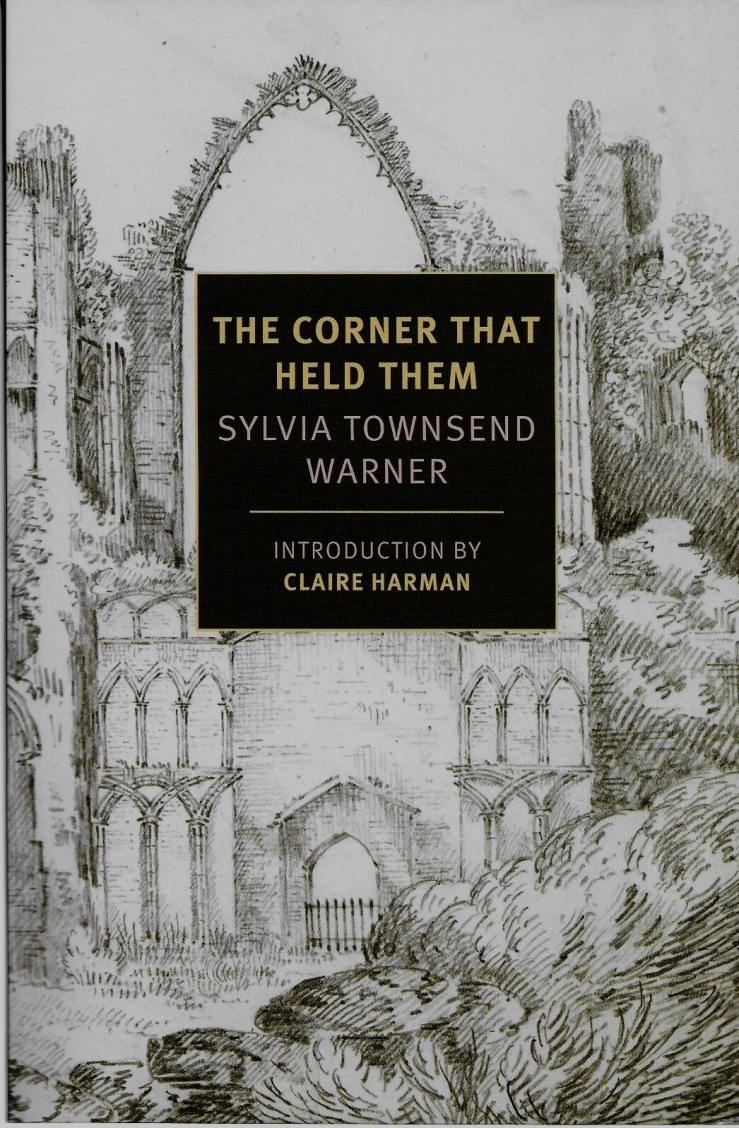
The Corner That Held Them by Sylvia Townsend Warner. 2019 trade paperback from NRYB. Cover design by Kathy Homans featuring an image titled Ruins of Castle Acre Priory Church, c. 1780-1820 (artist uncredited).

Ironic, mordant, energetic, and packed with life, Sylvia Townsend Warner’s fifth novel The Corner That Held Them (1948) tells the story of a backwater convent over the course of a few hundred years. Warner’s story weaves her nuns’ mundane world into something grander and funnier than might be expected of such a premise.


2019-09-22_160912

Rusty Brown by Chris Ware. 2019 first edition hardback from Pantheon. No cover designer or artist credited, but the work is unquestionably Ware’s.

Rusty Brown is ostensibly the first part of Ware’s third novel. It ends, after 350 pages, with the word “INTERMISSION” vibrating across two pages, promising us a second part. I hope that that second part will not take Ware as long to produce as this first part, which took the better part of two decades. Like Jimmy Corrigan: The Smartest Kid on Earth (2000), Rusty Brown is crushingly sad and aesthetically brilliant; like Building Stories (2012), Rusty Brown adds up to more than the sum of its parts—its fragments come together to tell the story of sad lives intersecting. It’s moving, it’s funny, it’s beautiful, it’s challenging, and I hope that we don’t have to wait too long for the next installment.

2019-09-22_160715

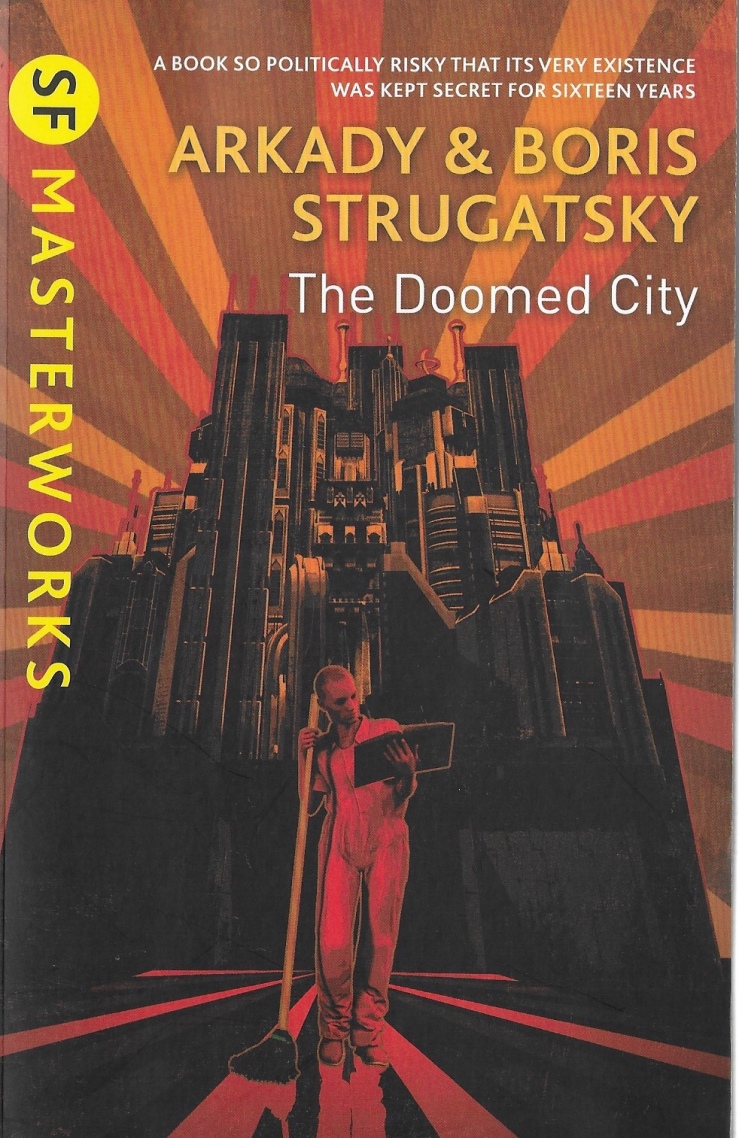
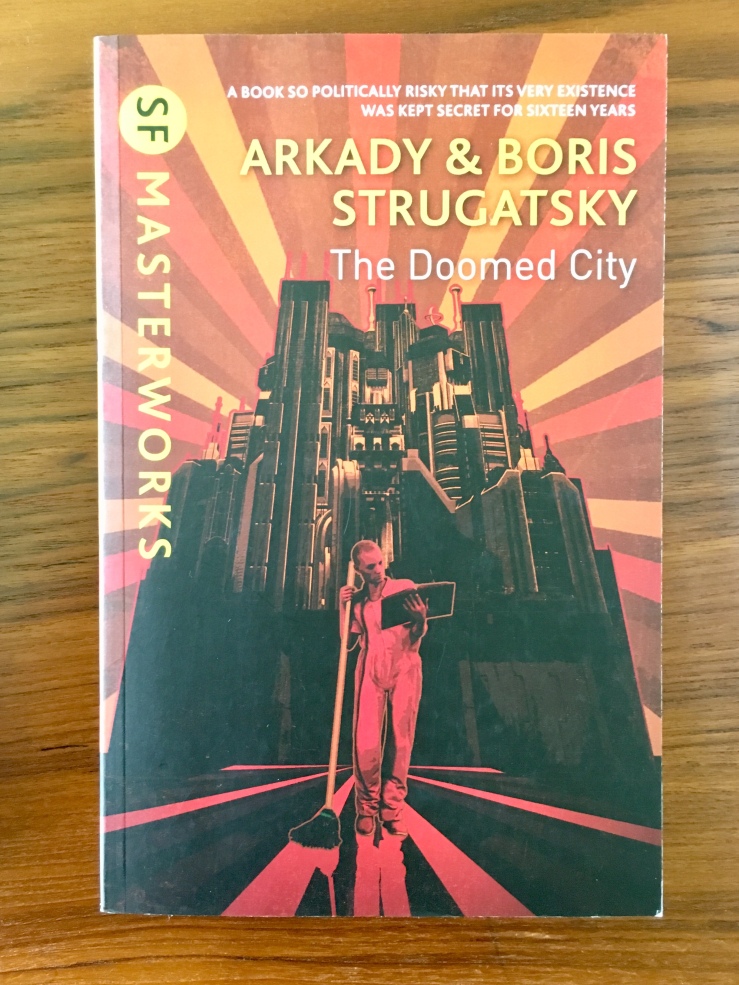
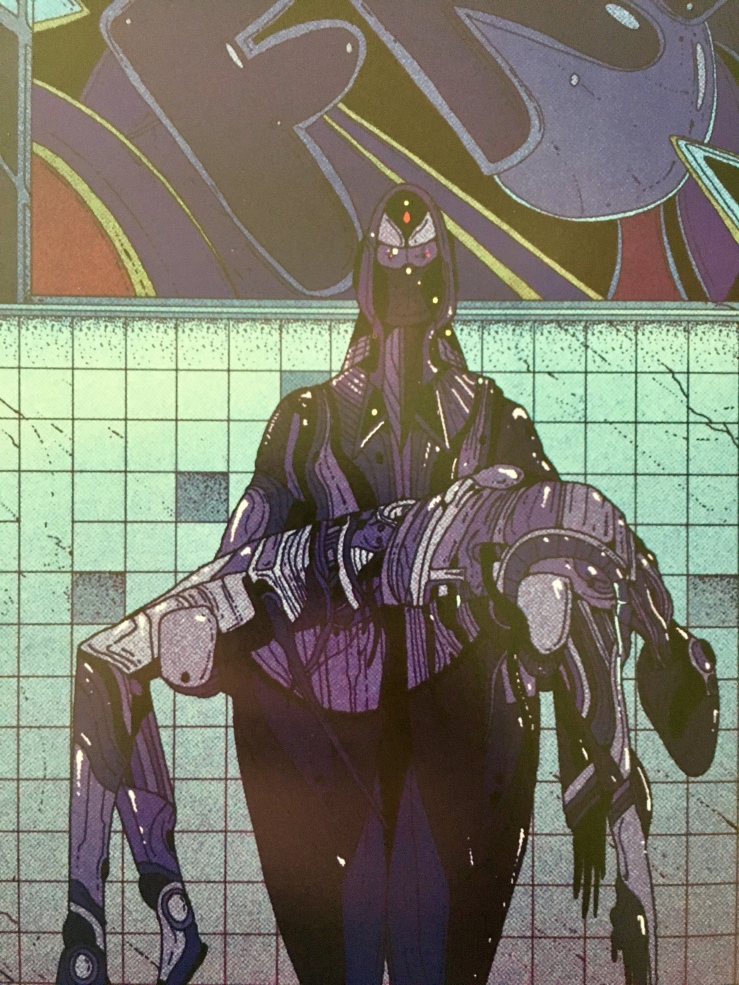
The Doomed City by Arkady & Boris Strugatsky. 2017 trade paperback from Gollancz. English. Cover illustration by Eamon O’Donoghue; no designer credited. English translation by Andrew Bromfield.

“The Experiment is the Experiment” repeat the citizens of the titular doomed city in the Strugatskys Kakfaesque dystopian novel, which was written in the early 1970s but wasn’t published until 1989. The Experiment, purportedly run by the Mentors, seemingly begins as an egalitarian project, but soon devolves into civil war against baboons, and eventually a dictatorship. There’s a late act expedition across the desert to infiltrate the fabled Anticity. Baggy and abject, The Doomed City was not the best Strugatsky novel I’ve read, but I enjoyed its weirder moments very much.

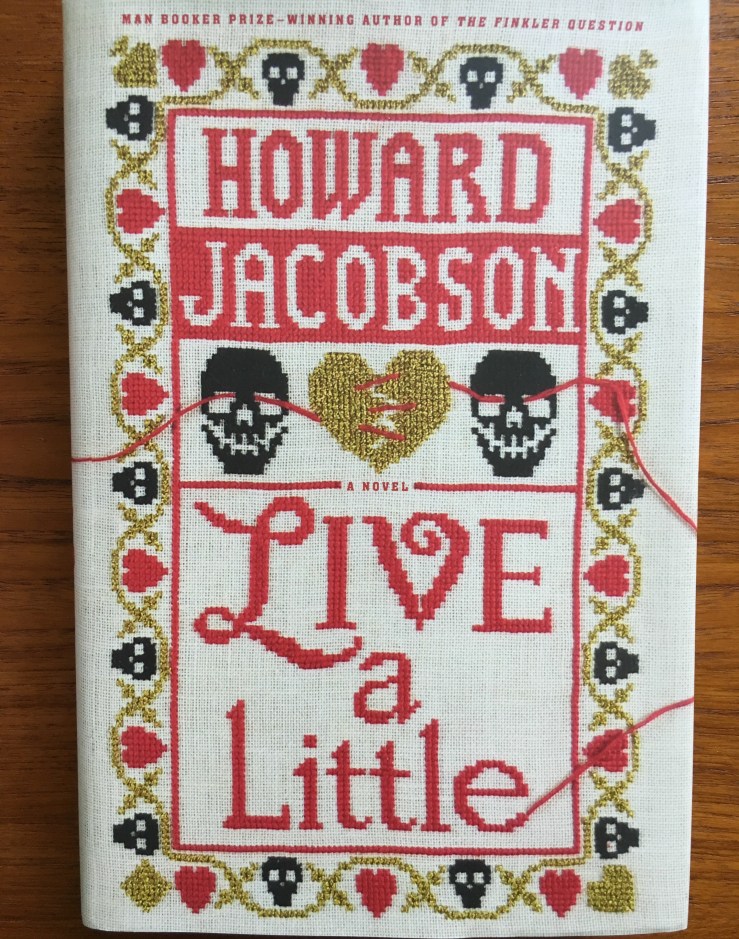
Howard Jacobson’s Live a Little (Book acquired, some time near the end of August, 2019)

img_3917

Howard Jacobson’s Live a Little is new in hardback in the US this month from Penguin Random House. Their blurb–

At the age of ninety-something, Beryl Dusinbery is forgetting everything – including her own children. She spends her days stitching morbid samplers and tormenting her two long-suffering carers, Nastya and Euphoria, with tangled stories of her husbands and love affairs.

Shimi Carmelli can do up his own buttons, walks without the aid of a frame and speaks without spitting. Among the widows of North London, he’s whispered about as the last of the eligible bachelors. Unlike Beryl, he forgets nothing – especially not the shame of a childhood incident that has hung over him ever since.

There’s very little life remaining for either of them, but perhaps just enough to heal some of the hurt inflicted along the way, and find new meaning in what’s left. Told with Jacobson’s trademark wit and style, Live a Little is equal parts funny, irreverent and tender – a novel to make you consider all the paths not taken, and whether you could still change course.

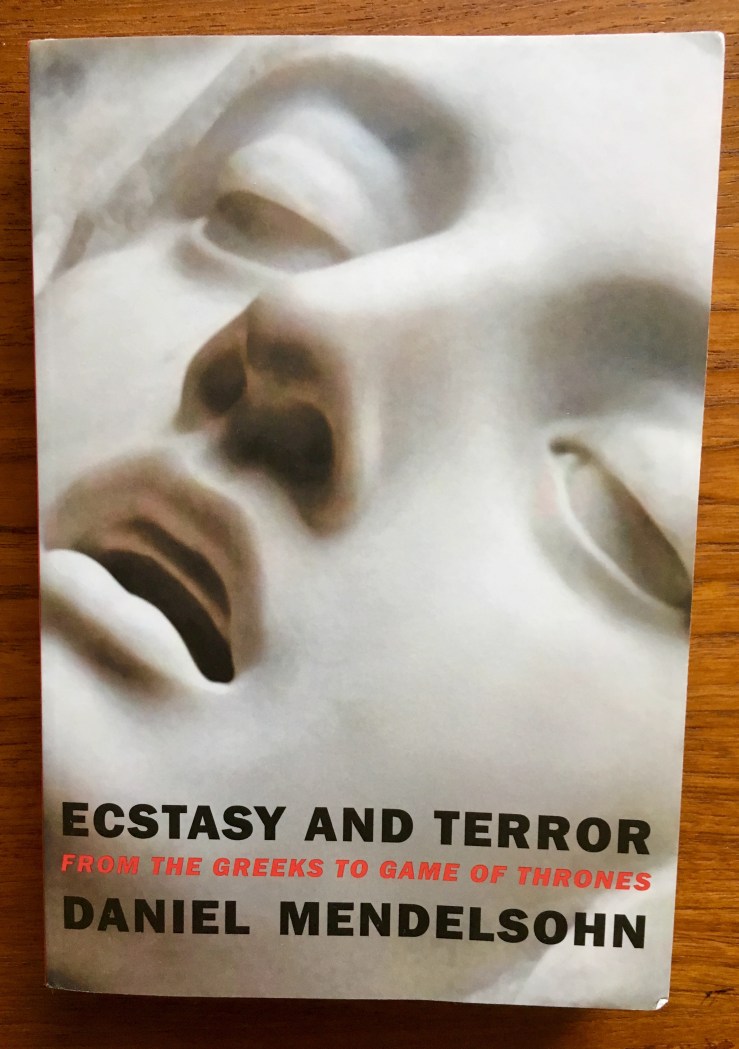
Daniel Mendelsohn’s Ecstasy and Terror (Book acquired, some time last week)

img_3918

I got a review copy of Daniel Mendelsohn’s collection Ecstasy and Terror some time early last week. I’ve read a few of the pieces in here before (“A Critic’s Manifesto” is one that I recalled in particular). Ecstasy and Terror is out in October from NYRB. Their blurb:

This collection of essays exemplifies the range, depth, and erudition that have made Daniel Mendelsohn “required reading for anyone interested in dissecting culture” (The Daily Beast). Here Mendelsohn once again casts an eye at literature, film, television, and the personal essay, filtering his insights through his training as a scholar of classical antiquity in surprising and illuminating ways.

Many of these essays examine how we continue to look to the Greeks and Romans as models: some argue for the surprising modernity of canonical works (Bacchae, the Aeneid), while others detect a “Greek DNA” in our responses to the Boston Marathon bombings and the assassination of JFK. Modern topics are treated, too, from the “aesthetics of victimhood” in Hanya Yanagihara’sA Little Life to the novels of Karl Ove Knausgaard, and from Game of Thrones to recent films about artificial intelligence—a subject, Mendelsohn reminds us, that was already of interest to Homer.

The collection also brings together for the first time a number of Mendelsohn’s personal essays, including his “critic’s manifesto” and a touching memoir of his boyhood correspondence with the historical novelist Mary Renault.

Blog about some recent reading, some books acquired, Hurricane Dorian, etc.

img_3908-1

I am on my second or maybe third dark and stormy and I have cleaned the house twice from top to bottom two days in a row now and I am ready for my kids to go back to school, which was cancelled through Thursday for Hurricane Dorian. My own school, by which I mean my employer, cancelled classes throughout the week, but I’ve been emailing students and trying to maintain some kind of continuity after this weird disruption. We have power here in NE Florida and all seems well. This ride has been a lot easier than Irma.

img_3910-1

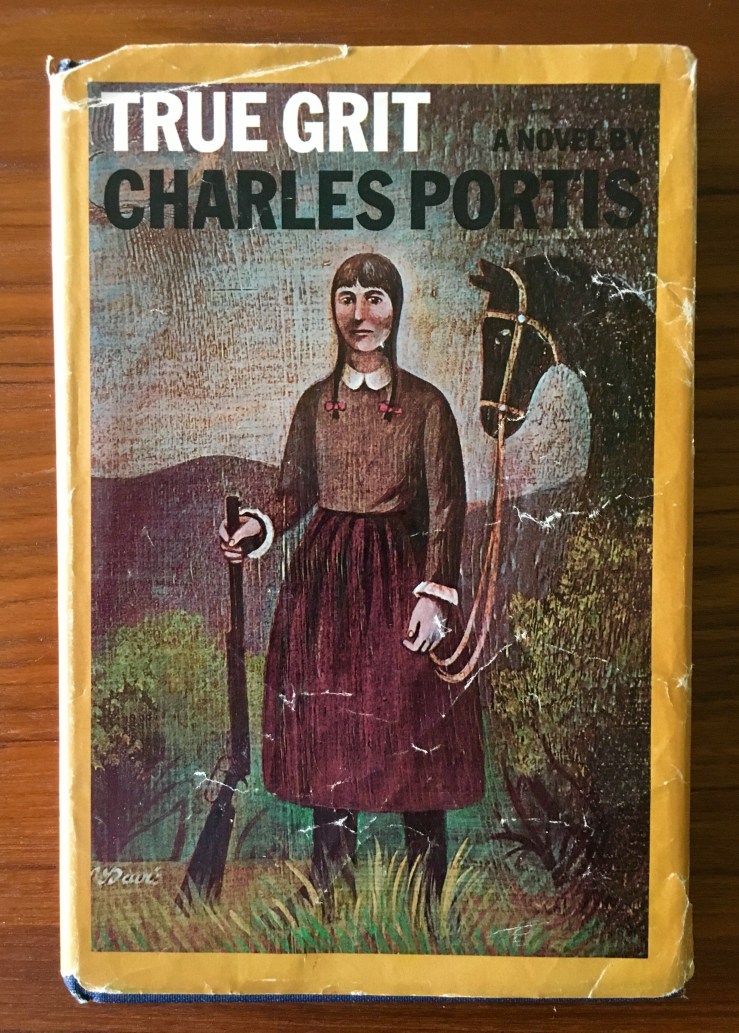
I finished Charles Portis’s famous novel True Grit this afternoon and I must confess it might be my favorite of the four I’ve read by the maestro. I shed a little tear for Little Blackie at the end, and also maybe for Rooster Cogburn. My thought is that I wish I’d read the book years ago, before I’d seen the two film adaptations, both of which are, like, fine, but neither of which capture the pure voice of Mattie Ross. Great stuff. I need to read Gringos next, but maybe I’ll wait a bit.

I have been switching between True Grit and Sylvia Townsend Warner’s nuns-in-the-English-fens-in-the-age-of-the-Black-Death The Corner That Held Them and I love both—both are funny, dry (and wet when they need to be). The Corner That Held Them packs in so much storytelling; pages go on for decades with a sprightly and imaginative and droll clip. I’ve been enjoying it so much I went up to my favorite used bookstore, big box of old books in tow, to find more. I picked up Lolly Willowes, which I understand is excellent, and which I will get to posthaste.

I had burned up most of my credit at this particular bookstore, but the box I done brung afforded me enough trade to not only pick up Lolly Willowes but also a first-edition hardback of Kurt Vonnegut’s Slaughterhouse Five.

img_3909-1

I also got copies of Antoine Volodine’s Writers and Bardo or Not Bardo in the in the mail this week. I don’t rightly recall buying them online, but I know that after finishing In the Time of the Blue Ball by Volodine’s pseudo-pseudonym Manuela Draeger, I went through my Volodines for references to Draeger. I found references in Post-Exoticism in Ten Lessons, Lesson Eleven, but couldn’t find my copy of Writers and then remembered that I gave it to a friend who seemed to promptly move a hundred miles away afterward. (He said he thought it was good.) Anyway: Bardo soon or not soon.

I read Keiler Roberts’ graphic memoir Rat Time yesterday and loved it so much I wrote about it immediately.

Screenshot 2019-09-03 at 3.52.37 PM

The hurricane is not so bad for us.

A review of Keiler Roberts’ Rat Time

Screenshot 2019-09-03 at 3.34.45 PM

Let’s start with the title. Rat Time is a great title.

What is Rat TimeRat Time is a graphic novel—or graphic autofiction, or graphic discursive memoir—I’m not really sure what genre it fits into, nor does that matter—Rat Time is a very funny and often moving book by cartoonist Keiler Roberts.

And so what is “rat time”? Rat time is the time that Keiler shares with her daughter Xia and their rats Sammy and Mateo Too. “We eat dinner, then rat time, then bed time,” Xia explains to her classmates during show and tell.

Screenshot 2019-09-03 at 3.40.35 PM

When poor Sammy dies though, “rat time” takes on a different meaning. “It’s not a time of day,” Xia declares. “It’s the time when had rats.” Keiler optimistically points out that “We still have Mateo Too.” (Care to guess what happened to Mateo One?)

The early vignettes in Rat Time intersplice rat time with riffs from Keiler’s therapy sessions, calls and visits with her parents, and child memories. Although Rat Time’s structure might be at times oblique and discursive, Roberts’ pacing and pages are often surprisingly traditional and darkly comic, as in this little episode, in which Keiler recalls a pet’s death:

Screenshot 2019-09-03 at 12.00.14 PM

Initially, Rat Time appears to have an elliptical structure. Vignettes and riffs and one-pagers succeed each other without the usual narrative linking devices we might expect from a traditional graphic novel. Roberts’ humor is so dry too that for the first few pages the tone of Rat Time may be difficult to comprehend. The more I read though, the more I laughed, and the more I cared about Keiler and her daughter.

Roberts’ mines her life for material, and the material is often painful, coming out in unexpected ways. We learn that rat time originated as a coping mechanism, a response to a recent diagnosis of multiple sclerosis:

Screenshot 2019-09-03 at 3.44.08 PM.png

Rat Time features scenes of Keiler going to the hospital for blood work, or visiting a chiropractor for treatment, all with a wonderfully droll humanity that resonates with just how damn specific the moments are. We also see Keiler in her therapist’s office, and see how her friends and family react to her bipolar disorder, as well as how she manages it. Making oatmeal seems to provide Keiler a lot of comfort, and while I’m not a fan of oatmeal myself, I deeply relate to her feelings on breakfast:

Screenshot 2019-09-03 at 12.22.04 PM

Some of my favorite parts of Rat Time hover around Keiler’s experiences as an art instructor. There’s an intense pathos to Keiler-as-teacher, even when she seems mean:

Screenshot 2019-09-03 at 4.00.28 PM

Keiler’s teaching vignettes are balanced with her own memories of teachers past. Roberts frames these moments with the clarity of detail that telegraphs raw honesty. There’s the gym teacher who humiliated her on the bus to the bowling alley, the art teacher who showed the class a cadaver, and the political science professor who earned Keiler’s admiration for “stating a truth so plainly” (namely, “I know this would be more interesting if I were entertaining, but it’s worse if I try.”)

Screenshot 2019-09-03 at 4.19.43 PM

Roberts’ spare, plain style is effective in achieving her punchlines, but it can also affect the reader with a strange poignancy:

Screenshot 2019-09-03 at 1.03.02 PM

At one point, Roberts includes a polished piece in Rat Time, which creates a wonderful moment of narrative dissonance, a strange reverberation between Keiler the hero-narrator of Rat Time and Roberts the author-illustrator of Rat Time.

Screenshot 2019-09-03 at 4.22.59 PM

Indeed, a major theme of Rat Time is storytelling itself. Keiler wants to be a writer of fiction, but it seems like her own life is far more interesting than the ideas she brainstorms. Rat Time is perhaps Roberts’ way of sussing out why her genre is ultimately autobiographical.

Screenshot 2019-09-03 at 4.35.53 PM

Rat Time, like any good autobiography, is crammed with life, brimming with vivid moments that feel authentic and real. Often funny and sometimes painful, Roberts’ book is sweet without sentimentality, sour without caustic meanness, and generous to both its subjects and its readers. Highly recommended.

Rat Time is new from Koyama Press.


In 1349 the Black Death came to Oby | An excerpt from Sylvia Townsend Warner’s novel The Corner That Held Them

In 1194 a wandering scholar, very old and shrill, came begging for a meal. As he sat munching his bread and a salt herring he talked to the wicket-nun about the properties of numbers, and of how Abbot Joachim, analysing the arithmetic of the prophecies, had discovered that the end of the world was at hand. He himself expected much of the year 1221, a date whose two halves each added up to three. In such a year, he said, one might look for the reign of Antichrist to be fulfilled, or else it might betoken the coming of the kingdom of the Holy Ghost, as the number six expressed a completion of two-thirds of the Trinity. Something, at any rate, he said, might be expected. Under his arm he carried a monochord. To make himself clearer to the nuns (for several of them had gathered to pity the old man, so wise and so witless), he explained to them about the Proportion of Diapason, the perfect concord which is at once concord and unity, and showed them how, by placing the bridge of the monochord so as to divide the string into a ratio of one and two, the string will sound the interval of the octave. Thus, he mumbled, was the nature of the Godhead perceptible to Pythagoras, a heathen; for it lies latent in all things. He sat on a bench in the sun, but overhead the wind howled, tormenting the willows along the Hog Trail and clawing the thatch, and the nuns could scarcely hear his demonstration of how the Godhead sounded to Pythagoras. It was really no loss, for his hand, shaking with cold and palsy, had failed to place the bridge correctly, and the diapason of the Trinity was out of tune. Then, brushing the crumbs out of his beard and plucking a sprig of young wormwood to stick behind his ear, he sang a lovesong to entertain the ladies and went on his way toward Lintoft. The lovesong had a pretty, catchy tune: for some days every nun and novice was humming it. Then Dame Cecilia began to have fits and to prophesy. This infuriated Richenda de Foley, to whom any talk of the end of the world after she had worked so hard and successfully to put the convent on a good footing for the next century seemed rank ingratitude. But the itch is not more contagious than illuminations, and throughout that summer Oby resounded with excited voices describing flaming bulls, he-goats of enormous size floating above the lectern, apparitions of the founder and shooting pains. In a fury of slighted good intentions and outraged common sense Richenda de Foley packed up and went away, but as she was generous as well as authoritarian she left a great deal of household stuff and provisions behind her. The community, after one universal gasp at finding itself unclasped from that strong and all-arranging hand, settled down to enjoy an unregulated prosperity and comfort; and prosperity and comfort wielding their usual effect, the spirit of prophecy flickered out, and by the close of the year they were looking for nothing more remarkable than improvements to the fish-pond.

In 1208 came the Interdict.

In 1223 lightning set fire to the granary.

In 1257 the old reed and timber cloisters fell to bits in a gale. It was decided that the masons who came to build the new should also build on a proper chapter-house. When it was half-built a spring rose under it. Rather than throw money away, the head mason suggested, why not finish the new building as a dovecot, a wet floor being no inconvenience to doves, and convert the old dovecot, so solid and weatherproof, into a chapter-house? This suggestion, too hastily accepted, led to discomfort all round. The pigeons refused to settle in their new house. Some flew away for good, the others remained in the lower half of the old dovecot, whose upper storey, remodelled with large windows and stone benches, made a very unpersuasive place of assembly. However, the arrangement was allowed as a temporary expedient, and as such it became permanent.

In 1270 there were disastrous floods, and this happened again seven years later. In 1283 hornets built in the brewhouse roof and the cellaress was stung in the lip and died. In 1297 the convent’s bailiff was taken in the act of carnality with a cow. Both he and the cow were duly executed for the crime, but this was not enough to avert the wrath of heaven. That autumn and for three autumns following there was a murrain among the cattle. After the murrain came a famine, and the bondwomen of the manor broke through the reed-fence into the orchard where the nuns were at recreation and mobbed them, snatching at their wimples and jeering at such plump white breasts and idle teats. For this a fine was laid on the hamlet, and the last remnants of the pax Richenda broke down. Tithes and dues were paid grudgingly or not at all, and going along the cloisters to sing the night office the nuns would strain their ears for the footsteps of marauders or the crackle of a fired thatch.

In 1332 a nun broke her vows and left the convent for a lover. Misfortunes always go in threes, was the comment of the prioress: they might expect two more to play the same game. But after a second apostasy there was a painful Visitation by the bishop, when the prioress was deposed and Dame Emily, the novice-mistress, a better disciplinarian, nominated to be her successor. Unfortunately Dame Emily was unpopular, being both arrogant and censorious. Dreading the rule of such a prioress, the nuns refused to elect her and chose instead, out of bravado, Dame Isabella Sutthery, the youngest and silliest nun among them. The young and silly can become great tyrants. Dame Isabella proved fanatically harsh and suspicious, scourging the old nuns till they fainted for anguish and inventing such unforeseeable misdemeanours that no one could steer clear of offending. The convent waited, languishing, for the next Visitation, when each nun in her private interview with the bishop could make her report. But though the bishop came and heard, he was still nursing his wrath about their rejection of Dame Emily whom he had nominated, and though Dame Emily herself was the greatest sufferer under Prioress Isabella he answered every plea for a fresh election by saying that the convent having chosen must abide by its choice. It was not till 1345, when Prioress Isabella choked on a plum-stone, that peace and quiet returned, followed by four ambling years of having no history, save for a plague of caterpillars.

In 1349 the Black Death came to Oby.

From the first chapter of Sylvia Townsend Warner’s 1948 novel The Corner That Held Them, newly reissued by NYRB.

img_3738

Blog about some recent reading

img_3869

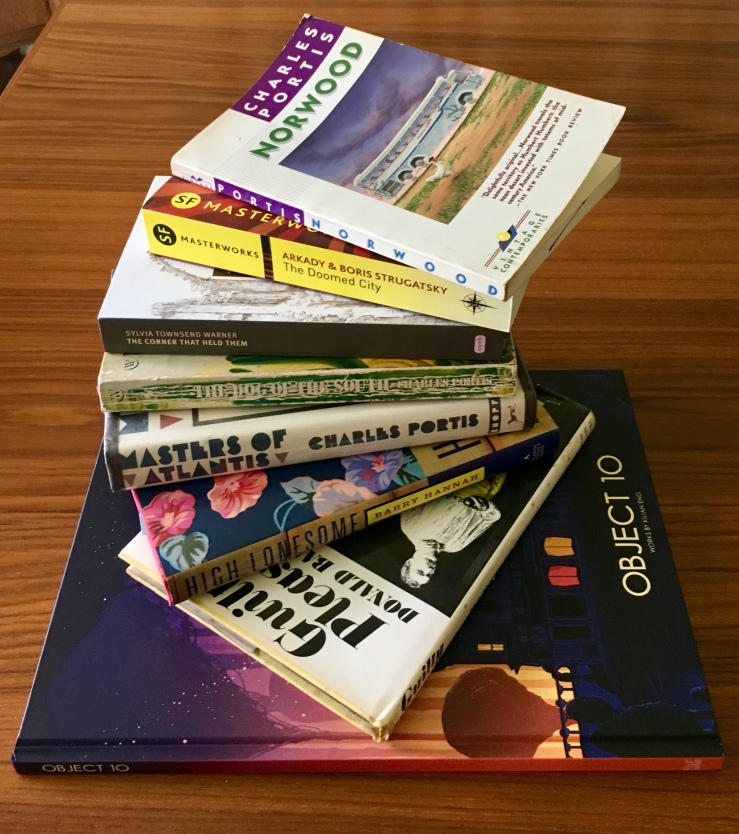
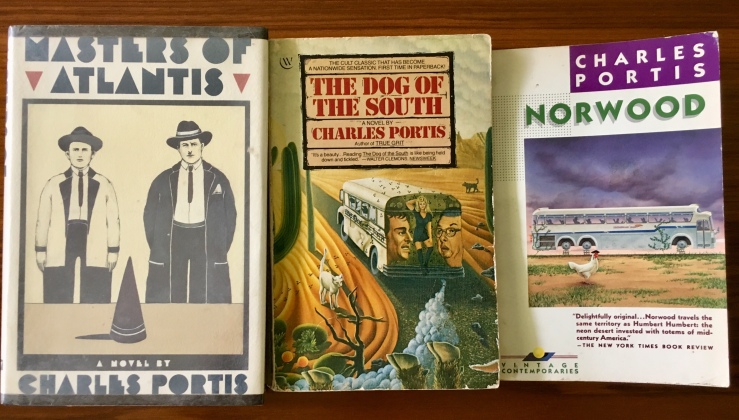
Let’s start with the meat in the middle: Charles Portis. Why hadn’t I read Charles Portis until 2019? Maybe I initially dismissed the idea after first seeing True Grit (1969) with John Wayne. I know I was a bit more interested after seeing True Grit (2010), but I still didn’t quite realize that Portis is like Cormac McCarthy or Barry Hannah, picaresque and hilarious, a scion of the dirty south. I picked up his first novel Norwood at a tiny wonderful little bookstore in Portland Oregon this summer, prompted by its being in a Vintage Contemporaries edition more than anything else. I loved its energy and humor, and picked up copies of The Dog of the South and Masters of Atlantis, and promptly read them. (I couldn’t find a decent looking copy of True Grit and ended up ordering one on AbeBooks for four bucks.) I’ve heard Masters of Atlantis referred to as the masterpiece, and I thought it was very funny and even Pynchonesque (and also really relevant in its evocation of con artists and scammery), but Dog of the South was the most affecting of the three novels. A kind of bizarre road trip novel, Dog is told in first person narration by an asshole loser who, like most asshole losers, doesn’t realize that he’s an asshole loser. By the end of the novel he won me over though, and even grew as a person (I hate that I wrote that sentence). Dog’s shagginess is a small virtue; Master’s shagginess is unexpectedly grand. Norwood seems like a trial run at both, but also wonderful and grotesque. I read the first part of True Grit yesterday and loved the voice. I need to do a proper Thing on Portis, but for now, color me a Portishead.

I read Fernando A. Flores’ debut novel Tears of the Trufflepig last month, which I picked up after reading J. David Gonzalez’s review in the Los Angeles Review of Books. The concept of the book—a very-near future where drugs are legal and cartels have taken to trafficking “filtered” (genetically-altered) animals is fascinating—but the prose and structure left something to be desired. Trufflepig suffered perhaps from its proximity to my reading Anna Kavan’s Ice and Portis’s Norwood.

I read the first chapter of Sylvia Townsend Warner’s 1948 historical novel The Corner That Held Them today. Amazing stuff: Ironic, mordant, energetic, and surprising. Set primarily in a spare humble corner of 14th century England, Corner starts with a cuckold murdering his wife’s lover, “sparing” her, and then founding a nunnery in her honor when she dies. Warner’s prose shuttles her nuns into the Black Death plague with bathos and wit. Really loved what I read.

I read In the Time of the Blue Ball by Manuela Draeger this weekend and loved it too. There are three tales in the collection, translated by Brian Evenson and Valerie Evenson. Draeger is one of Antoine Valodine’s pseudonyms, but also one of his characters—a concentration camp librarian who invents tales for the camp’s children. The stories are whimsical with a dark edge, an edge perhaps provided if one know more of Volodine’s project (encapsulated neatly in Writers). The Draeger stories focus on a detective named Bobby Potemkine and his dog Djinn, and they are lovely.

I continue nibbling at Chris Ware’s forthcoming opus Rusty Brown. “Nibbling” is not the right verb—look, I’m gobbling this thing up. It’s astounding: funny, painful, gorgeous, maybe the best thing he’s done to date.

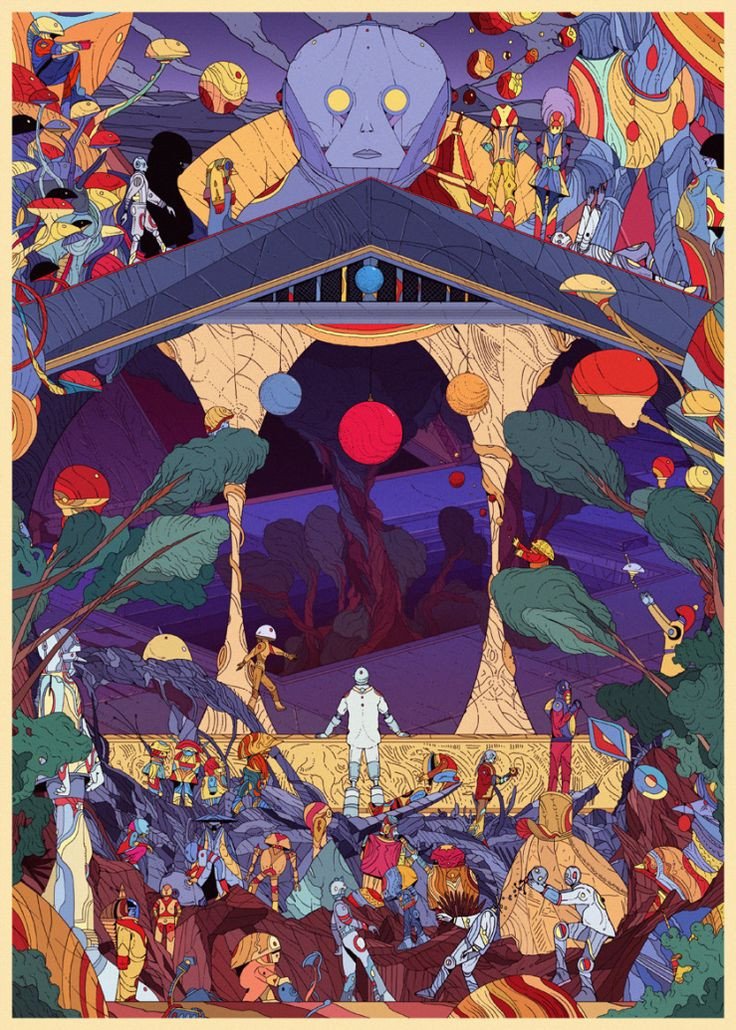
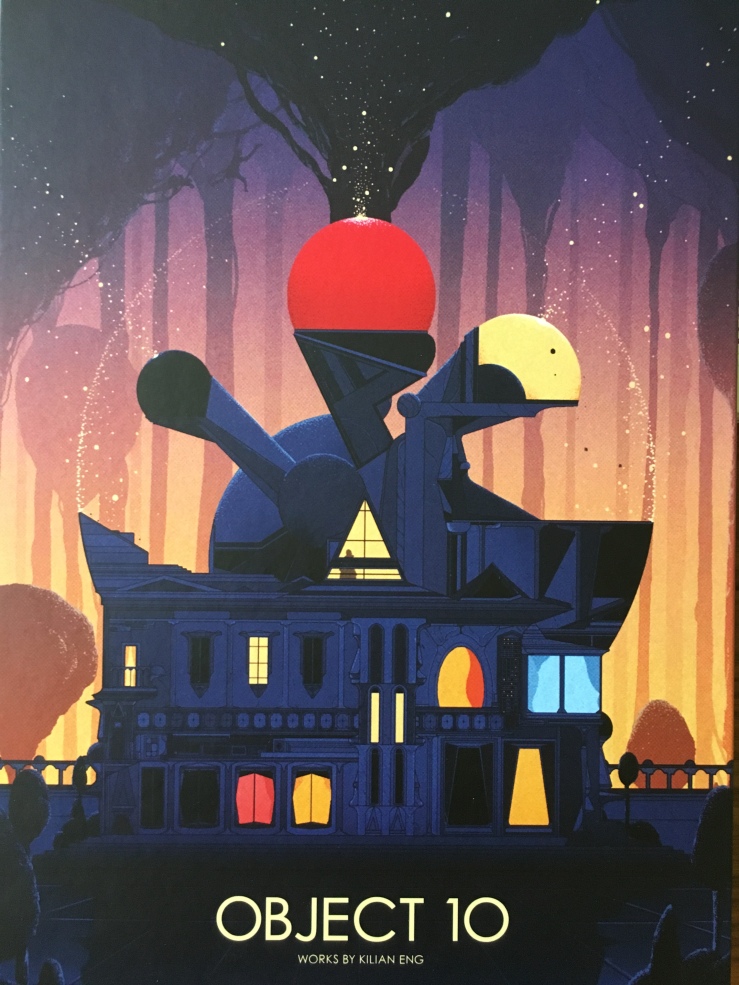
Kilian Eng’s Object 10 simply happens to be at the bottom of the pile. It too is gorgeous.

1dde58cb05363a7d06108f54bab648f4_800x

Books acquired, 15 Aug. 2019

img_3825

I went to the used bookstore last week to pick up some of my daughters required reading for school. I fucked up and picked up a heavily-annotated copy of Elie Wiesel’s Night which I will have to return maybe tomorrow or Wednesday.

While there, I picked up Fup by Jim Dodge. I was looking for Dodge’s novel Stone Junction (a twitter-based recommendation based on my taking to Charles Portis), but I couldn’t find a copy. But Fup looked neat. And it’s illustrated (by Norman Green).

img_3857

I also picked up Manuela Draeger’s In the Time of the Blue Bell in English translation by Brian Evenson. Draeger is one of French author Antoine Volodine’s pseudonyms. It’s good stuff. Here is the first paragraph:

ECDS3K3XUAAkTvN

May as well be a rainbow (Toni Morrison)

You think dark is just one color, but it ain’t. There’re five or six kinds of black. Some silky, some woolly. Some just empty. Some like fingers. And it don’t stay still, it moves and changes from one kind of black to another. Saying something is pitch black is like saying something is green. What kind of green? Green like my bottles? Green like a grasshopper? Green like a cucumber, lettuce, or green like the sky is just before it breaks loose to storm? Well, night black is the same way. May as well be a rainbow.

From Toni Morrison’s novel Song of Solomon.

RIP Toni Morrison

bdkyvyujr2crj4r4q8gm

RIP Toni Morrison, 1931-2019

The great American writer Toni Morrison died yesterday at the age of 88. Morrsion was a writer, academic, teacher, and playwright (among many other things), but will likely be best remembered for her eleven novels, which include Beloved (1987), The Bluest Eye (1970), and most recently God Help the Child (2015). Morrison’s slim essay collection Playing in the Dark (1992) remains a standard in college classrooms.

Playing in the Dark was probably the first thing I read by Morrison. I read it more than 20 years ago in a college classroom, and it was one of the first works of cultural criticism I’d read. I think I was probably too young to fully appreciate its scope, but I’ve since used elements of it (as well as Morrison’s essay on Adventures of Huckleberry Finn) in my own classes many times. Beloved, which I read around the same time, also as an undergraduate, had a more profound, visceral effect on me.

While Beloved, a mature exercise published when the author was in her fifties, is likely to be the book most people associate with Morrison, her early novels are especially compelling. The Bluest Eye is a study in abjection, painful, rich, fertile. The follow up, Sula (1973), centers on a black township in Ohio in the thirties. It’s also a painful and beautifully-written novel. Song of Solomon (1977) is maybe my favorite Morrison novel. Its protagonist Milkman Dead remains one of her most complex and memorable figures. I tend to think of these three early novels as a fecund trilogy, the rich base from which Morrison’s themes of race, memory, location, family, identity, and love continued to grow. These themes continued throughout her works, notably Beloved, of course, as well as Jazz (1992) and Paradise (1997). Morrison’s later works are perhaps underread or understudied compared to her early and middle period, but her 2008 novel A Mercy is a particularly focused and strong exploration of the myth of early America. It remains one of my favorites by Morrison. Morrison published two novels after: Home (2012) and God Help the Child. She also wrote the libretto for the opera Margaret Garner (2005), who was the historical inspiration for Beloved. Days after the 2016 election, Morrison published “Making America White Again” in The New Yorker.

A documentary film about her life, Toni Morrison: The Pieces I Am is in theaters now.

Blog about some books acquired

img_3745

My family and I spent a wonderful week in Oregon at the end of July. We visited friends who live in Portland, where we based our stay, and we drove to the coast, to Mount Hood, and to all kinds of beautiful places. It was really fucking lovely.

Among all the gardens and forests and breweries and record shops, we managed to fit in some bookstores too, of course.

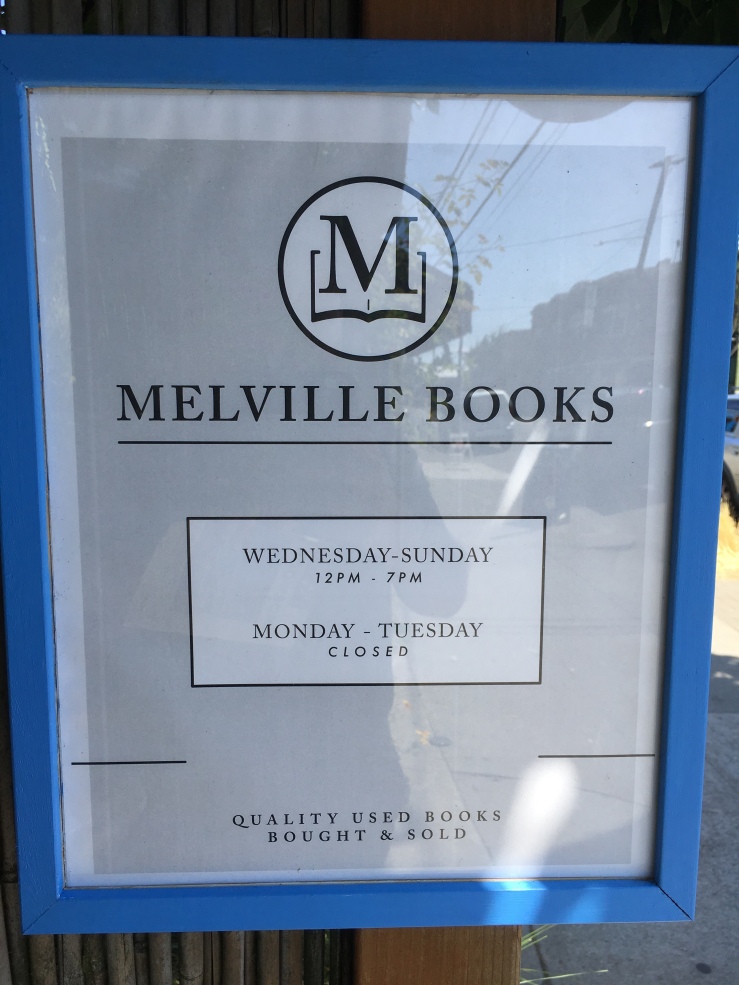
The first was Melville Books, right off of Alberta Street, tucked away just a bit. Our rental house was a block from Alberta, and we got there early in the afternoon and took a stroll. Melville Books is pretty new. The owner-proprietor was making a wooden “Open” sign while he chatted with me about his stock and his experiences scouting and buying used books. He was really friendly, and the small store was very well curated.

img_3259

I picked up Charles Portis’s first novel Norwood there on something of a whim. I’ve never read Portis, but I know his fans love his stuff, and I couldn’t pass up the Vintage Contemporaries cover. There was also a hardback copy of True Grit in stock at Melville that I now regret not having picked up. Norwood is hilarious, and has evoked in me a need to read more Portis.

I actually went to my local used book store today to get some stuff for my kids (and maybe just to get out of the house), but the only copy of True Grit they had in stock was a Coen Brothers film adaptation tie in. I did pick up copies of Masters of Atlantis (in hardback) and The Dog of the South though.

img_3733

We also visited Powell’s, of course. I wasn’t expecting it to be as big as it was. Powell’s is a very well-stocked general bookstore, but I was a little disappointed that I couldn’t find more weird or rare stuff there (I think my local place, Chamblin Bookmine, has spoiled me).

img_3558

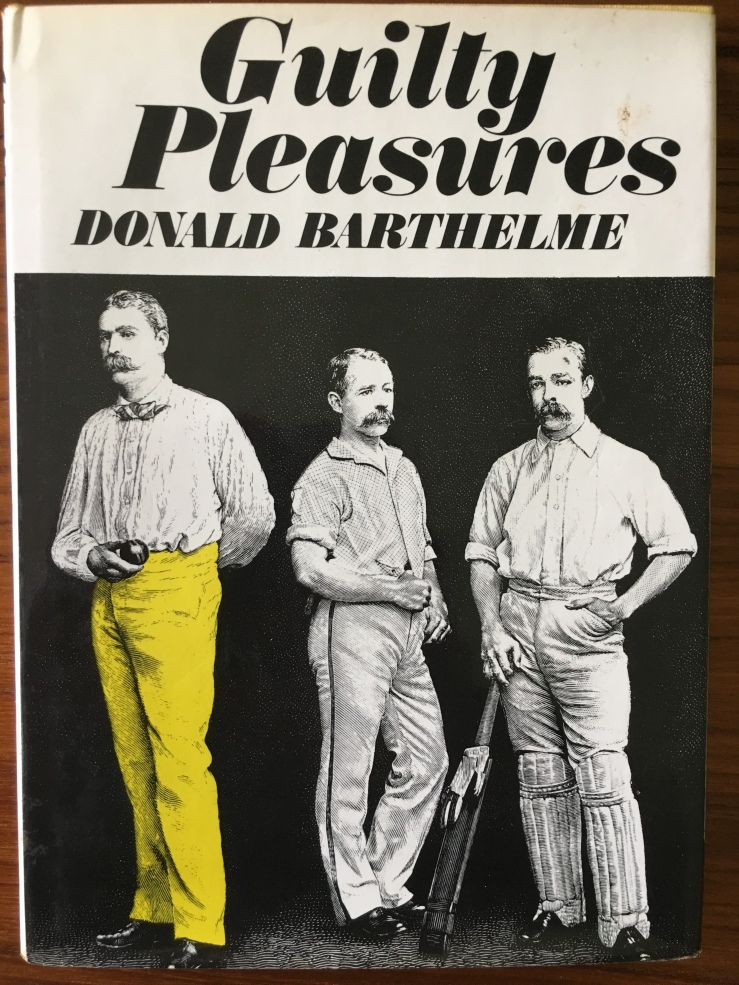
I picked up a first-edition hardback of Donald Barthelme’s “nonfiction” collection Guilty Pleasures for just a few bucks.

img_3734

It includes one of my favorite Barthelme pieces, “Eugenie Grandet.” It also includes quite a bit of his collage work.

img_3735

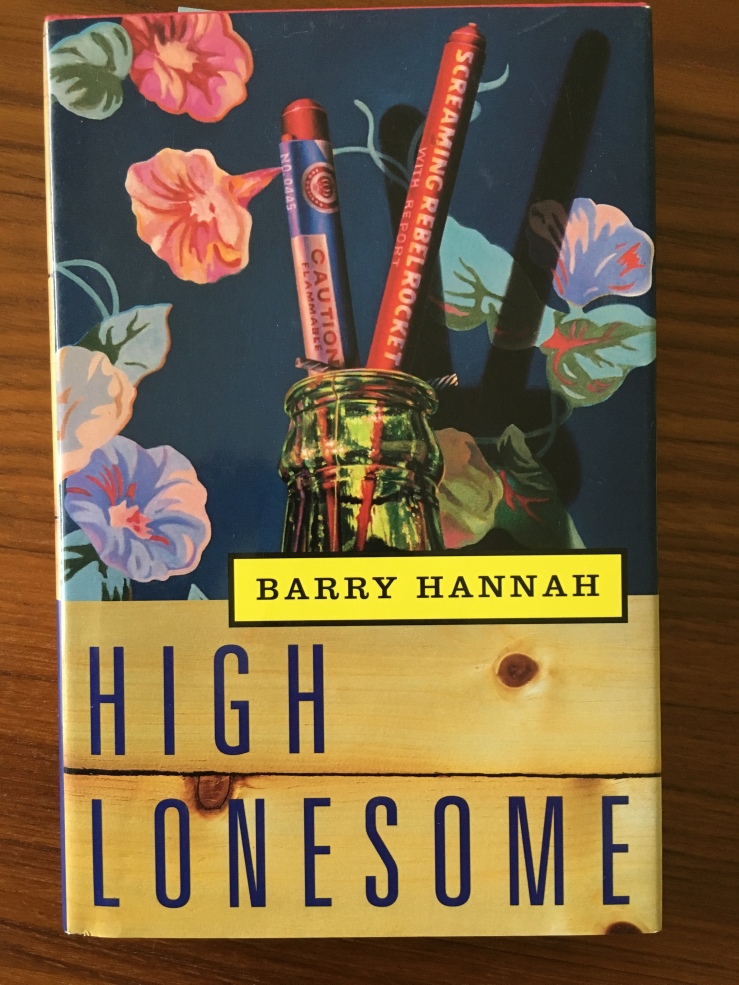
I also picked up a hardback copy of Barry Hannah’s High Lonesome. I’ve read a lot of the stories in here (collected in Long Lost Happy), but some are unfamiliar. Also, the cover is by the photorealist painter Glennray Tutor, a Southern contemporary of Hannah’s. Tutor did the covers for several other Hannah volumes.

img_3736

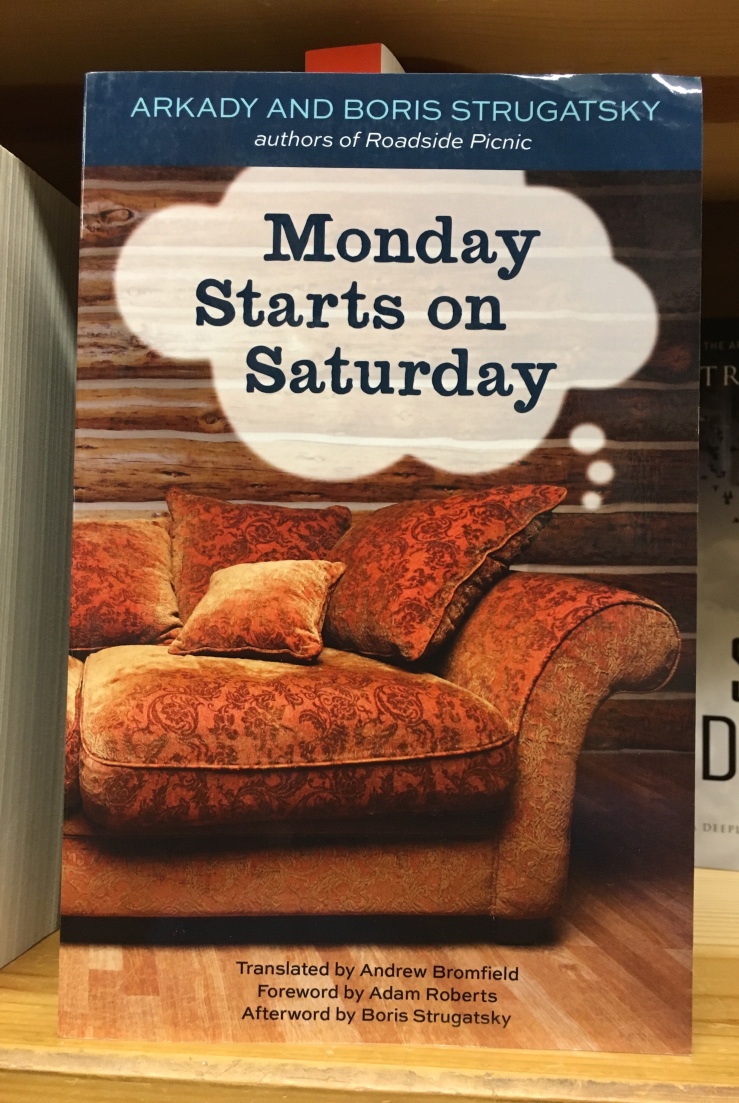
Over in the sci-fi section of Powell’s I found some books by the Strugatsky brothers, which I’ve been into lately. I’ve heard Monday Starts on Saturday is good, but the cover for this edition is so godawful bad that I couldn’t go for it. That’s what library e-books are for, I guess. (Really though, a blank white cover would have been better.)

img_3553

I ended up picking up The Doomed City instead, which I might try to squeeze in before the end of summer.

img_3737

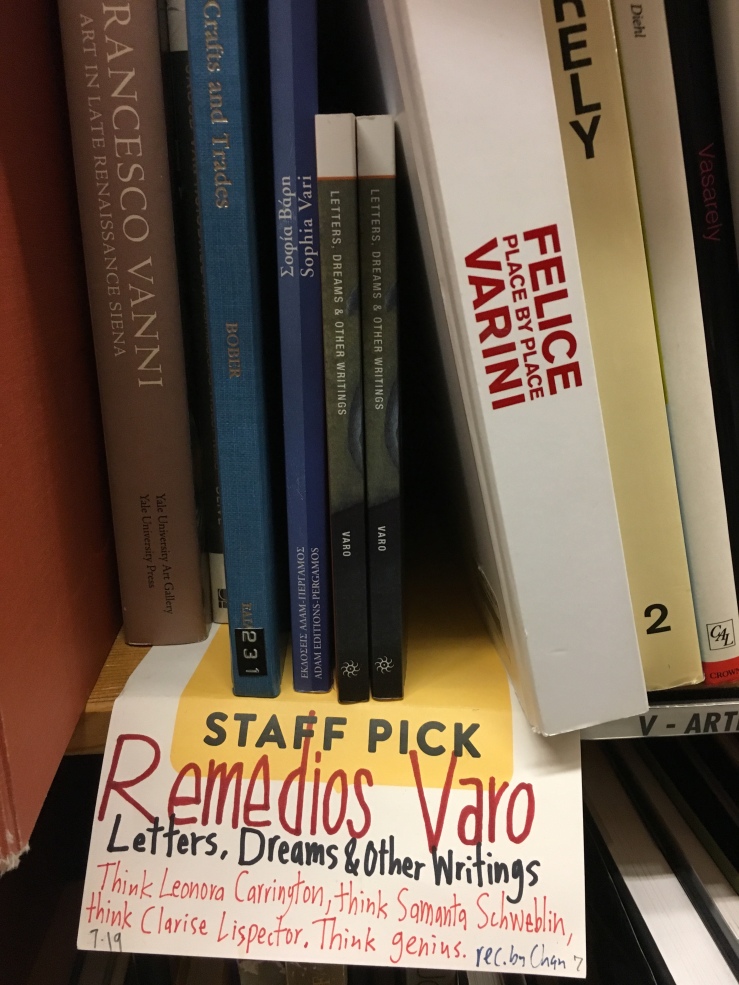
I was impressed with the art books collection at Powell’s but also disappointed not to find anything by Remedios Varo or Leonora Carrington, other than recent editions of their fiction—no real art books though. I was happy though to see a shelf recommendation for Margaret Carson’s recent translation of Varo’s Letters, Dreams & Other Writings though. I sent a pic to Margaret, who was really generous to me with her time in recent interview about her translation.

img_3555

I visited a few other bookshops, not so much as destinations, but rather in happy accidents in the neighborhoods we visited—but I restrained myself from picking anything else up. (And no, I didn’t make it to Mother Foucault’s, unfortunately, although many folks told me to. Next time.)

We visited Floating World Comics the same day as Powell’s, where I picked up a copy of Kilian Eng’s Object 10. I’ve been a fan of Eng’s for years, sharing his images on the blog and following him on Instagram. I hadn’t realized though that Floating World was his publisher. Object 10 is lovely.

img_3740

img_3743img_3744img_3742

I also picked up a pack of 1993 Moebius trading cards there for a dollar. I haven’t opened them yet though. Saving it for a treat later. It was neat to see copies of Anders Nilsen’s Tongues in the wild, too. I had reviewed the title awhile back for The Comics Journal, but I hadn’t realized that Nilsen lived in Portland. We also checked out Bridge City Comics on Mississippi, which had a nice selection of dollar comics that I indulged my kids in.

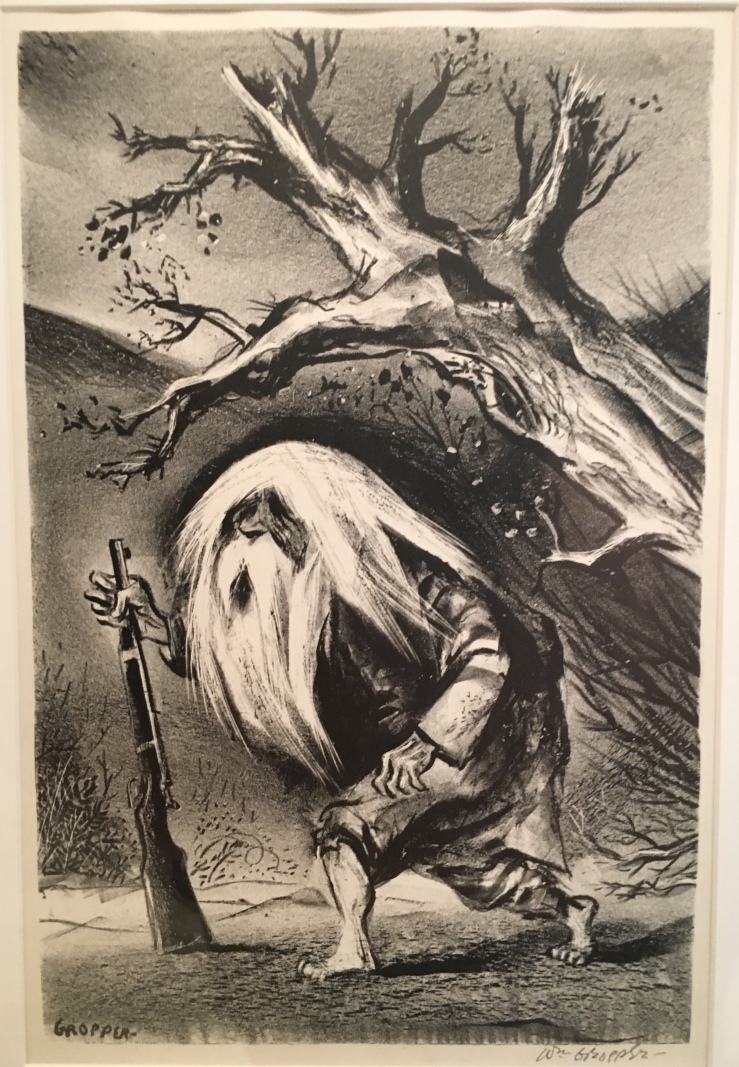
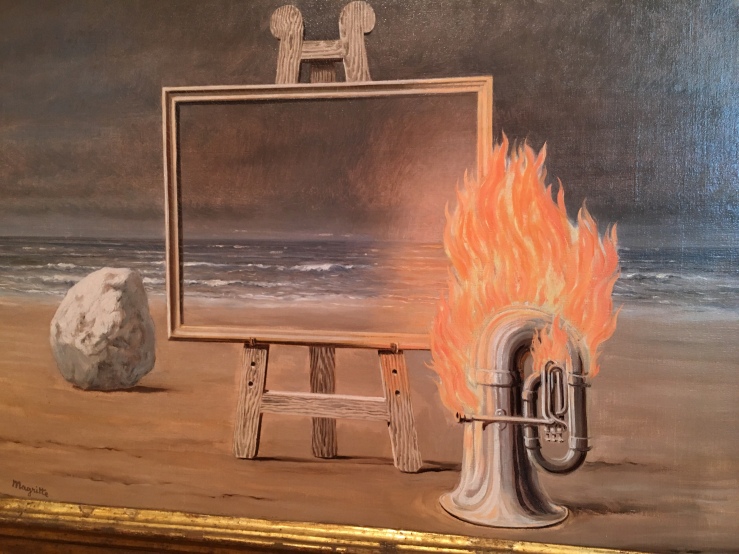
Portland was fantastic in general. The only real disappointment came when we visited the Portland Art Museum expecting to see a major Frida Kahlo exhibit. Unfortunately, we misread the dates—the show starts next summer. The museum has a nice collection though. Just a few pics of some pieces I liked:

Rip Van Winkle (1945) by William Gropper:

img_3291

The Fair Captive (1948) by Rene Magritte

img_3339

and The Femminiello (1740-60) by Giuseppe Bonito.

img_3302

Here’s the museum’s description of this unusual painting:

Owing to widespread social prejudice, cross-dressing was rarely depicted in European art until the modern era. This recently discovered painting from the mid-eighteenth century is a testament to the exceptional and long-standing acceptance of cross-dressers known as femminielli in the great Italian city of Naples. The term, which might be translated “little female-men,” is not derogatory, but rather an expression of endearment. Femminielli come from impoverished neighborhoods, as is evidenced by this individual’s missing tooth and goiter, a common condition among the poor in the Neapolitan region. Although femminiellicross-dress from an early age, they do not try to conceal their birth sex completely. Rather than being stigmatized, they are deemed special and are accepted as a “third sex” that combines the strengths of both males and females. In particular, femminielli are thought to bring good luck, so Neapolitans often take newborn babies to them to hold. Femminielli are also popular companions for an evening of gambling. This association is represented by the necklace of red coral, which is similarly thought to bring good fortune. Neapolitan genre paintings (images of everyday life) frequently feature a grinning figure to engage the viewer. Here, we are invited to consider the artist’s playful inversion of traditional views of gender, which contrasts the pretty young male with the more masculine femminiello.

Maybe we’ll get back to the Pacific Northwest next summer and see the Kahlo then.

Anyway so well—

Like I said, I went to the bookstore today, not looking for myself (promise!) except that I did stop and browse Portis briefly, picking up the aforementioned copies. When I got home, I had a package from NYRB containing The Corner That Held Them by Sylvia Townsend Warner. It immediately interested me when I flicked through it—seems like a weird one. NYRB’s blurb below; more to come.

img_3738

Sylvia Townsend Warner’s The Corner That Held Them is a historical novel like no other, one that immerses the reader in the dailiness of history, rather than history as the given sequence of events that, in time, it comes to seem. Time ebbs and flows and characters come and go in this novel, set in the era of the Black Death, about a Benedictine convent of no great note. The nuns do their chores, and seek to maintain and improve the fabric of their house and chapel, and struggle with each other and with themselves. The book that emerges is a picture of a world run by women but also a story—stirring, disturbing, witty, utterly entrancing—of a community. What is the life of a community and how does it support, or constrain, a real humanity? How do we live through it and it through us? These are among the deep questions that lie behind this rare triumph of the novelist’s art.


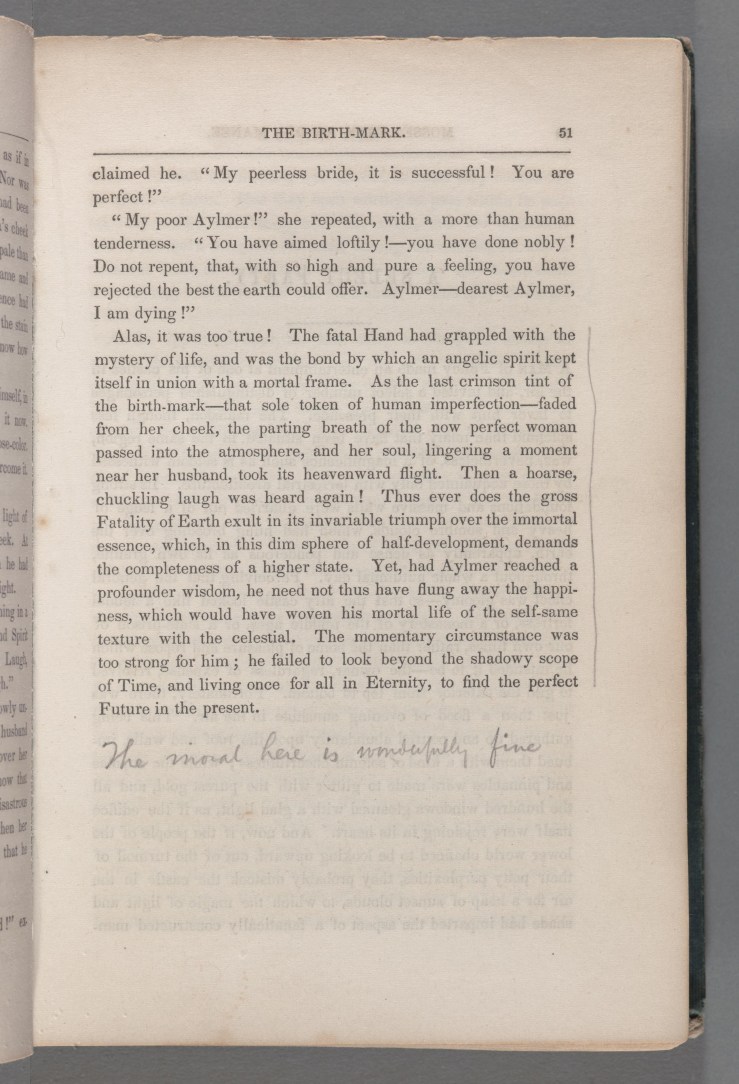
The moral here is wonderfully fine | Melville annotates Hawthorne

Herman Melville’s markings and annotations on the last page of Nathaniel Hawthorne’s short story “The Birth-mark.” From Melville’s Marginalia Online.

The problems of Bartleby

What are the problems of Herman Melville’s story “Bartleby, the Scrivener: A Story of Wall Street”?

This question seems like a bad starting place.

Let me share an anecdote instead.

—I was in the tenth grade the first time I read “Bartleby.”

At the time, I thought I was a teacher’s dream—a sharp reader, someone who loved English class, someone with opinions about the texts we read. Lots and lots of opinions. In retrospect, I realize that I was a nightmare for poor Ms. Hall, a wonderful teacher who I’m sure dreaded our meetings (there were like 15 guys in the class, all unruly).

Simply put, I didn’t want to do things her way.

So she gave me a copy of Billy Budd, Sailor and Other Stories and told me to read “Bartleby,” suggesting that there was something I might learn from it.

I don’t know if backfired is exactly the right term for the results of this experiment. I do know that “Bartleby” offered me a brilliant retort—a literary allusion!—to refuse any task I didn’t feel like undertaking in 10th grade English:

“I would prefer not to.”

—While we’re here—

“I would prefer not to”

So, this is clearly one of the problems of “Bartleby,” if not the core problem condensed into one utterance: Why would? Why the conditional?

Consider, vs. I prefer not to, a constative (or maybe even performative) utterance.

But Bartleby “would prefer not to.”

Contrast this with the imperative must that the narrator employs:

At the expiration of that period, I peeped behind the screen, and lo!
Bartleby was there.

I buttoned up my coat, balanced myself; advanced slowly towards him, touched his shoulder, and said, “The time has come; you must quit this place; I am sorry for you; here is money; but you must go.”

“I would prefer not,” he replied, with his back still towards me.

“You must.”

He remained silent.

Now I had an unbounded confidence in this man’s common honesty. He had frequently restored to me sixpences and shillings carelessly dropped upon the floor, for I am apt to be very reckless in such shirt-button affairs. The proceeding then which followed will not be deemed extraordinary.

“Bartleby,” said I, “I owe you twelve dollars on account; here are thirty-two; the odd twenty are yours.—Will you take it?” and I handed the bills towards him.

These brief lines perhaps serve to summarize Melville’s tale.

We see here the basic plot—our titular scrivener will not leave the lawyer’s office after weeks of refusing (although refusing is not quite the right word) to work.

We also see here what I take to be the theme of “Bartleby,” the strange ethical position Bartleby’s (conditional) would prefer not to places the narrator’s (imperative) must set against the moral backdrop of do unto others: namely, an impossible ethical position for a Wall Street lawyer especially and most of us in general.

And “Bartleby,” as you’ll no doubt recall, is in some ways Melville trying to work out the problems of Matthew 25:35-39—

For I was an hungred, and ye gave me meat: I was thirsty, and ye gave me drink: I was a stranger, and ye took me in:

Naked, and ye clothed me: I was sick, and ye visited me: I was in prison, and ye came unto me.

Then shall the righteous answer him, saying, Lord, when saw we thee an hungred, and fed thee? or thirsty, and gave thee drink?

When saw we thee a stranger, and took thee in? or naked, and clothed thee?

Or when saw we thee sick, or in prison, and came unto thee?

Perhaps our narrator tries to do these things—tries to feed and clothe and help this stranger Bartleby—but he can’t. Because Bartleby won’t give him an agency to relate to.

Because Bartleby’s utterance “I would prefer not to” denies the performative or constantive or declarative—indeed, it suspends or disrupts its own conditionality, the relation of the subject to its predicate verb.

Or consider one of Bartleby’s only other lines: “What is wanted?” His grammar again suspends agency, disrupts the notion of a stable I (let alone objective case me) that the narrator can interface with, dictate to, interrogate, see his own narcissistic reflection in).

—Hang on though, I was telling an anecdote. It was about the first time I read “Bartleby,” when I was fourteen or fifteen. This is the book:

20121112-150751.jpg

I stole it of course, or never returned it. Yes, that’s duct tape on its side. It is more or less falling apart. Here’s the back, barcode and all.

20121112-150740.jpg

Over the years, like many readers, I returned many times to “Bartleby,” reading it again in high school, then in college, then in grad school. I read it unassigned too, of course—when I read Kafka and it recalled itself to me, and when I read Moby-Dick for the first time. I read it when compelled. And then I read it with my own students. (I read most of the other stuff in the collection too, of course — Billy Budd and then later (why so much later?!) Benito Cereno).

I scrawled through so much of the book that my annotations are basically worthless, virtually everything underlined or circled:

20121112-151659.jpg

So we butt up against the problems of “Bartleby”—the problems of interpretation. How to figure an eponymous “hero” who is no more than a phantom, a trace, a lack? How to hash out a narrator who presents himself in relatively admirable terms and yet is so clearly an ethical failure? Why oh why would Bartleby prefer not to? Is the story a tragedy or a comedy? Does it present a world with rules, codes, ethics, or is all absurd here—nihilistic even? Is Bartleby a Christ figure? An ascetic monk? A ghost? Is the story just about Melville’s own anger over the poor reception of Pierre? How much of contemporary transcendentalist thought can we find in the story?

—Slight shift:

The kind people of Melville House were sporting enough to send a copy of “Bartleby” my way. The book is part of their HybridBooks project; these books offer “digital illuminations” along with traditional (uh, paper) books.

I’d requested a HybridBook—any one of them, really—because I now read about half the time on a Kindle Fire—so I was particularly interested in what a “hybrid” had to offer. What is the reading experience like?

First, the book itself is part of Melville House’s Art of the Novella series—beautiful, minimal design with French flaps. I read it on my porch the afternoon it arrived, enjoying its pristine, white, unmarked pages. Then, I checked out the “Digital Illuminations.”

The illuminations are available in several device-specific options, all easy to download with the QRC that comes with the book. I read most of the illuminations on my Kindle, but I also put them on my iPhone and my laptop. I had originally intended this post to be specifically about the digital illuminations, but hell, “Bartleby” is just too damn freighted a read for me at this point. Anyway, there’s a lot of good stuff in there, including “The Transcendentalist” by Ralph Waldo Emerson, selections from Jonathan Edwards and Joseph Priestly, Thoreau’s “Civil Disobedience,” and several excerpts from Melville himself, including letters, other books, and reviews. What I found must, uh, illuminating was “Of Some of the Sources of Poetry Amongst Democratic Nations” from Democracy in America by Alexis de Tocqueville. There are also illustrations, including a map; there’s even a recipe for ginger nuts. I wish that MH had included a digital copy of the book though. From a practical, concrete standpoint, I found it easier to switch between the free public domain version of “Bartleby” on my Kindle and MH’s illuminations than it would have been to pick up the physical book.

Now, to shift back (perhaps):

Do the digital illuminations help to answer or solve or address some of the problems of “Bartleby,” some of the issues posed above?

Should they?

—I suppose the hedging answer is yes and no.

The additional material illuminates some of the philosophical, political, historical, and even personal context for “Bartleby.” The material is edited with minimal intrusion, but with enough explication to clearly connect the various selections to Melville’s story. If I’m reading with my teacher hat on (this is a metaphor; there is no literal hat), I’d say you probably couldn’t do better than what Melville House has put together here. The digital illuminations provide a strong foundation for an informed reading, a range of texts that speak (obliquely or otherwise) to “Bartleby.”

Does it all add up to a deeper or richer understanding of “Bartleby”?

Should it?

—Well. No. And then no.

I mean, would we want a series of essays that would provide the missing pieces that would allow us to puzzle out “Bartleby”? Could we even trust such pieces, let alone trust ourselves to trust such pieces? Isn’t this strange uncertainty why “Bartleby” endures—and endures apart from Moby-Dick or Billy Budd, strange texts themselves, but also not nearly as confounding?

“Bartleby” simultaneously wriggles and plays dead; it burns with apparent wit but then reminds us that we might not be in on the joke. It is Kafkaesque thirty years before Kafka was even born. It shakes off its allegorical idiom the minute we think we might limn its contours. It makes us read it again because we cannot pin it down.

—But maybe you want to pin it down, tickle it, torture it, make it solve its problems (or at least respond, damn it!).

And maybe I claimed that “Bartleby” was about something—that it was about ethical relations, about duty to one’s fellows—especially when a fellow isn’t a fellow but rather the trace of a fellowthe idea of a fellowa ghost.

So, look, here’s a take on it:

The narrator—let’s call him Lawyer—Lawyer, see he’s a dick, in the parlance of our times. He’s a dick because he doesn’t know that he’s a dick, which is one of the constituting factors of the ontological state of being a dick. He also does not want to see himself as being a dick (this is another factor in the ontological state of being a dick). He wants to see himself as a good guy, this Wall Street dickhead, but Bartleby won’t let him do that. Bartleby won’t even let him see himself at all: Bartleby doesn’t reflect back. He prefers not to.

Our Lawyer, see, he’s all buttoned up, he’s snug (these are his words). He tells us upfront that he possesses “a profound conviction that the easiest way of life is the best”; he repeatedly points out the way that people are “useful” to him (or to others). He sees no possibility of an ethics outside of usefulness; on top of that, he cannot see that he cannot see any possibility of an ethics based on anything but “usefulness” (or the negative economy of obstruction figured in Bartleby).

And ah Bartleby, ah humanity: One time model employee, once apparently free from the eccentricities that plague the Lawyer’s other scriveners, Turkey and Nippers. Machinelike.

Bartleby mechanically completes large quantities of copies without comment or complaint.  But when asked to simply read in unison with Lawyer and his scriveners, Bartleby replies: “I would prefer not to.” Bartleby will not read with others—he is literally not on the same page as his colleagues.

Lawyer confronts Bartleby with his noncompliance; Bartleby repeats his mantra. Fuck mantra though because it’s not a mantra. It’s only repeated for Lawyer, to Lawyer, really, who can’t schematize/name/pin down Bartleby’s response. In fact, I would prefer not to so startles Lawyer that he says he’s  “unmanned” by the words. So he rationalizes Bartleby’s odd response, internalizes it, paraphrases it, if you like.

And then Bartleby ceases to even do his copying work. Oh the anarchy! But wait, there’s not even anarchy. There’s not even protest. There’s just big nothing. But not even big nothing—instead the smallest nothing (which proves that big nothing is possible).

So Lawyer attempts to “help” Bartleby. Lawyer believes doing so is his “Christian duty.” And to know that this duty has been met, Lawyer needs Bartleby to be his echo. But Bartleby’s I prefer not to denies this narcissistic exchange. He empties his I of ego (shades of Emerson’s Transparent Eyeball).

Confused, Lawyer tries to pay off Bartleby. When that doesn’t work, Lawyer actually packs up and moves to a new office. But even here he can’t cut off Bartleby. The office’s landlord comes to Lawyer to remove Bartleby.

And when Bartleby refuses to leave the office he is taken to “the Tombs”—prison.

Here, Lawyer tries to provide comfort for Bartleby (hearken ye back to Matthew 25:35-39). He arranges for Bartleby to receive good food in the prison. Bartleby prefers not to eat though, and dies curled up in the fetal position during a visit by Lawyer.

Lawyer is the first reader of Bartleby. But like many readers of “Bartleby,” he is confused.

Lawyer’s confusion results from his need for safety—for ease, for comfort, for a snug, buttoned-upness—and that safety is bought through an affirmation of first-person experience: namely, in the affirmation of the self in the other. That security is bought through assimilating another person’s first-person perspective. But Bartleby is empty of I, of self, of ego.

Bartleby would prefer not to: He will not be ventriloquized: He will not echo: He will not read from the same script: He will not be “of use,” as Lawyer puts it.

So Bartleby dissipates and dissolves: He goes down in the Tombs: a ghost, and impossibility, presence coupled with absence.

— And the epilogue:

We all recall the epilogue, yes?

Lawyer offers up “one little item of rumor,” a morsel, a “vague report . . . that Bartleby had been a subordinate clerk in the Dead Letter Office at Washington.” The idea tears the narrator up inside: “Dead letters! does it not sound like dead men?”

For Lawyer, Bartleby is a dead letter, a failed letter.

Did Melville worry that “Bartleby” would be a failed letter? That it would not find an audience? That his work would not be delivered? If he did, it seems too then that Bartleby’s negations foreclose or reject this concern. Not sure of how to wrap up this riff, I’ll retreat to the safety of my title.

We find the final problems (in basic narrative chronology, that is) of “Bartleby” in its final line. Has Lawyer learned from his experience? Can he empathize, finally feel something for Bartleby beyond the confines of a perceived ethical duty? Is Bartleby a place holder for all humanity? Or is Bartleby in opposition to humanity? What does it mean—-

Ah Bartleby! Ah humanity!

?

[Ed. note–Biblioklept originally posted this riff in November of 2012. I’m running it again for Herman Melville’s 200th birthday.]
List of smutty-sounding Moby-Dick chapters

The Spouter-Inn.

A Bosom Friend.

Nightgown.

Wheelbarrow.

The Mast-Head.

Moby Dick.

The First Lowering.

The Spirit-Spout.

The Gam.

The Town-Ho’s Story.

Of the Monstrous Pictures of Whales.

The Dart.

The Crotch.

Cutting In.

The Battering-Ram.

The Nut.

The Pequod Meets The Virgin.

Pitchpoling.

The Fountain.

The Tail.

Fast-Fish and Loose-Fish.

Heads or Tails.

The Pequod Meets The Rose-Bud.

A Squeeze of the Hand.

Leg and Arm.

The Needle.

The Log and Line.

The Cabin.

The Pequod Meets The Delight.

The Chase.

Moby-Dick | A short riff on a long book

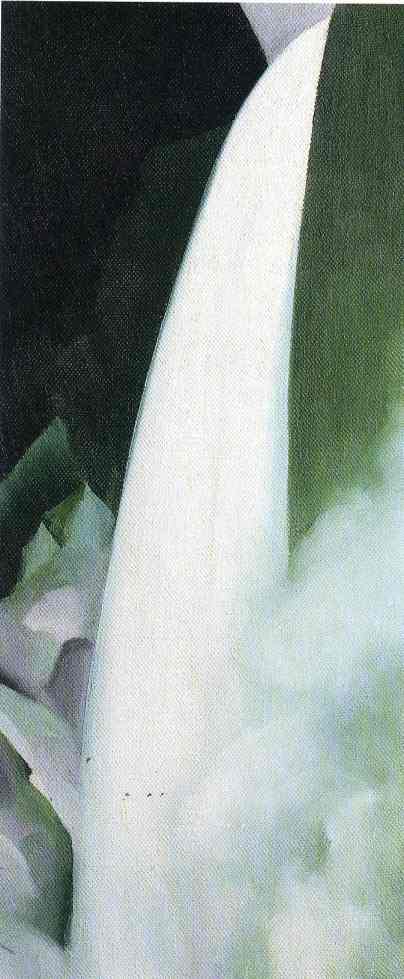
Green and White, Georgia O'Keeffe
Green and White, Georgia O’Keeffe

Prompted by Call Me Ishmael, Charles Olson’s marvelous study of Moby-Dick, I took a fifth trip through Melville’s massive opus this past month.

Every time I read Moby-Dick it seems funnier and sadder. Richer. Thicker.

I cobbled together my reading over different media and spaces: I listened to William Hootkins‘ outstanding unabridged audiobook version, and then reread on my Kindle key passages I’d mentally underlined; I then checked those passages against the copy of Moby-Dick I annotated the hell out of in grad school. As I read, I posted some of my favorite excerpts on this blog.

I posted some of my favorite excerpts of Moby-Dick here on Biblioklept because I knew that I wouldn’t be able to write about the book—not really—that I wouldn’t be able to handle all of its language. (My riff on Olson’s book obsesses over Olson’s ability to write after Melville and Melville’s ability to write after Shakespeare).

Really, in posting so many fragments of Moby-Dick, I suppose that I’ve attempted to abrogate any kind of critical duty to describe the book under discussion in terms of its own language.

The above is really a way of saying: Moby-Dick, like any sublime work of literature, is a self-defining, self-describing, and even self-deconstructing text.

Or, another way of making such a claim: Let me (mis)appropriate Samuel Beckett’s description of Finnegans Wake and contend that the description fits Moby-Dick just as aptly: 

Here form is content, content is form. You complain that this stuff is not written in English. It is not written at all. It is not to be read – or rather it is not only to be read. It is to be looked at and listened to. His writing is not about something, it is that something itself.

So here circumnavigate back to my own recent reading and auditing of the book: Hootkins’ audio recording would make a great starting point for anyone (unnecessarily) daunted by Melville’s big book. He performs the book, commanding his audience’s attention. He unpacks the humor that might otherwise hide from untuned 21st century ears; he communicates the book’s deep, profound sorrow. His Ishmael is perceptive, clever, generous. His Stubb, hilarious. His Ahab a strange philosophical terror.

After listening to Hootkins on my commute, I’d return to key passages on my Kindle, and then finally review the notes I wrote in the cheap hardback Signet edition I read in grad school.

But why bring this up?

I don’t know.

Maybe: Unpacking Moby-Dick is too hard, too much—would require its own book, a book that would cite the entirety of Melville’s book.

But discussing the book this way seems a disservice to potential readers; it’s as if we would cloak the book in a mystic veil.

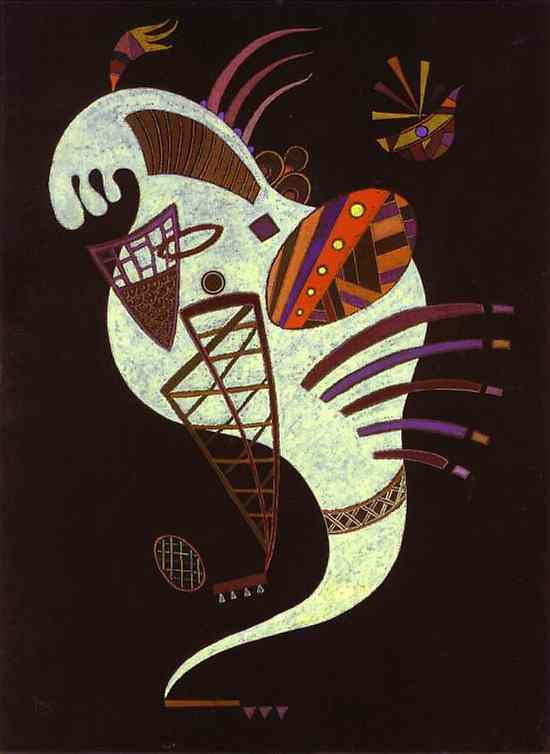
White Figure, Wassily Kandinsky

If I have a point to all of this: Moby-Dick is wonderful, funny, moving, engaging; a genre-bender that tackles philosophy, history, science; an adventure tale; a psychological novel brimming with ideas, allusions—but one delivered in sonorous, poetic language. It’s good, great, grand. Read it, if you haven’t. Reread it.

So I’ve failed to even try to begin to attempt to pretend to describe the plot.

Here: Ishmael, depressed, suicidal perhaps, decides to go to sea. To go whaling.

He tries to measure the whale, and by measuring the whale, maybe measure the world. But this is not really possible, certainly not in language. Certainly not in first-person perspective.

In Chapter 86, “The Tail,” Ishmael tells us:

The more I consider this mighty tail, the more do I deplore my inability to express it. At times there are gestures in it, which, though they would well grace the hand of man, remain wholly inexplicable. … Dissect him how I may, then, I but go skin deep. I know him not, and never will. But if I know not even the tail of this whale, how understand his head? much more, how comprehend his face, when face he has none? Thou shalt see my back parts, my tail, he seems to say, but my face shall not be seen. But I cannot completely make out his back parts; and hint what he will about his face, I say again he has no face.

(I don’t suppose I need to remark that Melville here lets one mighty tail stand in for another mighty tale—a tale he cannot face).

Call me Ishmael”: our protagonist hails us.

But these famous opening lines aren’t really the beginning of the book. First we have the section titled “Extracts,” and before that “Etymology.” The first entry on the etymology of the whale, from  Hackluyt, warns us not to leave out “the letter H, which almost alone maketh up the signification of the word.”

Whaling. Hailing. Wailing.

The whiteness of the whale.

The witness of the wail.

How, just how, does Ishmael witness? How does he manage to tell this story? Did I obsess over this in earlier readings? I don’t think so—I was too concerned with absorbing the what and the why of the story to closely attend the how of its telling.

The novel begins in standard first-person point-of-view territory, Ishmael guiding us through Manhattan, New Bedford, Nantucket—but by the time he’s boarded the Pequod and set out into the wide watery world, this first-person perspective transcends the limits of physics: Our narrator not only attends the private conversations of Ahab, his mates, his harpooners, his men—but also the very interior of those men, their minds, their dreams, their imaginations.

Is Ishmael a ghost?

Leviathan-Job 40-21, Salvador Dali

And to return to Ahab for a moment: My godwhat a voice! His infecting, addicting insanity. His agon with Moby Dick, with the sun, with himself.

And Starbuck: Starbuck comes across weaker and weaker each time I read the book. We’re to believe he’s a man of convictions, but he moves in half-measures. In his final moments he tries to match or feign or approximate Ahab’s insanity: tragicomedy.

And Stubb: Despite his cruelties, he may be my favorite character in the book.

While I’m riffing: Is there a novel more phallic in the American canon than Moby-Dick? All that sperm: All that life-force.

This is maybe what Moby-Dick is about: Life-force. The attempt to to resurrect and die and resurrect again. The coffin that serves as life-buoy. The life-line that connects men that might also be their death. A counterpane to counter pain. A condensation of oppositions.

A yarn, a rope, a series of knots, layered, layering, self-contextualizing.

An attempt to put into language what cannot be put into language.

Have I reached my end? Maybe too long for the “short riff” promised in the title, but also surely too short to even begin to start to approach to pretend to say something adequate about the novel. So a parting thought: Moby-Dick is better—richer, fuller, deeper—each time I read it, and I look forward to reading it again.

[Ed. note—Biblioklept originally ran a version of this riff in February 2013. I’m running it again for Herman Melville’s 200th birthday. I haven’t read Moby-Dick in full since 2013.]
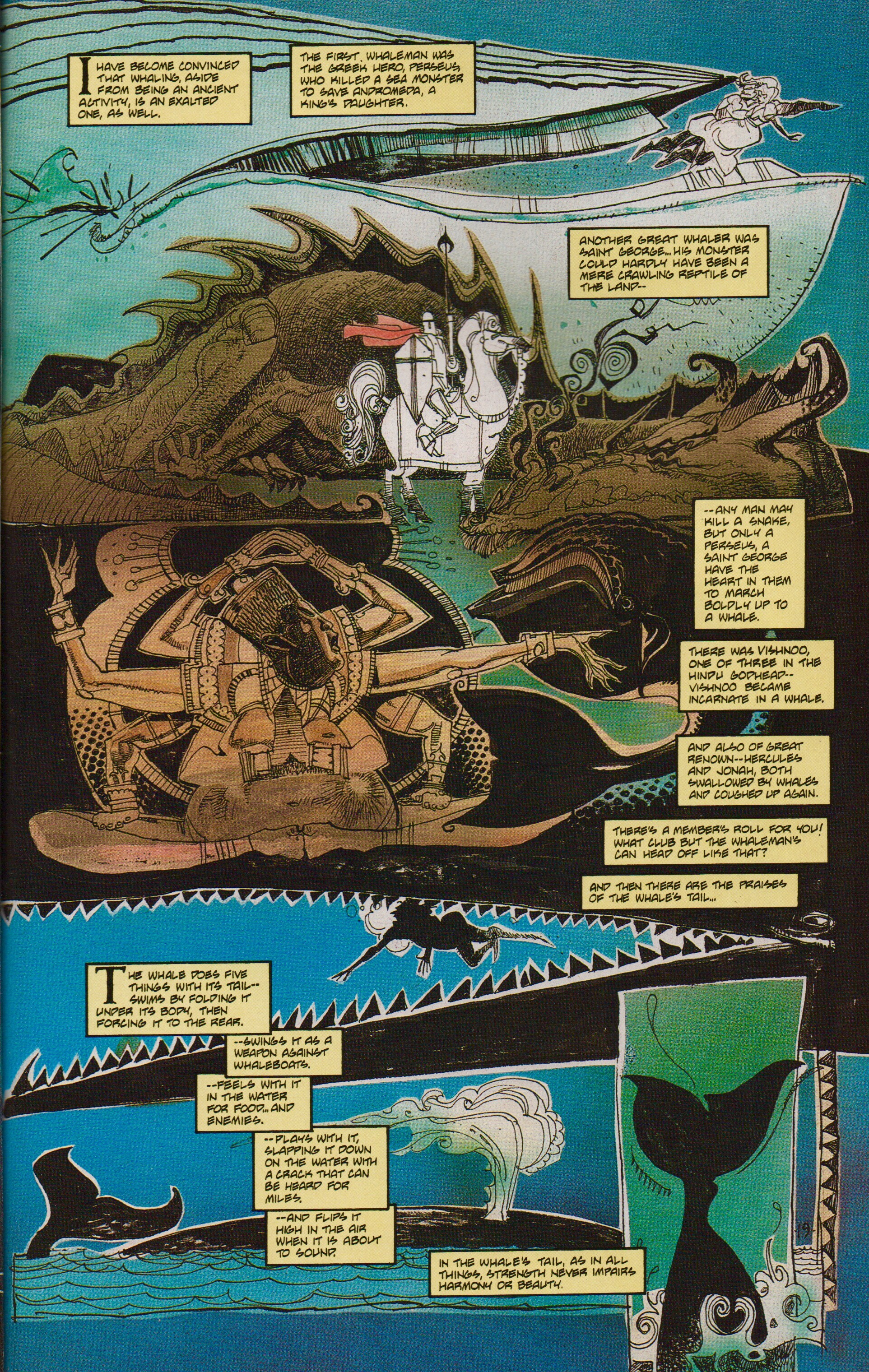
Perseus, whaleman (Melville/Sienkiewicz)

img_7584

From Bill Sienkiewicz’s adaptation of Herman Melville’s Moby-Dick. The Classics Illustrated edition (February 1990) is one of my favorite Moby-Dicks.

Of all divers, thou hast dived the deepest | Moby-Dick

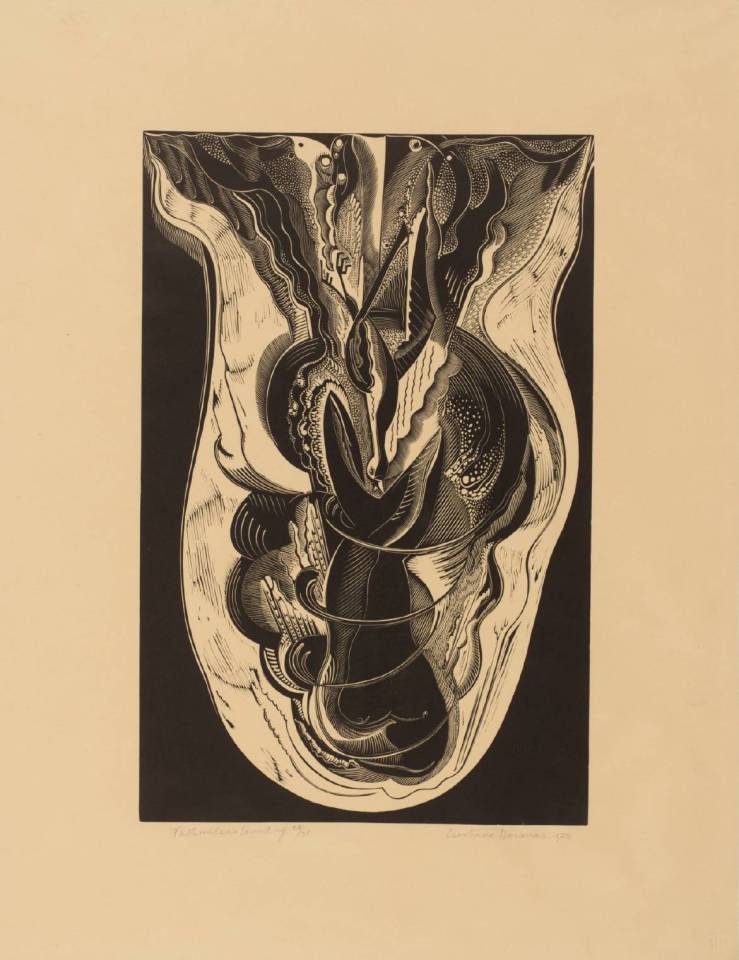
Fathomless Sounding 1932 by Gertrude Hermes 1901-1983
Fathomless Sounding, 1932 by Gertrude Hermes (1901-1983)

It was a black and hooded head; and hanging there in the midst of so intense a calm, it seemed the Sphynx’s in the desert. “Speak, thou vast and venerable head,” muttered Ahab, “which, though ungarnished with a beard, yet here and there lookest hoary with mosses; speak, mighty head, and tell us the secret thing that is in thee. Of all divers, thou hast dived the deepest. That head upon which the upper sun now gleams, has moved amid this world’s foundations. Where unrecorded names and navies rust, and untold hopes and anchors rot; where in her murderous hold this frigate earth is ballasted with bones of millions of the drowned; there, in that awful water-land, there was thy most familiar home. Thou hast been where bell or diver never went; hast slept by many a sailor’s side, where sleepless mothers would give their lives to lay them down. Thou saw’st the locked lovers when leaping from their flaming ship; heart to heart they sank beneath the exulting wave; true to each other, when heaven seemed false to them. Thou saw’st the murdered mate when tossed by pirates from the midnight deck; for hours he fell into the deeper midnight of the insatiate maw; and his murderers still sailed on unharmed—while swift lightnings shivered the neighboring ship that would have borne a righteous husband to outstretched, longing arms. O head! thou hast seen enough to split the planets and make an infidel of Abraham, and not one syllable is thine!”

From Ch. 70 of Moby-Dick by Herman Melville.