[Ed. note: The following citations come from one-star Amazon reviews of Herman Melville’s novel Moby-Dick. To be very clear, I think Moby-Dick is fantastic—but I also enjoy seeing what people compelled to write negative reviews of the book on Amazon had to say. What follows are selections of one-star Amazon reviews; I’ve preserved the reviewers’ unique styles of punctuation and spelling].
Yechh.
It made for a smashing movie.
If you want to read lots of meaningless whale trivia read the book.
Boy gets whale. Boy loses whale. Boy gets whale. Spawns yawns
I think if you made it into a short comic strip, you would have liked it.
I bought this book for a friend in jail. Alas, he was unable to read it because the font was too small.
Ray Bradbury, who wrote the screenplay for this novel, (a la Gregory Peck) couldn’t even finish the damn thing!
If you like a story with nonessential information and an author that is entirely to verbose, then this book is for you.
I am quite the fan of stories which involve man eating sea creatures, such as Jaws. Moby Dick is nothing compared to such classics, I fear.
Throughout the book, you may read one chapter with some action only to be followed by 5 or 6 chapters of tangents that are not necessary to understand the story.
Moby Dick, was a horrible waiste of time. Along with its wordy paragraphs, it also talked about uninteresting issues. It is also to long, and you don’t hear of them encountering the whale until the end of the book.
The only people who like this book are english teachers who derive a feeling of moral superiority from forcing others to read this incredibly bad novel.
First of all, classiflying it as fiction is a mistake. Probably a good 60% of the book is non-fiction – chapter after chapter dedicated to every imaginable detail of the biology of the whale and every imaginable nuance of whaling.
I love literatur just as much as the next guy but we must face it 100 years or so ago American literature was reall weak and lagging from the rest of the world, perhaps now they’re starting to catch up with writers like Ann Rice and them.
I have seen better writing in a Hallmark card! Boring! Give me a good ole copy of Elvis and Me! A true story that really tugs at your heart strings! I sleep with that one under my pillow! Keep Moby Dick away from my bed!
Those chapters about Ishmael sleeping with whatever his name was and Ishamel had such a good time with the other guy’s arm over him and leg over him that he didn’t know if he was straight or gay any more.
i personally didn’t enjoy the philosophical or deep side of the book, i have read much much better books in that regard.
There is no suspense, and I find the idea of people hunting whales offensive. Offensive with a capital O.
Honestly, Over 400 pages devoted to killing a whale because it ate your hand? Come on.
It is hard to read. like work. Doubt he could get published today.
Black Leopard, Red Wolf is clearly Not for Everybody. It’s violent and strange, and the sex in it will likely upset conservative readers. It’s also shaggy and unwieldy. It probably has a future as a cult novel. You just sort of have to go with its fluid (in every sense of that word) program and enjoy the ride. I enjoyed it very much and am looking forward to the sequel.
I also wrote about David Berman’s new band Purple Mountains in May. Since then I’ve had that record on repeat. I don’t really like to write about music (I’m terrible at it), but I think the record is simply fantastic and sad and probably the best one he’s made. I wrote about the lead single “All My Happiness Is Gone” here.
I did way more reading again in June–again, a busy month—and couldn’t muster reviews of Gerald Murnane’s Border Districts (excellent), Patrick Chamoiseau’s Slave Old Man (superb), Thomas Pynchon’s Vineland (very good), or Robert Coover’s The Origin of the Brunists (a slog), although I did write a bit about them here.
This is the central question of Jaime Hernandez’s Is This How You See Me? Collecting serialized comics from the past five years into a cohesive graphic novel, Is This How You See Me? is a moving tale of friendship, aging, and how the past shapes how we see the present.
…I loved reading Berg; I loved its sticky, grimy sentences, its wriggly worms of consciousness. I wanted more, and I sought it out, picking up The Unmapped Country, a collection of unpublished Quin stuff edited by Jennifer Hodgson and published by And Other Stories, the indie press that reissued Berg. Hodgson is also a guest on the Blacklisted Podcast episode that focuses on Berg. That episode offers a rallying ringing endorsement, if you need voices besides mine. The Blacklisted episode also features a reading of most of novelist Lee Rourke’s 2010 appreciation for Ann Quin’s Berg.(Rourke had championed online as early as 2007.) Rourke should be commended for being ahead of the curve on resurfacing a writer who feels wholly vital in our own time. He concludes his 2010 piece, “Berg should be read by everyone, if only to give us a glimpse of what the contemporary British novel could be like.” Read the book.
The first three words of Anna Kavan’s 1967 novel Ice are “I was lost,” a simple declaration that seems to serve as a mission statement for the next 60 odd pages. I read these 60 odd pages (63, to be precise, in my Penguin Classics 50th Anniversary Edition of the novel) today, often feeling lost, and glad of it. I like it when I don’t really know what a book is doing, and Ice is such a book.
In July, I reviewed Geometry in the Dust, a novel by the French author Pierre Senges with accompanying illustrations by the Oubapo comix artist Killoffer, new in English translation by Jacob Siefring. The novel is syntactically thick. From my review—
Notice the punctuation: the semicolons, the dashes (em and en), the periods, the parentheses, the commas. Senges’ prose in Geometry is syntactically thick. Sentences, like alleys in a strange city, begin in one place and end up somewhere quite different. The interposition of jostling clauses might cause a reader to lose the subject, to drop the thread or diverge from the path (or pick your metaphor). The effect is sometimes profound, with our narrator arriving at some strange philosophical insight after piling clause upon clause that connects the original subject with something utterly outlandish. And sometimes, the effect is bathetic. In one such example, the narrator, instructing his sovereign on the proper modes of religious observance in the city, moves from a description of the ideal confessional to an evocation of Limbourg’s hell to the necessity of being able grasp a peanut between two fingers. The comical effect is not so much punctured as understood anew though when Senges’ narrator returns to the peanut as a central metaphor for the scope of a city (“there are roughly as many men in the city as peanuts in the city’s bowls”), a metaphor that he extends in clause after clause leading to an invocation of “Hop o’ my Thumb’s pebbles,” a reference to Charles Perrault fairy tale about a boy who uses riverstones to find his way home after having been abandoned in the woods by his parents.
I also reviewed Anna Burns’s novel Milkman, which I loved loved loved as well (if it seems like I loved everything I read, I assure you this is not the case. I was indifferent to much of what came through Biblioklept World Headquarters). From my review:
Milkman is a maybe-horror, but also a maybe-comedy (it even ends in a maybe-laugh), and like many strong works that showcase the intense relationship between horror and comedy (Kafka, Brazil, The King of Comedy, “Young Goodman Brown,” Twin Peaks, Goya, Bolaño, Get Out, Candide, Curb Your Enthusiasm, Funny Games, etc.)—like many strong works that showcase the intense relationship between horror and comedy, Milkman exists in a weird maybe-space, a queasy wonderful freaky upsetting maybe-space that, in its finest moments, makes us look at something we thought we might have understood in a wholly new way. Highly recommended.
(I also recycled a bunch of old reviews when I went on vacation with my family to the gorgeous Pacific Northwest corner of the U.S., including riffs on
Near the middle of Herman Melville’s 1855 novella Benito Cereno, our erstwhile protagonist Captain Amasa Delano encounters an old sailor tying a strange knot:
For intricacy, such a knot he had never seen in an American ship, nor indeed any other. The old man looked like an Egyptian priest, making Gordian knots for the temple of Ammon. The knot seemed a combination of double-bowline-knot, treble-crown-knot, back-handed-well-knot, knot-in-and-out-knot, and jamming-knot.
At last, puzzled to comprehend the meaning of such a knot, Captain Delano addressed the knotter:—
“What are you knotting there, my man?”
“The knot,” was the brief reply, without looking up.
“So it seems; but what is it for?”
“For some one else to undo,” muttered back the old man…
This knot serves as a metaphor for the text of Benito Cereno itself. We readers (along with our hapless surrogate Captain Delano) are the ones tasked with unknotting the text’s central mystery.
Part of the great pleasure of reading Benito Cereno for the first time rests in Melville’s slow-burning buildup to the eventual unknotting. I was fortunate enough to have been ignorant of the plot (and eventual revelation) of Benito Cereno when I first read it over a dozen or so years ago (although even then I cottoned on to what was really happening earlier than Captain Delano did). I read the novella again last week and marveled at Melville’s narrative control, enjoying it anew by seeing it anew.
Benito Cereno is a sharply-drawn tale about the limits of first-person consciousness and the cultural blinders we wear that prevent us from seeing what is right in front of us. The book subtly critiques the notion of a naturally-ordered morality in which every person has a right and fitting place, whether that be a place of power or a place of servitude. Melville shows the peril and folly of intrinsically believing in the absolute rightness of such a system. There is comfort in belief, but unquestioning belief makes us radically susceptible to being wrong. When we most believe ourselves right is often when we are the most blinded to the reality around us. We cannot see that we cannot see. And Benito Cereno is about how we see—about how we know what we know. Melville’s novella is also about how seeing entails not seeing, and, further, not seeing what we are not seeing—all that we do not know that we do not know. Melville makes his readers eventually see these unknown unknowns, and, remarkably, shows us that they were right before our eyes the entire time.
Forgive me—much of the previous paragraph is far too general. I want you to read Benito Cereno but I don’t want to spoil the plot. Let’s attempt summation without revelation: The novella is set in 1799 off the coast of Chile. Amasa Delano, captain of the American sealing vessel the Bachelor’s Delight, spies a ship floating adrift aimlessly, apparently in distress. Captain Delano boards one of his whale boats and heads to the San Dominick, a Spanish slaving ship, and quickly sees that the enslaved Africans on board dramatically outnumber the Spanish sailors. Delano offers aid to the San Dominick’s captain, Benito Cereno, who tells Delano that most of the Spanish crew perished in a fever (along with the “owner” of the slaves, Alexandro Aranda). Benito Cereno himself seems terribly ill and not entirely fit to command, so Delano waits aboard the San Dominick while his men fetch food and water from the Bachelor’s Delight. In the meantime, he tours the ship and talks with Benito Cereno and Cereno’s enslaved valet Babo.
Delano is frequently troubled by what he sees on the ship, but his good nature always affords him a natural and acceptable answer that assuages the sinister tension tingling in the background. Even though he’s troubled by the “half-lunatic Don Benito,” Delano’s “good-natured” sense of moral authority can explain away what he sees with his own eyes:
At last he began to laugh at his former forebodings; and laugh at the strange ship for, in its aspect, someway siding with them, as it were; and laugh, too, at the odd-looking blacks, particularly those old scissors-grinders, the Ashantees; and those bed-ridden old knitting women, the oakum-pickers; and almost at the dark Spaniard himself, the central hobgoblin of all.
For the rest, whatever in a serious way seemed enigmatical, was now good-naturedly explained away by the thought that, for the most part, the poor invalid scarcely knew what he was about…
These paragraphs not only summarize some of the images that give Delano pause, they also show Melville’s remarkable prose style, which follow’s Delano’s psychological state: laughing dismissal returns back to anxious image; anxious image gives way again to relieved certitude. All that is “enigmatical” in life can be “good-naturedly explained away.” And yet as the narrative progresses, good-natured explanations will fail to answer to visceral reality. Melville’s slow burn catches fire, burning away the veils of pretense.
The rest of this post (after the image) contains significant spoilers. I highly recommend Benito Cereno, which is reprinted in any number of Melville collections (I read it again in Rinehart’s Selected Tales and Poems), including The Piazza Tales (which you can download for free at Project Gutenberg). While I think that Benito Cereno has gained more recognition in recent years, it remains under-read compared to Melville’s more famous novellas Bartleby and Billy Budd. Those are great books too, but I’d argue that Benito Cereno, with its critique of white supremacy, is more timely than ever. Check it out. (Again, spoilers ahead).
July 29th.–Remarkable characters:–A disagreeable figure, waning from middle age, clad in a pair of tow homespun pantaloons, and a very soiled shirt, barefoot, and with one of his feet maimed by an axe; also an arm amputated two or three inches below the elbow. His beard of a week’s growth, grim and grisly, with a general effect of black; altogether a disgusting object. Yet he has the signs of having been a handsome man in his idea, though now such a beastly figure that probably no living thing but his great dog would touch him without an effort. Coming to the stoop, where several persons were sitting, “Good morning, gentlemen,” said the wretch. Nobodyanswered for a time, till at last one said, “I don’t know whom you speak to: not to me, I’m sure” (meaning that he did not claim to be a gentleman). “Why I thought I spoke to you all at once,” replied the figure, laughing. So he sat himself down on the lower step of the stoop, and began to talk; and, the conversation being turned upon his bare feet by one of the company, he related the story of his losing his toes by the glancing aside of an axe, and with what great fortitude he bore it. Then he made a transition to the loss of his arm, and, setting his teeth and drawing in his breath, said that the pain was dreadful; but this, too, he seems to have borne like an Indian; and a person testified to his fortitude by saying that he did not suppose there was any feeling in him, from observing how he bore it. The man spoke of the pain of cutting the muscles, and the particular agony at one moment, while the bone was being sawed asunder; and there was a strange expression of remembered anguish, as he shrugged his half-limb, and described the matter. Afterwards, in a reply to a question of mine, whether he still seemed to feel the hand that had been amputated, he answered that he did always; and, baring the stump, he moved the severed muscles, saying, “There is the thumb, there the forefinger,” and so on. Then he talked to me about phrenology, of which he seems a firm believer and skilful practitioner, telling how he had hit upon the true character of many people. There was a great deal of sense and acuteness in his talk, and something of elevation in his expressions,–perhaps a studied elevation, and a sort of courtesy in his manner; but his sense had something out of the way in it; there was something wild and ruined and desperate in his talk, though I can hardlysay what it was. There was a trace of the gentleman and man of intellect through his deep degradation; and a pleasure in intellectual pursuits, and an acuteness and trained judgment, which bespoke a mind once strong and cultivated. “My study is man,” said he. And, looking at me, “I do not know your name,” he said, “but there is something of the hawk-eye about you, too.” Continue reading “Remarkable characters | Nathaniel Hawthorne’s journal entry for July 29th, 1838”→
Ishmael Reed’s second novel Yellow Back Radio Broke-Down tells the story of the Loop Garoo Kid, a “desperado so onery he made the Pope cry and the most powerful of cattlemen shed his head to the Executioner’s swine.”
The novel explodes in kaleidoscopic bursts as Reed dices up three centuries of American history to riff on race, religion, sex, and power. Unstuck in time and unhampered by geographic or technological restraint, historical figures like Lewis and Clark, Thomas Jefferson, John Wesley Harding, Groucho Marx, and Pope Innocent (never mind which one) wander in and out of the narrative, supplementing its ironic allegorical heft. These minor characters are part of Reed’s Neo-HooDoo spell, ingredients in a Western revenge story that is simultaneously comic and apocalyptic in its howl against the dominant historical American narrative. Yellow Back Radio Broke-Down is a strange and marvelous novel, at once slapstick and deadly serious, exuberant in its joy and harsh in its bitterness, close to 50 years after its publication, as timely as ever.
After the breathless introduction of its hero the Loop Garoo Kid,Yellow Back Radio Broke-Down initiates its plot. Loop’s circus troupe arrives to the titular city Yellow Back Radio (the “nearest town Video Junction is about fifty miles away”), only to find that the children of the town, “dressed in the attire of the Plains Indians,” have deposed the adults:
We chased them out of town. We were tired of them ordering us around. They worked us day and night in the mines, made us herd animals harvest the crops and for three hours a day we went to school to hear teachers praise the old. Made us learn facts by rote. Lies really bent upon making us behave. We decided to create our own fiction.
The children’s revolutionary, anarchic spirit drives Reed’s own fiction, which counters all those old lies the old people use to make us behave.
Of course the old—the adults—want “their” land back. Enter that most powerful of cattlemen, Drag Gibson, who plans to wrest the land away from everyone for himself. We first meet Drag “at his usual hobby, embracing his property.” Drag’s favorite property is a green mustang,
a symbol for all his streams of fish, his herds, his fruit so large they weighed down the mountains, black gold and diamonds which lay in untapped fields, and his barnyard overflowing with robust and erotic fowl.
Drag loves to French kiss the horse, we’re told. Oh, and lest you wonder if “green” here is a metaphor for, like, new, or inexperienced, or callow: No. The horse is literally green (“turned green from old nightmares”). That’s the wonderful surreal logic of Reed’s vibrant Western, and such details (the novel is crammed with them) make Yellow Back Radio Broke-Down a joy to read.
Where was I? Oh yes, Drag Gibson.
Drag—allegorical stand-in for Manifest Destiny, white privilege, capitalist expansion, you name it—Drag, in the process of trying to clear the kids out of Yellow Back Radio, orders all of Loop’s troupe slaughtered.
The massacre sets in motion Loop’s revenge on Drag (and white supremacy in general), which unfolds in a bitter blazing series of japes, riffs, rants, and gags. (“Unfolds” is the wrong verb—too neat. The action in Yellow Back Radio Broke-Down is more like the springing of a Jack-in-the-box).
Loop goes about obtaining his revenge via his NeoHooDoo practices. He calls out curses and hexes, summoning loas in a lengthy prayer. Loop’s spell culminates in a call that goes beyond an immediate revenge on Drag and his henchmen, a call that moves toward a retribution for black culture in general:
O Black Hawk American Indian houngan of Hoo-Doo please do open up some of these prissy orthodox minds so that they will no longer call Black People’s American experience “corrupt” “perverse” and “decadent.” Please show them that Booker T and MG’s, Etta James, Johnny Ace and Bojangle tapdancing is just as beautiful as anything that happened anywhere else in the world. Teach them that anywhere people go they have experience and that all experience is art.
So much of Yellow Back Radio Broke-Down is turning all experience into art. Reed spins multivalent cultural material into something new, something arguably American. The title of the novel suggests its program: a breaking-down of yellowed paperback narratives, a breaking-down of radio signals. Significantly, that analysis, that break-down, is also synthesized in this novel into something wholly original. Rhetorically, Yellow Back Radio Broke-Down evokes flipping through paperbacks at random, making a new narrative; or scrolling up and down a radio dial, making new music from random bursts of sound; or rifling through a stack of manic Sunday funnies to make a new, somehow more vibrant collage.
Perhaps the Pope puts it best when he arrives late in the novel. (Ostensibly, the Pope shows up to put an end to Loop’s hexing and vexing of the adult citizenry—but let’s just say the two Holy Men have a deeper, older relationship). After a lengthy disquisition on the history of hoodoo and its genesis in the Voudon religion of Africa (“that strange continent which serves as the subconscious of our planet…shaped so like the human skull”), the Pope declares that “Loop Garoo seems to be practicing a syncretistic American version” of the old Ju Ju. The Pope continues:
Loop seems to be scatting arbitrarily, using forms of this and that and adding his own. He’s blowing like that celebrated musician Charles Yardbird Parker—improvising as he goes along. He’s throwing clusters of demon chords at you and you don’t know the changes, do you Mr. Drag?
The Pope here describes Reed’s style too, of course (which is to say that Reed is describing his own style, via one of his characters. The purest postmodernism). The apparent effortlessness of Reed’s improvisations—the prose’s sheer manic energy—actually camouflages a tight and precise plot. I was struck by how much of Yellow Back Radio Broke-Down’s apparent anarchy resolves into a bigger picture upon a second reading.
That simultaneous effortlessness and precision makes Reed’s novel a joy to jaunt through. Here is a writer taking what he wants from any number of literary and artistic traditions while dispensing with the forms and tropes he doesn’t want and doesn’t need. If Reed wants to riff on the historical relations between Indians and African-Americans, he’ll do that. If Reed wants to assess the relative values of Thomas Jefferson as a progressive figure, he’ll do that. If Reed wants to attack his neo-social realist critics, he’ll do that. If Reed wants to critique the relationship between militarism and science, he’ll do that. If Reed wants to tell some really dirty jokes about a threesome, he’ll do that. And you can bet if he wants some ass-kicking Amazons to show up at some point, they’re gonna show.
And it’s a great show. Yellow Back Radio Broke-Down begins with the slaughter of a circus troupe before we get to see their act. The real circus act is the novel itself, filled with orators and showmen, carnival barkers and con-artists, pistoleers and magicians. There’s a manic glee to it all, a glee tempered in anger—think of George Herriman’s Krazy Kat, or Thomas Pynchon’s zany rage, or Robert Downey Sr.’s satirical film Putney Swope.
Through all its anger,Yellow Back Radio Broke-Down nevertheless repeatedly affirms the possibility of imagination and creation—both as cures and as hexes. We have here a tale of defensive and retaliatory magic. Yellow Back Radio Broke-Down is the third novel of Reed’s novels I’ve read (after Mumbo Jumbo and The Free-Lance Pallbearers), and my favorite thus far. Frankly, I needed the novel right now in a way that I didn’t know that I needed it until I read it; the contemporary novel I tried to read after it felt stale and boring. So I read Yellow Back Radio Broke-Down again.The great gift here is that Reed’s novel answers to the final line of Loop’s prayer to the Loa: “Teach them that anywhere people go they have experience and that all experience is art.” Like the children of Yellow Back Radio, Reed creates his own fiction, and invites us to do the same. Very highly recommended.
[Ed. note—Biblioklept originally ran this review in February of 2017.]
NYRB published Esther Allen’s English translation in 2016. It is excellent.
What is Zama about?
Zama tells the brutally funny and often sad story of Don Diego de Zama, a bored and horny americano wasting away in the provincial backwaters of Paraguay. It’s the end of the world at the end of the 18th century, and there’s not a lot to do. Zama fills his time with schemes of lust and petty pride, shirking his job as a nominal governmental authority. He longs to be reunited with his wife and family in Buenos Aires, but seems to sabotage every opportunity to get back to them. He also longs for his glory days as a corregidor, putting down “the native rebellion” in the service of Spain’s imperial project. Zama is a confusing and confused character, frequently frustrating but also oddly sympathetic. He is a loser who does not seem to see that he is a loser, although life gives him every opportunity to come to this conclusion. As South African novelist J.M. Coetzee’s puts it in his excellent in-depth review of the novel:
[Zama] is vain, maladroit, narcissistic, and morbidly suspicious; he is prone to accesses of lust and fits of violence, and endowed with an endless capacity for self-deception.
He is also the author of himself, in a double sense. First, everything we hear about him comes from his own mouth, including such derogatory epithets as “swaggering” and “dogslayer,” which suggest a certain ironic self-awareness. Second, his day-to-day actions are dictated by the promptings of his unconscious, or at least his inner self, over which he makes no effort to assert conscious control. His narcissistic pleasure in himself includes the pleasure of never knowing what he will get up to next, and thus of being free to invent himself as he goes along.
Coetzee captures the joy of reading Zama in those last few lines: It’s the joy in watching a first-person perspective invent itself in shambling picaresque adventures born of sheer boredom. It’s the pleasure of seeing an asshole who refuses to acknowledge that he is an asshole try to pretend that he is not an asshole—all in a kind of language that is simultaneously romantic and flat.
Let me give you a taste of that language, reader. Here are the opening bars of the novel:
I left the city and made my way downriver alone, to meet the ship I awaited without knowing when it would come.
I reached the old wharf, that inexplicable structure. The city and its harbor have always been where they are, a quarter-league farther upriver.
I observed, among its pilings, the writhing patch of water that ebbs between them.
A dead monkey, still whole, still undecomposed, drifted back and forth with a certain precision upon those ripples and eddies without exit. All his life the water at forest’s edge had beckoned him to a journey, a journey he did not take until he was no longer a monkey but only a monkey’s corpse. The water that bore him up tried to bear him away, but he was caught among the posts of the decrepit wharf and there he was, ready to go and not going. And there we were.
There we were: Ready to go and not going.
The ship that won’t come in, the floating dead monkey, the state of unknowing—these abject and negative motifs are the paradoxical genesis of the novel. The clipped repetitions, culminating in “Ready to go and not going” recall Samuel Beckett, whom translator Esther Allen acknowledges as “a perfect counterpoint to the prose voice of Zama” in her introduction.
In addition to Beckett, easy points of comparison are Dostoevsky, Camus, Borges, and especially Kafka. In his perceptive analysis of Zama, critic Benjamin Kunkel points out the novel’s existential core, absurdist peripheries, and realistic contours:
As with novels by Kafka, Camus, Sartre, and Beckett, the story’s preoccupation is the tension between human freedom and constraining circumstance. Zama, a man as impetuous as he is stuck, resembles other existentialist antiheroes as he swings between spellbound passivity and sudden lunges into action. But Don Diego never seems like a figure in an allegory, like K. in The Castle; or an ambulatory philosophical argument, like Roquentin in Nausea. Zama induces a rare feeling—to put it as naïvely as possible—of the main character’s realness. Don Diego is consistently surprised by his own behavior, but not as much as he would like. His abrupt acts and swerving meditations have an air of unplotted inevitability about them. He is a character more convincing than coherent, and more persuasive than intelligible.
These lifelike moments of “unplotted inevitability” are enthralling. Di Benedetto doesn’t just show us Zama seeing, he shows us Zama seeing what he is seeing. He shows us consciousness at work—or rather, consciousness in distress. In a representative passage which can stand alone as a bizarre parable in search of a moral, Zama, having lost all his money betting on horses, awakes from a drunken stupor to witness a spider crawling on a fellow drunkard:
The spider approached the drunk. From a quarter vara away, these spiders can leap and bite so that if taken by surprise, even a man who’s awake has no time to defend himself. I had no wish to move. I could crush it with my boot but would postpone until the last.
The spider moved toward the sleeping head and I watched to see whether anything out of the ordinary would transpire. Would the man—obedient to some mysterious warning instinct—suddenly awaken and kill it? He did not. Now the insect was crawling in his hair. I didn’t see it climb up; I saw it there on him and then I was quite certain I should do nothing.
The episode continues in this way, building in tension as the large spider crawls over the man’s face while Zama remains inert and fascinated by his own inertia—until the drunken man absently bats the spider from his face. Zama is paradoxically stunned by this anticlimax:
I reviewed the episode. At no point had I felt any emotion, except when I imagined the man had wakened and was about to deliver himself of an entirely justified diatribe against me.
The passage is representative of Di Benedetto’s rhetorical skill—he gives us a deceptively lucid first-person narrator who articulately elides key information, both from the reader and himself. Zama refuses to name his intense desire to see the spider bite the man. Additionally, his emotional identification is bound to righteous anger, the righteous anger appropriate to the would-be-bitten drunkard. Instead of genuine pathos, Zama would usurp this man’s self-righteous anger, the anger that he feels all the time at his (literal and figurative) position in life. But the spider bite that would license self-righteousness never comes. Basically, Zama just wants something to happen.
And that’s the plot of Zama, more or less.Our (anti-)hero’s picaresque jabs at adventure and romance are sent awry or thwarted, usually by his own loutish passions. Zama’s would-be escapades unravel, that is, until the book’s final section, 1799—
–Okay, let me digress momentarily: Zama, a slim 200 pages, is structured into three sections: 1790, 1794, and 1799. The connective tissue between these sections hangs transparent, nearly invisible, but nevertheless accessible via small clues, motifs, scant threads. Di Benedetto gives us modernism in the last decade of the 18th century, boredom that tiptoes around the abyss of insanity. Rereading the three sections is a joy. But let me return to the central thread—
Zama’s would-be adventures unravel or collapse until the book’s final section, 1799, when Di Benedetto puts our hero in genuine harm’s way (and cunningly exfiltrates any opportunity for overt heroism on Zama’s part). The novel earns its drive toward what I take to be its central question: “Do you want to live?”
Di Benedetto hides his answer to this question not so much in the central figure Zama, but rather in Zama’s put-upon secretary, his mozo Manuel Fernández. Fernández is, at least for me, the secret star of the novel. When we first meet Fernández, Zama joins in gently mocking him at the lead of their boss, the governor. They tease Fernández when he tells them that he is writing a novel. “Make sons, Manuel, not books,” admonishes the governor, but the clerk replies: “I want to realize myself in myself…Children realize themselves, but whether for good or ill we don’t know. Books are made only for truth and beauty.” Later, Zama, in more of a ruse than in good faith, asks Fernández to read some of his book. He finds the “entangled” prose “incomprehensible,” to which Fernández replies: “the first man and the first lizard were each incomprehensible, as well, to all those who surrounded them.” Fernández declares that he writes for “no master.” If he has no audience today, his pages will be understood by his “grandchildren’s grandchildren…Things will be different then.” Later, Fernández reveals that he’s given away his manuscript to an old man, a stranger suffering boredom while waiting for a delayed ship to take him somewhere other than the end of the world.
Fernández sees himself as an author doomed to obscurity in the present, an author who awaits a future that will catch up to his originary vision. Perhaps it’s a bit much to suggest he’s a stand-in for Di Benedetto, but there are traces here. Above, I cited Benjamin Kunkel’s essay on Zama, “A Neglected South American Masterpiece,” and J.M. Coetzee’s review, “A Great Writer We Should Know.” Those titles point to the novel’s obscurity, an obscurity which I sense is now being (if in increments) reversed. Esther Allen’s English translation obviously opens Zama to an even wider audience, and Argentine director Lucrecia Martel is apparently adapting the novel to film. But it’s perhaps Roberto Bolaño, a writer who time caught up to, however too late, who helped guide new readers—however obscurely—to Zama. In Bolaño’s 1997 short story “Sensini,” the titular character is a clear transposition of Di Benedetto, a cult author, a writer’s writer:
The novel was the kind of book that circulates by word of mouth. Entitled Ugarte, it was about a series of moments in the life of Juan de Ugarte, a bureaucrat in the Viceroyalty of the Rio de la Plata at the end of the eighteenth century. Some (mainly Spanish) critics had dismissed it as Kafka in the colonies, but gradually the novel had made its way, and by the time I came across Sensini’s name in the Alcoy anthology, Ugarte had recruited a small group of devoted readers, scattered around Latin America and Spain, most of whom knew each other, either as friends or as gratuitously bitter enemies.
Thank goodness, or thank evil, or thank boredom: thanks for word of mouth, for friends and enemies alike (as long as they have good taste); thanks for writer’s writers (and writer’s writer’s writers) and the cult books they transmit to us—like Zama.
Zama is a cult novel that deserves a larger cult. After two false starts (I admit I misread the voice, missing the humor), I read Di Benedetto’s novel in a kind of hunger. Then I read it again. Then I wrote this thing, to tell you, dear reader, that you should read it too. Very highly recommended.
[Ed. note–Biblioklept originally ran this review in April, 2017.]
I can’t remember which particular Surrealist I was googling when I learned about Gisèle Prassinos. I do know that it was just a few weeks ago, and I’ve had an interest in Surrealist art and literature since I was a kid, so I was a bit stunned that I’d never heard of her before now—strange, given the origin of her first publication. In 1934, when she was 14, Prassinos was “discovered” by André Breton, and the Surrealists delighted in what they called her “automatic writing.” (Prassinos would later reject that label, and go as far as to declare that she had never been a surrealist). Her first book, La Sauterelle arthritique (The Arthritic Grasshopper) was published just a year later.
Prassinos reading her work to the Surrealists; photograph by Man Ray
I somehow found a .pdf of one of her stories, “A Nice Family,” a bizarre little tale that runs on its own surreal mythology. The story struck me as simultaneously grandiose and miniature, dense but also skeletal. It was impossible. Surreal. I wanted more.
Luckily, just this spring Wakefield Press released The Arthritic Grasshopper: Collected Stories, 1934-1944, a new English translation of a 1976 compendium of Prassinos’s tales, Trouver sans checher. The translation is by Henry Vale and Bonnie Ruberg, whose introduction to the volume is a better review and overview than I can muster here. Ruberg offers a miniature biography, and shares details from her letters and visits with Prassinos. She situates Prassinos within the Surrealists’ gender biases: “For a young writer such as Prassinos, being involved with the surrealists would have meant gaining access to resources like publishers, but it also would have meant being fetishized and marginalized.” Ruberg characterizes Prassinos’s tales eloquently and accurately—no simple feat given the material’s utter strangeness:
Taken collectively, their effect is a piercing cackle, a complete disorientation, rather than an ethical lesson. The politics of these stories are absurdist. They upend the world by making children dangerous, by reanimating the dead, by letting the carefully tended domestic deform, foam, and melt. No social structure holds power in the world of these stories—not on the basis of gender, or nationality, or class. The force that reigns is chaos.
Let’s look at that reigning chaos.
In “The Sensitivity of Others,” one of the earliest tales in the volume, we get the sparest narrative action seemingly possible: A speaker walks forward. And yet dream-nightmare touches impinge on all sides and on all senses. The opening line shows a world that is never stable, and if monsters and other dangers lurk just on the margins of our narrator’s shifting path, so do wonders and the promise of strange knowledge. Here’s the tale in full:
I still have no idea what to make of the punchline there at the end, but those final images—a father, a faulty library, a power failure—hang heavy against the narrator’s trembling walk.
Many of Prassinos’s anti-fables conclude with such apparent non sequiturs, and yet the final lines can also cast a weird light back over the previous sentences. In “Photogenic Quality,” a dream-tale about the act of writing itself, the final line at first appears as sheer absurdity. A man receives a pencil from a child, whittles it into powder, blots the powder on paper, and throws the paper in the river (more things happen, too). The tale concludes with the man declaring, “Brass is made from copper and tin.” It’s possible to enjoy the absurdity here on its own; however, I think we can also read the last line as a kind of Abracadabra!, magic words that describe an almost alchemical synthesis—a synthesis much like the absurd modes of transformative writing that “Photogenic Quality” outlines.
You’ll see above one of Allan Kausch’s illustrations for The Arthritic Grasshopper. Kausch’s collages pointedly recall Max Ernst’s surreal 1934 graphic novel Une semaine de bonté (A Week of Kindness). Kausch’s work walks a weird line between horror and whimsy; images from old children’s books and magazines become chimerical figures, sometimes cute, sometimes horrific, and sometimes both. They’re lovely.
Surreal figures shift throughout the book—monks and kings, daughters and mothers, deep sea divers and knights and salesmen and talking horses—all slightly out of place, or, rather, all making new places. Even when Prassinos establishes a traditional space we might think we recognize—often a fairy trope—she warps its contours, shaping it into something else. “A Marriage Proposal,” with its unsuspecting title, opens with “Once upon a time” — but we are soon dwelling in impossibility: “the garter snake appeared in the doorway, arm in arm with the snail, who was slobbering with happiness.” Other stories, like “Tragic Fanaticism,” immediately condense fairy tales into pure images, leaving the reader to suss out connections. Here is that story’s opening line: “A black hole, a little old woman, animals.” At five pages, “Tragic Fanaticism” is one of the collection’s longer stories. It ends with a four line poem, sung by five red cats to the old woman: “Go home and burn / Darling / You’re the only one we’ll love / Trash Bin.”
I still have a number of stories to read in The Arthritic Grasshopper. I’ve enjoyed its tales most when taken as intermezzos between sterner (or compulsory) reading. There’s something refreshing in Prassinos’s illogic. In longer stretches, I find that I tire, get lazy—Prassinos’s imagery shifts quickly—there’s something even picaresque to the stories—and keeping up with its veering rhythms for tale after tale can be taxing. Better not to gobble it all up at once. In this sense, The Arthritic Grasshopper reminds me strongly of another recently-published volume of surreal, imagistic stories that I’ve been slowly consuming this year: The Complete Stories of Leonora Carrington. In their finest moments, both of these writers can offer new ways of looking at art, at narrative, at the world itself.
I described Prassinos’s tales as “anti-fables” above—a description that I think is accurate enough, as literary descriptions go—but that doesn’t mean there isn’t something that we can learn from them (although, to be very clear, I do not think literature has to offer us anything to learn). What Prassinos’s anti-fables do best is open up strange impossible spaces—there’s a kind of radical, amorphous openness here, one that might be neatly expressed in the original title to this newly-translated volume—Trouver sans checher—To Find without Seeking.
In her preface (titled “To Find without Seeking”) Prassinos begins with the question, “To find what?” Here is a question that many of us have been taught we must direct to all the literature we read—to interrogate it so that it yields moral instruction. Prassinos answers: “The spot where innocence rejoices, trembling as it first meets fear. The spot where innocence unleashes its ferocity and its monsters.” She goes on to describe a “true and complete world” where the “earth and water have no borders and each us can live there if we choose, in just the same way, without changing our names.” Her preface concludes by repeating “To find what?”, and then answering the question in the most perfectly (im)possible way: “In the end, the mind that doesn’t know what it knows: the free astonishing voice that speaks, faceless, in the night.” Prassinos’s anti-fables offer ways of reading a mind that doesn’t know what it knows, of singing along with the free faceless astonishing voice. Highly recommended.
[Ed. note–Biblioklept originally ran this review in August of 2017.]
Zora Neale Hurston’s 1931 book Barracoon: The Story of the Last “Black Cargo” has finally been published. The book is based on Hurston’s 1927 interviews with Cudjo Lewis, the last known survivor of the transatlantic slave trade. Barracoon went previously unpublished due in part to Hurston’s refusal to revise the prose into a “standard” English. Hurston wrote Barracoon in a phonetic approximation of Cudjo’s voice. While this vernacular style may pose (initial) challenges for many readers, it is the very soul of the book in that it transmits Cudjo’s story in his own voice, tone, and rhythm. Hurston used vernacular diction throughout her work, but Cudjo’s voice is singular; it bears a distinctly different sound than the characters of Their Eyes Were Watching God, Hurston’s most famous novel. It is hard to conceive a more compelling version of Barracoon than this one, the one Hurston refused to compromise, with its intense, vital orality.
What is Barracoon about? I shall liberally borrow my summary from the book’s introduction, penned by Hurston scholar and biographer Deborah G. Plant:
On December 14, 1927, Zora Neale Hurston took the 3:40 p.m. train from Penn Station, New York, to Mobile, to conduct a series of interviews with the last known surviving African of the last American slaver—the Clotilda. His name was Kossola, but he was called Cudjo Lewis. He was held as a slave for five and a half years in Plateau-Magazine Point, Alabama, from 1860 until Union soldiers told him he was free. Kossola lived out the rest of his life in Africatown (Plateau). Hurston’s trip south was a continuation of the field trip expedition she had initiated the previous year.
Oluale Kossola had survived capture at the hands of Dahomian warriors, the barracoons at Whydah (Ouidah), and the Middle Passage. He had been enslaved, he had lived through the Civil War and the largely un-Reconstructed South, and he had endured the rule of Jim Crow. He had experienced the dawn of a new millennium that included World War I and the Great Depression. Within the magnitude of world events swirled the momentous events of Kossola’s own personal world.
Zora Neale Hurston, as a cultural anthropologist, ethnographer, and folklorist, was eager to inquire into his experiences. “I want to know who you are,” she approached Kossola, “and how you came to be a slave; and to what part of Africa do you belong, and how you fared as a slave, and how you have managed as a free man?” Kossola absorbed her every question, then raised a tearful countenance. “Thankee Jesus! Somebody come ast about Cudjo! I want tellee somebody who I is, so maybe dey go in de Afficky soil some day and callee my name and somebody say, ‘Yeah, I know Kossula.’”
Those final sentences should give you a quick taste of Barracoon’s central rhetorical conceit. After her own introductory chapter (which details the historical circumstances of the Clotilda’s illegal journey to West Africa), Hurston lets Cudjo inspirit the text, telling his own story in his own voice. Hurston, who spent three months with Cudjo, initially interposes herself in the story, as we see early in the book’s first chapter:
“My grandpa, he a great man. I tellee you how he go.”
I was afraid that Cudjo might go off on a tangent, so I cut in with, “But Kossula, I want to hear about you and how you lived in Africa.”
He gave me a look full of scornful pity and asked, “Where is de house where de mouse is de leader? In de Affica soil I cain tellee you ’bout de son before I tellee you ’bout de father; and derefore, you unnerstand me, I cain talk about de man who is father (et te) till I tellee you bout de man who he father to him, (et, te, te, grandfather) now, dass right ain’ it?
This brief “cutting in” is one of the last moments in the narrative that Hurston attempts to steer Cudjo in a particular direction. Instead, she befriends the old man, bringing him watermelons, hams, peaches, and other treats. These little gifts serve to frame Cudjo’s narrative as he moves from one episode to the next. Otherwise, Hurston disappears into the background, an ear for Cudjo’s voice, a witness for his story.
Cudjo’s story is astounding. He describes life in his own West African village and the terrible slaughter of his people at the hands of “de people of Dahomey,” a tribe that eventually sells Cudjo and the other young people of his village to white men. Cudjo describes his early enslavement in Alabama, which took place in secret until the Civil War, and his eventual freedom from bondage. He tells Hurston about the founding of Africatown, a community of West Africans. He describes his life after capture and slavery—his marriage, his children, his near-fatal railroad accident. Cudjo’s life and his children’s lives were incredibly difficult. They were always othered:
“All de time de chillun growin’ de American folks dey picks at dem and tell de Afficky people dey kill folks and eatee de meat. Dey callee my chillun ig’nant savage and make out dey kin to monkey.
“Derefo’, you unnerstand me, my boys dey fight. Dey got to fight all de time. Me and dey mama doan lak to hear our chillun call savage. It hurtee dey feelings. Derefo’ dey fight. Dey fight hard. When dey whip de other boys, dey folks come to our house and tellee us, ‘Yo’ boys mighty bad, Cudjo. We ’fraid they goin’ kill somebody.”
Somehow most devastating in a narrative full of devastation are the deaths of Cudjo’s children. After his daughter dies in infancy, his namesake is killed by a sheriff, a scene that resonates with terrible pain in 2018:
Nine year we hurtee inside ’bout our baby. Den we git hurtee again. Somebody call hisself a deputy sheriff kill de baby boy now.
He say he de law, but he doan come ’rest him. If my boy done something wrong, it his place come ’rest him lak a man. If he mad wid my Cudjo ’bout something den he oughter come fight him face to face lak a man. He doan come ’rest him lak no sheriff and he doan come fight him lak no man.
Another of his sons is decapitated in a railroad accident. A third son, angry with the injustice of the world, simply disappears: “My boy gone. He ain’ in de house and he ain’ on de hill wid his mama. We both missee him. I doan know. Maybe dey kill my boy. It a hidden mystery.”
Cudjo, ever the survivor, went on to outlive his wife and all of his children. In her foreword to Barracoon, Alice Walker captures the pain and pathos of this remarkable position:
And then, the story of Cudjo Lewis’s life after Emancipation. His happiness with “freedom,” helping to create a community, a church, building his own house. His tender love for his wife, Seely, and their children. The horrible deaths that follow. We see a man so lonely for Africa, so lonely for his family, we are struck with the realization that he is naming something we ourselves work hard to avoid: how lonely we are too in this still foreign land: lonely for our true culture, our people, our singular connection to a specific understanding of the Universe. And that what we long for, as in Cudjo Lewis’s case, is gone forever. But we see something else: the nobility of a soul that has suffered to the point almost of erasure, and still it struggles to be whole, present, giving.
I cannot improve on Walker’s phrase here. Hurston brings that “nobility of soul” to life via Cudjo’s own rich language.
While Barracoon is of a piece with Hurston’s anthropological collections Mules and Men and Tell My Horse, it does not read like an autoethnography. It is rather a compelling first-person narrative. Hurston collecteed stories from Cudjo–fables, parables, games—but these are included as an appendix, a wise narrative choice as any attempt to integrate them into the main narrative would hardly be seamless. The appendix adds to the text’s richness without imposing on it, and links it to Hurston’s work as a folklorist.
I’ve noted some of the additional material already—Walker’s foreword, the appendix of folklore, as well as Plant’s introduction. Included also is an afterword by Plant that contextualizes Barracoon within Hurston’s academic career, a list of the original residents of Africatown, a glossary, a bibliography, and a lengthy compendium of endnotes. This editorial material frames the historic and academic importance of Barracoon, and will be of great interest to anyone who wishes to study the subject more. However, Cudjo’s narrative stands on its own as a sad, compelling, essential story. It’s amazing it took this long to reach a wider audience. Recommended.
[Ed. note–this review originally ran in May, 2018.]
Despite having a pretty large TBR stack, I killed this afternoon’s spare hour at my favorite used bookstore. This particular bookstore is a maze of used books, labyrinthine walls of books, with ever-mutating shelves growing from the floor all the way up to the ceiling. I confess I don’t always stoop low—I get old, I get dizzy—but stooping low to look for something else (which I now misremember; I get old) I found a big fat stack of copies of John Kennedy Toole’s cult novel A Confederacy of Dunces. Which I have never read. Which was recommended to me twenty years ago when I wasn’t so old, when I was way into Vonnegut, Burroughs, Hemingway. Which was recommended to me by someone who had made me read Tom Robbins. Which was why I didn’t bother to read A Confederacy of Dunces. I’ve always sort of assumed that I’d missed my window with this one—not sure why—-like that I should’ve read it before I was thirty. Anyone, I threw it out on twitter and some smart folks gave me the go ahead. So we’ll see.
I also found a copy of The Bridge of Beyond by Simone Schwarz-Bart. Again, I wasn’t looking for this book. Actually, I found this Heinemann Caribbean Writers Series edition quite by accident, but recalled the NYRB edition (both are translated by Barbara Bray) and picked it up. I usually am not a big fan of photographs of people on covers, but I really like this one. I’ll steal NRYB’s blurb:
This is an intoxicating tale of love and wonder, mothers and daughters, spiritual values and the grim legacy of slavery on the French Antillean island of Guadeloupe. Here long-suffering Telumee tells her life story and tells us about the proud line of Lougandor women she continues to draw strength from. Time flows unevenly during the long hot blue days as the madness of the island swirls around the villages, and Telumee, raised in the shelter of wide skirts, must learn how to navigate the adversities of a peasant community, the ecstasies of love, and domestic realities while arriving at her own precious happiness. In the words of Toussine, the wise, tender grandmother who raises her, “Behind one pain there is another. Sorrow is a wave without end. But the horse mustn’t ride you, you must ride it.”
I also found myself intrigued by some large illustrated editions of Melville and Poe, although I resisted picking them up. I really love the simple design of this 1931 omnibus Romances of Herman Melville—
As far as I could tell, the publishers failed to credit the edition’s illustrator, but he signed it—Edward S. Annison.
The editors of an oversized 1973 David R. Godine edition of Poe’s only novel, The Narrative of Arthur Gordon Pym did bother to name the illustrator: Gerry Hoover. Hoover’s illustrations are pretty creepy:
Okay—maybe the last one isn’t creepy. But the tortoise’s grimacing beak is intense.
As a huge fan of Remedios Varo’s art, I was thrilled last year when Wakefield Press published Margaret Carson’s Letters, Dreams and Other Writings.I reached out to Margaret, who was kind enough to talk to me about her translation in detail over a series of emails.
In addition to Letters, Dreams and Other Writings Margaret Carson’s translations include Sergio Chejfec’s Baroni, A Journeyand My Two Worlds. She is Assistant Professor in the Modern Languages Department at Borough of Manhattan Community College, The City University of New York.
Margaret Carson
Biblioklept: When did you first see Remedios Varo’s art?
Margaret Carson: I first heard of Remedios Varo in the mid-80s, when I was living in Madrid. But it was by reading Janet Kaplan’s biography, Remedios Varo: Unexpected Journeys, that I learned more about her life and first saw many images of her paintings. That was in the 90s. On a trip to Mexico City at that same time, I was surprised to find in a bookstore a small collection of her writings, Cartas, sueños y otros textos, and I brought it home with me. I started translating parts of it and later heard about an exhibit of her paintings at the National Museum of Women in the Arts in Washington D.C., in 2000: The Magic of Remedios Varo. That was my first experience seeing her paintings up close, and it blew me away. Nothing compares to standing in front of one of her paintings to see the meticulous details, the true color, and the actual scale (her artworks can be much smaller than you imagine). Since then, I’ve seen other paintings, includingMimetismo/Mimicry andLa creación de las aves/The Creation of the Birds, at theMuseo de Arte Moderno in Mexico City, which has over thirty of her paintings—the largest collection in the world.
Creation of the Birds, 1957
Exciting news for Varo fans in the New York area: MoMA has acquired one of her most extraordinary works,The Juggler, which will be put on display when the museum re-opens in October 2019. Can’t wait to see it!
Biblioklept: I’ve yet to see one of Varo’s pieces in a museum, unfortunately—just reproductions in books and online. But I love them. I think the first time I saw one of her works was in Women, Art, and Society by Whitney Chadwick, sometime in the late 1990s. There’s a tiny black and white reproduction of Celestial Pablum in there, next to a reproduction of a Dorothea Tanning painting. Leonor Fini also gets a black and white reproduction in that chapter, while Leonora Carrington’s Self-Portrait gets a larger, full-color reproduction. All of these painters, with the notable exception of Varo, also show up in another of Thames & Hudson’s World of Art series that was important to me when I was younger, Sarane Alexandrian’s Surrealist Art. While internet archives have made images of Varo’s works easily available to those who search for them, she is still something of a comparatively obscure figure, at least next to other Mexican artists like Frida Kahlo or Leonora Carrington. Have you noticed any change in her prominence as an artist since you first encountered her work?
MC: You brought up Whitney Chadwick, which reminds me of her essential book, Women Artists and the Surrealist Movement, first published in 1985 and still in print. If you don’t know it, take a look. That’s where many readers have had their first encounter with women surrealists. Chadwick devotes several pages to Varo and includes three color reproductions and many black and white images of her work. As to how well known Varo is, it’s hard to tell what causes an artist to move up or down in the fame game. Varo seems to have a solid core of admirers who had an encounter with her work, almost always in reproduction, and the images stick. Why is that? What is it about her paintings? Their inherent narrative quality, their mystical elements, their humor? The simple pleasure of looking at her meticulously composed scenes? I think she’s still fairly unknown, but did you know that in the first chapter of Pynchon’s The Crying of Lot 49 there’s a fascinating description of Varo’s Embroidering the Earth’s Mantle? I just met a young bookseller who told me that that’s how she first heard of Varo. And did you know that in chapter 9 of Amulet, Roberto Bolaño imagines that the main character, Auxilio Lacouture, visits Remedios Varo in her house? So Varo has already popped up in ways that go beyond her artwork.
Embroidering the Earth’s Mantle, 1961
Biblioklept: I’m a huge fan of Bolaño, and I read Amulet eight or nine years ago, but I’d honestly forgotten about the Varo episode! I just went back and reread the chapter, and there’s this wonderful strange moment where Varo shows Auxilio a landscape painting, the “last one,” or maybe the “second-to-last one” she’ll paint, and the painting causes an anxiety in Auxilio that manifests in the vision of “a man made of ice cubes, who will come and kiss” her on the mouth. I love the line because it’s so strange; it shows a kind of poetic rivalry on Bolaño’s part with Varo’s own imagery.
I’m also a huge Pynchon fan. I remember that I wasn’t able to find a reproduction of Embroidering the first time I read The Crying of Lot 49—like in the late nineties—but when I reread it a few years ago it was as easy as a simple internet search. So I think the internet is making her work more accessible. Pynchon apparently actually got to see Emboidering at a retrospective of Varo’s work in Mexico City in 1964, and, as Bill Brown notes, Pynchon essentially reinterprets the painting’s details from memory. He probably didn’t have a reproduction of it. Again, the author enters into a kind of rivalry with the poet.
Letters, Dreams & Other Writings contains a section that features Varo’s own descriptions of her paintings, comments intended for her family back in Spain. She describes Embroidering the Earth’s Mantle like this: “Under the orders of the Great Master, they’re embroidering the earth’s mantle, seas, mountains, and living things. Only the girl has woven a ruse in which she is seen beside her beloved.”
I’m curious about your translation here, particularly of the word “Only,” and the singular “girl,” which seems to contrast the “they” referenced in the previous sentence. Varo seems to describe two parts of the triptych, the second and the third panels. Can you talk a little bit about translating this description?
Toward the Tower, 1960
MC: Varo has a description for each of the paintings in the triptych (her descriptions, of course, shouldn’t close off other interpretations). That singular “girl” is introduced in the first painting,Toward the Tower, which shows a group of convent school girls riding fanciful bicycles made in part from their capes. Varo writes that while the eyes of the other girls are “as if hypnotized,” only the girl in front “resists the hypnosis.” (Sólo la muchacha del primer término se resiste a la hipnosis.) The girl clearly has a mind of her own. Varo follows her into the second painting, Embroidering the Earth’s Mantle. The original is: “Bajo las órdenes del Gran Maestro, bordan el manto terrestre, mares, montañas y seres vivos. Sólo la muchacha ha tejido una trampa en la que se le ve junto a su bienamado.” There’s a repetition in the Spanish, “Sólo la muchacha….” that I picked up in the translation “Only the girl has woven a ruse….” She’s the exception—she stands out from the other girls (“they”) who are under the influence and control of the Great Master and are embroidering what he commands. I could have said “Except that the girl has woven a ruse in which she is seen beside her beloved.” to underscore her act of rebellion more clearly, but then the parallelism would have been lost.
Getting back to the Bolaño, I’d like to re-read Amulet and think about how he works Varo into the narrative and whether he’s referencing any of her paintings or making them up — from your description, I suspect the latter. But more importantly, what did Varo represent to Bolaño? How did he come to know about her work? Did she have some sort of underground fame in Mexico City while he was living there?
I’m also fascinated by the fact that Auxilio visits Varo at her house, which I always make a point of passing by when I’m in Mexico City. (Again, Bolaño’s description is not based on reality.) Varo lived in Colonia Roma on Avenida Álvaro Obregón in a four-story building that’s now boarded up—someone told me it was damaged in an earthquake. But lights are on at night behind windows covered with newspapers, so someone’s living there. Is there any memory in the neighborhood that Varo lived there? It’s where she painted her most famous works. To me, it has a special aura, even in its dilapidated and boarded-up state.
Biblioklept: I’m pretty sure Bolaño made the painting up, although I did spend quite a bit of time looking for a real-world corollary for it. He definitely had a penchant for invention, often taking cult or outsider artists and then attributing works to them that don’t always exist. It seems possible that he could’ve been aware of the location of her house, but I’m guessing he was living in Spain and had been away from Mexico for ages when he wrote Amulet.
On of my favorite pieces in Letters, Dreams & Other Writings is “On Homo rodans,” a Borgesian send-up of scientific monographs. (Varo attributes the monograph to one “Hälikcio von Fuhrängschmidt”). While its style isn’t a huge departure from that of the letters or even fragments in the collection, it stands out a bit. Can you tell us a bit about translating “On Homo rodans,” and a bit about the piece itself?
Facsimile manuscript of “On Homo radans“
MC: Homo rodans is one of Varo’s oddest creations. It has two parts: first, the “fossil find” of the humanoid figure with one big wheel instead of legs, which she crafted out of chicken and turkey neck bones and fish vertebrae. The second part is a pseudo-scientific treatise she wrote to accompany the “fossil,” which purports to explain its origin and the great significance it has—it’s basically a missing chapter in human evolution, a predecessor to Homo sapiens that depicts a road not taken: before evolving into a biped, humans were creatures on a monowheel. (That sort of figure is a recurring leitmotiv in her work—seeTransmisión ciclista con cristales from 1943,Caminos tortuosos from 1957.) I’d now like to clear up a misunderstanding that’s arisen with the English translation. To an English-speaking reader, “rodans” might look like a corrupted version of “rodents.” It’s a similarity that exists only in English. To Varo, rodans was a creative spin on rota, the Latin word for wheel, from which the Spanish rueda descends (in English we have rotate, rotary, rodeo). Varo wasn’t suggesting humankind descended from rats; she was imagining a wheeled ancestor and giving it a suitably Latinate name.
The “fossil” in question
Varo wrote “On Homo rodans” by hand, in the style of an old illuminated manuscript (see attached photo), and gave its narrator the farfetched but seemingly authoritative name of Hälikcio von Fuhrängschmidt, an anthropologist who sets out to correct a colleague’s error about bones discovered on the southern slopes of the Carpathians. I think this was all for the sake of fun, like a lot of her writings. She probably never imagined that anyone would be interested in buying the sculpture and the treatise. It was just by accident, apparently, that someone happened to see it when she was showing it at a bookstore and acquired it for his boss, who was none other than the President of the Republic, Adolfo López Mateos. That was in 1959.
On an investigative level, I’d love to find out who owns Homo rodans now—the sculpture and original manuscript (does the López Mateos family still own it?). I’d also like to do some sleuthing to discover how it was that a small facsimile edition of the treatise was published a few years after Varo’s death. What called that into existence? Who read it? Was it reviewed? It’s because of that edition that we have the text in Spanish.
As to the translation itself, something that helped me catch the antiquated tones of the pedantic von Fuhrängschmidt were nineteenth-century bulletins on scientific expeditions and fossil excavations you can easily find using Google Books. But on the whole it was a wild ride. You’ll notice that the Homo rodans itself only comes up once, toward the end of the piece, after countless disquisitions on unrelated subjects (Babylonian wet nurses, the universal tendency toward hardening and softening (wink-wink), the transcendence of canes, the pterodactyl-turned-first-umbrella…), interspersed with quotes by ancient sages in nonsense Latin. Before I translated it, I thought “On Homo rodans” would mostly be about the one-wheeled fossil. It was only after I got into the translation that I realized the fossil find was just one stop on an extended absurdist romp.
Biblioklept: It’s interesting to me that you used old pieces of science writing as reference points. Was this to help convey the flavor of Varo’s prose, and to give an aural sense of what she’s parodying? Did you use similar techniques elsewhere in this translation, or in other translations of yours?
MC: The Edinburgh Encylopaedia, published in 1832, was an excellent resource to mine for old-fashioned scientific prose. Some of it rubbed off on the translation. “Osseous,” for example, referring to bones, was a word that peaked in the nineteenth century, according to Google Ngram, and it fit in perfectly.
For Varo’s recipes “To Induce Erotic Dreams” and “To Dream You Are King of England,” I consulted cookbooks such as Julia Child’s Mastering the Art of French Cooking to see how the instructions were worded. As strange as the recipes are, I had to keep to the conventions of the cookbook genre: “Set hens to boil.” “Reserve feathers.” “Take the four kilos of honey and with a spatula spread on the bedsheets.” It’s one example of how translators often look at companion texts in the language they’re translating into—some text that shares some stylistic feature with whatever is being translated, or that treats a similar topic. In a previous translation I did, Sergio Chejfec’s Baroni, a Journey, there’s a scene in which a cockfight takes place. Knowing nothing about cockfighting, I looked at Nathaniel West’s The Day of the Locust, where there’s a play-by-play of a cockfight in progress. I pilfered some of the language and phrasing there to help make the translation ring true in English.
The Lovers, 1963
Biblioklept: Varo’s “recipes” are a great example the tension between a conventional form and a kind of, I don’t know, absurd pivot in the language that creates a surreal image. Her letters, too, are infused with vivid and surreal images. She describes raising a “supernatural puppy,” details enclosing a “small volcano” and turning it into a kitchen, and tells one unidentified painter that he may be interested in her “residence in a piece of quartz.” Can you tell us a little bit about translating the letters? Were there letters of Varo’s that were perhaps more conventional that aren’t collected in Letters, Dreams & Other Writings?
MC: The original Cartas, sueños y otros textos contains only eight letters, but I’m sure Varo wrote many more. She had a genius for letter-writing, too—it was simply another medium she excelled at. As you say, the letters are infused with all sorts of surreal images and absurd scenarios, such as the “small volcano” that begins to rise on its own in the courtyard of someone’s house, throwing off lava that her friend Leonor Carrington is allergic to. That’s in my favorite letter, no. 7, “To Mr. Gardner,” i.e. Gerald Gardner, the great British popularizer of Wicca in the 1950s. It’s completely over-the-top! The most notorious is Letter 5, a kind of Surrealist prank, in which she picks a person’s name from the phone book and invites him to a New Year’s Eve party. (See Varo’s “Letter to a Stranger”). What comes next is left to your imagination: did the stranger show up, and if so, what happened?
As to other letters being published elsewhere, I’m aware of a few additional ones, to her mother and to some friends from her schooldays back in Spain, which were included in a personal memoir written by her niece, Beatriz Varo. I suppose you could call those letters more conventional, but they’re equally amusing to read, even when she’s telling her friends about her arduous ocean journey to Mexico in 1941, when she sailed from Europe on the Serpa Pinta with many other refugees who had been granted asylum in Mexico.
I was enchanted by all the letters and I’m hoping more of her correspondence turns up. I’d be especially interested in her side of the correspondence with Benjamin Péret after he returned to France in 1948. His letters to Varo are collected in his Oeuvres complètes, but no one seems to know where hers are…
Biblioklept: It’s a shame that we don’t have Varo’s letters to Péret. It seems like a lot of the work by the women surrealists of the twentieth century was perhaps at the time not seen as important as the work by the men. (I think of The New York Times’s obituary for Frida Kahlo, which opened with this line: “Frida Kahlo, wife of Diego Rivera, the noted painter, was found dead in her home today”). I think that your work, the work of Wakefield Press in general, and the work of other independent publishers is helping to bring the work of people like Varo, Leonora Carrington, Gisèle Prassinos, Unica Zürn and others to a wider audience though. What other women writers and artists would you like to see gain a wider audience?
MC: What writings are out there, out of print, or unknown, hidden in archives, uncatalogued, untranslated? The French poet and artist Alice Rahon, who also lived in Mexico City and moved in the same artistic circles as Varo, should be better known. She published a few books of poetry during her lifetime, and there’s an archive of unpublished work in Mexico City in both French and Spanish to be explored. A few poems in translation appear in Mary Ann Caws’s The Milk Bowl of Feathers, an anthology of surrealist writing published last year by New Directions, and I believe Mary Ann has been translating more of Rahon’s work. The Spanish artist Maruja Mallo, who was slightly older than Remedios Varo, also deserves more attention. Like Varo, she graduated from the prestigious Academia de Bellas Artes in Madrid and also lived in exile, in her case in Uruguay and Argentina, before returning to Spain in the 1960s. They both spent time in Paris in the 1930s, and I’m fairly sure they knew one another. Mallo has gotten some renewed interest lately—there was a recent gallery show in New York—and she has a short text “Surrealism as Manifest in My Work” in Penelope Rosemont’sSurrealist Women: An International Anthology. The artworks clearly take the lead for all three women, but their writings give a window into their strange art (and vice-versa), or maybe, can even stand independently, as do Leonora Carrington’s writings.
Biblioklept: Thanks for that list! I’m curious if you know how much of Carrington’s fiction Varo might have read. Was Carrington a stylistic influence? I’m also curious about other influences you detect in her writing, which seems so strange and original. “On Homo rodans” is definitely Borgesian, and Varo mentions reading Borges’s story “Deutsches Requiem” in one of the “Dreams” in the collection…who and what was Varo reading? How might it have influenced her writing?
The Street of Hidden Presences, 1956
MC:It’s hard to talk about influence because there must have always been a back-and-forth between Varo and Carrington and an intense sharing of mutual passions. They collaborated on a play, El santo cuerpo grasoso (“The Holy Oily Body”), written in the late 1940s and as far as I know, never performed for the general public. The original manuscript shows that they composed it in alternating lines, one hand followed by the other and back again, somewhat like a cadaver exquisit. They appear to have written it as a private amusement, to be performed by a small circle of friends. Carrington has a Varo-like character in The Hearing Trumpet, Carmella Velazquez, who, just as Varo did in the letter mentioned above, wrote letters to complete strangers she picked out of the phone book. She was the one who introduced Varo to Gerald Gardner, the Wicca popularizer. She may also have introduced her friend to Frank Sherwood Taylor, the British author of The Alchemists. A Spanish translation of this book was in Varo’s library.The heroine of Varo’s story “Mistress Thrompston Discovers by Accident the Source of the Tremendous Humidity that Reigns in the County of Kent” seems to be modeled on Carrington. There are other appearances by Carrington in the translation. Varo’sMimicry (Mimesis) makes an obvious nod to Carrington’sSelf-Portrait.
Mimicry, 1960
About their writings, keep in mind that Varo, unlike Carrington, never published her work during her lifetime, and it’s not clear she would have done so if offered the chance. Most of the texts I translated were found in Varo’s notebooks after her death. And don’t forget her long relationship with Benjamin Péret. A comparison of Varo’s and Péret’s writings would also be interesting. Her automatic writings probably date back to the time they were together. In Letters, Dreams Péret appears in the Felina Caprino-Mandrágora story as Benjamin Pérez, an avid bicyclist and the owner of a carrier-pigeon business. It’s a funny little scene, perhaps Péret-like in how it unfolds. All speculation, because I don’t know his work that well.
At a recent exhibition at the Museo de Arte Moderno in Mexico City of items from Remedios Varo’s archive, there were a few shelves of books from her library. I saw titles (in the original French, Spanish or English or in translation) by Jean Ray, H. P. Lovecraft, Rodney Collin (a British writer influenced by the mystics Pyotr Ouspensky and Gurdjieff), Orwell, Aldous Huxley, Katherine Mansfield, Simone Weil. That gives you an idea of other directions her reading took besides Borges. No way of knowing, though, all the books she read, or what her earliest reading was like growing up.
Some titles from Varo’s shelves
Biblioklept: Varo clearly read works of literature both in translation as well as in their original languages. In our own era, it’s very easy to quickly access all kinds of media from around the globe, including media that might not be as challenging to understand as literature might be. Why is reading literature in translation still important?
MC: You’re right—there’s more “content” than ever before and you can find it in a split second via Google. But if you’re asking, is there still a place for literature given the glut of writing, etc. on the Internet, I’d say yes, because it’s not an either/or. At the same time, I don’t think reading literature in translation is something meritorious in itself. It’s simply a natural consequence of being curious about what’s being written in other places: fiction, poetry, essays, plays, graphic novels, comics. It’s inevitable: a lot of it has to come to you in translation.
Biblioklept: One of the longer pieces in Letters, Dreams & Other Writings is titled “Project for a Theater Piece,” which you note was likely to be a collaboration with Leonora Carrington. For me, “Project for a Theater Piece” is simultaneously rich and frustrating. It opens with a character list that includes characters that we never get to meet (and omits characters we actually do meet), and has like a dozen plot openings that remain unresolved. This is what we might expect from a surrealist text: aporia, incongruity, dream logic (and some wonderful humor). At the same time, Varo’s writing strikes me as not bound to any kind of genre expectations.
MC: “Project for a Theater Piece” is indeed fragmentary and puzzling. Leonora (Carrington) and Eva (Sulzer) are inspirations for the Ellen Ramsbottom character. Daphne Fitz is inspired by Edward James, the eccentric Scottish arts patron who was a close friend of Leonora Carrington’s. He also seems to be the inspiration for the Poltergeist, who appears in the story wearing a short plaid skirt, sneakers and ankle socks, and is mistaken at first for a woman. I have no idea why it’s called “Project for a Theater Piece,” since it’s basically a cast of characters followed by two unconnected short stories. I’m assuming the editor of the original book, Isabel Castells, gave it that name. All the texts are said to be from Varo’s notebooks, so everything needed to be transcribed: in her introduction, Castells says that Varo’s last partner, Walter Gruen, did the transcription. I’m not sure if Castells saw the original; she may have been working only with Gruen’s transcription. Did the order in the book follow the order of the texts in Varo’s notebooks? Or was there some editorial intervention by Gruen and/or Castells linking them together? I don’t know. Castells also suggests that Leonora Carrington may have written parts that are missing, in a kind of surrealist chain story. If that’s true, it would be interesting to read “Project for a Theater Piece” against the collaborative play I mentioned above, El santo cuerpo grasoso/The Holy Oily Body, for stylistic similarities. Whatever the case, I wouldn’t read it as a finished text. It’s open to all sorts of speculations about the context in which it was written and about the editorial interventions that occurred later on in preparing the original edition of Cartas, sueños y otros textos for publication.
The Call, 1961
Biblioklept: I’m curious about the samples of automatic writing in the collection—specifically, I’m curious about how you approached translating them. Translating strikes me as a hyper-conscious art, a practice that involves a precision and command of tone, diction, rhythm, etc.—but automatic writing is, ostensibly, writing without consciousness.
MC: These texts seemed like prose poems to me, wonderful bizarre and disconnected, which led to some head scratching, and yes, a hyper-conscious translation. The text starts off with what seems to be a list of ingredients, like a recipe… or is it for some kind of magical spell? Each “ingredient” then becomes the lead word for a short sequence of images that often evoke Varo’s art: the egg, the crevice that widens (Harmony/Armonía), the raw silk being spun, which reminded me of the delicate lines crisscrossingFellow Feeling/Simpatía). The sequences in themselves don’t make much sense, but the words themselves are very clear and simple. Sometimes there’s some wordplay, such as “trasto trastorno, torno” in Incense (literally, “dish upset/overturned, turned”) which I translated as “dish depraved, lathe” to get some of the sound effects of the original and suggest the spindle in the next line. We don’t, unfortunately, have Varo’s description of the conditions under which she wrote these texts, or anything that tells us how she understood “automatic writing.” (Also, remember that she didn’t label these writings as such— it was the book’s editor.) She may not have been a purist. Whatever the case, this section is one of my favorites in the book. I love her random scattering of images and the lack of narrative direction. For me, the more nonsensical, the better.
Biblioklept: The issue of the editor’s hand is of course interesting. The “Automatic Writings” do feel…I don’t know, more automatic than some of the project ideas and fragments, which have narrative properties. There’s something wildly imagistic about the “Automatic Writings,” something cinematic really, mental imagery that seems like it couldn’t be painted. But then you read Varo’s descriptions of her own paintings, and you realize that her imaginative vision could realize seemingly impossible images in both paint and words.
MC: Yes, you wonder what her jumping-off points were. There are a couple of clues. In her “Unpublished Interview” at the beginning of the book, for example, she talks about how a painting develops: “I visualize it before I begin painting, and try to make it conform to the image I’ve already fashioned” (“lo visualizo antes de comenzar a pintar y trato de ajustarlo a la imagen que me he formado”). That’s about as close as she comes to describing her process explicitly. (By the way, it’s very possible that she created this interview herself. It was in one of her notebooks, undated, with both the questions and answers in her handwriting. A published version has never been found.)
Varo’s manuscript notebook
I read the comments she made on her paintings a bit differently, though. She wrote these on the back of photos she sent to family in Spain after the paintings were finished, so she had her brother, mother and other family members in mind as she wrote. The wild creative impulses that went into the act of painting them have calmed down now. Still, she’s not giving away any of their secrets. Of course, when you’re reading the descriptions, you should also be looking at the images, just as her family was. She talks about things you notice in the paintings, but not about all of them.Her descriptions of Harmony and Talleur pour dames (p. 102) are little gems, in my opinion.
Varo’s manuscript description of Woman Leaving the PsychoanalystWoman Leaving the Psychoanalyst, 1960
Biblioklept: Can you tell us anything about your next possible translation project?
MC: No projects at the moment and I’m not sure when I’ll pick up a new translation. Right now I’m doing some investigations around Remedios Varo and her circle of friends. I want to put her writings more in context, for example, that play she collaborated on with Leonora Carrington, or the Homo rodans piece. Or widen the lens to write about the “Surrealists of Calle Gabino Barreda,” the street in Mexico City where Varo and Péret lived in the 1940s. It seems to have been the center for a lot of creative and collaborative activity among the European surrealists in exile.
Biblioklept: Have you ever stolen a book?
MC: I’ve taken books people leave in laundry rooms or out on their front stoops, which happens a lot in brownstone neighborhoods in New York City. I also pass by a “Little Free Library” box on my way to work. I’m usually not tempted to take anything, but one day I saw a volume of Virginia Woolf’s Diaries and grabbed it!
The copy I ordered of Fernando A. Flores’ novel Tears of the Trufflepig arrived today and I finished the first three chapters before putting on the USA-ENG World Cup game—sort of a noir sci-fi tone so far (Flores’ novel, not the World Cup match).
Now, about the plot. Drugs have been made legal, so the cartels have taken to trafficking “filtered” animals, bio-engineered exotics brought back from extinction and served at black market dinners for the incredibly rich and extraordinarily vacuous. The death (by filtered ostrich, no less) of El Gordo Pacheco, the leader of the world’s most powerful cartel, has led to a global turf war for control of the filtering syndicates. Australia, Helsinki, Tangiers, New Hampshire: They all want in. Enter Leone McMasters, the silver-mustached head of McM Imports, a shadowy multinational corporation. Think Pynchon’s Golden Fang. Think Monsanto.
Also, there is a thriving black market for the shrunken heads of the Aranaña Indians, a fictional tribe of indigenous people at the heart of Trufflepig’s mystery. Having been vanished for over 400 years, their sudden reappearance portends something. Perhaps it’s doom, but perhaps it’s nothing at all, simply the passing of time. Still, tokens of their existence have led to a Möbius strip of tragedy, “with Indians now killing other Indians for their heads, because they are left out on the margins of the modern world and have few recourses to feed their families.”
I finished Anna Kavan’s novel Ice a few days ago (I wrote about it here, here, and here). I realized after having written about Ice that I’d neglected to compare it favorably to a number of other novels and stories. By compare—well, what I want to say is that reading Ice feels a particular way; it’s disorienting, a bit upsetting, and truly strange. I had meant to compare it to Georg Büchner’s novella Lenz, the novels of João Gilberto Noll, Kazuo Ishiguro’s “A Village after Dark,” plenty of Poe, and the films of David Lynch.
After Ice I read a bit of Anna Burns’ recent novel Milkman, but it didn’t stick for whatever reason—I’ll give it a proper effort soon though. I ended up pulling a collection of Angela Carter from the shelf and rereading some of the tales in The Bloody Chamber (specifically, Carter’s riffs on Bluebeard and Beauty and the Beast). I think maybe it was the lingering Kavan flavors—the fable-making psychosexual thrust of it all—that prompted rereading a bit of Carter, which served as almost a palate cleanser. I’ll probably read a few more tales from it after I finish Trufflepig. But now back to the soccer match, which just tied up at 2-2.
Bondage by Leonor Fini. Part of Fini’s illustrations for a 1962 edition of Pauline Réage’s novel The Story of O.
I wrote about the first third of Anna Kavan’s 1967 novel Ice here and then wrote about the second third here. This third blog will discuss, sort of, the novel’s final third. If you want a very short review though, here goes: If you like novels that disrupt our conventional sense of how a novel should “work” and challenge the very process by which we understand narrative, you will like Ice. Like is maybe not the right verb here, but I’ll let it stand. Ice is simultaneously claustrophobic and expansive, personal and alienating, small and epic. Kavan conjures an apocalypse that refuses the promise of revelation that an apocalypse entails, leaving her readers and characters in a state of radical unknowing. Kavan’s strangeness is Kafkaesque, yes, but hardly imitative, instead drawing from the same wells of modern absurdity, but also sculpting that absurdity into something new, something postmodern, a tale that deconstructs its own telling with gothic earnestness. If you “like” weird ones, Ice might be for you.
Now then.
So I finished reading Ice the other afternoon. I then made the mistake of reading Kate Zambreno’s marvelous afterword to the novel (originally published as “Anna Kavan” in Context N°18). Zambreno’s essay is fantastic. She reads Kavan’s novels and contextualizes them within and against the novelist’s life. If Zambreno’s essay were not a work rooted in biographical reality, it would be a highly-achieved short story. Kavan’s life was fascinating.
I used the noun “mistake” in the second sentence of the previous paragraph; what I mean to say is: I should have let myself write this third blog before I had any context about Kavan’s biography. I’m glad I initially skipped Jonathan Lethem’s foreword to the Penguin Classics 50th Anniversary Edition of Ice that I read, which would have done me the disservice of coloring the lens through which I read Ice. Zambreno’s essay is excellent, and I don’t begrudge it (Lethem’s is, like, fine), but the fact that Penguin felt the need to wedge Ice into such a contextual frame perhaps attests to the novel’s wonderful estranging weirdness.
At Her Feet by Leonor Fini. Part of Fini’s illustrations for a 1962 edition of Pauline Réage’s novel The Story of O.
Where was I? Ok. The last third of Ice.
Kavan structures her novel (structure is not the right verb) around three persons, all unnamed: the narrator, the girl, and the warden. The narrator and the warden pursue the girl, a cipher who is placed, displaced, replaced, and displaced again throughout Ice. But as the narrative progresses, it seems that this unstable menage a trois might simply be the narrator’s projection—indeed, Ice is a monomaniac narrative. Projection in the previous sentence is not the right word—I think it implies too much a level of psychological introspection that Ice subverts. There are objects and subjects and analyses in Kavan’s novel, but they never quite meet up.
The ever-shifting setting of the novel is apocalypse in the form of (of course) the titular ice. We never quite learn the specific cause of this apocalypse, although we do know that it is humanity itself that has engendered its own permanent victimhood. Beyond this slim explanation, Ice is a novel that defers, derails, and deconstructs our traditional notions of cause and effect. While there’s often a Ballardian tone to Kavan’s apocalyptic narrative, there’s none of the connective tissue that we might expect from even the strangest science fiction. There’s instead push and pull, contraction and expansion.
We see these oppositions at the beginning of Ch. 11, which initiates the novel’s final third. Our narrator somehow arrives at a safe harbor, a small paradise subsisting on illusions and borrowed time—
The past was forgotten, the long, hard, dangerous voyage and the preceding nightmare. Nothing but the nightmare had seemed real while it was going on, as if the other lost world had been imagined or dreamed. Now that world, no longer lost, was here the one solid reality. There were theatres, cinemas, restaurants and hotels, shops where goods of all sorts were sold freely, without coupons. The contrast was staggering. The relief overwhelming. The reaction too great. A kind of delirium was induced, a mad gaiety.
The passive voice our narrator employs here highlights his arcing agency as he moves from nightmare to a “solid reality” that will, in due time, disintegrate. And everything in Ice disintegrates, only to re-integrate into new textual territories.
It would be too easy to read Ice as a prescient allegory for our own stark era of impending ecological disaster (the poet picked fire, although he noted that ice would suffice). Still, it’s hard not to nod in recognition at a passage like this one—
The festivities went on and on: carnivals, battles of flowers, balls, regattas, concerts, processions. Nobody wanted to be reminded of what was happening in other parts of the world. Rumours coming from outside were suppressed by order of the consul, who had assumed responsibility for the maintenance of law and order, ‘pending the restoration of the status quo’. To speak of the catastrophe was an offence under the new regulations. The rule was to choose not to know.
“The rule was to choose not to know,” but our narrator’s delusions of grandeur won’t permit him to party nonstop at the threshold of apocalypse (even if he has the girl with him)—
I could not remain isolated from the rest of the world. I was involved with the fate of the planet, I had to take an active part in whatever was going on. The endless celebrations here seemed both boring and sinister, reminiscent of the orgies of the plague years. Now, as then, people were deluding themselves; they induced a false sense of security by means of self-indulgence and wishful thinking. I did not believe for one moment they had really escaped.
And so our narrator departs, leaving the girl (who must always be abandoned, found again, imprisoned, and stolen in endless deferrals of victimhood). He heads out in search of the indris, large lemurs who reside in Madagascar (the country is never named of course). These lemurs, whom the narrator claims sing sweetly, are absurd symbols of peace, a world that suspends the very predation and violence that the narrator has participated in and will continue to participate in.
In time he joins a guerrilla force—does it matter which one?—and finds his way back to the warden, a powerful warlord here in the end of days. The warden is horrified to learn that the narrator has abandoned the girl. He chides the narrator, underscoring Ice’s Sadean themes—
‘You don’t know how to handle her,’ he stated coldly. ‘I’d have licked her into shape. She only needs training. She has to be taught toughness, in life and in bed.’
The narrator though is not upset at this idea; rather, he is mortified that his sense of identification with the warden has been sundered:
At that moment I was more concerned with him, linked to him so closely, as if we shared the same blood. I could not bear to be alienated from him. ‘Why are you so angry?’ I went a step closer, tried to touch his sleeve, but he moved out of my reach. ‘Is it only because of her?’ I could not believe this, the bond between him and myself seemed so strong. Just then she was nothing to me by comparison, not even real. We could have shared her between us…’
But of course that sharing has happened throughout the novel, in the most cruel and sadistic way. The girl, a trace, the decenterd center, slips between narrator and warden, all three agents of the same narrative force.
Submission by Leonor Fini. Part of Fini’s illustrations for a 1962 edition of Pauline Réage’s novel The Story of O.
As Ice approaches its apocalyptic conclusion, the narrator continues to contend with his disintegrating perception of reality. Perhaps the greatest strength of Kavan’s novel is the way in which it reckons with how a first-person perspective is always under duress, always under the pressure to witness to and account for a world that will not stand still, a world to which we can never fully acclimate—
I should have been inured to climatic changes; but I again felt I had moved out of ordinary life into an area of total strangeness. All this was real, it was really happening, but with a quality of the unreal; it was reality happening in quite a different way.
The final paragraphs of Ice give way to insular, speeding destruction, the narrator and the girl (and the warden, implicitly always with them) in a heated car shuttling through a dying world. Indeed, the narrator remarks near the very end that, “The world seemed to have come to an end already. It did not matter.” The final moments of Ice are sinister and a bit heartwarming, the final phallic image an ironic spike to the narrator’s conciliatory tone. And the apocalypse? Well, the narrative ends, and the world of Ice ends with it—much as it began, with a narrative voice, lost in the cold. Very highly recommended.
I stepped into Ice with almost no information about the book aside from the fact that it was a cult classic of the British avant-garde that I had somehow up until now missed. I dispensed with the blurb on the back and skipped Jonathan Lethem’s introduction, and I know nothing yet about Kavan herself—which is like, starting to itch, the not-knowing. The novel is so wonderfully strange, so perfectly frustrating in its surreal upheavals and affronts to a reader’s sense of how a novel is supposed to work.
We access the world of Ice through an unnamed narrator’s first-hand account, an account that the narrator himself constantly places under radical suspicion. Consider these lines early in Chapter 6:
I got only intermittent glimpses of my surroundings, which seemed vaguely familiar, and yet distorted, unreal. My ideas were confused. In a peculiar way, the unreality of the outer world appeared to be an extension of my own disturbed state of mind.
Our narrator drops hints at times that the world he conjures through his telling might be his own surreal creation, that his quest to find “the girl” (the slippery displaced decentered center of Ice) might all be a weird fantasy.
The weird fantasy continues to take plenty of weird turns in the middle third of Ice. Our hero continues to transmogrify into different roles—a victorious commander of some antique battle, claiming “the girl” as a prize for war, or a criminal unjustly detained, or a secret agent—a double agent—playing espionage he doesn’t understand as he tracks “the girl” from unnamed country to unnamed country.
The fantasies, which arise in bursts of literary pastiche and near-parody, showcase the narrator’s expanding and contracting sense of self. His ego vacillates between energy and lethargy, intense interest and detached boredom. Kavan’s narrator echoes any number of Edgar Allan Poe’s maniacs. Sometimes he’s a ghost, immaterial, a cipher—
Nobody took the least notice of me. I must have been recognized, but received no sign of recognition from anyone, felt increasingly derealized, as familiar faces came up and passed me without a glance.
A few paragraphs later he projects grand delusions—or rather, what I take to be grand delusions. Ice presents them as reality.
Reality for our narrator is the fight between stasis and action, a reality/unreality that we get as a sort of constant narrative implosion/explosion—
In spite of an almost feverish anxiety over the girl, instead of attempting to find her I stood there doing nothing at all; became aware of an odd sort of fragmentation of my ideas.
Those ideas are always fragmenting, which for some readers (by which I mean me) makes Ice a compelling read, and for others will undoubtedly lead to frustration. Again, Kavan’s novel upends our expectations of how a novel is supposed to work.
Our first-person narrator, privy to scenes he cannot possibly have attended, tries to stabilize the whole project for both himself and us, his readers (without whom we begin to suspect he cannot exist). All of a sudden (to use a stock phrase that Kavan employs in the quote below, a stock phrase that sums up Ice’s picaresque energy) our narrator dispenses with the impending apocalypse as simply incredible and instead elects to ponder a future beyond disaster—
No snow; no ruins; no armed guards. It was a miracle, a flashback to something dreamed. Then another shock, the sensation of a violent awakening, as it dawned on me that this was the reality, and those other things the dream. All of a sudden the life I had lately been living appeared unreal: it simply was not credible any longer. I felt a huge relief, it was like emerging into sunshine from a long cold black tunnel. I wanted to forget what had just been happening, to forget the girl and the senseless, frustrating pursuit I had been engaged in, and think only about the future.
Of course, the future has other plans, at least if we take “the reality” of Ice at face value. The novel anticipates total apocalypse. Indeed, our narrator learns that as the ice collapses countries north of him, “destruction must have been on a gigantic scale. Little could have survived.” Even if broadcasters and their listeners “actually seemed to believe their country would escape the cataclysm,” our sly savvy psychopathic narrator “knew no country was safe, no matter how far removed from the present devastation, which would spread and spread, and ultimately cover the entire planet.” Thank goodness the ecological collapse dramatized in the background of Ice is wholly an imaginative fictional conceit and not an impending reality!
The world is a victim of an unexplained disaster in Ice. The narrator too can’t fully explain his desire to victimize “the girl” he chases throughout the novel, although he does repeatedly describe it. Kavan’s cipher is a strange Sadean object for the narrator, and each chapter suggests that he might find a masochistic identification in her terror and torture—
Her face haunted me: the sweep of her long lashes, her timid enchanting smile; and then a change of expression I could produce at will, a sudden shift, a bruised look, a quick change to terror, to tears. The strength of the temptation alarmed me. The black descending arm of the executioner; my hands seizing her wrists … I was afraid the dream might turn out to be real … Something in her demanded victimization and terror, so she corrupted my dreams, led me into dark places I had no wish to explore. It was no longer clear to me which of us was the victim. Perhaps we were victims of one another.
The narrator here seems to double himself with “the girl,” his erstwhile cipher and victim. As Ice progresses, we begin to sense that he is also a double of “the warden,” a presence of masculine force and authority—
In an indescribable way our looks tangled together. I seemed to be looking at my own reflection. Suddenly I was entangled in utmost confusion, not sure which of us was which. We were like halves of one being, joined in some mysterious symbiosis. I fought to retain my identity, but all my efforts failed to keep us apart. I continually found I was not myself, but him. At one moment I actually seemed to be wearing his clothes.
I’ll read he final third of Kavan’s Ice tonight or tomorrow, and I’m sure I’ll pull together another riff on it. I’ll close simply by pointing out that I really like what the novel is doing. More to come.
The first three words of Anna Kavan’s 1967 novel Ice are “I was lost,” a simple declaration that seems to serve as a mission statement for the next 60 odd pages. I read these 60 odd pages (63, to be precise, in my Penguin Classics 50th Anniversary Edition of the novel) today, often feeling lost, and glad of it. I like it when I don’t really know what a book is doing, and Ice is such a book.
Ice is told in first-person by an as-yet-unnamed narrator who strikes me as more than a little unreliable. “Reality had always been something of an unknown quantity to me,” he tells us early in the first chapter, admitting that, “At times this could be disturbing.”
Kavan crafts a disturbing, dreamlike tone from the novel’s opening pages, a sinister menace that intensified over the five chapters that I read today. The novel’s settings are detailed but also indistinct, not tethered to any specific time or place, yet nevertheless vaguely familiar. Ice starts in a place like England, and our narrator soon travels to what seems like a Scandinavian country—more on that in a minute—and it’s unclear when exactly the story is taking place: the past? The future? A twisted version of now?
What is clear is that Ice is set in a world that has fallen or is falling into ruin. The word ruins repeats throughout the book; there’s a sense of a post-war world that never recovered—crumbling walls, abandoned buildings, and a reliance on ancient fortresses as symbols of civilization. It’s simultaneously real and unreal, uncanny, disquieting. “The situation was alarming, the atmosphere tense, the emergency imminent,” our narrator tells us, pointing to the vague horror that writhes under the novel’s surface.
Our unnamed narrator repeatedly underscores Ice’s central unreality, an unreality that it is possible he, as the narrator, actually is creating through his witnessing and telling:
I was aware of an uncertainty of the real, in my surroundings and in myself. What I saw had no solidity, it was all made of mist and nylon, with nothing behind.”
Our narrator, who claims to have been at times a soldier and at times an explorer, admits that his medication might contribute to his sense of unreality, to his getting lost. Reading Ice is to get lost from paragraph to paragraph, which I mean in the most complimentary sense. I often had to backtrack, especially in the early chapters, to make sure I hadn’t somehow missed a sentence or stray line of connective tissue that might explain why we had suddenly ended up in, say, a Boschian-nightmare battle, or in the inside of a mesmerist’s chamber in a high tower.
The first swerve into unreality (if it is indeed unreality) happens in the opening paragraphs. Our narrator is lost, driving icy hills, looking for the home of a woman (“the girl”) he claims is his former betrothed, now married to another. It’s not quite clear why he needs to see her, but he’s looking for her, and he’s lost. (I have just describe the plot of the first several chapters.) Here is how we first meet the girl:
An unearthly whiteness began to bloom on the hedges. I passed a gap and glanced through. For a moment, my lights picked out like searchlights the girl’s naked body, slight as a child’s, ivory white against the dead white of the snow, her hair bright as spun glass. She did not look in my direction. Motionless, she kept her eyes fixed on the walls moving slowly towards her, a glassy, glittering circle of solid ice, of which she was the centre. Dazzling flashes came from the ice-cliffs far over her head; below, the outermost fringes of ice had already reached her, immobilized her, set hard as concrete over her feet and ankles. I watched the ice climb higher, covering knees and thighs, saw her mouth open, a black hole in the white face, heard her thin, agonized scream. I felt no pity for her. On the contrary, I derived an indescribable pleasure from seeing her suffer. I disapproved of my own callousness, but there it was.
Kavan’s narrator never fully explains that what he might have just communicated to the readers was an hallucination or other species of unreality. He concedes that his medication (for “trauma” inflicted by the girl’s desertion of him) leads him to have nightmares and visions, always of the girl becoming a “victim” of some kind (the word victim repeats throughout Ice).
He finally arrives at the house of the girl and her husband. Kavan layers this visit with his memories (or fantasies?) of at least one other visit to their home. Kavan condenses these scenes with surreal fabulsim. Our narrator, like Vonnegut’s hero Billy Pilgrim, seems unstuck in time, yet also seems unable, or unwilling, to provide his audience any guideposts. We get lost together.
Our narrator can also see sights that seem impossible to a first-person perspective—he seems able to see the girl in rooms we understand to be closed, in spaces we understand to be private, from distances we understand to be impossible. In one such instance, he even seems to peer through the girl’s own consciousness:
Instead of the darkness, she faced a stupendous sky-conflagration, an incredible glacial dream-scene. Cold coruscations of rainbow fire pulsed overhead, shot through by shafts of pure incandescence thrown out by mountains of solid ice towering all around. Closer, the trees round the house, sheathed in ice, dripped and sparkled with weird prismatic jewels, reflecting the vivid changing cascades above. Instead of the familiar night sky, the aurora borealis formed a blazing, vibrating roof of intense cold and colour, beneath which the earth was trapped with all its inhabitants, walled in by those impassable glittering ice-cliffs. The world had become an arctic prison from which no escape was possible, all its creatures trapped as securely as were the trees, already lifeless inside their deadly resplendent armour.
This apocalyptic vision is a foretaste of images to come later in the novel, although Kavan (or her narrator, I should write) is more interested, for now anyway, in the dream-like psychological apocalypse of the girl over the ecological apocalypse vaguely hinted at in initial chapters (“a steep rise in radioactive pollution, pointing to the explosion of a nuclear device,” “substantial climatic change,” impending secret wars).
The girl moves closer to the “arctic prison” of her vision after running away from home and husband (or is she kidnapped?)—and our narrator follows her, trusting his intuition, which somehow gets him on a ship headed to a Scandinavianish country in a town that pulses with mythical dread. Here, the girl seems to be imprisoned by a man called only “the warden” in a fortress called the High House. Our narrator, as before, is able to access this private space, which he describes for us in horrific, archetypal terms:
She was in bed, not asleep, waiting. A faint pinkish glow came from a lamp beside her. The wide bed stood on a platform, bed and platform alike covered in sheepskin, facing a great mirror nearly as long as the wall. Alone here, where nobody could hear her, where nobody was meant to hear, she was cut off from all contact, totally vulnerable, at the mercy of the man who came in without knocking, without a word, his cold, very bright blue eyes pouncing on hers in the glass. She crouched motionless, staring silently into the mirror, as if mesmerized. The hypnotic power of his eyes could destroy her will, already weakened by the mother who for years had persistently crushed it into submission. Forced since childhood into a victim’s pattern of thought and behaviour, she was defenceless against his aggressive will, which was able to take complete possession of her. I saw it happen
“I saw it happen”: How?
Our narrator poses as a researcher of ruins in the town; the warden allows it (or at least seems to allow it) in the hopes that the narrator will convince his countrymen to help the warden’s country with the coming apocalypse. Meanwhile, the girl seems subject to multiple instances of becoming a victim, sacrificial and otherwise. (There are cliffs, there are dragons, there are battles, there are phosphorescent skeletons). How real these instances are is impossible to say. They are real enough to the narrator in any case, even if he seems able to walk away from them after a paragraph or two. “I had a curious feeling that I was living on several planes simultaneously,” he tells us, adding that “the overlapping of these planes was confusing.”
Confusing is one word, although Kafkaesque would do as well. I have tried to avoid using the word Kafkaesque to describe literature of late—it’s overused, and a bit of a crutch. Ice is reminiscent of The Castle, sure, but that’s not why I use the term here. Kavan’s writing achieves what Kafka’s writing achieves: It evokes the image and psychology of apocalypse while at the same time negating, displacing, suspending, delaying, or otherwise withholding the revelation that apocalypse promises. It is apocalypse without explanation, without understanding, without wisdom. It is being lost.
Kavan’s novel’s fable-like quality also calls to mind Angela Carter’s stories and novels, and the psychological dynamics recall J.G. Ballard (whose blurb appears on my copy). There are other notes of course—Charlotte Perkins Gilman, Robin Hardy’s 1973 film The Wicker Man, Piercy’s Woman on the Edge of Time—but Ice strikes me as its own flavor and idiom of strange, a flavor and idiom I am digging very much right now. More thoughts to come.
I have acquired a goodly amount of books in the last two weeks and failed to do any of these silly “books acquired” posts about them, having been busy with summer classes and occupying summer-bound children (and, admittedly spending too many free hours rewatching Deadwood so that I can watch the Deadwood film and doing a Brueghel puzzle, and not really writing).
I ordered Pierre Senges’ strange little book Geometry in the Dust. It’s new in English translation by Jacob Siefring from publisher Inside the Castle. (Siefring also translated Senges’ novel The Major Refutation, which I read a few years ago.) Geometry in the Dust is a rectangular novella that includes black and white illustrations by Patrice Killoffer. The text is set in two columns, with occasional inset notes set in a smaller font.
I mention the size/shape, the inset notes, and the illustrations because, for whatever reason, these things make the reading experience even odder (although I can’t articulate why, and to be clear, I find the oddness compelling).
Told in the articulate, observant, and often-funny first-person voice of the “sole faithful minister…advisor, chamberlain and…scapegoat” of a certain monarch—a “you” this minister addresses—like, you, the reader—told in this funny and strange voice, Geometry in the Dust is “about” (a term that we’d have to place under suspicion here) the planning, the mental construction of a great city. A sort of extended thought experiment, Senges’ novella captivated me for two quick afternoon reads, and I hope to go through it again in preparation for a proper review. For now, I’ll lazily compare it to Borges, Calvino, Perec, and Antoine Volodine—writers that Senges does not imitate, but seems to drink from the same imaginative well as.
I went to my beloved used bookstore last Friday to browse, as is often my habit, and while I didn’t find any of the Joy Williams Vintage Contemporaries I was hoping to find, I did find a copy of Anna Kavan’s 1967 novel Ice. I’ll admit I hadn’t heard of Kavan until I read Ann Quin’s fantastic novel Berg (which I reviewed recently on this blog). I subsequently read/heard Kavan’s name brought up in conversations concerning Quin. Ice is my next read.
I also spied a new copy of Anna Burns’ Milkman at half price and picked it up. I’d heard good things about the novel—that it’s weird, challenging; that a lot of folks hated it. And, like, look—Ann, Anna, Anna. Why not? Milkman after Ice?
I got home to three separate review copies in the mail, a bit of an overwhelming shock, really, as one is NYRB’s new edition of Gregor von Rezzori’s The Death of my Brother Abel (translated by Joachim Neugroschel and revised by Marshall Yarbrough) b/w Cain: The Last Text (translated by David Dollenmayer). (The novel and its sequel have been published as Abel and Cain.) At nearly 900 pages it is a brick, or maybe a nice big hole to fall into soon.
I was also pleasantly surprised to see that Contra Mundum Press has published Iceberg Slim’s novel Night Train to Sugar Hill, which was never published in Slim’s (aka Robert Beck’s) lifetime. I’m not sure if this is the first publication of this late novel, but I think it is.
I had read some of Greg Gerke’s essays at LARB and 3:AM before getting See What I See (which is out later this year), and am generally impressed with what I’ve read so far. I admit that I skipped around almost immediately, reading (or rereading, in one case) pieces on William Gass and William Gaddis, before turning through pieces on Paul Thomas Anderson and Ingmar Bergman. An essay ostensibly on Mike Leigh’s film Mr. Turner is really about criticism itself, and contains this paragraph:
Critics have a job incompatible with their raw materials. They are to respond promptly and pithily to a work of art—the very life of which changes by different viewings, listenings, and readings, and at different times in one’s life. It is like being a bull rider—one being is not made to situate itself onto the other. Yet, our culture still respects some views and honors the guidance offered. In conjunction, it is no exaggeration to say we live in an era that disposes of language, including the etiolation of the sentence, punctuation, spelling, and grammar by the rush to judgment, and by the ego not caring what it’s form of thought is like, only that it’s owner’s name is lit up. Our species is changing—words, because they are not respected, boil more easily over into lies and exaggeration, disregarding the best humanistic advice possible, courtesy of Shakespeare: “Speak what we feel, not what we ought to say.” Where once words were imbricated and limned to grasp at wisdom, we now have the sweet satisfactions of irony, the insulting tweet, and the ham-handed “article” on why this or that does or doesn’t meet one’s satisfaction.
Gerke’s essay reminded me that I had wanted to see Mr. Turner (admiring both Leigh and his subject). (And if Gerke is a namegoogler—I loved Boyhood.)
Ann Quin’s 1964 novel Bergbegins with one of the best opening lines I’ve ever read:
A man called Berg, who changed his name to Greb, came to a seaside town intending to kill his father…
This opening line encapsulates the plot of Berg, its terminal ellipses pointing to the radical indecision that propels the novel’s central oedipal conflict—will Berg do it? Can he actually kill his father?
The “seaside town” mentioned in the opening line is presumably Brighton, where Quin was born and died. Quin’s Brighton is hardly a holiday-goer’s paradise though. Grimy and seedy, claustrophobic and cold, it’s populated by carousers and vagabonds. There’s a raucous, sinister energy to Quin’s seaside setting; her Brighton is a combative hamlet pinned against the monstrous swelling sea.
While we sometimes find ourselves in this seaside town’s drunken dancehalls, shadowy train stations, or under grubby piers, most of Berg takes place in a dilapidated boarding house. Here, Alistair Berg (going by Greb) has taken a room adjacent the room his father Nathaniel lives in with his younger mistress Judith. Nathan and Judith’s apartment is a strange horror of antiques and taxidermy beasts. Berg’s apartment is full of the wigs and hair tonics he ostensibly sells for a living. It’s all wonderfully nauseating.
Through the thin wall between these two spaces, Berg hears his father and mistress fight and fuck. He attends both animal grunting and human speech, an imaginative voyeur, and is soon entangled in their lives, as neatly summarized in a letter to his mother Edith, the fourth major character who is never-present yet always-present in the novel. Writing to thank Edith for a food parcel she’s mailed him (Berg is a mama’s boy), he reports:
How are you? Everything here is fine. I’ve seen my father, but so far haven’t revealed who I really am (how Dickensian can one get, and what can I really put—that he’s been fucking another woman next door, and probably a dozen others besides over the past fifteen years, is about to go on tour with some friend in a Vaudeville show, trailing a dummy around, that he’s in love with a budgie…?) Somehow I think you’re better off without him, he seems a bit the worse for wear, not at all like the photograph, or even like the ones you already have of him, and he still hasn’t any money, as far as I can make out he’s sponging left right and centre.
After promising to return home in time for Christmas, Berg signs off with this ambiguous and oedipal ending: “Meanwhile—meanwhile—well I’m going to fuck her too…”
As the novel progresses, the relationships tangle into a Freudian field day: Berg and his father Nathaniel; Berg and his mother; Berg and Judith; Judith and Nathaniel; Nathaniel and Edith. Desire is a funny floating thing in Berg, which plays at times like a horror story and at times like a demented closet farce. As the narrative voice tells us at one point, “no one is without a fetish or two.”
Berg’s desire to kill his father is explored, although his rationale is muddy. Certainly, Edith, whose voice ventriloquizes Berg’s memory, helps spur Berg’s oedipal impulse: “There you see that’s your father who left us both,” she tells him as a boy, pointing to a photograph, adding, “you’ll have to do a lot to overcome him Aly before I die.” So much is loaded into that word overcome. Quin’s novel is precise in its ambiguities, evoking a feeling of consciousness in turmoil.
Berg’s turmoil is indeed the central thrust of the novel. He can’t decide to patricide. Berg works through the justifications for murder, ultimately trying to root out the impetus of his desire to kill his father. “Of course it’s ridiculous to think the whole thing is simply a vehicle for revenge, or even resentment—hardly can it be called personal, not now, indeed I have never felt so objective,” he tells himself at one point, sounding like one of Poe’s maniacs. Quin’s narrative affords him several opportunities to go through with the murder, but, in the novel’s first half anyway, he stalls. “Yes, that’s what it amounts to, decide rather than desire,” he proclaims.
Like Prince Hamlet, Berg is terribly indecisive, spending much of the novel vacillating between action and inaction, letting his consciousness fly through every imaginative possibility. Indeed, the main setting of Berg is not really Brighton or the boarding house, but Alistair Berg’s mind. And yet consciousness is his biggest curse: “Definitely the supreme action is to dispose of the mind, bring reality into something vital, felt, seen, even smelt. A man of action conquering all.” Later, he tells us that “The conscience only sets in when one is static,” coaxing himself toward action. Berg aspires to more than Eliot’s Prufrock. He desires to be more than an attendant lord to swell a progress, start a scene or two.
Indeed, Berg is author, director, and star in this drama of his own creation—he just has to finally follow the call to action. When he finally does snap the mental clapperboard, he comes into the possession—or at least believes he comes into the possession—of his own agency: “How separated from it all he felt, how unique too, no longer the understudy, but the central character as it were, in a play of his own making.”
Throughout Berg, Quin employs a free-indirect style that emphasizes her character’s shifting consciousness. Whatever “reality” Berg experiences is thoroughly mediated by memories of his mother’s voice and his own projections and fantasies. Consider the shift from “he” to “I” in these two sentences:
Half in the light he stood, a Pirandello hero in search of a scene that might project him from the shadow screen on to which he felt he had allowed himself to be thrown. If I could only discover whether cause and effect lie entirely in my power.
Perhaps his dramatic flair comes from his father, a vaudevillian ventriloquist whose most prized possession is a dummy. The dummy is the tragicomic symbol at the heart of Berg, a totem of the way that other voices might inhabit our mouths and drive our desires in bizarre directions. Berg, desirer of the power to cause and effect, often sees others around him as mere props. “She’s not unlike a display dummy really,” he thinks about Judith, who accuses him as someone who’s “always playing a part.” Hefting (what he believes to be) his father’s body, Berg, “aware of the rubbery texture of the flesh,” thinks, “ah well the old man had never been a flesh and blood character really.”
Berg is both victim and hero in a mental-play that he aspires to make real. Consider this wonderful passage that collapses Berg’s monomania, prefigurations of guilt, and dramatic impulses into a courtroom trial:
Alistair Berg, alias Greb, commercial traveller, seller of wigs, hair tonic, paranoiac paramour, do you plead guilty? Yes. Guilty of all things the human condition brings; guilty of being too committed; guilty of defending myself; of defrauding others; guilty of love; loving too much, or not enough; guilty of parochial actions, of universal wish-fulfilments; of conscious martyrdom; of unconscious masochism. Idle hours, fingers that meddle. Alistair Charles Humphrey Greb, alias Berg, you are condemned to life imprisonment until such time you may prove yourself worthy of death.
Berg’s guilt fantasies are bound up in a sense of persecution as well as his notion that he is the real hero of this (his) world, in his belief that he is above “the rest of the country’s cosy mice in their cages of respectability”:
A parasite living on an action I alone dared committing, how can they possibly convict, or even accuse one who’s faced reality, not only in myself, but the whole world, that world which had been rejected, denounced, leaving a space they hardly dared interpreting, let alone sentence.
Although Berg takes place primarily in Our Boy Berg’s consciousness, Quin leavens the fantasy with a hearty ballast of concrete reality. Consider this icky sexual encounter between Berg and Judith, which involves hair tonic and a nosy landlady:
Berg shrank back, bringing Judith with him, she taking the opportunity of pressing closer; sticky, the tonic now drying—gum from a tree—almost making it impossible for Berg to tear himself away. He felt Judith’s warmth, her soft wet tongue in his ear, soon she became intent on biting all available flesh between hairline and collar. But the landlady’s demanding voice made her stop. Berg sank back, while Judith squirmed above him. But as soon as the landlady seemed satisfied that no one was about and closed the door, Judith began licking his fingers. He pulled sharply away, until he lay flat on the floor, his head resting against something quite soft. Judith began wiping his clothes down with a large handkerchief that distinctly smelt of wet fur and hard-boiled sweets. He tried getting up, but she leaned over him, and in the half light he saw her lips curl almost—yes almost—he could swear in a sneer, a positive leer, or was he mistaken and it was only the lustful gaze of a frustrated woman? He jerked sideways. Judith fell right across the body.
Ah, yes — “the body” — well, does Berg carry out his patricide? Of course, in his imagination, a million times—but does his mental-play map onto reality? Do you need to know? Read the book.
Read the book. There’s nothing I can do in this review that approaches the feeling of reading Ann Quin’s Berg. I can make lame comparisons, saying that it reminds me of James Joyce’s Ulysses (in its evocations of loose consciousness), or David Lynch’s Blue Velvet (in its oedipal voyeuristic griminess), or Luis Buñuel’s The Exterminating Angel (for its surreal humor and dense claustrophobia). Or I can point out how ahead of her time Quin was, how Berg bridges modernism to postmodernism while simply not giving a fuck about silly terms like modernism and postmodernism. Or I can smuggle in big chunks of Quin’s prose, as I’ve sought to do, and which I’ll do again, like, here, in this big passage wherein our hero dreams:
Two white-foaming horses with female heads and hooves of fire, with strands of golden mane—honey cones—bore him across a silken screen of sky, over many islands that floated away, and became clouds, a landscape of snow stretching below, and above a canopy of gold. But a harsh voice needled him, pin-pricked his heart, and three drops of blood poured out, extended across the canopy. From this whirlpool a shape formed, then a massive head appeared, without eyes. He turned to the horses, but they were now toads, squat and squeaking, leaping into the hissing pool. The face grew, the mouth opened, swallowing everything, nearer and nearer, until he felt himself being sucked in, down, down and yet farther down, into quicksands of fire and blood, only the dark mass left, as though the very centre of the earth had been reached. The sun exploded between his eyes. He stood up, practically hurling the rug over his shoulder, and jogged towards the station.
Or I can repeat: Read the book.
Of course Berg is Not for Everyone. Its savage humor might get lost on a first read, which might make the intense pain that underwrites the novel difficult to bear. Its ambiguities necessitate that readers launch themselves into a place of radical unknowing—the same space Berg himself enters when he comes to a seaside town, intending to kill his father.
But I loved reading Berg; I loved its sticky, grimy sentences, its wriggly worms of consciousness. I wanted more, and I sought it out, picking up The Unmapped Country, a collection of unpublished Quin stuff edited by Jennifer Hodgson and published by And Other Stories, the indie press that reissued Berg. Hodgson is also a guest on the Blacklisted Podcast episode that focuses on Berg. That episode offers a rallying ringing endorsement, if you need voices besides mine. The Blacklisted episode also features a reading of most of novelist Lee Rourke’s 2010 appreciation for Ann Quin’s Berg.(Rourke had championed online as early as 2007.) Rourke should be commended for being ahead of the curve on resurfacing a writer who feels wholly vital in our own time. He concludes his 2010 piece, “Berg should be read by everyone, if only to give us a glimpse of what the contemporary British novel could be like.” Read the book.
Quin wrote three other novels before walking into the sea in 1973 and never coming back. Those novels are Three (1966), Passages (1969), and Tripticks (1972). I really hope that And Other Stories will reissue these in the near future. Until then: Read the book.
no thats no way for him has he no manners nor no refinement nor no nothing in his nature slapping us behind like that on my bottom because I didnt call him Hugh the ignoramus that doesnt know poetry from a cabbage thats what you get for not keeping them in their proper place pulling off his shoes and trousers there on the chair before me so barefaced without even asking permission and standing out that vulgar way in the half of a shirt they wear to be admired like a priest or a butcher or those old hypocrites in the time of Julius Caesar of course hes right enough in his way to pass the time as a joke sure you might as well be in bed with what with a lion God Im sure hed have something better to say for himself an old Lion would O well I suppose its because they were so plump and tempting in my short petticoat he couldnt resist they excite myself sometimes its well for men all the amount of pleasure they get off a womans body were so round and white for them always I wished I was one myself for a change just to try with that thing they have swelling up on you so hard and at the same time so soft when you touch it my uncle John has a thing long I heard those cornerboys saying passing the comer of Marrowbone lane my aunt Mary has a thing hairy because it was dark and they knew a girl was passing it didnt make me blush why should it either its only nature and he puts his thing long into my aunt Marys hairy etcetera and turns out to be you put the handle in a sweepingbrush men again all over they can pick and choose what they please a married woman or a fast widow or a girl for their different tastes like those houses round behind Irish street no but were to be always chained up theyre not going to be chaining me up no damn fear once I start I tell you for their stupid husbands jealousy why cant we all remain friends over it instead of quarrelling her husband found it out what they did together well naturally and if he did can he undo it hes coronado anyway whatever he does and then he going to the other mad extreme about the wife in Fair Tyrants of course the man never even casts a 2nd thought on the husband or wife either its the woman he wants and he gets her what else were we given all those desires for Id like to know I cant help it if Im young still can I its a wonder Im not an old shrivelled hag before my time living with him so cold never embracing me except sometimes when hes asleep the wrong end of me not knowing I suppose who he has any man thatd kiss a womans bottom Id throw my hat at him after that hed kiss anything unnatural where we havent 1 atom of any kind of expression in us all of us the same 2 lumps of lard before ever Id do that to a man pfooh the dirty brutes the mere thought is enough I kiss the feet of you senorita theres some sense in that didnt he kiss our halldoor yes he did what a madman nobody understands his cracked ideas but me still of course a woman wants to be embraced 20 times a day almost to make her look young no matter by who so long as to be in love or loved by somebody if the fellow you want isnt there sometimes by the Lord God I was thinking would I go around by the quays there some dark evening where nobodyd know me and pick up a sailor off the sea thatd be hot on for it and not care a pin whose I was only do it off up in a gate somewhere or one of those wildlooking gipsies in Rathfarnham had their camp pitched near the Bloomfield laundry to try and steal our things if they could I only sent mine there a few times for the name model laundry sending me back over and over some old ones odd stockings that blackguardlooking fellow with the fine eyes peeling a switch attack me in the dark and ride me up against the wall without a word or a murderer anybody what they do themselves the fine gentlemen in their silk hats that K C lives up somewhere this way coming out of Hardwicke lane the night he gave us the fish supper on account of winning over the boxing match of course it was for me he gave it I knew him by his gaiters and the walk and when I turned round a minute after just to see there was a woman after coming out of it too some filthy prostitute then he goes home to his wife after that only I suppose the half of those sailors are rotten again with disease O move over your big carcass out of that for the love of Mike listen to him the winds that waft my sighs to thee so well he may sleep and sigh the great Suggester Don Poldo de la Flora if he knew how he came out on the cards this morning hed have something to sigh for a dark man in some perplexity between 2 7s too in prison for Lord knows what he does that I dont know and Im to be slooching around down in the kitchen to get his lordship his breakfast while hes rolled up like a mummy will I indeed did you ever see me running Id just like to see myself at it show them attention and they treat you like dirt I dont care what anybody says itd be much better for the world to be governed by the women in it you wouldnt see women going and killing one another and slaughtering when do you ever see women rolling around drunk like they do or gambling every penny they have and losing it on horses yes because a woman whatever she does she knows where to stop sure they wouldnt be in the world at all only for us they dont know what it is to be a woman and a mother how could they where would they all of them be if they hadnt all a mother to look after them what I never had thats why I suppose hes running wild now out at night away from his books and studies and not living at home on account of the usual rowy house I suppose well its a poor case that those that have a fine son like that theyre not satisfied and I none was he not able to make one it wasnt my fault we came together when I was watching the two dogs up in her behind in the middle of the naked street that disheartened me altogether I suppose I oughtnt to have buried him in that little woolly jacket I knitted crying as I was but give it to some poor child but I knew well Id never have another our 1st death too it was we were never the same since O Im not going to think myself into the glooms about that any more I wonder why he wouldnt stay the night I felt all the time it was somebody strange he brought in instead of roving around the city meeting God knows who nightwalkers and pickpockets his poor mother wouldnt like that if she was alive ruining himself for life perhaps still its a lovely hour so silent I used to love coming home after dances the air of the night they have friends they can talk to weve none either he wants what he wont get or its some woman ready to stick her knife in you I hate that in women no wonder they treat us the way they do we are a dreadful lot of bitches I suppose its all the troubles we have makes us so snappy Im not like that he could easy have slept in there on the sofa in the other room I suppose he was as shy as a boy he being so young hardly 20 of me in the next room hed have heard me on the chamber arrah what harm Dedalus I wonder its like those names in Gibraltar Delapaz Delagracia they had the devils queer names there father Vilaplana of Santa Maria that gave me the rosary Rosales y OReilly in the Calle las Siete Revueltas and Pisimbo and Mrs Opisso in Governor street O what a name Id go and drown myself in the first river if I had a name like her O my and all the bits of streets Paradise ramp and Bedlam ramp and Rodgers ramp and Crutchetts ramp and the devils gap steps well small blame to me if I am a harumscarum I know I am a bit I declare to God I dont feel a day older than then I wonder could I get my tongue round any of the Spanish como esta usted muy bien gracias y usted see I havent forgotten it all I thought I had only for the grammar a noun is the name of any person place or thing pity I never tried to read that novel cantankerous Mrs Rubio lent me by Valera with the questions in it all upside down the two ways I always knew wed go away in the end I can tell him the Spanish and he tell me the Italian then hell see Im not so ignorant what a pity he didnt stay Im sure the poor fellow was dead tired and wanted a good sleep badly I could have brought him in his breakfast in bed with a bit of toast so long as I didnt do it on the knife for bad luck or if the woman was going her rounds with the watercress and something nice and tasty there are a few olives in the kitchen he might like I never could bear the look of them in Abrines I could do the criada the room looks all right since I changed it the other way you see something was telling me all the time Id have to introduce myself not knowing me from Adam very funny wouldnt it Im his wife or pretend we were in Spain with him half awake without a Gods notion where he is dos huevos estrellados senor Lord the cracked things come into my head sometimes itd be great fun supposing he stayed with us why not theres the room upstairs empty and Millys bed in the back room he could do his writing and studies at the table in there for all the scribbling he does at it and if he wants to read in bed in the morning like me as hes making the breakfast for 1 he can make it for 2 Im sure Im not going to take in lodgers off the street for him if he takes a gesabo of a house like this Id love to have a long talk with an intelligent welleducated person Id have to get a nice pair of red slippers like those Turks with the fez used to sell or yellow and a nice semitransparent morning gown that I badly want or a peachblossom dressing jacket like the one long ago in Walpoles only 8/6 or 18/6 Ill just give him one more chance Ill get up early in the morning Im sick of Cohens old bed in any case I might go over to the markets to see all the vegetables and cabbages and tomatoes and carrots and all kinds of splendid fruits all coming in lovely and fresh who knows whod be the 1st man Id meet theyre out looking for it in the morning Mamy Dillon used to say they are and the night too that was her massgoing Id love a big juicy pear now to melt in your mouth like when I used to be in the longing way then Ill throw him up his eggs and tea in the moustachecup she gave him to make his mouth bigger I suppose hed like my nice cream too I know what Ill do Ill go about rather gay not too much singing a bit now and then mi fa pieta Masetto then Ill start dressing myself to go out presto non son piu forte Ill put on my best shift and drawers let him have a good eyeful out of that to make his micky stand for him Ill let him know if thats what he wanted that his wife is fucked yes and damn well fucked too up to my neck nearly not by him 5 or 6 times handrunning theres the mark of his spunk on the clean sheet I wouldnt bother to even iron it out that ought to satisfy him if you dont believe me feel my belly unless I made him stand there and put him into me Ive a mind to tell him every scrap and make him do it out in front of me serve him right its all his own fault if I am an adulteress as the thing in the gallery said O much about it if thats all the harm ever we did in this vale of tears God knows its not much doesnt everybody only they hide it I suppose thats what a woman is supposed to be there for or He wouldnt have made us the way He did so attractive to men then if he wants to kiss my bottom Ill drag open my drawers and bulge it right out in his face as large as life he can stick his tongue 7 miles up my hole as hes there my brown part then Ill tell him I want £ 1 or perhaps 30/- Ill tell him I want to buy underclothes then if he gives me that well he wont be too bad I dont want to soak it all out of him like other women do I could often have written out a fine cheque for myself and write his name on it for a couple of pounds a few times he forgot to lock it up besides he wont spend it Ill let him do it off on me behind provided he doesnt smear all my good drawers O I suppose that cant be helped Ill do the indifferent 1 or 2 questions Ill know by the answers when hes like that he cant keep a thing back I know every turn in him Ill tighten my bottom well and let out a few smutty words smellrump or lick my shit or the first mad thing comes into my head then Ill suggest about yes O wait now sonny my turn is coming Ill be quite gay and friendly over it O but I was forgetting this bloody pest of a thing pfooh you wouldnt know which to laugh or cry were such a mixture of plum and apple no Ill have to wear the old things so much the better itll be more pointed hell never know whether he did it or not there thats good enough for you any old thing at all then Ill wipe him off me just like a business his omission then Ill go out Ill have him eying up at the ceiling where is she gone now make him want me thats the only way a quarter after what an unearthly hour I suppose theyre just getting up in China now combing out their pigtails for the day well soon have the nuns ringing the angelus theyve nobody coming in to spoil their sleep except an odd priest or two for his night office or the alarmclock next door at cockshout clattering the brains out of itself let me see if I can doze off 1 2 3 4 5 what kind of flowers are those they invented like the stars the wallpaper in Lombard street was much nicer the apron he gave me was like that something only I only wore it twice better lower this lamp and try again so as I can get up early Ill go to Lambes there beside Findlaters and get them to send us some flowers to put about the place in case he brings him home tomorrow today I mean no no Fridays an unlucky day first I want to do the place up someway the dust grows in it I think while Im asleep then we can have music and cigarettes I can accompany him first I must clean the keys of the piano with milk whatll I wear shall I wear a white rose or those fairy cakes in Liptons I love the smell of a rich big shop at 7 1/2d a lb or the other ones with the cherries in them and the pinky sugar 11d a couple of lbs of those a nice plant for the middle of the table Id get that cheaper in wait wheres this I saw them not long ago I love flowers Id love to have the whole place swimming in roses God of heaven theres nothing like nature the wild mountains then the sea and the waves rushing then the beautiful country with the fields of oats and wheat and all kinds of things and all the fine cattle going about that would do your heart good to see rivers and lakes and flowers all sorts of shapes and smells and colours springing up even out of the ditches primroses and violets nature it is as for them saying theres no God I wouldnt give a snap of my two fingers for all their learning why dont they go and create something I often asked him atheists or whatever they call themselves go and wash the cobbles off themselves first then they go howling for the priest and they dying and why why because theyre afraid of hell on account of their bad conscience ah yes I know them well who was the first person in the universe before there was anybody that made it all who ah that they dont know neither do I so there you are they might as well try to stop the sun from rising tomorrow the sun shines for you he said the day we were lying among the rhododendrons on Howth head in the grey tweed suit and his straw hat the day I got him to propose to me yes first I gave him the bit of seedcake out of my mouth and it was leapyear like now yes 16 years ago my God after that long kiss I near lost my breath yes he said I was a flower of the mountain yes so we are flowers all a womans body yes that was one true thing he said in his life and the sun shines for you today yes that was why I liked him because I saw he understood or felt what a woman is and I knew I could always get round him and I gave him all the pleasure I could leading him on till he asked me to say yes and I wouldnt answer first only looked out over the sea and the sky I was thinking of so many things he didnt know of Mulvey and Mr Stanhope and Hester and father and old captain Groves and the sailors playing all birds fly and I say stoop and washing up dishes they called it on the pier and the sentry in front of the governors house with the thing round his white helmet poor devil half roasted and the Spanish girls laughing in their shawls and their tall combs and the auctions in the morning the Greeks and the jews and the Arabs and the devil knows who else from all the ends of Europe and Duke street and the fowl market all clucking outside Larby Sharons and the poor donkeys slipping half asleep and the vague fellows in the cloaks asleep in the shade on the steps and the big wheels of the carts of the bulls and the old castle thousands of years old yes and those handsome Moors all in white and turbans like kings asking you to sit down in their little bit of a shop and Ronda with the old windows of the posadas 2 glancing eyes a lattice hid for her lover to kiss the iron and the wineshops half open at night and the castanets and the night we missed the boat at Algeciras the watchman going about serene with his lamp and O that awful deepdown torrent O and the sea the sea crimson sometimes like fire and the glorious sunsets and the figtrees in the Alameda gardens yes and all the queer little streets and the pink and blue and yellow houses and the rosegardens and the jessamine and geraniums and cactuses and Gibraltar as a girl where I was a Flower of the mountain yes when I put the rose in my hair like the Andalusian girls used or shall I wear a red yes and how he kissed me under the Moorish wall and I thought well as well him as another and then I asked him with my eyes to ask again yes and then he asked me would I yes to say yes my mountain flower and first I put my arms around him yes and drew him down to me so he could feel my breasts all perfume yes and his heart was going like mad and yes I said yes I will Yes.

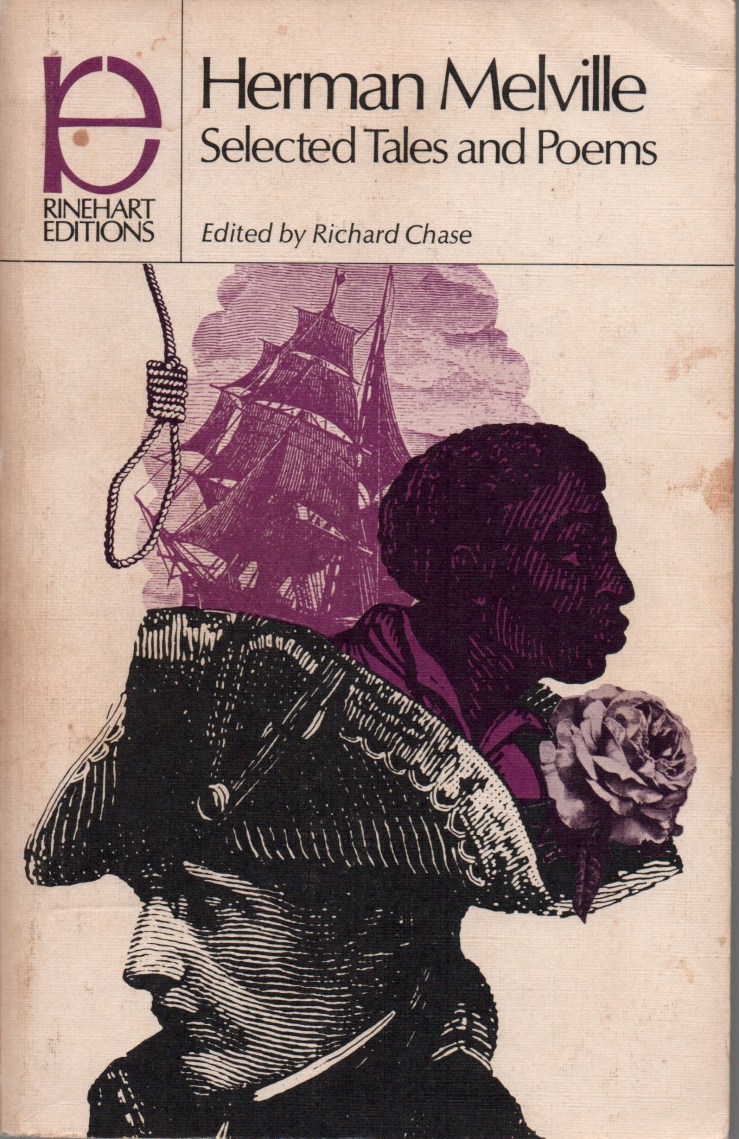
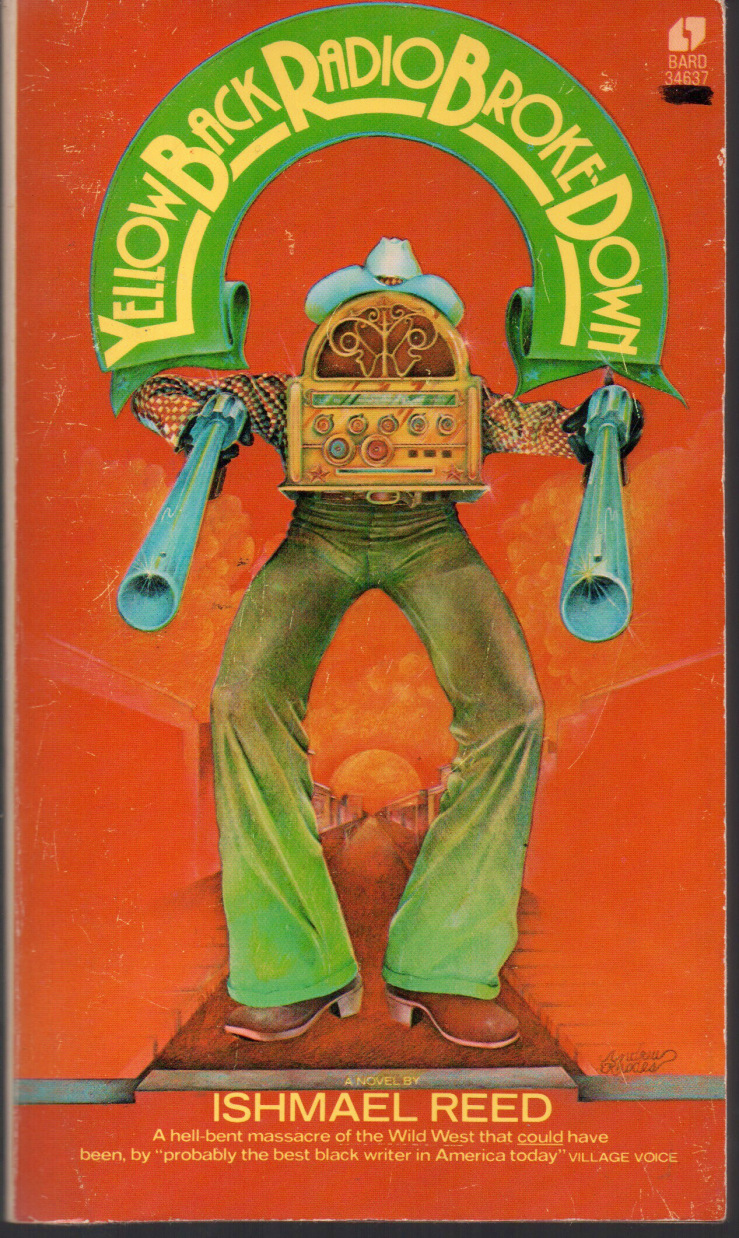


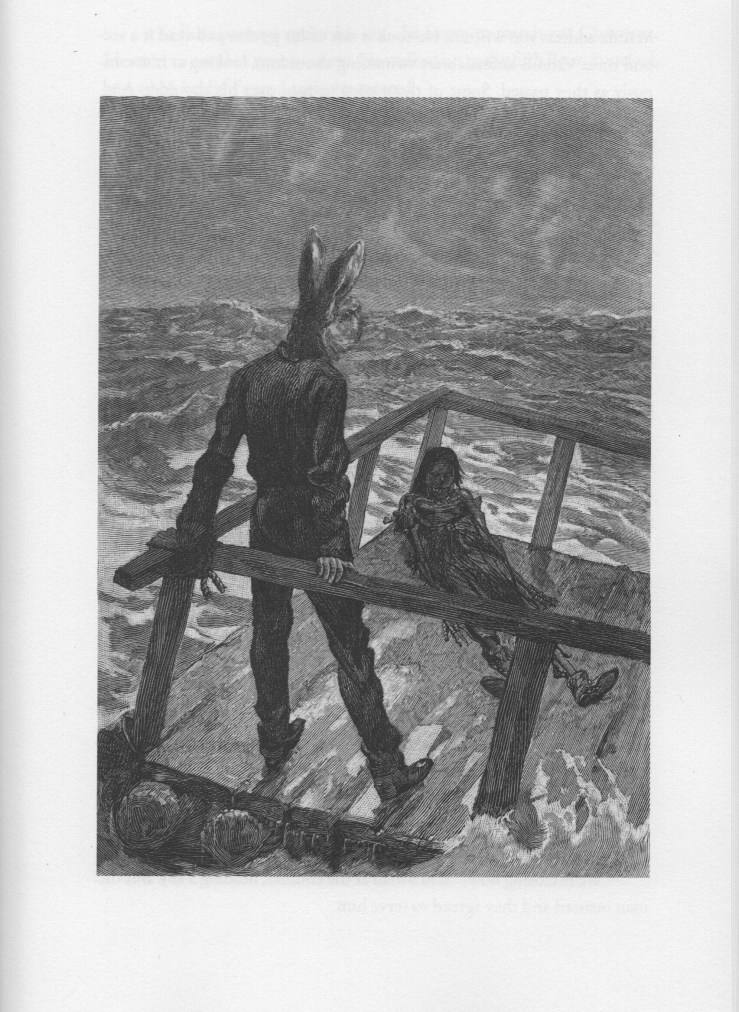

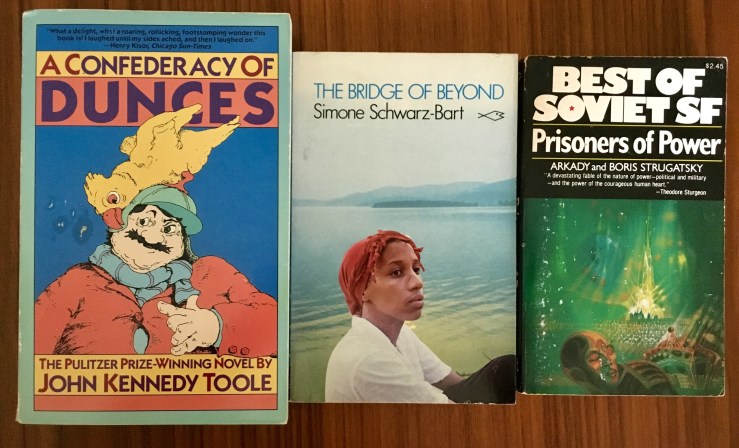
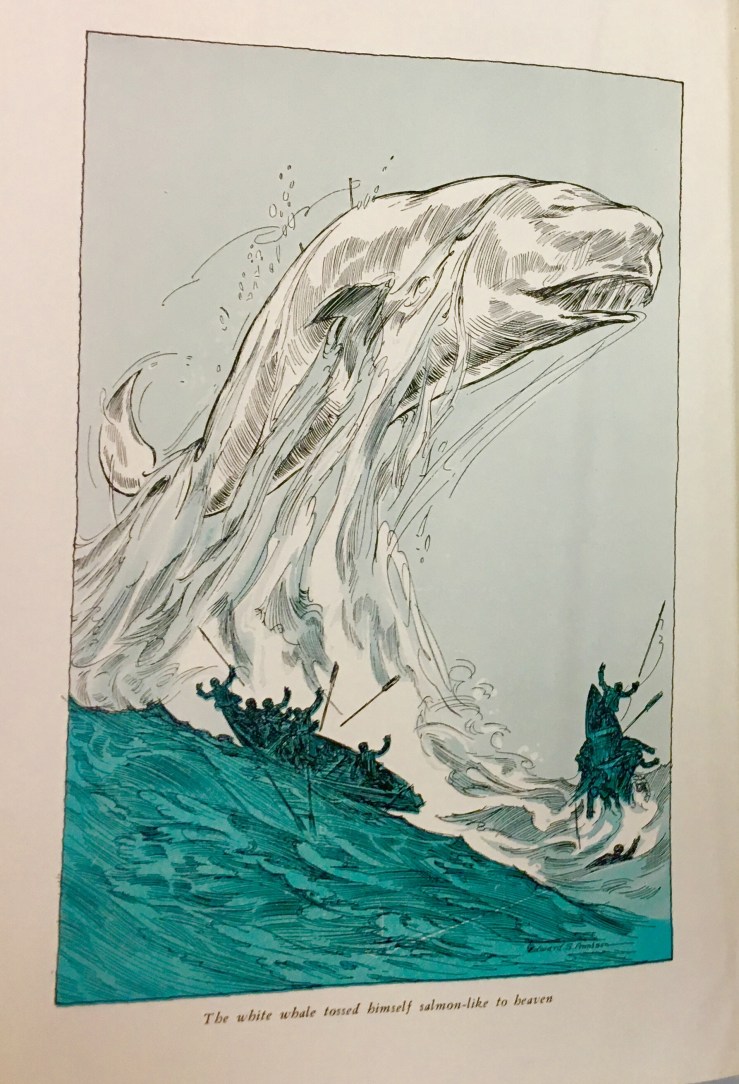
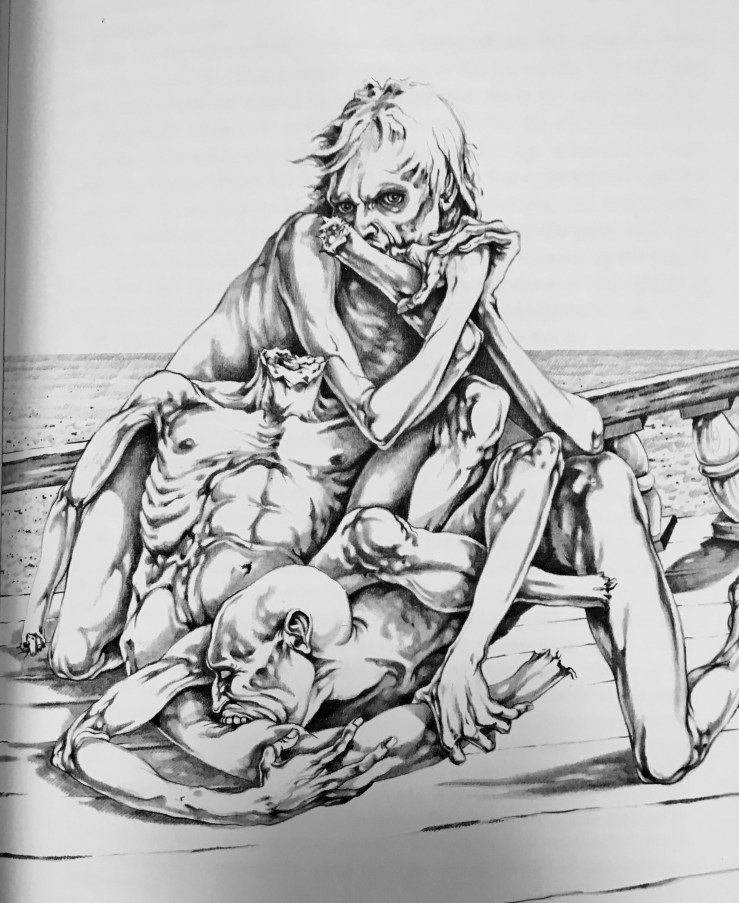

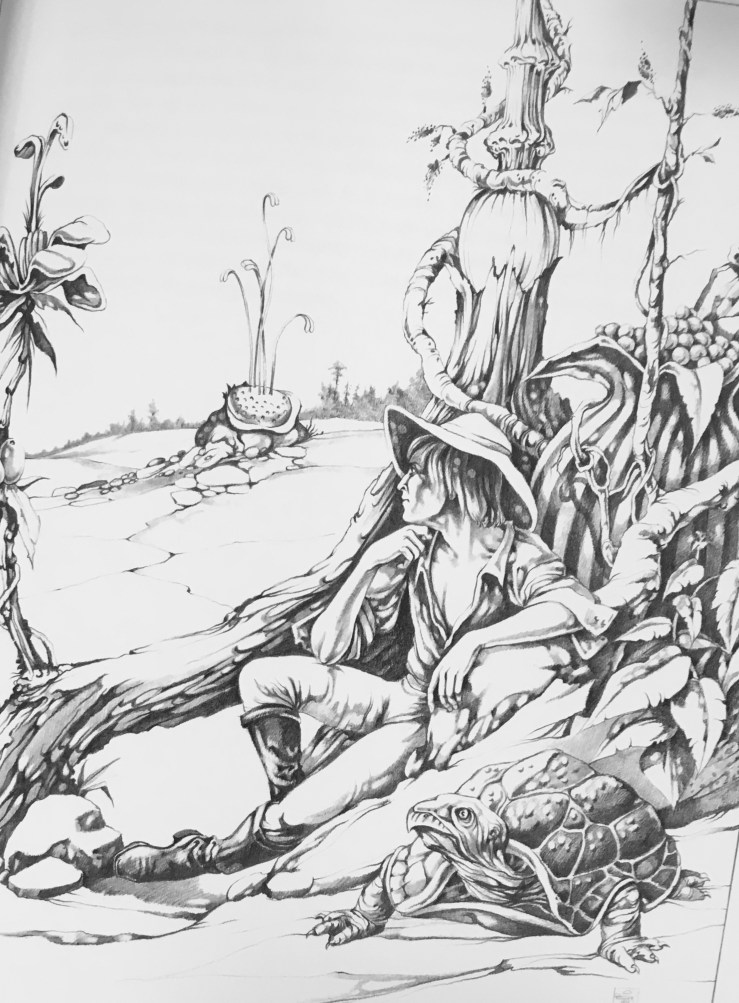


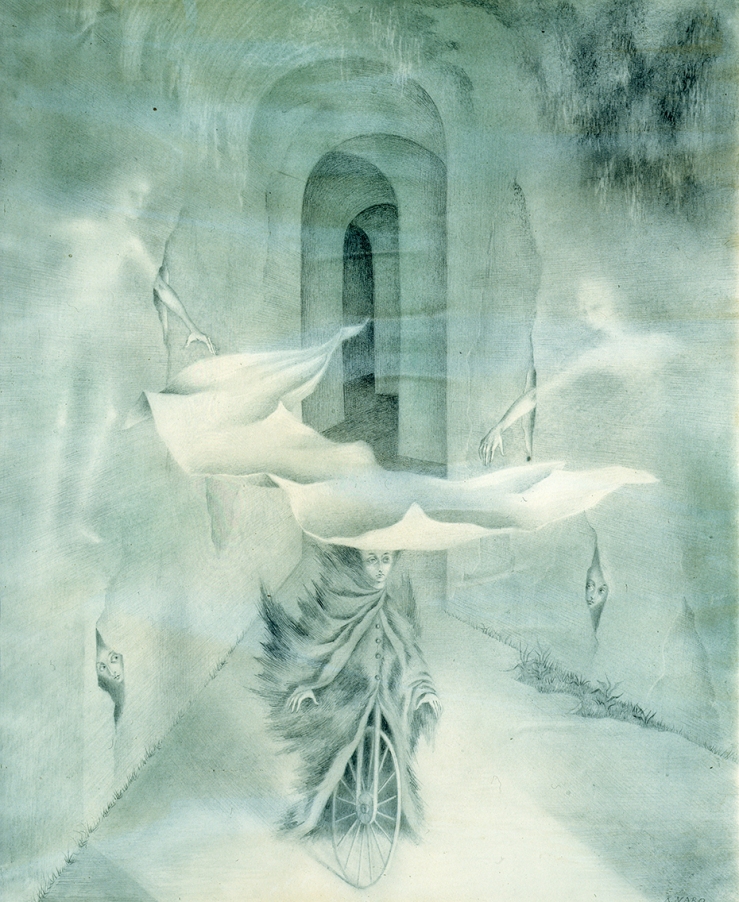


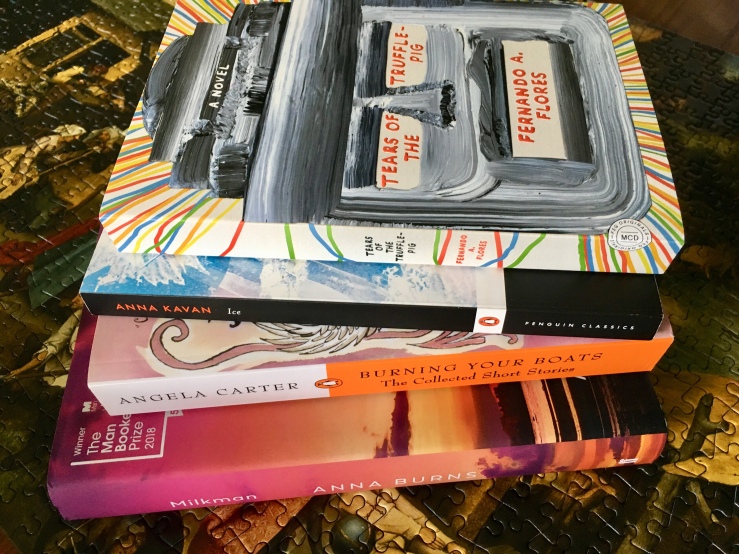

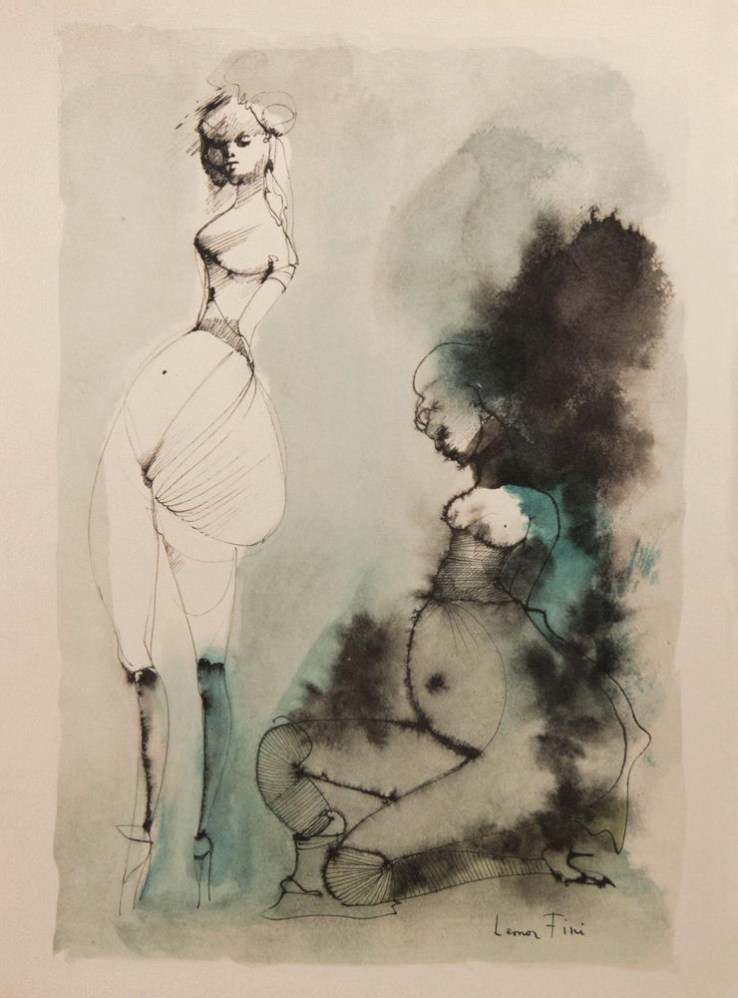
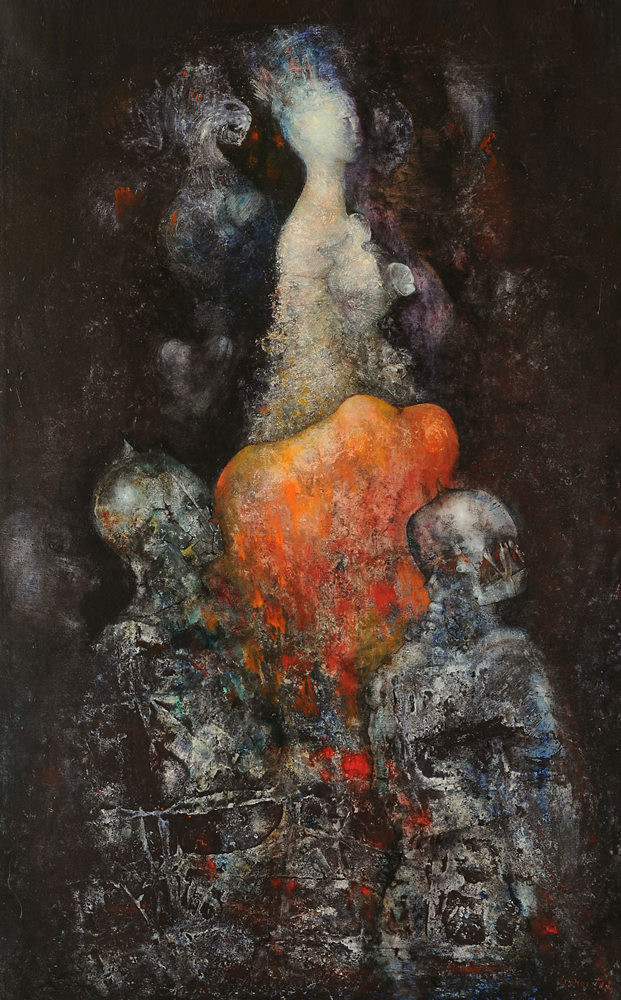
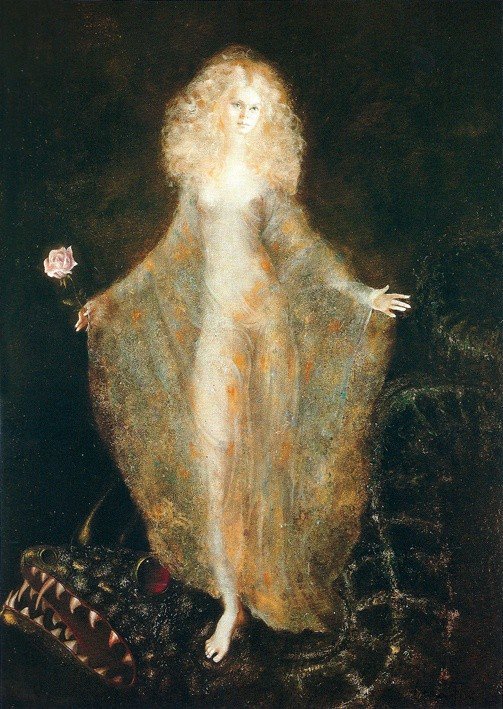
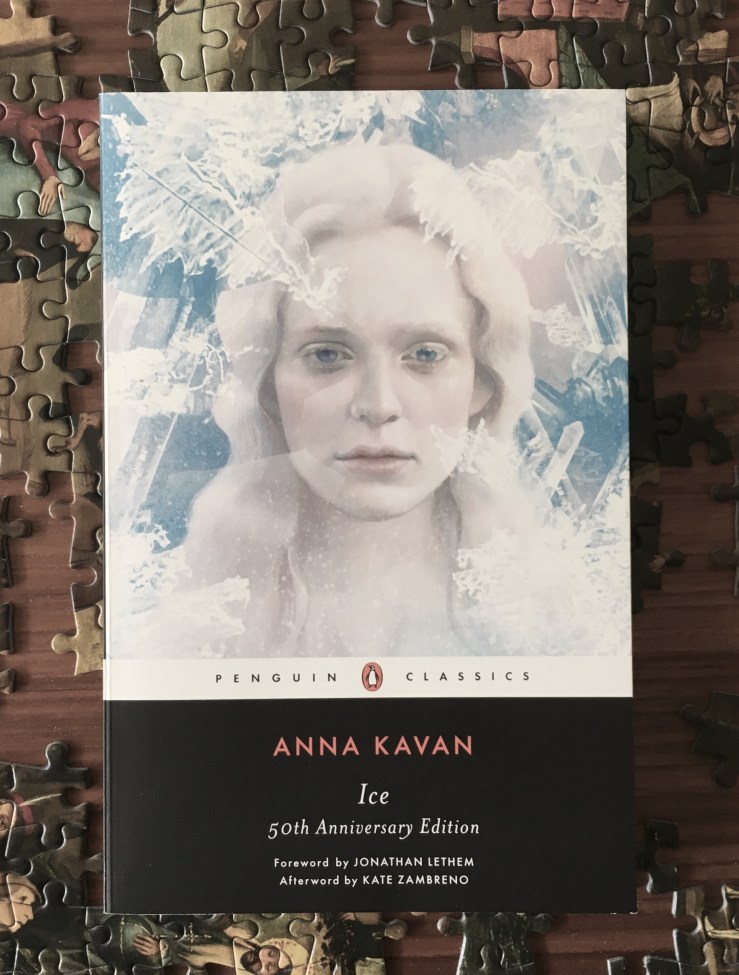


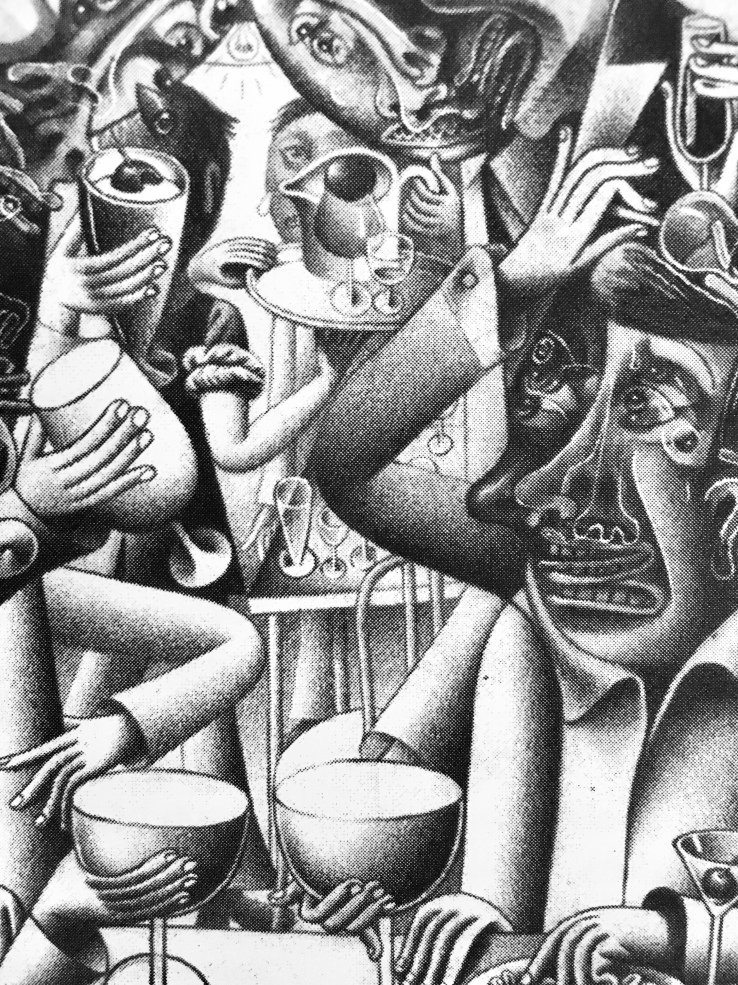
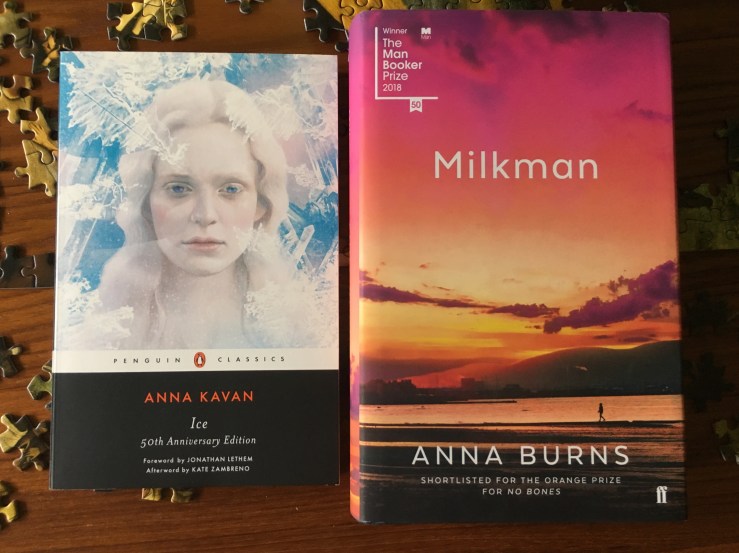

 Biblioklept