The papers of Gass seemed immaculate, each box like a freshly dug pool. By comparison, the papers of Whitman and Woolf and David Foster Wallace are filled with scraps and sheets that bear the odor from yesterday’s hands. I had already done my due diligence with The Reader, weeks of close reading and margin scribbling through its nine hundred pages; I had read a good portion of the secondary scholarship; and now here was a chance to sight some of Gass’s unresolved thoughts written overleaf.
I began by casually picking over the correspondence—incoming letters and postcards and telegrams. In the sixties, following the publication of his first novel, Omensetter’s Luck, there was Susan Sontag dishing up high praise (and slyly complimenting herself in the same stroke), Robert Silvers at The New York Review of Books begging again and again for another tipple of his prose (remarkable considering how remote the Midwestern Gass was from the flame of literary New York), and Stanley Elkin prodding “Bill” to leave Indiana for an open philosophy professorship in Saint Louis (the job he would ultimately hold for the rest of his working life). There was also a small scrap of torn notebook paper, a request for an out-of-print edition of a book by Gass—a subtle sort of fan letter written tenderly by a twenty-three-year-old man, now a sexagenarian who presides over the books section of a major American publication. Gass’s silence, the lack of corresponding responses in the archive, was odd, like a refrigerator that stops humming one afternoon. Gass, the ever-voluble (the—how to avoid it—ever-gassy), is a quiet center in the letters, a silhouette whose contours are limned only in the words of others.
I extracted box 66 from a cart and dipped into the late late juvenilia—college essays and his 1954 philosophy dissertation at Cornell—waxen pages that amounted to an incidental encyclopedia of fields, concepts, and fascinations that held sway over Gass’s writing for the next sixty years. The subject of the dissertation, “A Philosophical Investigation of Metaphor,” was importantly not a grad-school penance but the idée fixe that Gass fitted on mantels and stashed under rugs and cushions of every story and essay. For Gass, the ultimate metaphor was the relationship between the world and written language. Just as chairs could be moved around a house, words could be arrayed and rearranged in the syntactic space of a sentence—untold combinations of selfsame units, accommodating varieties of mood and meaning.
Gass suggested that literary language, specifically, required an additional metaphor. Proustian prose had a more exalted status than the demotic word-stuff on the back of soup cans. It was not made of chairs; it was conscious. In a riff on Cartesian dualism, Gass argued that a book was a body and a literary text was a conscious mind. When great writers fashioned a world of words, they supplanted the consciousness of the reader with another one, a self-sustaining construction of rich sound and sense, a new mind “musiked deep with feeling.” This conceit, the book as a “container of consciousness,” was a metaphor—Gass wasn’t a paranoid animist—but nonetheless it was a metaphor underwritten by what Gass believed was a genuine ontological shift. From soup can to Proust, words were transmogrified into literature.
…Lord is an abject and surreal tale of madness. Madness is perhaps not the correct term, although it does point towards Lord’s gothic and abject modes. Perhaps it’s more accurate to say that in Lord, Noll gives us a consciousness dissolving and reconstituting itself, a first-person voice shifting from one reality to the next with absurdly picaresque energy.
Ishmael Reed’s 1974 novel The Last Days of Louisiana Red is a sharp, zany satire of US culture at the end of the twentieth century. The novel, Reed’s fourth, is a sequel of sorts to Mumbo Jumbo (1972), and features that earlier novel’s protagonist, the Neo-HooDoo ghost detective Papa LaBas.
In Mumbo Jumbo, Reed gave us the story of an uptight secret society, the Wallflower Order, and their attempt to root out and eradicate “Jes’ Grew,” a psychic virus that spreads freedom and takes its form in arts like jazz and the jitterbug. The Last Days of Louisiana Red also employs a psychic virus to drive its plot, although this transmission is far deadlier. “Louisiana Red” is a poisonous mental disease that afflicts black people in the Americas, causing them to fall into a neo-slave mentality in which they act like “Crabs in the Barrel…Each crab trying to keep the other from reaching the top.”
…enduring, patient love is unusual in Taking Care, where friendships splinter, marriages fail, and children realize their parents’ vices and frailties might be their true inheritance. These are stories of domestic doom and incipient madness, alcoholism and lost pets. There’s humor here, but the humor is ice dry, and never applied as even a palliative to the central sadness of Taking Care. Williams’ humor is something closer to cosmic absurdity, a recognition of the ambiguity at the core of being human, of not knowing. It’s the humor of two girls eating chips on a beach, unable to decide if the people they are gazing at are drowning or just having a good time.
Octavia Butler’s 1993 novel Parable of the Sower imagines what a radical affirmation of life might look like set against a backdrop of impending extinction. Set between 2024 and 2027, Parable of the Sower conjures a crumbling America. Hyperinflation abounds, infrastructure is falling apart, water is scarce, environmental collapse is imminent, and the social institutions that bind the nation have all but frayed.
Not much happens in Jon McNaught’s latest graphic novel Kingdom. A mother takes her son and daughter to Kingdom Fields Holiday Park, a vacation lodge on the British coast. There, they watch television, go to a run-down museum, play on the beach, walk the hills, and visit an old aunt. Then they go home. There is no climactic event, no terrible trial to endure. There is no crisis, no trauma. And yet it’s clear that the holiday in Kingdom Fields will remain forever with the children, embedded into their consciousness as a series of strange aesthetic impressions. Not much happens in Kingdom, but what does happen feels vital and real.
“Life, friends, is boring,” the poet John Berryman wrote in his fourteenth Dream Song, before quickly appending, “We must not say so / After all, the sky flashes, the great sea yearns.” In Kingdom, McNaught creates a world of flashing sky and yearning sea, natural splendor populated by birds and bats, mice and moths. In Kingdom Fields, waves crash in gorgeous dark blues, the sun rises in golden pinks, rain teems down in violet swirls, and the wind breezes through meadows of grass. It’s all very gorgeous, and the trio of main characters spend quite a bit of the novel ignoring it. The narrator of John Berryman’s fourteenth Dream Song understood the transcendental promise of nature’s majesty, yet also understood that “the mountain or sea or sky” alone are not enough for humans—that we are of nature and yet apart from it.
Promised wombat:
The Invalid – Cheyne Walk 1869, 2017 by Walton Ford (b. 1960)
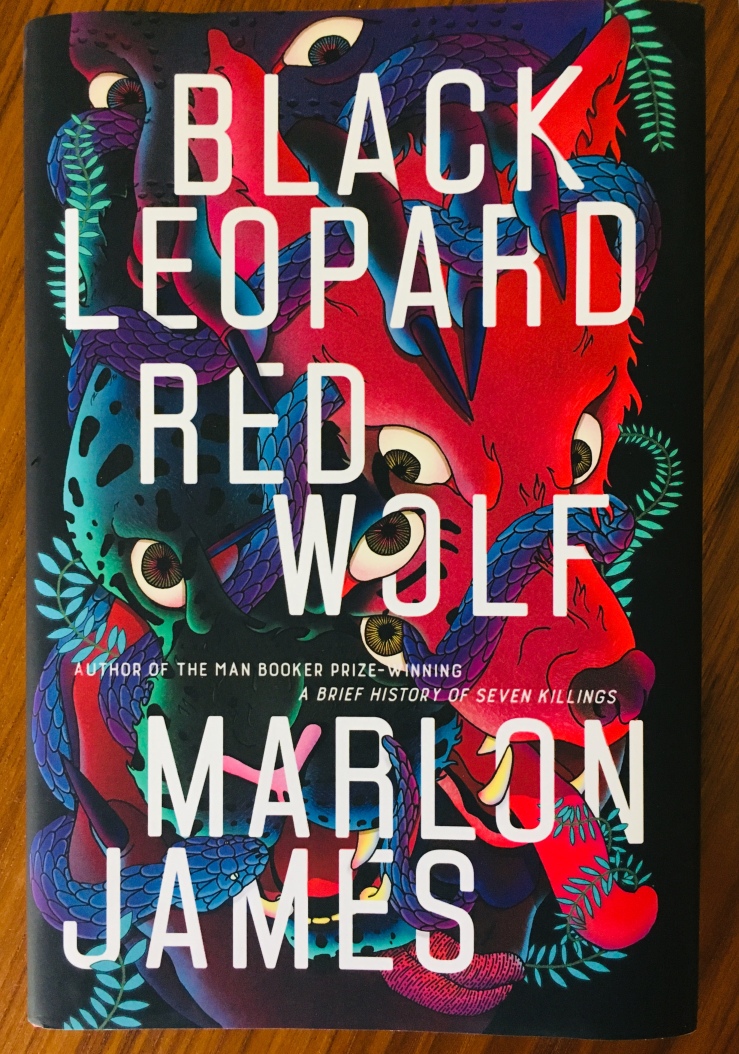
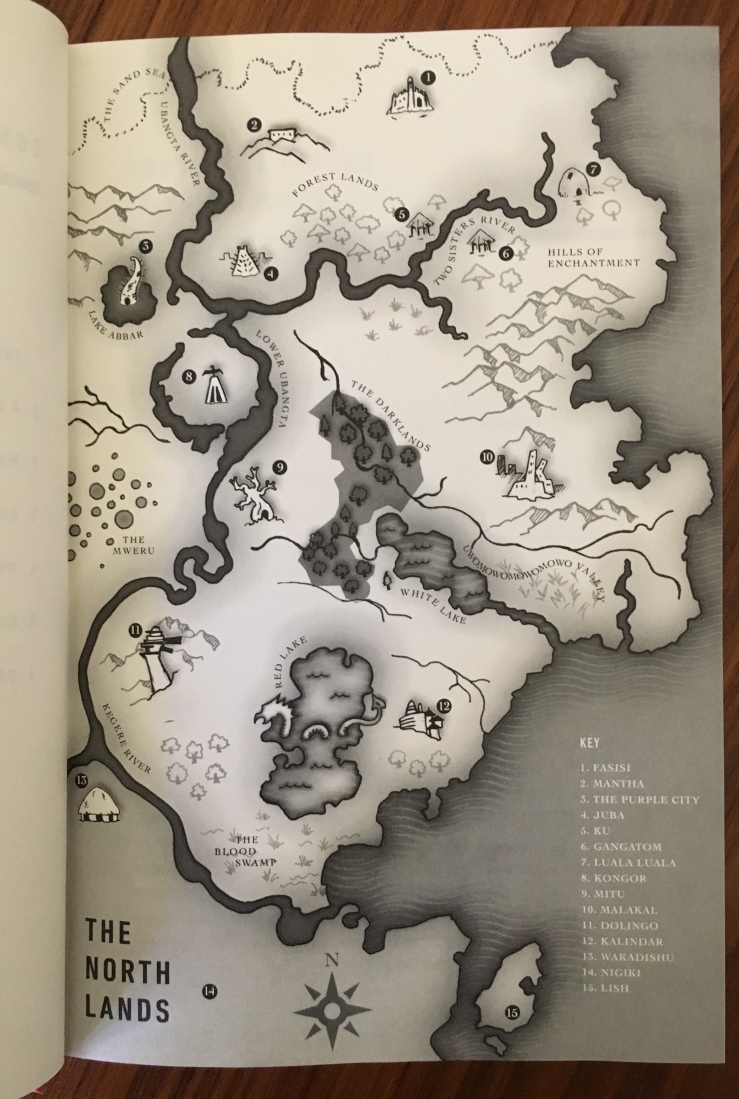
I was skeptical about Marlon James’s new novel Black Leopard, Red Wolf when it came out earlier this year in hardback. The novel had plenty of buzz and a big blurb from Neil Gaiman on the back—two things that often turn me off. I was also a bit skeptical about some of the novel’s marketing hype. James referred to his novel as an “African Game of Thrones,” and a lot of folks ranwith that tag. James has since professed in an interview that this comparison was a joke.
Just look at that! Amazon stats for big publisher/big buzz books tend to be suspiciously positive, but here I saw a sign of something that intrigued me—a book that a lot of people either loved or hated. And some of those one-star reviews?
Filled with gratuitous and rampant cursing, sexuality, violence and brutality. Too much even for fans of dark fantasy. I could not finish it.
…Confusing, nasty, all-over-the-place, just plain LOST. Sorry, but this needs a particular kind of person to stomach or understand.
…If you don’t mind being confused and unsure of the direction of a story, this book is for you. You must have patience to read this book.
…sounds like it was written by someone on hallucinogens.
I knew at this point I wouldn’t wait for the paperback.
If James’s comparing Black Leopard, Red Wolf to Game of Thrones was a joke, it’s a pretty good one, the kind of joke that could sell a lot of copies of his novel to fantasy fans who want a plot-driven tale. From the four baffling, surreal, vivid (and often lurid) chapters I’ve read so far, Black Leopard, Red Wolf isn’t really like Game of Thrones at all. There’s an opaqueness to James’s prose, a distancing effect to the language that alienates the reader in the most wonderful way. It’s all so terribly strange! Fans of plot-centric fantasy where the author explains and explicates what’s happening will likely be very quickly bothered by what James is doing here.
So far, Black Leopard, Red Wolf is first-person narrative of a man who may or may not be named Tracker, who is telling his story—or rather, many, many stories—to someone called Inquisitor (shades of One Thousand and One Nights?). These stories flow and roil into and out of each other. The minute James lets us find our bearings a bit, we’re out into new territory—one moment fighting “Omoluzu…Roof walkers” who seem to exist on a tangential plane to our own, and not long after running through a jungle of giant trees with a shapeshifting Leopard who leads us to a village of cursed children. Black Leopard, Red Wolf overflows with energy: the novel is kinetic, bright, and sharp, but also dark, eerie, and upsetting—it’s abject, puzzling, slippery. I love it so far.
The novel completely won me over on its tenth page, with this wild episode:
I kept walking until I came to an old woman by a river with a tall stick sitting at the banks. Her hair white at the sides, her head bald at the top. Her face had lines like paths in the forest and her yellow teeth meant her breath was foul. The stories say she rises each morning youthful and beautiful, blooms full and comely by midday, ages to a crone by nightfall, and dies at midnight to be born again the next hour. The hump in her back was higher than her head, but her eyes twinkled, so her mind was sharp. Fish swam right up to the point of the stick but never went beyond.
“Why have you come to this place?” she asked.
“This is the way to Monono,” I said.
“Why have you come to this place? A living man?”
“Life is love and I have no love left. Love has drained itself from me, and run to a river like this one.”
“It’s not love you have lost, but blood. I will let you pass. But when I lay with a man I live without dying for seventy moons.”
So I fucked the crone. She lay on her back by the bank, her feet in the river. She was nothing but bones and leather, but I was hard for her and full with vigor. Something was swimming between my legs that felt like fishes. Her hand touched my chest and my white clay stripes turned into waves around my heart. I thrust in and out of her, unnerved by her silence. In the dark I felt she was getting younger even though she was getting older. Flame spread inside me, spread to the tips of my fingers and the tip of me inside her. Air gathered around water, water gathered around air and I yelled, and pulled out, and rained on her belly, her arms, and her breasts. A shudder ran through me five times. She was still a crone, but I was not angry. She scooped my rain off her chest and flicked it off in the river. At once fish leapt up and dived in, leapt up again. This was a night when dark ate the moon, but the fishes had a light within them. The fishes had the head, arms, and breasts of women.
“Follow them,” she said.
I followed them through day and night, and day again. Sometimes the river was as low as my ankle. Sometimes the river was as high as my neck. Water washed all the white from my body, leaving just my face. The fish- women, womenfish, took me down the river for days and days and days until we came to a place I cannot describe. It was either a wall of river, which stood firm even though I could push my hand through it, or the river had bent itself downward and I could still walk, my feet touching the ground, my body standing without falling.
Cover art for Parable of the Sower by John Jude Palencar
Octavia Butler’s 1993 novel Parable of the Sower imagines what a radical affirmation of life might look like set against a backdrop of impending extinction. Set between 2024 and 2027, Parable of the Sower conjures a crumbling America. Hyperinflation abounds, infrastructure is falling apart, water is scarce, environmental collapse is imminent, and the social institutions that bind the nation have all but frayed.
When we first meet our narrator Lauren Olamina, she is one of the lucky few who has a life of moderate comfort, stability, and security. Lauren lives in a gated community in a sort of compound with her brothers, stepmother, and father, an academic/preacher. Lauren’s father is the ersatz leader of this community, He leads the neighborhood’s shooting practices, trains them in survival skills, and organizes a perimeter watch against the thieves and arsonists that constantly threaten their survival. He is the central role model for Lauren, who takes his lessons to heart. When the community finally fragments under an attack it can’t endure, Lauren is the only one of her family to survive. She even has the presence of mind to grab her bug-out bag.
After this initial staging of events, Parable of the Sower turns into a road novel. Lauren and two other survivors of the compound head north along the California freeways, slowly gathering followers. Lauren’s leadership drives the novel and inspires those around her. She offers her followers an alternative to the predation around them, a predation most strongly figured in the roving bands of arsonists that prey on travelers and communities alike. She offers her followers the prospect of belonging to a We—an interracial, inter-generational collective.
Lauren’s leadership capability derives from two strands. The first strand is the religion she is creating, an idea she calls “Earthseed.” The basic premise of Earthseed (one that the novel repeats ad nauseum) is that “God is Change.” Another tenet is that people are the seeds of the earth (like, uh, Earthseed—get it?). Lauren’s long-term vision is that humanity might seed a new planet. The post-WW2 dream of NASA and the futurity of exploration—a Manifest Destiny of the stars—glows in the background of Sower, and often points to a more interesting conclusion than the novel finally musters.
The second source of Lauren’s drive comes from a condition she suffers called hyperempathy or “sharing,” a mutation that’s the result of her birth-mother’s drug addiction during pregnancy. Simply put, when Lauren witnesses another person’s injury, she feels their pain. This affliction is a devastating weakness in a predatory, violent (non)society: for Lauren, self-defense entails self-harm. At the same time, Lauren’s hyperempathy is a strength—it makes her understand, at the most visceral level, the need for a community to work together in order to thrive in a world that seems to be dying.
Perhaps the greatest strength of Butler’s novel is that she shows her readers what Lauren can never quite see—namely that Lauren’s hyperempathy is a strength. Sower assumes the form of a journal, Lauren’s first-person recollections scrawled out in rare moments of respite from the terrors of the road. While her first-person perspective is generously broad (she seems to see a lot), she still never quite realizes that her hyperempathy contributes to her strength as a leader. Lauren’s hyperempathy necessitates imaginative forethought; it also entails a need to act decisively in times of crisis. And Parable of the Sower is all crisis, all the time.
Lauren’s journal style mixes the high with the low. She cribs the poetry of her Earthseed religion from the King James Version of the Bible, with often corny results. (I am pretty sure the corniness is unintentional). She’s also occasionally psychologically introspective, going through thought experiments to better understand those around her.
Despite its Earthseed flights into poetical musings and boldly-declared profundities, most of Lauren’s narrative is strangely mundane in its accounting of a slow apocalypse though. There are seemingly-endless lists of supplies to be bought or scavenged, survival chores to be checked off, and California roads to be traversed (sections of Parable of the Sower often reminded me more of the SNL recurring sketch “The Californians” than, say, Cormac McCarthy’s The Road). The bulk of Butler’s book hovers around disaster prepping, finding temporary shelter, and looting bodies, motifs that won’t seem strange to contemporary audiences reared on cable television and addicted to battle royale video games.
Lauren is 15 at the novel’s outset in 2024, yet she seems fully mature. If this was a coming-of-age novel, I missed it—Lauren, while far from perfect, is generally self-assured in her powers of decision making. At a quite literal level, she commands the narrative, propelling it forward without any of the wishy-washiness we might get from the narrator of, say, The Handmaid’s Tale. If Lauren second-guesses herself, she doesn’t bother to second-guess her second guesses. Butler seems to envision her rather as a hero-model for the coming disaster the novel anticipates. Much of Parable of the Sower reads like a checklist of What To Do After the End of Civilization.
The novel’s biggest weakness is that it can’t quite articulate just how bad things have gotten. Is this actually The End of Civilization? Butler paints a bleak picture. Drought is the new norm. Most Americans are illiterate. Work is hard to find. The roads are too dangerous to travel at night. Packs of feral dogs hunt down humans. Packs of feral children eat humans. Women live with the constant threat of rape. Overt racism is fully normalized. Company towns make a comeback, issuing scrip instead of currency, leading to indentured servitude. Water is a commodity to literally kill for, the police are essentially an organized gang, and a large portion of the population are addicted to a drug that makes setting fires better than sex. Murder is an open business, and there is no recourse to any established justice.
And at the same time that it evokes all of these apocalyptic images and themes, Butler’s novel points to tinges of normalcy—a presidential election carried out sans violence, the sense that a university system is still in play, various notations of different regulatory bodies. Parable of the Sower often reads like The Walking Dead or The Road, but then it might turn a weird corner to uncanny normalcy, where characters shop in a Walmart-like (if hyperbolized) superstore. As one character puts it,
Federal, state, and local governments still exist— in name at least— and sometimes they manage to do something more than collect taxes and send in the military. And the money is still good. That amazes me. However much more you need of it to buy anything these days, it is still accepted. That may be a hopeful sign— or perhaps it’s only more evidence of what I just said: We haven’t hit bottom yet.
Perhaps what I perceive here is simply Butler showing her narrator’s essential naivete, a naivete that doesn’t evince on the surface of the first-person narration. Lauren doesn’t know what she doesn’t know. She doesn’t fully understand how bad things have gotten because she doesn’t fully understand the potential in America that existed before her own life. But she does intuit how bad things are. Despite her intuition, she’s hopeful. This hope, and the despair that foregrounds it, evinces strongly in the final moments of the book. Lauren has finally made it to a kind of promised-land, a frontier-space where she can create a new life with a new love, a much-older man named Bankole. Bankole was a doctor in his old life, but now he’s a survivor. At the end of the novel, he mourns the American dream, the American we, and mourns that Lauren cannot mourn it with him:
He said nothing for a while. Then he stopped and put his hand on my shoulder to stop me. At first he only stood looking at me, almost studying my face. “You’re so young,” he said. “It seems almost criminal that you should be so young in these terrible times. I wish you could have known this country when it was still salvageable.”
“It might survive,” I said, “changed, but still itself.”
“No.” He drew me to his side and put one arm around me. “Human beings will survive of course. Some other countries will survive. Maybe they’ll absorb what’s left of us. Or maybe we’ll just break up into a lot of little states quarreling and fighting with each other over whatever crumbs are left. That’s almost happened now with states shutting themselves off from one another, treating state lines as national borders. As bright as you are, I don’t think you understand—I don’t think you can understand what we’ve lost. Perhaps that’s a blessing.”
Banokole’s summary of America in the late 2020s seems like a dire if hyperbolic prognostication of our current trajectory. More than a quarter century ago, Butler knew what was up. Butler also offered an answer to the problem in her mouthpiece Lauren, who replies to her (way-too-much older) lover Bankole, “We’ve got work to do.”
Parable of the Sower is not a particularly fun novel, although of course, it never intends to be. The dour tone is appropriate to its subject matter, I suppose, but that grim tone can become exhausting. The novel’s trajectory and moral vision keep it from falling into an exercise in nihilism or apocalypse porn, like, say, The Walking Dead. But like The Walking Dead, Butler’s novel often plods along. Maybe this is a rhetorical feature—maybe Butler intends her reader to feel just as weary and depressed as Lauren.
Parable of the Sower was published just a year after a superficially-similar novel, Neal Stephenson’s Snow Crash, which also presciently envisions a fragmenting America where like-groups seal themselves off from each other. In contrast though, Stephenson’s novel is zany and vibrant, a cartoon world devoid of any hyperempathy that might get in the way of anarchic fun. Over 25 years old now, many of the tropes in both Snow Crash and Parable of the Sower have so fully infiltrated our media—books and video games, films and television shows—that their initial vital strangeness is hard to detect.
The dystopian tropes of Parable of the Sower don’t feel particularly fresh in 2019, but the novel’s prescience still has an alarming bite. (Her sequel, Parable of the Talents, features a right-wing Presidential candidate who runs on the promise to “Make America great again”). Sower works best as an extended thought experiment on what might happen to society—to democracy in particular—when impending ecological collapse threatens our very existence. And Butler proposes a solution to the problems posed in her thought experiment: “We’ve got work to do.”
“We’ve got work to do” not only summarizes Parable of the Sower’s central message, it also describes current zeitgeist. Lauren would have been born in 2009; my daughter was born in 2007 and my son in 2010. She could be one of their classmates; she could be my own daughter. The novel’s vision of hyperempathy in the face of brutality and creeping fascism points back to that phrase — “We’ve got work to do” — which of course, requires a We. The we here is a radical affirmation, an echo even of the We the People that so boldly engendered a U.S. America. But Butler’s vision, conveyed through Lauren, is far more pluralistic and diverse than the We the framers evoked in the Preamble to the Constitution. Butler’s we names the namelessness of a coming society, a society that seems impossible and yet is possible, its possibility instantiated in the simple proof that it can be imagined. Parable of the Sower ultimately points toward the seeds of that imagining.
Unless we are willing to accept our artists as they are, the answer to the question, “Who speaks for America today?” will have to be: the advertising agencies. They are entirely capable of showing us our unparalleled prosperity and our almost classless society, and no one has ever accused them of not being affirmative. Where the artist is still trusted, he will not be looked to for assurance. Those who believe that art proceeds from a healthy, and not from a diseased, faculty of the mind will take what he shows them as a revelation, not of what we ought to be but of what we are at a given time and under given circumstances; that is, as a limited revelation but revelation nevertheless.
From Flannery O’Connor’s essay “The Fiction Writer and His Country,” collected in Mystery and Manners.
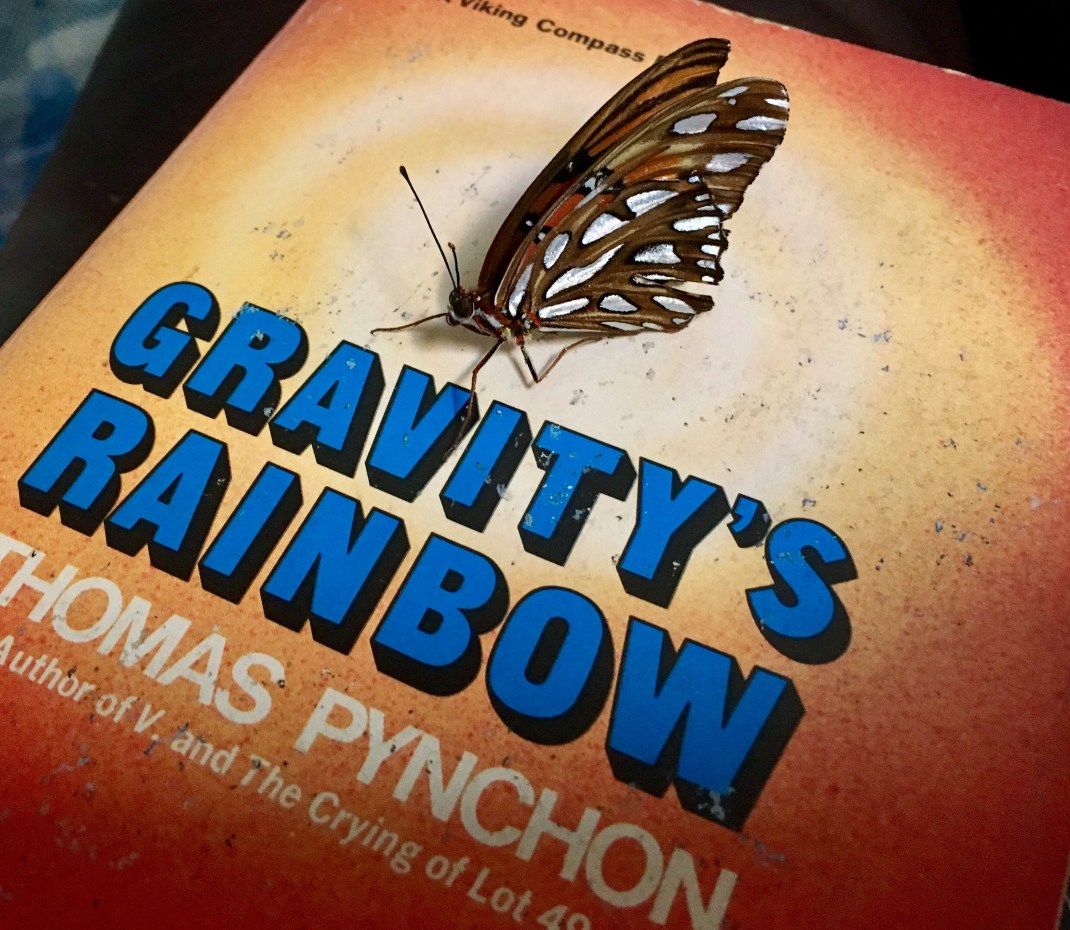
Here’s the section on “The Inedible,” which includes notes on two of my favorite scenes from Gravity’s Rainbow—–
The Inedible
“A lot of people who think they’re cooks but are clinically deluded,” says a mess hall manager in Vineland. Pynchon includes a lot of their misguided creations in his books, relishing the gross and inedible—the places where “even [the] Jell-O salads have scum on them.”
Maybe the most memorable example is the “English Candy Drill,” in which a parade of disgusting sweets are sampled, unwillingly, by Tyrone Slothrop, the protagonist (sorta) in Gravity’s Rainbow: rhubarb creams, cherry-quinine petit fours, eucalyptus-flavored fondant, and pepsin-flavored nougat, licorice drops with a “dribbling liquid center, which tastes like mayonnaise and orange peels” and “a hard sour gooseberry shell into a wet spurting unpleasantness of, he hopes it’s tapioca, little glutinous chunks of something all saturated with powdered cloves.”
Gravity’s Rainbow includes another scene that’s hard to stomach: As a culinary prank, Bodine and Roger hold a dinner party with an intentionally revolting menu: “snot soup,” “sum soufflé,” “vomit vichyssoise” and “wart waffles.” Needless to say, “A general loss of appetite reigns, not to mention overt nausea.”
It’s a fun article, like I said, but there are a few things missing. It notes Against the Day’scult of mayonnaise but leaves out all the ketchup (ketjap) stuff in Mason & Dixon, as well as Mason & Dixon’s important core distinction between Grape People and Grain People:
“If this is as bad as it gets, why I can abide thah’. As long as the Spirits don’t run out.”
“Nor the Wine.”
“Wine.” Dixon is now the one squinting. Mason wonders what he’s done this time. ” ‘Grape or Grain, but ne’er the Twain,’ as me Great- Uncle George observ’d to me more than once,— ‘Vine with Corn, beware the Morn.’ Of the two sorts of drinking Folk this implies, than’ is, Grape People and Grain People, You will now inform rne of Your membership in the Brotherhood of the, eeh, Grape…? and that You seldom, if ever, touch Ale or Spirits, am I correct?”
“Happily so, I should imagine, as, given a finite Supply, there’d be more for each of us, it’s like Jack Sprat, isn’t it.”
“Oh, I’ll drink Wine if I must…?— and now we’re enter’d upon the Topick,— ”
“— and as we are in Portsmouth, after all,— there cannot lie too distant some Room where each of us may consult what former Vegetation pleases him?”
Dixon looks outside at the ebbing wintry sunlight. “Nor too early, I guess…?”
“We’re sailing to the Indies,— Heaven knows what’s available on Board, or out there. It may be our last chance for civiliz’d Drink.”
“Sooner we start, the better, in thah’ case…?”
Again, a fun article—but what other food bits are missing? (We can leave the coprophagia and urolagnia in Gravity’s Rainbow out, though).
What you felt stirring across the land… it was the equinox… green spring equal nights… canyons are opening up, at the bottoms are steaming fumaroles, steaming the tropical life there like greens in a pot, rank, dope-perfume, a hood of smell… human consciousness, that poor cripple, that deformed and doomed thing, is about to be born. This is the World just before men. Too violently pitched alive in constant flow ever to be seen by men directly. They are meant only to look at it dead, in still strata, transputrefied to oil or coal. Alive, it was a threat: it was Titans, was an overpeaking of life so clangorous and mad, such a green corona about Earth’s body that some spoiler had to be brought in before it blew the Creation apart. So we, the crippled keepers, were sent out to multiply, to have dominion. God’s spoilers. Us. Counterrevolutionaries. It is our mission to promote death. The way we kill, the way we die, being unique among the Creatures. It was something we had to work on, historically and personally. To build from scratch up to its present status as reaction, nearly as strong as life, holding down the green uprising. But only nearly as strong.
Only nearly, because of the defection rate. A few keep going over to the Titans every day, in their striving subcreation (how can flesh tumble and flow so, and never be any less beautiful?), into the rests of the folksong Death (empty stone rooms), out, and through, and down under the net, down down to the uprising.
In harsh-edged echo, Titans stir far below. They are all the presences we are not supposed to be seeing—wind gods, hilltop gods, sunset gods—that we train ourselves away from to keep from looking further even though enough of us do, leave Their electric voices behind in the twilight at the edge of the town and move into the constantly parted cloak of our nightwalk till
Suddenly, Pan—leaping—its face too beautiful to bear, beautiful Serpent, its coils in rainbow lashings in the sky—into the sure bones of fright—
Don’t walk home at night through the empty country. Don’t go into the forest when the light is too low, even too late. Don’t go into the forest when the light is too low, even too late in the afternoon—it will get you. Don’t sit by the tree like this, with your cheek against the bark.
From Thomas Pynchon’s Gravity’s Rainbow, pages 720-21.
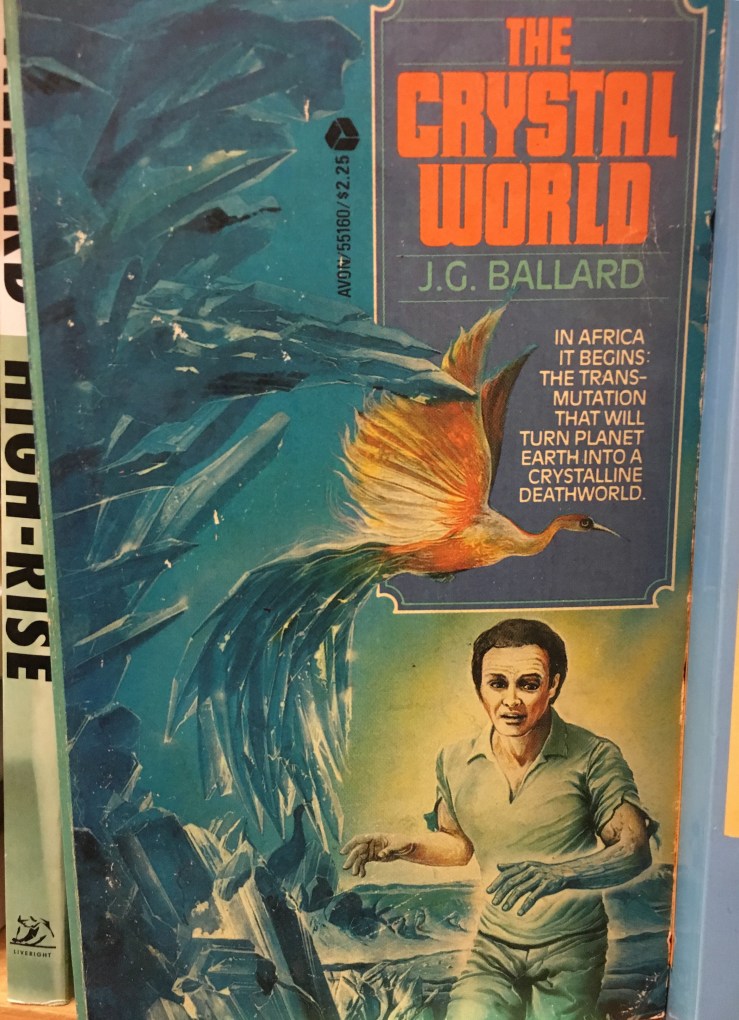
On Friday, I went to my trusty local used bookstore to look, once again, for a copy of Octavia Butler’s novel Parable of the Sower. They had four new copies, all of Grand Central Publishing’s 2000 edition, the cover of which is frankly awful. I know I shouldn’t be so shallow, but…I’ll end up checking out the ebook from my library I guess. I like sci-fi books to look like sci-fi books, not like bland approximations of “literary fiction.” I like sci-fi covers like this edition of J.G. Ballard’s novel The Crystal World which I took a pic of in the shop (I already have a mass market paperback copy of the Ballard and couldn’t bring myself to get another one)—
I unexpectedly picked up Anne Hébert’s novel Kamouraska. I’d heard P.T. Smith drop Hébert’s name a couple of times on Twitter, and she sounds interesting. (He wrote about Kamouraska here). The movie tie-in cover is awful, but for two bucks what the hell.
I also finally found another copy of Alasdair Gray’s novel Lanark. I’ve been wanting to re-read Gray’s novel ever since I first read it five years ago. I lent my copy of the novel to someone who never gave it back. One of Gray’s illustrations for Lanark—
The previous week, I got two weird ones in the mail, Anthony Howell’s Consciousness (with Mutilation) and 99 Practical Methods of Utilizing Boiled Beef, an 1893 cookbook reprinted by Cow Eye Press as a kind of in-joke on indie publishing.
Originally published in 1893 as a cookbook for the American housewife, 99 Practical Methods of Utilizing Boiled Beef: With a new Preface from the Publisher has been revised, adapted, and reissued as a new work of fiction celebrating the principles of independent publishing.
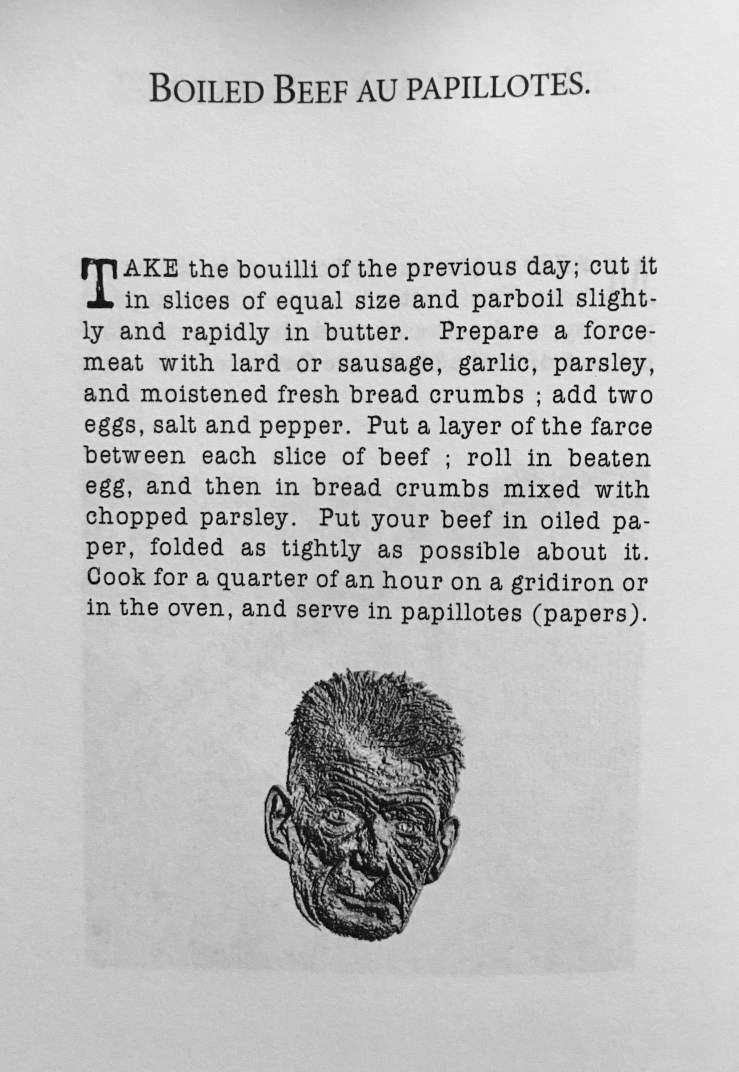
The original 99 Practical Methods was by a pseudonymous author named “Babet,” and purported to be translated from the French by one “A.R.” After reading publisher Natalie Zeldner’s preface and the “New Preface from the Intern,” I wasn’t quite sure that Babet’s original book ever existed. It turns out it does exist, but the prefaces by Zeldner and the (now-supposedly-ex-)intern point to the project as something closer to an aburdist joke about publishing than a recipe book. There are recipes here, though—100 of them, actually—like this one:
Cow Eye’s edition includes pictures, like this one of Samuel Beckett, with each recipe, that are often little oblique jokes, I guess. The edition does not include King Henry the Fourth’s Recipe for Stewed Chicken, which is included in the 1893 edition.
In her preface, publisher Zeldner laments that,
All anyone cares about anymore, it seems, is boiled beef. Boiled beef with the satisfying plot arc. Boiled beef with a light dash of novelty. Boiled beef prepared by celebrity chefs. Boiled beef with a titillating message and eminently discoverable hashtag.
So here you go, my friends: here’s your boiled beef.
Indeed.
Poet Anthony Howell’sConsciousness is another strange one. It actually includes another narrative in it, a novella by Mamdouh Adwan called Mutilation. In an author’s note, Howell points to Burroughs’ Naked Lunch as his work’s predecessor, and the collage technique has led me quite randomly through the book. Here’s Howell’s blurb:
Consciousness (with Mutilation) is a non-fiction novel. Every sentence that begins any paragraph within it also serves as the concluding sentence of another paragraph. The trigger for the text is an epileptic seizure the author experienced in April 2018. This event prompted an investigation of the meaning of continuity in individuals, families and states. Could we have been somebody else yesterday, or become somebody else tomorrow? Consciousness annexes a Syrian novella – Mutilation – within its pages; a novella by Mamdouh Adwan, first published in Damascus in 1971. Reading this book is to be drawn into whirlpools, perhaps to drown. It is self-analysis, but, since the author’s lineage is both Jewish and Quaker, it evolves into an analysis of Zionism, of which Howell’s grandfather was a proponent, and of the role of the British in the Middle East. Having experienced sudden lapses of consciousness, the author senses that “life is not a river. Life is a collage.” This book takes The Naked Lunch by William Burroughs and Jealousy by Alain Robbe-Grillet for its literary forbears. In the way of ancient tragedy, the dilemma of the individual becomes the dilemma of the state, in this case Israel, and the author carries the reader into a world of smoke and mirrors, sustained by collage mediated through its formal constraint.
The Cow Eye Press people may wish to know that there is some small mention of cows in Consciousness, including the theft of an Arnesby Brown painting.
“The Incredible and Sad Tale of Innocent Eréndira and Her Heartless Grandmother”
by
Gabriel García Márquez
translation by
Gregory Rabassa
Erendira was bathing her grandmother when the wind of her misfortune began to blow. The enormous mansion of moon like concrete lost in the solitude of the desert trembled down to its foundations with the first attack. But Erendira and her grandmother were used to the risks of the wild nature there, and in the bathroom decorated with a series of peacocks and childish mosaics of Roman baths they scarcely paid any attention to the caliber of the wind.
The grandmother, naked and huge in the marble tub, looked like a handsome white whale. The granddaughter had just turned fourteen and was languid, soft-boned, and too meek for her age. With a parsimony that had something like sacred rigor about it, she was bathing her grandmother with water in which purifying herbs and aromatic leaves had been boiled, the latter clinging to the succulent back, the flowing metal-colored hair, and the powerful shoulders which were so mercilessly tattooed as to put sailors to shame.
“Last night I dreamt I was expecting a letter,” the grandmother said.
Erendira, who never spoke except when it was unavoidable, asked:
“What day was it in the dream?”
“Thursday.”
“Then it was a letter with bad news,” Erendira said, “but it will never arrive.”
When she had finished bathing her grandmother, she took her to her bedroom. The grandmother was so fat that she could only walk by leaning on her granddaughter’s shoulder or on a staff that looked like a bishop’s crosier, but even during her most difficult efforts the power of an antiquated grandeur was evident. In the bedroom, which had been furnished with an excessive and somewhat demented taste, like the whole house, Erendira needed two more hours to get her grandmother ready. She untangled her hair strand by strand, perfumed and combed it, put an equatorially flowered dress on her, put talcum powder on her face, bright red lipstick on her mouth, rouge on her cheeks, musk on her eyelids, and mother-of-pearl polish on her nails, and when she had her decked out like a larger than life-size doll, she led her to an artificial garden with suffocating flowers that were like the ones on the dress, seated her in a large chair that had the foundation and the pedigree of a throne, and left her listening to elusive records on a phonograph that had a speaker like a megaphone. Continue reading ““The Incredible and Sad Tale of Innocent Eréndira and Her Heartless Grandmother” — Gabriel García Márquez””→
There’s an interesting review of Roberto Bolaño’s posthumous novel The Spirit of Science Fiction in the The New Yorker The review’s author, editor and translator Valerie Miles, read Bolaño’s novel through/against the work of the American Beats—William S. Burroughs and Jack Kerouac, specifically. From Miles’ review:
From 2008 to 2014, during the charged emergence of Bolaño in translation, I worked behind the scenes with the writer’s estate, reading through roughly fourteen thousand six hundred papers in his archive and helping to prepare his posthumous work. Bolaño, it should be said, saved everything. His archive includes notebooks, diaries, letters, magazines, war games, postcards, photos, typescripts, newspaper clippings, and an extensive library. (“I even found one of those paper napkins from a bar in Mexico,” his widow, Carolina López, has said, at a press conference.) The wealth of material makes it easy to locate Bolaño’s fixations at a given time, and much of my efforts involved establishing a chronology of when his work was written—a chronology that became a central part of the first exhibition dedicated to his papers, which I curated together with the Centre de Cultura Contemporània de Barcelona, in 2013.
That chronology also shed light on just how much “The Spirit of Science Fiction” was informed by poetry, and specifically by Bolaño’s reading of the Beats. In 1978, around the time Bolaño first began writing fiction in earnest, he wrote in his diary, “I write verses, dream of a novel.” During that time, he read William S. Burroughs daily and often commented on the writer’s work. (Burroughs was the “ice shard that would never melt,” he writes in his essay collection “Between Parentheses,” “the eye that never closes.”) In an early version of “The Spirit of Science Fiction,” Burroughs was the contact person for the young Chileans. Bolaño was also influenced by Burroughs’s approach to structure; he was fascinated by “Naked Lunch” and by the collage-like experimentation of “Nova Express.” He even borrowed some of Burroughs’s methods, riffing on Burroughs’s “cut-up” technique in his own verse.
He was a blonde. He lay in the bed, tossing turning. his room. What was that odor? The pungent odor of middle-class perfume making the air misty. He didn’t feel right. His hair. What on earth was the matter with his hair? It was long and was covering the pillow. The pillows? They had a flower print and were pink. Pink? He rose in his bed and his breasts jiggled. BREASTS? THE BREASTS?? He looked back into the mirror next to the bed and his mouth made a black hollow hole of horror. “O MY GOD. MY GOD.” He was a woman. You know what he said next, don’t you, reader? He’s from New York and so . . . you guessed it! “Kafka. Pure Kafka,” he said. A feeling crept over him. Tingly. What could he do? He felt like screaming, but he couldn’t scream. Was that someone coming coming down the hall? He ran and jumped back into the bed, pulled the covers up to his neck and pretended to be asleep.
From Ishmael Reed’s 1974 novel The Last Days of Louisiana Red.
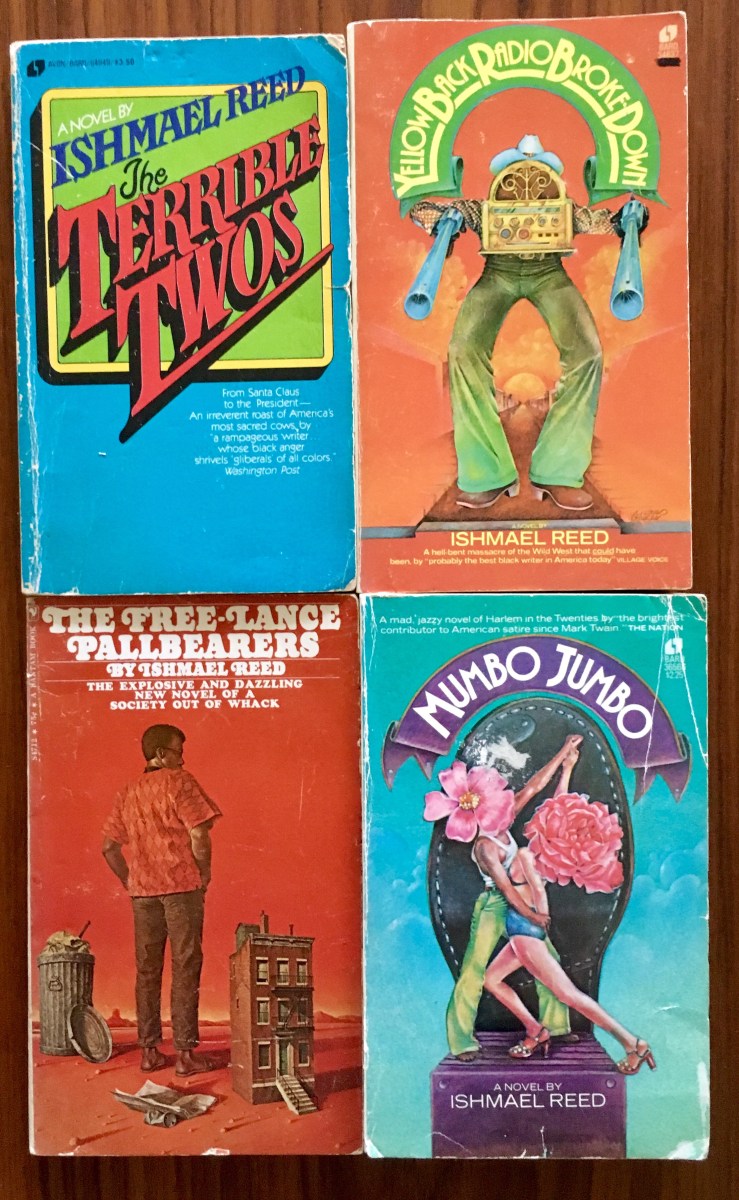
A few weeks ago I went to my favorite used bookstore to pick up a copy of Ishmael Reed’s follow up to Mumbo Jumbo, 1974’s The Last Days of Louisiana Red. The store had a few copies of it, but they were all Dalkey Archive editions with ugly covers and bad binding, so I broke down and ordered a first edition Random House hardback online. (I was tempted to pick up the Avon Bard paperback version to match the covers of the other Reed books I own, which are so beautiful I’ll share them here again):
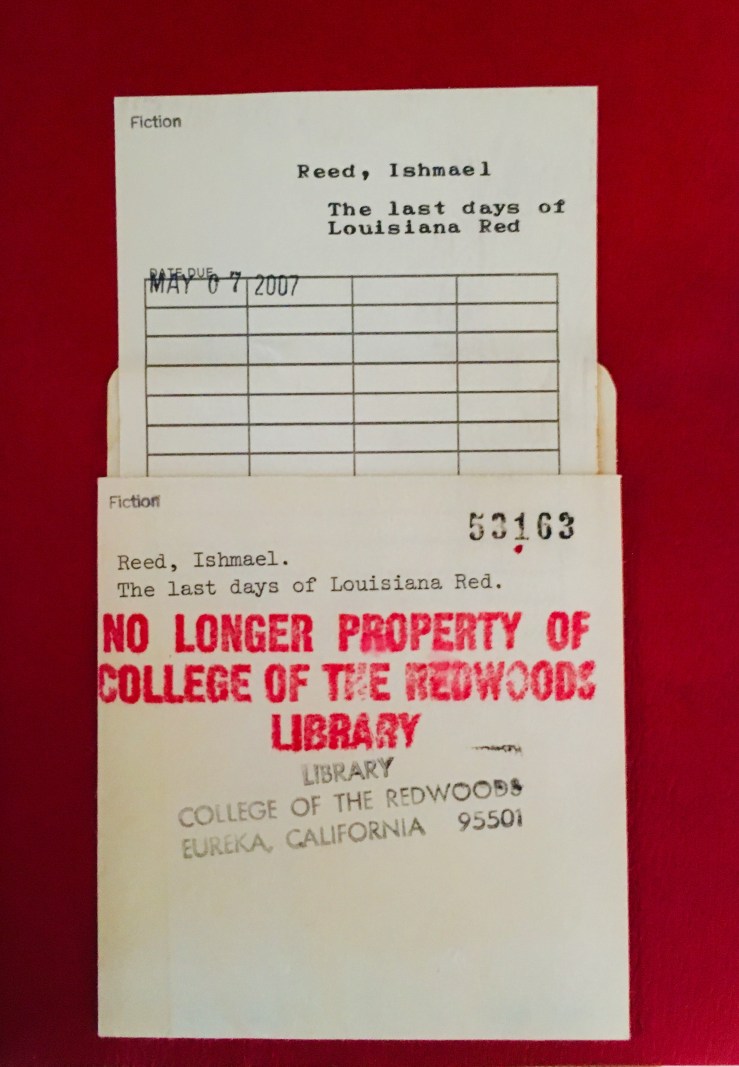
Anyway, I did the design of the hardback the came in, which the jacket flap credits as Reed’s own suggestion. Oh, and it’s an old library book:
I read the first half of The Last Days of Louisiana Red this weekend. Reed’s writing is bitter, prescient, zany, and mythological, telegraphed in a range of comic and tragic voices. The chapters are short, and the sentences sting. The plot—well, in Louisiana Red, Reed brings back Papa LaBas the Neo-HooDoo hero of Mumbo Jumbo, and sends him to the West Coast, to Berkeley, Carlifornia to investigate the murder of Ed Yellings. Yellings, a Neo-HooDoo man himself, has discovered the cure for cancer through his mysterious enterprise, the Solid Gumbo Works. Yellings’ gumbo is also a cure for “Louisiana Red,” a poisonous mental disease that afflicts black people in the Americas. Papa LeBas is alternately helped and hindered by Yellings’ adult children: Wolf, Street, Sister, and the provocative and gifted Minnie, who leads a group of militants called the Moochers.
I’m really digging Louisiana Red, which, like the other early Reed novels I’ve read, synthesizes the history, folklore, mythology, and intellectual traditions of the African diaspora into a slapstick satire of USA at the end of the twentieth century. Reed cooks his gumbo with a wide variety of ingredients: voodoo lore and California history bubble in the same pots as riffs on astrology and Cab Calloway’s hit “Minnie the Moocher.” Reed satirizes the Berkeley youth movement, radical feminism, and intellectual hucksterism, all through an allegorical lens—he dares us, often explicitly (by way of a character named Chorus) to read Louisiana Red as an allegorical retelling of Sophocles’ Antigone. While Papa LaBas appears to be the moral center of Reed’s novel, delivering righteous condemnation after righteous condemnation of the Moochers and other persons afflicted with Louisiana Red, Reed nevertheless gives expression to a multitude of opposing viewpoints in the novel. It is a speaking novel, a novel that is both of its time but transcends it, as most of the problems and perils it diagnoses are, unfortunately, still with us. More to come.
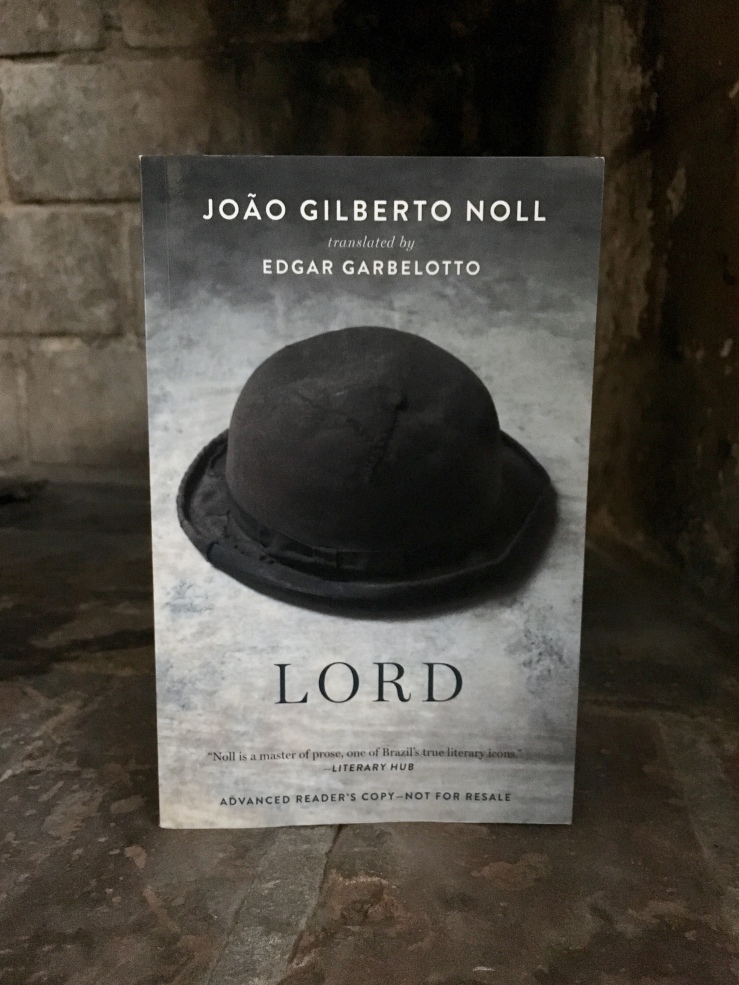
João Gilberto Noll’s short novel Lord is an abject and surreal tale of madness. Madness is perhaps not the correct term, although it does point towards Lord’s gothic and abject modes. Perhaps it’s more accurate to say that in Lord, Noll gives us a consciousness dissolving and reconstituting itself, a first-person voice shifting from one reality to the next with absurdly picaresque energy.
That first-person voice is “a Brazilian who wrote books that were mostly well received by critics but not the public.” The Brazilian novelist travels to cold winter London on an unspecified “mission.” Indeed, the mission remains unspecified to both reader and narrator alike, although it does seem to involve an English university. The man who arranges for the narrator to come to London is himself a shifting cipher in Lord, transforming into different entities—at least in the narrator’s (often paranoid) view. We get the sense in Lord that consciousness is always under radical duress, that a state of being might collapse at any time or give way to some other, unknown state of being.
Throughout Lord, Noll dramatizes abject consciousness in turmoil. Early on, the narrator, already feeling uncertain about why he has moved halfway across the world, arrives at a university’s Portuguese department. In a book-lined office, he attempts to stabilize himself through the textual “reality” of printed matter:
The walls were covered with books. I trailed my hand over them as if to confirm the reality I was living in. Though I knew I was not living an unreality per se—like those born out of a simple dream and ending up in a nightmare, which we can only escape from when we wake up sweaty, trembling, and confused.
The irony is that the narrator has not fully comprehended yet that he is living an unreality, that he is actually narrating the nightmare. Noll’s hero is an unfixed voice, a voice that can’t square the signifiers around him with any stable signified meaning in his consciousness.
Slowly (but not too slowly—Lord moves at a steady clip), the narrator embraces this abjection and wills the dissolution of his self and its reformation into some new other. “My tiredness did not demand sleep, but, damn!, how I craved some indistinguishability between bodies, volumes, and formats,” he tells us.
The narrator carries his project of transformation even farther, applying cosmetics and hair dye to alter his appearance and “find a new source for [his] new formation”:
My lack of definition was already greater than me, although I had lost myself and begun to suspect that even my English boss couldn’t do anything to bring me back to me. I needed to keep up this task of being every- one somehow, because without it I wouldn’t even make it as far as the corner: without asking anyone, I happened to have overcome being the individual whom I had mechanically created for other people. I had to find a new source for my new formation, even now in my fifties, and that fountain would come from him, that light brown-haired man with makeup on, who lived in London for the time being without exactly remembering why.
Lord’s narrator takes this new version of himself on various London adventures, most of which are lurid and gross, and many of which are downright horny. Our Brazilian writer (who is slowly unbecoming a Brazilian writer) visits museums and has weird sex encounters, sleeps on the streets and takes a soapy bath with a Professor of Latin American Studies. Lord moves at a rapid and occasionally bewildering pace, giving the narrator’s quest a mock-ironic urgency. In Edgar Garbeletto’s capable English translation from the Portuguese, the paragraphs go on for pages but the sentences are choppy, riddled with colons and dashes, lurches and leaps, falls and stops.
Through this turbulent rhetoric, Lord’s narrator channels other voices, sublimating them into the text proper. The narrator absorbs bits and pieces of the other voices he encounters, dissolving his consciousness into and out of them as he strives for transformation. He also absorbs bits and pieces of bodies—fluids and other detritus, other abject bits of our human borders.
Our narrator is obsessed with borders, but his transgression of them has little to do with a moral framework. For the narrator, moral semblance is simply the result of an “individual…mechanically created for other people.” Rather, the narrator is fascinated by what makes a consciousness conscious. However, he’s not yet willing to cross the ultimate border, despite his fascination. In one little episode of Lord, our hero happens upon a dying man on the street. He watches the man pass from life:
I squeezed his hand. His mouth opened, and I could see the pool of blood that had overflowed his rotten teeth. That death, in some way, in some corner of my mind, gave me tremendous satisfaction. Someone was not afraid to go all the way to the end. To do for others what everyone tried to avoid. I wished I could follow him, but I didn’t have his bravery; I lacked the necessary elements to consummate the act. I needed that hug today.
A strange hug indeed!
The apparent finality of death as cessation-of consciousness holds a certain appeal to Lord’s narrator, whose quest is perhaps to overcome abjection via transformation. But it’s not easy,
It’s not just a snap, man: it’s being stuck in this limbo between staying in England and going back to South America that made me unrecognizable to myself anymore, it didn’t let me transfigure myself, it wouldn’t let me leave this stupid little body here, vomit myself out in disgust, or turn me into someone else.
Indeed, the quest in Lord might be summarized by that phrase: “vomit myself out in disgust.” While the voice in Lord remains untethered by the normal strictures of narrative (or even moral) logic, it is hardly free or disembodied. Indeed, the relationship between bodies and consciousness is perhaps the primary problem of Lord. Our narrator’s voice has a body that can’t catch up to what’s happening in its consciousness. Hence the novel’s preoccupation with the corporeal reality of bodies: blood, urine, semen, sweat, vomit…all the leaking stuff of humanity spurting out, transgressing the apparent borders and showing those borders are but a moral fiction.
In one abject episode, our narrator attempts to dispel London himself from his consciousness:
On a corner in Bloomsbury, a totally unexpected need to vomit hit me. I wiped myself with a sheet of newspaper that was fluttering by. But I couldn’t stop; I realized it was London I was throwing up, London with its ghosts and impossible missions, already entirely unsuccessful.
Tellingly, the narrator grasps a newspaper that just happens to be “fluttering by” to clean himself, to restore the moral fiction of an arranged, presentable self. The newspaper, like the books in the university office, is another nod to Lord’s metatextual motif. The written word proves to be illusory as an anchor in Noll’s novel—it cannot codify consciousness, it cannot fix meaning. Hence, the novel’s strange, disruptive rhetorical program, which takes first-person consciousness and literally deconstructs it.
The fact that Noll’s hero is/was a writer, “a Brazilian who wrote books that were mostly well received by critics but not the public,” suggests another metatextual nod. Lord’s narrator is a strange cipher of Noll himself. In 2004, the year Lord was published, Noll served as writer-in-residence at the Centre for the Study of Brazilian Culture and Society at King’s College London. But the narrator is a cipher of Noll only—a voice that deconstructs and reconstructs itself, autofiction that dissolves the self.
This abject voice tries to reinvent itself from the outside in, only to vomit the inside back out again. Utter disintegration seems fatally imminent; madness seems inescapable. As one reaches the final pages of Lord, one senses that the narrative might fall apart into nothing—which, to be clear, it doesn’t. Lord sticks its ending a strangely and suitably satisfying way. I won’t give away the end, but instead reverse the course of my previous sentence: Lord falls apart into something.
Like Quiet Creature on the Cornerand Atlantic Hotel (the other Noll books currently available in English translation), Lord is propelled on its own dream-nightmare logic. It’s fucked-up, gross, abject, and surreal. It’s permeated by a vague horror. Reading it might make parts of your stomach hurt. I like these particular flavors, and I particularly like a book that doesn’t just upset me with its themes and its plot, but also with its style and its rhetoric. Lord certainly isn’t for everyone, but I loved it, and I think that there’s an audience of weirdos out there like me who will really dig this book too. Highly recommended.
João Gilberto Noll’s Lord is new from Two Lines Press. It is the third novel by Noll Two Lines has published. I hope they publish more.
The Labyrinth by Saul Steinberg. (NYRB) First published in 1960 and back in print again from the NRYB this year, Saul Steinberg’s The Labyrinth condenses the modern and the mythic. “Steinberg was a lyricist of the metal nib—a twirler of nonverbal non sequiturs,” notes novelist Nicholson Baker in his introduction to the new volume. Steinberg’s lyrical non sequiturs evince in squiggles and dots, tangles and loops which turn into well-dressed men and staid women, cityscapes and night scenes, cocktail parties and art shows. Steinberg turns Abraham Lincoln into Don Quixote, with Santa as his Sancho Panza. He takes us out of urbane New York and into midcentury America, land of motor courts and baseball parks, a knotty chaotic chorus of life. Steinberg could seemingly do anything with ink, as the range of styles in The Labyrinth shows, but what he ultimately did was utterly-Steinbergian. The Labyrinth echoes Whitman’s Leaves of Grass, which sought a century earlier, to find a new language to describe a new country. Steinberg looked at America through new eyes, and, like Whitman before him, found a new language of expression—the language of labyrinthine lines on paper.
Indeed, for many Bolaño fans, reading these early novels feels like its own project—winnowing for seeds, pulling at the threads that will cohere into something grander in the Bolaño’s future (which, from a readerly perspective, is the past). So when FS&G published Wimmer’s translation of Woes of the True Policeman in 2012, it was hard for many readers to see the novel as anything but ancillary materials for 2666—it was hard to read the novel as a discrete work, on its own. Instead, the question Woes asked Bolaño fans was, Where does this fit in the Bolañoverse?
The same question is in play for the latest posthumous Bolaño release, The Spirit of Science Fiction (Penguin, Wimmer). A simple read, and one that is not incorrect, is that The Spirit of Science Fiction feels like a trial run at The Savage Detectives. In particular, Spirit blueprints the first and third sections of The Savage Detectives, sections that revolve around the immature adventures of two would-be poets in Mexico City in the 1970s. Instead of Arturo Belano and Ulisses Lima though, we get Jan Schrella (“alias Roberto Bolaño”) and Remo. These two heroes divide Bolaño’s literary ambitions into poetry and prose, posterity and potboiler pulp fiction. In The Savage Detectives, Arturo Belano and Ulisses Lima will synthesize these ambitions more grandly in their literary quest.
I cleaned up a large bookcase this weekend, and filled a purge box with close to two dozen books. I took that box to the used bookstore I frequent to trade in for store credit, and browsed a bit, hoping to find a used copy of Joy Williams’ The Visiting Privilege (I finished her debut collection Taking Care this weekend).
No luck with the Williams. I ambled down by the Zs though, where I found a new copy of Unica Zürn’s novella The Trumpet in English translation by Christina Svendsen. I knew a bit about Zürn (mostly her art and text poems, as well as her relationships with Hans Bellmer and Henri Michaux), but I hadn’t heard of Trumpets.
The Trumpets of Jericho is published by Wakefield Press, which has a great track record as far as I’m concerned. I loved their edition of Gisèle Prassinos’ The Arthritic Grasshopperand they’re recent book Letters, Dreams & Other Writings by Remedios Varo is one of my favorite things this year. Anyway, here’s the Wakefield blurb for The Trumpets of Jericho:
This fierce fable of childbirth by German Surrealist Unica Zürn was written after she had already given birth to two children and undergone the self-induced abortion of another in Berlin in the 1950s. Beginning in the relatively straightforward, if disturbing, narrative of a young woman in a tower (with a bat in her hair and ravens for company) engaged in a psychic war with the parasitic son in her belly, The Trumpets of Jericho dissolves into a beautiful nightmare of hypnotic obsession and mythical language, stitched together with anagrams and private ruminations. Arguably Zürn’s most extreme experiment in prose, and never before translated into English, this novella dramatizes the frontiers of the body—its defensive walls as well as its cavities and thresholds—animating a harrowing and painfully, twistedly honest depiction of motherhood as a breakdown in the distinction between self and other, transposed into the language of darkest fairy tales.
The Trumpets of Jericho includes a few of Zürn’s illustrations, including this one—
I also browsed John Barth books a bit. I’ve been reading Robert Coover’s early novel Origin of the Brunists, which reminds me a bit of John Barth’s first two novels, The Floating Opera and End of the Road. It’s not the content as much as the style of these early works that I find similar, and I wanted to dip into the prose of The Floating Opera, which I do not own.
(I have a movie tie-in version of End of the Road. I have never seen the movie, but one of my favorite reading memories is reading the entire novel in a friend’s mother’s childhood bedroom in an entire night. We had gone down to Miami for a few days and were staying with his grandfather. His mother had been an English major, and her bedroom seemed wholly unchanged from like, 1973 (the whole house seemed stuck wonderfully in 1973), and I picked up End of the Road at like midnight and read until four or six or whatever. Great times).
Anyway, this round-cornered Avon copy (1964) of End of the Road jumped out at me. I was smitten! I feel like I’ve seen round-cornered massmarket paperbacks before, but I don’t really remember any specifically. So I googled, and came up with this unsigned article from The New York Times from 17 March 1964:
Avon Books, a division of the Hearst Corporation, has attacked the problem of the dogeared paperback by cutting off the ears. The result is a book with rounded corners at the edges and square corners at the binding.
The company has also improved design, type and paper of its paperbacks. The first titles in the new format are “The Time Has Come” by John Rock, Brendan Behan’s “Borstal Boy,” Herbert Tarr’s “The Conversion of Chaplain Carr,” Nathaniel West’s “Miss Lonelyhearts,” Aldous Huxley’s “After Many a Summer Dies the Swan” and “Those Barren Leaves,” and Van Wyck Brooks’s “The Writer in America.”
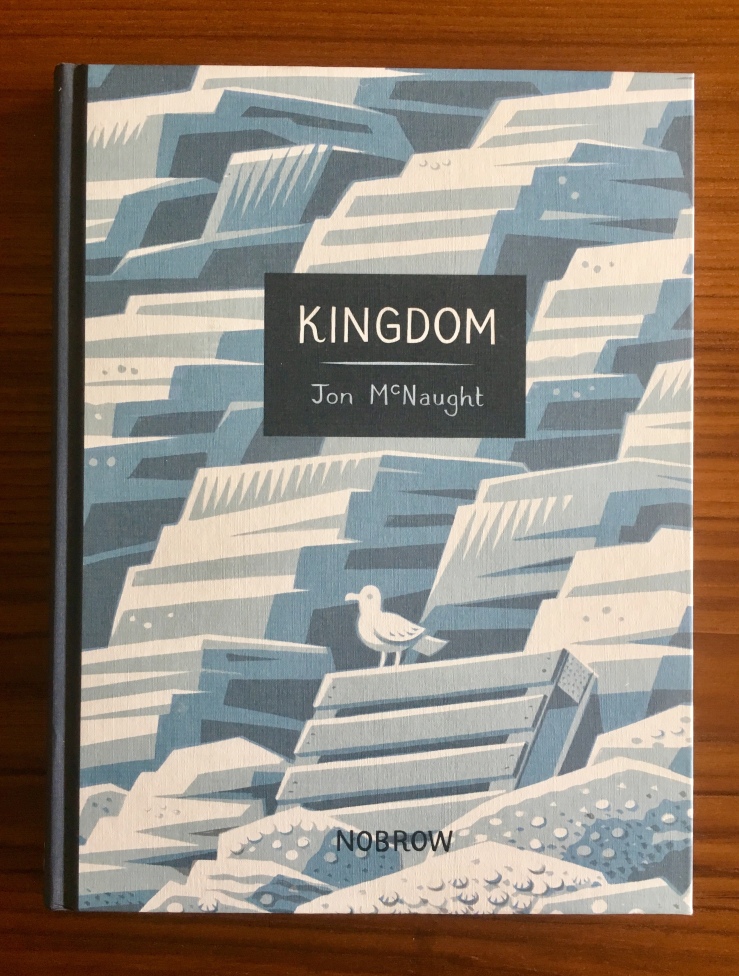
I got a physical copy of Jon McNaught’s latest graphic novel Kingdom last week. Here is publisher Nobrow’s blurb for the book, which will serve as a rough plot summary:
A family sets off for a long weekend at a caravan park on the British coast. We follow them through the familiar landscapes of a summer holiday: motorway service stations, windswept cliffs, dilapidated museums and tourist giftshops. In this atmospheric and contemplative work, Jon McNaught explores the rhythms of nature, the passing of time, and the beauty and boredom of a summer holiday.
A few weeks ago, I’d been sent a digital reader’s copy of Kingdom to review for The Comics Journal, so I’d already read it, but getting a physical copy was like reading it anew. Nobrow’s books are, in general, lovely. They look lovely, are large and colorful and printed on rich thick paper. They smell great too.
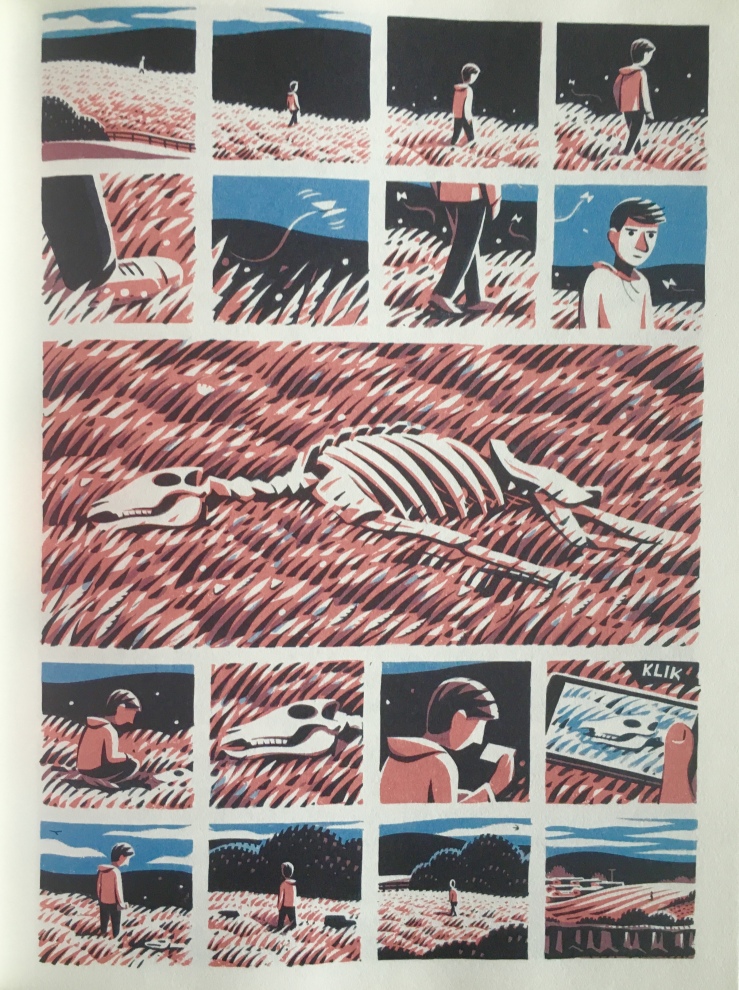
Reading Kingdom in print was a much more pleasurable aesthetic experience than reading it on an iPad. The story was the same, of course, but my eyes went across it differently, working with my fingers, lingering, moving backwards and forwards, shuffling pages. The feeling of the story came across stronger, somehow, than it did on a screen–McNaught’s themes of boredom, nature, and our ways of seeing nature resonated more when I could rub my hands on the pages themselves. I do not have a simple explanation for this. There’s an intangibility I’m pointing toward, but one that has to do with tangibility of course: reading as a tactile process.
I’m not a Luddite. I like ebooks, and I generally like to have an ebook of any novel that I’m reading so that I can read it late at night. (Digital copies also make quoting at length for reviews much easier). But I find that screens dampen or mute or hinder something of the aesthetic experience in reading highly-visual narratives, like comics and poetry.
That last phrase, “comics and poetry”—I think that that’s what McNaught does by the way. His comics are visual poems, moods, feelings, evocations of time and space bounded not in words but in sounds, not in symbols and signs but in the objects themselves. The feeling of feeling of his comics is hard to pin down: tranquil and soothing with tinges of melancholy, gentle touches of pleasant boredom, waves of recognition: recognition of spirit, of impulse, of fellow feeling: etc. We see his characters seeing the world, being in the world, and seeing themselves seeing and being in the world. And we also see them mediating that world—on screens.
I liked Kingdom the first time I read it on a screen. I loved it the second time I read it on paper. Full review soon at The Comics Journal.
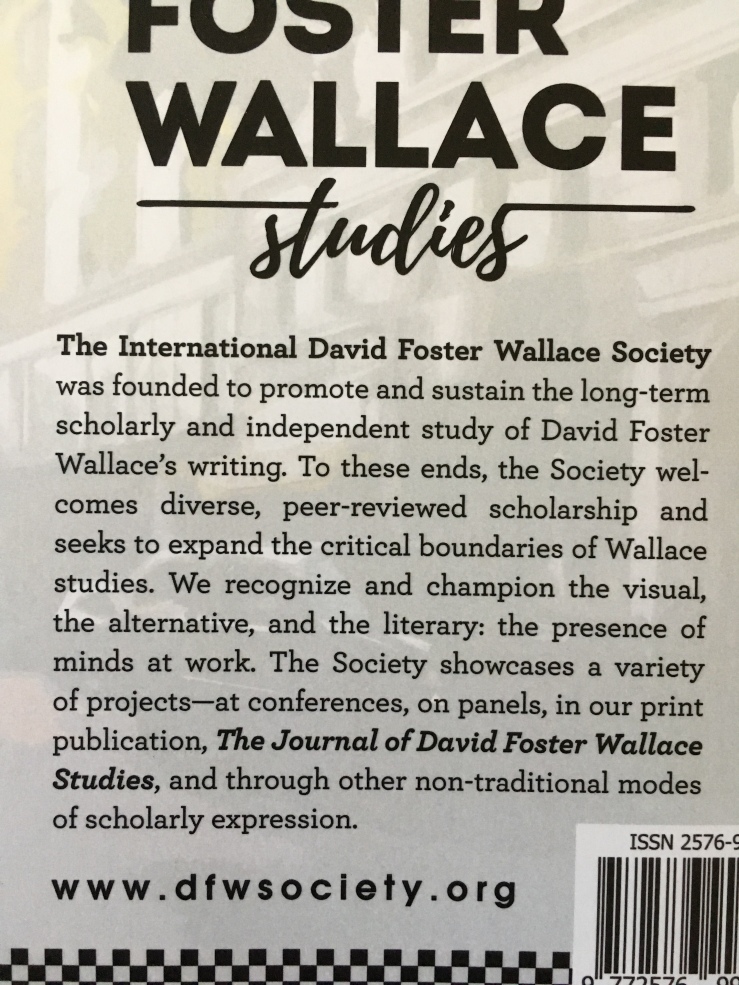
The Journal of David Foster Wallace Studies is a peer-reviewed academic journal devoted to the work of David Foster Wallace. The Journal is published by the DFW Society.
Here is the table of contents for Vol. 1, issue 1;
I enjoyed Nash’s essay on boredom and attention in The Pale King, and found Saylor’s piece on race in Wallace’s fiction—focusing on Wallace’s whiteness within the context of his overall project of literary empathy–especially interesting.











 I liked Kingdom the first time I read it on a screen. I loved it the second time I read it on paper. Full review soon at The Comics Journal.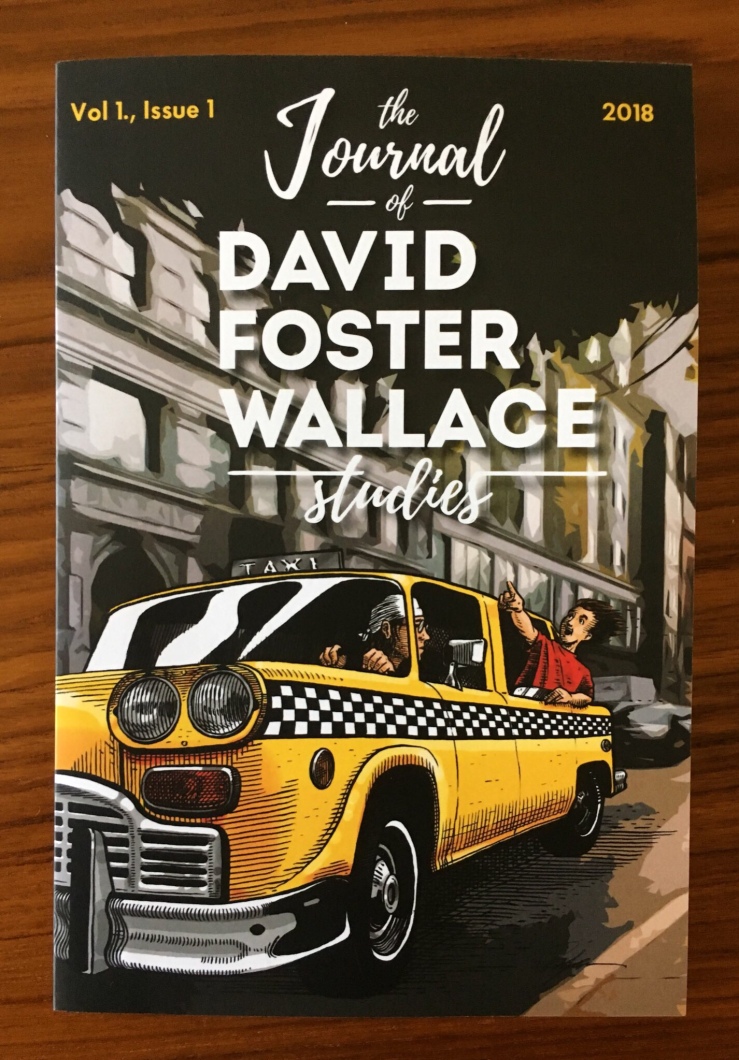

 Biblioklept